Ross Sinclair is a drummer, guitarist and founding member of The Soup
Dragons. In the early 1990s Sinclair left the group to complete his studies at
the Glasgow School Of Art.
Ross Sinclair is best known for his Real Life project, initiated in 1994 when he
had the words ‘Real Life’ tattooed across his back. Since then Real Life has become a 23-year performance project, taking form in a wide range of exhibitions, public art and publication contexts. Over the two decades of the Real Life
project, Sinclair’s work has employed various mediums including performance,
painting and music, often at the same time.
Through installation and audience participation Real Life has sought to challenge the conventional exhibition practice and connect with the public. These
projects have been exhibited worldwide. Throughout the course of the project,
a consistent thread of Sinclair’s work has sought to address the nature of the
individual, collective and national identities of Scotland.
During August 2015, Sinclair exhibited his work in 20 Years of Real Life at Edinburgh’s Collective Gallery which celebrated 20 years of his Real Life project.
Sinclair worked with teenagers to create 5 bands and produce an LP titled Free
Instruments for Teenagers. Real Life is Dead/Long Live Real Life The most recent incarnation of the Real Life project came as part of a two-week residency
Ross Sinclair undertook at the Shanghai Himalayas Museum in China, ahead of
his solo exhibition titled Real Life is Dead/Long Live Real Life.
This exhibition served to herald a new phase of Sinclair’s on-going Real Life project. For the exhibition Sinclair added the text ‘Is Dead’ to the ‘Real Life’ tattoo.
The residency focused on the consistent themes of participation, performance
and collaboration, coupled with Sinclair’s use of music in his art throughout his
career. Sinclair worked with students at the GSOA over a period of two years to
develop and record two songs (Real Life is Dead and Long Live Real Life) which
lay at the core of the exhibition. The songs were recorded in both English and
Chinese.
In Shanghai, Sinclair worked with local musicians, artists and singers to create the Chinese-Scottish Real Life Orchestra - a musical dialogue between the
Chinese audience and Sinclair’s Real Life Project. The group came together in
a collective voice, in English and Chinese, to share experiences through music.
The orchestra presented a live performance at the opening reception of the
Phase Three exhibition of CURRENT: Contemporary Art from Scotland, which
provided the soundtrack to Sinclair’s installation consisting of multiple editions
of banners and videos representing the 23-years of the Real Life project. Participants were also invited to respond to the themes of Real Life is Dead/Long
Live Real Life with words and pictures which were displayed on banners and
placards.
Search:group a d
Bad Bad Hats are an indie rock trio from Minneapolis, Minnesota.
Known for bringing a joyful, exuberant presence to their live shows, touring
with The Beths, Margaret Glaspy, The Front Bottoms, Hippo Campus, and
Third Eye Blind, the group took specific care to bring their fun-loving spirit
to their third LP, Walkman.
Kerry (guitar/vocals), Chris (bass), and Con (drums) let their collective hair
down on Walkman, bringing raucous and explosive riffs alongside witty lyrics.
Though you might not notice from their indie rock exterior, Bad Bad Hats draws
a heavy influence from classic pop songwriting that shines through in their
hooky choruses and strong melodic sensibilities.
For this release the band set out to push their capabilities as a trio. Subtle
changes in process helped the band achieve this goal, such as shifting Chris
from a wider multi-instrumental role to allow him to prioritize his bass playing, having Kerry record the bulk of the guitars instead. ‘You can hear all of our
musical voices a lot better on this record.’
A carefully crafted studio sound brings the record to life, injecting it with an
energetic voice that is unique to Bad Bad Hats. Walkman is the group’s fourth
time working with producer Brett Bullion, including their previous two LPs, Psychic Reader and Lightning Round, and the Wide Right EP.
Bullion and the band use the studio as an instrument, resulting in their most
polished work to date.
January 1969 – The Beatles planned to return to live performance, setting up in Twickenham Film Studios, London, for 21 days of rehearsals. They then decamped to their new studio in their Apple office building in Saville Row and on January 30th performed their last ever live group performance on the rooftop. All of this was filmed for a proposed documentary (eventually released in 1970). During the rehearsal process, they asked Glyn Johns, who had been hired to help with the live sound, to attempt a mix to create an album. This was never released, becoming known as one of the great ‘lost’ albums in rock history and is now included in this Super Deluxe Set. The album was delayed further and in fact became their 12th and final official album release on 8th May 1970 following additional production by American producer Phil Spector.
Kylesa is an American heavy metal band that was formed in Savannah, Georgia. Their music incorporates experimentalism with heavy riffs, drop-tuned guitars and elements of psychedelic rock. The group was established in 2001 by the former members of Damad, with the addition of guitar player Laura Pleasants who is from North Carolina. The band has since undergone line up changes; the remaining original members are Phillip Cope and Laura Pleasants. In 2006, the band added two drummers (Carl McGinley of Unpersons, from Savannah, and Jeff Porter). Eric Hernandez (of Capsule, from Miami) joined in 2008 to replace Porter. The dual drum tracks are often panned strongly to the right and left.
Ever since the release of their acclaimed debut EP P'eau (2018) these Mechelen-based musicians have been honing their craft in songwriting and production, building a new home studio to record future material while also expanding from a three-piece to a five-piece ensemble. By adding singer/percussionist Stefan De Graef (Psychonaut) and guitarist/singer Sander Rom (L'Itch) to their ranks, HIPPOTRAKTOR have become a more versatile outfit able to employ a broader palette of sounds, taking the band's earlier instrumental prog metal sound to new heights. Taking notes from the best moments in contemporary progressive and post metal, HIPPOTRAKTOR capture the awe-inspiring power of nature_from the delicacy of the first falling leaf to the massive cosmic energy of the sun. By combining the big, catchy riffs and the rhythmical prowess of Gojira with the relentless but equally groove-loaded complexity of Meshuggah, Meridian delivers an overwhelming experience of sound, presenting the listener with sentiments that are recognisable, but with an intensity that seems larger-than-life. "Meridian finds its origin in everyday moods, taken out of context and morphed into a stylised version that re- flects the dreamer in me," explains main songwriter and guitarist Chiaran Verheyden. "It tells the story of someone who's lost in a world too massive to comprehend, and seeks answers in places where none can be found. Meridian was written as an attempt to distillate what I felt but couldn't put into words." As the main vocalist in the group, finding these words was the job of Stefan De Graef, who carried over his fascination for philosophy and religion from his other band Psychonaut. "Meridian tells the story of a solitary wanderer on the Earth in the absence of other beings," explains Stefan. "Without anyone to share knowledge and history with, the protagonist is forced to create his own truths and stories about the nature of life, consciousness and the universe. The protagonist begins to personify and deify his surroundings, assigning sentience to the trees, the mountains, the wind, the waters etc. for they are his only companions in this desolate world." Essentially, Meridian is an exploration of the evolutionary theory of naturism, which was put forth by German scholar Max Mu"ller in the 19th century, and which argues that religion finds its origin in the deification of the forces of nature by early human beings. By juxtaposing this sociological theory with seven tracks that unfailingly conjure images of the earth, sea and sky, HIPPOTRAKTOR have created an analogy that enlarges the imaginative quality of their music to (literally) epic proportions. Combining the best of prog, groove and post-metal, Meridian comprises an incredible ride for fans of soaring hooks, technical riffing and earth-shattering breakdowns. Limited bluegreen-grey single colour vinyl edition, gatefold! FOR FANS OF Meshuggah, Periphery, Cloudkicker, Intronaut, Animals As Leaders, Gojira, Skyharbor, Psychonaut
Hardback: 224 pages
Product Dimensions: 22.7 cm x 17.7 cm x 1 cm
• An A-Z compendium featuring over 100 composers active with tape and electronics in the analogue era.
• Containing information never previously uncovered, it shines a fresh light on many sound experimenters unacknowledged in the history of British electronic music.
• First published by Sound On Sound Magazine in 2016, this is the first time it’s been available outside their shop.
• Deluxe coffee table hardback book in full colour on 130 gsm matt art paper.
Tape Leaders: A Compendium Of Early British Electronic Music Composers is a richly illustrated A-Z compendium featuring over 100 composers active with tape and electronics in the analogue era. Containing information never previously uncovered, it shines a fresh light on many sound experimenters unacknowledged in the history of British electronic music.
With an individual entry for each composer, it covers everyone from famous names like William Burroughs, Brian Eno and Joe Meek to the ultra-obscure such as Roy Cooper, Donald Henshilwood and Edgar Vetter. There are sections for EMS and the BBC Radiophonic Workshop and amateurs, groups and ensembles that experimented with electronics, including The Beatles, Hawkwind and White Noise.
“Until now, the Radiophonic Workshop has somewhat eclipsed other players in British early electronic music history. The extent of this is laid bare in the revelatory book Tape Leaders - a landmark survey by the composer, film-maker, instrument-builder and researcher Ian Helliwell, who has uncovered hitherto unacknowledged independent electronic music composers.” Fortean Times
“For anyone with an interest in the early years of electronic music, Ian Helliwell’s book takes the reader on an enthralling tour of the pioneering British contributors to this genre.” Sound On Sound
Founded in Amsterdam in 1967 by saxophonist Willem Breuker, pianist Misha Mengelberg, and percussionist Han Bennink, Instant Composers Pool (or ICP) was an independent free jazz label and orchestra that would go on to release over fifty albums featuring such pillars of the scene as Derek Bailey, Peter Brötzmann, Evan Parker, Jeanne Lee, John Tchicai, and Steve Lacy. Based around the concept that improvisation was, in fact, an act of instantaneous composition, ICP's legacy on improvised and free music is impossible to overstate.
A live performance from May of 1970 in Rotterdam, Groupcomposing features a North Sea-crossing ICP lineup of British free improv luminaries Derek Bailey on guitar, Evan Parker on saxophone, and Paul Rutherford on trombone, along with ICP mainstays Han Bennink, his brother Peter, Misha Mengelberg, and Peter Brötzmann. The first side, "Groupcomposing, Part 1" is a nearly all-out assault with the reeds trio and Rutherford's trombone blasting nigh-continuously for the album's first side, culminating in a blistering Peter Bennink bagpipes solo. "Part 2" acts at first as the comedown, beginning with a playful piano and percussion back-and-forth before meandering a dark, brooding, path of trill horns to the album's eventual, tense conclusion.
Recorded just a few years into the ICP's long tenure, it is hard to think of a release more representative of the label's musical principles – or, more broadly, of the power of free group improvisation – than the aptly-named Groupcomposing. This limited reissue marks the first time the album has been in print on vinyl in over forty years.
Founded in Amsterdam in 1967 by saxophonist Willem Breuker, pianist Misha Mengelberg, and percussionist Han Bennink, Instant Composers Pool (or ICP) was an independent free jazz label and orchestra that would go on to release over fifty albums featuring such pillars of the scene as Derek Bailey, Peter Brötzmann, Evan Parker, Jeanne Lee, John Tchicai, and Steve Lacy. Based around the concept that improvisation was, in fact, an act of instantaneous composition, ICP's legacy on improvised and free music is impossible to overstate.
The ICP Tentet's Tetterettet is made up of recordings from 14-17 of September, 1977, cut and spliced together by pianist/composer Misha Mengelberg in a style similar to Teo Macero's work with Miles Davis. The first side is taken up entirely by Mengelberg's multi-part title track that breaks in and out of different tempos, with a loose arrangement style owing more than a bit to Charles Mingus' finest work on Black Saint or Ah Um.
Traversing across decades and styles from free-jazz funereal marches, to carnivalesque excursions, broken piano rolls, and ear-splitting skronk, ICP Tentet show remarkable skill and chops in both their compositional craft and improvisational symbiosis. There's a playful undercurrent here that finds its home in some previously uncharted land between Mingus and Spike Jones.
Featuring numerous ICP regulars along with the brilliant Alan Silva on bass, and a return to the fold of the amazing saxophonist John Tchicai, Tetterettet is one of the best of ICP's larger group recordings; humorous, unnerving, and ultimately, quite beautiful. This limited-edition reissue marks the first time this album has been in print on vinyl since its initial release.
An energetic blend of NEW WAVE and HEAVY PROGRESSIVE ROCK, Four Stroke Baron aspires to bring forth a lively and refreshing new voice to the music scene. The group manages to craft massive and immersive soundscapes juxtaposed over catchy, pop-like song structures. It is this penchant for blending familiar sounds and styles into something altogether new that has allowed the band to undergo a dramatic metamorphosis from its founding members improvising in a shed outside of Reno, Nevada, to preparing for the debut of their second full-length album, “Planet Silver Screen,” on Prosthetic Records.
Featuring Anthony Green of Circa Survive, Adam Lazzara and John Nolan of Taking Back Sunday and additional percussion from Benjamin Homola of Grouplove, Fuckin Whatever is a fluid project born of longtime friendships and late nights on the road, but what it could grow to become is entirely unwritten. It all started on the 2016 Taste Of Chaos tour. After Green wrapped his opening set with Saosin each night, itching to play more music, he started setting up impromptu acoustic gigs in the parking lots after his set. One night, his restless energy led to an impromptu backstage jam session with Lazzara, Nolan, Homola, and others––except there were no instruments involved. Using just their voices and a stomp or two in lieu of percussion... before they even realized it, Fuckin Whatever was born. They decided to start recording these nightly jam sessions on their phones, and by the end of the tour, there were literally dozens of recordings. There are some as long as 17-minutes, some recorded in bathrooms, and even one in the legendary tunnel between the stage and sound booth at Red Rocks Amphitheatre in Colorado. What they share in common is the camaraderie of the many talented voices (and sounds) involved. Fast forward to 2020––ugh. With a creative need to continue making and releasing music, Anthony approached the group about releasing some of those recordings. Feeling a similar restlessness, Nolan suggested they try making and recording something for real instead. "I'm Waiting On You" is what came next, and it's truly the spark that led to the rest of this EP coming together. There are zero instruments on Fuckin Whatever's self-titled debut. "It's pretty much 80% mouth noises and 20% Ben slapping things around the house," Lazzara explains. Those voices, however, are among some of the most recognizable in modern rock music, yet here they take on a new life. Call it a band, or a supergroup... it's Fuckin Whatever.
Limited edition 180g blue coloured vinyl + 1 bonus track.
“January 4, 1956: Clifford Brown, Max Roach, Sonny Rollins, Richie Powell and
George Morrow met up in a New York studio to record At Basin Street, which
would be the group’s final album. That summer, Clifford Brown and Richie Powell died in a tragic car accident. This final testimony is one of the most exciting
records from a quintet which was like very few others.” - Jazz Magazine
“Each arrangement is worked to a point that actually propels the soloists, gives
them - and Brown particularly - maximum lift. These are classics of modern
jazz.” - Penguin Guide To Jazz
“Clifford Brown and Max Roach at Basin Street reemphasizes the loss jazz suffered when Clifford and Richie Powell died. Energetic, full-bodied jazz. Thoroughly recommended.” - John A. Tynan, DownBeat”
First-time limited-edition reissue of this mega super-crazy rare US hard
rock/metal heavy psych private press LP from 1981, Limited deluxe
edition of 499 copies.
Includes an insert with line notes and photos. Golden Dragon were a wild Filipino-American quartet from the Bay Area lead by Freddy Mabuhay. The album
is filled with heavy blazing psyched out metallic rock, blistering guitar solos
loaded with fuzz and wah, heavy riffs and stoned vocals.
Freddy was the bass player in the legendary band Dakila who had a fantastic album out on Epic in 1972. Later in 1978, after playing the Diamond Head Crater
Festival in Hawaii, Freddy formed his own group; Golden Dragon.
In 1981 he and his band; consisting of his brother and two musicians from the
legendary Bay Area punk band VKTMS, recorded the amazing Golden Dragon
album. The album was only pressed in a few copies to be sent out as a demo to
secure a record deal. Unfortunately, the deal never happened, and the album
stayed unreleased and pretty much unobtainable for all these years.
The short lived, but lethal, Golden Dragon band performed live at the legendary venue Mabuhay Gardens, aka The Fab Mab, in San Francisco. Sadly, Freddy
passed away shortly thereafter, and the mighty Golden Dragon’s music stayed
obscure growing to mythical status among hard rock and psych rock aficionados. Subliminal Sounds has now put together this release in cooperation with
the surviving musicians. It’s finally time for the world to experience the mighty
sound of Golden Dragon!
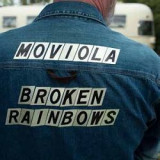
On the fringe of the indie Rust Belt scene since the 1990s,
Moviola has quietly forged a low-key career of high-quality
recorded output over twenty-five years, issuing ten (!) records
and countless 7-inch singles (including splits with Cobra Verde,
Hiss Golden Messenger, Handsome Family and many others).
In this artistic continuum, the band has evolved from everything
from 4-track fuzz to hi-fi country soul. Today, the band steps
forward with Broken Rainbows, its strongest collection of songs
to date, written, recorded, and mixed inside the group’s HQ in
Columbus.
Jake Housh started Moviola in 1993 as a student at “The”
Ohio State University as a noisy, fuzzed out lo-fi noisemakers.
Over the years, the band has morphed into a unique DIY
music and art-making collective with five distinct singers and
songwriters, recalling the creatively democratic lineage of The
Mekons, The Band, Pink Floyd, many others. Moviola is Jake
Housh, Ted Hattemer (Thomas Jefferson Slave Apartments),
Scotty Tabachnick, Greg Bonnell, and Jerry Dannemiller.
Broken Rainbows is a milestone release, showcasing a band
newly energized and assured in its artistry, and supportive of its
members’ songcraft. The eleven-song album hovers over a plot
of ground that’s optimistic in its despair. Album topics range
from the personal to the political, showcasing each member’s
unique songwriting within an overall cohesive band aesthetic.
“Moviola was one of those groups I met early on back in the day
that showed me how to do it. Broken Rainbows is a highlight—
pastoral thumpers, fuzzy indie radness, hooks to spare, pretty
much all the good stuff. Feels like a glorious drive from one
disparate end of Ohio to another. I love this band.”
—Eric Johnson (Fruit Bats)
Business as Usual is the debut album of Australian new wave band Men at Work, which was originally released in 1981 and became one of the most successful albums internationally by an Australian group. It spent an unprecedented 15 weeks at No. 1 on the US Billboard 200 from late 1982 to early 1983, and five weeks at No. 1 in the United Kingdom Albums Chart in early 1983.
Business as Usual was also one of the highest selling Australian albums in the early 80s, with 6 million copies sold in the US and 15 million sold worldwide.
The first single Who Can It Be Now' was a strong top
3 hit single, but the second single Down Under' became a monster hit and reached the number 1 spot in several charts around the globe.
The high quality re-issue by Music On Vinyl has the original black and white (Australian) jacket artwork.
Listening to the story of Canadian duo cleopatrick is a bit like hearing the plot of the best, most righteously validating coming-of-age film never made. Two friends meet aged four in Hicksville, Nowheretown (real name: Cobourg, Ontario, population 19,000), grow up completely inseparable, form a band and, against numerous obstacles, blossom into a genuine, global underground sensation. There are heroes and villains, highs and lows and, crucially, some of the most poetic plot twists that could seem almost too perfect, were they not completely true. Take the story of 2017 breakthrough track ‘hometown’ for example. “It’s one of the craziest, most ironic things that’s ever happened,” begins vocalist and guitarist Luke Gruntz. “I was going to college because I was too scared to put all my chips in the band pile, and that’s what ‘hometown’ is about: it’s a song about feeling like we’re doing all this stuff and we’re working so hard and we’re just never going to be heard. It’s literally a song about people probably never hearing our songs. And then by some act of the universe, that song ended up unlocking all the doors for us.” Today, cleopatrick has logged 77 million streams and counting - all from an increasingly dedicated fanbase who’ve found the duo, completed by drummer Ian Fraser, their own way: no major label, no big budget, just two best pals knuckling down, cementing a unique sonic alchemy and filling a space of honest, empathetic yet undeniably heavy-hitting rock music that they’d been searching for themselves for years. Between multiple sold out tours in Canada, the US and the UK/EU and appearances at Lollapalooza, Austin City Limits and Reading/Leeds, the pair have been crafting BUMMER: a debut album that sees cleopatrick harness all the magic they’ve been brewing over their two-decade friendship and funnel it into a record that aims to reinvigorate the rock landscape from the ground up. Taking the ethos of their New Rock Mafia collective - a group of friends and fellow bands, united in making a more inclusive, equality-driven space in rock music - and imbuing it with the sonic ambition and ferocity of a record designed to be played hard and loud, it’s an album about two friends, who’ve been with each other since the formative first steps that adorn ‘BUMMER’’s heartwarming cover image and made something that’s a testament to the power of sticking to your guns.
British producer Patrick Tipler spent his formative years immersed in psychedelia as a bassist and guitarist in various bands and groups. The arrival of synthesizers –along with his move to Bristol– radically changed his vision of sound and impacted on his musical direction with the force of an asteroid. This shockwave subsequently saw the birth of Delay Grounds.
After releasing the outstanding 'Onomatopoeia' Pressure Dome, 2020 and 'Upcycling' Tropopause, 2021, Delay Grounds’ output has made it clear for all to see that Tipler’s sound design skills are second to none, and with just two releases to his name he has already transformed himself into an artist to watch very closely.
Today Patrick joins the Lapsus crew to present 'Genus', a five track EP that he says "is my most personal release to date, something I've always carried inside and wanted to produce, but had never managed to articulate before". On 'Genus', Delay Grounds preserves the essence of his sound but takes things a step further, with a form ofmaximalist electronica, sprouting powerful torrents of high-pitched and ruff-as-rock avant-techno, glitches and mutant sound elements, combined with sweet and delicate melodies in the purest IDM style. Polishing is provided by sound engineer Nick Earle, with whom Patrick has recorded and remarkably treated a kit of "deconstructed drums" especially for the occasion.
‘Genus’ is 30 minutes of astral travelling, an experience perhaps analogous to what we would feel if we opened a vault, containing music from a lost civilization.
7 piece instrumental soul group from Melbourne, Australia featuring members from Karate Boogaloo, Surprise Chef and Saskwatch.
Produced by Henry Jenkins (Karate Boogaloo, Mo'Ju), the recording mind behind Surprise Chef and Karate Boogaloo, Waiting Room moves deftly through moments of fuzzed-out psychedelia, dusty deep soul backbeat and incendiary minor key funk.
After a first album released in 2019 on the labels Stereophonk (France) and P-Vine Records (Japan), The Selenites Band are back with a new recording, Behind The Mask.
The Selenites Band is a French music group created in 2018 around the artist and musician Obi Riddim. Drawing the sources of its music from the Ethiopian music of “Swinging Addis”, Ethio-jazz, but also rock, Afro-jazz or psychedelic grooves.
After playing the “classics” of Mulatu Astatke or Girma Bèyènè, the band offers us nine new songs. Original compositions where we find the melodies and rhythms of the Ethiopian music of “Swinging Addis” mixed with their kraütrock influences, psychedelic music and afro jazz. An atmosphere of trance on bewitching Ethiopian scales, tracks that invite you to travel and explore.
Recorded during the pandemic, between two confinements and successive curfews, in a vital impetus, this album sounds like the big need to create.
Horace Tapscott's Pan-Afrikan Peoples Arkestra (P.A.P.A.) was one of the most transformative, forward-thinking and straight-up heavy big bands to have played jazz in the 1960s and 1970s. If P.A.P.A. doesn't have the interstellar rep of that other famous Arkestra, and if the name Tapscott doesn't ring bells like Monk or Tyner, there's a reason why: in an industry dominated by record labels, a band that doesn't record doesn't count. And the Pan-Afrikan Peoples Arkestra didn't record for nearly twenty years. But recording success was never their concern -- they weren't about that. First formed as the Underground Musicians Association in the early 1960s, Tapscott always wanted his group to be a community project.
From their base in Watts, UGMA got down at the grassroots. The group was renamed the Pan-Afrikan Peoples Arkestra in 1971, and soon after they established a monthly residency at the Immanuel United Church of Christ which ran for over a decade, while still playing all over LA and beyond. But they never released a note of music. It was the intervention of fan Tom Albach that finally got them on wax. Determined that their work should be documented, Albach founded Nimbus Records specifically to release the music of Tapscott, the Arkestra, and the individuals that comprised it. The first recording sessions in early 1978 yielded enough material for two albums, and the first release was Flight 17. The album commences with the magnificent title track. It is effectively in three parts. It begins with unaccompanied pianos. Then the ensemble embark on a dense, circular and mechanical movement, a platform for horns and pianos to swoop and dive. We return to Earth with a beautiful solitary flute. The second track, the piano-centric, ‘Breeze’ is different to ‘Flight 17’ in intensity and also brevity but it is quietly as daring as the title track. It concludes with a moving lush wash from the full Arkestra, which sound almost like strings only more substantial. These first two tracks take full advantage of the texture of the unusual mix of the various instruments. Next though, it’s a significant change with ‘Horacio’, which is an exuberant Latin infused jingle. It’s unlike anything else on the album. I like to think it was named after the conductor’s Cuban alter-ego! ‘Clarisse’ gracefully switches between slow blues and bop and is bookended with a grand vaguely East Asian theme. The busy bass line introduces ‘Maui’. As with the previous track, it moves between a number of contrasting melody lines and rhythms but there’s still space for a tuneful sax solo.
This is a must-have album. I think the first two tracks on their own make this release essential. Kevin Ward/UK Vibe/Boomkat
Saxophonist Wendell Harrison has lived by a standard philosophy for his 50-plus-year career: One must have complete self-autonomy. Both his music and business dealings reflect this. Besides being a legend on the Detroit jazz scene and mentoring up-and-coming musicians through his non-profit organization Rebirth Inc., he co-founded the Tribe Records label in the 1970s, which produced a magazine and many classic albums.
Harrison is continuing Tribe’s legacy—this time around with a group of rising jazz musicians from the Motor City such as drummer Louis M. Jones III, trumpeter Trunino Lowe, and guitarist Jacob Schwantz—on his new recording Get Up Off Your Knees.
There’s a lot to digest here because the original compositions encompass R&B, soul, spoken word, and “world” music, all seen through the lens of jazz. Harrison tends to weave elements of African music into many of his compositions. On “Siera” and “Samoulén Khalé Yi,” both written by vocalist and bassist Pathe Jassi, he pays tribute to Guinea-Bissau and Senegalese culture. “Educators” also has African nuances in its hardcore drumming and Harrison’s sublime blowing on bass clarinet and clarinet.
Any discriminating jazz listener will be consumed by Get Up Off Your Knees, but it seems Harrison’s primary purpose for making this album is to encourage the current generation to put education first and build social awareness. On the title track, vocalist Miche Braden pushes the self-determination angle, which is again highlighted on “Revolution,” a reimagined take on Gil Scott-Heron’s “The Revolution Will Not Be Televised” delivered with an adherence to contemporary events by the poet Rev. Mbiyu Chui. By Veronica Johnson from Jazz Times.