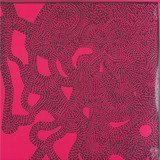
'Banoffee Pies Records' drop their 12th release in the original series with a solo EP from New York based Tristan Arp. With a string of intricate music on the likes of Human Pitch and a recent LP entitled "Suggested Forms", which offers a wider exploration into his work, Tristan's passion for sound design echoes in this record.
All four tracks offer an environment somewhere between a feeling &
a dancefloor with obscure influences in polyrhythmic drum patterns and a clear combination of digital and analogue processing. "Swept Thru" opens proceedings with a spiral of rhythms and heavy percussion leaping in energy throughout, before the spooked out Vox takes control on "Oblique House" with deeper movements in a haunted club tune. The B side opens with the title track "Slip" in a powerful whirlwind arrangement of sub bending sounds before the final colour is added to the palette in "Circling Music'' with emotive jingles in a more retained and patient mood.
You can hear Tristan's other work within the Asa Tone project - a trio group well worth the trip, offering a deep variety of works exploring field recordings taken and formulated in Indonesia beneath a tree canopy deep in the jungle. This same energy and mood spills into this release. Music for feeling. Much love BP x
Mastered: Optimum, Pressed: MPO & Distributed by KUDOS.
Buscar:group a d
Vinyl includes mp3 coupon. Shabazz Palaces' Black Up, the group's Sub Pop debut, was recently hailed as one of the best albums of the decade by outlets like Pitchfork, Gorilla Vs Bear, and Variety. Pitchfork summed it up thusly: "Black Up is drowned in murky instrumentals and bombastic, introspective rhymes. The sounds flirt with jazz but also root themselves in a firm understanding of silence, or the sparse magic of simplicity. The songs teem with unexpected climaxes...From great mystery exploded an album of impossible vision." That "impossible vision" has continued to confound and engage Shabazz Palaces fans over the course of four acclaimed albums and two EPs. Each release feels like an evolution, letting the music speak for itself, while slowly revealing more about its creator. With The Don of Diamond Dreams, the group's fifth album, that spirit remains, this time embracing modernism in hip-hop and rap. Featuring 10 tracks in 43 minutes, the album features the highlights "Fast Learner (ft. Purple Tape Nate)," "Chocolate Souffle," "Bad Bitch Walking (ft. Stas THEE Boss), and "Thanking The Girls." It also features contributions from singer/keyboardist Darrius Willrich, Seattle's OCnotes (who collaborated with Shabazz leader Ishmael Butler on the Knife Knights project), Los Angeles musician Carlos Overall, and bassist Evan Flory-Barnes. The Don of Diamond Dreams was recorded throughout 2019 and produced by Shabazz Palaces at Protect and Exalt: A Black Space in Seattle, mixed and engineered by Erik Blood at Studio 4 Labs in Venice, California, and mastered by Scott Sedillo at Bernie Grundman Mastering in Los Angeles.
LP SKY BLUE VINYL/LOSER-EDITION
Vinyl includes mp3 coupon. Shabazz Palaces' Black Up, the group's Sub Pop debut, was recently hailed as one of the best albums of the decade by outlets like Pitchfork, Gorilla Vs Bear, and Variety. Pitchfork summed it up thusly: "Black Up is drowned in murky instrumentals and bombastic, introspective rhymes. The sounds flirt with jazz but also root themselves in a firm understanding of silence, or the sparse magic of simplicity. The songs teem with unexpected climaxes...From great mystery exploded an album of impossible vision." That "impossible vision" has continued to confound and engage Shabazz Palaces fans over the course of four acclaimed albums and two EPs. Each release feels like an evolution, letting the music speak for itself, while slowly revealing more about its creator. With The Don of Diamond Dreams, the group's fifth album, that spirit remains, this time embracing modernism in hip-hop and rap. Featuring 10 tracks in 43 minutes, the album features the highlights "Fast Learner (ft. Purple Tape Nate)," "Chocolate Souffle," "Bad Bitch Walking (ft. Stas THEE Boss), and "Thanking The Girls." It also features contributions from singer/keyboardist Darrius Willrich, Seattle's OCnotes (who collaborated with Shabazz leader Ishmael Butler on the Knife Knights project), Los Angeles musician Carlos Overall, and bassist Evan Flory-Barnes. The Don of Diamond Dreams was recorded throughout 2019 and produced by Shabazz Palaces at Protect and Exalt: A Black Space in Seattle, mixed and engineered by Erik Blood at Studio 4 Labs in Venice, California, and mastered by Scott Sedillo at Bernie Grundman Mastering in Los Angeles.
"Small Worlds" (2004) a is 42-minute composition for improvising sextet by Austrian double bassist, composer and improviser Werner Dafeldecker. The score is written for any instrument and divides the players into two virtual trios whose constellations change every 3 minutes. No restrictions are made regarding material or playing techniques, the only specification is that in each 3-minute trio, one player has the role of the "dynamic leader" which means that no other player within the trio should play louder than the one on that leading position. Apart from that, the only other restriction concerns how pauses are to be made when two players interchange their positions within the trios.
According to Dafeldecker, the object of the piece is to provide a structure that doesn't curtail the qualities of the musicians, yet forces them to listen very closely to each other and make focused decisions about parameters that are often overlooked in completely free improvisation. Especially, the given structure avoids the emergence of certain clichés that are often present in Free Improvisation, while retaining a very high level of openness with regard to how the piece is performed.
The first published recording of "Small Worlds", by Australian ensemble Quiver, was released in 2017 on CDr by Tone List. This LP contains a recording made in 2004 at Taktlos Festival in Basel, Switzerland, that features the line-up that Dafeldecker originally had in mind when he wrote the piece: Burkhard Beins (percussion), Martin Brandlmayr (percussion), Werner Dafeldecker (double bass), Klaus Lang (organ), Michael Moser (cello), and John Tilbury (piano). Partly, this constellation later also played together in the long-running avant-garde group Polwechsel.
Edition of 300 in regular sleeve with three inserts: two featuring an extensive conversation between Werner Dafeldecker and Matthias Haenisch discussing "Small Worlds", Polwechsel and Free Improvisation in general (German and English), the third reproducing the score of the piece.
We instantly fell in love with Razen the first time we saw them live in September 2018. It was during a unique Sunday morning mass at the Friedenskirche (which translates literally to mean ‘the church of peace’), as part of the Meakusma Festival. Slightly sleep deprived and still euphorically intoxicated from the night before, their performance in front of a full mass of devotees had a biblical aura to it from the first note they played. They delivered a stunning set which was somehow, paradoxically, both relaxing and formidably tense.
Two years later and the group are now bringing their talent for restraint and slow tension-building to the fore on “Robot Brujo”. Each of the six improvisations on this double LP is made up of the barest of materials, with the three musicians relying on a limited combination of tones. They lay their focus on small variations in timbre, timing, articulation and vibration, which creates a narrowing of consciousness, and feels something a bit like staring meditatively at the minute changes of leaves blowing in the wind.
Recorded over two sessions, in what Razen themselves refer to as their detached playing style, "Robot Brujo" stands as an auditory magnifying glass of concentration, in all its uncanny and minimal glory.
It is yet another new step up from the deep listening ensemble from Brussels, after 10 years exploring music together.
1970’s best-kept Bossa Nova secret. Surrounded by mystery for nearly 50 years due to its obscurity, this is one of the most honest, personal and unpretentious albums of it's genre.
A selection of 12 exquisitely crafted songs supported by measured, subtle arrangements. The list of musicians born or raised in the Tijuca district of Rio de Janeiro is long and illustrious and includes names that have shaped Brazilian music: Tom Jobim, Roberto Carlos, Tim Maia, Milton Nascimento, Jorge Ben or Erasmo Carlos – to mention but a few.
We can now add to that list another name: Werther. In 1970, a man by that name recorded an album unique in its personality, its honesty, and its lack of pretense. In a time when Bossa Nova had become a global phenomenon and its main characters were already household names in Brazil, Werther assembled a collection of songs that uncannily – almost naively – remind us of the time when Bossa Nova was just a group of youngsters making music. His songs are about simple things: bohemian life, the sea, love.
Despite Werther and his friends being only in their teens, without any previous experience recording music, those working behind the scenes were not equally amateur. Producer Peter Keller had already worked with Aloysio De Oliveira in the quintessential Bossa Nova label Elenco, and was also an initial partner in Roberto Quartin’s cult label Forma.
Studio owner Bill Horne was a very loved character in the Rio jazz scene who had regularly taken part in the legendary meetings in Nara Leão’s apartment and befriended some of Brazil’s most respected musicians. Some of these musicians were, for example, Naná Vasconcelos and Edison Machado, who provided small contributions to Werther’s album.
It's album release time for this Madrid-based soul/jazz organ trio who have been burning up stages and festivals throughout 2019 and who have already had a successful single out on Rocafort Records. Beat Bronco Organ Trio have not rewritten the Hammond musical handbook, but they do what it says on the tin rather splendidly – a Road Trip that grooves, swings and sashays around the familiar but much loved funky jazz theme.
Although it's impossible to listen to the album without summoning up the ghosts of Jimmies McGriff & Smith and the like, nearly all tracks here are originals and shout out personality, verve and respectful homage to the tradition. Featuring the usual leitmotifs: Shaftish film sountrack, lo-fi lounger, gospel-tinged toe-tapper, the hip shaker and much wah-wah frenesi, there's nothing not to like if the genre is your bag.
The steaming horn section on "Hard Play" thickens the sauce à la JBs and the Meters, aided along by a unique orchestra of handclaps. Vocalist and guitarist Alberto Palacios Anaut storms in with "Hey Hey", an old Dave Bartholomew classic from New Orleans, just to remind us where Fats Domino and Ray Charles got it all from. Chip Wickham makes two welcome appearances on flute, adding an extra jazzy touch to "Squirtly" and "Electro Pi" – the latter a fabulous trippy, spacious head-nodder that demands in our opinion some kind of a wigged out drum'n'bass remix. Every track is clearly dominated by variations on the vintage keyboard, be it Hammond, Clavinet or Minimoog; all roads lead to that sexy, sacred sound.
Spain is already prominent on the modern-day Funk map thanks to groups like The Sweet Vandals, Speak Low and Mighty Vamp – and it comes as no surprise that our hero trio featured at various times in all these bands. Gabri Casanova (keys), Lucas de Mulder (guitar, percussion) and Antonio "Pax" Alvarez (drums, percussion) have been busy reviving the funk gospel for some time now. Road Trip is an elegant culmination of their efforts in keeping alive a revered and timeless tradition that still today serves as a reference to where all the good stuff came from: The Church!
Scottish trumpeter Malcolm Strachan is a founder member of top UK funk/jazz-funk band The Haggis Horns as well as being one of the busiest session musicians in the UK today. In a professional career spanning 20 years, he's recorded with the likes of Mark Ronson, Amy WineHouse, Corinne Bailey Rae, Jamiroquai, Martha Reeves and The Vandellas, Jesse Glynne, The Craig Charles Fantasy Funk Band, Black Honey, The New Mastersounds and Blue Note saxophone legend Lou Donaldson. Now he's finally releasing his first solo album, aptly titled "About Time", on Haggis Records and he's going back to his original roots... Jazz.
The album is a collection of original compositions, all written and arranged by Malcolm, which are firmly rooted in the classic acoustic modern jazz style typified by the great 60's and 70's recordings on the legendary Blue Note Records label. A nice variation of themes and tempos feature throughout the album. From full-on latin vibes to beautiful ballads, soul jazz grooves to cinematic soundtrack flavours, all woven together by a great group of experienced musicians.
Malcolm's core quartet is himself on trumpet/flugelhorn, fellow Haggis Horns members George Cooper (piano) and Erroll Rollins (drums), plus Courtny Tomas on double bass. Featured guests are Atholl Ransome on tenor sax (The Haggis Horns), Rob Mitchell on baritone sax (Abstract Orchestra) and Danny Barley on Trombone. Strings are courtesy of Richard Curran and the percussionist is one of the finest session players in Europe, Karl Vanden Bossche (Incognito, Robert Palmer, Joss Stone, The Gorillaz, Sade, Blur - He and Malcolm met while touring with Mark Ronson)
Malcolm's love of jazz comes from his parents. Aged 7, his jazz musician father gave him a trumpet. From then on, jazz was his life. His musical education came via music teachers, youth jazz orchestras and jazz summer schools but mostly from his dad's record collection listening to Art Blakey and Dizzy Gillespie records and learning to improvise and solo by ear. At 18, he enrolled at Leeds College of Music and quickly immersed himself in the city's vibrant acid jazz, funk and soul scene and from making his recording debut in 1999 with The New Mastersounds, jazz was his musical passion but took a back seat to funk/soul/pop which were the day job. Until now.
Jazz is back. The wait is over. It really is "About Time" for Malcolm Strachan.
1970s Detroit American funk-soul group signed to Invictus, part of the legendary HDH label group (HollandDozier- Holland), who helped define the iconic Motown sound. Highlights include 1971 single ‘She’s Not Just Another Woman’ which was picked up by radio stations and
reached #11 in the US Billboard charts. This was followed up by ‘You’ve Got To Crawl (Before You Walk) #28 in US Billboard chart. In 1972 ‘Enny Meeny-Miny-Mo’ reached #29 in the R&B charts and ‘I’m Worried’ was released as a solo single with Northern Soul legend Melvin Davis. Plus the Mick Jagger covered ‘Too Many Cooks (Spoil the Soup)’ Reissued with original artwork, printed inner sleeve and pressed on 180g heavyweight vinyl
New Jersey group’s debut album released on Brunswick Records, 1980 soul and disco classic. Includes the club classic ‘I Like What You’re Doing To Me’, which helped the band secure a contract with
Brunswick. When released the single reputedly sold over 250,000 in the US alone, yet never made the R&B or pop charts there. When released in the UK, charted to number 20 in Nov 1980. Reissued with original artwork, printed inner sleeve and pressed on 180g heavyweight vinyl
SEATTLE -- Pearl Jam will release their much-anticipated eleventh studio album, Gigaton, on Monkeywrench Records/Republic Records on March 27, 2020 in the US. Internationally, the album will be released and distributed by Universal Music Group. Produced by Josh Evans and Pearl Jam, Gigaton marks the band’s first studio album since GRAMMY award-winning Lightning Bolt, which was released on October 15, 2013.
“Making this record was a long journey,” explains Mike McCready. “It was emotionally dark and confusing at times, but also an exciting and experimental road map to musical redemption. Collaborating with my bandmates on Gigaton ultimately gave me greater love, awareness and knowledge of the need for human connection in these times."
Gigaton’s cover features Canadian photographer, filmmaker, and marine biologist Paul Nicklen’s photo “Ice Waterfall.” Taken in Svalbard, Norway, this image features the Nordaustlandet ice cap gushing high volumes of meltwater.
In support of Gigaton, Pearl Jam will embark on their first leg of North American tour dates in March and April. The 16-date tour kicks-off on March 18 in Toronto and wraps with a two-date stint in Oakland April 18-19. Full tour dates follow.
Pearl Jam's North American tour is in addition to the band's previously announced European summer tour.
Los Afroins was the flagship salsa band of the obscure but beloved INS label from Colombia. Their 1975 LP "Goza La Salsa" is just as hard to find as their first record, and contains 10 bright and sassy salsa dura treasures that light up the dance floor with their incessant rhythms, syncopated trumpets and trombone and buoyant melodies. There are smoking covers of hits by Panama's Bush y sus Magníficos ('Salsa Al Pindin') and Bronx timbalero Orlando Marín and His Orchestra ('Está De Bala') as well as updated renditions of old Cuban chestnuts 'La Masacre' (written by Joseíto Fernández of 'Guantanamera' fame) and 'Matusa' (originally titled 'Macusa', composed by Francisco Repilado aka Compay Segundo).
The entire record makes for a very tasty and satisfying party platter filled with guaguancó, mozambique, pachanga, descarga and bolero that deserves to be more accessible and better known by today's fans of Colombian salsa who may have heard of The Latin Brothers or Sonora Carruseles, but have yet to discover the short-lived but highly sought after Los Afroins. "Goza La Salsa" is presented here in facsimile artwork and pressed on 180 gram vinyl.
“The aptly named Goza La Salsa (Enjoy Salsa) is the second album by Los Afroins, the flagship salsa band of the obscure but beloved INS label (Industria Nacional Del Sonido Ltda., Medellín, Colombia). The combo's repertoire focused mostly on cover versions hit tunes from New York, Cuba and Puerto Rico, both classic and contemporary, but for this record, their sophomore outing from 1975, their arrangements got tighter and there are more original compositions, which makes for a satisfying evolution in both style and content. Pianist Agustín "El Conde" Martínez, who would later work with Joe Arroyo and Juan Piña, led the group and did some arranging, with studio session production by INS artistic director Alfredo "Sabor" Linares. The vocals were handled by a pair of fresh-faced singers, Lucho Puerto Rico and Roy "Tayrona" Betancourt, who would later go on to fame in the 1980s, the former with his own Lucho Puerto Rico Y Su Conjunto Sonero and Conjunto Son Del Barrio (both in collaboration with Alfredo Linares), and the latter with Willie Salcedo, Reales Brass De Colombia, and Los Caribes. Additional arrangements were by Luis Felipe Basto of Los Black Stars and Luis E Mosquera, while the rest of the band was made up of INS related studio musicians. Goza La Salsa is just as hard to find as their first record and contains 10 bright and sassy salsa dura treasures that light up the dance floor with their incessant rhythms, syncopated trumpets and trombone and buoyant melodies. There are smoking covers of hits by Panama's Bush y sus Magníficos ('Salsa Al Pindin') and Bronx timbalero Orlando Marín and His Orchestra ('Está De Bala') as well as updated renditions of old Cuban chestnuts 'La Masacre' (written by Joseíto Fernández of 'Guantanamera' fame, and a hit for Cuarteto Caney) and 'Matusa' (originally titled 'Macusa', composed by Francisco Repilado aka Compay Segundo and made famous by Duo Los Compadres). This time around there are six excellent originals with the hottest pair being Lucho Puerto Rico's theme song 'Puerto Rico Power' and the percussion heavy final track, 'Alejada' sung and composed by Roy Betancourt. Just like the first album, the entire record makes for a very tasty and satisfying party platter filled with guaguancó, mozambique, pachanga, descarga and bolero that deserves to be more accessible and better known by today's fans of Colombian salsa who may have heard of The Latin Brothers or Sonora Carruseles, but have yet to discover the short-lived but highly sought after Los Afroins." Pablo E Yglesias DJ Bongohead of Peace & Rhythm
- A1: We No Be Machine
- A2: Mr Ali
- A3: Yenimno
- A4: Material Microdots
- A5: Hey No I Say
- B1: Digital Timeline
- B2: Fire
- B3: Makoma (Feat Wiyaala)
- B4: Smoke Screen
- B5: Nipa Bi
- C1: Free Up (Feat Morena Leraba, Spoek Mathambo & Syntax)
- C2: Safari Ya Muziki (Feat Pendo & Leah Zawose)
- C3: Gamashie Choice (Feat Afla Sackey)
- C4: Sohaa Gb3K3
- C5: Waters Of Congo
- D1: Onipa (Feat Wiyaala)
- D2: Kukuru
- D3: Kon Kon Sa (Feat Wiyaala)
- D4: Promised Land (Feat Jally Kebba Suso)
Afro futurist sensations Onipa unleash their debut album, combining Afro grooves, electronics and fierce energy for an effervescent celebration of cultural and musical encounters.ONIPA means ‘human’ in Akan, the ancient language of the Ashanti people of Ghana. It’s a message of connection through collaboration: from Ghana to London, our ancestors to our children, Onipa brings energy, groove, electronics, Afro-futurism, dance and fire! Born out of deep collaboration between long-time friends K.O.G (Kweku of Ghana of KOG and the Zongo Brigade) and Tom Excell (MD, guitarist and writer of acclaimed jazz/ soul afrobeat pioneers Nubiyan Twist), the group features KOG on vocals, balafon and percussion, Tom Excell on guitar, percussion and electronics, Dwayne Kilvington (Wonky Logic) on synths and MPC and Finn Booth (Nubiyan Twist) on drums.
The group have worked closely with Ghanaian star Wiyaala who features on three tracks, singing in the Sisaala language from the North of Ghana. The album also features collaborations with South African rapper Spoek Mathambo, Lesotho star Morena Leraba, Ghanaian percussion master Afla Sackey and Tanzanian sisters Pendo & Leah Zawose, each adding their own flavour to the project. “Through the musical prisms of London and Ghana our influences join together to create, a fundamental thread of traditional African rhythms, instrumentation and storytelling, interwoven with electronics, urban soundscapes and synth bass. We use technology, but it should never use us, our music is live and about deep human connection.” (Onipa)
Shed Remix – This one is made for cardiovascular shit. Best used in dark basements, group gatherings, fire-dances (think Rothschild Surrealist shindigs), but can do wonders for your lower back and thighs, if surrounded with thugs and nasty guys. Reformed Society Remix – This goes down the threaded path of classic Motor-city tech. That famed conveyer belt gave us the best combination of man and machine. And here it works quite well, might we add. Cruise-control on.
The landmark 1980 album, representing a period of consolidation for Patrice Rushen. Her studio reputation as a go-to pianist and arranger among other artists and musicians was well established and was growing exponentially. Although never originally planning a career as a solo artist, she had built this side of her work through three Prestige albums and two sophisticated soul and disco albums for Elektra, 'Patrice' and 'Pizzazz'. "I was lucky to have a group of musicians that I knew well by the time of these recording sessions," remembers Patrice. "I had my pick of really incredible players because of all of the studio work I was doing. I also played with Lee Ritenour, Harvey Mason and others almost on a weekly basis at The Baked Potato club in L.A." Tracks include the singles 'Don't Blame Me', 'Look Up!' and 'Never Gonna Give You Up'. "'Never Gonna Give You Up' came out of playing ideas at home. Bassist Freddie Washington was living with my family while he tried to get a foothold in L.A.'s music scene and that groove came out of those jams. With 'The Dream', I had been listening to Minnie Riperton's 'Come To My Garden', one of my favourite albums. With Charles Stepney's arrangements, I saw that he didn't have to use large instrumentation to be orchestral in his approach. So, 'The Dream' was a homage to that kind of writing." "After 'Posh', we had a much better idea from the performance side what was important in our music and that informed my next album, 'Straight From The Heart'. We took a little break after 'Posh' was released, although I was still writing and working regularly on scores for film and TV. That had always been my main focus in my music."
- A1: Come Around
- A2: Titled
- A3: Judas Cradle
- B1: Jc Auto
- B2: Feeling Better
- B3: Walking Away
Sugar were the US alternative rock trio fronted by ex-Hüsker Dü vocalist / guitarist Bob Mould. After the resounding success of their debut album Copper Blue, Sugar followed up with the Beaster EP in 1993. Unlike the pop sound of their previous release, Beaster found the group experimenting with a much darker, heavier sound. Highlights include ‘Tilted’ which Stereogum hailed as “possibly the best song in Mould's entire catalogue” and the epic ‘JC Auto’ described by Pitchfork as ranking with ‘anything on In Utero in
terms of sheer force’. The EP became the group’s highest charting release when it reached #3 in the UK album charts in April 1993.
For the first time, the EP is presented on heavyweight 180g clear vinyl.
- A1: Gift
- A2: Company Book
- A3: Your Favourite Thing
- A4: What You Want It To Be
- A5: Gee Angel
- B1: Panama City Motel
- B2: Can't Help You Anymore
- B3: Granny Cool
- B4: Believe What You're Saying
- B5: Explode And Make Up
Sugar were the US alternative rock trio fronted by ex-Hüsker Dü vocalist / guitarist Bob Mould. Released in 1994, File Under: Easy Listening is the group’s second and final full length studio album. Includes the singles ‘Gee Angel’, ‘Your Favourite Thing’ and ‘Believe What You’re Saying’. Following on from their successful debut release Copper Blue and critically acclaimed EP Beaster, ‘FU:EL’ found the group continuing to experiment with dark textures and pop melodies.
The album became Sugar’s third top ten release in the UK album charts and continues to draw a cult following today. For the first time, the album is presented on heavyweight 180g clear vinyl.
We were first introduced to Marumo’s ‘Modish’ album via DJ Okapi's amazing resource the ‘Afrosynth’ blog, which archives South African bubblegum/disco from the 80s & early 90s. Aside from this blog, this music would otherwise remained unknown outside of South Africa, apart from the most hardcore of digger and record collector.
‘Modish’ was originally released on Spades Record in 1982 and was recorded by producer West Nkosi, who was a member of supergroup ‘Mahlathini & The Mahotella Queens’. He worked with the big hitters in South African music such as Ladysmith Black Mambazo, Teaspoon & The Waves, Patience Africa and many more. Marumo were made up of a group of musicians from the Athlone School for the blind in Bellville, close to Cape Town. The band members, John Mothopeng, Munich Sibiya, Simon Falatsi and Marks Mbuthuma, had previously played in the groups Batsumi, All Rounders and The Orations and came together to record this versatile album. It covers a wide number of genres from Sotho soul, Mbaqanga, disco-funk, gospel & spacey-synth slow jams.
Flash forward 30 or so years later and lost dead-stock copies of the album start to appear and Marumo’s music begins to be heard across the world in the DJ sets of Motor City Drum Ensemble, Invisible City Editions, Floating Points, DJ Okapi and others.
We included the afro-disco-funk beauty of 'Khomo Tsaka Deile Kae?’ on our Mr Bongo Record Club Volume Three compilation, but felt ‘Modish’ needed to be available and heard in it’s entirety. We hope you enjoy!
With the original UK 7” of this release now as rare as hen’s teeth, and with the group having recently ‘reformed’ for one last album together, the Mr Bongo replica re-release of this 1990 masterpiece by Gang Starr couldn’t be more timely.
The now-legendary duo of DJ Premier and Guru dropped this at the height of hip-hop’s sampling of jazz, which had led to a creative leap forward for the genre. Yet while others plundered in the dark, this instant classic wore its influences on its sleeve and paid verbal homage to the musicians they were sampling. The “melodious funk” of “Thelonious Monk” gets namechecked, while the track samples two of his records, including 1958’s Bop gem ‘Light Blue’.
While both versions presented here have common elements, the ‘Movie Mix’ – so-named for the song’s appearance on the soundtrack to Spike Lee’s mythic jazz biopic ‘Mo’ Better Blues’ – goes in a few different directions to the ‘Video Mix’. Rather than just drop in an instrumental for the B-side, DJ Premier instead shows his versatility by switching up the base track (Kool & The Gang’s 1971 ‘Dujii’) and layering in other samples. In more ways than one, his virtuosity here echoes the improvisation of a jazz musician, akin to Denzel Washington’s Bleak in the movie.
Of course, he’s not the only show in town. The late Guru’s voice is as mellifluous as an instrument itself here, his potted history of the genre and the artists of jazz delivered with his own unmistakable cadence. Without this record, would he have gone on to make his ‘Jazzmatazz’ projects.
Nantes-based Australian drummer and percussionist Will Guthrie returns to Black Truffle with Nist-Nah. Like his previous solo record on the label, the abrasive hip-hop concrète of People Pleaser 'BT027', Nist-Nah finds Guthrie branching out in a new direction, this time in a suite of six percussion pieces primarily using the metallaphones, hand drums and gongs of the Gamelan ensembles of Indonesia.
The music presented here is grounded in Guthrie’s travels in Indonesia and study of various forms of Gamelan music, from the stately suspended temporality of the courtly Javanese Gamelan Sekatan, to the delirious, thuggish repetition that accompanies the Javanese trance ritual Jathilan, to the shimmering acoustic glitch of contemporary Balinese composer Dewa Alit and his Gamelan Salukat.
However, far from an exercise in exoticism, Nist-Nah develops out of Guthrie’s extensive work with metal percussion in recent years (as heard, for example, on his 2015 LP for 'IDEAL', Sacrée Obsession), where gongs, singing bowls and cymbals are used to build up walls of hovering tones and sizzling details.
Though Guthrie is broadening his palette to explore Gamelan instrumentation and pay tribute to his love of this sophisticated yet elemental percussion music, the pieces presented here are equally informed by Guthrie’s interests in free jazz, electro-acoustic music and diverse experimental music practices, exploring long tones, extended techniques, and non-metered pulse.
'Nist-Nah' presents a variety of approaches across its six pieces, from the crisp, precise rhythmic complexity of the opening title track to the droning textures of ‘Catlike’ and ‘Elders’.
On the epic closing ‘Kebogiro Glendeng’, Guthrie offers an extended, layered rendition of a Javanese piece belonging to a repertoire primarily used for warmups, beginner’s groups and children first learning Gamelan, elegantly gesturing to his own amateur status while using the piece’s insistently repeated melody as an extended exploration of the hypnotic effects of repetition, falling in and out of time with himself to create woozy, narcotic effects until the piece eventually dissolves into a wavering fog.