Cerca:grown folk

Generi
Tutto
Mother Earth - The People Tree LP 2x12"

Acid Jazz's announcement of the 30th anniversary 2LP remastered edition of Mother Earth's The People Tree is a momentous occasion for fans of acid jazz and soul music alike. Originally released in 1994, this album holds a significant place in the genre's history, blending elements of soul, funk, and folk-tinged rock from the 70s with a modern twist. The special edition reissue boasts the original album, along with three previously unreleased tracks and six making their vinyl debut. Remastered from the original analogue recordings, this release promises to breathe new life into the beloved classic. Featuring guest appearances from iconic artists like Paul Weller, Dee C Lee and Simon Bartholomew of Brand New Heavies, The People Tree is a testament to the collaborative spirit of the acid jazz scene. Notable bonus tracks include the previously unreleased alternative version of 'Apple Green,' an alternate take on 'Illusions,' and the title track itself. First-time vinyl cuts offer fresh perspectives on tracks like 'Jesse' and 'Slide Sweet Baby,' adding depth to the listening experience. The album's presentation is equally impressive, with a beautiful 'wide-spine' layout, printed inner sleeves, and insightful notes from label-founder Eddie Piller, accompanied by unseen photos from the original cover shoot. Overall, this anniversary edition of The People Tree is a album worth your time as it often selected for one of the best examples in the genre.

non in magazzino

Ordina ora e ordineremo l'articolo per te presso il nostro fornitore.

30,21

Last In: 20 months ago
ROWENA WISE - Senseless Acts of Beauty LP

Inspired by the strong storytelling sensibilities of 60s folk icons and making a sound that sits her snugly alongside the likes of Aldous Harding, Julia Jacklin and Waxahatchee.

Written after a relationship’s end, Rowena Wise’s Senseless Acts of Beauty is a stunning and searingly honest record.

A new yet accomplished artist, Rowena grew up in the Western Australian surf town of Margaret River perfoming in her family’s folk band. Now grown up and living in Melbourne, her electric solo live performances of recent years has seen a real word of mouth build around her.

A songwriter inspired by the strong storytelling sensibilities of 60s folk icons, Senseless Acts of Beauty delivers on the promise hinted at by her live show. Full of emotional depth, its ten tracks offer heady ruminations on love, loss, and alienation. And by electing to record them all live in the room, often in one take, the kinks and blemishes add weight to the lived experience of Rowena’s lyrics.

non in magazzino

Ordina ora e ordineremo l'articolo per te presso il nostro fornitore.

24,33

Last In: 21 months ago
MOUNTAIN MOVERS - WALKING AFTER DARK LP 2x12"

The current lineup of New Haven's long running Mountain Movers (guitarist/vocalist Dan Greene, bassist Rick Omonte, guitarist Kr yssi Battalene, & drummer Ross Menze) have been playing together for over a decade now, making their recorded debut on a slew of singles released from 2011-2013, but it wasn't until 2015's "Death Magic" (released on New Haven label Safety Meeting) that the potential of that iteration of the group became clear; Mountain Movers are a force of nature. The camaraderie & sensitivity to each others playing has only grown over time, cr ystallizing on the group's trio of albums for Trouble In Mind; 2017's eponymous "Mountain Movers" served as a reintroduction of the group to a larger audience, while 2018's "Pink Skies" raged like a group confident in its strengths, and 2020's prescient "World What World" - written & recorded before the world shut down - slightly shifted focus away from the jams & back toward the weight of guitarist/songwriter Dan Greene's poetic tales of magical realism. The band's ninth album "Walking After Dark" finds a happy medium between both aspects of the band's strengths; Greene's lyrical compositions and the group's long-form improvised jams. To those that are tuned in, that feeling of communion is evident in the Movers' playing. The members swap & cycle effortlessly through instruments without missing a beat, utilizing the downtime of lockdown to write & record every jam in their practice space. Those piles of tapes would eventually get edited & sequenced into "Walking After Dark", a tour-de-force double-album that balances fried, stony brilliance with outré excursions of experimental serenity. Consider the opening track "Bodega On My Mind" that ambles in like a road-worn traveller, its lysergic folk strums peppered with acidic lead lines from Battalene's Telecaster, eventually giving way to "The Sun Shines On The Moon, where the group's sizzling guitars are buoyed by Omonte's pillowy bass & Menze's percussion. From there on out, tracks like "Factory Dream" give the listener a taste of The Movers' modus operandi here; a mixture of (more) traditional song craft interspersed between long-form, improvised pieces of modern psychedelia. The group shuffles through instruments; synths, drum machines, auto-harp, various forms of percussion (and whatever else was laying around) as well as the trad guitar/bass/drums configuration to craft a suite of songs that - while not necessarily similar in composition - feel unified in their overall sonic scope. Tracks like the 14-minute "Reclamation Yard", whose deep-space electronic pulse is juxtaposed against side C opener "See The City "s persistent acoustic strum that showcase similar ideas of the `spirituality ' of losing ones self in repetition, but executed differently. In many ways "Walking After Dark"s duality feels like a merger of "On The Beach"-era Neil Young & the collective freak-outs of Amon Düül, taking inspiration in the `incorporeality ' of free music and lacing it with Greene's hazy, haunting lyricism and is an exciting step forward for a band that's already a few steps ahead. "Walking After Dark" is released on black double-vinyl in a full color gatefold jacket & includes an insert with artwork & lyrics by member Dan Greene.

pre-ordina ora24.05.2024

dovrebbe essere pubblicato su 24.05.2024

25,63
SHANE PARISH - REPERTOIRE LP

"Imagine: It’s sometime in the back half of the 19th century, America. You’re sitting in the parlor of your mansion, or in the only room of your shack; things are dusty and smell like sweat and hair, no matter how wealthy you may be. You don’t own a phonograph, and you don’t know who Tony Hawk is, but you have an inkling of how good the word 'shred' is going to feel when it enters the local slang. Suddenly, a tall, elegant figure with beautifully maintained fingernails emerges from some corner of the room, carrying a guitar. He says in a soft voice, 'I have a transmission for you, from the coming few centuries. Would you like to hear it? I figured you wouldn’t have a dongle, so I brought my guitar.' You may be apprehensive, but you shouldn’t be. Shane happens to be an internationally renowned virtuoso of the guitar. Specifically, he’s the kind of virtuoso who is as deep on style as he is on technique. His technical prowess is almost maddeningly complete; aiming paradoxically for the yards-long target called “breadth” he’s somehow hit all of it, 500 arrows piercing every pore of the landscape. He has that much technique not for the sake of guitar worship but to best bring the music forth clearly and in his own hand, like a pearl formed in a specific sea. I know this because I’ve sat next to him in multiple countries and American states and seen him deliver transmissions of that extreme honesty, with that extreme capability. Like Derek Bailey’s 'Ballads,' this record brings you into the room and the breath of a true musician whose mastery does not overshadow his appreciation of the music that inspired it. The title, 'Repertoire,' underscores the beautiful songs he chose to perform, all standards of 20th century musical excellence. The in-time persistence of his blues-walked 'Lonely Woman.' The grand registral descent he performs on 'Pithecanthropus Erectus,' like a rare document of the trip down from Everest. Dig how 'Better Get Hit in Your Soul,' emphasizes the folk blues water coursing through Mingus’s Ellingtonia, how Aphex Twin’s 'Avril 14' and the Minutemen’s 'Cohesion' sound so much older than Cage’s 'Totem Ancestors.' 'Repertoire' puts forth the idea that time is arrangement: time and arrangement are each only as successful as they are faithful to their origins and expansive in their style. Again, lest you fear the alien smoothness some associate with the concept 'virtuoso,' remember here we’re dealing with a time- traveler. His virtuosity is home grown, born of human work rather than some abstract or divine touch; the aim is not to go beyond the realm of human technical possibility but to expand it in the direction of human, meaning, timely. This guy can play anything, and for you, for this record, which sounds intimate and as present as a transmission from a time-traveler, he chooses to."—Wendy Eisenberg

pre-ordina ora17.05.2024

dovrebbe essere pubblicato su 17.05.2024

33,19
Son Mieux - Faire De Son Mieux LP

Son Mieux is a collective formed around Dutch singer, songwriter & producer Camiel Meiresonne. Once the keyboard player in Soul Sister Dance Revolution and in his young years frontman of All Missing Pieces. After playing in bands since he was eleven years old, he is now a grown young man, ready to invite the world into his own. Son Mieux writes his songs in the after hours, which make his songs both intimate & alive. By combining folk, indie and electronic music, he manages to create a unique sound and to process the expressions of his personality in his music.

The past two years have been an accumulation of highlights for Son Mieux. Single 'Even' became 3FM Megahit, debut EP 'Vice Versa' (2016) was streamed more than 6 million times and the song 'Easy' was used under major advertising campaigns from ING, McDonalds and Deezer. The band toured the country with sold-out club shows, festivals such as Zwarte Cross and Where The Wild Things Are.

In 2017 and 2018 they took their time to write the debut album. With singles 'Hiding', 'Everyday' and 'Old Love', the debut album Faire de Son Mieux makes a more mature and fuller sound. Together with producer Thijs van der Klugt (Douwe Bob, Sue the Night), a deepening was sought without losing the characteristic Son Mieux sound.

Faire de Son Mieux is available as a limited first pressing of 500 individually numbered copies on white vinyl. The package includes 5 exclusive inserts with song lyrics and photos.

pre-ordina ora14.05.2024

dovrebbe essere pubblicato su 14.05.2024

31,51
Bacon Brothers - Ballad of the Brothers LP

For The Bacon Brothers, music is all about exploration. The siblings have spent the better part of three decades creating their own mix of folk, rock, soul, and country music. They call that diverse sound "forosoco," and it's taken them around the world, from headlining gigs in Japan to American performances at iconic venues like Carnegie Hall, the Grand Ole Opry and Gruene Hall.

The exploration continues with the band's twelfth release,'The Ballad Of The Brothers'. It's a record that highlights not only the similarities between Kevin Bacon (known worldwide as an A-list Hollywood actor) and Michael Bacon (celebrated as an Emmy-winning composer), but the differences, too. The two siblings may be bound together by blood and a mutual love of American roots music, but they've grown into sharp songwriters and cinematic storytellers with their own distinct approaches.

Ballad of the Brothers by The Bacon Brothers, released 19 April 2024, includes the following tracks: "Put Your Hand Up", "Old Bronco", "We Belong", "Ballad Of The Brothers (The Willie Door)" and more.

This version of Ballad of the Brothers comes as a 1xLP.

pre-ordina ora19.04.2024

dovrebbe essere pubblicato su 19.04.2024

30,88
La Yegros - Haz LP

La Yegros

Haz LP

12inchXRPVY2402
X-RAY PRODUCTION
29.03.2024

Mesmerizing and exuberant Argentinian La Yegros, probably the most magnetic artist on the South American continent, is back with a new album!

The undisputed Queen of "Nu Cumbia" has not rested on her laurels. Surrounded by the same accomplices who have supported her for the last ten years, but eager to renew herself, she has set about recording her fourth album, which stands out from her discography. Although her personal folklore is still rooted in South American folklore, La Yegros is now absorbing contemporary, global music, while tackling intimate, often melancholy and even painful subjects, which she overcomes with the same resilience that drives her in concert. Nothing stands in the way of this Argentinian whirlwind, all the more fascinating for the fact that personal considerations are now surfacing beneath the veneer of the party atmosphere she sets alight.

La Yegros returned to the stage in 2022 to celebrate the 10th anniversary of Viene de Mí, her single hit from the self-titled album, released in 2012 in Argentina and then worldwide in 2013, which catapulted her to international fame. We then discovered a singer who had grown up in the traditions of her country. Her parents come from Misiones, a province bordering Brazil and Paraguay, where balls are filled with the sounds of chamamé (a mix of polka and Guaraní music), Carnavalito (Andean folklore) and Colombian Cumbia. But she herself is a native of Buenos Aires, whose nights are enlivened by the bass of Dancehall and electronic music.

These influences have merged in two further successful albums, Magnetismo (2016) and Suelta (2019), followed by high voltage tours during which La Yegros has been able to display her generous nature, inexhaustible energy, exuberant personality and infectious enthusiasm.

To record her new album entitled 'HAZ', La Yegros has put her faith in the same team that has worked with her since Viene de Mí. On one hand, producer Gaby Kerpel (also known as King Coya), a pioneer of synthetic experimentation applied to traditional music, who has remained her faithful accomplice for over twenty years. On the other hand, composer Daniel Martín, who knows how to come up with melodies to dream about and hymns to sing along to. Inseparable and complementary, the trio continues to concoct this mesmerizing mixture where acoustic instruments meet samples and the rolling of machines. But the new productions don't rely on a tried and tested formula. Generally co-produced between France and Argentina, they break away from over-defined genres. La Yegros knits together new rhythms and incorporates sounds that are unheard of in her country, derived from the latest urban trends, as well as echoes of reggae and funk. As for the lyrics, signed alternately by the trio, they are embodied by La Yegros whose charismatic voice questions a period of her life tossed by waves of love and lovelessness, joy and sorrow, euphoria and anguish, indulgence and resentment.

The album is open to a wealth of musical styles. You'll hear funk guitar and Andean flutes, melancholy accordion and rolling drums, Tuareg blues enhanced by brass, house and electro Cumbia loops, and the bassoons of a chamber orchestra. The folklore 2.0 of La Yegros, nourished by its colorful inspiration, at times tender or exalted, has been imagined as a hymn to love and the contradictory feelings that come with it. As always, it has also been conceived with the stage in mind. Hatching in a storm of overturned emotions, the album is all the more explosive for the strength of the live show that accompanies it. In addition to the usual line-up of guitar, accordion and percussion, a musician handles synthesizers and machines to boost the electronic turboshaft. In any case, you can count on the singer to assert her increasingly clear-cut character with each new project. And, above all, she won't give up. L.a Yegros is back and her batteries are fully charged.

pre-ordina ora29.03.2024

dovrebbe essere pubblicato su 29.03.2024

24,16
JOHN MARTYN - LONDON CONVERSATION LP

John’s debut album was recorded at Tony Pyke’s home studio in Dryburgh Road, Putney in glorious mono and then mastered at Pye Studios, Marble Arch, London for the princely sum of £158. Recording and mastering was completed by 9 August and London Conversation was released when John was just nineteen in October 1967. Theo Johnson took the role of producer under the supervision of Chris Blackwell and the cover photograph of John perched amongst chimney pots was taken on the roof of Blackwell’s apartment. Talking to Music Week magazine in 2007 John recalled that he recorded the whole album in one afternoon in a two-track studio on Putney High Street.

The album is in the folk tradition and contains some excellent lyrics and jazzy instrumentation including the sitar and flute in Rolling Home. As a result it won praise and the instrumentation distinguished John from his contemporaries in the folk scene. Back To Stay is a beautiful love song with a sad and dreamy melody, a sign of things to come.

John took up guitar whilst at school and although he was only nineteen he was already acknowledged locally as an accomplished guitarist. He was influenced by two people in particular, amongst others, that he knew. “Les Brown, who is completely unknown and has never recorded…he plays a kind of American Doc Watson guitar very very well. Lovely voice. Also a friend of mine called Paul Wheeler who is featured on the second album.”

pre-ordina ora23.03.2024

dovrebbe essere pubblicato su 23.03.2024

30,21
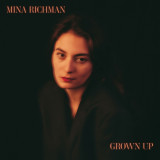
MINA RICHMAN - GROWN UP LP

Mina Richman

GROWN UP LP

12inchWLP15023527
WINDIG
22.03.2024

In Berlin geboren, aber in der Kleinstadt Bad Salzuflen aufgewachsen, pendelt Mina zwischen den Welten und entdeckt in der CD-Sammlung ihrer Tante Schätze wie Joan As Police Woman und Nina Simone. Soul und Blues, die Hip-Hop-Kultur und die Revolte der großen Singer-Songwriterinnen stehen Pate, als sie an ihrer Debüt-EP ,Jaywalker" (2022) arbeitet, mit der sie als beste Newcomerin für den PopNRW Preis nominiert wird. Von ihrem Vater ,aus Versehen" zur Feministin erzogen - wie sie es einmal in einem ,Zeit"-Interview formulierte - bediente sie sich für ihren Künstlerinnennamen beim berühmten Cher-Zitat ,Mom, I am a rich man". Ihr Solidaritäts-Song ,Baba Said" geht während der Revolution im Iran schlagartig viral und verschafft der Sängerin über Nacht auf dem ganzen Globus Aufmerksamkeit. Das Musikalische mit dem Gesellschaftlichen zu verbinden war ihr schon immer ein Anliegen. Mit renommierten Festivalslots bei dem New Fall, Herzberg und Reeperbahn Festival und Supportshows für Maxim, Anna Calvi und Alice Merton zeigt Mina, dass sie ,mit 25 Jahren schon eine ganz schöne Powerfrau ist." (WDR 5, 2022) Mit ihrem Debütalbum ,Grown Up" stellt sich Mina Richman nun dem Erwachsenwerden. Mit schonungsloser Ehrlichkeit kehrt sie in ihre Kindheit zurück und verarbeitet streitende Eltern, kulturelle Entwurzelung und den gesellschaftlichen, wie auch ihren persönlichen Umgang mit ihrem Körper. Ehrlich. Queer. Selbstbestimmt. Auch musikalisch ist Mina gereift und stellt einen Sound mit Einflüssen aus Soul, Folk, Indie und HipHop vor, zeigt dass Amy Winehouse, Ronda oder die Alabama Shakes nicht spurlos an ihr vorbei gegangen sind, beleuchtet die schönen Seiten des Erwachsenwerdens: Mut und liebe Menschen, die einen begleiten. Das Album ,Grown Up" wird am 15. März 2024 über Windig erscheinen und anschließend auf einer großen Release Tournee vorgestellt.

pre-ordina ora22.03.2024

dovrebbe essere pubblicato su 22.03.2024

24,16
MINA RICHMAN - GROWN UP LP

Mina Richman

GROWN UP LP

12inchWLP1B5023527
WINDIG
15.03.2024

In Berlin geboren, aber in der Kleinstadt Bad Salzuflen aufgewachsen, pendelt Mina zwischen den Welten und entdeckt in der CD-Sammlung ihrer Tante Schätze wie Joan As Police Woman und Nina Simone. Soul und Blues, die Hip-Hop-Kultur und die Revolte der großen Singer-Songwriterinnen stehen Pate, als sie an ihrer Debüt-EP ,Jaywalker" (2022) arbeitet, mit der sie als beste Newcomerin für den PopNRW Preis nominiert wird. Von ihrem Vater ,aus Versehen" zur Feministin erzogen - wie sie es einmal in einem ,Zeit"-Interview formulierte - bediente sie sich für ihren Künstlerinnennamen beim berühmten Cher-Zitat ,Mom, I am a rich man". Ihr Solidaritäts-Song ,Baba Said" geht während der Revolution im Iran schlagartig viral und verschafft der Sängerin über Nacht auf dem ganzen Globus Aufmerksamkeit. Das Musikalische mit dem Gesellschaftlichen zu verbinden war ihr schon immer ein Anliegen. Mit renommierten Festivalslots bei dem New Fall, Herzberg und Reeperbahn Festival und Supportshows für Maxim, Anna Calvi und Alice Merton zeigt Mina, dass sie ,mit 25 Jahren schon eine ganz schöne Powerfrau ist." (WDR 5, 2022) Mit ihrem Debütalbum ,Grown Up" stellt sich Mina Richman nun dem Erwachsenwerden. Mit schonungsloser Ehrlichkeit kehrt sie in ihre Kindheit zurück und verarbeitet streitende Eltern, kulturelle Entwurzelung und den gesellschaftlichen, wie auch ihren persönlichen Umgang mit ihrem Körper. Ehrlich. Queer. Selbstbestimmt. Auch musikalisch ist Mina gereift und stellt einen Sound mit Einflüssen aus Soul, Folk, Indie und HipHop vor, zeigt dass Amy Winehouse, Ronda oder die Alabama Shakes nicht spurlos an ihr vorbei gegangen sind, beleuchtet die schönen Seiten des Erwachsenwerdens: Mut und liebe Menschen, die einen begleiten. Das Album ,Grown Up" wird am 15. März 2024 über Windig erscheinen und anschließend auf einer großen Release Tournee vorgestellt.

pre-ordina ora15.03.2024

dovrebbe essere pubblicato su 15.03.2024

22,06
Marry Waterson & Adrian Crowley - Cuckoo Storm LP

Marry Waterson – an essential part of the fabric of folk history in England – and Adrian Crowley– one of Ireland’s most acclaimed talents – collaborate for the first time on ‘Cuckoo Storm,’ a distinctive and powerfully lyrical album of 11 original songs produced with Jim Barr (Portishead).

The ‘Cuckoo Storm’ might never have been, were it not for a social media post Crowley wrote on a wintery late-night walk in a quiet neighbourhood of Dublin during lockdown. Struck by Waterson’s previous album ‘Death Had Quicker Wings Than Love’ (co-written with David A Jaycock), he wanted to mark the moment and pressed ‘send’ into the ether with no way of knowing what would follow. Drawn to his voice and seeing a kindred spirit in his poetic lyrics, Waterson was touched by his message and responded by asking if he would be interested in working together. His answer was a resounding ‘yes.’

‘Cuckoo Storm’ is a deeply compelling album. A serendipitous collaboration that has resulted in a collection of 11 beautifully crafted songs, sung by two voices that are a powerful match. Waterson’s brilliantly distinctive voice is underpinned by Crowley’s rich baritone and together it’s an intoxicating mix.

Joining Marry Waterson (vocals) and Adrian Crowley (vocals, piano, electric guitar, mellotron, harmonium, music box clarinet, marxophone, synth) on Cuckoo Storm are Jim Barr (Portishead) bass, lap-steel guitar;Pete Judge (Get The Blessing) trumpet, flugelhorn; Jake McMurchie (Get The Blessing) sax; James Gow, cello; Seán Mac Erlaine bass clarinet; Lisa Dowdall viola d’amore and Rob Pemberton on drums.

pre-ordina ora08.03.2024

dovrebbe essere pubblicato su 08.03.2024

30,04
Marry Waterson & Adrian Crowley - Cuckoo Storm LP

Marry Waterson – an essential part of the fabric of folk history in England – and Adrian Crowley– one of Ireland’s most acclaimed talents – collaborate for the first time on ‘Cuckoo Storm,’ a distinctive and powerfully lyrical album of 11 original songs produced with Jim Barr (Portishead).

The ‘Cuckoo Storm’ might never have been, were it not for a social media post Crowley wrote on a wintery late-night walk in a quiet neighbourhood of Dublin during lockdown. Struck by Waterson’s previous album ‘Death Had Quicker Wings Than Love’ (co-written with David A Jaycock), he wanted to mark the moment and pressed ‘send’ into the ether with no way of knowing what would follow. Drawn to his voice and seeing a kindred spirit in his poetic lyrics, Waterson was touched by his message and responded by asking if he would be interested in working together. His answer was a resounding ‘yes.’

‘Cuckoo Storm’ is a deeply compelling album. A serendipitous collaboration that has resulted in a collection of 11 beautifully crafted songs, sung by two voices that are a powerful match. Waterson’s brilliantly distinctive voice is underpinned by Crowley’s rich baritone and together it’s an intoxicating mix.

Joining Marry Waterson (vocals) and Adrian Crowley (vocals, piano, electric guitar, mellotron, harmonium, music box clarinet, marxophone, synth) on Cuckoo Storm are Jim Barr (Portishead) bass, lap-steel guitar;Pete Judge (Get The Blessing) trumpet, flugelhorn; Jake McMurchie (Get The Blessing) sax; James Gow, cello; Seán Mac Erlaine bass clarinet; Lisa Dowdall viola d’amore and Rob Pemberton on drums.

pre-ordina ora08.03.2024

dovrebbe essere pubblicato su 08.03.2024

28,53
Enji - Ulaan

Enji

Ulaan

12inchSQM017CR
Squama
08.12.2023

Special remarks: 180g, Red Vinyl, Limited to 100 copies.

After the success of 2021’s Ursgal, Mongolian jazz singer Enji returns with her third album Ulaan. The line-up has grown in size with drummer Mariá Portugal and clarinettist Joana Queiroz from Brazil joining the band to create an invigorating blend of grounded Folk and brooding Jazz.

pre-ordina ora08.12.2023

dovrebbe essere pubblicato su 08.12.2023

25,63
Kronos Quartet - Kronos Quartet Performs Philip Glass LP 2x12"
  • A1: String Quartet No. 5 I
  • A2: String Quartet No. 5 Ii
  • A3: String Quartet No. 5 Iii
  • A4: String Quartet No. 5 Iv
  • A5: String Quartet No. 5 V
  • B1: String Quartet No. 4 (Buczak) I
  • B2: String Quartet No. 4 (Buczak) Ii
  • B3: String Quartet No. 4 (Buczak) Iii
  • C1: String Quartet No. 2 (Company) I
  • C2: String Quartet No. 2 (Company) Ii
  • C3: String Quartet No. 2 (Company) Iii
  • C4: String Quartet No. 2 (Company) Iv
  • D1: String Quartet No. 3 (Mishima) 1957 – Award Montage
  • D2: String Quartet No. 3 (Mishima) November 25 – Ichigaya
  • D3: String Quartet No. 3 (Mishima) 1934 – Grandmother And Kimitake
  • D4: String Quartet No. 3 (Mishima) 1962 – Body Building
  • D5: String Quartet No. 3 (Mishima) Blood Oath
  • D6: String Quartet No. 3 (Mishima) Mishima/Closing

When Kronos plays a piece, they become fellow composers, true collaborators. Without them, we wouldn’t have the kind of string quartet playing that we find around us today. There are two kinds of string quartet playing: the ‘Before Kronos’ and the ‘After Kronos’.” – Philip Glass

‘Kronos Quartet has broken the boundaries of what string quartets can do.’ – New York Times

Nonesuch releases Kronos Quartet’s acclaimed album Kronos Quartet Performs Philip Glass on vinyl for the first time to coincide with Kronos Quartet: Five Decades, a year-long celebration marking the quartet’s 50th anniversary. Originally released in 1995, the album features David Harrington (violin), John Sherba, (violin), Hank Dutt (viola) and Joan Jeanrenaud (cello) performing Quartet No. 2 (Company) (1983), No. 3 (Mishima) (1985), No. 4 (Buczak) (1990), and No. 5 (1991), the first piece Glass wrote especially for Kronos. Recorded at Skywalker Sound in California, the album was produced by Judith Sherman, Kurt Munkacsi and Philip Glass. The cover art features Francesco Clemente’s painting The Four Corners (1985). At the time of the album’s release, the New York Times said, ‘It contains some of Glass's best music since Koyaanisqatsi. His ear for sumptuous string sonorities is undeniable,’ while the Washington Post called it ‘An ideal combination of composer and performers.’ It was a top 10 hit on Billboard’s Top Classical Albums, and spent 12 weeks on Billboard’s Classical chart.


In his original liner note, critic Mark Swed wrote, ‘Glass’ string quartets may contain his most intimate music. They are works through which a very public composer, perhaps the most important opera reformer of our age and a longstanding collaborator in large-scale music theater, holds up a mirror to himself and his way of composing. “In an odd way,” Glass explains, “string quartets have always functioned like that for composers. I don’t really know why, but it’s almost impossible to get away from it. It’s the way composers of the past have thought and that’s no less true for me. It’s almost as if we say we’re going to write a string quartet, we take a deep breath, and we wade in to try to write the most serious, significant piece that we can.” Glass says that as he sat down to write String Quartet No. 5, he had discovered that perhaps not taking a serious tone might be the most serious way to deal with it. “I was thinking that I had really gone beyond the need to write a serious string quartet and that I could write a quartet that is about musicality, which in a certain way is the most serious subject.”’


Glass’ first numbered quartet was written in 1966; however, he did not return to the string quartet medium until 1983, when he provided incidental music for a dramatization of Samuel Beckett’s prose poem, Company. During those 17 years, Glass had formed an ensemble and developed his style in a series of increasingly elaborate pieces for it. String Quartet No. 3 is also adapted to dramatic music, this time from his score to the 1985 Paul Schrader film, Mishima. It was with the music of Mishima that Kronos became associated with Glass, recording the string quartet sections of the soundtrack and subsequently working extensively with the composer on all five of his numbered quartets. Kronos also gave the first concert performances of Company and Mishima. String Quartet No. 4 was composed in remembrance of the artist Brian Buczak, who died of AIDS in 1988.


As Kronos’ anniversary season continues with further concerts around the world, Nonesuch will reissue Black Angels on vinyl on February 16. First released in 1990, the award-winning album includes George Crumb’s title piece, which inspired David Harrington to found the quartet. Called ‘an unusually elevated and searing Vietnam War protest’ by the New York Times, it sets a dark, powerful tone for this collection, which addresses the political/physical/spiritual consequences of war. Also featured are works by Charles Ives, István Márta, Thomas Tallis, and Dmitri Shostakovich. ‘Stylishly packaged, intelligently programmed, superbly recorded and brilliantly performed,’ proclaimed Gramophone. ‘In short, very much the sort of disc we’ve come to expect from the talented and imaginative Kronos Quartet.’ The Evening Standard included it among its ‘100 Definitive Classical Albums of the 20th Century’.


Born in Baltimore, Maryland, in 1937, Philip Glass is a graduate of the University of Chicago and the Juilliard School. By 1974, he had created a large collection of music for The Philip Glass Ensemble. The period culminated in the landmark opera, Einstein on the Beach. Since Einstein, Glass’s repertoire has grown to include music for opera, dance, theatre, orchestra, and film. His scores have received Academy Award nominations (including Kundun and The Hours, as well as Notes on a Scandal) and a Golden Globe (The Truman Show). Recent works include his memoir, Words Without Music, his first Piano Sonata, opera Circus Days and Nights, and Symphony No. 14. Glass received the Praemium Imperiale in 2012, the US National Medal of the Arts from President Barack Obama in 2016, and 41st Kennedy Center Honors in 2018.


Nonesuch’s relationship with Glass began in 1985, with the release of the score for Paul Schrader’s Mishima featuring Kronos Quartet. Over the years other Glass works on Nonesuch have included Einstein on the Beach (1993), Kronos Quartet Performs Philip Glass (1995), Music in Twelve Parts (1996), Glass Box (2008), as well as the soundtracks for Powaqqatsi (1988), Kundun (1997), Koyaanisqatsi (1998), and The Hours (2002), amongst others.


For 50 years, San Francisco’s Kronos Quartet – David Harrington (violin), John Sherba (violin), Hank Dutt (viola), and Paul Wiancko (cello) – has challenged and reimagined what a string quartet can be. Founded at a time when the form was largely centred on long-established, Western European traditions, Kronos has been at the forefront of revolutionizing the string quartet into a living art form that responds to the people and issues of our time. In the process, Kronos has become one of the most celebrated and influential groups of our era, performing thousands of concerts worldwide, releasing more than 70 recordings of extraordinary breadth and creativity, and collaborating with many of the world’s most accomplished composers and performers. Through its nonprofit organization, Kronos Performing Arts Association, Kronos has commissioned more than 1,000 works and arrangements for string quartet – including the Kronos Fifty for the Future library of free, educational repertoire. Kronos has received more than 40 awards, including three Grammy Awards and the Polar Music, Avery Fisher, and Edison Klassiek Oeuvre Prizes.


Kronos is prolific and wide-ranging on recordings. The ensemble’s expansive discography on Nonesuch includes three Grammy-winning albums: Terry Riley’s Sun Rings (2019), Landfall with Laurie Anderson (2018), and Alban Berg’s Lyric Suite featuring soprano Dawn Upshaw (2003); the 40th-anniversary boxed set Kronos Explorer Series; Nuevo (2002), a Grammy- and Latin Grammy–nominated celebration of Mexican culture; Pieces of Africa (1992), a showcase of African-born composers that simultaneously topped Billboard’s Classical and World Music charts; and Folk Songs (2017), Nonesuch’s 50th album with Kronos, which featured Sam Amidon, Olivia Chaney, Rhiannon Giddens, and Natalie Merchant singing traditional folk songs.

non in magazzino

Ordina ora e ordineremo l'articolo per te presso il nostro fornitore.

39,45

Last In: 2 years ago
Julie Byrne - Not Even Happiness

2023 Repress Blue Vinyl

- Eagerly anticipated follow up to 2014 debut - number 7 in Mojo's best albums of the year.
- LP jacket is gloss laminate with front & back folds on the outside.The back panel is uncoated/matt varnish - 300 gsm card and 180g vinyl. Digital Download included.
- EU tour coming in April with Summer festivals later in 2017.

Sometimes it can take years to find your calling. Not so, for wanderer Julie Byrne, whose power of lyrical expression and melodic nous seems inborn. But often, what comes naturally demonstrates against speed. Julie's second album Not Even Happiness has taken time to evolve, but as it spans recollections of bustling roadside diners, the stars over the high desert, the aching weariness of change, the wildflowers on the coast of California and the irresolvable mysteries of love. Her new album archives a vivid world that would've otherwise been lost to the road and in doing so, Byrne exhibits her extraordinarily innate musicality.

In fact, some of the album's songs took two years of fine tuning to get where they needed to be. And if you were to ask her why the follow up to 2014's Rooms With Walls And Windows has taken so long, you'd only be greeted with a bemused smile as though it's the strangest question she's ever been asked, Writing comes from a natural process of change and growth. It took me up to this point to have the capacity to express my experience of the time in my life that these songs came from.'

Having counted Buffalo, Pittsburgh, Pennsylvania, Northampton, Massachusetts, Chicago, Illinois, Seattle, New Orleans as her home in recent years. For now, Julie has settled in New York City where she moonlights as a seasonal urban park ranger in Manhattan. Whether witnessing the Pacific Northwest for the first time ('Melting Grid'), the morning sky in Colorado after staying up through the night at a house party in the mountains of Boulder ('Natural Blue'), recording the passage of freight trains on the outskirts of Buffalo, New York ('Interlude'), or a journey fragrant with rose water, reading Frank O'Hara aloud from the passengers seat during a drive through the desert of Utah into the rainforest of Washington State ('All The Land Glimmered Beneath'), Not Even Happiness is Julie's beguilingly ode to the fringes of life.

Self-taught on the guitar after picking it up when her father became ill and could no longer play the instrument himself, Julie readily admits she can't read music and doesn't even listen to it all that much - the first vinyl she owned was indeed, her own. Recorded with producer Eric Littmann (Phantom Posse), Julie laid down the new album in her childhood home in western New York state and offers an altogether bigger picture to its predecessor through a wider, yet subtle, exploration of instruments and atmospherics, Not Even Happiness reveals an artist who has grown in confidence over time.

Byrne's debut album was released back in January 2014 on Chicago based DIY label Orindal after initially being as two separate cassettes releases. Rooms With Walls and Windows went onto become a true modern-day word of mouth success story (it would have to be for an artist who shuns all forms of social media) and ended the year being voted number 7 in Mojo magazine's best albums of the year, with the Huffington Post calling it "2014's Great American Album". A collection of hushed intimate front porch psych-folk songs, that unknowingly recalled the greats, but felt very much for our time. It saw her travel to Europe over two summers playing the Green Man festival and End Of The Road, as well as lesser trodden tour paths around Europe.

Julie Byrne will take the songs from Not Even Happiness (the first release on a new record label Basin Rock, based in the Lancashire / Yorkshire border town of Todmorden) on the road throughout 2017.

pre-ordina ora01.09.2023

dovrebbe essere pubblicato su 01.09.2023

25,00
Enji - Ulaan LP

Enji

Ulaan LP

12inchSQM017
Squama
18.08.2023

After the success of 2021’s Ursgal, Mongolian jazz singer Enji returns with her third album Ulaan. The line-up has grown in size with drummer Mariá Portugal and clarinettist Joana Queiroz from Brazil joining the band to create an invigorating blend of grounded Folk and brooding Jazz.

non in magazzino

Ordina ora e ordineremo l'articolo per te presso il nostro fornitore.

21,81

Last In: 2 years ago
The Milk Carton Kids - I Only See the Moon

Critically acclaimed folk duo The Milk Carton Kids are back with I Only See The Moon. Produced by Kenneth Pattengale, this full-length album features a collection of timeless and traditionalist tracks with hauntingly lovely and rich vocal melodies and lyrical content spanning the themes of time, nostalgia, heartbreak, sadness, love, nature, grief, loss, freedom, solitude, and relationships. Founded in 2011, The Milk Carton Kids swiftly emerged as a major force in the American folk tradition, blending ethereal harmonies and intricate musicianship with a uniquely powerful brand of contemporary songcraft. 2013’s ANTI- debut The Ash & Clay proved their national breakthrough, earning The Milk Carton Kids their first Grammy Award nomination for Best Folk Album. A second Grammy nomination for Best American Roots Performance followed in 2015 for the track “The City of Our Lady” from band’s acclaimed third studio album, Monterey, and 2018’s All The Things That I Did And All The Things That I Didn’t Do was nominated for Best Engineered Album, Non-Classical. The band’s most recent album, 2019’s The Only Ones (out now via Far Cry Records in partnership with Thirty Tigers), was the subject of extensive praise, with Rolling Stone proclaiming that “Kenneth Pattengale and Joey Ryan get back to the beautiful basics with The Only Ones,” while NPR’s “World Café” noted that “even though Joey and Kenneth are not related, their voices together create a sibling-like harmony...the duo has a strong sense of respect and reverence for the musical traditions that they've grown from.”

pre-ordina ora19.05.2023

dovrebbe essere pubblicato su 19.05.2023

22,48
THE WAVES - MOTORIKHERZ 2x12"

The Waves

MOTORIKHERZ 2x12"

2x12inchPERLON134
Perlon
24.02.2023

A matter of pace, an analog memory…
Feel safe: like newborn, take your first careful steps on a clean slate while Maayan is your supervisor. Naïve and happy, you leave carbonbon footprints on your way into the positives. Then a faster pace: some tribal folk music from a tiny world, where people dance around an LED fire, commands a gallop to the one and ollam. Latinfection guaranteed.
Your nonplus motion interferes with environmental geometry. A memory from an analog past flashes like a daydream. Upward and rising, your smile workout succeeds while scintillating waves say “hello!”. Having grown up to a motorik being, the determined goal however never appears. The journey into a perfect storm is the reward. Maayan sends you some motivating words.
Then have a break and jump on the light train of thoughts to enjoy blurred reflections: on the water and in your mind. Sing your body beautiful and free. Words come in bubbles, a heart-throb away from a light tower. Feel like stumbling into new adventures on a pathless terrain.
Slowly and cautious, the novemberme, which is the one that approaches dawn, celebrates tristesse with a funny accent. Kick the blues with a beat. Somewhere lost but regenerated, find sisyphos’ generator of vitality. A nascent religious mood at the Autobahn service station fades into the fog.
Finally, the circle of pace is almost closed. After laughter of amazement, Maayan leaves you with a soothing mantra of confidence: an everyday ritual fun you should indulge yourself in. It comes in waves.

non in magazzino

Ordina ora e ordineremo l'articolo per te presso il nostro fornitore.

22,65

Last In: 8 months ago
Seabuckthorn - Of No Such Place

Seabuckthorn

Of No Such Place

12inchLAAPS023LP
LAAPS
18.11.2022

Seabuckthorn is the alias used by Andy Cartwright for his solo works. Cartwright uses finger picking & bowing techniques combined with various open tunings to form a mixture of approaches, often with layered accompaniments. Generally the songs lean towards to the experimental genre, whilst on the edge of the ambient and folk.

Having grown up in Oxfordshire, Cartwright studied sound engineering in Cornwall and then lived in the cities of London, Paris & Bristol working as a broadcast wireman. He now resides in the French Southern Alps making music.

Cartwright has been actively touring internationally for several years performing in festivals and events throughout Europe.

Various songs have been featured in documentaries, film and contemporary dance. His works has been released since 2009 on labels such as Dead Pilot Records, Bookmaker Records, Lost Tribe Sound, Eilean Rec., IIKKI and Fluid Audio. "Of No Such Place" is his 13th solo releases.

pre-ordina ora18.11.2022

dovrebbe essere pubblicato su 18.11.2022

23,40
Lee Tracy & Isaac Manning - Is it What You Want

As the sun sets on a quaint East Nashville house, a young man bares a piece of his soul. Facing the camera, sporting a silky suit jacket/shirt/slacks/fingerless gloves ensemble that announces "singer" before he's even opened his mouth, Lee Tracy Johnson settles onto his stage, the front yard. He sways to the dirge-like drum machine pulse of a synth-soaked slow jam, extends his arms as if gaining his balance, and croons in affecting, fragile earnest, "I need your love… oh baby…"

Dogs in the yard next door begin barking. A mysterious cardboard robot figure, beamed in from galaxies unknown and affixed to a tree, is less vocal. Lee doesn't acknowledge either's presence. He's busy feeling it, arms and hands gesticulating. His voice rises in falsetto over the now-quiet dogs, over the ambient noise from the street that seeps into the handheld camcorder's microphone, over the recording of his own voice played back from a boombox off-camera. After six minutes the single, continuous shot ends. In this intimate creative universe there are no re-takes. There are many more music videos to shoot, and as Lee later puts it, "The first time you do it is actually the best. Because you can never get that again. You expressing yourself from within."

"I Need Your Love" dates from a lost heyday. From some time in the '80s or early '90s, when Lee Tracy (as he was known in performance) and his music partner/producer/manager Isaac Manning committed hours upon hours of their sonic and visual ideas to tape. Embracing drum machines and synthesizers – electronics that made their personal futurism palpable – they recorded exclusively at home, live in a room into a simple cassette deck. Soul, funk, electro and new wave informed their songs, yet Lee and Isaac eschewed the confinement of conventional categories and genres, preferring to let experimentation guide them.

"Anytime somebody put out a new record they had the same instruments or the same sound," explains Isaac. "So I basically wanted to find something that's really gonna stand out away from all of the rest of 'em." Their ethos meant that every idea they came up with was at least worth trying: echoed out half-rapped exhortations over frantic techno-style beats, gospel synth soul, modal electro-funk, oddball pop reinterpretations, emo AOR balladry, nods to Prince and the Fat Boys, or arrangements that might collapse mid-song into a mess of arcade game-ish blips before rallying to reach the finish line. All of it conjoined by consistent tape hiss, and most vitally, Lee's chameleonic voice, which managed to wildly shape shift and still evoke something sincere – whether toggling between falsetto and tenor exalting Jesus's return, or punctuating a melismatic romantic adlib with a succinct, "We all know how it feels to be alone."

"People think we went to a studio," says Isaac derisively. "We never went to no studio. We didn't have the money to go to no studio! We did this stuff at home. I shot videos in my front yard with whatever we could to get things together." Sometimes Isaac would just put on an instrumental record, be it "Planet Rock" or "Don't Cry For Me Argentina" (from Evita), press "record," and let Lee improvise over it, yielding peculiar love songs, would-be patriotic anthems, or Elvis Presley or Marilyn Monroe tributes. Technical limitations and a lack of professional polish never dissuaded them. They believed they were onto something.

"That struggle," Isaac says, "made that sound sound good to me."

In the parlance of modern music criticism Lee and Isaac's dizzying DIY efforts would inevitably be described as "outsider." But "outsider" carries the burden of untold additional layers of meaning if you're Black and from the South, creating on a budget, and trying to get someone, anyone within the country music capital of the world to take your vision seriously. "What category should we put it in?" Isaac asks rhetorically. "I don't know. All I know is feeling. I ain't gonna name it nothing. It's music. If it grabs your soul and touch your heart that's what it basically is supposed to do."

=

Born in 1963, the baby boy of nine siblings, Lee Tracy spent his earliest years living amidst the shotgun houses on Nashville's south side. "We was poor, man!" he says, recalling the outhouse his family used for a bathroom and the blocks of ice they kept in the kitchen to chill perishables. "But I actually don't think I really realized I was in poverty until I got grown and started thinking about it." Lee's mom worked at the Holiday Inn; his dad did whatever he had to do, from selling fruit from a horse drawn cart to bootlegging. "We didn't have much," Lee continues, "but my mother and my father got us the things we needed, the clothes on our back." By the end of the decade with the city's urban renewal programs razing entire neighborhoods to accommodate construction of the Interstate, the family moved to Edgehill Projects. Lee remembers music and art as a constant source of inspiration for he and his brothers and sisters – especially after seeing the Jackson 5 perform on Ed Sullivan. "As a small child I just knew that was what I wanted to do."

His older brother Don began musically mentoring him, introducing Lee to a variety of instruments and sounds. "He would never play one particular type of music, like R&B," says Lee. "I was surrounded by jazz, hard rock and roll, easy listening, gospel, reggae, country music; I mean I was a sponge absorbing all of that." Lee taught himself to play drums by beating on cardboard boxes, gaining a rep around the way for his timekeeping, and his singing voice. Emulating his favorites, Earth Wind & Fire and Cameo, he formed groups with other kids with era-evocative band names like Concept and TNT Connection, and emerged as the leader of disciplined rehearsals. "I made them practice," says Lee. "We practiced and practiced and practiced. Because I wanted that perfection." By high school the most accomplished of these bands would take top prize in a prominent local talent show. It was a big moment for Lee, and he felt ready to take things to the next level. But his band-mates had other ideas.

"I don't know what happened," he says, still miffed at the memory. "It must have blew they mind after we won and people started showing notice, because it's like everybody quit! I was like, where the hell did everybody go?" Lee had always made a point of interrogating prospective musicians about their intentions before joining his groups: were they really serious or just looking for a way to pick up girls? Now he understood even more the importance of finding a collaborator just as committed to the music as he was.

=

Isaac Manning had spent much of his life immersed in music and the arts – singing in the church choir with his family on Nashville's north side, writing, painting, dancing, and working various gigs within the entertainment industry. After serving in the armed forces, in the early '70s he ran The Teenage Place, a music and performance venue that catered to the local youth. But he was forced out of town when word of one of his recreational routines created a stir beyond the safe haven of his bohemian circles.

"I was growing marijuana," Isaac explains. "It wasn't no business, I was smoking it myself… I would put marijuana in scrambled eggs, cornbread and stuff." His weed use originated as a form of self-medication to combat severe tooth pain. But when he began sharing it with some of the other young people he hung out with, some of who just so happened to be the kids of Nashville politicians, the cops came calling. "When I got busted," he remembers, "they were talking about how they were gonna get rid of me because they didn't want me saying nothing about they children because of the politics and stuff. So I got my family, took two raggedy cars, and left Nashville and went to Vegas."

Out in the desert, Isaac happened to meet Chubby Checker of "The Twist" fame while the singer was gigging at The Flamingo. Impressed by Isaac's zeal, Checker invited him to go on the road with him as his tour manager/roadie/valet. The experience gave Isaac a window into a part of the entertainment world he'd never encountered – a glimpse of what a true pop act's audience looked like. "Chubby Checker, none of his shows were played for Black folks," he remembers. "All his gigs were done at high-class white people areas." Returning home after a few years with Chubby, Isaac was properly motivated to make it in Music City. He began writing songs and scouting around Nashville for local talent anywhere he could find it with an expressed goal: "Find someone who can deliver your songs the way you want 'em delivered and make people feel what you want them to feel."

One day while walking through Edgehill Projects Isaac heard someone playing the drums in a way that made him stop and take notice. "The music was so tight, just the drums made me feel like, oh I'm-a find this person," he recalls. "So I circled through the projects until I found who it was.

"That's how I met him – Lee Tracy. When I found him and he started singing and stuff, I said, ohhh, this is somebody different."

=

Theirs was a true complementary partnership: young Lee possessed the raw talent, the older Isaac the belief. "He's really the only one besides my brother and my family that really seen the potential in me," says Lee. "He made me see that I could do it."

Isaac long being a night owl, his house also made for a fertile collaborative environment – a space where there always seemed to be a new piece of his visual art on display: paintings, illustrations, and dolls and figures (including an enigmatic cardboard robot). Lee and Issac would hang out together and talk, listen to music, conjure ideas, and smoke the herb Isaac had resumed growing in his yard. "It got to where I could trust him, he could trust me," Isaac says of their bond. They also worked together for hours on drawings, spreading larges rolls of paper on the walls and sketching faces with abstract patterns and imagery: alien-like beings, tri-horned horse heads, inverted Janus-like characters where one visage blurred into the other.

Soon it became apparent that they didn't need other collaborators; self-sufficiency was the natural way forward. At Isaac's behest Lee, already fed up with dealing with band musicians, began playing around with a poly-sonic Yamaha keyboard at the local music store. "It had everything on it – trumpet, bass, drums, organ," remembers Lee. "And that's when I started recording my own stuff."

The technology afforded Lee the flexibility and independence he craved, setting him on a path other bedroom musicians and producers around the world were simultaneously following through the '80s into the early '90s. Saving up money from day jobs, he eventually supplemented the Yamaha Isaac had gotten him with Roland and Casio drum machines and a Moog. Lee was living in an apartment in Hillside at that point caring for his dad, who'd been partially paralyzed since early in life. In the evenings up in his second floor room, the music put him in a zone where he could tune out everything and lose himself in his ideas.

"Oh I loved it," he recalls. "I would really experiment with the instruments and use a lot of different sound effects. I was looking for something nobody else had. I wanted something totally different. And once I found the sound I was looking for, I would just smoke me a good joint and just let it go, hit the record button." More potent a creative stimulant than even Isaac's weed was the holistic flow and spontaneity of recording. Between sessions at Isaac's place and Lee's apartment, their volume of output quickly ballooned.

"We was always recording," says Lee. "That's why we have so much music. Even when I went to Isaac's and we start creating, I get home, my mind is racing, I gotta start creating, creating, creating. I remember there were times when I took a 90-minute tape from front to back and just filled it up."

"We never practiced," says Isaac. "See, that was just so odd about the whole thing. I could relate to him, and tell him about the songs I had ideas for and everything and stuff. And then he would bring it back or whatever, and we'd get together and put it down." Once the taskmaster hell bent on rehearsing, Lee had flipped a full 180. Perfection was no longer an aspiration, but the enemy of inspiration.

"I seen where practicing and practicing got me," says Lee. "A lot of musicians you get to playing and they gotta stop, they have to analyze the music. But while you analyzing you losing a lot of the greatness of what you creating. Stop analyzing what you play, just play! And it'll all take shape."

=

"I hope you understood the beginning of the record because this was invented from a dream I had today… (You tell me, I'll tell you, we'll figure it out together)" – Lee Tracy and Isaac Manning, "Hope You Understand"

Lee lets loose a maniacal cackle when he acknowledges that the material that he and Isaac recorded was by anyone's estimation pretty out there. It's the same laugh that commences "Hope You Understand" – a chaotic transmission that encapsulates the duality at the heart of their music: a stated desire to reach people and a compulsion to go as leftfield as they saw fit.

"We just did it," says Lee. "We cut the music on and cut loose. I don't sit around and write. I do it by listening, get a feeling, play the music, and the lyrics and stuff just come out of me."

The approach proved adaptable to interpreting other artists' material. While recording a cover of Whitney Houston's pop ballad "Saving All My Love For You," Lee played Whitney's version in his headphones as he laid down his own vocals – partially following the lyrics, partially using them as a departure point. The end result is barely recognizable compared with the original, Lee and Isaac having switched up the time signature and reinvented the melody along the way towards morphing a slick mainstream radio standard into something that sounds solely their own.

"I really used that song to get me started," says Lee. "Then I said, well I need something else, something is missing. Something just came over me. That's when I came up with 'Is It What You Want.'"

The song would become the centerpiece of Lee and Isaac's repertoire. Pushed along by a percolating metronomic Rhythm King style beat somewhere between a military march and a samba, "Is It What You Want" finds Lee pleading the sincerity of his commitment to a potential love interest embellished by vocal tics and hiccups subtlely reminiscent of his childhood hero MJ. Absent chord changes, only synth riffs gliding in and out like apparitions, the song achieves a lingering lo-fi power that leaves you feeling like it's still playing, somewhere, even after the fade out.

"I don't know, it's like a real spiritual song," Lee reflects. "But it's not just spiritual. To me the more I listen to it it's like about everything that you do in your everyday life, period. Is it what you want? Do you want a car or you don't want a car? Do you want Jesus or do you want the Devil? It's basically asking you the question. Can't nobody answer the question but you yourself."

In 1989 Lee won a lawsuit stemming from injuries sustained from a fight he'd gotten into. He took part of the settlement money and with Isaac pressed up "Saving All My Love For You" b/w "Is It What You Want" as a 45 single. Isaac christened the label One Chance Records. "Because that's all we wanted," he says with a laugh, "one chance."

Isaac sent the record out to radio stations and major labels, hoping for it to make enough noise to get picked up nationally. But the response he and Lee were hoping for never materialized. According to Isaac the closest the single got to getting played on the radio is when a disk jock from a local station made a highly unusual announcement on air: "The dude said on the radio, 107.5 – 'We are not gonna play 'Is It What You Want.' We cracked up! Wow, that's deep.

"It was a whole racist thing that was going on," he reflects. "So we just looked over and kept on going. That was it. That was about the way it goes… If you were Black and you were living in Nashville and stuff, that's the way you got treated." Isaac already knew as much from all the times he'd brought he and Lee's tapes (even their cache of country music tunes) over to Music Row to try to drum up interest to no avail.

"Isaac, he really worked his ass off," says Lee. "He probably been to every record place down on Music Row." Nashville's famed recording and music business corridor wasn't but a few blocks from where Lee grew up. Close enough, he remembers, for him to ride his bike along its back alleys and stumble upon the occasional random treasure, like a discarded box of harmonicas. Getting in through the front door, however, still felt a world away.

"I just don't think at the time our music fell into a category for them," he concedes. "It was before its time."

=

Lee stopped making music some time in the latter part of the '90s, around the time his mom passed away and life became increasingly tough to manage. "When my mother died I had a nervous breakdown," he says, "So I shut down for a long time. I was in such a sadness frame of mind. That's why nobody seen me. I had just disappeared off the map." He fell out of touch with Isaac, and in an indication of just how bad things had gotten for him, lost track of all the recordings they'd made together. Music became a distant memory.

Fortunately, Isaac kept the faith. In a self-published collection of his poetry – paeans to some of his favorite entertainment and public figures entitled Friends and Dick Clark – he'd written that he believed "music has a life of its own." But his prescience and presence of mind were truly manifested in the fact that he kept an archive of he and Lee's work. As perfectly imperfect as "Is It What You Want" now sounds in a post-Personal Space world, Lee and Isaac's lone official release was in fact just a taste. The bulk of the Is It What You Want album is culled from the pair's essentially unheard home recordings – complete songs, half-realized experiments, Isaac's blue monologues and pronouncements et al – compiled, mixed and programmed in the loose and impulsive creative spirit of their regular get-togethers from decades ago. The rest of us, it seems, may have finally caught up to them.

On the prospect of at long last reaching a wider audience, Isaac says simply, "I been trying for a long time, it feels good." Ever the survivor, he adds, "The only way I know how to make it to the top is to keep climbing. If one leg break on the ladder, hey, you gotta fix it and keep on going… That's where I be at. I'll kill death to make it out there."

For Lee it all feels akin to a personal resurrection: "It's like I was in a tomb and the tomb was opened and I'm back… Man, it feels so great. I feel like I'm gonna jump out of my skin." Success at this stage of his life, he realizes, probably means something different than what it did back when he was singing and dancing in Isaac's front yard. "What I really mean by 'making it,'" he explains isn't just the music being heard but, "the story being told."

Occasionally Lee will pull up "Is It What You Want" on YouTube on his phone, put on his headphones, and listen. He remembers the first time he heard his recorded voice. How surreal it was, how he thought to himself, "Is that really me?" What would he say to that younger version of himself now?

"I would probably tell myself, hang in there, don't give up. Keep striving for the goal. And everything will work out."

Despite what's printed on the record label, sometimes you do get more than one chance.

non in magazzino

Ordina ora e ordineremo l'articolo per te presso il nostro fornitore.

11,72

Last In: 3 years ago
Articoli per pagina:
N/ABPM
Vinyl