- Mi China
- Close Your Eyes
- Mambo At The M
- Contigo
- Bonita
- The Lady Is A Tramp
- Black Orchid
- Happiness Is A Thing Called Joe
- I've Waited So Long
- Out Of Nowhere
- Guajira At The Blackhawk
Cerca:guajira
This is one of Ray Pérez’s most highly sought-after albums, not only for its strong salsa dura anthems and funky boogaloo numbers but also for its brave, quirky eclecticism and youthful, rebellious spirit, all of which are reflections of “El Loco” Ray’s unique genius, making him a beloved figure in rare record collector circles everywhere.
The original is not that easy to find today and carries a hefty price. Thankfully, it has been remastered from the original tapes, fully licensed, with the original artwork, preserving and presenting the legacy of this great Venezuelan music for today’s generation.
DESCRIPTION
The late 1960s was a very busy time when Pérez was juggling several different studio bands: Los Dementes, Los Calvos and Los Kenya.
The daring experiment Pérez created with Los Calvos laid the basis for Los Kenya, an actual working band that released six albums between 1968 and 1972. Despite being titled “Los Kenya, Vol. 2” because it was the second released by Discomoda, the record actually represents Los Kenya’s third album, and is perhaps the most mature, well-rounded venture in the lot.
In February 1969, on Discomoda, came “Los Kenya, Vol. 2” focused on the upcoming carnival season and was calculated to compete with rival bands Federico Y Su Combo Latino and Sexteto Juventud for the plethora of gigs offered at that time of year.
The album, like all Ray Pérez releases of the time, is short and powerful, with five tracks per side, showcasing a variety of singers, genres, rhythms, influences and arrangements, making this one of his more eccentric and interesting efforts. 1960s California “sunshine pop” rock (often referred to as ‘surf’ on Los Kenya records), guajiras, boogaloos, descargas and even Mexican mariachi corridos are all added to the pot of salsa cooked up by “El Loco Ray” and his band.
The album has been rescued from obscurity and lovingly restored, remastered from the original tapes, fully licensed, with its original artwork intact, preserving and presenting the legacy of this great Venezuelan music for today’s generation of global salsa dura fans.
Santana III is an album of 'lasts'. It was the last album recorded with the original Woodstock-line up and the last to hit #1 in the Billboard charts until 1999's Supernatural. But there are also a number of important 'firsts' on this album; Coke Escovedo joins in for the first time on percussion, as does Neal Schon (Journey) - who was a mere 17 of age when they recorded the album - on guitar. Santana III is viewed by many as the band's commercial and creative highpoint. The band sounds darker, rawer, and more eager with the doubling up on guitar of Schon's Rock 'n' Roll sensibilities and Santana's ecstatic high notes and soulful fills. Escovedo and Chepito's percussion are as fast as it is furious, and the minimal production adds greatly to the timeless appeal of this album. Santana III is available as a limited edition of 1500 individually numbered copies on translucent yellow coloured vinyl, housed in a deluxe heavyweight gatefold sleeve.
The Orquesta Broadway played a significant role in the evolution of Cuban music, and the album New York City Salsa’ stands as a testament to its creativity and lasting impact on the music scene. Released in 1978 on the Coco Records label, the album is often praised for its influence in merging different musical styles, including salsa and Afro-Cuban jazz. It features dynamic compositions and sophisticated arrangements that further solidified Orquesta Broadway’s reputation in the world of Latin music. Unavailable for many years, it is now released in a limited edition on TRANSPARENT DARK BLUE vinyl.
- A1: La Marimba Del Monte - Ft Absalon & Afropacífico
- A2: Piel De Piedra
- A3: Pedacito De Coco - Ft La Perla
- A4: Negra Soy - Ft Mónica Castillo & Mary Grueso
- A5: Guajiralta
- B1: Recógela - Ft La Perla & Troy Berkley
- B2: Viche, Tumbacatre Y Arrechón (Version) - Ft Absalón & Afropacífico
- B3: La Gaita De Las Aves
- B4: El Mexicano
- B5: Mariposafro
LTD 260 copies pressed / printed sleeves / Sealed
Jungle master Krak In Dub’s new album Catleya is a vibrant hommage to Colombia and its incredibly diverse musical culture. Entirely recorded in Bogotá with the who’s who of today’s Colombian music scene, the album casts a brand new light on the fusion of beats and Latin-American traditional rhythms and instruments, blending reggae, hip-hop, breaks and house with cumbia , afrobeat, ska, and bullerengue.
Standing out on this sun-soaked yet heavy-on-the-beats-and-bass adventure is the appearance of female modern folk trio La Perla, the Afro-Colombian combo Absalon & Afropacifico, and Bermudian singer Troy Berkley.
The Orquesta Broadway played a significant role in the evolution of Cuban music, and the album ‘Pasaporte’ stands as a testament to its creativity and lasting impact on the music scene. Released in 1976 on the Coco Records label, the album is often praised for its influence in merging different musical styles, including salsa and Afro-Cuban jazz. It features dynamic compositions and sophisticated arrangements that further solidified Orquesta Broadway’s reputation in the world of Latin music. Unavailable for many years, it is now released in a limited edition on TRANSPARENT RED vinyl.
- Latin Blues Band - Take A Trip
- Orquesta Olivieri - African Guajira
- Frankie Nieves - The Four Corners
- Pijuan Y Su Sexteto - Shake It Don't Break It
- Milton Zapata - Sweet Soul Music
- Dave Cortez* With The Moon People - Fishin' With Sid
- The Moon People - Indian Soul
- The Real Thing - Heavy Together
- Willie (Baby) Rodriguez - Hot Buns
- Tony Middleton - Spanish Maiden
- Joe Pappy & His Combo - Oye Tomasito
VOL 1[28,15 €]
- 1: Tito Puente & His Orchestra - Ran Kan Kan
- 2: Willie Rosario & His Orchestra - Dame Tu Amor Morenita
- 3: Tito Rodriguez & His Orchestra - La Ley Del Guaguanco
- 4: Orlando Marvin & His Orchestra - Ritmo Bembe
- 5: Cortijo Y Su Combo & Ismael Rivera - Volare
- 6: Eddie Palmieri & Ismael Quintana - Conmigo
- 7: Ray Barretto - Guajira Y Tambo
- 8: Johnny Pacheco Y Su Charanga - Acuyuye
- 9: Noro Morales & His Quintet - Saona
- 10: Orquesta Aragon Feat. Cheo Feliciano - Son Al Son
- 11: Setenta - Como Rinkin
As a true reference cultural media, Trace completes its musical offer with a first collection of 3 vinyls! Find the cream of Salsa selected by Trace and journalist Osman Jr. With Tito Rodriguez-Setenta-The Alegre All Star....
One of the 'holy grails' of 1960s Cuban music was not recorded, produced or released in Havana or New York; in fact it was made in Lima, Peru under interesting if somewhat unexpected circumstances. Pianist Alfredo "Alfredito" Valdés Jr. (May 31, 1941, Havana - January 23, 2016, New York), one of the most important figures in Latin music, came from an illustrious musical family in Cuba. In 1956, he emigrated to New York with his family, making him one of the forerunners of Cuban-based salsa music in the US. Three years later at age 18 Alfredito joined Arsenio Rodríguez and his conjunto; then in 1961 Ray Barretto recruited him for his Charanga La Moderna. Alfredito kept himself very busy, studying music and literature during the day and playing at night with the bands of Tito Puente and Machito as well as Arsenio and Barretto. He was a quick reader and writer of music and displayed an impressive versatility and level of skill on the piano. It was precisely these qualities, combined with random chance, that saw Alfredito become substitute pianist for Machito and His Afro-Cubans for a tour that would take him to Colombia and Peru for a number of engagements in the winter of 1964 and into the new year. While in Lima, several problems arose with the Argentine businessman and tour promoter Mauricio Támara who took the Machito gang to the Peruvian capital but forfeited their pay and left them stranded and penniless to fend for themselves in December of 1964.
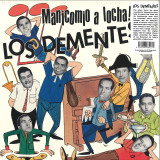
This album marks the debut recording for Venezuela's Velvet label by pianist Ray Pérez and his trombone-led salsa band Los Dementes. Heavy dance numbers and the distinctive vocals of Perucho Torcat make this historic 1967 rarity a sought-after collector's item. Now the LP has been lovingly restored, mastered from the original tapes, with its original artwork intact, preserving the legacy of Los Dementes for today's generation of salsa lovers everywhere. First time reissue. Salsa pianist, vocalist, composer and arranger Ray Pérez, acquired his nickname "Loco" by being a free, independent spirit, an innovator and iconoclast who was initially branded as "crazy" for the freshness and audacity of his sound. Amazingly, he is not that well known in the US, where he spent some time in the late 1960s and salsa was king during the 1970s. Yet he was quite popular in his home country from the beginning, especially amongst the working class of Caracas and Maracaibo, who adopted Cuban music played by New York Puerto Ricans as their own and called it "salsa" years before the term was employed by US labels like Fania as a marketing tool. Pérez is revered in Venezuela, as well as in Mexico and Colombia, and his storied career, which spans seven decades and thousands of concerts, has yielded more than 35 albums recorded by his various bands, including Los Dementes, Los Kenya, and Los Calvos, all of which are collector's items today. At the start of 1967 Pérez debuted Los Dementes, with vocalists Claudio Zerpa and Perucho Torcat backed by an ace band featuring only trombones in the brass section. Titled "¡Alerta mundo! Llegaron los 'The Crazy Men'" the record was released on the small Venezuelan label Prodansa. Soon after, Prodansa folded and Los Dementes were left without representation or much compensation for their efforts, being paid only in records. In the end of February of that year, Pérez returned to Caracas from a stint in Maracaibo in order to finish his first LP with the well-established and larger Velvet label, entitled "Manicomio a locha". In the first quarter of 1967, Velvet unleashed a trilogy of salsa records in order to compete with rival label Palacio and their recent success with Federico y su Combo Latino: "Porfi '67 Salsa & Boogaloo" by Porfi Jiménez y su Orquesta, "Guasancó" by Sexteto Juventud and lastly "Manicomio a locha". The LP begins appropriately with the boisterous title track, written by the band's conguero Carlos "Nené" Quintero, who would become a legend in coming years. Torcat describes a jam session in mental institution and introduces the band, with tasty solos by trombonist Rufo García followed by Ray on piano. Already you can hear something was different about Ray and his "Crazy Men"-a sound as wild and innovative as what was happening in New York with Eddie Palmieri, but with a more unhinged, raw feeling in line with Willie Colón and other younger Nuyorican bands. Next up is an intriguing track sung in a mix of Italian, English, Spanish and Papiamento by Pérez himself, performed in the complicated rhythm of the mozambique, an Afro-Cuban carnival beat developed in the early 1960s. This is followed by the heavy dancer 'Rico guaguancó', penned by Angelito Pérez, which changes from the guaguancó to the mozambique rhythm mid-way through, proving that Los Dementes were "different from the rest" as the lyrics say. 'Puerto Libre', sung by Torcat, is dedicated to the Venezuelan island of Margarita in the Oriente region, and the independent spirit of its working people. The rhythm changes from guaguancó to guajira and back again but remains danceable all the way through. The side closes out with a "3 in 1" medley inspired by the popular formula of the mosaicos of Billo's Caracas Boys, seamlessly knitting together several different tempos, rhythms, moods and compositions. Side two starts strong with the fierce yet satirical 'Corte e' patas', then 'Alma Cumanesa', a typical folk song refashioned as a guaguancó. This is followed by the funky 'Guajira con Boogaloo'. The tune echoes the sound of young Latin New York, pointing out the connection between Cuban and African American soul music. The pace picks up again with 'Fiesta de trombones', a hot descarga and then the album closes with another medley. Though this marks the end of a rather short album, it also signaled the emerging success of Los Dementes and their involvement with the salsa boom in Venezuela, quickly selling out of its initial run of 1000 records and making for a memorable debut on the Velvet label. Now this rare and sought-after LP has been lovingly restored, mastered from the original tapes, with its original artwork intact, preserving the legacy of Los Dementes for today's generation of salsa lovers everywhere.
This mega-rare 1969 album pays tribute to the Bronx and Brooklyn neighborhoods where young Latinos had invented the boogaloo a few years earlier. This record highlights the quality of Peruvian boogaloo and the talent of musicians such as pianist Otto de Rojas and percussionist Coco Lagos. First time reissue. In the mid-sixties, when young Latino musicians in New York fused Afro-Cuban rhythms with rock, soul and jazz, they had no idea that their boogaloo bang bang would reverberate just as strong and loud in a distant South American country. From 1955, La Sonora Macedo, took Cuban music to every corner of Peru, backed the leading musicians of the Peruvian tropical universe, such as Ñiko Estrada, Joe di Roma, the double bass player Pepe Hernández, and the trumpet players Tito Chicoma and Charlie Palomares. All diehard fans of Cuban music, always alert to any new artist arriving from the island. In the early sixties, light rock, doo-wop, ballads, Italian songs and bossa nova paraded across Lima's stages, making performances by Cuban bands, previously so frequent, a thing of the past. Moreover, the unanimous success of the Beatles from 1964 onwards, gave the impression that music from the English-speaking world would dominate the rest of the decade. But this was not the case. In large part because of Manuel Guerrero's good relations with U.S Latino labels, such as Alegre Records, which released the initial recordings by Johnny Pacheco and Charlie Palmieri, allowing listeners in Lima to follow the development of the salsa movement almost from the beginning. MAG was undoubtedly the best representative of these new sounds. In 1969, the LP "Acabo con Lima, huyo pa' Nueva York" was released on this label, a project which brought together three figures from Lima's show business world: Manuel Antonio Guerrero, owner and founder of MAG, who wasn't shy of joining in on the chorus and percussion during recordings, Pablo Villanueva "Melcochita", a multifaceted artist from a talented musical family from the popular district of La Victoria, was responsible for the vocals and percussion on the album. And the third Lima show business figure in this project was the musician, singer and comedian Alberto Montroy Laostervened, who gained fame in the sixties while still in his twenties for his imitation of Cantinflas, the Mexican actor. Alberto bore a devilish resemblance to Cantinflas, not only in his gestures but also physically. Under the name of Pepe Moreno "Karamanduka" he also went on to record songs abroad such as "El boogaloo de Cantinflitas". "Acabo con Lima, huyo pa' Nueva York" was immediately re-released in other countries, highlighting the quality of Peruvian boogaloo and talent of musicians such as pianist Otto de Rojas and percussionist Coco Lagos, who feature prominently on the album. Songs such as 'Vuela mi descarga', 'Peruvian boogaloo' and 'Peruvian guajira', pay tribute to the Bronx and Brooklyn, neighborhoods where young Latinos had invented the boogaloo a few years earlier.
1970 album that marked a milestone in the history of Peruvian tropical music comprising an outstanding repertoire of Cuban rhythms as a response to the trends of the moment: boogaloo and Colombian cumbia. Guitarist Pancho Acosta lead the band and Kiko Fuentes delivered the vocals across some juicy descargas and guarachas. In the late sixties, a generation of young Peruvian musicians, who were fans of tropical sounds, chose Cuban rhythms over the onslaught of boogaloo and Colombian cumbia. This musical movement attracted a legion of young followers, mostly from popular districts of Lima. In 1969, percussionist Domingo Guzmán Villanueva was commissioned by the MAG record label to get together a group to revive Cuban musical tradition. To lead the project he recruited, Francisco "Pancho" Acosta, founder and guitarist of the Company Quinto. The new group was baptized Los Kintos, in a nod to their desire to carry on playing in the Compay Quinto style. The link between the two groups appears on this first album, as the group's name is written in two different ways: Los Kintos, on the front cover; and Los Quintos, on the back. Recordings began in 1969 and included the stunning 'Descarga Kinto', Richie Ray and Bobby Cruz's original 'Pancho Cristal' -renamed here 'Pancho Guzmán- and Cuban classics from the repertoire of the historic Trio Matamoros like 'Lágrimas Negras' or 'Mentiras', all with lead vocals by Kiko Fuentes. The success of their concerts would take them on tours across the country, always recognized as outstanding figures of Cuban music in Peru. This reissue brings back an album that marked a milestone in the history of Peruvian tropical music and revives the fame of the group's legendary live performances. First time vinyl reissue.
- A1: Linda Guajira
- A2: Que Bueno Baila Usted
- A3: Relax & Mambo
- A4: Al Son Del Pilon
- A5: Tabu
- A6: Yo No Quiero Piedra En Mi Camino
- A7: La Mulata Rumbera
- A8: Lagrimas Negras
- A9: Dejame Recordar
- B1: Guantanamera
- B10: Saradonga
- B2: Cogele El Golpe
- B3: Dundumbanza
- B4: Magia Negra
- B5: Gandinga, Mondongo Y Sandunga
- B6: Te Di Un Beso Sin Importancia
- B7: Mambo Riff
- B8: La Rumba Me Llama
- B9: Mambo No 5
- A10: El Manisero
26 original recordings with comprehensive 12-page booklet
The music of Cuba, including its instruments, performance, and dance, comprises
a large set of unique traditions influenced mostly by West African and European
(especially Spanish) music. Cuban music is among the richest and most
influential regional music in the world.
Cuban music has contributed to the development of a wide variety of genres and
styles around the globe. Examples include the son Cubano, guarachá, danzón,
bolero, rhumba, Afro- Cuban jazz, salsa, and a wide variety of genres in Latin
America. Many of these styles are represented on this outstanding collection,
which presents 26 of Cuban music's greatest hits performed by the most
celebrated Cuban stars.
HIGHLIGHTS! Acting as an artistic ambassador for Cuba, the Orquesta Revé made several tours abroad, traveling to Peru in 1971. This extremely scarce LP was recorded for MAG in Lima and comprises mostly Cuban songs -like the outstanding Vicente Rojas' original 'Mi Son Combinado'- and also a rare cover of Jorge Ben's 'Domingas'. Quite an invisible record even for hardcore collectors, and almost impossible to find in any condition, "De Habana a Lima" is now reissued for the first time. More: In 1956, the percussionist and composer from Guantanamo, Elio Revé, founded the orchestra popularly known as La Revé, which in the space of a few years became the Cuban music group par excellence for foreign audiences. Elio, dubbed the father of changüí for his seminal work on this genre, is also considered one of the forerunners of salsa music and his orchestra included musicians of the stature of vocalist Ibrahim Ferrer; pianists Chucho Valdés, César Pedroso and Juan Carlos Alfonso; and bass guitarist Juan Formell, who left the group in 1969 to form Los Van Van. Acting as an artistic ambassador for Cuba, the Orquesta Revé made several tours abroad in the seventies, traveling to countries such as Spain, Belgium and the People's Republic of Angola, and these journeys are well documented on the internet. However, little is known about their trip to Peru in 1971_ The local record label MAG quickly signed the Cuban groups that arrived in the Peruvian capital and that the head of the label, Manuel Guerrero, agreed to record. The La Revé LP was followed by a Los Compadres album the following year. "De Habana a Lima..." comprises a dozen songs labeled changüis, mostly written by Cuban composers, the exception being the closing track: 'Domingas', an original song by Brazilian artist Jorge Ben. In contrast, the album opens with the distinctly Cuban song 'Guajira guantanamera'.
First ever reissue of one of the most sought after titles in the catalogue of Peruvian's label MAG, in high demand not only among Latin music collectors but also among those interested in the most exotic and experimental psychedelic sounds around. - It includes 'Astronautas a Mercurio', a cosmic descarga full of electronic effects, filtered voices and fierce guitars with wah wah and raw distortion, as well as guarachas, cumbias and descargas. - Details: Hugo Macedo was a member of the first sonora in Peru, directed by his brother: the Sonora de Lucho Macedo. His brothers were the singers of the band while he performed as a timbalero. After nine years he founded the Sonora Casino of Hugo Macedo in 1964, later incorporating his wife, Lucía "Pochita" Rivera as a vocalist. "Trompeteros" was released on the Peruvian record label MAG in 1972. Previously, the Sonora Casino had already recorded several albums for Philips since the mid-60s. At the time their repertoire was fed by rhythms such as cha cha cha, bolero, guaracha... Their MAG period would start in 1970 with the album "Pochita y la Sonora Casino de Hugo Macedo" in which Hugo Macedo's wife was granted with an important visual presence on the front cover, with a similar follow-up on "Trompeteros", creating some confusion since vocalist Pachito Nalmy was the actual main singer on the record. The vocalist, who hails from Callao, demonstrates here a great vocal versatility as captured on songs like 'Guajira del amor', with a heavy rhythm that will surely delight boogaloo lovers, or the bolero number 'Pasa, pasa', being both songs own compositions of the multitalented Nalmy. Guarachas, descargas and cumbias complete the offering of this fantastic album, one of the strongest tropical LPs in the MAG catalogue. But the real banger here is the almost magical 'Astronauts to Mercury', a cosmic descarga full of electronic effects, filtered voices and fierce guitars with wah wah and raw distortion, closer to the sound of any psychedelic recording than the classic tropical sound of La Sonora Casino, and right next to those elements, an impressive brass section that boosts the intensity of the song to the highest levels. It is not surprising that "Trompeteros" has become in recent years a highly sought-after album not only by Latin music collectors but also by those after the most exotic and experimental psychedelic sounds around... Pablo Iglesias aka DJ Bongohead
Papa Orbe has been rocking the latin scene with his dynamite shows for more than three decades. He started his career in the legendary Felix Chappottín's cuban Son band and shortly after he moved to Colombia where he joined Totó La Momposina's band and worked for the Fuentes label. By the late 90's, he toured Europe several times and decided to settle in Barcelona where he recorded, arranged and played for numerous bands and LP's such as Radio Malanga's Joff Tongor and Playing For Change.
We introduce Orbe's debut album under his own name, going back to his roots with a strong combination of cubop, latin rhythms and a heavy 70's salsa and jazz influence.
- A1: Orchestre Poly-Rythmo De Cotonou Dahomey - Minsato Le, Mi Dayihome
- A2: Super Eagles - Love's A Real Thing
- A3: Moussa Doumbia - Keleya
- B1: Manu Dibango - Ceddo End Title
- B2: Sorry Bamba - Porry
- B3: Orchestra Number One De Dakar - Guajira Ven
- C1: William Onyeabor - Better Change Your Mind
- C2: Ofo & The Black Company - Allah Wakbarr
- C3: Gasper Lawal - Awon-Oise-Oluwa
- D1: Bunzu Sounds - Zinabu
- D2: Tunji Oyelana & The Benders - Ifa
- D3: Orchestre Regional De Kayes - Sanjina
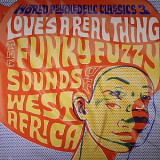
Back in 2005, the Luaka Bop and Stones Throw labels jointly issued World Psychedelic Classics 3: Love's A Real Thing - The Funky Fuzzy Sounds Of West Africa with the former releasing the CD edition and the latter a double LP version. As the elongated title suggests, the third edition of Luaka Bop's World Psychedelic Classic series swung the focus to West African music from the seventies and really opened people up to the psychedelic sounds of Manu Dibango, William Onyeabor, Gasper Lawal and a whole other host of artists from West Africa. Luaka Bop have evidently secured the rights for a vinyl reissue of the compilation, and anyone who indulged in their popular fifth volume focused on William Onyeabor will relish the opportunity to pick this up again.
Los Romeros transport the listener to the Andalusian region of Spain for an album of Flamenco improvisations and songs. Noted Mexican singer/actress Maria Victoria provides vocals. Recorded at United Recording Studio, Hollywood, December 27–30, 1966. Prior releases have included heavy-handed dynamics processing and added echo. For this issue, the first-generation master tapes are presented as they were recorded, transporting the listener into the room and into a true Flamenco performance by the Royal Family of Spanish Guitar, and Ms. Victoria.