Wewantsounds is delighted to release for the 1st time on vinyl Brion Gysin's cult recordings, produced by Ramuntcho Matta in the 80s and early 90s. The release features the hypnotic 32-minute journey "Dreamachine," which transforms the effects of Gysin's legendary light art device into a mesmerizing audio experience, alongside the track "The Door," featuring the visionary saxophonist Steve Lacy. A towering figure in avant-garde art, literature, and sound, Gysin influenced generations of creators, from William Burroughs to David Bowie and Laurie Anderson. Newly remastered and accompanied by liner notes by Gysin scholar Jason Weiss, this LP edition coincides with a major exhibition dedicated to Gysin at the Museum of Modern Art in Paris, opening Spring 2026, underscoring his lasting impact on contemporary culture.
Suche:h de sax f
- A1: I Hear A Rhapsody
- A2: Traneing In
- A3: Theme For Ernie
- B1: I Love You
- B2: Lover Come Back To Me
- B3: Trinkle, Tinkle
2026 wird der 100. Geburtstag von John Coltrane gefeiert, dessen bahnbrechende Kunst als Saxophonist,
Komponist und Bandleader ihn zu einer der einflussreichsten Musikpersönlichkeiten des 20. Jahrhunderts
machte. Zu Ehren seines unermesslichen Einflusses fängt „The Best of John Coltrane“ den legendären
Saxophonisten in seinen prägendsten und kreativsten Jahren bei Prestige ein. Diese LP wurde aus seinem
produktiven Schaffen der Jahre 1957–1958 zusammengestellt und enthält eine Auswahl, die Coltranes
rasante künstlerische Entwicklung als origineller Tenorsaxophonist beleuchtet. Mit Klassikern aus dem
American Songbook und Jazz-Standards ist sie sowohl die perfekte Einführung für neue Hörer als auch eine
wertvolle Anschaffung für Liebhaber, da sie die Aufnahmen präsentiert, die John Coltranes Vermächtnis
begründet haben.
- Amazone Blues
- Chebika Courage
- Leila
- Greve Revolte
- Vent Poussiere
- Samba Loca
- Quand Tout S'arrete
Featuring a topflight quintet, Healing Songs includes Texier's son Sebastien on alto sax and clarinet, rising US trumpet star Hermon Mehari, plus internationally acclaimed drummer Manu Katche guesting on two tracks. Henri Texier, born in Paris in 1945, is a highly respected French double bassist and composer who has played a pivotal role in shaping modern European jazz. He began his career in the vibrant Paris jazz scene of the 1960s, quickly gaining acclaim for his work alongside vanguard musicians such as Don Cherry and Daniel Humair.
Over the decades, Texier became known for blending jazz with influences from folk, African, and Middle Eastern music, giving his sound a unique global flavour. His work has earned him several prestigious awards, including multiple 'Victoires du Jazz' (France's top jazz honour) and widespread international recognition. In the words of The Guardian newspaper, "Texier is one of Europe's consistently inspired jazz musicians, with a career that continues to inspire new generations.
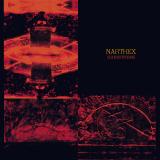
Narthex means railed-off western portico or ante-nave in earty Christian churches for women, penitents and catechumens.
Narthex is also a trio featuring (at the beginning) Daniel Denis (Universe Zero, Art Zoyd), Alain Neffe (Pseudocode, Human Flesh, Bene Gesserit) and Nicolas de Villemarqué (Nuwage Music). They had a very different musical background, mostly electric-electronic rock, and decided to work in the field of acoustic music recorded live (two microphones + portable DAT) in churches of their area. After several recording sessions, Nicolas de Villemarqué decides to leave the group. ln order to complete the trio, Daniel Denis and Alain Neffe ask the participation of some of their friends. Anna Homler, Michel Berckmans and Daniel Malempré have accepted the challenge and succeed to fit into their musical universe.
The instruments Church organ, harmonium, sitar, saxophone, oboe, bassoon, zither, valiha, senzas, tarang, voice, percussions, metal clarinet, classical guitar, mew's harp, ongolok, violin, dulcimer, mouth organ, etc.
The music Often dark, sometimes repetitive or experimental, sometimes rhythmical and exotic, always based on emotion inducted by the sound. One could define it as dark age music (as opposite to new age music), a sort of minimal come back to the roots and purity of acoustic sound without the cultural background linked to the 'academic' use of some instruments (for example African senzas are transformed and tuned to sound like Indonesian instruments, sitar or harmonium are used as rhythmical instruments, vahilla is played with a bow).
The places Churches located in an area of 20 kms in the region where Daniel Denis and Alain Neffe live for years and where they feel at home (and feel the vibrations. Every church, place emotionally loaded, has its own specific resonance and sound structure. Every church gave to the musicians a particular inspiration and fill the sound of the instruments with a natural reverberation/echo. The place but also the moment is important. They had the privilege to be allowed to record in the Ecaussines church at night lightened only by candles. lt was one of their most productive recording sessions.
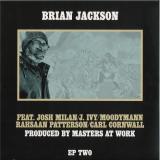
EP2 Limited 2 x 12" Vinyl & Digital Release The second digital and vinyl EP from Brian Jackson and Masters At Work’s highly anticipated ‘Now More Than Ever’ project is a masterclass in soulful innovation, musical legacy, and collaborative excellence. Carefully curated and expertly packaged for true fans, this release brings together extended versions and rare cuts that were simply too expansive, deep, and powerful to fit on the forthcoming triple LP — but far too important not to be heard. The double pack also includes the title track off the forthcoming album ‘Now More Than Ever’, a brand-new, never-before-heard track birthed organically during the energy and creative momentum of the recording sessions. It stands as a testament to the spontaneous brilliance of Jackson, MAW and their collaborators, capturing a moment of pure musical inspiration. The EP features seven tracks, including reimagined and extended versions of classics such as Kenlou Cult Classic ‘Moonshine’, Jackson and Heron’s ‘Lady Day and John Coltrane’, and ‘Home Is Where the Hatred Is’, plus a deep focus on ‘Racetrack in France’ — first recorded by Brian Jackson and Gil Scott-Heron in 1977 for their landmark Bridges album. Highlights include: The MAW (Masters at Work) Live Mix of ‘Moonshine’, featuring former Midnight Band/Amnesia Express multi-instrumentalist Carl Cornwell on saxophone. A sprawling 12" version of ‘Home Is Where the Hatred Is’ — a jazz-fuelled dancefloor reinterpretation blending political fire with sonic elegance. The 12” version of ‘Lady Day and John Coltrane’, featuring Rahsaan Patterson’s soulful vocal performance set against a lush, cinematic arrangement. A masterful reworking of ‘Racetrack in France’ featuring legends Josh Milan, J. Ivy, and Moodymann, each bringing their distinct voice and flavour to this seminal piece. The instrumental version is also included in this 2 x 12” EP. Whether you're a long-time devotee of Brian Jackson and Gil Scott-Heron’s influential catalogue, a DJ or collector chasing rare wax, or a new listener drawn to future-leaning soul and jazz, Now More Than Ever ‘EP Two’ is an essential release — a bridge between the past, present, and the music still to come.
A mutant beat manifesto from Miami luminaries Jonathan Trujillo (Jonny from Space) and Pablo Arrangoiz (El Gusano, DJ Fitness, Baüzer Vep), Crespi Drum Syndicate’s Colada Talk follows the duo’s debut on Sonido Isla with a freshly freaked collection of percussive oddities. Rooted in foundational clave rhythms and avant-garde experimentation, Crespi Drum Syndicate emerges from the amphibious underbelly of Miami’s Latin-infused club scene with their singular electro-acoustic vision.
Extensive live recording sessions, free improvisation, and a ritualistic studio practice
— countless hours spent twisting and rearranging sounds from found objects and Buchla modular systems — coalesce into new rhythmic forms. Atonal saxophone, bass clarinet, and slide whistle further expand upon Trujillo and Arrangoiz’s ever-evolving sonic palette, while NYC’s AceMo lends a hand on the heavily syncopated “Siu,” and closer “Boubow” might be the duo’s most hook-driven production to date with its mangled pop vocal and lewd drum-line bounce.
Landing somewhere between Steve Reich’s polyrhythmic “Six Marimbas,” Moebius & Plank’s industrial Krautrock sessions, and Ricardo Villalobos’ hypnotic techno minimalism, Colada Talk delivers on a world of subtropical rhythmic futurism and experimental body music that’s as heady as it is culo-shaking.
- 2: Against Death
- Smashed
- Can't Touch
- Sit
- Lucky
- Safe
- Son Of
- Destiny
- Billions
- Death Of Music
- No Mail
- I.d.o.l
- Yo
- Bawk
- Crack
- Headless
- In So Many
- Ajukaja Me
“Certain albums hit like howling bullets at pivotal moments, tearing open the face of music to reveal hidden sonic muscles and fusing them back into something both strangely familiar and yet entirely unrecognisable. We believe this is one of those records.”
The double album Death of Music delivers 18 crooked vocal pops, some ruthless, others unexpectedly disarming. In some songs, Ajukaja & Mart Avi function like a two-headed saurus swinging its spiky tail to shady pop-house smackers. In others, Ajukaja's serene organ licks descend into subterranean caverns, allowing Avi to float to the surface on their wavelengths and turn his voice into billions of extinct moths, enslaved by the moonlight’s pull. There are songs that face destruction and those that seek to prevent it.
One kykeon rap goes, “If you die before you die, then when you die, you don't die!”. Ajukaja & Mart Avi have embraced this notion to create new music that allows them to thrive in the algorithmic wasteland. 13 years in the making, these 66 minutes are packed with lifetimes of truths you didn’t know you needed to know. They are Ajukaja & Mart Avi – two against death.
Produced by Ajukaja
Words by Mart Avi, Music by Raul Saaremets
Guitar and Bass by Sten Sheripov (Can’t Touch The Earth, Safe)
Sax by Steve Vanoni (I.D.O.L.)
Recorded between 2011—2024
Mastered by The Bastard
Cover Photo by fs
Sleeve by Marke, Mart Avi
Pressed in Tartu, Estonia
- 1: Lemonade Tycoon
- 2: Anti-Bird-Spike-Bird-Nest
- 3: Interlude (Stride)
- 4: Allcapsallbold
- 5: Pet Boss
Taupe’s latest album release, waxing | waning delivers jazz experimentalism, ‘skronk’, avant-rock, and electronics, by the Glasgow-based trio, due out via Minority Records. Across its seven tracks, waxing | waning captures Taupe’s approach – bold and boundary pushing – shaped by a fresh shift in the band’s dynamic and compositional approach.
Taupe’s waxing | waning, co-composed and realised by its players in a studio that was once an undertaker’s premises in Glasgow, is an absolutely affirmative album, an act of cultural defiance in desperate times.
Comprising Mike Parr-Burman (guitar, bass guitar, electronics), Jamie Stockbridge (alto and baritone saxophones) and Alex Palmer (drum kit, percussion), Taupe work up a storm of skronk, free jazz and harmolodic frenzy whose closest relations include Zu, Melt Banana and John Zorn. However, waxing | waning is from its opening, stuttering blasts, an exercise in seeking out and claiming new territory, finding unique and novel permutations in which jazz, rock, electronics interbreed at breakneck pace. Here is a group determined to say and do things they don’t get to say and do elsewhere in their musical lives.
‘Lemonade Tycoon’ hits the ground skronking. It’s cubistic jazz, cumulative in its impact, avoiding the white lines of the conventional freeway, bridling, bustling, coming at you from all angles – a three way conversation of astonishing rapidity, fast track, telepathic communication – everyone from James Chance to Albert Ayler coming at you at once, before morphing in to a spidery scrawl of electronics and furious percussion. ‘Anti-Bird-Spike BirdNest’s‘ title somehow sums up the sort of mental images evoked by the music – its sheer creative disobedience, as if being chased in vain, like a delivery rider evading capture by ICE agents -– shapeshifting, assuming different shades, sprouting metal quills and, in its midsection, seeming almost to swallow itself alive, before regurgitating itself in a sublime mess.
‘Interlude (Stride)’ is not exactly ambient, more a horizontal enmeshment of percussion, drones, reverberant noise, electronics, a sonic mulch. ‘allcapsallbold' reminds of early Aksak Maboul, in its playfulness, a haywire series of short phrases, subject to mechanical interference, a complex weave of irregular rhythms, increasingly eloquent sax phraseology and caustic guitars, which land heavier and heavier. ‘Pet Boss' is the new jazz equivalent of a highly evolved, mature conversation among brilliant equals, sharp, empathetic, complementary, rising to a collective, joyful noise. On the title track, electronics descend like a shower of bright particles, intensifying in their luminosity, whitening the skies, as sax and drums kick up a tempestuous, spontaneously sculpted noise that summons the ghosts of the great free jazz players, before a dark calm descends slowly. Finally, ‘Turn Push Kick’, a burgeoning chatterstorm of electronics, before the group kicks in, at angles to one another, led by abrasive guitars, reminiscent of Sunn O))) in their ritualistic concussion, riffing, digging deep amid squealing sax and piledriving percussion.
Vintage Pleasure Boutique once again dives deep into the vast catalogue of super-productions by Roberto Zanetti, better known as Robyx and Savage. This time, the journey takes us back to 1984, unearthing a true gem created at the suggestion of Marco Bresciani, Italian DJ and producer, and the same creative force involved with Radiorama. Zanetti delivered flawlessly. He transformed the elegant, high-grade British synth-pop original by OMD into a first-class Italo disco weapon, infused with that unmistakable sweet, melodic touch and fat kick that blended perfectly in clubs alongside genre-defining tracks of the era. “Souvenir” by Saxophone quickly became a classic, a staple of the sound and a cornerstone in countless old-school DJ record bags.
Today, original copies are scarce, highly sought after, and often prohibitively expensive on the secondary market. This reissue is both a tribute to long-time fans of the record and a nod to devotees of Robyx’s unmistakable sound. The vinyl also features a special remix of “Souvenir”, sonically aligned with Savage classics such as “Radio,” “Fugitive,” “Only You,” and “Don’t Cry Tonight.”
A true feast for lovers of this timeless Italo disco aesthetic, equal parts nostalgia, elegance and dancefloor power.
- A1: Thelonious
- A2: Ugly Beauty
- A3: Raise Four
- A4: Boo Boo's Birthday
- B1: Easy Street
- B2: Green Chimneys
- B3: In Walked Bud
Thelonious Monk, considered one of the greatest Jazz pianists of all time, recorded Underground in '67-'68. It's the last recording with the Thelonious Monk Quartet (Larry Gales on bass, Charlie Rouse on tenor sax, and Ben Riley on drums) and one of the last album he made for Columbia.
What makes Underground special is that unlike his other Columbia recordings, four out of the seven songs were newly composed and recorded. The album cover depicts Monk as a member of the French Resistance and is meant as an homage to Pannonica "Nica" de Koenigswarter. She was a member of the aristocratic Rothschild family and became a patron of leading jazz musicians, hosting jam sessions, driving them to gigs and sometimes even help out with paying the rent. In 1969 the cover won a Grammy for Best Recording Package.
Underground is available as a limited edition of 2000 individually numbered copies on orange vinyl and comes in a deluxe, heavy duty sleeve.
In the pantheon of classic free jazz, Noah Howard's The Black Ark looms large. Recorded at Bell Sound Studios in New York City in 1969 – just prior to the alto saxophonist's relocation to Europe – the album was eventually released in 1972.
The Black Ark exhibits not only the power and imagination of Howard's playing, but also his breadth as a composer and bandleader. Listeners expecting unrelenting blasts of "energy music" might be surprised to find a cohesion atypical of free jazz; amidst the wild, impassioned solos, Howard weaves in Latin rhythms and fat-bottomed grooves.
The first side, consisting of "Domiabra" and “Ole Negro,” sets the album's tone. Both tracks sound as if they could have appeared on some of Blue Note's proto-spiritual jazz, groove-heavy releases – evoking the likes of Lou Donaldson or Horace Silver – before ceding the floor to the horn players' anarchic firepower.
As John Corbett writes in the liner notes, "Two players stand out. Bassist Norris Jones – who would soon consolidate his name into a one-word reversed amalgamation/permutation of the two, Sirone – is given ample room, largely unaccompanied; his corporal approach foreshadows later work with the Revolutionary Ensemble. But the secret weapon on The Black Ark is Arthur Doyle. Straight from basement rehearsal sessions with Milford Graves, whose ensemble he had joined and who remained a favorite of the drummer for decades, Doyle is a human flamethrower."
Trumpeter Earl Cross' guttural, vocal effects complement Doyle's take-no-prisoners approach, while the estimable combination of Muhammad Ali (Rashied's brother) on drums and Juma Sultan on congas adds an ever-shifting propulsion. The septet is rounded out by the enigmatic pianist Leslie Waldron, who anchors the group with imaginative accompaniment and occasional boppish flourishes.
Every bit worthy of its reputation as an "out-jazz" holy grail, The Black Ark only sounds better with age. It remains the ideal record to convert the remaining free-jazz skeptics.
We Release JAZZ is very happy to announce the limited vinyl edition of Ill Considered's transcendent new live album Live in Jura, an expansive document of the trio's 2023 performance at Spiegelberg Festival - now available as a double LP with a bonus D-side, housed in a heavyweight sleeve with obi and an original artwork by Vincent de Boer.
Captured in the heights of Saignelégier, Switzerland, in the middle of a pasture overlooking the Jura mountains, Live in Jura bottles the singular Ill Considered live experience at its most open, responsive, and elemental. From Idris Rahman (sax, flute), Liran Donin (bass), and Emre Ramazanoglu (drums), this is deep free improv built from intuition and heart - an ever-evolving conversation of groove, texture, and spirit. Whispered motifs bloom into towering climaxes; earthy bass surges meet shimmering cymbal work; woodwind lines move from meditative invocation to ecstatic release. It is music shaped by the audience, the environment, and the moment : alive, unrepeatable, and deeply organic.
The bonus D-side extends the album's world with a unique ambient composition made from field-recorded organic sounds of the forest surrounding the concert area. Re-composed into a drifting, luminous piece, it features The Voices of the Alpenglow, blurring the boundary between performance and landscape, human gesture and elemental presence.
Ill Considered - known for forging improvised music around simple themes or spontaneously created structures - here reach a new level of sensitivity and power. Live in Jura follows We Release JAZZ's release of Shoals by Ill Considered members Earth and Bones, continuing a line of exploratory, heart-forward music grounded in profound listening and spontaneous creation.
With this new remix EP, The Lovers explore different shades of disco and house through a carefully balanced and personal approach.
The opening track sets the tone with a playful and hypnotic groove, built around arpeggiated patterns and a steady modern rhythm. A female spoken vocal, instantly recognizable from Italian television culture of the 1980s, takes center stage, while a smooth saxophone line adds a sensual, cinematic layer.
The second cut moves into deeper emotional territory. Beginning with a restrained atmosphere, the track slowly builds tension through a rebuilt bassline and a solid house pulse, eventually opening into a more expansive and powerful moment on the floor.
A warmer disco-driven piece follows, focused on groove and feeling. The original spirit is preserved, while a heavier low end gives the track new confidence and presence within a contemporary club setting.
The EP closes with an elegant house reinterpretation inspired by French pop sensibility. A melancholic melodic theme and subtle references to tango shape the final moments, blending emotion and rhythm with a refined sense of flow.
A concise collection of remixes for selectors drawn to groove, memory and understated elegance.
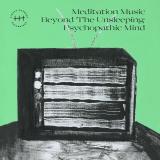
'Meditation Music Beyond The Unsleeping Psychopathic Mind' — a raw, deep free-jazz exploration where synth, voice, saxophone, and percussion dissolve into a single, unfiltered sound world. No boundaries, no polish — just presence and freedom for sonic expression.
Music spontaneously composed (improvised) by all members of the group. Recorded at Threshold Studios in Hamilton, Ontario, Canada. Produced by our good friend Devin Brahja Waldman and wrapped in hypnotic cover artwork specially crafted by renowned Vancouver-based artist Boone Naka.
Annie Shaw - keys/synth/vox
Sarah Good - keys/synth/vox
Nadah El Shazly - keys/synth/vox
Adam Kinner - tenor saxophone
Connor Bennett - soprano saxophone
Devin Brahja Waldman - synth, alto saxophone
Vicky Mettler - guitar
Alexei Orechin - guitar
Daniel Gélinas - drums, percussion
Philippe Melanson - drums, percussion
- 1: Tonight At Noon
- 2: Invisible Lady
- 3: “Old“ Blues For Walt’s Torin
- 4: Peggy’s Blue Skylight
- 5: Passions Of A Woman Loved
"Tonight At Noon" compiles tracks from two earlier recordings sessions: one session from 1957 with Jimmy Knepper on the trombone, the drummer Dannie Richmond, Saxophone player Shafi Hadi and the pianist Wade Legge, which were released on the album "The Clown" (Atlantic 1260). The second session took place in 1961 with Booker Ervin and Roland Kirk on the saxophone, Knepper, the bassist Doug Watkins, Mingus at the piano and Richmond on the drums, and was released on "Oh Yeah" (Atlantic SD 1377).
The two sets differ in mood, but this does not mean that it is an album that uses leftovers. While Mingus in the first session strives for European harmonics and melodic approaches with a hard bop tempo (particularly on the title track) in the direction of the blues, the second session with its vespertine elegance and spatial explorations comes over rather as a sort of exercise à la avantgard Ellington with sophisticated harmonies that pave the way for sluggish marches and gospel-like blues. Kirk and Ervin complement one another particularly well, their swing is appararently boundless. Mingus’s piano playing is deeply rooted in the blues, and his sense of tempo and lightness anhances these numbers, particularly in "‘Old’ Blues for Walt’s Torin".
In these compositions one already finds hints of Mingus’s later recordings. The most beautiful number is taken from the 1957 session and concludes the album: "Passions Of A Woman Loved", almost ten minutes in length, feels like an Ellington suite. Although, or maybe simply because several years passed between the two sessions, one cannot deny this album’s magic.
- A1: A. Parker / W. Parrish The Hawk 2:56
- A2: S. Haseley The Happening 2:14
- A3: A. Parker / W. Parrish Main Chance 3:04
- A4: S. Haseley Hogan Baby 3:39
- A5: G. Grant Dirty John Crown 2:54
- A6: A. Parker / W. Parrish Swarf 2:27
- A7: R. Tilsley Turnover 2:29
- A8: A. Parker / W. Parrish Tarantula 2:31
- B1: S. Haseley Precinct 3:32
- B2: S. Haseley Sidewinder Version 1 2:08
- B3: A. Parker / W. Parrish Pressure 2:45
- B4: A. Parker / W. Parrish Call Me 2:56
- B5: G. Grant Scorch 2:10
- B6: A. Parker / W. Parrish Digger 2:10
- B7: R. Tilsley Marianne 4:08
- B8: S. Haseley Sidewinder Version 2 1:55
This is that absolute stank-face filth: hard, espionage drama-soul and tough, jazzy street-funk. Hogan, The Hawk & Dirty John Crown sounds like the soundtrack of a blaxploitation movie from the early 70s and, packed with funky fusion and smoother orchestral numbers, it is basically that.
Featuring a veritable who's who of killer library break snakes - Alan Parker, Alan Hawkshaw (under sneaky alias William Parrish), Simon Haseley, Reg Tilsley and Gordon Grant - it's not hard to see how this commands over £350 on secondary markets.
This beautifully presented reissue, part of Be With's fresh campaign with the legendary library label Music De Wolfe, is well overdue.
Recorded for De Wolfe in 1972, Hogan, The Hawk, Dirty John Crown is a fantastic start-to-finish listen. The flute-funk of Hawkshaw and Parker's opener "The Hawk" comprises driving, fuzzy, wah-wah-drizzled bell-laced breaks with synths and basslines to murder for. Up next, Haseley's "The Happening" is a carefree, rhythmic builder with strings and horns. Let's face it, it doesn't prepare us for the monster that follows...
Hawkshaw and Parker's amazing "Main Chance" is likely the reason you're here; it's a moody, beaty proto-hip-hop banger; all rolling drums and flute-laced, organ-drenched, synth-funk breaks. Just sensational - you'll want to play it again and again and again.
The cool AF "Hogan Baby" has a soft, rounded, bluesy feel - it's a lighter number and Haseley's work here sounds more than a little indebted to Burt Bacharach. It's melancholic, reflective and contains ace breaks with beautiful flutes and wistful horns. It's just gorgeous. Grant's pounding "Dirty John Crown" brilliantly conjures swirling string-swept serenity atop driving, incisive drama-funk breaks. Sublime. Hawkshaw and Parker come roaring back with the murky, creeping crime-funk of "Swarf" with killer basslines underpinning slow-mo high-class flute-funk.
Reg Tilsley enters the fray with the bright, snappy, carefree "Turnover". It's lightweight but still retains some nice orchestral movements. The brief “Tarantula” gets us back on track - from the pen and chops of Hawkshaw and Parker, are we surprised? - with the driving crime funk breaks, super clean yet brooding. Synths, sax and 'nuff guitars. YES.
Side 2 opens with the car chase swag of Haseley's dramatic, driving "Precinct". Jazzy, instrumental flute funk over great percussive breaks. We love this. Haseley's rolling "Sidewinder Version 1" is robust and exuberant with bouncy horns before a cracking Parker-Hawkshaw one-two featuring the tense "Pressure" and the deeply soulful "Call Me", a relaxed, medium-tempo organ feature. With building piano and strings Gordon Grant's excellently titled "Scorch" is as aggressive and dramatic as you'd hope. Hawkshaw and Parker's furtive flute-funk of "Digger" precede the light, melodic and romantic themes of Tilsley's "Marianne" whilst "Sidewinder Version 2", a faster iteration of Track B2 sees Haseley close out this remarkable set in bouncy, bright fashion.
The audio for Hogan, The Hawk, Dirty John Crown has been meticulously remastered by Be With regular Simon Francis, ensuring this release sounds better than ever. Cicely Balston's expert skills have made sure nothing is lost in the cut whilst the records have been pressed to the highest possible standard at Record Industry in Holland. The original, iconic sleeve has been restored here at Be With HQ as the finishing touch to this long overdue re-issue.
- Infinité
- Amaro
- A Different Light
- Le Styx
- Le Château
- Les Vagues
- Cérémonie
- George Sand
- Washing Machine
- La Bête En Colère
- The Pine On The Corner
Auf ihrem dritten Album ,Amaro" lädt uns Bibi Club dazu ein, uns den dunklen Bestien zu stellen, die uns unter der Oberfläche verfolgen, und uns der therapeutischen Kraft eines starken Lebenswillens hinzugeben. Es erkundet das sensible Spektrum zwischen dem Hier und Dort und verweist auf Liebe, Natur und Gemeinschaft als verbindendes Ziel. Die Songs zeichnen eine Karte einer eigenen Welt und folgen dabei dem Weg, den die Bibis in den letzten Jahren eingeschlagen haben. Nun verlassen wir das Wohnzimmer und tanzen in einem mentalen Raum, der mit Trauer und Angst in ihrer rohesten Form überladen ist. Nach dem Tod zweier geliebter Menschen im letzten Jahr hallt das Mantra ,Ich möchte lieben, ich möchte leben" intensiv in jeder Melodie nach; wenn das Herz ein Ort ist, der niemals stirbt, müssen wir es so schnell wie möglich erreichen. Inspiriert von unvergesslichen künstlerischen Begegnungen, Tourneen mit Blonde Redhead und Circuit des yeux sowie einer Zusammenarbeit mit Calvin Johnson präsentiert sich Bibi Club nun mit Avant-Pop und Electronic Body Music mit Elementen von Dark Wave und Neofolk, wobei gleichzeitig barocke Klänge mit Cembalos, Trompeten und auswendig zu lernenden rituellen Gesängen einfließen. Unterstützt von einer fürsorglichen Community, darunter der Saxophonist und Aktivist Dimitri Milbrun (George Sand) und die Singer-Songwriterin Helena Deland (A Different Light), ermöglicht Amaro Bibi Club, sich sowohl in intimer als auch in kollektiver Hinsicht zu definieren.
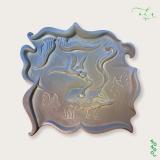
Vic Bang's "Oda" arrives quietly - it was waiting for the right moment. The eight tracks are shaped by listening, by circling around sound instead of chasing it... you can definitely hear patience in the pacing, a willingness to let ideas linger, to let all the small motifs breathe.
The album moves with a softer and more deliberate rhythm than much of Vic's earlier work, as the sound world here feels concentrated and cohesive, built from a limited set of elements that gradually reveal themselves. Melodies unfold without too much fuss, textures repeat and mutate very subtly and the whole record holds together like a single extended thought.
The title Oda - or "ode" in English - hints at devotion, but not in any grand or ceremonial way. These pieces seem devoted to sound itself: to tone, to gesture, to fragile and simple musical forms. There's a gentle melancholy running through the album, but also clarity, even tenderness. Each track is dedicated to something - a timbre, a rhythm, a resonance - living up to the title's etymology.
All Music composed by Victoria Barca in Buenos Aires, Argentina, between 2024 and 2025.
Saxophone (3) by Camila Nebbia
Vocal samples by Catu Hardoy and Nicolás Said
Cello samples by Gabriela Areal
Mastered by Adam Badi Donoval
Front cover relief "Endulzando el oído" by Victoria Barca
Back cover photo by Indira Seoane
Design and layout by Paulina Ufnal and Janek Ufnal
Inspiriert von den schattigen Cabarets und verrauchten Jazzclubs des Weimarer Berlins der späten 1920erJahre, präsentiert Bryan Ferry mit seinem Orchester auf „Bitter-Sweet“ sein Solo- und Roxy-MusicRepertoire in neuem Gewand – mit einer raffnierten Jazz-Sensibilität. Das Album besticht durch elegante
Bläserarrangements, gedämpfte Trompete, Klarinettenklänge und eine Atmosphäre urbaner Melancholie,
die Klassiker wie „Alphaville“, „Reason or Rhyme“ und „While My Heart Is Still Beating“ neu interpretiert.
Ferry selbst steuert auf acht Titeln den Gesang bei, während die übrigen Stücke als instrumentale Neuinterpretationen präsentiert werden, arrangiert mit dem Können von Colin Good und gespielt von einem
Ensemble erfahrener Jazzmusiker. Das Konzept des Albums entstand aus Ferrys Tätigkeit als Musikberater
für die gefeierte deutsche Fernsehserie „Babylon Berlin“, in der einige Titel ursprünglich verwendet wurden
und die filmisches Drama mit authentischem Jazz verbindet. Perfekt für langjährige Fans, Jazzliebhaber
und Sammler: „Bitter-Sweet“ bietet eine neue Perspektive auf Ferrys Songwriting und ist damit ein herausragendes Album zum Ausstellen, Entdecken und Verschenken.
Das Album erscheint erstmals seit 2012 wieder als limitierte rote LP und CD.
Tauchen Sie ein in eine Welt, in der klassischer Art-Pop auf die wilden 20er Jahre trifft. „The Jazz Age“
interpretiert Bryan Ferrys Roxy Music- und Solo-Katalog als elegante Jazz-Instrumentals neu, präsentiert
vom Bryan Ferry Orchestra. Von „Virginia Plain“ und „Do the Strand“ bis hin zu „Love Is the Drug“ und
„Avalon“ – jeder Titel erstrahlt in authentischen Arrangements im Stil der 20er Jahre mit Banjo, Klarinette,
gedämpfter Trompete, Baritonsaxophon und Kontrabass, komponiert vom renommierten Arrangeur Colin Good. Britische Jazz-Größen wie der Trompeter Enrico Tomasso und der Saxophonist Alan Barnes erwecken
diese zeitlosen Melodien zum Leben, während die Mono-Produktion den Charme alter 78er-Schallplatten
heraufbeschwört. Ferry selbst verzichtet auf den Gesang und fungiert als Dirigent und Produzent. Dieses
innovative Projekt entstand aus seiner Liebe zum Jazz und seiner Neugier, wie seine Songs ohne Gesang
klingen würden. Perfekt für langjährige Fans, Jazzliebhaber und designorientierte Sammler: „The Jazz
Age“ bietet eine neue Perspektive auf Ferrys Werk und ist damit ein herausragendes Sammlerstück zum
Entdecken, Ausstellen und Verschenken.
Das Album erscheint erstmals seit 2012 wieder als limitierte Edition auf waldgrünem Vinyl (1LP) und
als CD.
Inspiriert von den schattigen Cabarets und verrauchten Jazzclubs des Weimarer Berlins der späten 1920erJahre, präsentiert Bryan Ferry mit seinem Orchester auf „Bitter-Sweet“ sein Solo- und Roxy-MusicRepertoire in neuem Gewand – mit einer raffnierten Jazz-Sensibilität. Das Album besticht durch elegante
Bläserarrangements, gedämpfte Trompete, Klarinettenklänge und eine Atmosphäre urbaner Melancholie,
die Klassiker wie „Alphaville“, „Reason or Rhyme“ und „While My Heart Is Still Beating“ neu interpretiert.
Ferry selbst steuert auf acht Titeln den Gesang bei, während die übrigen Stücke als instrumentale Neuinterpretationen präsentiert werden, arrangiert mit dem Können von Colin Good und gespielt von einem
Ensemble erfahrener Jazzmusiker. Das Konzept des Albums entstand aus Ferrys Tätigkeit als Musikberater
für die gefeierte deutsche Fernsehserie „Babylon Berlin“, in der einige Titel ursprünglich verwendet wurden
und die filmisches Drama mit authentischem Jazz verbindet. Perfekt für langjährige Fans, Jazzliebhaber
und Sammler: „Bitter-Sweet“ bietet eine neue Perspektive auf Ferrys Songwriting und ist damit ein herausragendes Album zum Ausstellen, Entdecken und Verschenken.
Das Album erscheint erstmals seit 2012 wieder als limitierte rote LP und CD.
Tauchen Sie ein in eine Welt, in der klassischer Art-Pop auf die wilden 20er Jahre trifft. „The Jazz Age“
interpretiert Bryan Ferrys Roxy Music- und Solo-Katalog als elegante Jazz-Instrumentals neu, präsentiert
vom Bryan Ferry Orchestra. Von „Virginia Plain“ und „Do the Strand“ bis hin zu „Love Is the Drug“ und
„Avalon“ – jeder Titel erstrahlt in authentischen Arrangements im Stil der 20er Jahre mit Banjo, Klarinette,
gedämpfter Trompete, Baritonsaxophon und Kontrabass, komponiert vom renommierten Arrangeur Colin Good. Britische Jazz-Größen wie der Trompeter Enrico Tomasso und der Saxophonist Alan Barnes erwecken
diese zeitlosen Melodien zum Leben, während die Mono-Produktion den Charme alter 78er-Schallplatten
heraufbeschwört. Ferry selbst verzichtet auf den Gesang und fungiert als Dirigent und Produzent. Dieses
innovative Projekt entstand aus seiner Liebe zum Jazz und seiner Neugier, wie seine Songs ohne Gesang
klingen würden. Perfekt für langjährige Fans, Jazzliebhaber und designorientierte Sammler: „The Jazz
Age“ bietet eine neue Perspektive auf Ferrys Werk und ist damit ein herausragendes Sammlerstück zum
Entdecken, Ausstellen und Verschenken.
Das Album erscheint erstmals seit 2012 wieder als limitierte Edition auf waldgrünem Vinyl (1LP) und
als CD.