The Smile haben ihr neues Album "Cutouts" für den 04.10.2024 angekündigt. Mit "Foreign Spies" und "Zero Sum" sind zugleich zwei neue Tracks erschienen, wobei der Künstler Weirdcore zu letzterem auch ein Video kreiert hat. Bereits erschienen sind "Don"t Get Me Started" und "The Slip", zwei Stücke, die Anfang des Monats als limitierte 12"-Single kurzzeitig weltweit in Plattenläden auftauchten. Thom Yorke, Jonny Greenwood und Tom Skinner haben einige der Songs von "Cutouts" erstmals auf der März-Tour in UK gespielt. Insgesamt enthält das von Sam Petts-Davies produzierte Album, das auf "Wall of Eyes" aus dem Januar und das 2022er-Debüt "A Light For Attracting Attention" folgt, zehn neue Tracks. "Cutouts" wurde zur gleichen Phase wie "Wall Of Eyes" in Oxford und den Abbey Road Studios aufgenommen und enthält String-Arrangements vom London Contemporary Orchestra. Das Artwork von Stanley Donwood und Thom Yorke entstand während der Aufnahmen. "Cutouts" ist bereits das zweite Studioalbum der Band in weniger als einem Jahr. Sein Vorgänger erreichte Platz 4 der deutschen Albumcharts und die Nummer 3 in UK. Thom Yorke veröffentlichte im April außerdem den Score zu Daniele Luchettis Film "Confidenza" und kündigte eine Solotour für Neuseeland, Australien, Singapur und Japan an. Jonny Greenwood arbeitet aktuell am Score zu Paul Thomas Andersons kommenden Film "The Battle of Baktan Cross". Tom Skinner hat das Album "Voices of Bishara Live at mu" veröffentlicht und tourt mit seinen Soloarbeiten im Rahmen internationaler Jazz-Festivals.
Поиск:h paul
Все
For number 84 in the Brazil 45 Series, we head to the North of Brazil with this dancefloor monster, double-sider by Magalhães & Os Panteras.
'Xangô' by Magalhães is taken from his 'E Sua Guitarra' album, from 1986, and originally released on Gravasom Records. A stunning, driving Lambada track with haunting vocals and a compelling gusto energy. It has been gaining popularity over recent years with DJs and is a sure-fire get-out-of-jail dancefloor saver.
On the flip, we find another biggy from Os Panteras, 'Lambada Pauleira’. Also released on Gravasom Records, but a year later in 1987. It is best known for Joutro Mundo's fine re-edit of the track, but here we have it in its original form, in all its quirky brilliance. It is easy to see why, over the years, it has been a staple of some of Brazil's finest DJs’ sets, such as Augusto Olivani (aka Trepanado).
We are super happy to present these two red-hot tracks back-to-back. Now let the dancefloors return so we can heat things up!
- Next installment in BRAZIL 45 Series.
- Two dancefloor focussed cuts.
- Sought-after original of an edit made famous by Joutro Mundo.
Pique is the sensational debut solo album from Dora Morelenbaum, one of the key talents spearheading Brazil’s new musical wave. A member of the Latin Grammy award-winning band, Bala Desejo, Dora showcases a new side to her solo productions on this special LP. Whereas Dora’s first solo EP, Vento de Beirada, was a leap of faith, Pique sees her soaring as one of Brazil’s standout stars, emboldened, emphatic but ever elegant. Building bridges between past and present, it’s a funkier, more groove-based affair, weaved together with those signature, slower, celestial tracks. Touching on disco, MPB, soul, R&B and jazz, the album is enriched with an indie pop aesthetic courtesy of fellow Brazilian star and co-producer, Ana Frango Elétrico.
With an ethereal, enveloping air few can match, Dora’s gift shines through both the serene and the spirited songs contained within. The blissful, sun-soaked ‘Não Vou Te Esquecer’ opens, before the funk-fuelled, feel-good ‘Venha Comigo’ and ‘Sim, Não.’ give a glimpse of the creativity bursting from the production partnership between Dora and Ana Frango Elétrico. Elsewhere, the album reclines into hazy lean-back realms via ‘A Melhor Saída’ and ‘Petricor’, virtuoso jazz funk in the form of ‘VW Blue’ and radiant MPB through the album’s title track ‘Pique’.
The drumming is tight, fresh and swung, the horns and strings deftly arranged, as funk-driven basslines and strutting guitars mesh with playful production touches that give an added vibrancy to the record. It is an album that exhibits every side of Dora and one she has been involved in from the ground up, from the songwriting, singing, arrangement and production to booking the studio time and sourcing the artwork designer, Maria Cau Levy.
An exchange of musical ideas powers every great scene and Rio’s contemporary landscape is no different - a family of interconnected musicians and friends that collaborate on each other’s productions. Pique is graced by a wealth of these leading Brazilian lights including her Bala Desejo bandmates Lucas Nunes, Julia Mestre and Zé Ibarra, as well as Guilherme Lirio, Alberto Continentino and Tom Veloso to name just a handful. This exchange crosses generations merging tradition with modernity. In a full circle moment, Dora’s parents Paula and Jaques Morelenbaum, who featured in countless recordings from Tom Jobim's Nova Banda and Ryuichi Sakamoto to Gal Costa and Gilberto Gil, join on the album through backing vocals and arrangement.
Pique sees Dora embrace a freedom through fresh forms, showcasing the depth and diversity of her creative artistry. An infinitely listenable release that nods to Brazilian greats like Gal Costa, Banda Black Rio and Lincoln Olivetti, fused with the indie pop edge of Ana’s production. The result is truly unique and sure to be a future Brazilian classic.
Wewantsounds is delighted to announce the release of one of Japan's most coveted albums of the 70s, "Mangekyou" by singer-songwriter Yoshiko Sai. Produced in 1975 by Master musician Yuji Ohno, the album features Yoshiko Sai's superbly crafted songs and crystal clear voice over Ohno's lush, funky sound and breezy arrangements. A strong buzz has been growing around the album over the years and original copies now change hands for large sums of money. This is the first time "Mangekyou" is available outside of Japan, featuring remastered audio, original artwork and a 4 page insert including new liner notes by Paul Bowler.
SONGS OF A LOST WORLD’ is the long-awaited new album from The Cure, their 14th studio release and their first in 16 years.
'SONGS OF A LOST WORLD' was written and arranged by Robert Smith, produced and mixed by Robert Smith & Paul Corkett and performed by The Cure - Robert Smith: Voice / guitar / 6string bass / keyboard, Simon Gallup: Bass, Jason Cooper: Drums / percussion, Roger O'Donnell: Keyboard, Reeves Gabrels: Guitar. The album was recorded at Rockfield Studios in Wales.
Robert Smith created the sleeve concept, and Andy Vella, a long-time Cure collaborator, handled the album's art and design. The cover art features 'Bagatelle', a 1975 sculpture by Janez Pirnat
Having spent their formative years in São Paulo Brazil, as a teenager, Lau Ro found themself uprooted from their home. Moving with their family to Europe in search of a better quality of life, their story was like that of many immigrants in the same position. Lau Ro's parents found work in factories and cleaning jobs, for the first few years in the North of Italy and then in Brighton on England's Southern coast. "We never managed to visit back home, so my connection to Brazil became largely made up of childhood memories and my fascination with all the 60s and 70s music I could find from there."
In Brighton, the young non-binary singer and composer would immerse themself amongst the city's vanguard of free-thinking artists and musicians. Lau Ro formed Wax Machine whose prefigurative, psychedelic community provided a glimmer of countercultural hope amid a backdrop of national political decline. From 2020-23, Wax Machine birthed three cult-favourite albums in as many years; indebted in part to their British psychedelic forebears from progressive folk, rock and jazz yore. But the kernel of Lau's Brazilian sound was already beginning to blossom across Wax Machine's releases. Now, taking root deeper still, Lau Ro steps forward with their debut album: Cabana.
Named after the small wood cabin at the bottom of their garden where the album was recorded, Cabana is a deeply personal record of memory, self-discovery and imagination. Melancholy and hope combine across ten tracks of dreamy bossa, ambient folk, fuzzy tropicalia and majestic MPB. The music is swathed in masterful string arrangements and trippy electronics in equal part, while Lau Ro's delicate, yet quietly confident voice takes acerbic aim (in both English and Portuguese) at polluted city life, while dreaming of a utopia, rich with nature and wildlife.
Like the musical equivalent of semantic drift, Lau Ro's displacement led to the creation of another Brazil. A mythic place in Lau's soul, as they put it, "where the sunshine and joy of my childhood remained untapped." Lau continues: "It's music that might sound as if it came out of a parallel universe Brazil, rather than its modern day landscape. I am nowadays rediscovering Brazil, going back as often as I can and trying to stay connected to these different parts of the world and myself."
Blue vinyl repress
With a voice of pure gold and a startling sensitivity for heartfelt pop songwriting, on No Reino Dos Afetos (In the Realm of Affections), Berle firmly embraces earnestness, through starry-eyed Brazilian love songs, ambient vignettes, warm, home-cooked beats and gentle strokes of MPB genius.
Maceió, the capital of Brazil’s Alagoas state on its sprawling east-coast, is home to pastel coloured colonial houses, white sand beaches and a brilliant young composer, poet and multi-instrumentalist named Bruno Berle.
With a voice of pure gold and a startling sensitivity for heartfelt pop songwriting, on No Reino Dos Afetos (In the Realm of Affections), Berle firmly embraces earnestness, through starry-eyed Brazilian love songs, ambient vignettes, warm, home-cooked beats and gentle strokes of MPB genius.
“It’s an album that was built from my desire to find beauty”, Berle explains - his simple, graceful words mirroring the graceful simplicity in his music. But amongst the simplicity, the compositions, arrangements and productions on No Reino Dos Afetos tingle with nuance and detail.
On the contemporary R&B inspired lead single “Quero Dizer” - produced by Berle and longtime friend and collaborator Batata Boy - the swirling, lo-fi, kalimba and guitar-fronted beat is turned into a feel-good hit by the ingenuity of Berle’s honey-soaked vocal melody.
Powerfully intimate, “O Nome Do Meu Amor” (My Love’s Name) is a guaranteed tearjerker, with Berle’s stunning voice soaring over gently plucked acoustic guitar and the textural flutter of soft movement, as if we hear him writing the song in the moment.
Drawing upon a close-knit, collaborative scene of Maceió artists and musicians, (of which Berle and Batata Boy are vital members), Berle also recorded some of his friends songs on the album, including João Menezes’ “Até Meu Violao”, the album’s beautifully laid back sunshine soul opener, which has all the charm of early-70s João Donato.
Having cut his teeth in soft-rock group Troco em Bala, and more recently finding himself embedded in both Rio and Sao Paulo’s contemporary music scenes - collaborating with the likes of Ana Frango Eletrico, who took the photo for the album cover - No Reino Dos Afetos is as musically diverse as Bruno himself. It’s hazy indie rock (“É Preciso Ter Amor”), calming ambient and field recording (“Virginia Talk”) as well as Berle’s own take on West African High Life (“Som Nyame”).
Instantly recognisable as a truly special artist, Berle’s character fills every corner of the sound, which is unsurprising considering he played most of the instruments.
No one has lived a life quite like Marcos Valle. He became an overnight international sensation, fled a military dictatorship, dodged the Vietnam war draft, had his music sung by Homer Simpson, made enemies with Marlon Brando, and became an unsuspecting fitness guru for multiple generations. But to truly understand the great Brazilian composer, arranger, singer and multi instrumentalist, one must listen to his music.
Lead Single (Life Is What It Is) : Between the release of his first album in 1962 and today, Marcos Valle has released twenty-two studio albums traversing definitive bossa nova, classic samba, iconic disco pop, psychedelic rock, nineties dance and orchestral music. He has also had his songs recorded by some of the all time greats, including Frank Sinatra, Sarah Vaughn, Sergio Mendes, Elis Regina, and (last but not least), Emma Button of the Spice Girls. He has also had his music sampled by Jay-Z, Kanye West, Pusha T and many more.
With his twenty-third studio album Túnel Acustico, Valle set out to bring it all together.
“I believe my music is many things. It goes in different directions. I have many different ways of writing music, sometimes it’s melodies and harmony, sometimes the groove is the focus. But all the music I have made over my sixty year career is unified. It is all natural and it is all sincere. And this is what I wanted to bring to my new album.”
A prominent feature of Valle’s career has been his dual residence between Brazil and the USA. Originally moving over in the mid-sixties on the back of bossa nova’s international proliferation, Valle toured with Sergio Mendes and became hugely in demand as a composer and arranger. But the Vietnam War loomed and the threat of being drafted saw him return to Brazil. He spent the following years in Rio writing music for TV and film, as well as four cult favourite albums in collaboration with some of Brazil’s most groundbreaking musicians including Milton Nascimento, Azymuth, Som Imaginario and O Terco.
By 1975, Brazil's military dictatorship was at its most oppressive, making living and working increasingly difficult. Valle moved back to the US where he would reside in LA, writing songs for, and collaborating with the likes of Eumir Deodato, Airto Moreira, Chicago, Sarah Vaughn and Leon Ware, amongst others.
Túnel Acústico features two songs originally conceived during Valle’s time on the West Coast: “Feels So Good”, a stirring two-step soul triumph written in 1979 with soul icon Leon Ware, and the sublime AOR disco track “Life Is What It Is”, composed around the same time, with percussionist Laudir De Oliveira from the group Chicago.
Built around an unfinished demo Marcos found on a shelf in his house 44 years after it was made, the “Feels So Good” demo was restored with the help of producer Daniel Maunick, who also utilised AI stem-separation to remove the placeholder vocal ad-libs. Valle added Portuguese lyrics to sit alongside Ware’s vocal hook, as well as extra keyboards and percussion.
Also written in late seventies LA, “Life Is What Is It” was co-penned by Laudir De Oliveira from the band Chicago and first released on the bands’ Chicago 13 album with lyrics by Robert Lamb. Another nod to his good times in LA, Valle recorded his own version for Túnel Acústico, upping the tempo and deepening the groove for a blast of irresistible summer soul.
On Túnel Acústico, Valle's core band features two members of the renowned Brazilian jazz-funk group Azymuth: Alex Malheiros on bass and Renato Massa on drums. The rhythm section is completed by percussionist Ian Moreira, with additional contributions from guitarist Paulinho Guitarra and trumpeter Jesse Sadoc.
The contemporarily composed music on Túnel Acústico features an impressive lineup of guest lyricists, including renowned Brazilian artists: Joyce Moreno (Bora Meu Vem), Céu (Nao Sei), and Moreno Veloso (Palavras Tão Gentis) as well as Valle's brother Paulo Sergio Valle (Tem Que Ser Feliz).
The album closes with "Thank You Burt (For Bacharach)", a tribute to the legendary composer who passed away in 2023.
Túnel Acústico will be released on 20th September 2024 via Far Out Recordings. Valle is set to tour Europe and America in support of the album.
2024 Repress
"You've got to listen to this band, you'll really like them, I know." A Colourful Storm presents the first-time vinyl issue of one of the true treasures of modern pop music: Blueboy's The Bank Of England. The group of Paul Stewart, Keith Girdler, Cath Close, Ian Gardner and James Neville are Sarah Records royalty alongside The Field Mice, Heavenly, The Wake and The Orchids, and this is the final recording from arguably the most beautiful, afflicted band of 90's indie-pop and DIY. Mastered from the original recording tapes with assistance
After the successful release of Paulette Tajah's 'Journal Of A Butterfly' EP on digital format, it's now turn for the vinyl LP to be released. The quality is excellent and the whole album is an absolute must to listen to. The songs are brilliantly recorded and we at Mad Clown Productions are sure it will end up in many vinyl collections across the world.
2024 Repress
A Colourful Storm's reissue project of Blueboy's Sarah Records albums culminates with Unisex, arguably the finest moment of the trio of Keith Girdler, Paul Stewart and Gemma Townley and a bona fide indie-pop classic. The first vinyl issue since 1994, the album has gained an immense cult following in all corners of the world and stands as an almost forgotten pinnacle of pop songwriting. "I just want to kiss you in new places, to savour the joy of living, liking you..."
Camelot, the legendary seat of King Arthur's court in Early Middle Ages Britain, was probably not a real place. A corruption of the name of a real Romano-Briton city, the word "Camelot" accumulated symbolic, mythic resonances over centuries, until achieving its present usage as a near-synonym of "utopia." In the mid-20th century alone, Camelot inspired an explosion of representations and appropriations, among them the violent, affectless Arthurian court of Robert Bresson's 1974 film Lancelot du Lac and the absurdist iteration of Monty Python's 1975 Holy Grail, both of which feature armored knights erupting into fountains of blood; the mystical Welsh world of novelist John Cowper Powys's profoundly weird 1951 novel Porius, with its Roman cults, wizards and witches, and wanton giants; and the nationalist nostalgia of President John F. Kennedy's White House. Unsurprisingly there are fewer Camelots in more recent memory. Camelot, Canadian songwriter Jennifer Castle's extraordinary, moving 2024 chronicle of the artist in early middle age, charts a realer, more rooted, and more metaphorical place than the fabled Camelot of the Early Middle Ages (or its myriad depictions), but it too is a space more psychic than physical. In Castle's Camelot, the fantastic interpenetrates the mundane, and the Grail, if there is one, distills everyday experience into art and art into faith, subliming terrestrial concerns into sublime celestial prayers to Mother Nature, and to the unfolding process of perfecting imperfection in one's own nature. Co-produced by Jennifer and longtime collaborator Jeff McMurrich, her seventh record is at once her most monumental and unguarded to date, demonstrating a mastery of rendering her verse and melodies alike with crisply poignant economy. For all their pointedly plainspoken lyrical detail and exhilarating full-band musical flourishes, these songs sound inevitable, eternal as morning devotions. "Back in Camelot," she sings on the lilting, vulnerable title track, "I really learned a lot / circles in the crops and / sky-high geometry." The album opens with a candid admission of sleeping "in the unfinished basement," an embarrassing joke that comes true. But the dreamer is redeemed by dreaming, setting sail in her airborne bed above "sirens and desert deities." If she questions her own agency_whether she is "wishing stones were standing" or just "pissing in the wind"_it does not diminish the ineffable existential jolt of such signs and wonders. This abiding tension between belief and doubt, magic and pragmatism, self and other, sacred and profane, and even, arguably, paganism and monotheism, suffuses these ten songs, which limn an interior landscape shot through with sunstriped shadows of "multi-felt dimensions" both mystical and quotidian. The epic scale and transport of "Camelot," with its swooning strings, gives way dramatically to "Some Friends," an acoustic-guitar-and-vocals meditation in miniature on Janus-faced friends and the lunar and solar temperatures of their promises_"bright and beaming verses" versus hot curses_which recalls her minimalist last album, 2020's achingly intimate Monarch Season. (In a symmetrical sequencing gesture, the penultimate track, the incantatory "Earthsong," bookends the central six with a similarly spare solo performance and coiled chord progression, this time an ambiguous appeal to _ a wounded lover? a wounded saint? our wounded planet?) Those whom "Trust" accuses of treacherous oaths spit through "gilded and golden tooth"_cynics, critics, hypocrites, gurus, scientists, doctors, lovers, government, the so-called entertainment industry_sow uncertainty that can infect the artist, as in "Louis": "What's that dance / and can it be done? What's that song / and can it be sung?" Answering affirmatively are "Lucky #8," an irrepressible ode to dancing as a bulwark against the "tidal pools of pain" and the "theory of collapse," and "Full Moon in Leo," which finds the narrator dancing around the house with a broom, wearing nothing but her underwear and "big hair." But the central question remains: who can we trust, and at what cost faith, in art or angels or otherwise? Castle's confidence in her collaborators is the cornerstone of Camelot. Carl Didur (piano and keys), Evan Cartwright (drums and percussion), and steadfast sideman Mike Smith (bass) comprise a rhythm section of exquisite delicacy and depth. This fundamental trio anchors the airiness of regular backing vocalists Victoria Cheong and Isla Craig and frames the guitars of Castle, McMurrich, and Paul Mortimer (and on "Lucky #8," special guest Cass McCombs). Reprising his decennial role on Castle's beloved 2014 Pink City, Owen Pallett arranged the strings for Estonia's FAMES Skopje Studio Orchestra. On the ravishing country-soul ballad "Blowing Kisses"_Pallett's crowning achievement here, which can be heard in its entirety in the penultimate episode of the third season of FX's The Bear_Jennifer contemplates time and presence, love and prayer_and how songwriting and poetry both manifest and limit all four dimensions: "No words to fumble with / I'm not a beggar to language any longer." Such rare moments of speechlessness_"I'm so fucking honoured," she bluntly proclaims_suggest a state "only a god could come up with." (If Camelot affirms Castle as one of the great song-poets of her generation, she is not immune to the despairing linguistic beggary that plagues all writers.) Camelot evinces a thoroughgoing faith not only in the natural world_including human bodies, which can, miraculously, dance and swim and bleed and embrace and birth_but also in our interpretations of and interventions in it: the "charts and diagrams" of "Lucky #8," a daydreamt billboard on Fairfax Ave. in LA in "Full Moon in Leo," the bloody invocations of the organ-stained "Mary Miracle," and all manner of water worship, rivers in particular. (Notably, Jennifer has worked as a farmer and a doula.) The album ends with "Fractal Canyon"'s repeated, exalted insistence that she's "not alone here." But where is here? The word "utopia" itself constitutes a pun, indicating in its ambiguous first syllable both the Greek "eutopia," or "good-place"_the facet most remembered today_and "outopia," or "no-place," a negative, impossible geography of the mind. Utopia, like its metonym Camelot, is imaginary. Or as fellow Canadian songwriter Neil Young once sang, "Everyone knows this is nowhere." "Can you see how I'd be tempted," Castle asks out of nowhere, held in the mystery, "to pretend I'm not alone and let the memory bend?"
Under-recognized tenorman Clifford Jordan blew in from Chicago with a trio of excellent Blue Note sessions in 1957 including Cliff Jordan featuring a septet with Lee Morgan on trumpet, Curtis Fuller on trombone, John Jenkins on alto, Ray Bryant on piano, Paul Chambers on bass & Art Taylor on drums. This mono Tone Poet Vinyl Edition was produced by Joe Harley, mastered by Kevin Gray from the original analog master tapes, pressed on 180g vinyl at RTI, and packaged in a deluxe gatefold tip-on jacket.
For Patricia Kaas' her sixth album Dans Ma Chair, she went to New York to work together with the successful producer Phil Ramone (Ray Charles, Billy Joel, Paul Simon), Lyle Lovett and, for the second time, James Taylor. With Taylor, she recorded the duet ""Don't Let Me Be Lonely Tonight"". Two singles from the album received silver status, ""Je voudrais la connaître"" and ""Quand j'ai peur de tout"". The latter was written by Diane Warren and later succesfully translated and covered by Sugababes as ""Too Lost in You"". The album went to #1 in Belgium and reached the Top 10 in Finland, French, Germany, and Switzerland. Dans Ma Chair is available as a limited edition of 1000(?) individually numbered copies on red coloured vinyl and includes an insert.
Time It Was Always Time, the debut duo release from Berke Can Özcan & Jonah Parzen-Johnson on We Jazz Records, is a refreshing and full-throated expression of joy and curiosity. In a year when 76 countries hold national elections and we find ourselves in an existential battle against apathy and cynicism, this effortlessly authentic album offers an innocent reminder that the antidote to stagnation is curiosity and the fuel for change is the joy of building something transformative together.
Als Höhepunkt einer bemerkenswerten Reise – vom Busking auf den Straßen Torontos bis hin Auftritten
mit Künstlern wie Orville Peck und Sierra Ferrell – schlägt Albino mit „Our Time In The Sun“ sein nächstes
musikalisches Kapitel auf.
Für die zwölf Songs hat er sich mit Dan Auerbach - Leadsänger der Black Keys, Gründer von Easy Eye
Sound und GRAMMY®-prämierter Produzent - zusammengetan, nachdem dieser zufällig auf Albinos Musik
gestoßen und direkt fasziniert war. In Nashville, wo das Album entstand, stellte Auerbach Albino einigen der
besten Session-Spieler und Songwriter der Stadt vor, darunter Pat McLaughlin (u.a. John Prine, Johnny
Cash).
Albinos Geschichte begann auf einem Bauernhof im ländlichen Ontario. Aus dem Verkauf von Obst und
Gemüse in Toronto wurde schnell das Musizieren auf den Straßen der Stadt und schließlich mitreißende
Live-Shows mit Größen wie Shovels & Rope, St. Paul & The Broken Bones und Shakey Graves in den USA
und Kanada.
Als er die Arbeit an „Our Time In The Sun“ aufnahm, war es das Ziel, diese packende Live-Energie auch im
Studio einzufangen: Das Album besteht aus tief empfundenen Eigenkompositionen, geprägt von cleveren
Wendungen. Albino greift auf die Südstaaten-Psychedelik und den Blues-Rock der 60er Jahre zurück, um
Geschichten über eine gescheiterte Liebe, den Kampf mit der Flasche und ein von der Arbeit bestimmtes
Leben zu erzählen.
The 24 songs on this double album are in some ways a completion. Together with Young Man Songs here are nearly all the songs Kerry Lee Crabbe and Daryl Runswick wrote (and Daryl sang) which are good enough to be issued. The subject matter here is wider ranging than on Young Man Songs:love songs, but also family, heroes and antiheroes, zen, celebration, nostalgia, philosophy, life and death.
Daryl Runswick writes: "I first set Kerry Lee Crabbe's words to music in 1967; for the last time in 2010. Our most prolific period was 1970-1980 during which time we had considerable success as a songwriting team, though we didn't have big hits. The pinnacle for us was when Cleo Laine recorded a whole album of our songs (One More Day: well worth looking out for on vinyl or CD). There are a number of reasons for our lack of hits: songwriting was for neither of us our main job - not 'the principal source of his revenue' as Paul Simon put it (One Trick Pony) - we did it in our spare time. Also, neither of us had any interest in being an entrepreneur, nor did we employ a manager to push the songs; also, perhaps we were snobs who disdained moneygrubbing; but perhaps the main reason was that these are art songs: art songs in the style of pop music, yes, but not aimed (other than tangentially) at the commercial market.
We'd have loved to have hits but that's not why we did it and we didn't bother overmuch flogging our wares around. Kerry and I were introduced to one another as undergraduates at Cambridge University. Kerry had written the book and lyrics for a musical (Someone is Squeaking) and I was instructed by Clive James, then President of the Footlights Club where I was Musical Director, to compose the songs. It was put on at the Edinburgh Festival Fringe in 1967 with Julie Covington in the lead role. Kerry directed and I was musical director, playing piano in the accompanying trio. After that summer I went down to London to be a jazz bass player while Kerry had a further year at Trinity College, Cambridge. After he came down, we got together again and continued making songs."
Solid Yellow Vinyl, limited to 150 copies. Comes with a sticker sheet. The 'Lightless' EP sees AS FRIENDS RUST confronting existential and cosmic loneliness with intensity, imagination and, of course, hooks. Picking up where 2023's Any Joy LP left off, and now joined permanently by bassist Andrew Seward (Against Me!), the band presents five urgent rockers that rage through both inner and outer space, leaving only earworms in their wake. Writing for Lightless began immediately upon the band's return from their tour of Europe in support of 2023's Any Joy LP. Picking up where the album left off, the Lightless EP is a massive, catchy work focusing largely on cosmic loneliness -- a theme echoed in its airbrushed, 70s/80s sci-fi artwork. The EP was mixed by long-time collaborator James Paul Wisner (Further Seems Forever, Paramore, Dashboard Confessional), and mastered by Will Killingsworth at Dead Air, and will be released on November 1st, just days ahead of the band's tour supporting QUICKSAND and HOT WATER MUSIC. 'Lightless' will be strictly limited to 500 copies across five vinyl variants, each including a sci-fi/spaced travel sticker sheet. The exclusive END HITS RECORDS/EVIL GREED variant will feature a limited patch, perfect for your 80s satin bomber jacket or heavy metal jeans vest.
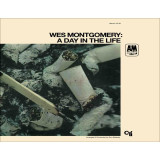
- A1: A Day In The Life (Lennon-Mccartney) 5:49
- A2: Watch What Happens (M. Legrand-N. Gimbel) 2:44
- A3: When A Man Loves A Woman (Lewis-Wright) 2:54
- A4: California Nights (Hamlisch-Liebling) 2:32
- A5: Angel (Wes Montgomery) 2:49
- B1: Eleanor Rigby (Lennon-Mccartney) 3:08
- B2: Willow Weep For Me (Ann Ronnell) 4:34
- B3: Windy (Ruthann Friedman) 2:22
- B4: Trust In Me (Weber-Schwartz-Ager) 4:28
- B5: The Joker (Newley-Bricusse) 3:25
A Day in the Life' was released in 1967 and reached #1 on the Billboard Jazz Albums chart.
From the early 1960s to the late '80s, A&M was one of the most eclectic and powerful independent record labels in the world. The roster of artists who recorded there includes The Carpenters, Captain Beefheart, The Police, Joe Cocker, Suzanne Vega, Procol Harum and Janet Jackson, among others. Founded as an independent company by Herb Alpert and Jerry Moss in 1962, soon the label garnered interest and success, and was acquired by PolyGram in 1989. Throughout its operations, A&M housed well-known acts such as Sting, Sergio Mendes, Supertramp, Bryan Adams, Burt Bacharach, Liza Minnelli, Paul Williams, Quincy Jones, Cat Stevens, Peter Frampton, Carole King, Extreme, Joan Baez, the Human League, Soundgarden, Duffy, and Sheryl Crow, among others. Reissue of the debut album on A&M Records by jazz guitarist Wes Montgomery, released in 1967. It reached #1 on the Billboard Jazz album chart and #2 on the R&B chart. Considered by far the best of his three albums on A&M (in partnership with Creed Taylor’s CTI Records), A Day in the Life features a plethora of star sidemen, such as Herbie Hancock, Ron Carter, Ray Barretto and Grady Tate, among others, as well as superb arrangements by Don Sebesky.