By now a regular and esteemed presence among the Discrepant sprawling household via releases with projects such as Alförjs or Jibóia, Mestre André "resurrects" his O Morto alias (bad pun somewhat intended) after 2016 'The Forest, The People And The Spirits'. With a diaristic approach where field recordings function as remnants of his surrounding reality and subsequent memories to be processed and recontextualized into an expressionist whole, O Morto expands that previous Discrepant release sonic palette unto uncharted cartographies.
Based on a number of field recordings taken during a life-changing trip to Morocco that felt like a fever dream, 'Dans La Gorge D'un Monstre' reenacts that hazy and hallucinatory mindframe through five tracks where no vivid recollection persists, tainted by the extrasensory feeling of not being quite there. A sonic fiction that goes from the processed cymbals and pummelling drums of 'The Gorge' with Andrés' mates in Jibóia, through moroccan Gimbri player Ayoub El Ayady and Khalid Boulhaman’s rattling Krakebs on 'Lila' and the slowed down Eccojams vibes of 'Out of the Atlas' to the dreamy aquatic soundscapes and arpeggios of the appropriately titled ‘Princesas Batráquio'. Comprising the whole of the B side, 'A Desert of Rain' is a slow evolving wonder where gong-like tones drift beneath scrambled transmissions of unknown origin, eventually giving way to synapse inducing drone motifs and scraps of realities collapsing among themselves - fire into water, a jetstream into steps, maybe none of this.
Along with the LP, the release comes with a companion piece tape titled 'Iffrits Habitent', a more impressionistic and unadulterated account of the same travel that could well be this side of the mirror. Then again, maybe he never made it from the other side. Who's to know?
Search:habit
With his new album, Gecko Turner confirms that he is a standout artist in the global groove scene, a must for the outernational sounds aficionados.
Somebody From Badajoz is the fifth studio album in his much lauded discography and his first in seven years, eagerly anticipated by both his fans and himself: "this business of dedicating yourself to music and making songs... it's a long game."
With the release of his first two, remarkable, albums, Guapapasea! (2003) and Chandalismo Ilustrado (2006), Gecko started cultivating what one astute journalist defined as Afro-maduran soul—the "maduran" bit referencing Extremadura, a region in central-western Spain.
Badajoz, Gecko's birthplace, is the biggest city in the area, on the border with Portugal, by the Guadiana River. It is a place that oozes history, where there is constant movement at the border, and people's character is friendly and open-minded with foreign habits.
Gecko's Afro-maduran soul isbuilt on Afro-American music and drenched in Brazilian, African, Latin American and Jamaican sounds. There are also echoes of a youth marked in equal parts by our man's admiration for the Beatles and the flamenco that could be heard everywhere in Badajoz in the seventies. It makes for a singular sound and a musical language of its own—spicy, succulent, full of nuances, but with a very personal flavour.
The album opens with the Nigerian talking drums of Twenty-twenty Vision, (neo) soul in a magical falsetto, carried by a sumptuous orchestral arrangement with a cinematic flavour: "I'd been thinking about doing something called 'Twenty-twenty Vision' for some time, making a play on words with the vision we have of the world after the year 2020 and the medical expression, which, in ophthalmological terms, means 'normal or complete vision.' Beyond that particular song, I think that's the mood of the album: a look at society in the twenties of the 21st century and the feelings and demons it produces."
It's followed by De Balde, a very special song born from a posthumously discovered lyric by the great writer Carlos Lencero, a regular collaborator of Camarón, Pata Negra, and Remedios Amaya, and also from Badajoz. While conceived as a fandango, Gecko has moulded it into his sound in such a seamless way it now seems as if the words could only have been written to be embraced by the percussion, brass, and backing vocals heard on the album. It's the only lyric on Somebody From Badajoz not written by Turner, still it sits rather comfortably with the rest, sharing the same emotivity and sensitivity, as well as the trademark humour and irony.
Other tracks see more protagonism for the rhythm.The beat-driven Ain't No Fun Preachin' to the Choir features Gecko's vocals walking the thin line between singing and talking over a phenomenal afro-disco-funk-infused trailblazer. In Am I Sad? it's impossible to not bob your head to the queen of Papatosina's mongrel rhythm, as close to the banks of the Guadiana river as it is to the shores of the Mississippi. Qué Siesta Tan Buena, He Babeao Y To! is an ode to the snooze in true Afro-Maduran fashion. And in Come And Try, the Caribbean influence is evident—lovers' rock that invites you to dance in good company.
In these songs, and throughout the album, for that matter, the musicians accompanying Gecko, who himself plays many of the instruments as well, shine brightly. All hailing from Extremadura, Javi Mojave (percussion), Álvaro Fdez 'Dr. Robelto' (bass), and Rafa Prieto (guitar) have been carrying him with delicate forcefulness since he started out as a solo artist. At the same time, the wonderful and essential voices of Deborah Ayo, Astrid Jones, Fani Ela Nsue, and Miriam Solís give the album a sunny variety of colours. And there are many more—a sensational group of musicians contributes dazzling harmonic bursts to many of the songs. The palette of sounds is very diverse and rich in textures and nuances, including, for example, the ngoni, bells, and various repurposed kitchen utensils.
The groove is always around, moving between the magical border sound of Everybody Knows Somebody From Badajoz and Little Dose, the silky soul of The Sibariteo Appreciation Society, and the exultant celebration of End Of The World (which surprisingly sees Gecko turning to the occasional use of autotune), a piece that could be used for the final credits of a Monty Python film and, in fact, closes the album.
Gecko Turner has done it again with Somebody From Badajoz, looking to the future without losing sight of the roots. In times of upheaval all over the globe, when people are looking for purity, he delivers a formidable piece of work: risky, optimistic in spite of everything, and with a decidedly bastard sound. Let's rejoice.
With his new album, Gecko Turner confirms that he is a standout artist in the global groove scene, a must for the outernational sounds aficionados.
Somebody From Badajoz is the fifth studio album in his much lauded discography and his first in seven years, eagerly anticipated by both his fans and himself: "this business of dedicating yourself to music and making songs... it's a long game."
With the release of his first two, remarkable, albums, Guapapasea! (2003) and Chandalismo Ilustrado (2006), Gecko started cultivating what one astute journalist defined as Afro-maduran soul—the "maduran" bit referencing Extremadura, a region in central-western Spain.
Badajoz, Gecko's birthplace, is the biggest city in the area, on the border with Portugal, by the Guadiana River. It is a place that oozes history, where there is constant movement at the border, and people's character is friendly and open-minded with foreign habits.
Gecko's Afro-maduran soul isbuilt on Afro-American music and drenched in Brazilian, African, Latin American and Jamaican sounds. There are also echoes of a youth marked in equal parts by our man's admiration for the Beatles and the flamenco that could be heard everywhere in Badajoz in the seventies. It makes for a singular sound and a musical language of its own—spicy, succulent, full of nuances, but with a very personal flavour.
The album opens with the Nigerian talking drums of Twenty-twenty Vision, (neo) soul in a magical falsetto, carried by a sumptuous orchestral arrangement with a cinematic flavour: "I'd been thinking about doing something called 'Twenty-twenty Vision' for some time, making a play on words with the vision we have of the world after the year 2020 and the medical expression, which, in ophthalmological terms, means 'normal or complete vision.' Beyond that particular song, I think that's the mood of the album: a look at society in the twenties of the 21st century and the feelings and demons it produces."
It's followed by De Balde, a very special song born from a posthumously discovered lyric by the great writer Carlos Lencero, a regular collaborator of Camarón, Pata Negra, and Remedios Amaya, and also from Badajoz. While conceived as a fandango, Gecko has moulded it into his sound in such a seamless way it now seems as if the words could only have been written to be embraced by the percussion, brass, and backing vocals heard on the album. It's the only lyric on Somebody From Badajoz not written by Turner, still it sits rather comfortably with the rest, sharing the same emotivity and sensitivity, as well as the trademark humour and irony.
Other tracks see more protagonism for the rhythm.The beat-driven Ain't No Fun Preachin' to the Choir features Gecko's vocals walking the thin line between singing and talking over a phenomenal afro-disco-funk-infused trailblazer. In Am I Sad? it's impossible to not bob your head to the queen of Papatosina's mongrel rhythm, as close to the banks of the Guadiana river as it is to the shores of the Mississippi. Qué Siesta Tan Buena, He Babeao Y To! is an ode to the snooze in true Afro-Maduran fashion. And in Come And Try, the Caribbean influence is evident—lovers' rock that invites you to dance in good company.
In these songs, and throughout the album, for that matter, the musicians accompanying Gecko, who himself plays many of the instruments as well, shine brightly. All hailing from Extremadura, Javi Mojave (percussion), Álvaro Fdez 'Dr. Robelto' (bass), and Rafa Prieto (guitar) have been carrying him with delicate forcefulness since he started out as a solo artist. At the same time, the wonderful and essential voices of Deborah Ayo, Astrid Jones, Fani Ela Nsue, and Miriam Solís give the album a sunny variety of colours. And there are many more—a sensational group of musicians contributes dazzling harmonic bursts to many of the songs. The palette of sounds is very diverse and rich in textures and nuances, including, for example, the ngoni, bells, and various repurposed kitchen utensils.
The groove is always around, moving between the magical border sound of Everybody Knows Somebody From Badajoz and Little Dose, the silky soul of The Sibariteo Appreciation Society, and the exultant celebration of End Of The World (which surprisingly sees Gecko turning to the occasional use of autotune), a piece that could be used for the final credits of a Monty Python film and, in fact, closes the album.
Gecko Turner has done it again with Somebody From Badajoz, looking to the future without losing sight of the roots. In times of upheaval all over the globe, when people are looking for purity, he delivers a formidable piece of work: risky, optimistic in spite of everything, and with a decidedly bastard sound. Let's rejoice.
2023 Repress
Two years ago Credit 00 was lucky enough to find a flat with a winter garden in the midst of the city's concrete vastness. Setting up his studio there, surrounded by plants, facing the backyard oasis with its trees, bushes and birds singing all day was quite the opposite of his usual work environment. The contrast of being in nature whilst surrounded by an urban neighbourhood is explored on Credit 00's latest outing on Uncanny Valley. Two different settings represented on either side of the vinyl record. The street side of the building is Credit 00's typical habitat: rough drums, face melting acid and ghetto style track arrangement. R U READY 2 JACK pays tribute to Belgium New Beat and wants to sound like Hardcore that is coming from the heart. TRUE 2 THE GEHM is an ode to one of the true German Acid innovators, Andreas Gehm (R.I.P.), originally written in 2016 for a compilation, which raised money to help him cover expenses incurred due to his severe health issues. The backyard side reveals the influence of flora and fauna on Credit 00's work. On both THE GARDEN and DEEP IN THE JUNGLE, you can hear his synthetic interpretation of mother nature's repertoire. Birds chirping, acid frogs croaking and the wind blowing through the trees to the sound of jungle drums. Despite all the differences between the concrete and the green jungle, there are also a lot of similarities. As the artwork (hand-drawn by Credit 00 himself) illustrates, graffiti spreads all over buildings like wild vine grows on rocks: chaos reigns everywhere, whether in natural or man-made environments!
On Origins Chris Bartels takes on the role of singer-songwriter for the first time under his Elskavon moniker, unveiling a voice that wouldn't sound out of place next to vocal-forward artists like Justin Vernon, Jónsi, or Baths, who master the balance between conventional songcraft and bold, idiosyncratic experimentation. Origins is vast yet intimate, fluttering yet cohesive, tattered yet clean, a little like rainfall during sunlight. Shedding the ambient-classical confines of his previous output, the album's opener and title track, offers a swirling mosaic of acoustic textures that recall the beloved duo The Books, laced with warped vocal utterances flitting in and out of a club-friendly beat. "Origins" is followed by the equally danceable "Coastline," which drives home the smiling melodies and intricate sound-design that form the spine of Origins, keeping Bartels' voice in a largely decorative and impressionistic role up to this point. "Blossom and the Void" dissolves the introductory tension as Bartels comes out lyrically swinging, his digitized voice chanting widely over the mutated New Wave-esque anthem. Here, Bartels shows his instinct for dynamics by rising to bombast and quickly dispelling it, making steep yet grace- ful descents into skillfully delicate sound-design. Throughout Origins, the patient glacial aesthetic of his previous work is still discernible-- there are wordless, expansive panoramas that stretch out patiently for minutes at a time and smartly resist the impulse to pack each moment with a persona made even more impactful when Bartels chooses to wield it. At other times, his spokesmanship is woven discreetly into a larger tapestry, like on "See Out Loud" (and its ambient reprise) where Bartels' voice shimmers from a distance, covering the scene in diffuse splendor. "There is so much warping, mangling, re-sampling, reversing and pitching," Bartels says of his intricate vocal manipulations. "I printed a lot of the vocal recordings onto a tape machine from the `60s, first at one speed, and then I'd halve, or double the speed going back into my comput- er," he elaborates, illustrating how this kind of analog processing freed him from his habits. "Sometimes I'd do this multiple times on one recording or layer-- it gave me such a unique and unexpected sound. At this point, I threw away any inhibition on what type of vocals to have, or not have, on the album." This newfound freedom is palpable in the peaks of soaring grandeur that dot the emotional landscape of Origins. "All These Years" cathartically reaches one such summit in its second half after laying a path of gently plodding indie-IDM in its first. The cinematic vignette "Dreymur Aftur" provides pause for reflection amid its brisk procession of string plucks and rhythmic synthesizer while marching wordlessly into album-closer "This Won't Last Forever." Here at the end, Bartels' guitar playing is laid bare in the mix, skeletally framing a single ribbon of his voice as it unfurls into the atmosphere. Though the track isn't expressly lyrical, its starkness still exemplifies the new leaf of vulnerability Bartels has turned over on Origins, an album that documents his hard-won evolution from musician, to producer, to composer_ and finally_ his confident arrival in the role of songwriter.
In the midst of a wave of hybridizing ambient, drone, folklore and experimental electroacoustic music, Roxane Métayer has gained a cult following with only a couple of releases to date. Following her debut album (Éclipse Des Ocelles) for Morc with a split EP and a limited cassette for Wabi-Sabi, Roxane now turns to Marionette with her intimate narrative based multi-instrumental recordings, a match made in the heavens if you ask us. With her violin, woodwind, voice and various effect pedals, Métayer takes the listener on a newfound journey into the ancient, medieval, and primordial.
Perlée de sève is Métayer’s second full length, a sophomore to the critically acclaimed Éclipse Des Ocelles, where Métayer continues to sonically realize the map of the fictional habitats that inhabit her mind. Coming from a background of studying narration and different animation mediums, it’s no surprise that her recordings evoke vivid imagery and carry a trace of the environment they were conceived in. The instruments morph as extensions of her body and ultimately become new organs, a means of communicating these bio-memetic stories and creating a dialogue between herself and her surroundings. Meandering melodies intertwine with accompanying drones, mantra-like fragments and a handfeel percussion lend themselves as living and breathing elements in Roxane’s beguiling and spellbinding anecdotes.
Roxane is an observer of the world, her projects conceived from elements that inform her reality, such as the organic imagery and sounds of nature, then transforming that into a strangely familiar parallel universe that would not exist otherwise. Whether it's active research or taking her instruments to the forest, Métayer opens up her imagination by taking this mental journey to discover locations, creatures, and time periods then channeling that into her own fairy tales. The album and track titles act as a portal into those worlds, like chapters in a book where the protagonists are animalia, plantae, and fungi. As Métayer wrote in an interview: “Stories are a privileged way to create an awareness of a specific subject.”
Limited Loser edition on dark green vinyl. There are times in our life when we feel magic in the air. When new love arrives, or we find ourselves lost in a moment of creation with others who share our vision. A sense that: this is who I want to be. This is what I want to share. It's a fleeting feeling and one that Kyle Thomas, the singer-songwriter who records and performs as King Tuff, found himself longing for in the spring of 2020. But knowing he couldn't simply recreate this time in his life at will, Thomas-who hails from Brattleboro, Vermont-set out to write a love letter to those cherished moments of inspiration and to the small town that formed him. The one where he first nurtured his songwriting impulses, bouncing ideas off other like-minded artists. The kind of place where the changing of the seasons always delivered a sense of perspective and fresh artistic inspiration. Where he felt a deeper connection with nature and sense of community that had once been so close at hand. And so, Thomas seized upon his memories, creating what he calls "an album about love and nature and youth." The result is Smalltown Stardust, a spiritual, tender and ultimately joyous record that might come as a shock to those with only a passing knowledge of the artist's back catalog. On Smalltown Stardust, Thomas takes us on his journey to a place where past and present collide, where he can be a dreamer in love with all that he sees. References to his Brattleboro upbringing abound, but at the core of Smalltown Stardust is Thomas's desire to commune with nature on a spiritual level. Images of the natural world, from blizzards to green mountains to cloudy days, fill the songs. "I consider nature to be my religion," he explains, and Smalltown Stardust is nothing if not a spiritual exploration. While so much of Smalltown Stardust invokes idealized traces and places of Thomas's past, the album's recording process made his communal vision a reality. Thomas's Los Angeles home in 2020 formed a micro-scene of sorts, with housemates Meg Duffy (Hand Habits) and Sasami Ashworth recording their own heralded albums (2021's Fun House and 2022's Squeeze, respectively) at the same time. A shared spirit dominated an era spent largely on the premises, with Thomas serving as engineer and contributor to both records, and Ashworth working as co-producer on Smalltown Stardust. Ashworth's contributions are vital to the album: she co-wrote a majority of the record and contributed vocals, arrangements, and instrumentation to each song. In the end, Smalltown Stardust is not merely a nostalgia trip. Thomas not only conjured a special time in his life, he found new inspiration, surrounded by collaborators and a sense of love and wonder for nature. If the first King Tuff record was content to merely state Thomas was no longer dead, Smalltown Stardust is a paean to what that life means. A statement of belief and a hymnal to the magic still to behold all around us.
There are times in our life when we feel magic in the air. When new love arrives, or we find ourselves lost in a moment of creation with others who share our vision. A sense that: this is who I want to be. This is what I want to share. It's a fleeting feeling and one that Kyle Thomas, the singer-songwriter who records and performs as King Tuff, found himself longing for in the spring of 2020. But knowing he couldn't simply recreate this time in his life at will, Thomas-who hails from Brattleboro, Vermont-set out to write a love letter to those cherished moments of inspiration and to the small town that formed him. The one where he first nurtured his songwriting impulses, bouncing ideas off other like-minded artists. The kind of place where the changing of the seasons always delivered a sense of perspective and fresh artistic inspiration. Where he felt a deeper connection with nature and sense of community that had once been so close at hand. And so, Thomas seized upon his memories, creating what he calls "an album about love and nature and youth." The result is Smalltown Stardust, a spiritual, tender and ultimately joyous record that might come as a shock to those with only a passing knowledge of the artist's back catalog. On Smalltown Stardust, Thomas takes us on his journey to a place where past and present collide, where he can be a dreamer in love with all that he sees. References to his Brattleboro upbringing abound, but at the core of Smalltown Stardust is Thomas's desire to commune with nature on a spiritual level. Images of the natural world, from blizzards to green mountains to cloudy days, fill the songs. "I consider nature to be my religion," he explains, and Smalltown Stardust is nothing if not a spiritual exploration. While so much of Smalltown Stardust invokes idealized traces and places of Thomas's past, the album's recording process made his communal vision a reality. Thomas's Los Angeles home in 2020 formed a micro-scene of sorts, with housemates Meg Duffy (Hand Habits) and Sasami Ashworth recording their own heralded albums (2021's Fun House and 2022's Squeeze, respectively) at the same time. A shared spirit dominated an era spent largely on the premises, with Thomas serving as engineer and contributor to both records, and Ashworth working as co-producer on Smalltown Stardust. Ashworth's contributions are vital to the album: she co-wrote a majority of the record and contributed vocals, arrangements, and instrumentation to each song. In the end, Smalltown Stardust is not merely a nostalgia trip. Thomas not only conjured a special time in his life, he found new inspiration, surrounded by collaborators and a sense of love and wonder for nature. If the first King Tuff record was content to merely state Thomas was no longer dead, Smalltown Stardust is a paean to what that life means. A statement of belief and a hymnal to the magic still to behold all around us.
Tape
There are times in our life when we feel magic in the air. When new love arrives, or we find ourselves lost in a moment of creation with others who share our vision. A sense that: this is who I want to be. This is what I want to share. It's a fleeting feeling and one that Kyle Thomas, the singer-songwriter who records and performs as King Tuff, found himself longing for in the spring of 2020. But knowing he couldn't simply recreate this time in his life at will, Thomas-who hails from Brattleboro, Vermont-set out to write a love letter to those cherished moments of inspiration and to the small town that formed him. The one where he first nurtured his songwriting impulses, bouncing ideas off other like-minded artists. The kind of place where the changing of the seasons always delivered a sense of perspective and fresh artistic inspiration. Where he felt a deeper connection with nature and sense of community that had once been so close at hand. And so, Thomas seized upon his memories, creating what he calls "an album about love and nature and youth." The result is Smalltown Stardust, a spiritual, tender and ultimately joyous record that might come as a shock to those with only a passing knowledge of the artist's back catalog. On Smalltown Stardust, Thomas takes us on his journey to a place where past and present collide, where he can be a dreamer in love with all that he sees. References to his Brattleboro upbringing abound, but at the core of Smalltown Stardust is Thomas's desire to commune with nature on a spiritual level. Images of the natural world, from blizzards to green mountains to cloudy days, fill the songs. "I consider nature to be my religion," he explains, and Smalltown Stardust is nothing if not a spiritual exploration. While so much of Smalltown Stardust invokes idealized traces and places of Thomas's past, the album's recording process made his communal vision a reality. Thomas's Los Angeles home in 2020 formed a micro-scene of sorts, with housemates Meg Duffy (Hand Habits) and Sasami Ashworth recording their own heralded albums (2021's Fun House and 2022's Squeeze, respectively) at the same time. A shared spirit dominated an era spent largely on the premises, with Thomas serving as engineer and contributor to both records, and Ashworth working as co-producer on Smalltown Stardust. Ashworth's contributions are vital to the album: she co-wrote a majority of the record and contributed vocals, arrangements, and instrumentation to each song. In the end, Smalltown Stardust is not merely a nostalgia trip. Thomas not only conjured a special time in his life, he found new inspiration, surrounded by collaborators and a sense of love and wonder for nature. If the first King Tuff record was content to merely state Thomas was no longer dead, Smalltown Stardust is a paean to what that life means. A statement of belief and a hymnal to the magic still to behold all around us.
‘Living Rooms’ is a full-blooded debut of rich, playful, experimental pop from the artist Fe Salomon – full of unabashedly big songs and sumptuously big sounds. Fe’s soulful and arresting lead vocals weave amongst soaring strings and big band brass sections; clattering percussion and disjunctive rhythms; dirty electro synth and butchered guitar. A collaboration with producer and contemporary classical composer Johnny Parry, ‘Living Rooms’ is a true pop album with a distinct, exuberant and deeply generous sound.
Born in Northampton, Fe moved to London at 18 for a place at Theatre College; but soon left to concentrate on music and songwriting, falling quickly into the Camden music scene, and earning her a prolific career as a singer. Building on her diverse musical background and honing her unusual sonic style, this album has been percolating at the back of Fe’s mind for a long time. The perfect storm of personal and external factors thus created the moment to make it. ‘Living Rooms’ tells stories of multiple lives lived and lost
in the city, of friendships that meant everything and the characters you’ll never meet again, of transience and loneliness, and of getting by and moving on.
At the forefront of the album is an organic and fiercely honest lead vocal performance. However, Fe permits her voice to be twisted and distorted into the fabric of the instrumentation. The un-doctored lead vocals are frequently haunted by angels and demons, created through Fe’s uninhibited willingness to this manipulation, and capturing the more visceral emotions within the expression of the human voice.
‘Living Rooms’ navigates a wide spectrum of sounds and emotions. Take album opener “Polka Dot”, a track that mixes emotive vocals with an avant-garde alt/pop production to conjure a cut as stylish as it is shrouded in shadowy mystique. A track “about mourning innocence, and the darkness that’s picked up along the way, with an ‘up yours’ sarcastic tone, and not wanting to grow old”, it sets the scene for a twisting collection that up-ends expectations at every opportunity.
Elsewhere, the chunky hooks of “Super Human”, the sci-fi/country/big band of “Wired of Caffeine”, or the intimately sung vocals and Vaughan-Williams-esque string sections of “Taxicabs”, all contribute to an album that evolves like a rich and constantly surprising tapestry.
Although the conception of the album was a frenzy of wild experimentation. The album is faithful too, and celebratory of many joyous pop traditions; but searches for ways to reinterpret the familiar. And no less so than on the off-kilter centre-piece “Quintessential England”. Through wry lyricism and vivid imagination, the track paints a lucid, if lonely, depiction of a life lived out in the sticks; one that ultimately arrives at the conclusion that perhaps “the grass isn’t always greener”.
Gifted with the kind of superpowers that have blessed Alison Goldfrapp with her unwavering glam-pop allure and Stevie Nicks with that invincible soul, Fe Salomon’s empowering first release will prove she’s cut from the same cloth and ready to be your newest musical hero.
It's an all electronic affair, harmonically maximalist, predominantly symphonic-synthetic, requiring active listening. Some pieces function as challengers of musical structural habits, provoking the short attention span culture, others present a problem-solution scenario, collectively via a neoteric noise aesthetic and detailed melodic weaving. Ultimately, the objective was to engineer an assortment of works full of sound, euphonic and vivid in nature.
The making of this album was intentionally a very personal process, going into self therapy territory at times interpreting the composer's contemplating mind dealing with tolerance, destruction, compassion, misery, grace and tyranny in an auditory manner. Some pieces function as challengers of musical structural habits, provoking the short attention span culture, others present a problem-solution scenario, collectively via a neoteric noise aesthetic and detailed melodic weaving. Ultimately, the objective was to engineer an assortment of works, awash with euphonic sound vivid in its essence, with a deep focus on various synthesis techniques within a compositional framework.
Dedicated to Peter Rehberg aka Pita
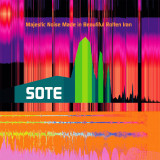
Ata 'Sote' Ebtekar composes music with a deeply-held conviction that rules and formulas should be deconstructed and rethought. He alters musical modal codes from their original tonality and rhythmic tradition to achieve vivid, synthetic soundscapes. Over the last three decades, his work has been published by labels such as Warp, Sub Rosa, Opal Tapes, Diagonal, Mute and Morphine, among others. In 2018, he founded a new label called 'Zabte Sote', which focuses on releases by Iranian experimental electronic composers from around the globe.
Known for creating compositions that range from the delicate to the abrasive, using sounds both of acoustical and electronic origins, Ebtekar sees music as the expression of cultural habits in sound and anti-sound (silence). Seeking to expand such traditions he creates music that, while rooted in many cultures at once, belongs to none in particular. Sote's work deals with various blueprints, in particular his solo all synthetic music, his electroacoustic audio/visual group project, and his multi-channel sound installations. Sote is on the jury panel of The DAAD Artists-in-Berlin Program, and has created commissioned work for and performed at a.o. Berghain and CTM Festival (Berlin), Unsound Festival (Krakow), Cafe Oto (London), Jazzhouse (Copenhagen), TodaysArt Festival (The Hague), Bozar (Brussels), Ultima Festival (Oslo), Donaufestival (Krems), Donaueschinger Musiktage, Mira (Barcelona), Terraforma (Milan), and many more.
The debut album from post-folk travellers Immaterial Possession, a quartet, half of whom came from an artist commune and half who were card-carrying Elephant6 alumni. ‘Immaterial Possession’ is a rich tapestry of a record, a gorgeous, melodious return to a time when influences co-habited freely and whatever was close at hand made the music of the day. All set to Syd Barrett-era Floyd and Nico with haunting lines, it’s perfectly tinged with gamelan harmonies, evocative Spanish guitars and xylophone. Exuding mystical symbolism; they wear luscious threads, they’re part of something/anything; perhaps a neo-modern-folk commune of artists in search of a canvas to stretch out over their juxtaposed influences. Immaterial Possession was conceived by Atlanta natives, Cooper Holmes and Madeline Polites, who met while living together at an Atlanta artist commune that was integrated into the DIY music, theatre, and arts scene. Some years later the duo moved to the neighbouring musical town of Athens, GA. They were soon joined by seasoned drummer, John Spiegel, and eventually fulfilled with multi-instrumentalist Kiran Fernandes (keyboards, clarinets, flutes) - descendant of the Elephant 6 Collective scene. It’s eastern, it’s eerie dream pop, it’s spacious and ethereal… A perfectly wild trip, and where it ends is immaterial.
Berlin-based producer Rampue has not released an album in 14 (in words: fourteen) years. Between 2008 and 2020 he toured the world and worked mainly on his live sets in the meantime. So now only a worldwide pandemic had the power to prevent the traveling musician from continuing this hustle and bustle and eventually share a new record with the public. Corona was what brought this standstill and the otherwise well- traveled individual experiences cabin-fever during lockdown. Hence, the new Rampue album "Tragweite" came into existence in February 2021, which portrays the artist's desire for experimentation.
Inspired by a modular synthesizer (Buchla), Rampue has seemingly put himself into a kind of trance, in which he lets the machines work and combines randomly created sounds with airy structures such as low drums or simple grooves. Rampue accomplished to break free by using random sounds as a new impulse and a way out of a creative crisis, which stemmed both from the enforced home isolation and from the self-perceived paralysis. The result is literally unique, as many of the sound products cannot be reconstructed and are preserved in album form for the general public.
Listening to "Tragweite" one gets the impression that the dialectical relationship between chaos and order, further supported by its production, is the defining theme of the album. After an initially perceived chaos, a delicate order, which is determined by structuring drum patterns and basslines, takes over throughout the course of the album.
Later, it frays and loses itself again in sounds and tones created mechanically However, it never seems arbitrary, but willful and skillfully staged. For instance, "Furo?" begins with apparent arrhythmia. The combination of bass and subtle percussion, however, gives this arrhythmia a shape, guiding the track which gradually becomes more and more driving without losing its original playfulness.
Although one might be inclined to think of genres such as Downtempo or Ambient at the beginning in the further course of the album results in such a diverse sound and rhythmic landscape that one willingly questions one's own perception of music while listening and finally throws every type of categorization overboard joyfully. The listening experience is too intoxicating and enlightening to stick to simple genre boundaries. The musical spectrum ranges from straight arrangements that live entirely without a drum foundation ("Fu?r Dich") to almost meditative sound collages ("Regengesicht") to the four-to-the-floor banger "Kembang" which adds a grimmer note with a certain industrial appeal to the overall rather melancholic-progressive curation. "Direct Faden" on the other hand, surprises with its simple guitar-based foundation on which the omnipresent synth snippets and pads are allowed to let off steam towards the end of the record. The track that most closely combines the progressive production style with a danceable club atmosphere is probably "Phobia". Wafting, partly breaking away synthesizer sounds rise higher and higher, while the driving mixture of bass and drums consistently march forward.
Rampue breaks with his old, musical habits as "Tragweite" creates the impression of improvisation and jam character without getting lost. Rampue takes his listeners on a journey that is stirring and moving, sometimes demanding or even a bit disturbing, yet always one thing: incredibly exciting.
- 01: Natural Monopoly (Feat. Beanieskimask)
- 02: Good Intentions
- 03: Bad Habits
- 04: Anxiiety
- 05: Inheri(Past)Tence
- 06: Had A Few Religious Experiences, Forgot Them All (Feat
- 07: Uncle Kane
- 08: Salt Body (Feat. Robthesoundbank)
- 09: Isles In The Sky (Feat. Cyanide Haiku)
- 10: You Left Early
- 11: Glitch/Spy
- 12: 009 (Reno)
- 13: The Gun That Kills The Past (Feat. Robthesoundbank)
- 14: Wormhole To Andromeda
- 15: Hakim Warrick
- 16: Esp
- 17: My Mind Is An Oven
- 18: Black Friday (Feat. Greg Kramer)
- 19: Send More Chuck Berry
Sunking is the experimental sights and sounds of Seattle natives Bobby Granfelt & Antoine Martel, an outlet for the duo whose music is "steeped in funk, fusion, and the dreamier end of the rock spectrum," said Seattle"s The Stranger. The Stranger also went on to say that "this city needs more groups like sunking, who flit among genres such as hip-hop, jazz, and shoegaze rock while messing with the DNAs of each style they address." Both Granfelt and Martel are also members of High Pulp, a jazz collective that draws influences from punk rock, shoegaze, hip-hop, and electronic music. Also signed to ANTI-, their album "Pursuit of Ends" came out in April of this year. "High Pulp blend old-school bebop with contemporary soul and electronica vibes, as though someone convinced the ghost of Duke Ellington to reinterpret a Chemical Brothers album," said the A.V. Club.
This performance by Waylon Jennings was no April Fool's joke - This was the "new" Waylon, both personally and professionally - He had kicked a 20-year drug habit, split with RCA and signed a new deal with MCA Records - He discovered a passion for songwriting, teamed with
legendary producer Jimmy Bowen, and produced some of the best work of his 30-year-plus career
He credited his wife and soul mate, Jessie Colter, for much of his inspiration. This was Waylon's second trip to the ACL stage, but the one that best captures the raw edge and driving urgency that pushed country music way past its
Nashville boundaries starting in the mid-1970's. He was described as the leader
of the country "Outlaw" movement, which he often dismissed as just another
marketing scam, but there's no denying that he turned the music on its head and
took it way beyond its rural southern roots. This West Texas boy who worked as a
DJ and started his own band at 14, then later played with Buddy Holly, left an
indelible mark on the music he loved. He was a class act, this man called Hoss --
Terry Lickona (Producer Austin City Limits).
Having first met in 1991, music photographer STEVE GULLICK and JAMES JOHNSTON, founder of Gallon Drunk, began blurring the boundaries between audio and visual in 2004 when they formed their own band, '...bender'. They’ve maintained the habit ever since, with Gullick subsequently founding Tenebrous Liar and Johnston pursuing a career, alongside his work with PJ Harvey and a tenure in Nick Cave & The Bad Seeds, as an acclaimed visual artist and painter.After working together on an art show in late 2019, the idea of making music again immediately resurfaced. Without any firm strategy, Johnston and Gullick began recording, unprompted, drawing upon a shared love of noise, folk, and classical. This became the album ‘We Travel Time’, a compelling and mysterious record that bravely embraced beautiful piano, voice, violin, and guitar to create a drifting haze, forging an imagined soundtrack which offers echoes of Big Star, Nico, Lee Hazlewood and Palace Brothers alongside the haunting influence of contemporary minimal classical. Due for release this coming November 18th via God Unknown Records, Johnston and Gullick have returned to their craft to create a stunning new selection of songs and moods, brought together for the album ‘Everybody’s Sunset’. Recorded at their homes throughout 2021 and 2022, the ten songs on this new album take the fragile intimacy and agenda-free approach of its predecessor and go out even further into the fringes of tone and feeling. Utilising a vast selection of instruments between them (violin, organ, guitar, banjo, autoharp, harmonica, piano, synthesisers….), ‘Everybody’s Sunset’ ebbs and flows, bringing different instruments and signals to the fore as the album progresses. a bold, adventurous musical trip that finds Johnston and Gullick’s musical bond grow ever deeper and closer. Tune in and watch the Sunset glow. All songs written, arranged and recorded by James Johnston and Steve Gullick James Johnston: Violin, voice, organ, piano, guitar, banjo, autoharp. Steve Gullick: Voice, guitar, piano, organ, harmonica, harmonium. 1. The Moon & The Stars 2. Shimmer 3. Fear of Everything 4. Save Our Souls 5. Ice Moon 6. The Town That Couldn't Sleep 7. Medieval Death Song 8. Greater Silence 9. Who I Who 10. Everybody's Sunset
- A1: Love Song
- A2: Young Bastards
- A3: Stop It
- A4: Blind Man
- A5: Skin O Daayba - Complex Habits No.3
- A6: We Are Waiting
- B1: Mantra
- B2: Skin O Daayba - Feedbackless World
- B3: Cupping Glass
- B4: Half Monk Half Herring
- B5: Ukoidm - Fishing (Edit)
- B6: Eric
- B7: In The Garden
- B8: Sequencer
- C1: Who Are We
- C2: Hit
- C3: Yozti 2
- C4: Voices Cricket
- C5: Attempt To Raise Hell
- C6: Anna's Assignment
- D1: In Our Culture (Surname Version)
- D2: Lesson 4 Voices
- D3: Intermission
- D4: Chicken
- D5: Untitled
- D6: Against Soap
- D7: Bereshit
- D8: Caretakers
Black Truffle is pleased to announce Uri Katzenstein’s Audio Works, produced in collaboration with Holon’s Centre for Digital Art. Spanning sculptural installation, performance, video art, and many other media, Katzenstein’s absurdist, poetic, and often hilarious work made extensive use of sound and music. This, however, is the first release dedicated to the artist’s audio work, collecting 28 tracks produced between the early 1980s and 2017. Compiled from dozens of hours of recordings left uncatalogued (and in some instances unheard) at the artist’s death in 2018, these four sides are a treasure trove, offering a captivating glimpse into a uniquely uninhibited creative practice. Predominantly recorded alone, with some contributions from regular collaborators such as Ohad Fishof on the later pieces, many of these tracks stem from Katzenstein’s time living in New York in the 1980s. Feeding on the cross-pollination of post-punk energy, radical art practice, and new media possibilities that characterised the New York scene at this time, many of Katzenstein’s recordings squeeze multilayered vocal experimentation into synth-based miniatures with a distinctively pop twist, their forms ruptured with anarchic bursts of free-form electronics, sounds from self-built instruments, and field-recorded snatches of the outside world. Katzenstein’s electronic production calls up touchstones of skewed 80s art pop like Laurie Anderson, Ambitious Lovers, and Scritti Politti, but imbued with DIY directness and economy of means. The arrangements of synths, percussion, and noise elements are invigoratingly raw and, at times, almost austerely minimal. On ‘Intermission’, thick distorted chords accompany a wandering portamento melody, inhabiting the wayward carnival space of Roedelius’ most unhinged efforts. Many of the tracks centre on Katzenstein’s multi-tracked vocal performances, often moving between multiple languages, (most commonly English, German, French, and Hebrew). A bewildering range of vocal approaches are present on these pieces, from sweet wordless harmonies to hammed-up growls and monastic recitations. On ‘Skin O. Daayba – Complex Habits no. 3’, improvised resonance singing against a backdrop of echoing electronics and radio snatches. ‘Half Monk Half Herring’ layers multi-lingual syllabic fragments, crossing sound poetry techniques with melodic invention in a way rarely heard outside of Caetano Veloso’s Araçá Azul. On ‘Attempt to Raise Hell’, Katzenstein’s distorted voice spits out streams of alliterative nonsense (‘the hemlock of Henry, he was a hermit…purple pumpkin pulsates to pops’), while on the hilarious ‘Eric’, Katzenstein appears to instruct a small boy simultaneously in basic French and German conversation. On ‘Chicken’, vocal harmonies accompany the pecking and clucking of the titular fowl. Moving from bent, outsider synth pop to snatches of Jo Jones-esque automated instrumental clang and absurdist linguistic experiments, these are far more than footnotes to an artist’s gallery works. Accompanied by extensive, beautifully written liner notes by Roee Rosen and the little information that exists on the individual tracks, Katzenstein’s Audio Works inhabits an outer fringe of DIY pop and sonic experiment reminiscent of Pascal Comelade or Die Welttraumforscher, where accessible forms convey radical interrogations of song, word, and sound.
`Astro-Darien' is a 26-minute sonic fiction about the break-up of Britain, narrated by synthetic Scottish voices and framed as an eponymous video game. It is the second release on Hyperdub sub-label Flatlines; a dark green 10" in triple gatefold sleeve, with artwork by Kode9's long-time collaborators Lawrence Lek and Optigram, presented as a limited edition of 500 copies. From a Caledonian heart of darkness to a supernova Scotia? The documentary fiction spirals between the role of the catastrophic Darien Scheme in the late 17th century in the founding of the UK, when Scotland failed to colonise part of present-day Panama, and the contemporary disintegration of the Union. In a somewhat wild extrapolation of the race to become the Scotland's first vertical satellite launch station currently playing out between Sutherland Space Port and the Shetland Space Centre, independence is speculatively framed as an exercise of escapology, a jailbreak and exodus to an orbital space habitat, with all the risks and dangers that entails. The loose plot follows a game designer from the fictional `Trancestar North' company who, in attempting to lift the dark spell cast by Darien, models a counter-future by ingesting cosmism, the history of racial capitalism and the demise of Empire into T-Divine, the geopolitics simulator of the game engine. She follows the Brexit algorithm as it runs to its logical conclusion. Initially conceived as an audio essay for diffusion on François Bayle's 50-speaker Acousmonium for INA-GRM in Paris in March 2020, but subsequently postponed by the pandemic, `Astro-Darien' first surfaced as a three-screen A/V installation on the dance floor of Corsica Studios in June 2021, finally reaching the Acousmonium the following October. In July 2022, an instrumental rhythmic version entitled `Escapology' was released on Hyperdub. A live A/V set relating to the `Astro-Darien' game universe will debut at Unsound Festival in October 2022.
‘Astro-Darien’ is a 26-minute sonic fiction about the break-up of Britain, narrated by synthetic Scottish voices and framed as an eponymous video game.
It is the second release on Hyperdub sub-label Flatlines; a dark green 10” in triple gatefold sleeve, with artwork by Kode9’s long-time collaborators Lawrence Lek and Optigram, presented as a limited edition of 500 copies. From a Caledonian heart of darkness to a supernova Scotia? The documentary fiction spirals between the role of the catastrophic Darien Scheme in the late 17th century in the founding of the UK, when Scotland failed to colonise part of present-day Panama, and the contemporary disintegration of the Union. In a somewhat wild extrapolation of the race to become the Scotland’s first vertical satellite launch station currently playing out between Sutherland Space Port and the Shetland Space Centre, independence is speculatively framed as an exercise of escapology, a jailbreak and exodus to an orbital space habitat, with all the risks and dangers that entails.The loose plot follows a game designer from the fictional ‘Trancestar North' company who, in attempting to lift the dark spell cast by Darien, models a counter-future by ingesting cosmism, the history of racial capitalism and the demise of Empire into T-Divine, the geopolitics simulator of the game engine. She follows the Brexit algorithm as it runs to its logical conclusion.Initially conceived as an audio essay for diffusion on François Bayle’s 50-speaker Acousmonium for INA-GRM in Paris in March 2020, but subsequently postponed by the pandemic, ‘Astro-Darien’ first surfaced as a three-screen A/V installation on the dance floor of Corsica Studios in June 2021, finally reaching the Acousmonium the following October. In July 2022, an instrumental rhythmic version entitled ‘Escapology’ was released on Hyperdub. A live A/V set relating to the ‘Astro-Darien’ game universe will debut at Unsound Festival in October 2022.
Mouth Full of Glass is the debut album by Chicago singer, songwriter, composer, and multi-instrumentalist Macie Stewart (She/They). Their story is one of finding solace and strength in solitude, where lush arrangements search for the meaning of
self, both within and without partnership. Exploring loneliness, as well as the growth and beauty blooming from it, Macie’s inner meditations reassess their own relationships in a singular voice that could ring true to anyone.
“Life is a perpetual discovery of your own habits and perceptions,” Macie explains. “This record is about digging into and embracing those less favourable parts of yourself in order to shed them. The hope is always to find the most authentic self while honouring who you once were, and who you could be.”
[i] 9. Defeat