quête:han solo

Genres
Tout
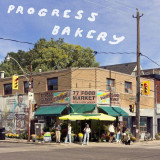
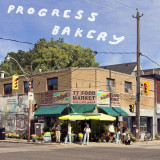
Eliza Niemi - Progress Bakery
  • A1: Do U Fm
  • A2: Novelist Sad Face
  • A3: Green Box
  • A4: Dusty
  • A5: The Linda Song
  • A6: Dm Bf
  • B1: I Tried
  • B2: Melodies Like Mark
  • B3: Wildcat
  • B4: How U Remind Me
  • B5: Pocky
  • B6: Bon Tempiii
  • B7: Pt Basement
  • B8: Alberqurque Ii
  • B9: Mary's
également disponible

Yellow Coloured Vinyl[29,37 €]


Kneading dough is tricky – you should know how it’s supposed to feel. If you try too hard you could make it worse. It’s a beautiful practice – creation with a gentle touch, to work at something so it can be left alone. “If it’s too drawn out it’s awful. It’s easy to give too much.” Dance in the mirror. Contemplate your veiny hands. Who do they remind you of?

You begin by mixing flour and water. “What happens when your people die? Why’d they move the rock to the other side of Ulster Park?” Eliza Niemi asks two seemingly unrelated questions in a rising melody with guitar accompaniment, like fingers playing spider up to the nape of your neck. Gentle pressure. Strands of gluten form to bind the mix. A new question lingers in the binding. When she admits “but I don’t know how to tell if I’m feeling it or not,” that question surfaces through the text. It is reiterated throughout the album. When I’m working with dough I think the same thing to myself.

On Progress Bakery, her second album as a solo artist, Eliza knows to leave some questions alone – to let juxtaposition and tension be the proof. It doesn’t have to be hard. The feelings and revelations they provoke rise in the heat. The smell is sweet. Crispy on the outside and soft all the way through. She playfully slip-slides through words and sounds and images, delighting in surprise, skimming ideas like stones cast across clear water, touching down briefly with uncommon grace.

The question provoked between those opening lines resurfaces in the strands between songs – “Do U FM” is fully formed and beautifully layered, while “Novelist Sad Face” is a short, acapella rendering of gentle curiosity. What is holding these ideas together? Some songs demand more, seem to carry a whole load – eventually the skipping stone will halt to sink and resume its idle duty – while others drift in and out of focus, the way thoughts and dreams become interwoven before the mind is sunk into true sleep.

Music and words don’t always have to interact. Where she decides to keep them apart gives a new contour to where and how she puts them together. The kind of thing you’re supposed to take for granted with songs and their singers comes alive in Eliza’s hands – the little miracle of mixing, kneading, stretching, and stopping.

So often on Progress Bakery, Eliza teases out truth and meaning by asking questions. “Do I wanna be crying?” “Do you want me good or do you want me bad?” “Do I need an eye test?” “I’m writing songs in my head while you’re going over stuff with me — is that cruel??” In “Pocky” Eliza ends with a question that feels to me like the actual biography, succinct and revealing:

I don’t wanna be made to see
I just wanna ask “what’s that?”

Grace that ought to be rare, but in its care and precision is offered humbly, with great generosity, and without announcing itself. Eliza’s simple, miraculous music is given further form and shape by a group of collaborators – invaluable guest musicians Jeremy Ray, Evan Cartwright, Steven McPhail, Kenny Boothby, Ed Squires, Carolina Chauffe, Dorothea Paas, Louie Short, and Avalon Tassonyi. Together with Louie Short, who recorded, mixed, and produced the album along with Jeremy Ray and Lukas Cheung, Eliza has cultivated a richness in sound and texture that prods and provokes the ticklish ear. Barely audible guitar tinkering, a brief lo-fi field recording of trumpets, the harmonic clicking of a looped synthesizer, a flourish of reeds, a child’s conversation, each uncanny sound perfectly placed, rippling out under a soft breeze.

Lay in bed alone at night and ask aloud to the stillness,

“What were you doing at the Albuquerque Airport?
What were you doing there??”

And hear your question answered by a dream of swelling, undulating cellos. Try to grasp at the melody and structure. It’s not an answer (if there could be one), but it moves deeper, closer to the weird layer of fleeting moments and disconnected images, barely perceptible at its core. Wait for the dream reel to click into place.

Eliza took me for a ride in Nicole (her beloved Dodge Grand Caravan) and told me she’d been thinking of the album as an embodiment of transition – and I think every transition, known or unknown, carries the weight of new meaning, skittering off the surface tension of life as you know it, creating ripples, sometimes bouncing off and sometimes breaking through. There is a trick you can use to tell if a dough is glutinous enough. You’re supposed to stretch it out as thin as you can without breaking it and hold it up to the light. If you can see through, even if it renders the world murky and uncertain, you should leave it alone. I love this trick. It’s one that Eliza seems to know intuitively: work gently and ask questions and don’t always expect answers, and when you can, take a glimpse at something new, and then leave.

pré-commande04.04.2025

il devrait être publié sur 04.04.2025

27,10
Eliza Niemi - Progress Bakery

Eliza Niemi

Progress Bakery

12inchTAR118SX
Tin Angel
04.04.2025

Kneading dough is tricky – you should know how it’s supposed to feel. If you try too hard you could make it worse. It’s a beautiful practice – creation with a gentle touch, to work at something so it can be left alone. “If it’s too drawn out it’s awful. It’s easy to give too much.” Dance in the mirror. Contemplate your veiny hands. Who do they remind you of?

You begin by mixing flour and water. “What happens when your people die? Why’d they move the rock to the other side of Ulster Park?” Eliza Niemi asks two seemingly unrelated questions in a rising melody with guitar accompaniment, like fingers playing spider up to the nape of your neck. Gentle pressure. Strands of gluten form to bind the mix. A new question lingers in the binding. When she admits “but I don’t know how to tell if I’m feeling it or not,” that question surfaces through the text. It is reiterated throughout the album. When I’m working with dough I think the same thing to myself.

On Progress Bakery, her second album as a solo artist, Eliza knows to leave some questions alone – to let juxtaposition and tension be the proof. It doesn’t have to be hard. The feelings and revelations they provoke rise in the heat. The smell is sweet. Crispy on the outside and soft all the way through. She playfully slip-slides through words and sounds and images, delighting in surprise, skimming ideas like stones cast across clear water, touching down briefly with uncommon grace.

The question provoked between those opening lines resurfaces in the strands between songs – “Do U FM” is fully formed and beautifully layered, while “Novelist Sad Face” is a short, acapella rendering of gentle curiosity. What is holding these ideas together? Some songs demand more, seem to carry a whole load – eventually the skipping stone will halt to sink and resume its idle duty – while others drift in and out of focus, the way thoughts and dreams become interwoven before the mind is sunk into true sleep.

Music and words don’t always have to interact. Where she decides to keep them apart gives a new contour to where and how she puts them together. The kind of thing you’re supposed to take for granted with songs and their singers comes alive in Eliza’s hands – the little miracle of mixing, kneading, stretching, and stopping.

So often on Progress Bakery, Eliza teases out truth and meaning by asking questions. “Do I wanna be crying?” “Do you want me good or do you want me bad?” “Do I need an eye test?” “I’m writing songs in my head while you’re going over stuff with me — is that cruel??” In “Pocky” Eliza ends with a question that feels to me like the actual biography, succinct and revealing:

I don’t wanna be made to see
I just wanna ask “what’s that?”

Grace that ought to be rare, but in its care and precision is offered humbly, with great generosity, and without announcing itself. Eliza’s simple, miraculous music is given further form and shape by a group of collaborators – invaluable guest musicians Jeremy Ray, Evan Cartwright, Steven McPhail, Kenny Boothby, Ed Squires, Carolina Chauffe, Dorothea Paas, Louie Short, and Avalon Tassonyi. Together with Louie Short, who recorded, mixed, and produced the album along with Jeremy Ray and Lukas Cheung, Eliza has cultivated a richness in sound and texture that prods and provokes the ticklish ear. Barely audible guitar tinkering, a brief lo-fi field recording of trumpets, the harmonic clicking of a looped synthesizer, a flourish of reeds, a child’s conversation, each uncanny sound perfectly placed, rippling out under a soft breeze.

Lay in bed alone at night and ask aloud to the stillness,

“What were you doing at the Albuquerque Airport?
What were you doing there??”

And hear your question answered by a dream of swelling, undulating cellos. Try to grasp at the melody and structure. It’s not an answer (if there could be one), but it moves deeper, closer to the weird layer of fleeting moments and disconnected images, barely perceptible at its core. Wait for the dream reel to click into place.

Eliza took me for a ride in Nicole (her beloved Dodge Grand Caravan) and told me she’d been thinking of the album as an embodiment of transition – and I think every transition, known or unknown, carries the weight of new meaning, skittering off the surface tension of life as you know it, creating ripples, sometimes bouncing off and sometimes breaking through. There is a trick you can use to tell if a dough is glutinous enough. You’re supposed to stretch it out as thin as you can without breaking it and hold it up to the light. If you can see through, even if it renders the world murky and uncertain, you should leave it alone. I love this trick. It’s one that Eliza seems to know intuitively: work gently and ask questions and don’t always expect answers, and when you can, take a glimpse at something new, and then leave.

pré-commande04.04.2025

il devrait être publié sur 04.04.2025
29,37
Various - EINE STADT WIRD BUNT. (Schuber-Edition) (LP 3x12"

Wie Hip-Hop nach Hamburg kam
Die Compilation ist als Zeitreise zu den Anfängen der Hamburger Hip-Hop-Kultur konzipiert und umfasst über 100 weitgehend unveröffentlichte Songs und Skits. Begleitet wird das Triple-Vinyl von einem 96-seitigen Booklet, das von den frühen Jahren von Hip-Hop, Rap und DJing in Hamburg erzählt. Präsentiert wird das Werk von den Herausgebern des Buchs und den Kuratoren der Museumsausstellung EINE STADT WIRD BUNT.

Kennt eigentlich noch jemand Easy Business? Was wie ein Ratgeber Video auf YouTube klingt, ist der Name einer der ersten Hamburger Rap-Gruppen. Die vierköpfige Formation aus Steilshoop gründete sich schon in den späten 1980er Jahren und begann bald erste englischsprachige Texte zu schreiben. 1989 nahmen sie gemeinsam mit Mario von Hacht den Song „Money“ in einem Jenfelder Jugendzentrum auf.
Als House-Produzent verfügte Von Hacht über ein vergleichsweise schon recht ansehnliches Produktions-Equipment. Selbst die legendäre Roland TR-808, analoger Drumcomputer und Allzweckwaffe von Hip-Hop-Produzenten, war bereits 1989 Teil seines Maschinenparks. Nur hatte er sie eben nicht für Rap genutzt – bis Easy Business anklopften. Und so öffnete ein Musik-Nerd und Technik-Freak dem Hip-Hop eine Tür in Hamburg. Von Hachts Offenheit für den neuen Musikstil sollte sich auszahlen: 1995 produzierte er mit „Nordisch by Nature“ den ersten Chartstürmer von Fettes Brot.

Es sind Geschichten wie diese aus der Gründerzeit des Rap in Hamburg, um die sich die 3-Vinyl-Compilation EINE STADT WIRD BUNT dreht. Unter den über 100 Songs und Skits aus den frühen Jahren des Rap in Hamburg finden sich neben dem Song „Money“ von Easy Business auch ein Mitschnitt eines Auftritts der Gruppe in der Fabrik im Mai 1991.
Von frühen Aufnahmen von MC Africa True, der später unter dem Namen Nana einige Hits landen würde, bis zu den Britcore-Veteranen von Readykill, von 2 Ruff, deren Mitglied Simple Simon zu den ersten Hip-Hop-Produzenten der Stadt gehörte, bis zu den Reim Banditen, die als eine der ersten hiesigen Bands mit einem Majorlabel-Vertrag als Hamburger Antwort auf die Fantastischen Vier positioniert werden sollten, vereint das Triple-Vinyl eine einzigartige Sammlung musikhistorischer Zeitdokumente. In Kombination mit dem begleitenden Booklet vermitteln sie ein authentisches – und überaus unterhaltsames – Bild von den Anfängen des Rap in Hamburg.

Nach dem preisgekrönten, 2021 erschienenen Buch „EINE STADT WIRD BUNT. Hamburg Graffiti History 1980-1999“ und der gleichnamigen Ausstellung, die bis Anfang Januar 2024, als eine der erfolgreichsten aller Zeiten, im Museum für Hamburgische Geschichte gezeigt wurde, folgt mit der Compilation nun also eine weitere Dokumentation Hamburger Subkultur Geschichte der 1980er und 1990er Jahre. Im Fokus diesmal: die Pioniere des Rap in der Hansestadt.
Zum Team hinter dem Triple-Vinyl gehören neben den vier Herausgebern von EINE STADT WIRD BUNT. Oliver Nebel, Frank Petering, Mirko Reisser und Andreas Timm drei ausgewiesene Kenner der deutschen Hip-Hop-Szene. Oliver Herbst, einst DJ der Hip-Hop-Band City Nord, betreibt heute ein Musiklabel, auf dem die Platte erscheint, und konnte im Zuge der Recherche an viele alte Kontakte anknüpfen. Ebenfalls mit an Bord: der langjährige Chefredakteur des Hip-Hop-Magazins Backspin Dennis Kraus und der Musikjournalist und Moderator Falk Schacht.
Über einen Zeitraum von über zwei Jahren hinweg hat sich das Team auf Recherche begeben. Sie nahmen Kontakt zu Bands, Rapper*innen, DJs und Produzenten auf, die in den 1980er und 1990er Jahren in und um Hamburg aktiv waren. Sie sichteten und archivierten unzählige Stunden von Radio-Shows, Tapes, Demo-DATs und Live-Mitschnitten und führten Interviews mit Hip-Hop-Pionieren aus der Hansestadt. „Unser Ziel war es, ein kaum beleuchtetes Kapitel Hamburger Subkulturgeschichte zu erzählen“, sagt Mirko Reisser.
Begleitet werden die Platten deshalb von einem rund 80-seitigen, reich bebilderten Booklet im Vinyl-Format, das in aufwändig recherchierten Texten nachzeichnet, wie der neue Musikstil ab Mitte der 1980er Jahre in Hamburg langsam heimisch wurde. Zu den zentralen Themen dieser Erzählung gehört die Abwesenheit von technischem Equipment – und der Umgang der jungen Szene mit diesem Mangel.
Ein Vierspur Kassettenrekorder musste für die ersten Aufnahmen im Kinderzimmer reichen. Und wer DJ werden wollte, übte Scratchen mit dem Plattenspieler der Eltern. Anders als heute, wo man mit einem Smartphone in der Hand theoretisch ein Millionenpublikum erreichen kann, stellte die Aufnahmetechnik damals eine große Hürde dar. Wer jedoch über die technischen Voraussetzungen verfügte, Songs aufzunehmen, wurde schnell zur Anlaufstelle für die junge Rap-Szene.
Parallel zu dieser Ära der Technik-Autodidakten, öffneten die Rapper*innen der frühen 1990er Jahre ebenfalls ein Fenster in eine neue Welt: Indem sie anfingen, auf Deutsch zu rappen, grenzten sie sich bewusst von den amerikanischen Vorbildern ab und schufen ein ganz neues Selbstbewusstsein der jungen Subkultur. Und ganz nebenbei auch ein ganz neues Bewusstsein für die Möglichkeiten der deutschen Sprache. „Hier wurde etwas gänzlich Neues erschaffen“, sagt Oliver Herbst.

Viele Künstler, die auf der Compilation vertreten sind, dürften heute nur noch echten Hip-Hop-Nerds bekannt sein. Doch es finden sich auch bekannte Namen auf der Tracklist. Jan Eißfeldt etwa, der heute solo als Jan Delay oder als Teil der Beginner Konzerthallen füllt. Oder Fettes Brot, die von einem Hip-Hop-Trio aus dem Hamburger Umland zu einer der erfolgreichsten deutschen Popbands der Gegenwart heranwuchsen. Oder Deichkind, die zu einem massentauglichen Universal Kunstprojekt avanciert sind.

Wie schon das gleichnamige Buch und die Museumsausstellung, so blickt auch die Compilation EINE STADT WIRD BUNT. hinter die Kulissen einer jungen Subkultur – und erzählt parallel spannende Kapitel Musik-, Technik- und Stadtgeschichte aus der Hip-Hop-Hochburg an der Elbe.

INTERPRETEN
Fettes Brot, Absolute Beginner, Deichkind, Das Bo, Ferris MC, Mr. Schnabel, Sleepwalker, Kastrierte Philosophen, Mellow Mark, David Fascher, Easy Business, Reim Banditen, Readykill, TobiTob, I.L.L. Will, City Nord, MK Cram (Poets of Peeze), Dialektik, 2 Ruff, Nina, Flashmaster Ray, Dennis Deutschland, 2BIAS, MC Africa True alias Nana, Vers Chaoten, Die Erstausgabe, THC (Ter Hartchor), R.A.F. (Reimende Antifaschisten), Direkt Aktion, Fogmoor, Syren, Mental Disorda (Crime Code Barets), Dennis the Menace, Selma, 08/15, Hamburg Royal, Skunk Funk, B-Low, Gizmo, AJ, SMG, Phantom Black, Leon Le Pro alias EL’OMC, Paolo 77, Monti, Hanseknaller, Schlechta Umgang u.v.a.

ZITATE VON
André Luth, Jan Eißfeldt, Mathias Arfmann, Ale Dumbsky, David Fascher, Fatih Akin, Carsten Bohn, Schiffmeister (Björn Beton), Pasha Kamber (DJ MPK), Boris Ekambi, Sleepwalker, Mr. Schnabel, Nana Abrokwa, Simon Vegas u.a.

PRODUCER
Mario von Hacht (Super Mario), Sleepwalker, B-Base, Bubblez, TobiTob, X-Ray, Simple Simon

pré-commande04.04.2025

il devrait être publié sur 04.04.2025

93,24
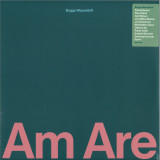
Bugge Wesseltoft - AmAre (LP 2x12")

Bugge Wesseltoft

AmAre (LP 2x12")

2x12inch2979706JZL
Jazzland
02.04.2025

Bugge Wesseltoft has long been a shaper of his own jazz idioms, through his diverse solo albums, his group projects such as New Conception of Jazz, OKWorld! and RYMDEN, and collaborations with artists such as Sidsel Endresen, Henning Kraggerud or Henrik Schwarz.

"Am Are" features special constellations of superb musicians that spans both generations and styles, and is an exploration of sonic textures, dynamic contrasts of mood and style, and ranges from sparse arrangements through to complex layers of dubs and loops and improvisational interplay.

The album begins with Bugge alone on "How?" with layers of undulating atmospheric synth, brought into focus by Bugge's piano at the forefront, creating a minimalist miniature that is both emotive and serene. For "Villrein" Bugge is joined by Elias Tafjord on drums, beginning with a santur-like synth figure, floating over ominous formant sci-fi bass synths bubbling and pulsing, and overlaid by phrenetic piano that only stops to lock into the santur figure before relaunching on its own journeys, all underpinned by Elias Tafjord's expressive drumming. "Is Anyone Listening?" demonstrate's Bugge's songcraft, layering muted percussive piano behind Rohey's distinctive and beautiful vocals punctuated by Martin Myhre Olsen's tenor saxophone, creating a soulful mood tinged with desperation.

"BAG" presents the first classic piano trio of the album - Bugge on piano and synths, Arild Andersen on bass, and Gard Nilssen on drums - announcing itself with an insistent riff, chattering drums, breaking into a progressive rock-style passage of bass and piano in unison. "Reel", the second track from this trio, is a mellow soundscape that evolves to become hazy urban downbeat jazz.

The second piano trio of Bugge (Rhodes and Korg MS20 synth), Sveinung Hovensjø (Electric Bass), and Jon Christensen (Drums and Bells) offers a completely different perspective. The first track "Render" features Bugge's Zawinul-esque Rhodes and monosynth leads, Sveinung's fuzz bass in something of a leading role, all carried with chattering gusto by Jon Christensen's dynamic drumming that brings texture and space as well as rhythm to the piece. "Vender" begins as an atmospheric piece, with reed organ-like synth washes, and octave-processed bass with a somewhat sitar-like tone, meandering until the track breaks down into drums and bass weaving around an insistent drum machine loop, dripping with synth pads and monosynth lead.

"JazzBasill" introduces the third piano trio - featuring Bugge (Piano), Jens Mikkel Madsen (Acoustic Bass) and Øyunn (Drums) - and offers a classic piano trio style with urban sophistication, that is lyrical, and interspersed with staccato cadences, giving a feeling of broken swing, slightly staggered yet driving forwards. The title track "AM ARE" is late night jazz, with baroque whispers, and distinctly melodic.

The final track, "Think Ahead" features the non-standard trio of Bugge (Piano/Organ), Oddrun Lilja (Guitar) and Sanskriti Shrestha (Tablas/Harp). Beginning with a minimalist piano figure, table, and sustained guitar, the track breaks down to a noise surge and ambient windscape, with guitar birds and abstract grinding, before returning to minimalist melodicism.

The shifting personnel across the album, as well as the three different studios in which it was recorded - Village Recording in Copenhagen, Rainbow Studios in Oslo, and his own Buggesroom Studio - creates a feeling of dynamic change and musical variety that is unified by Bugge's piano and keyboards. His playing moves between foreground, where he allows the music to elevate him, and background, where he move gently like a beneficent presence, tending to the demands of the spirit of the musical moments he has captured. It is an album powered by restless exploration and shaped by distinctive musical personalities; it is a journey through different moods, illuminated and brought into focus by Bugge's measured approach and guiding hand.

pas en stock

Commandez maintenant et nous commanderons l'article pour vous chez notre fournisseur.

31,22

Last In: 10 months ago
TIM GRUCHY / MICHAEL KRILICH - JUNGLES (ORIGINAL FULL-LENGTH VERSION) / ARNHEM LAND (EXTENDED VERSION)

Limited Edition 12"

Left Ear are delivering two previous unreleased Australian ‘experimental’ electronic tracks from the 80’s and honoring them with a split 12” release.

Side A: Features an unreleased full-length version of Tim Gruchy’s Jungles, a solo electro-percussive piece recorded in Tim’s Lab D’Avoid studio in Brisbane. The track is emblematic of his style during an era when he worked extensively in music, both as a percussionist and primarily with electronics, including early analog synths.

A shorter version was originally released on the Meanjin (Brisbane) art collective ZIP’s Eye Ear EP book package in 1986 and, more recently, on Left Ear’s Antipodean Anomalies 2 compilation.

This original version of Jungles was initially part of the soundtrack for the ZIP Performing Group’s infamous Ironing Board Dances. Footage of the performance was treated through a Fairlight synthesizer, mixed with hand-painted slides, and transferred to VHS for various film festivals.

Side B: Michael Krillich’s Arnhem Land began its journey in 1982 in a shared house in North Bondi. Inspired by Brian Eno and David Byrne’s My Life in the Bush of Ghosts, he experimented with tape loops, cut-ups, and samples, incorporating synthesizers, effects pedals, a drum machine, and an unknown sample from an Australian Aboriginal record. This creation became part of his cassette release, Thematic Variations.

In 2010, Krillich uploaded an unreleased extended version of Arnhem Land from Thematic Variations to YouTube, which was shared by record dealer Matt Bowden with Left Ear Records, who pursued to release it on vinyl. Their search to uncover the sample’s origins led them to Arnhem Land Vol. 1 (1957), recorded by Peter Elkin in the Daly River region.

After years of research and through the guidance of Professor Allan Marrett and local custodians, the sample was verified as a “Wangga” ceremonial song sung by George Morkai, an Emmiyangarl man. Rights to the song had passed through generations to Tobias Worumbu, who granted us permission for its use, bringing Arnhem Land full circle.

pré-commande31.03.2025

il devrait être publié sur 31.03.2025

21,81
Kurilo - Slender Machine EP

This is my second solo vinyl EP, inspired by my life in Berlin and playing in Europe. It was an unforgettable time, which I tried to reflect in the music you hear. The record is very different, but I think it was meant to be.

This release is on one of my favorite labels and club which is located in the most beautiful city of Verona, Italy. This place means a lot to me and it’s an honor to be a part of this history.

pas en stock

Commandez maintenant et nous commanderons l'article pour vous chez notre fournisseur.

11,72

Derniere entrée: 30 jours
Fleetwood Mac - Mirage LP 2x12"
  • Love In Store
  • Can’t Go Back
  • That’s Alright
  • Book Of Love
  • Gypsy
  • Only Over You
  • Empire State
  • Straight Back
  • Hold Me
  • Oh Diane
  • Eyes Of The World
  • Wish You Were Here

If every significant artist has an underrated gem in its catalog, then Mirage is that album for Fleetwood Mac. An obvious return to relative simplicity after the dramatic tension of Rumours and experimental ambitions of Tusk, the 1982 album finds the band re-grouping after a brief hiatus and again climbing to the top of the charts. Extremely well-crafted, well-produced, and well-performed, the double-platinum effort distills the group’s hallmark strengths into a filler-free set that never runs short of addictive pop hooks or daft accents.

Sourced from the original analog master tapes, pressed at Fidelity Record Pressing in California, and housed in a Stoughton jacket, Mobile Fidelity’s numbered-edition 180g 45RPM 2LP set presents Mirage in reference sound for the first time. The efforts co-producers/engineers Ken Caillat and Richard Dashut went to capture the splintered albeit formidable band can be heard with stunning accuracy, range, depth, and detail.

Though Rumours understandably gets a permanent spot in the audiophile hall of fame, the smooth, clear, and dynamic sonics on Mirage confirm that the record that stood as Fleetwood Mac’s last effort for five years deserves a place in the same vaunted arena. The presence and imaging of Mick Fleetwood’s percussion alone on this reissue might have you wondering how this slice of soft-rock bliss has gone under-noticed for decades. Other prized aural aspects — separation, definition, impact, tonal balance — are also here in spades.

Like much surrounding Fleetwood Mac in the 1980s, arriving at Mirage was not easy. Caillat searched for studios located outside of Los Angeles on a mission to change up the vibe of the band’s prior recording sessions. Everyone settled on Le Chateau in France, where relations between some members remained icy — and cooperation with the producers strained. Battles with exhaustion, bitterness, and addiction further informed the proceedings at the 18th century complex in the French countryside, where even communal meals were allegedly eaten in silence.

Inevitably, the feelings that co-producer Lindsey Buckingham, Stevie Nicks, Christine McVie, and company harbored — as well as the situations in which they found themselves — drifted into the songwriting. In its rapid ascent to rock-star royalty status, Fleetwood Mac drifted apart, embarked on solo pursuits, and found it was lonely at the top. Emptiness, the illusion of dreams, the longing for love, the want to escape to bygone times of innocence and happiness: Such themes inform a majority of the narratives. Even if the lyrics regularly take a back seat to easygoing arrangements that allow Mirage to come on like a refreshing breeze on a sunny summer afternoon.

Home to three Top 25 singles in the U.S. and having occupied the pole position of the Top 200 album charts for five weeks, Mirage rightfully resonated with the mainstream and attracted listeners on both sides of the pond. And how, via a smart blend of sugary melodies, warm harmonies, interlaced notes, nimble rhythms, taut structures, and passionate vocals. Not to mention the presence of what arguably remains Nicks’ signature song, the biographical “Gypsy,” a meditation on the loss of her close friend Robin Anderson that teems with majesty, mystery, and mysticism — and which gets an assist from Buckingham’s shaded tack piano and richly strummed guitar chords.

Its ranking as an all-time classic aside, that No. 12 hit has plenty of company when it comes to brilliant pop turns on Mirage. On the subject of Nicks, the raspy singer gets a little bit country on “That’s Alright.” Its clip-clopping pace and two-stepping progression complement subtle vocal swells that emerge during the final verse of a tune that is ostensibly about leaving but still conveys forgiveness and grace. And what would a Fleetwood Mac record be without Nicks drawing on the tools of the supernatural — cards, dreams, wolves, and the like — on the twirling “Straight Back.”

Despite the potency of Nicks’ primary contributions, Mirage seemingly unfolds as a tight competition between Buckingham and McVie — and one that ultimately ends in a draw. Buckingham’s salvos include the contagious “Can’t Go Back,” a yearning to time-travel back to the past that’s complete with hall-of-mirrors backing vocals; “Oh Diane,” out-of- left-field ear candy sweetened with hiccupped vocals and salt-and-pepper-shaken grooves; the chiming “Eyes of the World”; and “Empire State,” a delightfully fluttering track whose high-range vocals, lap harp notes, and ringing xylophones hint at the galaxies of sound that would erupt on Tango in the Night.

Then there’s McVie. As elegant, understated, and coolheaded as she’s ever been on record, she pours her heart out on cuts that revolve around her inevitable split with Beach Boy Dennis Wilson. In the process, she punctuates Mirage with a characteristic not always associated with catchy pop music: emotional weight, and the sense of dreaded acceptance in the face of dreams deferred.

“I wish you were here/Holding me tight,” McVie sings over a delicate melody on the album-closing piano ballad “Wish You Were Here.” Though they hoped otherwise, for the members Fleetwood Mac, distance and separation were always close at hand. Believing otherwise, inviting nostalgia, and pretending everything was fine only amounts to a mirage.

pré-commande31.03.2025

il devrait être publié sur 31.03.2025

88,19
Santiago Cordoba & The Bauls of Bengal - Doroja LP

Earthly Measures are very excited to bring to you 'Doroja', an album by Santiago Córdoba & The Bauls of Bengal. Different to past releases, EM explores another part of the world, introducing you to the traditional sounds of Bengal & its talented musicians.

Doroja, is the third album by Argentinian musician Santiago Córdoba, this time in collaboration with The Bauls of Bengal. Recorded at the Hansadhwani Studio in Calcutta, India, where Santiago arrived with only a synthesiser, some effects, and a Legüero Bass Drum (an Argentine percussive instrument used mostly in local folklore) - this album was first conceived in December 2017 during a residency in this mythical city, together with The Bauls of Bengal.

The Bauls believe the body and mind are the sources of all truths and that the expression of freedom cannot be restrained by the labelling of genres or religions, something which is evidently expressed in their music. This provides the perfect foundations for this album to develop without limitations and too effortlessly flow to whichever realms both Santiago and the Bauls of Bengal wish to take us too.

The album combines traditional songs of the Bauls, rhythmic Jhumar instrumental improvisations with the Argentinian legüero bass drum, and other compositions created together in the studio. The result is a melodic mixture/dialogue of cultures, folklore and ancestral sounds with modern influences that help create an experimental and addictive sound full of electronic textures.

Participating in these first recordings: Arpita Chakraborty (vocals), Chandan Ray (dotara), Pijush Baul (Vocals, Dubki) and Tanmoy Pan (percussion), who later, are joined by other artists from different latitudes to achieve a captivating fusion: Matías Romero on strings (Formosa, Argentina), Guilherme Peluci from Mineiro on winds and Daniel Guedes on percussion (Belo Horizonte, Brazil), Porteños Walter Broide on tabla and Cobra Rod on bass (both members of Poseidotica), and the Spanish Ángel Calvo on trumpet.

The album was mixed by Rodrigo Cursach at Delta Uno Estudio, mastered by Daniel Ovie, and the fascinating cover art is by Alejandro Sordi. It will be released on vinyl by the UK based label Earthly Measures, in addition to being available on all digital platforms.

‘Doroja’ means portal, and this album is indeed a magical portal to music, song and dance. Santiago's only means of communication with Bengali colleagues functioned as an astral portal to build the sounds of this journey through strange and unfathomable landscapes that captivate and surprise by building bridges between different cultures of our planet.

Santiago Córdoba is a multi-instrumentalist musician born in the city of Buenos Aires who has been developing his unique sound both with his solo project and with prominent bands from the Argentinian independent music scene. He has been developing his solo career through deep musical and spiritual searching, with the infinite journey as a primary objective.

In recent years, he has lived in places such as Madrid, Beirut and Berlin and has released two albums: ‘Corso’ (2015) and ‘En Other Places’ (2019).

pas en stock

Commandez maintenant et nous commanderons l'article pour vous chez notre fournisseur.

17,61

Last In: 4 years ago
Ziemowit Klimek - What Is My Heart Now

180g black vinyl - limited to 200 numbered copies.

"What is my heart now"is the debut solo album by Ziemowit Klimek, known so far from bands such as Immortal Onion, Hania Rani, and Magda Kuraś Quintet. It is a cycle of five improvised compositions – "What," "Is," "My," "Heart," and "Now" – unified by a unique artistic concept, with each piece created in collaboration with a different musician.

The creative process for each of the five duets began with a conversation between Ziemowit, the guest artist, and the video team. Deconstructing the title word into its fundamental elements through questions like "What does 'What' mean? What emotions and associations does this word evoke in us? How can we capture its essence in sound and image?" became the starting point for artistic exploration.

To preserve the authenticity of the material as much as possible, both sound and image were recorded live, with no cuts or post-production editing. Equally important was the choice of spaces that corresponded to the meaning of each title word. Instead of sterile studios, the recordings took place in a variety of unique locations – "Heart" was captured in Ziemowit's most personal space, his bedroom, while "Now" was recorded inside a car during a dynamic drive, where the physical forces acting on the musicians significantly influenced their decisions while playing.

The album resonates with dialogue – not only musical but also emotional and intellectual. It is a meeting of individualities who, for Ziemowit, are not only inspirations as artists but also significant people in his life."What is my heart now"is an album about defining one's identity and capturing the moment, created in an atmosphere of honesty and trust. Ultimately, the question arises: is it even possible to definitively answer the question posed in the album's title?

"What Is My Heart Now"

Ziemowit Klimek (Double bass, Bass, Piano, Moog)

feat.

Krzysztof Hadrych - Guitar

Michał Jan Ciesielski - Saxophon, Volca

Hania Rani - Piano

Mikołaj Kostka - Violin

Jacek Prościński - Drums

pré-commande28.03.2025

il devrait être publié sur 28.03.2025

36,09
Modus Pitch - Re:Polyism

»Re:Polyism« is a track-by-track reinterpretation of Friedrich »Fritz« Brückner’s 2022 debut solo album as Modus Pitch, »Polyism,« through artists affiliated with Altin Village & Mine and/or former collaborators of the prolific Leipzig-based musician and producer. Each track from »Polyism« has been remixed or reworked by different artists such as Modeselektor, Angel Bat Dawid, Maya Shenfield or Mouse on Mars member and HJirok producer Andi Toma, but the album—mastered by Tim Roth a.k.a. Sin Maldita and released as a strictly limited vinyl LP with reimagined artwork by Carmen Orschinski—follows the original record’s tracklist. This makes »Re:Polyism« a veritable musical prism, refracting the creativity inherent to Brückner’s genre-transcending original works through other people’s artistic lenses to create an even more colourful end result.

First off are the Gebrüder Teichmann with their take on opener »Drive,« carefully adding more depth and uncanny sounds to the jazzy, drum-focused piece. Unsurprisingly, Modeselektor go a lot further with their remix »Rainbow,« turning the two-minute track into a dubstep-adjacent banger with infectious synth work that is twice as long and comes with a mind-melting breakdown. With their take on »Hilltop Jacuzzi,« Peaking Lights turn the blissful original into a piece that calls to mind experiments at the intersection of dub, ambient, and industrial music in the mid-1990s. Cloud Management radically transform the eerie »Compound Eye Dialogue« into a rhythmically charged mid-tempo post-krautrock epic, while the Seekers International’s »Jelly Roll Dub« of »Gelée Royale« uses the original’s lush textures to turn up the intensity even further.

On the flipside, Andi Thoma gives the intricate synth pop/breakcore fusion of »Suspender« a similarly dubwise treatment before venturing into gqom territory, pulling it out of the leftfield and straight onto the dancefloor—peak-time use only. Maya Shenfeld then brings her trademark modular synth work to »Outer Veil,« accentuating the focus on Hendrik Otremba’s uncanny spoken word performance even further. This sets the mood perfectly for vocal experimentalist Agnese Menguzzato working her singular magic. Under her hands and with her voice, the multi-layered ambient soundscapes of »Lava Fans« become even larger-than-life-like than before. When Angel Bat Dawid takes the menacing drones of »Iridescent Path« as a template for a trap-inspired beat over which she lets loose on the clarinet, that serves as both the ultimate counterpoint and perfect coda to »Re:Polyism.«

These nine reinterpretations of the highly diverse source material underline Brückner’s singular approach to music-making while also emphasising their makers’ idiosyncratic talents. This makes »Re:Polyism« more than simply a remix album—it’s a polylogue between visionary minds.

pré-commande28.03.2025

il devrait être publié sur 28.03.2025

21,43
Russell Haswell - Kasm 03 (10")

Russell Haswell

Kasm 03 (10")

10inchKASM03
Kasm
28.03.2025

RUSSELL HASWELL is an artist, record producer, free improvisor, computer musician, noise aficionado and curator.
Trained at Coventry School of Art, graduating in 1992, Russell’s extraordinary conceptual oeuvre resists easy summarisation, focused on the site-specific, performance and methodology of large-scale sound works, sometimes in surround sound. Russell has given solo audio presentations at major Art and Music festivals and events, in art galleries, concert halls, clubs, rock venues, and even squats in 30 countries, and counting. Most recently he has performed at SONIC ACTS, SONAR, Pirelli Hangar Bicocca and Coventry Cathedral.

As a curator, Russell has delivered projects for PS1/MoMa, All Tomorrows Parties, Aldeburgh Music, Thyssen-Bornemisza Art Contemporary, and Cafe Oto. He now lives and works in Glasgow.

Recorded in real-time (ADDAC System, ALM/Busy Circuits, Cwejman, Epoch Modular, FANCYYYYY Synthesis, Flight of Harmony, Instruo...)

pas en stock

Commandez maintenant et nous commanderons l'article pour vous chez notre fournisseur.

14,08

Last In: 14 months ago
Don Airey - Pushed to the Edge

Don Airey

Pushed to the Edge

12inch0220358EMU
earMUSIC
28.03.2025

Nach dem Erfolg von Deep Purple’s Nummer 1-Album "=1" im letzten Jahr meldet sich der legendäre Keyboarder Don Airey mit seinem neuen Soloalbum "Pushed to the Edge" zurück. Airey, der als der aktivste Musiker des Hard Rock gilt, hat auf über 300 Alben mit Künstlern wie Ozzy Osbourne, Rainbow, Whitesnake, Judas Priest, Gary Moore und Black Sabbath mitgewirkt. Unterstützt wird er von einer hochkarätigen Besetzung: Deep Purple-Gitarrist Simon McBride, Sänger Carl Sentance (Nazareth), Mitchel Emms (The Voice UK) und Bassist Dave Marks (Hans Zimmer Orchester). Ohne Tricks und Abkürzungen liefert das Album puren Hard Rock und zeigt einmal mehr, warum Don Airey zu den größten seiner Zunft gehört.

pré-commande28.03.2025

il devrait être publié sur 28.03.2025

34,24
Shelagh McDonald - Stargazer

Originally released in 1971, produced by the legendary Sandy Roberton and featuring the likes of Richard & Danny Thompson, Keith Christmas and members of Mighty Baby & Fotheringay, the album has been talked about in glowing terms by an ever increasing fanbase over the years & is highly sought after. It’s a beautiful mixture of folk, psychedelic flourishes and adventurous production combining majestically with Shelagh’s exquisite songwriting and purity of voice. It will immediately appeal to fans of Pentangle, Incredible String Band and Joni Mitchell, as well as the solo records from members of some of the biggest U.S. bands of the 1970s; David Crosby’s ‘If Only I Could remember My Name’ and Gene Clark’s ‘No Other’, and is presented here for the first time ever on vinyl re-issue.

Born in Edinburgh in 1948 before moving to Glasgow and attending the Glasgow School of Art, Shelagh McDonald’s reputation grew rapidly on the London and Bristol folk circuit, gaining a cult following. In her early twenties she cut her first album titled simply ‘Shelagh McDonald’, the following year entering the studio with producer Sandy Roberton (Ian Matthews, John Martyn, Chocolate Watch Band, Steeleye Span) to cut ‘Stargazer’. Unfortunately for Shelagh, following a bad LSD experience, she withdrew from not only the music industry but public life shortly before commencing work on her third album.

However, it is ‘Stargazer’ that continues to grow its reputation, with original copies changing hands for hundreds of pounds.

Imbued with the finest instrumentation and vocal delicacy in late ‘60s folk, the record is heightened by a progressive production approach; the slow organ grooviness in the traditional ‘Dowie Dens of Yarrow’, uplifting gospel overtones of ‘Odyssey’ and the perfect match of melancholic piano and haunting strings by Robert Kirby on the title track. These sublime arrangements all serve Shelagh’s songwriting and soulful voice that invoke the finest folk traditions but at the same time look forward.

The album is the inaugural release on new label Different Strokes For Different Folks with more genre bending, rare and cult records scheduled for 2025.

pas en stock

Commandez maintenant et nous commanderons l'article pour vous chez notre fournisseur.

29,83

Last In: 14 months ago
Eliza Niemi - Progress Bakery
  • A1: Do U Fm
  • A2: Novelist Sad Face
  • A3: Green Box
  • A4: Dusty
  • A5: The Linda Song
  • A6: Dm Bf
  • B1: I Tried
  • B2: Melodies Like Mark
  • B3: Wildcat
  • B4: How U Remind Me
  • B5: Pocky
  • B6: Bon Tempiii
  • B7: Pt Basement
  • B8: Alberqurque Ii
  • B9: Mary's

Kneading dough is tricky – you should know how it’s supposed to feel. If you try too hard you could make it worse. It’s a beautiful practice – creation with a gentle touch, to work at something so it can be left alone. “If it’s too drawn out it’s awful. It’s easy to give too much.” Dance in the mirror. Contemplate your veiny hands. Who do they remind you of?

You begin by mixing flour and water. “What happens when your people die? Why’d they move the rock to the other side of Ulster Park?” Eliza Niemi asks two seemingly unrelated questions in a rising melody with guitar accompaniment, like fingers playing spider up to the nape of your neck. Gentle pressure. Strands of gluten form to bind the mix. A new question lingers in the binding. When she admits “but I don’t know how to tell if I’m feeling it or not,” that question surfaces through the text. It is reiterated throughout the album. When I’m working with dough I think the same thing to myself.

On Progress Bakery, her second album as a solo artist, Eliza knows to leave some questions alone – to let juxtaposition and tension be the proof. It doesn’t have to be hard. The feelings and revelations they provoke rise in the heat. The smell is sweet. Crispy on the outside and soft all the way through. She playfully slip-slides through words and sounds and images, delighting in surprise, skimming ideas like stones cast across clear water, touching down briefly with uncommon grace.

The question provoked between those opening lines resurfaces in the strands between songs – “Do U FM” is fully formed and beautifully layered, while “Novelist Sad Face” is a short, acapella rendering of gentle curiosity. What is holding these ideas together? Some songs demand more, seem to carry a whole load – eventually the skipping stone will halt to sink and resume its idle duty – while others drift in and out of focus, the way thoughts and dreams become interwoven before the mind is sunk into true sleep.

Music and words don’t always have to interact. Where she decides to keep them apart gives a new contour to where and how she puts them together. The kind of thing you’re supposed to take for granted with songs and their singers comes alive in Eliza’s hands – the little miracle of mixing, kneading, stretching, and stopping.

So often on Progress Bakery, Eliza teases out truth and meaning by asking questions. “Do I wanna be crying?” “Do you want me good or do you want me bad?” “Do I need an eye test?” “I’m writing songs in my head while you’re going over stuff with me — is that cruel??” In “Pocky” Eliza ends with a question that feels to me like the actual biography, succinct and revealing:

I don’t wanna be made to see
I just wanna ask “what’s that?”

Grace that ought to be rare, but in its care and precision is offered humbly, with great generosity, and without announcing itself. Eliza’s simple, miraculous music is given further form and shape by a group of collaborators – invaluable guest musicians Jeremy Ray, Evan Cartwright, Steven McPhail, Kenny Boothby, Ed Squires, Carolina Chauffe, Dorothea Paas, Louie Short, and Avalon Tassonyi. Together with Louie Short, who recorded, mixed, and produced the album along with Jeremy Ray and Lukas Cheung, Eliza has cultivated a richness in sound and texture that prods and provokes the ticklish ear. Barely audible guitar tinkering, a brief lo-fi field recording of trumpets, the harmonic clicking of a looped synthesizer, a flourish of reeds, a child’s conversation, each uncanny sound perfectly placed, rippling out under a soft breeze.

Lay in bed alone at night and ask aloud to the stillness,

“What were you doing at the Albuquerque Airport?
What were you doing there??”

And hear your question answered by a dream of swelling, undulating cellos. Try to grasp at the melody and structure. It’s not an answer (if there could be one), but it moves deeper, closer to the weird layer of fleeting moments and disconnected images, barely perceptible at its core. Wait for the dream reel to click into place.

Eliza took me for a ride in Nicole (her beloved Dodge Grand Caravan) and told me she’d been thinking of the album as an embodiment of transition – and I think every transition, known or unknown, carries the weight of new meaning, skittering off the surface tension of life as you know it, creating ripples, sometimes bouncing off and sometimes breaking through. There is a trick you can use to tell if a dough is glutinous enough. You’re supposed to stretch it out as thin as you can without breaking it and hold it up to the light. If you can see through, even if it renders the world murky and uncertain, you should leave it alone. I love this trick. It’s one that Eliza seems to know intuitively: work gently and ask questions and don’t always expect answers, and when you can, take a glimpse at something new, and then leave.

pré-commande21.03.2025

il devrait être publié sur 21.03.2025

25,17
Donny Benét - MR EXPERIENCE LP

After humble lo-fi beginnings in the Australian Art-Pop Underground, Donny Benet has expanded his cult-like following across the Globe with a resonant Array of danceable Repertoire dealing with Love- and Affection. New album "Mr Experience" marks a new chapter, informed by a wealth of musical- and personal development.

For Mr Experience, Donny envisioned a Soundtrack to a Dinner-Party- Set in the late 1980's. While his earlier Recordings drew Inspiration from DIY Pop Conspirators such as Ariel Pink & John Maus, Donny channelled the Stylings of Bryan Ferry & Hiroshi Yoshimura as the Impetus for new Material, evident on the Intimacy found on ‘Girl Of My Dreams’ and it's lush production- with a soothing whistle-along Chorus for good Measure!

Sincerity has been a key component of Donny Benet’s output since the beginning. His songs deal with genuine Emotion served on a kitsch Platter. An alter-ego manifested in the beginning of the 2010's, Donny has blurred the Lines of Artifice to create a back- Catalogue that can embrace- and challenge, often simultaneously, - the notion of Irony in Art.

"Mr Experience" moves further away from ironic Notions as Donny explores lyrical- and musical themes which embody Observations of Maturation in his audience, his tightknit musical Community- and himself. While ‘mature’ is a term that often rings hollow as an album descriptor, the term couldn’t be more apt for Mr Experience.

Previous album The Don was created with the luxury of time. The phenomenal Response to that Album across Europe- and the United States - fuelled by accompanying Music Videos clocking in Views in the Millions- meant that there were scant Windows of Opportunity to write- and record a follow-up.

With a legacy in Sydney’s music community, working with Sarah Blasko, and tightknik collaborators Jack Ladder & Kirin J Callinan, Donny Benet is accustomed to collaboration on the Stage- and in the Studio, mostnotably on the 2014 full-length release Weekend At Donny’s.


“There is such immense talent evident in every aspect of the Donny Bene experience - the vision of the character, the steadfast adherence his narrative and the musicality of Benet himself all combine to makesomething truly genius.” - Double J, Australin.

“Donny Benet makes feminine music for everybody” - Vice, Netherlands.

“The Don does not sound like amusical copying machine”. - 3voor12 National, Netherlands.

“The set was punctuated with virtuosic solos and exquisite harmonies, and added another layer of genius to the show.
We almost couldn’t handle it... Donny for president!" - Indie Berlin.

“Everyone loves Donny Benet” - Feature in Gonzai, France.

“Phenomenal Australian Showman... Offers Top-Class Dance Music with Virtuose-Bass Guitar- and Keyboard Parts & incredible Sound-Colour feel.” - Podujatie.sk, Slovakia.

Donny has toured Europe five times since the start of 2018 and has played in the UK, Austria, Germany, Slovakia, France, Netherlands, Spain, Portugal, Belgium, Denmark, Switzerland, Czech Republic, Greece and Sweden. The Don will revisit Europe twice in 2020, once for his own headline shows in May then back again in August for festivals!

pré-commande21.03.2025

il devrait être publié sur 21.03.2025

27,19
Dieter Ilg - Motherland

Dieter Ilg

Motherland

12inchLP31459
JAZZLINE
21.03.2025

The internationally renowned double bassist and composer Dieter Ilg
releases his new work, 'Motherland'
As the album cover - featuring Ilg wearing a traditional Black Forest Bollenhut -
suggests, this project reflects his deep connection to his homeland and to Mother
Earth. Ilg is supported by his trio, as well as the master trumpeter Till Bronner, whose
trumpet and flugelhorn lend the compositions a unique atmosphere.
Having collaborated with numerous musicians such as Randy Brecker, Mike Stern,
Vince Mendoza, and many others, Dieter Ilg has released 25 albums as a leader or coleader, along with a series of recordings as a sideman. On 'Motherland', he reunites
with his long- standing trio, featuring German pianist Rainer Bohm and French
drummer Patrice Heral. This time, alongside their original works, they reinterpret two
classical pieces: Ilg's adaptation of Handel's "Minuet" from Water Music and his
rendition of "Glorious" from Alexander's Feast. For 16 years, Ilg, Bohm, and Heral have
journeyed together musically. The secret to their chemistry, according to Ilg, lies in
their openness to letting things unfold in the moment.
'Motherland' is both an homage to Ilg's roots and a reflection of the music and
experiences that have shaped the bassist, who hails from Offenburg in Germany's
Black Forest region. A standout track is "Schwarzwaldfahrt", in which Ilg transforms
the lighthearted melody of German pianist Horst Jankowski into a nostalgic
interpretation with an authentic second- line groove. Till Bronner delivers a stunning
trumpet solo on this piece, with Ilg commenting, "When Till plays, I know exactly
where we're headed. I can hear the path he's focusing on."
The album unfolds with remarkable diversity, ranging from harmonious, soothing
sounds to tender, fragile bass solos, rubato piano passages, and intricate stop-time
sequences. 'Motherland' is a work of profound depth, celebrating Ilg's heritage while
offering listeners an evocative and multifaceted musical journey.

pré-commande21.03.2025

il devrait être publié sur 21.03.2025

28,70
SHOOTING STAR - HANG ON FOR YOUR LIFE
  • Flesh And Blood
  • Hang On For Your Life
  • Are You On My Side
  • Teaser
  • Hollywood
  • Breakout
  • You're So Good
  • She's Got Money
  • You've Got Love
  • Sweet Elatia
également disponible

WHITE/GOLD SUNBURST VINYL[29,83 €]


Gold vinyl. Building on the momentum of their debut, Shooting Star returned in 1981 with Hang On for Your Life, a dynamic follow-up that further cemented their place in the AOR rock scene. The album delivered a mix of anthemic rock and melodic hooks, with standout tracks like "Hang On for Your Life," "Hollywood," "Breakout," and "Are You on My Side" all receiving steady radio airplay. One of the album's most unique moments came with "Flesh and Blood," an up-tempo rock song featuring a soaring violin solo_a rarity in the genre that highlighted the band's signature sound. While the record found success on rock stations, it also marked the end of an era, as founding keyboardist Bill Guffey departed the band following its release. With Van McLain, Gary West, Charles Waltz, Ron Verlin, and Steve Thomas still at the helm, Hang On for Your Life captured Shooting Star at their peak_an ambitious, hard-driving rock band with a sound that was both melodic and powerful.

pré-commande14.03.2025

il devrait être publié sur 14.03.2025

26,01
SHOOTING STAR - HANG ON FOR YOUR LIFE

White/Gold Sunburst Vinyl. Building on the momentum of their debut, Shooting Star returned in 1981 with Hang On for Your Life, a dynamic follow-up that further cemented their place in the AOR rock scene. The album delivered a mix of anthemic rock and melodic hooks, with standout tracks like "Hang On for Your Life," "Hollywood," "Breakout," and "Are You on My Side" all receiving steady radio airplay. One of the album's most unique moments came with "Flesh and Blood," an up-tempo rock song featuring a soaring violin solo_a rarity in the genre that highlighted the band's signature sound. While the record found success on rock stations, it also marked the end of an era, as founding keyboardist Bill Guffey departed the band following its release. With Van McLain, Gary West, Charles Waltz, Ron Verlin, and Steve Thomas still at the helm, Hang On for Your Life captured Shooting Star at their peak_an ambitious, hard-driving rock band with a sound that was both melodic and powerful.

pré-commande14.03.2025

il devrait être publié sur 14.03.2025

29,83
JUDITH HAMANN - AUNES

Judith Hamann

AUNES

12inchSPLP154
Shelter Press
14.03.2025
  • By The Line
  • Casa Di Riposo, Gesu' Redentore
  • Seventeen Fabrics Of Measure
  • Bruststärke (Lung Song)
  • Schloss, Night
  • Neither From Nor Towards

Aunes is a rare solo album from peripatetic Australian cellist-composer-performer Judith Hamann, presenting six pieces recorded across several years and countries. Developing the collage techniques and expanded sound palettes heard on their previous releases, Aunes makes use of synthesizers, organ, voice and location recordings alongside the dazzlingly pure, enveloping tones of Hamann's cello. The record takes its name from an old French unit of measurement for fabric, varying around the country and from material to material. Unlike the platinum metre bar deposited in the National Archives after the Revolution as an immovable standard, an aune of silk differed from an aune of linen: the measure could not be separated from the material. In much the same way, in these six pieces_which Hamann thinks of as `songs'_formal aspects such as tuning, pacing, melodic shape and timbre are not abstractions applied universally to musical material but are inextricable from the instruments and sounds used, even from the places and communities in which the music was made. Audible location sound embeds the music in its place of making, as in the delicate duet for church organ and wordless singing `schloss, night', where shuffles and cluttering in the reverberant church space form a phantom accompaniment, gradually displaced by a uneasy shimmer of wavering tones from half-opened organ stops. `Casa Di Riposo, Gesu' Redentore' documents a walk up a hill to an outdoor mass in Chiusure, layering voices near and far with footsteps, insects and other incidental sounds. Like in the work of Moniek Darge or Luc Ferrari, location recordings are folded on themselves in space and time, their documentary function dislocated to dreamlike effect. On other pieces, it is the emphatic presence of the performing body that grounds the music, whether in the intimate fragility of Hamann's softly sung and hummed vocal tones or the clothing that rustles across a microphone on the opening `by the line'. The idea of a music inextricable from its material conditions is perhaps most strikingly communicated on the album's briefest piece `bruststärke (lung song)', composed from layered whistling recorded while Hamann suffered through an asthma flare up, the results halfway between field recordings of an imaginary aviary and the audiopoems of Henri Chopin. More than any of Hamann's previous solo works, a strong melodic sensibility runs through Aunes, even when, like on `seventeen fabrics of measure', the music hangs together by the merest thread. At other points, Hamann's love of pop music is more obvious: the rich synth harmonies of `by the line' could almost be a melting fragment of a backing track from Hounds of Love. The expansive closing piece `neither from nor toward' exemplifies the highly personal musical language that Hamann has developed in recent years through constant solo performance (and a rigorous discipline of instrumental practice), pairing two overdubbed voices with the boundless depth and harmonic richness of just-intoned cello notes, calling up Ockegham or Linda Caitlin Smith in its elegiac slow motion arcs. Hamann's most personal work yet, Aunes arrives in a striking sleeve reproducing a section of a painting made from sewn pieces of dyed wool by Wilder Alison, a friend and fellow resident at Akademie Schloss Solitude, one of the temporary homes where much of this music was recorded.

pré-commande14.03.2025

il devrait être publié sur 14.03.2025

22,27
Jaki Byard - Blues For Smoke

Jaki Byard

Blues For Smoke

12inchLPCND33511
Candid Records
14.03.2025

The debut recording from one of jazz music's most revered pianists! First U.S. vinyl release!

All-analog remastering by Bernie Grundman.
"Byard is absolutely brilliant...highly recommended." - All Music

Originally recorded in 1960, briefly released in Japan in the early ’70s, it wasn’t until 1988 that Jaki Byard’s solo debut, Blues For Smoke, was widely released. Even then it was more of a secret handshake among fans than the catalog cornerstone it should have always been. Now, Candid has finally created the definitive edition of this lost masterpiece for all to experience.

Byard backed generations of jazz icons, including Charles Mingus, Art Blakey, Roland Kirk, and Quincy Jones.

As a bandleader and soloist, he went on to build his own catalog of iconic recordings across three decades while establishing himself as an educator and mentor to the next generation of artists, most notably, Grayson Hugh, Fred Hersch, and Jason Moran. Blues For Smoke is where it all began.

Recorded as a solo-piano showcase for Byard’s incredible gifts as a player, composer, and jazz historian, the exquisitely engineered session is given new life by Bernie Grundman’s sensitive remastering. With this release, Candid is hoping to make Jaki Byard’s very first album the rosetta-stone of jazz piano it was intended to be.

pré-commande14.03.2025

il devrait être publié sur 14.03.2025

33,82
Articles par page:
N/ABPM
Vinyl