Suche:hard disk

Styles
Alle
Dazzle - Explain

Dazzle rolled deep. Very deep. In the 1980s, it wasn't unusual for the Milwaukee-based group to show up at various Midwest night clubs in a caravan of 30-40 cars and vans. Their live following was hard won over a career that spanned 20+ years, many line up changes, and a handful of project names. Friends, family, and fans made the journey with them weekend after weekend, a testimony to both the musical prowess of the group and the tight-knit community that they emerged from.

Donald Smith, band leader, was there the whole time - joined by many of his siblings and friends - first as founder of the Ghetto Players, a early 70's nine-piece which also included siblings Michael, Ronald, and Charles. They played hard funk in the style of early Kool and the Gang, and although they sadly left no recordings, the strength of their live act managed to catch the eye of local Milwaukee R&B music entrepreneur Cobie Joe Payne. Cobie had made a couple of records locally in the early/mid 70s as a singer, including the impossibly weird and amazing rare afro-blues-funk 45 "Sweet Thing", but had never enjoyed national success. When the Ghetto Players disbanded in the early-mid 70s, Donald soon put together a new group, C on the Funk (the 'C' referring to lead vocalist and sibling Charles), under Payne's tutelage. Sister Lorrie Smith came in as the drummer, the line-up being fleshed out by brothers David and Melvin Johnson, and friend Robert Mitchell. After a few years as a strictly live attraction, they drove to Chicago and produced a single, "In the Disco" / "A Place" for Payne's small record label Sweet Thang Records in 1980. Lacking the financial backing needed to supply the local R&B disk jockey's "promotional fees" , this single sadly languished in obscurity, gathering dust inside the local tavern jukeboxes and manilla promo envelopes that comprised Payne's DIY distribution network.

C on the Funk were traveling the Mid West extensively at this point, and making some important friends on the road. Ike Wiley Jr. of the Dazz Band/Kinsman Dazz took particular interest and the band was re-christened Dazzle, partially as a tie-in with Dazz, partially to embrace the new sounds that would distinguish the 70s disco scene from what record collectors and DJs would now refer to as the "Boogie" era. There no doubt was a stigma attached to the word "Disco" as the eighties began, and as we see in this collection C On the Funk's "In the Disco" is remixed and transformed into the psychedelic synth instrumental of Dazzle's "Disco's Out", a title which embodies both the next-step approach Smith and company were pushing for, and humorously comments on the state of black dance music in the early 1980s. The Dazzle recording, done in Chicago in 1982, updated the sound and featured an expanded line up, most notably a second synth player (Charles Washington), and a percussionist/second lead vocalist (Greg McDonald). The added synth textures and deep percussive grooves give the Dazzle recordings an elegant late night vibe that resonate just as well in a good pair of headphones as they do on the dance floor. The trance inducing cough syrup-warble of "Explain" may best exemplify this here. Sadly, a pressing flaw in the 12" halted production and promotion, and the EP and the songs within were lost to the ages. The group, having done a much better line in the live music business, followed that path instead all the way to the early 90s. --bio provided by andy noble

nicht am Lager

Bestelle jetzt und wir bestellen den Artikel für dich beim Lieferanten.

15,34

Last In: vor 2 Jahren
Asking Alexandria - Where Do We Go From Here?
auch erhältlich

Blue Vinyl[31,89 €]

Cassette[11,39 €]


Gatefold / Printed Inner Sleeves / Aqua Vinyl

Das 10. Album von ASKING ALEXANDRIA erscheint im Jahr ihres 15. jährigen Bandjubiläums. Es ist eine Art Retrospektive, bei der die Band ihre früheren Veröffentlichungen wieder aufgreift und sich von den beliebtesten und erfolgreichsten Songs ihrer Diskografie inspirieren lässt. "WHERE DO WE GO FROM HERE?" enthält einige der härtesten und lautesten Songs, die die britische Hard-Rock Band im Laufe ihrer Karriere veröffentlicht hat. Im Rahmen der Albumkampagne werden drei Tracks inkl. der neuen Radio Single "Psycho" vorab veröffentlicht, während die Band in Großbritannien, Europa und USA auf Tour sein wird. Mit über 2 Mio. Spotify-Followern, 4 RIAA Gold-zertifizierten Singles, 6 Alben in den Billboard Top200 Charts (davon zwei #1 Alben) und den jüngsten Erfolgen am Radio ("Alone Again" war die erste #1 Rock-Radio-Single der Band) sind ASKING ALEXANDRIA für eine weitere erfolgreiche Kampagne im Jahr 2023 gerüstet. "WHERE DO WE GO FROM HERE?" erscheint am 25. August und wird Digital, als farbiges Vinyl, auf CD und auf Kassette erhältlich sein.

vorbestellen20.11.2023

erscheint voraussichtlich am 20.11.2023

31,89
LETO - LEBEN UND TOT

Leto

LEBEN UND TOT

12inchRR358
Rookie Records
17.11.2023

Im achten Bandjahr sind sich LETO aus Hamburg mit ihrem dritten Studioalbum "LEben und TOt" der eigentlichen Bedeutung ihres Bandnamens bewusst. Nach den beiden Alben "Vor die Hunde" (VÖ 08/18), "Wider" (VÖ 10/20) und drei digitalen Singleveröffentlichungen in 2022 ("Meins/Deins u.a.) dehnen Leto die Genrevielfalt, die ihnen von einschlägigen Magazinen seit dem Debütalbum zugesprochen wird, erneut. Auf dem sicheren Post-Punk-Trampelpfad, den Bands wie Turbostaat, Love A oder Pascow über Jahre in die Musiklandschaft stapften, lässt es sich nach wie vor gemütlich gehen. Allerdings reißen Leto auf "Leben und tot" so stark wie noch nie aus und schreien sich in Emo-/Post-Hardcore-Manier die Seele aus dem Leib und drehen Gitarreneffekte wieder auf Anschlag. Textlich sind Leto auf "Leben und tot" klarer als zuvor und diskutieren und punktieren in Themenfeldern wie struktureller Ungleichheit oder Klimakrise - den Zeigefinger richten Leto dabei vornehmlich auf sich selbst. "Leben und tot" ist laut und verlangt ab. Insgesamt wurden für das Album über 30 Songs geschrieben, wovon 11 Lieder ausgewählt wurden. Das Album wurde von Kristian Kühl im Toolhouse (Rotenburg a.d. Fulda) aufgenommen und in Hamburg gemischt. Hauke Albrecht hat das Mastering der Platte übernommen. Julius Dettmer hat das Artwork erstellt.

vorbestellen17.11.2023

erscheint voraussichtlich am 17.11.2023

20,80
Double H Productions - The Swinging In The Trees EP

Who remembers the UK rapper MC Duke from Music Of Life? That all-time classic ‘Miracles’ as well as being sampled in untold rave tunes in the early 90’s including Prodigy’s ‘Everybody In The Place’ which uses his lyric ‘Can’t beat the system, go with the flow’. Well, did you know that MC Duke and his DJ, Leader One, went on to create jungle a few years later?

This was their first jungle release before they went on and formed Hard Disk where they released the rest of their output. An EP that has the essence of the hip hop sample culture, showcasing how creative you can be with the right record collection at your disposal.

Raw East London jungle from 1993 repressed on limited edition heavyweight royal blue vinyl in a Vinyl Fanatiks housebag. Vinyl only.

nicht am Lager

Bestelle jetzt und wir bestellen den Artikel für dich beim Lieferanten.

14,92

Last In: vor 3 Jahren
AKIRA MIYAZAWA, MASAHIKO SATO MASAHIKO TOGASHI & YASUO ARAKAWA - FOUR UNITS JAPANESE JAZZ MEN SERIES VOL. 3

Repress!

Four Units is a kind of Japanese jazz “all star”. Recorded in Tokyo on April 1969, it was released the same year on Union records.
On the first two long songs that open this album, “Four Units” and “Dull Slumber”, we can feel the influence of the “avant-garde” scene of US jazz (and in particular ESP Disk), without however the music sounding too “free”. A whole new vibe on the astonishing cover of “Scarborough Fair”, in a modal style, where the shadow of McCoy Tyner seems to hang over the piano.
The next two tracks, “Rainbow Trout” and “Black Bass”, are still pretty much along the same line, sometimes oscillating towards “hard bop”, the album ending in a blaze of glory with a solo by Masahiko Togashi. While this album had a second pressing in Japan in the 70s, this is the first time it has been reissued with its gatefold cover. Musicians : Tenor Sax, Flute - Akira Miyazawa Piano - Masahiko Sato Drums - Masahiko Togashi Bass - Yasuo Arakawa Recorded in Tokyo, April 2 and 25th 1969

vorbestellen20.10.2023

erscheint voraussichtlich am 20.10.2023

28,15
Teakup - Signal 23

Teakup

Signal 23

12inchDISK2
Data Disk
19.10.2023

Teakup is Lauri Reponen, the Columbus, Ohio DJ, producer and torch-bearer for the city’s proud Techno heritage. Following in the footsteps of Columbus originators, Titonton Duvanté, Archetype and Todd Sines, Teakup has spent the past decade forging a sound of his own via a genre alchemy that embraces genres past and present. Hardcore’s staccato samples and chopped breakbeats, UKG’s crunchy triplet hi hats and mellifluous House melodies combine in novel forms. Titonton’s wonky Tech House takes, Todd Sines’ stripped minimalism and Archetype’s broken rhythmic exploration are more key ingredients in the Teakup stew. This recipe has cooked up a massive cache of unreleased tunes as well as previous 12”s on is / was, Residual, Shut Off Notice and Lauri’s recently-minted TKP imprint.

Compiled from over 200 demos, Signal 23 has Lauri flexing a new level of genre-mastery. The title track explores Spiral Tribe’s ripping, psychedelic Freetekno. ‘Valve’ is cutting-edge rhythm hypnotism. ‘Felopzd’ loops into ecstatic trippy crescendo and ‘Pad Thai Mystic’ takes you on the spiritual voyage of late-night food delivery in middle America. Four modes, four hitters – to warm floors, open hearts or split psyches.

nicht am Lager

Bestelle jetzt und wir bestellen den Artikel für dich beim Lieferanten.

12,19

Last In: vor 23 Monaten
Transvolta - Disco Computer

Dan Lacksman is a Belgian electronic music pioneer who co-founded the Electro Pop Dance formation Telex and is credited for their classic 'Moskow Diskow.' He also worked under the Transvolta name but put out only one single, 1978's impossibly hard-to-find classic 'Disco Computer.' Dan himself has carefully remastered the original for this special 12" reissue. It's still a retro-future sound all these years later with the signature talk box vocals and sleek drum machines under cosmic synths. On the flip is a long version of 'You Are Disco' which is a similar vibe but with a slightly more lively groove and vocal. Two serene dancefloor gems by any standards.

nicht am Lager

Bestelle jetzt und wir bestellen den Artikel für dich beim Lieferanten.

17,44

Last In: vor 10 Monaten
Joachim Witt - Der Fels in der Brandung LP

Joachim Witt

Der Fels in der Brandung LP

12inch5054197645952
WMI
13.10.2023

JOACHIM WITT ist eine Lichtgestalt der deutschen Kulturszene. Seit über 40 Jahren steht der erfolgreiche Musiker auf der Bühne. In diesen Jahrzehnten hat er eine enorme Wandelbarkeit bewiesen. 17 Alben veröffentlichte Joachim Witt seit 1980. Beginnend mit "Silberblick" und der Auskopplung "Der Goldene Reiter" (Gold-Status) in der Zeit der NDW, über das 1998 erschiene Comeback-Erfolgsalbum "Bayreuth I", das Platin Status erreichte, bis "DOM" in 2012 mit der Singlekopplung "Gloria" und dem kontrovers diskutierten Video, seinen Auftritten beim Wacken Open-Air oder auch seiner jüngst entdeckten TikTok-Karriere: Der 74-Jährige gebürtige Hamburger ist ein Garant für Vielseitigkeit, Genre Wechsel und Stil-Mischungen.

Sein neues Album trägt den Titel "Der Fels in der Brandung" . Keine Metapher passt zu JOACHIM WITT persönlich besser: Der Ausnahmekünstler hat im Laufe seines Lebens immer wieder Veränderungen unternommen, unzählige Herausforderungen gemeistert, Höhen und Tiefen durchlebt und dabei seine künstlerische
Integrität fortwährend bewahrt.

JOACHIM WITT nimmt sich immer wieder neuer Visionen an und verwirklicht diese konsequent.

"Der Fels in der Brandung" ist ein Album, das seine Zuhörer auf vielen Ebenen überraschen wird. In enger Zusammenarbeit mit dem Flensburger Gold-Produzenten Hardy Krech (Elephant Music), hat JOACHIM WITT wieder einen neuen und eigenen Sound kreiert, der seine Stärken und seine Botschaften in eindrucksvoller Weise mit elektronischen Klängen und Gitarrenmelodien verwebt

vorbestellen13.10.2023

erscheint voraussichtlich am 13.10.2023

32,56
THE SHADOW RING - CITY LIGHTS

Throughout their legendary, decade-long run, the Shadow Ring were an enigmatic force on the international musical sub-underground. Before their disbandment in 2002, this shambolic rock outfit, formed by a group of rowdy teenagers in southeast England, left behind a mighty run of eight LPs, a handful of 7"s, and a spate of raucous live shows and cryptic zine appearances on both sides of the Atlantic, all which have bolstered their enduring word-of-mouth mystique. Beginning this year with the first-ever vinyl pressing of the self-released pre-Shadow Ring tape The Cat & Bells Club (1992), Blank Forms Editions is conducting a systematic retrospective of the storied group, including a multi-year LP reissue effort and a forthcoming comprehensive CD box set and an over five hundred page book. Recorded and self-released by the group's own Dry Leaf Discs in 1993, City Lights is the debut record of the then duo Graham Lambkin and Darren Harris_an assured arrival statement teeming with stripling angst and ambition. Lifelong chums Lambkin and Harris were barely nineteen and living at home in the seaside town of Folkestone, Kent, with few overhead expenses. The two were freshly employed as a forklift operator at a hardware store and an aide at a home for children with disabilities, respectively, affording them the time and funds to commit to a proper full-length release. Frontman Lambkin describes the album as a "microscopic examination of leisure activities, this time centered around a nightclub," a conceit surging through its lyrics, song titles, cover art (depicting an audience of cats and mice at the Leas Club, a Folkestone fixture), and flip side (replete with fictional bandmates and pseudonymous liner notes). On a recently-acquired secondhand guitar, Lambkin plays repetitive, brooding licks that form the record's backbone, weaving in and out of sync with Harris's free-form percussion and the pair's sing-song poetry. Tracks range from unraveling nursery-rhyme ditties to extended jams awash with Casiotone and toy piano noodling. The duo's musical hobby-horses work themselves in: the influence of Mark E. Smith's breathless deadpan, the headless outer-edges of ESP-Disk's back catalog, the eerie atmospherics of Hirsche Nicht Aufs Sofa, and the deconstructed rock tunes of the Dunedin scene are all detectable, although there is a sui generis quality to the Shadow Ring's artless temerity. "I've got to see and taste those city lights," intones Lambkin on the album's title track_indeed, this is a record of naked drive and pent-up desperation, and a shimmering glimpse of what's to come. For Fans of The Fall, Royal Trux, The Dead C, Shirley Collins, '70s British progressive rock, Dean Blunt.

vorbestellen06.10.2023

erscheint voraussichtlich am 06.10.2023

27,69
Asking Alexandria - Where Do We Go From Here?
auch erhältlich

Cassette[11,39 €]

Pink Vinyl[31,89 €]


Gatefold / Printed Inner Sleeves / Aqua Vinyl

Das 10. Album von ASKING ALEXANDRIA erscheint im Jahr ihres 15. jährigen Bandjubiläums. Es ist eine Art Retrospektive, bei der die Band ihre früheren Veröffentlichungen wieder aufgreift und sich von den beliebtesten und erfolgreichsten Songs ihrer Diskografie inspirieren lässt. "WHERE DO WE GO FROM HERE?" enthält einige der härtesten und lautesten Songs, die die britische Hard-Rock Band im Laufe ihrer Karriere veröffentlicht hat. Im Rahmen der Albumkampagne werden drei Tracks inkl. der neuen Radio Single "Psycho" vorab veröffentlicht, während die Band in Großbritannien, Europa und USA auf Tour sein wird. Mit über 2 Mio. Spotify-Followern, 4 RIAA Gold-zertifizierten Singles, 6 Alben in den Billboard Top200 Charts (davon zwei #1 Alben) und den jüngsten Erfolgen am Radio ("Alone Again" war die erste #1 Rock-Radio-Single der Band) sind ASKING ALEXANDRIA für eine weitere erfolgreiche Kampagne im Jahr 2023 gerüstet. "WHERE DO WE GO FROM HERE?" erscheint am 25. August und wird Digital, als farbiges Vinyl, auf CD und auf Kassette erhältlich sein.

vorbestellen25.08.2023

erscheint voraussichtlich am 25.08.2023

31,89
Asking Alexandria - Where Do We Go From Here?
auch erhältlich

Blue Vinyl[31,89 €]

Pink Vinyl[31,89 €]


Translucent blue Cassette

Das 10. Album von ASKING ALEXANDRIA erscheint im Jahr ihres 15. jährigen Bandjubiläums. Es ist eine Art Retrospektive, bei der die Band ihre früheren Veröffentlichungen wieder aufgreift und sich von den beliebtesten und erfolgreichsten Songs ihrer Diskografie inspirieren lässt. "WHERE DO WE GO FROM HERE?" enthält einige der härtesten und lautesten Songs, die die britische Hard-Rock Band im Laufe ihrer Karriere veröffentlicht hat. Im Rahmen der Albumkampagne werden drei Tracks inkl. der neuen Radio Single "Psycho" vorab veröffentlicht, während die Band in Großbritannien, Europa und USA auf Tour sein wird. Mit über 2 Mio. Spotify-Followern, 4 RIAA Gold-zertifizierten Singles, 6 Alben in den Billboard Top200 Charts (davon zwei #1 Alben) und den jüngsten Erfolgen am Radio ("Alone Again" war die erste #1 Rock-Radio-Single der Band) sind ASKING ALEXANDRIA für eine weitere erfolgreiche Kampagne im Jahr 2023 gerüstet. "WHERE DO WE GO FROM HERE?" erscheint am 25. August und wird Digital, als farbiges Vinyl, auf CD und auf Kassette erhältlich sein.

vorbestellen25.08.2023

erscheint voraussichtlich am 25.08.2023

11,39
The Hellfreaks - Pitch Black Sunset LP

Frech, wild und ohne Kompromisse: THE HELLFREAKS verbinden modernen Metal mit rotzigem PunkEinschlag!
THE HELLFREKS, Ungarns rebellischster Punk/Metal Export, veröffentlichen am 14. April 2023 das neue Album, Pitch Black Sunset, über Napalm Records. Darauf liefert das Quartett aus Budapest eine packende Mischung aus Modern Metal und Post-Hardcore mit einschlägigen Skate Punk Elementen. Die 2009 gegründete Band kann bereits auf eine spannende Diskografie zurückblicken, die unter anderem Highlights wie den Psychobilly-Punk-Hit „Boogie Man“ enthält. THE HELLFREAKS sind in zahlreichen europäischen Ländern aufgetreten und eroberten die US-amerikanischen Bühnen auf ihrer Tournee im Jahr 2015.

Nun setzen sie mit ihrem fünften Album Pitch Black Sunset einen neuen Meilenstein mit ihrer einzigartigen Mischung aus Metal, Post Hardcore und Punk.

Bereits der Album-Opener „Old Tomorrows” ist ein gelungener Kick Off und erstklassiger Repräsentant, der mit groovigen Metalbeats und den intensiven, frechen Screams von Zsuzsa „Shakey Sue” Radnóti unmittelbar ein Ausrufezeichen setzt und die In-Your-Face-Attitüde der Band hervorhebt. THE HELLFREAKS demonstrieren zudem gekonnt ihre Qualität als individuelle Musiker, während sie mühelos schwere Riffs mit starken Beats und aggressiven Shouts verschmelzen lassen. Dabei liefern bittersüße Gesangslinien den perfekten Kontrast. So beweisen THE HELLFREAKS mit Pitch Black Sunset eindeutig, dass sie bereit sind, ihr nächstes Kapitel aufzuschlagen!

vorbestellen14.04.2023

erscheint voraussichtlich am 14.04.2023

24,79
ULRIKA SPACEK - COMPACT TRAUMA

Close to five years on from their last transmission, Ulrika Spacek resurface from self-imposed exile with their third album, Compact Trauma, a collection of songs that function as a chance treatise of sorts for our current collective condition. With a title like that arriving at this point in time, it's tempting to interpret the record solely in the context of the global events of the past few years, but the roots of these ten songs arc back much further in time, charged with their own personalised internal damage. Trauma, in its myriad forms, is often hard to qualify, even harder to rationalise. When something begins to go wrong, how do you gain perspective? What is a temporary roadblock, and what is unmitigated disaster? In its first phase of life, Compact Trauma was a document of a band striving to perfect an idea while the universe around them seemed to want to shut down. And then, at an impasse of sorts and with a record halfway complete, it suddenly did. If Ulrika Spacek were a band in need of the breaks applying, it was the force of a global pandemic that made it happen. As the world stood still, Compact Trauma was filed away, unfinished and unheard by the wider world, possibly to remain that way forever. And yet, there was to be a second act. If mutability is our tragedy, it's also our hope, clearer days slowly began to emerge as the bad slipped away. The wound, as the saying goes, is the place where the light enters you. The prolonged break enforced by myriad lockdowns may have separated the group but it also afforded the five time to reflect on what had already been committed to tape.. As the lights came back on and the shutters up, they found themselves drawn back towards Compact Trauma. What they rediscovered was a record that seemed to preempt the shared grief of a global pandemic. Even if the specifics were different, the themes were uncannily similar. Addressing existential freak out, displacement, substance reliance and encroaching self-doubt, these highly personalised songs suddenly took on a wider significance, speaking in part to a bigger narrative. They could have left it alone, but in coming back to what they knew, Ulrika Spacek found their best work yet. RIYL: Mercury Rev, Sonic Youth, My Bloody Valentine, Radiohead, Deerhunter, Atlas Sound, Stereolab.

vorbestellen10.03.2023

erscheint voraussichtlich am 10.03.2023

29,62
Villagers of Ioannina Ci - Through Space And Time LP

Die Stoner Psychedelic Rockers von VILLAGERS OF IOANNIA CITY betören Athen!

VILLIGERS OF IOANNIA CITY wagen einen nostalgischen Blick auf die große Bühne Athens und liefert mit ihrer einzigartigen Mischung aus psychedelischen Hard Rock und klassischen Folk Instrumenten eine
explosive Bühnenshow ab. Inspiriert von der griechischen Natur und ihren kosmischen Phänomenen hat die Band seit ihrer Gründung in 2007 zwei packende Studio Alben und eine EP veröffentlicht.

Seit ihrem ersten Albums, Riza (2014), haben VILLAGERS OF IOANNIA CITY auf den größten Rock Festivals gespielt und sorgten für ausverkaufte Hallen bei den größten Shows der griechischen Musikszene.
Nach vielen großartigen Auftritten wagt die Band nun den nächsten Schritt und präsentiert ihr erstes Live Album! Basierend
auf ihrer Live Erfahrung und der kurzen aber beeindruckenden Diskographie, erscheint das Album Through Space and Time (Alive in Athens 2020) am 03. März 2023 via Napalm Records.

Die Show baut auf den Songs ihres letzten Albums, Age of Aquarius (2019), auf und wird mit weiteren Songs ihres Debut Albums und der vorherigen EP durchmischt.Through Space and Time (Alive in
Athens 2020) zeigt die unglaubliche Detailverliebtheit der Band, die sich durch die fantastische Produktion und ihre unvergleichbare Live Präsenz zeigt. Mit Gewissheit werden VILLAGERS OF IOANNIA CITY auch mit zukünftigen Shows ihren Platz im Rock Olymp sichern und ihrem musikalischen Können jedes Mal aufs Neue überzeugen.

vorbestellen03.03.2023

erscheint voraussichtlich am 03.03.2023

40,29
Greg - Odyssey (Original Amiga Demoscene Soundtrack)

WRWTFWW Records is thrilled to announce the first ever release of the soundtrack for the sci-fi Amiga demoscene wonder Odyssey by the Alcatraz group, with music from Greg - and what is possibly the first ever vinyl release for an Amiga demoscene soundtrack, if not the first ever vinyl release for a demoscene soundtrack whatsoever!

The special limited edition vinyl features the complete soundtrack of the demo sourced from the original masters as well as printed innersleeves, a 24x24 inch double-sided poster with extensive liner notes on the fascinating history of the Amiga demoscene on one side and a floppy disk print on the other, and a WRWTFWW sticker sheet. Odyssey is also available in digital format.

Wikipedia says: The demoscene is an international computer art subculture focused on producing demos: self-contained, sometimes extremely small, computer programs that produce audiovisual presentations. The purpose of a demo is to show off programming, visual art, and musical skills. Demos and other demoscene productions (graphics, music, videos, games) are shared at festivals known as demoparties, voted on by those who attend and released online.

In the demoscene galaxy, one era was particularly exciting: the Amiga years during which the demos were created for the Commodore Amiga home computer - a time of intense rivalry between programmers, graphics artists, and computer musicians, testing the limits of the (fixed) Amiga hardware.

The Odyssey demo was one of the largest productions ever released by an Amiga group, a real sci-fi movie on five floppy disks made with 3D sequences. It was presented at a demoscene party in 1991 and won the competition, setting a new standard for Amiga demo possibilities.

One of the highlights of the demo was the funky cosmic music from Swiss composer Greg, a true space opera, the 90s galactic soundscape you didn’t know was missing from your life! And so here it is, available for the first time, 10 tracks of pure video game music joy, adventurous computer pop, pixelated techno-trance, Star Wars gone floppy disk, and interstellar beats for days.

nicht am Lager

Bestelle jetzt und wir bestellen den Artikel für dich beim Lieferanten.

28,36

Last In: vor 3 Jahren
Lee Tracy & Isaac Manning - Is it What You Want

As the sun sets on a quaint East Nashville house, a young man bares a piece of his soul. Facing the camera, sporting a silky suit jacket/shirt/slacks/fingerless gloves ensemble that announces "singer" before he's even opened his mouth, Lee Tracy Johnson settles onto his stage, the front yard. He sways to the dirge-like drum machine pulse of a synth-soaked slow jam, extends his arms as if gaining his balance, and croons in affecting, fragile earnest, "I need your love… oh baby…"

Dogs in the yard next door begin barking. A mysterious cardboard robot figure, beamed in from galaxies unknown and affixed to a tree, is less vocal. Lee doesn't acknowledge either's presence. He's busy feeling it, arms and hands gesticulating. His voice rises in falsetto over the now-quiet dogs, over the ambient noise from the street that seeps into the handheld camcorder's microphone, over the recording of his own voice played back from a boombox off-camera. After six minutes the single, continuous shot ends. In this intimate creative universe there are no re-takes. There are many more music videos to shoot, and as Lee later puts it, "The first time you do it is actually the best. Because you can never get that again. You expressing yourself from within."

"I Need Your Love" dates from a lost heyday. From some time in the '80s or early '90s, when Lee Tracy (as he was known in performance) and his music partner/producer/manager Isaac Manning committed hours upon hours of their sonic and visual ideas to tape. Embracing drum machines and synthesizers – electronics that made their personal futurism palpable – they recorded exclusively at home, live in a room into a simple cassette deck. Soul, funk, electro and new wave informed their songs, yet Lee and Isaac eschewed the confinement of conventional categories and genres, preferring to let experimentation guide them.

"Anytime somebody put out a new record they had the same instruments or the same sound," explains Isaac. "So I basically wanted to find something that's really gonna stand out away from all of the rest of 'em." Their ethos meant that every idea they came up with was at least worth trying: echoed out half-rapped exhortations over frantic techno-style beats, gospel synth soul, modal electro-funk, oddball pop reinterpretations, emo AOR balladry, nods to Prince and the Fat Boys, or arrangements that might collapse mid-song into a mess of arcade game-ish blips before rallying to reach the finish line. All of it conjoined by consistent tape hiss, and most vitally, Lee's chameleonic voice, which managed to wildly shape shift and still evoke something sincere – whether toggling between falsetto and tenor exalting Jesus's return, or punctuating a melismatic romantic adlib with a succinct, "We all know how it feels to be alone."

"People think we went to a studio," says Isaac derisively. "We never went to no studio. We didn't have the money to go to no studio! We did this stuff at home. I shot videos in my front yard with whatever we could to get things together." Sometimes Isaac would just put on an instrumental record, be it "Planet Rock" or "Don't Cry For Me Argentina" (from Evita), press "record," and let Lee improvise over it, yielding peculiar love songs, would-be patriotic anthems, or Elvis Presley or Marilyn Monroe tributes. Technical limitations and a lack of professional polish never dissuaded them. They believed they were onto something.

"That struggle," Isaac says, "made that sound sound good to me."

In the parlance of modern music criticism Lee and Isaac's dizzying DIY efforts would inevitably be described as "outsider." But "outsider" carries the burden of untold additional layers of meaning if you're Black and from the South, creating on a budget, and trying to get someone, anyone within the country music capital of the world to take your vision seriously. "What category should we put it in?" Isaac asks rhetorically. "I don't know. All I know is feeling. I ain't gonna name it nothing. It's music. If it grabs your soul and touch your heart that's what it basically is supposed to do."

=

Born in 1963, the baby boy of nine siblings, Lee Tracy spent his earliest years living amidst the shotgun houses on Nashville's south side. "We was poor, man!" he says, recalling the outhouse his family used for a bathroom and the blocks of ice they kept in the kitchen to chill perishables. "But I actually don't think I really realized I was in poverty until I got grown and started thinking about it." Lee's mom worked at the Holiday Inn; his dad did whatever he had to do, from selling fruit from a horse drawn cart to bootlegging. "We didn't have much," Lee continues, "but my mother and my father got us the things we needed, the clothes on our back." By the end of the decade with the city's urban renewal programs razing entire neighborhoods to accommodate construction of the Interstate, the family moved to Edgehill Projects. Lee remembers music and art as a constant source of inspiration for he and his brothers and sisters – especially after seeing the Jackson 5 perform on Ed Sullivan. "As a small child I just knew that was what I wanted to do."

His older brother Don began musically mentoring him, introducing Lee to a variety of instruments and sounds. "He would never play one particular type of music, like R&B," says Lee. "I was surrounded by jazz, hard rock and roll, easy listening, gospel, reggae, country music; I mean I was a sponge absorbing all of that." Lee taught himself to play drums by beating on cardboard boxes, gaining a rep around the way for his timekeeping, and his singing voice. Emulating his favorites, Earth Wind & Fire and Cameo, he formed groups with other kids with era-evocative band names like Concept and TNT Connection, and emerged as the leader of disciplined rehearsals. "I made them practice," says Lee. "We practiced and practiced and practiced. Because I wanted that perfection." By high school the most accomplished of these bands would take top prize in a prominent local talent show. It was a big moment for Lee, and he felt ready to take things to the next level. But his band-mates had other ideas.

"I don't know what happened," he says, still miffed at the memory. "It must have blew they mind after we won and people started showing notice, because it's like everybody quit! I was like, where the hell did everybody go?" Lee had always made a point of interrogating prospective musicians about their intentions before joining his groups: were they really serious or just looking for a way to pick up girls? Now he understood even more the importance of finding a collaborator just as committed to the music as he was.

=

Isaac Manning had spent much of his life immersed in music and the arts – singing in the church choir with his family on Nashville's north side, writing, painting, dancing, and working various gigs within the entertainment industry. After serving in the armed forces, in the early '70s he ran The Teenage Place, a music and performance venue that catered to the local youth. But he was forced out of town when word of one of his recreational routines created a stir beyond the safe haven of his bohemian circles.

"I was growing marijuana," Isaac explains. "It wasn't no business, I was smoking it myself… I would put marijuana in scrambled eggs, cornbread and stuff." His weed use originated as a form of self-medication to combat severe tooth pain. But when he began sharing it with some of the other young people he hung out with, some of who just so happened to be the kids of Nashville politicians, the cops came calling. "When I got busted," he remembers, "they were talking about how they were gonna get rid of me because they didn't want me saying nothing about they children because of the politics and stuff. So I got my family, took two raggedy cars, and left Nashville and went to Vegas."

Out in the desert, Isaac happened to meet Chubby Checker of "The Twist" fame while the singer was gigging at The Flamingo. Impressed by Isaac's zeal, Checker invited him to go on the road with him as his tour manager/roadie/valet. The experience gave Isaac a window into a part of the entertainment world he'd never encountered – a glimpse of what a true pop act's audience looked like. "Chubby Checker, none of his shows were played for Black folks," he remembers. "All his gigs were done at high-class white people areas." Returning home after a few years with Chubby, Isaac was properly motivated to make it in Music City. He began writing songs and scouting around Nashville for local talent anywhere he could find it with an expressed goal: "Find someone who can deliver your songs the way you want 'em delivered and make people feel what you want them to feel."

One day while walking through Edgehill Projects Isaac heard someone playing the drums in a way that made him stop and take notice. "The music was so tight, just the drums made me feel like, oh I'm-a find this person," he recalls. "So I circled through the projects until I found who it was.

"That's how I met him – Lee Tracy. When I found him and he started singing and stuff, I said, ohhh, this is somebody different."

=

Theirs was a true complementary partnership: young Lee possessed the raw talent, the older Isaac the belief. "He's really the only one besides my brother and my family that really seen the potential in me," says Lee. "He made me see that I could do it."

Isaac long being a night owl, his house also made for a fertile collaborative environment – a space where there always seemed to be a new piece of his visual art on display: paintings, illustrations, and dolls and figures (including an enigmatic cardboard robot). Lee and Issac would hang out together and talk, listen to music, conjure ideas, and smoke the herb Isaac had resumed growing in his yard. "It got to where I could trust him, he could trust me," Isaac says of their bond. They also worked together for hours on drawings, spreading larges rolls of paper on the walls and sketching faces with abstract patterns and imagery: alien-like beings, tri-horned horse heads, inverted Janus-like characters where one visage blurred into the other.

Soon it became apparent that they didn't need other collaborators; self-sufficiency was the natural way forward. At Isaac's behest Lee, already fed up with dealing with band musicians, began playing around with a poly-sonic Yamaha keyboard at the local music store. "It had everything on it – trumpet, bass, drums, organ," remembers Lee. "And that's when I started recording my own stuff."

The technology afforded Lee the flexibility and independence he craved, setting him on a path other bedroom musicians and producers around the world were simultaneously following through the '80s into the early '90s. Saving up money from day jobs, he eventually supplemented the Yamaha Isaac had gotten him with Roland and Casio drum machines and a Moog. Lee was living in an apartment in Hillside at that point caring for his dad, who'd been partially paralyzed since early in life. In the evenings up in his second floor room, the music put him in a zone where he could tune out everything and lose himself in his ideas.

"Oh I loved it," he recalls. "I would really experiment with the instruments and use a lot of different sound effects. I was looking for something nobody else had. I wanted something totally different. And once I found the sound I was looking for, I would just smoke me a good joint and just let it go, hit the record button." More potent a creative stimulant than even Isaac's weed was the holistic flow and spontaneity of recording. Between sessions at Isaac's place and Lee's apartment, their volume of output quickly ballooned.

"We was always recording," says Lee. "That's why we have so much music. Even when I went to Isaac's and we start creating, I get home, my mind is racing, I gotta start creating, creating, creating. I remember there were times when I took a 90-minute tape from front to back and just filled it up."

"We never practiced," says Isaac. "See, that was just so odd about the whole thing. I could relate to him, and tell him about the songs I had ideas for and everything and stuff. And then he would bring it back or whatever, and we'd get together and put it down." Once the taskmaster hell bent on rehearsing, Lee had flipped a full 180. Perfection was no longer an aspiration, but the enemy of inspiration.

"I seen where practicing and practicing got me," says Lee. "A lot of musicians you get to playing and they gotta stop, they have to analyze the music. But while you analyzing you losing a lot of the greatness of what you creating. Stop analyzing what you play, just play! And it'll all take shape."

=

"I hope you understood the beginning of the record because this was invented from a dream I had today… (You tell me, I'll tell you, we'll figure it out together)" – Lee Tracy and Isaac Manning, "Hope You Understand"

Lee lets loose a maniacal cackle when he acknowledges that the material that he and Isaac recorded was by anyone's estimation pretty out there. It's the same laugh that commences "Hope You Understand" – a chaotic transmission that encapsulates the duality at the heart of their music: a stated desire to reach people and a compulsion to go as leftfield as they saw fit.

"We just did it," says Lee. "We cut the music on and cut loose. I don't sit around and write. I do it by listening, get a feeling, play the music, and the lyrics and stuff just come out of me."

The approach proved adaptable to interpreting other artists' material. While recording a cover of Whitney Houston's pop ballad "Saving All My Love For You," Lee played Whitney's version in his headphones as he laid down his own vocals – partially following the lyrics, partially using them as a departure point. The end result is barely recognizable compared with the original, Lee and Isaac having switched up the time signature and reinvented the melody along the way towards morphing a slick mainstream radio standard into something that sounds solely their own.

"I really used that song to get me started," says Lee. "Then I said, well I need something else, something is missing. Something just came over me. That's when I came up with 'Is It What You Want.'"

The song would become the centerpiece of Lee and Isaac's repertoire. Pushed along by a percolating metronomic Rhythm King style beat somewhere between a military march and a samba, "Is It What You Want" finds Lee pleading the sincerity of his commitment to a potential love interest embellished by vocal tics and hiccups subtlely reminiscent of his childhood hero MJ. Absent chord changes, only synth riffs gliding in and out like apparitions, the song achieves a lingering lo-fi power that leaves you feeling like it's still playing, somewhere, even after the fade out.

"I don't know, it's like a real spiritual song," Lee reflects. "But it's not just spiritual. To me the more I listen to it it's like about everything that you do in your everyday life, period. Is it what you want? Do you want a car or you don't want a car? Do you want Jesus or do you want the Devil? It's basically asking you the question. Can't nobody answer the question but you yourself."

In 1989 Lee won a lawsuit stemming from injuries sustained from a fight he'd gotten into. He took part of the settlement money and with Isaac pressed up "Saving All My Love For You" b/w "Is It What You Want" as a 45 single. Isaac christened the label One Chance Records. "Because that's all we wanted," he says with a laugh, "one chance."

Isaac sent the record out to radio stations and major labels, hoping for it to make enough noise to get picked up nationally. But the response he and Lee were hoping for never materialized. According to Isaac the closest the single got to getting played on the radio is when a disk jock from a local station made a highly unusual announcement on air: "The dude said on the radio, 107.5 – 'We are not gonna play 'Is It What You Want.' We cracked up! Wow, that's deep.

"It was a whole racist thing that was going on," he reflects. "So we just looked over and kept on going. That was it. That was about the way it goes… If you were Black and you were living in Nashville and stuff, that's the way you got treated." Isaac already knew as much from all the times he'd brought he and Lee's tapes (even their cache of country music tunes) over to Music Row to try to drum up interest to no avail.

"Isaac, he really worked his ass off," says Lee. "He probably been to every record place down on Music Row." Nashville's famed recording and music business corridor wasn't but a few blocks from where Lee grew up. Close enough, he remembers, for him to ride his bike along its back alleys and stumble upon the occasional random treasure, like a discarded box of harmonicas. Getting in through the front door, however, still felt a world away.

"I just don't think at the time our music fell into a category for them," he concedes. "It was before its time."

=

Lee stopped making music some time in the latter part of the '90s, around the time his mom passed away and life became increasingly tough to manage. "When my mother died I had a nervous breakdown," he says, "So I shut down for a long time. I was in such a sadness frame of mind. That's why nobody seen me. I had just disappeared off the map." He fell out of touch with Isaac, and in an indication of just how bad things had gotten for him, lost track of all the recordings they'd made together. Music became a distant memory.

Fortunately, Isaac kept the faith. In a self-published collection of his poetry – paeans to some of his favorite entertainment and public figures entitled Friends and Dick Clark – he'd written that he believed "music has a life of its own." But his prescience and presence of mind were truly manifested in the fact that he kept an archive of he and Lee's work. As perfectly imperfect as "Is It What You Want" now sounds in a post-Personal Space world, Lee and Isaac's lone official release was in fact just a taste. The bulk of the Is It What You Want album is culled from the pair's essentially unheard home recordings – complete songs, half-realized experiments, Isaac's blue monologues and pronouncements et al – compiled, mixed and programmed in the loose and impulsive creative spirit of their regular get-togethers from decades ago. The rest of us, it seems, may have finally caught up to them.

On the prospect of at long last reaching a wider audience, Isaac says simply, "I been trying for a long time, it feels good." Ever the survivor, he adds, "The only way I know how to make it to the top is to keep climbing. If one leg break on the ladder, hey, you gotta fix it and keep on going… That's where I be at. I'll kill death to make it out there."

For Lee it all feels akin to a personal resurrection: "It's like I was in a tomb and the tomb was opened and I'm back… Man, it feels so great. I feel like I'm gonna jump out of my skin." Success at this stage of his life, he realizes, probably means something different than what it did back when he was singing and dancing in Isaac's front yard. "What I really mean by 'making it,'" he explains isn't just the music being heard but, "the story being told."

Occasionally Lee will pull up "Is It What You Want" on YouTube on his phone, put on his headphones, and listen. He remembers the first time he heard his recorded voice. How surreal it was, how he thought to himself, "Is that really me?" What would he say to that younger version of himself now?

"I would probably tell myself, hang in there, don't give up. Keep striving for the goal. And everything will work out."

Despite what's printed on the record label, sometimes you do get more than one chance.
nicht am Lager

Bestelle jetzt und wir bestellen den Artikel für dich beim Lieferanten.

11,72

Last In: vor 3 Jahren
Lee Tracy & Isaac Manning - Is it What You Want LP

As the sun sets on a quaint East Nashville house, a young man bares a piece of his soul. Facing the camera, sporting a silky suit jacket/shirt/slacks/fingerless gloves ensemble that announces "singer" before he's even opened his mouth, Lee Tracy Johnson settles onto his stage, the front yard. He sways to the dirge-like drum machine pulse of a synth-soaked slow jam, extends his arms as if gaining his balance, and croons in affecting, fragile earnest, "I need your love… oh baby…"

Dogs in the yard next door begin barking. A mysterious cardboard robot figure, beamed in from galaxies unknown and affixed to a tree, is less vocal. Lee doesn't acknowledge either's presence. He's busy feeling it, arms and hands gesticulating. His voice rises in falsetto over the now-quiet dogs, over the ambient noise from the street that seeps into the handheld camcorder's microphone, over the recording of his own voice played back from a boombox off-camera. After six minutes the single, continuous shot ends. In this intimate creative universe there are no re-takes. There are many more music videos to shoot, and as Lee later puts it, "The first time you do it is actually the best. Because you can never get that again. You expressing yourself from within."

"I Need Your Love" dates from a lost heyday. From some time in the '80s or early '90s, when Lee Tracy (as he was known in performance) and his music partner/producer/manager Isaac Manning committed hours upon hours of their sonic and visual ideas to tape. Embracing drum machines and synthesizers – electronics that made their personal futurism palpable – they recorded exclusively at home, live in a room into a simple cassette deck. Soul, funk, electro and new wave informed their songs, yet Lee and Isaac eschewed the confinement of conventional categories and genres, preferring to let experimentation guide them.

"Anytime somebody put out a new record they had the same instruments or the same sound," explains Isaac. "So I basically wanted to find something that's really gonna stand out away from all of the rest of 'em." Their ethos meant that every idea they came up with was at least worth trying: echoed out half-rapped exhortations over frantic techno-style beats, gospel synth soul, modal electro-funk, oddball pop reinterpretations, emo AOR balladry, nods to Prince and the Fat Boys, or arrangements that might collapse mid-song into a mess of arcade game-ish blips before rallying to reach the finish line. All of it conjoined by consistent tape hiss, and most vitally, Lee's chameleonic voice, which managed to wildly shape shift and still evoke something sincere – whether toggling between falsetto and tenor exalting Jesus's return, or punctuating a melismatic romantic adlib with a succinct, "We all know how it feels to be alone."

"People think we went to a studio," says Isaac derisively. "We never went to no studio. We didn't have the money to go to no studio! We did this stuff at home. I shot videos in my front yard with whatever we could to get things together." Sometimes Isaac would just put on an instrumental record, be it "Planet Rock" or "Don't Cry For Me Argentina" (from Evita), press "record," and let Lee improvise over it, yielding peculiar love songs, would-be patriotic anthems, or Elvis Presley or Marilyn Monroe tributes. Technical limitations and a lack of professional polish never dissuaded them. They believed they were onto something.

"That struggle," Isaac says, "made that sound sound good to me."

In the parlance of modern music criticism Lee and Isaac's dizzying DIY efforts would inevitably be described as "outsider." But "outsider" carries the burden of untold additional layers of meaning if you're Black and from the South, creating on a budget, and trying to get someone, anyone within the country music capital of the world to take your vision seriously. "What category should we put it in?" Isaac asks rhetorically. "I don't know. All I know is feeling. I ain't gonna name it nothing. It's music. If it grabs your soul and touch your heart that's what it basically is supposed to do."

=

Born in 1963, the baby boy of nine siblings, Lee Tracy spent his earliest years living amidst the shotgun houses on Nashville's south side. "We was poor, man!" he says, recalling the outhouse his family used for a bathroom and the blocks of ice they kept in the kitchen to chill perishables. "But I actually don't think I really realized I was in poverty until I got grown and started thinking about it." Lee's mom worked at the Holiday Inn; his dad did whatever he had to do, from selling fruit from a horse drawn cart to bootlegging. "We didn't have much," Lee continues, "but my mother and my father got us the things we needed, the clothes on our back." By the end of the decade with the city's urban renewal programs razing entire neighborhoods to accommodate construction of the Interstate, the family moved to Edgehill Projects. Lee remembers music and art as a constant source of inspiration for he and his brothers and sisters – especially after seeing the Jackson 5 perform on Ed Sullivan. "As a small child I just knew that was what I wanted to do."

His older brother Don began musically mentoring him, introducing Lee to a variety of instruments and sounds. "He would never play one particular type of music, like R&B," says Lee. "I was surrounded by jazz, hard rock and roll, easy listening, gospel, reggae, country music; I mean I was a sponge absorbing all of that." Lee taught himself to play drums by beating on cardboard boxes, gaining a rep around the way for his timekeeping, and his singing voice. Emulating his favorites, Earth Wind & Fire and Cameo, he formed groups with other kids with era-evocative band names like Concept and TNT Connection, and emerged as the leader of disciplined rehearsals. "I made them practice," says Lee. "We practiced and practiced and practiced. Because I wanted that perfection." By high school the most accomplished of these bands would take top prize in a prominent local talent show. It was a big moment for Lee, and he felt ready to take things to the next level. But his band-mates had other ideas.

"I don't know what happened," he says, still miffed at the memory. "It must have blew they mind after we won and people started showing notice, because it's like everybody quit! I was like, where the hell did everybody go?" Lee had always made a point of interrogating prospective musicians about their intentions before joining his groups: were they really serious or just looking for a way to pick up girls? Now he understood even more the importance of finding a collaborator just as committed to the music as he was.

=

Isaac Manning had spent much of his life immersed in music and the arts – singing in the church choir with his family on Nashville's north side, writing, painting, dancing, and working various gigs within the entertainment industry. After serving in the armed forces, in the early '70s he ran The Teenage Place, a music and performance venue that catered to the local youth. But he was forced out of town when word of one of his recreational routines created a stir beyond the safe haven of his bohemian circles.

"I was growing marijuana," Isaac explains. "It wasn't no business, I was smoking it myself… I would put marijuana in scrambled eggs, cornbread and stuff." His weed use originated as a form of self-medication to combat severe tooth pain. But when he began sharing it with some of the other young people he hung out with, some of who just so happened to be the kids of Nashville politicians, the cops came calling. "When I got busted," he remembers, "they were talking about how they were gonna get rid of me because they didn't want me saying nothing about they children because of the politics and stuff. So I got my family, took two raggedy cars, and left Nashville and went to Vegas."

Out in the desert, Isaac happened to meet Chubby Checker of "The Twist" fame while the singer was gigging at The Flamingo. Impressed by Isaac's zeal, Checker invited him to go on the road with him as his tour manager/roadie/valet. The experience gave Isaac a window into a part of the entertainment world he'd never encountered – a glimpse of what a true pop act's audience looked like. "Chubby Checker, none of his shows were played for Black folks," he remembers. "All his gigs were done at high-class white people areas." Returning home after a few years with Chubby, Isaac was properly motivated to make it in Music City. He began writing songs and scouting around Nashville for local talent anywhere he could find it with an expressed goal: "Find someone who can deliver your songs the way you want 'em delivered and make people feel what you want them to feel."

One day while walking through Edgehill Projects Isaac heard someone playing the drums in a way that made him stop and take notice. "The music was so tight, just the drums made me feel like, oh I'm-a find this person," he recalls. "So I circled through the projects until I found who it was.

"That's how I met him – Lee Tracy. When I found him and he started singing and stuff, I said, ohhh, this is somebody different."

=

Theirs was a true complementary partnership: young Lee possessed the raw talent, the older Isaac the belief. "He's really the only one besides my brother and my family that really seen the potential in me," says Lee. "He made me see that I could do it."

Isaac long being a night owl, his house also made for a fertile collaborative environment – a space where there always seemed to be a new piece of his visual art on display: paintings, illustrations, and dolls and figures (including an enigmatic cardboard robot). Lee and Issac would hang out together and talk, listen to music, conjure ideas, and smoke the herb Isaac had resumed growing in his yard. "It got to where I could trust him, he could trust me," Isaac says of their bond. They also worked together for hours on drawings, spreading larges rolls of paper on the walls and sketching faces with abstract patterns and imagery: alien-like beings, tri-horned horse heads, inverted Janus-like characters where one visage blurred into the other.

Soon it became apparent that they didn't need other collaborators; self-sufficiency was the natural way forward. At Isaac's behest Lee, already fed up with dealing with band musicians, began playing around with a poly-sonic Yamaha keyboard at the local music store. "It had everything on it – trumpet, bass, drums, organ," remembers Lee. "And that's when I started recording my own stuff."

The technology afforded Lee the flexibility and independence he craved, setting him on a path other bedroom musicians and producers around the world were simultaneously following through the '80s into the early '90s. Saving up money from day jobs, he eventually supplemented the Yamaha Isaac had gotten him with Roland and Casio drum machines and a Moog. Lee was living in an apartment in Hillside at that point caring for his dad, who'd been partially paralyzed since early in life. In the evenings up in his second floor room, the music put him in a zone where he could tune out everything and lose himself in his ideas.

"Oh I loved it," he recalls. "I would really experiment with the instruments and use a lot of different sound effects. I was looking for something nobody else had. I wanted something totally different. And once I found the sound I was looking for, I would just smoke me a good joint and just let it go, hit the record button." More potent a creative stimulant than even Isaac's weed was the holistic flow and spontaneity of recording. Between sessions at Isaac's place and Lee's apartment, their volume of output quickly ballooned.

"We was always recording," says Lee. "That's why we have so much music. Even when I went to Isaac's and we start creating, I get home, my mind is racing, I gotta start creating, creating, creating. I remember there were times when I took a 90-minute tape from front to back and just filled it up."

"We never practiced," says Isaac. "See, that was just so odd about the whole thing. I could relate to him, and tell him about the songs I had ideas for and everything and stuff. And then he would bring it back or whatever, and we'd get together and put it down." Once the taskmaster hell bent on rehearsing, Lee had flipped a full 180. Perfection was no longer an aspiration, but the enemy of inspiration.

"I seen where practicing and practicing got me," says Lee. "A lot of musicians you get to playing and they gotta stop, they have to analyze the music. But while you analyzing you losing a lot of the greatness of what you creating. Stop analyzing what you play, just play! And it'll all take shape."

=

"I hope you understood the beginning of the record because this was invented from a dream I had today… (You tell me, I'll tell you, we'll figure it out together)" – Lee Tracy and Isaac Manning, "Hope You Understand"

Lee lets loose a maniacal cackle when he acknowledges that the material that he and Isaac recorded was by anyone's estimation pretty out there. It's the same laugh that commences "Hope You Understand" – a chaotic transmission that encapsulates the duality at the heart of their music: a stated desire to reach people and a compulsion to go as leftfield as they saw fit.

"We just did it," says Lee. "We cut the music on and cut loose. I don't sit around and write. I do it by listening, get a feeling, play the music, and the lyrics and stuff just come out of me."

The approach proved adaptable to interpreting other artists' material. While recording a cover of Whitney Houston's pop ballad "Saving All My Love For You," Lee played Whitney's version in his headphones as he laid down his own vocals – partially following the lyrics, partially using them as a departure point. The end result is barely recognizable compared with the original, Lee and Isaac having switched up the time signature and reinvented the melody along the way towards morphing a slick mainstream radio standard into something that sounds solely their own.

"I really used that song to get me started," says Lee. "Then I said, well I need something else, something is missing. Something just came over me. That's when I came up with 'Is It What You Want.'"

The song would become the centerpiece of Lee and Isaac's repertoire. Pushed along by a percolating metronomic Rhythm King style beat somewhere between a military march and a samba, "Is It What You Want" finds Lee pleading the sincerity of his commitment to a potential love interest embellished by vocal tics and hiccups subtlely reminiscent of his childhood hero MJ. Absent chord changes, only synth riffs gliding in and out like apparitions, the song achieves a lingering lo-fi power that leaves you feeling like it's still playing, somewhere, even after the fade out.

"I don't know, it's like a real spiritual song," Lee reflects. "But it's not just spiritual. To me the more I listen to it it's like about everything that you do in your everyday life, period. Is it what you want? Do you want a car or you don't want a car? Do you want Jesus or do you want the Devil? It's basically asking you the question. Can't nobody answer the question but you yourself."

In 1989 Lee won a lawsuit stemming from injuries sustained from a fight he'd gotten into. He took part of the settlement money and with Isaac pressed up "Saving All My Love For You" b/w "Is It What You Want" as a 45 single. Isaac christened the label One Chance Records. "Because that's all we wanted," he says with a laugh, "one chance."

Isaac sent the record out to radio stations and major labels, hoping for it to make enough noise to get picked up nationally. But the response he and Lee were hoping for never materialized. According to Isaac the closest the single got to getting played on the radio is when a disk jock from a local station made a highly unusual announcement on air: "The dude said on the radio, 107.5 – 'We are not gonna play 'Is It What You Want.' We cracked up! Wow, that's deep.

"It was a whole racist thing that was going on," he reflects. "So we just looked over and kept on going. That was it. That was about the way it goes… If you were Black and you were living in Nashville and stuff, that's the way you got treated." Isaac already knew as much from all the times he'd brought he and Lee's tapes (even their cache of country music tunes) over to Music Row to try to drum up interest to no avail.

"Isaac, he really worked his ass off," says Lee. "He probably been to every record place down on Music Row." Nashville's famed recording and music business corridor wasn't but a few blocks from where Lee grew up. Close enough, he remembers, for him to ride his bike along its back alleys and stumble upon the occasional random treasure, like a discarded box of harmonicas. Getting in through the front door, however, still felt a world away.

"I just don't think at the time our music fell into a category for them," he concedes. "It was before its time."

=

Lee stopped making music some time in the latter part of the '90s, around the time his mom passed away and life became increasingly tough to manage. "When my mother died I had a nervous breakdown," he says, "So I shut down for a long time. I was in such a sadness frame of mind. That's why nobody seen me. I had just disappeared off the map." He fell out of touch with Isaac, and in an indication of just how bad things had gotten for him, lost track of all the recordings they'd made together. Music became a distant memory.

Fortunately, Isaac kept the faith. In a self-published collection of his poetry – paeans to some of his favorite entertainment and public figures entitled Friends and Dick Clark – he'd written that he believed "music has a life of its own." But his prescience and presence of mind were truly manifested in the fact that he kept an archive of he and Lee's work. As perfectly imperfect as "Is It What You Want" now sounds in a post-Personal Space world, Lee and Isaac's lone official release was in fact just a taste. The bulk of the Is It What You Want album is culled from the pair's essentially unheard home recordings – complete songs, half-realized experiments, Isaac's blue monologues and pronouncements et al – compiled, mixed and programmed in the loose and impulsive creative spirit of their regular get-togethers from decades ago. The rest of us, it seems, may have finally caught up to them.

On the prospect of at long last reaching a wider audience, Isaac says simply, "I been trying for a long time, it feels good." Ever the survivor, he adds, "The only way I know how to make it to the top is to keep climbing. If one leg break on the ladder, hey, you gotta fix it and keep on going… That's where I be at. I'll kill death to make it out there."

For Lee it all feels akin to a personal resurrection: "It's like I was in a tomb and the tomb was opened and I'm back… Man, it feels so great. I feel like I'm gonna jump out of my skin." Success at this stage of his life, he realizes, probably means something different than what it did back when he was singing and dancing in Isaac's front yard. "What I really mean by 'making it,'" he explains isn't just the music being heard but, "the story being told."

Occasionally Lee will pull up "Is It What You Want" on YouTube on his phone, put on his headphones, and listen. He remembers the first time he heard his recorded voice. How surreal it was, how he thought to himself, "Is that really me?" What would he say to that younger version of himself now?

"I would probably tell myself, hang in there, don't give up. Keep striving for the goal. And everything will work out."

Despite what's printed on the record label, sometimes you do get more than one chance.

nicht am Lager

Bestelle jetzt und wir bestellen den Artikel für dich beim Lieferanten.

23,49

Last In: vor 3 Jahren
Undercover Agent - Juice / Splash Foundation Collection (4x12" Boxset)
 
16

A truly incredible collection of foundation Jungle / Drum & Bass from these ground-breaking labels. Splash aka Undercover Agent aka Daz has been with SubBase since the start, having signed to Suburban Base Publishing (including the iconic track Babylon) back in the 90's and remained with us ever since. As part of the SubBase Family we’ve collaborated once again to deliver a perfect package of in-demand classics and unearthed dubplate specials.
Daz Ellis, most commonly known as Undercover Agent, was a true pioneer of the emerging jungle scene back in the early 90’s. He was heavily involved in the pirate radio scene, setting up the infamous Cyndicut FM to transmit breakbeats & basslines across the airwaves of the South East of England, noted for having one of the strongest and widest reaching broadcast signals of the period.

Under various aliases he produced music that defined the sound of the dancefloor. Early releases featured on the genre-defining Suburban Base & Lucky Spin labels.

As Splash his seminal track Babylon set the standard for how amens and ragga infused samples should sound, a format that has stood the test of time and can still be heard today regularly getting played by the world’s biggest drum & bass DJ Andy C! This compilation includes the 2 most in demand versions of this foundation anthem.

In 1994 off the back of his success he launched Splash Recordings, then the year after Juice Records came into fruition. Under the guises of DAZ, M.T.S. and various releases as Splash Collective, all on his own Juice & Splash imprints he gained an army of dedicated fans, demand from whom has led to the creation of this special vinyl box set!

For this exclusive compilation project Undercover Agent went searching back through his original studio master tapes from his impressive back catalogue to find both the original recordings, and some of the alternative edits that never made it to vinyl back in the day. There were also a handful of special versions made exclusively for DJ’s to play on dubplate that are now available for the first time ever.

Exclusive to this collectors box set are 6 never before released versions of classics such as Oh Gosh, Five Tones, Jah Works, an alternative mix of DJ Zinc’s remix of Hard Disk & Bass Kick that were unearthed from the original session DAT’s!

This album features 16 of his most legendary tracks, remastered & pressed across 4 slices of vinyl.


c B1. Undercover Agent - Oh Gosh! (Daz '95 Dubplate) Unreleased

e C1. M.T.S - Baad Boy Sound ('95 VIP) Unreleased


h D2. M.T.S. - Hard Disk (DJ Zinc Remix VIP Dubplate) Unreleased

j E2. Undercover Agent - Five Tones (97 Daz VIP Mix) Unreleased

l F2. Undercover Agent & The Kriminal - Jah Works (Exclusive '95 Alternative Studio Mix) Unreleased


[c] B1. Undercover Agent - Oh Gosh! (Daz '95 Dubplate) [Unreleased]

[e] C1. M.T.S - Baad Boy Sound ('95 VIP) [Unreleased]


[h] D2. M.T.S. - Hard Disk (DJ Zinc Remix VIP Dubplate) [Unreleased]

[j] E2. Undercover Agent - Five Tones (97 Daz VIP Mix) [Unreleased]

[l] F2. Undercover Agent & The Kriminal - Jah Works (Exclusive '95 Alternative Studio Mix) [Unreleased]

nicht am Lager

Bestelle jetzt und wir bestellen den Artikel für dich beim Lieferanten.

67,19

Last In: vor 2 Tagen
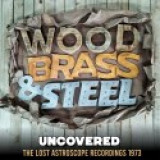
Wood, Brass & Steel - Uncovered - The Lost Astroscope Recordings 1973

Erstmals auf Platte: Die beiden Alben 'Wood, Brass & Steel' (1976) und 'Hard & Heavy' (1980) und damit die gesamte Diskografie der Disco-Formation Wood, Brass & Steel mit Doug Wimbish (bass) und Skip McDonald (git), die später mit Keith LeBlanc die Sugarhill Records-Houseband bildeten, bevor sie mit Adrian Sherwood Tackhead gründeten. Angereichert mit 5 bislang unveröffentlichten Aufnahmen eines nie erschienenen, dritten Albums. Mit den oft gesampelten Tracks 'Funkanova' (DJ Sneak, The Bucketheads, Black Science Orchestra), 'My Lady' (Pete Rock), 'My Darling Baby' (Erykah Badu), dem Ronnie Laws-Klassiker 'Always There' sowie der Extended Version von 'Welcome To The Party' (bislang 12inch-only). Remastered von den Original-Mastertapes.


Wood Brass and Steel waren die letzte und berühmteste Hausband der von Sylvia und Ehemann Joe Robinson geleiteten Labelgruppen All Platinum und Sugarhill Records, doch dieses Album wurde nie zuvor auf LP-Vinyl veröffentlicht. Die Musiker nahmen die Songs "Hey That's What You Say" und "A Love of My Own" auf, und als das Astroscope-Label von All Platinum sie als 7"-Single veröffentlichte, wurden sie zu Wood Brass and Steel. Die Gruppe vervollständigte dann dieses Album, das 1973 auf Astroscope LP5002 erscheinen sollte, aber nie veröffentlicht wurde.

Die Besetzung der Gruppe zu dieser Zeit ist nicht ganz klar, aber mit Sicherheit gehörten Harold Sargent, Bernard Alexander alias Skip McDonald (er nahm auch unter vielen anderen Kombinationen dieser Namen auf), Herman Tudi White am Bass und Otha Stokes am Saxophon und an der Flöte sowie Randy Bost an der Trompete dazu. Doug Wimbish und Craig Derry stießen zu dieser Zeit zur Band und sind zumindest an einigen, möglicherweise aber nicht an allen Titeln beteiligt.Die Band veröffentlichte zwei weitere hervorragende Alben: "Wood Brass And Steel" auf Turbo von 1976 und "Hard n Heavy" für Sugarhill im Jahr 1980. Wimbush, McDonald und der spätere Schlagzeuger Keith Le Blanc unterstützten die meisten Aufnahmen auf dem Sugar Hill-Label und machten anschließend eine lange und erfolgreiche Karriere im Musikgeschäft als Plattenkünstler und Session-Spieler.

vorbestellen08.07.2022

erscheint voraussichtlich am 08.07.2022

24,33
Artikel pro Seite:
N/ABPM
Vinyl