At 15 years of age Danny aka DJH worked at his Dad’s record shop at the weekends in Kings Lynn. He also built himself a basic studio in the back of the shop where he linked up with a local customer and started to make music. These tracks would form an EP called The Bass Project which went on to be one of the most sought after hardcore records, being offered for up to £750 a copy. Not bad for a 15 year old kid who made his one and only release back in 1993.
26 years later and Danny has linked up with Vinyl Fanatiks and entrusted the label to reissue his childhood gem. And from the success of that EP, long since sold out on Vinyl Fanatiks, came a slew of fresh music, transporting an older DJH back to his youth with a succession of Eps on Amen Brother, under the Unfinished Bizzniz series. This is Part 2 of that series and DJH continues to delve through his samples to bring fresh takes on the hardcore scene that helped him cut his teeth in the business and eventually getting him signed to Nervous Records with his Tech House output.
Part 3 of this series has already been cut and ready for release in 2022. So don’t sleep on this top selektion my selekta!
Cerca:hard work records
He did some time at the highly respected Juilliard Music School as a composition major in modern and avant- garde music, but don't hold that against him. He reinvented the rules as to what makes a perfect pop song, and inspired countless musicians during the formative years of punk rock, new wave, and whatever- comes- next. (Rule #1 = 'no- rules'). So here we are. Some things never change. Blink. Everything is different. Blink. Paul is still doing what he was meant to do, and his life's work is better than ever. You've got a future classic album in your hands with 'Stand Back And Take A Good Look'. And a beautiful earworm it is.
"Stand Back and Take a Good Look" by Paul Collins includes the following tracks: "In Another World", "Will You Come Through?", "Under The Spanish Sun", "How Will I Know?" and more.
“I like to work with a variety of instruments and set ups,” says Mark Van Hoen, sometimes known as Locust or Autocreation but here working under his own name on the excellent Plan For A Miracle, his first physical release of solo music since 2018’s Invisible Threads. ”Sometimes it’s literally in my studio, with all the hardware electronics available. Sometimes the laptop, using software instruments. Some of the tracks on this record were recorded in the desert (Joshua Tree) using a 4-track tape machine and small modular synthesiser set up. Each track was recorded in different location using different instruments, which accounts for the distinction between each piece. It’s also about my own reaction to my environment, and what’s going on in my life at the time.”
The Croydon-born Van Hoen started musical life in the early 1990s, signing for R&S records in 1993 but developing his own, myriad and distinctive style across a range of releases on Touch, Editions Mego and other labels, using a battery of instruments, including analogue synthesizers and taking a number of different approaches to recording, rather than ploughing a single sonic furrow. He has worked on a number of collaborations, including with Nick Holton and Neil Halstead of Slowdive, under the moniker of Black Hearted Brother - their Stars Are Our Home was released in 2013. “I have known Neil Halstead since 1992,” says Van Hoen. “He shared a house with me for a couple of years, and the music I was making and listening to along with clubs I was attending had an influence particularly on Pygmalion, the final Slowdive album on Creation.”
Each track on Plan For A Miracle does indeed sound like a world unto itself, a mini-environment, a weather condition, an ecosystem created for the moment. It’s a collection of tracks recorded over the past few years, released on Bandcamp - despite his apparent absence, Van Hoen works constantly. Opener “Climates”, in its exquisite limpidity, feels like a homage to Brian Eno, one of his most formative influences in his teen years, commencing with Music For Films, which he bought in 1979. “This Is For Them”, feels like a ghostlike throwback to early drum & bass or electronica, reminiscent of his own, earliest outings. “There have been a number of requests from labels to make some more music like my very early releases on R&S,” says Van Hoen. “This is part of ‘letting go’ and realising that there’s nothing less creative about going back to those styles again.”
“Pencil Of Spheres” is something else again, a magnificent, imaginary glass structure, shimmering, refracting, without visible means of suspension, a thing of impossible beauty. “Electric Lights” evokes an abandoned fairground, its lights still pulsating, its music lingering. “The Underpass”, meanwhile, insofar as it reminds of anything at all, is faintly reminiscent of Cluster or Neu’s! West German ambience, the urban mundane rendered magical, the sodium lights, the whitewashed walls. The reverberant, faintly oriental chimes of “Insight” transport us yet again, burgeoning and intensifying.
The landscapes, the skyscapes rendered on Plan For A Miracle feel unpopulated as a rule - but when he does introduce vocal elements, Van Hoen has a history of doing so to spectacular effect - think of “Real Love” from 1998’s Playing With Time, the seductive intonation of its title recurring throughout like a series of massive holograms, echoing, stuttering, breaking up, surging. Here, there are just the faintest of vocals, barely distinct, disquieting. “There’s been a bit of a game changer in recent times,” explains Van Hoen. “AI software that enables you to extract vocals and instrument parts from virtually any recording. That means sampling individual parts from existing sources is no longer limited to the original mix exposing certain parts soloed. The vocal parts I use are from multiple sources and often pitch shifted altered rhythmically and melodically.“ There’s further vocal chatter on “I Really Do”, proceeding at a faster pace as if giving chase, or being pursued - distant, enigmatic. “The Music”, meanwhile, its beat tolling, lost in its own fog of static, features a curious intonation, like the ghost of a lost Walker Brother.
Sadly, the album’s title is in reference to a personal tragedy on Van Hoen’s part - the loss of his wife. Titles such as “I Won’t Give Up”, which faintly reminds of another Eno masterpiece, Another Green World, in its nautical hurly-bury, or the pastoral strains of “Mrs Who”, heavily clouded with sadness, seem to allude to this. “In fact the record was recorded entirely before she passed away,” says Van Hoen, “most of it before she even became very ill. The title was given to the album when it started to look like she wasn’t going to make it beyond a few months. It was something Osho said - “plan for a miracle” - so it was a statement of hope. Unfortunately it was not to be.” Although the album is non-thematic, non-specific in its atmospheres, sound paintings, elegant structures it most certainly stands as a magnificent monument to Osho’s memory.
-David Stubbs.
“Challenge” was released in 1981 on Bootleg, a record label born inside a record store in Pavia with the same name. “Challenge” keeps the original and uncompromising punk attitude alive. 3 groups: No Suicide (from the Udine province), Mercenary God (from Gemona), No Submission (from Treviso), all sick children of the industrious, rich and Christian Democratic north-eastern part of Italy. I read about them in “New Fahrenheit” (a controversial article about local rivalries, common backgrounds and eventually separate roads.) but I don’t know their music. Something tells me that “Challenge” is the record I was looking for, perhaps because of its very powerful cover with no slogans, and a circled “A”. I send the money in a sealed envelope and wait. When the package arrives, I open it, I put the record on the turntable and let the needle go. The first listen is enough to realize that this is a crucial release, a real “challenge”.
The challenge is against an indifferent market. The instrument is a sound that is already changing skin. No Suicide, Mercenary God and No Submission have nothing to do with Great Complotto, they are the other face of the northeastern underground. Punk is their background, (read “hardcore” for No Suicide) but for all of them there is a progressive detachment from the original material, including a common attitude towards the caustic sound coming from the harshest side of British wave. A classic example of “work in progress” able to generate great songs like “The Degraded Men” by No Submission (the band that later evolved into Wax Heroes), one of the peaks of Italian post-punk. Mercenary God will give birth to The Sex, while No Suicide with their tight hypnotic hardcore will disbanded soon. It’s 1981 when the rain clouds on the “Challenge” front cover seem to remind us that the wind is going to change soon.
3 bands, 11 songs, an unearthed piece of history 43 years after its first release. Thanks to this reissue, “Challenge” is now back on track. A different disc, today as then. (Luca Frazzi)
PHILIPP ROLLER produced his album, "Sommer 97," back in 1996 during his student days in his small home studio. Drawing inspiration from acts like Kraftwerk, Orbital, various artists on Warp Records, and computer game music, Roller crafted a unique sonic experience. Initially released on cassette, the album was unveiled to an intimate audience at Künstlerhaus Stuttgart in February 1997. Following the initial release, Roller had the opportunity to sign with a small British label. Unfortunately, circumstances led to the label's dissolution before the record could see the light of day. Despite efforts to secure a new label, "Sommer 97" remained confined to DAT tapes and hard drives for years. Fast forward to 2020 when Michael Kübler and Daniel Varga (Rework) joined forces to establish EXLOVE Records. Recognizing the album's potential, they decided to bring "Sommer 97" out of obscurity and into the world. Philipp Roller, now residing in Berlin and working as a freelance interface designer for music software, has had an illustrious past creating a lot of music not only on his own but even for fashion shows, art and image films, and contributing ideas to Rework's debut track "Anyway I Know You" on Playhouse. In August 2021, Roller released his first single, "Kiss & Tell / Roller Disco," on Exlove Records. Finally, after a remarkable 26-year journey, Roller's legendary "Sommer 97" tape is set to be released as a double album on vinyl.
What Do We Do Now is the fifth solo studio LP recorded by J Mascis since 1996. This is obviously not a very aggressive release schedule, but when you figure in the live albums, guest spots, and records done with his various other bands (Dinosaur Jr., The Fog, Heavy Blanket, Witch, Sweet Apple, and so on), well, to paraphrase Lou Reed, "J's week beats your year." What Do We Do Now began to come together during the waning days of the Pandemic. Utilizing his own Bisquiteen Studio, J started working on writing a series of tunes on acoustic with a different dynamic than the stuff he creates for Dino. "When I'm writing for the band," he says, "I'm always trying to think of doing things Lou and Murph would fit into. For myself, I'm thinking more about what I can do with just an acoustic guitar, even for the leads. Of course, this time, I added full drums and electric leads, although the rhythm parts are still all acoustic. Usually, I try to do the solo stuff more simply so I can play it by myself, but I really wanted to add the drums. Once that started, everything else just fell into place. So it ended up sounding a lot more like a band record. I dunno why I did that exactly, but it's just what happened." Two guest musicians are playing this time out; Western Mass local Ken Mauri (of the B52s) plays piano on several tracks. Since J himself has some experience with keys, when asked why he needed a hired gun, he says, "Ken is great, and he plays all the keys. I tried playing some keyboards on the first Fog album, but I'm really only comfortable playing the white notes, so it's kind of limiting. laughs Nowadays, I could just turn the pitch on a mini Mellotron to play different sounds, but black keys just seem hard. For whatever reason, I just like banging on the white ones. Seems like it's harder to figure out how to stretch your fingers around the other ones." Mauri has no such qualms and plays all the keys very damn well. He sounds especially great on "I Can't Find You," where he is Jack Nitzsche to J's Neil Young, creating one of the album's loveliest tunes. The other guest musician, Matthew "Doc" Dunn, is also prominent on this track. Dunn's steel guitar manages to both widen and soften the musical edges of the music, giving it a full classicist profile. Dunn is an Ontario-based polymath who J met through Matt Valentine. After J played on Doc's great 2022 Sub Pop single, "Your Feel," he figured it was time for payback. Both Dunn and Mauri add beautifully to the songs here, helping to transform them from acoustic sketches into full-blown post-core power ballads. What Do We Do Now is the finest set of solo tunes J has yet penned, and the way they're presented is just about perfect. Asked if he would be touring to support the album, J says he'll be doing some weekend dates, but he probably won't be putting a band together. And I'm sure these songs will sound great solo and acoustic, but the arrangements on this album are truly great and put a cool, different spin on Mascis' instantly Recognizable approach to making music. So, what do we do now? Not sure. But apparently, what J does is to make one of his most killer records ever. Hats off to him. - Byron Coley
The Bony King of Nowhere is the artistic alias of Belgian artist Bram Vanparys. He made a mark in 2018 with the release of his critically acclaimed album Silent Days. The record received consistent 4- and 5-star press reviews and was hailed as his best album to date. It also earned Vanparys a Music Industry Award (BE) for 'best author-composer'. Silent Days revealed the full potential of the singer-songwriter and his commitment to never repeat himself and keep surpassing his creative abilities.
The new album, entitled Everybody Knows, has been a long time coming, partly due to Vanparys' aforementioned pledge to artistic evolution. The first two tracks he unveiled give a definite hint of what to expect from this album. 'Are You Still Alive' and 'Almost Invisible' carry the quality mark, known colour scheme and scent of The Bony King of Nowhere, but add many more hues and details. The new record showcases the new league Vanparys is playing in. Themes like rusted patterns in society, the obedience of the everyday man, the structural false ignorance of big shots, the toxicity of online communication and other very recognisable but not always pleasant subjects. Inspired by the observations of many sociologists, Vanparys dissects our society, the loneliest ever. This album is not just disconcerting though, in its strength lies a sense of hope and vigour.
The first singles promise a new album with lots of punch and energy, while Vanparys is unveiling the complete complexion of his voice whilst remaining vulnerable and honest. On the album, he is accompanied by multi-talent guitarist Vitja Pauwels (Naima Joris), pianist Hendrik Lasure (Tamino, Bombataz), drummer Simon Segers (Sylvie Kreusch, Stadt) and bass player Jasper Hautekiet.
While the songwriting legends, particularly Neil Young and Bob Dylan, have always kept Bram company, his latest compositions also draw inspiration from more contemporary artists. The influence of PJ Harvey, Blur and Nick Cave are unmistakable when you listen to his music. While staying true to his heartfelt songwriting style and captivating voice, The Bony King Of Nowhere embarks on a journey into uncharted musical and thematic realms.
The last time this band was on tour in support of 'Silent Days', they took a big leap forward while touring 75 shows across renowned venues and festivals in Belgium, The Netherlands, Germany, and France, with a packed Ancienne Belgique in Brussels as one of the highlights. Now the five-man-band, consisting of Jasper Hautekiet, Simon Segers, Thijs Troch (Nordmann), Gertjan Van Hellemont (Douglas Firs), will start this tour with shows in Ekko, Utrecht on March 6 and Ancienne Belgique, Brussels on March 8.4
The Bony King of Nowhere is the artistic alias of Belgian artist Bram Vanparys. He made a mark in 2018 with the release of his critically acclaimed album Silent Days. The record received consistent 4- and 5-star press reviews and was hailed as his best album to date. It also earned Vanparys a Music Industry Award (BE) for 'best author-composer'. Silent Days revealed the full potential of the singer-songwriter and his commitment to never repeat himself and keep surpassing his creative abilities.
The new album, entitled Everybody Knows, has been a long time coming, partly due to Vanparys' aforementioned pledge to artistic evolution. The first two tracks he unveiled give a definite hint of what to expect from this album. 'Are You Still Alive' and 'Almost Invisible' carry the quality mark, known colour scheme and scent of The Bony King of Nowhere, but add many more hues and details. The new record showcases the new league Vanparys is playing in. Themes like rusted patterns in society, the obedience of the everyday man, the structural false ignorance of big shots, the toxicity of online communication and other very recognisable but not always pleasant subjects. Inspired by the observations of many sociologists, Vanparys dissects our society, the loneliest ever. This album is not just disconcerting though, in its strength lies a sense of hope and vigour.
The first singles promise a new album with lots of punch and energy, while Vanparys is unveiling the complete complexion of his voice whilst remaining vulnerable and honest. On the album, he is accompanied by multi-talent guitarist Vitja Pauwels (Naima Joris), pianist Hendrik Lasure (Tamino, Bombataz), drummer Simon Segers (Sylvie Kreusch, Stadt) and bass player Jasper Hautekiet.
While the songwriting legends, particularly Neil Young and Bob Dylan, have always kept Bram company, his latest compositions also draw inspiration from more contemporary artists. The influence of PJ Harvey, Blur and Nick Cave are unmistakable when you listen to his music. While staying true to his heartfelt songwriting style and captivating voice, The Bony King Of Nowhere embarks on a journey into uncharted musical and thematic realms.
The last time this band was on tour in support of 'Silent Days', they took a big leap forward while touring 75 shows across renowned venues and festivals in Belgium, The Netherlands, Germany, and France, with a packed Ancienne Belgique in Brussels as one of the highlights. Now the five-man-band, consisting of Jasper Hautekiet, Simon Segers, Thijs Troch (Nordmann), Gertjan Van Hellemont (Douglas Firs), will start this tour with shows in Ekko, Utrecht on March 6 and Ancienne Belgique, Brussels on March 8.4
The band’s vast knowledge of the history of hardcore and metal are evident in all 12 tracks on this album.
You can hear influences ranging from Poison Idea and Death Side to Slapshot, and even youth crew
bands like Side By Side and Youth Of Today. Throw in a heavy dose of Motörheadish rock’n’roll and lead
guitar work that could easily be from one your favourite New Wave Of British Heavy Metal albums – and
you have Night Fever
Erupt Records has suffered its first Unrest Hazard. After keeping the lid on a beast this explosive, what did you think was going to happen?
This new series of '4 on 1' EPs from the mighty label, will showcase several of the best producers from the UK (sometimes even beyond!) breakbeat hardcore/jungle scene on 1 record, be they old or new.
The first track from Schoco (Omni Music) is "I Need". Let yourself go to wispy, dream-state synthlines over ferocious breakz.
Track 2 is a bouncy piano anthem for anybody who likes hearing the words "1993" and "happy" in the same sentence. This one is brought to you by After The Zenith. Usually resident cover artist for Erupt, this time he grabs the steering wheel and gears up to present you a bit of his own 'ardcore.
Next up is some brutality from Tactical Aspect. Need no more be said than these lads are one of Australia's finest purveyors of hardcore junglism, with a portfolio including works for Reinforced Records. But, with a recent move back to Yorkshire, and following an initiation into the West Yorkshire Jungle Collective, it only made sense for TA to deliver some unrelenting '93 style breakbeat hardcore brutality to celebrate.
The final track "When Did We Forget" is a get together from the lads at Kool FM, Code and Subbreak, with D-Region. Any time you see these names together, it commands serious respect. This is one for anybody who likes those hazy breakbeat hardcore tracks that tread a fine line between hard and euphoric.
What are you waiting for?
Erupt Records was established in 2016 to cover tougher, faster styles of electronic dance music, with a view of openness towards introducing contemporary influences alongside the familiar; Hardcore that reflects today, not yesterday. The objective? Push the boundaries, keep the drums raw, compromise for noone.
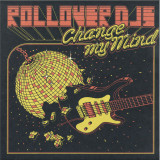
Into the best Balearic tradition boldly steps Milan’s Rollover crew. As well as a regular party in Milan, the Rollover DJs (Tiberio Carcano & Rocco Fusco) have been making edits and releasing tunes over the past several years, but with this release there has been a step change in ambition. The latest collection of songs has been produced in a studio with actual musicians and songwriters, but with the ear of an experienced DJ. The best of both worlds. It was recorded almost exactly one year ago in December 2022, with the cream of Italian players, including bass player and Jovanotti collaborator, Saturnino, sticksman Sergio Carnevale, vocalist David Blank and guitar and synth boffin Lorenzo Morresi, who’s helped the guys with production. It follows in the tradition of a new generation of Italian musicians, like Nu Genea, Mystic Jungle Tribe and also DJs like Volcov. The lead single, ‘What Do You Live For’ was what Rocco & Tiberio describes as, “a funky track inspired by the early 1980s” and grooves so hard, with Blank’s message hitting right in the solar plexus. This will be followed by a pair of bangers, ‘Change My Mind’, a mid tempo disco chugger that is a tribute to LTJ Experience, the Bologna DJ Luca Trevisi, while ‘Never Found The Way’ heads towards Arthur Russel, before pealing off directly to the dancefloor. There’s also a Bawrut remix that adds some urgency and darkness to proceedings. The package is completed by lovely artwork by Riccardo Corda, whose work has adorned the Nu Genea releases. Is it Balearic? We think it is.
Orchestral Manoeuvres In The Dark (OMD) return with their 14th studio album Bauhaus Staircase, over six years after the triumph of their Top 4-charting record The Punishment of Luxury. The album was born from the impetus to kickstart new explorations during lockdown when as Andy McCluskey admits: “I rediscovered the creative power of total boredom.”
The album’s first offering as a single is the title track which serves as a nod both to Andy McCluskey’s love of the Bauhaus era & the power of protest art. “I am a huge lover of visual arts especially mid 20th century movements” Andy comments. “The song is a metaphor for strength and artist passion in the face of criticism and adversity. When times are hard there is a tendency for Governments to look at cutting funding for creativity just at the moment when the arts are most needed to nourish our souls. It seems appropriate that the song and its eponymous album were created during Covid Lockdown.”
Ranging further from the beautiful film noir ballad of ‘Veruschka’ and the dance stylings of ‘Anthropocene’ - a term for the current epoch in Earth’s evolution to the sinister ‘Evolution Of Species’ and the hectic ‘Kleptocracy’ - OMD’s greatest straight-up protest song - the new album is a broad electronic sonic masterpiece that lyrically tackles the topics of the future. The record closes on ‘Healing’ - a moment of reflective calm.
By rights OMD should be in semi-retirement performing classics like Enola Gay and Maid Of Orleans on the nostalgia festival circuit like so many peers. Instead they’ve created a landmark album worthy of their finest work. Bauhaus Staircase remains unmistakably the work of a duo who are still perfectly in sync 45 years after their first gig at legendary Liverpool club Eric’s.
“I’m very happy with what we’ve done on this record" McCluskey summarises. “I’m comfortable if this is OMD’s last statement.”
- 1: Afrique - House Of The Rising Funk
- 2: Blue Mitchell - Soul Village
- 3: Sarah Vaughan - Magical Connection
- 4: Art Farmer - Soulsides
- 5: Shelly Manne - Mask 7:30
- 6: Alice Clark - Never Did I Stop Loving You
- 7: Buddy Terry - Abscretions
- 8: Maxine Weldon - Right On
- 9: Barry Miles - Scatbird
- 10: Jack Wilkins - Red Clay
- 11: Clark Terry - Rum And Mumbles
- 12: Ellerine Harding - I Ain't Got Much (But Whatever I Got It's Yours Baby)
- 13: Blue Mitchell - Granite & Concrete
- 14: Hadley Caliman - Quadrivium
- 15: Carmen Mcrae - Feelin' Good
A compilation of rare spiritual jazz and funk grooves culled from the archives of producer Bob Shad's Mainstream Records. Alice Clark's cult classic Never Did I Stop Loving You' features here alongside many gems uncovered for the first time.
Bob Shad worked with titans such as Charlie Parker and Lightnin' Hopkins in the 40s, founded the EmArcy jazz label in the 50s, and discovered Janis Joplin in the 60s, and started the Mainstream label in 1964.
From Afrique's classic House of the Rising Funk' and its funky wah wah frenzy, to Hadley Caliman's deep jazz Flute ode, From one of Clark Terry's famous Mumbles (Shad produced the original with Oscar Peterson) to Jack Wilkins' Red Clay' sampled by both A Tribe Called Quest and Chance the Rapper. A Soul Music lover, Shad also excelled in soul divas and produced Ellerine Harding, Maxine Weldon and of course the mighty Alice Clark. Carmen McRae, one of Shad's long time collaborators, gives a soulful, conga-led version of the classic Feelin' Good, originally made famous by Nina Simone
Cam Cameron appears to be another one of those performers from an infinite list of Black American artists that cut a solitary 45 single and then disappear into obscurity never to be seen or heard from again. Couple this with the passing of any of the relevant protagonists from the time along with any of the surviving ones ever diminishing memories and the job of collating events and artists back stories from over 50 years ago becomes that much harder.
Cam Cameron appears to be one of those artists (although our investigations are ongoing). Therefore, from the information currently gleaned, the artist Cam Cameron was none other than Alvin Cameron the writer of the featured song “You Say”, with Cam being a kind of nickname. The string arrangements on both “They Say” and “I’m A Lonely Man” were provided by the late John Andrew Cameron a hugely respected arranger, producer and songwriter within the Chicago music scene of the 1960’s and early 70’s, more often credited as Johnny Cameron. Johnny’s credits can be found on many recordings of the time often working with fellow Chicago music scene producer Clarence Johnson, some of the highlights from this liaison being the song “I Really Love You” recorded by both Jimmy Burns (Erica) and Bobby James (Karol) and the girl group, ‘The Lovelites’, on their acclaimed album “With Love From The Lovelites” (Uni). Johnny’s involvement with the Scott Brothers goes as far back as 1965 when he provided the musical arrangements on The Howard Scott penned song “I’ve Got To Get Over” recorded by Syl Johnson for the TMP-Ting label. Although they share the same surname, Alvin (Cam) Cameron is believed to be of no relation to Johnny Cameron.
“You Say” would gain a release on the independent Capri label owned by Sephus Howard Scott who together with brother Walter Scott composed the 45’s flipside “I’m A Lonely Man”. Howard also featured as one of the songs producers alongside the mysterious Edgar Mullins (a name which has been found on a couple of other tape boxes, the investigations continue).
Musical accompaniment was provided by The Scott Brothers Band, with both songs being recorded at RCA Victor’s Chicago number 2 Recording Studio at 445 North Lake Shore Drive, in the Navy Pier section. on the 10th of August 1967 and released on Capri Records during the month of February 1968.
Cameron’s “You Say” was another 45 that was first introduced to UK Soul Collectors via those much lamented and fondly remembered soul packs, always regarded as a quality collector’s 45 the only regular turntable action remembered was provided by Northampton’s very own discerning DJ Cliff Steele at venues such as ‘Detroit Academicals’, ‘Bretby Country Club’ and later ‘Albrighton’ during the leaner days of the UK Rare Soul Scene?! Hopefully a wider appreciation of both sides of this soulful Windy City 45 beckons! The second release in Soul Junction’s Capri series.
Gruff Rhys is pleased to announce his new album "Sadness Sets Me Free" which will be released by Rough Trade Records on 26.01.2024. This incredibly will be the 25th album he has released in his 35 year career individually, collaboratively and as a member of various bands. "Sadness Sets Me Free" is also the follow up to 2021"s "Seeking new Gods", his first solo top ten record. The album will be available in a range of formats including a unique Dinked edition on "honeycomb neo-neapolitan" vinyl, an LP sleeve with "container doors" and a bonus 7" with exclusive audio for the first 1500 copies. A gatefold soft pack CD also includes a pull out poster. Lead-off single "Celestial Candyfloss" is a telling four minute glimpse of the forthcoming album, revealing the heady wonders and classic pop sounds within. Soaring strings carry the sweet melodies along, anchored by just enough necessary melancholy to add emotional ballast. The eye-popping video was created by long-time collaborator Mark James and compliments the scope and style of the song on a galactic scale. "Celestial Candyfloss" is, Gruff says, "an attempted pocket symphony about the cosmic lengths that people will travel in the pursuit of love and acceptance. Mark James has brought the Sadness Sets Me Free album cover to life & managed to place me watching TV interference in a shipping container that"s lost in space. For what is apparently the 25th album I"ve had a hand in writing I"ve reverted to a rich seam of inspiration relating to shedding some light on sadness and the general terror of cosmic loneliness." And so it was that Gruff and his band - Osian Gwynedd (piano), Huw V Williams (double bass) and former Flaming Lips drummer turned Super Furry Animals archivist Kliph Scurlock (drums) piled into a van driven by the late, legendary tour manager "Dr" Kiko Loiacono and raced from Dunkirk, where they had just played the final show of a tour of Spain and France, to the outskirts of Paris in the early hours of a March morning in 2022. There, in La Frette Studios, a recording facility installed in a 19th-century house, Gruff and his road-hardened group tracked "Sadness Sets Me Free" in just three days. Backing vocals were added along the way by Kate Stables from This Is The Kit along with additional strings and orchestration and it was mixed between Marseille and Cardiff. What finally emerged from these intense bouts of cross-continental activity was Gruff"s most accomplished and beautiful record to date. In a career that has taken him from the slate-mining towns of north-west Wales, down to the expat communities of Patagonia, up to the Mandan tribe of the Great Plains of North America and across to the Tuareg rock groups of the Saharan Desert, Gruff Rhys, one of Britain"s most beloved and successful singer-songwriters, has always been willing to follow an opportunity, wherever it may lead him. "At this point I quite like working with serendipity," he says. "Not in a cosmic way, but I try and leave things open to chance encounters and chance geography. As I"m around 25 albums in I"m always looking for ways to make a different-sounding record".
plastic death - the second album by glass beach - is a follow-up record almost five years in the making. The band's 2019 debut, aptly titled the first glass beach album , has over the years grown a cult fanbase for its unflinching depiction of queer life as mediated through social media, its oversized ambition, and its scrappy yet adventurous production. And while it took some time to arrive, plastic death sounds like the logical expansion of all the things that made their first album so special. Years and years of relentless writing, tinkering demos, cancelled tours and a few lockdowns only strengthen the chaotic core of what makes glass beach' s maximalist approach work so well. Frontperson and primary songwriter J McClendon is joined by lead guitarist Layne Smith, bassist Jonas Newhouse and drummer William White to create something adventurous on each song. Trumpet, trombone, violin, and even marimba dance and bloom alongside the band's own creative and dextrous instrumentation - a stunning, transformative creation that pulls from indie rock, jazz, prog, hardcore, metal, experimental, and beyond. Songs like lead single "the CIA," are examples of the band's ambitious writing. It's a dark, dancy, post-punk/jazz hybrid, a coordinated, breathless braid of synth and saturated guitar. Tension and confusion explode into a brutal modern metal climax to close the track, flickering with glitchy production zaps and razor-sharp stops. The artwork of plastic death is similarly rich with detail, resulting in a bioluminescent, fully-realized double album depicting sprawling scenes where moments of neon brightness shine momentarily in a dark undersea - a metaphor for the moments of optimism and catharsis glass beach provide on these songs. "This album is the Pacific garbage patch: cultural trash strewn together seemingly by accident, standing in stark juxtaposition to each other ," says McClendon. plastic death is a complete, uncompromising, playful work of art; every corner and crevice of the record's 13 tracks, each arrangement and timbre and texture, is alive with intention and possibility.