First ever vinyl release of Jodey Kendrick's first album from 2007 by his +10 moniker, "Grace" was thought out with a Chicago vibe in mind in the hope that Ron Hardy might play some of it but mostly showcases Kendrick's already distinctive braindance skills. Selected by Aelfric Michael Avery from 500 tracks given by the prolific artist, each of these timeless picks was already foretelling of a budding talent on the rise. To be (re)discovered without further ado.
Поиск:hardy hard
Все
Total oddball production that has left a terrifying wake of mystery throughout many online digger circles which eventually even led to a mini documentary explaining the origin of the crown jewel “Dirty Cowboy” sound which is featured in this release along with another one of Richard Plasko’s tripped out involuntary lo-fi excursions on the B-side. Ron Hardy and the Village People walk into a bedroom studio...Thoroughly remastered from master tapes and brought back to life on vinyl for the first time.
- A1: 20Th Century Fox Fanfare
- A2: Somebody To Love
- A3: Doing All Right... Revisited (Performed By Smile)
- A4: Keep Yourself Alive (Live At The Rainbow)
- A5: Killer Queen
- A6: Fat Bottomed Girls (Live In Paris)
- B1: Bohemian Rhapsody
- B2: Now I'm Here (Live At Hammersmith Odeon)
- B3: Crazy Little Thing Called Love
- B4: Love Of My Life (Rock In Rio)
- C1: We Will Rock You (Movie Mix)
- C2: Another One Bites The Dust
- C3: I Want To Break Free
- C4: Under Pressure (Performed By Queen & David Bowie)
- C5: Who Wants To Live Forever
- D1: Bohemian Rhapsody (Live Aid)
- D2: Radio Ga Ga (Live Aid)
- D3: Ay-Oh (Live Aid)
- D4: Hammer To Fall (Live Aid)
- D5: We Are The Champions (Live Aid)
- D6: Don't Stop Me Now... Revisited
- D7: The Show Must Go On
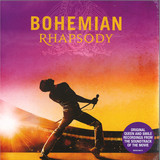
'Bohemian Rhapsody' Original Film Soundtrack
featuring previously unavailable QUEEN performances at Live Aid
and new versions of band classics heads for October 19 release.
Available on Virgin EMI (Universal) /Hollywood Records (USA)
For the first time ever audio tracks from Queen's legendary performance at Live Aid are being released as part of the soundtrack album to "Bohemian Rhapsody", 20th Century Fox and Regency Enterprises' forthcoming feature film celebrating the band, their music and their extraordinary lead singer Freddie Mercury. Recorded at the historic Wembley concert in July 1985, these Live Aid songs are among the rare gems and unheard versions from the band's rich catalogue.
Alongside the show-stopping Live Aid performances of Bohemian Rhapsody, Radio Ga Ga, Hammer To Fall and We Are The Champions, the album features other rare live tracks spanning Queen's entire career, new versions of old favourites, and a choice selection of the band's finest studio recordings. Among them are some of Queen's biggest hits, including eleven all-time anthems that reached Number One around the world. The track listing is being announced on 5 September 2018, which would have been Freddie's 72nd birthday.
"Bohemian Rhapsody" is scheduled to have its World Premiere in the UK on 23 October before opening across the world in early November. It stars Rami Malek as Freddie, Gwilym Lee as Brian May, Ben Hardy as Roger Taylor, Joe Mazzello as John Deacon, and Lucy Boynton as Freddie's lifelong companion Mary Austin. The soundtrack, featuring all-original Queen recordings and vocals, is released on CD and digital formats on 19 October.
Chicago legend K. Alexi returns to Dark Entries with K.A. Posse’s Strkes Again, an EP of preleased unreleased acid and house mayhem. K’Alexi Shelby’s illustrious career has included releases on legendary labels such as Trax, DJ International, and Transmat, as well as collaborations with high-profile artists like Marshall Jefferson and Pet Shop Boys. But his musical journey began at the young age of 12, when he befriended Ron Hardy and Frankie Knuckles while frequenting the Music Box and Warehouse. In high school, he began to write songs and hone his poetic craft. “I recognized I had a gift to say what I was thinking. I would study Prince and Marvin Gaye, figure out what they meant and put my spin on it. The power of the word. I was writing love notes for all my boys in high school and making a killing. I would know what to say and what they should do.”
Dark Entries previously reissued Shelby’s debut record, Essence of a Dream, which was recorded under the name Risque III in 1987. Strikes Again brings us six tracks recorded in Chicago between 1988 and 1990, which come courtesy of Mike Dunn’s personal archive. This record showcases the rawer, more immediate side of Shelby’s sound, with tracks full of overdriven 808’s, careening sirens, and dangerously funky breakbeats. “Imported Taste” brings Shelby’s signature deep pads to the front of wild congo-laced percussion. “Suckas Be Ready” is a slamming hip-house cut featuring vocals from MCD-TA, while disco-samples duel with crunchy 909s on the jacking “Muzic Box.” Strikes Back showcases the real underground sound of Chicago, where sonic abstraction meets full-body kinetics. The record comes housed in a retro-styled sleeve designed by Eloise Shir-Juen Leigh.
Chicago legend K. Alexi returns to Dark Entries with Warehouse Trax, an EP of previously unreleased acid and house mayhem. K’Alexi Shelby’s illustrious career has included releases on legendary labels such as Trax, DJ International, and Transmat, as well as collaborations with high-profile artists like Marshall Jefferson and Pet Shop Boys. But his musical journey began at the young age of 12, when he befriended Ron Hardy and Frankie Knuckles while frequenting the Music Box and Warehouse. In high school, he began writing songs and honing his poetic craft. “I recognized I had a gift to say what I was thinking. I would study Prince and Marvin Gaye, figure out what they meant and put my spin on it. The power of the word. I was writing love notes for all my boys in high school and making a killing. I would know what to say and what they should do.”
Dark Entries previously reissued Shelby’s debut record, Essence of a Dream, which was recorded under the name Risque III in 1987. Warehouse Trax follows with six tracks recorded in Chicago between 1991 and 1994. The material here has all the hallmarks of classic K’Alexi. Salsa-inflected rhythms, emotive basslines, and hip-house vibes are displayed on tracks like the high-octane “Jungle Line” or the low-key tearjerker “Protect and Survive.” There are also some unexpected surprises in store. “Aaaah” comes out of the gate swinging with hard-hitting beats and apocalyptic ravey vocal pads evocative of the edgier material on Saber Records or Djax Up Beats, and the surprisingly contemporary-sounding “Klub Dred” delivers half-time dub with stuttering vocal samples. Warehouse Trax comes in a retro-styled sleeve designed by Eloise Shir-Juen Leigh. This is essential material for devotees of classic house sounds.
- They Listen
- Roots Entwined
- Our Times
- New Birth
- Lonely Oak Part 1
- On And On
- Dust To Dust
- Interconnected
- Lonely Oak Part 2
Inspired by Thomas Hardy"s poem Transformations, ETERNAL BIRTH is Eliza Marshall"s debut solo album and a powerful statement on connection, ancestry and renewal. The album traces the cycles of life from conception to death, revering the natural world as a living archive of our ancestors and exploring the unseen bonds that connect past, present and future generations. Across the record, Marshall creates a rich, cinematic soundscape blending classical, folk and world traditions with flutes, whistles, bansuri, spoken word, percussion and electronics. Produced by Ivor Novello Award recipient Graeme Pleeth, the album features an international line-up of world-class musicians including Ady Thioune and Ansumana Suso (Senegal / The Gambia), Drew Morgan and Donal Rogers (USA / UK), Johnny Kalsi (UK) and Lena Jonsson (Sweden). Influences range from Steve Reich to Paul Simon, while remaining rooted in Marshall"s distinctive compositional voice.
- A1: Gareth Coker - The Resistance (Main Theme)
- A2: Gareth Coker - Uchawi's Hearth
- A3: Gareth Coker - Giggling Forest
- A4: Gareth Coker - Green River
- A5: Gareth Coker - Wild Coast
- A6: Gareth Coker - City Of Stonedale
- B1: Gareth Coker - Rudolf
- B2: Gareth Coker - The Citadel
- B3: Gareth Coker - Ancient Might
- B4: Mick Gordon - The Underking
- B5: Gareth Coker - Fire Swamps
- B6: Gareth Coker - Sinking City
- B7: Gareth Coker - Fallen Guardian
- C1: Gareth Coker - Training Grounds
- C2: Gareth Coker - The Lizard King
- C3: Gareth Coker - Pilgrim's Road
- C4: Gareth Coker, Rachel Hardy - Yeldrim
- C5: Gareth Coker - Catacombs Of Renewal
- C6: Yuka Kitamura - Morta Mima
- C7: Gareth Coker - Mansion Of The Cult
- D1: Gareth Coker - Mouth Of Madness
- D2: Motoi Sakuraba - The Cosmic Beast
- D3: Gareth Coker - Endless Bazaar
- D4: Gareth Coker - Power
- D5: Gareth Coker - Azra, Pride Of The Sun King
- D6: Gareth Coker - Absolum, A Broken Dream
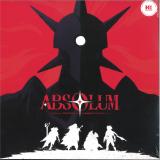
This album is the game soundtrack of Absolum, a fully hand-drawn world and unique lore by the team behind Streets of Rage 4, TMNT: Shredder’s Revenge... Known for Ori and the Blind Forest and Halo Infinite, the main composer Gareth Coker brings his signature emotional depth, blending dark fantasy orchestration with medieval-inspired themes and brooding atmospheres.
From orchestral soundscapes to thrilling boss fight themes, this soundtrack features guest tracks by Mick Gordon (DOOM 2016, Wolfenstein: The New Order, Atomic Heart...), Yuka Kitamura (Elden Ring, Dark Souls III, Dark Souls II), Motoi Sakuraba (the Dark Souls Series, Mario Golf, Star Ocean), and Rachel Hardy (Stray Gods, Eternal Strands), setting the tone for the events taking place in this cute but twisted fantasy world. Magic may be forbidden in these lands, but the music is still truly enchanting!
- A1: Robert Pico - Le Chien Fidèle
- A2: Annie Girardot - La Femme Faux Cils
- A3: Spauv Georges - Je Suis L'état
- A4: Zoé - Zoé
- A5: Jacques Da Sylva - Fou
- A6: Valentin - Je Suis Un Vagabond
- A7: Jacques Malia - Histoire De Gitan
- A8: Bernard Jamet - Raison Legale
- B1: Jean-Pierre Lebort - Barbara Au Chapeau Rose
- B2: Les Concentrés - Fils De Dégénérés
- B3: Les Missiles - Publicité
- B4: Hegessipe - Le Credi D'hegessipe
- B5: Marechalement Votre - Ethero Disco
- B6: Mamlouk - Decollez Les
- B7: Mozaique - L'amour Nu
- B8: Jean-Marc Garrigues - Je Dis Non
- B9: Penuel - Astronef 328
The journey through French-speaking pop archives continues with this fifth volume, packed with fuzz, gimmicks, and dissent. Far from the charts, the selected tracks display a great creative freedom, often backed by corrosive humor. Welcome to the surprising, kaleidoscopic, and colorful world of the late sixties and early seventies, Wizzz!
Born in Montauban, Robert Pico stumbled into music by chance when he met René Vaneste, then artistic director at Pathé-Marconi. René brought him to Paris to record his first 45 RPM EP in 1964. A year later, Pierre Perret introduced him to Vogue, where he recorded his second album with Claude Nougaro’s orchestra. Sylvie Vartan then introduced him to RCA, where he recorded four singles, including the astonishing "Chien Fidèle," a track backed by a hair-rising fuzz guitar. Alongside his solo career, he also composed for other artists like Alain Delon (the song was recorded but remains unreleased), Magali Noël, Bourvil, and Georges Guétary. In the Paris of the sixties, he mingled with Mireille Darc, Elsa Martinelli, Marie Laforêt, France Gall, Françoise Hardy, Petula Clark, Régine, Dani, Serge Gainsbourg, Joe Dassin, Franck Fernandel, Charles Level, and Roland Vincent. Despite his efforts and winning a Grand Prix Sacem for his final record, Robert Pico didn’t achieve the expected success in show business and decided to leave Paris and return to the Southwest, where he devoted himself to writing. He is the author of 23 books (including Delon et Compagnie, Jean-Marc Savary Editions 2025, a memoir about his youth and his many encounters). Today, he is relieved to never have become a celebrity and devotes himself to his work with passion.
In 1969, the Franco-Italian movie Erotissimo was released, directed by Gérard Pirès (who later directed Taxi in 1998, written and produced by Luc Besson). This pop comedy features Annie Girardot, Jean Yanne, Francis Blanche, Serge Gainsbourg, Nicole Croisille, Jacques Martin, and Patrick Topaloff. The soundtrack was written by Michel Polnareff and William Sheller, with lyrics by Jean-Lou Dabadie. "La Femme Faux-cils," performed by Annie Girardot. It recounts the feelings of a rich CEO's wife who seeks to develop her sex appeal under the influence of advertisement and magazines. Groovy, sparkling and light, this track, with ITS lush arrangements humorously critiques consumer society and feminine beauty standards.
“Je suis l’Etat” (1967) is the flagship track of the first EP by singer-songwriter Spauv Georges, aka Georges Larriaga, better known as Jim Larriaga (1941-2022). Born into a family of bakers, the young man was initially planning to become a hairdresser when he discovered English-speaking music through Elvis Presley and the Beatles. After this revelation, he decided he would become a songwriter and gave himself five years to succeed. He recorded his first two EP’s independently for RCA under the pseudonym Spauv Georges; meaning “that poor George”, a nickname given to him by the mother of her friend Jean-Pierre Prévotat (future drummer of the Players, Triangle, or Johnny Hallyday). Portraying a depressed and eccentric young man, Spauv Georges created corrosive and amusing songs that didn’t reach a wide audience, despite a TV appearance with Jean-Christophe Averty.
Supported by his loyal friend and fellow songwriter Jean-Max Rivière, Georges Larriaga met the future singer Carlos in the early '70s, then Sylvie Vartan’s assistant. He wrote songs for Carlos, including the popular "La vie est belle," "Y’a des indiens partout," and "La cantine", which went onto become a huge hit in 1972. He also composed for Claude François (“Anne-Marie”, 1971), Charlotte Julian (“Fleur de province”, 1972), helped launch child singer Roméo (who sold 4 million records), and later wrote the hit "Pas besoin d’éducation sexuelle" (1975) for the young Julie Bataille. In 1971, Jim recorded an album for Disc'Az: “L’univers étrange et fou de Jim Larriaga”, which featured pop gems like “La maison de mon père”.
The story of the song "Zoé" began when Pierre Dorsay, artistic director at Vogue Records, asked Swiss singer and musician Pierre Alain to write a song for a new female singer. The inspiration came when he realized that Zoé (the artist's name) was also the name of France's first atomic battery, created in 1948, which consisted of uranium oxide immersed in heavy water! The lyrics reflect a bubbling energy that must be handled with caution, while the instrumentation echoes this atomic theme, notably with the use of a theremin.
Zoé’s career lasted only as long as a single 45 RPM, but it seems Christine Fontane was the vocalist behind this pseudonym, who is known for several EPs, a good "popcorn" album in 1964, and a handful of children’s singles in the '70s. Regardless, the photograph on the cover is of a different girl entirely.
Later, Pierre Alain continued his career, writing songs for himself, Marie Laforêt, Danièle Licari, Alice Dona, Arlette Zola (3rd place in Eurovision 1982), and achieving multiple gold and platinum records in Canada. Also an inventor with several patents, president of the Romande Academy, and head of the French Alliance in Geneva, he now composes atonal music, books, and poetry. Moreover, he is also the host of "Les Mardis de Pierre Alain" at "Le P'tit Music'Hohl" in Geneva.
Filled with oriental choruses and fuzz guitar, "Fou" is from Jacques Da Sylva's only EP released by Vogue in 1967. Despite the quality of this recording, all traces of this singer disappear after this first effort.
Valentin is a baroque pop singer born in Belgium. He is the songwriter and composer of most of the tracks on his three singles released in the late 60s in Canada. A legend says that he reincarnated himself as Jacky Valentin during the 1970s for a rock'n'roll revival career in Belgium, but his older brother sadly debunked this story. Valentin's first two singles were arranged by Claude Rogen, a Parisian session pianist who had come to Canada to promote the song “Mister A Gogo”, a cover of David Bowie’s “Laughing Gnome”, adapted by singer Delphine, his wife at the time. Far from his usual network, Claude Rogen arranged music for Polydor, including the arrangements for “Je suis un vagabond” in 1969, a jerk tune with string arrangements and a furious optimism.
Jacques Malia wrote, composed, and recorded his only 45 EP for Festival in 1966. “Histoire de gitan” is an incredible beat track with bohemian scat that tells the story of a gypsy musician who came to Paris to make it in the Music-Hall, to no avail. The hero of the song and its author probably shared a similar fate, as Jacques Malia faded into anonymity after this remarkable attempt.
Bernard Jamet recorded two EPs for Barclay in the late sixties and co-wrote several songs with Christine Pilzer, Pascal Danel, and prolific songwriters Michel Delancray and Mya Simile. The track “Raison Légale” (1968), his masterpiece, immerses the listener in a courtroom right when a murderer is being judged, with jerk rhythm and free arrangements. A unique, paranoid, judicial, and psychedelic oddity.
Jean-Pierre Lebrot-Millers started his career in show business in 1967 as a singer and songwriter for the Philips label. After three singles, he wrote several songs of a new kind with his friend Pierre Halioche, in the midst of the sexual liberation movement and the democratization of drugs. With provocative lyrics, “Les filles du hasard” and “Barbara au Chapeau Rose” were released on a Philips singles in 1968. The character of Barbara was inspired by a queen of Parisian nightlife during the psychedelic years: model Charlotte Martin, who dated Eric Clapton from 1965 to 1968, then Jimmy Page from 1970 to 1983. Jean-Claude Petit’s arrangements, with a table-filled intro, soul brass, and Hendrixian guitar, emphasize the flamboyance of a hedonistic and sexy character, whose dog is named Junkie because “Junkie est un nom exquis”! The track was recorded live in three takes with a full orchestra.
Upon its release, the record was censored by Europe 1 and RTL due to its references to drug use. Jean-Pierre Lebrot was then banned from the airwaves and later dismissed by his record label. He changed his artist name to Jean-Pierre Millers, while his companion Pierre Halioche became D. Dolby for a new dreamy composition, “Chilla”, which Jean-Pierre produced himself with arrangements by Jean Musy. Once again, the song was immediately censored everywhere. After this setback, he decided to stop singing and started taking on odd jobs to support his Swedish wife and their son until the day he met Jean-Pierre Martin, then production manager at Decca, who had worked with Manu Dibango. Martin offered Jean-Pierre Lebrot-Millers, then employed at Rank Xerox, the position of artistic director at Decca. He accepted and became, a year later, promotion director (radio, press, TV). He worked on Julio Iglesias’s first album for Decca, which became a massive hit and allowed him to meet Claude Carrère. The latter asked him to write new songs and find their performers, much like a “talent scout.” It’s through him that Jean-Pierre discovered Julie Pietri and Corinne Hermès. He composed “Ma Pompadour” for Ringo, Sheila’s husband, and took the microphone again for the syncope hit “Rendez-Vous” in 1982.
That same year, Jean-Pierre Lebrot-Millers tried to release a track for which he had heavily gone into debt: “Si la vie est un cadeau”. Having recorded it in London, he presented it to numerous professionals, all of whom refused to get involved. The same thing happened with Antenne 2 and the Sacem when he proposed the song as France’s entry for Eurovision. He then met Haïm Saban, who was producing cartoon soundtracks and had just launched the Goldorak theme song. Saban, having listened to the song, declared it had the potential to become a hit. He sent Jean-Pierre and Corinne Hermès to meet the CEO of the Luxembourg radio and television network. The latter received them, asked to hear a verse and chorus a cappella in his office, and immediately hired them to represent Luxembourg at Eurovision 1983. They reworked the arrangements and recorded a new version with Haïm Saban as co-producer. The song ended up winning Eurovision 1983, a great comeback for our hero. He continued producing and hung out with the band Nacash in Belgium when a couple came to introduce their daughter for an impromptu audition in a hotel room. The girl sang “Les démons de minuit” while dancing to a radio cassette. Impressed, he had her take singing lessons for a year and composed a song for her (for which he had the melody and title, but no lyrics). This required him to go on the hunt for a lyricist, who ended up being Guy Carlier. They recorded the song, which was initially a ballad, at Bernard Estardy’s CBE studio, and gave the singer a new name: Melody. They showed the song around their industry network without success. Later, Estardy called Jean-Pierre to suggest changing the rhythm and making it pop-rock. Orlando, Dalida’s brother, liked the result and decided to co-produce the track. “Y’a pas que les grands qui rêvent » became a classic hit. The song has since been covered by Juliette Armanet (as a ballad, like the original) and Valentina.
Born into an aristocratic Breton family, Hervé Mettais-Cartier worked as a DJ at Queen Kiss, a nightclub in Poitiers, where he formed the band Les Concentrés with Michel (an actor) and Christian (a radio technician). Together, they created a repertoire of whimsical songs (“Ma bique est morte”, “J’suis un salaud”, “Fils de dégénéré”...) that they performed on stage dressed in white (in homage to “concentrated milk”). They performed at Bliboquet and Olympia in 1968 for the 10th edition of the “Relais de la chanson Française” organized by L’Humanité-Dimanche and Nous les Garçons et les Filles, sponsored by Pepsi Cola. Winners in the author-composer category, alongside Danish singer Dorte, their visibility allowed them to record a 45, and appear on television in Jean-Christophe Averty’s show. The A-side of the disc features Bruno le ravageur, a casatchok dedicated to Bruno Caquatrix, the director of Olympia, nicknamed in the song “Coq Atroce” or “croque-actrices”. The B-side is dedicated to “Fils de dégénéré”, a quirky tribute to Hervé's aristocratic roots, mixing absurdity with sophisticated vocal harmonies.
After Les Concentrés, Hervé Mettais-Cartier formed the duo La Paire et sa Bêtise with his friend Olivier Robert. They performed in Parisian cabarets and toured with Pierre Vassiliu. In the late 1970s, Hervé began a solo career. He recorded two albums for the Motors label in 1978 and 1979, which did not achieve their anticipated success due to lack of promotion. In 1980, he met Bernadette, with whom he started a family and created a “Chansons à voir” (songs to see) show that he performed until his death at the end of 2024.
Publicité comes from the final EP by the Missiles (Ducretet Thomson, 1966), a disc that also includes “La (nouvelle) guerre de cent ans”, featured on Volume 4 of our Wizzz! series. Please refer to the booklet for the story of the band.
“He’s 1.82 meters tall, 28 years old, weighs 135 kg, is black and Belgian”: this is the description of singer Hegesippe on the back of his sole single (Decca, 1967). He appears on the album cover wearing a Greek toga, like a hippie gag – we are at the end of the year 1967. In “Le crédo d’Hegesippe”, this former bodyguard of Antoine and the Charlots plays the delightful card of the thick brute converted to Flower-Power and non-violence, with arrangements by Jean-Daniel Mercier, aka Paul Mille.
“Ethéro-disco” was released on a promotional record for clients of the Maréchal company (Liège, Belgium) for the New Year 1979. Over a funky rhythm, celebrity impersonations (Brigitte Bardot, Jacques Dutronc, Fernandel…) deliver an enigmatic text about pharmaceutical products like ether, bismuth, and aspartate. The track was composed by Dan Sarravah (responsible for Joanna's “Hold-up inusité” featured on Wizzz! Volume 3) and Tony Talado, who was also a singer (one 45 in 1967), songwriter (with over a dozen credits between 1964 and 1985 in various styles from surf music to disco), author (Devenez Végétarien, Dricot Editions, 1985), ad designer, and psychologist.
Décollez-les is on the A-side of Mamlouk's only single, a pseudonym for Marsel Hurten, who is known for his work on several EPs in the late sixties, as well as composing music for Hervé Vilard’s “Capri, c’est fini”, Claude Channes' “La Haine”, Annie Philippe’s “On m’a toujours dit”, and Nancy Holloway’s “Panne de Cœur”.
This strange song, with Afrobeat horns and absurd dialogues between a chef and his kitchen staff, is the result of a collaboration between Marsel Hurten and one of his neighbors, a photographer from Pavillon-sous-Bois (93), where the musician settled after returning from the Algerian War. A music video was shot to promote the record.
Marsel Hurten was born in Tourcoing (59) into a musical family. At a young age, he joined the brass band founded by his grandfather, playing the piston before studying trumpet at the conservatory, as well as teaching himself how to play the guitar. As an orchestra musician, he toured in France, Belgium, Germany, and England. He released a series of solo 45’s between 1965 and 1968 for the DMF and Az labels before stopping recording to focus on working for other artists (Gilles Olivier, Noëlle Cordier…).
“L’amour nu” (Vogue, 1971) is the work of the short-lived Belgian band Mozaïque. The track, written by singer Jacques Albin, closely resembles another of his compositions, “Carré Blanc”, which he recorded in 1969 for Disc’AZ.
Represented by the Lumi Son micro-label based in Marignane (Côte d'Azur), Jean-Marc Garrigues released two 45 RPMs in the late sixties, defending the French jerk sound. The song “Je dis Non” is a short, joyful ode to youth, pop music, and rebellion.
Songwriter and performer Jacques Penuel released three singles. The first one, “Astronef 328” (Fontana, 1969), features a dizzying series of chords punctuated by sound effects, a sci-fi story, and arrangements by Jean-Claude Vannier.
We would like to sincerely thank Pierre Alain, Moon Blaha, Marsel Hurten, Bastien Larriaga, Jean-Pierre Lebrot-Millers, Bernadette Mettais-Cartier, Robert Pico, Olivier Robert, Claude Rogen, Micky Segura.
- 1: Micha
- 2: Si Tu M’aimes Demain
- 3: Garçon Manqué
- 4: Tête Brûlée
- 5: Wherever You Hide, The Party Finds You
- 6: Cocoon
- 7: Ta Vedette
- 8: Cent Fois
- 9: Quelque Chose De
French chanson, electro beats, pared-down or synthetic piano: at 21, Iliona draws on all of this. Plural, multifaceted, elusive. Yet her lyrics resonate as if one were singing heartache—and the love one hopes for—for the very first time.
She composes, records, and produces her tracks alone, determined to keep them as close as possible to the tunes, harmonies, and silhouettes she holds in her mind. This time, they are infused with the light of an intense love, and still carried by extreme sparseness in their arrangements: nothing—from electronic arpeggios to melodic autotune—is ever superfluous; everything has its place. Lifted by a new lightness, the tracks also echo the spirit of the yéyé sound Iliona has been listening to for a few years, without necessarily knowing the name of every songwriter or the mark they left behind. It’s their longing for carefree abandon that hovers over the hypnotic Si tu m’aimes demain and its music video inspired by the New Wave, the Beatles, and all those future memories you begin to build when you’re in love.
A gentle warmth also sweeps through the hazy doo-wop contours of Tête brûlée, and the lo-fi twist of Cocoon; but always with that veil of shadow that once floated over the apparent nonchalance of Françoise Hardy’s songs. That unease, that worried smile, resurfaces in the lovely pop gallop of Garçon manqué, an ode to the deepest friendships—the ones you hold in your arms to dance or, sometimes, to cry. Or in the delicate Cent fois, which whispers, “when will the movie scenes we quietly dreamed of come to life?”
The answer, perhaps, lies in wherever you hide, the party finds you, a superb soundtrack to an imaginary drama, whose venomous keyboards unfold the pictorial strength of Iliona’s songs.
Crystal Clear vinyl[43,66 €]
"As iconic as she was discreet, Françoise Hardy established herself in the '60s as a major artist in the genre of ""French chanson."" Her voice, songwriting, and ability to surround herself with talented collaborators helped her seduce the whole world and, over the decades, shape a discography of the highest caliber.
This brand-new Best Of compilation is the very first to cover Françoise Hardy’s entire career, spanning from her 1962 debut to her final recordings in 2018. Featuring a timeless 1960s-inspired cover, it brings together her most iconic songs, from early classics like ""Tous les garçons et les filles"" and ""Le temps de l’amour"" to signature hits such as ""Comment te dire adieu"" (a streaming and sync favorite), ""Message personnel,"" the viral sensation ""Voilà"" (#1 viral hit, with over 300k TikTok creations), and ""Le large."""
Black vinyl[35,17 €]
"As iconic as she was discreet, Françoise Hardy established herself in the '60s as a major artist in the genre of ""French chanson."" Her voice, songwriting, and ability to surround herself with talented collaborators helped her seduce the whole world and, over the decades, shape a discography of the highest caliber.
This brand-new Best Of compilation is the very first to cover Françoise Hardy’s entire career, spanning from her 1962 debut to her final recordings in 2018. Featuring a timeless 1960s-inspired cover, it brings together her most iconic songs, from early classics like ""Tous les garçons et les filles"" and ""Le temps de l’amour"" to signature hits such as ""Comment te dire adieu"" (a streaming and sync favorite), ""Message personnel,"" the viral sensation ""Voilà"" (#1 viral hit, with over 300k TikTok creations), and ""Le large."""
- Leysh Nat'arak - New Version
- Mon Amie La Rose
- Eye Of The Duck
- Ezzay
- Fakrenha
- Mistaneek - 2005 Edit
- Leysh Nat'arak - Tj Rehmi Remix
- You Only Live Twice
- Yalla Chant - 2005 Edit
- Fun Does Not Exist - New Mix
- I Put A Spell On You
- (It's A Man's Man's) Man's World
- Amulet - 2005 Edit
- Kidda
- Leysh Nat'arak - 2005 Dub Mix
- Le Printemps (For Mona)
- Moustahil - Live
Natacha Atlas ist eine international gefeierte Künstlerin mit einer der markantesten Stimmen der Welt. Die anglo-ägyptische Sängerin verbindet seit mehr als zwei Jahrzehnten elektronische Beats mit nordafrikanischer und arabischer Musik, entdeckt Verbindungen zwischen scheinbar gegensätzlichen Musikgenres, erforscht neue klangliche Welten und arbeitet dabei mit zahlreichen gleichgesinnten Künstler:innen aus aller Welt zusammen. The Best Of Natacha Atlas wurde ursprünglich im Mai 2005 veröffentlicht und ist jetzt erstmals als Vinyl erhältlich. Als dieses Best-of damals erschien, wollte Natacha nicht einfach nur eine Sammlung von Albumtiteln herausbringen. Mehrere Stücke wurden neu gemischt oder überarbeitet, was Natacha selbst in die Hand nahm. Damals sagte sie: "Ich habe beschlossen, ein paar Titel neu aufzunehmen, von denen ich fand, dass sie eine Überarbeitung oder Aktualisierung brauchten." Ebenfalls enthalten sind ihre atemberaubenden Versionen des Françoise-Hardy- Klassikers , des James-Bond-Themes , und James Browns.
- 1: Fire And Brimstone
- 2: Burnin' Hell
- 3: Sure 'Nuff 'N Yes I Do
- 4: Fire In The Blood
- 5: White Light / White Heat
- 6: Cosmonaut
- 7: Fire In The Blood / Snake Song
- 8: So You'll Aim Towards The Sky
- 9: Fire In The Blood
- 10: Fire And Brimstone
- 11: Sure 'Nuff 'N Yes I Do
- 12: White Light / White Heat
- 13: End Crawl
- 14: Midnight Run
None other than Nick Cave helped director John Hillcoat with the screenplay for the movie Lawless, while he also took great care of the movie’s soundtrack. Cave and fellow musician Warren Ellis form the core of The Bootleggers, a country and bluegrass ensemble that welcome a string of guests artist like Emmylou Harris, Ralph Stanley and Mark Lanegan. The Lawless soundtrack contains cover versions of artists such as Velvet Underground and Captain Beefheart and also features original compositions by Cave/Ellis and the great Willie Nelson. Lawless is a studded movie by director John Hillcoat (The Road, The Proposition) about a gang of bootleggers in Virginia during the Great Depression. And when we say star-studded, we really mean it: Guy Pierce, Gary Oldman, Tom Hardy and Shia LeBoeuf signed up for the gritty and evocative story about brothers who try to create their own American Dream during Prohibition. Lawless is available as a limited edition edition of 750 numbered copies on smoke coloured vinyl and includes an 8-page booklet with movie pictures and liner notes by Hal Willner and director John Hillcoat.
- A1: “Ready For Love" – Bad Company, Hardy
- A2: “Shooting Star” – Bad Company, Halestorm
- A3: “Feel Like Makin’ Love” – Bad Company, Slash, Myles Kennedy And The Conspirators
- A4: “Run With The Pack” – Bad Company, Blackberry Smoke, Paul Rodgers Feat. Brann Dailor
- A5: “Rock ‘N’ Roll Fantasy" – Bad Company, The Struts
- B1: “Bad Company” – Bad Company, Charley Crockett
- B2: “Rock Steady” – Bad Company, Dirty Honey
- B3: Burnin' Sky" – Bad Company, Black Stone Cherry
- B4: “Seagull" – Bad Company, Def Leppard, Paul Rodgers
- B5: “All Right Now” – Bad Company, The Pretty Reckless
Zum 50. Jubiläum von Bad Company und anlässlich ihrer Aufnahme in die Rock and Roll Hall of Fame 2025 erscheint am 24. Oktober das erste von der Band autorisierte Tribute-Album:
„Can’t Get Enough: A Tribute to Bad Company“
Diese besondere Veröffentlichung vereint namhafte Künstler*innen aus Rock, Country und Americana – darunter The Pretty Reckless, Charlie Crockett, Slash, HARDY und Def Leppard – die Bad Companys Klassiker auf persönliche, frische Weise interpretieren.
Ein echtes Highlight: Frontmann Paul Rodgers und Drummer Simon Kirke wirken selbst an mehreren Songs mit – in Kollaboration mit den teilnehmenden Künstlern.
Ein Must-Have für Fans von Classic Rock und eine ehrwürdige Hommage an eine der einflussreichsten Rockbands der Musikgeschichte.