- 1: This Is A Never Ending Story (You Just Need To Close It)
- 2: Hidden Road (For Yoo Jae-Ha)
- 3: It Must've Been The Sunset (That Altered My Memory From That Day.)
- 4: Good Morning, Harrison, It's Time To Go
- 5: Let's Walk Down To The Swamp Together
- 6: Rainy Night Ride With Roy
- 7: Crows Over My Shoulder (Take Me)
- 8: Spiral Dance (Up Or Down, I'm Not Too Sure)
- 9: Dear Oddie, Today Rainbows Are Falling From The Sky
- 10: Lying Here Half Awake,Ii Hear Kids Outside Laughing With Their Hearts And I Think This Must Be The End Then
Search:harri
- A1: Don’t Be Sorry, Be Careful
- A2: Champagne At The Harris Building
- A3: 10Xls In Tulum
- A4: Up The Price
- A5: Great American Poetry
- A6: Grr - Atl - Lga
- A7: Bases Loaded
- B1: Don’t Be Sorry, Be Careful - Instrumental
- B2: Champagne At The Harris Building - Instrumental
- B3: 10Xls In Tulum - Instrumental
- B4: Up The Price - Instrumental
- B5: Great American Poetry - Instrumental
- B6: Grr - Atl - Lga - Instrumental
- B7: Bases Loaded - Instrumental
Willie The Kid and V Don reunite for Catch Me If You Can 2, the anticipated sequel to their 2021 EP, delivering a concise yet potent project that encapsulates their signature blend of cinematic production and sharp lyricism.
V Don's production continues to shine with atmospheric and haunting beats, characterized by eerie samples and hard-hitting drums that create an unmistakable underground feel. This sonic backdrop provides the perfect canvas for Willie The Kid's intricate rhyme schemes and authoritative cadence, as he weaves tales of wealth, street knowledge, and introspection.
From the haunting opener “Don’t Be Sorry, Be Careful” to the luxurious tones of “Champagne at the Harris Building” and the streetwise reflections of “GRR – ATL – LGA,” this EP is a masterclass in refined underground hip-hop.
- Don't Lose Sight
- Cigarette And Cocktail
- Damn Well Please
- Easy For You To Say
- Camelot Towers
- It's Been Awhile
- House Of Love Rose Town
- Rose Town
- Please Don't Tell Me Why
- Outside Looking In
- Angel On My Shoulder
- When Will The Morning Come
- Burgoyne Woods
- Must Be Something Wrong With Her
The mighty Ron Sexsmith, will release his wonderful new album Hangover Terrace. Ron is one of Canada"s most accomplished singer-songwriters. He has collaborated with Daniel Lanois, Mitchell Froom, Ane Brun, Tchad Blake, and Bob Rock. His songwriting appears on albums from Rod Stewart, Michael Bublé, k.d. lang, Emmylou Harris and Feist. Film-maker Doug Arrowsmith made an acclaimed documentary about Ron in 2010 called "Love Shines". In 2017 Ron published his first book, a fairy tale entitled "Deer Life".
- Watch The Water
- The Way Of The World
- Coombe House
- Wash What You Eat
- Like When
- Basic Everyday Life
- Hold Onto I.d
Recorded from late 1996 through early 1997, Hold Onto I.D., The Shadow Ring's fourth album, marks the apogee of the trio's experimental rock epoch - their last record clinging to their factitious bandness before they let all song and structure go awash in sonic malaise for their final run of releases on Swill Radio. The surrealist dreams of City Lights and Put the Music in Its Coffin give way to pseudo-expressionistic lyrics mired in the banality and bleakness of the everyday, set against the backdrop of the Coombe House (as pictured on the album's cover). While Hold Onto I.D. is the group's most overtly autobiographical release to date, Lambkin's lyrics obfuscate his expressionist tendencies filtering them through the codes and languages of officialdom, linking the "inner self" with documents of the state_identification cards, National Insurance numbers, and British passport numbers. Having moved out of their parents' homes and into the top floor of the famed Coombe House, Graham Lambkin and Darren Harris set out to rework material drafted over the previous year, aided by Tim Goss, still safely in residence at the "Valebrook Inn." While the familiar sounds of Harris's deadpan recitation and Lambkin's electric guitar, amateurishly strummed, dominate the album, the emotive interludes of Goss's keyboards populate the record along with of home-cooked tape experiments and dime-store concrète. Originally released on CD and supported by a US tour with friends Scott Foust and Karla Borecky's Idea Fire Company, Hold Onto I.D. is perhaps the band's best-known and most accessible album. (The Shadow Ring's sole representative on a streaming platform, it was once acknowledged by the Guardian as one of "the 101 strangest records on Spotify.") Offered here for the first time on vinyl, Hold Onto I.D. is an essential album for both completists and the uninitiated alike. Throughout their legendary, decade-long run, the Shadow Ring were an enigmatic force on the international musical sub-underground. Before their disbandment in 2002, this shambolic rock outfit, formed by a group of rowdy teenagers in southeast England, left behind a mighty run of eight LPs, a handful of 7"s, and a spate of raucous live shows and cryptic zine appearances on both sides of the Atlantic, all which have bolstered their enduring word-of-mouth mystique. Beginning in 2023 with the first-ever vinyl pressing of the self-released pre-Shadow Ring tape The Cat & Bells Club (1992), Blank Forms Editions has been conducting a systematic retrospective of the storied group. Wax-Work Echoes and Hold Onto I.D. are the latest releases in a multiyear reissue effort that includes several LPs, a comprehensive CD box set, and a nearly five-hundred-page book.
Der schwüle Ton von Eliana Glass ist nicht zu überhören - sie wechselt zwischen einer unkonventionellen, suchenden Qualität und ihrer ergreifenden, ehrfurchtgebietenden Bandbreite. Auch ihr Klavierspiel besitzt dieses mitreißende Hin und Her zwischen dem Jenseitigen und dem schmerzlich Menschlichen - jede Melodie ist ihr eigenes, einzigartiges, schmerzhaftes Reich. Glass' spärliche, meditative Musik fängt oft, wie sie sagt, die ,Verdichtung des Alltags" ein, ein Bild, das zu der bittersüßen, flüchtigen und abstrakten Natur ihrer Arbeit passt. Glass' Debütalbum E erscheint bei Shelter Press und ist nicht nur ein zärtliches Porträt ihrer lebenslangen Beziehung zum Klavier, sondern auch eine Destillation ganzer Lebenszeiten. Vier Jahre lang arbeitete Glass mit dem Mitbegründer und Produzenten von Public Records, Francis Harris (Frank & Tony, Adultnapper), und dem Tontechniker Bill Skibbe (Shellac, Jack White) zusammen, um das Album E in verschiedenen Studios in Nashville, Brooklyn, Memphis und Benton Harbor, Michigan, aufzunehmen. Glass' experimentelle, improvisatorische Werke erinnern an den sinnlichen Minimalismus von Annette Peacock, die freudige Rätselhaftigkeit von Carla Bley und die wehmütige Intimität von Sibylle Baier. Ihre Verehrung für die Größen des Leftfield Jazz und der freien Improvisation ist unüberhörbar, aber immer gefiltert durch ihren unverwechselbaren, naturalistischen Sound. ,Dreams" ist eine majestätische Interpretation von Peacocks gleichnamigem Stück aus dem Jahr 1971, ,Sing Me Softly the Blues` ist eine minimale, fesselnde Neuinterpretation von Baiers Jazzstandard mit einem von der norwegischen Sängerin Karin Krog adaptierten Text, und ,Emahoy` ist eine schmachtende Hommage an die äthiopische Pianistin, Komponistin und Nonne Emahoy Tsegué-Maryam Guèbrou und ihre 2006 erschienene Kompilation Éthiopiques. Glass' Musik basiert auf einem taktilen, sprunghaften Klang und ihrer stimmlichen Kraft und Vielseitigkeit. E's glatte Stöße von Kontrabass und Schlagzeug kitzeln den Gehörgang und betonen die Schlagfertigkeit ihrer unverwechselbaren tiefen Stimme, die sonore, androgyne Gelassenheit mit flatterhafter Zartheit verbindet. E hat auch eine rätselhafte elektronische Note, die die verschwommenen Emotionen von Glass' Songwriting noch verstärkt. Von Hintergrundrauschen und windigem Gesang bis hin zu kaleidoskopischen Synthesizern stammen diese subtilen, geschmackvollen Verzierungen oft von speziellem analogem Equipment: einer unterirdischen Echokammer aus den 1960er Jahren, einem Cooper Time Cube (im Grunde das Hardware-Äquivalent der Audioverarbeitung durch einen Gartenschlauch) und einem AEA-Bandmikrofon aus den 1940er Jahren. Aber das bedeutet nicht, dass E veraltet klingt - Glass' Songs sind von einem zukunftsweisenden Geist durchdrungen und fungieren letztlich als Vehikel für ihre berauschenden Emotionen und fragmentierten Erinnerungen und Träume. Glass' eigentümliche stimmliche Alchemie und ihre lebhaften Klavierausflüge sind meisterhaft und ganz und gar ihre Sache, und ihr Debütalbum ist ein Geschenk von klangvoller Schönheit und lohnender Mehrdeutigkeit. Als Musikerin und Improvisatorin ist Glass von der Suche nach Bedeutung, nach Klängen, nach Neuem, nach Verbindung begeistert und beherrscht diese. Und wie Krog 1975 in ,Sing Me Softly the Blues" sang: ,Life's so thrilling / if you search."
- Mommy's Dollhouse
- Whatever You Tell Me To Do
- No No
- Mentor
- Pain
- Waking Up
- Whatever I Tell You To Do
- Pool
- If I Wanna Be Humiliated I'm Gonna Pay Someone To Do It
- Come Back
- Wolves
- Babygirl
- Leash
Die LP-Ausgabe von "Babygirl (Original Soundtrack)" kommt gepresst auf candy pinkfarbenem Vinyl und enthält Cristobal Tapia de Veers Original-Filmmusik und Sky Ferreiras Single ,Leash". "Babygirl (Original Soundtrack)" ist der Soundtrack zum Film Babygirl aus dem Jahr 2024 unter der Regie von Halina Reijn mit Nicole Kidman, Harris Dickinson, Sophie Wilde und Antonio Banderas in den Hauptrollen. Das Album enthält 12 Titel aus der Filmmusik von Cristobal Tapia de Veer und wurde am 25. Dezember 2024 digital über A24 Music veröffentlicht. Separat erschien der im Abspann verwendete Song "Leash" von Sky Ferreira als digitale Single. 2025 wurde de Veers Filmmusik in der Kategorie ,Beste Originalmusik" bei der 97. Oscar-Verleihung nominiert.
2024 Repress
Double Vinyl on 140g includes DLC, gatefold sleeve, printed inners. Following the reissue of ‘Hex’ in late 2017, Fire Records reissue Bark Psychosis’ second studio album ‘///Codename:Dustsucker’ (2004) “which finds the band in remarkable form” (Pitchfork). Arriving ten years after the band disbanded, the long-awaited and criminally overlooked follow up brings with it an evolution of their sound. Their experimentations are layered with blissed out electronics, shoegaze, post-rock and jazz are still at its fore as are Sutton’s crystalline vocals. Languid and brooding, the soundscapes are dark and sustained while their “trademark cocoon of limpid, rippling guitar figures and jazzy adornment is buffeted by sharp leftward turns” (Uncut). Recorded in Graham Sutton’s East London DustSuckerSound studio between 1999 and 2004, it features contributions from Talk Talk sticksman Lee Harris and ‘found drumming’ from ex-band member Mark Simnett. Bark Psychosis’
- A1: Roza Terenzi – Wrought Eye
- A2: Xupid – Raindanc94
- A3: Ayū – New Life
- B1: Aiden Francis – Idiom (Beat Around The Bush Mix)
- B2: Kalani – Duality
- B3: Plastic Grn – Membrane
- C1: Alfred Czital – Tropicana
- C2: Dj Life – Bramble
- C3: Cybernet – Veil Walker
- D1: Match Box – Water In Paris
- D2: Laars – Perceptions Of Reality
- D3: Cosmic G – Tamas
- E1: Tifra – Everlasting Rotation
- E2: Jeku – Dengue (Tribal Mix)
- E3: Ash Is – Movimento
- F1: Harrison Bdp – The Juice
- F2: Glen S – La Bomba
- F3: Baumb – Free Falling (Ft Harlev)
18 tracks pressed across three vinyls. A limited-run tee. Seven digital relics, unearthed for Bandcamp only.
As always, dance floor-focused with a clear nod to the ’90s — Progressive, deep & dubby, transcending, 303s. Immersive, but never drifting. Direct, but never dry. Forward thinking, expansive.
Direct, 303s, raw — this lane’s locked down by Roza Terenzi, Cybernet, Aju, Kalani, Ash Is and Xupid, each carving out their space with raw, floor-focused energy. On A2, Xupid slips in Raindanc94 — a long-lost gem some might recognise from D.Dan’s 2021 Boiler Room. Unreleased until now, it’s finally getting the drop it deserves.
Transcending? You know it. Trance mind-melters? Always. Plastic GRNchannels that classic 90s Xpander sound, Alfred Czital drops a dance floor annihilator, while Dutch duo Match Box keeps it as bright and club-ready as ever. It’s a full spectrum of sound, each track weaving into the next with peak energy and timeless hooks.
Progression, progression, progression — it’s shaped our sound from the start. Uplifting, expanding, always pushing into the outer zones. DJ Life, Aiden Francis, Jeku, Tifra, Cosmic G and Laars are back on the label and doing the business. Whether it’s a floor-heating bopper by DJ Life or emotive, widescreen territory by Aiden Francis, this release has it all.
And of course, no 6-year celebration of ND would be complete without a deep dive. Dubbed-out rollers and hypnotic house cuts come courtesy of Baumb, Glen S, and Harrison BDP. Fresh off his second EP last month, Baumb returns with those trademark low-end orbs, guiding us through the fog with finesse. Glen S strips it back and locks into a tech-deep groove. BDP lands on F1. Sublime, heads-down deep house with that unmistakable sample finesse — pure signature gear.
A nod to the 9 incredible artists who feature on the release through digital exclusives — Astro alongside Ash Is, Rounds & Plastic GRN, Primitive Needs, Hotpretty, Tourman, Skinner (making his way through the Pyramid Fields portal), and Wigs — whose Trigger Step track has been getting heavy rotation from Spray and Roza Terenzi, to name a few.
- A1: Too Much Sake
- A2: Sayanora Blues
- B1: The Tokyo Blues
- B2: Cherry Blossom
- B3: Ah! So
Horace Silver’s 1962 tour of Japan had a deep impact on the pianist who dedicated his album The Tokyo Blues to his Japanese fans. With his quintet of Blue Mitchell, Junior Cook, Gene Taylor, and John Harris Jr., Silver combined a “Japanese feeling in the melodies with the Latin feeling in the rhythms.” This stereo Tone Poet Vinyl Edition was produced by Joe Harley, mastered by Kevin Gray from the original analog master tapes, pressed on 180g vinyl at RTI, and packaged in a deluxe gatefold tip-on jacket.
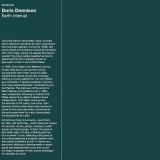
The discovery of Doris Dennison's score represents a genuine musicological breakthrough—what once would have been "a tree falling in the woods" thirty years ago now holds the potential to render "a thunderous clap in our minds." While researching Anna Halprin's lesser-known collaborators, scholar Tom Welsh uncovered the archives of AA Leath, one of Halprin's principal dancers. Buried within these materials was Dennison's handwritten score for Earth Interval, dated May 1956. Born in Saskatchewan, Canada, in 1908, and raised near Seattle, Dennison (1908-2009) encountered John Cage while teaching Dalcroze eurythmics at the Cornish College of the Arts. She joined Cage's earliest percussion quartet—alongside Margaret Jansen, the composer and his wife Xenia—in the group widely regarded as having performed the first complete concert of percussion music in the United States. This historic December 1938 concert was followed by tours and the landmark May 1941 performance at the California Club, comprising Cage and Lou Harrison's Double Music, the premiere of Cage's Third Construction, and Harrison's 13th Simfony.
As Bradford Bailey observes in his extensive liner notes, Earth Interval demonstrates "an extraordinary balance of elements that imbues the piece with a sense of clarity, directness, and constraint that is both distinct and ahead of its time." The work's most remarkable innovation lies in its approach to extended techniques, particularly Dennison's notation for the central movement: "In 2nd movement, 1st player lowers + raises a gong into a tub of water while beating." This technique, absorbed from Cage's experimental vocabulary, generates what Bailey describes as "fields of acoustic abstraction that bend and warp time through sustained resonances, beat, and space." The temporal sophistication of these manipulations anticipated Karlheinz Stockhausen's Mikrophonie I (1964) and Annea Lockwood's water-based sound investigations by over a decade. After joining Mills College as dance accompanist, Dennison maintained crucial connections to the Bay Area's experimental scene, collaborating with figures like Merce Cunningham and programming Cage's music throughout the 1950s.
Comprising three movements—Land Form, Air Tide, and Earth Play—Earth Interval is scored for recorder, drums, gongs, maracas, muted gongs, and bowl gongs. In total, the piece is just under eight minutes: "a fleeting glimmer of moment in time, a life spent at the cutting edge, and a singular creative vision that packs a powerful punch." When viewed in historical context, placed in contrast to roughly contemporaneous avant-garde percussion works by Cage, Harrison, Louis Thomas Hardin (Moondog), and Harry Partch, or important precursors like Edgard Varèse's Ionisation (1931) and Henry Cowell's Ostinato Pianissimo (1934), it's clear that Dennison was following her own path. Earth Interval is not derivative. It is a precursor to what was yet to come, alluding to developments of avant-garde and experimental music that wouldn't begin to appear on the cultural landscape until the 1970s and '80s, with the emergence of Post-Minimalism and more idiosyncratic artists and ensembles like Midori Takada, Ros Bandt, Peter Giger, Frank Perry, Christopher Tree, Michael Ranta, Gamelan Son of Lion, and Niagara.
This recording by Chicago's Third Coast Percussion, captured in March 2022, represents the first complete documentation of this pioneering work. The ensemble's interpretation reveals the piece's remarkable contemporaneity while maintaining its historical specificity. Where Cage, Harrison, and Partch employed "self-consciously off-kilter polyrhythms," Dennison's rhythmic sensibility anticipates minimalist developments by nearly a decade, yet integrates "forceful rests, as well as sharp shifts in sonic character, tempo, and meter, that break the momentum and breathe a sense of life into the piece's structure." This positions her work closer to Post-Minimalism decades before its emergence. The architectural approach demonstrates Dennison's understanding that "the composer almost entirely disappears" in favor of phenomenological listening experience, creating what might be called an egoless music that places its realities and meaning entirely in the ear of the beholder. The present recording, realized by Chicago's distinguished Third Coast Percussion ensemble, represents a significant achievement in experimental music scholarship and performance practice. As specialists in the Cage tradition and contemporary percussion repertoire, Third Coast Percussion approached Earth Interval with the historical sensitivity and technical precision required to illuminate Dennison's subtle compositional innovations. The March 2022 recording sessions, engineered by Colin Campbell, capture both the work's intimate chamber music qualities and its bold exploration of extended techniques. The ensemble's interpretation reveals the piece's remarkable contemporaneity—its ability to speak directly to current musical concerns while maintaining its historical specificity.
This recording serves multiple scholarly functions: it provides the first complete documentation of Dennison's compositional voice, offers insight into the broader network of experimental music practitioners surrounding Cage and Harrison, and demonstrates the sophisticated level of compositional thinking that was occurring within the Bay Area's dance-music collaborations of the 1950s. The work's emphasis on phenomenological listening—what might be called an "egoless" approach to musical experience—places it within a lineage of American experimental music that prioritizes perceptual process over compositional personality. The work's original obscurity—limited to AA Leath's performances at venues like the 1957 Pacific Coast Arts Festival at Reed College—paradoxically allowed it to remain "entirely on its own terms," free from the constraints of historical categorization. Drawing on Jacques Derrida's Archive Fever, the argument emerges that "the archive can acknowledge, celebrate, and resurrect" overlooked voices, transforming our understanding of experimental music history. The present Blume edition, featuring Third Coast Percussion's authoritative interpretation, includes a lavishly illustrated 16-page booklet designed by Bruno Stucchi / dinamomilano, containing complete scholarly apparatus, historical photographs, and detailed production notes. This recording enables "cross-temporal intersectionality," allowing Dennison to "belong to a newly formed and more dynamic understanding of the present and past," demonstrating how forgotten voices can reshape entire historical narratives when given proper scholarly attention and performance advocacy.
- Too Much Sake
- Sayanora Blues
- The Tokyo Blues
- Cherry Blossom
- Ah! So
Horace Silver’s 1962 tour of Japan had a deep impact on the pianist who dedicated his album The Tokyo Blues to his Japanese fans. With his quintet of Blue Mitchell, Junior Cook, Gene Taylor, and John Harris Jr., Silver combined a “Japanese feeling in the melodies with the Latin feeling in the rhythms.” This stereo Tone Poet Vinyl Edition was produced by Joe Harley, mastered by Kevin Gray from the original analog master tapes, pressed on 180g vinyl at RTI, and packaged in a deluxe gatefold tip-on jacket.
- It Happened To Me Again
- Because You're Mine
MAROON VINYL[14,08 €]
Auf dem Weg zur 100. Eccentric Soul 45 widmet sich die Numero Group ihren Wurzeln in Ohio mit drei Replika 45s aus dem Capsoul-Universum. Ron Harringtons "Because You're Mine"-Demo war unter den Capsoul-Bändern, das für den Gründer Bill Moss aufgenommen wurde und nie veröffentlicht worden ist. Die Mid-Tempo-Harmonie-Nummer "It Happened To Me Again" ziert die A-Seite mit einem Lo-Fi-Funk-Backbeat. Eccentric Soul from the heart of it all.
- A1: You Can’t Blame Me
- B1: You’re All I Need To Make It
Grass Green[14,08 €]
For our 100th Eccentric Soul 45, Numero returns to our Ohio roots with three replica 45s from the Capsoul universe. Marion Black’s timeless two-sider “Who Knows” b/w “Go On Fool” made a few blipsupon its 1970 release, but has taken on a life of its own soundtracking prestige TV and car commercials around the globe and finally going gold after 65 years. We discovered Ron Harrington’s “Because You’re Mine” demo amongst the Capsoul tapes, a demo cut for founder Bill Moss that never escaped greater Columbus. The mid-tempo harmony joint “It Happened To Me Again” adorns the flip, with a lo-fi funk backbeat tossed in for good measure. Capsoul’s crown jewel group harmony quartet Johnson, Hawkins, Tatum & Durr cut just two records in their short time together, but the quartet’s “You Can’t Blame Me” has endured as a classic example of the raw and unhinged soul sound that Numero is known for. Eccentric Soul from the heart of it all.
- Prologue
- Bubba
- The King
- Let's Go, Man
- The King's Highway
- A-C-T-I-O-N
- Bubba's Lament
- The Ancient Curse
- Ghost Of The Scarab
- Trailer Park
- One Bad Ho-Tep
- The Mask Of Kemosabe
- The Shady Rest
- Pbbs
- Baby
- The Hero's Hallway
- Elder Hole
- Flashback Baby
- Body Bag Of Fun
- Regret
- The Mummy's Eye
- Smokin' Nurse
- The Decision
- Death Of A President
- The Sebastian Haff Show
- Trailer Park
- Investigation
- Thank You Very Much
- All Is Well
- Bubba Ho-Tep End Title Themes
Waxwork Records is thrilled to release BUBBA HO-TEP Original Motion Picture Music by Brian Tyler for the first time on vinyl! Bubba Ho-Tep is a 2002 American Comedy Horror film written, co-produced, and directed by Don Coscarelli (Phantasm). It stars Bruce Campbell (Evil Dead 1 & 2, Army of Darkness) as Sebastian Haff, a man residing in a nursing home who claims to be the real Elvis Presley.
The film also stars Ossie Davis as Jack, a black man who claims to be John F. Kennedy. While the novella of the same name by Joe R. Lansdale and the film revolve around an ancient Egyptian mummy terrorizing a retirement home, Bubba Ho-Tep also deals with the deeper theme of aging, identity, mortality, and existentialism. The film also features a cameo by Reggie Bannister from Coscarelli's Phantasm series. Waxwork Records is proud to release the debut vinyl album of the outstanding soundtrack by Brian Tyler (Scream VI, Six String Samurai, Ready or Not) as a deluxe album featuring Egyptian Sand & Silver swirl colored vinyl, heavyweight gatefold packaging, new artwork by JJ Harrison, and an 11"x11" art print insert. BUBBA HO-TEP Original Motion Picture Soundtrack Features:
After 30 years of playing music professionally, Willie Watson is releasing his debut album. A founding member of Old Crow Medicine Show, and a staple on the folk and americana circuit - Willie is no stranger to the stage and to audiences. But this is his first album of original music, aptly self titled, and a bold and confident statement in both song mastery and sonics. This record is about beating the devil. Willie didn't make any specific pact with him, but he had been tangled up with him his whole life. This album is about finding himself free of that devil, and learning to love himself again. It is about no longer leaning on old sounds and old folk singers and the music they made, and instead about learning to express himself freely and without limits. The result is a masterpiece. Co Produced with Gabe Witcher (Punch Brothers) and Kenneth Pattingale (Milk Carton Kids), and co written with Morgan Nagler (Phoebe Bridgers, Haim, Gillian Welch and Dave Rawlings)
- 1: Ride Your Pony
- 2: What A Sad Feeling
- 3: Bad Luck
- 4: I'm Gonna Git Ya
- 5: Show It
- 6: Can't Last Much Longer
- 7: I Don't Wanna Hear It
- 8: Sometime
- 9: Mean Man
- 10: Lonely Hearts
- 11: Hook Line 'N' Sinker
- 12: What'd I Do Wrong
- 13: Trouble With My Lover
- 14: Nearer To You
- 15: I'm Evil Tonight
- 16: 12 Red Roses
Betty Harris (born 1939, in Orlando, Florida) is an American Soul Singer with a reputation that far exceeds her commercial success of the 1960s. Her recordings for the Sansu record label are highly sought after by fans of both Northern and Deep Soul.
In 1964, Betty Harris switched record labels from Jubilee to Sansu, a New Orleans label, where she was introduced to and produced by the legendary New Orleans producer Allen Toussaint. Her recordings with Sansu produced 20 singles. Of those, only "Nearer to You" charted (Billboard Hot 100 # 85), an atmospheric, dramatic soul ballad, now considered one of the milestones of deep soul. However, practically all of her recordings for Sansu featuring Allen Toussaint's raw yet sophisticated Southern Soul arrangements are considered prime specimens of the classic soul era. Notable recordings include "I'm Evil Tonight"; “Show It”; "I Don't Want To Hear It" and "Twelve Red Roses", favored among Northern Soul fans, plus "Can't Last Much Longer" and "What'd I Do Wrong".
In 1969 her Sansu recordings were compiled into a U.K. album—Soul Perfection—now highly prized around the world and reissued here in its original form for the first time.
Über Jahrzehnte hinweg erwarb sich George Harrison den Ruf eines der rätselhaftesten und kreativsten
Rock’n’Roll-Menschen. Wie bei jedem ehemaligen Beatle wurde Georges Loslösung von der Band durch
die anhaltende und manchmal obsessive Liebe der Welt zu den Beatles als eigenständiger Einheit gebremst.
Doch wie die Veröffentlichung seines epischen Albums „All Things Must Pass“ im Jahr 1970 zeigte, war
er ein Mann mit einer ganz eigenen Geschichte. Songs wie „My Sweet Lord“ und „What Is Life“ fanden
Eingang in eine umfangreiche Sammlung, die bis heute zu den großen Werken der Album-Ära zählt. Heute
erinnert man sich an George als jemanden, der seinen Leidenschaften bis zu bemerkenswerten Schlussfolgerungen folgte, als einen Mann der Widersprüche, dessen ungewöhnliche Balance aus spiritueller Hingabe,
trockenem Humor und echtem Mitgefühl das Leben vieler Menschen berührte.
Blue Night is the expanded edition of Art Blakey and The Jazz Messengers recording released in 1985. Art Blakey led the Jazz Messengers
for 35 years, mentoring countless musicians and encouraging their growth into influential bandleaders. By 1984-85, his band included five
prodigious talents: Terence Blanchard (trumpet), Donald Harrison (alto/soprano sax), Jean Toussaint (tenor sax), Lonnie Plaxico (bass), and Mulgrew Miller (piano). Despite being 65, Blakey remained as vibrant as his young bandmates, inspiring and pushing them to develop their distinct musical voices. Blue Night showcases the Art Blakey and The Jazz Messengers hard bop excellence, featuring originals by Blanchard, Harrison, Toussaint alongside the classic “Body An Soul”. The 2LP expanded edition of Blue Night features alternate takes of “Two Of Kind”, “Blue
Minor” and “Mr. Combinated”, includes liner notes by Scott Yanow and is available on vinyl for the first time.