Performed by some of the most seasoned veterans, including the newest edition to the group, Cuban lyricist, singer and composer Kiko Ruiz – who has toured and recorded with Pancho Amatʼs illustrious Estrellas del Buena Vista Social Club as well as having a long standing history as a singer, composer and arranger with Orquesta Maria Alejandra y Cubanía on the Cuban and Latin jazz scenes – Orquesta Akokán brings a classic rawness to these arrangements that is sure to set off dance floors across the globe.
quête:havin
"Everybody Funk is the first album from Japigia Records, which launches into 2024 with great ardor. This is the first splendid house music album by Pasquale Fanelli, an industrialist from Bari with boundless passion for music and for the show in general, whose greatest merit is of having created a working group full of ideas and talent: the IAPIGI team. The DJ-arranger Paky Fanelli - so called by his friends - with the help of the multifaceted artist-DJ Fabio Ricciuti has dug extensively into the hinterland of the Puglia region in search of his own roots to find the right synergies and give meaning and value to the context, to the habits, to the organization of a city generous in history and culture like Bari, which crossed the ocean via the Adriatic Sea and the Mediterranean. Thanks to IAPIGI we have therefore arrived in New York where Danilo Braca captures Paky's work and shapes it with excellent Italian taste, which is exactly that of a DJ resident for several decades in the Big Apple where he generates surprising and always current sounds. Although radically different, "Daytona" and "Everybody Funk" represent some of the most exciting Italian house songs of this season. In addition to the skilful remix of these two songs, it is worth mentioning "The Edge", whose main melody develops slowly. Once again Danilo Braca has raised the bar and changed the rules of the game. Good boy! The experts Qubiko & Fabio Ricciuti bring a worthy close to this first work by Paky Fanelli with a short piece, originally entitled "Disaccord" and then merged into "Accord", with the aim of putting everyone on the same wavelength. on the same level or musical chord. Comes with an amazing embossed cover too."
Houston, TX Legend & Rap Icon Sauce Walka, unleashes his first full length offering of 2024, Saucefather 2. The album is the follow up to his widely celebrated mixtape, The Saucefather, originally released in 2017. With features from Lil Yachty, BossMan Dlow, Wizz Havinn, Peezy, YTB Fatt & more, Sauce has earned his respect in the rap game, consistently proving "he's a force to be reckoned with lyrically" said HotNewHipHop. With cosigns from heavy hitting rap luminaries such as Jay-Z, Drake, J. Cole, Bun B, Conway the Machine and more, it’s clear Sauce Walka’s trajectory is only headed upward. Filled with odes to DJ Screw, Saucefather 2 pays homage to the unique and innovative Houston Chopped & Screwed Hip-Hop culture.
A limited vinyl pressing of the sixth album from the classic L.A. punk ska band! On purple blast vinyl!
Right from the start when you hear Feldmann’s voice sing "Everyday is just the same" before the guitars, bass, and drums kick in on opening track "One More Time," you instantly know that Goldfinger are back as good as ever. The elements of desire, passion, and punk in those 5 words instantly tell you that Hello Destiny is going to be different to Disconnection Notice. The songs on the album go from strength to strength. From the slightly heavier song of "Handjobs For Jesus," to the upbeat Ska of "Get Up," to the sweet heartfelt acoustics of the bonus track "Julian," this is an album that will be up there with the best of the Goldfinger records. Like having sex for the first time, it will be remembered.
The music of Brigitte Calls Me Baby is equal parts elegant time warp and up-close exploration of our modern-day neuroses. The Chicago-based five-piece emerged in early 2023 and soon scored a breakout hit with “Impressively Average”—a sublimely shimmering anthem, setting the band on a swift rise that’s recently included embarking on a headline tour with sold-out dates across the US. Having opened for The Strokes, Last Dinner Party and Muse, the band has been featured in the Sunday Times “Breaking Act” and NME’s Radar Spotlight series. Now, with their debut LP The Future Is Our Way Out, Brigitte Calls Me Baby share a body of work that ingeniously spans genres and eras, merging the lavish romanticism of mid-century pop with the frenetic energy and spiky intensity of early-millennium indie-rock. Centered on lead singer Wes Leavins’ hypnotically crooning vocal work, the result is a rare convergence of sophistication and style and unabashed sincerity.
Repress!
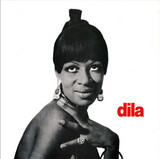
Far Out Recordings proudly presents the first and only album from the mysterious Brazilian vocal sensation Dila (pronounced “Jee-la”). Having reportedly died in a car crash shortly after the album’s release in 1971, there is very little known about the woman behind the voice. But the joyous music Dila left behind, gives us a picture as good as any, of a powerful feminine soul at the top of her game.
The liner notes on the elusive original LP, written by composer Arnoldo Medeiros attest: “Friend, look out! Because when this girl starts to sing, you’re in trouble. Hold the railing so you don’t fall down the stairs, because she’s coming this way and shaking up everything.”
Arranged and produced by Durval Ferreira, alongside his studio band affectionately known as “Os Grillos” (The Crickets), Dila (1971) is a rare glimpse into the authentic soulful Samba sound of Rio’s favelas in the late sixties and early seventies.
A blast of funky, percussive Brazilian breaks, scorching hot brass and swing-laden piano, the music is as iconic as the album’s stark cover, as is clear on opener ‘Inez’, composed by The Crickets’ bassist Romildo. There’s a fantastic interpretation of the Ivan Lins classic ‘Madalena’ (made famous by Elis Regina), a moving version of the Tom Jobim and Vinicius De Moraes classic ‘O Morro Não Tem Vez’, and a number of sunny original compositions by Arnold Madeiros, who’s other writing credits include music for Marcos Valle, Wanderlea, Evinha and Dom Salvador.
With original LPs extremely hard to come by, this rare treasure of Brazilian soul, which fans of Gal Costa, Celia, Evinha and Elis Regina will love, gets a much-deserved official reissue: remastered and pressed to 180g vinyl.
This album was a self imposed ambitious project for us. Something to kick in the creative flow. The last few years, having been a challenging time in general, felt like a good time for a pivot. The last two albums were so guitar and keyboard centric, I wanted a weird and fun set of parameters for us to work with. I demo’d everything at home on cassette 4 track (harkening back to simpler times) using drum loops, and just had at it 'til I had a pile of “songs”. Tom and I chose one sound each using synths and created a range of 3 octaves of that sample, then loaded them into Roland SPD-SX samplers and learned the transcribed songs using drum sticks. The idea was to change the way we wrote and to have 4 people along the front of the stage essentially playing percussion. So no guitar, no keys. As we were recording I kept thinking how the sounds, when paired up, sounded a bit like brass. So, we added a saxophone horn section to round out the horniness of the sound with a bit of reedy bell tones. Thanks to Cansfis Foote & Brad Caulkins on tenor and Baritone saxophones :) Sort of a Dexy’s Midnight Runners meets Von LMO meets The Flesh Eaters meets the Screamers kinda punk junk. Poppy and hooky, heavy at times.. Sort of vacuous and maybe a bit sci-fi in sound. Boneheaded in riff and heady in lyrics. Recorded at Stu-Stu-Studio by me on 8 track 1/4” tape . So pretty hot and raw. Lots to write about today. A lot of these lyrics were taken from things people said in passing about taking on life right now that stuck with me. Things that made me reflect. Things that made me laugh. Things that made me WTF. Some folks are kind, genuine & give you love and energy. Some are greedy manipulative ghouls who hang off your veins. You must be strong, composed and take care of yourself. Be self aware and check your mind for cracks. Learn to relax and be well. There are moments of beauty and redemption. Its not all bad news and there’s always hope. People continue to surprise me one way or another. Anyhow, Hope you enjoy and good luck out there. — John Dwyer
"We had a conversation recently where we realized that we’ve been a band for almost 10 years. When we started Wild Rivers way back when, we had never played a real concert before. When we made our first record it was our first time stepping into a real studio. We barely even knew each other when we started this band. Since then we’ve played a thousand shows, recorded over 30 songs, and become a family.
When we set out to record ‘Never Better’, we felt like we were at a new stage of the band. By that point, we’d put in the hours and all began to feel totally self assured in what we were about to do. We wanted to bring everything we’ve learned over the years and all that we’ve been through as a group to the project. We chose to trust our guts and move quickly and confidently in every decision, second guessing ourselves as little as possible. In having this mindset, we were able to completely let loose and go deeper into the process, finding new ways of recording live, swapping instruments, and turning these songs on their heads. We couldn’t have made this record a few years ago.
We approached this record with the mindset, ‘this is who we are’. We aren’t pretending to be something we’re not, or trying to sound like anyone else. We wanted it to feel easy. We wanted the stories to be real. We wanted to show our true selves as best we could. We’re proud of who we’ve become as people and as a team. We truly feel like we’re having the most fun with music that we’ve ever had, and in the most exciting stage of our lives. We’re never better."
Seit fast zwei Jahrzehnten streben American Aquarium nach der raren Form von Rock'n'Roll, die in jeder Hinsicht eine Offenbarung ist. "Für uns ist der
Punkt erreicht, an dem du eine Rockband hast, die dich dazu bringt, jedes Wort mitzuschreien, und erst, wenn du nachts um drei Uhr zu Bett gehst,
merkst du, dass diese Worte etwas Wahres über dein Leben aussagen", sagt Frontmann BJ Barham.
Auf ihrem neuen Album The Fear of Standing Still verkörpert die aus North Carolina stammende Band diese Dynamik mit größerer Intensität als je
zuvor, indem sie ihre düstere Art von Country-Rock mit Barhams bisher mutigstem und prägnantestem Songwriting verbindet.
The Fear of Standing Still ist die zweite Zusammenarbeit von American Aquarium mit dem Produzenten Shooter Jennings - einem dreifachen
Grammy-Gewinner, der auch für die Produktion des Albums Lamentations aus dem Jahr 2020 sowie für Alben von Brandi Carlile und Tanya Tucker
verantwortlich war.
- 01: Coined - Your House
- 02: Untitled (Halo) - Pedal Petal
- 03: Ety - This Town
- 04: Nourished By Time - I Guess I Got My Answer
- 05: Ms Ray - Signs
- 06: Pelin Pelin - Foamy
- 07: Olan Monk - Surf
- 08: Tony Bontana & Will Lister - A Long While
- 09: Adela Mede, Isa Otoya & María Catalina Jiménez - Pardo Plumetí
- 10: Max Winter - Don’t Live Inside
- 11: Canty - Alligator
- 12: Mark William Lewis - Lighter
- 13: Mary Jane Dunphe - Uriel
- 14: E-Prime - Somebody Else
- 15: Zoee Ft. Nourished By Time - Moth To A Flame
- 16: Nova Variable - Fountaine
- 17: Ma.moyo - Cave
- 18: Nukuluk - Shadowplay
- 19: Sy3 - Electric Puppy
- 20: Pig$ Ft. Paige Savahn - Last Call
‘Road Less Travelled vol.2’ once again brings together the imprints far-reaching community of artists spanning London, Los Angeles, Montreal, Budapest, Copenhagen, Barcelona & beyond. The compilation floats between shoegaze, moody electronics, and shimmering synths; featuring new and original music from the likes of Nourished By Time, Mark William Lewis, and Untitled (Halo). Road Less Travelled Vol.2 sees the label continue to amplify the voices of these singular artists who continue to sculpt their respective sounds. It’s a follow-up to 2022’s ‘Road Less Travelled vol.1’ which was celebrated by Resident Advisor, CRACK, The Wire, Dazed, Clash, NTS, Tom Ravenscroft, and Jamz Supernova.
Scenic Route continues to reaffirm its position as some of London’s premier tastemakers; building a grassroots following via their sell-out live shows featuring the likes of Chanel Beads, James Messiah, Mark William Lewis, Delilah Holiday, and more. Paired with ground-breaking releases including Nourished by Time’s debut album ‘Erotic Probiotic 2’ garnering the coveted Pitchfork’s 'Best New Music' and was widely regarded as one of the ‘Best Albums of 2023’ with features on Gorilla vs Bear (#1), Pitchfork (#5), The Guardian, The Fader, Paste and more. Most recently releasing Vanessa Bedoret’s (Astrid Sonne band mate) debut album ‘Eyes’ in the words of Boomkat ‘a timeless bouquet of raptures and ballads iced with shearing strings and shatterproof electronics’ having additional support from Vinyl Factory, Resident Advisor, Bleep, Nina, The Fader and more.
- A1: Psycho Killer
- A2: Heaven
- A3: Thank You For Sending Me An Angel
- A4: Found A Job
- A5: Slippery People
- A6: Cities
- B1: Burning Down The House
- B2: Life During Wartime
- B3: Making Flippy Floppy
- B4: Swamp
- C1: What A Day That Was
- C2: This Must Be The Place (Naive Melody) (Naive Melody)
- C3: Once In A Lifetime
- C4: Big Business/I Zimbra
- D1: Genius Of Love
- D2: Girlfriend Is Better
- D3: Take Me To The River
- D4: Crosseyed & Painless
LOS ANGELES—To celebrate the 40th anniversary of the celebrated Talking Heads and Jonathan Demme’s concert film Stop Making Sense, the set will be re-released as a 2LP and 2CD/Blu-ray set this summer.
Released last year, the sold-out Deluxe Edition of the soundtrack will return as a 2-LP black vinyl on Rhino and 2-LP crystal clear vinyl at retail. Both variants feature a 12-page booklet with liner notes from all four band members –Tina Weymouth, David Byrne, Chris Frantz, and Jerry Harrison—and band photos. The 2CD/Blu-ray version includes the entire 28-page booklet from last year’s Deluxe Edition and a Dolby Atmos mix of the complete concert, mixed by Jerry Harrison and E.T. Thorngren, who also mixed the original release. Both will be available on July 26. Pre-order now.
The band appeared together for a sold-out screening and Q&A last night at the Pantages Theater, the same theater at which Stop Making Sense was recorded. They were joined by Blondshell, who performed “Thank You For Sending Me an Angel.” Another special screening with the band will occur in Brooklyn at the King’s Theater on June 13, with the Q&A hosted by Questlove and The Linda Linda’s performing “Found a Job.” The two events cap off a banner year of celebrations for what many consider to be the best concert film of all time.
The inspiration for Stop Making Sense came when director Jonathan Demme saw Talking Heads perform during the band’s 1983 tour for Speaking in Tongues. Afterward, he approached them with the idea of making the show into a concert film. They agreed and worked together over the next few months to finalize the details. Ultimately, Demme filmed three shows at Hollywood’s Pantages Theater in December 1983 to create Stop Making Sense.
The concert film presents a retrospective of the band up to that point, with a performance that weaves together songs from all six of its studio albums. The show progresses methodically, opening with Byrne onstage performing “Psycho Killer” alone with a drum machine. After each song, he’s joined by a new band member until Weymouth, Frantz, and Harrison are all on stage with him. The group continues to grow throughout the concert as members of the stellar touring band are added: keyboardist Bernie Worrell, percussionist Steve Scales, guitarist Alex Weir, and backup singers Lynn Mabry and Ednah Holt.
The band performs 18 songs in Stop Making Sense, including its recent single at the time, “Burning Down The House.” That summer, the song was in heavy rotation on radio and MTV, helping the song become the band’s first top 10 hit in America. It was, however, a different song from Speaking in Tongues that was destined to deliver one of the film’s signature moments. Talking Heads would perform “Girlfriend Is Better” wearing the now iconic, oversized suit inspired by costumes worn in traditional Japanese theater. For good measure, a picture of David Byrne in the suit also graces the album cover.
Stop Making Sense focuses mainly on music by Talking Heads but does include a few songs recorded outside the band: “Genius Of Love” by Tom Tom Club, “What A Day That Was” and “Big Business” from Byrne’s 1981 album, The Catherine Wheel. Limited edition vinyl versions of both of these albums, along with Harrison’s The Red And The Black, were released for this year’s Record Store Day.
When it arrived in September 1984, Stop Making Sense was an artistic and commercial triumph. The film had people dancing in theatre aisles, and the soundtrack sold over two million copies. Just last year, the Library of Congress added Stop Making Sense to the National Film Registry in recognition of its cultural, historical, and aesthetic significance.
Weymouth praises Demme as a collaborator: “…Jonathan was a very enthusiastic, highly adaptive, and imaginative guy who was just as good a listener as he was a talker and collaborator. From the get-go you just got the impression he was as flexible as he was disciplined. Being team players, that boded well for a great relationship and a great film!”
Harrison says the film still holds up today: “To me, Stop Making Sense has remained relevant because the staging and lighting techniques could have been created in a much earlier time period. For example, Vari-Lights, lights with motors to re-aim them, had just come into vogue. Had we used them, there would have been a timestamp on the film, and it eventually would have felt dated...The absence of interviews, combined with the elegant and timeless lighting, created a film that can be watched over and over.”
Byrne says it’s interesting that this album was – for many people – an introduction to Talking Heads. “We had done a live album before this, but coupled with the film, and with the improved mixes and sound quality, this record reached a whole new audience. As often happens, the songs got an added energy when we performed them live and were inspired by having an audience. In many ways, these versions are more exciting than the studio recordings, so maybe that’s why a lot of folks discovered us via this record.”
Frantz recalls the sheer joy surrounding the entire Stop Making Sense experience. “I’m talking about real, conscious, transcendent joy… I’m talking about what the Southern gospel people call ‘getting happy,’ which means ‘to be filled with the Spirit.’ That is what happened to us onstage every night, and from my seat behind the drums, I recognized that this was happening to the audience too. Joy was visible in front of me and all around me every night.”
Limited edition 300 only cyan coloured vinyl LP, housed in a reverse board sleeve with hype sticker, polylined inner bag and download code. Non-Returnable.
Stars align and Oli Heffernan brings his ever-(d)evolving Ivan The Tolerable to Riot Season for two LPs of sublime entropic drift.
Having this time recruited Christian Alderson (The Unit Ama) on drums, John Pope (Ponyland) on double bass, Kevin Nickles (Ecstatic Vision) on flute and saxophone and Ben Hopkinson on electric piano - both works were recorded as a quintet almost instantaneously, the players barely brushing or breathing a note before the whole thing was done.
‘Vertigo’, is all claustrophobic, dense and disorientating - like Sun Ra sitting in with Exploding Star Orchestra
John Hubner (Complex Distractions) on ‘Vertigo’
“An expansive collection of free-flowing sound and mood bringing to mind Coltrane (John and Alice) as well as the great Albert Ayler, while touching on the forward thinking compositions of Rob Mazurek's Exploding Star Orchestra.
From the titanic soundscape of "New Worlds On Earth" to the Marc Moulin touches of "Liquid Voices" and the mysterious eccentricities of "Swimming", 'Vertigo' hangs in the air long after the final note plays.”
'You've Changed' was a transcontinental creation that was first released in 1986 on the Sally B label. It melds Jamaican roots with Canadian electronic enhancements at the legendary Channel One Recording Studio. Jamaican reggae don Horace Martin drew inspiration from greats like Dennis Brown, and Horace Andy, and comedy legends like Richard Pryor and Charlie Chaplin and has an eclectic career spans albums like Watermelon Man from 1985 and this one, the avant-garde gem that arrives now on Arabusta. It's a busy and digitally infused reggae sound with elements of dance hall and plenty of catchy rhythms which all lead to international success, performances across 24 countries and having more than 400 songs aired on 9000 radio stations around the world.
Spray’s Punctuality arrives sharp for its second instalment, rolling out the velvet carpet to welcome LA’s royal rave highness Etari. Kweenie is her inauguration, a no-nonsense exhibition of prog tonkers and tech pumpers accompanied by a wild remix from Angel D’Lite.
Deep in the heart of the angel’s city resides Etari, the west coast icon of boundless rave energy. Having graced the kingdoms of 100% Silk and Delusional Records previously with a wily array of hardcore dance styles, Spray’s Punctuality is the next stop. Etari duly obliges his invitation with Kweenie, a new iteration of her sound that develops her twisted club fantasies beyond the clouds, or at least as far as the lasers will carry.
Clocking in and the title track throws down from the off, shaking its royal rump that’s fit for a Kweenie before bumping its soaring bassline along its naughty groove. Angel D’Lite heeds the remix call, kickin’ it rage style with a breakbeat pumper that harkens to jungle tekno past while straddling future prog pastures. Lulu Limon gets freakier on side B, as Etari zests its anaesthetised groove with clicks and pops while gliding down its minimalised wormhole of latent psychedelia. Racehorse is last out the gate, initiating a heads-down stomper of tech(no) consequence that gallops cute but serious with club tenacity along its majestic travels, and thus concluding Punctuality’s latest transmission.
forgive too slow, Avant Garde artist julia-sophie’s deeply personal debut album is testament to her ability to transform adversity into raw beauty, combining her traditional songwriting roots with her own take on experimental electronica. It features her intimate voice backed by warm and precise electronic sounds whose free spirited explorations give body to the carefully written personal songs julia-sophie comes off the drama of her 2010s rock band, Little Fish, which was signed to a major label. The surreal experiences (like being flown to Las Vegas in helicopters with a bag of slot machine money or given limousines for the day to go shopping), along with having to work in environments where she felt unsafe, drove her decision to leave the fame game. She turned down the offer to emigrate to America and engage with the machinations of the system as it did not feel “true or congruent with who I was”. Instead, she focused her attention on her hometown (Oxford, UK). She started recording lo-fi pop in her garage, using an old laptop, wonky microphones and hitting whatever was around for beats. Candy Says grew to be more of a collective than a band, and eventually co-wrote a film score for indie film Burn Burn Burn and recorded a cover of Running Up That Hill for the Netflix film Close (starring Noomi Rapace). Julia-Sophie soon started recording songs with her friend B, who had a studio stacked from wall-to-wall with analogue recording gear, vintage synths and drum machines. She decided to self-release and the music reached audiences beyond her expectations, including support from BBC Radio 6 and a feature in The Quietus. forgive too slow is Julia-Sophie’s debut solo album, and concerns relationships and the struggles we go through when we “forgive too slow” and can’t break out of patterns from the past. The songs narrate her story of self-destruction (“numb”), love (“falling”), and loss (“telephone”). By the end, embers are still burning and there is no telling if Julia-Sophie has found peace, but we do get a sense that she has gotten closer to the core of her being and is finally living authentically.
- A1: Psycho Killer
- A2: Heaven
- A3: Thank You For Sending Me An Angel
- A4: Found A Job
- A5: Slippery People
- A6: Cities
- B1: Burning Down The House
- B2: Life During Wartime
- B3: Making Flippy Floppy
- B4: Swamp
- C1: What A Day That Was
- C2: This Must Be The Place (Naive Melody) (Naive Melody)
- C3: Once In A Lifetime
- C4: Big Business/I Zimbra
- D1: Genius Of Love
- D2: Girlfriend Is Better
- D3: Take Me To The River
- D4: Crosseyed & Painless
LOS ANGELES—To celebrate the 40th anniversary of the celebrated Talking Heads and Jonathan Demme’s concert film Stop Making Sense, the set will be re-released as a 2LP and 2CD/Blu-ray set this summer.
Released last year, the sold-out Deluxe Edition of the soundtrack will return as a 2-LP black vinyl on Rhino and 2-LP crystal clear vinyl at retail. Both variants feature a 12-page booklet with liner notes from all four band members –Tina Weymouth, David Byrne, Chris Frantz, and Jerry Harrison—and band photos. The 2CD/Blu-ray version includes the entire 28-page booklet from last year’s Deluxe Edition and a Dolby Atmos mix of the complete concert, mixed by Jerry Harrison and E.T. Thorngren, who also mixed the original release. Both will be available on July 26. Pre-order now.
The band appeared together for a sold-out screening and Q&A last night at the Pantages Theater, the same theater at which Stop Making Sense was recorded. They were joined by Blondshell, who performed “Thank You For Sending Me an Angel.” Another special screening with the band will occur in Brooklyn at the King’s Theater on June 13, with the Q&A hosted by Questlove and The Linda Linda’s performing “Found a Job.” The two events cap off a banner year of celebrations for what many consider to be the best concert film of all time.
The inspiration for Stop Making Sense came when director Jonathan Demme saw Talking Heads perform during the band’s 1983 tour for Speaking in Tongues. Afterward, he approached them with the idea of making the show into a concert film. They agreed and worked together over the next few months to finalize the details. Ultimately, Demme filmed three shows at Hollywood’s Pantages Theater in December 1983 to create Stop Making Sense.
The concert film presents a retrospective of the band up to that point, with a performance that weaves together songs from all six of its studio albums. The show progresses methodically, opening with Byrne onstage performing “Psycho Killer” alone with a drum machine. After each song, he’s joined by a new band member until Weymouth, Frantz, and Harrison are all on stage with him. The group continues to grow throughout the concert as members of the stellar touring band are added: keyboardist Bernie Worrell, percussionist Steve Scales, guitarist Alex Weir, and backup singers Lynn Mabry and Ednah Holt.
The band performs 18 songs in Stop Making Sense, including its recent single at the time, “Burning Down The House.” That summer, the song was in heavy rotation on radio and MTV, helping the song become the band’s first top 10 hit in America. It was, however, a different song from Speaking in Tongues that was destined to deliver one of the film’s signature moments. Talking Heads would perform “Girlfriend Is Better” wearing the now iconic, oversized suit inspired by costumes worn in traditional Japanese theater. For good measure, a picture of David Byrne in the suit also graces the album cover.
Stop Making Sense focuses mainly on music by Talking Heads but does include a few songs recorded outside the band: “Genius Of Love” by Tom Tom Club, “What A Day That Was” and “Big Business” from Byrne’s 1981 album, The Catherine Wheel. Limited edition vinyl versions of both of these albums, along with Harrison’s The Red And The Black, were released for this year’s Record Store Day.
When it arrived in September 1984, Stop Making Sense was an artistic and commercial triumph. The film had people dancing in theatre aisles, and the soundtrack sold over two million copies. Just last year, the Library of Congress added Stop Making Sense to the National Film Registry in recognition of its cultural, historical, and aesthetic significance.
Weymouth praises Demme as a collaborator: “…Jonathan was a very enthusiastic, highly adaptive, and imaginative guy who was just as good a listener as he was a talker and collaborator. From the get-go you just got the impression he was as flexible as he was disciplined. Being team players, that boded well for a great relationship and a great film!”
Harrison says the film still holds up today: “To me, Stop Making Sense has remained relevant because the staging and lighting techniques could have been created in a much earlier time period. For example, Vari-Lights, lights with motors to re-aim them, had just come into vogue. Had we used them, there would have been a timestamp on the film, and it eventually would have felt dated...The absence of interviews, combined with the elegant and timeless lighting, created a film that can be watched over and over.”
Byrne says it’s interesting that this album was – for many people – an introduction to Talking Heads. “We had done a live album before this, but coupled with the film, and with the improved mixes and sound quality, this record reached a whole new audience. As often happens, the songs got an added energy when we performed them live and were inspired by having an audience. In many ways, these versions are more exciting than the studio recordings, so maybe that’s why a lot of folks discovered us via this record.”
Frantz recalls the sheer joy surrounding the entire Stop Making Sense experience. “I’m talking about real, conscious, transcendent joy… I’m talking about what the Southern gospel people call ‘getting happy,’ which means ‘to be filled with the Spirit.’ That is what happened to us onstage every night, and from my seat behind the drums, I recognized that this was happening to the audience too. Joy was visible in front of me and all around me every night.”
Boxed set of five 7-inch vinyl records, 300 copies limited edition. Artwork poster included.
All tracks remastered from the original master tapes.
Alessandro Alessandroni is no longer remembered simply as 'the whistler' in Morricone's spaghetti western soundtracks – and rightly so, since he was the key figure behind much of Italian 'secret music' from the 60s and 70s, always there in the studio during recording sessions, whether as a multi-instrumentalist or as the leader of session vocal group I Cantori Moderni di Alessandroni. Today his pervasive presence and important role has been finally recognized by music professionals and enthusiasts alike, so much so that he is now considered the true father of Italian library music – a genre whose sound he shaped since 1968.
As a film composer, Alessandroni often worked for small productions that had very limited (and often regional-only) distribution, and whose budgets were worlds apart from those in the 'top league' where friends and colleagues like Morricone, Bacalov, Trovajoli or Piccioni thrived. Rarely released as a soundtrack, this music ended up, at best, forgotten inside dusty ¼-inch reels or, at worst, disappearing into thin air.
After a string of releases that have brought back to life forgotten or lost works by Alessandroni (Sangue di Sbirro, Afro Discoteca, Lost and Found, etc.), it was pretty natural for us at Four Flies to start delving into a little investigated area of his filmography: his scores for erotic films, the last genre to gain popularity in the flourishing Italian film industry of the 60s and 70s, and perhaps the most extreme too, the one that, by pushing things too far, eventually put an end to that industry and its genres.
So, we're now very proud to present Alessandroni Proibito, an exclusive boxed set of five 7-inch records. It contains a total of 14 previously unreleased tracks from the soundtracks of 4 soft-core erotic films that included hard-core sequences and, therefore, fell somewhere in-between normal commercial distribution and the underground scene of adult movie theatres.
Taking an artisanal approach to his musical craft, Alessandroni was not afraid of having to deal with spicy subject matter, wobbly productions, implausible plots, improvised actors, or cinematographers who were clearly no disciples of Storaro. And he was so good at making a virtue out of necessity, at turning budget constraints into creative advantages, that he created soundtracks that far surpass the films' quality, with music that at once captures and elevates the spirit of the erotic genre as if into a condensed symbol.
More specifically, the maestro recorded many of the pieces in a DIY fashion at home, using a 4-track Teac tape machine to arrange his compositions. The Teac allowed him to play different instruments on each track, which meant he could basically put an entire soundtrack together all by himself, or almost all by himself.
These recordings often feature drum machines – which provide that retro, early electronic music vibe – as well as funk guitars and exotic-sounding percussion in the rhythm tracks. In addition, there is an extensive, almost bewildering use of synthesizers to replace solo instruments that would have required a paid session player. On top this minimalist arrangement, Alessandroni layered what he could: some piano chords, a little flute and, most importantly, his signature 12-string guitar phrasing.
The result is just stunning: a unique mixture of electronic music and acoustic instruments, in a style that stops short of kitsch and ranges from cinematic ambient pieces like "Tensione erotica" to disco-funk tracks like "Snake Disco" and "One Sunday Morning", both of which feature vocals by Alessandroni himself.
Alessandroni Proibito comes with artwork by Eric Adrien Lee and a matching 30x70cm folded poster inspired to the insert-size posters which used to be hung outside movie theatres to attract cinema-goers.
The boxed set is being released in a limited edition of just 300 copies and will never be reissued. First come, first served.
Following the release of ‘Just Something’, her acclaimed comeback album at the end March, Dee C Lee is back with a brand-new single ‘Back In Time’, with a special 7” on Acid Jazz.
Having served as the album’s thrilling opening track, for this release there is a new radio mix, highlighting the slick, disco-tinged soul at its heart - a perfect soundtrack to the summer.
The 7” is backed with ‘Walk Away’, written with fellow Style Council member Mick Talbot, and already a firm fan favourite after its digital release preceding the album.
It is presented in a wonderful picture sleeve, with a new portrait of Dee by Will Parsons, with a classic Acid Jazz disc label. Limited to 500 copies - pre-order is recommended!
Following a ten-year hiatus, multi-instrumentalists Rafael Anton Irisarri and Benoît Pioulard return with »How to Color a Thousand Mistakes«, their third LP together as Orcas. Building on the electronic minimalism of »Orcas« (2012) and the Twin Peaks-inspired haze of »Yearling« (2014), the duo have expanded their sound and vision into a full-spectrum ensemble.
In the time since their last major collaboration, Irisarri and Pioulard have done plenty on their own, while also traversing significant life changes: relocation from Seattle to New York, separation and divorce, illness, hospitalizations, and the loss of siblings, parents, and friends. Yet from these tribulations, they gleaned inspiration to reconstruct their lives, creating music with new collaborators and partners. Recorded in a variety of studios and cities including Brooklyn, Cambridge, Oxford, Seattle, and upstate New York, the resulting album, under the tutelage of UK producer James Brown (Arctic Monkeys, Kevin Shields, Nine Inch Nails), is a patiently-crafted beast, equally inspired by impressionism, British new wave, and dream pop.
With Irisarri’s guidance and Brown’s encouragement, Pioulard brings his velvety voice to its harmonized peak on songs like »Wrong Way to Fall« and the Durutti Column-indebted »Fare«. Where his most recent solo albums for Morr Music (»Sylva« and »Eidetic«) navigated foggy forests of ambient pop and stacked tape loops, here his characteristic blur shifts into focus with a unique degree of clarity and confidence. »How fare against balance do I / Navigate my errors?«, Pioulard sings in a heartbreaking tenor, echoing the album’s broader themes of introspection, grief, loss, trial and trauma.
Lead single, »Riptide«, is a summary of Pioulard’s life changes and personal upheavals in the past decade, »flitting eastward toward a yen deep in the past« and learning to glide through the tumult of ocean waves, as a metaphor for the punches one takes in pursuit of grace. Its towering, key-changing midsection arrives with the monumental drumming of Slowdive’s Simon Scott, a long-time friend and cohort who appears on most songs in the set. Scott’s quintessentially English, jazzier approach offers a balance of force and restraint as the backdrop for Irisarri’s majestic guitars, analog synth lines, and Martin Heyne’s Fender Rhodes counterpoints.
Second single, »Next Life«, began as a sketch by Scott, and reached its final form in the hands of Pioulard and Irisarri, at a point that each had endured major concurrent losses, finding a commonality in the need to gaze over the horizon while acknowledging the unavoidable bittersweetness of letting go – not only of people, but of routines, places, and expectations. It’s one of Orcas’ most nuanced pieces, with a mid-tempo, sunset glow that unfolds into a sparkling, slide-guitar finale as it disappears in the rear view.
On third-act highlight, »Bruise«, Scott is doubled on the drum kit by MONO’s Dahm Majuri Cipolla, whose Liebezeit-influenced metronomy anchors a nimble bass groove from Andrew Tasselmyer (of Hotel Neon), and some of the album's most syncopated, spaced-out interplay, courtesy of Puerto Rican guitar player Orlando Méndez (a childhood friend of Irisarri’s). Originally a droney, fingerpicked guitar demo, »Bruise« is the most storied composition here, having gone through almost a dozen versions and lyrical edits, with Brown distilling hours of improvised performances into the final arrangement.
Throughout »How to Color a Thousand Mistakes«, Irisarri uses his deep well of production experience to paint the stereo field with meticulously designed textures, exemplified on the slow burn of »Heaven’s Despite« and the heady rush of »Swells«. As a mixing and mastering engineer with Black Knoll, he has built a client list that reads as a who’s-who of modern, forward-thinking composition, including Temporary Residence, All Saints Records, and Ghostly International, among many others.
As with previous collaborations, Irisarri and Pioulard bring disparate styles and specialties to the table, but with an interpersonal dynamic that transcends friendship into brotherhood, their open-minded workflow and mutual respect are evident at every turn. »How to Color a Thousand Mistakes« brims with tight, complex art rock songwriting, masterful production, and sonic versatility, informed by a plethora of genres and tonal hues. The title might promise answers, but the gravitational center of the album is the dawning realization that, as you reckon with the infinite whims of the cosmos, there could be none.
- The Coin-Op Guillotine
- Holy Smoke (2005)
- A Psychic Wound
- I. Spit; Or, A Bite Mark In The Shape Of The Sunflower State
- Long Throes
- Feast Of Tongues
- The Order Of The Seasons
- Ii. Music For Aerial Toll House
- To Hell In A Handjob
- Clown Blood/Orpheus’ Bobbing Head
- Kms
- Iii. Surfing A Contrail
- Moonstruck
- 0898: Heartache
- Adult Acne Stigmata
BLOOD MOON' COLOURED VINYL[28,78 €]
The UK’s first and only emo band Los Campesinos! return with their highly-anticipated seventh album, All Hell. It is perhaps their most ambitious and assured album yet, whilst simultaneously recalling everything we’ve come to love about LC! over their faultless discography. Recorded between October 2023 and February 2024, it is the first album to be wholly self-produced by band member Tom Bromley (having co-produced previous albums Sick Scenes and NO BLUES). The album is also self-released on the band’s own Heart Swells record label.
In the band’s words All Hell is an album about…
Drinking for fun and drinking for misery // adult acne // adult friendship // football // death and dying // love and sex // late-stage capitalism // Orpheus // day dreaming // night terrors // the heart as an organ and as a burden // suburban boredom // Tears of the Kingdom // the punks on the playlist // increments of time // climate apocalypse // the moon the moon the moon ///
Los Campesinos! have become one of the most important and influential cult acts in the UK since they formed in the mid-2000s. Starting out in the Cardiff indie scene and soundtracking Budweiser adverts, the seven-piece’s musical evolution since then has been slow, steady and remarkable. From the frenzied chaos of debut album Hold On Now, Youngster… (2008) through 2010 breakthrough Romance is Boring and the self-mythologising of latter day highlights NO BLUES (2013) and Sick Scenes (2017), their discography is an interconnected web of niche references, big swings and unflinching honesty.
Making self-professed sleeper hits for weeping dipshits, they’re as influenced by The Beautiful South as they are US emo, with emotional intensity and connection always at the core. Their lyrics are a treasure trove of football references, tales of romantic woe and painfully frank exorcisms, which have been tattooed across hundreds of fans’ bodies and served as comfort and insight during that break-up you had (there’s a reason the band’s tagline is “your ex-girlfriend’s favourite band”).
Now with the release of All Hell, Los Camp! approach their third decade as a band more brilliant, more potent and more vital than ever.