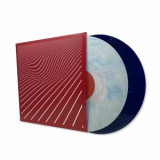
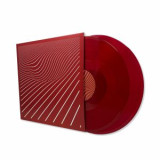
The Lower Lights is well known as one of the most emotionally potent ambient records of recent years. It is a collection of 10 tunes from a busy period in which 36 undertook a year-long 'Audio Diary' project. The sounds are immediate and direct, demanding of your full focus and a mix of dark and urgent, cyberpunk-inspired and emotionally charged ambient sounds that bring all new thinking to the genre. Nice work.
Поиск:helix
Все
Thanks to this lovingly presented reissue from Past Inside The Present, you can own The Lower Lights by 36 in just about whatever coloured vinyl you wish: This is the Past Inside The Present translucent red version with others also available on Juno. It's an album first put together by the label back in 2019 shortly after 36 had finished a year-long 'Audio Diary' project. Not all of the tracks they wrote in that time make the cut, but the best 10 do. They are direct, absorbing and energetic ambient soundscapes that are emotionally charged and demanding of your attention.
Past Inside The Present has really gone to town with the re-release of this 36 album The Lower Lights: it comes in several different formats and vinyl versions with this one being a limited, numbered and opaque red vinyl including a download code. Musically it is just as essential as a collection of tracks from a year-long 'Audio Diary' project undertaken by 36 between April 2018 and April 2019. It first came back in May 2019 and soon sold out, such is the quality of the vibrant and eclectic ambient sounds within. This is not sleep-inducing background material, but rather emotionally charged soundscaping with a mix of dark, futuristic and urgent pieces all making the cut.
Everything eventually turns to dust. Everyone knows this, but few want to acknowledge that our time on this mortal coil is fleeting, preferring to remain in stasis, in hopes that "the end" will pass them by. Chicago trio FACS (guitarist Brian Case, bassist Alianna Kalaba & drummer Noah Leger) have been perfecting their brand of intense, cathartic post-punk over the course of four ever-evolving albums, beginning with 2017's "Negative Houses" thru 2021's landmark "Present Tense', which saw the trio dig deep into the gaping maw of a black hole & pulling back whatever debris they could grasp onto. Their newest "Still Life In Decay" comes as an addendum to the last album - a "post-event review" if you will. "Still Life In Decay" starts with a squall of white noise before collapsing into the band already locked into "Constellation"s lumbering groove, with Case's guitar a ghostly presence, appearing & disappearing in washes of gauzy feedback throughout the track. FACS have never been more locked in as a unit, and "Still Life In Decay" is a decidedly more focused effort. The apocalyptic chaos that defined their previous album "Present Tense" is waved away in favor of an examination of events with cumbrous clarity. FACS are a heavy band, but they don't necessarily FEEL like one (see side two's "Still Life", where Case's fluttering, melodic guitar lines are buoyed by the insistent, underlying pulse of the bass & drums). As a rhythm section, Kalaba & Leger dance & twist around each other like a double helix, forming the DNA of what makes FACS special. Collectively they approach rhythm from outside the groove as opposed to inside it, creating a lattice where Case weaves guitar lines like creeping vines, which makes the moments on "Still Life In Decay" where the band DOES lock in even more powerful. When the guitar punctures the lock-step swing of "When You Say", it hits like a hammer. Case utilizes his lyrics like a person suffering from anterograde amnesia; repeating phrases & holding onto old memories in a desperate attempt to avoid the slide into oblivion. Freeform poetic missives touching on themes of resignation, cynicism, class warfare, and a search for identity & meaning in a crumbling society; A primal desire to hold onto anything in a post-pandemic barrage of sensory overload. The album is a decidedly local affair; recorded once again at Chicago's famed Electrical Audio by renowned engineer Sanford Parker & mixed at his Hypercube Studio in Chicago's Ravenswood neighborhood & mastered by Matthew Barnhart at Chicago Mastering Service.
Berlin’s Pure Hate releases the first record in their new Various Artist series ‘Noise Bleed’ featuring tracks by Ryuji Takeuchi, Gaja, Swarm Intelligence & STRISC. Ryuji Takeuchi: Making a return to Pure Hate after his infamous ‘Essentials EP’ on PH002, Ryuji Takeuchi is renowned for his driving, hypnotic, atmospheric, raw, emotional interpretation of Techno. he has released on some key labels over the years including Inner Surface Music, LK Rec, Arms, Clan Destine Records, Infidel Bodies, Instruments Of Discipline, Depth. Request, his own LSN & Hue Helix imprints and more recently Mord and Dax J’s Monnom Black. Gaja: Once locked into the throes of Berlin’s ceaseless techno throb and now back home in Albenga, Italy, Gaja represents the gnarly, noisy extremity of modern dance music. It’s a desolate, distorted place where blasts of noise spit in the empty footprints once shaped by snares and hi-hats, and the bass bleeds out over everything. Having recently released his debut album ‘Morning Fist’ on his own Ophism imprint, Gaja makes his Pure Hate debut in style with track ‘Hangman’. Swarm Intelligence: From rhythmic noise to the brutal and bleak constitute a distinctive sound that Simon Hayes has been honing for more than a decade under his Swarm Intelligence guise. Having remixed MDD on PH003 The Dublin-born artist has cemented his place in the Techno underground with critically acclaimed LPs and EPs on labels like 47, Instruments of Discipline and Voitax plus standout sets at clubs like Berghain and Basement NY. Simon also recently launched his own self titled vinyl imprint Swarm Intelligence as a platform to explore his own imaginings of futuristic industrial music. STRISC.: Last but not least and rounding the record off in his trademark brutal style, label head STRISC. finally makes his anticipated debut on Pure Hate with track ‘Melt Pit’. VHXX1 is available in stores from 16th January 2023, distributed by Ready Made Distribution, Berlin. Mastered by Joe Farr. Artwork by Slave To Society. Tracklist: A1. Ryuji Takeuchi – Spur A2. Gaja – Hangman B1. Swarm Intelligence – Deviant B2. STRISC. – Melt Pit
“We’ve been reflecting on the relationship between our innerworlds and outerworlds,” says Soccer96’s Danalogue. “How our minds shape our experience and our experience shapes our mind. How caring and nurturing our innerworlds can improve our relationship with our outer experiences. We see the creation of music as the bridge between these two worlds.”
Betamax, who makes up the duo along with fellow Comet is Coming member Danalogue, describes their latest album as “spiritual combat music to steady us through the stormy changes of the outer world.”
For this album the pair co-wrote with The Colours That Rise, Tom Herbert, Salami Rose Joe Louis, Simbad and Rozi Plain.
From the exhilarating electronic charge and propulsive rhythm of ‘Crystal Pyramid’ to the almost cosmic drum n bass of ‘Speak More of Love’ feat The Colours That Rise, the album takes in a vast array of sounds and styles, from jazz to electronica, while never really sitting comfortably within easy genre categorisation. “We are searching for particular spontaneous energies that feel fresh and resonant,” Betamax says. “The hope is that when we reach this experience the music can penetrate the mind and affect the deepest mental processes.”
UK label Expel Your Demons is not slowing down. The entire first division of techno still hasn't tired of extremely playable Rian Wood recent release and they just striked with another standout intensive techno vinyl to keep dancefloors burning. Non Reversible - Change of Tendency EP EXPELVNL02 resemble a failed intergalactic journey that must continue. The direction of the extreme high-speed flight will be determined by repetitive disturbing sounds, distinctive alarms, fading vocals and wildly hypnotic melodies, while your body will be battered by powerful kicks. Futuristic industrial sweat squeezer with a touch of old-school 90's techno style. Pure mad ride through the perseids.
In the discography Berlin based Non Reversible has grown with standout he released on the legendary and highly influential labels like Soma, ARTS, EarToGround Records. In 2019 he has started his own Imprint Non Reversible Structures to pushing forward his vision and signature sound. With upcoming "Change of Tendency EP EXPELVNL02" vinyl release Non Reversible proves once again that he deserves for a place among the bests producers.
U.S. pressed 7" flexi album sampler + foldout poster + full album (10 tracks) download code....
"As friends deep into the forest roamed,
they heard a low and wretched moan.
A pack of starkloons, savage and wild,
whooped and danced and drummed beguiled.
Til they faced each other, in dead of night:
a drum battle! To claim the right
Of soul and body to wander free,
beyond the clearing and the lands of tree."
- A1: Bakeina's Dream (Feat Bocar Sana Coulibaly)
- A2: Golden Cage
- A3: Quicksand Blues
- A4: Mad Girl Lament (Feat Mariam Kone & Samba Toure)
- A5: Ghost Sands
- B1: Are U Satisfied (Feat Samba Toure)
- B2: The First Sone (Feat Anansy Cisse & Bocar Sana Coulibnaly)
- B3: Minamba (Feat Mariam Kone)
- B4: Heaven Sands (Feat Hugo Race)
- B5: Bankoni (Feat Djime Sissoko)
Based in Bamako for sixteen years, Philippe Sanmiguel has been the producer of albums by the famous Malian bluesman Samba Touré since his international debut. Over the years, Philippe has expanded his work with other artists such as the legendary Tuareg band Tartit, Anansy Cissé, Mariam Koné or Djimé Sissoko among others.
While working on the albums of these artists, he often had the inspiration to add influences from his original rock culture but in small measures. That's how Black Mango was born, to gather his favorite musical collaborators around his own compositions and expand the vision. It started with an EP released on Glitterbeat Records in 2014 from which the idea for a full-length album was born.
Black Mango's Quicksand album was recorded in Bamako over a period of several years, in various recording sessions, giving each musician free range to play on a rhythmic and melodic basis prepared in advance. The alchemy was immediate in all cases, often from the first takes.
Philippe originally met producer and musician Hugo Race with Chris Eckman during their stay in Bamako for the recording sessions of Dirtmusic's Troubles & Lion City albums. Hugo loved the raw feeling of the tracks and offered to remix the album in his Melbourne studio, bringing his own unique touch.
The fruit is ripe!
Recorded at Akan Studio & Funhouse Studio in Bamako, Mali by Konan Kouassi & Philippe Sanmiguel
Produced, mixed and mastered by Hugo Race at Helixed Studio
A few words about the main " stars " :
- Samba Touré is Samba Touré.
- Anansy Cissé is a young songhoy artist for whom Sanmiguel has produced two albums, including the recent and acclaimed "Anoura".
- Mariam Koné is one of the most beautiful voices of Mali, who has a self-produced album and teaches music at the conservatory of Bamako.
- Singer Bocar Sana Coulibaly & Ali Traoré are singer and guitarist from Niafunké, nephews of the great Ali Farka Touré and have a band called Espoirs de Niafunké
The Ricardo Villalobos / Samuel Rohrer partnership has yielded increasingly interesting results over the past few years, with the former’s remixes of the latter’s trio Ambiq being supplemented by further reinterpretations of Rohrer’s solo work and live meetings at select events like Berlin’s Funkhaus and Radialsystem V. As should be the case with any strong collaboration, this partnership has been based on mutual challenge rather than compromise,
seeing each participant shuttle key technical and emotive aspects of the other’s work to previously unexpected places.
Those who have been closely following this relationship will notice a definite sense of continuity between previous outings and the new collaborative release entitled MICROGESTURES. As with those earlier Villalobos / Rohrer pairings, these four new pieces are defined by a special quality of being many things that once: that is to say, depending on the listener’s own level of focus, these can feel very tightly constructed and disciplined, or playful and freely wandering. That the tracks are equally engaging regardless of one’s chosen listening “mode” is a testament to the level of thought put into them; you could almost imagining the creators poring over some elaborate sketched set of architectural blueprints rather than coolly monitoring the usual multi-track editing software.
Altogether the music here is firmly a-melodic and percussive, but within these deliberate limitations there is still a greater variety of individual sounds than most would bother with. Each track is its own observatory of microgestures clustering together into a dense communicative fog or a sort of robotic sound swarm. Yet while all
these tracks are variations on that theme, each one has its own character and, consequently, its own rewards in terms of the exact sectors of the imagination that it activates.
Take for example “Cochlea” and its twin “Helix,” on which the magnetizing, busy layers of percussion are tempered with mischievously disruptive blossomings of digital noise, as well as sampled radio communications (which again bring us back to the idea of listeners’ attentiveness changing the meaning of this music - these
curious transmissions can either be taken as a purely aesthetic element or as something to be actively decoded).
Club-oriented elements are also not absent from this suite, particularly on “Incus” with its traditional sequenced baseline, crisp synthetic trap and hats, and dizzily sliding set of bell-like tones laid on top.?
Yet this track, too, is powered as much by its restless desire to deviate as by its rhythmic consistency: throughout the eleven-minute running time, a mass of ambiguous and restless machine sounds build a parallel narrative, and will maybe prompt the occasional glance over the shoulder as they seem to be taking on their own life. “Lobule” rounds out the program with the most rhythmically eventful sound set off the five.
What this all adds up to is a confident music which builds that quality from its faith in possibilities rather than firm conclusions: it’s an inspiring addition to both the musical landscape and reality in general
Wonderwall-Groove-Experimental-Soul-Expericence - CYRIL CYRIL from Geneva does it! "Another special band name - another easy explanation: Cyril Cyril are a duo consisting of two Cyrils. Cyril Yeterian plays accordion, banjo and myriad other instruments, and Cyril Bondi is an extraordinary drummer/percussionist with an experimental bent whose other bands include the wonderful Plaistow. Describing themselves as "muezzin without frontiers", they are fuelled by an irrepressible desire to travel beyond the obvious routes and find new places only they know exist." (Swiss Music Export) "A single word, a single cry can say a lot, as long as it is soulful. The sound of a duo reduced to its simplest expression - rhythm, a riff, a voice - can bear within itself an infinitely luxuriant musical organism - the double helix of DNA. Cyril Cyril, so real, so rich."
- A1: Noctis Ultimus
- A2: Xo Transmission (Feat Qebrus - #1)
- A3: Anthropocene
- B1: Ocean Dreams
- B2: The Last Rains
- B3: Starship Launch
- C1: Noctis Ultimus
- C2: Beyond The Singularity
- C3: Helix Nebula
- C4: Noctis Reprise (For Qebrus)
- D1: Xo 1 (Lutyen B)
- D2: Xo 2 (Kapteyn B)
- D3: Xo Transmission (#2)
- E1: Xo 4 (Wolf 1061 C)
- E2: Xo 6 (Lhs1723 B)
- E3: Xo Transmission (#3)
- F1: Planet B Awakening
- F2: Xo 7 (Teegarden B)
- F3: Midnight Shore
- F4: Beyond The Milky Way
Tom Middleton is focused on the future in many ways. His new alias GCOM is an all-new, 21st century redesign of his original Global Communication concept and collaboration with Mark Pritchard. The new album E2-XO is some of the most advanced music he has ever made, both in sound and concept. signifying a technological, creative and philosophical evolution into the new era; from planetary communication and understanding to Galactic Communication.
Cole Pulice is a saxophone player from Minneapolis. An improviser of Ambient Jazz who earned his merits touring with Bon Iver, working with Godspeed You! Black Emperor and releasing wonderful electroacoustic gems with the groups Iceblink (Moon Glyph) and LCM (Orange Milk). With Gloam - his solo debut - Cole Pulice offers us six spacious audio holograms, one-take recordings of his saxophone entangled with live electronic hardware. We hear undulating pitch shifters, ring modulations and spectrally rich harmonizers. Cole applies all signal processing live, augmenting the calm, serene melodies Cole plays on his saxophone. The electronics never serve as a mere effect here. Instead, Cole’s fine-tuned setup functions as one whole instrument with which he effortlessly morphs shapes and colors, like fractals within a kaleidoscope or fragments of stained glass in a rock tumbler. Cole mentions the Synchromism visual art movement as an influence for this record, an American avantgarde style of the early 20th century in which colour and sound were treated as equivalents. It’s a spot-on analogy for these musical gems which serve to immerse us in imaginatory prisms. Cole’s sessions conjoin artificial processes with the vibrations of his breath to create electro-acoustic lullabies which reveal ever more timbral layers with each listen. Gloam was released on tape by the Moon Glyph imprint from Portland during the first lockdown in 2020 and has been licensed to Pingipung for this vinyl edition.
Yen Tech’s second album is fully eye-popping cyber-theatrical medieval deconstructed nu-metal. Like Amnesia Scanner banging out Slipknot covers with Siri and Arvo Pärt in a distant space prison.
‘Assembler’ is a bizarre record, even for SVBKVLT. Yen Tech’s debut “Mobis” was a future-facing hi-tech part rap deconstruction, all blitzed trap and vaporwave shimmer. “Assembler” is completely different proposal, addressing the post-COVID world with growling anxiety and lavish, multidimensional digital fireworks.
Hoarse semi-human vocals are meticulously painted over hydraulic, machine-gun kicks, drunken synth drones and simulated choirs. Techpilled harpsichord chimes burp and resonate over swirling, supernatural soundscapes, while alien chatter butts heads with disembodied artificial voices. “Herd immunity,” a voice echoes on ‘Leech’, as unsettling drones build through clouds of white noise.
Yen Tech takes Amnesia Scanner’s dystopian deconstructed airlock club template and debones it to fit the actual dystopia of 2021. Jarring, fanged and packed with sneering nu-metal adjacent attitude, “Assembler” sounds as awkward and genre-allergic as an algorithmic playlist. It’s an uneasy listening experience that’s both familiar (‘Extinction Game’ is almost chart-ready future pop) and defiant all at once.
Generative music seems to imply a systems approach to music, or a system that once created can utilise randomness in a creative way. The benevolence of nature’s creativity belies this musical term, and can flip the word ‘generative’ to mean to involve constantly flowing creativity with purpose. In Europe there was a time in the Pagan Renaissance when architecture would mirror nature’s generative quality. Sculptures and columns were to imply animation or movement.
That’s where Milan W.’s album comes through in 2020. His music involves the night shadows of Europe’s architecture and its growth. In Bloom personifies itself by showing Antwerp’s influential ‘Night Play’: a term that can relate to many European cities such as Bologna, Vienna, and so on and so on. The leftovers of Renaissance and gothic architecture are everywhere in Europe still; layers of ruins that can generate the impression of simultaneous time periods. Tracks like Spa and Helium Queen reveal and revel in the power of shadow movement that is generated by the night. In Milan W.’s past works, the poignant and simple creative play of dark wave and synth beat music was his vehicle for expression, but now on In Bloom he departs to a touching sidereal impressionism allied with Coil’s instrumental pieces on Horse Rotorvator — an album whose cover portrays the potential powers of the pavilion just as Milan W. is portraying the generative soul and alienation of Europe’s ‘Night Play’. Because of In Bloom we can come to believe that there is a secretive energy in alienation, a playfulness that is alight at Night.
West coast composer, artist, and producer Kaitlyn Aurelia Smith has chartered a pioneering career with multiple critically-acclaimed albums since 2015. Following the release of The Kid in 2017, Smith focused her energy in several directions. She founded Touchtheplants, a multidisciplinary creative environment for projects including the first volumes in her instrumental Electronic Series and pocket-sized poetry books on the practice of listening within. She's continued to explore the endless possibilities of electronic instruments as well as the shapes, movements, and expressions found in the physical body's relationship to sound and color. It is this life-guiding interest that forms the foundational frequencies of her most recent full-length, The Mosaic of Transformation, a bright, sensorial glide through unbound wave phenomena and the radiant power discovered within oneself. "I guess in one sentence, this album is my expression of love and appreciation for electricity," says Smith. While writing and recording, she embraced a daily practice of physical movement, passing electricity through her body and into motion, in ways reflecting her audio practice, which sends currents through modular synthesizers and into the air through speakers. Not a dancer by any traditional definition, she taught herself improvisatory movement realizing flexibility, strength, and unexpectedly, a "visual language" stemming from the human body and comprised of vibrational shapes. Understood as cymatics, as Smith says, "as a reference for how frequencies can be visualized," much like a mosaic. Smith describes her first encounters with this mosaic; "the inspiration came to me in a sudden bubble of joy. It was accompanied by a multitude of shapes that were moving seamlessly from one into the other...My movement practice has been a constant transformation piece by piece. I made this album in the same way. Every day I would transform what I did yesterday...into something else. This album has gone through about 12 different versions of itself." As it has arrived, in a completed state, The Mosaic of Transformation is a holistic manifestation of embodied motions. Smith's signature textural curiosity that fans have grown to adore pivots naturally into a proprioceptive study of melody and timbre. Airy organ and voice interweave with burbling Buchla-spawned harmonic bubbles. "The Steady Heart" quivers to life, peppering blasts of wooden organ between winding vocal affirmations. As with a body, moving one portion requires a balance and counterbalance; here, subtle tonal twitchy signals fire in conjunction with coiling arias to create a mesmeric core. When the beat arrives at the midway mark, a swooping and jittery waltz, a sense of stasis in motion, a flow state, is sonically achieved. As soon as it syncs, it disappears back into the swirling ebbs of electric force. Other tracks stray into more ruminative physical realms. "Carrying Gravity" is built around string-like pads that expand and contract like a solar plexus, becoming taught and then loose. If the record could be summarized in a single movement, it is the 10-minute closing suite, a rapturous collage called "Expanding Electricity." Symphonic phrases establish the piece before washes of glittering electric peals and synthesized vibraphone helix into focus. Soon, Smith's voice grounds it all with an intuitive vocal hook, harmonized and augmented by concentric spirals of harp-and-horn-like sounds. Smith's music doesn't capture a specific emotion as much as it captures the joys of possessing a body, and the ability to, with devotion and a steady open heart, maneuver that vessel in space by way of electricity to euphoric degrees.
The different seeds that have been planted throughout the life of Croatian Amor come to bloom on 'All In The Same Breath,' affirming an equilibrium that's all its own. Spiralling through the half-light electronics are gentle bumps and breaks that are layered into moments of elevation. A coarse edge remains just an arm's length away, but there is an unmistakable element of celebration throughout the album's 10 tracks. As the syncopated terrains ring out, their perpetual rhythmic motions call a medley of human voices that speak in security. They sing to everyone just as they sing to themselves. In the years since the seminal Croatian Amor album 'Love Means Taking Action' Loke Rahbek has strode a twofold path. There are the delicate, meditative compositions that he has made with Frederik Valentin; setting acoustic instrumentation against affecting digital treatments, each of their collaborative albums are an exercise in the magnificence of subtle restraint. And with the sharpest of turns you'll find Rahbek's parallel universe of rave-shocked rhythms and kinetic helixes that eddy through genre and tempo with few constraints. Collaborations with Varg²™ have yielded the wildest of this, and remain ongoing, yet the traces were already apparent across much of the previous Croatian Amor album 'Isa' with its treated vocalizations and cascading rhythmic mechanics. 'All In The Same Breath,' arrives as a steady handed synthesis of these divergent instincts. Elaborating the distinct techniques and themes that form the wistful essence of the project, the album's quiet composure is a sign that these familiarities have been set adrift to settle into their own private ecosystem.Small vessels travel in a perfect array. Light following shadows, following light. Every movement a signal, every second is camouflage. 'All In The Same Breath' is perhaps more than anything an invitation to be open to wonder.
Names You Can Trust is proud to present a special collaboration with Barbès Records and the legendary godfathers of cumbia amazónica, Los Wembler's de Iquitos. Featuring two songs mixed expressly for 7-inch directly from the reels of their 2019 album, VISIÓN DEL AYAHUASCA, it's the latest entry in the group's historic canon of a particular brand of bonafide psychedelia, a worthy addition to a catalog of recordings that have made their way around the world to fans, DJs and sound systems since the group's beginnings in the late '60s.
The band's 50 year-old origin story begins when electric instruments started showing up at the port city of Iquitos, Peru. This seminal moment of international trade at the gateway to the Amazon inspired a shoemaker named Solomon Sanchez to start a band with his five sons. Los Wembler's were the first band in the capital of the Peruvian Amazon to play popular local rhythms with electric guitars. Their revolutionary sound, fuzzy lysergic guitar helixes wrapped around melancholic melodies, would go on to have an enormous impact on the whole of South American popular music, echoing throughout the continent and further, into the States and eventually across the world.
The past few years have seen a new wave of interest in the band's music. Los Wembler's, the sons, now fathers and grandfathers themselves, have brought their trademark sound on recent tours to Mexico, Europe and North America, where it has been embraced by a new generation of musicians and listeners.
As Los Wembler's prepared for a lengthy tour in 2020 to coincide with this new 7-inch issue, the world abruptly changed course. The COVID-19 outbreak has had particularly devastating consequences in the Peruvian Amazon. With an urban density of around a million people, Iquitos is the largest isolated city in the world, reachable only by boat or plane and surrounded by the vastness of the rainforest. A buzzing multicultural city, Iquitos was catapulted into modernity during the late 19th century's rubber fever. It is home to not only the members of Los Wembler's, but several legendary and influential musicians who helped lay the groundwork for the roots of chicha, the distinctively Peruvian brand of cumbia.
Black Truffle’s documentation of the prolific recent work of legendary American composer Alvin Lucier continues with Works for the Ever Present Orchestra. This is a very special release for the composer, as it presents pieces written for the thirteen-member Ever Present Orchestra, formed in 2016 exclusively to perform Lucier’s works. At the heart of the ensemble are four electric guitars, an instrument Lucier began composing for in 2013 with Criss-Cross (recorded by two core members of the Ever Present Orchestra, Oren Ambarchi and Stephen O’Malley, for whom it was composed, on Black Truffle 033). Through the use of e-bows, the guitars take on a role akin to the slow sweep pure wave oscillators heard in many of Lucier’s works since the early 1980s, but with added harmonic richness. Like much of Lucier’s instrumental music, the pieces recorded here focus on acoustic phenomena, especially beating patterns, produced by the interference between closely tuned pitches. The work presented here is some of the richest and most inviting that Lucier has composed. Though all of the pieces clearly belong to the same continuing exploration of the behaviour of sound in physical space and make use of related compositional devices, each takes on a strikingly different character. Titled Arc, for the full ensemble of four guitars, four saxophones, four violins, piano and bowed glockenspiel inhabits a world of sliding, uneasy tones, punctuated by a single piano note. Where Double Helix, for four guitars, rests on a pillow of warm, low hum, EPO-5, for two guitars, saxophone, violin, and glockenspiel possess a limpid, crystalline quality. Accompanying the four new compositions are two adaptations of existing pieces for radically different instrumentation, demonstrating Lucier’s excitement about the new possibilities suggested by this dedicated ensemble. Works for the Ever Present Orchestra is an essential document of the current state of Lucier’s continuing exploration, as well as offering a seductive entry-point for anyone who might yet be unacquainted with his singular body of work.
Presented in a deluxe gatefold sleeve with cover artwork and liner notes from Alvin Lucier. Includes a download code featuring hi-res vesions of the LP material. The download code also includes the bonus Adaptions for the Ever Present Orchestra featuring two pieces (“Two Circles” and “Braid”) that are not included on the LP version. Mastered by Rashad Becker. Design by Lasse Marhaug.
new quartet by Samuel Rohrer, Max Loderbauer, Stian Westerhus & Tobias Freund In the present era of media saturation, the artist's dilemma has shifted away from the question whether to fuse disparate stylistic elements, towards the decision of which energies to draw upon: a situation most rewarding for those who listen to musicians navigating this limitless terrain. One such journey, the captivating full-length release from Samuel Rohrer's new Kave quartet coming out this May, is bringing together players who are equally well-versed in the quick-thinking mechanics of free group improvisation and the compositional strategies of contemplative / ‘ambient’ electronic music. With Rohrer acting as creative director and most of the quartet sharing synthesizer duties, there’s a strong sense of unified purpose to this set, and a narrative flow that never causes the listener to focus on one constituent part at the expense of the whole. At the same time, the players know all well that cohesion counts for little without those constituent parts being compelling in their own right. Rohrer and Loderbauer, for example, have previously crafted a unique techno-organic approach with the Ambiq trio, and the lessons learned from that partnership are put to inspired use within this new configuration. Stian Westerhus’ contributions on guitar and vocals, along with Tobias Freund’s electronic reinforcements - Freund also has worked since many years with Max Loderbauer as NSI - all conspire to make something that Rohrer aptly compares as “forest”-like. It’s a descriptor that will have vastly different meanings for each listener. For Rohrer, it refers to music that is confident in the “deep-rootedness” of its foundations and defined by a density and mystery easily confused with darkness, while nevertheless proving its bright vitRight away, on the introductory odyssey 'Cambium' the quartet sets out to make good on this metaphor, creating a hypnotic foundation for what is about to unfold during the next 42 minutes, with brooding, slow, 'searchlight in a fog,' synth washes and percussive stridulation. The twin 'Hibernation' tracks show all the unique elements beginning to coalesce: the emotional tenor is one of vulnerability that melts into the determination of 'staring into the void', a temperamental state challenging to represent authentically in music. The atmosphere of psychic challenge effort lessly gives way to the faintly nostalgic glimmers of 'Giant Peach' - a literary reference to the macabre whimsy of Roald Dahl. The ultimate dissolution of barriers between organicism and synthesis is accomplished on the majestic 'Divided We Fall', a title referring to Westerhus’ smoky vocalization that winds into a double helix formed from electronic surges. Again, the ease with which it all comes together is mesmerizing, and while there’s an aura of risk accompanying this walk through the woods, there’s a much more enduring impression of carefully orchestrated growth and change.
"Portico Quartet stake claims to territory occupied by Radiohead, Cinematic Orchestra and Efterklang". The Guardian *****
Portico Quartet return with Memory Streams, their fifth studio album and one that continues the journey that first started with 2008's Mercury nominated debut Knee Deep in the North Sea. It's a creative path that has seen the band embrace new technology and explore ambient and electronic influences alongside minimalism, jazz and beyond. It is a process that has encouraged change. Each album has seen the band expand its palate or explore new trajectories. From the gentle charm of their breakthrough's inimitable mix of jazz, world and minimalist influences, to the tight-knit brilliance of Isla, the electronic infused eponymous Portico Quartet to 2016's return Art in the Age of Automation (the band's most electronic statement to date) they have never been a band to look backwards. Each record has been its own world, its own statement and offered its own meaning. It's the mark of a band that has always both stood apart from any scene and been prepared to challenge its self and find new things to say and to push the limits of what they could do.
It is an approach that has encouraged the band to plough their own furrow. Drummer Duncan Bellamy notes that "For better or worse I think we have always been quite an isolated band. Perhaps that comes from never feeling like we really belonged to or fit in to a scene when we first started making music" While for saxophonist Jack Wyllie " I feel more connected to other musicians these days and those relationships influence the sound we have in some way. But I wouldn't say we feel a part of scene, it still feels quite out on its own, which is cool, because it helps the music feel unique".
Helixir's back for his second 12'' on 7even Recordings!
After the buzz of his Narcotik Dub / Springz and Wires cut some months back, Helixir do it again with 'Helicraft' and 'Dub 4 P.', blending in his music shaker all kinds of influences, from Dubstep to Techno, Jungle, Breakstep and Dub, produced and executed with immense attention to detail.
'Helicraft'is just a mad track! Wicked beats, Techno loops, Old Skool sounds and tricky mixing potential make it a proper killer cut, as heard in Mary Anne Hobbs' BBC Experimental radio show. The other side of this double A Side, 'Dub 4 P.' is a real smasher, rolling on a broken beat+bass 4/4 riddim bringing the horns to the dancefloor. Killer.
"It was the most beautiful summer of my life."
Memories — places, vacancies, allusions — are fundamental characters in Mary Lattimore's evocative craft. Inside her music, wordless narratives, indenite travelogues, and braided events skew into something enchantingly new. The Los Angeles-based harpist recorded her breakout 2016 album, At The Dam, during stops along a road trip across America, letting the serene landscapes of Joshua Tree and Marfa, Texas color her compositions. In 2017, she presented Collected Pieces, a tape compiling sounds from her past life in Philadelphia: odes to the east coast, burning motels, and beach town convenience stores. In 2018, from a restorative station — a redwood barn, nestled in the hills above San Francisco's Golden Gate Bridge — emanates Hundreds of Days, her second full-length LP with Ghostly International. The record sojourns between silences and speech, between microcosmic daily scenes and macrocosmic universal understandings, between being alien in promising new places and feeling torn from old native havens. It's an expansive new chapter in Lattimore's story, and an expression of mystied gratitude. A study in how ordinary components helix together to create an extraordinary world.
Awarded a residency at the Headlands Center for the Arts, Lattimore spent two summer months living with 15 fellow artists — writers, playwrights, musicians, poets, painters, activists, curators — in a cluster of old Victorian military buildings on the Northern Pacic Coast. Days offered solitude, Lattimore set up in a spacious barn, able to arrange her instruments at will. Nights welcomed new perspectives. "Hanging out with a lot of accomplished artists with poetic ways of looking at the world was really inspiring. My heart was in a bit of a tangle after leaving Philadelphia. I was holding onto things instead of moving forward. My time there was a nostalgia detox, a way to press reset in a healthy way. Also breathing in the freshest air in America, straight off of the ocean, felt good."
Throughout the shifting locales there is one consistent companion Lattimore engages: a 47-string Lyon and Healy harp. The instrument wires directly into her psyche. Pitchfork's Marc Masters posits, "she can practically talk through it at this point, she's created a language." The space and stillness of the Headlands afforded Lattimore freedom to her expand her vocabulary, to stretch out and experiment with layers of keyboard, guitar, theremin, and grand piano. Lattimore's voice sweeps beneath the plucks and washes of opener It Feels Like Floating,' enraptured by the winding current, and reappearing in the second minute of the immense "Never Saw Him Again." The track elevates towards a shimmering apex of static and percussion before organ drone yields to signature halcyon utters. As with much of Lattimore's work, the track titles are telling, "Baltic Birch" is a somber windswept march that sways gracefully out of step, a remembrance of a recent trip to Latvia where she was struck by the abandoned resort towns along the Baltic Sea. Hello From The Edge of The Earth' is an earnest reection of Lattimore's love of the natural world, recognizing the thresholds of varying terrains.
The album's fth track borrows its name from Lattimore's favorite line in Denis Johnson's short story Emergency' from Jesus' Son. A character, lost in a blizzard, reassesses a disjointed universe, a clash between curtains of snow and angels descending out of a brilliant blue summer: it isn't an apocalypse, it is a drive-in movie, with stars hovering above the lot, off the screen, in the throes of the Midwestern storm. This mix-up is disorienting and existentially tragic, Lattimore's darkly strummed piece is a melancholic parallel, mimicking Johnson's elegant suture attaching two remarkably discontinuous spaces.
Micro-revelations, not quite as bright as torn skies but nonetheless enlightening, were everyday occurrences during Lattimore's residency. Living small days with small tasks — feeling little dramas within the arcadian universe of a national park — rendered her the sense that disjointed spaces can be interconnected no matter the enormity that divides them. It's in this elastic scale of perception that something as simultaneously simple and intricate as Hundreds of Days can ourish.
- Second solo album for Ghostly, past releases on Thrill Jockey
- Recently toured w/ Sharon Van Etten, Jarvis Cocker, Kurt Vile, Steve Gunn, Julia Holter, Iceage
- Mary Lattimore has been featured on Pitchfork, NPR, The Wire Magazine, and more
Mellow Waves, Cornelius' first album in over 11 years will be available in a limited deluxe edition pop-up gatefold vinyl (including phenakistoscope animation insert), standard package on 180g, CD and cassette format on January 26, 2018. The album, released July 21, 2017, was previously a digital only release. Pre-orders for these formats are available now.
Cornelius announced eight North American tour dates for March 2018, including shows in Mexico City for the NRMAL Festival, New York's Irving Plaza, the Carnegie Music Hall at Pittsburgh's Andy Warhol Museum, and LA's Fonda Theater.
Filmed live at his record release shows at Tokyo's Liquid Room, Helix / Spiral' captures the Cornelius live experience, with its Kraftwerk-esque roboticism and immersive visuals meticulously synchronized with the performance from The Cornelius Group.
For the uninitiated, Cornelius is the brainchild of Japanese multi-instrumentalist Keigo Oyamada. A performing musician since his teens, Oyamada created his creative alter-ego (the name is an homage to the Planet of the Apes), in the early 1990s from the ashes of his previous project, Flipper's Guitar.
With the 1997 release of Fantasma, Cornelius gained international recognition for his cut and paste style reminiscent of American counterparts Beck and The Beastie Boys and was released internationally by Matador Records. Being called a "modern day Brian Wilson" for his orchestral-style arrangements and production techniques, Cornelius subsequently became one of the most sought after producer/remixers in the world, working with a wide range of artists including Blur, Beck, Bloc Party, MGMT, and James Brown.
With 2002's Point, Cornelius' music took a quantum shift, going from sampling found sounds' to looping organic elements and creating lush soundscapes. Using water drops as the rhythmic backbone of Drop' on his vocoder-infused cover of Brazil', the album dazed and amazed fans and set the path for the next phase of his career.
2007 brought this philosophy to an even higher level with the release of Sensuous. Cornelius' live shows are known around the world for spectacular visuals (all perfectly synchronized to the performance), custom lighting that doesn't simply augment the performance, but becomes another instrument within it, and a full band of equally talented and diverse players.
The companion piece to the album Sensurround + B Sides, earned the nomination for Best Surround Sound Album' at the 2009 GRAMMY Awards.
The summer of 2016 saw the release of Fantasma Remastered, on Lefse Records. The package, a 2LP reissue of his classic album, also included 4 additional outtakes and earned Pitchfork's Best New Reissue'.
Cornelius has recorded music for Edgar Wright's Scott Pilgrim vs. the World, scored the anime mega-film Ghost in the Shell Arise, performed as the backbone of Yoko Ono's reformed Plastic Ono Band, played the Hollywood Bowl with Yellow Magic Orchestra, and co-wrote and produced the Japanese artist salyu x salyu.