The collaborative project of Lawrence English and Werner Dafeldecker has consistently been concerned with processes of transformation. This is all the more true for »Fathom Tides,« the duo’s second album for Hallow Ground following up on »Tropic of Capricorn« from 2023. Using field recordings collected from diverse coastal environments made by English and later treated extensively by Dafeldecker, the two sound artists explore cyclical changes in nature across these seven pieces. Through its abstracted soundscapes, »Fathom Tides« poses concrete questions: What impact do we have on the world we inhabit?
»Tropic of Capricorn« was based on material English had recorded around Australia to highlight the country’s colonial past. On »Fathom Tides,« water and tides provided a conceptual framework for the duo’s remote working process—notions of states of action and tidal dynamics becoming guiding principles in their work with the source material. English and Dafeldecker were led by the question how the morphing of solid forms into more liquid states might be captured and used as compositional guides for their respective preparations treatments and the addition of electronics to the source material.
While eroding coastlines, river systems, and glacial transformation served as inspiration, the seven pieces resulted out of the two sound artists paying close attention to seemingly minute details through which immediate and distant histories peek through often in the most unexpected and rewarding ways. Hence, »Fathom Tides« does not provide a macro view on the catastrophic changes humans have facilitated on Earth. It is its own sound world guided by both the pace of its subjects and a recognition that time is fluid—a reminder that our clocks are not those of the world around us.
Suche:hen
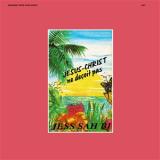
Jess Sah Bi is well-known as half of the legendary duo Jess Sah Bi & Peter One who brought homegrown Country-Americana to the West African masses with their smash debut Our Garden Needs Its Flowers in the mid-1980s. Touring stadiums and reaching listeners worldwide, their music has racked up millions of spins on YouTube and remains imprinted in the hearts of Ivorians of a certain age. ATFA reissued their album in 2018, garnering critical acclaim from publications including Pitchfork and Rolling Stone and reaching a new generation of listeners outside Ivory Coast (Cote d'Ivoire). Sometime in the early 90s, Die Sahbi - or Jesse, as he known to friends-became gravely ill with an unknown ailment and almost died. He visited various doctors and all kinds of religious healers and nothing helped. One day he went down to an Evangelical Christian revival in his neighborhood. They prayed over him and he was delivered. He says, "Their prayers helped chase out whatever demons and unhealthy spirits were inside me. After that my illness went away. When I went to the United States a few months later on an exchange program I wanted to make music to thank God because I was saved." He recorded an album of music praising God in order to honor a promise he made to himself at the depths of his desperation in the hospital. The album Jesus-Christ Ne Deçoit Pas Jesus Christ Does Not Let Us Down came out in 1991 and sold around 3000 cassettes in Ivory Coast. The master tape was lost along the way so the recording has never been on digital platforms until now. Jesse didn't have much time to record while visiting South Carolina, hence the relatively short album, 6 songs including two reprises for filler. A local pastor connected him with a studio and some American musicians (Robert Fortner and Gary Davis) to help. They added acoustic guitar, percussion and keyboard accompaniment to Jesse's soaring French and Gouro vocals, harmonica and finger-picked acoustic. The resulting recording is deeply soothing and contemplative music that perfectly compliments the songs already embraced by millions. But he had to find the rest of the studio expenses-$600 total-which he secured drawing cartoons for UNICEF. Jesse is Ivory Coast's first political cartoonist, a vocation for which he was widely celebrated at the time. It also made him a few enemies which lead to him leaving the country permanently a few years later. Jesus-Christ Ne Deçoit Pas is Jess Sah Bi's first and only gospel album. Fortunately, fans responded with enthusiasm: widespread radio airplay and concerts followed, along with a growing solo profile in the country. The first big gospel artists in Ivory Coast were the duo Mathieu et Constance, who emerged in 1989. There was a bigger gospel music movement in English-speaking counties like Ghana and Nigeria (Christians make up roughly 40% of the population in Ivory Coast, slightly less than Muslims). Jesse didn't have any intention of working in Christian music but he realized, "You don't make music to make money-you want to send a message." In the years since Jesus-Christ's release, gospel music in Ivory Coast has grown to become a key part of music culture in the country. Spiritual music appears in community actives across the public and private spectrum from religious gatherings and parties to television broadcasts and music festivals. And, as it has evolved and indigenized locally, gospel music has picked up elements of traditional Ivorian music, reggae and soul. The album ultimately precipitated the demise of the duo, who were soon separated geographically as Peter One relocated to Nashville. He went on to become a nurse and release a successful solo album on Verve following the ATFA collaboration. Nowadays Jesse lives in the Bay Area and continues to record and perform music wherever and whenever he has the chance. He is publishing a new book of humorous cartoons in 2025 and his most recent album Never Give Up came out in 2020
- 1: Dragging Hooks
- 2: I'm So Open
- 3: Small Swift Birds
- 4: He Will Call You Baby
- 5: Notes Falling Slow
- 6: Why This One
- 7: License To Kill
- 8: Blue Eyed Saviour
- 9: My Little Basquiat
- 1: Still Lost
- 2: Follower
- 3: A Few Bags Of Grain
- 4: Renmin Park
- 5: Wrong Piano
- 6: Continental Drift
- 7: Late Night Radio
- 8: Angels In The Wilderness
- 1: Fuck, I Hate The Cold
- 2: Staring Man
- 3: Sing Me A Song
- 4: The Things We Do To Each Other
- 5: Missing Children
- 6: All That Reckoning (Part 1)
- 7: Five Years
- 8: What I Lost
- 9: Hard To Build, Easy To Break
- 10: Circe And Penelope
Cowboy Junkies are set to release Open to Beauty, a collection of songs from their 21st century albums to date. This "Best Of" set will revisit selected tracks from albums "Open", "One Soul Now", "Early 21st Century Blues", "At The End of Paths Taken", "Renmin Park", "Demons", "Sing In My Meadow", "The Wilderness", "All That Reckoning", "Songs of the Recollection" and "Such Ferocious Beauty". Speaking about the new collection, Cowboy Junkies" Michael Timmins said: "We are now 25 years into this century, the beginning of which saw us leave the world of major labels and return to making music as an independent band. We figured this was as good a time as any to look back, reassess, and reflect on the music that we have recorded over these past two and a half decades and, hence, "Open to Beauty - The Best of the 21st Century".
Following the success of his debut EP 'Departure', J Michael Harris returns with a dynamic neo-jazz album that marks his evolution as an artist. Bringing together legendary musicians from London, Los Angeles, and Atlanta, the album embodies elements of jazz, dance and electronica while drawing inspiration from luminaries such as Robert Glasper, J Dilla, Aphex Twin, Sampha, and Herbie Hancock.
All music written by J Michael Harris (saxophone, piano, fender rhodes, synths, EWI, clarinet, flute)
featuring
Freddy Sheed (drums, percussion, programming/ Lewis Capaldi, The Japanese House, The 1975)
Jimmy Haslip (bass/ Yellowjackets, Allan Holdsworth, Jeff Lorber Fusion)
Mo Pleasure (piano, hammond b3/ Earth Wind and Fire,
Michael Jackson, Ray Charles)
Karlos Edwards (percussion/ Nitin Sawney, Spice Girls, Mark Ronson)
Henry Collins (trumpet/ Amy Winehouse, Tom Jones, Van Morrison)
Mixed and Mastered by Guy Massey (The Divine Comedy, Kylie, The Beatles)
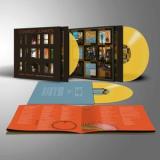
2026 Repress on Yellow Vinyl
Flirty Ghost is an evocative LP by Rachel Kitchlew, a jazz and contemporary harpist known for pushing the boundaries of her instrument. A blend of jazz, ambient, and experimental sounds, the album was crafted in a spontaneous, deeply personal atmosphere, recorded late at night in the cozy, smoky setting of SFJ headquarters
featuring Alexis Taylor (Hot Chip), Dave Bardon, SFJ, Sholto ....
Inspired by everything from Henry Mancini to Dorothy Ashby, this LP captures an eerie, playful essence, like a ‘flirty ghost’, while celebrating exploration and self-expression. The album holds emotional depth, particularly in tracks like ‘Truncate’ and ‘Cyclical’, which were recorded shortly after the passing of Rachel's grandmother, Sheila Horton, whose work is featured on the back cover.
With the collaboration of close friends and talented musicians, ‘Flirty Ghost’ represents a new chapter for Rachel, marking a joyful departure from her solo harp work into a collective, experimental musical journey.
the debut solo album by henrik raabe, guitarist of the german trio wareika, who rose to prominence in the 2000s with their minimal deep house sound. departing from the cool, jazzy deep house he was known for, raabe delivers a uniquely crafted downtempo album that feels like a seamless blend of jazz, afro, dub, new age, and postmodern influences. it evokes the spirit of an imagined encounter between the durutti column and dennis bovell, with virginia astley joining in—reminiscent of the uk sound of the 1980s—yet rendered more minimal and refined, in a distinctly german way. with each listen, the album draws you deeper in. it is poised to become a defining release for mule musiq in 2026
- A1: Return Of The Knödler Show 2 52
- A2: The Frogs Of Miwa - Cho (1) 4 52
- A3: Waiting (I) 5 38
- A4: An Old Friend Passes By 3 46
- A5: Coco Bolo Strip (1) 5 25
- B1: Peace And Pipe Utopia 3 14
- B2: Unidentified Dancing Object 1 44
- B3: The Call (I) 2 41
- B4: Wenn Das Rohr Dommelt 4 03
- B5: Mariahilf (Live Version) 3 36
- B6: Watching The Shades (I) 2 59
- B7: Playing The Table Music (Ii) 2 43
- C1: Could Be Nice Too 5 29
- C2: Ox Of Inner Depth 4 51
- C3: Ymir Shows Up 3 58
- C4: Could Be Nice 5 24
- C5: Playing The Table Music (I) 4 23
- D1: Coco Bolo Strip (Ii) 4 52
- D2: Locusts Looking Like Men 5 55
- D3: Waiting (Ii) ︎ 3 36
- D4: No Stove 2 29
- D5: An Old Friend Passes By Again 3 00
- D6: Heimkehr Der Holzböcke 3 16
Black Truffle is thrilled to announce Dalbergia Retusa, an extensive double LP selection of the solo guitar music of Hans Reichel, compiled by Oren Ambarchi. Last heard on Black Truffle as one quarter of the joyously anarchic Bergisch-Brandenburgisches Quartett, Hans Reichel (1949-2011) is one of the great figures of experimental guitar music. Though perhaps lesser known than peers like Derek Bailey, Fred Frith and Keith Rowe, Reichel’s rethinking of the instrument was in some ways the most radical of all. Early on, he dispensed with existing guitars to build a series of his own that explored the use of additional strings and fretboards, moveable pickups, extra bridges, special capos, and other innovations documented in the extensive booklet accompanying this release.
Reichel was a long-term resident of Wuppertal, the small Western Germany city that became an unlikely centre of European free jazz in the late 1960s, also home to Peter Brötzmann and Peter Kowald. His solo debut Wichlinghauser Blues was an early entry into the FMP discography and began a relationship with the label that stretched into the 1990s; all the solo performances heard here were first released on FMP. As Reichel says in the charming archival interview with Markus Müller included here, he was ‘always a cuckoo’s egg at FMP’, a label that began as an outlet for roaring European free jazz. What strikes the listener right from the opening selection on Dalbergia Retusa—‘Return of the Knödler show’, from 1987’s The Dawn of Dachsman—is the extraordinary beauty of Reichel’s music, at once alien in the shimmering sonorities and unconventional pitch relationships made possible by his invented instruments, and deeply lyrical, even romantic in its harmonic content. Growing up in West Germany in the 1960s, Reichel’s formative influences were mainly British and American rock bands, a background that shines through in many of the pieces included here: ‘An old friend passes by’ is haunted by the ghost of Hendrix’s rhythm guitar, and the wild closer ‘Heimkehr der Holzböcke’, taken from a rare 1975 7” and the only piece to use overdubbing, layers errant hammer-on and slide tones over a Canned Heat boogie chug.
Reichel was an important source for the development of Oren Ambarchi’s own extended approach to the electric guitar. Appropriately enough, his selection opens with the very first piece by Reichel he ever heard, on a flexidisc included with a 1989 issue of Guitar Player magazine. Though Reichel collaborated with others extensively in many settings and also performed on violin and his other major contribution to instrument invention, the daxophone, his music for solo guitar remains at the core of his oeuvre. Focusing exclusively on solo pieces recorded between 1973 and 1988, the 23 pieces on Dalbergia Retusa showcase the range and consistency of Reichel’s work, allowing the listener to see how his performances developed hand-in-hand with his instrumental inventions. On a piece from his very first LP, played on an 11-string instrument (partly strung with piano strings and using a schnapps glass a slide), we hear his intensive exploration of fret-hammering to create zither-like, chiming tone, which Reichel would hone further in later years with a double fretboard guitar specifically designed to be hammered rather than fretted and picked. On a piece from 1979’s Death of the Rare Bird Ymir, Reichel uses two steel-string acoustic guitars at once, with beautiful results: ‘some even say too beautiful’, he jokes in the interview included here. Many of the pieces from the 1980s make use of varieties of the ‘pick behind the bridge guitar’, instruments of uncanny harmonic richness primarily designed to be played on the ‘wrong’ side of the bridge. At times the unexpected behaviour of attacks, resonance, and decay can almost seem electronic, conjuring up the technology-assisted work of Henry Kaiser or even Fennesz, but realised solely through Reichel’s unorthodox techniques on his invented instruments. Extensively illustrated with photos and Reichel’s own plans and drawings of his instruments, Dalbergia Retusa is an essential introduction to the unique world of Hans Reichel. Rarely has music been at once so strange and so beautiful.
2026 Repress
Welcome to the brilliant Herbie Hancock with the always in-demand slinky groover Stars In Your Eyes on the much coveted 11.21 "special disco remix".
This is quite simply one of the smoothest Disco rides you will ever take with a production made in heaven and a vocalist supreme with Gavin Christopher taking it to another level. Find an original U.S. promo of this if you can.
There's lookalikes about which are inferior quality! As if that wasn't enough, we've only gone and paired it with the hugely rare U.S. promo-only 12" "special disco remix" of the scintillating Saturday Night.
This is as rare as hens teeth and you'd be lucky to find a mint one for less than £50. Featuring an extended percussion break from the fantastic Sheila E, this a very different mix to the original album version and was never widely circulated at the time.
So another nice rare gem. As double-siders go, this really takes some beating. Order with confidence because this will still be selling for years to come.
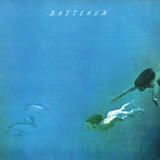
2026 Repress
A notoriously jaw-dropping folk-funk classic, long treasured by the Balearic fraternity, the self-titled LP from the brothers Batteau nevertheless remains a criminally underheard gem. Appealing to fans stuck on Ned Doheny's scorching blue-eyed soul as well as Gene Clark's rich country-rock, it's an honour to present the first officially licensed vinyl reissue of this undoubted masterpiece of proto-Yacht-Rock.
Like a forgotten piece of baroque folk caught in 1973, Batteaux's eponymous album somehow sounds magically timeless. A full 45 years after the fact, it remains a mystery as to why they weren't better known. The lush production and virtuoso playing conforms with the ruling aesthetic of the time - well-crafted, melodic songs performed with precision and balance - whilst the shimmering AOR atmosphere and sun-dappled vocal washes align neatly with the best Crosby, Stills & Nash records.
Throughout, the beautifully penned tracks hold traces of Jimmie Spheeris, America and Seals & Crofts. The immaculately orchestrated percussion and additional instrumentation (electric piano and fiddle to name a few) are performed by perennially celebrated West-Coast cats including Tom Scott, John Guerin and Andy Newmark.
It's no surprise that the heavenly "High Tide" is such a Balearic touchstone. A free soul aqua-space groover, its sophisticated rhythms predict the swing of CSN's canonical "Dark Star" by a full four years. An alternative measure of its enduring magnificence can be gauged by MF Doom sampling Paul Horn's wonderful version, subsequently used by Ghostface Killah.
The highlights are many and memorable. Gorgeous opener "Tell Her She's Lovely" is the perfect example of the addictive, melody-driven songwriting which really should have earned them stardom. Moody ballad "Living's Worth Loving" is nothing short of heartbreaking whilst the chugging elegance of "Wake Me In The Morning" showcases their bewitching harmonies. The hypnotic yearning of "Lady Of The Lake" is an exquisitely string-drenched, piano-laced favourite that achieves a peculiar strutting-funk. It's that good.
This lovingly curated reissue enables a long overdue reappraisal of the hitherto buried genius of Batteaux. The serene aqua artwork which adorned the original jacket - their father worked on a dolphin-human communication project in Hawaii, hence the infamous design - and sumptuous inner sleeve have been faithfully restored. Whilst, with access to the original tapes, Simon Francis' sensitive mastering elevates the sound throughout and, as ever, it has been pressed at a reassuringly weighty 180g.
Another 4-track release from People Unpleaser, delivering a blend of spicy and groovy Electro/House with acid vibes a little bit darker than the other releases. Featuring artists from across the globe, each bringing their unique signature to the table, this is a record you’ll surely want to add to your collection
Dave Lee invites everyone to congregate at the piece of waste land behind his church where he also parks his combine harvester from time to time. Leading proceedings is 'Feel The Light' an extended super uplifting Gospel cut, filled with rousing horns, scorching organ solos and top tier sing-a-long vocal chants. The kind of record that really brings people together, much like the house of god. Flip the record and you're whisked away to the sunny shores of Rio with the Latin Jazz-Funk-tastic 'Further Tales Of Ladybug' a Wayne Henderson of The Crusaders fame piece that has, like the opposite side track been lovingly re-crafted from the stems by Mr Lee.
As he’s been known to do, Caserta takes something old and flips it on its head—or, in this case, its rear. He gives arguably the biggest crossover pop hit of the new millennium the MFSB/Larry Levan treatment on the A-side, while giving the DJ Sneak/Armand T.L.C. on the flip.
- 1: When Hamlet Left Town 0:32
- 2: Radio Four 05:45
- 3 34: E 03:34
- 4: Solid Ground 0:25
- 5: Arc 04:37
- 6: Aelita 03:12
- 7: All Tomorrows Past Part Ii 04:26
- 8: Interlude 03:26
- 9: Henry & The Ghosts 03:22
- 1: Space Minor 03:22
- 2: Loop D 03:36
- 3: Tomorrows Past Part I 0:11
- 4: Modest Farewell 03:5
- 5: Nordlead 03:3
- 6: Momo 03:12
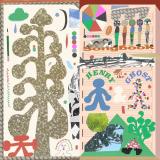
On his new album, Micha Acher rearranged compositions for bands such as Tied & Tickled Trio and Ms. John Soda from previous years.
Why are we interested in ghosts? What fascinates us about the eerie? According to cultural theorist Mark Fisher, the allure that the eerie possesses is not captured by the idea that we „enjoy what scares us“. It has, rather, to do with a fascination for the outside. For that which lies beyond standard perception, cognition or experience, as he writes in his book „The Weird and the Eerie“.
In fact, also none of the 15 pieces from Henry and the Ghost is really scary. On the contrary, they all feel strangely familiar. Like revenants or doppelgängers, which in fact they are. They have all been released before. But in a different form. In different line-ups. With different band projects such as Tied & Tickled Trio, The Notwist or the Alien Ensemble.
With the „Songbook“, Micha Acher's aim was, as he says, to find out how the familiar pieces sound in a chamber music instrumentation. Therefore he met with Theresa Loibl (bass clarinet, piano), Timm Kornelius (bassoon), Markus Rom (guitar, banjo, electronics) and Simon Popp (drums, percussion) in his living room for a musical séance in the summer of 2022. The séance lasted two days. Afterwards, Markus Rom (Oh No Noh), added some haunting electronical ideas.
The mood of most of the pieces is melancholic. There are surprising twists and siren-like melodies. Just as ghost stories should be. However, most of the songs sound very light-footed. With their feet in pop, folk, jazz and classical music. Pieces such as „Johanna“ with its wheezing harmonium and spooky piano, or the dreamy „Modest Farewell“ on the other hand have a cinematic flair. Immediately faces and scenes arise in the mind. But at the beginning, there is „Hamlet“. It starts with ghostly electronics and merges into a calm, almost classical guitar piece. Could it be that the ghost of Hamlet's father is hiding between the strings?
„34E“ begins with a banjo. Then the deep humming of Micha Achers sousaphone and the other brass instruments kick in. In the slow, solemn „Aelita“, the sousaphone starts a dialogue with a children's piano. With the banjo and the other wind instruments acting as mediators. The title of „All Tomorrow's Past“ brings Velvet Undergrounds „All Tomorrow's Parties“ to mind. Another ghost from the past. What connects the two pieces is free-floating percussion, which accompanies the sumptuous melodies.
„Arc“ takes us on an exhilarating voyage at sea, with the sousaphone providing powerful propulsion. Towards the end, things get quite turbulent. With the clarinet stirring up the water, before the sea calms down again. „Henry and the Ghost“ is characterised by a ghostly mood change between major and minor. In „Radio Four“ the banjo with its stoic chords keeps the lively brass section in check. „Solid Ground“ is imbued with melancholy. „Space Minor“ takes us into outer space, with the power of sousaphone and percussion.
„Tomorrows“ is filled with cautious optimism. And the concluding „Nordlead“ turns out to be a revenant of the instrumental „N.L.“ from The Notwist's legendary album „Shrink“ from 1998. In the new version, the piece sounds like a distant echo. One that also brings to mind how Micha Acher's music has evolved. Which new worlds he explored and opened up since the nineties. And yet Acher's signature is recognisable in every single note of this fascinating „Songbook“.
- 1: Blood, Is
- 2: Turn
- 3: Consecutives
- 4: Revery I
- 5: Revery Ii
- 6: That This
- 7: Conversion Chants
- 8: Luella
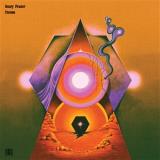
,Pneuma" ist ein Zyklus von acht Kompositionen des Kontrabassisten und Komponisten Henry Fraser, erschienen bei Kou Records, der sich mit Atem, Resonanz und der sich wandelnden Beziehung zwischen Form und Improvisation auseinandersetzt. Fraser betrachtet seine Solopraktik als eine Zusammenarbeit mit dem Instrument selbst und arbeitet direkt mit der Materialität und den akustischen Eigenschaften des Kontrabasses, sodass Klang, Raum und Struktur durch tiefes Zuhören gemeinsam entstehen können. Aufgenommen, abgemischt und koproduziert von Randall Dunn (Sunn O))), Thurston Moore) und Ben Greenberg (Uniform, Marc Ribot), erweitert das Album Frasers bisherige Solosprache durch ein erweitertes melodisches Register, vielschichtige Texturen und sorgfältig gestaltete Studioeingriffe. Ausgehend von sowohl vorgefertigten Motiven als auch neu improvisiertem Material entfaltet sich ,Pneuma" in einer Reihe prägnanter Sätze, von denen jeder einer eigenständigen rhythmischen oder harmonischen Idee Gestalt verleiht und gleichzeitig zu einer größeren, zusammenhängenden Form beiträgt. Die Aufnahme, bei der der Schwerpunkt auf natürlicher Dynamik und räumlichen Details liegt, bewahrt die volle physische Präsenz des Instruments und rückt die Resonanz, die Obertöne und die leisen Mikrogesten des Basses in den Vordergrund. Bestimmte Stücke bestehen aus mehreren übereinandergelegten Darbietungen, was den Umfang und den Ausdrucksbereich der Musik dramatisch erweitert. Das Ergebnis ist ein intimes und zugleich immersives Hörerlebnis - akustische Musik, die sich gleichzeitig greifbar und weitreichend anfühlt. ,Pneuma" dokumentiert Fraser in einem Moment künstlerischer Klarheit und bekräftigt sein Bekenntnis zu prozessorientierter Komposition und aufmerksamer Klangpraxis.
- 1: Give
- 2: Napoleon
- 3: The End
- 450: Ft
- 5: New Self
- 6: All I Got
- 7: Got Me Good
- 8: Red Hot
For The Bobby Lees, their fourth album and Epitaph debut New Self marks a thrilling new chapter for the band while doubling down on what"s always made them so magnetic. The Bobby Lees don"t need much in the way of introduction. Within a few seconds of exposure to their furnace-blast live shows or their bottled-lightning studio records, it"s easy to hear why they"ve earned fans in legendary musicians like Iggy Pop, Debbie Harry, and Henry Rollins. They"re as uncompromising in their sound and generous with their energy as any of their punk ancestors who first rewrote the rules of engagement back in the 1970s. Led by singer and guitarist Sam Quartin, drummer Macky Bowman, and bassist Kendall Wind, The Bobby Lees bring wildness and danger back into punk rock. You can hear the band easing into a new confidence -- one that"s both looser and more towering -- all throughout New Self, from the seething, fiery "Napoleon" to the rambunctious, offbeat take on PJ Harvey"s "50ft Queenie." This is the sound of a band who"s scrambled over shaky ground only to come back stronger than ever: more confident, more connected, louder and fiercer and secure in their own skin.
- A1: C’est Loin
- A2: Là Où Tu Veux (Deixa A Gira Girá)
- A3: Pas Tant De D'chichi Ponpon
- A4: Assez
- A5: Le Soleil En Haut
- A6: Tout L’or
- B1: Désillusion
- B2: Attends-Moi
- B3: O Sapo
- B4: Horssaison
- B5: Presque Rien
- B6: Vou Festejar
For his sixth solo album, Ezéchiel Pailhès returns with a new collection of songs infused by a sunny wandering spirit.
Within each of the twelve songs on SOL is a thread of melancholic happiness that has permeated much of Pailhès’ music and songwriting. He addresses love, the passing of time, hope, lost illusions, fleeting moments of grace, the temptation of forgetting, a need to escape, and desire. All this is
insulated by understated orchestrations that blend acoustic and electronic instrumentation with deft confidence.
The Portuguese and Brazilian concept of saudade—a form of melancholic longing and nostalgia— pervades, thanks in part to Pailhès decision to record the album in Rio de Janiero and to reinterpret some of the finest works of Música Popular Brasileira (MPB). In particular, he revisits a handful of
lesser known classics from the mid-century samba and bossa nova era—originally written or performed by talents including Vinícius de Moraes, João Gilberto, Tom Zé, Dorival Caymmi, João Donato, Os Tincoãs, and Ataulfo Alves.
The shift from Brazilian Portuguese to French and the decision to adapt rather than perform a straightforward cover versions, allows Pailhès to invent a form of prosody and euphony (the musicality and harmonious combination of words) that feels vibrant and unlike anything else in today’s French
chanson landscape.
“Some lyrics are simple translations from Portuguese, in what I’d call an expanded version. For others, I started from a single word or a single phrase and embroidered an entirely new text that carried me elsewhere,” explains Pailhès. “I allowed myself great interpretive freedom, while preserving the humanist dimension of the original songs. I’ve always been deeply moved by the way Brazilians transfigure reality through heightened emotion. I love this visceral and spontaneous country, which always seems to live through emotion. And above all, I love its music both popular and unifying,
bringing together all social classes. In that sense, it’s very political music, but even more so utopian, made by the people and for the people.”
On this new album, however, the French artist was keen to avoid cliché. Each song is therefore built around a carefully balanced interplay between Pailhès’ piano and synthesizers, alongside restrained arrangements of percussion, brass, bass, and cavaquinho (a small four-string plucked guitar). These parts were recorded in Rio de Janeiro with two musicians who regularly perform alongside the legendary Caetano Veloso—Kainã Do Jêje and Alberto Continentino—joined by Thomas Harres, Antônio Neves, Eduardo Neves, and Gabriel Loddo.
Since the 1960s, France and Brazil have shared a long-standing cultural and musical relationship. Some Brazilian artists, most famously Gilberto Gil, took refuge in France during the dictatorship years (1964–1985). But above all, French chanson quickly fell in love with the richness and ingenuity of
bossa nova and samba, translating and reinventing them in the language of Molière. Throughout the 1960s and 1970s, albums and hits by Henri Salvador, Georges Moustaki, Pierre Barouh, Pierre Vassiliu, and Claude Nougaro all drew from the MPB repertoire.
Fifty years later, with SOL, Ezéchiel Pailhès reinvents this rich Franco-Brazilian musical legacy, bringing to it a personality and modernity that stand confidently alongside those of his forbears.
- 1: Introduction
- 2: High Command
- 3: Crooked Axis For String Quartet
- 4: Tallahassee
- 5: Charioteer (Temple Song)
- 6: Peace In Mississippi
- 7: Sonar & Depth Charge
- 8: Coda Maestoso In F (Flat) Major
Earth hat die moderne Musik maßgeblich geprägt - von Experimental Metal über Electronic/Ambient bis hin zu Stoner Rock - und Künstler von SUNN O))) über The Bug bis hin zu Godflesh beeinflusst. Die Geschichte von Earth wurde in der gefeierten Dokumentation "Even Hell Has Its Heroes" aus dem Jahr 2023 festgehalten. Das dritte Album von Earth, "Pentastar: In the Style of Demons" aus dem Jahr 1996, ist ein Klassiker der trägen Riff-Verehrung, der vor einer dicken, verzerrten Schmiere nur so strotzt, in der Black Sabbath, Hawkwind, Hendrix, Drone und Ambient-Musik miteinander verschmelzen. Das Ergebnis fühlt sich an wie eine lange, einsame Fahrt durch die Wüste, mit dem inneren und/oder äußeren Weltraum als einzigem Ziel. Als wohl rockorientiertestes Album der Band enthält "Pentastar: In the Style of Demons" die zeitlose ,Hit"-Single "Tallahassee". Diese 30-jährige Jubiläumsausgabe erscheint auf grünem Vinyl und enthält einen limitierten "Wraparound"-Kunstdruck mit einer Neuinterpretation des Albumcovers durch den zeitgenössischen Künstler Matt McCormick.
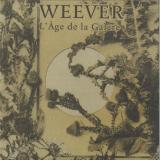
Based in Rennes and founder of the Vives label in 2020, Weever has been exploring the interplay of light and shadow for over 10 years, crafting abstract soundscapes and textured sonic tunnels of unparalleled musical breadth. He elegantly blends industrial and baroque sounds to construct sonic cathedrals. His music is both utterly raw and meticulously crafted.
L’âge de la Galère :
started this EP in 2020. At the time, I had just finished my studies, it was a pretty difficult period and I had made a track, or rather a melody, that I thought was amazing. I held onto it all these years without ever releasing it. 2020 was a tough year overall. The big question was: What am I going to do with my life? Hence the title L’âge de la Galère
The title really started to make sense when I began putting tracks together for Micheal. Around that time, I was reading Those of 1914 by Maurice Genevoix. For those who don’t know it: it’s written as a journal and tells the story of the author and his fellow soldiers in the trenches during World War I.
I’ve always been passionate about the two World Wars, I watch every film, old and new, I listen to the soundtracks, and so on. Same with period films, especially medieval ones. I love drawing inspiration from them.
So naturally, I imagine and create around that. It comes easily because it’s always been my universe. And when I make music, those kinds of images inevitably come out, even subconsciously.
So I created and told an audio story through my 6 tracks.
“It’s 1914. The story of many men who, upon hearing the sound of the bells, are met with the announcement of a war like no other. Most of them are young, some very young, and they are drafted into the French and German armies. They have no military experience, and the first battles are so violent that many won’t make it back. Very few will earn the glory they deserve.
The conditions are appalling, everything is in short supply, and the men are exhausted. Still, they must hold on.
Leaving carelessly from beneath their mothers’ skirts, too few returned. Many were left traumatized, and an entire generation was forever changed.”