There’s something new under the sun. If you look at it closely,
something new is only (and always) created at crossroads –
when different and signi¦cant traditions are connected and
combined. On their own, these traditions have often existed
for a while. However, in this new form they have never
appeared together. The latest manifestation of something
new can now be found on the album “No Future Dubs”, the
interpretations of “No Future Days” – the most recent album
by German band Messer – by Finnish producer and old
friend of the group Kimmo Saastamoinen aka Toto Belmont.
The intentional traditions that merge on this grand and
digni¦ed album are post-punk, dub and techno. A new
chapter in the culturally constant narrative of dub is written
here. Through their past and parallel activities in hardcore
and post-punk bands, Messer drummer Philipp Wulf met and
befriended Kimmo, originally a drummer too. In their
continuous dialogue discussing their musical journey, Philipp
and Kimmo over the years more and more immersed
themselves in the aesthetic possibilities of dub and reggae.
Indeed, lots of musicians do not listen to the type of music at
home that they write and play in their respective projects
(Take me as an example: House is the music that I produce
and put on as a DJ. On my own, I listen to various stuff,
music by Monk and Messer for example). The same applies
to the protagonists involved here. By discussing dub und
through Toto Belmont’s steadily increasing producingexpertise, the idea of creating dub versions of selected
Messer tracks was born. The Messer album “No Future
Days”, released in 2020, proved to contain the perfect raw
material as the songs on this album are already produced in
a much more transparent way than on previous LPs – and
are hence more suitable for dub. Still, it’s a giant leap from
the originals to the dubs. These add a third dimension to the
described character of the post-punk/dub amalgam: techno.
The result is a sound that hasn’t existed before, especially
not with German lyrics (which scarcely, however, carry
meaning or messages here. Hendrik Otremba’s voice is used
more like an instrument, as if he was the ghostly ¦gure which
he often sings about and which now §oats and screams
through the sound space). The history of mutual contact and
in§uence of (post-)punk and dub (reggae), which Messer
have kept on writing, is glorious and reaches back far in
musical history. Still, it has always been a rather marginal
chapter not only in punk but also in dub history. But already
in the beginnings of punk (the British version, less the
American one), the presence and in§uence of reggae was
obvious in many places as both are united in their resolute
attitude as rebel music. This is how the two genres
recognized each other – especially the punks regarded
reggae as rebellious. As is known, already Johnny Rotten
mainly listened to dub in private. By using the name John
Lydon, he then – together with bass player Jah Wobble –
established the group PiL as one of the most exemplary
bands at the crossroads of dub and punk. The Slits, Pop
Group, Killing Joke, The Ruts and last but not least The Clash
along with the Mick Jones offshoot Big Audio Dynamite –
the thriving British music scene in the early 80s was full of
dub-in§uenced acts. The echoes meandered everywhere. In
the USA, it took longer until the in§uence of dub became
noticeable and it has never been as distinctive as in the UK.
The history of US hardcore, however, cannot be told without
bands like Bad Brains from Washington D.C. who on their
albums occasionally inserted conscious reggae and dub
tracks between breakneck hardcore tracks. Another
important group is Blind Idiot God who similarly included
dub tracks on their LPs – the contrast between densely
droning rock tunes and widely breathing dub versions can be
experienced very vividly here. In the 90s, dub’s in§uence on
post-punk decreased while turning up even more distinctively
somewhere else: Techno was in many respects susceptible
to dub, to say nothing of the music from the so-called British
hardcore continuum (jungle, drum & bass etc.), which directlydeveloped from dub and reggae. But also “pure” techno –
meaning techno without breakbeats – discovered its a¨nity
for the possibilities of dub at an early stage, in England for
instance in projects like Left¦eld or The Orb. In addition, the
project Rhythm & Sound was established in Berlin with close
ties to the Hardwax record store. With regard to this project,
you can’t really say where dub ends and where techno begins
(or vice versa) because of the interconnection of the two
genres here – everything is based on the steppers pulse
which links the two styles like a common DNA. With dub
techno a new genre was created. Until the present day, there
are producers who don’t produce anything else and DJs who
don’t put on any other music. The Messer dubs are
characterized by a grand majestic manner and force that
presumably someone like Mad Professor is able to produce
and that is also inherent in many Scandinavian productions
of the last 15 years; a crystal-clear aesthetic which locates
itself far away from Kingston or Brixton, but features a pulse
referring clearly to Berlin and Helsinki. The songs appear in a
completely new and deconstructed form, the instruments are
exclusively used as particles and raw material, not as riffs;
merely glaring guitar textures ¦ll the wide dub space. There
are many new elements that were added by Toto Belmont,
especially synthesizer sounds and drums. The ¦nal result
creates an enormous aesthetic power and dignity, and an
atmosphere you don’t want to leave anymore. “No Future” is
a well-chosen title as a reference to the protagonists’ punk
association; as a main thrust of the album, however, a
comma between these two words is imaginable as well.
Buscar:hen
Previously unreleased live recording of the great tenor saxophonist Dexter Gordon, alongside a star-studded line-up - bassist Niels-Henning Ørsted Pedersen, pianist Tete Montoliu and drummer Alex Riel performing at the classic Copenhagen venue Jazzhus Montmartre, which has now closed. Four tracks from this recording are now available on vinyl for the first time.
Dexter Gordon (1923 - 1990) was an American jazz tenor saxophonist and an Academy
Award-nominated actor (Round Midnight, Warner Bros, 1986). He is regarded as one
of the first and most important musicians to adapt the bebop musical language of
people like Charlie Parker, Dizzy Gillespie, and Bud Powell to the tenor saxophone. His
studio and live performance career were both extensive and multifaceted, spanning
over 50 years in recorded jazz history.
“Gordon was in great form, and his supple, mercurial style, with a tendency to phrase
just behind the beat, would have been pretty demanding, but Riel, Montoliu and
Ørsted Pedersen rise splendidly to the occasion. You can tell that Gordon feels at home
from the number of outrageous quotations he inserts into his solos, but the warm, dry
breadth of his tone, clarity of improvised line and sheer command of the instrument
are uplifting.” - The Observer
Alphanso Henclewood, aka King Shark, with killer Russ Disciple dub
This highly collectible LP from 1974 is a nonstop salsa dura party album from start to finish, comparable with any of New York's finest like Ray Barretto and Willie Colón from the same era, but with its own unique sound and joyful vibe. Includes the anthems 'Mi Nuevo Ritmo' and 'Alma y Sentimiento/ Soul and Feeling' recorded at different sessions in Colombia and Peru. Presented in its original artwork and pressed on 180g vinyl. The highly collectible LP Alfredo Linares Y Su Salsa Star "Mi Nuevo Ritmo" (1974) is a nonstop salsa dura party album from start to finish, comparable with any of New York's finest like Ray Barretto and Willie Colón from the same era, but with its own unique swinging sound and bright, crisp, joyful vibe. There are plenty of straight up Cuban-roots based salsa tunes, plus some Latin jazz and Latin soul and a bolero. Trumpets, hand claps, loud cowbell, and vigorous vocals all make for a great listen and an even better dance experience. As the track 'La Música Brava' proclaims, "Yo no quiero que pare la música brava!" (I don't want the badass music to stop!). The record is actually a patchwork of different recording sessions made in Peru and Colombia, featuring differing studio sound and musician lineups. Linares had just returned to his adopted home of Medellín from a period spent in Peru and was looking for a record deal. He had brought master tapes with four songs recorded in Lima and was shopping them around in the hopes of securing an album contract. Linares also cut some Colombian sessions which feature Roy "Tayrona" Betancourt as well as Henry Castro and Enrique Fabián. Unfortunately, neither Discos Fuentes nor Sonolux or Codiscos were interested. At that time, vinyl for making records was scarce and over-priced due to the petroleum crisis and hence the labels were reluctant to try out a new artist. "There was nothing to be done. The only company that had vinyl stock was INS. So I did the business with them even though they didn't have a known name in Colombia. The strength of that album made them rather famous." The song 'Mambo Rock' (with 'Estricto Guaguancó' on the B side) came out on a 45rpm record in 1974, and, as Linares recounts it, "two months later the sale was at a very high level. So, partly out of gratitude, I started producing for them. It is from there that my other records and the AfroINS albums came." Unfortunately the master tapes to the LP were lost or destroyed, as with all INS releases, so the best possible vinyl sources and audio restoration has been used for this deluxe reissue.
With Uma Elmo, his fifth album as a leader for ECM, Danish guitarist Jakob
Bro presents a new trio featuring Norwegian trumpeter Arve Henriksen
and Spanish drummer Jorge Rossy.
Astonishingly, given the trio’s musical synergy, the first time these three musicians ever performed together was for the album’s sessions at the Swiss Radio
studio in Lugano, with ECM founder Manfred Eicher producing.
Uma Elmo reaffirms the observation about Bro’s work by London Jazz News
that “there is no hurry to this music, but there is great depth.” Among the
album’s highlights is opener “Reconstructing a Dream,” a darkly lyrical reverie.
“To Stanko” is Bro’s hushed tribute to the late, great Polish trumpeter Tomasz
Stanko, who featured the guitarist in his quintet for the ECM album Dark Eyes.
Another homage to a late elder is “Music for Black Pigeons,” which was given
its evocative title by saxophone sage Lee Konitz.
Listeners will recognize Henriksen’s whispering, poetic sound from his 2008
ECM album Cartography, as well as his collaborations for the label with Trio Mediaeval and Tigran Hamasyan. Rossy is well known to jazz fans on both sides of
the Atlantic, particularly for his decade-plus tenure in Brad Mehldau’s careermaking first trio.
As for the leader, DownBeat aptly noted in its review of his previous ECM album, Bay of Rainbows, that “Bro’s guitar is luminous... his music both hypnotic
and dramatic.”
Jakob Bro: guitar
Arve Henriksen: trumpet, piccolo trumpet
Jorge Rossy: drums
It has occasionally been assumed that Henry Grimes got this December 28, 1965 recording date as a reward for his long service in the avant-garde of jazz. Having already honed his musical conception with a varied range of players, from Benny Goodman and Arnett Cobb to Lee Morgan, Gerry Mulligan, and Sonny Rollins to McCoy Tyner, Steve Lacy, Albert Ayler (including ESP 1020, Spirits Rejoice), Don Cherry, and Cecil Taylor (to name just a few), the service was certainly there, but he got this gig fully on his merits. For The Call Grimes teamed with highly original clarinetist Perry Robinson (as label owner Bernard Stollman has noted, "a virtuoso who merits far wider recognition...and this recording reflects both of their contributions, in equal measure") and stalwart drummer/ESP-Disk' regular Tom Price. As a bassist, Grimes's melodic style is well up to the task of being co-equal voice with a horn, resulting in a thoughtful and texturally rewarding LP with a level of quality far above the rote sideman session cliche, and far away from equally clichéd ideas of unrelentingly full-bore free jazz. It offers the sound of three excellent musicians listening to each other and responding superbly. The Juilliard-trained Grimes appeared on six other ESP LPs besides those already mentioned. He retired at some point after the last of them, 1967's Marzette Watts LP, and went so far off the scene that it was rumored that he had died. Happily, that was not the case, and he reemerged in 2003, moved back to New York, and returned to his prolific ways until illness slowed him down and then took him from us earlier this year (2020).
“Fans will be overjoyed to have a solid body of work from Lava and the first
collection of tracks since 2019’s STITCHES mixtape.
A truly matured sound, Lava’s Butter-Fly is an iconic moment for the young star,
who is truly cemented as a firm one to watch for 2021. Without a doubt, one
of the UK’s most exciting artists, Lava’s success far outweighs their young years.
The West London musician has seen themself collaborating with, and recognised by, the likes of COLORS Berlin, Converse, The Tate, ELLE, Noisey, The
Guardian, Dazed, British Vogue, i-D, Crack, Aries, Henry Holland, Tyler The Creator, Calvin Klein, Aries and more.Tracks
Featuring the incredible singles “Angel” ft. Deb Never and “G.O.Y.D.” ft. Clairo,
the project sees production from the likes of Isom Innis (Foster The People) and
Vegyn (Frank Ocean). “
- A1: The Only Way Is Up
- B1: Messing With My Mind
The Only Way Is Up” has long been regarded as a dance floor anthem and with its uplifiting lyric couldn’t be more appropriate as the soundtrack to current times as we slowly return to a more normal way of life. It has taken 40 years for this magnificent, original version of the song to finally see a reissue and our thanks go to Otis Clay’s daughter, Ronda, for helping to make this possible.
The song was written by George Jackson and Johnny Henderson and originally recorded by Otis Clay in 1980 on his own ‘Echo’ imprint. Incredibly it was a non-hit at the time and came towards the end of a long and prolific career for the Chicago R&B singer. Clay had previously recorded for the Leaner brothers at ‘One-derful!’ before moving on to ‘Cotillion’, ‘Atlantic’ and ‘Hi’ (amongst others). George Jackson also worked as a staff writer for ‘Hi’, after a successful run at Goldwax, but it was while he was with the Muscle Shoals Sound Studio that he wrote “The Only Way Is Up” for Clay.
In 1988 Jackson hit paydirt when his song was reinveted by the dance duo Coldcut for Yazz and the Plastic Machine. It was an immediate hit and spent five weeks at the top of the U.K. pop charts. It also became a No.1 hit across Europe although barely scraped into the Hot 100 in the U.S.A. In recent times it has been used as the theme to the popular TV show The Only Way Is Essex.
But, of course, it is Otis’ ‘soulful’ original that we all want to hear and it is still packing the dancefloors across the country as witnessed at last years fabulous ‘International Soul Festival’ at the Blackpool Winter Gardens! With prices in 3-figures and rising its time to grab a bargain… “the only way is up”!
COLOURED VINYL[21,64 €]
One of the most highly regarded modern Brazilian jazz trios, Caixa Cubo announce ‘Angela’, their latest album and first to be licensed for European release by Heavenly Recordings.
‘Angela’, their Seventh since forming in 2007, was named as one of 6 Music’s Recommends Albums Of 2020 (Presenter Picks), chosen by DJ Huey Morgan. The single ‘Palavras’ is currently on the 6 Music playlist. Heavenly Recordings picked up on the record when DJ Giles Peterson played ‘Palavras’ on his show.
Recorded in December 2018, the album features the singer Zé Leônidas on ‘Palavras’ and includes arrangements of songs like ‘Baião Malandro’ by Egberto Gismonti and ‘Dark Prince’ by Geri Allen, in addition to the group’s original compositions.
Made up of Henrique Gomide (keys), João Fideles (drums) and Noa Stroeter (bass), the trio have split their time between Brazil and Europe in recent years, having been awarded scholarships to study at the Royal Conservatory of The Hague, Netherlands.
They have performed at many respected European venues and festivals including Jazz à Vienne Festival (France), Anton Philip Hall (The Hague), A-Trane (Berlin), Riverboat Festival (Denmark) and others in Paris, Brussels, London, Birmingham, Lisbon and Rotterdam. They also performed in Maputo, Mozambique, as well as renowned venues in Brazil, mainly in Sao Paulo (Auditório Ibirapuera and SESC Consolação, Museu da Casa Brasileira).
- 1: Leo'flash Return To The Underworld
- 2: All Flights Cancelled
- 3: Ding Dong. You're Dead
- 4: Gimbal
- 5: Magic Moshroom
- 6: The Art Of Being Jon Balkovitch
- 7: Four Candles
Hedvig Mollestad Thomassen - guitar/Ellen Brekken - bass/Ivar Loe Bjornstad - drums. Only nine months after her momentous debut solo album Ekhidna, the guitarist is back fronting her trio. With their previous album, Smells Funny, this explosive and expansive trio experienced a breakthrough of sorts, having gone from strength to strength through five albums since their 2011 debut Shoot!, gathering respect from both rock and jazz camps, sharing big stages with the likes of John McLaughlin and Black Sabbath, and being equally comfortable on jazz and rock stages. Hedvig enforced this breakthrough with Ekhidna, appearing on both jazz and rock best of 2020 lists, like coming in third in Prog's "Album of the Year" poll. She was included in Downbeat's "25 for the future" and received heaps of international attention and great reviews.With the hypnotic title track, the spacious ballad Four Candles and generally a more varied mood, Ding Dong. You're Dead. is the trio's most dynamic album to date. That said there's still enough solid and creative riffing here to satisfy the headbangers, as well as the jazzheads, as they further explore the free and open landscapes most notably started with their Black Stabat Mater album and continued with Smells Funny. As Nate Chinen wrote about "Black Stabat Mater" in JazzTimes: Her trio, which has Ellen Brekken on bass and Ivar Loe Bjornstad on drums, caught my ear then with its audacious style references: the loose swagger of early Black Sabbath; the density and prowl of peak Led Zeppelin; the expeditionary urge of Jimi Hendrix; the incantatory fervor of John McLaughlin. As recent performances have shown, online and in the flesh, this trio radiates confidence and have become a surefire hit on the Norwegian live scene. Hedvig first picked up her mother's acoustic guitar at ten, before discovering a whole new world through her father's jazz and rock record collection as a teenager. She was given her first electric guitar and amplifier as a confirmation present. Hedvig met Ellen and Ivar at the Music Academy in Oslo and asked them to join her after she received the Young Jazz Talent of the Year award at Molde International Jazzfestival in 2009. They have stayed together since, and all previous albums have been released on Rune Grammofon to wide international acclaim.
British Heavy Metal legends Saxon will deliver a full-roar-fun-down set of covers on March 19th 2021 (Silver Lining Music), with their latest album Inspirations, which drops a brand new 11 track release featuring some of the superb classic rock songs that influenced Biff Byford & the band.
From the crunching take on The Rolling Stones’ ‘Paint It Black’ and the super-charged melodic romp of The Beatles’ ‘Paperback Writer’ to their freeway mad take on Jimi Hendrix’s ‘Stone Free’, Saxon show their love and appreciation with a series of faithful, raw and ready tributes. Recorded at Brockfield Hall near York, UK, with a firm eye on the old school way using Marshall cabs, Marshall amps and real drums, Saxon approach the likes of Motörhead’s ‘Bomber’ (with added whistle!), AC/DC’s ‘Problem Child’, Black Sabbath’s ‘Evil Woman’ and a raucous Deep Purple’s ‘Speed King’ with refreshingly warm, unfiltered, “vintage” sounding renditions.
Byford takes on some new vocal challenges, which he duly smashes on the likes of Thin Lizzy’s ‘The Rocker’. Saxon do a supreme job of entertaining both themselves and their audience throughout Inspirations. For even more proof of the validity behind that statement, wrap your ears around their sparkling take on Toto’s ‘Hold The Line’ and consider Saxon’s Inspirations a mission accomplished.
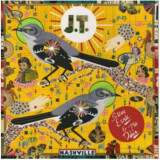
On August 20, 2020 the world lost an amazing
light with the passing of Justin Townes Earle.
Justin was a vibrant songwriter who could play the
blues, country and rock ‘n’ roll all in the same
song. In his short career, Justin released eight
albums and one EP that all manage to sound
classic and yet inventive.
Justin’s father, Steve Earle, pays tribute to his son
by recording ‘J.T.’, an album of songs written by
Justin. The album consists of ten Justin Townes
Earle songs as well as one song written by Mr.
Earle shortly after Justin’s passing.
‘J.T.’ features fan favourites such as ‘Harlem River
Blues’, ‘Far Away In Another Town’ and
‘Champagne Corolla’, along with lyrically heavy
songs like ‘The Saint of Lost Causes’ and ‘Turn Out
My Lights’.
‘J.T.’ is a loving tribute to a loved son and beautiful
songsmith who left this Earth too early. But in his
wake, Justin left a wealth of beauty.
Electric Jalaba comprises six accomplished musicians with an empathy thatfeels telepathic and a groove that immerses. In Arabic, the mother tongue ofMoroccan-born singer and guimbri player Simo Lagnawi, a leading practitionerof Gnawa music in Britain, they call this indefinable quality, "El Hal" - "Thefeeling". "It's the feeling that comes when we're playing and totally forgetting where weare," says producer and bassist Olly Keen. "The feeling of being grabbed by themusic and lost in the groove." 'El Hal / The Feeling' is the new third album fromElectric Jalaba and their first release in five years. It's a multi-faceted work thatfinds the band tighter than ever, deploying a vast cache of influences across ninetracks improvised and developed in their south London studio then deftlyproduced by Keen. Some tracks pay homage to the origins of Gnawa music,whose repertoire of Arabic-language praise songs contains remnants of WestAfrican dialects - Bambara from Mali, Fulani and Hausa from the Sahel region -that point to a centuries-old migration. "The trance-inducing effect of Gnawa was what hit us first. It was visceral, heartstopping," continues Olly, whose siblings - producer / keys player Henry Keen,guitarist / multi-instrumentalist Nathaniel Keen and singer / multi-instrumentalistBarnaby Keen - make up Electric Jalaba alongside revered Anglo-Italian kitdrummer Dave De Rose and Simo on vocals, krakeb and guimbri. "Simoselected the chant from the traditional song suites and, as a band, we extendedthese short pieces of ceremonial music and experimented with sound andstructure," explains Olly. Tracks include the Juno-led dancefloor single 'CubailiBa', 'Agia Hausa', a multi-layered wig-out that partly takes its inspiration fromSenegal's fiercely percussive mbalax rhythms and 'Daimla', a gloriously dubbyode to Allah and iconic maalems including the late Mahmoud Guinea. "There's avery strong rhythmic element within the band but because of our differentperspectives but the melodic components are really unique as well," says Henry.That feeling of being outside of yourself but totally within yourself at the sametime... That's what all of us, collectively, are striving for."
PHILLIP BALLOU Pittsburgh-born Phillip Ballou’s earliest years were spent in the gospel field; after he moved to New York City in the ‘70s, he teamed up with Bennie Diggs and Arthur Freeman, founding members of The New York Community Choir and singer Arnold McCuller to form the group Revelation. The quartet recorded for RSO Records, scoring some R&B success in the US with tracks like “Get Ready For This” and “You To Me Are Everything,” touring the Bee Gees among others. Phillip also sang on albums by NYCC recorded for RCA Records and continued with Revelation until 1982. Frequently hired for sessions in and around New York, Phillip teamed up with UK soul music journalist David Nathan (who he’d met in 1974 during Nathan’s first US visit) and John Simmons, formerly a member of The Reflections, another New York vocal group to write a series of songs for his own proposed solo record deal. Although a contract did not materialize, one of the songs – “Ain’t Nothing Like The Love” – got some interest from famed Philadelphia producer Thom Bell who presented it to The O’Jays. Ultimately, the tune was turned down by Kenny Gamble and John Simmons, by then musical director for Stephanie Mills, recorded his own version for a small independent label in 1981. Phillip continued his own musical journey, touring and recording with James Taylor and Todd Rundgren. In addition, Phillip’s name graced recordings by George Benson, Billy Ocean, Kashif, Nona Hendryx, Jonathan Butler, Teddy Pendergrass and Melba Moore; in 1981, he began recording with Luther Vandross and became a part of Luther’s touring band for many years, as well as singing on productions by Luther on Aretha Franklin, Dionne Warwick and others, continuing his association with him until Luther’s 2003 stroke. Phillip returned to his gospel roots in 2004 as Minister of Music at a Brooklyn church and passed away in March 2005, aged 55 .We are proud to bring you Phillips second single on Super Disco Edits, and perhaps his best! "We'll be together" is an uplifting song with an almost gospel tinged melody. But the songs lyrics portray a love thats just about to blossom.
Snips is the founder of Barbershop Records and co founder of Livin Proof, with over 15 years experience as one of Londons most prolific DJs and over 10 years worth of production credits across Hip Hops underground. 2018 has seen Snips emerge as a budding solo artist, fusing the production styles of Hip Hop, House, Soul and Funk in the same fashion as he is known to do behind the turntables.
With his debut album "The Barbershop" making waves on both sides of the Atlantic and his Single "The Product" On Classic Records garnering support from a cross genre selection of heavyweights such as Karizma, Benji B, Eli Escobar, House Shoes, J Rocc, DJ Spinna and Henry Wu, Snips returns on his own label Barbershop Records and delves into Edit territory once again with a second limited 45'. This release delves into some modern soul and jazz, flipping some new age cult classics to club friendly future anthem
Record Kicks presents "The Black Stone Affair" the lost Italian Cinematic Masterpiece by Whatitdo Archive Group on limited edition 45.
For the first time ever, Record Kicks is pleased to announce the release of the long lost soundtrack by Whatitdo Archive Group to the Italian Cinematic Masterpiece "The Black Stone Affair''. The Soundtrack will be released on April 09 on Gatefold LP, CD and Digital Download. The first extract from the movie soundtrack is a limited edition 45 vinyl featuring "The Return of Beaumont Jenkins" on side A and the non-album bonus track "La Pietra" on side B. The 45 will be released in limited edition to 500 copies worldwide next March 05.
Long thought to be lost alongside the movie itself by the production studio, the soundtrack's master reels were recently recovered and its audio meticulously restored and remastered by J.J. Golden in Ventura, CA. The movie itself was understood to be unusual for its time: a globetrotting adventure/western-noir written and directed by aspiring visionary, Stefano Paradisi. Unfortunately for Paradisi, the tragic loss of his masterpiece also meant the end of his short lived career in movies. People who worked on the film have been cited as saying this film was going to be a turning point in Italian cinema and henceforth put Paradisi on the map alongside the likes of Fellini and Antonioni.
While the movie never saw the light of day, the soundtrack by obscure band Whatitdo Archive Group has thankfully been recovered. The music itself is staggering to hear and this limited edition ultra groovy 45 is just a little appetizer of what you'll be hearing on the LP. Rare groove and soundtrack fans don't sleep on it.
Mwandishi: one of the most influential combos in the history of electric Jazz. This is Herbie Hancock's creature caught live at the Juan-les-Pins Jazz Festival in France on July 21st, 1971. H. Hancock - piano and Fender Rhodes, Bennie Maupin - saxes, bass cl. and flute, Eddie Henderson - trumpet, Julian Priester - trombone, Buster Williams - bass and Billy Hart - drums. A highly progressive form of modern Jazz based on the mix of different elements. Some sort of Afro-Electric-Funk sound journey where waves of multiple pulsating sounds develop in a continuous alternation between tension and release. A marvelous band for which live performances often show more than studio recordings.
Tape
Dylan Henner is back on Dauw with his new album "Great Prairie Plains: studies of American Minimalism". The album is a celebration of two pieces of music that he loves and have been hugely important to his musical life and education.
The album starts with an arrangement of Terry Riley's In C. During his school-time, Henner was allowed by his music teacher - with plenty of persuasion, in an environment of mostly much straighter classical music - to study this piece. He not only had a deep familiarity with it, but also the pdf scores that he transcribed for his homework. The arrangement was created mostly with the marimba, as an instrument that can layer very deeply without muddying the frequency range and also includes some synths, piano and a VST choir.
“I tried to balance my boundless admiration for the piece with a personalised arrangement. It would be pointless to copy Riley's original - it's too good - but I can at least try to do well by it.”
Alongside In C is an arrangement of Su Tissue's 2nd Movement, from her near-mythical "lost" album Salon de Musique. After trying to buy a copy of this record for years - they are so scarcely found he suspects he never will – Henner wondered if the next best thing would be - instead of owning a copy - to create his own copy. He started this arrangement with as much faith as he could. According to Henner, Su’s work is too rare to warrant changing, but instead should be honoured with autencitiy.
“It's not until the end of the piece that my arrangement begins to take a different shape to Su's. Once I started playing along on the piano, the rest fell into place.”
Dylan lives in Brighton, works as a photographer's assistant for his day-job and plays analogue synths, tuned percussion and cello. Last year Dylan released well-received albums on Dauw and AD 93 (fka Whities) among others. Even though he is a relatively new name, with these albums he already came to the fore as a promising artist within the electro-acoustic field.
a 01. In C [Terry Riley]
[b] 02. 2nd Movement [Su Tissue]
[a] 01. In C [Terry Riley]
[b] 02. 2nd Movement [Su Tissue]