A first listen might suggest this is a new production emerging from the
legendary funk scene of Minneapolis.
Wrong by far! It is in fact three Swiss musicians who are boosting funk to new
heights on their self-titled album ‘The Next Movement’.
J.J. Flueck, Pascal “P” Kaeser and Sam Siegenthaler form the explosive helvetic
Trio, with their music unmistakably fusing the influences of R&B, funk and blues
from James Brown, Prince, Jimi Hendrix to Miles Davis on this album. And they
do it in skilful way with near sonic perfection.
Cerca:hendrix
Givin' It Back is the ninth album released by The Isley
Brothers on their T-Neck imprint in 1971. After years of having white Rock acts covering their most famed material, particularly, 'Shout' and 'Twist And Shout', the Isleys decided to do the same to music made famous by white artists such as Stephen Stills, Eric Burdon and Neil Young.
Among the songs they covered were 'Spill The Wine',
'Love The One You're With', the social commentary medley of 'Ohio' and 'Machine Gun' (from Jimi Hendrix), 'Fire And Rain' by James Taylor and Bob Dylan's 'Lay
The Isleys' perseverance paid off when their covers of 'Love
The One You're With', 'Lay Lady Lay' and 'Spill The Wine' became charted hits. Bill Withers plays guitar on the Isleys
“One of the vital pieces in the jigsaw puzzle of ’90s British rock music.” Pat Gilbert, Mojo magazine While his own name has yet to grace an album front cover, for more than a twenty years Gem Archer has been a key contributor to some of the UK’s highest profile guitar bands, beginning with Oasis in 2000, Beady Eye in 2009 and the touring version of Noel Gallagher’s High Flying Birds since 2015.
Before all that there was Heavy Stereo, caught up in the mid ‘90s music maelstrom where their only album ‘Déjà Voodoo’ took its place alongside Paul Weller’s ‘Stanley Road’, The Charlatans’ ‘Telling Stories’, Super Furry Animals’ ‘Fuzzy Logic’, Supergrass’s ‘I Should Coco’, The Boo Radley’s ‘Giant Steps’, Ride’s ‘Carnival Of Light’ – and, of course, ‘Definitely Maybe’ and ‘(What’s The Story) Morning Glory?’ by Oasis. It is easy to understand why any album could get overlooked in such exalted company. ‘Déjà Voodoo’ and the four singles – ‘Sleep Freak’, ‘Smiler’, ‘Chinese Burn’ and ‘Mouse In A Hole’ – all display Gem’s deeply held affection for old-school rock’n’roll values. In 1994/95, the outside world came into sync with his fondness for The Jam, Sly Stone, Hendrix, The Beatles, the Stones, The Small Faces, Motown, Stax, glam rock, punk rock and all other points on the compass of rock’n’roll cool, which coalesced into what became known as Britpop. And while those influences are in ‘Déjà Voodoo’ for all to hear, the album is far from derivative; this is a collection of well-constructed pop songs that still retain their swagger and zest.
Unavailable since it was first released on Creation Records in 1996, this new 25th anniversary 180g clear vinyl edition is a faithful recreation of the original 12-track LP.
’Angelo lost his shit over it. Aaliyah’s 3rd favourite track of all time is on it. David Bowie rocked up with it to a TV interview, declaring it “the most exciting sound of contemporary soul music”.
In 1996, Lewis Taylor released his self-titled masterpiece. A true modern classic, it’s an album that was years ahead of its time. Forget 25 years ago, it could easily have been made in 2021. An effortless blend of neo-soul, sophisticated pop, smart grooves and laid-back white funk, it enjoyed rapturous reviews from critics and music legends alike. But the album never managed to make an impact and given what was likely a token vinyl release at the time, the original records have long since been near-impossible to find. Lewis Taylor’s Lewis Taylor remains a holy relic for some and criminally unknown to most.
Lewis Taylor’s impeccable influences created a dazzling sonic palette: the LP as a whole suggests the visionary brilliance of Prince; the vocal stylings evoke the yearning power of Marvin Gaye; the effortless guitar playing shares the virtuosity of Jimi Hendrix; the haunting tones conjure Tricky; the innovative production and engineering invite comparisons to studio mavericks like Todd Rundgren and Brian Eno; the multi-layered, complex harmonies flash on Pet Sounds-era Brian Wilson; the dark, drama is reminiscent of both Scott Walker and Stevie Wonder; the complex arrangements create textures and moods with the feel of Shuggie Otis on Inspiration Information; the bold experimentation is akin to progressive artists like Faust and Tangerine Dream; the atmosphere is in conversation with Jeff Buckley’s Grace… and we could go on. That might all sound like marketing hyperbole, but not as far as Be With is concerned. It is a genuine wonder how an album this good could’ve passed so many people by.
But despite all the reference points, the similarities are really only skin-deep because the album sounds truly original. It occupies its own distinct, strange universe that feels dark and brooding one moment, bright and joyous the next. Ultimately, Taylor sounds like Taylor.
Although you wouldn’t know it from the credits, the album wasn’t the work of Lewis alone. Sabina Smyth gets an executive producer credit on the original sleeve, but in fact she worked with Lewis on the production and arrangements, did a lot of the backing vocals and she co-wrote Track, Song, Lucky and Damn with Lewis.
Lewis clarified all this in a Soul Jones interview with Dan Dodds in 2016. He explains how not giving Sabina the credit she was due at the time was an unfortunate consequence of where his head was at and he’s now trying to set the record straight.
Together they created an exquisite and sensually-charged record, with a freshness to the writing that makes the songs catchy, melodic-yet-deep and sometimes even funky. The music is predominantly guitar-led and a mixture of organs and synths, live drum loops and electronic percussion make for a sort of modern soul backing orchestra.
On the surface the album is gorgeously laidback, but beneath the lush, sometimes slick, production there’s a murkiness in the seriously gritty funk/hip-hop instrumentation. Lewis Taylor can be a claustrophobic listen. Even its one-word, often seemingly throw-away track titles add to the sense of unease. In its most positive moments, there’s still a sense that things aren’t quite right. The magic comes from this compelling tension.
The languid, strutting “Lucky” is a sensational opening statement. Sinuous electric guitar winds around the shaking percussion with a killer bass line rattling your bones, and Lewis’s voice is sublime. Its six-and-a-half unhurried minutes manage to distill the work of Marvin, Al Green and Bobby Womack because yes, it’s *that* good. Up next is the tough, dusty drum and jazzy, unsettling psych-guitar workout of “Bittersweet”. Aaliyah described it the “perfect song”, which says it all. By turns loping and soaring, tightly coiled and blasting free, 25 years on its discordant, swaggering majesty still sounds like future R&B.
The swinging, blue-eyed funk of “Whoever” oozes sophisticated sunshine soul for hazy days before “Track” sweeps in. The music tries to lift us up, beyond the reach of the vocals trying to drag us back down as Taylor sings “my mood is black as the darkest cloud”. The spare, dubby electro-soul of “Song” closes out the first half of the album with barely contained dread as it creeps towards the lush, synth-heavy coda.
The smouldering “Betterlove” eases us into the second half, coming on like a languorous response to the call of “Brown Sugar”, before sliding into the shuffling, softly-rocking “How”. Somehow the remarkable “Right” manages to both warm things up and smooth things out even more. Taut yet luxurious, it’s definitely not wrong.
“Damn” was to have been the album’s title track and you might also be able to hear its influence on D’Angelo’s Voodoo, maybe most obviously in the chaotic closing moments of “Untitled (How Does It Feel)”. Building to a screeching wall of noise that suddenly cuts dead, “Damn” sounds like the natural end to the album, with the celestial a cappella “Spirit” serving as a heavenly reprise.
When it came to the sleeve, art director Cally Callomon heard Taylor’s music as “sideways off-camera glances at a plethora of influences he had” and wanted to interpret that visually: “I went off into night-time London to see if I could find his song titles in off-beam low-fidelity photographs. I even found a shop called Lewis Taylor”. With a slide for each of the album’s ten tracks, nine of them are on the inner sleeve and the slide for “Damn” makes the front cover. It should’ve been the album’s title, but concerns over distribution in the US scuppered this.
One of UK soul’s most fascinating artists, Andrew Lewis Taylor is an enigmatic figure and a hugely under-appreciated talent. A prodigious multi-instrumentalist who got his start touring with heavy blues/psych outfit the Edgar Broughton Band, he released two albums of psychedelic-rock as Sheriff Jack before Island signed him on the strength of a demo alone. But Taylor was destined to be one of those artists unable (or unwilling) to be pigeonholed and despite the best efforts of Island’s publicity department the music never sold in the quantities it needed to or deserved to. Island eventually let him go in the early 2000s and in June 2006, Lewis Taylor retired from music.
Typical for the mid-90s, this CD-length album was squeezed onto a single LP for its original vinyl release. Simon Francis’s fresh vinyl mastering now spreads out the ten tracks over a double LP so nothing is compromised. And as usual, the records have been cut by Pete Norman and pressed at Record Industry. The original artwork has been restored at Be With HQ and subtly re-worked to work as a double.
This sprawling psychedelic soul opus really is a forgotten should-be-classic. We know that there are those of you who know, and as for the rest of you, we’re a bit jealous that you’re getting to hear Lewis Taylor for the first time.
Clear Vinyl
Eugene Synegal's early career as a teenager was the guitarist of Sam & The Soul Machine before moving to Los Angeles to join the group Sage and later in the 1970s recording on Lee Dorsey's Night People and The Neville Brothers records.
These previously unreleased recordings were birthed in the early 1970s, sometime during Eugene's trips back and forth between Los Angeles and New Orleans. A couple years after these recordings were immortalized onto 1/4" reel-to-reel tape an unusual crime scene involving Eugene and his girlfriend reads as if it was a chapter taken directly out of a pulp fiction novel. An Australian socialite named Patrica Galea, remained unsolved for 30 years. The robbers took $400, two diamond rings, a $1,400 cigarette lighter and two mink coats. They failed to collect Galea's $6,402 which was hidden in her freezer. This money was sent from Australia and was being used to fund Eugene's album as well as starting a new music publishing company in Hollywood. This was the life of Eugene. Playboy extraordinaire, jet-setter and guitar chops that would turn the head of Hendrix!! Around 2006 the owner of the West Hollywood apartment expressed a desire to learn more about its history and met with detectives who were unable to locate the file since it was buried in the cold cases section. The files were found, the case was reopened, solved and two men were arrested in 2007.
These recently unearthed 1970s recordings by Eugene are a reflection of his pure soul as well as a blend of psychedelia and funk that the band Sage was experimenting with in Los Angeles during that time period.
From a historical sense, these two recordings are significant because it bridges the historical and influential New Orleans music scene during the early 70's with the psychedelic rock and folk scene that was emerging just walking distance from the West Hollywood apartment that Eugene was living in with Galea during that time.
Eugene's unique guitar style paired with a deep-rooted gospel sensibility is a window into the artistry and songwriting capability of this incredibly talented man.
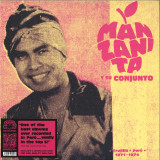
Following the 70s Peruvian cumbia compilation by Ranil last year, Analog Africa returns to Latin America to highlight the work of one of Perú’s undisputed masters of the electric guitar: Manzanita. This 13th release in the Limited Dance Edition Series includes 14 mostly instrumental compositions of electrifying Peruvian cumbia and guaracha. Manzanita's unique guitar lines rest on confident foundations that shifts gears effortlessly. Limited Edition LP in Gatefold Cover pressed on 180g high quality virgin vinyl
"I was in Lima, hanging out with collector-extraordinaire Victor Zela, who had spent the previous few years pouring his passion for Peruvian Cumbia into the blog „la cumbia de mis viejos“, a trove of incredible music. But after the birth of his first child, his priorities shifted and he decided to part with some of his rarest LPs. I was one of the lucky few given an early chance to examine his treasures, and when I picked up the album Manzaneando com Manzanita, Victor said: “Take it! its one of the best LPs ever recorded in Perú … easily in the top five”. That was all the encouragement I needed … two years later many of the songs from that masterpiece have made it onto Manzanita y su Conjunto, a compilation of electrifying Cumbia sides from Manzanita’s golden era.
Berardo Hernández – better known as Manzanita – first surfaced during the psychedelic Cumbia craze. At the head of the scene were the magnificent Los Destellos, whose leader, Enrique Delgado, was such a six-string wizard that other guitarists found it impossible to escape his shadow. But when Manzanita arrived, his electric criollo style sent shockwaves through Lima’s music scene and posed a serious threat to Delgado’s dominance as king of the Peruvian guitar.
Manzanita had come to Lima from the coastal city of Trujillo, five hundred miles up the coast – a place where Spanish, African and indigenous populations had been living and making music together for centuries – and came of age at a time when the first wave of psychedelic rock from the US and UK was starting to sweep the airwaves. But the sounds of Cream and Hendrix disappeared from the radio just as quickly in 1968 when Juan Velasco seized control of the country in a military coup. The new regime, which favoured local traditions over cultural ‘imports’ from the north, was a blessing in disguise for the Peruvian music scene.
Record labels flourished as new bands, raised on a hybrid diet of electric guitars and Cuban rhythms, rushed in to fill the vacuum created by the lack of imported rock. A new genre, known as Peruvian cumbia, was born and Manzanita quickly became one of its most original voices.
Starting in 1969, Manzanita y su Conjunto released a steady stream of singles that used Cuban guaracha rhythms as the foundation for dazzling electric guitar lines. After countless 45s and several years on the touring circuit, the band signed to Virrey, an important Peruvian label, and recorded two LPs acknowledged as masterpieces among aficionados of tropical music. Most of the songs on Analog Africa’s new compilation Manzanita y su Conjunto are drawn from those legendary sessions of 1973 and 74.
Although he scored a few more hits in the later 70s, his dissatisfaction with the music industry caused him to withdraw from the scene for several years; and when he finally retired for good, the golden age of Peruvian cumbia was a distant memory. But when Manzanita was at the top of his game he had few equals. Victor Zela was right: this is some of the best music ever recorded in Perú."
Re-mastering by: Cicely Baston at Alchemy/Air Mastering, London
Electric blues guitarist Melvin Taylor had been sporadically recording solo albums for 20 years when Dirty Pool arrived — and was somehow just beginning to find fame. Already a hit in Europe, it had taken a steady run of performing in Chicago’s famed blues clubs to slowly earn Taylor a well-deserved reputation as an equal talent among the giants before him, such as Otis Rush, Albert King and Stevie Ray Vaughan.
While early records like Melvin Taylor Plays the Blues For You show off an equally amazing jazz side, Taylor traded away his Wes Montgomery-inspired runs for more Luther Allison/Jimi Hendrix attacks with the formation of the trio Melvin Taylor and the Slack Band in the mid ’90’s.
The title song of the second album by that outfit, “Dirty Pool,” is actually more the balls-to-the-wall, no-compromise, hard-rockin’ electric Texas blues of Vaughan and Johnny Winter than the sweet Chicago soul of Buddy Guy.
Indeed, three tracks on this 1997 release, including “Dirty Pool,” were SRV tunes. Other standards, like “Kansas City” and “Floodin’ in California” also have more of a Lone Star State approach to them. But the Jackson, Miss.-born Taylor’s guitar is cleaner than his forebears and technically, he even surpasses them, yet the anger and sorrow of the blues is readily evident in his playing.
This rare combination of qualities really comes out in a slow blues tune like his solo in “Dirty Pool,” which after repeated listens, still makes me head shake in disbelief when I hear it.
“Too Sorry” is a good example of how well Taylor fares when he treads in Jimi Hendrix territory, whereas his rhythm work is the best I’ve heard from a lead guitarist since Vaughan; listen to “I Ain’t Superstitious,” “Born Under A Bad Sign” and the funky “Telephone Song” for your proof.
It also helps that Taylor’s drummer James Knowles is well in synch with him, while Ethan Farmer completely owns the low end of the sound. Farmer’s peppering bass lines in and “Floodin’ in California” is the textbook way electric blues bass should be. Overall, a tight little band.
Taylor’s vocals certainly won’t draw any comparisons to the Wide-Brimmed–Hatted One but he holds his own just fine until it’s cuttin’ time. This is right at the top of my list of best blues guitar playing on record over the last couple of decades. If you decide to give this one a listen, prepare to be blown away.
After getting a handful a couple of weeks back, we now have a good supply of this wonderful album coming in: in for 14th May release date.
With her ambidextrous and pedidextrous, multi-instrumental
techniques of her own making and influences ranging from video
games to West African griots subverting the predominantly
white male canon of fingerstyle guitar, Yasmin Williams is truly
a guitarist for the new century. So too is her stunning sophomore
release, Urban Driftwood, an album for and of these times.
Though the record is instrumental, its songs follow a narrative
arc of 2020, illustrating both a personal journey and a national
reckoning, through Williams’ evocative, lyrical compositions.
Williams, 24, began playing electric guitar in eighth grade,
after she beat the video game Guitar Hero 2 on expert level.
Initially inspired by Jimi Hendrix and other shredders she
was familiar with through the game, she quickly moved on to
acoustic guitar, finding that it allowed her to combine fingerstyle
techniques with the lap-tapping she had developed, as well as
perform as a solo artist. Deriving no lineage from “American
primitive” and rejecting the problematic connotations of the
term, Williams’ influences include the smooth jazz and R&B
she listened to growing up, Hendrix and Nirvana, go-go and
hip-hop. On Urban Driftwood, Williams references the music
of West African griots through the inclusion of kora and hand
drumming of 150th generation djeli Amadou Kouyate, on the
title track.
Yasmin Williams is virtuosic in her mastery of the guitar and
in the techniques of her own invention, but her playing never
sacrifices lyricism, melody, and rhythm for pure demonstration
of skill. Storytelling through sound is important to her too. As
detailed in the liner notes, the songs on Urban Driftwood were
completed during the COVID-19 pandemic and subsequent
lockdown, in the midst of a national uprising of Black Lives
Matter protests in response to the killings of George Floyd and
Breonna Taylor. But while Urban Driftwood illustrates current
struggle, can’t help but open-heartedly offer a timeless solace.
An acid rock LP on the Isley Brothers’ T-Neck label? Yes, the unlikely collaboration resulted from a Jimi Hendrix concert at New York’s Syracuse University, supported by the Isleys and mixed soul-rock group, Soul Survivors, who had worked with Tom Bell and Gamble & Huff. When Soul Survivors morphed into Privilege, they convinced the Isleys to sign them to T-Neck, the result being this rare self-titled album, a fine set of hard-rocking originals, expertly produced by the Isleys with plenty of stereo panning, blistering guitar from frontman Edward Leonetti, atmospheric organ from Paul Venturini and melodic bass lines from Jack Douglas, later an engineer for Aerosmith, Lou Reed and Cheap Trick. A true classic, not to be missed!
‘Sharecropper’s Son’ is a soulful masterpiece and career-defining album
from Robert Finley, “the greatest living soul singer”, written by Finley and
co-written and produced by Dan Auerbach.
With songwriting by Finley, Auerbach, Bobby Wood, and contributions from respected country songwriter Pat McLaughlin, ‘Sharecropper’s Son’ also features
an all-star band, who have worked with everyone from Elvis to Wilson Pickett,
including guitar expertise from Auerbach himself.
Recorded at Easy Eye Sound studio in Nashville, Finley’s formidable vocals and
lyrical stylings take centre stage, sharing personal stories inspired by his Louisiana country childhood during the Jim Crow era south. His tales of pain and joy
uplift as Finley reflects on his belief that you are never too young to dream and
never too old to live.
The fire behind the conflagrant performances on ‘Sharecropper’s Son’ is ignited by 67 year old Finley, who has cited a range of vocal influences, including
Al Green, Jimi Hendrix, Ray Charles, Elvis, James Brown and The Beatles, all
inspiring his genre diverse approach. Finley stated, “I want people to understand that I can’t be kept in a box. I like to do all kinds of music - everything that
means anything to me, from gospel to blues to soul to country to rock ‘n’ roll.”
“A blind carpenter and army vet is revealed, belatedly, to be a herculean soulman.” – UNCUT
- A1: Need Somebody To Love
- A2: Quarter Moon
- A3: One More Chance
- A4: Things Aren’t What They Used To Be
- A5: Love Is A Golden Word
- A6: Causing Complications
- A7: Just Can’t Let You Go
- A8: Hippy Hippy Shake
- A9: I’m Perfect
- B1: I Thought You Were My Friend
- B2: Stuttgart Special
- B3: Run Run Belinda
- B4: Who Knows
- B5: Janine
- B6: I Believe
- B7: Boy Of The City
- B8: Can’t4Lieve It’s True
17 Track compilation of all of their studio recordings, remastered and pressed on Electric Blue Vinyl. Presented in gatefold sleeve with never seen before photographs ,a printed lyric inner sleeve and poster.
The VIP’s were formed in 1978 while at Warwick University. Within weeks they were gigging at clubs in the Midlands, often on the same bill as THE SPECIALS in Coventry. Soon they found a manager, Clive Solomon, who with Timmy Mallet (now a TV and Radio presenter) and both students at the university, financed the group’s first single the EP ‘Music For Funsters. In the summer of 1978 they built up a loyal following in London. The single was picked up by John Peel, who played it constantly on his BBC radio show through the year. The 3 track EP, featuring ‘I’m Perfect’, ‘I Believe’ and ‘Boys of the City’ was released on Clive Solomon’s own ‘Bust’ label.
In 1979 the VIP’s could be found playing all over the country, frequently on the same bill as Squire, stablemates on Clive Solomon’s label.
In early 1980 they went into Olympic Studios in Chiswick to record some tracks with ex-THE ANIMALS bass player and SLADE/Jimi Hendrix manager Chas Chandler. The track ‘I Thought You Were My Friend’ was recorded at these sessions A few weeks later a major record deal was agreed with Gem Records/RCA and ‘Causing Complications’ came out in March. To coincide with the release the VIP’s went on tour supporting SECRET AFFAIR.
After the tour the single ‘The Quarter Moon’ was released, another track produced by Mike Leander. It received extensive airplay around the UK and beyond, and was also picked as BBC Radio 1’s Record of The Week by DJ Mike Reid on his Morning Show, as well as being Radio Luxembourg’s ‘Power Play’ for two weeks. The constant touring, recording and radio play had earned them a spot on Top of The Pops but they were suddenly told -on the afternoon that they were due to appear - that an industrial dispute at the BBC had resulted in the show being cancelled. Disappointed, they continued to record and tour, this time with MADNESS, THE BEAT and DEXYS MIDNIGHT RUNNERS amongst others. This time Bob Seargent (of The BEAT and HAIRCUT 100 fame) was recruited to give ‘Need Somebody To Love’ that sparkle and edge to capture The VIP’s live sound on vinyl. Although perhaps the most representative of the band’s sound, Top of The Pops again eluded them.
By the end of 1980 the VIP’s were selling in Spain, Germany, Italy and France through the RCA label but they seemed to be losing heart with the business. Illness -Jed had been touring with a collapsed lung - and tensions saw the band play their last concert at Leicester University. A fourth and final GEM single, ‘Things Aren’t What They Used To Be’ (a song taken from their earlier Mike Leander recording sessions) proved to be their last. With several songs still to be recorded, it was a frustrating time for all.
Paul Shurey and Guy Morley has already made alternative plans for THE NEW VIP’s and recruited Simon Smith from THE MERTON PARKAS to play drums while Paul returned to his native keyboards. With Tony Conway on guitar and Andy Godfrey on bass they became MOOD SIX.
Paul Shurey played a central part in the birth and proliferation of the Rave movement in the 80’s, 90’s and 2,000’s, initiating a great a great many DANCE RAVES all around the world. Very sadly he died in 2017. He was also a gifted artist/cartoonist, and it’s his picture which graces the album’s sleeve. He is a brother very greatly missed.
Guy Morley works in film editing and Andrew Price is involved in developing community projects in and around his native Bristol.
“We became lifelong friends and shared a great and very exciting rock and roll dream.”
Needle Paw is the first solo album by Nai Palm, the lead singer and composer of R&B future soul outfit Hiatus Kaiyote. A two-time Grammy nominated singer, songwriter and musician from Melbourne, Australia, Nai Palm is a composer, instrumentalist, producer, vocalist and poet who approaches all of these self-taught disciplines with an intuitive, infectious grace. This gift has sent her and her band Hiatus Kaiyote on a journey to sculpt songs that have been received and treasured across the globe. Their success set the stage for Nai’s first solo effort.
Comprised almost entirely of her guitar playing and vocal arrangements, Needle Paw is Nai Palm’s self-imposed challenge to explore the potential for immortality and timelessness within her music by stripping away the produced layers to focus on the element that is closest to the source of the human soul: the voice.
Needle Paw is the rawest glimpse into Nai Palm’s musical world. It is dreamlike, honest, and beautifully transparent, revealing her musical ruminations to listeners with a courageous vulnerability and artistic generosity. Nai sees this album as a reminder to musicians that they don’t have to rely on production to expose their gifts.
Needle Paw features acoustic versions of Hiatus Kaiyote favorites “Atari,” “Mobius,” “When The Knife,” “Molasses,” and “Borderline With My Atoms”, as well as covers of songs by David Bowie (“Blackstar”), Radiohead (“Pyramid Song”) and Jimi Hendrix (“Have You Ever Been (To Electric Ladyland)”).
- 1: Leo'flash Return To The Underworld
- 2: All Flights Cancelled
- 3: Ding Dong. You're Dead
- 4: Gimbal
- 5: Magic Moshroom
- 6: The Art Of Being Jon Balkovitch
- 7: Four Candles
Hedvig Mollestad Thomassen - guitar/Ellen Brekken - bass/Ivar Loe Bjornstad - drums. Only nine months after her momentous debut solo album Ekhidna, the guitarist is back fronting her trio. With their previous album, Smells Funny, this explosive and expansive trio experienced a breakthrough of sorts, having gone from strength to strength through five albums since their 2011 debut Shoot!, gathering respect from both rock and jazz camps, sharing big stages with the likes of John McLaughlin and Black Sabbath, and being equally comfortable on jazz and rock stages. Hedvig enforced this breakthrough with Ekhidna, appearing on both jazz and rock best of 2020 lists, like coming in third in Prog's "Album of the Year" poll. She was included in Downbeat's "25 for the future" and received heaps of international attention and great reviews.With the hypnotic title track, the spacious ballad Four Candles and generally a more varied mood, Ding Dong. You're Dead. is the trio's most dynamic album to date. That said there's still enough solid and creative riffing here to satisfy the headbangers, as well as the jazzheads, as they further explore the free and open landscapes most notably started with their Black Stabat Mater album and continued with Smells Funny. As Nate Chinen wrote about "Black Stabat Mater" in JazzTimes: Her trio, which has Ellen Brekken on bass and Ivar Loe Bjornstad on drums, caught my ear then with its audacious style references: the loose swagger of early Black Sabbath; the density and prowl of peak Led Zeppelin; the expeditionary urge of Jimi Hendrix; the incantatory fervor of John McLaughlin. As recent performances have shown, online and in the flesh, this trio radiates confidence and have become a surefire hit on the Norwegian live scene. Hedvig first picked up her mother's acoustic guitar at ten, before discovering a whole new world through her father's jazz and rock record collection as a teenager. She was given her first electric guitar and amplifier as a confirmation present. Hedvig met Ellen and Ivar at the Music Academy in Oslo and asked them to join her after she received the Young Jazz Talent of the Year award at Molde International Jazzfestival in 2009. They have stayed together since, and all previous albums have been released on Rune Grammofon to wide international acclaim.
British Heavy Metal legends Saxon will deliver a full-roar-fun-down set of covers on March 19th 2021 (Silver Lining Music), with their latest album Inspirations, which drops a brand new 11 track release featuring some of the superb classic rock songs that influenced Biff Byford & the band.
From the crunching take on The Rolling Stones’ ‘Paint It Black’ and the super-charged melodic romp of The Beatles’ ‘Paperback Writer’ to their freeway mad take on Jimi Hendrix’s ‘Stone Free’, Saxon show their love and appreciation with a series of faithful, raw and ready tributes. Recorded at Brockfield Hall near York, UK, with a firm eye on the old school way using Marshall cabs, Marshall amps and real drums, Saxon approach the likes of Motörhead’s ‘Bomber’ (with added whistle!), AC/DC’s ‘Problem Child’, Black Sabbath’s ‘Evil Woman’ and a raucous Deep Purple’s ‘Speed King’ with refreshingly warm, unfiltered, “vintage” sounding renditions.
Byford takes on some new vocal challenges, which he duly smashes on the likes of Thin Lizzy’s ‘The Rocker’. Saxon do a supreme job of entertaining both themselves and their audience throughout Inspirations. For even more proof of the validity behind that statement, wrap your ears around their sparkling take on Toto’s ‘Hold The Line’ and consider Saxon’s Inspirations a mission accomplished.
Recorded in late 1996 and released in early 1997, this first album from the power Brussels based trio Rawfrücht, defies and questions the definition of genres, eras and musical movements. Ranging from minimal meditative dronish soundscapes, perfect for introspective journeys, to more 'groovy' moments, from noise rock to free rock-but-not-postrock unstable patterns - sometimes even within a single track - this album is a ride on undefined roads, no maps allowed, just instinct and the energy to always go further and deeper into charting new sonic territories
After the release of this first untitled album, names like those of Marc Ribot, Sonic Youth or King Crimson were frequently associated to it.
But this doesn't really define what this album, released for the first time on LP, really is about. Two guitars and drums. Swell Maps meet Parliament, shades of Hendrix. Can-erisms catching up with the ramblings of Gastr Del Sol. Secret & reserved side in the best tradition of the Chicago School: Tortoise, Rome etc.
Rawfrücht was: Hugues Warin and Teuk Henri (Sharko, Juniper Boots) on guitars and Thomas Van Cottom (Cabane, Venus) on drums. First time released on vinyl!
Hawkwind have always been associated with music festivals, most notably the free festivals, where Dave Brock has said that, at
those events, the band is not shackled to appease an audience by giving them what they expect and have paid to see. With that obligation removed, the band can relax and experiment more than usual and gigs become even more fun. Their sessions, where they played for free, sometimes with the Pink Fairies, at Canvas City, outside the official site of the Isle Of White Festival in 1970, are a matter of legend and Nik Turner gained much attention when he painted his face silver and was much photographed as a result. During his set, Jimi Hendrix referred to him as 'the cat with the silver face'. However, when we think of Hawkwind and festivals, the word Stonehenge leaps to the fore.
The band always loved being there, enjoying the whole event as well as the freedom of how and when they played. This was not a time of business, but a time of fun. The most important one of these was Stonehenge 1984, which proved to be the last festival before the authorities moved in the following year to block the festival from being set up and Hawkwind ended up playing a few miles away instead. It was the sad end to an era. It had taken place twelve times and, had it been allowed one more time, it would have become a public event and the powers that be were determined to prevent that from happening. Happily, the 1984 festival was recorded and filmed and the Hawkwind Solstice Eve and Solstice Morning were both preserved...and we should be grateful for that.
The fact that Hawkwind were playing for free didn't mean it was a basic show. As well as the line-up of Dave Brock, Harvey Bainbridge, Huw Lloyd Langton (who played the evening session, but not the following morning), Nik Turner, Alan Davey and Danny Thompson, there were half a dozen dancers, a mime artist and fire spitting. A free event, it was the ideal time to introduce the new rhythm section to the band in the form of Danny Thompson on drums and Alan Davey on bass, with Harvey moved to keyboards. A move which was to have a long term affect in the way he made music, leading to his solo career, as well as years playing synths for Hawklords, in years to come, after his stint as the Hawkwind keyboards player came to an end.. Danny fitted the bill comfortably and drummed for the band until he left in 1988, to be replaced by Richard Chadwick. Danny went on to play for other bands including Bedouin and Pre Med. He also recorded a cassette album called Skinwalker. Alan made a good team alongside Dave Brock and it can be seen on the video just how pleased he was to be playing alongside Dave Brock, a man whom he had only met for the first time in November 1982, backstage at the Ipswich Gaumont. He went on to be the longest serving Hawkwind bass player, before moving on to pursue solo projects and form a nmber of bands. So in terms of the line-up, Stonehenge 1984 had a notable impact on the formation of the band for a number of years and, indeed, the destinies of Harvey, Danny and Alan. As if that were not enough to make the event special in the annals of Hawkwind, they played an interesting and varied main set in the evening, featuring a blend of old and new Hawkwind songs, along with numbers from Inner City Unit and
Bob Calvert's Lucky Leif And The Starfighters album. In keeping with the relaxed atmosphere, there was a considerably extended
version of Ghost Dance, lasting around ten minutes. The sunrise set was special too, with a long, laid-back, jam at dawn, in fitting with the occasion.
A lovely and relaxing start to the day and the kind of jam they couldn't really play to a paying audience. It's good to have the
memories of this significant festival gathered together in three formats.
Enjoy this special set, which commemorates a special event, not only in the history of Hawkwind, but of the saga of Stonehenge festivals.
As bassist in the Jimi Hendrix Experience, Noel Redding made an indelible impression, but
guitar was his chief instrument since the age of 17, when he backed Neil Landon in The
Burnettes, and when Landon reconnected with Redding after a spell with Engelbert
Humperdinck, Fat Mattress was born with Humperdinck’s drummer, Eric Dillon, and
bassist/keyboardist Jim Leverton. This indispensable debut was the only LP to feature
Redding, the sound a pleasantly-melodic shade of psychedelic folk rock, with a few rough
edges. Reproducing the original fold-out poster cover, this edition has four bonus tracks from
the same sessions, two of which were issued on a 1969 single, the other two left in the can.
Limited 180gr vinyl reissue in poster sleeve, faithfully reproducing the original version.
Credited as one of the best late '60s German psych-rock albums, Bokaj Retsiem's ('meister Jakob' in reverse) Psychedelic Underground is an eccentric, soulful, acidn and fuzzy rockin' essay that clearly prefigures a part of the krautrock movement. Featuring Rainer Deigner, former guitar for the '60s beat German group Former Bonds, as the only credited musician and composer on this album (although other musicians assisted him on bass, keyboards, and that B3 Hammond and Leslie sound), this is basically Rainer's freaked-out tribute to his favorite children's song, 'Meister Jakob,' consisting in trippy instrumental sections, furiously savage E-guitar crescendos, amazing psych-rock improvisation, with just a hint of '60s US psych-garage. A real enthusiastic psych-kraut trip for fans of Vanilla Fudge, Hendrix,and Iron Butterfly.
Hailing from late-'60s Detroit, Black Merda (pronounced "Murder") were both aesthetically and musically way ahead of their time. When most black groups (including Parliament/ Funkadelic) were still sporting suits, singing about love and using a horn section, Black Merda had already become a tight guitar-heavy freak-funk four piece. By weaving guitar rock and psychedelia into soul and R&B they were the gods of the underground "black rock" movement which fell somewhere between Jimi Hendrix and Parliament and MC5. But it wasn't just about the music, the message was just as important.
- A1: On The Run (Live At Montreux 1991)
- A2: Kingdom Of Desire (Live At Montreux 1991)
- B1: I'll Be Over You (Live At Montreux 1991)
- B2: Africa (Live At Montreux 1991)
- C1: Jake To The Bone (Live At Montreux 1991)
- C2: Red House (Live At Montreux 1991)
- D1: Rosanna (Live At Montreux 1991)
- D2: I Want To Take You Higher (Live At Montreux 1991)
With hits such as ‘Africa’ and ‘Rosanna’, more than 40 million albums sold and over 40 years of a career, TOTO is without doubt one of the superlatives of music history.
In the early 90s they had a short period as a four-piece featuring Steve Lukather (guitar & lead vocals), David Paich (keyboards & vocals), Jeff Porcaro (drums & percussion) and Mike Porcaro (bass). The line-up, with some additional touring members, performed this concert at Montreux in July 1991 and went on to make the “Kingdom Of Desire” album released in 1992, shortly after the tragic early death of drummer Jeff Porcaro.
The Montreux show combines the then unreleased tracks from the “Kingdom Of Desire” album with classic hits and covers of songs by Jimi Hendrix and Sly Stone. Now this set will become available as a heavyweight double vinyl gatefold edition.
Old, but still functioning computers are simply scrapped, made redundant and without remorse left to corrosion and an existence without a task and no perspective. That this doesn’t need to be so, and that even computers with limited storage capacity can still take on a function in society, is illustrated by Alexei Shulgin’s outdated 386, now serving as a musician. Performing Classic Rock's Biggest Smash Hits! The Clash! The Doors! The Sex Pistols! Hendrix! and more... gone digital, gone to 8-bit computerized chip-music with a singing computer, with all the charme available to a text-to- speech- programm.
Created by Russian artist Alexei Shulgin, 386 DX was “the world’s first cyberpunk band.” Known for its live performances on city streets and in nightclubs, the performer is a dingy, singing PC that runs Windows 3.1, equipped with a vintage sound card and loaded with MIDI files of drums, guitar, and synth and accompanying lyrics.
The ironic comment delivered by Shulgin and his singing computer is well within the context of the performances by the 386 DX rockband, with which he “toured” Europe in 1998 and performed on nearly 60 occasions. This one- man-one-computer-show was based on a similar idea as his current installation: Shulgin presented himself as a performer carrying a keyboard, and by simply hitting a key elicited the text-to-speech singing, accompanied by very simple music and a few Seventies-style visual effects.Alexei Shulgin simply is the King of Cyberpop.
After a decade gap, northern soul legend Dean Parrish has once more hooked up with Acid Jazz Records to release a new single. ‘It’s Time - Purple Mountain Majesty’ is a towering slice of psychedelic soul, that references the work of Norman Whitfield and like those records, comes with a powerful message.
Known predominately in the UK as ‘the Northern Soul star that sold over one million records’, Dean is an esoteric musician who has worked with the likes of Jimi Hendrix, Santana, Herbie Mann and Bob Marley. All whilst following a career as an actor too, appearing in hit US TV series The Sopranos
The iconic status of his hit records such as I’m On My Way, Tell Her & Bricks, Broken Bottles and Sticks has meant that Dean has always been welcome in the UK. In the noughties, he released records with Acid Jazz and was the subject of a Radio 2 documentary by the late and much missed Pete Mitchell. Now 79, Dean has not stopped writing & recording. This latest single presents us with a stunning return to form.
- 2: Rapids
- 3: Hang-Ups
- 4: Do You Wanna Dance
- 5: Baby Boomerang
- 6: Truck On (Tyke)
- 7: Blues Jam
- 8: London Boys
- 1: Lady
- 2: Buick Mackane
- 3: Stand By Me
- 4: Precious Star
- 5: Fast Blues (Easy Action)
- 6: Dreamy Lady
- 7: All My Love
- 1: Midnight
Marc Bolan’s passions included the blues, soul, rock ‘n’ roll, hard rock and disco-soul, and his intent to explore these genres are all visited on this collection of classic album tracks and singles. His influences – Jimi Hendrix, Eric Clapton/Cream and Bob Dylan are all apparent amongst the material on Shadowhead, but the music here is unique.
Bolan’s creative fire produced a phenomenal catalogue of work: the material on this album was recorded over five
years (1972 – 1976), in seven studios, in five countries.
This record provides insights into Bolan’s creative process whilst keeping the essence of the music in its classic
form. Shadowhead showcases the development of tracks such as Precious Star and Groove A Little, and a track that
made its public debut on the CD release, Blues Jam (Dreamy Lady Session). Other tracks reveal many of the
instruments and sounds from the master tapes to enable the working processes to be more clearly understood.
This release marks the first time that this collection has been issued on vinyl.
a 1. Midnight [master version]
[b] 2. Rapids [working version]
[c] 3. Hang-Ups [master version]
[d] 4. Do You Wanna Dance [master version]
[e] 5. Baby Boomerang [master version]
[f] 6. Truck On (Tyke) [master version]
[g] 7. Blues Jam [Dreamy Lady Session] [jam]
[h] 8. London Boys [master version]
[i] 1. Lady [master version]
[j] 2. Buick Mackane [master version]
[k] 3. Stand By Me [working version]
[l] 4. Precious Star [working version]
[m] 5. Fast Blues (Easy Action) [master version]
[n] 6. Dreamy Lady [master version]
[working version]
Three stunning covers, the traditional ‘Hey Joe’ (as arranged by Jimi Hendrix), Screamin' Jay Hawkins ‘I Put a Spell on You’ (1957) and Love ‘She Comes In Colors’ (1967) for a revolutionary psychedelic album with hints of folk-pop and rare groove (thanks to master drummer Hal Blaine precious performance). Released on New York label Ampex Records in 1970, the record shows up a slight gospel tinge, thanks to backup vocalists the Blackberries. While Dennis Keller bluesy inflection brings to mind a Jim Morrison twin or maybe a proto Mark Lanegan. A must have Texas psych highlight !
Lyon-based freakers Chico Magnetic Band began as Chico & the Slow Death, its front man a
wild Tunisian-born singer otherwise known as Mahmoud Ayari, with drummer Patrick Garel,
bassist Alain Mazet and guitarist Bernard Lloret, later replaced by Bernard Monneri.
Conjuring a dark, excessive sound with unfettered guitar, pummelling drum rolls and Ayari
growling and grumbling over the top, this sole LP is culled from different permutating
sessions, with plenty of audio freakery and extreme effects from Jean-Pierre Massiera;
Hendrix cover “Cross Town Traffic” is rendered with love, despite Ayari’s hefty accent.
Legendary Turkish psych innovators Moğollar grace the Artone Studios in Haarlem for a masterclass in the original Anadolu psych roots, cutting a compendium of their rawest hits and most-wanted psychedelic rock classics – including the J.Dilla-sampled ‘Haliç’te Güneşin Batışı’ – for the latest edition of Night Dreamer’s essential Direct-to-Disc series.
In the beginning, there was Moğollar.
Formed at the end of 1967 with five young musicians, Moğollar were the original Anadolu psych originators. They were the first Turkish pop band who tried to blend the microtonal folklore and traditional instruments of rural Anatolia with Western pop and rock; they were the first Turkish psychedelic band to achieve overseas recognition, winning the prestigious French Grand Prix Du Disque in 1971 after a period in Paris; and they coined the very phrase ‘Anadolu Pop’ with their first album release. They were radical, innovative, and hugely popular, and when the great artists of the Turkish rock revolution appeared on the scene, Moğollar were already there – stars including Barış Manço, Selda, Cem Karaca and Ersen all recorded with them or briefly joined the line-up. Moğollar were and are the undisputed pioneers of the style.
More than fifty years after first forming, Moğollar materialised in the Artone Studios to give a masterclass in fuzzed-out folklore and Turkish psychedelic roots for Night Dreamer’s Direct-to-Disc series – a fitting follow-up to Night Dreamer’s BaBa ZuLa set, coming straight from the group who laid the foundations of the genre.
In 1971, having already released numerous singles, they secured an album deal with French label Guild International du Disques. Travelling to Paris that year, they recorded their first major statement, Danses Et Rythmes de la Turquie d’Hier à Aujourd’hui, a set later released in Turkey as Anadolu Pop. The album won a prestigious French award – the Grand Prix du Disque from the L’Académie Charles Cros, an honour that had been won in the past by Jimi Hendrix, Pink Floyd and Soft Machine. Moğollar, and Anadolu psychedelic pop, had arrived on the international scene.
In 1976, after many more releases and line-up changes, and pressured by an increasingly difficult political situation in Turkey, the group dissolved for seventeen years, and various members dispersing to exile in Paris and Berlin. However, after a petition from their fanbase asked them to reform, they agreed to play a comeback concert in 1993. It was a huge success, and reunited, they went on to record some of their greatest work. Led today by original member Cahit Berkay alongside original bass player Taner Öngür, and joined by Cem Karaca’s son Emrah, Moğollar continue to push their uniquely original brand of fuzz-scorched folk-rock and crackling Anadolu psychedelia forward into a new millennium.
For this Night Dreamer session, Moğollar spent two days in the Artone studios, recording sides A and B on the first day, and C and D on day two. With BaBa ZuLa’s Murat Ertel adding contemporary sonic punch behind the boards, the band revisited their most renowned hits to lay down energised new versions, and dusted off some of the most sought-after cuts from their enormous catalogue. The result is a showcase set by a band that are one of true pioneers in global psychedelic rock, and a masterclass in the true roots of the Anadolu psych sound: fuzzed-out, committed, and straight from the source.
Highlights of the set include:
-‘Haliç’te Güneşin Batışı’, an Anadolu psych classic which was first issued as the b-side to the ‘Ternek’ single in 1970, before being recorded again for the Danses Et Rythmes de la Turquie d’Hier à Aujourd’hui LP in 1971. A tense slab of roughneck psychedelia, the final breakdown of the original recording was sampled by none other than J. Dilla for the ‘Intro’ cut on Welcome To Detroit.
-‘Gel Gel’, a 1974 song with head-nodding tempo change, originally featuring Cem Karaca. It is here voiced by his son Emrah Karaca, now a permanent member of Moğollar.
-‘Çığrık’, a 1972 cut which originally appeared on one of Moğollar’s most coveted singles, is a funky psych-rock workout with an unforgettably riff, a ringing guitar motif, and twist of Led Zeppelin.
-‘Düm Tek’, the title track of the bands second full LP (Düm Tek, 1975), a raw psych screamer, laced with hardcore davul drum patterns.
-‘Bi’Sey Yapmali’, first recorded for the 1996 Dört Renk album, became the anthem of huge street protests that took place in Turkey that year after an investigation uncovered a huge network of state, police and mafia corruption.
-‘Dinleyiverin Gari’, a hit from the 1994 come-back album Moğollar 94, addresses a notorious corruption scandal of the era.
2023 Restock
Within the elusive confines of this film awaits an unreleased album that defies categorisation by a musician who in a different time and space would be revered amongst some of the most important exponents of progressive rock, dark ambient, Krautrock and pioneering synthesiser composition - not to mention sound design and art-house film scores. As a protégé of François Bayle and Luc Ferrari who had studied classical music before immersing himself in found-sound manipulation and oscillators, Alain Pierre quickly became an enthusiastic go-to man for sound sculpture and technical studio proficiency in Belgium’s small film industry.
To the many generations of dedicated fans of the visual work of Philippe Druillet it might seem virtually impossible to adequately “score” the alien, futurist landscapes of the man who many called the “space architect” (on account of his space age reductions of Gothic cathedrals, Art Nouveau, and Indian temples), but once you have heard the sonic reactions of Alain Pierre on this the first-ever dedicated Druillet documentary, Ô Sidarta, complete with his own equivalent sound palette, it will be difficult to “hear” Druillet’s world via any other composer. Despite Druillet’s truly incredible record sleeve designs for projects like cosmic disco ensemble Black Sun, concept albums such as Attention by Jean-Pierre Mirouze (composer of Le Mariage Collectif), Parisian metal bands like Sortilège, gatefold portraits of Jimi Hendrix, later period albums by William Sheller and most relevantly on albums by Igor Wakhévitch (Docteur Faust, 1971) as well as separate releases by both Richard Pinhas and Georges Grünblatt (both from the cosmic prog outfit Heldon), it is fair to say that this criminally unreleased album by Alain Pierre would conjure up the closest synergy between sound and vision that either artist would come close to.
The almost twelve of continuous music that Alain Pierre supplied for Ô Sidarta in 1974 fortunately appears in its entirety, unedited, as it does here for the first time ever away from its original broadcasts. Broadcast on Belgian and French TV that autumn, the film received a warm reception from Druillet fans, prospective film producers and space rock fans lucky enough to catch the short feature.
Throughout his career Alain’s commitment to conceptual music excelled within both cinematic realms as well as with the live arena. Never shying away from the constraints of transporting heavy synthesiser technolog and unpredictable analogue equipment to public spaces, Alain took his self-initiated “live” work very seriously. It was within his lesser-documented performances that you would find the closest sound to the music on Ô Sidarta, proving that the Druillet collaboration was naturalistic and conceptually close to Alain’s personal stylistic agenda. A rare recording of a one-off concert at the Université libre de Bruxelles in October 1976 reveals a very similar set of movements and soundscapes found on Ô Sidarta. This rare artefact has been included on the second side of this record under its original title Notions de physique intérieure (Notions Of Interior Physics) and stands as a perfect companion piece to Ô Sidarta - complete with a very similar “kit list” including the welcome addition of an Arp Sequencer, a Korg Vocoder and a Theremin (a back line whose total would far surpass any stationary studio of the era never mind a live show!).
By looking back at his original composition for one of his very first solo soundtrack commissions, Ô Sidarta, you can hear that back in 1974 Alain had already successfully managed to combine more unlikely musical influences, experimental techniques, and previously unheard soundscapes and studio tricks in to one twelve-minute score than most musicians fail to cram in to a whole discography. But still there is so much music yet to be discovered and Ô Sidarta is just the tip of the iceberg in the middle of a cosmic sea. Much like a character from one of Philippe Druillet’s books, Alain Pierre is a rogue pilot, steering his own ship in to the unknown, uncharted, unnoticed and quite unbelievable.
Big Crown Records is proud to present Ekundayo, Liam Bailey’s debut record on the label. This album is a long time in the making, and after listening, clearly worth the wait. It didn’t take a long time to record, but it did take years for all the stars to line up.
Bailey, born and raised in Nottingham, England, the son of an English mother and Jamaican father got his early influences from his mom’s record collection. Bob Marley and Dillinger, Stevie Wonder and The Supremes, The Beatles and Jimi Hendrix would eventually shape the singer/songwriter we know today.
Fast-forward to 2005, Liam is in London and doing the whatever-gig-you-can-get musician hustle with hopes of landing a record deal. And it was through this time that Liam first teamed up with Leon Michels, musician / producer luminary, and the co-founder of Brooklyn's own Big Crown Records. Liam flew out to New York and those first sessions together produced the now classic tunes “When Will They Learn” and “I’m Gonna Miss You” which still get spins at reggae spots around the globe. That trip helped kick off what was to follow next for Liam: a slew of record releases, label deals, and working with some wildly-notable mainstream producers. Even a just-famous Amy Winehouse heard one of Liam's apartment-made, lo-fi recordings through a friend and liked what she heard. Regardless of the audio quality, Liam's particular sound shone through—all guitar, warm-rough and genuine soul. She signed him to her label shortly after.
But, as the story can go with major labels, they already had an idea of the Liam they wanted to make, promote, and push. With the typical pay-day enticement, Liam did his best to fit into whatever shape they put him to. "'Maybe I can make it work,' that's what you're thinking," Liam remembers, "but, you quickly find out that you can't."
While Liam’s career went through a bunch of record industry twists and turns he and Michels stayed in touch and would regularly connect and collaborate. Finally, in 2019, the time was right to do a full-length album together. And this time, it would be free of any restricting major label presumptions and opinions. "This is the record we always wanted to make," says Michels. Set to release in November 2020, the album is called Ekundayo. And the word's meaning may be all you need to know to get to the essence of this project. It means "sorrow becomes joy" in Yoruba, a language spoken mostly in Western Africa. On the surface, Ekundayo is a weighty Reggae record, full of new and old textured riddims. But listen more in-depth, and you'll find subject matter that's more recognizable from a modern-day R&B record. An example of the former is the first single off the album. Sung to the most beautiful woman at the nightspot, "Champion" is a joyous anthem powered by a silly-thick Juno-bass throb and 808-proof drums. In short, "Champion" is dancehall-ready. But then there's a song like "Don't Blame NY." Moody and sparse with a somber drive, you might have to resist the urge to compare it to a Frank Ocean-ish type vibe. Liam's voice is in a different but fitting element here, showing stripped-back emotion and soulful restraint. Anyone who has lived and tried to thrive in New York won't have a hard time relating to the lyrics but they may join the masses who blame the city, while Liam points the finger at himself and sings praises to The Big Apple.
Credit to Leon's hand, elements of Jamaican production are everywhere, peppered throughout the record. Like the pitch-perfect organ stabs that push through the authentically positive "White Light," or the muted, percussive guitar strums that chug along in the back of "Fight." In the same vein of any fantastic singer/songwriter album, Ekundayo is a reflection of who Liam Bailey is, taking on topics and approaches he never would think of just a few years ago. Some evidence: "Ugly Truth" is about reconnecting with his biological father, a subject he once thought would be too personal to address. The journey from conforming to major labels to this latest record has been a long one for Liam, and a bit of a struggle. But struggle may be the only way we truly grow and evolve. With a new clarity of purpose, sound, and life, Liam has found joy out of those struggles. And it's called Ekundayo.
Big Crown Records is proud to present Ekundayo, Liam Bailey’s debut record on the label. This album is a long time in the making, and after listening, clearly worth the wait. It didn’t take a long time to record, but it did take years for all the stars to line up.
Bailey, born and raised in Nottingham, England, the son of an English mother and Jamaican father got his early influences from his mom’s record collection. Bob Marley and Dillinger, Stevie Wonder and The Supremes, The Beatles and Jimi Hendrix would eventually shape the singer/songwriter we know today.
Fast-forward to 2005, Liam is in London and doing the whatever-gig-you-can-get musician hustle with hopes of landing a record deal. And it was through this time that Liam first teamed up with Leon Michels, musician / producer luminary, and the co-founder of Brooklyn's own Big Crown Records. Liam flew out to New York and those first sessions together produced the now classic tunes “When Will They Learn” and “I’m Gonna Miss You” which still get spins at reggae spots around the globe. That trip helped kick off what was to follow next for Liam: a slew of record releases, label deals, and working with some wildly-notable mainstream producers. Even a just-famous Amy Winehouse heard one of Liam's apartment-made, lo-fi recordings through a friend and liked what she heard. Regardless of the audio quality, Liam's particular sound shone through—all guitar, warm-rough and genuine soul. She signed him to her label shortly after.
But, as the story can go with major labels, they already had an idea of the Liam they wanted to make, promote, and push. With the typical pay-day enticement, Liam did his best to fit into whatever shape they put him to. "'Maybe I can make it work,' that's what you're thinking," Liam remembers, "but, you quickly find out that you can't."
While Liam’s career went through a bunch of record industry twists and turns he and Michels stayed in touch and would regularly connect and collaborate. Finally, in 2019, the time was right to do a full-length album together. And this time, it would be free of any restricting major label presumptions and opinions. "This is the record we always wanted to make," says Michels. Set to release in November 2020, the album is called Ekundayo. And the word's meaning may be all you need to know to get to the essence of this project. It means "sorrow becomes joy" in Yoruba, a language spoken mostly in Western Africa. On the surface, Ekundayo is a weighty Reggae record, full of new and old textured riddims. But listen more in-depth, and you'll find subject matter that's more recognizable from a modern-day R&B record. An example of the former is the first single off the album. Sung to the most beautiful woman at the nightspot, "Champion" is a joyous anthem powered by a silly-thick Juno-bass throb and 808-proof drums. In short, "Champion" is dancehall-ready. But then there's a song like "Don't Blame NY." Moody and sparse with a somber drive, you might have to resist the urge to compare it to a Frank Ocean-ish type vibe. Liam's voice is in a different but fitting element here, showing stripped-back emotion and soulful restraint. Anyone who has lived and tried to thrive in New York won't have a hard time relating to the lyrics but they may join the masses who blame the city, while Liam points the finger at himself and sings praises to The Big Apple.
Credit to Leon's hand, elements of Jamaican production are everywhere, peppered throughout the record. Like the pitch-perfect organ stabs that push through the authentically positive "White Light," or the muted, percussive guitar strums that chug along in the back of "Fight." In the same vein of any fantastic singer/songwriter album, Ekundayo is a reflection of who Liam Bailey is, taking on topics and approaches he never would think of just a few years ago. Some evidence: "Ugly Truth" is about reconnecting with his biological father, a subject he once thought would be too personal to address. The journey from conforming to major labels to this latest record has been a long one for Liam, and a bit of a struggle. But struggle may be the only way we truly grow and evolve. With a new clarity of purpose, sound, and life, Liam has found joy out of those struggles. And it's called Ekundayo.
Walter ‘Junie’ Morrison released his third solo LP, Suzie Super Groupie, in 1976. A slick, smooth and soulful record, it’s a genre-melting tour de force with rich elements of proto-boogie, funk and jazz. In short, this is yet another essential album reissue from Be With.
The sublime “Suzie Thundertussy”, is a favourite of Harvey and Theo, and was brilliantly sampled by Madlib for Kanye West’s “No More Parties In LA”. The track opens with a sinuous synth and combines Junie’s storytelling abilities with an emphatic vocal style and funky arrangements. The powerful bass and sinister chords create an undeniable groove, and the explosive chorus is full of ambition and joy.
“If You Love Him” is a great, mid-tempo soul song. With a swinging jazz-infused middle-eight, it demonstrates Junie was much more than a mercurial funkateer. The laconic groove of “What Am I Gonna Do” recalls “Fresh”-era Sly Stone, whilst the frantic “Super Groupie” showcases his sharp imagination and sense of fun. The lyrics range from humorous to dirty, all fuelled by an infectious groove and tight horn arrangements.
The P-Funk of B-side opener “Surrender” bounces and sparkles, with a strutting Junie backed by great harmony vocals and joyous horns. “Suzie” is a sleek, softer affair albeit with a disco pulse; a beautiful combination of bright, funky horns, fluid basslines and vigorous rhythms. “Stone Face Joe” is another character song, this time one that chugs along on a sweet boogie rhythm.
The winner for us, however, is the closing piece. An extended funk-rock jam, “Spirit” has a heart-rending spoken-word intro and, as a nod to Jimi Hendrix, creates a live concert sound, complete with screaming crowd and fuzzy vocals.
Junie made his name as the lead singer and keyboardist of the Ohio Players. As the mastermind behind “Pain”, “Pleasure”, “Ecstasy”, and the oft-sampled “Funky Worm”, he was beloved by countless musicians, not least Prince. As co-writer of some of Funkadelic’s seminal works - “One Nation Under A Groove”, “(Not Just) Knee Deep” – his standing as one of the structural fathers of funk is undisputed.
In late 2016, Solange’s “A Seat At The Table” featured a track called “Junie”, a tribute to the freedom he created in music. His work continues to be as relavent and inspiring as it was when it was first recorded.
In February 2017, Junie died, aged just 62. With records as mighty as Suzie Super Groupie, his legacy will live forever and Be With is proud to be able to do our bit to make this LP accessible again on vinyl.
Released in 1971 while Gil was living in London, this is the third self-titled release from the bossa nova and tropicalia legend. Gil recorded this album while in political exile from his native Brazil and its somber, straightforward tone is a welcome change from the experimental, psychedelic assault of his 1969 long player. Featuring 8 originals and a brilliant cover Steve Winwood's 'Can't Find My Way Home,' this Water release also contains 3 bonus tracks including covers of Jimi Hendrix and The Beatles. A tropicalia classic.
Vinyl reissue of the now classic 1971 album. Produced by Transamericas in collaboration
with the band from original master tapes, in a fully analog process at recording studios in María Pinto
(Chile), London and Haarlem (Holland).
Los Jaivas (“El Volantín”) is the first LP by Chilean rock band Los Jaivas, one of South America's biggest names in the fusion of folk roots and psychedelia during the 1970s. Los Jaivas were born in the city of Viña del Mar, with their five members determined to guide their initial sound through improvisation and experimentation, «trusting that in time a language would emerge that would give us our identity», in their own words.
This debut album (popularly known as El Volantín - The Kite -, because of its cover illustration) combined the free-flow of extended electrical pieces with more conventional three-minute songs filled with references to Chile's popular culture and the musicians’ own upbringing. Theirs was a solitary path, not just for the band but also for the beginnings of Chilean rock. Los Jaivas blazed a trail that was rich in musical references, with ideas inspired by Jimi Hendrix, the Congolese Missa Luba, Argentinian folk (Atahualpa Yupanqui, Ariel Ramírez), South American avant-garde composers (Ginastera, Villa-Lobos, Violeta Parra), the experimentation of pianist Henry Cowell, Caribbean rhythms and Miles Davis’ trumpet re-inventions.
Fusing dexterous hand-percussion, hypnotic guitar riffs & soaring melodies, Waaju rise from London’s rich cultural palette with their latest album ‘Grown’, proving UK Jazz doesn’t have to sound the way we expect it to. Led by drummer and percussionist Ben Brown (Alfa Mist, Dizraeli, Ashley Henry), the band comprises percussionist Ernesto Marichales (Jordan Rakei, Sigala), guitarist Tal Janes (Nubiyan Twist, Bahla), Sam Rapley (Fabled, Maria Chiara Argiro) and Joe Downard (China Moses, Judi Jackson), each with their own strong presence on the UK’s extensive music scene. Waaju’s refined and divergent sound connects the dots between the likes of Ali Farka Touré, Alain Peters, Los Muñequitos de Matanzas, Oscar D’Leon and Beth Carvalho. Waaju formed as a means of exploring music’s hidden connections, from trance-inducing Moroccan Gnawa to Caribbean carnival music, and embracing them to reflect different shades of London’s own musical culture. It was the band’s love for Mali’s folk music – and Ali Farka Touré’s stylistic prowess in particular – that first set the project in motion. London’s Jazz Cafe invited Waaju to reinterpret classic tracks from Farka Touré’s catalogue to sold-out audiences in 2018 and 2019. According to Brown: “Ali’s one of the best. He has such a unique sound. His playing is so gnarly. His spirit and attitude are things I always think of when making music.” Waaju (meaning ‘to urge, inspire or influence to take action’ in Malian language Bambara) blends pulsing Latin polyrhythms, psychedelic Malian blues licks and cinematic textures. Following the group’s 2018 self-titled debut record, Grown presents a group more unified and distinctive-sounding than ever with six fresh, bold compositions. The record begins with Moleman, a potent reminder of the intricacy and energy Waaju’s become known for. Gritty, clattering metal defines the landscape for sizzling builds, hinting at rave culture styles like Bashment and Jungle. Listening Glasses follows and it’s clear why this is the album’s lead single – its Afrobeat-like energy and joyful interplay between guitar and tenor sax lies somewhere between Tony Allen’s grooves, Chimurenga guitar and Headhunters’ funk. On late night jam Rollando, Joe Downard’s skulking bass frequencies rule and wonkiness reaches new heights as heavy dub grooves almost tear themselves apart. Time’s Got a Hold was co-written by Waaju and Jordan Rakei for a show together in November 2018. Kicking off side B, this version features special guest vocalist Will Heard over bouncing triplets evocative of 1970’s Sega from La Reunion. A kind of looseness found only at night, the quiet drive of Wassoulou is sparse yet purposeful. Pulling back the tempo and dimming the lights, cavernous percussion fills each corner of the room, springing back as spectral reverbs. The title and final track shows the many dynamic sides of the outfit’s far-reaching sound, with its expansive harmonies and explosive psychedelia, spanning Yoruba Andabo to Hendrix, signing off an exciting and energetic second LP from Waaju at their most scintillating.
- A1: Demigod
- A2: Is It Wrong
- A3: Twisted Soul
- A4: Fragment Pool
- B1: Sugar Rush
- B2: Quicksilver
- B3: Labyrinth
- B4: Icarus
- C1: Noise In Your Head
- C2: Telekinesis
- C3: Sweet Agitation
- C4: Put A Woman On The Moon
- D1: We Are The Humans
- D2: This Belongs To You
- D3: These Boots Are Made For Walkin’
- D4: Purple Haze
The Humans were Toyah, her musical director Chris Wong and multi-instrumentalist the late Bill Rieflin (drummer for King Crimson and latter-day REM, as well as Ministry, the Revolting Cocks, Lard, KMFDM, Pigface, Swans, Chris Connelly, and Nine Inch Nails).
Recorded in 2010 at London’s Scala theatre, and issued in its entirety for the first time, the concert features Guest Human throughout, Robert Fripp. The set list includes Humans favourites “Labyrinth”, “Sugar Rush” and “Demigod”, as well the two encore tunes, covers
of Nancy Sinatra’s “These Boots Are Made For Walkin’” and Jimi Hendrix’s “Purple Haze”.
The third release on Tempo Dischi is 'Keep On Dance' by Contact Music, a little gem that is part of the Italo Disco history, but has characteristics of the early Proto House sound.
Antonio Cucaro, the Italian musician, songwriter and producer behind this project recalls ‘I started playing guitar very early. I drew my inspirations from the echo of Woodstock that came through the ‘Bandiera Gialla’ show on Radio Rai: emotions that were equal to true revelations when listening to Jimi Hendrix, Eric Clapton, Cream, Jimmy Page, Ritchie Blackmore (Deep Purple), Joe Pass, Alvin Lee, George Benson. Stimulated by various musical contamination, which came from rock and Italian authorial music, I started immersing myself into searching new exciting sounds, applying composition to various directions while trying to produce something new without worrying about genres or people's judgements, all without a compromise. I would not have imagined that one evening in 1983, 'Keep on Dance' would be born. It was produced together with three DJs who wanted a sort of opening track for their sets, putting together some sequences recorded by myself using percussion, acoustic and electronic drums (Linn, Oberheim, Simmons). The fact that after almost forty years it has been revived and considered a Proto House pearl really honours me. Composing music is like breathing pure oxygen: you compose, record and realise that you are already thinking about the next step to keep breathing’.
Max Graef and Julius Conrad are Ratgrave. ‘Rock’ is their
second album - ongoing transmissions of Electronic PFusion from Earth. It follows a stellar debut on Funkineven’s imprint Apron. The duo’s sound palette draws inspiration from 80's funk, soul, rock and electronic but through a contemporary lens from two versatile multiinstrumentalists.
In their own words: “Rock is the essence of energy and
vibration we felt in different styles of music, almost like a
parallel component connecting all things we like. In the
process of recording the new album we kept coming back
to this essence no matter what style the original idea was.
There was the raw and brutal energy of Jazz-Rock, a lot of
video game influences that somehow adhered this essence
just as well as quieter Pop and Psychedelic passages that
we recorded. Among other things we absorbed a lot of
heavy music during the time of the recording like Blue
Cheer, Black Sabbath, Frank Zappa or Jimi Hendrix and
realized while writing our own music how much impact
they had even on quieter songs. This is why ‘Rock’ felt like
the perfect title although the music ranges from P-Funk
and Spiritual Jazz to various styles of Pop and beyond.”
Max Graef has previously collaborated with Glenn Astro on
records for Ninja Tune and both artists have previously
released on Tartelet.
This marks the fourth official album on Black Focus, a
London label founded by Kamaal Williams.
4pp digipack. 180g vinyl LP in reverse board printed sleeve
with 3mm spine and digital download card.
Limited gold vinyl version + insert. Three years after the release of his magnum opus 'Sciencing', Tim Vanhamel is back with new album 'APPLZ ≠ APPLZ'. Sly & the Family Stone, Marvin Gaye, Curtis Mayfield, Public Enemy, Jimi Hendrix... Consider this a tribute to those kinds of records, with a tongue in cheek nod and celebratory flavour.