2026 Repress
Welcome to the brilliant Herbie Hancock with the always in-demand slinky groover Stars In Your Eyes on the much coveted 11.21 "special disco remix".
This is quite simply one of the smoothest Disco rides you will ever take with a production made in heaven and a vocalist supreme with Gavin Christopher taking it to another level. Find an original U.S. promo of this if you can.
There's lookalikes about which are inferior quality! As if that wasn't enough, we've only gone and paired it with the hugely rare U.S. promo-only 12" "special disco remix" of the scintillating Saturday Night.
This is as rare as hens teeth and you'd be lucky to find a mint one for less than £50. Featuring an extended percussion break from the fantastic Sheila E, this a very different mix to the original album version and was never widely circulated at the time.
So another nice rare gem. As double-siders go, this really takes some beating. Order with confidence because this will still be selling for years to come.
Suche:herbie hancock
- A1: My Funny Valentine
- A2: On Green Dolphin Street
- A3: Someday My Prince Will Come
- A4: Harvest Time (Alternate Take)
- A5: Someday My Prince Will Come (Alternate Take)
- B1: Harvest Time
- B2: Sonrisak
- B3: Manhattan Island
- B4: Blue Otani
- B5: On Green Dolphin Street (Alternate Take)
- B6: My Funny Valentine (Alternate Take)
As with Directstep (recorded one week previously), this album was recorded, and originally only released, in Japan. It was one of Hancock's most successful albums in Japan, perhaps because it was entirely solo piano.
Hancock tackles jazz standards such as "My Funny Valentine", "On Green Dolphin Street" and "Some Day My Prince Will Come" while also performing four original compositions.
Originally released in 1996 — and for the first time here on vinyl — The New Standard features songs by Stevie Wonder, Prince, Sade, Nirvana and more getting creative, inspired and swinging jazz takes from Herbie and a world class band.
The recording features an all-star cast of Michael Brecker, John Scofield, Dave Holland, Jack DeJohnette, and percussionist Don Alias.
- 1: Watermelon Man
- 2: Three Bags Full
- 3: Empty Pockets
- 4: The Maze
- 5: Driftin
- 6: Alone And I
Takin' Off was pianist Herbie Hancock's first album under his own name. Released in 1962 by Blue Note, the album features his own compositions, including the iconic Watermelon Man, which made it to the Top 100 in the singles pop charts. The tune became a jazz standard covered by countless musician, including the great Cuban percussionist Mongo Santamaria, among others
Mwandishi is one of Herbie Hancock's first departures from his traditional jazz sounds. The album which was recorded in a single session on New Year's Eve is a much more spacier effort compared to his earlier works, created by Hancock's us of electronic effects devices. His sextet is the most progressive ensemble he played with and he took the next step in the future of jazz. The music on Mwandishi is beautifully atmospheric and the long tracks leave plenty of space for improvisations by the group. A fantastic recording with sonic layers of earth, existence and expression.
Herbie Hancock is one of the most prolific jazz pianists of the 20th century. A child prodigy, he played with the greats such as Donald Byrd and Miles Davis. As he was a bit of a geek, he enjoyed gadgets & buttons and he was one of the first to embrace and master the electric piano, but he always stayed true to the acoustic sound. In fact, he always bounced back and forth between his electronic and acoustic sound, touching upon almost every development in R&B, Funk and Jazz while retaining an original and distinctive voice.
- A1: Blind Man, Blind Man
- A2: A Tribute To Someone
- B1: King Cobra
- B2: The Pleasure Is Mine
- B3: And What If I Don't
The brilliant My Point of View was Herbie Hancock’s second album for Blue Note, a 1963 session featuring an all-star lineup: Donald Byrd, Hank Mobley, Grachan Moncur III, Grant Green, Chuck Israels, and a young Tony Williams. Each track radiates a deeply engaging musicality, showcasing Hancock’s masterful arranging skills. With standout compositions like King Cobra and A Tribute to Someone, this is a timeless classic—an essential reissue not to be missed.
Following their acclaimed debut ‘The Summoned’ on Acid Jazz in 2023, Mama Terra return with a new album - ‘Chameleons: Live Interpretations of Herbie Hancock’. The album recasts Hancock’s iconic works in a new, live setting, as a basis for both homage and exploration, with ‘Headhunters’ being a prime influence for leader Marco Cafolla. The album grew out of Jazz FM’s ‘Classic Albums’ series, and was recorded live at the Glasgow International Jazz Festival in June 2024. The performance demonstrates the prowess of Mama Terra as a live outfit. Led by Marco Cafolla (Keyboards), musicians include Konrad Wiszniewski (Tenor Sax), Rachel Lightbody (Vocals), Ross David Saunders (Upright Bass + Mix Engineer) & Doug Hough (Drums). Known for their fresh and invigorated take on spiritual jazz, with soul and R&B influences, Mama Terra showcased at the 2024 SXSW Festival in Austin, Texas, alongside a host of festival and jazz club appearances. ‘Chameleons…’ shows a band in ascendency.
"Even by the high-water marks set by Herbie Hancock’s tremendous 1960s Blue Note output, 1965’s Maiden Voyage remains one of the pinnacle artistic achievements of the great pianist’s career. Hancock is joined here by his Miles Davis Quintet bandmates Ron Carter on bass and Tony Williams on drums, along with Freddie Hubbard on trumpet and George Coleman on tenor saxophone. The quintet embarks on an oceanic exploration of five original Hancock compositions, several of which have since become enduring standards of the jazz lexicon including the title track, “Eye of the Hurricane,” and “Dolphin Dance.”
"
RE-PRESSED ON TRANSPARENT RED VINYL This double live outing from Herbie Hancock was recorded in Tokyo in July of 1975. Backed up by The Headhunters, Hancock runs through selections from his albums Head Hunters, Thrust and Man-Child – that last project still being months away from release at the time of this recording. Get On Down’s reissue of the vinyl will be the first US release for the double LP, ever.
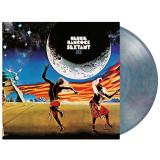
By 1973, Herbie Hancock already had both feet planted firmly in the future — some 50 years based on the vast, electronic funk he crafted during this period. How could he have known that this music would soundtrack block parties in the ‘80s and give ground to a burgeoning hip-hop culture? How could a man so steeped in the history of jazz be so untethered to form and genre that he created a sound all his own? Did he envision a world much like we’re living in now, where smartphones dictate our lives and musical compositions co-mingle without adherence to artificial marketing terms? Herbie likely wasn’t that prescient, but I wouldn’t doubt his genius. Based on the interplanetary trance funk of Sextant, his 11th studio album, such foresight wouldn’t be surprising. Then and always, Herbie was the master of the road less traveled. He was the light guiding his peers where they needed to go.
Mwandishi is one of Herbie Hancock's first departures from his traditional jazz sounds. The album which was recorded in a single session on New Year's Eve is a much more spacier effort compared to his earlier works, created by Hancock's us of electronic effects devices. His sextet is the most progressive ensemble he played with and he took the next step in the future of jazz. The music on Mwandishi is beautifully atmospheric and the long tracks leave plenty of space for improvisations by the group. A fantastic recording with sonic layers of earth, existence and expression.
Herbie Hancock is one of the most prolific jazz pianists of the 20th century. A child prodigy, he played with the greats such as Donald Byrd and Miles Davis. As he was a bit of a geek, he enjoyed gadgets & buttons and he was one of the first to embrace and master the electric piano, but he always stayed true to the acoustic sound. In fact, he always bounced back and forth between his electronic and acoustic sound, touching upon almost every development in R&B, Funk and Jazz while retaining an original and distinctive voice.
Oh yes! First ever official reissue of the positively sublime and very rare Butterfly LP, recorded in Tokyo in 1979 by Japanese songstress Kimiko Kasai and jazz legend Herbie Hancock.
Due to it's super-rare status as a Japan-only release, this exquisite collection of covers never got the recognition it deserved at the time, despite incredibly inspired performances from Kimiko, Herbie and the supremely talented musicians assembled for the project. From heavenly drummer Alphonse Mouzon and renowned organist Webster Lewis to bassist Paul Jackson, reedman Bennie Maupin and the master percussionist Bill Summers, the legendary performers crafted amazingly good vocal versions of Herbie / Headhunters jazz-funk. Unsurprisingly, it has been heavily in demand for many years.
The LP opens with Kimiko's highly desirable version of "I Thought It Was You", an elegant take on Herbie's own anthem. Other superb re-workings include the delicately soulful "Butterfly", jazzy groover "Sunlight", the smooth and sexy "Tell Me A Bedtime Story" and the beautiful ballads "Maiden Voyage" and "Harvest Time". A wonderful example of perfectly understated and masterful jazz-funk soul fusion that shouldn't be missed, the set closes with a jaw-dropping version of Stevie Wonder's "As".
This lovingly curated reissue enables a long overdue reappraisal of this hitherto unavailable masterpiece. The stunning artwork which adorned the original jacket - complete with OBI strip and sumptuous
4 page folded insert - has been faithfully restored. Simon Francis' sensitive mastering elevates the sound throughout and, as ever, it has been pressed at a reassuringly weighty 180g. Essential.
180g Magenta marbled vinyl. This album features Herbie Hancock's more contemporary beginning sounds. His groundbreaking career commenced with Donald Byrd's group, followed by a transformative period with the Miles Davis Quintet in 1963. Renowned for reshaping jazz rhythm sections, Hancock's post-bop contributions were pivotal.
180g, magenta coloured vinyl. This album features Herbie Hancock's more contemporary beginning sounds. His groundbreaking career commenced with Donald Byrd's group, followed by a transformative period with the Miles Davis Quintet in 1963. Renowned for reshaping jazz rhythm sections, Hancock's post-bop contributions were pivotal.
Fat Albert Rotunda is the venture into jazz-funk by keyboardist Herbie Hancock. The record is centered around the music Hancock wrote the Fat Albert cartoon show. It's one of the records which appeared in the period between his landmark album Maiden Voyage of 1965 and his 1973 classic Head Hunters. Fat Albert Rotunda is a unique item in Herbie Hancock's long and diverse catalog, with funky tracks like 'Fat Mama' and modern jazz-oriented tunes like 'Tell Me A Bedtime Story'. The sextet which is backing Hancock consists of some of the most prominent musicians of that time, like Joe Henderson on tenor sax, Johnny Coles on trumpet and Buster Williams on the bass.
Herbie Hancock is one of the most prolific jazz pianists of the 20th century. A child prodigy, he played with the greats such as Donald Byrd and Miles Davis. As he was a bit of a geek, he enjoyed gadgets & buttons and he was one of the first to embrace and master the electric piano, but he always stayed true to the acoustic sound. In fact, he always bounced back and forth between his electronic and acoustic sound, touching upon almost every development in R&B, Funk and Jazz while retaining an original and distinctive voice.
BLUE NOTE CLASSIC VINYL EDITION: Stereo, komplett analog von Kevin Gray von den Originalbändern gemastert, Optimal-Pressung (180 g), wattierte Innenhülle.
“Empyrean Isles” war 1964 Herbie Hancocks viertes Soloalbum für Blue Note. Obwohl der Pianist mit “Watermelon Man” von seinem Debütalbum “Takin’ Off” bereits einen echten Hit gelandet hatte, etablierte er sich erst mit “Empyrean Isles” endgültig als eigenständiger Künstler. Wie auf den vorangegangenen Alben
stellte Hancock ausschließlich eigene Kompositionen vor, aus denen vor allem der zeitlose Hit “Cantaloupe Island” hervorstach.
Dem Pianisten zur Seite stehen hier mit Bassist Ron Carter und Schlagzeuger Tony Williams zwei Musiker, mit denen er damals parallel auch im zweiten großen Quintett von Miles Davis
zusammenarbeitete. Zu ihnen gesellte sich außerdem der Trompeter Freddie Hubbard.
Der Saxofonist Sam Rivers hatte sich schon sehr früh in seiner Karriere durch bemerkenswerte Originalität ausgezeichnet. Nach einem kurzen Intermezzo im zweiten großen Quintett von Miles Davis, spielte Rivers im Dezember 1964 für Blue Note sein Debütalbum “Fuchsia Swing Song” ein. Das Repertoire bestand aus sechs Kompositionen von Rivers, die zwar fest im Post-Bop und Blues wurzelten, aber die avantgardistischen Tendenzen des Saxofonisten auch nicht leugnen konnten. Das Highlight des Albums ist
die atemberaubende Ballade “Beatrice”, die später sogar von den Tenor-Giganten Joe Henderson und Stan Getz aufgegriffen und interpretiert wurde
Mwandishi: one of the most influential combos in the history of electric Jazz. This is Herbie Hancock's creature caught live at the Juan-les-Pins Jazz Festival in France on July 21st, 1971. H. Hancock - piano and Fender Rhodes, Bennie Maupin - saxes, bass cl. and flute, Eddie Henderson - trumpet, Julian Priester - trombone, Buster Williams - bass and Billy Hart - drums. A highly progressive form of modern Jazz based on the mix of different elements. Some sort of Afro-Electric-Funk sound journey where waves of multiple pulsating sounds develop in a continuous alternation between tension and release. A marvelous band for which live performances often show more than studio recordings.
Chicago-born pianist/composer Herbie Hancock had already
made his mark when, in 1962, he recorded ‘Takin’ Off’ for the
Blue Note label; it was his first under his own name. At only
twenty-two years of age, the company offered him a solo contract
which would allow him to record a number of rightly revered
albums throughout the Sixties. The release of ‘Takin’ Off’ almost
immediately singled out Hancock as one to watch, the hard-bop
message delivered in striking fashion by the leader and his
sidemen. Incidentally, trumpeter Freddie Hubbard, only a couple
of years Hancock’s senior, already had a couple of albums under
his belt for Blue Note, and these were as well received as the
pianist’s own debut disc would be.
Major Keys is a brand-new audiophile label focusing on fully licensed reissues of jazz classics, pressed on 12' for a fuller, louder version compared to the original album cut. What better way to kick of the series than housing Herbie Hancock's imitable 'Chameleon' and 'Watermelon Man', loud and proud on either side of a 12' - remastered and cut by the engineer of the original Head Hunters LP from 1973.
They don't get much more iconic than 'Chameleon'. Nestled on the incredible 1973 'Head Hunters' album it's a 16-minute exploration of legendary jazz funk - having all the sensibilities and solos of a jazz record, yet grounding its rhythms in funk, soul and R&B. Even, as its title suggests, morphing from a low slung slow jam into a full-on, fast paced spiritual gem. Lock in for one of the most iconic basslines around courtesy of Paul Jackson, alongside some of the sweetest synth and Rhodes playing you're likely to hear from Herbie, all tied together with Harvey Mason's mythical drumming. Sampled the world over by the biggest and the best this is a truly timeless and hugely influential piece of music.
On the B side, the equally intriguing 'Watermelon Man'. This version, again taken from the Head Hunters LP, differs from the Blue Note bop '62 original, with Hancock developing it into a jazz fusion expedition. Bill Summers top and tails the track with a style of beer bottle blowing imitating a type of whistle playing found in Central African Pygmy music, giving a unique flavour to Hancock's jazz funk stylings that focus on the rhythmic interplay between each instrument. From Dilla to Digable Planets, Madonna to Massive Attack it's a classic that's sampled time and time again for good reason.
Black Vinyl[28,53 €]
Inventions & Dimensions is the third album Herbie Hancock ever released as a leader and proof that he was not an artist who was willing to be pigeonholed. Featuring a quartet made up of a bassist and two latin percussionists, Inventions & Dimensions explores the possibility of latin percussion outside the context of a latin jazz album. Comprised of post-bop and modal compositions all from the pen of Hancock, this is a beautiful album that shows the promise of a young and confident pianist and composer who would blossom into one of the most celebrated talents in jazz history. Essential.
Black Vinyl[14,92 €]
Inventions & Dimensions is the third album Herbie Hancock ever released as a leader and proof that he was not an artist who was willing to be pigeonholed. Featuring a quartet made up of a bassist and two latin percussionists, Inventions & Dimensions explores the possibility of latin percussion outside the context of a latin jazz album. Comprised of post-bop and modal compositions all from the pen of Hancock, this is a beautiful album that shows the promise of a young and confident pianist and composer who would blossom into one of the most celebrated talents in jazz history. Essential.
Presenting the 3rd outing from the DMV crew, thank you for waiting patiently inline. On the A we have Busta Bus, flexing his lyrical flow all over Rick’s sweet Mary Jane. On the flip side, 90s underground stalwart “Red Hot Lover Tone” gives his approval to the Stars in Herbie’s eyes.
- A1: Abay
- A2: Tew Ante Sew
- B1: Mengedegna
- B2: Kahn
- C1: Sew Argen
- C2: Nafekeñ
- D1: Abet Wubet
- D2: Guramayle
- D3: Gud Fella
- D4: Guramayle (Slight Return)
180g Heavy double vinyl LP with liner notes by Tyran Grillo. Limited Japanese Obi for the first pressing. Original artwork by Russell Mills and photography by Jean-Baptiste Mondino.
The third Time Capsule is a body of dub reinterpretations by celebrated producer Bill Laswell of Ethiopian singer Gigi. Curated by Tokyo record collector, music researcher and seasoned reissue supervisor Ken Hidaka, it is the first time Illuminated Audio is pressed to vinyl after its CD release in 2003.
Ejigayehu Shibabaw was born in 1974 in Chagni, northwestern Ethiopia and by pursuing a career as a singer, went against her father’s strict, traditional gender roles. As Gigi, she embraced the same musical freedom she had strived for in her personal life, incorporating the Ethiopian church, funk, hip-hop, West and South African music into her work. She first settled in Nairobi, then Addis Ababa, where she quickly established herself as one of the city’s leading singers. A move to San Francisco in 1998 led to a long and fruitful creative partnership with bassist and producer Bill Laswell.
Around the same time, Chris Blackwell had stepped away from Island Records to start the art house film company and label Palm Pictures. He took an interest in Gigi and together with Laswell, pulled together an all-star cast of musicians for her self-titled US debut album, including Herbie Hancock, Pharoah Sanders and Wayne Shorter. It won international critical acclaim, not just for its musicianship but for making Gigi a “defining voice for the Ethiopian expatriate community”, as journalist Tyran Grillo praises in his Time Capsule liner notes. From the nation-defining 1896 victory over Italian invaders to the quiet revolutionaries who wear simple shemma garments, Grillo believes the themes in Gigi make it “a shower of sunlight on her homeland for those ignorant of its struggles.”
After its success, Blackwell encouraged them to go back into the studio to rethink the album and Illuminated Audio was born. “Anyone can make a voice sound worldly”, Grillo remarks, “but rare are those who can make one sound inner-worldly.” Gigi was clear with Laswell to give her vocals a minor role “because it’s already been done.” Instead her Amharic verse is fleeting, exhaling through the textures like ghostly fragments; soaring yet muted. Yet the album is still titled under her name, an assertion by Laswell of her central role in the album’s creation. Not only was it a fully endorsed project by Gigi, but she would be present throughout its development, giving feedback on half-finished ideas as Laswell played them back in the studio. “It works perfectly”, she reflected after the album’s release. “We wanted to capture the whole spirit of each track, and Bill’s remixes create a different music language that really puts you in a pleasant place”.
This new vocabulary takes its lead from a technical approach that Laswell had been perfecting during a furtive creative period at the turn of the millennium. Much like his ambient interpretations of Miles Davis (Panthalassa, 1998), Bob Marley (Dreams of Freedom, 1997), and Carlos Santana (Divine Light, 2001), Laswell approached Illuminated Audio by returning to the original multitrack masters. Gigi wasn’t just reworked, but recomposed into an expansive lattice of instruments, submerged in a watery ambience of dub and trance undercurrents.
Sonically, this new language that Gigi refers to, is manifested by the original album’s more understated parts being pushed to the fore. Explaining his contrasting methods, Laswell saw Gigi as being “put together in a way that fits”. Contrastingly, in Illuminated Audio, “a lot of things that I featured in the remix weren’t as audible in the original.” Instrumentation laying near-dormant, deep in the mix, are brought to the fore: the acid rock guitar and Wayne Shorter’s saxophone on ‘Tew Ante Sew’, Graham Haynes’ flugelhorn on ‘Nafekeñ’, Laswell’s bass on ‘Kahn’, the melodica in Mengedegna or the floating synths and talking drums in ‘Gud Fella’.
Brought to his attention by mentor DJ Nori, Hidaka describes Illuminated Audio as a “masterful sonic exploration into ethereal ambience and dub” and made sure this reissue also contained a full remaster to give its “deep musicality” much better dynamics and density in the overall sound. Hidaka admits that Laswell's music “is sometimes so out-there, it is often misunderstood” and, indeed, to dub album non-believers this might seem like a prolific producer imposing himself on another artist’s work; eternally developing rearrangements that never quite get to its destination. But that’s missing its true power and triumph. This is more than the reissue of a remix, but “a wholly unique musical entity”, as Hidaka describes. Illuminated Audio refers to the illuminated manuscripts that comprise the major part of Ethiopian art and its new compositions stand in proud solitude as a rare body of reworks that both informs and enhances their originals.
'Matsuli Music is proud to announce the first vinyl reissue of Philip Tabane’s Sangoma ("Spiritual Healer") since its 1978 release. Remastered from the original tapes with lacquers cut by Frank Merrit and pressed on 180g heavyweight vinyl at Pallas in Germany, this definitive edition re-asserts the power of one of South Africa’s landmark recordings. Featuring new liner notes by cultural critic Kwanele Sosibo and artwork restoration by Siemon Allen, Sangoma returns in full force through an extended Malombo line-up, fronted by Tabane's spellbinding guitar - ancestral, timeless, and unbound.
'Philip Tabane (1934–2018), the mercurial guitar genius of South African music, forged a sound that was as rooted in the spirit world as it was in daily life. With the Malombo Jazzmen of the 1960s, Tabane disrupted Western notions of “jazz,” bringing the resonant rhythm of cowhide malombo drums into the foreground. While outsiders and the uninitiated often reached for labels like “primitive yet sophisticated,” Tabane and his collaborators named it more truthfully: “music of the spirit.”
'By the time of Sangoma, Tabane stood at a crossroads. Fresh from a period of three years’ touring in the United States where he graced the Newport Jazz Festival, and played alongside Miles Davis, Herbie Hancock, Pharoah Sanders and others, he brushed off comparisons with characteristic self-assurance: “No, I don’t play like Miles. Miles plays like me.” Back home in South Africa, and with a newly signed international distribution deal with WEA Records, he harnessed this momentum into a larger band setting, capturing a rare intensity.
'The result was Sangoma—an album that bridges contradictions: expansive yet intimate, celebratory yet haunted by exile and return. Tracks such as “Sangoma,” “Hi Congo,” and “Keya Bereka” are not simply performances but living testaments, songs that would remain in his repertoire for decades. Unlike the moody, immersive character of much of his work, here Tabane is on the move—urgent, restless, uncontainable. As he announces on the second track, “Maskanta wa tsamaya” (“something that kicks ass”).
More than four decades on, Sangoma is both an historical document and a timeless invocation. From his home in Mamelodi to the world and back again, Tabane’s spiritual healing endures—raw, electric, and unbowed.'
Italian jazz trio Collettivo Immaginario announces the release of their second full-length album, 'Oltreoceano'.
Known for their slick sound and energetic live performances, their style is firmly rooted in the jazz tradition of collective improvisation, through which they have developed an agile, kaleidoscopic sound. The trio’s unique fusion of funk, jazz, and 70's electronica continues in the trio’s latest release, forging connections across oceans through the universal language of music.
Consisting of founder Tommaso Cappellato on drums and percussion, Nicolò Masetto on electric bass, and Alberto Lincetto on rhodes, piano, and synths, Collettivo Immaginario have become rising stars in the Italian festival scene, from the streets of their hometown in Italy to the diverse audiences in Los Angeles, London and Milan.
Subtly paying homage to genre-bending giants like Azymuth, Lonnie Liston Smith, Herbie Hancock, and Hermeto Pascoal—alongside Italian film music legends Piero Piccioni and Piero Umiliani—their sound moves effortlessly between the heat of the club and the cinematic allure of evocative film scores, infused with touches of spiritual jazz.
SML is the quintet of bassist Anna Butterss, synthesist Jeremiah Chiu, saxophonist Josh Johnson, percussionist Booker Stardrum, and guitarist Gregory Uhlmann. Their second album, How You Been, finds the supergroup of prolific composer/producers pushing ever further into the hyperrealist, collectivist approach to music creation nascently explored on their debut Small Medium Large, which was lauded as "awe-inspiring" by Glide, "exuberant" by the Los Angeles Times, and "an exciting milestone" by Pitchfork. As SML has evolved and spread out in space-time, their fluencies, both as an improvising unit in performance and as a production team in the studio, have sharpened. At inception the band inspired disparate but distinctive artist comparisons like Essential Logic, Oval, Herbie Hancock"s Sextant, and electric Miles Davis, as well as assorted genre touchpoints like Afrobeat, kosmiche, proto-techno and new-jazz. With How You Been their work manages to both collapse and explode such derivatives, displaying a new, high resolution version of SML, fully-flowered into a new strain of sound, bound to incite its own copycats in due time.
After a hiatus of over 2 years Originals are back with a banger! Classic hip hop on side A Organized Konfusion's "Open Your Eyes" from their 1991 debut self titled LP never before on 45 flipped with Herbie Hancock's sample "Chameleon" edited down here from the original 15 minute+ LP version by DJ Matman into a DJ friendly 45 edit - over 215k views on DJ Koco' Instragram!