Search:herself

Styles
All
Zenizen - P.O.C. (Proof of Concept)

This record is a representation of everything that has led me to this point
- It's been a long, bizarre path, says Zenizen's Opal Hoyt of both her life
and her journey to make this record
Like Peter and the Wolf, the Russian symphony Hoyt used as a creative
framework, P.O.C. (Proof of Concept) is a series of vignettes "the collection of
which mirrors Hoyt's long journey, from her adoption in Alaska to her many moves
between DC, Jamaica, Vermont, and New York.Along this unconventional path,
Hoyt met the talented cast of musicians who would go on support her in the
recording of P.O.C: variegated bass by Jonathan Maron (Erykah Badu, D'Angelo);
drums by Vishal Nayak (Nick Hakim, Empress Of); moments of magic on horns by
Sly 5th Ave (Prince); guitars by Benamin (IGBO); intricate mixing by Nick Herrera
(Hiatus Kaiyote), Benamin, and Jon Bap; with mastering by Heba Kadry and Davy
Levitan. Then there's Hoyt herself, whose rich alto pierces through with poetic
lyricism, supported by her contributions of Rhodes, synths, and sample
arrangements (think: babbling brooks and birdsong). In other words, Hoyt isn't
just a songwriter in the classic sense. She's also a skilled producer with an ear for
excellent arrangements "the kind of musician who enjoys meandering and
allowing her artistic vision to percolate. Likewise, P.O.C is a record that blooms in
beauty over time "the kind of record that you can take anywhere in any season, as
any version of yourself.

pre-order now11.11.2022

expected to be published on 11.11.2022

26,01
Laila Sakini - Paloma

Laila Sakini

Paloma

12inchLOVE124LP
Modern Love
11.11.2022

Laila Sakini's new album 'Paloma' arrives via Modern Love and is her most striking and ambiguous to date - a pointed and timely meditation on hope and hierarchies that riffs on Zbigniew Preisner's magical "The Double Life of Veronique" score and enduring outsider music tome "The Langley Schools Music Project". Subtly transcendent, fathoms-deep music.

When Laila Sakini's debut album ‘Vivienne’ arrived in 2020, it felt like the record we were waiting for to map out our tangled reactions to an uninvited reality. Never self-consciously strange, it revealed itself slowly and cautiously, like a shadow in the corner of the eye, or an alchemical symbol in a bowl of alphabet spaghetti. This time around Sakini has worked her unique world-building to an even finer point, forming six tracks around a theme that's so close to our heart it's almost beating in time. Initially inspired by Krzysztof Kieślowski's 1991 arthouse classic "The Double Life of Veronique", the cult Polish director's enduring modern fairytale that serves as a cosmic rumination on identity and choice. Detailing two identical women - both singers, both in love - the film lets one live as the other dies, forcing us to consider the implications of art and endurance in the face of life's myriad challenges.

Sakini takes Polish composer Zbigniew Preisner's influential score for the film and uses it as a jumping-off point for ‘Paloma’, bending the more grandiose moments into baroque awkwardness on opening track 'Fluer D'Oranger' and evoking the mood of scene-setting cues 'Weronika' and 'Véronique' on the recorder-led 'The Light That Flickers In The Mirror'. And while Preisner's score zeroed in on the musical virtuosity of the film's lead characters, Sakini reinterprets that as a metaphor for self-discovery. Playing piano, violin, glockenspiel, timbale, recorder, and occasionally singing, Sakini captures a mood of innocence that immediately transports the listener back to simpler times. Her music isn't self-consciously simplistic, but forcing herself to interface with instruments impulsively rather than studiously, her sounds are all heart, no filigree.

In spirit, it reminds us of cult Canadian album "The Langley Schools Music Project", a collection of 1970s recordings of school kids singing rudimentary renditions of pop songs in a school gymnasium. That album's genius was in the bottling of hope and innocence: the feeling of joy from hearing and wholesomely interacting with music that's known and loved without a sense of hierarchy or desire for cultural clout. Sakini subtly subverts this by evoking the amateur spirit in the most bewitching way; instead of sourcing her ideas from Bowie, Fleetwood Mac and the Beach Boys, her stock is the established art canon, and by reforming those sounds she makes an insightful comment on intellectualism and access. European classical music is all too often trapped behind the frosted glass of respectability and assumed skill - craft replaces spirit, and technique replaces soul. By approaching these gestures from a different angle, Sakini softens the edges sonically and intellectually, finding music that bubbles with emotion, and most strikingly - hope.

Her choice of instruments and the way she interacts with them allows us to feel as if we're not only listening but contributing. It's a bottom-up way of absorbing art that's traditionally been top-down, and a reminder that we're all part of the experience, whether we're humming along to the remnants of a theme as it dribbles out of an ear in the shower, or dreaming of spotlights in a parallel life that may or may not be real. Sakini's music is nostalgic in a sense, but nowhere near the buttered popcorn and high-fructose candy migraine of the Netflix/Spotify algorithm generation of regurgitated churn. She makes sounds that remind us of what time and experience may have stolen from us, and how we might recover it.

pre-order now11.11.2022

expected to be published on 11.11.2022

26,51
Sofie Vanden Eynde - Vanishing Point

In 2016 lutenist Sofie Vanden Eynde put her instrument aside for nine
months in order to recover from a severe burnout
Five years later, she felt the need to look back. Would it be possible, she
wondered, to use the intense, shared concentration between musician and
listener to convey sensations of over- stimulation, contrast, excess, stagnation,
emptiness, beauty and movement? Would it be possible to articulate the inner
reality of a burnout musically: to make a burnout audible, tangible,
understandable and, who knows, avoidable? The result is Vanishing Point /
Verdwijntijd, an autobiographical recital, a musical narrative, a journey:
somewhere between fragile comfort and cautious happiness. Writer Annemarie
Peeters drew on her interviews with Sofie to write a text that reflects the three
phases of a burnout. The run- up, the phase of total stagnation during, and the
cautious way out. Three colours, three seasons, three ways of being. Lurking
beneath Sofie's personal story are experiences that many will recognize: the
craving for efficiency, the sudden faltering, the unfamiliar and at the same time
disconcerting sense of emptiness, and the tentative search for a new balance.
But also the questions Sofie asked herself – about the connection between her
own little story and the big world that surrounds her – evoke wide recognition. Is
burnout a personal failure or a social symptom?
Sofie went in search of pieces from the solo lute repertoire that she intuitively
associated with the various phases of the text. This resulted in a recital with a
surprising palette of colours, styles and atmospheres. At times she chose the
rich, powerful sound of the theorbo. At others she chose the fragile, hushed
sound of the Renaissance lute. The Prelude by the French baroque composer
Robert de Visee combines phrases full of grandeur with breathing pauses filled
with intimate doubt. The music of John Dowland draws on the typically English
penchant for melancholy. In the fantasias and ricercars of Francesco da Milano, it
is not only the bright colours of the Italian Renaissance that resound, but also the
constant search for a new beginning. Luis de Narvaez's Cancion del emperador is
an arrangement for lute of the famous chanson Mille Regretz by Josquin Desprez,
a song that emanates serene regret for everything that is not. And in Robert de
Visee's Chaconne the same chord sequence revolves around its own axis. Hope,
tenderness, revolt and acceptance each step to the fore in turn.
At Sofie's request, Vladimir Gorlinsky created a new composition, one which
reflects the state of mind in the middle of a burnout. Vanishing Point balances on
the edge of total emptiness, a stagnation that at times is hard to bear. Vanishing
Point starts out from this stagnation to explore the different facets of burnout:
resistance and acceptance, fear and hope, stagnation and movement, absolute
solitude and the desire to interact again with the surrounding world. Vanishing
Point / Verdwijntijd can be listened to in different ways: not only as a lute recital,
but also as a radio play with voice, lute and soundscapes. Annemarie Peeters'
text was recorded by actress Katelijne Damen (NL) and voice artist Caroline
Daish (EN). Vladimir Gorlinsky created soundscapes based on the sounds of the
lute, which were magnified as if under a microscope. The soundscapes weave
themselves between the text and the lute music. Jo Thielemans created the
sound design and provided the live electronics.

pre-order now11.11.2022

expected to be published on 11.11.2022

16,77
Babehoven - Light Moving Time

Since starting Babehoven in Portland, Oregon in 2017, Maya Bon has
shown herself to be a gifted heart-on-sleeve songwriter, using music to
peel back the layers of her own experience "sometimes sad, sometimes
surreal, always vividly rendered " to reveal universal emotional truths
hidden in the most intimately personal of details
After a handful of self- released EPs and their label debut on Double Double
Whammy with 2022's "Sunk" EP, Babehoven's first full-length album "Light Moving
Time" is due October 28 2022.
"Light Moving Time" is emblematic of Babehoven's wide range of dynamics, and
each of those sounds are taken further. You can hear the pared-down languor of
"Yellow Has a Pretty Good Reputation", the smoldering guitars of "Demonstrating
Visible Difference of Height", the peculiar charm of "Nastavi, Calliope", and the
soft tenderness of "Sunk". Alternating seamlessly acrossstyles, Circles and
Philadelphia have the wispy ambient calm of a Liz Harris track, I'm On Your Team
falls somewhere between a flowy country song and an 80s power ballad, Marion
contains the plucky indie- folk warmth of Hovvdy, and Stand It and Pockets are
coated with My Bloody Valentine's wobbly shoegaze. But in contrast with those
EPs, these tracks utilize Bon's voice with greater emotional impact than ever
before. Pressed on Bone Color vinyl

pre-order now11.11.2022

expected to be published on 11.11.2022

30,46
Non Band - Non Band

Non Band

Non Band

12inchTAL004EPX
TAL
07.11.2022

2022 limited edition of this Japanese no wave gem from 1982. With extended liner notes and interviews with band members about the recordings of the album, as well as unpublished photographs from 1981 by Jibiki Yuichi.

The Japanese punk rock movement known as Tokyo Rockers began in the summer of 1978. It incubated an independent music culture as well as a host of fascinating, individualistic musicians. One of the more striking units was the male-female duo Maria 023. NON played bass for them, and it was here that she first attracted attention. However, Maria 023 was short-lived, and NON would not reappear until the following year, August 1979, on stage at the legendary concert event "Drive to 80s". Her unbilled performance at the event consisted of several songs for solo bass and vocals, and her combination of intensity and a distinctly female emotionality made a striking impression. In the months that followed, NON continued to play solo and she became a pivotal presence among the female rockers on the scene at the time.

Finally she shifted from solo to group performance, and formed NON BAND. After several member changes, the line-up stabilized into a unique trio with Kinosuke Yamagishi on violin and clarinet, and Mitsuru Tamagaki on drums. It was with this line-up that the group reached a musical peak. At the same time, the Japanese punk and new wave rock scene was moving in a new direction, as a second generation of artists appeared and mushrooming independent labels began to play an increasingly important role. I myself started a label called Telegraph Records in 1981 and worked hard on record releases and building a distribution network.

Since starting the label, I had wanted to release a record by NON BAND. There were many vicissitudes before it could happen, but in February 1982 NON BAND's first album was released as a 10-inch LP on Telegraph Records, the label's fifth release. In the early Japanese indies scene, if a release sold 1000 copies it was counted as a significant success. The NON BAND album went through several repressing and sold 2000 copies. The album was a hit and the band's critical reception and popularity suddenly took off.

The shows that followed the release of the album were given a boost by the addition of two female rockers, the guitarist Kummy and keyboard player Mitsuwa. The group was reaching a real musical peak and everyone expected more great developments, but just six months after the release of the album the group would grind to a halt. Members quit the band one after another, and with no possible replacements to be found, NON herself faded away from the scene.

NON BAND's career in the early Japanese indies scene was thus short-lived. But their sole album was reissued twice on CD, and remained popular with listeners. However, the group's history was to have a second chapter.

NON ended up returning to her hometown, snowy Hirosaki in the far northern prefecture Aomori. There she raised two children and took over the running of the family business, an arts supplies store. Her thoughts turned once again towards music, and in 1999 she took up her bass again and began to sing. She invited two fabulous musicians, Keiji Haino and Tatsuya Yoshida, to Hirosaki, and performed together with them as well as solo. This marked the beginning of a new phase for her, and she played live in Tokyo and released a solo album, "ie". She got back in touch with Yamagishi and Tamagaki and reformed NON BAND. They added Emi Sasaki on accordion and began to play a handful of gigs each year, bringing a mature depth to their undiminished power and dazzling a new generation of fans. In 2012 the group released an album of recent live performances entitled " NON BAND Liven' 2009-2012". I released the album on the newly reanimated Telegraph Records.

NON still lives in the north, in Hirosaki. The city is famous for its summer Neputa festival. The first track on this album, "Duncan Dancin'" is almost a theme song for NON BAND, but its rhythm is taken from the ohayashi music that is performed in this festival, as large floats and troupes of dancers wind their way through the streets. The title refers to the legendary dancer, Isadora Duncan. The image perfectly represents NON herself: Isadora Duncan dancing to the earthy rhythms bubbling up out of the north land.

Nov 9, 2016 Jibiky Yuichi (Telegraph Factory)

In order to achieve a meticulous sound quality the reissue version is cut on 12" vinyl instead of the original 10" format. The original cover artwork has been reproduced and there are liner notes by Jibiky Yuichi with unpublished photos of NON BAND.

out of Stock

Order now and we will order the item for you at our supplier.

25,00

Last In: 3 years ago
Emahoy Tsegue - Mariam LP

REPRESS

The second LP compendium of Emahoy Tsege Mariam Gebru's early solo piano works, recorded throughout the 1960s - finally available again. Emahoy Tsege Mariam Gebru is a true original - her compositions and unique playing style live somewhere between Erik Satie, Debussy, liturgical music of the Coptic Ethiopian Church, and Ethiopian traditional music. It is some of the most moving piano music you will ever hear! These original compositions, performed by Emahoy Tsege Mariam Gebru herself on solo piano, were originally self-released in Germany in small editions as fundraisers for orphanages, support organizations for widows of war victims, and other philanthropic causes. We are humbled and proud to present this album in collaboration with the EMAHOY TSEGE MARIAM MUSIC PUBLISHER and Foundation, and to assist in continuing her life-long mission of using music as a vessel to care for those who have been abandoned by society, or harmed by strife. Black vinyl LP comes in black inner-sleeves and heavy cardstock jacket with color printing and gold-foil stamping, and song notes by the composer herself. Restored and remastered by Timothy Stollenwerk.

pre-order now04.11.2022

expected to be published on 04.11.2022

21,22
Eliza Carthy & The Restitution - Queen Of The Whirl

Describing herself simply as a ' modern English musician', Eliza Carthy is
one of the most recognisable faces in British folk
From the purest unaccompanied traditional songs to original music incorporating
myriad influences, she has moved through English folk music like a force of
nature, both stirring it up & putting it back on the map, and as a member of big
bands The Imagined Village, and the musical force- of- nature that was The
Wayward Band she has headlined main stages at festivals around the world. With
a wealth of musical & life experience under her belt, Eliza's talent has matured
and is flourishing. She continues to bring new audiences to English folk through
well- judged recordings, performances, and collaborations with the likes of Paul
Weller, Jools Holland, Patrick Wolf, and Kae Tempest. 2022 sees Eliza celebrating
an incredible 30 years in the music business with album Queen Of The Whirl,
featuring new interpretations of fan- selected favourites from her previous
albums, recorded with her band Eliza Carthy & The Restitution.

pre-order now31.10.2022

expected to be published on 31.10.2022

26,26
Fauness - The Golden Ass

Fauness

The Golden Ass

12inchCSN171LPC2
Cascine
31.10.2022

Opaque pink vinyl LP. For fans of: Tirzah, Caroline Polachek, Erika de Casier, Oklou, Smerz. Between the ages of 2 and 18, Cora Gilroy-Ware lived in a haunted place. On the outside, this small edge of Connecticut coastline was a quintessential New England town. Yet beneath its quaint surface was a netherworld that got steadily darker over the course of those sixteen years. From a serious drug problem to environmental pollution leading to deadly illnesses, frequent suicides and an above average number of fatal accidents, something about this place was cursed. Amid this world Cora was an outsider, someone who preferred pop and RnB to the music of her peers, who mostly subscribed to the dregs of a Deadhead culture that was more nihilistic than utopian. Still, she found herself on weekends drinking in the woods with the rest of them, playing along until it was time to leave. Christmas breaks and summer months were spent across the Atlantic in a completely antithetical environment. In London, the city of her birth, Cora spent her teen years taking the bus home at dawn after raves under the railroad arches, or riding the tube to her cousin’s house in Camden. For a long time, Cora’s life was composed of these two strands—ghostly East Coast suburbia and inner-city London—which she was forced to fold in and out of one another like a two-strand French braid. She quickly learned to adapt and be whoever the particular moment demanded. Her outsider status was intensified by the fact that, being of mixed Afro-Caribbean and European descent, her family didn’t look like the others in Connecticut. In the 2000s, this meant Cora had to contend with a deeply ingrained kind of folk-racism, both conscious and unconsciously expressed. Nobody talked about these things back then, and she internalized a lot of shame. The ability to shape-shift became integral to Cora’s artistic practice. Her survival mechanism at school was to carve out her own worlds through visual art and dance. Music was less of a creative outlet than a way of life, something like a form of religion for her family, who all played instruments and saw music as the form to which all art aspires. She studied violin and learned enough guitar chords to write her first songs. Cora always wanted to be a performer, but, having moved around constantly, craved stability and independence. Eager to make her own way in the world, she began to write about painting and sculpture, which eventually led to time spent working in Naples, Italy and a day job teaching the History of Art at university level. It wasn’t until 2018 that Cora first shared her first songs with the wider world. Having collaborated and played live with Jam City (Jack Latham, who has co-produced each of her releases), she finally embarked on a solo career, which for her felt inevitable, only a matter of time. Following four acclaimed EPs—Toxic Femininity (2018), Lashes in a Landfill (2019), Dreamcatcher (2020) and Maiden No More (2021), this year will see the release of her debut album The Golden Ass. For her artist name she chose, “Fauness”: a play on the Latin faunus, a woodland god with the body of a man and the horns, ears, and legs of a goat. The feminine equivalent—fauness—is a modern invention, made up by rococo sculptors in 18th century France. Cora was drawn to this pseudonym because of its temporal layers and amalgamation of beauty and beast, which, for her, captures something of her complex personal story. an utterly individual voice in underground pop music" - The FADER // "a sparkling sweet pop ride" – NYLON // “It is hard to write a perfect pop song. It’s even harder to make it look as easy as London artist Fauness” - GUARDIAN GUIDE // Tracks 01. Lonely 02. Mystery 03. Peaches 04. Hours 05. Siena 06. Grape & Grain 07. Laura 08. High 09. Cinnamon 10. Girl In The Moon

pre-order now31.10.2022

expected to be published on 31.10.2022

24,33
Maggie Nicols - Are You Ready

Maggie Nicols

Are You Ready

12inchROKU032LP
OTOroku
30.10.2022

While she might be best known as an improviser (most notably in the Spontaneous Music Ensemble, the Feminist Improvising Group and more recently with the likes of Les Diaboliques), Maggie Nicols’ talents stretch into song, dance, poetry, performance and composition. When Cafe OTO was shut over lockdown we invited her to follow up the wonderful solo ‘Creative Contradiction’ with some time spent singing alone at the piano. ‘Are You Ready?’ comprises an LP of songs and a 2CD edition which includes a companion disk of freely improvised meditations entitled, ‘Whatever Arises.’ Songs - seemingly contradictory to the practices of free improvisation - have been a vital part in Nicols’ relationship to music. It was singing bebop with pianist Dennis Rose which nurtured and challenged Nicols, allowing her to develop her own skills and sound amongst a repertoire of standards sung in clubs and pubs. Singing alongside Julie Tippetts in Centipede showed her how heady experimentation could be woven into composition, and a more recent gig with pianist Steve Lodder played out ‘The Maggie Nicols Songbook.’ Are You Ready? recalls Nicols’ own compositions from memory, working out tunes and turning them over. New routes down old paths form in moments of improvisation and all wrong turns are played out with joyous discovery. What John Stevens dubbed Maggie's “ability to find the ‘rhythmelodic’” meets a willingness to be understood and to understand. Solo at the piano, Nicols is still firmly rooted in the collective however - “Sans Papiers” sets the words of poet Vicky Scrivener to tune; a story of migration and struggle which is as important to Nicols as the songs her mother wrote. Such an intimate recording of her own compositions came with a certain amount of reflection and anxiety - best confronted with time spent freely improvising. ‘Whatever Arises’ - a companion disk to the ‘Songs’ - is a meditation of sorts, a process of ‘following the energy’ which has its roots in John Stevens’ work. “Improvisation gives the confidence to compose,” Nicols told us in an interview about some of her archival tapes, and here the two are as important as each other. Beginning with breath and repetition, ‘Whatever Arises’ allows Nicols’ to find new voices, accompanied by the piano and over dubbings of her tap shoes on the concrete floor. Brilliantly she is able to share her moments of discovery with the listener, finding comfort in vulnerability. Whilst rooted in Stevens’ work, Nicols’ improvisational techniques also remind us of Pauline Oliveros’ Sonic Meditations. They are what has allowed Nicols to find her own sound, to ‘teach herself to fly.’ They have allowed Nicols to grow and share and to be able to keep close the songs that mean so much to her, now shared with us. Recorded at Cafe OTO on July 15th, 16th and 17th 2021 by Shaun Crook. Mixed by Shaun Crook. Mastered by Sean McCann. Artwork by Annalisa Colombara. Lettering by Rosella Garavaglia. Layout by Maja Larrson. ‘Slow Within The Urgency’ inspired by mindfulness teacher Jeff Warren. Original poem ‘Sans Papiers’ by Vicky Scrivener. Original poem ‘You Darkness’ by Rainer Maria Rilke. Music and lyrics to ‘Music Is The Healing Force of The Universe’ by Mary Maria Parks.

pre-order now30.10.2022

expected to be published on 30.10.2022

22,90
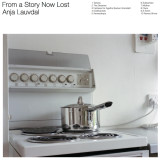
ANJA LAUVDAL - FROM A STORY NOW LOST LP

Produced by Laurel Halo and released via Norway's respected Smalltown Supersound label, Anja Lauvdal's first solo release, From a Story Now Lost, is a gorgeous musical essay reflecting on time, its perception, and lost histories rediscovered. Finally exploring her own voice after more than a decade of collaborative improvisational playing - starting at her time in jazz conservatory in Trondheim - the album is a jewel of subtle beauty and innovative detail. A freeform musician on piano, synthesizers, and electronics, Lauvdal's discography stretches back to 2013 and includes her participation in a myriad of ensembles and collaborations exploring the limits of sound and music in many forms, including noise, jazz, and more. Following her move to Oslo after graduation, she became deeply embedded in the music community there, touring with Jenny Hval as well as playing on her records. When pandemic hit and isolation was the norm, Lauvdal began working on her own, recording her improvisations in an attempt to capture something new for herself. Connecting to Laurel Halo via Smalltown's founder Joakim Haugland, the acclaimed American artist agreed to work with Lauvdal in shaping her solo record, becoming integral to its creation through all of its stages. Lauvdal credits Halo as a deep listener and gentle "thought-provoker", who contributed ideas as well as helping to shape the finished versions (Halo also worked alongside Rashad Becker on the final mix of the album). Together, they found a method of recording Lauvdal's improvisations, making small loops from those, feeding them back into the synthesizers, and making synthesizers out of the improvisations, which Lauvdal would then re-improvise with. She describes the end result, "like seeing different pieces of time around in the universe." While the record is based on Lauvdal's improvisations, some tracks were inspired Agathe Backer Grondahl, a Norwegian classical pianist and composer from the latter half of the 19th century. Lauvdal notes that Grondahl is not widely known, although her best friend Edvard Grieg is still considered Norway's most famous composer. Yet now, partly through Lauvdal, her story resurfaces and persists. "From a Story Now Lost means the story is still there," Lauvdal explains. "It hasn't gone anywhere even though nobody heard it, or maybe you're hearing it for the first time. And actually it was told a long time ago - maybe you weren't ready to hear that story at the time." This hints at the limitless nature of her music, as well as its new emotional texture. Direct in its vulnerability, immediate in its tenderness, From a Story Now Lost is a sophisticated evocation over restrained artistry spilling over with meaning.

pre-order now28.10.2022

expected to be published on 28.10.2022

21,22
Disasterpeace - It Follows OST

Directed by David Robert Mitchell, the supernatural horror film It Follows tells the story of a teenager (Maika Monroe) who finds herself haunted by nightmarish visions and the inescapable sense that something menacing is after her. The film was met with much critical acclaim and established Monroe as the movie industry’s newest “scream queen”.

It Follows features a stunning, electronic-driven score, heavy with pulsating synths and dread in equal measure. It was composed by the renowned musician Disasterpeace. This electro, 80s influenced score is a character in itself in the movie, and will haunt the listener long after the film has stopped rolling.

pre-order now28.10.2022

expected to be published on 28.10.2022

33,57
Arny Margret - they only talk about the weather

“Haunting vocals backed up by an intimate guitar” -
Rolling Stone
“With its icy charms unfolding at a devastating
pace, this marks the emergence of a bold new
talent” - Clash Magazine
‘they only talk about the weather’ is an album of
acute emotional exploration. It’s Arny’s coming-ofage journey, from writing in school, staring out of
dorm room windows, being on the road, to today.
With poetic proficiency and a knack for composing
melodies that bury themselves deep into the
subconscious, Arny writes of loneliness and
existentialism with stark relatability. There’s a quiet
confidence that comes from these tracks; crystal
clear in their conception, completely honest, and
masterfully arranged.
She walks us through her relationships growing up
and her realisations about other people as well as
herself. We listen as she unpacks herself to a
backdrop of vividly painted natural landscapes.
Pink vinyl LP.

pre-order now21.10.2022

expected to be published on 21.10.2022

27,31
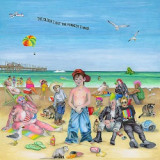
WHITMER THOMAS - THE OLDER I GET, THE FUNNIER I WAS

The Older I Get, the Funnier I Was, which follows Thomas’ brilliant 2020 HBO special The Golden One and his Can't Believe You're Happy Here EP released earlier this year, surveys a range of emotion and offers a broad sonic palette, moving between pop punk, electro, and the obvious influence of the singer-songwriters he grew up listening to in early childhood. It conjures the ennui of Bright Eyes alongside the barefaced storytelling of John Prine, the overstuffed lists of Fred Thomas with the lackadaisical humor of Colleen Green, among many others.

Thomas attributes the dexterity of the record to Duterte, who recorded and engineered most of it in addition to serving up plenty of encouragement when Thomas got down on the process. “As a comic, I used to test out new songs during sets to see if the funny bits were hitting, but since I wrote this in isolation I ended up writing lyrics and worrying less about making jokes,” Thomas says. That said, the album’s plenty funny. Stand-out and lead single “Rigamarole” opens with a Thomas-voiced infomercial that recalls his oft-cited lookalike Jim Carrey as the Grinch, before launching into a buoyant pop song about being depressed.

Whitmer Thomas will admit that when he traveled home to small town Gulf Shores, Alabama to record his HBO stand-up special, The Golden One, he expected to be greeted as a returning hero, a conquering king, or at minimum, a guy with a moderately successful career as an entertainer in Los Angeles. “I expected a big welcome home, open arms, but when I went back I realized: nobody fucking knows me. Nobody remembers me,” Thomas says. “In the years I’d been performing that show, I’d been romanticizing my childhood in this mythologized place, but the visit made me see that I’m not really from there anymore.”

The sense of alienation compounded when Thomas recognized how few people in town remembered his mom, to whom The Golden One is dedicated and largely about. Thomas grew up watching her perform with her twin sister at the legendary Flora-Bama Lounge, where he set the special, and still counts her as one of his musical influences. His new album, The Older I Get, the Funnier I Was, isn’t overtly about his mom, her presence is deeply felt throughout. While in Gulf Shores, Thomas discovered dozens of her old recordings, all of which had been wrecked by Katrina, but upon returning to LA, Thomas paid “a fancy place in Hollywood” to fix the tapes and hired Melina Duterte (Jay Som, Bachelor, Routine) to mix them. The two struck up a collaborative friendship, and Thomas had the sound of his mom’s voice back. “I was listening to songs she recorded when she was about my age, just these heartfelt, sweet Americana songs,” he says. “I decided then that I wanted to lose the Ian Curtis voice I always sing with; I wanted to do what came naturally, because my mom always sounded like herself, even when she was singing some cheesy reggae song about, like, Jamaica.”

Thus he went into The Older I Get, the Funnier I Was knowing it was time to retire his darkwave persona, and leaning into his natural, chirpier voice, which he says sounds “like a 12-year-old’s.” It makes sense: much of the album chronicles what Thomas calls “being a kid and feeling like you have no control and overcompensating by being annoying.” “So much of the album is about witnessing drug and alcohol addiction as a kid and seeing what it does to people, but also realizing that there's nothing you can do about it,” Thomas says. It’s familiar territory (see: “Partied to Death”) but the methodology is different this time around; true to its title, The Older I Get, the Funnier I Was isn’t always looking for laughs. Thomas might’ve left his hometown behind, but his kid self is still tagging along, a Peter Pan shadow he can’t untether himself from. The first line he sings on The Older I Get, the Funnier I Was is: “There should be a room at every party where you can just sit and watch a movie.” Find a 12-year-old who wouldn’t say the same.

pre-order now21.10.2022

expected to be published on 21.10.2022

27,10
What Are People For? - What Are People For?

What Are People For? make the perfect kind of dystopic dance music for our times. Born from a collaboration between artist Anna McCarthy and musician/producer Manuela Rzytki, the band could be the illicit lovechild of Tom Tom Club and Throbbing Gristle, displaying the ideal balance of hip shaking vibes and dark provocative content.

On their collaborative debut, McCarthy and Rzytki share songwriting duties. The album was produced by Rzytki herself. They are joined by Paulina Nolte on backing vocals and Tom Wu on drums, while Keith Tenniswood mastered the record.

The whole project stems from a publication and exhibition by McCarthy laying the foundations for the content and lyrics of the album, which is humorous, poetic and political. As a lyricist, McCarthy uses her storytelling ability to explore anxieties and desires, digging into free surreal word associations reminiscent of Su Tissues’ tongue in cheek experiments with Suburban Lawns, but also explosive and gripping like a Kae Tempest rap.
Rzytki’s precise sonic palette and talent at penning structured bangers perfectly complement McCarthy’s playful and subversive language manipulations. Rzytki's beats are rooted in old school Hiphop loop principles and an authentic love for the analog. Her use of an array of synthesizers and other "real" instruments adds to WAPF's depth, soul and sincerity.

The album opens with a joyful anthem, full of energy and melodic hooks. The audience is confronted with the quintessential titular question What Are People For? and told that they are just a mere disposable commodity. Throughout the album, lyrical themes revolve around underground aspects of society, violence, political ideologies, sexuality and mysticism. The content is deep but the album is as danceable as it is biting.

73, with its drum machine hysteria and hypnotic synth basses is a a text collage written on the 73 bus through London, consisting of situations and conversation snippets encountered along the way. Drones indulges in the narrator’s paranoia as they feel they are being watched by cigarette machines, whilst the haunting choir is half spoken, half sung, ending on the orgasmic chanting of the word “mummy”. Nursery Rhyme brings more soothing incantations. There is definitely an affinity for fairytales, albeit adult ones and especially the anarchistic ones such as The Moomins, who were a consistent influence on the band. The artwork for the record, created by McCarthy, is a beautiful children's book-style painting of the group in a forest, seemingly about to engage in a magical encounter to which we are invited.

WAPF? have absorbed and digested a variety of influences. Trip hop, Punk and Techno are rubbing shoulders on Party Time. 1977 was coined “Summer of Hate” in the UK and unsurprisingly in WAPF?’s Summer of War, ethereal singing alternates with a powerful marching Garage/Grime chorus reminiscent of street protests and UK culture.

Mz. Lazy starts like an invitation to meditation and references Gertrude Stein’s book Ida in which she develops the idea that publicity is a new religion and people are now famous for being famous. Repressed anger explodes into violence and freedom at the end of the song as our heroine eventually grabs an axe to destroy her oppressors.
Fantasize, on its part, is raw, sexual and liberating while the closing track Bring Back the Dirt is a welcome hymn into a world that is becoming more and more sanitised.

While exploring deep subject matters throughout their album, WAPF? manage to remain satirical, exciting and funny. Each and everyone of their songs have a cathartic quality.

The visual identity of the band is intrinsic to their appeal. Live, they are eccentric, wild and unapologetic, wearing see-through costumes, bright miniskirts and intricate headpieces while delivering their songs with sharp intensity. Their performances radiate queer sexiness and transcend B52's thrift store aesthetics, creating a space for collective dreaming.

WAPF? is a rare combination of contemporary punk energy, irresistible groove, absurdist dry humour and astounding depth of field. They have the mighty power to create a party with their music and soon you will find yourself lifting your arms as if controlled by an external force, to chant: WAPF? WAPF? WAPF?

– Marie Merlet (Malphino, Little Trouble Girls, London)

pre-order now21.10.2022

expected to be published on 21.10.2022

18,45
Kayleigh Goldsworthy - Learning to be Happy

By early 2020, Kayleigh Goldsworthy had finally figured out who she was. The long-time hired-gun musician from Syr- acuse and based in south Philadelphia, who had spent a decade backing up the likes of Dave Hause, Bayside, Frank Iero, and others, was ready to commit fully to a solo career of her own work. The day after New Year’s Day 2020, Gold- sworthy started recording her second solo LP, seven years after her debut Burrower, with Will Yip at Studio 4 outside Philly.

Then everything changed. The job and life Goldsworthy had pursued since her teen years was ripped away: tours, shows, studio time, even band practices and writing sessions, all gone. Along with those went away a hard-won sense of self.All those things that had given Goldsworthy the confidence and push to believe in herself and her work disappeared.

“I had figured out who I was,” says Goldsworthy, “then this whole thing happened, and I had to figure out who I was again.”

pre-order now21.10.2022

expected to be published on 21.10.2022

25,17
Ina Forsman - All There Is

Ina Forsman

All There Is

12inchJHR212
JAZZHAUS
14.10.2022

On her previous albums "Ina Forsman" (2016) and "Been Meaning To Tell
You" (2019), she initially established herself as the powerful voice of her role
models. On "All There Is" she ignites a new level of her expressively introspective
self-realization by completely arriving at herself. The isolation associated with the
lockdown may have encouraged this development, but the young singer had
powers that wanted to be unleashed anyway.
Life is complex and what we perceive as a moment is nothing more than a
gondola on the cable car between the past and the future. Ina Forsman's songs
take us back to our memory and, through the power of her voice and imagination,
carry us towards our hopes and expectations. An album about and for life in its
endless creative diversity.
Pressed on 180g vinyl.

pre-order now14.10.2022

expected to be published on 14.10.2022

26,68
crys cole - Other Meetings

Following on from last year’s acclaimed Sylva Sylvarum, the epic double LP from Ora Clementi (her collaborative project with James Rushford), crys cole returns to Black Truffle with Other Meetings. Originally commissioned and released on cassette by Boomkat Editions in 2021, Other Meetings is a major addition to the body of carefully hewn solo work cole has released over the last decade, offering up two side-long suites of her radically intimate approach to sound. After many years dominated by touring and travel, cole found herself in lockdown in her Berlin apartment, working in a limited space with minimal equipment. Digging through archives of recordings taken overseas and exploring the sonic potential hidden in the objects surrounding her (including a coffee pot and a vase of dying flowers), she crafted what in her liner notes she calls ‘an internal dérive, a journey that drifted through many places without a defining compass’. Totalling over 50 minutes, the two pieces unfold at an unhurried pace, each containing four individually titled subsections. Beginning with a sequence of the highly amplified small sounds characteristic of much of cole’s work, the opening moments of ‘The time between two durations of sleep’ are underpinned by a gentle rocking motion, weaving together contact mic crunch, metallic resonance, glimpses of bird song, and isolated drum machine hits, the sonic space expanding and contracting as focus moves between elements. Briefly side-lined by a tactile but unplaceable sizzling, this complex weave of voices then returns in a kind of dubbed-out ‘version’, the percussive accents echoing around the stereo space. In one of the record’s most beautiful and unexpected moments, these sounds are joined by a sparse melodic line performed on a broken 1980s digital synth, the vaguely New Age timbres being taken on a long, tonally ambiguous wander. Cole’s immersion in memories of travel comes to the fore in the final section of the first side, titled ‘Wat Paknam’ after a royal temple in Bangkok, where snatches of voices, ringing bells and distant waves of chanting blur together with synth tones into an increasingly abstracted wave of sound. The second side, ‘Slices of cake’, opens in a similarly hallucinatory outdoor space of echoing bird song and liquified traffic before abruptly zooming in on a microscopic world of subtly processed and highly amplified objects, explored with a starkness and quiet insistence that calls to mind the fringe not-quite-concrète of outsiders like Paul A.R. Timmermans or Knud Viktor, whose obsessive interrogation of dripping water might also serve as a point of reference for the following sub-section, the aptly titled ‘magischer Abfluss’ (magic drain).

While Other Meetings develops many aspects of cole’s previous work – the hyper-magnification of small gestures, the unsettling edits and fades partly inspired by hypnagogic states, the location recordings smeared into oneiric haze – it is almost as if these pieces are somehow songs, the remnants of an evaporated music of which nothing remains except isolated hits from a synthetic drum, a handful of notes, or simply a duration of emptied atmosphere. Radically reductive yet deeply musical, Other Meetings is a major work from an artist driven by an uncompromising and idiosyncratic vision.

Presented with an inner sleeve with photos and liner notes from the composer and remastered audio.

out of Stock

Order now and we will order the item for you at our supplier.

20,97

Last In: 3 years ago
Upstairs - It's Hard To Get In The Showbiz

Upstairs, a band from Frankfurt, Germany was active from 1977 to 1983. Though considering themselves mainly a rock group, the band incorporated elements of funk, jazz rock and disco into their music. On their rare and privately released debut album "It's Hard To Get In The Showbiz" from 1980 they created something that could be called Germany's definite answer to AOR, yet still with an edgy and unique krautrock flavor.

The album starts with "Wontcha Try," a track where core songwriter, guitarist and lead singer Helmer Sauer is telling the story about being dismissed from his job: "They tried to tell me in a fucking gentle way, that the time had come to kick me…". Sauer serves more personal, hard-edged lyrics on the album as well. On "Happy Hooker," for example, he tells the story of a working girl in the red light milieu: "The job is as hard that you really can never imagine, she serves for the money, degradin' herself in a way - if you'd know how she's feelin' you wouldn't laugh at all". An empathetic view on the subject of prostitution rarely heard at that time.

But aside from the profound lyrics and songwriting, the album has a lot to offer on the groovy side of things. With catchy bass lines, rhythm guitar, Fender Rhodes, Moog synthesizer, Clavinet and swift crisp drumming "It's Hard To Get In The Showbiz" is one of the best examples of late 70s flavored funky rock from Germany. Additional to the aforementioned "Wontcha Try" another DJ delight should be "Make Your Steps On Better Lines" which showcases a superb synth line and disco funk flavors. We also get the slick mellow latinesque AOR grooves of "Get On A Plane" as well as the now-classic "You're Just Yourself", which marks the most soulful track of the LP. As followers of our label are already well aware, "You're Just Yourself" was featured on the compilation, "Boogie On The Mainline - A Collection Of Rare Disco, Funk And Boogie From Germany 1980-1987" from 2018.

The band mainly performed locally and never really had ambitions to release their music on a bigger label. Too bad that Upstairs only released this one album. Of course, the highly sought-after original pressing is almost impossible to find nowadays. Therefore, we are proud to finally make this record available again after 40 years for a reasonable, regular LP price. Only 300 copies of the carefully re-mastered repress have been produced, and included is a printed lyrics insert identical to the original.

out of Stock

Order now and we will order the item for you at our supplier.

18,45

Last In: 3 years ago
Miquela E Lei Chapacans - Miquela E Lei Chapacans LP

The first progressive girl group of the French Occitan language
pop scene bring you folk funk, sun-baked bossa, Coltrane jazz and
their own brand of punky ‘Dizco Rural’ against an untouched
French Balearic backdrop spanning the late 70s and 80s.
If even the most assiduous of European record collectors consider
the Occitan language music scene to be France’s best-kept secret
then it’s as fair to say that the incredible multifaceted recordings of
langue d’oc prog girl group Lei Chapacans have spent the last four
decades hiding in plain sight. In all fairness this overlooked
treasure chest of minority language excursions into folk funk,
Balearic, bossa, John Coltrane-penned jazz, baroque psych,
Palestinian poetry, comedic synth skits (and even the rawest form
of femme-fronted multilingual punky disco) has been stowed away
in inconspicuous photographic record sleeves, falsely evoking
something closer to contemporary C&W while oft-misplaced in
record shop cassette racks alongside ‘traditional’ spoken-word and
scholastic albums.
So, for the uninitiated, don’t be too hard on yourself. The fun starts
here. For those who are familiar with the rare and sought-after
one-off solo album by Occitan singer Miquela and have craved for
more, then you’ve come to exactly the right place. Lei Chapacans
(a name that roughly translates to The Vagabonds) is the all-girl
vocal group assembled by Miquela herself just two years after her
debut release, having toured the word and snubbed major label
record deal offers with a steadfast allegiance to the protection of
the Occitan language in which this album is primarily penned and
performed (minus a small amount of German and sarcastic
English in one rebellious instance).
For European collectors with a penchant for French savoir faire,
but have further yearnings for folkloric femme funk, then it’s time
to look towards the Occitan sunset where you will meet Lolo,
Miquela, Sophie, Irena and Denise.
These amazing, and undeniably culturally important recordings
might have taken some time to find a wider audience, but for
music lovers, crate diggers and vinyl vultures alike there are still a
lot of tasty morsels out there to be scavenged and devoured, ask
any self-respecting Chapacan and they’ll concur wholeheartedly.

pre-order now14.10.2022

expected to be published on 14.10.2022

13,07
Hannah Read & Michael Starkey - Cross The Rolling Water

'Cross the Rolling Water' is the debut collaborative album from Hannah
Reed and Michael Starkey
Acclaimed singer-songwriter and fiddler Hannah Read met banjo player Michael
Starkey at an Appalachian old time session in Edinburgh in late 2019.The
moment they first struck up a tune together there was an immediate meeting of
musical minds and they have since become a formidable and dynamic fiddle and
banjo duo, playing repertoire deep from the old time tradition like Apple Blossom
as well as newly composed tunes and songs Shenandoah by Anais Mitchell.
Hannah is an award winning Scottish musician based in Brooklyn, NY. She moved
Stateside to study American fiddle styles and to immerse herself in the thriving
string music scene. She has toured extensively, performing solo and collaborating
with musicians far and wide including Tony Trischka, Sarah Jarosz and Jefferson
Hamer, as well as being one part of the BBC Folk Award winning Songs of
Separation. Her previous album was the well-received 'Way Out I'll Wander' from
2017.
Michael is a multi-instrumentalist, music teacher and old time banjo enthusiast
living in Scotland. His mission as a musician is to keep things simple - clear
melody lines underpinned by solid, infectious rhythm. Recent collaborations
include with Wayward Jane (Edinburgh- based UK/ US folk and roots music 4-
piece) and 'Faultlines', a collection of Lisa Fannen's poetry set to music.
"Hannah and Michael have arrived at a way of playing old- time music that's
refreshingly dynamic, expressive, and toneful. Every track makes me feel like I'm
sitting right next to them, eyeing my fiddle case, just hoping they'll let me join in" -
Stephanie Coleman, old time fiddler

pre-order now14.10.2022

expected to be published on 14.10.2022

19,29
Items per Page:
N/ABPM
Vinyl