An onslaught of determined rhythms interlace in a glorious cacophony for the dance floor on Kim Dürbeck's latest. The Norwegian/Vietnamese artist unleashes a formidable din of percussion across six new pieces for Lek records.
A club record that takes furtive glances at the experimental, Lek003 is hardly an exercise in restraint as it carves its way through jungle and drum n bass to find its place on today's impetuous DJ booth where a new youthful energy has seen tempos reach heady heights.
As ever Dürbeck's Vietnamese heritage is strong as he weaves esoteric textures through the tapestry of monstrous kick drums and snares. The record eschews the conformity of a four to the floor, for something more assertive. From the familiar Amen constructions of a track like "Phu Yen Flow" to the more extreme outer edges of IDM with a track like "Wipeout", each track utilises the break beat in different adaptations throughout.
At the other end of the spectrum, Patås tames of "Nuoc Mam is my holy water" for a more tempered version and lets our head up for air, before Dürbeck brings the ruckus with his army of irreverent drum machines. There is no quarter given with perfunctory designs on the dance floor and the club context.
quête:hi rhythm
Spatial & Co Vol. 2 may well be the best album in the Spatial & Co series. It's absolutely flawless. Again created by French disco lord and Arpadys maestro Sauveur Mallia for French library label Tele Music in 1979, it leans far more into the space disco sound than the clean cosmic funk of its predecessor. And it's all the more thrilling for it.
Wide-eyed opener "Discomax" is starts as pure piano-disco brilliance with a bassline to die for before heading off into wigged out territory, all acidic squelches and jaw-dropping percussive breakdowns. Perfection. "Space People" follows, an eerie, half-beatless sci-fi synth workout played out against a hauntingly metronomic pulse for the first half - proper slow-mo space disco business - before the beat kicks in, the electric guitar solo wails beautifully and the bassline that emerges at its conclusion rides in on some other shit.
Closing out the A-Side, the six minute long "Bass Power" is, unsurprisingly, a deep, low-end roller with head-nod drums, whizzing synths, blissed out ambient vibes and Mallia's otherworldly bass playing super high in the mix. It's white hot funk, make no mistake, and it sounds like a re-geared library version of Roxy Music. Yes, *that* good.
Side B is laced firstly by "Holidays Morning", an emotional disco-pop groover, all electric guitars, skipping drums and synthy bleeps with more than a few moments of pure driving funk.
One for the deep heads, longtime favourite "Electric Maneges" follows, a bleepy, haunted dancehall gem, uncut tropical balearic-funk from another dimension. The sophisticated digi-soul of "Loving Discovery" comes on like a weird, interplanetary Sade instrumental, all swelling synths, warm keys and syrupy guitar rhythms. Hearing is believing.
Arguably saving the best til last, the fierce, proto-techno of "Exotic Guide" closes out this extraordinary set. The intro genuinely sounds like Detroit would a good few years later - just wild - before it glides into a driving percussive funk break complete with both stabbing, insistent synths and those of a more winding, laconic variety. The one complaint? It's over far too soon. Remarkable.
Sauveur Mallia is a crucial figure in the history of electronic and dance music and a hugely underrated French library bass player and composer from the Arpadys / Voyage crew. This is just the beginning of Be With's Mallia - Tele Music reissue campaign!
The audio for Spatial & Co Vol. 2 has been remastered by Be With regular Simon Francis, ensuring the punch of Sauveur's bass and those sick drums come through to the fullest. Pete Norman’s expert skills has made sure nothing is lost in the cut whilst the original and iconic sleeve has been restored here at Be With HQ as the finishing touch to this long overdue re-issue.
On Garden Party, Rose City Band"s country psychedelic rock evokes the wide-open spaces of the American west and free spirits who call it home. Led by acclaimed guitarist and vocalist Ripley Johnson, Rose City Band are some of the best players in contemporary rock: pedal steel guitarist Barry Walker, keyboardist Paul Hasenberg, bassist Dewey Mahood (aka Plankton Wat), drummer Dustin Dybvig, and features Sanae Yamada of Moon Duo on Synthesizer. Garden Party is both a celebration of summer and all it brings: friends gathering at backyard BBQs, cold beers on a hot porch, 12-foot sunflowers, and an exaltation of the value and respite of a moment of calm; the pleasures of time in the garden to appreciate the beauty of a contorted carrot, or a morning on a stoop watching a hummingbird. Freedom, contentment, and joy were the sources for the songs; they certainly bring the listener right there. From the soaring guitar solos to the driving rhythms, the elegant pedal steel lines to the organ grooves, Garden Party has a live band"s energy captured in exquisite detail. Garden Party is an invitation, a welcoming hand extended, and a joyous ride. Like all great music, the album taps into the listeners" emotional center and takes them to their happy place - their sunny spot. Recorded at Center for Sound, Light, and Color Therapy in Portland and mixed by John McEntire, the band"s sounds surround and embrace you. Garden Party"s last two tracks feature special guest Sanae Yamada (Moon Duo) who added some synth magic to the final two tracks. Ripley says it best "I always like when an album starts in one place and ends in another" What a beautiful journey it is!
FÜR FANS VON: P!nk, Coldplay, aktuelle Muse, Imagine Dragons, Queen POWERIZED ist eine niederländische Rock Band aus Breda und besteht aus Nick Holleman, Thom Schotel und Ralph Adriaansen. Das Trio glänzt auf seine ganz eigene Art und liefert sowohl musikalisch als auch visuell eine abwechslungsreiche und dynamische Show ab. Ein wilder Ritt von unbeschwerten, tanzbaren Symphonien hin zu intimen Intermezzos. Die stimmgewaltige und ausdrucksstarke Darbietung von Frontmann Nick, die
verspielten Collagen aus perkussiven Elementen und dynamischen Rhythmen von Ralph und Thoms Fähigkeit Rhythmus und Melodie spielerisch zu verbinden, zieht die Zuhörer sofort in ihren Bann.
Musikalisch lässt sich POWERIZED am besten als Mittelweg zwischen P!nk, Coldplay, aktuellen Muse, Imagine Dragon mit einem Hauch von Queen beschreiben.
Das selbst produzierte Album BETTER THAN YOU zeigt alle Talente der Band. Die 10 Songs überzeugen mit einzigartigem, überwältigendem Sound mit lyrischer Tiefe und zeigen eindrucksvoll ihre Fähigkeit Dinge miteinander zu verbinden und zu einer Einheit zu verschmelzen. Beginnend mit einer Stimmung oder einer Emotion tauchen sie tief ein, saugen sie auf und machen sie zu POWERIZED. Das Ergebnis ist energiegeladener Pop-Rock der seinesgleichen sucht! Ein distinguierter Sound mit eigener Identität. Wir empfehlen einzusteigen und die wilde Fahrt einfach zu genießen!
- A1: Blacklight Shine (Acoustic)
- A2: Graveyard Love (Acoustic)
- A3: Shore Story (Acoustic)
- A4: Blank Condolences (Acoustic)
- A5: Vigil (Acoustic)
- A6: Que Dios Te Maldiga Mi Carazon (Acoustic)
- A7: Cerulea (Acoustic)
- B1: Flash Burns From Flashbacks (Acoustic)
- B2: Palm Full Of Crux (Acoustic)
- B3: Nocasegain (Acoustic)
- B4: Tourmaline (Acoustic)
- B5: Equus 3 (Acoustic)
- B6: Collapsible Shoulders (Acoustic)
- B7: The Requisition (Acoustic)
Nach der weltweit erfolgreichen Veröffentlichung des Studioalbums "The Mars Volta" bringt die Band das Album auch als harmonische Akustikalbum mit dem Titel "Que Dios Te Maldiga Mi Corazon" heraus.
The Mars Volta bleibt sich dabei treu: Es ist subtil subversiv - unendlich erfinderisch, aber nie auf Kosten des Songs. Viele der Werte, die die früheren Alben von The Mars Volta so bahnbrechend und hochgelobt gemacht haben, sind auch hier noch vorhanden, aber sie werden auf andere, geschickte Weise eingesetzt.
Die karibischen Rhythmen, die ihre früheren Alben angetrieben haben, florieren immer noch auf Que Dios Te Maldiga Mi Corazon - sie stehen jetzt nicht mehr im Vordergrund, aber sie hörbar in jedem dieser Tracks.
Ebenso sind die großen Rockbewegungen und die proggigen Komplexitäten ihrer wegweisenden Veröffentlichungen einer größeren klanglichen Subtilität, Unmittelbarkeit und Direktheit gewichen. Aber auch wenn The Mars Volta sich von Grand-Guignol-Ausschmückungen fernhält, bleibt es ein düsterer, kraftvoller und ergreifender Hörgenuss, ausgereift und zutiefst befriedigend in seiner
Zurückhaltung.
Received a 7.5 rating from Pitchfork. The debut full length from Melbourne, Australia’s Romero is a burst of hard hitting, punk-laced powerpop. Well informed by the classics and every bit as relevant-as-it-is timeless, Turn It On! is a memorable party. An album that captures the vitality of a young band hitting their stride and doing it on their own terms without a single note of indecision. Much in the way that The Undertones, Blondie, and even Big Star debuted with a sense of purpose, Romero invite us to eleven tracks of soulful powerpop gold. Sharp production across Turn It On! catapults the impressive guitar work of both Adam Johnstone and Fergus Sinclair to the front of the mix alongside Alanna Oliver’s heart-pounding energy and show-stealing vocal prowess. Anchored by the smooth rhythm pocket of Justin “Murry” Tawil and Dave Johnstone, Romero waste no time in showing their hand on the quick-paced album opener ‘Talk About It’—recalling '80s powerpop rhapsodies. The title track beckons bodies to the dancefloor with a rich Runaways-like temper that naturally explodes into a fiery guitar solo. Meanwhile ‘Halfway Out The Door’ and ’White Dress’ show off the band’s adept ballad-writing, boasting truly emotional highs, lows and soaring choruses. Those hip to the incredible debut Romero single—‘Honey’ b/w ‘Neapolitan’ (Cool Death, 2020) will be overjoyed to see these relatable anthems recast in the album’s tracklisting. Turn It On! reveals stories of personal striving, restarting, mulling-over the unsaid, resisting control, deteriorating relationships, the emotional throes of uncertainty and celebrating growth through all such experiences. The rollercoaster of life is mirrored by the sonic and lyrical turns Romero have crafted into their debut album—a hopeful tonic for whatever you’re going through, and a dose of excitement for what’s to come. Includes lyric insert and 11"x17" poster.
Swedish drone alchemist Mats Erlandsson is sitting in a fictional room on ‘Gyttjans Topografi’, imagining a virtual chamber orchestra using zithers, tapes, double bass, harmonium, organ, and various synthesisers to draft a treatise on alternative tuning and non-normative harmonic structures. Transcendent material.
“The music on this recording is performed by a kind of fictitious chamber ensemble situated in an imaginary room outlined by textures that alternate between gestural foreground and passive landscape. The three pieces contained within this release are tied together by sharing similar harmonic material and instrumentation and could ideally be perceived as parts of one long performance stretching through the two sides of the record. The textural room in which this musical performance operates is unreliable, unstable, constantly shifting in size and activity from sparse and open to dense and claustrophobic. Inside this non-euclidean performance space a chamber ensemble made up of zithers expanded through analog tape transposition, harmonium and organ, double bass, digital FM, feedback-convolution and Serge modular synthesizer perform a music made from justly tuned intervals arranged in a way that blurs the distinction between traditional minor and major tonal harmony in favour of harmonic progression within an essentially modal framework.
‘Oxidationstabell för Hytta A’ unfolds the harmonic material slowly in three sections where individual lines move independently initiated by the attack of the zither while the textural properties of the room shifts and shimmers. ‘Törnar’ forms a dense harmonic counterpoint where lines built from the same intervallic relationships gradually shift the balance from one spectral focal point to the next while the textural-spatial elements move under pressure and permeate the harmonic layers. The double bass heard on this piece was performed by Yair Elazar Glotman.
The whole of Side B is made up of one piece - ‘Sänka’, using a series of chords made from harmonic inversions of a single set of intervals as an anchor, or synchronisation point, for voices gliding towards, or away, from their designated goal as parts of the harmonic structure of the piece. In addition to the harmonic and textural layers previously present, a third percussive voice is present here whose rhythmic material is intimately tied to the intervallic relationships present throughout the record.
The material used to make these pieces included non-harmonic sounds and contaminated field-recordings that have gone through a sort of feedback process between digital and analog, or acoustic, processing where the recordings were edited, processed and re-amplified and recorded again in acoustic spaces to shape their character and imprint acoustic identities on the recordings. The tonal instruments were treated in a process analogous to this - harmonic material built from recordings and digitally generated synthesis recorded, transcribed, rearranged and overdubbed again with additional electronic or acoustic instruments to form a composite electroacoustic instrumental sound.
Mats Erlandsson is a composer and musician, part of the vibrantly reemerging field of drone music in Stockholm, Sweden, associated with practices characterised by the extensive use of sustained sound. Erlandsson presents his work both as a solo artist and in collaborations, most notably together with Yair Elazar Glotman and Maria W Horn.
The Magic Movement is happy to welcome Swedish artist Anton Kling with a full EP on their label.
After his mesmerizing single "You", which he contributed to a Various Artist release last spring, he's finally back in full force with his Phobos EP.
The EP contains atmospheric originals, full of warm and almost jazzy synth work, syncopated rhythms and haunting vocal snippets. There's a beautifully melancholic red line which flows through the EP. His passion for ambient music and lo-fi textures is clearly audible in every track, where spacious soundscapes meet gritty percussion sounds.
On remix duties we find Alex Banks, who made a name for himself on Alex Cooper's Mesh imprint, and who is a perfect fit for the track "Phobos". Praised by the likes of BBC Radio 6 and Mixmag as well as with work released on Monkeytown and Ninja Tune, Alex turns Phobos into a bass heavy broken beat bonanza, featuring hypnotic arpeggios and saturated lead synths.
Since its beginnings, Hypnótica Colectiva has always shown a special interest in the music recorded and released in the city of Detroit.
A place with which we have both a blood and spiritual bond because of what occurred there socially and artistically during the 20th century.
This love led us to become ambassadors of what was happening there on a musical level, holding cultural events to screen documentaries translated into Spanish, as well as a number of themed sets at our events, dedicated motor city sections in our record shop or recently lectures on the history of the city and its music at the Museum of Illustration and Contemporary Art of Valencia (Muvim).
The time has now come to bring all this history, this musical influence, to the editorial section of our label HC records.
Detroit Legacy was born from the idea of capturing these influences on vinyl. Seeking artists from all over the world who share this passion that inspires them to create their music, what we can define as the universal Neo-Detroit.
For this first edition or first volume, the collective has enlisted in its ranks creators affiliated to the label who have shown us in their careers, this influence and this feeling.
Paul Cignol opens the record with Distance. From Dublin he offers us a track of warm sequences inspired by Deep Techno, with deep pads responding to organ keys and a subtle touch of 303.
Mallorcan LLuis Barcelo Sureda is responsible for the second track Funk Station. With a Techno Soul character that we might hear from Detroitish labels like Acacia or producers like Blake Baxter.
A real eminence in Techno is the Catalan Don Alex Martín, who already released in the mid-90s on Monssieur Garnier's label (France Communications). The Barcelona native brings his wealth of experience and wisdom through Megatech, which transports us to the spectrum of Derrick May’s Transmat who, in his day, was nicknamed "The Innovator". This track provides agile sequences of complex syncopated rhythms, combining with a dreamy Michigan style synth.
The anthem of the album comes from Ghent. The sublime Belgian creator, Mariska Neerman, once again makes our hairs stand on end and our hearts melt with a heavenly composition entitled Stellium.
No one interprets Neo-Detroit quite like Mariska, whom we baptise as a sovereign heiress of the genre in the world. If we have to think of an influence for this piece, we go straight to the genius of Detroit, the one and only Jeff Mills, in his most symphonic and harmonic facet of tracks released on his label Axis Records such as "The March", A Universal Voice That Speaks To All That Will Listen or A New Found Sense Of Being.
Some of these songs have been re-interpreted by world class philharmonic orchestras such as the Montpellier Philharmonic Orchestra at the 2005 Blue Potential (Pont Du Garde). Mariska's score in this song fuses organ keys with harmonic layers and violin - favourite instruments of the Detroitian extraterrestrial - with a harmonic result of strength and hope. An authentic anthem of classic emotional Techno.
Old School electro takes centre stage with the Master from Terrassa Ivan Arnau a.k.a. Dark Vektor. In the influence of Juan Atkins (the creator) as Cybotron or Model 500 and later creators who developed this sound like Aux 88. Metaverso Frik is a great recital of a urban poetry created and interpreted by Ivan, to completely devastating effect.
Croatian Bojan Jascur a.k.a. N-TER, closes the vinyl with We Will Emerge, in a exercise of vindication, a common weapon in the context of Detroit music. Raging, trippy electro in the purest style of Cosmic Force or Dynarec.
This first tribute to 8 Mile doesn't end with the vinyl, as 2 digital bonus tracks are included in the release.
We return to Barcelona with Pastin Futon in another sequence of consecutive oscillated rhythms oscillated much like Kevin Saunderson (The Elevator) in his day and the Techno Groove that we know today.
The most robotic touch of the release is the closer with this synthetic jigsaw puzzle of a track with echoes of the 1967 Detroit Riot, the Detroit Rebellion. Again produced by another Barcelona native, The Bandit (Dj Spy / Util Records). The sequences are very reminiscent of Arpanet and Drexciya.
The idea for the cover comes from Motor City itself by Jon Yowell, first cousin of HC records founder and head of HC records David Verdeguer.
Born, raised and a lifelong resident of Detroit, Jon is an enormously talented musician capable of writing lyrics, performing them on the mic and manipulating a number of stringed instruments as well as the drums, where he is a true master.
The cover is a tribute to the formative backgrounds of many of the city's musicians in every sonic trend. Wayne State University in the capital of Michigan.
Founded in 1868, it has offered didactic teaching to many of the city's musicians.
Not all of Detroit's creators went to university, and even less so when talking about Techno, many artists are self-taught or learned in a non-academic way, but it seems to us a good base to begin to highlight the origins of the city's music in a historic building, where those who have the opportunity to learn about music have been and continue to be educated.
The adapted designs are the work of our image manager Dani Requeni.
Mastering by Steve Voidloss at Black Monolith Studios in London (UK).
Repress!
Using an old door, 17 strings, chopsticks and combining them with phasers, echo units and amplification, the new device was to become his signature sound, mixing Irish folk influences with Asian and North African sounds in a mesmerising and soulful new way that brought him to the attention of the leading improvisers of his day - Alice Coltrane, Ravi Shankar, Don Cherry and more.
A logical follow up to AllChival's recent reissue of Stano's debut LP, Michael O'Shea's self titled LP was originally released on Wire's Dome Imprint in 1982.
The background to the album is as interesting and inspiring as the artist who created it - born in Northern Ireland but raised in the Republic, O'Shea was keen to travel and escape the troubles of his home.
Wandering throughout Europe and the Middle East, O'Shea found himself living and working as a relief aid in Bangladesh in the mid Seventies where he learned to play sitar while recovering from a bout of hepatitis. A later period spent busking in France accompanied on zelochord by Algerian musician Kris Hosylan Harp led to O'Shea's idea of combining both instruments as a homebuilt instrument - Mo Chara (Irish for "My Friend").
He later described the process on the back of the LP himself saying:
"Having sold my sitar in Germany and being desperate for money to travel to Turkey, I conceived of the idea of combining both sitar and zelochord. The first Mo Cara was born, taken from the middle of a door, which was rescued from a skip in Munchen"
A combination of dulcimer, zelochord and sitar, O Shea would play it with a pair of chopsticks, striking the strings softly using Irish folk rhythms mixed with the rich, nostalgic sounds of of the many Asian artists he'd encountered on his travels.
It was a pan cultural sound standing at an unusual crossroads of folk, traditional, rock, progressive, jazz, electronic and post-punk worlds without hesitation.
Perfecting the instrument on the streets, there were further spells spent busking in the underground stations and cafes of London's West End and Covent Garden during the heady days of the 1970s when they were full of eccentric street entertainers, jazz improvisers and musical pioneers.
His work with Rick Wakeman never saw the light of day but O'Shea's contact with the world of post-punk London ensured his name would live on.
Introduced to Wire's Bruce Gilbert and Graham Lewis via cartoonist Tom Johnston, O'Shea eventually acquiesced to an open invite to record at their studio. Turning up unannounced in the summer of 1981 the LP was recorded in a day in the legendary Blackwing Studios and released on Dome the year after.
The first side features the fifteen minute masterpiece "No Journeys End" with the B side featuring more input from Wire in processing the Mo Chara sound.
Lewis himself said years later of the forgotten masterpiece: 'I always said it was the best job we ever did.'
After an aborted LP with The The's Matt Johnson the following year, O'Shea quietly disappeared from the formal recording world and his brief but unique contribution to the music world came to a sad end in 1991 when O'Shea was struck by a post van and died a few days later in hospital in London.
This repress on All City's AllChival imprint has been remastered and reissued with the approval of both Dome and his surviving siblings.
I"ve been focused on who I am in my music, but now I"m exploring where I am," Alfa Mist says. "I"m asking: how did I get here?" This is the journeying question that underpins Alfa"s fifth album, Variables. Traversing luscious, big band swing, head-nodding boom-bap rhythms and yearning vocal melodies, the record is expansive, soulful and moving, in both body and spirit. On Variables, his second release for ANTI-, Alfa achieves his most fully-realised, expressive musical work to date, coupling his keen ear for looping, memorably emotive piano melodies with intuitive grooves and a free-flowing jazz improvisation. Since the release of his first full-length project Nocturne in 2015, Alfa has established himself as one of the UK"s most focused, indemand and distinct musical voices. He has worked with the likes of Jordan Rakei and Tom Misch. Artists look to him for his unique blend of intimate bedroom production and expansive jazz group orchestration, since Alfa is yet to be boxed into a specific genre. His music spans everything from hip-hop beat-making to producing for artists such as rapper Loyle Carner, composing neo-classical works for the London Contemporary Orchestra, and reworking tracks from composer Olafur Arnalds and pioneering jazz label Blue Note. The return to live shows has been a welcome one for Alfa and his fans, resulting in an extensive tour throughout UK and Europe. Including a sold-out headline show at the Barbican in London. Alfa Mist will be touring Europe, UK and North America in 2023 again. It is a balance between feeling and perfectionism that ultimately gives Alfa"s music its depth and capacity for repeated listening. It is also an ethos that has enabled his remarkable work-ethic to date. "I"ve never been a "one album every four years" artist - I want to put out new projects every year," he says. "Music is an extension of my life; it is the practice of creating."
In the label's own words:
"Kennedy returns to another musical dream state bringing nocturnal visions to life through the power of machines. Including three tracks of borderless Hi Tech Soul music, on this third 12" in the series he widens his sonic scope via elements of Jazz and African rhythms next to his own distinctive take on the original sounds of Detroit.
It's another musical offering that comes from deep within mind, body and soul. Side a sounds like a warm fusion of loose rhythms and glowing synths determined by machines, whereas the b-side is more explicitly human-made with flute recorded live by Amsterdam Jazz man Han Litz, bringing a lightness of touch that imbues the music with hope and optimism. Beneath that, a battery of drums is set free calling up acoustic sounds driving from deep inside in a dense forest.
This third translation of thoughts, sensations and sounds is another emotive coming together of man and machine that will find yourself invited to gaze off into an infinite sonic cosmos."
An intergenerational meeting of minds, Galaxy is the first collaborative EP from Meanjin, Brisbane musicians Sam Poggioli aka Sampology and Charlie Hill. Equal parts brain dance and body music, Galaxy’s seven tracks represent a vivid intermingling of 70s jazz-funk, fusion, machine-funk, Latin house and broken beat, accented by flourishes of minimalist composition. Considered as a whole, it evokes the possibility and potential of a space-age future where technology and nature exist in simpatico.
One of the most in-demand young jazz drummers in the Meanjin (Brisbane) music scene, Charlie started producing electronic music on his laptop three years ago. It was a vibe shift that hit him after several months spent immersing himself in Europe’s jazz and electronica scenes on the eve of the global coronavirus pandemic. After returning home, he approached Sam about recording some music together.
Sam, a well-travelled Australian DJ, producer and Worldwide FM radio host, was cautious about starting a new side project. However, when he heard his demos, he realised Charlie was blending rhythmic fundamentals he’d learned while completing a music degree with a beautifully wide-eyed approach to jazz-tinged electronica.
With Charlie on drums and Sam on MPC, they set about recording the songs on Galaxy, along the way discovering Sam’s mother taught Charlie visual art as a child. They also learned that Charlie’s mother plays with Sam’s father in the Queensland Symphony Orchestra, synchronicities which made their collaboration feel like it was meant to be.
As part of the Galaxy sessions, Sam and Charlie collaborated with fellow Australian vocalists Tiana Khasi and Merinda Dias-Jayasinha. On ‘Constant Call’, Tiana threads neo-soul/modern soul melodies through a backdrop that sounds like Burial on a future jazz tip. ‘Merinda’, on the other hand, sees Merinda laying a repeated Steve Riech-style vocal refrain over a man/machine instrumental accented by stargazed synths.
At the same time as they were creating Galaxy, Charlie was also busy recording his debut solo EP Yore, both of which are due for release in August 2023, respectively, through Middle Name Records.
Edition OF 500 copies, Comes with insert and download code.
An album that sounds like The Menahan Street Band playing in a tropical jungle, at dawn, right at the point when the first rays of sunlight penetrate the dark depths of the forest. During the 2022 summer of natural disasters, under an unprecedented heatwave, and haunted by news reports of ancient relics, sunken ships, and hunger stones resurfacing as rivers dried-up all-over Europe, Amsterdam based multi-instrumentalist producer Alex Figueira started to hear uncanny metallic vibrations And eerie melodies of untraceable origins, day and night. He recalls nightmares of winged creatures inside timeless structures of Escherian architectures playing cosmic instruments amidst tropical storms
and acid rains. As the visions came more often, his wife reported that he babbled during his sleep about South American demon Yurupari. Soon, Alex found himself in a sleepless state and decided to cleanse the studio, with hallowed rites and
the intense burning of Palo Santo. After almost burning the studio down, he turned to his neighbourhood’s most experienced psychic, seeking answers. He was told there were “cosmic entities” trying to manifest a message “too complex for us to understand in this dimension” and the only way he could find peace was to deliver those messages in a decipherable form. It was then he decided to transmute his hallucinations into music, an all-or-nothing cathartic solution.
Alex entered a feverish dream, fuelled by the kaleidoscopic motion of the cosmos, ancient meteor showers, and visions of forgotten interstellar South American gods. He remembers very little of the work, but the outcome is this record. Entirely composed, recorded, produced, and mixed in a frenetic nine-day studio stint.
How the experts describe it:
”Just when outernational vinyl vampires thought they had it all sewn up, the metronomic makeshift
magician known as Alex Figueira unravels the entire fabric of your record collection to expose a gaping
hole where PUNKUMBIA and Transplant-Tropicalia should be. Reducing an expansive palette of
influences to a recipe that tastes wildly exotic but comfortably over-familiar, Alex’s roles as both
scavenger and chef, bookend a whole ensemble of other highly adept musical personalities in between.
Discover this record NOW, or wait until all your friends (or enemies) recommend it to you later.”
Andy Votel (Finders Keepers)
“Incendiary, lysergic takes on South American and Caribbean music from one of the scene's truly
authentic and eccentric producers. You can always count on Venezuelan-born, Amsterdam-based,
multi-instrumentalist, music-fanatic Alex Figueira to surprise and innovate, whilst consistently keeping it
true and real. The former Fumaça Preta drummer & front-man's debut solo album does not disappoint!”
Miles Cleret (Soundway)
“The one man band Alex Figueira comes through with some major flavors on this one. Cumbia beats and
psychedelic elements with that Latin touch of soul & Funk!”
Kenny Dope (Masters at Work)
“I really respect Alex Figueira’s DIY ethos. From running his own little funky recordstore to running his
own label and making his own music by playing every instrument himself. I was already a fan of the song
“Aprende” which he released on 7 inch and with“Mentallogenic” he takes it a step further in that same
vibe. From songs like “La Culebra” making use of a vocoder in his typical latin sound to songs like
“Serious” playing with rhythmic changes and topping it off with some synth flavors. A lovely and fun
album”.
Antal (Rush Hour).
Tokyo based producer and City-2 St. Giga label owner DJ Trystero arrives on Incienso with his debut LP “Castillo”. Over nine tracks Trystero explores uniquely spontaneous modes of rhythm and sound - turning ambient, breakbeat, electro, techno and house into blurred sonics that expand on their own time.
Italian producer duo 'Crossroads' are back 10 years after their first release.
Inspired by classic R&B, Disco and Neo-Soul they have had the knack of finding talented unsigned vocalists from all over the globe to feature on their tracks. This time around, the Italian singer Raffaella Zago covers a super soulful track originally composed in the 70's by the disco-soul duo Grey & Hanks.
'If You're In Need' is the perfect link between original 70's disco to contemporary soulful nu-disco, mixing live instruments with modern rhythms and synths. The b-side starts with a more uptempo remix by French DJ and producer Young Pulse, who is set to establish himself as one of the best remixers in the contemporary disco scene. Last but not least 'Call Me Dub' pays more attention to the instrumental parts of the track taking you on a deeper journey into the whole song.
TEN. KR3 marks the double-figure release, starring David Foster: the man behind the Huren project, which has been churning out influential tracks for the past three decades. Blood Fire Debt – has been described by David with one word: ‘survival’. Indeed, in this tenth release we rediscover an already legendary artist of the power electronics scene, in his most honest and consistent form. Expressing himself through cinematic-noise, harmonised by dark drones and slo-mo rhythms. Still navigating through the chaos, this ride will take us back to the 90s, thanks to the presence of a track (B2. Mytologinen) produced in those years. There will be a unique insert with the HUREN portrayed under one of the twin towers. Written & Produced by David Foster Mastered and Vinyl Cutting by: Tim Xavier at Manmade Mastering Berlin
repress
Tribute to the Soul brother of Benin with Rare Afro- Funk and Digital Soul songs from the Maestro .
Following the tremendous «!Dans le Tchink System «!reissue album, we wanted to celebrate the legacy of one the greatest singer from Cotonou .
Owhaaou ! is an original 4 tracks 12 inch vinyl taken from the extremely obscure , futuristic and now expensive record «!Metamorphose!» released in 1985, recorded on 24 analog tracks channel with an incredible backing band such as Hilaire Penda on bass, Daniel Bentho from Poly Rythmo de Cotonou to name a few .
The B side is a Dj friendly Edit of the dance floor burner «! Zemidjan «! recorded in 1991 . A composition done to pay tribute to the Taxi moto of Cotonou .The last track «!Mi Tchinker!» is a typical Stanislas Tohon hit with a mix of Tchink Rhythm , Soul and funky melodies .
Stanislas Tohon aka Papy Grande was born in the “Country of the kings” (Benin), in Abomey , December 30 th 1955. He’s “Chevalier de la legion d’honneur” in Benin for his brilliant musical career .The famous soul singer from Cotonou started his musical career at this age of 9, played with the greatest such as Gnonnas Pedro and recorded almost 35 albums.
Influenced by the traditional “Tchingoume“ music , he invented his own rhythm called “Tchink Système”, a mix of soul and Beninese traditional rhythm .
Sang in Fon, his native language from Benin, this EP is a soulful call for Peace respect and unity in Africa, a real definition of Afro Soul music!
Sadly died in February 26 th 2019 in Paris, this Ep is a tribute.
Remastered by The Carvery (UK), officially licensed and strictly limited to 1000 copies.
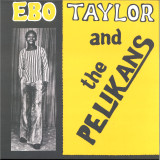
A Ghanaian funk LP from the afrofunk master. one of Ebo Taylor's rarest and most sought-after!
Ebo Taylor and The Pelikans is being reissued on vinyl by Comet Records, pressed on high quality vinyl, with label designs and artwork as per the original release.
Originally released by Ghanian Abookyi label in 1976, Ebo Taylor and The Pelikans is one of Taylor’s most elusive releases, and marked the first time he sang on the seminal Ghana Funk anthem “Come Along”.
The album saw the legendary musician, producer, composer and arranger joining forces with 12-piece Cape Coast Ghanian band ‘The Pelikans’ led by Bessa Simmona with rhythm guitarist Fifi Orleans Lindsay.
Put simply, there has never been a musician and artist quite like Ebo Taylor. As an artist, arranger, musician and producer he’s a combination of James Brown, Nile Rodgers and Quincy Jones: He not only created some of the greatest funk songs ever recorded but as much if not more than that, his genius as an arranger gave the signature sound to high life and afrobeat that was made famous by his one-time London roommate (from when they were both music students, in The early 1960s) Fela. And his funky guitar brought a percussive sound to the rhythm section that didn't exist before.