Поиск:hillside

Стили
Все
Tito Jackson - Under Your Spell LP

The California based Tito Jackson is supported on his debut Blues album 'Under Your Spell', now in 180 Gram, cream coloured limited quantity vinyl, by an array of superlative special guests, including George Benson, Joe Bonamassa, Marlon Jackson, Eddie Levert, Kenny Neal, Bobby Rush and Stevie Wonder, who all add their special talents to the proceedings

"Love One Another" is the perfect antidote for today's times of doubt and trepidation, as the vocals of Tito, along with Marlon Jackson, Bobby Rush and Kenny Neal soar above the musical bed of melodies that feature the sweet sound of Stevie Wonder's signature harmonica style.

Song-writing duo and Hall of Famers Kenny Gamble and Leon Huff, who penned worldwide hits for The Jacksons and the O'Jays, came out of retirement to write "All In The Family Blues" for Tito. The track features Hall Of Fame legend, Eddie Levert.

As a friend and admirer of BB King, Tito plays tribute in his cover of King's classic, "Rock Me Baby" honored with BB's daughter Claudette King joining in. Tito Jackson's innate abilities as a singer, songwriter, guitarist, producer and arranger shine through brilliantly, creating a spectacular record that is destined for airplay and rave reviews in a number of formats. Continuing on the path set for Jackson when he broke into the music business as a member of the legendary Jackson 5, Tito continues to grow as a musician and performer.

UK Independent Record Stores Only Tracks: Checkered Flag / Smash Up On Highway One / Stack My Money / Drip Drop / The Cat With 9 Wives / Turn You On, Turn Me On / Rockabilly Riot / Off Your Rocker / Who Cares? / Rockabilly Banjo

Сделать предзаказ15.04.2022

он должен быть опубликован на 15.04.2022

32,73

Последний логин: 2026 г. назад
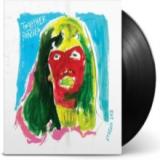
Thomas Atlas - Thomas Atlas LP

Born in Birmingham, Thomas Atlas began his impressive musical journey studying the greats thanks to his Father’s record collection.
From then, his fondness for Funk and Soul has grown stronger, taking him touring the UK and USA with some of the finest outfits. But Thomas always knew his destiny was to follow his own path and he has done just that! Now collaborating with British boutique record label Hillside Global on these exclusiverecordings.

The self-titled ten-track debut album leaks zest like a freshly pressed fruit.

This multifaceted artist takes influence from Maceo Parker and George Duke, while keeping true to his vision. It gets the foot-tapping instantly with an infectious cadence. Also, vocally, Thomas boasts a charming timbre which smashes through the mix with conviction.
The slick guitar riffs, bluesy rhythms and fist-pumping beats rip through with might, leaving the thirst for feel-good fully quenched! Hillside Global’s aim is to deliver an experience not just a product. These recordings are pressed under the Hillside Global Exclusive Black Label. The limited edition, first pressing consists of a spot-varnished gatefold sleeve housing a 180g marbled coloured vinyl.
This deluxe release also includes a complimentary download card, alongside a hand numbered certificate of authenticity signed by the label director and recording artist. Designed and pressed in Great Britain

Сделать предзаказ18.03.2022

он должен быть опубликован на 18.03.2022

14,71

Последний логин: 2026 г. назад
Hillside & Matulah - Fo Yo Mind

Hillside & Matulah is a Helsinki based instrumental keys/drums duo mixing all kinds of styles and genres with their own unique minimalistic style. Risto Kumpulainen (keys) and Janne Mathlin (drums & percussion) are a known for their collaboration with several finnish blues/rock/soul-artists.

Tykopaatti, part of the finnish hiphop collective Joku Roti Mafia, has released three solo albums along with numerous collabo/band recordings. He has also released english material under one of hes alter egos; Frankly Irrational. Tykopaatti also plays drums in various groups including the finnish rocknroll/blues guitarist Jo' Buddy.

For fans of DJ Format and Ugly Duckling, this is HipHop how it should sound!

нет на складе

Закажите сейчас, и мы закажем товар для вас у нашего поставщика.

8,36

Последний логин: 4 г. назад
Hillside - The Kings Tun / Hidden Port

Over the years, Claremont 56 has played host to some memorable collaborative
projects, most notably Bison, an unlikely super-group whose members included
Holgar Czukay, Ursula Kloss, Liquid Liquid’s Sal Principato, Ben Smith and label
boss Paul ‘Mudd’ Murphy. Now Murphy is at the helm of another collaborative
outft, Hillside, whose seductive debut single contains two deliciously pie eyed
instrumental workouts.
Hillside is very much a family affair, with Murphy joining forces with two old
friends: bassist/guitarist Alex Searle and percussionist Patrick Dawes. The trio
has a collaborative history that stretches right back to Murphy’s time in Akwaaba
in the mid nineties. For their debut outing, Hillside has also welcomed a very
special guest musician: award-winning jazz violinist and long-time Bert Jasch
collaborator Mike Piggott.
As opening gambits go, “Hidden Port” is an emphatic statement of intent. The
audio equivalent of sailing slowly around a cluster of sun-baked islands in
search of shelter from an approaching storm, the track sees Searle wrap bluesy,
Peter Green style guitar passages around a shuffing, Latin-tinged groove rich
in Dawes’ distinctive percussion patterns and Murphy’s languid electric piano
and synthesizer lines. As the track progresses, Piggott steps up to make his
mark, with his undulating electric violin lines complimenting Hillside’s impeccable
instrumentation while adding extra emotional weight to proceedings. It’s a
stunning beginning to the Hillside story.
Piggott also makes a big impression on accompanying cut “The King’s Tun”,
delivering fuid and energy-packed solos that weave in and out of a bright
and breezy instrumental track rich in jangling acoustic guitars, subtly spacey
electronics, freside-warm bass and more sparse-but-intricate percussion
courtesy of the effervescent Dawes. Searle’s eyes-closed, rock style guitar solos
cap another memorable excursion from Claremont 56’s latest in-house band.

нет на складе

Закажите сейчас, и мы закажем товар для вас у нашего поставщика.

14,08

Последний логин: 6 г. назад
Gustav Kemps - Lonesome For A Storm (Tape)

“Lonesome for a Storm” is the result of a felt sense in the summer of 2024.

A fleeting feeling in the body meditated on and played through a restrained pallette of instruments and found sound . LFAS is Gustav Kemps’s first solo album under his own name, but he’s been a frequent behind the scenes coll- aborator in various other bands (if you can connect the dots, there’s a lot to find). Mystery can be fun, but this album of his feels tender and generous in what it conveys.

RIYL: Empress, Loren Connors, Penguin Cafe Orchestra, The Humble Bee, Yo La Tengo, Taku Sugimoto...

Сделать предзаказ13.04.2026

он должен быть опубликован на 13.04.2026

14,24

Последний логин: 2026 г. назад
THE VISIONAIRES - TO HAVE A HOME LP
  • A1: To Have A Home
  • A2: Travelling On
  • A3: Marcus Garvey
  • A4: Embarassing
  • A5: How Long O Lord
  • B1: My History
  • B2: African Princess
  • B3: Little Herb Spliff
  • B4: Sky Gazing
  • B5: Standing On The Hillside
В наличии на складе

Есть у нас в наличии и готов к отправке

24,58
ANTHONY CALONICO - SPACIOUS HEART LP 2x12"

Music From Memory presents 'Spacious Heart', the debut solo album from Los Angeles-based musician Anthony Calonico. Known for his work as part of the trio Total Blue, Calonico steps forward here with a collection of songs and instrumentals that invite the listener into his lush, expansive yet intimate world.

Written and recorded gradually between 2020 and 2024, 'Spacious Heart' emerged through a slow and open process, allowing the music to develop without rigid expectations. The album’s sonic landscape sits in a somewhat similar zone to Total Blue, with warm keys, synthesizers and rich production creating spacious environments where melodies and textures unfold naturally. Drawing together influences that move fluidly between spiritual jazz, synthesizer-driven explorations and ambient textures, the record balances harmonic richness with a gentle sense of openness. Where it diverges from Total Blue is through the presence of Calonico’s voice, the emotional anchor of the record. Smooth, luminous and quietly expressive, his singing carries a sense of earnestness and vulnerability while remaining delicately restrained.

‘Spacious Heart’ unfolds as a gentle conversation between song and atmosphere, where vocal pieces drift in and out of focus, intimate and reflective. The surrounding instrumentals open up space for these emotions to breathe, settle and expand, creating a quiet, reflective world where feeling, texture and restraint move softly together.

Sleeve art and design by Michael Willis.

Сделать предзаказ30.04.2026

он должен быть опубликован на 30.04.2026

22,65

Последний логин: 2026 г. назад
Alex Albrecht - The Arboretum EP

On The Arboretum, Analogue Attic co-founder Alex Albrecht leans further into the dancefloor, channelling the more hypnotic and driving energy that Butter Sessions is known for. Across the five tracks, listeners are treated to Albrecht's signature melody-driven deep house, bolstered by intricate rhythms, a deeper low end, and hypnotic loops designed for larger systems and later hours.

The tracks are playful yet serious, functional yet full of personality. There's the joy of long blends and the tiny details that bubble up in the mix: field recordings from time spent away, nostalgic archival material, and subtle harmonic shifts that keep the tension simmering.

It's a record built for dancers, but also for home listening. By embracing a tougher, more energetic sound, this release expands Albrecht's sonic world while staying true to the textural depth and sense of journey that run through all his work.credits

В наличии на складе

Есть у нас в наличии и готов к отправке

16,77
Cypherphunk - Autonomy EP

Cypherphunk

Autonomy EP

12inchCWX05
Chiwax
28.01.2025

Mark Hawkins has had a career in music spanning the past 25 years.
It has encompassed torturing Goa trance ravers with esoteric techno records on Welsh hillsides in the mid '90s, hanging with UK house heads like the DiY and Smokescreen sound-systems around quarries, fields, clubs and pubs in the Midlands, after which he found his initial niche in producing punky techno around the turn of the millennium for labels like Djax Up Beats and Mosquito.
After an eight-year stint producing, releasing and playing out proper underground house music as Marquis Hawkes on labels like Houndstooth and Aus Music, making techno records for DVS1's Mistress imprint and Len Faki's Figure recordings as Juxta Position, alongside other work under the names Contactless and Falcon Black Ops for Unknown To The Unknown, Hawkins now embarks on the next phase of his career, which will gradually amalgamate his broad influences into one unique sound.

В наличии на складе

Есть у нас в наличии и готов к отправке

11,72
Vegyn - Text While Driving If You Want To Meet God! MC (TAPE)
 
71

• Laser engraved, transparent red tinted single cassette.
• Full colour double-sided printed 4 panel J-Card.
• Super Ferro Normal-bias music grade tape.
• 43 minutes per side minutes (A- 42:55 / B- 42:52). (The mixtape totals 71 tracks at 1 hour and 15 minutes.)
• Not available since 2019 and reissued to celebrate the 5-year anniversary of its release in June 2019.
London-based producer and musician Vegyn unveils the reprint of his debut mixtape, "Text While Driving If You Want To Meet God!", a 71-track project originally launched in June 2019, now available again on cassette format. This time, featuring a transparent red tinted cassette chassis, this reissue offers fans a nostalgic journey through Vegyn's early experimental soundscapes. Crafted with Super Ferro Normal-bias music grade tape, each cassette boasts 43 minutes per side, meticulously duplicated in real-time for optimal sound quality. With clear front and back cassette cases, alongside laser engraving, and a double-sided full colour printed 4 panel J-Card. This reissue is set to captivate listeners once again. The cassette repress is scheduled to hit shelves in June 2024.

a A1 4 Year Break 126 Bpm
b A2 80's Nihtmare Setup [127.136 Bpm]
[c] A3 100 Leagues V2 [142 Bpm]
[d] A4 201886 002 _ [145 Bpm]
[e] A5 A Thousand 500 Apr V2 [149.287 Bpm]
[f] A6 All In Me All Of It - [124 Bpm]
[g] A7 Anothher Time Anothher Place [150 Bpm]
[h] A8 B... Arp Forever V3 [109.613 Bpm]
[i] A9 Bedtime Again V2 [130 Bpm]
[j] A10 Big Shoes Big Hands V3 [120 Bpm]
[k] A11 Buddy Lent Me The Pen Again V006 [218.814 Bpm]
[l] A12 Ch---- Pa------- V2 [169.706 Bpm]
[m] A13 Chords To Fix 002 [126 Bpm]
[n] A14 Country Song Without [187.089 Bpm]
[o] A15 Dean Told Me! [132 Bpm]
[p] A16 Deep Throwaway 003 [100 Bpm]
[q] A17 Desktop Speaker 003 [130 Bpm]
[r] A18 Dumb To Everythhing V2 [140 Bpm]
[s] A19 Evil Man Two V2 [120 Bpm]
[t] A20 Feet Too Tough 005 [128 Bpm]
[u] A21 Find Hihs Password 003 [96 Bpm]
[v] A22 First Of 2018 002 [140 Bpm]
[w] A23 Get This Thang Right Here 003 [170 Bpm]
[x] A24 Gnot Up! V2 [109 Bpm]
[y] A25 Go Tow Work [134 Bpm]
[z] A26 Gsc Cbd V1 [98.995 Bpm]
[xa] A27 27.Gsc Cbd V2 [98.995 Bpm]
[xb] A28 Happy Birthday Friendo! [154 Bpm]
[xc] A29 Here We Are - Chords Again [137 Bpm]
[xd] A30 I Only Play Games I Know [160 Bpm]
[xe] a31 If Not Someone Then Somewhere 004 [89.797 Bpm]
[xf] A32 Infinite Freeze Frame [96.532 Bpm]
[xg] A33 Iphone Speakerz [112 Bpm]
[xh] A34 Is It Rough Is It Tough [154 Bpm]
[xi] A35 It's All In The Eyes Of [124 Bpm]
[xj] A36 Its Okay Its Just Okay 002 [145 Bpm]
[xk] B1 Last Pieces Of The Year [120 Bpm]
[xl] B2 Less So More So [140 Bpm]
[xm] B3 Life Feels Good [91.71 Bpm]
[xn] B4 Malibu Hillside - [155 Bpm]
[xo] B5 Maybe Inspired [145 Bpm]
[xp] B6 Midday Sun [124 Bpm]
[xq] B7 Milk Dudz 006 [140 Bpm]
[xr] B8 Mistakes Were Made Risks Were Taken [155 Bpm]
[xs] B9 Monét Monét [135 Bpm]
[xt] B10 Nobody's Business [148 Bpm]
[xu] B11 Noise Making Problem [100 Bpm]
[xv] B12 Ns10 + Sub Combo Classic V2 [120 Bpm]
[xw] B13 Nuish [103.181 Bpm]
[xx] B14 Olbass All Bass 004 [140 Bpm]
[xy] B15 Once A Smoker - Always A Smoker [108.065 Bpm]
[xz] B16 52.One More For The Homies [115.203 Bpm]
[ya] B17 Picnic B_st_rd [112.380 Bpm]
[yb] B18 Picnic Trajegdy [142 Bpm]
[yc] B19 Positive Nightmare [134 Bpm]
[yd] B20 Post Thought Of Knowing Nothing [152 Bpm]
[ye] B21 Pull Shark [127 Bpm]
[yf] B22 Right Noww [150 Bpm]
[yg] B23Sadly Does It [123 Bpm]
[yh] B24 Safety At Night [99.226 Bpm]
[yi] B25 Save Yall Ready Know What It Is 003 [138 Bpm]
[yj] B26 Snslo Modem [135 Bpm]
[yk] B27 Thouhtless Thouhts [155 Bpm]
[yl] B28 To All The Photos Going Up Online Rn [118 Bpm]
[ym] B29 Try And Do A Cd After That [132 Bpm]
[yn] B30 Try Towards Overtime [140 Bpm]
[yo] B31 Veggie Burritotu [120 Bpm]
[yp] B32 Waitin On An Ambulance 002 [205.367 Bpm]
[yq] B33 What Goody In The Back [138.089 Bpm]
[yr] B34 Whhat The Fuck Did I Buy_ 002 [123 Bpm]
[ys] B35 Yo This Is The Next Tune Yah Get Me [124 Bpm]

В наличии на складе

Есть у нас в наличии и готов к отправке

21,81
Puli - Swirling LP

Puli

Swirling LP

12inchOS004
Open Space
10.10.2024

Open Space is proud to present our first ever full-length LP by LA’s newest 3-man band, Puli. Some words from our dear friend Matt McDermott below:

In recent years, a cadre of musicians from the east side of Los Angeles have reestablished the city of angels as the first city of Balearica. Alex Ho’s “Move Through It” followed in the lumbering footsteps of Project Sandro’s “Blazer.” Now, there’s a new landmark for the floating west coast sound. Swirling, the first album from LA supergroup Puli.

If you’ve got your ear to the ground you know the names involved here. Drummer and producer Damon Palermo’s pedigree stretches back a good 15 years or so, starting off with dub punks Mi Ami. Phil Cho is one of the busiest DJs, musicians and advocates for the deep stuff in LA, throwing legendary hillside parties under the Third Place banner. John Jones, the preternaturally talented guitarist and electronic tinkerer, records as AV Moves, is a key member of the Suzanne Kraft and Baba Stiltz live configurations and plays in The Trilogy Tapes-affiliated act Geo Rip.

But this listing of personnel and credentials puts too fine a point on it. Puli are three close friends who go to parties, DJ and get tacos together, repairing to their Chinatown studio a few times a week and coming out with remarkably textured, idiosyncratic downtempo jams. Building off the solid foundation of their 7-inch of heavyweight dubs for Melbourne’s Constant Delay, Swirling is an exploration of new horizons in chill out.

“Ramona” acts a statement of purpose—with halftime/double-time dub-tinged rhythms, hazy yet bright synth motifs and atmospheric guitar from Jones, not terribly far from the expansive approach of Japanese dub aesthetes Pecker. “Cloudy,” meanwhile, is a sort of deconstructed and bittersweet Balearic pop featuring Cho’s ethereal vocals. “Bongo Springs” is steppers’ house not far from close LA peer Benedek or the Mood Hut crew up north.

But what truly sets this record apart is the space and layers in the production—while it’s nominally an electronic record, Puli is a band that has slowly crafted these songs in the rehearsal space. “Havana Jam” cruises along a sliding roundwound bass guitar take with dubby chords and textural guitars. Palermo’s hand drums and live percussion enmesh perfectly with icy pads on “Leech Seed Dub.” Cho is back on the mic for the gorgeous closer, “C.S.B.”, underpinned by breakbeat and trunk-rattling sub bass. Puli doesn’t sound like anyone else, and is ultimately reflective of the city itself. Listening to Swirling feels like navigating a warren of side streets in the eternal sunshine. Take the drive and dive.

В наличии на складе

Есть у нас в наличии и готов к отправке

24,16
Lightning In A Twilight Hour - Cryptic Lexis (Tape)

Recorded in late 2021 and early 2022, Cryptic Lexis features two long-form pieces connected by field recordings made in The Shetland Islands in 2019.

The wind through a gate on a Bressay hillside is mixed with cascading guitars and minimal electronic percussion on "Confetti for the Flames" and recordings of Bains Beach form the backdrop of "Out on the Coast the Spirits Are". Paris based artist Graziella Torrigiani contributes words and voice to the latter, her text a direct response to the instrumental track.

В наличии на складе

Есть у нас в наличии и готов к отправке

10,46
Feel Fly - Mediterranean Dreams Part 1

Perugia producer, synth collector and linchpin of the underground scene Feel Fly pokes his head above the trenches to deliver a consummate four track EP Mediterranean Dreams - Part 1.

Onironauta rolls up all the best bits of spaced-out disco and italo house into an expansive dancefloor soundtrack that would sound equally at home in a Den Haag squat as by an Ibizan hillside pool. Sounding in turns both futuristic and nostalgic, it sets the tone for the dream-like timezone in which this EP resides.

Meanwhile slowed-down 303 chugger Grace In Space sounds perfect for Room 2 - that is, if the room is on an orbiting space station and someone adjusted the gravity settings. The track concludes the side with timeless balearic drift and a dash of kosmiche afro percussion sprinkled on top.

Flip the 12” over and the title track Mediterranean Dreams seeps through, with more than a slight nod to the summer of ‘88, like a faded photograph. The revolving chord progression and melodic synth phrases that weave through the groove fit together sweeter than the cogs in a swiss watch.

EP closer Becalmed rounds proceedings out in fine cosmic disco style, firing more 16th note lasers through the dry ice than KITT, as melancholic pads float over the rhythm section like a négligée. It’s a stylish way to sign off a collection of tracks that are equal parts fond memory, hopeful optimism, and hazy dance-fuelled hedonism.

В наличии на складе

Есть у нас в наличии и готов к отправке

9,20
RASMUS OPPENHAGEN KROGH - PILLARS
  • Sooner Or Later
  • Pillars
  • Look Ahead
  • Simulacrum
  • The Bell On The Hillside
  • Summit
  • Hope
  • Branches
  • Namesake
  • June

Following his award-nominated and critically acclaimed 2023 album Until Then, Danish guitarist and composer Rasmus Oppenhagen Krogh now presents his fourth album as a bandleader. "The title refers to the pillars that life and existence rest on," Krogh explains. "The moments, feelings, and meetings that form us as human beings, and that follow us the rest of the way. Snapshots that become defining for how our life develops." Musically, Pillars balances clear song structures with rich, intricate harmonic foundations. Krogh draws on influences from jazz, indie, rock, film scores, electronic music, and pop, creating a genre-fluid universe in which the ensemble"s improvisational voices shape each piece. Krogh"s guitar takes the lead, acting as a melodic guide, while the production - crafted alongside longtime collaborator Rasmus Juncker (Yör, Anna Roemer, Little North) - adds depth and texture, highlighting the album"s bold and multi-faceted sonic identity. As on previous releases, Krogh is surrounded by some of Denmark"s finest musicians, all longtime collaborators whose personal voices and improvisational approach have deeply influenced his musical development. The ensemble includes Anders Christensen on electric bass (Paul Motian, Jakob Bro, The Raveonettes), Jakob Hoyer on drums (The Raveonettes, Jakob Bro, Nikolaj Norlund), Lars Greve on reeds and effects (Resonerede Rum, Girls in Airports, Peter Sommer), Simon Toldam on piano and synths (Simon Toldam Trio, Han Bennink Trio, Efterklang), and Victor Dybbroe on percussion (Girls in Airports, Teitur, Blomsten). Their interplay and openness create a living, evolving sound world, with Krogh"s guitar at its emotional center. Beyond his own projects, Krogh is a sought-after guitarist, working with artists ranging from Guldimund to Takykardia and Emil de Waal. Pillars underscores his identity as a deeply personal and forward-looking voice in contemporary instrumental music.

Сделать предзаказ28.11.2025

он должен быть опубликован на 28.11.2025

23,11

Последний логин: 2026 г. назад
ZERO - NEVER ENDING RODEO

Zero

NEVER ENDING RODEO

12inchIDALP162
ICI D'AILLEURS
31.10.2025
  • Niagara Falls
  • One Track Mind
  • Boogaloo Swamp
  • Troubles #2
  • Hellvin
  • Back On The Hillside
  • Telepathic Overdrive
  • Threads
  • Custer

Deep black, with ghostly glimmers of an old car melting into the tarmac: the cover of Never En-ding Rodeo sets the tone. This isn't just a late-night drive, but a controlled skid across the borders of Post-Rock, Noise and Psych. The engine roars, the ground shakes, the white lines blur. Six years after the release of Ain't That Mayhem, the Lyon-based band returns with a dense, smoke-veiled record. Never Ending Rodeo: a deceptively playful, almost cartoonish title for such an intense album. As if, after circling endlessly around dust, bucking, and stampedes, Zëro had carved out its own orbit. Unstable, inevitably. But magnetic. Éric Aldéa (guitar, vocals), Franck Laurino (drums), Ivan Chiossone (Persephone, synths), and now Varou Jan (guitar, bass) - (Le Peuple de l'Herbe, Condense) - have lost none of their bite. Better still: this new album marks a turning point in production quality, thanks in particular to the mixing work of Niko Matagrin. The sound is broader, more inhabited. Every snare crack, every synth layer sits precisely in a meticulously sculpted space. "As if Tom Waits had collided with Nine Inch Nails. Before a frightening modernity hurled this so-nic convoy into a headlong rush." ~ Indiepoprock "You don't simply pass through Never Ending Rodeo: you step inside, you lock yourself in, drawn irresistibly by its magnetism." ~ Solénopole

Сделать предзаказ31.10.2025

он должен быть опубликован на 31.10.2025

21,43

Последний логин: 2026 г. назад
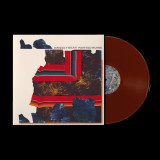
Grizzly Bear - Painted Ruins (LP 2x12")

Grizzly Bear

Painted Ruins (LP 2x12")

2x12inchWARPLP410RO
WARP
17.10.2025
  • A1: Wasted Acres
  • A2: Mourning Sound
  • A3: Four Cypresses
  • B1: Three Rings
  • B2: Losing All Sense
  • C1: Aquarian
  • C2: Cut-Out
  • C3: Glass Hillside
  • D1: Neighbors
  • D2: Systole
  • D3: Sky Took Hold

Grizzly Bear haben sich nie aufgelöst. In den sechs Jahren seit ihren letzten Auftritten haben sich die vier Mitglieder, die vor zwei Jahrzehnten als lose Freunde und sogar völlig Fremde zur Gruppe stießen – Chris Bear, Ed Droste, Daniel Rossen, Chris Taylor – anderen Dingen zugewandt. Sie haben andere Musik gemacht, andere Karrieren verfolgt, andere Familien gegründet und andere Leben jenseits dieser Band geführt. Und nun, zum ersten Mal seit 2019, kehren diese vier Musiker und Freunde zu Grizzly Bear zurück, um die Bande, die sie zu einem der fesselndsten und beliebtesten Acts dieses Jahrhunderts gemacht haben, auf die Probe zu stellen und zu sehen, wohin diese alten Verbindungen noch führen. Da sich Grizzly Bear nie aufgelöst haben, sind ihre ersten Auftritte seit sechs Jahren keine Reunion; sie sind Ankunft und Aufbruch zugleich, ihr nächstes Ziel noch unbekannt.

Diese Art von offenem Ansatz ist es schließlich, der Grizzly Bear noch immer zu einem der prägenden Acts dieses jungen Jahrhunderts macht. Vor zwanzig Jahren wandelten sie sich rasant von einem Lo-Fi-Songwriter-Projekt zu einer vollwertigen Band mit einem sofort einzigartigen Sound, unheimlichen Harmonien, die sich um Arrangements schmiegten, die den Glanz eines Kammerorchesters mit der Härte einer Rockband verbanden. Sie trugen dazu bei, die Möglichkeiten des Indie-Rock neu zu definieren, indem sie Üppigkeit mit Lockerheit, technische Exzellenz mit emotionaler Offenheit in Einklang brachten. Ihre musikalischen Spuren sind nach wie vor allgegenwärtig, Teile ihrer unorthodoxen Sicht auf Klang und Textur sind heute fester Bestandteil des musikalischen Erbes. Diese Songs im Jahr 2025 live zu hören, wird sich also weniger wie ein Händedruck mit der Vergangenheit anfühlen, als vielmehr wie das erste Mal, ihre Fingerabdrücke in der Gegenwart zu sehen.

Begleitet werden diese Live-Shows von Neuauflagen der Alben Yellow House, Veckatimest, Shields und Painted Ruins auf farbigem Vinyl.

Сделать предзаказ17.10.2025

он должен быть опубликован на 17.10.2025

31,89

Последний логин: 2026 г. назад
Shitkid - SHITKID EP

Shitkid

SHITKID EP

12inchPNKSLM188
PNKSLM
15.11.2024
  • 666:
  • Oh Please Be A Cocky Cool Kid
  • Hillside

ShitKid's self-titled debut EP immediately cut through the haze on its release in 2016, pushing the home-recording lo-fi pop artist into the spotlight with praise from the likes of The FADER, Pigeons & Planes, i-D, SPIN, The Line of Best Fit and many more. Home-recorded lo-fi recordings ranging from the alternative pop of debut single "Oh Please Be A Cocky Cool Kid" to the White Stripes-y garage rock of "Rnr Sally" to the just plain weird, the ShitKid EP is an essential release from ShitKid - now available on vinyl again, on limited edition galaxy vinyl.

Сделать предзаказ15.11.2024

он должен быть опубликован на 15.11.2024

21,43

Последний логин: 2026 г. назад
Jacken Elswyth - At Fargrounds LP

Jacken Elswyth is a London-based folk musician, banjo player, and instrument builder. At Fargrounds is her third solo album, her first for the Wrong Speed label and the latest in a rich catalogue that repositions the spectral, vulnerable sound of the banjo away from its familiar role as signifier of the past and onto lands brave, new and unexplored. “The living wood is imbued with qualities that require engagement and understanding. Working with cherry, oak or walnut involves naming it an equal partner. The parallel, synchronous transformations of wood into instrument, of growing tree into resonating sound, musical tradition into musical flourishing, lie at the heart of Jacken Elswyth’s practices both as an instrument builder and as a creative musician. One might consider her primarily as a worker in wood, but whose craft and fields of expression are absorbed by those transitional and interim processes that manifest change. The traditional tunes included here have been cultivated and maintained by generations of players and collectors, pruned, grafted, and shaped over time. However, in this setting, their long-established forms seem to morph and shift. They audibly accrue unique qualities, blossoming and swelling into new modes of being, bright-stepping arrangements unfolding with a liveliness hinting at practices of ritual and community. Meanwhile, other pieces, creative cornerstones of this collection, appear fluid, partially formed. They suggest not the cultivation of new growth from established stock, but instead the actions of something on the verge of taking form. Working with raw elements of melodic and tonal abstraction, they illuminate the process of emergence and evolution. In this context, the title At Fargrounds is telling. It suggests a point set at some distance from any centre of human concerns, a liminal space in which the cultivated world encounters the world of other living things in their living state. Here, the innate strangeness of the maintained environment–vast lawns, sculpted hedges, vacant playing fields–encounters sprawling vistas of driftwood, dense thickets of brambles, stony hillsides. Across a full century-and-a-quarter, long-standing rural and pastoral musical traditions, at some distance from their origins, have been preserved, nurtured and re-shaped under the folk revival. Placed here, these artefacts now sit in alignment with unvarnished documents featuring the raw elements of sound-making. Their working-together is achieved through a universally-applied interest in musical growth and development. The juxtaposition and combination of these elements gives evidence of new, emerging approaches to community and social music: familiar, known, yet charged with an alien vitality”–CWK Joynes. “...she knows how to knit atmospheres, and does so to especially powerful effect during Scene 4b’s three minutes of stunning bowed banjo, yearning with longing and dread, while showing off her talent, curiosity and range”–Jude Rogers review of Six Static Scenes (Guardian Folk Album Of The Month July 2022) "Jacken is an emotive player with high technical ability. Further, she builds banjos and other instruments, and that intimate knowledge of the bones and fibres holding everything together means that her playing has very few cracks" - Foxy Digitalis

Сделать предзаказ15.06.2024

он должен быть опубликован на 15.06.2024

28,36

Последний логин: 2026 г. назад
HOW TO DRESS WELL - I AM TOWARD YOU LP

In seinen mehr als 15 Jahren als How To Dress Well hat der in LA lebende Musiker Tom Krell mit dem Konzept dessen, was wir hören und wie wir kommunizieren, gespielt, um Musik zu schaffen, die irgendwo zwischen himmlischer Transzendenz und einer Außenseiter-Position für das, was Popmusik sein kann, liegt. I Am Toward You ist das erste neue How To Dress Well-Album seit sechs Jahren und enthält einige seiner bisher lautesten, freiesten und poetischsten Tracks. Krell eröffnet das zweite Jahrzehnt seiner Karriere mit einem Album, das alle Merkmale seiner besten Arbeiten aufweist. Krell begann 2020 zusammen mit wiederkehrenden und neuen Partnern wie CFCF, Chris Votek, Joel Ford, Josh Clancy, Trayer Tryon (Hundred Waters), Brian Allen Simon (Anenon) und Aaron Charles Read, mit der Arbeit an dem, was I Am Toward You werden würde. Er sichtete hunderte von Schnipseln, die er in den vergangenen zehn Jahren aufgenommen hatte, und fand unerklärliche Samples und Tonfetzen, die sich zu einem Album zusammenfügten, das die Dichte früherer Alben zurücknahm, um eine Sammlung von Songs zu schaffen, die zwischen der Gegenwart und der Vergangenheit oszillieren, als ob alles auf einmal geschähe. Eine Erinnerung von vor 20 Jahren hat genauso viel Gewicht wie etwas, das gestern passiert ist. Die ersten Singles und die Ankündigung erhielten eine unglaubliche Resonanz von zahlreichen namhaften Medien, darunter Pitchfork, Stereogum, FADER, Clash, Quietus Brooklyn Vegan und viele mehr. Die Videos für weitere Fokus-Tracks sind fertiggestellt und werden zusammen mit jedem Song veröffentlicht. Digipack-CD sowie als Vinyl mit bedruckter Inenhülle & DLC!

Сделать предзаказ10.05.2024

он должен быть опубликован на 10.05.2024

29,62

Последний логин: 2026 г. назад
HOW TO DRESS WELL - I AM TOWARD YOU LP

Limitiertes, farbiges Vinyl exklusiv für den Indie-Handel! In seinen mehr als 15 Jahren als How To Dress Well hat der in LA lebende Musiker Tom Krell mit dem Konzept dessen, was wir hören und wie wir kommunizieren, gespielt, um Musik zu schaffen, die irgendwo zwischen himmlischer Transzendenz und einer Außenseiter-Position für das, was Popmusik sein kann, liegt. I Am Toward You ist das erste neue How To Dress Well-Album seit sechs Jahren und enthält einige seiner bisher lautesten, freiesten und poetischsten Tracks. Krell eröffnet das zweite Jahrzehnt seiner Karriere mit einem Album, das alle Merkmale seiner besten Arbeiten aufweist. Krell begann 2020 zusammen mit wiederkehrenden und neuen Partnern wie CFCF, Chris Votek, Joel Ford, Josh Clancy, Trayer Tryon (Hundred Waters), Brian Allen Simon (Anenon) und Aaron Charles Read, mit der Arbeit an dem, was I Am Toward You werden würde. Er sichtete hunderte von Schnipseln, die er in den vergangenen zehn Jahren aufgenommen hatte, und fand unerklärliche Samples und Tonfetzen, die sich zu einem Album zusammenfügten, das die Dichte früherer Alben zurücknahm, um eine Sammlung von Songs zu schaffen, die zwischen der Gegenwart und der Vergangenheit oszillieren, als ob alles auf einmal geschähe. Eine Erinnerung von vor 20 Jahren hat genauso viel Gewicht wie etwas, das gestern passiert ist. Die ersten Singles und die Ankündigung erhielten eine unglaubliche Resonanz von zahlreichen namhaften Medien, darunter Pitchfork, Stereogum, FADER, Clash, Quietus Brooklyn Vegan und viele mehr. Die Videos für weitere Fokus-Tracks sind fertiggestellt und werden zusammen mit jedem Song veröffentlicht. Digipack-CD sowie als Vinyl mit bedruckter Inenhülle & DLC!

Сделать предзаказ10.05.2024

он должен быть опубликован на 10.05.2024

31,51

Последний логин: 2026 г. назад
Mestizo Beat - She’s A Rose/Lotsapapa

Blending sounds of early 70s Funk & Soul, Latin-Jazz, and Afrobeat, Mestizo Beat kicks the year off with a heavy dose of new material. First up is “She’s A Rose b/w Lotsapapa,” their next 45, offering two sides of masterful instrumental soul music written & produced by The Magaña Brothers out of their hillside studio, Spc 166 in Topanga, CA. Side A’s “She’s A Rose” takes us back to the golden years of the Blaxploitation film genre and the soundtracks we have grown to love. This song was inspired by the compositional and orchestral arrangements from the greats, such as Curtis Mayfield’s “Superbad,” Johnnie Pate’s “Shaft in Africa,” and Bobby Womack’s “Across 110 Street.” Featuring Tim Felten of Surefire Soul Ensemble on keys, with horns written and arranged by Jesse Audelo, Mestizo Beat takes the listener on an evolving journey, exploring the mood and cinematic elements of flute, saxophone, and wha’d-out guitar, topped off with a funky drum and percussion break. On the flip, “Lotsapapa” rounds out the B-Side, blending the musical styles of Latin and Nigerian disco-funk into a track that’s perfect for the dancefloor and those late nights out. Written about Bernard “Lotsapapa” Crowe, a notorious drug dealer who survived an attempted murder by Charles Manson, this side is sure to get the body moving with the afro-disco rhythms and chant vocals, dubbed out around a tightly arranged horn section written and arranged by Jesse Audelo and Jason Cressey. “Lotsapapa” features guests Steve Haney from Jungle Fire on Percussion and Cressey of the True Loves on trombone.

With each side highlighting the various talents of the ensemble, Mestizo Beat always stays true to their sound and recording techniques. Both tracks are mixed by Sergio Rios at Killion Sound and are featured on the forthcoming LP, Jaraguá, coming mid-2024.

Сделать предзаказ01.03.2024

он должен быть опубликован на 01.03.2024

15,55

Последний логин: 2026 г. назад
Mudd - In the Garden of Mindfulness LP 2x12"

When Paul Murphy released his critically acclaimed debut solo album, Claremont 56, in 2006, many thought it would be the first of many. In a way, it was, as in the years since he’s released a string of collaborative sets alongside Benjamin J Smith (as Smith & Mudd), and as part of underground ‘supergroups’ Paqua, Bison and Hillside. But that second solo album? Well, it just had to wait. In early 2023, Murphy finally decided to scratch that itch, roping in some of his most trusted collaborators (keyboardist and bassist Michele Chiavarini, percussionist Patrick Dawes, guitarist Dave Noble and HF International’s Kashif included) to lay down a sumptuous set of tracks that not only showcases his now familiar (bit hard to pigeonhole) neo-Balearic sound, but also proves how much he has matured as a writer and producer since 2006.

In The Garden of Mindfulness is richly musically detailed, expertly arranged and full to bursting with fluid instrumental solos, with Murphy and his collaborators serving up tracks that brilliantly blur the boundaries between languid jazz-funk, downtempo, vintage synth-laden krautrock, dubby grooves and sun-splashed soundscapes. It simply sparkles from the moment that opener ‘Eighty Three’ slowly rises like the morning sun, with gentle, undulating synth sounds ushering in a slow-motion jazz-funk excursion rich in twinkling electronics, spacey pads and warming bass. Recent single ‘Katanaboy’, a lusciously layered dub disco-infused dancefloor excursion in Murphy’s familiar style, raises the temperature a touch, before ‘Bonne Anse’ and the sublime ‘Unka Paw’ (whose combination of evocative fretless bass, extended electric piano solos, Clavinet licks and acoustic guitars is genuinely spellbinding) invite a combination of wavy shuffling and flat-on-the-back, eyes-closed appreciation.

And so it continues, with gorgeous title track ‘In The Garden of Mindfulness’ making way for the boogie-influenced, Japanese-British brilliance of ‘Hangsang’ (check the jaunty pianos, yearning breakdown and exotic melodies). Murphy’s long held love of warm, weighty bass, hypnotic disco grooves, colourful analogue synth sounds and jazzy guitars once again comes to the fore on ‘Way Of The Hollow’ before the album reaches a fittingly triumphant conclusion with ‘Late In March’.

A neat sonic summary of all that makes the set such a rewarding and entertaining experience, repeat listens reveals a wealth of musical details, from off-kilter triple-time drums and surprise bass guitar solos, to impeccable piano solos (provided by the immensely talented Chiavarini), fizzing jazz-funk synth doodles and stirring synth-strings. It’s a breathlessly brilliant way to end an album that was genuinely worth waiting for.

нет на складе

Закажите сейчас, и мы закажем товар для вас у нашего поставщика.

31,05

Последний логин: 4 мес. назад
THE POLYPHONIC SPREE - SALVAGE ENTERPRISE LP

The phoenix symbolizes a new beginning. The fire burns off the last vestiges of the past as the bird spreads its wings and takes flight into the future. The Polyphonic Spree harness the flames of rebirth on their 2023 full-length offering, Salvage Enterprise. Led by frontman, founder, producer, multi-instrumentalist, and visionary Tim DeLaughter, the group embark on their next season. They're reverent of their history, yet they're also ready for an even brighter tomorrow. "Across all of the music I've done, lyrically there's a sense of desperation and a moment of convincing myself I'm going to make it through regardless of how the music dresses up," notes Tim. "On this one, I struggled with the amount of vulnerability I was experiencing and was willing to share both musically and lyrically, but ultimately decided to let it play out. Now that it's done, I'm happy with the dance between the two. It's a `rising-from-theashes' record." Salvage Enterprise beckons complete immersion. Opener "Galloping Seas (Section 44)" affixes softly strummed acoustic guitar to an orchestral hum as Tim urges, "Hold on through the galloping seas." "We're all galloping through rough waters," he says. "I tried to describe the process as well as I could and encourage people to keep their heads above the storm and the waves. Ride it out. It's going to be okay. It starts off very calm and introspective, and you can envision where it's going." Flute echoes over nimbly plucked guitar during "Shadows On The Hillside (Section 48)" as keys twinkle. A glorious harmony amplifies the nostalgia of "Hop Off The Fence (Section 49)." It concludes with "Morning Sun, I Built The Stairs (Section 52)." Optimism strains through his hopeful intonation, "I learned to fly, the more that I become a new reason, I want to try," uplifted by boisterous horns and cinematic strings. It crashes into an Ennio Morricone-style crescendo bolstered even higher by operatic vocals. "There is an arc of leaving the world behind, stripping your old self away, and becoming new again," he offers. "You're shedding off this old world, and you're heading into the future. It's an epic ending. You've made it. You're going to be alright." In the end, The Polyphonic Spree are the soundtrack to that light at the end of the tunne

Сделать предзаказ17.11.2023

он должен быть опубликован на 17.11.2023

27,69

Последний логин: 2026 г. назад
THE POLYPHONIC SPREE - SALVAGE ENTERPRISE LP

The phoenix symbolizes a new beginning. The fire burns off the last vestiges of the past as the bird spreads its wings and takes flight into the future. The Polyphonic Spree harness the flames of rebirth on their 2023 full-length offering, Salvage Enterprise. Led by frontman, founder, producer, multi-instrumentalist, and visionary Tim DeLaughter, the group embark on their next season. They're reverent of their history, yet they're also ready for an even brighter tomorrow. "Across all of the music I've done, lyrically there's a sense of desperation and a moment of convincing myself I'm going to make it through regardless of how the music dresses up," notes Tim. "On this one, I struggled with the amount of vulnerability I was experiencing and was willing to share both musically and lyrically, but ultimately decided to let it play out. Now that it's done, I'm happy with the dance between the two. It's a `rising-from-theashes' record." Salvage Enterprise beckons complete immersion. Opener "Galloping Seas (Section 44)" affixes softly strummed acoustic guitar to an orchestral hum as Tim urges, "Hold on through the galloping seas." "We're all galloping through rough waters," he says. "I tried to describe the process as well as I could and encourage people to keep their heads above the storm and the waves. Ride it out. It's going to be okay. It starts off very calm and introspective, and you can envision where it's going." Flute echoes over nimbly plucked guitar during "Shadows On The Hillside (Section 48)" as keys twinkle. A glorious harmony amplifies the nostalgia of "Hop Off The Fence (Section 49)." It concludes with "Morning Sun, I Built The Stairs (Section 52)." Optimism strains through his hopeful intonation, "I learned to fly, the more that I become a new reason, I want to try," uplifted by boisterous horns and cinematic strings. It crashes into an Ennio Morricone-style crescendo bolstered even higher by operatic vocals. "There is an arc of leaving the world behind, stripping your old self away, and becoming new again," he offers. "You're shedding off this old world, and you're heading into the future. It's an epic ending. You've made it. You're going to be alright." In the end, The Polyphonic Spree are the soundtrack to that light at the end of the tunne

Сделать предзаказ17.11.2023

он должен быть опубликован на 17.11.2023

27,69

Последний логин: 2026 г. назад
THE POLYPHONIC SPREE - SALVAGE ENTERPRISE

The phoenix symbolizes a new beginning. The fire burns off the last vestiges of the past as the bird spreads its wings and takes flight into the future. The Polyphonic Spree harness the flames of rebirth on their 2023 full-length offering, Salvage Enterprise. Led by frontman, founder, producer, multi-instrumentalist, and visionary Tim DeLaughter, the group embark on their next season. They're reverent of their history, yet they're also ready for an even brighter tomorrow. "Across all of the music I've done, lyrically there's a sense of desperation and a moment of convincing myself I'm going to make it through regardless of how the music dresses up," notes Tim. "On this one, I struggled with the amount of vulnerability I was experiencing and was willing to share both musically and lyrically, but ultimately decided to let it play out. Now that it's done, I'm happy with the dance between the two. It's a `rising-from-theashes' record." Salvage Enterprise beckons complete immersion. Opener "Galloping Seas (Section 44)" affixes softly strummed acoustic guitar to an orchestral hum as Tim urges, "Hold on through the galloping seas." "We're all galloping through rough waters," he says. "I tried to describe the process as well as I could and encourage people to keep their heads above the storm and the waves. Ride it out. It's going to be okay. It starts off very calm and introspective, and you can envision where it's going." Flute echoes over nimbly plucked guitar during "Shadows On The Hillside (Section 48)" as keys twinkle. A glorious harmony amplifies the nostalgia of "Hop Off The Fence (Section 49)." It concludes with "Morning Sun, I Built The Stairs (Section 52)." Optimism strains through his hopeful intonation, "I learned to fly, the more that I become a new reason, I want to try," uplifted by boisterous horns and cinematic strings. It crashes into an Ennio Morricone-style crescendo bolstered even higher by operatic vocals. "There is an arc of leaving the world behind, stripping your old self away, and becoming new again," he offers. "You're shedding off this old world, and you're heading into the future. It's an epic ending. You've made it. You're going to be alright." In the end, The Polyphonic Spree are the soundtrack to that light at the end of the tunne

Сделать предзаказ17.11.2023

он должен быть опубликован на 17.11.2023

14,50

Последний логин: 2026 г. назад
KAIPA - VITTJAR LP 2x12"

Kaipa

VITTJAR LP 2x12"

2x12inchCONLP014MM
CONSTRUCTION RECORDS
27.10.2023

Kaipa is a Swedish band from the Uppsala area, which moves in symphonic rock with influences from folk music. The band is mainly influenced by Yes.

The result is as colourful musically and lyrically as Kaipa devotees will expect from the band’s rich discography dating back to the debut opus released in 1975. Formed in 1973, KAIPA never shied away from experimentation, embracing fresh elements and sounds manifesting especially on the albums released in the 2000’s. ‘

"Vittjar" is Kaipa's 11th studio album. The addition of the eminent guest-musicians Fredrik Lindqvist (recorders & whistles) and Elin Rubinsztein (violin) further underlines the folk influences in the music. Now available on vinyl in a new colour!

Сделать предзаказ27.10.2023

он должен быть опубликован на 27.10.2023

31,89

Последний логин: 2026 г. назад
KAIPA - VITTJAR LP 2x12"

Kaipa

VITTJAR LP 2x12"

2x12inchCONLP014BT
CONSTRUCTION RECORDS
27.10.2023

Kaipa is a Swedish band from the Uppsala area, which moves in symphonic rock with influences from folk music. The band is mainly influenced by Yes.

The result is as colourful musically and lyrically as Kaipa devotees will expect from the band’s rich discography dating back to the debut opus released in 1975. Formed in 1973, KAIPA never shied away from experimentation, embracing fresh elements and sounds manifesting especially on the albums released in the 2000’s. ‘

"Vittjar" is Kaipa's 11th studio album. The addition of the eminent guest-musicians Fredrik Lindqvist (recorders & whistles) and Elin Rubinsztein (violin) further underlines the folk influences in the music. Now available on vinyl in a new colour!

Сделать предзаказ27.10.2023

он должен быть опубликован на 27.10.2023

31,89

Последний логин: 2026 г. назад
TORTOISE - TNT 2x12"

Tortoise

TNT 2x12"

2x12inchTHRILLV50
Thrill Jockey
22.09.2023

1998: Tortoise"s third studio album TNT is released. In and out of print over the past decade we are happy to finally give everyone what they have been asking for - TNT on vinyl again! Pressed on high quality virgin vinyl, the two LPs are packaged in a deluxe old-style tip-on gatefold jacket fully replicating the original artwork and includes a download coupon for the first time! Tortoise"s third full-length release, TNT, was written and recorded during a 10-month interval in 1997. This longer-than-usual writing/production schedule was purposefully undertaken by the group in the hopes of crafting an expansive, diverse, yet thematically coherent offering. TNT builds upon the spare, instrumental framework of the group"s first, self-titled album, and the extended edits, melodic adventures, and klangfarben of the subsequent full-length release, Millions Now Living Will Never Die. Further to this, Tortoise"s interest in the possibilities offered by the remixing of tracks was realized within the actual production of TNT; individual elements, sections, or sometimes whole compositions mutate within the album"s shifting framework. These techniques were suitably realized thanks in part to the use of non-linear digital recording and editing methods, the first example of such work for the group.

Сделать предзаказ22.09.2023

он должен быть опубликован на 22.09.2023

35,25

Последний логин: 2026 г. назад
Trevino - Back 2x12"

Trevino

Back 2x12"

2x12inchBIRDIE006
Birdie
26.05.2023

In May 2016, Trevino a.k.a. Marcus Intalex released his acclaimed debut album, 'Front', on his own Birdie label. Almost exactly seven years on, the follow up album 'Back' will be released posthumously, marking the final Trevino album. The release date is scheduled for the 26th May to mark the six year anniversary of Marcus passing (28th May 2017).

Although most of the tracks for 'Back' were made during Marcus' time in Berlin, he moved back to Manchester in early 2017 to make the most of his home studio. The Trevino moniker was an output for Marcus to return to his love of house and techno, inspired by his experience of working in record shops from a young age where he would be receiving records spanning across Chicago house and Detroit techno - most notably referencing the Belleville Three as a key influence.

The producer, named after his favourite golfer Lee Trevino, has loosely based the two-part album project on the 'Front' nine and 'Back' nine holes in the sport. This theme runs throughout, with the artwork based on the plans for Hillside golf course.

нет на складе

Закажите сейчас, и мы закажем товар для вас у нашего поставщика.

22,27

Последний логин: 13 мес. назад
Nicola Dal Sacco - Wirrwarr EP

Nicola Dal Sacco treats us to an acid-soaked quartet for his debut solo EP on Aquaregia, a tantalizing follow-up to the Italian producer's contribution to the Acid Analects VA series.

Setting the tone, the title track, "Wirrwarr", revs up with driving drums and swirling pads - a sunrise escapade along a mountain pass. As daybreak approaches, the breakdown hits, introducing warm beaming pads. On the second leg, the journey continues with "Gelato", a spellbinder that melds serpentine acid lines with a vintage flair, navigating hairpins and snaking through narrow hillside corridors; vertigo ensues.

"Parapiglia" continues the trip with an eerie and enchanting lowlight drive. Melancholic acid whines while lush ethereal pads swaddle; a haunting mist rolling over the road. A deep closer, "Linea" guides us down the final stretch through the foothills with a viscous groove and chilled out atmosphere; the final knock back down into first gear.

нет на складе

Закажите сейчас, и мы закажем товар для вас у нашего поставщика.

11,35

Последний логин: 23 мес. назад
Trampled by Turtles - Alpenglow

It’s a beautiful phenomenon,” says Trampled by Turtles’ Dave Simonett, before adding with characteristic sincerity: “Everybody should see it." Simonett is talking about alpenglow, the natural event that washes mountains on the horizon in smoldering red and pink light, just before the sun sets or rises. It’s a harbinger of change––the space between new and old. It’s also the name of Trampled by Turtles’ new album, the band’s tenth. “My favorite part about making music is making records,” says Simonett. “I’m really excited about this one.” Produced by Wilco’s Jeff Tweedy, Alpenglow offers resounding proof that the beloved six-piece from Minnesota remain uncontested champs of understated virtuosity, literary songwriting, and a joyful hodgepodge of folk heart, rock-and-roll muscle, and string-band zen. Almost 20 years after first getting together, Trampled – that’s lead singer and songwriter Dave Simonett, bassist Tim Saxhaug, banjo player Dave Carroll, mandolinist Erik Berry, fiddle player Ryan Young, and cellist Eamonn McLain – also keep finding new ways to surprise us and one another. While many of the songs on Alpenglow grapple with change, none try to offer answers. Nothing’s neat and tidy. Instead, Trampled find endearing ways to sit in the tension, hope, and sense of loss that transitions and hard questions create. Then, just by expressing what’s there, the music offers comfort.

Сделать предзаказ28.10.2022

он должен быть опубликован на 28.10.2022

23,49

Последний логин: 2026 г. назад
TORTOISE - TNT LP (2x12")

Tortoise

TNT LP (2x12")

2x12inchTHRILLZ50
Thrill Jockey
25.10.2022

TNT is the third full length studio album released by Tortoise in 1998 1998 : Tortoise"s third studio album TNT is released. In and out of print over the past decade we are happy to finally give everyone what they have been asking for - TNT on vinyl again! Pressed on high quality virgin vinyl, the two LPs are packaged in a deluxe old-style tip?on gatefold jacket fully replicating the original artwork and includes a download coupon for the first time! Tortoise"s third full-length release, TNT, was written and recorded during a 10-month interval in 1997. This longer-than-usual writing/production schedule was purposefully undertaken by the group in the hopes of crafting an expansive, diverse, yet thematically coherent offering. TNT builds upon the spare, instrumental framework of the group"s first, self-titled album, and the extended edits, melodic adventures, and klangfarben of the subsequent full-length release, Millions Now Living Will Never Die. Further to this, Tortoise"s interest in the possibilities offered by the remixing of tracks was realized within the actual production of TNT; individual elements, sections, or sometimes whole compositions mutate within the album"s shifting framework. These techniques were suitably realized thanks in part to the use of non-linear digital recording and editing methods, the first example of such work for the group

нет на складе

Закажите сейчас, и мы закажем товар для вас у нашего поставщика.

33,82

Последний логин: 3 г. назад
Lee Tracy & Isaac Manning - Is it What You Want

As the sun sets on a quaint East Nashville house, a young man bares a piece of his soul. Facing the camera, sporting a silky suit jacket/shirt/slacks/fingerless gloves ensemble that announces "singer" before he's even opened his mouth, Lee Tracy Johnson settles onto his stage, the front yard. He sways to the dirge-like drum machine pulse of a synth-soaked slow jam, extends his arms as if gaining his balance, and croons in affecting, fragile earnest, "I need your love… oh baby…"

Dogs in the yard next door begin barking. A mysterious cardboard robot figure, beamed in from galaxies unknown and affixed to a tree, is less vocal. Lee doesn't acknowledge either's presence. He's busy feeling it, arms and hands gesticulating. His voice rises in falsetto over the now-quiet dogs, over the ambient noise from the street that seeps into the handheld camcorder's microphone, over the recording of his own voice played back from a boombox off-camera. After six minutes the single, continuous shot ends. In this intimate creative universe there are no re-takes. There are many more music videos to shoot, and as Lee later puts it, "The first time you do it is actually the best. Because you can never get that again. You expressing yourself from within."

"I Need Your Love" dates from a lost heyday. From some time in the '80s or early '90s, when Lee Tracy (as he was known in performance) and his music partner/producer/manager Isaac Manning committed hours upon hours of their sonic and visual ideas to tape. Embracing drum machines and synthesizers – electronics that made their personal futurism palpable – they recorded exclusively at home, live in a room into a simple cassette deck. Soul, funk, electro and new wave informed their songs, yet Lee and Isaac eschewed the confinement of conventional categories and genres, preferring to let experimentation guide them.

"Anytime somebody put out a new record they had the same instruments or the same sound," explains Isaac. "So I basically wanted to find something that's really gonna stand out away from all of the rest of 'em." Their ethos meant that every idea they came up with was at least worth trying: echoed out half-rapped exhortations over frantic techno-style beats, gospel synth soul, modal electro-funk, oddball pop reinterpretations, emo AOR balladry, nods to Prince and the Fat Boys, or arrangements that might collapse mid-song into a mess of arcade game-ish blips before rallying to reach the finish line. All of it conjoined by consistent tape hiss, and most vitally, Lee's chameleonic voice, which managed to wildly shape shift and still evoke something sincere – whether toggling between falsetto and tenor exalting Jesus's return, or punctuating a melismatic romantic adlib with a succinct, "We all know how it feels to be alone."

"People think we went to a studio," says Isaac derisively. "We never went to no studio. We didn't have the money to go to no studio! We did this stuff at home. I shot videos in my front yard with whatever we could to get things together." Sometimes Isaac would just put on an instrumental record, be it "Planet Rock" or "Don't Cry For Me Argentina" (from Evita), press "record," and let Lee improvise over it, yielding peculiar love songs, would-be patriotic anthems, or Elvis Presley or Marilyn Monroe tributes. Technical limitations and a lack of professional polish never dissuaded them. They believed they were onto something.

"That struggle," Isaac says, "made that sound sound good to me."

In the parlance of modern music criticism Lee and Isaac's dizzying DIY efforts would inevitably be described as "outsider." But "outsider" carries the burden of untold additional layers of meaning if you're Black and from the South, creating on a budget, and trying to get someone, anyone within the country music capital of the world to take your vision seriously. "What category should we put it in?" Isaac asks rhetorically. "I don't know. All I know is feeling. I ain't gonna name it nothing. It's music. If it grabs your soul and touch your heart that's what it basically is supposed to do."

=

Born in 1963, the baby boy of nine siblings, Lee Tracy spent his earliest years living amidst the shotgun houses on Nashville's south side. "We was poor, man!" he says, recalling the outhouse his family used for a bathroom and the blocks of ice they kept in the kitchen to chill perishables. "But I actually don't think I really realized I was in poverty until I got grown and started thinking about it." Lee's mom worked at the Holiday Inn; his dad did whatever he had to do, from selling fruit from a horse drawn cart to bootlegging. "We didn't have much," Lee continues, "but my mother and my father got us the things we needed, the clothes on our back." By the end of the decade with the city's urban renewal programs razing entire neighborhoods to accommodate construction of the Interstate, the family moved to Edgehill Projects. Lee remembers music and art as a constant source of inspiration for he and his brothers and sisters – especially after seeing the Jackson 5 perform on Ed Sullivan. "As a small child I just knew that was what I wanted to do."

His older brother Don began musically mentoring him, introducing Lee to a variety of instruments and sounds. "He would never play one particular type of music, like R&B," says Lee. "I was surrounded by jazz, hard rock and roll, easy listening, gospel, reggae, country music; I mean I was a sponge absorbing all of that." Lee taught himself to play drums by beating on cardboard boxes, gaining a rep around the way for his timekeeping, and his singing voice. Emulating his favorites, Earth Wind & Fire and Cameo, he formed groups with other kids with era-evocative band names like Concept and TNT Connection, and emerged as the leader of disciplined rehearsals. "I made them practice," says Lee. "We practiced and practiced and practiced. Because I wanted that perfection." By high school the most accomplished of these bands would take top prize in a prominent local talent show. It was a big moment for Lee, and he felt ready to take things to the next level. But his band-mates had other ideas.

"I don't know what happened," he says, still miffed at the memory. "It must have blew they mind after we won and people started showing notice, because it's like everybody quit! I was like, where the hell did everybody go?" Lee had always made a point of interrogating prospective musicians about their intentions before joining his groups: were they really serious or just looking for a way to pick up girls? Now he understood even more the importance of finding a collaborator just as committed to the music as he was.

=

Isaac Manning had spent much of his life immersed in music and the arts – singing in the church choir with his family on Nashville's north side, writing, painting, dancing, and working various gigs within the entertainment industry. After serving in the armed forces, in the early '70s he ran The Teenage Place, a music and performance venue that catered to the local youth. But he was forced out of town when word of one of his recreational routines created a stir beyond the safe haven of his bohemian circles.

"I was growing marijuana," Isaac explains. "It wasn't no business, I was smoking it myself… I would put marijuana in scrambled eggs, cornbread and stuff." His weed use originated as a form of self-medication to combat severe tooth pain. But when he began sharing it with some of the other young people he hung out with, some of who just so happened to be the kids of Nashville politicians, the cops came calling. "When I got busted," he remembers, "they were talking about how they were gonna get rid of me because they didn't want me saying nothing about they children because of the politics and stuff. So I got my family, took two raggedy cars, and left Nashville and went to Vegas."

Out in the desert, Isaac happened to meet Chubby Checker of "The Twist" fame while the singer was gigging at The Flamingo. Impressed by Isaac's zeal, Checker invited him to go on the road with him as his tour manager/roadie/valet. The experience gave Isaac a window into a part of the entertainment world he'd never encountered – a glimpse of what a true pop act's audience looked like. "Chubby Checker, none of his shows were played for Black folks," he remembers. "All his gigs were done at high-class white people areas." Returning home after a few years with Chubby, Isaac was properly motivated to make it in Music City. He began writing songs and scouting around Nashville for local talent anywhere he could find it with an expressed goal: "Find someone who can deliver your songs the way you want 'em delivered and make people feel what you want them to feel."

One day while walking through Edgehill Projects Isaac heard someone playing the drums in a way that made him stop and take notice. "The music was so tight, just the drums made me feel like, oh I'm-a find this person," he recalls. "So I circled through the projects until I found who it was.

"That's how I met him – Lee Tracy. When I found him and he started singing and stuff, I said, ohhh, this is somebody different."

=

Theirs was a true complementary partnership: young Lee possessed the raw talent, the older Isaac the belief. "He's really the only one besides my brother and my family that really seen the potential in me," says Lee. "He made me see that I could do it."

Isaac long being a night owl, his house also made for a fertile collaborative environment – a space where there always seemed to be a new piece of his visual art on display: paintings, illustrations, and dolls and figures (including an enigmatic cardboard robot). Lee and Issac would hang out together and talk, listen to music, conjure ideas, and smoke the herb Isaac had resumed growing in his yard. "It got to where I could trust him, he could trust me," Isaac says of their bond. They also worked together for hours on drawings, spreading larges rolls of paper on the walls and sketching faces with abstract patterns and imagery: alien-like beings, tri-horned horse heads, inverted Janus-like characters where one visage blurred into the other.

Soon it became apparent that they didn't need other collaborators; self-sufficiency was the natural way forward. At Isaac's behest Lee, already fed up with dealing with band musicians, began playing around with a poly-sonic Yamaha keyboard at the local music store. "It had everything on it – trumpet, bass, drums, organ," remembers Lee. "And that's when I started recording my own stuff."

The technology afforded Lee the flexibility and independence he craved, setting him on a path other bedroom musicians and producers around the world were simultaneously following through the '80s into the early '90s. Saving up money from day jobs, he eventually supplemented the Yamaha Isaac had gotten him with Roland and Casio drum machines and a Moog. Lee was living in an apartment in Hillside at that point caring for his dad, who'd been partially paralyzed since early in life. In the evenings up in his second floor room, the music put him in a zone where he could tune out everything and lose himself in his ideas.

"Oh I loved it," he recalls. "I would really experiment with the instruments and use a lot of different sound effects. I was looking for something nobody else had. I wanted something totally different. And once I found the sound I was looking for, I would just smoke me a good joint and just let it go, hit the record button." More potent a creative stimulant than even Isaac's weed was the holistic flow and spontaneity of recording. Between sessions at Isaac's place and Lee's apartment, their volume of output quickly ballooned.

"We was always recording," says Lee. "That's why we have so much music. Even when I went to Isaac's and we start creating, I get home, my mind is racing, I gotta start creating, creating, creating. I remember there were times when I took a 90-minute tape from front to back and just filled it up."

"We never practiced," says Isaac. "See, that was just so odd about the whole thing. I could relate to him, and tell him about the songs I had ideas for and everything and stuff. And then he would bring it back or whatever, and we'd get together and put it down." Once the taskmaster hell bent on rehearsing, Lee had flipped a full 180. Perfection was no longer an aspiration, but the enemy of inspiration.

"I seen where practicing and practicing got me," says Lee. "A lot of musicians you get to playing and they gotta stop, they have to analyze the music. But while you analyzing you losing a lot of the greatness of what you creating. Stop analyzing what you play, just play! And it'll all take shape."

=

"I hope you understood the beginning of the record because this was invented from a dream I had today… (You tell me, I'll tell you, we'll figure it out together)" – Lee Tracy and Isaac Manning, "Hope You Understand"

Lee lets loose a maniacal cackle when he acknowledges that the material that he and Isaac recorded was by anyone's estimation pretty out there. It's the same laugh that commences "Hope You Understand" – a chaotic transmission that encapsulates the duality at the heart of their music: a stated desire to reach people and a compulsion to go as leftfield as they saw fit.

"We just did it," says Lee. "We cut the music on and cut loose. I don't sit around and write. I do it by listening, get a feeling, play the music, and the lyrics and stuff just come out of me."

The approach proved adaptable to interpreting other artists' material. While recording a cover of Whitney Houston's pop ballad "Saving All My Love For You," Lee played Whitney's version in his headphones as he laid down his own vocals – partially following the lyrics, partially using them as a departure point. The end result is barely recognizable compared with the original, Lee and Isaac having switched up the time signature and reinvented the melody along the way towards morphing a slick mainstream radio standard into something that sounds solely their own.

"I really used that song to get me started," says Lee. "Then I said, well I need something else, something is missing. Something just came over me. That's when I came up with 'Is It What You Want.'"

The song would become the centerpiece of Lee and Isaac's repertoire. Pushed along by a percolating metronomic Rhythm King style beat somewhere between a military march and a samba, "Is It What You Want" finds Lee pleading the sincerity of his commitment to a potential love interest embellished by vocal tics and hiccups subtlely reminiscent of his childhood hero MJ. Absent chord changes, only synth riffs gliding in and out like apparitions, the song achieves a lingering lo-fi power that leaves you feeling like it's still playing, somewhere, even after the fade out.

"I don't know, it's like a real spiritual song," Lee reflects. "But it's not just spiritual. To me the more I listen to it it's like about everything that you do in your everyday life, period. Is it what you want? Do you want a car or you don't want a car? Do you want Jesus or do you want the Devil? It's basically asking you the question. Can't nobody answer the question but you yourself."

In 1989 Lee won a lawsuit stemming from injuries sustained from a fight he'd gotten into. He took part of the settlement money and with Isaac pressed up "Saving All My Love For You" b/w "Is It What You Want" as a 45 single. Isaac christened the label One Chance Records. "Because that's all we wanted," he says with a laugh, "one chance."

Isaac sent the record out to radio stations and major labels, hoping for it to make enough noise to get picked up nationally. But the response he and Lee were hoping for never materialized. According to Isaac the closest the single got to getting played on the radio is when a disk jock from a local station made a highly unusual announcement on air: "The dude said on the radio, 107.5 – 'We are not gonna play 'Is It What You Want.' We cracked up! Wow, that's deep.

"It was a whole racist thing that was going on," he reflects. "So we just looked over and kept on going. That was it. That was about the way it goes… If you were Black and you were living in Nashville and stuff, that's the way you got treated." Isaac already knew as much from all the times he'd brought he and Lee's tapes (even their cache of country music tunes) over to Music Row to try to drum up interest to no avail.

"Isaac, he really worked his ass off," says Lee. "He probably been to every record place down on Music Row." Nashville's famed recording and music business corridor wasn't but a few blocks from where Lee grew up. Close enough, he remembers, for him to ride his bike along its back alleys and stumble upon the occasional random treasure, like a discarded box of harmonicas. Getting in through the front door, however, still felt a world away.

"I just don't think at the time our music fell into a category for them," he concedes. "It was before its time."

=

Lee stopped making music some time in the latter part of the '90s, around the time his mom passed away and life became increasingly tough to manage. "When my mother died I had a nervous breakdown," he says, "So I shut down for a long time. I was in such a sadness frame of mind. That's why nobody seen me. I had just disappeared off the map." He fell out of touch with Isaac, and in an indication of just how bad things had gotten for him, lost track of all the recordings they'd made together. Music became a distant memory.

Fortunately, Isaac kept the faith. In a self-published collection of his poetry – paeans to some of his favorite entertainment and public figures entitled Friends and Dick Clark – he'd written that he believed "music has a life of its own." But his prescience and presence of mind were truly manifested in the fact that he kept an archive of he and Lee's work. As perfectly imperfect as "Is It What You Want" now sounds in a post-Personal Space world, Lee and Isaac's lone official release was in fact just a taste. The bulk of the Is It What You Want album is culled from the pair's essentially unheard home recordings – complete songs, half-realized experiments, Isaac's blue monologues and pronouncements et al – compiled, mixed and programmed in the loose and impulsive creative spirit of their regular get-togethers from decades ago. The rest of us, it seems, may have finally caught up to them.

On the prospect of at long last reaching a wider audience, Isaac says simply, "I been trying for a long time, it feels good." Ever the survivor, he adds, "The only way I know how to make it to the top is to keep climbing. If one leg break on the ladder, hey, you gotta fix it and keep on going… That's where I be at. I'll kill death to make it out there."

For Lee it all feels akin to a personal resurrection: "It's like I was in a tomb and the tomb was opened and I'm back… Man, it feels so great. I feel like I'm gonna jump out of my skin." Success at this stage of his life, he realizes, probably means something different than what it did back when he was singing and dancing in Isaac's front yard. "What I really mean by 'making it,'" he explains isn't just the music being heard but, "the story being told."

Occasionally Lee will pull up "Is It What You Want" on YouTube on his phone, put on his headphones, and listen. He remembers the first time he heard his recorded voice. How surreal it was, how he thought to himself, "Is that really me?" What would he say to that younger version of himself now?

"I would probably tell myself, hang in there, don't give up. Keep striving for the goal. And everything will work out."

Despite what's printed on the record label, sometimes you do get more than one chance.

нет на складе

Закажите сейчас, и мы закажем товар для вас у нашего поставщика.

11,72

Последний логин: 3 г. назад
Randy Randall - Sound Field Vol 2020

The latest album from Randy Randall, guitarist and multi-instrumentalist
of tireless Los Angeles experimental punk duo No Age, Sound Field Vol
2020, continues the iconoclastic weirdo ripper's series of audiovisual
urban excursions in a contemplative set of ambient compositions
exploring the abandoned expanse of pandemic-era Los Angeles
"Vol. 2020 is named as such (and not 'Vol. 2') because of the massive psychic
shift that occurred at the beginning of the global pandemic and subsequent
lockdown," says Randall. The project took root in the earliest days of lockdown, as
the absence of perennial, man- made din revealed the secret lives and hidden
contours of the world without us: The cacophony of birds on empty boulevards;
the rhythmic click cycles of unmanned escalators; PA announcements
reverberating back into themselves across abandoned transportation terminals;
nocturnal choruses of wildlife reverberating across hillsides under a planeless
sky.We listened inwards, too, recontextualizing ourselves as we reckoned with an
abrupt and collective halt never thought possible in our lifetime, as if someone
had pressed mute on the world. Little did we know what would come. With no
choice but to confront the present, we gave ourselves over to a brief moment of
fear mixed with wonderment, alone, together.

Сделать предзаказ14.10.2022

он должен быть опубликован на 14.10.2022

24,33

Последний логин: 2026 г. назад
Lee Tracy & Isaac Manning - Is it What You Want LP

As the sun sets on a quaint East Nashville house, a young man bares a piece of his soul. Facing the camera, sporting a silky suit jacket/shirt/slacks/fingerless gloves ensemble that announces "singer" before he's even opened his mouth, Lee Tracy Johnson settles onto his stage, the front yard. He sways to the dirge-like drum machine pulse of a synth-soaked slow jam, extends his arms as if gaining his balance, and croons in affecting, fragile earnest, "I need your love… oh baby…"

Dogs in the yard next door begin barking. A mysterious cardboard robot figure, beamed in from galaxies unknown and affixed to a tree, is less vocal. Lee doesn't acknowledge either's presence. He's busy feeling it, arms and hands gesticulating. His voice rises in falsetto over the now-quiet dogs, over the ambient noise from the street that seeps into the handheld camcorder's microphone, over the recording of his own voice played back from a boombox off-camera. After six minutes the single, continuous shot ends. In this intimate creative universe there are no re-takes. There are many more music videos to shoot, and as Lee later puts it, "The first time you do it is actually the best. Because you can never get that again. You expressing yourself from within."

"I Need Your Love" dates from a lost heyday. From some time in the '80s or early '90s, when Lee Tracy (as he was known in performance) and his music partner/producer/manager Isaac Manning committed hours upon hours of their sonic and visual ideas to tape. Embracing drum machines and synthesizers – electronics that made their personal futurism palpable – they recorded exclusively at home, live in a room into a simple cassette deck. Soul, funk, electro and new wave informed their songs, yet Lee and Isaac eschewed the confinement of conventional categories and genres, preferring to let experimentation guide them.

"Anytime somebody put out a new record they had the same instruments or the same sound," explains Isaac. "So I basically wanted to find something that's really gonna stand out away from all of the rest of 'em." Their ethos meant that every idea they came up with was at least worth trying: echoed out half-rapped exhortations over frantic techno-style beats, gospel synth soul, modal electro-funk, oddball pop reinterpretations, emo AOR balladry, nods to Prince and the Fat Boys, or arrangements that might collapse mid-song into a mess of arcade game-ish blips before rallying to reach the finish line. All of it conjoined by consistent tape hiss, and most vitally, Lee's chameleonic voice, which managed to wildly shape shift and still evoke something sincere – whether toggling between falsetto and tenor exalting Jesus's return, or punctuating a melismatic romantic adlib with a succinct, "We all know how it feels to be alone."

"People think we went to a studio," says Isaac derisively. "We never went to no studio. We didn't have the money to go to no studio! We did this stuff at home. I shot videos in my front yard with whatever we could to get things together." Sometimes Isaac would just put on an instrumental record, be it "Planet Rock" or "Don't Cry For Me Argentina" (from Evita), press "record," and let Lee improvise over it, yielding peculiar love songs, would-be patriotic anthems, or Elvis Presley or Marilyn Monroe tributes. Technical limitations and a lack of professional polish never dissuaded them. They believed they were onto something.

"That struggle," Isaac says, "made that sound sound good to me."

In the parlance of modern music criticism Lee and Isaac's dizzying DIY efforts would inevitably be described as "outsider." But "outsider" carries the burden of untold additional layers of meaning if you're Black and from the South, creating on a budget, and trying to get someone, anyone within the country music capital of the world to take your vision seriously. "What category should we put it in?" Isaac asks rhetorically. "I don't know. All I know is feeling. I ain't gonna name it nothing. It's music. If it grabs your soul and touch your heart that's what it basically is supposed to do."

=

Born in 1963, the baby boy of nine siblings, Lee Tracy spent his earliest years living amidst the shotgun houses on Nashville's south side. "We was poor, man!" he says, recalling the outhouse his family used for a bathroom and the blocks of ice they kept in the kitchen to chill perishables. "But I actually don't think I really realized I was in poverty until I got grown and started thinking about it." Lee's mom worked at the Holiday Inn; his dad did whatever he had to do, from selling fruit from a horse drawn cart to bootlegging. "We didn't have much," Lee continues, "but my mother and my father got us the things we needed, the clothes on our back." By the end of the decade with the city's urban renewal programs razing entire neighborhoods to accommodate construction of the Interstate, the family moved to Edgehill Projects. Lee remembers music and art as a constant source of inspiration for he and his brothers and sisters – especially after seeing the Jackson 5 perform on Ed Sullivan. "As a small child I just knew that was what I wanted to do."

His older brother Don began musically mentoring him, introducing Lee to a variety of instruments and sounds. "He would never play one particular type of music, like R&B," says Lee. "I was surrounded by jazz, hard rock and roll, easy listening, gospel, reggae, country music; I mean I was a sponge absorbing all of that." Lee taught himself to play drums by beating on cardboard boxes, gaining a rep around the way for his timekeeping, and his singing voice. Emulating his favorites, Earth Wind & Fire and Cameo, he formed groups with other kids with era-evocative band names like Concept and TNT Connection, and emerged as the leader of disciplined rehearsals. "I made them practice," says Lee. "We practiced and practiced and practiced. Because I wanted that perfection." By high school the most accomplished of these bands would take top prize in a prominent local talent show. It was a big moment for Lee, and he felt ready to take things to the next level. But his band-mates had other ideas.

"I don't know what happened," he says, still miffed at the memory. "It must have blew they mind after we won and people started showing notice, because it's like everybody quit! I was like, where the hell did everybody go?" Lee had always made a point of interrogating prospective musicians about their intentions before joining his groups: were they really serious or just looking for a way to pick up girls? Now he understood even more the importance of finding a collaborator just as committed to the music as he was.

=

Isaac Manning had spent much of his life immersed in music and the arts – singing in the church choir with his family on Nashville's north side, writing, painting, dancing, and working various gigs within the entertainment industry. After serving in the armed forces, in the early '70s he ran The Teenage Place, a music and performance venue that catered to the local youth. But he was forced out of town when word of one of his recreational routines created a stir beyond the safe haven of his bohemian circles.

"I was growing marijuana," Isaac explains. "It wasn't no business, I was smoking it myself… I would put marijuana in scrambled eggs, cornbread and stuff." His weed use originated as a form of self-medication to combat severe tooth pain. But when he began sharing it with some of the other young people he hung out with, some of who just so happened to be the kids of Nashville politicians, the cops came calling. "When I got busted," he remembers, "they were talking about how they were gonna get rid of me because they didn't want me saying nothing about they children because of the politics and stuff. So I got my family, took two raggedy cars, and left Nashville and went to Vegas."

Out in the desert, Isaac happened to meet Chubby Checker of "The Twist" fame while the singer was gigging at The Flamingo. Impressed by Isaac's zeal, Checker invited him to go on the road with him as his tour manager/roadie/valet. The experience gave Isaac a window into a part of the entertainment world he'd never encountered – a glimpse of what a true pop act's audience looked like. "Chubby Checker, none of his shows were played for Black folks," he remembers. "All his gigs were done at high-class white people areas." Returning home after a few years with Chubby, Isaac was properly motivated to make it in Music City. He began writing songs and scouting around Nashville for local talent anywhere he could find it with an expressed goal: "Find someone who can deliver your songs the way you want 'em delivered and make people feel what you want them to feel."

One day while walking through Edgehill Projects Isaac heard someone playing the drums in a way that made him stop and take notice. "The music was so tight, just the drums made me feel like, oh I'm-a find this person," he recalls. "So I circled through the projects until I found who it was.

"That's how I met him – Lee Tracy. When I found him and he started singing and stuff, I said, ohhh, this is somebody different."

=

Theirs was a true complementary partnership: young Lee possessed the raw talent, the older Isaac the belief. "He's really the only one besides my brother and my family that really seen the potential in me," says Lee. "He made me see that I could do it."

Isaac long being a night owl, his house also made for a fertile collaborative environment – a space where there always seemed to be a new piece of his visual art on display: paintings, illustrations, and dolls and figures (including an enigmatic cardboard robot). Lee and Issac would hang out together and talk, listen to music, conjure ideas, and smoke the herb Isaac had resumed growing in his yard. "It got to where I could trust him, he could trust me," Isaac says of their bond. They also worked together for hours on drawings, spreading larges rolls of paper on the walls and sketching faces with abstract patterns and imagery: alien-like beings, tri-horned horse heads, inverted Janus-like characters where one visage blurred into the other.

Soon it became apparent that they didn't need other collaborators; self-sufficiency was the natural way forward. At Isaac's behest Lee, already fed up with dealing with band musicians, began playing around with a poly-sonic Yamaha keyboard at the local music store. "It had everything on it – trumpet, bass, drums, organ," remembers Lee. "And that's when I started recording my own stuff."

The technology afforded Lee the flexibility and independence he craved, setting him on a path other bedroom musicians and producers around the world were simultaneously following through the '80s into the early '90s. Saving up money from day jobs, he eventually supplemented the Yamaha Isaac had gotten him with Roland and Casio drum machines and a Moog. Lee was living in an apartment in Hillside at that point caring for his dad, who'd been partially paralyzed since early in life. In the evenings up in his second floor room, the music put him in a zone where he could tune out everything and lose himself in his ideas.

"Oh I loved it," he recalls. "I would really experiment with the instruments and use a lot of different sound effects. I was looking for something nobody else had. I wanted something totally different. And once I found the sound I was looking for, I would just smoke me a good joint and just let it go, hit the record button." More potent a creative stimulant than even Isaac's weed was the holistic flow and spontaneity of recording. Between sessions at Isaac's place and Lee's apartment, their volume of output quickly ballooned.

"We was always recording," says Lee. "That's why we have so much music. Even when I went to Isaac's and we start creating, I get home, my mind is racing, I gotta start creating, creating, creating. I remember there were times when I took a 90-minute tape from front to back and just filled it up."

"We never practiced," says Isaac. "See, that was just so odd about the whole thing. I could relate to him, and tell him about the songs I had ideas for and everything and stuff. And then he would bring it back or whatever, and we'd get together and put it down." Once the taskmaster hell bent on rehearsing, Lee had flipped a full 180. Perfection was no longer an aspiration, but the enemy of inspiration.

"I seen where practicing and practicing got me," says Lee. "A lot of musicians you get to playing and they gotta stop, they have to analyze the music. But while you analyzing you losing a lot of the greatness of what you creating. Stop analyzing what you play, just play! And it'll all take shape."

=

"I hope you understood the beginning of the record because this was invented from a dream I had today… (You tell me, I'll tell you, we'll figure it out together)" – Lee Tracy and Isaac Manning, "Hope You Understand"

Lee lets loose a maniacal cackle when he acknowledges that the material that he and Isaac recorded was by anyone's estimation pretty out there. It's the same laugh that commences "Hope You Understand" – a chaotic transmission that encapsulates the duality at the heart of their music: a stated desire to reach people and a compulsion to go as leftfield as they saw fit.

"We just did it," says Lee. "We cut the music on and cut loose. I don't sit around and write. I do it by listening, get a feeling, play the music, and the lyrics and stuff just come out of me."

The approach proved adaptable to interpreting other artists' material. While recording a cover of Whitney Houston's pop ballad "Saving All My Love For You," Lee played Whitney's version in his headphones as he laid down his own vocals – partially following the lyrics, partially using them as a departure point. The end result is barely recognizable compared with the original, Lee and Isaac having switched up the time signature and reinvented the melody along the way towards morphing a slick mainstream radio standard into something that sounds solely their own.

"I really used that song to get me started," says Lee. "Then I said, well I need something else, something is missing. Something just came over me. That's when I came up with 'Is It What You Want.'"

The song would become the centerpiece of Lee and Isaac's repertoire. Pushed along by a percolating metronomic Rhythm King style beat somewhere between a military march and a samba, "Is It What You Want" finds Lee pleading the sincerity of his commitment to a potential love interest embellished by vocal tics and hiccups subtlely reminiscent of his childhood hero MJ. Absent chord changes, only synth riffs gliding in and out like apparitions, the song achieves a lingering lo-fi power that leaves you feeling like it's still playing, somewhere, even after the fade out.

"I don't know, it's like a real spiritual song," Lee reflects. "But it's not just spiritual. To me the more I listen to it it's like about everything that you do in your everyday life, period. Is it what you want? Do you want a car or you don't want a car? Do you want Jesus or do you want the Devil? It's basically asking you the question. Can't nobody answer the question but you yourself."

In 1989 Lee won a lawsuit stemming from injuries sustained from a fight he'd gotten into. He took part of the settlement money and with Isaac pressed up "Saving All My Love For You" b/w "Is It What You Want" as a 45 single. Isaac christened the label One Chance Records. "Because that's all we wanted," he says with a laugh, "one chance."

Isaac sent the record out to radio stations and major labels, hoping for it to make enough noise to get picked up nationally. But the response he and Lee were hoping for never materialized. According to Isaac the closest the single got to getting played on the radio is when a disk jock from a local station made a highly unusual announcement on air: "The dude said on the radio, 107.5 – 'We are not gonna play 'Is It What You Want.' We cracked up! Wow, that's deep.

"It was a whole racist thing that was going on," he reflects. "So we just looked over and kept on going. That was it. That was about the way it goes… If you were Black and you were living in Nashville and stuff, that's the way you got treated." Isaac already knew as much from all the times he'd brought he and Lee's tapes (even their cache of country music tunes) over to Music Row to try to drum up interest to no avail.

"Isaac, he really worked his ass off," says Lee. "He probably been to every record place down on Music Row." Nashville's famed recording and music business corridor wasn't but a few blocks from where Lee grew up. Close enough, he remembers, for him to ride his bike along its back alleys and stumble upon the occasional random treasure, like a discarded box of harmonicas. Getting in through the front door, however, still felt a world away.

"I just don't think at the time our music fell into a category for them," he concedes. "It was before its time."

=

Lee stopped making music some time in the latter part of the '90s, around the time his mom passed away and life became increasingly tough to manage. "When my mother died I had a nervous breakdown," he says, "So I shut down for a long time. I was in such a sadness frame of mind. That's why nobody seen me. I had just disappeared off the map." He fell out of touch with Isaac, and in an indication of just how bad things had gotten for him, lost track of all the recordings they'd made together. Music became a distant memory.

Fortunately, Isaac kept the faith. In a self-published collection of his poetry – paeans to some of his favorite entertainment and public figures entitled Friends and Dick Clark – he'd written that he believed "music has a life of its own." But his prescience and presence of mind were truly manifested in the fact that he kept an archive of he and Lee's work. As perfectly imperfect as "Is It What You Want" now sounds in a post-Personal Space world, Lee and Isaac's lone official release was in fact just a taste. The bulk of the Is It What You Want album is culled from the pair's essentially unheard home recordings – complete songs, half-realized experiments, Isaac's blue monologues and pronouncements et al – compiled, mixed and programmed in the loose and impulsive creative spirit of their regular get-togethers from decades ago. The rest of us, it seems, may have finally caught up to them.

On the prospect of at long last reaching a wider audience, Isaac says simply, "I been trying for a long time, it feels good." Ever the survivor, he adds, "The only way I know how to make it to the top is to keep climbing. If one leg break on the ladder, hey, you gotta fix it and keep on going… That's where I be at. I'll kill death to make it out there."

For Lee it all feels akin to a personal resurrection: "It's like I was in a tomb and the tomb was opened and I'm back… Man, it feels so great. I feel like I'm gonna jump out of my skin." Success at this stage of his life, he realizes, probably means something different than what it did back when he was singing and dancing in Isaac's front yard. "What I really mean by 'making it,'" he explains isn't just the music being heard but, "the story being told."

Occasionally Lee will pull up "Is It What You Want" on YouTube on his phone, put on his headphones, and listen. He remembers the first time he heard his recorded voice. How surreal it was, how he thought to himself, "Is that really me?" What would he say to that younger version of himself now?

"I would probably tell myself, hang in there, don't give up. Keep striving for the goal. And everything will work out."

Despite what's printed on the record label, sometimes you do get more than one chance.

нет на складе

Закажите сейчас, и мы закажем товар для вас у нашего поставщика.

23,49

Последний логин: 3 г. назад
Midlake - The Trials Of Van Occupanther

Midlake are a relatively small indie band, so the
level of ambition they display on ‘The Trials of Van
Occupanther’ is to be commended. From the
opening track, ‘Roscoe’, with its laconic lyrics and
slowly building chorus, they manage to recreate
perfectly the sound of 1980s Fleetwood Mac, a band
not known for thinking small.
 And though the rest of the album doesn’t quite reach
the heady heights of this opener, it’s not for a lack of
trying (particularly on ‘Head Home’). The remainder
of ‘The Trials of Van Occupanther’ is considerably
more downbeat, with distant flutes complementing
the vocal harmonies of songs like ‘Bandits’ and
‘Branches’.
 Where Midlake particularly excel, though, is when,
like Grandaddy before them, they draw their
inspiration from the classic rock that they seem to
love so much, adapting and modernising it. So in
addition to the anthemic ‘Roscoe’, they evoke the
Gram Parsons-era Byrds or even The Band on ‘Van
Occupanther’ and the road-ready ‘It Covers the
Hillsides’.
 ‘The Trials of Van Occupanther’ is an album that's
steeped in musical history yet possessing an identity
all its own.
 Released on 180g gold vinyl to celebrate a new
Midlake album for 2022 and also the 15th
anniversary of ‘The Trials of Van Occupanther’ last
year.
 Digital download code included.

Сделать предзаказ11.02.2022

он должен быть опубликован на 11.02.2022

26,85

Последний логин: 2026 г. назад
Pedro the Lion - Havasu

Lake Havasu is a community of winding hillside roads, launched in the 1960s alongside a brick-for-brick rebuild of the original London Bridge. “It’s this very synthetic, gimmicky place set in this soulful, desolate landscape,” laughs Pedro the Lion’s David Bazan, who moved to the Arizona city for one year in seventh grade. Bazan collected his earliest childhood experiences for 2019’s Phoenix, the prolific artist’s celebrated return to the Pedro moniker and the first in a planned series of five records chronicling his past homes. To write its sequel, Bazan traveled to Havasu four times over several years, driving past his junior high campus, a magical skating rink, and other nostalgic locations that evoked feelings long suppressed. “An intersection I hadn’t remembered for 30 years would trigger a flood of hidden memories,” he says. “I was there to soak in it as much as possible.” Driving the inscrutable loops of Havasu’s lakeside, Bazan listened through an audiobook of Tom Petty’s biography, eventually dialoguing with Petty’s voice in his mind. A revelation from the book—that Petty subconsciously wrote the song “Wildflowers” as an act of kindness toward himself—inspired Bazan to approach his own work with radical generosity toward his young self. “I wanted to be there for that kid,” he offers. “That twelve year old still needs parenting, and still needs to process.” To revisit his past with openness, Bazan modified harmful work habits he’d accepted as necessary. That meant doing away with deadlines, and accumulating moments of play as he felt moved to—“Rather than squeezing stones every single time. I’m on a slow journey away from that,” he clarifies. As he worked through the music that became Havasu, flexibility and curiosity informed the arrangements. Bazan began writing on a simple synthesizer and drum machine setup. He detoured to a more elaborate assortment of analog electronic equipment, then woodshed his original two-handed keyboard arrangements on fingerpicked acoustic guitar. Concurrently relearning his catalog for a weekly series of livestream concerts also renewed his gratitude toward songwriting. “I was trying to evaluate what I have to show for 20 years of kicking my own ass,” Bazan quips about the strenuousness of full-time touring. “But the garden of my songs is what I’ve been building. It doesn’t have to be an ego test.”

Сделать предзаказ04.02.2022

он должен быть опубликован на 04.02.2022

22,48

Последний логин: 2026 г. назад
Gesellschaft Zur Emanzipation Des Samples - Anthology of American Pop Music

GES: Anthology of American Pop Music

Six great pop standards remembered: five pop songs are dissected by sampler, stretched, compressed, and re-collaged. In this way, their identity is lost. What remains is a vague concreteness: flashes of déjà vu and remote echoes that evoke the original.
GES (Gesellschaft zur Emanzipation des Samples)
-
Active members: Helmut Schmidt, Jan Jelinek
Founded: 2009
Headquarters: Federal Court of Justice, Karlsruhe, Germany
-

GES Glossary

Acoustic Surveillance Series

A 7-inch vinyl record series curated by GES focussing on historical methods of acoustic surveillance. Each record introduces a surveillance system from the past. Starting with Uguisubari in 2017, the series will continue with the release of Orecchio di Dionisio in 2021. GES is open to further suggestions on this subject.

Bundesgerichtshof (German Federal Court of Justice), Karlsruhe

“The use of audio samples as artistic practice may justify the infringement of copyright and intellectual property rights.” (ruling of the German Federal Court of Justice pertaining to Metall auf Metall II, 2016). The court is also the official headquarters of GES.
Circulations

What happens to copyright claims when music from a passing car is captured in a street recording? Is it legal to use this recording freely or is it necessary to obtain licensing rights? Circulations re-enacts this recording situation: audio players are placed in public spaces, where they reproduce the desired sample material. The acoustically choreographed space is then recorded, creating a field recording in which everyday noises circulate together with seemingly incidental music.

Emancipation of Sampling

Fuelled by its criminalization, the act of sampling existing recordings forfeited some of its artistic prestige (see Sampling). GES wishes to rehabilitate and re-emancipate the practice of sampling as a form of art in its own right. Strategy: 1. Name samples and sources explicitly. 2. Choose samples that are as popular and as recognizable as possible (Beatles, Carpenters, etc.). 3. The editing and manipulation of the sample must not compromise its recognizability (negotiable). 4. Use as many samples as possible. 5. Always name more sample sources than were actually used in the composition.

Field Recording

A compositional practice widely used in sound art and ethnomusicology that involves the recording of natural acoustical phenomena. Two additional requirements are usually imposed: The recording process should take place outside a studio environment, i.e. outdoors. And the person recording does not generate any of the acoustic material him/herself. GES expands this definition by introducing the concept of choreographed public space (see Circulations).

Gambling

An acoustic event favoured by GES, already used in numerous sound collages (must take place in public). The most popular option is thimblerig, a cup and ball gambling game commonly played in the street. Compositional instruction by GES: Place an audio playback device in the proximity of a thimblerigger. Play works for orchestra (by Debussy or Mahler). Move slowly towards the gamblers with a microphone.

Helmut Schmidt

Multiple identity and fictional character devised by GES. Figures variously within the semiotic system of GES as member, guest artist or public representative. Following the historical example of Subcommandante Marcos (EZLN).

Kraftwerk

The German band founded by electropop musicians Florian Schneider-Esleben and Ralf Hütter (a.k.a. Die Prozessoren) is the natural enemy of GES. Protected by computer-generated avatars, Kraftwerk operates a quote-hostile cultural hegemony. Their strategy: Install a special brand in the collective consciousness by means of a sophisticated system of quotations and references that may in turn not be quoted by anyone else. Other bands with such delusions of omnipotence: U2, Metallica.

Marcel Duchamp

As the inventor of the readymade, Duchamp may be viewed as a precursor to the art of sampling. However, the artist is appreciated above all for his sonorous qualities, as his vocal silence has often been sampled and processed. It was the inspiration for Jelinek's radio play Zwischen.

Orecchio di Dionisio

This 65-meter-deep limestone cave in the Sicilian town of Syracuse, carved out of a hillside in ancient times, has exceptional acoustics: A person standing at the cave entrance can hear every word whispered deep down inside it. The painter Michelangelo da Caravaggio gave it its name (The Ear of Dionysius) in 1608. The cave indeed resembles an ear and – according to Caravaggio – had a specific function: The tyrant Dionysius I imprisoned his political prisoners in the cave in order to spy on them. Orecchio di Dionisio will be featured in the Acoustic Surveillance Series in the near future.

Sampling

Compositional practice whereby recorded music is fragmented, turned into sound collages and transferred into different contexts of meaning. Since the advent of affordable sampling technology in the 1990s, the music industry has been trying to criminalize and/or promote the practice. Both strategies are driven by the same principle: Profit.

Uguisubari

Sound-making floorboards in Japanese temple and castle complexes, featured in the Acoustic Surveillance Series in 2017. In the Edo period, the “nightingale floor” (literal translation of uguisubari) was a popular acoustic warning system. The principle was straightforward: When someone stepped onto the boards, nails would rub against metal clamps beneath the floor, creating a tell-tale squeaky sound that was said to resemble the chirping of the Japanese nightingale.

Wind

A generator of acoustic events and an amplifier/transmitter of existing sounds. A meteorological form of energy appreciated by the GES on account of its unpredictability. A series about wind as an acoustic phenomenon is planned. Working title: Hotel Corridors.

Zwischen (Between)

Radio play by GES member Jan Jelinek based on recordings of various public interview situations. From the speech of the interviewees (all of them eloquent personalities) the pauses between coherent utterances were extracted and assembled. What we hear is an archaic body language: modes of breathing, word particles and onomatopoeic turmoil. A key question for GES: Which comes first, personal rights or artistic freedom? For Zwischen, Jelinek used only recordings by public figures that were already available to the public.

нет на складе

Закажите сейчас, и мы закажем товар для вас у нашего поставщика.

17,44

Последний логин: 5 г. назад
Prins Emanuel - Diagonal Music

The young virtuoso producer Prins Emanuel follows up his acclaimed debut album on Music For Dreams with something quite different than what we're used to hearing from him. While Arbete & Fritid was an epic odyssey into the furthest corners of disco with an array of studio wizardry and complex rhythms, Diagonal Musik is a sparse and delicate exploration of the acoustic guitar. Steering away from his comfort zone, the Prins follows his intuition for experimentation and lands somewhere in a field of genre-defiant folk-jazz meditations; a development that fits like hand in glove for the eccentric nature of Music For Dreams. The album reads like a soundtrack to the country house Emanuel shares with his family and friends, a place on the map called Oran. From atop a hillside overlooking a lake, Oran is lodged deep in the heart of the Skåne landscape, the southern part of Sweden that once belonged to Denmark. This place encompasses the whole of the album, as the track titles all pinpoint crucial locations on the courtyard and its surroundings. 'Orön' which opens the album is named after the small half-island that sits in the centre of the lake. There's the hand-built sauna ("Bastun") at the edge of the yard, and behind that in a slope the old root cellar ("Jordkällaren"). While the nature here is anything but balearic, the overwhelming calm of the country life seems to inspire the same laid-back attitude and passion for all things organic (and not just musically, as this is where Emanuel also makes cider from local apples according to the vin naturel school). Upon listening to Diagonal Musik one might be keen to draw references to works in similar style, such as the output of late 80's new age label Windham Hill or the dreamy lullabies of long-time friend and Music For Dreams affiliate 55 Cancri e. This is all circumstantial however, surprising as it may seem.

нет на складе

Закажите сейчас, и мы закажем товар для вас у нашего поставщика.

21,30

Последний логин: 6 г. назад
Продуктов на странице:
N/ABPM
Vinyl