Any reasonably knowledgeable fan of post-punk will likely recognise the name of Una Baines. A founder of both The Fall and Blue Orchids, Una's influence in the development of both bands is a matter of historical fact . . . so much so that people scarcely realise how few recordings she's actually made - a solitary 7" with The Fall, one LP and a few singles by Blue Orchids, and that's it, barring her most recent recording, The Fates' obscure album "Furia", released nearly forty years ago on a tiny label until its rediscovery a few years back on the Finders Keepers label. Una's spent much of the last four decades working in community organising, raising a family, and functioning as a symbolic godmother to many Mancunian artists and musicians who cite her as an aspiration and mentor. Her band Poppycock has undergone several line-up changes between their sporadic - almost exclusively local - live appearances. Una was never shy in describing her personal ideals and artistic expression in terms of feminism - even if the term was occasionally derided by some female punk artists. "Magic Mothers" displays a consistency of vision rare traceable back to interviews she did during The Fall. Hearing it, we're reminded of the emotional fierceness set against pop arrangements from acts like Look Blue Go Purple and Dead Famous People, or the spare pop jazziness found in songs by Marine Girls, Tracey Thorn's pre-fame combo. The arrival of "Magic Mothers" will come as a surprise to many. Though recorded in fits and starts over the last fifteen years, it's a cohesive statement with an expansive cast of friends and allies, including Blue Orchids' Howard Jones and The Fall / House Of All's Simon Wolstencroft, plus many others. The original keyboardist for both The Fall and Blue Orchids, Una Baines returns with her brilliant musical partners for her first album in 39 years
Search:his all star band
Worst Case Scenario started out in 1994 with Justin Trosper and Brandt Sandeno from Unwound as another of the many bands they formed together. That summer was a little slow for Unwound’s hoped-for tour schedule so they decided to start another hardcore-influenced band while working day jobs. As they began practicing in the basement of the Olympia punk house “Lucky 7”, long time friend and roommate Chris Jordan jumped in as the vocalist. Sandeno soon recruited his college friend, Scott Larsen, that had recently moved from Minneapolis. They quickly wrote about an album’s worth of songs and recorded them with Tim Green at the Red House for a “demo tape” that Tobi Vail released on her tape label, Bumpidee. 1995 saw another Tim Green recording with 7-inch records on Lookout Records and Troubleman. This LP contains all of the forementioned material. In 1996 they recorded a full length record with “Seasick” Steve Wold in Olympia for Vermiform which resulted in the self-titled vinyl LP and The Complete Works of Worst Case Scenario CD collection a year later. WCS played a few random shows, mostly in Olympia, with friends’ touring bands from 1994-96 and set up a national tour for the summer of ’97. Shortly before the tour Jordan was injured in a random accident and then Larsen broke his wrist in a work accident, rendering the band unable to embark on the tour. To cap it off, the one sheet of paper that had all the venues’ contacts for the tour was destroyed in a laundry related incident and the band was unable to properly cancel the tour. Apropos to their name. They disbanded amicably later that year with members moving away from town and taking on more demanding tour and work schedules.
Los Angeles April 18, 2024The origin of this record is a weird one. In 2019, we had just returned from two long European tours when we decided to take a “little break” from the road. You all know what happened next. That “little break” turned into a couple of years and during that time Dane, our drummer, decided to quit the band and music in general (no hard feelings).. Sean and I had a discussion and thought about ending the band as a whole, but I knew I had to go out on my own terms. I had an ace in the hole, though. Jeff Murray, drummer from LA rippers The Shrine. I had been friends with Jeff and The Shrine’s founder, Josh Landau since our “Scavenger” 7” came out, around 2012. We had run into them in Berlin a few months back and I knew they weren't playing anymore. I called Josh first, ‘cause asking a dude if you can take his drummer, is like asking your girlfriend's Dad if you can marry her. And Josh said “go for it”. And Jeff was in. Honestly if he had said no, that would have been the end. I had written a ton of stuff since our last album but I had shelved most of it. I was trying too hard - basically. Eventually Sean, Jeff and I said, ‘Fuck it, let’s make a “Fake Live” record’ - like Kiss or Slayer did. John Dwyer from Osees was opening his new studio, Discount Mirrors and it seemed like the perfect place to record it. We settled on re-recording a bunch of old stuff while simultaneously demoing our new material, as the three of us were now starting to really get in the groove. The result is Strange Masters Vol. 1. These are not new songs. These are Zig Zags classics re-recorded with a ripping-ass band that’s old and angry and just wants to get on with it. We are already on to recording the next album of new songs. That one is coming soon, but in the meantime, enjoy this one…while you still can!-Jed Maheu-Guitars-Vocals-Zig Zags
The next release in the Mr Bongo Cuban Classics series, is one of Juan Pablo Torres' most-known and loved albums, the iconic Super Son from 1977. A wonderful record of tripped-out rumbas, psych-Afro-Latin funk and quirky orchestrated tracks with a big band horn section courtesy of Torres’ band, Algo Nuevo.
As well as being the director of Algo Nuevo and Cuban all-star ensemble Estrellas De Areito, the trombonist, bandleader, arranger and producer also released a wealth of albums under his own name predominately on the state-owned imprint Areito/EGREM.
Post-revolution, there was a contrast in Cuba’s musical world. State censorship was at play, but professional musicians were on the government payroll which gave them an artistic freedom. Experimentation emanated in the ‘70s and ‘80s and Super Son is a prime example of that. ‘Y Que Bien' kicks off the album taking you down a tripped-out, cosmic rabbithole, psych guitars and skat vocals opening up into a joyful funk groove laced with jazzy Afro-Cuban horns stabs. Tracks such as 'Pastel En Descarga' seem to come out of nowhere and are completely unique. Fuzzed-up guitar lines and percussion lay the groundwork, with those jubilant horns adding to the energy of this forever building track.
Elsewhere, there’s the ‘70s TV theme-tune feeling of 'Con Aji Guaguao', a playful funk number that boils and bubbles with blistering trombone playing by Torres. Or ‘Son A Propulsión' and ‘Son Riendo’, two more brilliant examples of psychedelic funk, wrapped up in a blanket of Afro-Cuban rhythms. The former sweeping you up in rushes of wind as trumpets, trombones and distorted guitars trade off, the latter, an intergalactic fiesta of tradition and exploration.
Super Son is up there as one of the funkiest Cuban records around, a playful fusion of ideas from a producer, player and group on fine form and, for us, one of our favourite gems to come out of Cuba in this period. A sheer masterpiece.
Sugaray Rayford is a man with a message and a larger than life personality and voice to deliver it
Working with producer, songwriter Eric Corne for the past 3 albums, the soul-blues powerhouse has crafted an incendiary sound and narrative, combining classic soul melodies and funky R & B grooves with raw blues power.
The pair's first collaboration, 'Somebody Save Me', earned Rayford a 2020 Grammy nomination. Later that year he took home Blues Music Awards for 'Soul Blues Male Artist' and 'B.B. King Entertainer of the Year.' Rayford's follow up In Too Deep won a plethora of awards including the Blues Music Award for 'Soul Blues Album of the Year'.
His new release is entitled 'Human Decency'. The title track is a simple reminder that our similarities are stronger than our differences and in the end, there is no black or white or left or right, there are only hearts and minds.
About the leadoff single, "Run For Cover" a song that takes no prisoners, Q Magazine declares, "The bluesey soul of Rayford comes on full steam with this powerhouse single."
"We're calling people on their bullshit but we're having fun with them. That's my way. I'm gonna tell it to you straight but with love in my heart. I always bring some suga with the salt!" says Sugaray, bellowing with laughter.
An all-star cast lent their talents to the album, including guitarist Rick Holmstrom and singer Saundra Williams who are both from Mavis Staples's band, along with bassist Taras Prodaniuk (Lucinda Williams, Merle Haggard).
At the frayed bottom-edge of Indiana - just a moderate bike ride north of Louisville, Kentucky - multi-instrumentalist, artist and songwriter Ryan Davis' Americana-noir soundwaves have been emanating for years in a myriad of forms. As driving force for the lauded State Champion, long-running member of Tropical Trash, administrator of the esoteric and excellent Cropped Out festival, and lone proprietor of the Sophomore Lounge label, Davis lays down his first proper 'solo' release with Dancing On The Edge, a rich, 2LP tapestry of tunes that absolutely glows over seven expansive cuts. It's a pure collage of modernity and heritage. Recorded in early 2023 with help both in-studio and remotely from peers like Joan Shelley, Catherine Irwin (Freakwater), Will Lawrence (Felice Brothers, Gun Outfit, John Early), Jenny Rose (Giving Up), Christopher May (Mail the Horse), Elisabeth Fuchsia (Footings, Bonnie "Prince" Billy), and Aaron Rosenblum (Son of Earth, Sapat), the results herein are melancholic, gentle, minimal yet colorful in mood: a lilting highway accompaniment of crisp instrumentation and a relaxed, amiable approach to vocals with rhapsodic wordsmithery. Fans of the aforementioned artists as well as those of Souled American, David Berman, Kurt Vile and 'Comes A Time'-era Neil should all easily find bounty. While bare-boned and uncluttered in presentation, many of these pieces track over 6 minutes allowing a fair amount of expansiveness. Dancing On The Edge stares down into the navel of the American Experience underbelly with a fair amount of outward reach. Besides the Kosmische-synth and violin stabs reaching into a European element, stately organ swells build a musical bridge between 1969 Southern California and Felt's latter era smooth moves, with layers of intelligent gesture taking this well beyond the realm of its archetypal indie troubadour/acoustic songwriter tag. Music and mint juleps never went down so well together." Originally released via Ryan's own label, Sophomore Lounge, in the US late 2023, it picked up some incredible reviews: best of 2023 in both Pitchfork and Rolling Stone, 9/10 lead review in Uncut, and a raft of other notable publications. "This is the sound of someone bearing a torch." - Bill Callahan (Smog) - RIYL Silver Jews, BPB, Lambchop, Cass McCoombs, Sparklehorse.
‘Empires into Sand’ is the first album of new material from Normil Hawaiians in 40 years. The group first refined their sound during the early 80s, hitting on a pastoral experimentalism that drew on ambient drone, motorik impulse and post-punk pep.
‘Empires into Sand’ came together in the familiar manner of their original three albums, with improvisation and nuance informing the blueprint of the tracks. It was with the official release of this last record ‘Return of the Ranters’ (originally recorded in 1984/85, but then unconsciously shelved) in 2015 by Upset The Rhythm that led to the group reconnecting with the intention of playing music together again. Normil Hawaiians played a launch show for that ‘lost album’ and followed that up with more concerts, including an appearance at Supernormal, a residency at the Edinburgh Festival, gigs at Cafe OTO. They were even chosen by Richard Dawson to perform with him in London.
Throughout this time, Normil Hawaiians revisited their original songs for live performance. However for a group always so interested in evolving their sound, it came as no surprise that they shirked at the idea of a faithful retread. The band pushed their songs into new inventive dimensions, still progressive at core, but now imbued with a cosmic uncanny. A cinematic approach that was always quietly present has come to the fore. The quaint weirdness of folk song, the humanity of communal practice and the group’s ecological mindedness have all found a place in Normil Hawaiians’ current sound world.
When Normil Hawaiians write and record music they prefer to gather in a remote location and live together for a while, such is their communal ethos. Being far-flung across the UK, the Family Hawaii (numbering seven key members) decided to encamp to Tayinloan, a small village on the west coast of the Kintyre peninsula in Scotland. They set up their own studio in an isolated, windswept house overlooking the sea and started the tape rolling. Noel Blanden from the band explains the process neatly: “we set up and began playing, slowly and patiently, allowing the music to take its own shape based on where we were staying and our ongoing friendship. We recorded for days, capturing everything. A lot of new and rich ideas began to emerge”.
Normil Hawaiians took their time to develop these threads at their own pace, allowing songs to mutate and settle over months. Simon Marchant deftly produced and recorded the album whilst also performing in the band, this marked the first time the band had total control of their own sound. The last few years has seen the band reconvene in Herne Bay, Faversham, London and Leith to record new parts, constantly responding to the changing form of these quietly spectral songs of defiance.
‘Empires into Sand’ incorporates samples from old rehearsals and live music into the new finished pieces, this is in continuum with their previous records. Snippets of sound from the static of short wave radio and satellite transmissions also embellish the work. In fact the whole album is stitched together with interludes, creating an acutely immersive 45 minutes. ‘Exiles’ opens the album amid swirling atmospheres, synth flights and recordings of Vilnis Egle (father of Zinta Egle from the band) retelling his experience of fleeing his home in Latvia during Soviet occupation in 1942. George Bikandy also features on this track talking about his flight from Syria in 2014. ‘Ghosts of Ballochroy’ is a winding river of a song featuring a lively discourse in Scots courtesy of Rodney Relax. There’s a commitment to truth telling present across this hopeful album populated with angels, incoming tides, long shadows and the rose-washed sun. “From our broken windscreen, we feel the breeze” soars Guy Smith triumphantly over the driving beat of ‘Waterfalls : Bedford 330’. ‘Big City Sky’ flutters and sparkles with rapid synth runs, tape-looped drums and Jimmy Miller’s commanding vocal. With ‘In The Stone’ Zinta’s melody is deliberately jagged and blunt, exaggerated by octave-layered vocals and interjections from Guy.
This is thought-provoking, boundary-bothering music. Honest in intent, a solidarity of vision. The album’s title is derived from a poem by band member Mark Tyler, who sadly passed away during the recording process and the transience of life is felt heavily throughout. Noel best coins the group’s wish for the album: “we wanted to create an album that acknowledges our history and also reflects who we are today. We remained true to ourselves and we wanted to make something beautiful without removing the edges.” ‘Empires into Sand’ certainly does that, it’s an echo from the past, an echo from the future.
Upchuck are experiencing a moment. The Atlanta punk collective just came off multiple tour runs with their good friend Faye Webster. Their Ty Segall-produced second album Bite The Hand That Feeds, with all its buzzsaw guitars and high-speed rippers and headbanging sludge, arrived in October. Later this year, they’ll make appearances at multiple festivals including Coachella. In the midst of relentlessly barreling ahead, the band and their label Famous Class are taking a beat to revisit how they got here. After working with Segall on Bite the Hand That Feeds, the band floated the notion that they wished they could hear what their collaborator could do with the songs on their 2022 debut album Sense Yourself. Holed up in his studio over Christmas with COVID and nothing else to do, Ty Segall began toying with Sense Yourself, sifting through folders of unlabeled stems to find the best guitar parts, emboldening the drum sound, and bringing greater clarity to KT’s vocals, all while bolstering the urgency of the band’s overall attack. With Segall’s new mix, Upchuck’s intense and righteous debut now impossibly overflows with even more fuzz and fury. In Segall, they found a kindred spirit whose studio approach made sense for just how hard they wanted this music to hit. “When we first went to record with Ty for Bite the Hand That Feeds, Mikey and I walked into the guitar room and Ty said, ‘Don’t touch the EQs.’ We looked at the amp and everything was on 10 except the master volume,” Hoff said. Previously, the band had been encouraged to capture the unvarnished sound of the studio. They’d toured with Segall’s band Fuzz, so everybody had the same goal while recording together: Capture the electricity of their intense live set. The band’s shows have a reputation for coming unglued, and there’s no greater document of that than Sense Yourself’s iconic album artwork. With no text, it’s a candid photo of a moment from a show shot on film without editing: blood streaked across KT’s face as they shout into the mic. In the middle of their EP release show, KT was in the pit as a fan started crowd surfing inside a shopping cart. A loose piece of metal near a wheel caught the singer right near the eyebrow and blood was everywhere, an instant piece of iconography snapped by probably every camera phone in the room. When Hoff revisits the message of this first album and Upchuck’s first songs, he thinks back to the year before the band even started when he and KT were hanging out. “We were sitting around talking for eight hours like ‘fuck, that's fucked up, that's fucked up.’” Upchuck became a vehicle for these five people to process how fucked up everything it is—to digest these formative hours-long conversations and put them to bludgeoning, intense rock music. The music is also fun as hell, and that’s part of the point. “There's a lot we need to do as people and a lot of things we need to fix in society but also like come on man like have your fun, wild out, have your drink,” KT says. “But be on your shit at the same time. Check your folk.”
Tuk Smith & The Restless Hearts is an American rock band from Nashville founded and fronted by former Biters leader Tuk Smith, originally from Atlanta, now living in Nashville. The band released their debut single "What Kinda Love" on January 10, 2020 and were also added as an opening act for The Stadium Tour with Def Leppard and Mötley Crüe on the same day. Then came the onset of Covid 19. “When the pandemic hit, it was like hitting the reset button on my music career” recalls Tuk, “everything got taken away…album campaign, stadium tour, record deal. The world was in lockdown, and the only way to escape was to throw myself into writing. My thoughts began exploring the past, and the inspiration for the songs just came in tidal waves.”
The new collection is a rock ‘n roll silver lining that came out of the solitude and reflection of the pandemic. Ballad Of A Misspent Youth is the new single (and subsequent album of the same name) released summer of 2022 on Tuk’s new record label MRG, through Virgin Music. Tuk explains, “I decided to make a rock and roll record for me and what I like because there was no label, there was no committee involved…just me and my stories. I wanted to create a setting and an authentic feeling about everything. I reunited with long-time friend Dan Dixon and recorded these songs in his garage studio, and there is a purity to the work that came from all the circumstances of that time.” Growing up as an outsider in rural Georgia, Tuk found solace in hardcore punk acts like Black Flag and The Exploited. From there, Smith branched out into exploring seventies New York bands like The Dead Boys and New York Dolls, which lead him across the sea where he embraced first-wave British acts like The Buzzcocks and the Clash. Smith wasn’t just a casual fan of these acts, he was obsessed with them and traced their lineage with fervent dedication. “I was always into the Clash growing up and Mick Jones’ favorite band was Mott The Hoople, so through the years I ended up developing a love of the first wave of British glam, power pop and things like that,” he explains. Soon Smith was forming his own acts, touring relentlessly and building a following with his high-energy live shows, including his tour of duty as lead singer for the Biters, who he fronted for nearly a decade. He offers “Then after being on the road for years, I had a reckoning about where I was at and the future ahead. …I realized the only way to achieve something meaningful was to be a good songwriter…that clicked. I went on a musical diet where I stripped the obscure stuff away, and I really started focusing on the greats. When I started clicking that it was just about the songs, things changed. I had already put my 10,000 hours in the van to play in the dive clubs, but then I put my 10,000 hours into figuring out how to write. I also started working with other songwriters. I humbled myself… it was an education, like going to school.” Tuk elaborates, “I wanted to kind of branch out musically and do different things, and I figured to go solo would be better. My manager actually suggested I call my new band “The Restless Hearts” and that's what he would call me all the time. It was the title of a Biters song that people loved and I’d seen a few restless hearts tattoos at our shows along the way… and so Tuk Smith & The Restless Hearts was born. I was in a period where I changed everything including the way I lived my daily life. I experimented with different ways to tap into positive/creative energy…it was an evolving overall process (and still is).” Tuk summarizes, “Things used to be about debauchery, and now they’re more about dedication. I mean, I was always driven, but I was sometimes focusing on the wrong things. Now I focus on the music and the craftsmanship of writing and producing and performing. “
Andrea has his roots in the independent musical scene in the first decade of the 2000s. In addition to his compositional and live experience as the first Nadàr Solo drummer, he is one half of the Turin duo Anthony Laszlo with Anthony Sasso, ex guitarist and singer of Milena Lovesick. Andrea Laszlo De Simone made his debut in 2012 when he released his first homemade album, Ecce Homo. Recorded at home by makeshift means and accompanied by the following videos: Solo un uomo, 11:43, I nostri piccoli occhi, Perdutamente.
At the beginning of 2014, he met some experienced musicians from Turin’s underground scene that later, after a few months in a rehearsal room, became his band: Damir Nefat (guitar/backing vocals), Dani C (bass guitar/backing vocals), Filippo Cornaglia (drums/backing vocals), Zevi Bordovach (keyboards/backing vocals) and Anthony Sasso (keyboards/backing vocals/percussions).
Anticipated by the individual tracks Uomo Donna, Vieni a salvarmi and La guerra dei baci on June 9, 2017 - for 42Records - Uomo Donna came out. It’s Andrea Laszlo De Simone’s first real album, a well received work by both audience and critics. It also was pointed as one of the best albums of 2017 by several national music magazines.
Uomo Donna is a complex, articulate and vital album that lives in its own time - where past, present and future coexist. It’s a time in which a sonic world takes shape blending classic and modern, Italian songs with psychedelia, Battisti and Radiohead, Modugno and Verdena, the Beatles and Tame Impala, the magical flight of Claudio Rocchi and the earthly flight of IOSONOUNCANE.
The album was self-produced and then post-produced by Andrea in collaboration with Giuseppe Lo Bue, a sound engineer from Bologna. The recordings were made between October 2014 and the end of 2016 with experimental techniques straddling digital and analogic.
After playing in some important Italian festivals as Siren Festival and TOdays -- that earned him a special mention in the live scores by Rolling Stones -- on October 28, 2017 the first Uomo Donna album tour started in the clubs of the major Italian cities.
On November 30th 2017, Andrea Laszlo De Simone presented his video, Sogno l'amore, during the Torino Film Festival as a short film, shot in Sicily and directed by Francesca Noto and Andrea Laszlo De Simone.
On March 15th 2018 the music video of Gli uomini hanno fame was released, the most political song of the album, an overlook through ferocious human emotions, an eleven and fifty minutes trip within human nature portrayed even in its most ferocious instincts. The music video was directed by Andrea Laszlo De Simone and the mysterious duo Sans. The official cycle of Uomo Donna ends on 31 December 2018 with the music video of Sparite Tutti created by the creative collective Irene&Irene.
2019 was a year of new goals for Andrea, in fact, the album Uomo Donna leaves national borders and got a special mention on social media by the famous American band The Lumineers which included Andrea Laszlo De Simone and Uomo Donna among the most interesting discoveries of the international musical underground and inserts Solo un Uomo in the Spotify playlist “Inspirations”. A few days later, Solo un Uomo was broadcasted by KEXP Radio. On November 4th Andrea and his band were chosen to open for The Lumineers’ only Italian show at Alcatraz, in Milan.
On November 8th Andrea released a brand new work, digitally and on vinyl for 42Records, Immensità, a ‘suite’ of four singles: Immensità, Conchiglie, Mistero and La Nostra Fine. Turned into a medium-length film using Immensità as the soundtrack.
Immensità was presented with four special sold out concerts in Rome, Turin, Padua and Milan. For these shows Andrea Laszlo De Simone was accompanied on stage by a mixed orchestra composed of synths, electronics, choirs, strings and woodwinds. Classic and modern instruments that are intertwined in a nine elements formation: an immersive concert, a contemporary version of chamber music.
In March 2020 Immensità was released also in France, UK, Canada, Belgium and the United States with Ekleroshock/ Hamburger Records (Roster: Benjamin Clementine, Polo & Pan, Limousine and many others). The response of the transalpine press and media, sector and not, was unexpected: major French newspapers and magazines - from Le Monde to Liberation, Vanity Fair and Les Inrockuptibles - dedicated entire pages and rave reviews to Immensità and Andrea Laszlo De Simone. The track Immensità entered, after a few days, at the fourteenth rank of Spotify’s Top viral 50 playlist and broadcasted on France Inter and Radio Nova.
“Immensità” is a complex cross media work of music and images. A project divided into four chapters (the songs) for nine tracks (each chapter has a prologue or a conclusion). A true suite, using the classic term that best describes an instrumental composition in several stages, that can be enjoyed in its entirety only by listening to vinyl or digitally in the innovative single track format, without pauses: a single symphony of 25 minutes and 6 seconds.
In September 2020, Dal giorno in cui sei nato tu was released on all italian platforms, a song dedicated to Andrea’s children, a real love letter in the form of a small speech, where he tries to give them the three keys to approaching life: fantasy, music and irony. Martino, 8 years old, replies to his father’s love letter by making the video accompanying the song, created in Super 8. It's the story of the world through the eyes of the child. It is also an homage to the new little girl in family, Lucia.

THE 1968 ALBUM ON WHICH JOHNNY CASH BECAME A LEGEND: AT FOLSOM PRISON AMONG THE MOST IMPORTANT AND POTENT STATEMENTS OF THE 20TH CENTURY
Johnny Cash already knew his way around Folsom Prison when he and his band stepped inside the institution’s forbidding walls on the morning of January 13, 1968 to record At Folsom Prison. He’d played there two years prior. But this time was different.
Cash took the stage that day for two shows amid a darkening sociopolitical atmosphere and a raging war in Vietnam, as well as the knowledge his career and health hung on by a thread. The Arkansas native shared many of the long odds and abject failures of the inmates for which he performed. The songs he chose, and the conviction with which he delivered them, say as much. The point at which Cash transformed from a country star into a legendary artist, and a bold statement about the American prison state and its commitment to rehabilitation, the triple-platinum At Folsom Prison remains one the most important, potent, and fabled records of the 20th century.
You can hear it echo off the walls of the room; pulse through the itchiness of the Tennessee Three’s acoustic-based boom-chick rhythms; crackle in the announcements conveyed over the intercom; ring in the comedy of the off-cuff remarks and pair of novelty tunes; sense it in palpable energy that wells up within Cash and his audience. And you can experience it like never before via Cash’s knockout singing. The bedrock foundation of all his music, the singer’s baritone resonates with profound degrees of depth, pliability, and passion that underscore how much this appearance meant to him — and the extent he was living the narratives.
Indeed, every song on At Folsom Prison serves a purpose and speaks to the conditions — mental, emotional, physical, geographical, legal, social — the inmates confronted on a daily basis. Beginning with the explicit messages of the opening “Folsom Prison Blues,” Cash makes it clear he understands and shares many of their plights. Not for nothing did the myth of Cash having done hard time persist for decades once this record hit the streets. That’s how real it is, and how dedicated Cash remains to conveying every note with the same truth he invests in the impromptu comments he makes between and amid songs.
Listen to the sorrow, regret, pity, and loneliness of Merle Travis’ “Dark as the Dungeon,” Cash pulling syllables til they threaten to break and inhabiting the mood of bleak phrases such as “pleasures are few” and “the sun never shines.” Witness the isolation, dejection, and sadness punctuating the walking-blues “I Still Miss Someone,” matched in gravity by a solemn reading of “The Long Black Veil” — a traditional dirge that involves murder, cheating, and deception. Cash cuts even deeper on a heartbreaking solo rendition of “Send a Picture of Mother” and plainspoken version of Harlan Howard’s “The Wall,” detailing a suicide disguised as jailbreak through cliched-jaw deliveries that softly curse the impossible situation.
In chronicling temptations, mistakes, mortality, punishment, and life “inside” — for better or worse, the stories of the disenfranchised, forgotten, written-off, and unrepentant — At Folsom Prison also has a blast playing the outlaw role. Cash captures wild-eyed craziness and out-of-control mayhem on a revved-up take of “Cocaine Blues,” taking extra satisfaction in its dastardly tales by way of voice that shifts into character for the sheriff and judge. The gallows humor and racing drama of “25 Minutes to Go”; quicksilver accents and resigned acceptance of “I Got Stripes”; train-whistle blare and twangy locomotion of “Folsom Prison Blues” — all fight the law only to see the law win.
Cash remains deeply committed at every moment, and inseparably connected with the tortured souls removed from the goings-on of the outside world. No wonder all but two songs here stem from the day’s first performance that saw Cash, Luther Perkins, Marshall Grant, and company give everything. As does the Man in Black’s soon-to-be-wife, June Carter. The couple’s fiery duet on “Jackson” scorches; their combination of surrender and fortitude “Give My Love to Rose” puts us in the dying protagonist’s shoes.
And with the closing “Greystone Chapel,” famously penned by convict Glen Sherley, who watched it all happen under the watchful eye of guards, Cash separates the corporeal from the spiritual, relaying lessons about salvation and survival. Heady themes to which he’d return for the remainder of his illustrious career.
AAA Audiophile 200g 45rpm Triple Disc LP!
Sourced from First Generation Analogue Recordings without Any Digital Corruption!
2xHD Mastering on Nagra Equipment by René Laflamme!
Sound Restoration by George Klabin & Fran Gala!
Cut All Analogue at Bernie Grundman Mastering on Tube Cutting Equipment!
There have been many guitar gods, but there's never been an electric bassist as deified as Jaco Pastorius. – Michael J. Agovino
This live album by Jaco Pastorius and the Word-of-Mouth Big Band, featuring harmonica virtuoso Toots Thielemans as special guest, was recorded in analog 24 tracks by the Record Plant mobile truck at Avery Fisher Hall in NYC on June 27, 1982, as part of George Wein's Kool Jazz Festival. This Deluxe 45rpm 200g edition is the first one to be mastered from the original 2 track master tapes that were found some 30 years later (the previous digital download versions were released from a digital remix of the 24 tracks). What we have here is the direct copy of the original pure analogue 2 track mix.
The brightest star in the electric bass firmament, Jaco Pastorius burst onto the national scene in 1976 with his audacious self-titled album on Columbia Records, featuring a line-up of top jazz musicians. With his extraordinary fretless electric bass playing as the centerpiece, Jaco Pastorius created an immediate sensation with the public and the media. His signature approach employed Latin-influenced funk, lyrical solos on fretless bass, bass chords, and innovative use of harmonics. In Jaco's work with Weather Report and beyond, the self-described "greatest bass player in the world" (an assessment shared with virtually the entire music world) established a new identity and role for his instrument and became the torch-bearer for a new way of playing both technically and conceptually. But behind it all was an ever present R&B and Latin-influenced groove and a screaming rock-'n'-roll attitude that he refined and incorporated into sophisticated jazz harmonic structures.
In addition to his extraordinary virtuosity, Jaco was also developing into an accomplished and sophisticated composer and arranger and those talents are gloriously on display on this album. The 3-time Grammy Award nominee was inducted into the Down Beat Jazz Hall of Fame in 1988, one of only seven bassists so honored (and the only electric bassist). His legacy as a bass innovator continues to this day, more than 30 years after his untimely death in 1987.
BLUE VINYL[24,79 €]
SALTPIG is a bit of a mystery. The band just showed up seemingly out of nowhere, album in hand, with the music loudly speaking for itself. As it soon became known, SALTPIG is a two person band with Fabio Alessandrini (formerly of Annihilator) on drums and Mitch Davis handling vocals, guitar and all of the other layers of noise that can be heard on the record. The music that came out of this pairing has elements of doom/stoner/psych/occult metal and others, but they didn't go into it with anything that specific in mind. They just make the music they want to hear. Davis has been working with bands/artists including LA Guns, Damon Albarn, Billy Squier, Stephen Malkmus, Mark Lanegan, Sunbomb and U2, but SALTPIG is obviously a very different animal. For his own band, Mitch created a sound that is much darker. When he started writing the SALTPIG tracks, it pretty quickly turned into this debut album. Most of the tracking was done in their respective studios, with Fabio in Italy, and Mitch in New York where he'd do all of the final recording, production and mixing. It's melodic but embraces dissonance. It's noisy and dirty and evil sounding. Underproduced and real. It embraces imperfections as only a human can do.
Black Vinyl[21,64 €]
SALTPIG is a bit of a mystery. The band just showed up seemingly out of nowhere, album in hand, with the music loudly speaking for itself. As it soon became known, SALTPIG is a two person band with Fabio Alessandrini (formerly of Annihilator) on drums and Mitch Davis handling vocals, guitar and all of the other layers of noise that can be heard on the record. The music that came out of this pairing has elements of doom/stoner/psych/occult metal and others, but they didn't go into it with anything that specific in mind. They just make the music they want to hear. Davis has been working with bands/artists including LA Guns, Damon Albarn, Billy Squier, Stephen Malkmus, Mark Lanegan, Sunbomb and U2, but SALTPIG is obviously a very different animal. For his own band, Mitch created a sound that is much darker. When he started writing the SALTPIG tracks, it pretty quickly turned into this debut album. Most of the tracking was done in their respective studios, with Fabio in Italy, and Mitch in New York where he'd do all of the final recording, production and mixing. It's melodic but embraces dissonance. It's noisy and dirty and evil sounding. Underproduced and real. It embraces imperfections as only a human can do.
“Not a lot of people talk about the true origins of bluegrass music,” says Swamp Dogg, “but it came from Black people. The banjo, the washtub, all that stuff started with African Americans. We were playing it before it even had a name.” Blackgrass, Swamp Dogg’s remarkable new album, is no history lesson, though. Produced by Ryan Olson (Bon Iver, Poliça) andrecorded with an all-star band including Noam Pikelny, Sierra Hull, Jerry Douglas, Chris Scruggs, Billy Contreras, and Kenny Vaughan, the collection is a riotous blend of past and present, mixing the sacred and the profane in typical Swamp Dogg fashion as it blurs the lines between folk, roots, country, blues, and soul. The tracklist is an eclectic one—brand new originals and vintage Swamp Dogg classics sit side by side with reimaginings of ’70s R&B hits and timeless ’50s pop tunes—but the performances are thoroughly cohesive, filtering everything through a progressive Appalachian lens that nods to tradition without ever being bound by it. Special guests like Margo Price, Jenny Lewis, Justin Vernon, and The Cactus Blossoms all add to the excitement here, but it’s ultimately the 81-year-old Swamp Dogg’s delivery—sly and playful and full of genuine joy and ache—that steals the show. The result is a record that’s as reverent as it is raunchy, a collection that challenges conventional notions of genre and race while at the same time celebrating the music that helped make Swamp Dogg the beloved iconoclast he’s known as today.
(180gr vinyl) Dizzy Mandjeku & Odemba OK Allstars, the esteemed Congolese musical ensemble, joyfully announces the forthcoming release of their latest masterpiece, "Odemba Nostalgie - Rumba Congolaise," on vinyl format.
Dizzy Mandjeku is considered a living guitar legend. The guitar riff from Stromae’s Papaoutai, ten years on tour with Zap Mama and besties with Baloji. Over the years he has built up an entire repertoire with the greats of Congolese rumba. Cuban rumba was vibrant in Congo and it didn’t take long before traditional elements started to blend with modern instruments. With Franco Luambo and his band T.P.O.K. Jazz at the forefront, the music evolved into a brand new style called Rumba Odemba. Dizzy, having been a member of the T.P.O.K. Jazz later founded the Odemba OK Allstars in Brussels in order to keep th unique ‘Rumba Odemba’ alive.
As an hommage to Franco Luambo, Dizzy took six of songs he used to play with him and interweaved them into two medleys: ‘Odemba #1’ and ‘Odemba #2’.
"Odemba Nostalgie - Rumba Congolaise" pays homage to the timeless tradition of Congolese rumba. Guided by the expertise of producer Toms Ntale and mixer Vincent Kenis (Crammed Discs) the album delivers an authentic listening experience that transports listeners to the heart of Congo's vibrant music scene.
"Dizzy Mandjeku & Odemba OK Allstars bring pure Franco OK Jazz rumba to the stage - brassy, funky, soukous heaven, with the enduring sound of the 60’s and 70’s getting everyone dancing and whooping." - Songlines (Anita Scott)
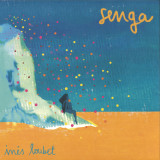
avigating vibrant influences of Latin-jazz, Tropicália and joyful grooves; multi-instrumentalist, songwriter, singer and producer Inês Loubet presents her utterly gorgeous debut album ‘Senga’. The album covers Inês’ experiences over the past five years, originating in Portugal, travelling through Brazil, before finding home in London.
Previously, Inês co-wrote and performed on Caravela’s album 'Orla' on None More Records, which was praised by the likes of Gilles Peterson and The Line of Best Fit. Her music has been played on Jazz FM, BBC 6 Music, BBC Radio 3, NTS and Soho Radio. A relentless live performer, she’s played alongside Brazilian legends Gilberto Gil & João Bosco, graced the stage of The Royal Albert Hall, Union Chapel, and O2 Shepherds Bush, around UK and international tours.
The album explores a range of profound themes including nature, travel, grief, unconditional love, separation, family dynamics, and the nuanced experience of womanhood in contemporary society. Dedications to the music, philosophy and revolutionary history of samba (‘Sambo Mesmo Sem’), everyday observations of joy (‘Guri’), and motivating generational change for the better (‘Sab Sabim’); glide across romantic harmonies and the Brazilian rhythms at the melodic heart of the album.
“I started writing whilst living in Salvador da Bahia, Brazil, in February 2020”, says Inês. “I was shy and hadn't written fully composed tracks before then. During lockdown I received support from The Arts Council’s DYCP, started making demos, gained confidence and started playing them live”. In October 2022 Inês was presented with the Drake YoLanda award and went to Giant Wafer studio in Wales for three days, before recording the final vocals at her home studio and mixing and mastering in Porto, Portugal.
Inês is joined on the album by a band of close friends. Percussionist and long-time collaborator Jansen Santana from Salvador da Bahia brings the soul of the drums, the tambor. “I always have the Bahia drums present in my mind when I write a new composition. I studied Latin percussion at University and then lived in Salvador absorbing all that heritage and knowledge”. Playing four different stringed instruments on the album, Greg Sanders is a long-time friend and collaborator from London “I met him in a samba band in 2015 and he was the first person I ever showed my songs to and played with”. The band is completed by Ruta Sipola on flute, Jake Burgess on tenor sax, Peu Meurray who recorded a lot of the percussion and lead vocals, and bassist Julio de Castro from Sao Paulo. “I was blown away by his bass playing, his swing and creativity, his ton of experience and professionalism but also his voice - he's an amazing singer and I believe that adds a lot to the magic”.
Inês concludes, “Last year, I had a show in London and I asked everyone in the audience to write down what they felt when they listened to the music. These are some of the things they wrote: wholesome, refreshing, lifted, moving, joyful, happy, nostalgic, warmth, force, goosebumps, emotional, togetherness, transported, rooted”. ‘Senga’ captures all of these feelings and more in a memorable first impression from a highly talented musician.
Czechoslovakian big band legend Gustav Brom has graced dancefloors with his music for a long time, you've probably heard his work and not realised it. PANORAMA returns with "Calling Up The Rain", from his 1976 album "Gustav Brom plays for you Pop Jazz and Swing" Gustav infused big band jazz and a latin groove into this dancefloor weapon, Organ solos, Trumpet solos and a screeching guitar solo. What's not to love?
Presented as a reissue by the newly launched London-based record label, PANORAMA Records, "Calling Up The Rain" reaffirms the label's discerning direction and "Don't Judge A Record By It's Cover" attitude. Championed by Gilles Peterson, Patrick Forge and a few other legends in the game, PANORAMA Records aims to reintroduce this big band hit to new audiences, establishing itself as a tastemaker in the business of reissuing global grooves. It comes with a sticker on the front with quotes from tastemakers Patrick Forge, Rainer Trueby and Zag Erlat (My Analog Journal).
With this release, record collectors can anticipate a discovery of Gustav's anthem, for the first time on a 45 and a first time official reissue, a full blown party starter, as Panorama Records presents "Calling Up The Rain" as a timeless reissue. The label shook mountains with it's first release of Gitte and Inger, with huge DJ support from Gilles Peterson, Ross Allen and other great tastemakers. PAN002 is here, Buy or cry!
Around this time, he watched singer Robert Soeterboek perform live with Bodine, his former early- eighties heavy metal band. "His vocals truly impressed me, a rarity!" Lucassen recalls. "He had the charisma and power of singers like David Coverdale and Robert Plant. Discovering that we really got along personally, we decided to collaborate on some songs, just for fun." "We started writing songs together and found a natural flow, leading to a wealth of ideas," remembers Soeterboek.
"Our friendship grew as we spent more time together, and I remember that there were lots of shenanigans and laughter." The album encapsulates a glorious treasure trove of 11 original songs with a loving 70s and 80s nod. It's a blistering romp through the good time rolling rocker of "Let It Ride", the Beatles- esque "Doctor Robert's Medicine Show," the bluesy groove of "Annie Moore," the chugging glam stomp of "High-Speed Chase" to the 80s metal of "Ice on Fire", whilst "The Preacher" would fit on a number of Arjen's back catalogue records. The bonus disc features all the demos and some more newly recorded tracks.
Bill MacKay and Drag City are delirious with pride to announce the discovery of a new territory: Locust Land, a record which seeks to reflect the nerve-shredding consciousness run amok in our world today - and somehow allay it with sound. Bill"s music is a visceral crackling where it meets the air, and Locust Land can"t help but reflect its era more than any other in his discography. It"s been five years since the release of Fountain Fire - but in the interim, Bill has barely stopped moving, collaborating with artists across the spectrum, including cellist Katinka Kleijn, banjo player Nathan Bowles and keyboardist Cooper Crain. He"s also contributed to recordings by Steve Gunn, Ryley Walker, Bill Callahan & Bonnie Prince Billy (Blind Date Party), and Black Duck (on their self-titled record featuring Douglas McCombs and Charles Rumback). Forget five years - how"d he even get Locust Land squeezed out of his temporal lobes? Bill"s sense of music as art is constantly modulating - lifting off from where it is found and naturally migrating to some other place. Sometimes, that"s elsewhere - others, it"s simply to be found deeper inside the starting point. And so, the action of moving on informs the landscape of Locust Land. This manifests in several different ways. A restless energy and urgency is repeatedly felt - in the driving momentum of "Keeping in Time," "Glow Drift," and "When I Was Here" - while a dogged persistence radiates from the tone colors and percussion of "Oh, Pearl." Mating a dirge-like desolation with sparkling guitars, "Radiator" adds darkness and depth. The sense of searching, displacement and longing in vocal tracks "Keeping in Time," "Half of You," and "When I Was Here" speak literally to the tumult of current vibrations. Within the arrangements, there"s also departure from previous norms - in addition to the brilliant guitar work for which he is known, Bill plays a variety of keyboards, from piano to organ to synth, extending his music with the available voicings, while enriching the sound field without abandoning his signature brevity. For fans of his singing, and following in the recent tradition of Fountain Fire as well as his collaboration with Nathan Bowles, Keys, Locust Land expresses with an increased vocal presence - and heightened engagement, with Bill"s words and melodies drawing us closer. Also different: on his previous solo recordings, Bill played every sound. Here, he has invited other illustrious Chicagoans to join him: Sam Wagster (The Father Costume, Mute Duo) plays bass on three songs, two of which feature the percussion playing of Mikel Patrick Avery (Natural Information Society, Jeff Parker, etc.). Additionally, Janet Beveridge Bean (Eleventh Dream Day, Freakwater) adds otherworldly vocal textures to the elegiac "Neil"s Field." Whether played alone or with companions, this music projects the strength of a universal collective. Even with a piece that might earlier have passed for blissful pastorale, Bill displays some declamatory motives. The reverie which opens the album, "Phantasmic Fairy," embodies both transcendent and desperate moods, with Bill"s ineffable slide guitar playing afloat, with organs and synths, in a dream state suffused with a sense of foreboding - a requiem, perhaps for the days of unencumbered bandwidth? On the other side of the album, the strength to continue to hope appears in the lifting melodicism/exoticism of the album-closing title track, leaving the listener with the sense of having achieved a hard-won space - a place of personal contemplation and dissent, one that everyone on the planet deserves to visit every single day on earth. With cover art also by Bill MacKay (the third of his albums on Drag City to feature his work), Locust Land stands as a thoroughly personal statement from Bill to everyone everywhere.