Search:his all star band

Styles
All
Various - SCRAP METAL VOL 2

Various

SCRAP METAL VOL 2

12inchEZRDR143
Riding Easy
31.03.2023

If you were smart enough to get your grubby paws on the first Scrap Metal compilation, you probably have a pretty good idea of what you’re in for with our second installment. Featuring long-lost gems from ultra-rare 45s and private press singles—plus one previously unreleased banger—Scrap Metal 2 maintains a steady NWOBHM course. Packed with infectious outliers and supremely talented one-and-done metal warriors from the crucial British movement of the late ’70s and early ’80s (and some killer American obscurities inspired by them), this collection delivers all the fist-pumping, riff-mongering and flashy solos of heavy metal’s golden age. As always, every track has been officially licensed and every artist gets paid. As a late entry into the NWOBHM sweepstakes, JJ’s Powerhouse was formed in Merseyside, England, by guitarist Jon “J.J.” Cox with members of his previous band, Quad. Much like the opener to the original Scrap Metal comp, you can hear early Metallica coursing through this legendary ripper. Coincidentally, this ultra-rare 45 was released in ’83, the same year as Kill ’Em All. Taking their name from a 1978 sci-fi novel by Marion Zimmer Bradley, Welsh super troopers Storm Queen reveled in animal-print clothing and flying Vs. The Motörhead-meets-Priest anthem “Raising the Roof” is the flipside to their only single, which the band self-released in 1982. Led by guitarist Dave Morse, Storm Queen’s earliest lineup included bassist Bryn Merrick (RIP), who would go on to join The Damned. Roaring out of Birmingham, England, in 1975, Jameson Raid palled around with fellow Brummies Black Sabbath and named themselves after a failed 19th century attack that helped kick off South Africa’s Second Boer War. Their three-song 1979 debut featured the infectious “It’s a Crime,” which comes across like a deadly hard-glam version of Budgie. Still fronted by vocalist Terry Dark, they’re going strong as of 2022. A.R.C., a punky proto-metal group from the UK, released the boozy single “Home Made Wine” b/w “The Chase” in 1979 and—as far as we know—were never heard from again. They’re not to be confused with a gang of Tolkien enthusiasts also called A.R.C., who released two NWOBHM singles in the early ’80s and actually were heard from again. Nonetheless, the A.R.C. we have here was led by a thirsty lad named Klaus Brunnenkant, who liked to rock n’ roll all night and party every day. Both sides of Metropolis’ sole single bear the legend, “Unauthorized duplication shall result in getting your ass beat.” This San Jose metal squad released their only single in 1986 and dedicated it to Metallica bassist Cliff Burton, who had recently been killed in a bus accident. “The Raven” is the serpentine NWOBHM- and Edgar Allan Poe-influenced flipside to “Time Heals Everything,” and yeah, you can hear the guitars going out of tune on the solo, but that’s part of the charm. Of the two dozen or so metal bands that have called themselves Prowler over the years, we’re pretty sure this particular Prowler is the only one from San Diego. These dudes take a thrashier approach than most of the bands here on Scrap Metal 2: “Temporary Insanity” strikes a deft balance between early Anthrax and early Testament, with just enough hard rock swing to keep it from getting overly staccato. Self-released in ’86 as the band’s only single, the song is the flip to “I Love It.” Not much is known about Christian Steel beyond this: They put out their only single in 1983, which boasted “Need Your Love” as the flip to “I Don’t Want To.” The former, included here, sounds kinda like a dizzy, more metallic version of ’70s Jersey rockers Starz, who famously influenced the likes of Mötley Crüe, Poison and Twisted Sister. Ohio guitarist/vocalist Marty Soski’s career dates back to at least 1969 with the Inside Experience track “Be On My Way,” which we unearthed for our own Brown Acid: The Third Trip. This time, we’ve got a monster Soski cut that he recorded under the name Black Rose. Released in 1982, the absolutely smokin’ “Sidewinder” was the A-side on the band’s sole single. The main riff isn’t far off from Y&T’s major-label banger “Mean Streak,” which was released the following year. When Dark Age titled their 1987 album The Youngest Metal Band in the World, they weren’t even sort of kidding. Legend has it that “Star Trippin’,” which was released as a single a year earlier, was written by guitarist CJ Rininger when he was just 12 years old. His brother Dave, the vocalist, was two years younger. Old photos of the band—complete with pineapple haircuts—seem to bear this story out. Either way, the song is pure flash metal, conjuring Sunset Strip sleaze all the way from Ohio. By now, all you heads know Los Angeles magic men Sorcery from their storied appearance in—and soundtrack for—the death-defying Ozploitation flick Stunt Rock. What we have here in “Whales” is a previously unreleased track from the same 1978 recording sessions. It’s a little bit Zeppelin, a little bit prog, and a whole lotta thundering riffage. Why this languished in the vaults for so long is anyone’s guess. Better late than never!

pre-order now31.03.2023

expected to be published on 31.03.2023

31,51
Various - SCRAP METAL VOL 2

Various

SCRAP METAL VOL 2

12inchEZRDR143B
Riding Easy
31.03.2023

If you were smart enough to get your grubby paws on the first Scrap Metal compilation, you probably have a pretty good idea of what you’re in for with our second installment. Featuring long-lost gems from ultra-rare 45s and private press singles—plus one previously unreleased banger—Scrap Metal 2 maintains a steady NWOBHM course. Packed with infectious outliers and supremely talented one-and-done metal warriors from the crucial British movement of the late ’70s and early ’80s (and some killer American obscurities inspired by them), this collection delivers all the fist-pumping, riff-mongering and flashy solos of heavy metal’s golden age. As always, every track has been officially licensed and every artist gets paid. As a late entry into the NWOBHM sweepstakes, JJ’s Powerhouse was formed in Merseyside, England, by guitarist Jon “J.J.” Cox with members of his previous band, Quad. Much like the opener to the original Scrap Metal comp, you can hear early Metallica coursing through this legendary ripper. Coincidentally, this ultra-rare 45 was released in ’83, the same year as Kill ’Em All. Taking their name from a 1978 sci-fi novel by Marion Zimmer Bradley, Welsh super troopers Storm Queen reveled in animal-print clothing and flying Vs. The Motörhead-meets-Priest anthem “Raising the Roof” is the flipside to their only single, which the band self-released in 1982. Led by guitarist Dave Morse, Storm Queen’s earliest lineup included bassist Bryn Merrick (RIP), who would go on to join The Damned. Roaring out of Birmingham, England, in 1975, Jameson Raid palled around with fellow Brummies Black Sabbath and named themselves after a failed 19th century attack that helped kick off South Africa’s Second Boer War. Their three-song 1979 debut featured the infectious “It’s a Crime,” which comes across like a deadly hard-glam version of Budgie. Still fronted by vocalist Terry Dark, they’re going strong as of 2022. A.R.C., a punky proto-metal group from the UK, released the boozy single “Home Made Wine” b/w “The Chase” in 1979 and—as far as we know—were never heard from again. They’re not to be confused with a gang of Tolkien enthusiasts also called A.R.C., who released two NWOBHM singles in the early ’80s and actually were heard from again. Nonetheless, the A.R.C. we have here was led by a thirsty lad named Klaus Brunnenkant, who liked to rock n’ roll all night and party every day. Both sides of Metropolis’ sole single bear the legend, “Unauthorized duplication shall result in getting your ass beat.” This San Jose metal squad released their only single in 1986 and dedicated it to Metallica bassist Cliff Burton, who had recently been killed in a bus accident. “The Raven” is the serpentine NWOBHM- and Edgar Allan Poe-influenced flipside to “Time Heals Everything,” and yeah, you can hear the guitars going out of tune on the solo, but that’s part of the charm. Of the two dozen or so metal bands that have called themselves Prowler over the years, we’re pretty sure this particular Prowler is the only one from San Diego. These dudes take a thrashier approach than most of the bands here on Scrap Metal 2: “Temporary Insanity” strikes a deft balance between early Anthrax and early Testament, with just enough hard rock swing to keep it from getting overly staccato. Self-released in ’86 as the band’s only single, the song is the flip to “I Love It.” Not much is known about Christian Steel beyond this: They put out their only single in 1983, which boasted “Need Your Love” as the flip to “I Don’t Want To.” The former, included here, sounds kinda like a dizzy, more metallic version of ’70s Jersey rockers Starz, who famously influenced the likes of Mötley Crüe, Poison and Twisted Sister. Ohio guitarist/vocalist Marty Soski’s career dates back to at least 1969 with the Inside Experience track “Be On My Way,” which we unearthed for our own Brown Acid: The Third Trip. This time, we’ve got a monster Soski cut that he recorded under the name Black Rose. Released in 1982, the absolutely smokin’ “Sidewinder” was the A-side on the band’s sole single. The main riff isn’t far off from Y&T’s major-label banger “Mean Streak,” which was released the following year. When Dark Age titled their 1987 album The Youngest Metal Band in the World, they weren’t even sort of kidding. Legend has it that “Star Trippin’,” which was released as a single a year earlier, was written by guitarist CJ Rininger when he was just 12 years old. His brother Dave, the vocalist, was two years younger. Old photos of the band—complete with pineapple haircuts—seem to bear this story out. Either way, the song is pure flash metal, conjuring Sunset Strip sleaze all the way from Ohio. By now, all you heads know Los Angeles magic men Sorcery from their storied appearance in—and soundtrack for—the death-defying Ozploitation flick Stunt Rock. What we have here in “Whales” is a previously unreleased track from the same 1978 recording sessions. It’s a little bit Zeppelin, a little bit prog, and a whole lotta thundering riffage. Why this languished in the vaults for so long is anyone’s guess. Better late than never!

pre-order now31.03.2023

expected to be published on 31.03.2023

31,51
The New Pornographers - Continue as a Guest LP

Over the past 20 years, The New Pornographers have proven themselves one of the most excellent bands in indie rock. The group’s ninth album and first for Merge establishes them alongside modern luminaries like Yo La Tengo and Superchunk when it comes to their ability to evolve while still retaining what made them so special in the first place. A dazzling and intriguing collection of songs, Continue as a Guest finds bandleader A.C. Newman and his compatriots Neko Case, Kathryn Calder, John Collins, Todd Fancey, and Joe Seiders exploring fresh territory and shattering the barriers of their collective comfort zone. Newman began work on Continue as a Guest after the band had finished touring behind 2019’s In the Morse Code of Brake Lights. Themes of isolation and collapse bleed into this album, as Newman tackles the ambivalence of day-to-day life during the COVID-19 pandemic. But Newman says that Continue as a Guest’s title track also addresses the concerns that come with being in a band for so long. “The idea of continuing as a guest felt apropos to the times,” he explains. “Feeling out of place in culture, in society, being in a band that has been around for so long—not feeling like a part of any zeitgeist, but happy to be separate and living your simple life, your long fade-out.

Living in a secluded place in an isolated time, it felt like a positive form of acceptance: find your own little nowhere, find some space to fall apart, continue as a guest.” Newman discovered new vocal approaches within his own talent. There are new and rich tones to Newman’s voice throughout Continue as a Guest, from his dusky lower register over “Angelcover” to his slippery slide over the glimmering synths of “Firework in the Falling Snow,” to bold tones he embraces on the soaring “Bottle Episodes.”

Another sonic change comes courtesy of saxophonist Zach Djanikian, whose tenor and bass luxuriate all over Continue as a Guest’s alluring chassis, especially on the menacing build of “Pontius Pilate’s Home Movies.” Along with Newman’s usual collaborators, several songwriters contribute. The bursting opener and first single “Really Really Light” is a co-write with Dan Bejar (Destroyer, the New Pornographers). Then there’s “Firework in the Falling Snow,” a collaboration with Sadie Dupuis of Speedy Ortiz and Sad13. “I was feeling like I wanted some help, so I sent it to Sadie and she sent me back this complete song that had these great lyrics,” Newman says. “She included the line ‘A firework in the falling snow,’ and I was like, ‘Yeah, that’s great.’ Sometimes you need that one thing to center the song, and even though I only used a few lines of hers in the end, I couldn’t have finished it without her.”

Even as Newman embraces a collaborative spirit more than ever, Continue as a Guest is a testament to his ability to discover new artistic sides of himself. “I started out as a songwriter more than as a singer, but at some point, you have to sing your own songs,” he says with a chuckle. “For a long time, I felt like the idea of changing a song because I couldn’t hit a note wasn’t okay—I could just get someone else to sing it. But I’m learning now that my songs can actually be a lot more malleable than I thought.” And it’s in that spirit that Continue as a Guest sounds like a thrilling path forward for The New Pornographers, with songs that generate a contagious feeling of excitement for the future as well.

pre-order now31.03.2023

expected to be published on 31.03.2023

26,01
Assassins - The Year That Never Came

Red Vinyl

ASSASSINS did what many bands do: they grabbed a moment out of the air and slammed it onto tape machines and hard drives with relentlessness, cunning, and an attitude.
It was in Chicago, mid 2000’s, and though there was energy in the music scene, it wasn’t coalescing into anything you could use as a heading in the musical encyclopedia. Drag City, Thrill Jockey, Bloodshot, Tortoise, Andrew Bird, 90 Day Men – amazing labels and bands, but discrete and siloed and separated by boundaries that weren’t very real.
In the midst of that complicated morass, ASSASSINS generated a collection of songs that became the album YOU WILL CHANGED US. And it did.
There was confidence built into the fabric of the project: 5 members, 2 singers, massive synced video walls and samples streaming from laptops swirling in three dimensions around the stage. They could go from subtle atmospheric moments to a gargantuan wall of sound instantly. It was hard to do- months in cold practice rooms troubleshooting sections of songs or reworking synthesizer patches put the band through a self-imposed boot camp. And it brought them together as a sort of hive-mind focused on one thing: that these songs could connect. They could cut through the noise and share a state of mind with other human beings.
And it worked. Those early shows were mind bending. It was fun, loud, drunken, and rewarding- that time together, before the record deal, before the tragic let down of being traded and gobbled up by the major label system. The years after that got more difficult, more complicated, more human.
Leading us here: the musical journey of the Assassins has ended. With the up-coming release of their second and final album THE YEAR THAT NEVER CAME, we finally get to hear, and feel, the final statements of their inspiring chemistry.
In July of 2021, founding member, songwriter and singer Joe Cassidy unexpectedly passed away. THE YEAR THAT NEVER CAME is the culmination and end point of a collaboration that started in the early 2000’s with a chance meeting and excited conversation with Aaron Miller at a gig in Chicago. Quickly joined by David Golitko on keyboards, Merritt Lear on vocals and guitar, and Alex Kemp on bass.
It was Miller who saw Joe Cassidy’s song writing in a new context. Cassidy had been known for his beautiful, post- pop inflected BUTTERFLY CHILD, a thoughtful, regal project where Joe’s emotions could soar. Miller saw a different context for that voice- not dreamy, but immediate, not just hopeful, but demanding. He took Joe’s open hand and suggested that it could be a fist, raised in the air, with a crowd of other people doing the same.
At the time of his death legendary composer and songwriter Jimmy Webb (who wrote such hits as ‘Wichita Lineman and MacArthur Park) said Joe ‘was a creative and generous producer but, more importantly, he was a creative and generous friend.’
With the release of THE YEAR THAT NEVER CAME, this band, this relentless creative force, has to finally relent. No one in the band could see a future ASSASSINS that doesn’t include Cassidy. So in one last act of will, for the love of their friend, they did the rigorous work of finishing the songs that they had started together for the second album.
Assassin’s obsession with the notion of time, from YOU WILL CHANGED US to THE YEAR THAT NEVER CAME, flows from the most natural question we all have to ask ourselves: what do I do now? Because: how we react today to life’s unpredictability - that is the tomorrow we build for ourselves.

pre-order now31.03.2023

expected to be published on 31.03.2023

23,91
Bennett Wilson Poole - I Saw A Star Behind Your Eyes, Don’t Let It Die Away'

Nearly five years on from their acclaimed debut, Bennett Wilson Poole reveal the follow up. It's been a long time coming, but...

That eponymous first album was only ever intended as a one-off collaborative project — a serendipitous series of events which began with a late evening session where the trio wrote ‘Hate Won't Win’. A response to the murder of MP Jo Cox, it was something of a fresh take on Crosby Stills Nash and Young’s classic protest song ‘Ohio’. The release saw Bennett Wilson Poole embraced by the Americana community, playing live on the Andrew Marr show and crowned as ‘UK Artist of the Year’ at the 2019 UK Americana Awards, in front of a watching crowd including Graham Nash himself.

The new album came together in similar fashion; Robin (Bennett) and Danny (Wilson) started writing new songs late into the night whilst on tour to promote the first record — a tour which unfolded from a three-night residency in a London pub into a year-long odyssey culminating in a headline show in Hall One at King’s Place — and before they knew it, there were enough songs to begin recording an unplanned second album.

Where the first record drank deep from 70s US west coast folk-rock, the second has been heavily spiked with 1960s British psychedelia, even featuring a cover by legendary counterculture artist John Hurford (whose credits include 60s artwork for Oz Magazine and International Times).*

Tony Poole’s meticulous and inspired production has spun Robin and Danny’s fresh batch of songs into a delicate web of musical delight. Fans of the ‘spot the reference’ game Tony started on the first record won’t be disappointed this time either, as there are plenty more to be found here.


As with the first album, the lyrics don’t shy away from current affairs – by the end of that year of touring, the band were already playing “I Wanna Love You (But I Can’t Right Now)”, reflecting on the state of US politics, yet optimistic that the problems are only temporary.

Many of the tracks on the new album feature live rhythm section Fin Kenny (drums) and Joe Bennett (bass) for the first time on a BWP record.

The title of the album comes from the lyrics of ‘Help Me See My Way’, the first single, a prayer for strength in difficult times, the trippy animated video for which was originally issued during lockdown. The dreamy positivity of the line "I saw a star behind your eyes" is tempered with the plea "don't let it die away", a message which feels as important as ever two years on.

All three collaborators have had critical acclaim in their own right. Danny Wilson’s credentials go back to his days in Grand Drive with brother Julian, and his consistent high calibre output with his Champions of the World led them to sweeping the board at the first UK Americana Awards with Album, Artist and Song of the year awards richly deserved; Tony Poole’s Starry Eyed and Laughing were hailed as “the English Byrds” on the back of their two CBS-released albums in the mid-seventies and he has since built an enviable reputation as producer and engineer; Robin Bennett has been relentlessly turning out timeless songs from his Oxfordshire base in bands from Goldrush to The Dreaming Spires

pre-order now31.03.2023

expected to be published on 31.03.2023

18,45
John Robb - The Art Of Darkness: A History Of Goth

The first ever complete overview of Goth culture will be released in 2023.

Finally, after a decade of work, countless interviews and immersing himself into the culture, John Robb's definitive book is a journey far into The Art Of Darkness. The first in-depth book on Goth is a deep dive into the enduring culture and the social, historical and political backdrop that created the space for The Art Of Darkness to thrive.

680 pages with interviews with the likes of Andrew Eldritch, Killing Joke, Bauhaus, The Cult, The Banshees, The Damned, Einsturzende Neubauten, Danielle Dax, Johnny Marr, Trent Reznor, Adam Ant, Laibach, The Cure, Nick Cave and many others, this is a deep
dive and walk on the dark side and into the very heartland of Goth.

Every generation has got to deal with the blues - embrace the melancholy. Find a beauty in the darkness, a poetry in sex and death...Whether it’s the Roman love of ghost stories, European macabre folk tales of the Middle Ages, Romantic poets, or the original Gothic tribes sacking the Eternal City, a walk on the dark side has always had its attractions. In the post-punk period, Generation Xerox saw music, clothes and culture come together to create one of the most enduring pop cultures of them all that still resonates to this day..
Goth.

It may have been a retrospective term for a scene that was already thriving, but its back story goes back millennia. The book starts with the fall of Rome and ends with Instagram and Tik Tok influencers, taking diversions through Lord Byron, European folk tales, Indian sadhus, Gothic architecture, Romantic poets, philosophers and idealists before coalescing through the dark end of the Sixties’ youthquake, and then blooming like Baudelaire’s Les Fleurs Du Mal in the post-punk period.

Defying the broken heartland of the post-industrial cities, the semi-forgotten satellite towns and the grim real politic of the Thatcher years, this was a post-punk culture full of dark dance and a death disco. The music soundtracked the style and a Stygian obsidian soundtrack fused the many fragments of culture that had been flirted with in the post-war pop narrative; a darker culture that began to coalesce around the holy trinity of the Doors, the Velvets and the Stooges in the late Sixties before flirting with glam rock, being amplified by punk, exploding as Goth, and then splintering into electronic dance music, industrial, psychobilly and new Goth, before finally filtering through dystopian Hollywood blockbusters, modern literature and throughout the modern world.

In the late Seventies, Goth culture emerged around a clutch of bands who found a new form of beauty in the apocalyptic foreboding, as a new youth tribe took glam rock from the catwalk to the cobbles and onto their own dance floors, creating their own art of darkness.

out of Stock

Order now and we will order the item for you at our supplier.

20,97

Last In: 87 days ago
Nancy Sinatra & Lee Hazlewood - Again LP

The incongruous, yet glorious, creative partnership between Nancy Sinatra and Lee Hazlewood was well underway when the two singular artists reunited to record 1972’s Nancy & Lee Again, a follow-up to their bestselling duet debut, Nancy & Lee. Nancy, the eldest daughter of Frank Sinatra, had been working with the Oklahoma-born songwriter since 1965, when she topped the pop charts with “These Boots Are Made For Walkin’.” Over the next five years, the two artists forged a prolific relationship in the studio, with Hazlewood writing and producing many of Nancy’s solo hits. Soon, the duo found success with a series of duets, including “Sand,” “Summer Wine,” and “Some Velvet Morning” – all of which appeared on their highly-influential 1968 debut.

Not long after the critical acclaim and chart success of Nancy & Lee died down, however, Hazlewood unexpectedly relocated to Sweden, leaving his musical partner in the proverbial dust. America, meanwhile, was in the midst of a cultural shift, as the Vietnam War waged on. By the turn of the decade, the musical landscape had changed significantly. “Trivial music and not profound music became unimportant,” recalls Nancy, speaking to Hunter Lea. “It was a tough time.” And yet, despite the circumstances, the stars somehow aligned for the duo to record some of their most magnificent music together.

Returning to Los Angeles for the project, Hazlewood – who reprised his role as producer – chose to take a new direction with the duo’s sophomore album. Nancy recalls, “It was more dramatic; it was more fun to do, more challenging to do…. It was more grandiose.” For the lush, orchestral arrangements, they collaborated with Larry Muhoberac (an original member of Elvis Presley’s TCB band, whose early ‘70s credits also included Barbra Streisand, Neil Diamond, and Lalo Schifrin) and Clark Gassman, who had worked on Hazlewood’s 1970 LP, Cowboy in Sweden. Backing vocals from brothers John and Tom Bahler, who remain two of the most recorded singers in history, added additional texture to several songs.

The big sound that Nancy describes above is exemplified in the album’s cinematic opener, “Arkansas Coal (Suite).” Clocking in at nearly six minutes long, the dynamic overture tells the tale of an ill-fated coal miner (sung by Hazlewood), while Nancy adjusts her vocals to sing as both the miner’s daughter and his wife. Hazlewood’s knack for vivid, nuanced storytelling shines throughout Nancy & Lee Again, particularly in “Paris Summer,” which details the conflict that a married woman faces, as she engages in a passionate affair. Another highlight is the country-inspired hit, “Did You Ever,” which was released as the album’s lead single. After it landed at No.2 on the U.K. pop charts, the song served as an alternate title track in several countries, including LP pressings in the U.K., Germany, and Canada.

One of the most emotionally-charged moments on Nancy & Lee Again is a cover of Dolly Parton’s “Down From Dover.” The heartbreaking tune tells the tale of a pregnant teenager, who has been abandoned by her lover and her family and ultimately gives birth to a stillborn baby. While Parton’s 1970 version was sung from the teenager’s point of view, Hazlewood and Sinatra transformed the country song into a duet. Hazlewood, who offers the man’s side of the story, sings in a notably deeper octave than his signature baritone.

Another poignant selection is “Congratulations,” which describes a soldier coming home from Vietnam. “His face has grown old and his eyes have grown cold/And they tell you of where he has been/Congratulations, you sure made a man out of him,” Hazlewood sings, pointedly. Nancy, who performs as the vet’s wife, argues that the song had a deeper meaning for her duet partner. “Lee started out a hawk, he was an army guy, so he was all for the war in the beginning. We didn’t talk about it, but at some point, he changed radically. ‘Congratulations’ was almost like an apology from him. I don’t want to put words in his mouth, but it was as though he was saying ‘I’m really sorry.’”

The song “Friendship Train” could also be interpreted as an apology of sorts – this time to Nancy. “You’ve been hurt and I’ve been hurt/Now we’re living pain,” the tune opens. When Hazlewood moved to Sweden without telling his longtime musical partner, Sinatra was understandably upset. “I felt pretty betrayed. I mean, who does that? Who just up and disappears like that? I’ll never understand it,” she reveals. But the uplifting duet – a slice of ‘70s pop perfection – offers reaffirming words of love between friends. “Lee felt things very deeply and tended to express his feelings in song instead of in real life,” explains Nancy.

The 10-track album closes with the stripped-down “Got It Together.” Backed by an acoustic guitar, the song is equal parts playful and candid, as the duo has an impromptu, spoken-word conversation about their lives. “I wish that we’d quit getting so old,” laments Nancy, who later shares her wish to have children (she would do so in the next few years). Hazlewood, meanwhile, attempts to remedy his past wrongdoings – this time asking his partner, “Can I go back to Sweden?” With that, Nancy gives her blessing.

This definitive reissue of Nancy & Lee Again also includes two bonus tracks. Both are stylistic departures for the duo – but fit right in with the psychedelic pop of the era. The first one, “Think I’m Coming Down,” is a harmony-filled reflection on a toxic relationship. “I think that was one of [Lee’s] drug things. I don’t mean that he used drugs; I mean that he was trying to be part of that culture. Trying to be hip,” explains Nancy, who delivers an emotive vocal performance on the solo track. Also included is “Machine Gun Kelly,” penned by a staple of the 70s singer-songwriter movement, Danny Kortchmar (James Taylor, Carole King, Linda Ronstadt). Recorded several months after the release of the album, the song found Nancy reuniting with Billy Strange, who arranged many of her solo albums, as well as Nancy & Lee. Sinatra and Hazlewood first performed “Machine Gun Kelly” during their residency at Las Vegas’ Riviera Hotel in February 1972 (later released as a concert documentary on Swedish television). While the recording has long remained a career favorite of Nancy’s, it would be decades before it was officially released.

Nancy & Lee Again remains a creative high point in the careers of Sinatra and Hazlewood and, upon its release, garnered rave reviews from Billboard, Record World, and Cash Box, among others. Yet, Nancy & Lee Again never received the spotlight it so utterly deserved. “We didn’t have label support at all in those days,” recalls Nancy. “Without the strength of a label, records die. We were old. We were old-fashioned. We were just not what was happening. It’s a very ageist kind of business.” Nevertheless, she adds, “I think it’s a very good album. I think it’s timeless.” Now, after years of being a sought-after rarity, this gem in the Sinatra-Hazlewood canon can finally get its due.

Five decades later, Nancy’s legacy only continues to grow, as new generations discover her impressive catalog (which boasts nearly 20 studio albums – her duets with Hazlewood among them – and dozens of charting singles, including the theme song to the 1967 James Bond film, You Only Live Twice). In 2020, Sinatra was recognized by her peers when “These Boots Are Made For Walkin’” was inducted into the GRAMMY® Hall of Fame. That same year, Sinatra partnered with Light in the Attic for Nancy Sinatra: Start Walkin’ 1965-1976, a definitive survey of her most prolific period. LITA has also reissued Sinatra’s classic debut, Boots, and her iconic, 1968 album with Lee Hazlewood, Nancy & Lee. The label looks forward to celebrating Nancy over the coming years with a variety of special releases, exclusive merchandise, and more.

pre-order now24.03.2023

expected to be published on 24.03.2023

34,24
Nancy Sinatra & Lee Hazlewood - Again LP

The incongruous, yet glorious, creative partnership between Nancy Sinatra and Lee Hazlewood was well underway when the two singular artists reunited to record 1972’s Nancy & Lee Again, a follow-up to their bestselling duet debut, Nancy & Lee. Nancy, the eldest daughter of Frank Sinatra, had been working with the Oklahoma-born songwriter since 1965, when she topped the pop charts with “These Boots Are Made For Walkin’.” Over the next five years, the two artists forged a prolific relationship in the studio, with Hazlewood writing and producing many of Nancy’s solo hits. Soon, the duo found success with a series of duets, including “Sand,” “Summer Wine,” and “Some Velvet Morning” – all of which appeared on their highly-influential 1968 debut.

Not long after the critical acclaim and chart success of Nancy & Lee died down, however, Hazlewood unexpectedly relocated to Sweden, leaving his musical partner in the proverbial dust. America, meanwhile, was in the midst of a cultural shift, as the Vietnam War waged on. By the turn of the decade, the musical landscape had changed significantly. “Trivial music and not profound music became unimportant,” recalls Nancy, speaking to Hunter Lea. “It was a tough time.” And yet, despite the circumstances, the stars somehow aligned for the duo to record some of their most magnificent music together.

Returning to Los Angeles for the project, Hazlewood – who reprised his role as producer – chose to take a new direction with the duo’s sophomore album. Nancy recalls, “It was more dramatic; it was more fun to do, more challenging to do…. It was more grandiose.” For the lush, orchestral arrangements, they collaborated with Larry Muhoberac (an original member of Elvis Presley’s TCB band, whose early ‘70s credits also included Barbra Streisand, Neil Diamond, and Lalo Schifrin) and Clark Gassman, who had worked on Hazlewood’s 1970 LP, Cowboy in Sweden. Backing vocals from brothers John and Tom Bahler, who remain two of the most recorded singers in history, added additional texture to several songs.

The big sound that Nancy describes above is exemplified in the album’s cinematic opener, “Arkansas Coal (Suite).” Clocking in at nearly six minutes long, the dynamic overture tells the tale of an ill-fated coal miner (sung by Hazlewood), while Nancy adjusts her vocals to sing as both the miner’s daughter and his wife. Hazlewood’s knack for vivid, nuanced storytelling shines throughout Nancy & Lee Again, particularly in “Paris Summer,” which details the conflict that a married woman faces, as she engages in a passionate affair. Another highlight is the country-inspired hit, “Did You Ever,” which was released as the album’s lead single. After it landed at No.2 on the U.K. pop charts, the song served as an alternate title track in several countries, including LP pressings in the U.K., Germany, and Canada.

One of the most emotionally-charged moments on Nancy & Lee Again is a cover of Dolly Parton’s “Down From Dover.” The heartbreaking tune tells the tale of a pregnant teenager, who has been abandoned by her lover and her family and ultimately gives birth to a stillborn baby. While Parton’s 1970 version was sung from the teenager’s point of view, Hazlewood and Sinatra transformed the country song into a duet. Hazlewood, who offers the man’s side of the story, sings in a notably deeper octave than his signature baritone.

Another poignant selection is “Congratulations,” which describes a soldier coming home from Vietnam. “His face has grown old and his eyes have grown cold/And they tell you of where he has been/Congratulations, you sure made a man out of him,” Hazlewood sings, pointedly. Nancy, who performs as the vet’s wife, argues that the song had a deeper meaning for her duet partner. “Lee started out a hawk, he was an army guy, so he was all for the war in the beginning. We didn’t talk about it, but at some point, he changed radically. ‘Congratulations’ was almost like an apology from him. I don’t want to put words in his mouth, but it was as though he was saying ‘I’m really sorry.’”

The song “Friendship Train” could also be interpreted as an apology of sorts – this time to Nancy. “You’ve been hurt and I’ve been hurt/Now we’re living pain,” the tune opens. When Hazlewood moved to Sweden without telling his longtime musical partner, Sinatra was understandably upset. “I felt pretty betrayed. I mean, who does that? Who just up and disappears like that? I’ll never understand it,” she reveals. But the uplifting duet – a slice of ‘70s pop perfection – offers reaffirming words of love between friends. “Lee felt things very deeply and tended to express his feelings in song instead of in real life,” explains Nancy.

The 10-track album closes with the stripped-down “Got It Together.” Backed by an acoustic guitar, the song is equal parts playful and candid, as the duo has an impromptu, spoken-word conversation about their lives. “I wish that we’d quit getting so old,” laments Nancy, who later shares her wish to have children (she would do so in the next few years). Hazlewood, meanwhile, attempts to remedy his past wrongdoings – this time asking his partner, “Can I go back to Sweden?” With that, Nancy gives her blessing.

This definitive reissue of Nancy & Lee Again also includes two bonus tracks. Both are stylistic departures for the duo – but fit right in with the psychedelic pop of the era. The first one, “Think I’m Coming Down,” is a harmony-filled reflection on a toxic relationship. “I think that was one of Lee’s drug things. I don’t mean that he used drugs; I mean that he was trying to be part of that culture. Trying to be hip,” explains Nancy, who delivers an emotive vocal performance on the solo track. Also included is “Machine Gun Kelly,” penned by a staple of the 70s singer-songwriter movement, Danny Kortchmar (James Taylor, Carole King, Linda Ronstadt). Recorded several months after the release of the album, the song found Nancy reuniting with Billy Strange, who arranged many of her solo albums, as well as Nancy & Lee. Sinatra and Hazlewood first performed “Machine Gun Kelly” during their residency at Las Vegas’ Riviera Hotel in February 1972 (later released as a concert documentary on Swedish television). While the recording has long remained a career favorite of Nancy’s, it would be decades before it was officially released.

Nancy & Lee Again remains a creative high point in the careers of Sinatra and Hazlewood and, upon its release, garnered rave reviews from Billboard, Record World, and Cash Box, among others. Yet, Nancy & Lee Again never received the spotlight it so utterly deserved. “We didn’t have label support at all in those days,” recalls Nancy. “Without the strength of a label, records die. We were old. We were old-fashioned. We were just not what was happening. It’s a very ageist kind of business.” Nevertheless, she adds, “I think it’s a very good album. I think it’s timeless.” Now, after years of being a sought-after rarity, this gem in the Sinatra-Hazlewood canon can finally get its due.

Five decades later, Nancy’s legacy only continues to grow, as new generations discover her impressive catalog (which boasts nearly 20 studio albums – her duets with Hazlewood among them – and dozens of charting singles, including the theme song to the 1967 James Bond film, You Only Live Twice). In 2020, Sinatra was recognized by her peers when “These Boots Are Made For Walkin’” was inducted into the GRAMMY® Hall of Fame. That same year, Sinatra partnered with Light in the Attic for Nancy Sinatra: Start Walkin’ 1965-1976, a definitive survey of her most prolific period. LITA has also reissued Sinatra’s classic debut, Boots, and her iconic, 1968 album with Lee Hazlewood, Nancy & Lee. The label looks forward to celebrating Nancy over the coming years with a variety of special releases, exclusive merchandise, and more.

pre-order now24.03.2023

expected to be published on 24.03.2023

39,45
ELIAS - BLOOMED > EXPLODED

Elias

BLOOMED > EXPLODED

12inchUNDAY152LP
UNDAY RECORDS
24.03.2023

Elias Devoldere is the drummer in bands such as Nordmann, Hypochristmutreefuzz, Suwi, Robbing Millions, and John Ghost. Following an ep, Kaiku, released last summer, Bloomed > Exploded is his debut full length as a solo artist. Besides writing and singing, he composed, played, recorded, and produced the bulk of the ten songs himself. 'Everything blooms', he explains the title of his first album. 'Until it explodes, and something else is able to grow from it'. In this case, what came full cycle is an intimate coming-of-age album of intangible atmospherics, crisp melodies, and understated rhythmical patterns.

BLOOMED >

'As a kid, I just wanted to play football, you know?', says Elias. 'But when I was eight years old, my parents made me choose between drawing school and music school'. And thus began a dedication to rhythm for Elias. At 18, he enrolled at the Royal Academy of Fine Arts in his hometown of Ghent, opting for a jazz education. 'Not because I aspired to become a master 'jazz drummer', but to learn music, to become a good musician'. It was at the academy that, after an impromptu jam session, Nordmann first came together. The exhilarating instrumental quartet went on to win second place at the prestigious Humo's Rock Rally in 2014, and released three albums to critical acclaim, with a new one in the works.

Devoldere, in the meantime, had completed his degree with a craving - ironically - for music. 'I was in over my head with jazz for such a long time, and went on an epic discovering spree. Moses Sumney, James Blake, Kendrick Lamar, Connan Mockasin... Lots of stuff I had missed over the years. In a way, I reconnected with the kind of music I was into before jazz dominated my life. Pink Floyd was my first love, for instance, and later Radiohead proved to be a game changer. Diving back into those kind of sounds, I was feeling the urge to follow my old dreams, of being a solo artist - or something more than 'just' a drummer, anyway. So I bought a guitar, an interface for my laptop, and started writing'.

EXPLODED

When he released his 5 track ep Kaiku in the summer of 2021, it summarised a lot of firsts for Elias. First time writing lyrics, first time as a lead vocalist, first time recording his own songs all by himself. The songs had been around for a while, but taking those leaps took a long time. 'Making the ep helped me to find my voice, in every way possible'. Still, in the aftermath of the pandemic, the songs on Bloomed > Exploded sprouted in a time of upheaval. 'Musically the album is quite serene, gentle even. But the themes speak of internal unrest and uncertainty. There are a lot of questions on the album, as it turned out. Duality, as the title suggests, coming from the struggle between a wish to turn everything upside down and a search for peace. Honestly: the prospect of my 30th birthday was messing with my head too'.

Recording during a period of solitude in France, Elias initially relied heavily on synthesizers and drum machines. 'Explode / Boalis was one of the first songs I wrote for this album, and pivotal for its atmosphere, based mostly on electronic elements. Later, I did use 'real' drums on most of the other songs, though, and contributions from other musicians, but the overall mood is very cohesive'. 'Pure', that's how Bruno Ellingham, the UK engineer who mixed the album, described it. Much to the delight of Elias, who reached out to Ellingham because of his previous work with bands such as Massive Attack and Portishead. 'Hearing the end result, I thought he really captured the essence of the original demo's. For me, that adds to this album being a sincere reflection of my true self. 'Take a dive/ Into the place where it's more quiet', as I sing in the last song, that kind of sums it up for me'.

pre-order now24.03.2023

expected to be published on 24.03.2023

24,16
The Veils - Nux Vomica LP

The Veils

Nux Vomica LP

12inchBING190LP
Ba Da Bing
24.03.2023

The rawness of The Veils' Nux Vomica can be enjoyed to a degree never heard before, with Ba Da Bing's limited edition pressing of the records with the original mixes by Nick Rainey left intact.

Originally released in 2006, The Veils sophomore album Nux Vomica was praised for its “Herculean intensity” by The Guardian, and called “a heady blast of gothic psychodrama” by The Observer, while Pitchfork praised leader Finn Andrews’ “magnetic, outsize persona.” Long out of print, the vinyl version was resuscitated by Music on Vinyl in 2017 and quickly sold out. Now, The Veils present the definitive version of their most heralded album to date, which dusts off the original mixes by legendary producer Nick Launay (Public Image Limited, The Birthday Party, INXS and Midnight Oil) and offers them to fans here for the first time. Taken from the original two-inch analog tape reels, each song was carefully remastered by Alex Wharton at Abbey Road Studios in London.

Nux Vomica was the first of many creative reinventions for Andrews, who at 22 had already released an album on Rough Trade, moved from New Zealand to London to form a band, then back to New Zealand where he once again started the band anew. The creative progression is clear in Andrews’ incisive lyricism and knack for hell-fire dramatics. From the positively mirthful “Advice for Young Mothers to Be” to the simmering ominousness of “Nux Vomica,” from the ornate spectacle of “Calliope!” to the Grand Guignol of “Jesus for the Jugular”, Nux Vomica is a remarkably accomplished album for a musician so young who was facing the pressures of British musical stardom.

All intentions to release this dark and raw set of recordings were dashed upon submission to Rough Trade for approval, who didn't like the results. They hired mixing engineer Bill Price to adjust the sound and add additional instrumentation. Launey’s mixes were shelved and forgotten about, while the album nonetheless went on to be a critical highpoint for the band and is much loved to this day.

To celebrate the release of The Veils’ massive new double album, …And Out Of The Void Came Love, Ba Da Bing is issuing a limited-to-1200-LPs simultaneous run of Nux Vomica in a form you have never heard it before. The brilliance of Andrews’ talents come through all the more clear in this version, which strips his songs to the core and allows the holes to show. Here’s where the seeds of a lifelong artistic talent really began to first take root.

pre-order now24.03.2023

expected to be published on 24.03.2023

23,32
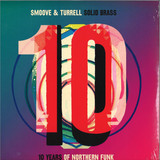
Smoove & Turrell - Solid Brass: Ten Years of Northern Funk LP 2x12"

A lot can happen in ten years.

Rewind back to Gateshead in 2008 - the producer Smoove is round his friend and keyboard player - Mike Porter's house. Together they are working on tracks for his project and all of a sudden they hear a heavenly voice from the neighbour. Transfixed by the vocals that are caressing their ears they go and investigate to find a youthful John Turrell doing his thing at a practice with a local band he played with when he wasn't teaching carpentry at the local college. Together they woo him with their Geordie charms and the initial line up of 'Smoove & Turrell' is born. The group instantly gel and soon after have penned the killer track 'I Can't Give You Up'...

Flash forward to 2019 and the carpentry community looks on with jealousy as the group has gone from strength to strength. Signed to the independent label Jalapeno Records they are now five albums deep and they have achieved multiple radio-playlisted singles, won awards, toured with the likes of Chic, gained sync success across the world and continue to wow venues in all continents with their thrilling live shows on the regular.

All of this in an age where attention spans are shorter than ever and there is more access to music than ever. This is certainly an achievement worth celebrating. Doubly so in fact as not only is it their ten year anniversary collection but also it is the 300th official release on Jalapeno Records so it only seems right that the occasion gets commemorated properly - a double gatefold LP with brass coloured vinyl somehow seems appropriate...

Comprising of 18 tracks taken from all five of their studio albums as well as two new barnstorming tunes exclusive to this release - it's a veritable feast of northern funk gems from start to finish. Favourites from their deep catalogue including 'Slow Down', 'Beggarman', 'In Deep', 'Have Love' and 'You Could've Been A Lady' are all present and correct, lining up next to the two newbies which also hold their own.

"But what about the new tracks!" we hear you cry - well Smoove's solo rework of The Spencer Davis Group - I'm A Man is the stuff of legend with physical copies changing hands for huge sums (if you are lucky enough to be able to locate one in the first place!). The track has long been a staple of S&T live sets but they've never laid it down in a studio recording... That is until now. It's a monster of a tune and the perfect way to kick proceedings off on this record.

That's not all though, as the lads also serve up the aptly reflective 'Give it Back'. It's signature Smoove & Turrell stuff - full of soul with deep and heartfelt lyricism. Turrell's chorus refrain "We love the ones who give it back" is typically honest and true of a band that prides themselves on community. Proper canny that. Proper canny.

out of Stock

Order now and we will order the item for you at our supplier.

29,37

Last In: 14 months ago
UNKNOWN MORTAL ORCHESTRA - V 2x12"

Created between Palm Springs, California and Hilo, Hawai'i, V is the first double album from the Hawaiian-New Zealand singer-songwriter, multi-instrumentalist and producer Ruban Nielson's Unknown Mortal Orchestra band. Designed to play as one continuous movement and road-tested on dry California freeways, V is the definitive Unknown Mortal Orchestra car record. It's also the fifth full-length album Ruban has released in twelve years. Across fourteen sunbleached songs - written solo or with his brother Kody - Ruban draws from the rich traditions of West Coast AOR, yacht rock, weirdo pop and Hawaiian Hapa-haole music. Over a laidback blend of singalong anthems and cinematic instrumentals, he evokes blue skies, afternoons spent lounging by hotel swimming pools and the alluring darkness that lurks below perfect, pristine surfaces. It's a duality expressed in the dilapidated sunset blues and the saltcorroded soul Ruban explores through tracks like `Layla' and `Nadja. ' During the pandemic's early days, Ruban reunited with Kody at a cousin's wedding in Hawai'i. With assistance from their father, Chris Nielson (saxophone/flute) and longstanding Unknown Mortal Orchestra member Jake Portrait, they brought everything Ruban had been thinking about together. The result was V, due for release on March 3, 2023, through Jagjaguwar. When they talked about records that moved them in that spine-shivering manner, Ruban started thinking about the 70s AM radio rock and 80s pop songs that had lurked on the edge of his subconscious mind for most of his life. He wanted to write his version of records like that, leading to the two glorious uptempo singles Unknown Mortal Orchestra released in 2021, `Weekend Run' and `That Life'. However, the golden good times never last forever. Not long after, health issues began to plague his extended family.Putting his recordings aside, he helped his mother and his uncle move home from New Zealand and Portland to Hawai'i, and began dividing his time between Hawai'i and Palm Springs. During this period he reconnected with his relatives, reassessed his past, and started to look at things with fresh eyes. Hawai'i brought back memories of the darker side of his parents' lifestyle as entertainers. On those trips, he heard those classic AM radio rock records everywhere. They were inextricably intertwined with the palm trees, swimming pools, and glamorized hedonism he'd internalized from his childhood. There's a type of music in Hawai'i called Hapa-haole (Half white). You can hear it expressed in signature Unknown Mortal Orchestra style through the humid guitar-led atmosphere of V's penultimate song, `I Killed Captain Cook'. Although the songs are presented in a traditional Hawaiian manner, they're mostly sung in English. Having been influenced by Hawaiian music since Unknown Mortal Orchestra's first album, Ruban saw a space for himself within the tradition. When he reflected on his success, he realised he had the responsibility and platform to represent Hapa-haole music on the global stage.

pre-order now17.03.2023

expected to be published on 17.03.2023

34,41
UNKNOWN MORTAL ORCHESTRA - V 2x12"

Unknown Mortal Orchestra

V 2x12"

2x12inchJAGLPC1422
JAGJAGUWAR
17.03.2023

Yellow Vinyl

Created between Palm Springs, California and Hilo, Hawai'i, V is the first double album from the Hawaiian-New Zealand singer-songwriter, multi-instrumentalist and producer Ruban Nielson's Unknown Mortal Orchestra band. Designed to play as one continuous movement and road-tested on dry California freeways, V is the definitive Unknown Mortal Orchestra car record. It's also the fifth full-length album Ruban has released in twelve years. Across fourteen sunbleached songs - written solo or with his brother Kody - Ruban draws from the rich traditions of West Coast AOR, yacht rock, weirdo pop and Hawaiian Hapa-haole music. Over a laidback blend of singalong anthems and cinematic instrumentals, he evokes blue skies, afternoons spent lounging by hotel swimming pools and the alluring darkness that lurks below perfect, pristine surfaces. It's a duality expressed in the dilapidated sunset blues and the saltcorroded soul Ruban explores through tracks like `Layla' and `Nadja. ' During the pandemic's early days, Ruban reunited with Kody at a cousin's wedding in Hawai'i. With assistance from their father, Chris Nielson (saxophone/flute) and longstanding Unknown Mortal Orchestra member Jake Portrait, they brought everything Ruban had been thinking about together. The result was V, due for release on March 3, 2023, through Jagjaguwar. When they talked about records that moved them in that spine-shivering manner, Ruban started thinking about the 70s AM radio rock and 80s pop songs that had lurked on the edge of his subconscious mind for most of his life. He wanted to write his version of records like that, leading to the two glorious uptempo singles Unknown Mortal Orchestra released in 2021, `Weekend Run' and `That Life'. However, the golden good times never last forever. Not long after, health issues began to plague his extended family.Putting his recordings aside, he helped his mother and his uncle move home from New Zealand and Portland to Hawai'i, and began dividing his time between Hawai'i and Palm Springs. During this period he reconnected with his relatives, reassessed his past, and started to look at things with fresh eyes. Hawai'i brought back memories of the darker side of his parents' lifestyle as entertainers. On those trips, he heard those classic AM radio rock records everywhere. They were inextricably intertwined with the palm trees, swimming pools, and glamorized hedonism he'd internalized from his childhood. There's a type of music in Hawai'i called Hapa-haole (Half white). You can hear it expressed in signature Unknown Mortal Orchestra style through the humid guitar-led atmosphere of V's penultimate song, `I Killed Captain Cook'. Although the songs are presented in a traditional Hawaiian manner, they're mostly sung in English. Having been influenced by Hawaiian music since Unknown Mortal Orchestra's first album, Ruban saw a space for himself within the tradition. When he reflected on his success, he realised he had the responsibility and platform to represent Hapa-haole music on the global stage.

out of Stock

Order now and we will order the item for you at our supplier.

31,05

Last In: 2 years ago
UNKNOWN MORTAL ORCHESTRA - V

Unknown Mortal Orchestra

V

CassetteJAGCASS422
JAGJAGUWAR
17.03.2023

Created between Palm Springs, California and Hilo, Hawai'i, V is the first double album from the Hawaiian-New Zealand singer-songwriter, multi-instrumentalist and producer Ruban Nielson's Unknown Mortal Orchestra band. Designed to play as one continuous movement and road-tested on dry California freeways, V is the definitive Unknown Mortal Orchestra car record. It's also the fifth full-length album Ruban has released in twelve years. Across fourteen sunbleached songs - written solo or with his brother Kody - Ruban draws from the rich traditions of West Coast AOR, yacht rock, weirdo pop and Hawaiian Hapa-haole music. Over a laidback blend of singalong anthems and cinematic instrumentals, he evokes blue skies, afternoons spent lounging by hotel swimming pools and the alluring darkness that lurks below perfect, pristine surfaces. It's a duality expressed in the dilapidated sunset blues and the saltcorroded soul Ruban explores through tracks like `Layla' and `Nadja. ' During the pandemic's early days, Ruban reunited with Kody at a cousin's wedding in Hawai'i. With assistance from their father, Chris Nielson (saxophone/flute) and longstanding Unknown Mortal Orchestra member Jake Portrait, they brought everything Ruban had been thinking about together. The result was V, due for release on March 3, 2023, through Jagjaguwar. When they talked about records that moved them in that spine-shivering manner, Ruban started thinking about the 70s AM radio rock and 80s pop songs that had lurked on the edge of his subconscious mind for most of his life. He wanted to write his version of records like that, leading to the two glorious uptempo singles Unknown Mortal Orchestra released in 2021, `Weekend Run' and `That Life'. However, the golden good times never last forever. Not long after, health issues began to plague his extended family.Putting his recordings aside, he helped his mother and his uncle move home from New Zealand and Portland to Hawai'i, and began dividing his time between Hawai'i and Palm Springs. During this period he reconnected with his relatives, reassessed his past, and started to look at things with fresh eyes. Hawai'i brought back memories of the darker side of his parents' lifestyle as entertainers. On those trips, he heard those classic AM radio rock records everywhere. They were inextricably intertwined with the palm trees, swimming pools, and glamorized hedonism he'd internalized from his childhood. There's a type of music in Hawai'i called Hapa-haole (Half white). You can hear it expressed in signature Unknown Mortal Orchestra style through the humid guitar-led atmosphere of V's penultimate song, `I Killed Captain Cook'. Although the songs are presented in a traditional Hawaiian manner, they're mostly sung in English. Having been influenced by Hawaiian music since Unknown Mortal Orchestra's first album, Ruban saw a space for himself within the tradition. When he reflected on his success, he realised he had the responsibility and platform to represent Hapa-haole music on the global stage.

pre-order now17.03.2023

expected to be published on 17.03.2023

9,62
Hanoi Rocks - Oriental Beat LP

Oriental Beat by Hanoi Rocks gets the redux treatment, officially mixed and revived from the original sessions, and released on March 17th on deluxe vinyl, CD and digital formats. The CD and vinyl come with the song lyrics, checked and approved by Michael Monroe. Dubbed the “re(al) mix”, this 40th anniversary edition was mixed by Petri Majuri at E-Studios in Finland in collaboration with the band. Vocalist Michael Monroe calls this release “the longest and slowest album project ever,” stating that “40 years in the making, it's not just a remix, but the REAL MIX supervised and approved by Hanoi Rocks”. Recorded in London, UK in 1981, for 200 pounds a day, Oriental Beat was made during the height of the British punk + New Wave movement, when the band was hanging out with everyone from Phil Lynott to the Damned. Hanoi Rocks’ original drummer Gyp Casino says of Oriental Beat that: “Back in the days we gave heart, soul and a bit of pain to make this record something else” but the sound of the album, originally released in 1982, did not match their efforts at the time. Bassist Sami Yaffa called it “the worst sounding album of our career” and Michael Monroe said that “the producer of the album didn’t have a clue what the band was about and his mix of the album was horribly wrong”. Oriental Beat’s original engineer Peter Wooliscroft, was not a rock producer, and according to Hanoi Rocks’ manager Richard Bishop he “tried to mix the album to sound like Spandau Ballet”. Released before the band could remix or rerecord it, as the label had run out of money, and the master tapes had gone missing, the band has always considered the original mix of Oriental Beat to be a “disaster”. With the tapes mysteriously showing up in the Universal vault recently, the band was finally able to mix and resequence the album the way they wanted it to sound. Oriental Beat is a defining masterpiece made when Hanoi Rocks was about to explode onto the world scene and written at the absolute peak of lead guitarist Andy McCoy’s creativity as a songwriter. Rhythm guitarist Nasty Suicide says “only now, with stripping it down to the bare essentials and tweaking it to bring out what was really laid down it became our dream come true! THIS is what it's all about” as this definitive edition of Oriental Beat now fully displays the ultimate arrogance and attitude which defined the band.

pre-order now17.03.2023

expected to be published on 17.03.2023

25,84
Hanoi Rocks - Oriental Beat LP

Hanoi Rocks

Oriental Beat LP

12inchSRE673LPB1
Svart Records
17.03.2023

Oriental Beat by Hanoi Rocks gets the redux treatment, officially mixed and revived from the original sessions, and released on March 17th on deluxe vinyl, CD and digital formats. The CD and vinyl come with the song lyrics, checked and approved by Michael Monroe. Dubbed the “re(al) mix”, this 40th anniversary edition was mixed by Petri Majuri at E-Studios in Finland in collaboration with the band. Vocalist Michael Monroe calls this release “the longest and slowest album project ever,” stating that “40 years in the making, it's not just a remix, but the REAL MIX supervised and approved by Hanoi Rocks”. Recorded in London, UK in 1981, for 200 pounds a day, Oriental Beat was made during the height of the British punk + New Wave movement, when the band was hanging out with everyone from Phil Lynott to the Damned. Hanoi Rocks’ original drummer Gyp Casino says of Oriental Beat that: “Back in the days we gave heart, soul and a bit of pain to make this record something else” but the sound of the album, originally released in 1982, did not match their efforts at the time. Bassist Sami Yaffa called it “the worst sounding album of our career” and Michael Monroe said that “the producer of the album didn’t have a clue what the band was about and his mix of the album was horribly wrong”. Oriental Beat’s original engineer Peter Wooliscroft, was not a rock producer, and according to Hanoi Rocks’ manager Richard Bishop he “tried to mix the album to sound like Spandau Ballet”. Released before the band could remix or rerecord it, as the label had run out of money, and the master tapes had gone missing, the band has always considered the original mix of Oriental Beat to be a “disaster”. With the tapes mysteriously showing up in the Universal vault recently, the band was finally able to mix and resequence the album the way they wanted it to sound. Oriental Beat is a defining masterpiece made when Hanoi Rocks was about to explode onto the world scene and written at the absolute peak of lead guitarist Andy McCoy’s creativity as a songwriter. Rhythm guitarist Nasty Suicide says “only now, with stripping it down to the bare essentials and tweaking it to bring out what was really laid down it became our dream come true! THIS is what it's all about” as this definitive edition of Oriental Beat now fully displays the ultimate arrogance and attitude which defined the band.

pre-order now17.03.2023

expected to be published on 17.03.2023

26,68
Najib Alhoush & The Free Music - Free Music (Part 1)

Avid Habibi Funk listeners may be familiar with Libyan composer / producer Najib Alhoush, who’s track “Ya Aen Daly” - the Bee Gee’s “Stayin Alive” cover - was included in our second compilation. While the original track never excited us, Najib’s version managed to strip it from its pop approach that had taken over disco during the genre`s peak. At that time, disco tracks mostly were aiming to appeal to the widest audience possible. Najib had turned the original track into something different and very unique. Upon further research we found that Najib was actually the singer and founder of The Free Music band alongside Fakhreddin, Salim Jibreel, Abdulrazzak ‘Kit-Kat’, Mukhtar Wanis and Mohameed Al Rakibi.
Initially, we only licensed Najib Alhoush’s “Ya Aen Daly” from Yousef Alhoush, Najib’s son, who was pleased to hear that there was interest in his father’s music form someone abroad. In the process of exchanging and learning about Najib’s music and career, our understanding was that The Free Music only recorded the one album. This couldn’t be further from the truth, in fact, there were ten albums produced by the group, all impressively coherent with a clear influence from disco, soul, funk and reggae.
The Free Music album was probably the longest it ever took us to gather information, photos and musical source material in a good enough quality to be reissued. This is largely due to the complicated political situation in Libya, compounded by the fact that Libya is still largely cut off from international payment systems, so getting an advance payment to the right person can be a process that takes weeks. The same goes for getting master tapes to a studio abroad and afterwards back to Libya.
When we look for music that works under the umbrella of Habibi Funk, we often come across albums where bands experimented with influences from Soul, Jazz, Funk, Disco and more, usually on a single track or two but then they often go down to a different path for the rest of the album. This was not the case for The Free Music. All their albums are fully dedicated to their unique blend of Disco, Reggae and Funk and it feels that when we made the selection for this album, we could have chosen a completely different number of tracks and the album would be been equally strong.
The lead-off single is the stupendously groovy “Ana Qalbi Ehtar” out February 3rd along with LP pre-order to capitalize on Bandcamp Friday. From the outset, the rhythmic strumming of the funkified guitars give way to the galloping drums and bass, opening up to anthemic vocals and rounding out with a blistering guitar solo, a certified disco-funk classic through-andthrough.
Second single, out February 17th is the disco slammer “Hawelt Nensa Ghalaak.” Guitars, harmonized horns, synths and bouncing bass and drums collide w/ spaced out vox to make the track a dancefloor sureshot for any party.
Third single is “Mathasebnish,” out March 3rd, a pure disco-funk slammer if there ever was one – with stabbing horns, funky bass riffs, a riding rhythm guitar and anthemic vocals, rounded out with stunning flute and guitar solos – the track will surely be on repeat along with the arrival of warmer weather.
Album focus track “Men Awel Marra” is another standout disco-infused tune, showcasing the immense creativity out of Najib and The Free Music. This past summer we finally had the opportunity to get together with Yousef face-to-face at a coffee shop in Istanbul’s central Istiklal road together with our friend Anas El Horani. Yousef told us the whole story of how his father got into music, the start of the band and his father’s continued conflicts with the Gaddafi regime that probably kept his career from becoming even bigger. As always, both vinyl and CD come with an extensive booklet featuring background on The Free Music and Najib Alhoush, including words from Najib’s son, Yousef, as well as unseen photos, cassettes and more.

out of Stock

Order now and we will order the item for you at our supplier.

23,07

Last In: 12 months ago
Now More Than Ever - Creatrix LP

After spending the past 20 years in the studio, on concert stages all over the world and at the literal top of the charts, All-American Rejects co-founder Tyson Ritter didn’t start Now More Than Ever in 2018 with the expectation it would turn into a real band – but a real band is very much what it has become. In tandem with veteran musicians/songwriters/producers Scott Chesak (All-American Rejects, Panic! At the Disco, Weezer) and Izzy Fontaine (Taking Back Sunday, Tegan & Sara, Glassjaw), Ritter has begun a meaningful and exciting new chapter in his music career with Now More Than Ever’s debut album Creatrix, which will be released March 17, 2023, by Thirty Tigers. Now More Than Ever shimmers with that spirit of freedom, its nine tracks gracefully surfing the peaks of the past four decades of pop and rock. These are the kinds of songs that used to be on the radio and certainly still should be today – the ones that make you dance, shake your ass and forget about everything else for a while. Now More Than Ever is here to help make sure the pillars of pop and rock will never fall, and they’re prepared to go down believing. “This is our little monolith,” Ritter says. “It might be six feet tall amongst giants, but it’s pure. And it’s truth for us. It’s saccharine as fuck, and I love it.”

pre-order now17.03.2023

expected to be published on 17.03.2023

23,32
Aboriginal Voices - Instant Music

For a quarter of an hour, Zürich was the navel of the world. Let's look back: at New York's CBGB's, pre-punks were shredding away, Malcolm McLaren, as a man with a fine-tuned taste for the hip, imported the sound to London, where his sweetheart Vivienne Westwood dressed the test-tube band The Sex Pistols. A few pop magazines later (we are in an analog world!) punk bands sprouted everywhere, like shiny pimples on poorly fed teenagers. Contrary to legend, even back then, it was often those with a musical background who were the most successful. One such example, Henrich "Wüste" Zwahlen, who had learned the violin, attended a jazz school and went into prog-rock before joining the Nasal Boys, one of the first punk bands in Zürich. The scene included the female band Kleenex (cover: Fischli of art heroes Fischli/Weiss), whose minimalism was praised by the London music press, while the world's most important rock theorist, Greil Marcus, wrote an ode highlighting Zürich's role as the birthplace of Dadaism. A fertile ground for the militant youth movement that exploded in 1980 and stirred up the city of banks, protestantism and boredom with raw wit and expressive violence. Gathering at concerts of local bands and fueled by endogenous and artificial substances - they paid homage to exuberance and self-indulgence.
The mantra of "everything-is-possible" was driven forward on the musical front by progress in terms of means of production: analog electronic instruments were no longer reserved for hippie nerds, who sat in front of large plug-in boards like autistic-psychedelic switchboard operators connecting cables for their sound carpets. Now snazzy stage personnel elicited fast-paced sounds from handy devices often made in Japan. Kraftwerk was fashionable, the Zurich duo Yello experimented with new synthetic sounds, and the groundbreaking album "Alles Ist Gut" by the Düsseldorf based duo D.A.F. (Deutsch Amerikanische Freundschaft) was released, which chanted its program of provocation times danceability with lines such as "Tanz den Jesus Christus, tanz the Mussolini, tanz the Adolf Hitler." In England meanwhile, electronically backed New Romantic bands were replacing New Wave. The Human League, Heaven 17, Duran Duran, OMD, Depeche Mode or Visage stormed the charts.
In Zürich's underground, the duo Aboriginal Voices caused a stir at that time. A couple, good-looking, styled, looking cool into the cold neon light, with a danceable beat and sequenced electro sounds, to which Micheline gave a very unique touch when she sang in French and English. Micheline had a classical piano education, had left home early, worked as a lighting technician in a strip joint and at Booster, the hottest boutique in town (one of the relicts that still exists). Voilà: a musician who was as stylish as she was tough. She was already playing with Wüste in the band "Doobie Doos", a band where everyone played an instrument they didn't master. In 1980 the Aboriginal Voices were formed, initially with vocalist Magda Vogel (of later UnknownmiX fame), who was trained as a classical singer.

Frustrated by organizational friction and constant hassles with band lineups, Wüste and Misch decided to do everything as a twosome: self-mixed, self-styled, self-produced. With the top-of-the-line Linn drum machine clocking the beat, Wüste's guitar and Micheline on the Yamaha synthesizer created a unique sound of danceable electronic music. Whereby the Aboriginal Voices acted as a kind of proto-influencer, receiving the latest equipment to try out, especially since they made it a point not to work with tapes, but to design everything for live shows. They had an interface built for the legendary Roland MC-4B, who sequenced the modular Roland System 100M but where one output controlled a light show synchronized with the sound. A pioneering act that fit well into the DIY spirit of punk, with its self-distributed tapes and fuck-you attitude towards the cretins of the music industry. Consequently only two cassettes and an EP were released. There was something futuristic about the sound, the vestiary style and the electronics, while the attitude remained rebellious. Of course something so deeped in the Zeitgeist wasn't meant to last. Wüste moved to New York, Micheline stayed in Zurich, both still active in the music scene to this day.

Sven Regener, head of the band Element of Crime and one of Germany's most successful pop writer said a few years ago when asked if he knew of any Swiss music: "Of course! In 1983, a Swiss band called Aboriginal Voices played with us at a festival in Zurich. Great, avant-garde electro-pop. That was my first encounter."

If you ever saw them live, you never forgot them, and so over the years you belonged to a teeny-tiny circle of insiders, happy to be joined after all these years by new aficionados who appreciate the sound of that quarter-hour, when Zurich was ravishing, creative and exciting.

- Thomas Haemmerli

out of Stock

Order now and we will order the item for you at our supplier.

21,47

Last In: 3 years ago
Takeshi Terauchi - Eleki Bushi 1966-1974 LP

Japan's guitar hero Takeshi Terauchi reworks traditional songs and lets everything go wild with his magnificent and frenzied guitar sound. Enter the electrifying world of Eleki!

Gatefold 180g heavy vinyl LP, reverse board print. Comes with extensive liner notes by Japanese pop culture writer Julien Seveon (Cinexploitation)

All tracks licensed by King Record Co., Ltd., Tokyo, Japan.

Mastering and lacquer cut by Jukka Sarapää at Timmion Cutting Lab, Helsinki, Finland.

Artwork by Nker

The aftermath of World War II gave rise to a global phenomenon that saw new generations of young people rise up determined to forge new paths from their elders – culturally, politically, and musically. Japan was no exception and the recent past made the local youth angrier, hungrier and even more determined to fully experience something different from their parents. The country caught on to the early rock & roll craze almost in tandem as it was happening in the States. Teenager Chiemi Eri singing "Rock Around The Clock" and Kazuya Kosaka with "Heartbreak Hotel" were among the first to make what would soon be called Rokabiri accessible to a large audience. Teacher and parent associations showed concern regarding this new music when teenagers started missing school to attend afternoon shows – one of which most notably being the Nichigeki Western Carnival where all the top names of Rokabiri played to sold out audiences. But by the end of the 1950s, the youth of Japan had moved on to something else entirely: Eleki.

The 50s and 60s were a time of rapid change that saw trends come and go. Japan, like all other industrial countries, saw its youth move from one musical sensation to the next. And in the early 60s, there was one band in particular that created a distinct new flavor: The Ventures. Leaving behind vocals and focusing strictly on the impact of the sound of the electric guitar, The Ventures drove kids crazy all over the world. Other bands followed, most notably The Shadows, but in Japan, no other instrumental rock band managed to leave such an impact. The sound of The Ventures helped boost guitar sales in Japan and soon hundreds of cover bands were popping up all over the country. The Eleki Bumu (electric boom) was now in full effect with Takeshi Terauchi emerging as its first and greatest guitar hero.

Terauchi was born January 1939 in the prefecture of Tochigi, north of Tokyo. His mother taught music and played the shamisen – a traditional Japanese stringed instrument – while his father ran, among other things, an electronics shop. Their respective professions were to be decisive in the path that Terauchi would later take. Serendipitously, at the age of five, Takeshi was given his first instrument – a guitar. His destiny sealed, he quickly began experimenting with different tools from his father's shop to give his instrument a stronger sound. The technological approach came from his father, the technique from his mother. Terauchi's signature playing style owes a lot to his mother's instrument of choice, as he attacks the notes on his guitar as one plucks the strings of a shamisen.

This exceptional compilation you are holding in your hands explores some of the best works by Takeshi Terauchi, recorded between 1966 and 1974, where the guitar hero looks inwards to Japan for inspiration. A meeting between traditional folk songs and the unique way Terauchi and his band play: the content is explosive, inspired, and highly addictive! The 60s and 70s were undoubtedly Terauchi's finest hours, and in the late 60s, one Japanese critic said that Terauchi was not only the best guitarist in Japan, but also in the world. You can now find out why.

out of Stock

Order now and we will order the item for you at our supplier.

30,21

Last In: 3 years ago
Items per Page:
N/ABPM
Vinyl