In November 1976, Jef Gilson’s phone rang. What a surprise! It was Serge Rahoerson, one of the musicians he had met in Madagascar at the end of the 60s and who had played on his first album “Malagasy”. Rahoerson announced that he was in Paris for a few days.
Immediately, Jef wanted to organise a recording session, starting the next day. He thought of a trio including Serge, Eddy Louiss on organ and cellist Jean-Charles Capon, who had also been on one of the trips to Tananarive and so had also known Rahoerson there. Unfortunately, Eddy Louiss –who had already played with Gilson and Capon on the album “Bill Coleman Sings And Plays 12 Negro Spirituals” in 1968- had to drop out at the last minute: he was delayed by a session with Claude Nougaro. Jean-Charles Capon had also become a sought-after studio musician since his trip to Madagascar in 1969. He appeared on several key albums on the Saravah label including the now famous “Comme À La Radio” by Brigitte Fontaine, “Un Beau Matin” by Areski and “Chorus” by Michel Roques, without mentioning the album by his own Baroque Jazz Trio. He was also to be found with Jef Gilson for his album on Vogue with the ex-drummer from Miles Davis’ first great quintet, Philly Joe Jones, or also in the orchestra led by Jean-Claude Vannier for the album “Nino Ferrer & Leggs”. He also played regularly on albums by Georges Moustaki.
Jean-Charles Capon and Serge Rahoerson found themselves thus in the studio, with Jef at the controls. He had decided to record the rhythmic structure right away. He would find the soloists later, that didn’t worry him. Serge Rahoerson was on drums. Though a saxophonist by training, Jef remembered that Serge was also capable of great things behind a drum kit: he was the improvised drummer on their cover of “The Creator Has A Master Plan” on the album “Malagasy”... The great memories came flooding back (the nod on the title “Orly - Ivato”), and the old magic worked again.
Brought in momentarily from Europamerica, Gilson’s new big band, in which JC Capon also played, the saxophonists Philippe Maté, from France (another Saravah stablemate) and the American Butch Morris (soon to be a key member of David Murray’s band) were invited to record their parts later and Gilson mixed it all as if it had been one single session (as he had already done on other albums, with the tracks by Christian Vander recorded before the creation and success of Magma).
The album would not appear until 1977, on Palm, Jef’s own label, and was dedicated to the memory of Georges Rahoerson, Serge’s father, who had also played on the album “Malagasy” and who had died prematurely at the age of 51 in 1974.
“I only received my own copy of the album in 1981 when I came to live in France definitively”, a still-moved Serge Rahoerson told us in 2013. “I was playing in a club one night and Jef turned up by surprise with a copy of the album for me, I was so pleased to see him again. When I arrived in France, I told everyone that I had played with Jef Gilson a few years previously, and I was surprised to learn that so few people knew of him. For us, he was of one of the great jazz visionaries.” (Jérôme "Kalcha" Simonneau)
Suche:his all star band
- 01: Kanephoros
- 02: Up Down
- 03: Watch Devil Go
- 04: In Extenso
- 05: Go Mind
- 06: Tryptique Pour La Foire Des Tenebres
- 07: Le Ciel Manque De Genealogie
- 08: Kamikazes Nightmare
- 09: Entre Java Et Tombok
- 10: Eddy G. Always Present
- 11: Before In
- 12: Eleven
- 13: La Dynastie Des Wittelsbach
- 14: 1883-1945, Heavens
- 15: Au Stylo Feutre, Un Paysage
- 16: Canephore
To write these few lines, we spoke to saxophonist François Jeanneau, an old friend of Jacques Thollot who also played on several of his albums, including the “Watch Devil Go” which interests us here. He told us a story which, according to him, sums up the personality of Thollot. A noted studio had reserved three days for a Thollot recording session. The first morning was devoted to sound checks and putting some order in the score sheets which Jacques would hand out in a somewhat anarchic manner. Then everyone went for lunch. When the musicians returned to the studio, Thollot had disappeared. He wasn’t seen again for the three days. When he reappeared, he had already forgotten why he had left, The music of Jacques Thollot is in the image of its’ author: it takes you somewhere, suddenly escapes and disappears, returning in an unexpected place as if nothing had happened.
Four years after a first album on the Futura label in 1971, Jacques Thollot returned, this time on the Palm label of Jef Gilson, still with just as much surrealist poetry in his jazz. In thirty-five minutes and a few seconds, the French composer and drummer, who had been on the scene since he was thirteen, established himself as a link between Arnold Schoenberg and Don Cherry. Resistant to any imposed framework and always excessive, Thollot allows himself to do anything and everything: suspended time of an extraordinary delicacy, a stealthy explosion of the brass section, hallucinatory improvisation of the synthesisers, tight writing, teetering on the classical, and in the middle of all that, a hit; the title-track - that Madlib would one day end up hearing and sampling.
“Watch Devil Go” was in the right place in the Palm catalogue, which welcomed the cream of the French avant-garde in the 70s. But it is also the story of a long friendship between two men. Jacques Thollot and Jef Gilson had known and respected one another for a long time. Though barely sixteen years old, Thollot was already on drums on the first albums by Gilson starting in 1963 and would play in his big band (alongside François Jeanneau once again), ‘Europamerica’, until the end of the 70s.
In a career lasting half a century and centred on freedom Jacques Thollot played with the most important experimental musicians (Don Cherry, Sonny Sharrock, Michel Roques, Barney Wilen, Steve Lacy, François Tusques, Michel Portal, Jac Berrocal, Noël Akchoté...) and they all heard in him a pulsation coming from another world. (Jérôme "Kalcha" Simonneau)
- A1: Semi-Fraudulent / Direct-From-Hollywood Overture
- A2: Mystery Roach
- A3: Dance Of The Rock & Roll Interviewers
- A4: This Town Is A Sealed Tuna Sandwich (Prologue)
- A5: Tuna Fish Promenade
- A6: Dance Of The Just Plain Folks
- A7: This Town Is A Sealed Tuna Sandwich (Reprise)
- A8: The Sealed Tuna Bolero
- A9: Lonesome Cowboy Burt
- B1: Touring Can Make You Crazy
- B2: Would You Like A Snack?
- B3: Redneck Eats
- B4: Centerville
- B5: She Painted Up Her Face
- B6: Janet's Big Dance Number
- B7: Half A Dozen Provocative Squats
- B8: Mysterioso
- B9: Shove It Right In
- B10: Lucy's Seduction Of A Bored Violinist & Postlude
- C1: I'm Stealing The Towels
- C2: Dental Hygiene Dilemma
- C3: Does This Kind Of Life Look Interesting To You?
- C4: Daddy, Daddy, Daddy
- C5: Penis Dimension
- C6: What Will This Evening Bring Me This Morning
- D1: A Nun Suit Painted On Some Old Boxes
- D2: Magic Fingers
- D3: Motorhead's Midnight Ranch
- D4: Dew On The Newts We Got
- D5: The Lad Searches The Night For His Newts
- D6: The Girl Wants To Fix Him Some Broth
- D7: The Girl's Dream
- D8: Little Green Scratchy Sweaters & Courduroy Ponce
- D9: Strictly Genteel (The Finale)
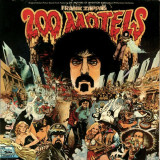
Frank Zappa’s “200 Motels” was a miraculous feat, a cinematic collision of the venerated musician and composer’s kaleidoscopic musical and visual worlds that brought together Zappa and his band, The Mothers, Ringo Starr as Zappa – as “a large dwarf” – Keith Moon as a perverted nun, Pamela Des Barres in her acting debut, noted thespian Theodore Bikel, the Royal Philharmonic Orchestra, and an incredible assortment of characters (both on screen and off) for a “surrealistic documentary” about the bizarre life of a touring musician. In celebration of “200 Motels” golden anniversary, Zappa Records, UMC and MGM have assembled a definitive Super Deluxe six-disc box set of the beloved, yet hard to find, soundtrack for release on November 19. Fully authorized by the Zappa Trust and produced by Ahmet Zappa and Zappa Vaultmeister Joe Travers, the monstrous 200 Motels 50th Anniversary Edition brings together the original soundtrack, newly remastered by Bernie Grundman at Bernie Grundman Mastering, along with a staggering amount of unreleased and rare material unearthed from FZ’s Vault, including original demos, studio outtakes, work mixes, interviews and movie ads, along with newly discovered dialog reels, revealing an early audio edit of the film. Also included is a wealth of never-before-heard audio documentary material surrounding the project. The six-disc set will be housed in a 64-page hardcover book in a handsome 12” x 12” slipcase. The packaging replicates the original booklet updated with revealing new liner notes from Pamela Des Barres, Ruth Underwood and Joe Travers, as well as Patrick Pending’s essay from the 1997 reissue, and is chock full of motion picture artwork, stills and images, from the film and its making, many which have never been seen before. This must-have collector’s release will also include a custom “200 Motels” keychain and Do-No-Disturb motel door hanger and a full-size replica of the original movie poster. Years in the making, all the audio was meticulously identified and transferred over several years as Travers dug through the Vault to create a new high resolution 96K/24B digital patchwork stereo master from the original analog tapes. The Vault material was mastered by John Polito in 2021. The remastered 200 Motels soundtrack will also be reissued on vinyl as a 2LP pressed on 180-gram black vinyl and on a 2CD format - both will include a smaller version of the movie poster.
Far Out Recordings presents a double bill of two monumental Brit funk classics. Keep In Touch and Stay were the first two 12” singles by the iconic Freeez, both self-funded passion projects of its founding member John Rocca, for his own Pink Rhythm imprint.
It all started over the counter at Derek’s Records on Petticoat Lane, London in the mid-70s. Rocca - at the time a budding teenage percussionist - met the prolific guitarist, composer, producer and all round brit funk fixer Jean-Paul “Bluey” Maunick (also the father of Far Out producer Daniel Maunick). Best known as the founding member of Light of the World, Incognito, and more recently Str4ta, Bluey’s involvement in the origins of Freeez are lesser known, but no less crucial. Bluey invited Rocca to a weekly jam session in an East London basement, where they would develop their craft, form their first band Freeez and develop the idea for ‘Keep In Touch’: “Back in the basement there was this one particular track we were playing that I really loved. It had a groove that I thought I could sell” Rocca reminisces.
Going against the advice of all the musicians involved, who thought he was mad and set to lose all his money, John decided to go full DIY, hire out a high end studio in the West End to record ‘Keep In Touch’ and release it as a private press, birthing his now famed Pink Rhythm label. Featuring Bluey on guitar, Peter Maas on bass, Paul Morgan on drums, Jason Wright on keyboards, and John Rocca on percussion, Keep In Touch was a surprise underground hit selling over 5000 copies and reaching #49 in the UK, leading Freeez into a record deal with Pye / Calibre.
Still giddy from the experience of having produced and pressed his first record at the age of just 19, John set out to do it all again with ‘Stay’ and ‘Hot Footing It’, enlisting Bluey & co once again. This time Rocca attempted to take things to the next level by adding vocals into the mix. Though this new arrangement initially backfired and cost John the deal with Pye / Calibre who weren’t feeling the slight change of vibe, original copies of the Stay 12” have become one of the most in demand from the brit funk canon.
These foundational DIY 12” singles paved the way for Freeez to become a household name in the history of British funk who went on to record hits like ‘Southern Freeze’ and ‘IOU’ as well as underground cult classics like ‘Melodies of Love’ and ‘India’ as Pink Rhythm, John Rocca’s later formation of Freeez named after his imprint.
Driven by support from the likes of Gilles Peterson, Quantic, Nightmares On Wax, The Nextmen, Lauren Laverne, Danny Krivit and most prominently Craig Charles, Sam Redmore has built a name for himself over the last few years for crafting soul-drenched remixes and reworks of both solidified classics and lesser-known material.
Having spent so much time re-working the classics it is no surprise that production values are high when it comes to his own original music.
At the start of 2021 Sam signed to Jalapeno Records, giving everyone involved cause for celebration after a difficult year and his debut album is slated for May 22.
Many of the album tracks were purpose-built for inclusion in his DJ sets - which can range from cumbia, afrobeat, samba, funk and reggae through to house, broken beat, disco and everything in between…
On The One will be the first single to drop from the album and features the inimitable vocals of poet and rapper Mr. Auden Allen as well as the soul drenched horns of Renegade Brass Band. Debuted on BBC 6 Music when Sam performed a guest mix in April this year, it seemed the perfect track to debut from Sam's new record.
No other pairing in the history of Darkwave ever matched the unfettered creativity, resolve, and DIY attitude from the collaboration between the two creative minds that compromise Lebanon Hanover.
The meeting of the Swiss musician Larissa Georgiou, aka Larissa Iceglass and British artist William Maybelline a decade ago in the latter’s hometown of Sunderland in the UK, was a monumental occasion, reverberating throughout the European music scene and even across the Atlantic.
Lebanon Hanover would emerge from the peak of the world-wide minimal wave revival, with their 2011 split 7-inch record with La Fete Triste issued as the catalog debut of Europe’s most ubiquitous Techno-Industrial EBM labels, Aufnahme + Wiedergabe
With Berlin as their new physical home, William and Larissa would soon, however, join the Fabrika Records family. From here, they would go on to release two full-length albums through the Athens based label, starting in early 2012 with their winter debut LP The World Is Getting Colder, and it’s All Hallows Eve follow up Why Not Just Be Solo.
It was Lebanon Hanover’s 2013 third studio outing Tomb for Two that would go on to cement the duo’s legacy, with the album’s single “Gallow Dance” becoming a post-punk anthem for the times, with artwork became the band’s defacto logo. Not only that, the song “Sadness is Rebellion”, also featured on the album, became the band’s official Mantra.
Two years would pass before the release of 2015’s critically acclaimed fourth record, “Besides the Abyss”. In the intervening years, William and Larissa, initially a couple, would find other partners, and relocate to Athens.
Meanwhile, Lebanon Hanover as a live act would expand rapidly in popularity, exceeding capacity during their performances at Wave Gotik Treffen in Leipzig, and performing sold-out shows across Europe and the UK.
With the playful Babes of the 80s maxi-single released in the interim, three years would pass before the next record from Lebanon Hanover, with 2018’s Let Them Be Alien, the band’s fifth studio album.
At the dawn of the global pandemic, where dystopian nightmares that were only ever seen before within the pages of books and flashes of silver screen celluloid, has become a daily reality, a new kind of darkness envelops the world. It was at this Lebanon Hanover returned, sharing a glimmer of hope with the single “The Last Thing,” the duo’s first song from their forthcoming sixth studio album Sci-Fi Sky.
Spanning an epic journey across ten tracks that wander through industrial landscapes, and ascend beyond the atmospheric aether, Sci Fi Sky is Lebanon Hanover’s most cohesive artistic statement to date. With their icy hearts on their sleeves, this is the culmination of a decade’s worth of musical creativity radiating from the minds of both Iceglass and Maybelline, and altogether an otherworldly beacon of hope in a time of sheer darkness.
Germany-based metal band OBSCURA launch trilogy concept on stunning new album “A Valediction”. The group’s first (sixth overall) album for Nuclear Blast pivots on many fronts. Advanced, elegant, and yet refreshing, “A Valediction” sums up past endeavors effortlessly as it gazes with purpose and conviction into the future. OBSCURA are fan-renowned and critically acclaimed for challenging and then expanding upon norms. From “Cosmogenesis” (2009) through “Diluvium” (2018), the band flourished and made significant progress in a musical genre unprepared for a creative shot of German invention. “A Valediction” spearheads OBSCURA into a new era of extreme metal.
Guitarist/vocalist Steffen Kummerer founded OBSCURA in 2002. Early on, he set out to improve, redefine, and push forward. Under his self-label creation, the Bavarian released debut album “Retribution” (2006), followed by heavy touring throughout Europe. Word quickly spread that a brand-new band from the south of Germany was on the rise. Buzz lead to a deal with U.S.-based Relapse Records. The first record out was “Cosmogenesis”. In Europe, Metal Hammer Germany awarded the album 6/7 while in the U.S., “Cosmogenesis” hit the Billboard charts at #71. The cross-continental praise and fevered momentum landed OBSCURA on high-profile tours in Europe, North America, and Japan.
When follow-up “Omnivium” arrived in 2011, they upped their chart success (Billboard #11; Media Control #14), received more accolades from publications like Terrorizer, Rock Hard, and Decibel, had another massive round-world tour cycle, while enhancing and making progress on their clever brutality. OBSCURA further developed their sound on “Akróasis” (2016). Moored by jaw-dropping tracks like ‘Sermon of the Seven Suns,’ ‘Ode to the Sun,’ and the title track, “Akróasis” elevated OBSCURA to the highest levels of international renown, having climbed up the Billboard charts (#5) as well as earning top marks in Rock Hard (8.5/10), Metal Hammer Germany (6/7), and Revolver (4/5). The Germans toured the world yet again, playing over 100 shows in support of “Akróasis”.
OBSCURA’s most significant accomplishment was, however, just around the corner. The final part of a tetralogy, “Diluvium” (2018), fiercely pursued OBSCURA’s multi-album transformation into musical innovators and metal powerhouses. Music videos for the title track, ‘Emergent Evolution’ and ‘Mortification of the Vulgar Sun,’ in concert with a substantial interest in virtuosic, forward-thinking metal, posited OBSCURA in the good graces (yet again) of the worldwide press in addition to rocketing up, for the very first time, the official album charts in Germany (#58) and Switzerland (#93). The Germans also topped out at #3 on the Billboard Heatseekers chart with “Diluvium”.
OBSCURA‘s stats have been impressive: Twenty years active; six highly prized albums; over 600 shows on four continents. Worldwide fan and press engagement—the videos for ‘The Anticosmic Overload,’ ‘Akróasis,’ and ‘Diluvium’ have over 4.5 million views—is only getting stronger the longer OBSCURA continue to offer up and interact with (via play-throughs and member/gear spotlights) their very captive audience. This is only the tip of Kummerer’s custom ESP guitar, however. A Valediction finds OBSCURA turning the page to a new chapter in the band’s evolution. A year in the works, the songwriting sessions followed a new approach, where the framework was relaxed, allowing new inspirations, imagining, and opportunities to arise. Songs like the opening epic ‘Forsaken,’ the '80s-tinted ‘When Stars Collide’ (featuring Soilwork/The Night Flight Orchestra frontman Björn Strid), the brutal groove of ‘Devoured Usurper,’ the ethereal artistry of ‘Heritage,’ and the fleet-fingered title track benefitted compositionally (refined structures) and aesthetically (more dynamism) from OBSCURA’s restyled songwriting stratagem.
OBSCURA wrote, recorded, and finalized “A Valediction” during the pandemic. The stipulations of working during this time allowed OBSCURA to work cross-country, tracking each respective part—drums, guitar, and bass—in national studios across The Netherlands, Austria, and Germany. Once the pieces were completed, the recordings were shipped off to award-winning producer Fredrik Nordström and Studio Fredman (In Flames, Architects) in Gothenburg, Sweden, where Kummerer and Münzner completed vocals and acoustic guitars using custom-built ENGL amps. Nordström was also tapped to mix and master. The final result is a deeper, heavier, yet more rounded production.
Lyrically, “A Valediction” is layered in structure and meaning. The word ‘valediction,’ by definition, deals with goodbyes and farewells. In a way, this is auf wiedersehen to the four-part album series while also addressing complex topics of Kummerer’s personal life. Instead of obscuring issues of loss, death, and abandonment in metaphor and allusion, the German laid bare his torment across songs like ‘Forsaken,’ ‘Solaris,’ ‘In Unity,’ ‘The Neuromancer,’ and ‘In Adversity.’ But for every line of desperation, he also offers positivity. Indeed, new beginnings—physical, emotional, or environmental—can provide light in the darkness. Lauded artist Eliran Kantor (Testament, Helloween) was brought on board to visualize the leitmotif. The bronze-themed colourway Kantor used exemplifies OBSCURA’s resistance to individual and sonic corrosion.
In 2021, OBSCURA will lighthouse their musical prowess, thematic complexity, and lyrical ambition on “A Valediction”. The group continue to be a beacon for change. No doubt OBSCURA’s new stats will amaze, but what they’re focused on is the release of “A Valediction” and then taking it on the road. Several high-caliber tours of Europe, North America, and Asia are planned through to 2023, with routes are in the works for the band to visit Australia, South America, and beyond. Truly, there is no band quite like OBSCURA. “A Valediction” proves that persistence, perseverance, and enterprising minds can achieve anything. Welcome to the next level!
Have we ever needed great storytellers so badly? Voices to snap us out of our collective grey funk, to pull us out of our narrow, hemmed-in worlds and to lighten our days and enlighten us with their perspectives, Immersing us in their worldview and history. People who can make us laugh, cry, gasp or nod sagely, to see our world anew and not feel so alone. We need stories, vignettes, new windows to look out of, and narrators to help those new visions make sense.
In short, we need Scott Lavene. Born and raised in Essex, but a man of the world who has wandered far and wide, Lavene’s a storyteller who can capture all the madness, joy and frustration of life while singing about worms writhing in the ground. Lavene’s been in bands since his teens, but only really located the voice that makes his new album Milk City Sweethearts so remarkable – that combination of wry observation, humble wisdom, unguarded vulnerability and unpredictable humour – in a music workshop for alcoholics and addicts, long after he’d bid farewell to childhood dreams of pop stardom, and the ghosts and demons that accompany those dreams.
He released an album as Big Top Heartbreak, 2016’s Deadbeat Ballads, and followed it with his first album under his own name, 2019’s droll and marvellous Broke. “I was signed to a little label in Bristol, but then they went skint,” he remembers. This time, however, the disappointment didn’t shake his confidence or his resolve. “I started writing prose, like ‘flash fiction’, and I’ve begun a novel,” he says. “And I’ve started some creative writing workshops for people who’ve come out of my situation.”
Amid all this activity, the songs that became Milk City Sweethearts began to take shape. Lavene noticed the border between his prose and his songwriting beginning to become porous, and the album feels like a clutch of excellent short stories set to music. Without a label, he recorded the album at home, and assembled it in a week in his mum’s garage during lockdown’s heavy manners. It’s a warm, witty, charismatic record with a dark heart at the centre, Lavene sounding dislocated and therefore able to write his everyday stories with a left-handed brilliance and blunt honesty that keeps them so fresh, like classic Kinks, or David Bowie if he’d never had to go to space to feel otherworldly. His songs are talking blues, set to loose and minimal and excellent art-rock with a pop sensibility, the honk of Roxy sax and the guttural weird-funk of Ian Dury’s Blockheads haunting their grooves.
Have we ever needed great storytellers so badly? Voices to snap us out of our collective grey funk, to pull us out of our narrow, hemmed-in worlds and to lighten our days and enlighten us with their perspectives, Immersing us in their worldview and history. People who can make us laugh, cry, gasp or nod sagely, to see our world anew and not feel so alone. We need stories, vignettes, new windows to look out of, and narrators to help those new visions make sense.
In short, we need Scott Lavene. Born and raised in Essex, but a man of the world who has wandered far and wide, Lavene’s a storyteller who can capture all the madness, joy and frustration of life while singing about worms writhing in the ground. Lavene’s been in bands since his teens, but only really located the voice that makes his new album Milk City Sweethearts so remarkable – that combination of wry observation, humble wisdom, unguarded vulnerability and unpredictable humour – in a music workshop for alcoholics and addicts, long after he’d bid farewell to childhood dreams of pop stardom, and the ghosts and demons that accompany those dreams.
He released an album as Big Top Heartbreak, 2016’s Deadbeat Ballads, and followed it with his first album under his own name, 2019’s droll and marvellous Broke. “I was signed to a little label in Bristol, but then they went skint,” he remembers. This time, however, the disappointment didn’t shake his confidence or his resolve. “I started writing prose, like ‘flash fiction’, and I’ve begun a novel,” he says. “And I’ve started some creative writing workshops for people who’ve come out of my situation.”
Amid all this activity, the songs that became Milk City Sweethearts began to take shape. Lavene noticed the border between his prose and his songwriting beginning to become porous, and the album feels like a clutch of excellent short stories set to music. Without a label, he recorded the album at home, and assembled it in a week in his mum’s garage during lockdown’s heavy manners. It’s a warm, witty, charismatic record with a dark heart at the centre, Lavene sounding dislocated and therefore able to write his everyday stories with a left-handed brilliance and blunt honesty that keeps them so fresh, like classic Kinks, or David Bowie if he’d never had to go to space to feel otherworldly. His songs are talking blues, set to loose and minimal and excellent art-rock with a pop sensibility, the honk of Roxy sax and the guttural weird-funk of Ian Dury’s Blockheads haunting their grooves.
Black Vinyl[24,50 €]
Black & Orange Pinwheel Vinyl[24,50 €]
Yellow vinyl[26,01 €]
Pink/White Swirl Vinyl[26,01 €]
II[27,69 €]
THERION have always been a band that have challenged themselves to explore new paths, while remaining true to their musical core values. For their 17th studio album, mastermind Christofer Johnsson and his collaborator Thomas Vikström have created something that has been previously unthinkable to the guitarist and the singer. "We have done the only thing that was left of all the different angles to explore", explains Christofer. "We have decided to give the people what they kept asking for. 'Leviathan' is the first album that we have deliberately packed with THERION hit songs."
True to the Swede's words, the album opens with the catchy and swift tune 'The Leaf Of The Oak Of Far' featuring female and male antiphonal singing as well as a choir that seems to have evolved straight out of THERION's breakthrough full-length "Theli" (1996). This is immediately followed by the obvious highlight 'Tuonela', in which Christofer cleverly underscores this hit-track's Finnish vibe by employing NIGHTWISH’s "metal voice" Marko Hietala. Next up in this parade of future fan-favourites is the title track 'Leviathan' that offers classic THERION material with operatic female vocals and a massive choir.
Christofer Johnsson's passion for classic voices, choirs, and orchestral elements as well as his penchant for epic melodies in combination with rock and metal shines clearly through the following sing-along ballad 'Die Wellen Der Zeit', which indicates another nod to German romantic composer Richard Wagner. "Ever since 'Theli', Wagner has been and will always be at the core of THERION", emphasises Christofer. "When we started to combine metal and opera, it was something new and original. Today, symphonic metal has long been a firmly established genre." When THERION came into being in 1988 by changing name from the already existing band BLITZKRIEG, which was founded a year earlier, Christofer had rather taken inspiration from SLAYER's "Reign In Blood" among other classic metal albums.
At the beginning, the Swedes were firmly rooted in death metal, a genre which they helped to define, as witnessed by their debut album "Of Darkness...." (1991). Yet even back then, there were hints of "something else" lurking beneath the rough surface. The use of female vocals is another core ingredient of THERION today, which developed gradually. CELTIC FROST had basically introduced the female element to extreme metal on "To Mega Therion" in 1985. THERION began with both a female and male vocalist emulating a church like choir already in their sophomore full-length 'Beyond Sanctorum' (1992). With Symphony "Masses: Ho Drakon Ho Megas" (1993) and "Lepaca Kliffoth" (1995), Christofer continued to developed his trademark sound by gradually drifting towards cleaner vocals and more keyboards.
With "Theli", the Swedes had firmly established a reputation of pushing the boundaries of metal in the 90s –among such acts as their compatriots TIAMAT, THE GATHERING, and MOONSPELL that were often referred to as "gothic metal" at the time. THERION continued to break new ground leaving inspiration for others to follow in their wake: On "A'arab Zaraq -Lucid Dreaming" (1997), Christofer further explored the use of Near Eastern music in metal which he had already begun in 1992, while "Secret Of The Runes" (2001) dared to have Swedish lyrics in some songs.
While critics were left confused and fans challenged, THERION were often ahead of their times and vindicated in hindsight. Even the band's 25th anniversary excursion "Les Fleurs Du Mal" has by now overcome the initial shock the album caused and is only beaten in terms of streaming by the classic "Vovin" (1998). When Christofer faced the question of where to go next after the dramatic "Beloved Antichrist" (2018) had finally fulfilled his musical mission, his answer is "Leviathan" named after a giant sea monster from Judeo-Christian myth that has roots in Babylonic lore: THERION have created a giant hit album –and for the first time in the history of the Swedes, their fans are not asked to explore something new, but simply to lean back and enjoy the best from their band!
Infamous Southern wrecking crew return with an all country & western album, marking their 25th anniversary. Features numerous guest legends from the Grand Ole Opry along with Jello Biafra. Join those Legendary Shack Shakers as they mark their 25th anniversary as a band on Planet Earth to celebrate the occasion, they’ve invited former members to help them record an all country & western album! From spaghetti western to bluegrass, western swing to rockabilly, Tex-Mex to country folk, the variety of the genre is on full display. Always ones to respect their history, the Shack Shakers have also included some Kentucky local legends to “pick and grin”. Hotshots such as Stanley Walker (Grand Ole Opry band leader for Jean Shepard and guitarist for Sun Studio’s “Rockin’ ” Ray Smith) and Jack Martin (dobro-player for Lester Flatt) really give those “young ‘uns” a run for their money. And the always-ornery “Hillbilly” Bob Prather (Louisiana Hayride fiddler and running buddy of Opry star Onie Wheeler) pitches in too. Just add The Dead Kennedys’ Jello Biafra, hillbilly royalty Chris Scruggs and an Old Crow Medicine Showman and you’ve got a recipe for what could only be a Legendary Shack Shakers masterpiece. Titling it Cockadoodledeux was done, admittedly, to bookend 2002’s Cockadoodle-Don’t, an album by which many fans were first made aware of the group. However, it also serves to signal the start of another twenty-five years! Just as the plucky, two-headed chick emerges from the egg on the cover, so too begins a fresh start for the band’s creative energies. Once again, generations of fans both young and old get to lean in, listen and expect the un-expected.
A true psychedelic masterpiece!
Black vinyl LP in black and white jacket with miniature two color booklet. Limited second pressing.
Blind Owl Wilson was a truly great guitarist and vocalist whose deep well of psychedelic blues songs were buried amongst the catalog of major label rockin’ blues band Canned Heat. Blind Owl served as Canned Heat’s guitarist and would chip in a song here and there as a front man. A couple of those songs became huge hits in the 60’s – “Going Up The Country” and “On The Road Again”.
Blind Owl’s songs for Canned Heat stood in stark contrast to the bands blustery blues rock – his was a gentle and nuanced voice and the themes of his song were all about personal heartbreak, grasp- ing for cosmic understanding, and ecological justice.
Here we have an LP of Blind Owl’s songs from Canned Heat’s records – left to sit alone and take you somewhere unexpected. Blind Owl’s personal vision quest can be heard throughout these songs. “Poor Moon’ tells the tale of Alan’s heartbreak as he watches the moon being misguidedly bombed by man, ‘My time ain’t long’ confronts death, “Parthenogen in 3 Blind Owls’ and ‘Parthenogen childs end’ take you to the psychedelic limits, and oh yes, we have the hit tunes on here too. Co-release with Sutro Park records.
- 01: Dronepilot (Feat. Drone Operatør &Amp; Ian Bruner)
- 02: Contrailsnake (Feat. Drone Operatør &Amp; Ian Bruner)
- 03: Dronegød (Feat. Drone Operatør &Amp; Ian Bruner)
- 04: Icaruscomplex_ (Feat. Gajek &Amp; Ian Bruner)
- 05: Tvdream (Feat. Drone Operatør &Amp; Ian Bruner)
- 06: Fallingasleepwiththedrones (Feat. Drone Operatør &Amp; Ian Bruner)
- 07: Asegmentøfsky (Feat. Gajek &Amp; Ian Bruner)
- 08: Sleepparalysis (Feat. Drone Operatør &Amp; Ian Bruner)
- 09: Boneless (Feat. Gajek, Drone Operatør &Amp; Ian Bruner)
- 10: Virtualcopulation (Feat. Drone Operatør &Amp; Ian Bruner)
- 11: Alone_ (Rendered Altitude)
SIM CARD HØLDER is not a band. It is the hybrid child of Ian Bruner, Drone Operatør and Gajek. It's procreation date is hard to pin down, but it started 2020 with an Insta chat and one of Ian's piano improvisations recorded in his Colorado living room. From there the album grew in separated covid lockdown wombs at three different locations in Germany. Ian's shadowy instrumentation of light piano and heavily layered and long believed to be dead soundscapes were digested, replanted and grown-over by Drone Operatør's and Gajek's uncompromising and individual sense for song structures and sounds. When finally all body parts were assembled in early 2021 the baby was already fluent in different languages.
Sim Card Hølder grows slowly while meandering through dense and open fields. It switches from calm and dreamy moods to wild fractured outbursts without fragmenting into the arbitrary. A raw spiritual power keeps every part connected and in perfect motion. Each song is a portal into multiple universes that suck you in on thick piano carpets, sharp saxophone spikes and buzzing quadcopter wings, warming insect intestines, blasting raw drums and slow healing winds, screeching synth rhymes, dissonant orchestral tales and floating blue melodies. It's a demanding ride but thoroughly deeply relaxing. The perfect soundtrack to rewind your mind.
k 11: Alone_ (rendered altitude) [feat. Drone Operatør & Ian Bruner]
- A1: Holographic (Carl Craig's Ride Or Die Anthem)
- A2: (Re)Evolution (Jon Dixon Remix)
- B1: Second Wave (Steve Rachmad Remix)
- B2: Universal Language (Claude Young Remix)
- C1: Immersion (Stephen Brown Remix)
- C2: Second Wave (John Beltran's Pan Am Remix)
- D1: Second Wave (Stephen Lopkin Remix)
- D2: Metamorphosis (Shawn Rudiman Remix)
All Detroit Techno, taken from the album DnA
After a monster year for Vince Watson, with releases on Get Physical, Tronic, SushiTech, All Day I Dream alongside his own Everysoul Audio and a host of remixes, he now ends 2021 brining his label’s biggest and most adventurous release to date: ‘DnA reSequenced’.
After the massive response to his 18 track ‘DnA’ album in 2019, Vince had a vision of having some of the tracks remixed by his favourite Detroit ‘flavoured’ artists from the 3 places that musically have made it all possible for him: Scotland, Amsterdam, Detroit.
So it is with great pleasure that Everysoul can announce remixes by none other than Carl Craig, Claude Young, John Beltran, Jon Dixon, Shawn Rudiman, Stephen Lopkin, Steve Rachmad and Stephen Brown.
Planet E boss Carl Craig is no stranger to Vince’s work, having released 4 of his singles on Planet E and previously remixing his track ‘It’s Not Over’. His remix of ‘Holographic’ takes the heavy synth lines into typical C2 remix territory, building and building with layers into a crescendo.
Jon Dixon may be one of Detroit’s rising stars as a solo artist, but as a band member of Underground Resistance and Timeline, he plays with some of the best Detroit Techno groups around: Galaxy2Galaxy and is a classically trained pianist. Jon’s releases over the last few years now showcase his personal styles and Vince was desperate to work with him, with a keen respect for his musicianship. His Remix of
John Beltran has been one of Vince’s favourite producers for over 25 years and his Pan Am remix is a journey of blissful Beltran fusion styles.
Claude Young takes his remix into a completely new and different direction, moving from the Electro of the original into an experimental masterpiece, respecting the tricky chord programming of the original and adapting into sounds that only Claude Young is able to extract.
Steve Rachmad is one of Vince’s closest allies in Amsterdam and having worked together on many projects over the years, Steve was the first name on the list. His 4/4 edition of Second Wave takes the deep Detroit chords and harmonies into a much darker and groovier direction, with early Transmat character and the funk that Steve Rachmad is known for.
Shawn Rudiman’s remix is a no nonsense straight to the floor banger, taking all the elements of the original into a much more streamlined and live improv version for the floor rather than the head.
Stephen Lopkin is one of Vince’s favourite Scottish producers and his remix takes the original into his own unique style and identity. The original had very unique chord progressions and timing and Lopkin was able to successfully extend this to make it even more complex but with a seamless flow that keeps the groove flowing.
Stephen Brown is also a top Scottish producer who Vince has been supporting and spinning for over 20 years, and his remix of Immersion removes the fluffy jazzy elements from the original and opts directly for the dancefloor, taking Immersion into new territory.
DnA
- A1: The Fatback Band - Spanish Hustle
- A2: Ronnie Walker - No One Else Will Do
- B1: Act One - Tom The Peeper
- B2: Street People - Baby, You Got It All
- B3: Joe Simon - Going Through These Changes
- C1: Millie Jackson - Breakaway
- C2: Joe Simon - Love Vibration
- D1: Millie Jackson - Don't Send Nobody Else
- D2: Ronnie Walker - You've Got To Try Harder (Times Are Bad) (Times Are Bad)
- D3: Act One - Friends Or Lovers
Brand New Tom Moulton Exclusive mixes
It's June 2020 and I'm on a video call with Tom Moulton. We're in the middle of a worldwide pandemic but life for Tom Moulton hasn't particularly changed a great deal. He's effectively been in self-isolation for most of his life wedded to the two things he likes most in life, namely, music and cats.
I've known Tom for almost 50 years. The first 20 of those years were spent listening to Tom's mixes, and I listened to everything he did (including all the un-credited stuff) and quickly realised he was the master. I wore all those 70s Trammps albums out very quickly. The dynamic on all those mixes was really off the scale. I eventually met Tom when I did Salsoul Mastercuts in the early 90s. Little did I realise I'd be working with the guy forevermore.
Over the last 30 years I've been fortunate enough to work with him on a variety of projects and all of them were fantastic experiences. Tom's what I call an original creative and the whole art of mixing is a very emotional thing for him. It made for some long conversations. We fall out all the time but I'm always there for him and he's always there for me. It's one of those annoying Master-Servant relationships. Plus I always need access to his archives.
Anyway Tom got access to the Spring/Event vaults and then started working. This project started almost four years ago and, typically in this day and age, went through a number of mutations and delays. We're lucky it's finally here.
I still listen to everything that Tom does. These mixes bring out aspects of the songs that I never properly listened to before and, in a couple of cases, had never even heard. Thus is the art of the creative remixer.
It's been particularly poignant talking to Tom throughout this pandemic. Tom is really the last survivor of his type. A master-craftsman using 80 years of skill and knowledge and who is every bit as passionate today, surrounded by his cats and computers, as he was in the 60s, surrounded by a coterie of young and adoring music fans.
LTD. VINEYARD GRAPE VINYL-
Typically, a band's big indie label debut doesn't come 15 albums into its career, but with Constant Smiles' Paragons, here we are. Primary songwriter and sole "constant" member Ben Jones_who considers Constant Smiles a collective_sees its impressive output as a way to document the group's evolution. Since its live debut as a noise duo on Ben's home of Martha's Vineyard in 2009, Constant Smiles has grown to include contributions from 50 other members, all of whom have personal connections to the group's extended family. And while the collective has indulged an array of musical whims along the way - including Ben's penchant for penning a new set's worth of material for each live performance - Constant Smiles' sound has tightened up considerably over their past couple of albums, in large part as a result of Ben's working relationship with Mike Mackey, who has become his main creative partner. This increased focus manifests on Paragons in the band's most cohesive batch of songs to date, ranging from shimmering psych-pop excursions to bittersweet, piano and string-accented strummers, and an execution that feels like a massive step forward for the band. Through its recent forays into dream pop and shoegaze (Control) and synth-pop (John Waters), Constant Smiles has learned how to incorporate its experimental inclinations more fluidly into the mix. Artists like Yo La Tengo, and the more recent Rat Columns, are good touchstones for Constant Smiles' musical approach - tethering to an indie-pop core while perennially mining genres, always finding new ways to intrigue listeners and pursue a unique vision. Paragons was produced and engineered by Ben Greenberg in the last two weeks of December 2020 at Gary's Electric, with additional recording done by Ben Jones at his home studio, The Void, and his Aunt Leanne's house. The album was mixed at Circular Ruin Studio and mastered by Josh Bonati. The band on Paragons consists of Jai Berger (who performed "Introduction"), Spike Currier (bass and synth), Matthew Addison (drums), Emma Conley (violin), Nicky Wetherell (cello), Adam Lipsky (piano), and Ben Greenberg (guitar and Mellotron).
"You ever wonder what Keith Morris does at the end of the day? Does he maintain that wide-eyed stare, the one that pins audiences to the floor with its very intensity, while he’s putting on his pyjamas? Does he continue spitting venom from that heroically ragged throat of his while he’s making his cocoa? Does he lay his head on his pillow with the same righteous fury that launched thousands upon thousands of moshpits? Hey, I’m just wondering. Y’see, all that intensity and venom and fury… it has to go somewhere while he’s otherwise occupied with mundane tasks like taking off his socks or brushing his teeth, right? And listening to the thrilling racket conjured up by Vancouver’s Chain Whip, you’d be forgiven for thinking that they have somehow become vessels for that energy. I mean, they’re Morris’ spiritual successors - if their 2019 debut ‘14 Lashes’ wasn’t enough of a clue, then this six-song blast of blink-and-you’ll-miss-it brilliance should leave you in no doubt. This is hardcore punk as it was originally conceived, and it slays. ‘But who are Chain Whip?’ I hear you ask. Well, they’re a bunch of dudes from British Columbia who’ve also served time in bands like The Jolts, Fashionism and Corner Boys (among others). They’re the ones who are gonna have you slashing the seats at your local cinema, or taking potshots at lines of empty bottles on street corners, cuz they make you feel so damn tuff. OK, I’m just goofing around here - whereas Chain Whip are serious business. No, really. I dare you to listen to the Germs-go-nuclear b(‘)last of ‘Laguna Bleach’, or the garage-slop-at-200-mph rush of ‘Fresh Paint And Philanthropy’, and not want to launch a stink bomb into your teacher’s car. Or, failing that, to bring about the extinction of global capitalism. If that fails, you’ll just end up wearing out the grooves of this very fine six-song EP while bouncing between walls like the DRI logo guy if he wore jet heels and spring-loaded shoulder pads. Jeez, imagine Keith finishing the night shift and giving these guys a handover. As if they’d even need to be told. Look, Chain Whip are the best straight-up old-skool punk band you’ll hear today. You know what to do. Trust your instincts. Dance that two-step to hell with ‘em. This. Is. The. Shit." Will Fitzpatrick.
In 2019 Christian Savill found himself alone and with a year off from playing guitar for his grown up band Slowdive. He started writing and demoing songs with no particular plan. From 2001 he had recorded with longtime friend and collaborator Sean Hewson as Monster Movie releasing several albums on Graveface Records. These new ideas felt different in that they’re more personal and honest.
Christian sent these sketches to good friends and multi instrumentalists, Ryan Graveface (Dreamend / The Casket Girls) and Steve Clarke (The Soft Cavalry) and Beachy Head was formed. Ryan and Christian put flesh on the bones in Savannah just before Covid struck. Matt Duckworth (Flaming Lips) added drums. In between lockdowns back in the UK Steve added harmonies and other instrumentation. The final touch of recording was Rachel Goswell (Slowdive / Mojave 3 / The Soft Cavalry / Minor Victories) contributing vocals on a few songs.
Beachy Head is a chalk cliff in Sussex. It’s one of Britain’s most popular beauty spots but also a notorious suicide spot.
Fela Kuti (1938-1997) was a Nigerian musician,
producer, arranger, political radical and outlaw, and the
originator of Afrobeat. A titanic musical and sociopolitical
voice, Fela’s legacy spans decades and genres,
touching on jazz, pop, funk, hip-hop, rock and beyond.
After graduating from Trinity College of Music (now
Trinity Laban Conservatoire of Music and Dance) in
London, Fela returned to Nigeria with his band Koola
Lobitos. Fusing the sounds of Jazz and Funk with the
traditional African music he had been raised on, his star
status began to flourish.
EMI, his label at the time, saw the true power of his
musical creation, what we now know as Afrobeat, and
brought Fela and his band back to London. The result
was ‘London Scene’. While recording, Fela began his
friendship with Ginger Baker, who plays uncredited on
the track ‘Egbe Mi O’.
‘London Scene’ is the beginning of what would become
Fela’s signature Afrobeat style and serves as a great
introduction to Fela’s music. Recorded and remastered
at none other than Abbey Road Studio.
This 50th Anniversary edition of the classic Fela album
comes on red, blue and white splatter vinyl, with a gold
foil obi strip that will be the hallmark of all of the Fela
50th Anniversary reissues.
Liner notes by the legendary Chris May.
Fela recently came in second place, behind Tina Turner,
for the fan vote for the Rock & Roll Hall of Fame
nominations and received great press coverage in NY
Times, Rolling Stone, MOJO, Record Collector and
more.
Left Ear returns where they started, further highlighting the music of the enigmatic Leong Lau. Arguably one of the most unique artists to come out of Malaysia/Australia during the 70’s, Leong migrated to Australia to pursue an education in Engineering. He finished his degree but instead took a different ’career path’, choosing to explore his creativity.
From an early age Leong had been trained in the arts including both Chinese opera and flute. Leong recalls “making flutes out of grass weeds”, as he couldn’t afford a flute. It was this DIY ethos that Leong attached to his lifestyle. He found himself promoting festivals in the infamous town of Nimbin before moving to Sydney where he would record a small body of music with the sessional musicians he was playing with daily in the venues of Sydney’s Circular Quays. Leong’s ‘Late Night Flyer’ was the single to his supposed second album, which was allegedly manufactured but unfortunately a copy of the LP is yet to surface. One thing is for certain, two tracks landed on a 7” and together with a predominantly Chilean backing band known as ‘The East-West Unity Band’ they created two raw latin influenced jazz-rock tracks that stand the test of time.
The A-side a homage to the omnipresent characters that frequented the after-hours jazz clubs Leong performed at. Whereas the B-side is named after his favourite philosopher Herbert Marcuse’s novel ‘One Dimensional Man’, which sees Leong take a more psyched out approach.