Studio Mule drops “Anthologia”, the final chapter of a close look on the work of the Tokyo born DJ and producer Takayuki Shiraishi, a jack of all trades, that sways through Tokyo’s vast music scene since the late 70’s, a time when post punk grooves called the tune. As part of the band BGM he released in 1980 the album “Back Ground Music” on the legendary Osaka based underground label Vanity. Last October Studio Mule reissued BGM’s no wave, free funk mini-mal treasure. A few Month earlier Studio Mule already published “Missing Link”, a thrilling retrospect on Takayuki Shiraishi's unreleased material from the late 1980s, a creative period of which only a little ever saw the light of the day.
And now “Anthologia”, a record that is dedicated to his work during the years 1990 to 1996, a time span, in which Shiraishi moved on to produce house, downbeat and playful electronica. In 1995 he released the ambient/techno 12inch “Spectral Colours” on the R&S sublabel Apollo under the alias Planetoid. Two years later he manifested his techno leaning creativity under his given name on the album “Photon”, a record that helped launching Japan’s techno scene. It was followed by two more long players, that display his wide musical taste with ambient, house, breakbeat and other genre blending styles. Besides producing, Shiraishi was also a prominent figure of Tokyo’s club nightlife, DJing alongside Jeff Mills as well as Krautrock icons like Holger Czukay.
“Anthologia” features three unreleased tunes of this lapse of time, as well as highlights some work Shiraishi produced together with his friend Jun Sonohara as Musica Nova and a hidden gem he tuned in for the “Isolated Audio Players 1” compilation, published by the Tokyo based Pickin' Mushroom Recordings label in 2000.
The three unreleased tracks display his love for diversification. “Distant Thunder” is a drone driven ambient voyage, that slowly melds into a gentle rhythmic sensation driven by loose hi-hat patterns and a soft chord crescendo. On the opposite, “Lapis Lazuli” comes around as a mellow melodic downbeat trip enlarged with twisted rhythms and cosmic infiniteness. “A Voy-age” shows his love for house music with a grooving arrangement that comes close to the kinky house gems of contemporary producers like Lowtec. Also, the already known “Isolated Audio Players 1” compilation tune “Flicker” is located in the house spheres, delivering nervous jacking minimal vibes emerging from a precise produced dance of melodies, grooves and sound effects.
In comparison, the four Musica Nova tracks show again another side of Takayuki Shiraishi’s many musical talents. “Birds in Paradise” is an elegant triphop tranquilizer, while tunes like “Nocturnal Tribes” and “Green on Green” express his passion for electronic arrangements that think out of the box with airy melodies, slow-motion big beat rhythms, jazz particles and an overall cosmic sound complexion. The tune “Shifting Sand” goes the same direction, while adding esoteric reverberations and a touch of Drum and bass.
Together the eight tracks turn “Anthologia” into something more than just an anthology of Takayuki Shiraishi’s work. In association, all compositions work like an album that overwhelms with a reasoned story-arc, who slowly rises to a hypnotizing peak, from where all downswings to a calm finish, that makes you want to start all over again.
Buscar:his all star band
It goes without saying that the global metal scene would not be the same without Sepultura. For 35 years now, the Brazilian icons are not only a band revered worldwide; they have been, are and forever will be at the very forefront of Thrash Metal, trailblazing ever since they released their long-since legendary debut album “Morbid Visions” in 1986.
While quickly establishing themselves as leaders of the second wave of Thrash already in the late eighties, to this day they never came even close to stagnation. “Quadra”, their mighty new undertaking, is proof of a will unbroken, a thirst unquenched and a quality so staggeringly high it’s a wonder this band doesn’t implode. Now three albums deep into what may very well be their strongest incarnation yet – uniting the talents of old-school members Andreas Kisser (guitars, vocals) and Paulo Xisto Pinto Jr. (bass), vocal force of nature Derrick Leon Green (vocals) and drummer Eloy Casagrande – Sepultura are an unleashed power to be reckoned with, uniting bucketloads of experience and youthful vigour in a totally revived way.
“On ‘Quadra’, we felt the urge to revisit that old thrash feeling of ‘Beneath the Remains’ or ‘Arise“,’ only seen through the eyes of today,” Andreas Kisser utters the magic words. “Add to that the tribal percussion, the orchestral elements, the choirs, the melodies and the clean vocals and you get a thorough run-through of our entire career, backed by a very contemporary approach.” Fuelled by an energy almost uncanny for a band that has been active for so long, Sepultura storm through a contemporary thrash monument, backed by sublime melodies, a very eerie atmosphere and a fiendishly high level of technicality. Kisser is appreciating these compliments, still maintaining his very down to earth approach. “We don’t heed the past and we don’t try to be preoccupied by the future too much,” he shrugs. “We’re in the now, trying every day to make Sepultura a little bit better. That’s what keeping us strong.”
And that’s what they have been doing for the last 30+ years. Album after album, tour after tour, no gap in between records longer than three years. “Music is all we do,” Kisser states matter-of-factly. “If it wouldn’t be for Sepultura,” he laughs, “I would be a sad and lonely guy. Sepultura is what we are.” And “Quadra” is living testimony to that. The old Sepultura echo through the very fibre of the songs in all its raw and morbid splendour, but yet it’s the present, the experienced and refined beast that is Sepultura in 2020 that’s blasting out thrash metal anthems for a fucked-up age.
With now 15 albums under their belts, Sepultura are the work horses of the metal world, always ready to attack. In many ways, “Quadra” broadens the vision the Brazilian thrash troopers had on “Machine Messiah” (2017), again relying on the impeccable talent of Swedish producing giant Jens Bogren and his Fascination Street Studios. “He is so full of passion, it’s unbelievable, man,” Kisser raves. “He’s really there, he really cares about the projects he’s doing. For Sepultura, he’s like the fifth member of the band. The chemistry was so amazing, 99 percent of what we were trying do to actually worked. That was insane!” Even after more than 30 years at the forefront of international thrash, guitarist Kisser sounds positively baffled by working with Bogren. “We felt like we were in our rehearsal room.”
Bringing together a monumental grandeur and a wild, untamed ferocity, Sepultura stepped up their game musically – and conceptually as well. “We were possessed by the number four, by the numerology of it”, Kisser starts to explain. “I divided the album into four parts as if we were doing a double vinyl. Side one is the pure and raw thrash side. Side two brings in the rhythms and percussion from our ‘Roots’ era. Three is getting a bit experimental and four brings forth the melodies and the acoustic guitars.” With John North’s book “Quadrivium” as a further source of inspiration, Sepultura dive deep into a mystical world full of hidden meanings. “You have four seasons and twelve month in a year just to pick one example. A lot of stuff in our culture is divided like that.”
Plus, Quadra also is the Portuguese word for ‘sport court’ that by definition is a limited area of land, with regulatory demarcations, where according to a set of rules the game takes place,” he adds. “We all come from different Quadras. The countries, all nations with their borders and traditions; culture, religions, laws, education and a set of rules where life takes place.” In the Quadra of thrash, however, we all are the same. And we bow our heads in unison to the mighty leader that is Sepultura.
The sickest French band, a trio called France, drums, bass and amplified hurdy-gurdy. They only performs live, in the middle of the audience - turned in to face each other - full on smoke machines and strobes. And they play only one ‘song’ for the duration of their hour-long set. And it’s the most transfixing live experience of intense physical and mental focus, and there is something of early rave too, the togetherness, the energy, the euphory. The distorted hurdy gurdy plugs France’s sound into the country’s history of folk music and popular festivities, of communal trance and immersive pleasure. The rhythmic basis is pretty much the same throughout the whole live. One doesn’t need to actually be tripping balls for the auditory illusions to start coming thick and fast. Those who’ve stayed for the whole duration of their performances know they’ve shared something. However disparate the phantom forms each might have discerned in the midst of the howls and groans. Gigs like this you leave feeling you’re not quite the same person who went in, even though you’d be hard-pressed to pinpoint precisely what has changed. Far Out Far West was the band’s first gig outside of their usual comfortable friendly circle and thus was perceived as a somewhat hostile environment. This was where they met the fellows of Les Potagers Nature who will later release France’s debut untitled album. One certainty remains at least, that there is still a France we can believe in. David McKenna (The Quietus). Sales Points: - New album from trio France - All previous releases now sold out and sought after - For fans of drone, rural trance, stoner, psychedelic - 131st release on Mental Groove Music, home of WRWTFWW
Who put the dance into Factory Records?”
Be With would like to refer you to FAC 59.
Working with founding member Tony Henry, we’re honoured to present the reissue of 52nd Street’s crucial debut single “Look Into My Eyes”, backed with “Express”. Originally released on Factory Records in Summer 1982, this ultra-rare 12" is a double-sider in the truest sense. Unrivalled Manchester jazz-funk-boogie-soul.
Both “Look Into My Eyes” and “Express” came out of a five day recording session in the spring of 1982 at Revolution Studios in Cheadle Hulme, just outside Manchester. Rob Gretton had just signed the band to Factory, snatching them from under the noses of RCA and WEA Records who had been sniffing around and seemingly ignoring Tony Wilson’s concerns that Factory might not be the right home for a black soul act. Rob clearly thought different.
The band of Tony Henry on guitar and vocals, bass player Derek Johnson, drummer Tony Thompson, lead vocalist Beverley McDonald and John Dennison on keyboards were put in the studio with A Certain Ratio’s drummer Donald Johnson producing the sessions. The band also found themselves with an interesting new member.
The back cover of the finished record credits synth F/X to a mysterious “Be Music”. Turns out that’s Bernard Sumner. Yes, that one. Tony Henry explains that bringing Bernard in was another part of Rob Gretton’s plan, “Barney was a real soul boy at heart and had always wanted to produce and work with black artists… with 52nd Street, he was an honorary member”. The results suggest he fit right in.
“Look Into My Eyes” squeezes so much aural pleasure into one side of a 12" single. A strutting, rich, soul-gliding funk with bass and guitar high in the mix above twisted, bubbling synths. Like Nile and Barney drenched outside the Haçienda that first summer. How can something be this liquid loose whilst sounding so, so tight? The hypnotic, naïve-cum-insouciant vocals from McDonald, backed by her fellas, only add to the track’s charm. Put simply, it sounds like nothing else.
On the flip, “Express” is sheer drama on wax. Tony’s opening lesson in good manners (“Excuse me miss, is this seat taken?”) sees us strapped in for a wild, chaotic, rhythmic ride. All bold keys, synth brass blasts, insistent bells and a galloping groove giving *that rush* atop a bassline to die for. No surprise it was a Frankie Knuckles favourite. Blistering heat.
The 12" was Paul Morley’s single of the week in the NME but his approval did little to get daytime radio play or to sell the record when it was released. It probably didn’t help that, in Tony Henry’s words, Factory were a label “notorious for not promoting their bands, not wanting any communications with the written press and not answering their office phones.” It came and went with none of the fuss that music this good deserved.
But in the near-40 years since they were released, these two tracks have gone on to become cult underground hits for those in the know. Of course that means those original 12"s have gotten rare and pricey. So here’s your chance to own this particular piece of post punk Factory Records funk.
But this record isn’t just a vital slice of Manchester soul history. Tony’s not shy about just how important he thinks the collaboration between 52nd Street and Bernard Sumner was: “this worked out quite well for us in the band but even better for New Order and Factory Records as Sumner studied grooves, rhythms and how to write and construct funk and dance music from 52nd Street and producer Donald Johnson”. You just have to listen to Blue Monday to hear what Bernard did when he started putting what he’d learnt into practice.
“Look Into My Eyes” and “Express” come from a chapter of the history of Factory Records that no-one seems to have gotten around to writing. Working with Tony to reissue the original 12" is the start of putting that right. The story of 52nd Street is more than just a footnote.
Thembisa’s Hot Soul Singers were formed in 1975 by promoter and producer Sam “Jiza Jiza” Mthembu. In the early years the trio was called the Thembisa Happy Queens and consisted of sisters Ntombifuthi and Nombuso Mabaso and Lindiwe Ndlovu. The trio would start out playing Jive, Zulu Disco and other popular sounds of the 70s . In 1979 they became the Hot Soul Singers and would begin a career in the emerging Disco scene which their group name was now more fitting for.
Their first single under the new name was a tribute to their producer Sam, and their first album “Together” would come 2 years later in 1981. It contained their Lamont Dozier rip off from a year earlier, and biggest hit to date “ Give Me My Love Back” which was playing in jukeboxes across the country. At this time the Hot Soul Singers were also gaining popularity due to their demand as an opening act for American groups. Sam’s ongoing pursuit to be a successful promoter also helped to ensure they were always in the headlines and playing shows. It would be in 1983 that the group would temporarily step away from a major label and go onto record their first Maxi single with the independent Raintree Records new Lyncell Imprint.
Like most places in the world the early 80s was a fast changing time in music for South Africa. Although the Maxi had a disco standard for years in other parts of the world it had only recently been popularized in South Africa. Thanks to the Brenda and the Big Dudes smash, Weekend Special, the maxi took over as the preferred format for pop music, replacing the cheaper but time restricting 7” single. Singles were being pushed to the limits in the early 80’s with running times of 4+ minutes a sides by some labels. The Maxi allowed for groups to extend their grooves onto a full side and later album art containing smiling musicians infant of cheesy backdrops became the norm. Synthesizers had been used in pop music for years already but the DX7 wouldn’t land in the country for another year. Drum machines were being used but had yet to fully replace live drummers like would happen in the years to come. The recording of this new single would require a full band resulting in it being one of the gems of the crossover period before the complete midi takeover. Durban’s Graham Handley was recording some of the best upcoming Disco sounds for labels like Heads Music and groups like Kabasa and Masike Mohapi and was tasked as engineer. Other known musicians in the session would be Jimmy Mgwandi from the group Image, who’s signature bass playing can be heard on both songs. A young Daniel Phakoe aka “sox” was also present and took care of the male parts of the vocal line. Both musicians have writing credits along with lead singer Nombuso. Other possibilities of musicians would be Thami Mduli aka Professor Rhythm who had been with the group since their early days as well as a young Chicco who was best friends with Jimmy at the time.
The single, which was packaged in a customized but simple company disco sleeve, went on to do quite well. Less than a year later they would feature on a track with Sunset which would lead to them singing with Sounds of Soweto records label. The group would enjoy the growing fame when tragedy struck in 1984. On their way to a show in Mpumalanga they were involved in a car accident which took the life of Nombuso and left her husband Sam with a leg injury he limps with to this day. Upon recovering Sam would organize a tribute concert at Soweto’s Jabulani Amphitheatre. Even though the tragedy left the group broken and without a member the band went back to work to record their second full length album. They worked with Mac Mathunjwa who had written Nombuso’s favourite song “Going Crazy”. This album would be released with two different names and covers. One took the former singer’s favourite song as the album name and used a photo consisting of all three girls where the other released under the name “ A Tribute” and would only have the remaining members on the cover.
Although the tragedy never halted the group, moving forward the trio of singers would see a few members change. Lindiwe would leave to join Freeway and then become Linda “Babe” Majika so by the time they were ready to record in1986, now with Teal records, the only original member was Ntombifuthi. She would also shortly leave the group and provide backing vocals to other artists including her old band mate Linda. The Hot Soul Singers would be kept alive by Jiza Jiza and go on to record 5 more albums before calling it quits in 1990 after a successful 15 year career. Today the only core member left is Sam Mthembu who still lives in Thembisa and is occasionally promoting live events. Even though he did produce a handful of artists back in the 70s, his most significant additions to the music industry were the Hot Soul Singers and his event promotions, which is what he is best known for and will most likely be the legacy of his career.
We’ve worked with Ian Willson to reissue his insanely good, self-released West Coast classic “Straight From The Heart”. Privately pressed and originally released in 1985, this is the only album Ian ever put out. A magical blend of AOR/sophisticated funk/synth-boogie/spiritual jazz and modern soul, it’s a spellbinding record of many colours.
You might already know “Straight From The Heart” for the dubby-disco paranoid-balearic anthem “Four In The Morning”, and it’s easy to assume this is probably just another one of those one-track LPs. But trust us when we say it’s definitely not. This is an impressively slick record from start to finish, just ask those modern soul DJs and AOR collectors who’ve managed to find a rare copy in the last 35 years. It could’ve (should’ve?) been number 1 all over the world back in 1985.
Album opener “Think About It” is all sorts of right. It’s emotional. It’s tops-off. It’s funk in its purest form. And take the proto-modern-funk of the title track (half Dâm-Funk / half Dâd-Funk).
The shimmering, spiritual Bossa-Jazz of “If I Were You” serves as the album’s soaring centrepiece. A gorgeous suite of Cosmic vibes to get Gilles frothing, it sounds like nothing else on the record which makes sense given that it was recorded a couple of years earlier, and is the only track on the LP that wasn’t recorded in Ian’s own studio.
Side B opens with the propulsive ode to love that is “Two Is Better Than One”. Wonderfully sparse when it needs to be, it’s also richly percussive and that special kind of California-warm. Frenetic, speaker smashing synth and horn workout “Funk Invasion” dares you not to dance and “A Game Called Love” is heavily indebted to Prince with its lush, deep funk stylings. The sweeping sax-drenched instrumental “Song For Katelyn” is head-nod, beat-heavy AOR for that melancholic magic hour we spend our days longing for. It all adds up to the ultimate BBQ record.
Almost all of “Straight From The Heart” was recorded over a few months between 1983 and 1984 on Ian’s brand new Otari 8 track in the Oakland, California studio he built just the year before. Only “If I Were You” was recorded elsewhere, at Bay Sound in 1982.
A “full time poor musician” at the time (and he says he still is), Ian produced the album himself and played all of the instruments, except for guitar. That’s Peter Fujii you can hear, his good friend from growing up together.
Tower Of Power, Average White Band, Earth Wind & Fire and Stevie Wonder was the list of influences Ian gave us when we asked. No wonder the record’s just so easy on the ears.
And why did he put the record out himself? Simple, he had no idea how to go about getting a record deal.
When we first got in touch with Ian he had no idea that “Straight From The Heart” had become something of a cult record, let alone that there were those of us out there that thought the album deserved to be pressed again. The original tapes have long since been lost so this re-issue was only made possible by remastering Ian’s one and only pristine copy of the finished LP.
The end results have been worth the work, including reproducing the original’s unmistakeable sleeve. Ian Willson’s “Straight From The Heart” is yet another Be With release that will find an easy home on the shelves of those of you who up to now have only dreamt of finding a copy and also those of you who who never knew it even existed.
Protoelectronics psychedelic Mexican Holy Grail rediscovered by Glossy Mistakes. Inspired by Vangelis, Tomita or Kraftwerk, this unknown rarity gets a second life sounding fresh and pioneering today.
Tito was born in 1946 in Ciudad de México, the son of two Spaniards. Since he was a youngster, he had felt the passion for music and instruments. In the meantime, he started a career as architect. Since his early years, he joined various teen rock bands, where he played bass and guitar. Slowly but surely, his interest in synthesizers started to grow. And the rest is history. Tito defines himself as an “electronic sounds fanatic”. Quetzalcóatl is a truly authentic cornerstone in those terms: an inspired and eclectic artist gives shape to a unique sound through legendary synthesizers such as the MiniMoog or the Arp Odyssey. His passion was so embedded that he even built his own guitars and equalizers; some of which appear on this LP.
Quetzalcóatl, his debut solo album, was originally recorded in 1977 (now remastered) in his bedroom using a four-channel Sony recorder in a truly DIY way. This álbum could be considered as a rarity. But if we listen hard enough, we find a pioneering treasure. Somehow, Quetzalcoátl anticipated the sounds of future decades with simple but inspired compositions. It is a mythological trip to the Pre-Hispanic México. This album is an allegory of the Aztec world. Quetzalcoátl is the most important God for Mesoamerican cultures: it represents the inherent human dualism between the body (represented by the snake) and soul (the feathers). In the song “Profecía”, Quetzalcoátl emerges, announcing the end of the world at the hand Spanish colonialism. Limited edition, 600 copies, remastered in Amsterdam by Wouter Brandenburg.
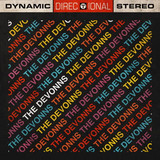
The Devonns dust off the golden age of 70's Chicago Soul with their self-titled debut album on Record Kicks. Straight from the streets of Chicago, Illinois, The Devonns (pronounced "De vaughns") are the brand new soul outfit and the latest addition of the Record Kicks' family, whose self-titled debut album that drops April 03, is an assortment of influences taking us back to the heyday of soul.
Drawing influences from bands such as The Dramatics, The Isley Brothers and Leroy Hutson, yet bringing in their own unique modern twist, influenced by artists such as Jamie Lidell and Raphael Saadiq; singer Mat Ajjarapu explains how unintentionally, the rich heritage of Chicago's history with soul music influenced him.
"The city was at the epicentre of a lot of good music back in the 50's all the way to the 80's, a lot of the labels specialising in soul were based in the Chicago and we even had our own sound known as "Chicago soul". Through several years of crate digging it surprised me how many songs I loved were recorded in this city, for example one of my favourites is this great little song by The Natural Four, produced by Leroy Hutson 'Can This Be Real', and released via Curtom Records."
The band started in 2016 after multi-instrumentalist and songwriter Mathew Ajjarapu dropped out of med school and found himself unemployed and drifting. Listening to music constantly at the time, he found inspired to put a band together and create his own music. Pairing up with some of the best musicians Chicago has to offer, he founded The Devonns: the rhythm duty is entrusted to Khalyle Hagood (bass), Ari Lindo (guitar) and Khori Wilson (drums).
Originally he wanted to focus on 50s style doo-wop, similar to The Flamingos; rich in reverb and vocal harmonies, but in the first initial practise they had it was evident the band clicked on their love of soul music from the 70s, so their music took a natural turn towards that sound, with tracks such as the Wilson Pickett-esque single 'Tell Me'.
The release took almost two years to complete as Mat explains "I am a perfectionist, I had a very specific vision in my head about how it should sound and I wasn't going to rest until I achieved it."
"This is a definitely a throwback soul record, as well as being drawn to lush and intricate arrangements of Motown, I was also inspired by the more lo-fi works of smaller labels such as Chess and Capsoul, and I wanted to capture the magic they had in those recordings in our record, as everything feels too precise nowadays" clarifies Mat.
It was thanks to his engineer Mike Hagler, who introduced him to Paul Von Mertons (Mavis Staples, Paul McCartney, Elton John) who arranges and conducts for Brian Wilson's live touring show and after a 45 minute phone conversation about what Mat wasn't keen on, on the album, he realised Paul totally understood where he was coming from.
After a few months wait for Paul to get back from touring they entered the studio with "Paul's players" and as soon as they hit record, Mat explains "I was getting chills up my neck, it was one of the happiest days of my life, and finally we had nailed it!"
Tracks such as 'Come Back; which Mat wrote in ten minutes on a $300 Daneelectro Singlecut guitar initially, came to life, with Paul's rich string arrangements and features guitarist and percussionist Ken Stringfellow (R.E.M.).
It still took a few months to get the recording process finished but finally after a torturous nineteen months they album was finally finished.
The result is an album filled with lavish arrangements and catchy melodies which take us on a nostalgic musical journey inspired by chic 70s soul, yet the band don't hesitate to add their own unique and elegant contemporary stamp to the record.
Bastard Jazz is proud to present the sophmore solo album by one of the gems of the New Zealand underground soul scene, Isaac Aesili. Woven through electronic soul, with threads of jazz, funk, R&B and house music, Isaac's 'Hidden Truths' is the stylistic unification of all his previous projects (Karl Marx, Funkommunity, Sorceress) into a dazzling and diverse body of work. Three years in the making, its depth is clear from the first listen, and is peppered with some of New Zealand's finest soul and jazz musical talent, including two stunning female feature vocalists from New Zealand; Ladi6 and Rachel Fraser.
The album opens with an ominous instrumental 'Mirror' setting a dark a tone for the album the start, shimmering with shades of Dilla swing snapping over metallic chords and a graceful trumpet solo that enters midway through. Wild feat. Ladi6' is a heavy downbeat future soul joint with stratospheric synths layered over driving beats that build alongside the elegant vocal weavings of New Zealand's first lady of soul, Ladi6, while 'Player' sees Isaac's unique vocals tell a tale of dangerous seduction within a synth funk-driven dancehall cum house music that feels like the Gap Band on a tropical vacation. 'Jungles' is a deep, native and ocean-like soundscape that begins with syncopated synths and beats that collide dramatically into a frantic, sweeping synth outro, followed up by'Realms' , an intricately crafted song that has sonic elements from techno-house that are other-worldly accompanied by live drums that flip after the breakdown into a swinging conclusion of the album's first half.
'Run Every Way' is an epic percussion-driven electronic blues that begins with a vocal chorus from Isaac that could just as easily be interpreted lyrically as a warning about climate change as it could an expression of the inner-self, while "Refugee" is also a heavily percussion orientated joint that fuses romantic classical strings with otherworldly synth stabs and Isaac's haunting vocals moving climactically into a tender coda conclusion. "Rain Gods" feat. Rachel Fraser is a heavenly pathway into Rachel's luxurious vocals with clever lyrics merging the soaring synths and looped bassline into a short yet memorable chorus'and 'Steps' is classic Isaac Aesili production including deep Rhodes chord changes, a knocking beat with layers of percussion, synths and horns providing a warm emotive accompaniment to Isaac's vocals. 'Last Minute' is a simple yet sophisticated jewel of space and time that concludes the vocal tracks of the album in a proper soulful style, and 'Maureen' rounds out the album as an expressive instrumental outrolude that features Isaac's trumpet.
Isaac Aesili is an Internationally acclaimed solo artist and the producer and creative force behind Funkommunity, Sorceress and Karlmarx. Isaac's original productions have been supported internationally by DJs such as Gilles Peterson (BBC Radio 6 Music), Benji B (BBC 1), and Lefto (Belgium, Worldwide FM). His trumpet playing features on many collaborations including 'Layer' by Julien Dyne (Wonderful Noise/BBE) and 'Midnight in Peckham' by Chaos in the CBD (Rhythm Section). A world-renowned musician on both trumpet and percussion, Isaac is a member of the Lord Echo band. His music fuses Soul, Funk, Jazz, Afro and Latin styles with R&B, Hip Hop and Electronic music. Isaac's much anticipated sophomore solo album "Hidden Truths" is out on Bastard Jazz (NYC) in 2020.
- A1: Sugar Magnolia (Grateful Dead)
- A2: Go All The Way (Raspberries)
- A3: Second Hand News (Fleetwood Mac)
- A4: All The Young Dudes (Mott The Hoople)
- A5: You Can Close Your Eyes (James Taylor)
- A6: Marquee Moon (Television)
- B1: Here Comes My Girl (Tom Petty & The Heartbreakers)
- B2: I’ve Seen All Good People (Yes)
- B3: Hello It’s Me (Todd Rundgren)
- B4: Willin’ (Little Feat)
- B5: Back Of A Car (Big Star)
- B6: Couldn’t I Just Tell You (Todd Rundgren)
- C1: Gimme Some Truth (John Lennon)
- C2: Maggie May (Rod Stewart)
- C3: Beware Of Darkness (George Harrison)
- C4: Dreaming (Blondie)
- C5: Bell Bottom Blues (Derek & The Dominos)
- C6: You’re So Vain (Carly Simon)
- D1: I Wanna Be Sedated (Ramones)
- D2: Baby Blue (Badfinger)
- D3: You Say You Don’t Love Me (Buzzcocks)
- D4: (What’s So Funny ‘Bout) Peace, Love And Understanding (Brinsley Schwarz)
- D5: Everything I Own (Bread)
- D6: Melissa (Allman Brothers Band)
- D7: Killer Queen (Queen)
- D8: A Song For You (Gram Parsons)
The second collaborative album between alternative rock artist Matthew Sweet and Bangles singer/guitarist Susanna Hoffs. First released in 2009, on Under The Covers Vol. 2 the duo cover 26 of their favourite tracks from the 1970s. For this edition in the series, Sweet and Hoffs invited guests into the studio including Lindsey Buckingham on ‘Second Hand News’, Dhani Harrison on a cover of his father’s ‘Beware Of Darkness and Steve Howe reprising his guitar parts on a version of the Yes track ‘I’ve Seen All Good People’ Pressed on two heavyweight 180g green vinyl.
WRWTFWW Records is too happy to announce the much anticipated official reissue of Japanese duo Inoyamaland’s quintessential ambient/environmental/electronic album Danzindan-Pojidon, produced by Haruomi Hosono and originally released in 1983 on his Yen Records label. Available outside of Japan for the first time, the new age classic comes as a limited LP with liner notes by band member Makoto Inoue.
With Danzindan-Pojidon, Yasushi Yamashita and Makoto Inoue created what they describe as "a special place where the kingdom of summer vacation never ended". Playful and magical, it’s a sonic landscape defined by tinkling synths, floating minimalist melodies, pastoral excursions, and mythical overtones. The 10-track adventure takes the listener on a joyful audio exploration of unknown but friendly territories, like childhood memories of an imaginary island where everything is vibrantly alive and peaceful.
The original recording sessions for the album took place in an apartment filled with Inoyamaland’s "favorite things and friends" and the wonders that came out of them were handed to master Harry Hosono who added his undeniable genius touch. And thus Danzindan-Pojidon was born, an absolute must-have, sitting in the pantheon of all-time 80s Japanese ambient greats alongside Midori Takada’s Through The Looking Glass, Hiroshi Yoshimura’s Green, and Satoshi Ashikawa’s Still Way - and holding that mysterious power of "music that makes life a little easier and happier".
It's been a long, winding road to Hailu Mergia's sixth decade of musical activity. From a young musician in the 60's starting out in Addis Ababa to the 70's golden age of dance bands to the new hope as an emigre in America to the drier period of the 90s and 2000s when he mainly played keyboard in his taxi while waiting in the airport queue or at home with friends. More recently, with reissue of his classic works and a re-assessment of his role in Ethiopian music history, Mergia has played to audiences big and small in some of the most cherished venues around the world. With 2018's critical breakthrough "Lala Belu" Mergia championed himself and consolidated his legacy, producing the album on his own and connecting with listeners through the sheer creative power of his version of modern Ethiopian music. His subsequent performances revealed an artist who is in no way stuck in the nostalgia for the "golden age" sound. The press agreed, including the New York Times, BBC and Pitchfork, calling his music "triumphantly in the present" in its Best 200 Albums of the 2010's list. Mergia's new album "Yene Mircha" ("My Choice" in Amharic) encapsulates many of the things that make the keyboardist, accordionist and composer-arranger remarkable_elements that have persisted to maintain his vitality all these years, through the ebb and flow of his career. The rock solid trio with whom he has toured the world most recently, DC-based Alemseged Kebede (bass) and Ken Joseph (drums), forms the nucleus around which an expanded band makes a potent response to the contemporary jazz future "Lala Belu" promised. "Yene Mircha" calcifies Mergia's prolific stream of creativity and his philosophy that there is a multitude of Ethiopian musical approaches, not just one sound. Enlisting the help of master mesenqo (traditional stringed instrument) player Setegn Atenaw, celebrated vocalist Tsehay Kassa and legendary saxophone player Moges Habte from his 70's outfit Walias Band, Mergia enhances his bright, electric band on this recording with an expanded line up on some songs. Mergia produced the album which features several of his original compositions along with songs by Asnakesh Worku and Teddy Afro. An artist still reinventing his sound every night on stage during his marathon live sets, this 74-year-old icon refuses to make the same album twice. The album feels as urgent and risky as his concerts can be, pushing the band to the outer limits of group improvisation and back with chord extensions during his exploratory solos. "Yene Mircha" captures this live experience and fosters an expansive view of what else could be in store for this tireless practitioner of Ethiopian music.
In Ghana "to chop" is to eat, so the phrase No Funk No Chop quite simply means; deliver afro funk and disco bombs, or no one will eat today. With this in mind we jump on the bus to begin our journey. We find our man Grégoire Lawani in fine form with one of the greatest party starters "Africa Land of Soul". Brethren Tany Welck tells the world that he is indeed a" Sexy Man". Peter Mukoko "Esimo Esimo" delivers the breakdown to end all breakdowns. Django Strong supplies us with his super slick "Hoo Dou Hoo Mine". Jide Obi "Give's It Everything he has got", just listen to that bass! Fosto transports us with a synth laden boogie portraying his vision of Africa, K3 Band give us the "Feeling" and we reach our destination ending with Tchamy Patterson's "Camerounaise Children". So, let's eat!!
We hope you enjoyed your trip!
The Devonns dust off the golden age of Chicago Soul.
Straight from the streets of Chicago, Illinois, The Devonns (pronounced "De vaughns") are the brand new soul outfit and the latest addition of the Record Kicks' family, whose self-titled debut album that drops April 06, is an assortment of influences taking us back to the heyday of soul. "Tell Me" is the 1st single from their anticipated full length and sees the lights on limited edition 45 on March 06 and digital. Drawing influences from bands such as The Dramatics, The Isley Brothers and Leroy Hutson, yet bringing in their own unique modern twist, influenced by artists such as Jamie Lidell and Raphael Saadiq; singer Mat Ajjarapu explains how unintentionally, the rich heritage of Chicago's history with soul music influenced him. "The city was at the epicentre of a lot of good music back in the 50's all the way to the 80's, a lot of the labels specialising in soul were based in the Chicago and we even had our own sound known as "Chicago soul". Through several years of crate digging it surprised me how many songs I loved were recorded in this city, for example one of my favourites is this great little song by The Natural Four, produced by Leroy Hutson 'Can This Be Real', and released via Curtom Records." The band started in 2016 after multi-instrumentalist and songwriter Mathew Ajjarapu dropped out of med school and found himself unemployed and drifting. Listening to music constantly at the time, he found inspired to put a band together and create his own music. Pairing up with some of the best musicians Chicago has to offer, he founded The Devonns: the rhythm duty is entrusted to Khalyle Hagood (bass), Ari Lindo (guitar) and Khori Wilson (drums).
Originally he wanted to focus on 50s style doo-wop, similar to The Flamingos; rich in reverb and vocal harmonies, but in the first initial practise they had it was evident the band clicked on their love of soul music from the 70s, so their music took a natural turn towards that sound, with tracks such as the Wilson Pickett-esque single 'Tell Me'.
The release took almost two years to complete as Mat explains "I am a perfectionist, I had a very specific vision in my head about how it should sound and I wasn't going to rest until I achieved it." "This is a definitely a throwback soul record, as well as being drawn to lush and intricate arrangements of Motown, I was also inspired by the more lo-fi works of smaller labels such as Chess and Capsoul, and I wanted to capture the magic they had in those recordings in our record, as everything feels too precise nowadays" clarifies Mat. It was thanks to his engineer Mike Hagler, who introduced him to Paul Von Mertons (Mavis Staples, Paul McCartney, Elton John) who arranges and conducts for Brian Wilson's live touring show and after a 45 minute phone conversation about what Mat wasn't keen on, on the album, he realised Paul totally understood where he was coming from. After a few months wait for Paul to get back from touring they entered the studio with "Paul's players" and as soon as they hit record, Mat explains "I was getting chills up my neck, it was one of the happiest days of my life, and finally we had nailed it!"
The compilation "Celestial Birds" reveals and focuses on the widely unkown electronic compositions of the AACM founder and jazz pianist MUHAL RICHARD ABRAMS. #5 in the Perihel Series, curated by zeitkratzer director REINHOLD FRIEDL.
Anybody interested in jazz knows that Chicago has always been an impressive hot spot for new talents – and still is. One essential landmark in the history and development of jazz was the founding of the AACM (Association for the Advancement of Creative Musicians) in May 1965. This non-profit organization was a melting pot (and starting point) for artists like ANTHONY BRAXTON, ROSCOE MITCHELL, GEORGE LEWIS or LESTER BOWIE and his ART ENSEMBLE OF CHICAGO but one of its actual founding members is known only to the deep connaisseurs: MUHAL RICHARD ABRAMS (1930 – 2017).
The autodidact pianist and composer left music school and university, deciding to learn music by himself.
From 1961 on, the EXPERIMENTAL BAND was his first ensemble, but it soon turned out that ABRAMS' interests went beyond jazz and that he was open to the avant-garde and new music and most of all: electronic music. Which led to a double problem: On the one hand, black musicians had almost no access to the rare electronic music studios located in and funded by universities or broadcasting corporations. On the other hand, there were strong reservations regarding electronic music in the black music community.
In his important book "A Power Stranger Than Itself – The AACM and American Experimental Music" GEORGE LEWIS writes that "the use of electronics … proved controversial and widely misunderstood in a world of jazz in which acoustic instruments became conflated with musical, and eventually, cultural and even racial authenticity." ABRAMS' response was to actually "hide" his electronic pieces on the B-sides of his albums, and this compilation focuses on some of his best electronic experiments: the 22-minute long epic "The Bird Song" from 1968 in its original version incl. the reverb that was removed on the later CD reissue on DELMARK, the synthesizer compositions "Conversations With The Three Of Me" (1989) and "Think All, Focus One"1995) plus " Spihumonesty" (1980) with a 2nd synthesizer played by GEORGE LEWIS and YOUSEF YANCEY on theremin.
"Celestial Birds" casts a new light on the underrated experimenter MUHAL RICHARD ABRAMS, his innovative approach to composition and pieces that lay dormant for way too long!
- A1: Spooky - Frankie Greer Quartette
- A2: Early In The Morning - Bill Beau Trio
- A3: String Around My Heart - Eunice Haze
- A4: My Man - Phylis Hendricks
- A5: Kitchen Cookin - Eddie Buster Band
- B1: Coming Home Baby - Ronny Pellers Satin Sound
- B2: Under The Covers - The Kats
- B3: The Mustang (Pt 1&2) - The New Philadelphians
- B4: Evil Ways - The Lido
- B5: El Mexicano - Brazada
- C1: Title Town - Herb Crawford Jazz Ensemble
- C2: Louisville Assembly Plant - The Runningboards
- C3: Little Sister (Pt 1&2) - The Headliners
- C4: Body Wave - Victoria
- D1: Radiation Funk - Maxwell
- D2: Oh Linda - Starfoxx
- D3: Come On - Johnny Spinosa
- D4: Monkey Time - Johnny Spinosa
+ Bonus 7" 400 ltd!
Christina Aguilera, Donny Hathaway, and Gregory Porter. If you are curious to learn how these three names are connected with Movements Vol.10 then all you got to do is to keep on reading.
Those of you who have been enjoying Tramp Records' Movements series from the very beginning know that this series is not just about funk. It actually covers a wide spectrum of genres: early Rhythm & Blues, Soul-Jazz, Latin-Soul, heavy James Brown-style Funk, and mid-70's pre-Disco. The track listing is, as on all previous volumes, selected in chronological order.
For this, our 10th jubilee album, we go back in time more than 60 years. The Frankie Greer Quartet opens the set with their beautiful composition "Spooky". Just as sweet is "Early in the Morning" by the Bill Beau Trio which was recorded in 1958. What Eunice Haze, Phylis Hendricks and the Eddie Buster Band have in common is the fact that each of them has recorded only one 45rpm single in their musical career.
Johnny Spinosa's "Come On" is a fierce Rhythm 'n Blues monster of the highest order. The same goes for The New Philadelphians. No one would question if "The Mustang" was announced as an unreleased Blue Note recording by Lou Donaldson from 1968. Cleveland Eaton, who became one of the most versatile and best jazz bassists in 1970s, started out with his band The Kats in the late 1960s. "Under the Covers" was arranged by none other than Donny Hathaway (of "The Ghetto" fame) with who he has worked closely together in his early days.
Probably one of the finest and most sought after versions of "Coming Home Baby" out there has been recorded by a german dude and bis band, Ronny Pellers Satin Sound. Another excellent cover version is delivered by The Lido which should leave any latin-jazz fan speechless. "El Mexicano" is an inconspicuous little groover while the next two tunes by Herb Crawford's Jazz Ensemble and The Runningboards are more in the soul-jazz vein. Listen to the dummer on "Louisville Assembly Plant" who goes nuts!
Yes, we know the soul and funk world of the glory days, big labels, radio shows and bands amid a social context of segregation. A context that starts becoming less important when this music genre enters the mainstream in the late 70’s to eventually fade away at a fast pace in the 80’s until its complete disappearance in the 90’s and beyond. This time though, we dive a bit deeper into the hoods, because the social context of today ain’t no greatly different and it has its very own music, deeply rooted in the sounds of the early days, although more immediate and dense of beats and urban feel.
We are in Chicago, a place where every 2 hours someone is shot, and every 14 hours someone is murdered. It ain’t no Iraq or Afghanistan but one of the biggest and most sophisticated cities in the world. In the city’s west and south sides, which are considered the heart of Black America, gang rivalry is tearing its people apart. It has become so brutal that both police and perpetrators agree that this urban warfare is out of control. I started this release process after Yann sent me an heads up on this song and it took me most part of last year to build some mutual trust with Lay Lemons aka Biggz from North Lawndale, main area in the west side of the city and one of the most dangerous places in the world. When I first contacted him, Lay was having a hard time (and still does) as his daughter Raven was caught innocent in a gang shooting crossfire.
After the following investigation, the FBI (yes, big gangs are federal business) arrested and charged some members of The Four Corners Hustlers, yet Raven’s murder has no responsible and Lay suddenly lost his daughter overnight in the summer of 2017. He simply couldn’t concentrate on music, and the silly requests from a mad Italian with his crooked english were probably sounding to him like aliens speaking from outer space. I’m pretty sure this wouldn’t have been possible without the help of Lay’s cousin, sound engineer and recording studio owner living today in Detroit, so accept my gratitude Mr. Tony Amos.
Lay Lemons has never been involved with gangs nor was Raven, nowhere near that business. They are people of music, family and religion trying to survive in one of worlds toughest places. This song, its vibe, the beats, the voice... Are coming straight out of their hood, written around a fire bin on the side of the street and put together with 3 instruments. It has no chorus, it’s verses all the way through, it is a kind of prayer to the unknown in the hope of salvation through everyday strength.
Lay Lemons I salute you.
When Elena Colombi launched the Osàre! Editions label in the autumn of 2019, she explained that the label would become home to bold, daring, future-facing music rooted in experimentation and free-spirited musical abandon. These are all descriptions that could apply to the label’s latest release, a retrospective album of little-known works by Greek musician and producer Thanasis Zlatanos.
Many will not have heard of Zlatanos, or Nekropolis, the band he fronted alongside dear friend and regular collaborator Trygve Mathiesen, yet the music he made during the 1980s was otherworldly, intergalactic and undoubtedly alluring. These songs and instrumentals made extensive use of analogue synthesizers and lo-fi drum machines, as well as Zlatanos’s trusted Gibson Les Paul guitar and his own distinctive voice.
Stylistically, the musician and producer refused to settle on a specific sound, preferring instead to create inspired, often mind-altering pieces that join the dots between wave music, skewed leftfield pop, ambient, prototype electronic and Madedonian folk music. Operating for much of the period from a crumbling house earmarked for demolition, Zlatanos kept up a daily music-making vigil that resulted in a vast vault of music, most of which has remained unissued since the 1980s.
The breadth of and width of Zlatanos’s distinctive approach is laid bare on Retrospective, a compilation album prepared by Colombi and the artist himself that draws on tracks from his numerous albums, those by Nekropolis – whose sophomore set “The New Europeans” was banned in Norway – and his epic archive of previously unheard material.
The artist’s singular but wide-ranging musical vision is free for all to see across the 13 tracks stretched across the vinyl version of the album (digital buyers also get a further four superb cuts). It veers attractively from the ghostly, traditional-meets-futuristic new age electronica of “The Crystal Sight (Excerpt)” and the doom-laden coldwave throb of “Master Chameleon”, to the undulating, soft-touch creepiness of “Surreal Moment”, the Vocoder-laden operatic poignancy of “The New Barbarians” and the squally guitar solos and effects-laden electronics of “The Light”.
Words from the artist___:
"I live in the Internet. Visits from outer space make me compose. I breathe here. I am the master chameleon, the psychedelic clown. I am not here anymore, neither in the picture, nor the reflection. Our bed is a boat that takes us tomorrow without us.
Here is an album of dreams and digital emotions. Analogue recordings made with a Prophet, a Moog Rogue, a tape recorder and a Gibson Les Paul guitar.
As far as I can remember I have always been in a recording studio. I listen to, understand and live my life through songs and music. I have worked alone and with friends such as Trygve Mathiesen. Although I am a guitarist, I continue to work with synthesizers on music that blends elements of Macedonian folk music, recordings from the streets and embryonic electronic sounds.
Some of my albums have been critically acclaimed, others banned by radio stations. For years I worked on endless recording sessions in a crumbling house that should have been torn down. The music on this retrospective compilation was recorded at various points between 1982 and the present day. Some of the compositions first appeared on previous albums, while others have never been released before. They were sat on tapes waiting for a saviour. Now that saviour has arrived and they can be free.
For further proof of Zlatanos’s unique sonic approach, check the startling contrast between the bass-laden slacker pop headiness of “No Expectations” and the spacey ambience of “The Dead Don’t Remember”. Considered together, the selected pieces and those elsewhere on Retrospective forms a snapshot of a genuinely unique and visionary musician, composer and producer. It’s a celebration of someone whose work has previously been overlooked."
- A1: Starfish – This Town
- A2: Vampire Lezbos – Stop Killing The Seals
- A3: Nubbin – Windyyy
- A4: Saucer – Jail Ain't Stopping Us
- A5: Machine – Blind Man's Holiday
- A6: Medelicious – Beverly
- A7: Hitting Birth – Same 18
- A8: Nubbin – Wonderama
- B1: Crunchbird – Woodstock Unvisited
- B2: The Ones – Talk To Me
- B3: Pod – 123
- B4: Thrillhammer – Alice's Palace
- B5: Yellow Snow – Take Me For A Ride
- B6: Helltrout – Precious Hyde
- B7: Bundle Of Hiss – Wench
- C1: Starfish – Run Around
- C2: Thrillhammer – Bleed
- C3: Chemistry Set – Fields
- C4: My Name – Voice Of A Generation Gap
- C5: Small Stars – It's Getting Late
- C6: Shug – Am Fm
- C7: Treehouse – Debbie Had A Dream
- D1: My Name – Why I Fight
- D2: Soylent Green – It Smiles
- D5: Saucer – Chicky Chicky Frown
- D6: Attica – The System
- D3: Kill Sybil – Best
- D4: Calamity Jane – Magdalena
Soul Jazz Records new release takes us on a serious road trip into the North-West region of the USA, 1986-97, to explore the amazing lost and forgotten sounds of the Grunge era.
This Deluxe massive 28-track Double CD with 44-page outsize booklet features extensive text, band features and interviews, exclusive photos. Also Worldwide digital release + Ltd.Edition Two seperate double-vinyl albums with full notes and free download code.
The underground music scene of the North-west of America arose from the early 1980's, strung out in isolated towns across the vast state of Washington. In its early days bands who showed an allegiance to their roots of punk. Yet, by 1991,Nirvana, the biggest band in the world, had been born from this community of outsiders.
This compilation features some of the many divergent bands who emerged out of the North-west during this era. Intensely researched and documented this album features many bands who have now disappeared from history after releasing maybe just a couple of singles, or an album, or even never making it onto vinyl – alongside some bands that continue to this day.
Perhaps most fascinating is the wide-ranging styles that these grunge bands incorporated - from punk to metal, experimental and more.
All Roads lead to Nirvana: 17 of the bands featured here played alongside Nirvana in the period 1987 to 93. All 23 bands featured feature members who shared a stage with Nirvana. Jack Endino (The Ones) produced 37 Nirvana songs. Dave Foster (Helltrout) was Nirvana's 3rd drummer. Bundle of Hiss became TAD who played more gigs with Nirvana than any other band.
With fantastically in-depth sleevenotes, interviews with most of the bands, exclusive photography and all sonically remastered tracks this is a comprehensive double CD (and 2 volumes of 2x12" vinyl releases) bringing together the hidden, lost and forgotten sounds of the North-west grunge era.
Reviews & Articles: Seattle Times feature here. Irish Times here. Read article by compiler Nick Soulsby in Nirvana Legacy here Read second article by the compiler here. Read article about the artwork here.
A record to be enjoyed to its very last second AM Jazz is set to place this songwriter where he just might, finally, receive the recognition he deserves; from unsung hero to a truly worthy candidate for being called up to join the City of Manchester’s ranks of great musical icons. Whether you prefer to know him as Mr. Roberts or simply call him Al, it’s time to become acquainted with the real Jim Noir.
Tossing his bowler onto the hat stand and sliding on his slippers, AM Jazz sees ‘Jim’ putting his feet up whilst Alan Roberts takes the lead. A creative masterpiece for the record player and the mantlepiece, it’s a multi-layered album that features close friends including those dearly departed, and is his truest record to date, by a songwriter painting his own hypnotic Portrait of the Artist as a Young Man.
“I haven’t 'felt' like Jim Noir for a long time. I’m not sure I ever did; it was a construct of other people’s imaginations,” reveals Al. “AM Jazz is definitely the kind of music I make generally. It harks back to when I started making music years ago and didn’t worry about capturing a particular style. It will be nice to show people more of that.
It's the best album I've written; real hypnotic minimalism, the good stuff!” 15 years since he recorded the first ever 'Jim Noir' EP, AM
Jazz is the record all Noirheads won’t be surprised Al had inside him.
Letting the Beatlesesque stylings of his most recent album Finnish Line be (5 years ago no less), AM Jazz suits the Noir repertoire of his catalogue so far and is another homegrown offering which sees the Daveyhulme composer tinkering in his suburban Manchester studio once more, with the magic of his computer work sorcery, analog and tape recordings.
“For this I went back to the slightly more haphazard way I wrote my first album, Tower Of Love, wherein I’d use things in front of me, or a bit wrong like headphones for a microphone, to make the most Hi-Fi Lo-fi album ever.”
Whilst a brief disappearance of Jim’s online persona may have provoked bleak theories as to his whereabouts, Al had little time for digital distraction. Whilst writing and creating with friends, he has worked on electronic pet project, FAX with former Alfie guitarist, Ian Smith, and the vintage analogue house meets electro sound of his own solo EP Granada Personnel Recovery, as well as producing local band, Shaking Chainsor, and helping long-time musical colleague, Aidan Smith with his long-awaited 'The Planets' project; “I’ve been writing in dribs and drabs when I feel like it,” Al says. “I used to write all day everyday but it’s a lot harder now I’m (feeling) over 100 years old.” Never not sonically exploring or being inspired by the sounds around him, there was even a red-carpet moment when he appeared as a film premier guest after a couple of his songs were selected for the OST of director Jason Wingard’s film Eaten By Lions.
Performing all AM Jazz’s instrumental parts himself but also, at the right moment, bringing in present and past pals along the way, sexy lounge song, ‘Hexagons’ features 'Phil Anderson' and Mark Williamson singing and playing “legendary OTT guitar solo” respectively. Meanwhile the orchestration of ‘Peppergone’ waltzes like a beautifully romantic ode to Beethoven’s Moonlight Sonata – a tribute to dearly departed best friend 'Batfinks' who originally wrote the chords in his song 'Peppercorn.' “I hope he doesn’t think it’s shit,” Al jests. Listen closely and you may even find a few unsuspecting celebrity guest appearances as, perhaps, it could be the very first album to feature soundbites of podcasts sneaking onto the recordings. “I will have a podcast on if I’m recording; Adam Buxton, Athletico Mince, Frank Skinner or Richard Herring… I’m sure some mics will have picked them up, like in the old Tower of Love days,” he says referring to his breakout debut.
Culled from around 50 tunes AM Jazz moves like the time of the day, from dawn to night, stirring from the pop of ‘Good Mood’ and ‘Upside Down’s Beta Band groove. “As the album was playing, I imagined this smoky backstreet with all those neon signs outside clubs at about 4am,” Al says. Mellow ‘TOL Circle’ is like Percy Faith’s Theme From A Summer Place synthesized, capturing the style of TV library music or movie soundtrack obscurity that has always stirred Al’s curiosity, and the album plunges into a vast chasm of instrumental exploration with ‘Mystermoods,’ visiting Japan’s funky synth whiz duo Testpattern and Hakabashi Sakamoto. Darkening and deepening in intensity, ‘Eggshell’ is like an undiscovered gem from Angelo Badalamenti’s cutting room floor, the Panda Bear shimmer of ‘Lander’ is where blissful positivity and sadness meet, about another of his friends who left the world too young. “By the album’s close, its nearly time to let go and enter the ether,” he says of the album’s story. “Like one would do when they take their final sigh on this earth.”