After remaining unavailable for years, here's the long-awaited vinyl reissue of the debut album (originally released in 1972) by one of the epoch-making groups in the history of Peruvian rock: We All Together. Their original compositions -all sung in English- betray their passion for McCartney, taking Beatle centrism to new heights in South America. While the Uruguayan Los Shakers could remind us of the first phase of the Fab 4, We All Together is like their '70s version. Amazing compositions, with nods to prog rock and the twilight imprint of singer-songwriters living the end of the hippy dream, that show both diversity and a defined identity. A must for any '70s rock collector. DESCRIPTION Between 1967 and 1974 Saúl and Manuel Cornejo led a series of epoch-making groups on the MAG label (New Juggler Sound, Laghonia and We All Together) in the history of Peruvian rock. All these bands were directly influenced by the British invasion and used new sounds from Hammond, phase shifters, synthesizers and tapes played backwards, which stimulated rivalry with other groups. Another hallmark of the brothers was the technical quality of their records, thanks to Saul's supervision of all MAG recordings between 1972 and 1974. At the end of 1971, when Laghonia was working on the last tracks of "Etcétera", they met Manuel Antonio Guerrero's (MAG) son, Carlos, who had just got back from the USA, and gladly joined in the choruses of the last songs Laghonia was recording. They met up again soon after to rehearse some of Paul McCartney's songs. As soon as he heard them play, Guerrero Senior urged them to form a group focused on cover versions of foreign hits not yet known in Peru. Initially, the Cornejo brothers weren't enthused by a project so different from Laghonia, but ended up accepting as it gave them the opportunity to spend time in the studio. Carlos' melodic voice was another incentive, although they made it clear that the new group, We All Together (WAT), would stick to the mixing desk: "The group isn't into presentations or shows, we're about recording music and purifying it to the max," stated Saúl at that time. Their first album included four covers of Paul McCartney and Badfinger, several compositions by Carlos Guerrero -appealing Beatles-style melodies- and two songs from Saúl and Manuel's archives. 'Children', by keyboardist Carlos Salom, opens the LP: a nostalgic description of childhood, with the distinctive piano sound (achieved through mixing) that permeates the record. Although WAT sang and composed in English, they had no intention of undermining or alienating national culture. Their aim was much more innocent: they simply wanted to make it in the English-speaking world. 'It's a Sin to Go Away' was composed during Laghonía's lifetime as a band and it features guitars played backwards and a psychedelic-progressive style closely attuned to the era. After being included on several compilations, praise for the song has flowed from Europe and the United States in recent years. The album was released in July 1972 and became one of the best-selling Peruvian rock LPs.
Search:his band
Unknown spiritual jazz gem recorded in Argentina in the 80s, under the influence of Pharoah Sanders, Don Cherry, Archie Shepp_, and originally released on Litto Nebbia's label Melopea. Already supported by Gilles Peterson on his radio show, this mind-blowing album combines ethno-free jazz passages and deep progressive compositions led by saxophonist Marcelo Peralta resulting a very impressive ode to the legacy of Coltrane. First time reissue. Includes extensive notes and many previously unpublished photos. 180g vinyl. DESCRIPTION Unknown spiritual jazz gem recorded in Argentina in the late 80s, under the influence of Pharoah Sanders, Don Cherry, Archie Shepp_, and originally released on Litto Nebbia's label Melopea. This is the first and only album ever released by this band, Grupo de Improvisación Tercer Mundo (Third World Improvisation Group), formed by a quartet of young musicians based in Buenos Aires accompanied by drummer Norberto Minchillo (López Fürst, Fernando Gelbard, Jorge Navarro_) and Litto Nebbia himself during the recording sessions. They would also organize weekly jam sessions in public spaces in Buenos Aires, getting visual artists, poets and even passersby involved in these communal actions that aimed to promote self-expression in an environment of total freedom. After the gigs they'd gather again for intense listening sessions of deep jazz for hours_ Already supported by Gilles Peterson on his radio show, this mind-blowing album combines ethno-free jazz passages and deep progressive compositions led by saxophonist Marcelo Peralta resulting a very impressive ode to the legacy of Coltrane and a very accomplished work of jazz improvisation. 'Almas Liberadas' and 'Un Hilo de Luz' sound as a clear tribute to Pharoah Sanders, as the subtitle of the latter openly states. First time reissue. Includes extensive notes and many previously unpublished photos.
- A1: The Voodoo Curse (Roots Radics)
- A2: Dance Of The Vampires (Roots Radics)
- A3: Blood On His Lips (Roots Radics)
- A4: Cry Of The Werewolf (Roots Radics)
- A5: The Mummy’s Shroud (Roots Radics)
- B1: The Corpse Rises (Roots Radics)
- B2: Night Of The Living Dead (Roots Radics)
- B3: Your Teeth In My Neck (Roots Radics)
- B4: Plague Of Zombies (Roots Radics)
- B5: Ghost Of Frankenstein (Roots Radics)
- C1: Oh What A Feeling (Wailing Souls)
- C2: You Are A No Good (Michael Prophet)
- C3: Love In My Heart (Wayne Jarrett)
- C4: Hold On To What You Got (Michael Prophet)
- C5: Firehouse Rock (Wailing Souls)
- D1: Bandits Taking Over (Wailing Souls)
- D2: Youthman (Michael Prophet)
- D3: Love And Unity (Michael Prophet)
- D4: He Can Surely Turn The Tide (Johnny Osbourne)
- D5: Sweet Loving (Michael Prophet)
Autorisierte Deluxe 2LP Ausgabe des von Henry 'Junjo' Lawes produzierten 'Evil Curse of the Vampires'.
Original Greensleeves zusammengestellter Dub-Klassiker, entscheidende Auswahl von Junjos klassischen, von Roots Radics angetriebenen Rhythmen, aufgenommen bei Channel One und gemischt von Scientist bei King Tubby's.
Das remasterte, ikonische Dub-Album ist jetzt mit einer zweiten Disc mit den Original-Vokalversionen versehen.
Streng limitierte einmalige Halloween-Pressung auf orangefarbenem Vinyl.
Wah Wah 45s präsentiert die Debüt-LP des ghanaischen Sängers und Djembe-Trommlers Afla Sackey. Mit seiner Band Afrik Bawantu hat er sich den Traum erfüllt, traditionelle ghanaische Musik mit knisternden Afrobeat-Grooves zu verbinden und das Ganze mit einem unwiderstehlich funky Twist abzurunden. Die einzigartige Mischung aus vitalen, afrikanischen Rhythmen mit flotten, lebhaften Bläsersektionen und heavy Basslinien bringt eine frische Perspektive in das Afrobeat-Genre.
Afrik Bawantu veröffentlichten 2013 ihre vielgelobte Debüt-EP "Noko Hewon" und 2014 die Debüt-LP "Life On The Street". Afla selbst arbeitete mit legendären Künstlern wie Sun Ra Arkestra, Ginger Baker und Tony Allen zusammen und ist bei zahlreichen zeitgenössischen Projekten mit Ibibio Sound Machine, Sons Of Kemet, Dele Sosimi, The Estuary 21, Eparapo sowie seiner jüngsten afroelektronischen Kollabo mit Produzent Raz Olsher, Raz & Afla, dabei.
- "Vibrant, uplifting Afrobeat and highlife from the master of percussion!" - Cerys Matthews, BBC 6 Music
- "Excellent track. Will playlist on PBB Radio." - Laurent Garnier, PBB France
- "If you need a weekend livener then look no further than this Ghana vs Nigeria soundclash from Afla Sakey & his fellow funkateers, it’s a proper trip down Afro funk memory lane. The vibes are unrepentantly throwback, but when the 70s were this good & their essence captured so well I’m all in." - The Slow Music Movement
Over the last 20 years, Portland, Oregon's Federale has carved out a unique niche within the indie music landscape, blending their signature spaghetti-Western instrumental sound with increasing doses of moody vocal arrangements in the spirit of Lee Hazlewood or later-period Leonard Cohen. Still, through it all songwriter (and lead singer, when there is one) Collin Hegna has maintained a strictly retro vibe, and Federale's records have always sounded period-correct for an alternate-universe 1971 where rock and roll never caught on.
Reverb & Seduction, Federale’s sixth studio album, marks the band’s 20th anniversary, and finds them beginning to color outside those Ennio Morricone lines. Perhaps Hegna—who also spent the last 20 years as a dues-paying member of The Brian Jonestown Massacre—has finally decided to give his psych-rock alter ego a seat at the Federale table.
“Before, I'd have an idea and think, ‘Well, that can't be a Federale song’, because it had distorted guitars or whatever,” says Hegna. “But then I thought, 'Well, why not?’” This openness to a broader palette of influences allows Reverb and Seduction to veer into psychedelic and even gothic territory—think Love and Rockets or Sisters of Mercy—that the 2010s Federale might have considered off limits.
The album's first single “Heaven Forgive Me,” for example, draws on Goblin (the Italian prog-rockers who scored Suspiria) and perhaps even a little Depeche Mode, while “Advice from a Stranger” borrows the fuzz and feedback of DIG!-era BJM and The Electric Prunes.
Celebrated Zambian guitarist and bandleader Paul Ngozi’s concept album about the stuggles of those living in Africa’s 1970s townships Includes Oversized 8 Page Booklet That Details Paul Ngozi and The Ngozi Family’s Arc, Including Rare Photographs, Discography And Annotation. The third entry in an era-defining reissue series on Now-Again centered around this Zamrock legend and his band - previous entries include Day Of Judgement and 45,000 Volts
"Zambia’s Zamrock movement that exploded in the 1970s...provided young musicians access to European and American music, and created a unique sound. At its root, Zamrock melded fuzz-toned psychedelia, chugging garage rock and roiling funk with a broad mix of African cadences and beats...enlivening a scene that included bands like Musi-O-Tunya, Amanaz and the Ngozi Family” (New York Times)
Zamrock was a bona-fide rock scene: on the African continent, only Nigeria can claim one so comprehensive, and Nigeria’s was largely catalyzed and funded by subsidiaries of the European major labels. Zamrock was as independent as the newly-named country, formerly known as Northern Rhodesia. Zamrock is starting in its completeness, especially for a scene that emerged, unfurled and disappeared so quickly. From Musi-O-Tunyaís fusion of Fela’s Afro-beat, Hendrix’s rock, South African jazz and traditional Zambian melodies and rhythms to Salty Dog’s acid folk/rock, Zambia’s rock scene contained all of rock’s subgenres. Zamrock was much more than an imitation of American and European rock music: it quickly became a uniquely Zambian movement, befitting of its name. WITCH, Paul Ngozi and Amanaz sound nothing like other rock music from the African continent - or elsewhere.
Repress!
Formed in 1968, Jazz Sabbath was considered by many to be at the forefront of the new jazz movement coming out of England at the time. The eagerly awaited debut album, scheduled for release on Friday 13th February 1970, was cancelled when news broke that founding member and pianist Milton Keanes was hospitalised with a massive heart attack which left him fighting for his life.
The record company shelved the album and cancelled the scheduled release out of financial uncertainty of releasing a debut album from a band without its musical leader. When Milton was released from hospital in September 1970, he found out that a band from Birmingham, conveniently called ‘Black Sabbath’, had since released two albums containing metal versions of what he claims were his songs.
All recalled Jazz Sabbath albums had been destroyed when the warehouse burned down in June 1970; which turned out to be a case of insurance fraud by the label owner, leaving only a few bootleg tapes of Jazz Sabbath’s live performances as proof of existence.
The album masters were said to be lost in the fire, but were actually misplaced and gathered dust in the basement vaults of the recording studio. These tapes have now been remixed and, half a decade later, will finally be heard; proving that the heavy metal band worshipped by millions around the world are in fact nothing more than musical charlatans, thieving the music from a bedridden, hospitalised genius.
Repress!
Formed in 1968, Jazz Sabbath was considered by many to be at the forefront of the new jazz movement coming out of England at the time. The eagerly awaited debut album, scheduled for release on Friday 13th February 1970, was cancelled when news broke that founding member and pianist Milton Keanes was hospitalised with a massive heart attack which left him fighting for his life.
The record company shelved the album and cancelled the scheduled release out of financial uncertainty of releasing a debut album from a band without its musical leader. When Milton was released from hospital in September 1970, he found out that a band from Birmingham, conveniently called ‘Black Sabbath’, had since released two albums containing metal versions of what he claims were his songs.
All recalled Jazz Sabbath albums had been destroyed when the warehouse burned down in June 1970; which turned out to be a case of insurance fraud by the label owner, leaving only a few bootleg tapes of Jazz Sabbath’s live performances as proof of existence.
The album masters were said to be lost in the fire, but were actually misplaced and gathered dust in the basement vaults of the recording studio. These tapes have now been remixed and, half a decade later, will finally be heard; proving that the heavy metal band worshipped by millions around the world are in fact nothing more than musical charlatans, thieving the music from a bedridden, hospitalised genius.
Terumasa Hino is undoubtedly one of the most famous Japanese jazzmen. Learning the trumpet at the age of 9, he began his career as a professional musician by playing in the orchestra of an US Army base, before joining Hideo Shiraki's Quintet and then forming his own band in 1964. On Hi-Nology we find his brother Motohiko Hino on drums, Hiroma Suzuki on electric piano, Kumitsu Inaba on electric bass and Takeru Muraoka on tenor sax. The inspiration from the "electric period" of Miles Davis (notably Miles In The Sky released in 1968) is felt and is even accepted, since the opening piece is entitled "Like Miles". Coincidentally, Hi-Nology was recorded on July 31, 1969, the day after the release of In a Silent Way and has nothing to envy of this great record by Miles Davis.
Der italienische Pianist Giovanni Guidi widmet sich auf A New Day wieder gänzlich dem frei fließende Zusammenspiel mit seinen Kollegen Thomas Morgan und João Lobo – die musikalische Partnerschaft des Trios reicht inzwischen bereits über ein Jahrzehnt zurück – und baut dabei die instrumentale Bandbreite der Gruppe mit der idiosynkratrischen Tenorstimme des amerikanischen axofonisten James Brandon Lewis aus, der hier sein ECM-Debüt gibt. Mit Brandon Lewis erweitern sich nicht nur die Möglichkeiten des Ensembles,
es erschließen sich auch neue Idiome und frische Perspektiven, die von nuancierter Kommunikation und Lewis’ unverkennbarem, selbstbewusstem Ton gezeichnet sind. Das Album wurde im August 2023 in den Studios La Buissonne, Südfrankreich, aufgenommen und von Manfred Eicher produziert.
Color Vinyl[24,58 €]
Valley of Rain was Tucson’s Giant Sand’s debut album recorded in 1983, and eventually released by 1985. It included Howe Gelb on vocals, guitar and Winston Watson on drums for most of it, Tommy Larkins on drums for some of it and Scott Garber on fretless bass for all of it. At the time of the recording, Howe was unacquainted with the possibilities of tube (valve) amps and had recorded most of the album with a Roland JC120 at the miraculous 8 track facilities of The Control Center in Korea Town, Los Angeles by Ricky “Mix” Novak. This impromptu recording had occurred because the band refused to cancel their first Los Angeles live gig, at Madame Wong’s, when the band (Giant Sandworms) had broken up days before in Tucson. Instead, Howe headed out anyway with Scott, the newest member who’d only been in the band for about a year, after band mainstays Billy Sed and Dave Seger reasonably decided ‘enough was enough’ following a rough and tenuous year spent in the lower east side of NYC attempting to further the band circa 1981/82. Tucsonan Winston Watson, (who would go on to tour with Bob Dylan in the 90s, as well as Alice Cooper, Warren Zevon etc ) was already living in Los Angeles and was brave/kind enough to jump in for the live date with no rehearsal. The result was so sparked with adrenalin, that the trio set up an impromptu studio session the next day to attempt to capture the sonic thrust on tape. The total cost of the day and a half recording was $400 including one 1” reel of 30 minute tape. When Enigma Records offered to release the album they requested another 15 minutes of music to make it a full LP. Ron Goudie was then called in to oversee the extra recordings at a Venice, CA studio called Mad Dog with Eric Westfall engineering. Tommy Larkins, who had been on the previous country punk album of Howe’s “The Band of ... Blacky Ranchette” came in to drum for those last 3 songs. It was there when Howe borrowed an amp that had been stored at the studio did he discover the bolster of a tube amp and his world changed. The amp was a slightly modified Fender Twin Reverb owned by Robbie Krieger of The Doors. 30 some years later, now that the band had been put to sleep indefinitely, those very first songs had begun creeping into the last Giant Sand tours. It somehow seemed appropriate to give them another shot with the proper amp just to see what they could’ve been. What made the idea more approachable was the availability of both original drummers living back in Tucson. The first attempt came last summer with both Winston & Tommy and Thøger Lund on bass, as well as the 2 newest members, 29 year old Gabriel Sullivan and 23 year old Annie Dolan on double neck guitars. The sound was insane. The funny part was Gabriel, who engineered and mixed the session, gave it an intentional 80s production sound. Howe later explained to Gabe he had been at war with that production trend since those first original recordings. So they all tried it again at Christmas time, this time with a newly discovered Fender 30 amp that had only been in production from 1980 – 1983. This new re-recording of that first album now sounds like it should’ve sounded. It was re-done for $400 and the same day and a half session time as the original. Scott Garber even drove up from Austin TX with his fretless to play so that the album is literally the originally line up for at least half of the songs. And yes, no pedal boards were used too. The band intends to tour this summer playing only those Valley of Rain songs. Giant Sand Returns To Valley Of Rain.
" Since the release of his previous album 'Paradise for all' , the profile of Guts has grown a lot to become one of the main french producer and a recognized name on the European scene.
His hit 'Brand new revolution' was played by many radios worldwide and even synchronized in Grand Theft auto V. His compilation series ' Beach Digginï' is now a reference for summer and quality music.
After 3 instrumental albums, Guts decided to come back to his Hip Hop roots (he created the french rap Band Alliance Ethnik in the 90s) and invited quality MCs and singers to join him in the studio. You can find on this album, some Hip Hop legend as Grand Puba, Masta Ace, Bob Power, Rah digga some singers as Cody Chestnutt, Patrice and a batch of new talents as Leron Thomas, Lorine Chia, Quelle Chris & Denmark Vessey, Dillon Cooper.
This albums contains hit singles like'Man Funk' Want it back (feat. Patrice)' Open wide'
Vinyl deluxe edition : double LP gatefold Replica sleeve with insert & download card.
About this release:
Without hip-hop, Guts wouldn't be half the producer he is today. Hip-hop as inspiration, a gateway to so many different musical styles, the trigger for a continually expanding musical bulimia, the springboard from which he dived into a bottomless musical well.
Hip-hop � which has been Gutsïtrue love for the last 25 years, despite its taking futile, gangsta and materialistic paths.
Hip-hop � which in quarter of a century has driven him to spend whole nights with samplers, drum machines, expanders and vinyl, tapping on pads, adjusting the drums and honing his samples.
Hip-hop � which is often done remotely nowadays by sending digital files back and forth. Guts has opted to make it shine like when it was all brand new, decided after three entirely instrumental albums to re-establish contact with rappers, vocalists, jazz players and soul men by packing up his productions and heading across the Atlantic to record them in their home surroundings in New York and California.
Backed up on production by the inexhaustible DJ Fab (Hip Hop Resistance) and supported from Paris by his label Heavenly Sweetness (�A French label spreading colourful music for the soul, Guts explores a host of styles, flows and atmospheres to build up a mosaic of 16 tracks, each nestling inside the other to form a single concept: Hip Hop After All."
[b] Open Wide [Feat Lorine Chia]
[c] The Forgotten (Don't Look Away) [Feat Quelle Chris &Amp; Denmark Vessey]
[d] Go For Mine [Feat Tanya Morgan]%U2028
[e] As The World Turns [Feat Rah Digga &Amp; Akua Naru]
[f] Man Funk [Feat Leron Thomas]
[h] Forever My Love [Feat Grand Puba]
[i] It's Like That [Feat Dillon Cooper]
[j] Want It Back [Feat Patrice &Amp; The Studio School Voices NYC]
[k] Enlighten [Feat Cody Chesnutt &Amp; Murs]
[m] Innovation [Feat Masta Ace]
[n] Come Alive [Feat Lorine Chia]
[p] Roses [Feat Leron Thomas]
Never before had the lyrics of Peruvian cumbia been able to touch the reality of migrants from the countryside living in the capital. In 1974, Grupo Celeste, under the direction of Víctor Casahuamán Bendezú, recorded 'En el campo', a first single that not only broke sales records, but also brought thousands of people into contact with their homeland. The band not only wove the nets of that urgent, necessary reconnection, but also gave birth to one of the most relevant popular singers in the history of Peru: Lorenzo Palacios Quispe 'Chacalón'. The year was 1974. Until then, only Los Destellos had recorded a non-instrumental cumbia song, 'Elsa', in 1970. Víctor Casahuamán Bendezú, a musician, creator and the composer behind Grupo Celeste understood that in order to continue the legacy of Peruvian bands from the sixties like Los Demonios de Corocuchay, Los Yungas and Los Demonios del Mantaro, it was necessary to address in his lyrics a special and urgent topic: the feeling of displacement from the homeland and the vicissitudes of the migrant sector. The experiences of those who traveled from the provinces to the capital in search of opportunities they could not find in their towns of origin; the process of settling and adapting in a foreign city; the challenges derived from this change of environment; the recognition of a different culture and the creation of a space they understood as their own were the stories that had to be told in the songs. This is why Grupo Celeste was the backbone of cumbia in Peru: it established a common story that thousands of migrants would identify with. From this idea and impetus was born 'En el campo', the band's first single.
- 10TH ANNIVERSARY EDITION OF TESS PARKS DEBUT ALBUM.
- GOLD VINYL, GATEFOLD SLEEVE, HANDWRITTEN LYRIC BOOKLET.
A native of Toronto, Tess Parks moved to London, England at the age of seventeen where she briefly studied photography before deciding to focus on music.
Tess made an impression on industry legend Alan McGee, founder of Creation Records, albeit the timing of their meeting could hardly have been less ideal; McGee was no longer involved in music and Tess was due to move back to Toronto. After moving back to her hometown in 2012, Tess formed a band on the advice of McGee and less than a year after their meeting, he returned to music with his new label, 359 Music.
Tess became one of his first signings and released her debut record ‘Blood Hot’ in November 2013 to excellent reviews. One reviewer described her as “Patti Smith on Quaaludes”. Others have mentioned her “gauzy psychedelic sound” and“smouldering voice”.
Alan McGee himself said: “She’s only 24 and is already an amazing songwriter... she just doesn’t quite know she is yet ... her most beautiful quality is her lack of ego. Tess is an amazing lady”.
‘Blood Hot’ is inimitably confident. It’s slow and psychedelic at times, while being loud and ready to fill a stadium at others. There isn’t a moment on the album that isn’t relatable or that doesn’t ring to the tune of a timeless classic to be talked about for years to come (the same way people discuss The Velvet Underground or My Bloody Valentine records today).
Her cult-like following has turned into a movement. And Tess is gladly leading us all back into that space within ourselves, both deeply personal and entirely universal. Incredibly relevant yet timeless.Cool and anti-cool. An enigma that doesn’t need solving. Tess Parks is as she’s always been. Her best work is already out there. And her best yet is still to come.
True Acid Wizards of the 1980s/1990s Psychedelic Underground TreaTmenT performed at Stonehenge Free Festival and at squats and clubs all over London including the now legendary Alice In Wonderland, The Crypt and Club Dog where they assaulted the minds of those present with their unique and somewhat terrifying blend of '60s psychedelia and '70s space rock all liberally spiked with a questioning punk attitude. Performing with Dr & The Medics, Ozric Tentacles, The Magic Mushroom Band, Naz Nomad and The Nightmares and other luminaries of the neo-psychedelic space rock revival, TreaTmenT were an integral part of the scene and possibly the most psychedelic band of them all.
Hardcore to the max, the band insisted on performing in a psychedelicised state, looking like a cross between Arthur Brown's Kingdom Come and early Pink Floyd and often with a lightshow. Firmly fixated on taking their audience on the trip of a lifetime TreaTment consisted of Adam Blake (Jacket Xerxophon) on guitar and vocals, Gordon Leach (Gordon Zola) on further guitar and vocals, Clive Leach (Evil C. Live, Ron Number, Curtis Vile) on bass/trombone, Paul Ross (The Big Beat, Mr Raagh) on drums/percussion and Paul McWhinnie (Mutant) on keyboards, noises and vocals. They were without doubt a live phenomenon, and although they released a couple of singles, cassettes, a live album and a studio album - Cypher Caput - on the Delerium label (home to Porcupine Tree), they never really managed to commit their mind-blowing magic to vinyl. Now, nearly 20 years after it was recorded TreaTment are releasing a limited-edition double vinyl LP of their second studio album How Much is Enough? in memory of guitarist Gordon Leach who sadly passed away in 2021.
The album was intended to be released on Delerium in 2000 but never was and whilst one track 'Keep Ahead' appeared on the Cherry Red box set Last Daze of The Underground - Delerium Records Anthology in 2011 nothing else has seen the light of day until now. Fans of the band will note cornerstones of their live set such as the wondrously trippy 'What The Hell to do' the humorous swipe at the music press 'Hate The Band' the melodic keyboard swirling 'Restless', the frenetic guitar cross fire of 'No Understanding' and the nihilistic nightmare 'Blot Out'.
Housed in a gatefold sleeve packed with photos and memorabilia as well as for the first time the full history of the band and limited to only 300 on 180-gram vinyl How Much is Enough? will no doubt be seen in the future as one of the landmark releases of the '80s/90s Neo-Psychedelic revival.
First vinyl edition pressed on Cirrostratus Cloud colored vinyl and includes a "Footlong" OBI.
Underground lifer Nick Sakes returns on the debut LP from Upright Forms. The tight-knit Minneapolis trio feels like the culmination of Sakes' varied and prolific career to date, bringing together the unhinged prog-punk ferocity of Dazzling Killmen & Colossamite with the careening chaos of Xaddax and the shout-along hooks and dynamic songcraft of Sicbay. Blurred Wires is skewed yet tuneful, challenging yet compulsively listenable, concise yet brimming with invention. The experience of a lifetime distilled to 33 rotations across a gripping 33 minutes.
Consider "They Kept on Living," a song that first appeared in an earlier version on the SKiN GRAFT comp Sounds to Make You Shudder!. It starts off with a grinding 7/4 groove, with cryptic lines over scratchy noise-punk chords. After a brief build, the band explodes into a massive chorus, with Sakes shouting the title line against a fist-pumping riff.
The trio sound equally convincing digging into the pummeling aggression of "My Lower Self," where Sakes' vocals start off as a feral snarl and then soar triumphantly during the chorus, or the soothing indie-pop hush of the Paster-penned "Drive at Night."
Various "tug-at-your-heartstrings" touchstones informed "Long Shadow". Sakes channeled Television Personalities, cult heroes of melodic British post-punk, on "Animositine," which he accurately labels "our prettiest song."
Nearly 35 years into his career, Sakes is finding new ways to challenge himself -- and in Paster and Westphal, he's found two musicians who are equally comfortable with both the thorniest and the loveliest manifestations of underground rock. When they reflect on their chemistry, they agree that their openness to collaboration is, as Sakes puts it, "one of our superpowers."
On Blurred Wires, that superpower yields dynamic, challenging and profoundly memorable results.
"Té De Flores Silvestres" is the result of the dialogue between the Belgium photographer Michael Roemers and the Argentinian musician Federico Durand initiated by IIKKI, between February 2023 and May 2024.
Federico Durand’s music is a weave of sound searching introspection and delight through simple melodies, made in the heart of Argentina. Federico likes music, gardens, John Keats’ poetry, collecting stamps and Earl Grey tea. Since 2010 he has been released on some labels such as 12k, Home Normal, IIKKI, Spekk, White Paddy Mountain, LAAPS and more.
Michael Roemers, a child of the borders, was born in 1987 in the Belgian village of Plombières, studying sound at the Institute of Broadcasting Arts in 2008. He discovered the power of the image, and became passionate about photography. He began his photographic career following Belgian underground music bands as they toured Europe, capturing crazy moments on stage and backstage. Then, he decided to devote himself to a personal project, to capture his native Wallonie region, highlighting the richness and a part of these Belgian traditions region while exploring the themes of identity, memory and membership.
Since 2021, Michael Roemers has added a new string to his bow by running the Vice Versa podcast with his partner Sébastien Van Malleghem. This podcast explores the themes of photography, art and culture by giving voice to renowned guests in these fields. Té De Flores Silvestres is his first book.
Fine Art Book, Ltd. to 400 copies:
Hardcover book printed on Glossy Modern Paper 170g/m2 // 80 pages, 19cm x 22.5cm, 50 photos // Front cover points and back cover logo embossed // Selective UV varnish // Hand-numbered.
My Dinosaur Life is the fourth studio album by the American rock band Motion City Soundtrack. Produced by Mark Hoppus (bassist Blink-182), the album was released on January 19, 2010, by Columbia Records. The album's theme largely centers on growing older; its lyricism, written by Pierre, concerns such subjects as relationships, drug abuse, and procrastination. Musically, the album retains the band's sound with less of an emphasis on the Moog synthesizer. Drummer Tony Thaxton broke his arm prior to recording, which led the band to use a drum machine on early recordings. The album's music is inspired by post-hardcore music; Pierre cited Archers of Loaf, Fugazi, and Dinosaur Jr. as inspirations for the album's sound. Their only major-label release, My Dinosaur Life was well received by music critics. The album represented their highest peak position in the U.S., charting at #15 on the Billboard 200. My Dinosaur Life is available as a limited edition of 1000 numbered copies on purple & red marbled vinyl and includes a printed innersleeve.
- A1: As Can Be
- A2: My Smile Is A Rifle
- A3: Head (Beach Arab)
- A4: Big Takeover
- A5: Curtains
- A6: Running Away Into You
- B1: Mascara
- B2: Been Insane
- B3: Skin Blues
- B4: Your Pussy's Glued To A Building On Fire
- B5: Blood On My Neck From Success
- B6: Ten To Butter Blood Voodoo
- C1: Untitled #1
- C2: Untitled #2
- C3: Untitled #3
- C4: Untitled #4
- C5: Untitled #5
- C6: Untitled #6
- C7: Untitled #7
- C8: Untitled #8
- D1: Untitled #9
- D2: Untitled #10
- D3: Untitled #11
- D4: Untitled #12
- D5: Untitled #13
2024 Repress
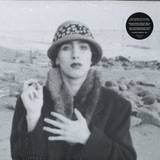
Niandra LaDes And Usually Just A T-Shirt is the first solo record by John Frusciante. Between 1990 and 1992 the guitarist made a series of 4-track recordings, which at the time were not intended for commercial release. After leaving the band Red Hot Chili Peppers in 1992, Frusciante was encouraged by friends to release the material that he wrote in his spare time during the Blood Sugar Sex Magik sessions.
Originally released on Rick Rubin's American Recordings label in 1994, Niandra LaDes is a mystifying work of tortured beauty. Frusciante plays various acoustic and electric guitars, experimenting with layers of vocals, piano and reverse tape effects. Channeling the ghosts of Syd Barrett and Skip Spence, his lyrics are at once utterly personal and willfully opaque.
Frusciante's rapidfire, angular playing shows how key he was in the Chili Peppers' evolution away from their funk-rock roots. His cover of "Big Takeover" perfectly deconstructs the Bad Brains original with laid-back tempo, twelve-string guitar and a fierce handle on melody.
The album's second part - thirteen untitled tracks that Frusciante defines as one complete piece, Usually Just A T-Shirt - contains several instrumentals featuring his signature guitar style. Sparse phrasing, delicate counterpoint and ethereal textures recall Neu/Harmonia's Michael Rother or The Durutti Column's Vini Reilly.
On the front cover, Frusciante appears in 1920s drag - a nod to Marcel Duchamp's alter-ego Rrose Sélavy - which comes from Toni Oswald's film Desert in the Shape.
This first-time vinyl release has been carefully remastered and approved by the artist. The double LP set is packaged with gatefold jacket and printed inner sleeves.
To say that The Sinseers play oldies would be a misnomer. Fronted by bandleader and son of East Los Angeles Joey Quiniones, the group has quietly chipped away at the sounds of R&B and soul for the last half-decade. Quinones and his crew have continuously created a distinctive vibe that explores all aspects of a timeless genre, bringing together their interpretation of music through an unmistakable modern lens.With their most recent effort, the aptly titled Sinseerly Yours (Colemine 2023), the band recorded most of the album live in the studio. With Quinones on vocals and keys, vocalist Adriana Flores, Christopher Manjarrez on bass, Francisco Floreson on guitar, Bryan Ponce on guitar and vocals, Luis Carpio on drums and vocals, saxophonists Eric Johnson and Steve Surman, and Jose Luis Jimenez on trombone, The Sinseers achieves their most fully realized sound to date.All of the album's stunning tracks were recorded in a converted studio space in Rialto, California, known as Second Hand Sounds. The converted studio space, which used to be a dentist's office, allowed the group to experiment with their sound like never before - this time, the group managed to take a series of big swings, only to emerge with a fuller, more pronounced version of themselves. Despite those new strides, the band remains wholly committed to its sonic aesthetic while injecting its brand of vibrant 21st-century cool.Of course, the group has never been the type to shy away from their influences as they expertly toggle between 60s pop vis-à-vie early Beatles records to obscure dancehall Jamaican tunes - all fully extrapolated and reinterpreted through modern Chicano soul sound that the group has built their everlasting repertoire on.Quinones and bandmates have continued to apply what they've learned from their previous releases and their relentless touring schedule throughout the country. It's clear here that the work is paying off, putting to practice their musical chops thoroughly with all members expertly honing their sound. The melting pot of ideas is showcased with incredibly lush orchestrations and arrangements, married with pitch-perfect harmonies, allowing the group to further solidify themselves in the pantheon of the Southern Californian songbook.