A home, a house, has countless frequencies. Each room, each corner feels different. Swings differently. And as you grow older, you realize which corner is yours. But yeah, it takes time…
It certainly marks the end of an era when the house one called home as a kid no longer exists. This home, it was the starting point of so many journeys. Of one big, ongoing journey. And so it feels good, soothing, reassuring to at least return to a spot nearby – to that (proverbial) hill from where you can see it. Feel the vibe that made you.
Andi Haberl’s debut solo album as Sun is sort of dedicated to that house. It’s a journey leading to that hill overlooking everything that made him. It’s not about nostalgia, not about actually returning to a specific place. Instead, it’s about finding a personal frequency, an overlapping of sounds and samples, an open space that mirrors and extends whatever frequencies felt right at different points in time.
“To me, the results feel like Gold Panda/Four Tet meets Steve Reich meets Krautrock meets film scores. I just really wanted to create moods that touch me – and ideally others, too.”
Talking about his first solo album, Haberl recalls many stages: early compositions that ended up on Alien Ensemble’s albums, early DIY/home studio/multi-instrumentalist inspirations (Le Millipede), new technologies that came and went, even a set of wildly convincing arrangements (done with Cico Beck’s crucial input) that ultimately became stepping stones for yet another round of DIY takes. “It was a long, recurring process, and the songs went through so many different versions,” he says, talking about phases of growth (“I added more and more equipment over time”) and pruning, “cleaning up my music a bit.” Tending towards instruments that open up space, and slowly falling in love with sampling, he certainly didn’t rush things once it was time for interior design decisions ;)
“During this whole process I got to learn so much about my own taste, how I prefer to listen to the pieces, which musical elements really matter to me… and what my own voice is. For example, that acoustic elements are most important to me: the banjo, piano, drums, my voice, glockenspiel, trumpet, melodica. Anything that opens up some space.”
Every journey begins with a search: “Missing” with its plucked chords opens like a sunrise over pastoral plains, gently leading the way towards the intricate, playful explosion that occurs once a certain amount of energy (“Sun”) hits dirt and other surfaces: things grow, clot and curdle into new shapes, like new buds; layers of sound move forward, drenched in Spring’s new light. Relying on samples to ask for precipitation (“Rain On Me”), robotic “Low” goes from barren to bass-heavy after its midway shift in pace, full of loops plucked from the shade.
Towards the album’s midpoint, things are suddenly reversed: “Cluster” has that backwards pull, you can’t tell what’s what, yet everything is perfectly locked in, as the pace increases once again. And before the title song shimmers with densified cheering (to eventually stand tall like early Lymbyc Systym), “Beside Me” swipes you off your feet with its booming bass drum. The beat returns once again (“Daydream”), full of searching voices underneath, and at “Dawnday,” we can finally catch a melancholy view of the house. Voices hum. It’s the score moment of the album. Everything makes sense now. A happy end of sorts?
“I want to take people on a journey. A personal journey, too, because when my parents split up and sold the house I grew up in, I felt a bit like the ground had fallen out from under my feet. But I have dedicated the album title and the accompanying piece to this house… so I can keep it in good memory.”
“I Can See Our House From Here” has been a long time coming. It’s been a long journey. Homeward-bound. Leading to a place that’s really Haberl’s – his sound. His frequencies.
Known as a long-time member of The Notwist and various other bands/projects (Alien Ensemble, AMEO, jersey, Ditty etc.), Berlin-based drummer/composer Andi Haberl has also worked with My Brightest Diamond, Till Brönner, Owen Pallet, and Kurt Rosenwinkel, to name a few. “I Can See Our House From Here” is his first solo offering.
Search:his band
Unavailable for over three decades, we are happy to reissue this garage rock's essential gem, originally released in the early days of Greg Shaw's Bomp! label. Bomp! Records of Burbank, California was likely the most significant American independent record label of the 1970s. It was the first in this country to recognize and actively support the punk rock and new wave revolution with its releases, at a time when both America's vast regional disparity and an extremely conservative record business had deemed this new, strange idiom anathema. In its first five years Bomp! the label wore its heart on its sleeve with a series of fascinating, unpredictable, and memorable 45 RPM releases. And the whole was brainstormed by Greg Shaw, likely the only maverick alive at that time who could have created and populated such a scenario. The winter 1976 issue of Who Put The Bomp (Greg Shaw's fanzine) had featured a detailed report on the Boston scene, with favorable mentions of two future Bomp! acts. Willie 'Loco' Alexander was a local legend, the storied former lead singer of the Lost, and his 1975 single 'Kerouac' (reissued on Bomp!) was a suitably eccentric, Dylan-ish ode to the beat maven. DMZ was a more predictable proposition, sporting obvious glam roots and an eccentric but dedicated rock & roll fan in lead singer, Jeff 'Mono Mann' Conolly. Wearing his heart on his sleeve, Conolly and crew went for a chaotic and intense hybrid of Dolls, Stooges and most of the Nuggets bands, so Bomp! the label was a natural choice. With killer cuts like 'Busy Man' and 'When I Get Off,' their Craig Leon-produced 1977 EP captured the DMZ zeitgeist considerably better than the album they would later record for Sire.
Multi-talented US punk, Jeff Rosenstock releases fourth album on Specialist Subject Records (UK /EU) & Polyvinyl (Worldwide)! NO DREAM comes at a time of unparalleled chaos and confusion, division and despair, the depths of which would have been impossible to predict when much of it was being written over the course of the last few years. And yet the record feels prescient, unexpectedly and uniquely suited for this moment. Newly settled in Los Angeles after a lifetime on the East Coast (namely Brooklyn by way of Long Island), Rosenstock recorded NO DREAM with Jack Shirley (Deafheaven, Hard Girls, Joyce Manor) at Oakland's Atomic Garden, and even took on mixing duties alongside Shirley for the first time. Opting to stay off the computer "even more than usual" and record to tape with outboard gear, the result is a lived-in sound that gives each song its own individual voice and organic energy. After building a cult following with the acerbic ska-punk of the Arrogant Sons of Bitches and DIY heroics of Bomb the Music Industry!, Rosenstock's first proper solo record, 2015's We Cool?, was a step into uncharted territory, fully untethered from genre and expectation. Followed by 2016's WORRY. and the surprise New Year's Day launch of POST- in the early hours of 2018, Rosenstock was facing down that least punk of opportunities: a career playing music. Having taken some time away from his work as a solo artist to recalibrate and reset over the last year, Rosenstock stayed busy playing alongside Mikey Erg, recording and touring with the Bruce Lee Band, releasing a Neil Young covers record with frequent collaborator Laura Stevenson, reissuing two of his own out-of-print early albums, compiling a live album which was recorded during a run of four sold-out shows at Bowery Ballroom, making a 76 page photo book, and scoring over 80 episodes of the Cartoon Network series Craig of the Creek. In fully returning to his own voice, it's no surprise that Rosenstock's output has never been more eclectic, reflected across NO DREAM's 13 songs.
A kaleidoscopic sonic riot, Nandakke? is the hotly anticipated debut album from Japanese-Belgian duo Aili. Featuring 10 tracks of surreal electro-pop, joyful electronica, house music and more, Nandakke? is a euphoric album that sees Aili Maruyama and Orson Wouters more than fulfil the promise of their acclaimed debut EP.
Recorded over the course of six months in Orson's studio, packed full of vintage synths, Nandakke? captures the spontaneous spirit and creativity of those sessions. Exchanging riffs and rhythms, bouncing sounds and samples off each other, Aili and Orson would let the music take them where it wanted. The result,an album full of wild ideas and bold, playful experimentation.
More than anything an exhilarating feeling of discovery courses through Nandakke?, leaving you never sure where it will go next. One minute a pulsing electro-pop number featuring Aili's dad discussing his takoyaki (battered octopus) recipe, the next an explosive high energy workout song like Up & Down.
Certainly Aili was surprised to find herself singing in her own unique version of Japanese again.
"I thought that I was done with that after our debut EP, but apparently not as I speak even more Japanese on the album!" said Maruyama. "Every time we were in the studio these words would just tumble out. It's a complicated language but I just love to play with it.
"In many ways I'm an outsider, I left Tokyo aged 7, so there's a lot I notice as someone who is not a native speaker and it doesn't always make sense, there's a lot of mistakes in it.But in a way that sums up the whole philosophy of the album and how Orson and I work together."
That notion of duality, a sense of belonging but feeling apart, of being between two worlds and inventing your own captures the spirit of Nandakke?, itself a Japanese word that roughly translates to "Well, what was it?".
"It's something you say when you're looking for a word, like you know it but have forgotten how to say it. That's literally how I communicate with my dad the whole time," Maruyama explains. "The main feeling I have when I go to Japan is that I know the language, I can speak it, but part of me still feels like it doesn't have all the vocabulary. There's a gap there that nandakke has always filled for me. All the lyrics come from that place, that seven-year old trying to speak Japanese."
Whether Aili's singing about the language she invented with her father over the years to bridge the gap between them (Nandakke?), the idiosyncratic Japanese relationship to fashion (Fashion) or riffing on children's playground songs (Yubikiri) the result is a remarkable album that defies easy categorisation.
Bursting onto the Belgian scene in 2021 with their acclaimed debut EP, Dansu, its lead track spent 8 consecutive weeks at the #1 spot of Radio 1's VOX list and saw the band nominated for Studio Brussel's De Nieuwe Lichting ('New Generation') award. Since then Aili have appeared playing live on the Belgian TV show Roomies, been tipped by the likes of Rolling Stone, become regulars on tastemaker stations like KEXP and KCRW in the US and Nova in France, toured across Europe and, just recently, played their first sell out shows in Japan.
San Francisco psych-pop legend announces new album, “La Fleur” out June 7th, 2024. Between outside musical projects, pushing past 50 years old and becoming a father for the first time, San Francisco psych-pop legend Kelley Stoltz has spent the past two years steadily writing and recording his 18th album, “La Fleur”. The dazzling 12 song collection will be released in June by Agitated in Europe/UK and Dandy Boy Records in the USA. “La Fleur'' finds Stoltz once again playing nearly all of the instruments on the album- though a new friendship with pop guru Jason Falkner has led to Falkner appearing on two songs, “Hide In A Song” and “Make Believer” respectively. There’s the requisite 60’s meets 80’s pop rock confections that Stoltz favors with a new focus on out front vocals and perhaps a bit shinier production. Pandemic era blues, politics and fatherhood are lyrical touchstones throughout. The album’s first single “Reni’s Car” is the jangle rock lead single based on an actual event of Kelley riding around Manchester in the Stone Roses drummer's car. The accompanying music video was shot (partially) on location. “About Time” marries Twin Peaks synths to Fleetwood Mac and Avalon era Roxy Music in a cautionary tale to Stoltz's young daughter. “Human Events” puts revolutionary prose to a Moody Blues strum that floats off into Osees territory …and do I hear a nod to Gershwin in there? During the 2010’s Kelley played live as a sideman with Rodriguez and Echo & the Bunnymen, as the 2020’s dawned he was invited to support Pavement on their big reunion tour. He’s also been heard playing drums live with Robyn Hitchcock as well as adding sitar to Hitchcock's last two albums. In 2022, Stoltz was championed with a live appearance on Marc Riley’s BBC6 show. As producer, he has recorded the new album by Brigid Dawson formerly of the Ohsees. In my ears, Stoltz rarely does any wrong, and these comparisons are only just that little fruit to get you curious- he is still one of a kind. An under the radar hero to a few, and still after all these great songs, deserving of more. Climb on the bandwagon - as ever it’s quite pleasing here. - GEORGE CLOUD San Francisco, CA 2024
Dream Harder is the sixth studio album by The Waterboys, released in 1993. Scottish singer-songwriter and bandmember Mike Scott produced the album together with acclaimed producer Bill Price, which resulted in a return to the rock-based sound. The song “Love And Death” was an arrangement of a poem by the Irish poet William Butler Yeats, “The Return Of Jimi Hendrix” a tribute to the famous guitarist, and other songs contain references to pre-historical religion. Singles from the album were “The Return Of Pan” and “Glastonbury Song”. The album peaked at #5 in the UK Albums chart, reached several European charts and the US Billboard 200.
“Home” is not always a literal place. Sometimes, “home” represents inner peace and simply learning to hold space for yourself. This is where Vacations lead singer and guitarist Campbell Burns has arrived as he and bandmates Jake Johnson, Nate Delizzotti, and Joseph Van Lier release their third LP, No Place Like Home. “I had this loose concept of No Place Like Home being an Americana-influenced album,” Campbell says of the album’s sonic inspirations. “I wanted to incorporate more pianos, acoustic guitars, Nashville tuning, and country-inspired lap steel, but then also bringing in drum machines and synths and finding a mix between the two.” Produced by Campbell and John Velasquez (Zella Day, Broods), No Place Like Home comprises 10 shimmering tracks brimming with indie-pop hooks and just a touch of bittersweet sensitivity. The new project follows an intense period of transformation for Campbell, who was forced to cancel all touring commitments due to COVID restrictions and subsequently came down with a severe bout of writer’s block. After seeking therapy, he was eventually diagnosed with Pure OCD, a subtype of Obsessive Compulsive Disorder. “Pure OCD is more mental compulsions rather than physical compulsions,” Campbell explains. “If I have an intrusive thought, I'm giving that thought belief and power over myself.” As the world began to open up, so did Campbell’s vibrant creative spirit. Vacations hit the road for the first time in two years, selling out The Fonda in LA and playing Austin City Limits Festival in Austin, experiences that partially inform No Place Like Home. First single and album opener “Next Exit” sparkles with danceable synth riffs and Campbell’s aching falsetto, all while setting the overall tone for what’s to come. “‘Next Exit’ is about living in this monotonous cycle,” Campbell reveals. “You realize that you need an out. You need to — metaphorically and literally — take the next exit out in order to break out of that cycle.” The singer mines his Pure OCD diagnosis on the pondering “Over You,” which thematically picks up where “Next Exit” drops off. Campbell remarks on how “it almost has this ownership over my thoughts and actions to the point where I'm stuck in these loops and rituals that are a direct result of having OCD.” On the Americana-inspired “Midwest,” which seamlessly blends pop electronics, drum machine, and ‘80s synth with poignant lap steel tones, the song remarks on the comedic nature of repeatedly entering into romantic relationships prior to going on tour — only to have them fizzle out upon returning. As the band releases No Place Like Home, Campbell is ironically just fine with not putting down physical roots just yet having recently made the move to LA for exploration, expanding “I needed to get overseas if I wanted to keep progressing — from a career standpoint, but also on a personal level.” The greater priority lies within building that sense of comfort within himself. In the meantime, millions of fans around the world are making a permanent home with Vacations.
Cal Tjader was the master of Latin rhythms and has played with Dave Brubeck, Lionel Hampton, George Shearing and many others. As a band leader his output spanned over 50 albums and hundreds of
concerts. Probably more than any other non-Latin musician he helped to popularize the fusion of Latin and jazz. This 1978 recording has been unavailable for many years now returning on CD and digital.
repress !
Favorite Recordings proudly presents this new official single reissue of Music Madness by Beckie Bell: A killer disco anthem produced in 1980 by famous French producer, Pierre 'Berjot' Jaubert.
Pierre Jaubert has been one of the great producers from the Funk and Disco French music scene during the 70s and 80s, mostly known for his work with the group ICE, who he then transformed into Lafayette Afro Rock Band. During his long and prolific career, he's been involved with many artists and labels, including Motown, Chantal Curtis, Brenda Mitchell or Robert Helms to name just a few.
'Music Madness' is a brilliant disco track from Beckie Bell's rare album, In Need Of... After highlighting it in an extended version, on the compilation French Disco Boogie Sounds (2015), Favorite Recordings decided to reissue this killer song on a proper 12inch single. The package including the original album version and two hot remixes by Tom Noble and Voilaaa.
The first in a series of archival releases from Cranes, the band’s John Peel Sessions are collected for the first time.
John Peel Sessions (1989-1990) will be available on black vinyl with a worldwide pressing of 500 copies.
Artwork by feted 4AD/v23 sleeve designer Chris Bigg (Cocteau Twins, Pixies etc)
Formed in mid-1980’s Portsmouth by the brother & sister duo of Jim Shaw (drummer, keyboardist, guitarist, programmer) & Alison Shaw (vocalist, guitarist, bassist), Cranes first appeared in 1986 with Fuse, a self-released & now highly sought-after cassette of demos.
Their debut album Self-Non-Self followed in 1989, catching the attention of legendary DJ John Peel, who invited them to record two sessions for his show in 1989 & 1990, the second seeing Mark Francombe (guitarist, keyboardist, bassist) & Matt Cope (guitarist) join ranks to form the line-up who would go on to record multiple albums for Dedicated including the much-loved album, Forever, which enjoys it’s 30th anniversary this year.
Cranes are releasing John Peel Sessions (1989-1990) on their own Dadaphonic label. The first in a series of archival releases, this compilation features original artwork by fêted 4AD & v23 sleeve designer Chris Bigg (Pixies, Cocteau Twins, The Breeders
"Espontaneamente se Tenta: Aventuras Sonoras de Djalma Corrêa is an album of deeply exploratory pieces by legendary percussionist and composer Djalma Corrêa. This double-LP set features previously unreleased recordings that cover a wide range of sonic experiments, revealing an unknown side of the prolific and groundbreaking Brazilian artist. Most of the tracks on this album were digitized for the first time – directly from the original tapes – and were compiled in collaboration with Corrêa just before he passed.
The result is a wild and unsettling collage that shows us just how original and intense Corrêa could be: from the unorthodox electroacoustic piece Evolução (Para Fita e Filme), which channels ancestral African inspirations to create a sonic cosmogonical narrative, to the proto-mixtape Exemplo de Sintetizadores, in which he transitions from transcendental drones to astral cha-cha-chas.
While the compilation might seem disjointed at first listen, it is in fact the most accurate translation or representation of his central concept: spontaneous music. Djalma's relationship with sound was always guided by his fearless approach to listening, and by his audacious and dynamic interaction with both musicians and equipment, which enabled him to work across a wide array of genres: from jazz to completely abstract music, always through a personal DIY ethic.
Corrêa developed a strong bond with experimentalist and inventor Walter Smetak, with whom he shared a studio during his formative years at Universidade Federal da Bahia. Suite Contagotas, featured in this collection, is no less than a sonic materialization of that bond: an experiment revolving around dripping water and its randomness – a tentative exploration of the ideas and possibilities envisioned by Smetak for his audacious, albeit unrealized, Estúdio OVO.
Djalma, however, is best known for his studio work in historical albums, including many by Caetano Veloso, Gilberto Gil and Jorge Ben, and for his own polyrhythmic opus Baiafro. The last track is an early recording called Bossa 2000 dC, first performed by Djalma at the 1964 Nós, Por Exemplo concert, an event which is often cited as marking the beginning of the Tropicalia movement. At the time, he was the only artist in the lineup using electronic devices to create sounds, e.g. medical oscillators and contact mics to augment his percussive palette.
The artwork is an amalgamation of material found in the Djalma Corrêa Archive (currently managed by his son Caetano Corrêa) and other material created during the period in which the record was being put together. The intention is to guide the listeners through this possibly tempestuous soundscape, giving them additional resources so that they may draw their own meanings and make their own sense of this extremely immersive and original experience – which is like nothing we've ever heard before."
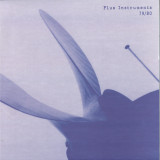
While she was still a member of Nasmak, one of the leading bands of the Dutch ultra-movement, Truus de Groot started Plus Instruments in 1978 with herself as the sole member. When the project evolved, she found a wide range of rotating collaborators like Michel Waisvisz, Lee Ranaldo and James Sclavunos. Plus Instruments was about freedom and the live performances were largely improvised. The sound minimal but captivating. The music always came from within, but De Groot was also triggered by bands like Red Crayola, Suicide, DAF, Wire, Per Ubu, Devo and the No Wave scene in NY. She was always experimenting with primitive multi-track recording and whatever crappy gadgets she could find. Always looking for a gritty, dirty sound and bizarre overtones.
At a young age she travelled to New York and began to immerse herself in the nightlife of the city that never sleeps. Here she found true creativity, passion and expression. The club scene was alive but highly competitive, so this fearless Dutch girl would just knock on promoter’s doors to get gigs booked at places like CBGB’s, Peppermint Lounge, Underground and the Pyramid. De Groot eventually settled in the United States and never stopped experimenting with sound. In recent years she reinvented Plus Instruments and led the group into new territory.
The recordings for this LP were made by De Groot at home and the music is experimental, minimal, industrial but also playful, sounding nothing like most of the later material. 14 tracks in total of which 7 are taken from the elusive and impossible to find self-released debut cassette as ‘Truss Plus Instruments’ which was sparingly distributed by Nigel Jacklin and his legendary Alien Brains fanzine in 1980. The remaining 7 tracks are from the same period (1979-1980) and were carefully selected from the vast archive of De Groot. We are glad to present this anthology that serves as a long overdue testimony to the formative phase of a unique female pioneer of electronic music.
- A1: Dadje Von O Von Non - Pedro Gnonnas
- A2: Feeling You Got - El Rego Et Ses Commandos
- A3: Honton Soukpo Gnon - Antoine Dougbe
- A4: E Nan Mian Nuku - El Rego Et Ses Commandos
- B1: Tin Lin Non - Orchestre Poly Rythma/Honore Avolonto
- B2: Okpo Videa Bassouo - Pedro Gnonnas Et Ses Panchos
- B3: Ya Mi Ton Gbo - Orchestre Poly Rythma/Antoine Dougbe
- C1: Nou Akuenon Hwlin Me Sin Koussio - Antoine Dougbe
- C2: Djobime - El Rego Et Ses Commandos
- C3: Na Mi Do Gbe Hue Nu - Honore Avolonto
- C4: Vimado Wingnan - El Rego Et Ses Commandos
- D1: Dou Dagbe We - Honore Avolonte Et L'orchestre Black Santiago
- D2: Kovito Gbe De Towe - Antoine Dougbe
- D3: La Musica En Verite - Pedro Gnonnas
Back in stock! A collection of super rare and highly danceable masterpieces recorded between 1969 -1981 by four legendary composers from Benin: ANTOINE DOUGBÉ, EL REGO et Ses Commandos, HONORÉ AVOLONTO, GNONNAS PEDRO & His Dadjes Band each one of them with their own distinctive sound. This compilation comes with a 40 page full colour booklet with ultra rare pictures and biographies. Fasten your seat belt and enjoy the mind-blowing sound of Benin.
Upchuck are experiencing a moment. The Atlanta punk collective just came off multiple tour runs with their good friend Faye Webster. Their Ty Segall-produced second album Bite The Hand That Feeds, with all its buzzsaw guitars and high-speed rippers and headbanging sludge, arrived in October. Later this year, they’ll make appearances at multiple festivals including Coachella. In the midst of relentlessly barreling ahead, the band and their label Famous Class are taking a beat to revisit how they got here. After working with Segall on Bite the Hand That Feeds, the band floated the notion that they wished they could hear what their collaborator could do with the songs on their 2022 debut album Sense Yourself. Holed up in his studio over Christmas with COVID and nothing else to do, Ty Segall began toying with Sense Yourself, sifting through folders of unlabeled stems to find the best guitar parts, emboldening the drum sound, and bringing greater clarity to KT’s vocals, all while bolstering the urgency of the band’s overall attack. With Segall’s new mix, Upchuck’s intense and righteous debut now impossibly overflows with even more fuzz and fury. In Segall, they found a kindred spirit whose studio approach made sense for just how hard they wanted this music to hit. “When we first went to record with Ty for Bite the Hand That Feeds, Mikey and I walked into the guitar room and Ty said, ‘Don’t touch the EQs.’ We looked at the amp and everything was on 10 except the master volume,” Hoff said. Previously, the band had been encouraged to capture the unvarnished sound of the studio. They’d toured with Segall’s band Fuzz, so everybody had the same goal while recording together: Capture the electricity of their intense live set. The band’s shows have a reputation for coming unglued, and there’s no greater document of that than Sense Yourself’s iconic album artwork. With no text, it’s a candid photo of a moment from a show shot on film without editing: blood streaked across KT’s face as they shout into the mic. In the middle of their EP release show, KT was in the pit as a fan started crowd surfing inside a shopping cart. A loose piece of metal near a wheel caught the singer right near the eyebrow and blood was everywhere, an instant piece of iconography snapped by probably every camera phone in the room. When Hoff revisits the message of this first album and Upchuck’s first songs, he thinks back to the year before the band even started when he and KT were hanging out. “We were sitting around talking for eight hours like ‘fuck, that's fucked up, that's fucked up.’” Upchuck became a vehicle for these five people to process how fucked up everything it is—to digest these formative hours-long conversations and put them to bludgeoning, intense rock music. The music is also fun as hell, and that’s part of the point. “There's a lot we need to do as people and a lot of things we need to fix in society but also like come on man like have your fun, wild out, have your drink,” KT says. “But be on your shit at the same time. Check your folk.”
Andrea has his roots in the independent musical scene in the first decade of the 2000s. In addition to his compositional and live experience as the first Nadàr Solo drummer, he is one half of the Turin duo Anthony Laszlo with Anthony Sasso, ex guitarist and singer of Milena Lovesick. Andrea Laszlo De Simone made his debut in 2012 when he released his first homemade album, Ecce Homo. Recorded at home by makeshift means and accompanied by the following videos: Solo un uomo, 11:43, I nostri piccoli occhi, Perdutamente.
At the beginning of 2014, he met some experienced musicians from Turin’s underground scene that later, after a few months in a rehearsal room, became his band: Damir Nefat (guitar/backing vocals), Dani C (bass guitar/backing vocals), Filippo Cornaglia (drums/backing vocals), Zevi Bordovach (keyboards/backing vocals) and Anthony Sasso (keyboards/backing vocals/percussions).
Anticipated by the individual tracks Uomo Donna, Vieni a salvarmi and La guerra dei baci on June 9, 2017 - for 42Records - Uomo Donna came out. It’s Andrea Laszlo De Simone’s first real album, a well received work by both audience and critics. It also was pointed as one of the best albums of 2017 by several national music magazines.
Uomo Donna is a complex, articulate and vital album that lives in its own time - where past, present and future coexist. It’s a time in which a sonic world takes shape blending classic and modern, Italian songs with psychedelia, Battisti and Radiohead, Modugno and Verdena, the Beatles and Tame Impala, the magical flight of Claudio Rocchi and the earthly flight of IOSONOUNCANE.
The album was self-produced and then post-produced by Andrea in collaboration with Giuseppe Lo Bue, a sound engineer from Bologna. The recordings were made between October 2014 and the end of 2016 with experimental techniques straddling digital and analogic.
After playing in some important Italian festivals as Siren Festival and TOdays -- that earned him a special mention in the live scores by Rolling Stones -- on October 28, 2017 the first Uomo Donna album tour started in the clubs of the major Italian cities.
On November 30th 2017, Andrea Laszlo De Simone presented his video, Sogno l'amore, during the Torino Film Festival as a short film, shot in Sicily and directed by Francesca Noto and Andrea Laszlo De Simone.
On March 15th 2018 the music video of Gli uomini hanno fame was released, the most political song of the album, an overlook through ferocious human emotions, an eleven and fifty minutes trip within human nature portrayed even in its most ferocious instincts. The music video was directed by Andrea Laszlo De Simone and the mysterious duo Sans. The official cycle of Uomo Donna ends on 31 December 2018 with the music video of Sparite Tutti created by the creative collective Irene&Irene.
2019 was a year of new goals for Andrea, in fact, the album Uomo Donna leaves national borders and got a special mention on social media by the famous American band The Lumineers which included Andrea Laszlo De Simone and Uomo Donna among the most interesting discoveries of the international musical underground and inserts Solo un Uomo in the Spotify playlist “Inspirations”. A few days later, Solo un Uomo was broadcasted by KEXP Radio. On November 4th Andrea and his band were chosen to open for The Lumineers’ only Italian show at Alcatraz, in Milan.
On November 8th Andrea released a brand new work, digitally and on vinyl for 42Records, Immensità, a ‘suite’ of four singles: Immensità, Conchiglie, Mistero and La Nostra Fine. Turned into a medium-length film using Immensità as the soundtrack.
Immensità was presented with four special sold out concerts in Rome, Turin, Padua and Milan. For these shows Andrea Laszlo De Simone was accompanied on stage by a mixed orchestra composed of synths, electronics, choirs, strings and woodwinds. Classic and modern instruments that are intertwined in a nine elements formation: an immersive concert, a contemporary version of chamber music.
In March 2020 Immensità was released also in France, UK, Canada, Belgium and the United States with Ekleroshock/ Hamburger Records (Roster: Benjamin Clementine, Polo & Pan, Limousine and many others). The response of the transalpine press and media, sector and not, was unexpected: major French newspapers and magazines - from Le Monde to Liberation, Vanity Fair and Les Inrockuptibles - dedicated entire pages and rave reviews to Immensità and Andrea Laszlo De Simone. The track Immensità entered, after a few days, at the fourteenth rank of Spotify’s Top viral 50 playlist and broadcasted on France Inter and Radio Nova.
“Immensità” is a complex cross media work of music and images. A project divided into four chapters (the songs) for nine tracks (each chapter has a prologue or a conclusion). A true suite, using the classic term that best describes an instrumental composition in several stages, that can be enjoyed in its entirety only by listening to vinyl or digitally in the innovative single track format, without pauses: a single symphony of 25 minutes and 6 seconds.
In September 2020, Dal giorno in cui sei nato tu was released on all italian platforms, a song dedicated to Andrea’s children, a real love letter in the form of a small speech, where he tries to give them the three keys to approaching life: fantasy, music and irony. Martino, 8 years old, replies to his father’s love letter by making the video accompanying the song, created in Super 8. It's the story of the world through the eyes of the child. It is also an homage to the new little girl in family, Lucia.
Yes' 90125 was a departure from their progressive style but it introduced the band to a new generation of fans, reaching No. 5 on the Billboard 200 and No. 16 on the U.K. albums chart. The 1983 album remains their best-selling album with more than 3 million copies sold in the U.S. "Cinema" earned the group a Grammy Award for Best Rock Instrumental Performance, while "Owner Of A Lonely Heart" was the band's first and only single to reach No. 1 on the Billboard Hot 100 chart.
Named for its Atco catalog number, 90125, the album — the band's 11th studio effort — it was born out of the band's self-reinvention. Begun as Cinema, a new band by Chris Squire and Alan White, the project grew to include the slick production of Trevor Horn, the new blood (and distinctly '80s guitar sound) of Trevor Rabin, and eventually the trademark vocals of returning founder Jon Anderson. His late entry insured that Rabin and Horn had a heavy influence on the sound. The album also marked the return of prodigal keyboardist Tony Kaye, whose crisp synth work on "Changes" marked the band's definitive break with its art rock roots.
"Owner Of A Lonely Heart" was a huge crossover hit, and its orchestral break has been relentlessly sampled by rappers ever since. The vocal harmonies of "Leave It" and the beautifully sprawling "Hearts" are additional high points,
90125 is a significant and well-regarded album in the Yes discography.
Analogue Productions is proud to offer the definitive reissue deluxe 180-gram 45 RPM 2LP of 90125. For Yes fans, this is a can't-miss addition to your album collection.
Tuk Smith & The Restless Hearts is an American rock band from Nashville founded and fronted by former Biters leader Tuk Smith, originally from Atlanta, now living in Nashville. The band released their debut single "What Kinda Love" on January 10, 2020 and were also added as an opening act for The Stadium Tour with Def Leppard and Mötley Crüe on the same day. Then came the onset of Covid 19. “When the pandemic hit, it was like hitting the reset button on my music career” recalls Tuk, “everything got taken away…album campaign, stadium tour, record deal. The world was in lockdown, and the only way to escape was to throw myself into writing. My thoughts began exploring the past, and the inspiration for the songs just came in tidal waves.”
The new collection is a rock ‘n roll silver lining that came out of the solitude and reflection of the pandemic. Ballad Of A Misspent Youth is the new single (and subsequent album of the same name) released summer of 2022 on Tuk’s new record label MRG, through Virgin Music. Tuk explains, “I decided to make a rock and roll record for me and what I like because there was no label, there was no committee involved…just me and my stories. I wanted to create a setting and an authentic feeling about everything. I reunited with long-time friend Dan Dixon and recorded these songs in his garage studio, and there is a purity to the work that came from all the circumstances of that time.” Growing up as an outsider in rural Georgia, Tuk found solace in hardcore punk acts like Black Flag and The Exploited. From there, Smith branched out into exploring seventies New York bands like The Dead Boys and New York Dolls, which lead him across the sea where he embraced first-wave British acts like The Buzzcocks and the Clash. Smith wasn’t just a casual fan of these acts, he was obsessed with them and traced their lineage with fervent dedication. “I was always into the Clash growing up and Mick Jones’ favorite band was Mott The Hoople, so through the years I ended up developing a love of the first wave of British glam, power pop and things like that,” he explains. Soon Smith was forming his own acts, touring relentlessly and building a following with his high-energy live shows, including his tour of duty as lead singer for the Biters, who he fronted for nearly a decade. He offers “Then after being on the road for years, I had a reckoning about where I was at and the future ahead. …I realized the only way to achieve something meaningful was to be a good songwriter…that clicked. I went on a musical diet where I stripped the obscure stuff away, and I really started focusing on the greats. When I started clicking that it was just about the songs, things changed. I had already put my 10,000 hours in the van to play in the dive clubs, but then I put my 10,000 hours into figuring out how to write. I also started working with other songwriters. I humbled myself… it was an education, like going to school.” Tuk elaborates, “I wanted to kind of branch out musically and do different things, and I figured to go solo would be better. My manager actually suggested I call my new band “The Restless Hearts” and that's what he would call me all the time. It was the title of a Biters song that people loved and I’d seen a few restless hearts tattoos at our shows along the way… and so Tuk Smith & The Restless Hearts was born. I was in a period where I changed everything including the way I lived my daily life. I experimented with different ways to tap into positive/creative energy…it was an evolving overall process (and still is).” Tuk summarizes, “Things used to be about debauchery, and now they’re more about dedication. I mean, I was always driven, but I was sometimes focusing on the wrong things. Now I focus on the music and the craftsmanship of writing and producing and performing. “
The Shadow Ring (1992-2002) presents a comprehensive overview of the work produced by British musicians Graham Lambkin, Darren Harris, and later Tim Goss over the course of a decade. Throughout their legendary ten-year run, this shambolic rock outfit, formed by a group of teenagers in the port town Folkestone, were an enigmatic force on the international musical sub-underground. The group have left behind a mighty run of eight LPs, a handful of 7-inches, and a spate of raucous live shows and cryptic zine appearances on both sides of the Atlantic. Collected here for the first time are The Shadow Ring's live cuts, rarities, and complete commercial releases, spread out across eleven CDs and a DVD, accompanied by an nearly five-hundred-page book that includes a monographic biographical survey, more than one hundred color photos, a comprehensive discography with transcribed lyrics, and a selection of zine appearances, fliers, postcards, and other miscellanea. In aggregate, this significant collection not only plums the depths of the band and its attendant lore, but reveals a vivid minor history of mail-order networks, bedroom recording sessions, cross-USA couch-surfing, and encounters with fellow travelers such The Dead C, Harry Pussy, Charalambides, Richard Youngs and the No-Neck Blues Band. Where is the connecting thread between Ralf Wehowsky and Squirrel Nut Zippers? Inquire within. The roughly 200 songs in this set trace the band from its earliest days recording in Lambkin's parents' house (SHP Studios), through its brooding mid-period, garnering word-of-mouth notoriety that peaked with the trio turning down an invitation to tour with Pavement, to a string of increasingly uncompromising experiments with electronics, voice, and tape. Although the band's sound morphs considerably during this time period, from spartan beginnings using pots and pans as a drum set to their ultra-deconstructed latter-day approach, certain core sensibilities are apparent throughout: brash youthful rawness, wry and morbid lyricism, stripped-down angularity, and a penchant for atmospherics. This boxset, featuring every record and single, and buttressed by twenty-nine rarely-heard recordings, including proto-Shadow Ring projects such as the Cat & Bells Club and Footprint cassettes, and their unearthed final CD-R Darren Harris Reads Graham Lambkin, presents the first opportunity to hear this arc in full. The ebbs and flows of the band_their schoolboy beginnings, initial successes, first shows and tours, life milestones, and Lambkin's gradual development as a solo artist_are painstakingly detailed in a sizable band history-cum-Künstlerroman by Blank Forms artistic director Lawrence Kumpf, illustrated with candid photos, sketches, letters, newspaper clippings, and other ephemera. The music and videos can speak for themselves, but taken as a mass, this collection makes sense of the group's utter uncanniness without comprising one iota of their mystique, bringing something new to the table for completionists and the uninitiated alike.
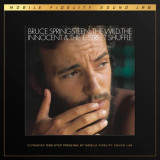
Released only eight months after his exhilarating debut, Bruce Springsteen's The Wild, the Innocent & the E Street Shuffle contains rousing dispatches from the boardwalk, the street, the beach, and the bedroom. It explodes with energy, dares to dream, teases with humour, crackles with tragedy, clings to hope, and overflows with discovery, youthfulness, and personality. It features an unforgettable cast of characters — corner boys, teenage hustlers, doomed lovers, jazz men, junk men, factory girls, fortune tellers, alley cats, pimps, escorts, and more — illuminated by vivid colour, breathtaking detail, and poetic action.
Musically, the heartfelt 1973 record is inhabited by sympathetic vignettes and cinematic arrangements steeped in rock 'n' roll, soul, jazz, and R&B. It finds the New Jersey native looking beyond the parameters of his preceding record and seeking to move on from environments he knows well (and chronicles here) by rushing headlong toward unknown territories, adventures, and people. Underpinned by the singer-guitarist's ambitious poetic enterprise and will to succeed, The Wild, the Innocent & the E Street Shuffle is the album on which Springsteen becomes the Boss.
Mastered on Mobile Fidelity's renowned mastering system, pressed at RTI on MoFi SuperVinyl, and strictly limited to 7,500 numbered copies, Mobile Fidelity's UltraDisc One-Step 180g 33RPM LP set is the definitive-sounding version of Springsteen's sophomore record. Benefitting from SuperVinyl’s nearly non-existent noise floor, superb groove definition, and dead-quiet surfaces, The Wild, the Innocent & the E Street Shuffle plays with a clarity, energy, presence, and openness that complement the expressiveness, dynamics, and scope of the seven restless songs that comprise a work Rolling Stone ranked the 345th Greatest Album of All Time.
Beyond the audiophile sonics that practically place you behind the console at 914 Sound Studios — listen to the separation between the instruments, natural decay of the notes, interplay within the widescreen soundstaging, and nothing-to-lose youthfulness of Springsteen’s voice — this reissue takes seriously this record’s influential merit by presenting it in packaging that underlines its status. Tucked in a beautiful slipcase, the LP is housed in a special foil-stamped jacket with faithful-to-the-original graphics. This reissue is made for listeners who prize sound quality and who want to engage themselves in everything involved with the invigorating set that busted Springsteen loose from the club circuit and landed him on the radio
Determined to liberate anyone within earshot and unafraid to come on strong, The Wild, the Innocent & the E Street Shuffle serves as the debut of the E Street Band — not only heard but seen for the first time by most of the public courtesy of the back-cover photograph. This is where saxophonist Clarence Clemons, organist-accordionist Danny Federici, and pianist David Sancious step out of the shadows — and drummer Vini Lopez and bassist Garry Tallent again stoke a fiery rhythmic engine that helps drive the untamed, reimagined big-band swing of “Kitty’s Back,” breathless R&B thrust of “Rosalita (Come Out Tonight),” and carefree dance steps of the funky “The E Street Shuffle.”
Of course, the main attraction remains a then-24-year-old visionary on the precipice of becoming a sensation and turning a then-bloated rock scene on its head. Recorded over three months while Springsteen and company were busy touring his debut LP, The Wild, the Innocent & the E Street Shuffle reflects the high-octane approach the vocalist embraced onstage and drifts away from the label-dictated acoustic-based frameworks of his debut. The set also witnesses Springsteen deepening his observational skills, with narratives such as the romantically tinged “4th of July, Asbury Park (Sandy)” and redemptive epic “Incident on 57th Street” mirroring changes taking place in the singer’s own life, small towns, and America at large.
A thrilling collision of memories, reflections, and composites — Sandy, Rosalita, and the latter’s parents are all based on actual people Springsteen knew, as is the community depicted in the opening track — the aptly titled The Wild, the Innocent & the E Street Shuffle resonates decades on due to its truths, authenticity, and spirit. Those characteristics — as well as the fact that many of its lengthy songs come on as the equivalent of sweaty, feverish soul revue that won’t stop until you’ve been exhausted — also explain how this now-iconic album triumphed over the reservations of industry “experts” that both demanded Springsteen re-record it and instructed deejays not to play it.
Yet there’d be no stopping a record that saw the past, present, and future, a band whose will would not be denied, and a phenomenon who was born to run. A never-ending invitation to act real cool and stay up all night, The Wild, the Innocent & the E Street Shuffle always feels alright.