‘Empires into Sand’ is the first album of new material from Normil Hawaiians in 40 years. The group first refined their sound during the early 80s, hitting on a pastoral experimentalism that drew on ambient drone, motorik impulse and post-punk pep.
‘Empires into Sand’ came together in the familiar manner of their original three albums, with improvisation and nuance informing the blueprint of the tracks. It was with the official release of this last record ‘Return of the Ranters’ (originally recorded in 1984/85, but then unconsciously shelved) in 2015 by Upset The Rhythm that led to the group reconnecting with the intention of playing music together again. Normil Hawaiians played a launch show for that ‘lost album’ and followed that up with more concerts, including an appearance at Supernormal, a residency at the Edinburgh Festival, gigs at Cafe OTO. They were even chosen by Richard Dawson to perform with him in London.
Throughout this time, Normil Hawaiians revisited their original songs for live performance. However for a group always so interested in evolving their sound, it came as no surprise that they shirked at the idea of a faithful retread. The band pushed their songs into new inventive dimensions, still progressive at core, but now imbued with a cosmic uncanny. A cinematic approach that was always quietly present has come to the fore. The quaint weirdness of folk song, the humanity of communal practice and the group’s ecological mindedness have all found a place in Normil Hawaiians’ current sound world.
When Normil Hawaiians write and record music they prefer to gather in a remote location and live together for a while, such is their communal ethos. Being far-flung across the UK, the Family Hawaii (numbering seven key members) decided to encamp to Tayinloan, a small village on the west coast of the Kintyre peninsula in Scotland. They set up their own studio in an isolated, windswept house overlooking the sea and started the tape rolling. Noel Blanden from the band explains the process neatly: “we set up and began playing, slowly and patiently, allowing the music to take its own shape based on where we were staying and our ongoing friendship. We recorded for days, capturing everything. A lot of new and rich ideas began to emerge”.
Normil Hawaiians took their time to develop these threads at their own pace, allowing songs to mutate and settle over months. Simon Marchant deftly produced and recorded the album whilst also performing in the band, this marked the first time the band had total control of their own sound. The last few years has seen the band reconvene in Herne Bay, Faversham, London and Leith to record new parts, constantly responding to the changing form of these quietly spectral songs of defiance.
‘Empires into Sand’ incorporates samples from old rehearsals and live music into the new finished pieces, this is in continuum with their previous records. Snippets of sound from the static of short wave radio and satellite transmissions also embellish the work. In fact the whole album is stitched together with interludes, creating an acutely immersive 45 minutes. ‘Exiles’ opens the album amid swirling atmospheres, synth flights and recordings of Vilnis Egle (father of Zinta Egle from the band) retelling his experience of fleeing his home in Latvia during Soviet occupation in 1942. George Bikandy also features on this track talking about his flight from Syria in 2014. ‘Ghosts of Ballochroy’ is a winding river of a song featuring a lively discourse in Scots courtesy of Rodney Relax. There’s a commitment to truth telling present across this hopeful album populated with angels, incoming tides, long shadows and the rose-washed sun. “From our broken windscreen, we feel the breeze” soars Guy Smith triumphantly over the driving beat of ‘Waterfalls : Bedford 330’. ‘Big City Sky’ flutters and sparkles with rapid synth runs, tape-looped drums and Jimmy Miller’s commanding vocal. With ‘In The Stone’ Zinta’s melody is deliberately jagged and blunt, exaggerated by octave-layered vocals and interjections from Guy.
This is thought-provoking, boundary-bothering music. Honest in intent, a solidarity of vision. The album’s title is derived from a poem by band member Mark Tyler, who sadly passed away during the recording process and the transience of life is felt heavily throughout. Noel best coins the group’s wish for the album: “we wanted to create an album that acknowledges our history and also reflects who we are today. We remained true to ourselves and we wanted to make something beautiful without removing the edges.” ‘Empires into Sand’ certainly does that, it’s an echo from the past, an echo from the future.
Cerca:his band
For singer/songwriter Jesse Daniel, country music is nothing short of a life force. Hailing from a rural mountain town on California’s Central Coast, the Austin-based artist first explored his innate passion for music by playing drums in punk bands, then drifted down a troubled path that included years of battling addiction and spending time in and out of jail and rehab. As he took his first steps toward getting clean, Daniel immersed himself in the pure joy of writing country songs, fully embracing the unbridled vitality of California country and bringing a lived-in honesty to his lyrical storytelling. Since releasing his 2018 self-titled debut on his own record label, he’s earned great esteem as a country traditionalist and built a wildly devoted international following—thanks in no small part to his freewheeling live show and tendency to tour nearly 200 days a year. Recently signed to Lightning Rod Records, Daniel now offers up his fourth studio album Countin’ The Miles: a high-powered body of work born from his ardent belief in preserving country’s legacy.
When Man Man released its last album, "Dream Hunting in the Valley of the In Between," frontman Honus Honus (née Ryan Kattner) was in a state of unrest, oscillating between hope and cynicism. Perhaps fittingly, the album dropped during the pandemic, a time at which we could all relate. But, much like that bizarre turn of events, the ennui now seems so distant to Man Man. A revived sense of purpose washes through Man Man's new album, Carrot on Strings, radiating a mix of calm and confidence. Kattner always embodied a wild-man pied-piper vibe: his melodic, unhinged art-rock was at once intriguing and angsty. He was so alluringly creative that you went along with it, even if you were never sure where Man Man would take you. Carrot on Strings is no less inventive, but its ethos is radical in context of the band's two-decade career. "When I was younger, I would feed off of chaos. I would, you know, be upset and get drunk and smash chairs," Kattner explains. "Now those chairs are in my head: It's less of an outward projection, more of an interior monologue." The name "Carrot on Strings" came to Kattner while experimenting with the sound of someone munching on the vegetable, which you can hear in the cacophonous, similarly named song. It alludes to how success always seemed to dangle uncertainly before him, often just out of reach. But listen intently and you'll hear a more content Kattner finding an uneasy peace: "Life, as far as I've known it, has always been side hustles. Would it be great if I could go into a studio and record for a year without figuring out how to finance it? Yeah, it would be," he says. "But ultimately, I need to keep making music because art is an extension of my psyche. It's how I have learned to translate the palpitations of my heart. Simply put, I'd go insane without it." Growing up as a multiracial Hapa kid (half Filipino, half white) with a father in the U.S. Air Force, Kattner lived an itinerant childhood that included a few pivotal years in Germany, where he honed in on an appreciation for out there German cinema and art. His film obsessions and screenwriting background were crucial to Carrot on Strings. The album nods to the films of Werner Herzog and Rainer Werner Fassbinder as much as Italo-disco, Randy Newman, goth rock, and avant pop. (Kattner continues to work in the film industry with an acting role in the upcoming horror-comedy movie Destroy All Neighbors, for which he also served as composer; music supervising season 1 & 2 of the Interview With The Vampire AMC TV series; and shopping around, with director Matthew Goodhue, a script he wrote that he describes as a Wim Wenders road movie on acid.) In a bid to not overthink anything - his last album took seven years to make - he recorded the bulk of Carrot On Strings in five days in Mant Sounds studio in Glassell Park, Los Angeles with "very chill" producer Matt Schuessler, who had worked on Man Man's cover of Neu!'s "Super" for the seminal Krautrock band's box set. The resulting album represents a newfound sense of self for Kattner, who finds himself inspired and at peace both personally and artistically in ways that eluded him for most of his first 15 years playing music. When, on Carrot On Strings, you hear Kattner croon humbly, or sing of the tension between his outsize stage persona and the thoughtful, soulful guy he actually is, you're hearing Kattner liberate himself. "I first got into music to escape from myself," he says. "And now, it sounds so corny, but I have zero doubt that music ended up saving my life."
The Kaiju Project is a Japanese inspired jazz group formed by the half Japanese-Austrian pianist Aseo Friesacher. Their initial idea was to bring old folk songs into a new modern context, but in addition to their compositions, this group has found their very own musical direction: a perfect blend of traditional Japanese music and meditative-creative jazz.
Aseo’s composition style is clearly rooted in Jazz, but with the use of traditional Japanese melodic elements and sounds, the music becomes very storytelling and gets a beautiful and mystic character. Also some famous soundtracks from the Ghibli movies and songs by the Japanese singer Hibari Misora, that Aseo has arranged for the band, are included in their repertoire.
The bandleader has had the vision for a long time to create this unique fusion of traditional Japanese music and Jazz in order to bring together the eastern and the western world. In fact, the meaning lies his name A-se-o, “亜為欧“: living for Asia and Europe.
The band went through a couple of changes in their formation but finally resulted in a dream team, featuring two Japanese musicians who bring the authentic sound to the band: Waka Otsu as the vocalist and Fuefuki Kana on Japanese flutes and silver flute. Furthermore there is the highly accomplished and respected ECM artist, drummer and percussionist Joost Lijbaart and the virtuosic and talented bassist Johannes Fend, who make the group complete. So far the Kaiju Project has toured in the Netherlands where most of the band members are based, they have performed in Germany and recorded their first album.
Good Looks write kindhearted and cathartic rock songs about the persistence required to make it through hard times. In April 2022, the Austin, Texas quartet released their critically acclaimed debut `Bummer Year'. Immediately after their triumphant hometown record release show, lead guitarist Jake Ames was hit by a car crossing the street, fracturing his skull and tailbone. Thankfully, Ames made a full recovery. The traumatic accident strengthened the bond that built their electric new album `Lived Here For A While'. Out May 3 via Keeled Scales, it's fearlessly direct music that captures the fullthroated intensity of their galvanizing live show. Reinvigorated, Good Looks tracked `Lived Here for a While' at Texas' Dandy Sounds with producer/engineer Dan Duszynski (of Loma and Cross Record) the following summer. Though Ames had to relearn some of his parts, his palpably energetic performances elevated the entire record. On the LP, the band trades the Americana sound that colored in the lines of `Bummer Year' for clanging post-punk guitars and expansive indie rock. Lyrically, the songs on this album are healing meditations on family dysfunction, new relationships, and how a home can become unrecognizable. Lyricist Tyler Jordan's songs explore how relationships can crumble irrevocably but also how those partnerships can be centering, hopeful, and exciting. In another horrific accident in July 2023, their tour van was rearended by a speeding car, causing their van, instruments, merch, and records, to go up in flames. Thankfully, none of the band members suffered serious injuries. This resilience is essential to Good Looks and why the songs on `Lived Here For A While' resonate so profoundly.
A home, a house, has countless frequencies. Each room, each corner feels different. Swings differently. And as you grow older, you realize which corner is yours. But yeah, it takes time…
It certainly marks the end of an era when the house one called home as a kid no longer exists. This home, it was the starting point of so many journeys. Of one big, ongoing journey. And so it feels good, soothing, reassuring to at least return to a spot nearby – to that (proverbial) hill from where you can see it. Feel the vibe that made you.
Andi Haberl’s debut solo album as Sun is sort of dedicated to that house. It’s a journey leading to that hill overlooking everything that made him. It’s not about nostalgia, not about actually returning to a specific place. Instead, it’s about finding a personal frequency, an overlapping of sounds and samples, an open space that mirrors and extends whatever frequencies felt right at different points in time.
“To me, the results feel like Gold Panda/Four Tet meets Steve Reich meets Krautrock meets film scores. I just really wanted to create moods that touch me – and ideally others, too.”
Talking about his first solo album, Haberl recalls many stages: early compositions that ended up on Alien Ensemble’s albums, early DIY/home studio/multi-instrumentalist inspirations (Le Millipede), new technologies that came and went, even a set of wildly convincing arrangements (done with Cico Beck’s crucial input) that ultimately became stepping stones for yet another round of DIY takes. “It was a long, recurring process, and the songs went through so many different versions,” he says, talking about phases of growth (“I added more and more equipment over time”) and pruning, “cleaning up my music a bit.” Tending towards instruments that open up space, and slowly falling in love with sampling, he certainly didn’t rush things once it was time for interior design decisions ;)
“During this whole process I got to learn so much about my own taste, how I prefer to listen to the pieces, which musical elements really matter to me… and what my own voice is. For example, that acoustic elements are most important to me: the banjo, piano, drums, my voice, glockenspiel, trumpet, melodica. Anything that opens up some space.”
Every journey begins with a search: “Missing” with its plucked chords opens like a sunrise over pastoral plains, gently leading the way towards the intricate, playful explosion that occurs once a certain amount of energy (“Sun”) hits dirt and other surfaces: things grow, clot and curdle into new shapes, like new buds; layers of sound move forward, drenched in Spring’s new light. Relying on samples to ask for precipitation (“Rain On Me”), robotic “Low” goes from barren to bass-heavy after its midway shift in pace, full of loops plucked from the shade.
Towards the album’s midpoint, things are suddenly reversed: “Cluster” has that backwards pull, you can’t tell what’s what, yet everything is perfectly locked in, as the pace increases once again. And before the title song shimmers with densified cheering (to eventually stand tall like early Lymbyc Systym), “Beside Me” swipes you off your feet with its booming bass drum. The beat returns once again (“Daydream”), full of searching voices underneath, and at “Dawnday,” we can finally catch a melancholy view of the house. Voices hum. It’s the score moment of the album. Everything makes sense now. A happy end of sorts?
“I want to take people on a journey. A personal journey, too, because when my parents split up and sold the house I grew up in, I felt a bit like the ground had fallen out from under my feet. But I have dedicated the album title and the accompanying piece to this house… so I can keep it in good memory.”
“I Can See Our House From Here” has been a long time coming. It’s been a long journey. Homeward-bound. Leading to a place that’s really Haberl’s – his sound. His frequencies.
Known as a long-time member of The Notwist and various other bands/projects (Alien Ensemble, AMEO, jersey, Ditty etc.), Berlin-based drummer/composer Andi Haberl has also worked with My Brightest Diamond, Till Brönner, Owen Pallet, and Kurt Rosenwinkel, to name a few. “I Can See Our House From Here” is his first solo offering.
Unavailable for over three decades, we are happy to reissue this garage rock's essential gem, originally released in the early days of Greg Shaw's Bomp! label. Bomp! Records of Burbank, California was likely the most significant American independent record label of the 1970s. It was the first in this country to recognize and actively support the punk rock and new wave revolution with its releases, at a time when both America's vast regional disparity and an extremely conservative record business had deemed this new, strange idiom anathema. In its first five years Bomp! the label wore its heart on its sleeve with a series of fascinating, unpredictable, and memorable 45 RPM releases. And the whole was brainstormed by Greg Shaw, likely the only maverick alive at that time who could have created and populated such a scenario. The winter 1976 issue of Who Put The Bomp (Greg Shaw's fanzine) had featured a detailed report on the Boston scene, with favorable mentions of two future Bomp! acts. Willie 'Loco' Alexander was a local legend, the storied former lead singer of the Lost, and his 1975 single 'Kerouac' (reissued on Bomp!) was a suitably eccentric, Dylan-ish ode to the beat maven. DMZ was a more predictable proposition, sporting obvious glam roots and an eccentric but dedicated rock & roll fan in lead singer, Jeff 'Mono Mann' Conolly. Wearing his heart on his sleeve, Conolly and crew went for a chaotic and intense hybrid of Dolls, Stooges and most of the Nuggets bands, so Bomp! the label was a natural choice. With killer cuts like 'Busy Man' and 'When I Get Off,' their Craig Leon-produced 1977 EP captured the DMZ zeitgeist considerably better than the album they would later record for Sire.
Multi-talented US punk, Jeff Rosenstock releases fourth album on Specialist Subject Records (UK /EU) & Polyvinyl (Worldwide)! NO DREAM comes at a time of unparalleled chaos and confusion, division and despair, the depths of which would have been impossible to predict when much of it was being written over the course of the last few years. And yet the record feels prescient, unexpectedly and uniquely suited for this moment. Newly settled in Los Angeles after a lifetime on the East Coast (namely Brooklyn by way of Long Island), Rosenstock recorded NO DREAM with Jack Shirley (Deafheaven, Hard Girls, Joyce Manor) at Oakland's Atomic Garden, and even took on mixing duties alongside Shirley for the first time. Opting to stay off the computer "even more than usual" and record to tape with outboard gear, the result is a lived-in sound that gives each song its own individual voice and organic energy. After building a cult following with the acerbic ska-punk of the Arrogant Sons of Bitches and DIY heroics of Bomb the Music Industry!, Rosenstock's first proper solo record, 2015's We Cool?, was a step into uncharted territory, fully untethered from genre and expectation. Followed by 2016's WORRY. and the surprise New Year's Day launch of POST- in the early hours of 2018, Rosenstock was facing down that least punk of opportunities: a career playing music. Having taken some time away from his work as a solo artist to recalibrate and reset over the last year, Rosenstock stayed busy playing alongside Mikey Erg, recording and touring with the Bruce Lee Band, releasing a Neil Young covers record with frequent collaborator Laura Stevenson, reissuing two of his own out-of-print early albums, compiling a live album which was recorded during a run of four sold-out shows at Bowery Ballroom, making a 76 page photo book, and scoring over 80 episodes of the Cartoon Network series Craig of the Creek. In fully returning to his own voice, it's no surprise that Rosenstock's output has never been more eclectic, reflected across NO DREAM's 13 songs.
A kaleidoscopic sonic riot, Nandakke? is the hotly anticipated debut album from Japanese-Belgian duo Aili. Featuring 10 tracks of surreal electro-pop, joyful electronica, house music and more, Nandakke? is a euphoric album that sees Aili Maruyama and Orson Wouters more than fulfil the promise of their acclaimed debut EP.
Recorded over the course of six months in Orson's studio, packed full of vintage synths, Nandakke? captures the spontaneous spirit and creativity of those sessions. Exchanging riffs and rhythms, bouncing sounds and samples off each other, Aili and Orson would let the music take them where it wanted. The result,an album full of wild ideas and bold, playful experimentation.
More than anything an exhilarating feeling of discovery courses through Nandakke?, leaving you never sure where it will go next. One minute a pulsing electro-pop number featuring Aili's dad discussing his takoyaki (battered octopus) recipe, the next an explosive high energy workout song like Up & Down.
Certainly Aili was surprised to find herself singing in her own unique version of Japanese again.
"I thought that I was done with that after our debut EP, but apparently not as I speak even more Japanese on the album!" said Maruyama. "Every time we were in the studio these words would just tumble out. It's a complicated language but I just love to play with it.
"In many ways I'm an outsider, I left Tokyo aged 7, so there's a lot I notice as someone who is not a native speaker and it doesn't always make sense, there's a lot of mistakes in it.But in a way that sums up the whole philosophy of the album and how Orson and I work together."
That notion of duality, a sense of belonging but feeling apart, of being between two worlds and inventing your own captures the spirit of Nandakke?, itself a Japanese word that roughly translates to "Well, what was it?".
"It's something you say when you're looking for a word, like you know it but have forgotten how to say it. That's literally how I communicate with my dad the whole time," Maruyama explains. "The main feeling I have when I go to Japan is that I know the language, I can speak it, but part of me still feels like it doesn't have all the vocabulary. There's a gap there that nandakke has always filled for me. All the lyrics come from that place, that seven-year old trying to speak Japanese."
Whether Aili's singing about the language she invented with her father over the years to bridge the gap between them (Nandakke?), the idiosyncratic Japanese relationship to fashion (Fashion) or riffing on children's playground songs (Yubikiri) the result is a remarkable album that defies easy categorisation.
Bursting onto the Belgian scene in 2021 with their acclaimed debut EP, Dansu, its lead track spent 8 consecutive weeks at the #1 spot of Radio 1's VOX list and saw the band nominated for Studio Brussel's De Nieuwe Lichting ('New Generation') award. Since then Aili have appeared playing live on the Belgian TV show Roomies, been tipped by the likes of Rolling Stone, become regulars on tastemaker stations like KEXP and KCRW in the US and Nova in France, toured across Europe and, just recently, played their first sell out shows in Japan.
San Francisco psych-pop legend announces new album, “La Fleur” out June 7th, 2024. Between outside musical projects, pushing past 50 years old and becoming a father for the first time, San Francisco psych-pop legend Kelley Stoltz has spent the past two years steadily writing and recording his 18th album, “La Fleur”. The dazzling 12 song collection will be released in June by Agitated in Europe/UK and Dandy Boy Records in the USA. “La Fleur'' finds Stoltz once again playing nearly all of the instruments on the album- though a new friendship with pop guru Jason Falkner has led to Falkner appearing on two songs, “Hide In A Song” and “Make Believer” respectively. There’s the requisite 60’s meets 80’s pop rock confections that Stoltz favors with a new focus on out front vocals and perhaps a bit shinier production. Pandemic era blues, politics and fatherhood are lyrical touchstones throughout. The album’s first single “Reni’s Car” is the jangle rock lead single based on an actual event of Kelley riding around Manchester in the Stone Roses drummer's car. The accompanying music video was shot (partially) on location. “About Time” marries Twin Peaks synths to Fleetwood Mac and Avalon era Roxy Music in a cautionary tale to Stoltz's young daughter. “Human Events” puts revolutionary prose to a Moody Blues strum that floats off into Osees territory …and do I hear a nod to Gershwin in there? During the 2010’s Kelley played live as a sideman with Rodriguez and Echo & the Bunnymen, as the 2020’s dawned he was invited to support Pavement on their big reunion tour. He’s also been heard playing drums live with Robyn Hitchcock as well as adding sitar to Hitchcock's last two albums. In 2022, Stoltz was championed with a live appearance on Marc Riley’s BBC6 show. As producer, he has recorded the new album by Brigid Dawson formerly of the Ohsees. In my ears, Stoltz rarely does any wrong, and these comparisons are only just that little fruit to get you curious- he is still one of a kind. An under the radar hero to a few, and still after all these great songs, deserving of more. Climb on the bandwagon - as ever it’s quite pleasing here. - GEORGE CLOUD San Francisco, CA 2024
Dream Harder is the sixth studio album by The Waterboys, released in 1993. Scottish singer-songwriter and bandmember Mike Scott produced the album together with acclaimed producer Bill Price, which resulted in a return to the rock-based sound. The song “Love And Death” was an arrangement of a poem by the Irish poet William Butler Yeats, “The Return Of Jimi Hendrix” a tribute to the famous guitarist, and other songs contain references to pre-historical religion. Singles from the album were “The Return Of Pan” and “Glastonbury Song”. The album peaked at #5 in the UK Albums chart, reached several European charts and the US Billboard 200.
“Home” is not always a literal place. Sometimes, “home” represents inner peace and simply learning to hold space for yourself. This is where Vacations lead singer and guitarist Campbell Burns has arrived as he and bandmates Jake Johnson, Nate Delizzotti, and Joseph Van Lier release their third LP, No Place Like Home. “I had this loose concept of No Place Like Home being an Americana-influenced album,” Campbell says of the album’s sonic inspirations. “I wanted to incorporate more pianos, acoustic guitars, Nashville tuning, and country-inspired lap steel, but then also bringing in drum machines and synths and finding a mix between the two.” Produced by Campbell and John Velasquez (Zella Day, Broods), No Place Like Home comprises 10 shimmering tracks brimming with indie-pop hooks and just a touch of bittersweet sensitivity. The new project follows an intense period of transformation for Campbell, who was forced to cancel all touring commitments due to COVID restrictions and subsequently came down with a severe bout of writer’s block. After seeking therapy, he was eventually diagnosed with Pure OCD, a subtype of Obsessive Compulsive Disorder. “Pure OCD is more mental compulsions rather than physical compulsions,” Campbell explains. “If I have an intrusive thought, I'm giving that thought belief and power over myself.” As the world began to open up, so did Campbell’s vibrant creative spirit. Vacations hit the road for the first time in two years, selling out The Fonda in LA and playing Austin City Limits Festival in Austin, experiences that partially inform No Place Like Home. First single and album opener “Next Exit” sparkles with danceable synth riffs and Campbell’s aching falsetto, all while setting the overall tone for what’s to come. “‘Next Exit’ is about living in this monotonous cycle,” Campbell reveals. “You realize that you need an out. You need to — metaphorically and literally — take the next exit out in order to break out of that cycle.” The singer mines his Pure OCD diagnosis on the pondering “Over You,” which thematically picks up where “Next Exit” drops off. Campbell remarks on how “it almost has this ownership over my thoughts and actions to the point where I'm stuck in these loops and rituals that are a direct result of having OCD.” On the Americana-inspired “Midwest,” which seamlessly blends pop electronics, drum machine, and ‘80s synth with poignant lap steel tones, the song remarks on the comedic nature of repeatedly entering into romantic relationships prior to going on tour — only to have them fizzle out upon returning. As the band releases No Place Like Home, Campbell is ironically just fine with not putting down physical roots just yet having recently made the move to LA for exploration, expanding “I needed to get overseas if I wanted to keep progressing — from a career standpoint, but also on a personal level.” The greater priority lies within building that sense of comfort within himself. In the meantime, millions of fans around the world are making a permanent home with Vacations.
Cal Tjader was the master of Latin rhythms and has played with Dave Brubeck, Lionel Hampton, George Shearing and many others. As a band leader his output spanned over 50 albums and hundreds of
concerts. Probably more than any other non-Latin musician he helped to popularize the fusion of Latin and jazz. This 1978 recording has been unavailable for many years now returning on CD and digital.
repress !
Favorite Recordings proudly presents this new official single reissue of Music Madness by Beckie Bell: A killer disco anthem produced in 1980 by famous French producer, Pierre 'Berjot' Jaubert.
Pierre Jaubert has been one of the great producers from the Funk and Disco French music scene during the 70s and 80s, mostly known for his work with the group ICE, who he then transformed into Lafayette Afro Rock Band. During his long and prolific career, he's been involved with many artists and labels, including Motown, Chantal Curtis, Brenda Mitchell or Robert Helms to name just a few.
'Music Madness' is a brilliant disco track from Beckie Bell's rare album, In Need Of... After highlighting it in an extended version, on the compilation French Disco Boogie Sounds (2015), Favorite Recordings decided to reissue this killer song on a proper 12inch single. The package including the original album version and two hot remixes by Tom Noble and Voilaaa.
The first in a series of archival releases from Cranes, the band’s John Peel Sessions are collected for the first time.
John Peel Sessions (1989-1990) will be available on black vinyl with a worldwide pressing of 500 copies.
Artwork by feted 4AD/v23 sleeve designer Chris Bigg (Cocteau Twins, Pixies etc)
Formed in mid-1980’s Portsmouth by the brother & sister duo of Jim Shaw (drummer, keyboardist, guitarist, programmer) & Alison Shaw (vocalist, guitarist, bassist), Cranes first appeared in 1986 with Fuse, a self-released & now highly sought-after cassette of demos.
Their debut album Self-Non-Self followed in 1989, catching the attention of legendary DJ John Peel, who invited them to record two sessions for his show in 1989 & 1990, the second seeing Mark Francombe (guitarist, keyboardist, bassist) & Matt Cope (guitarist) join ranks to form the line-up who would go on to record multiple albums for Dedicated including the much-loved album, Forever, which enjoys it’s 30th anniversary this year.
Cranes are releasing John Peel Sessions (1989-1990) on their own Dadaphonic label. The first in a series of archival releases, this compilation features original artwork by fêted 4AD & v23 sleeve designer Chris Bigg (Pixies, Cocteau Twins, The Breeders
"Espontaneamente se Tenta: Aventuras Sonoras de Djalma Corrêa is an album of deeply exploratory pieces by legendary percussionist and composer Djalma Corrêa. This double-LP set features previously unreleased recordings that cover a wide range of sonic experiments, revealing an unknown side of the prolific and groundbreaking Brazilian artist. Most of the tracks on this album were digitized for the first time – directly from the original tapes – and were compiled in collaboration with Corrêa just before he passed.
The result is a wild and unsettling collage that shows us just how original and intense Corrêa could be: from the unorthodox electroacoustic piece Evolução (Para Fita e Filme), which channels ancestral African inspirations to create a sonic cosmogonical narrative, to the proto-mixtape Exemplo de Sintetizadores, in which he transitions from transcendental drones to astral cha-cha-chas.
While the compilation might seem disjointed at first listen, it is in fact the most accurate translation or representation of his central concept: spontaneous music. Djalma's relationship with sound was always guided by his fearless approach to listening, and by his audacious and dynamic interaction with both musicians and equipment, which enabled him to work across a wide array of genres: from jazz to completely abstract music, always through a personal DIY ethic.
Corrêa developed a strong bond with experimentalist and inventor Walter Smetak, with whom he shared a studio during his formative years at Universidade Federal da Bahia. Suite Contagotas, featured in this collection, is no less than a sonic materialization of that bond: an experiment revolving around dripping water and its randomness – a tentative exploration of the ideas and possibilities envisioned by Smetak for his audacious, albeit unrealized, Estúdio OVO.
Djalma, however, is best known for his studio work in historical albums, including many by Caetano Veloso, Gilberto Gil and Jorge Ben, and for his own polyrhythmic opus Baiafro. The last track is an early recording called Bossa 2000 dC, first performed by Djalma at the 1964 Nós, Por Exemplo concert, an event which is often cited as marking the beginning of the Tropicalia movement. At the time, he was the only artist in the lineup using electronic devices to create sounds, e.g. medical oscillators and contact mics to augment his percussive palette.
The artwork is an amalgamation of material found in the Djalma Corrêa Archive (currently managed by his son Caetano Corrêa) and other material created during the period in which the record was being put together. The intention is to guide the listeners through this possibly tempestuous soundscape, giving them additional resources so that they may draw their own meanings and make their own sense of this extremely immersive and original experience – which is like nothing we've ever heard before."
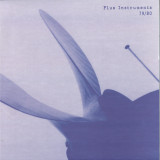
While she was still a member of Nasmak, one of the leading bands of the Dutch ultra-movement, Truus de Groot started Plus Instruments in 1978 with herself as the sole member. When the project evolved, she found a wide range of rotating collaborators like Michel Waisvisz, Lee Ranaldo and James Sclavunos. Plus Instruments was about freedom and the live performances were largely improvised. The sound minimal but captivating. The music always came from within, but De Groot was also triggered by bands like Red Crayola, Suicide, DAF, Wire, Per Ubu, Devo and the No Wave scene in NY. She was always experimenting with primitive multi-track recording and whatever crappy gadgets she could find. Always looking for a gritty, dirty sound and bizarre overtones.
At a young age she travelled to New York and began to immerse herself in the nightlife of the city that never sleeps. Here she found true creativity, passion and expression. The club scene was alive but highly competitive, so this fearless Dutch girl would just knock on promoter’s doors to get gigs booked at places like CBGB’s, Peppermint Lounge, Underground and the Pyramid. De Groot eventually settled in the United States and never stopped experimenting with sound. In recent years she reinvented Plus Instruments and led the group into new territory.
The recordings for this LP were made by De Groot at home and the music is experimental, minimal, industrial but also playful, sounding nothing like most of the later material. 14 tracks in total of which 7 are taken from the elusive and impossible to find self-released debut cassette as ‘Truss Plus Instruments’ which was sparingly distributed by Nigel Jacklin and his legendary Alien Brains fanzine in 1980. The remaining 7 tracks are from the same period (1979-1980) and were carefully selected from the vast archive of De Groot. We are glad to present this anthology that serves as a long overdue testimony to the formative phase of a unique female pioneer of electronic music.
- A1: Dadje Von O Von Non - Pedro Gnonnas
- A2: Feeling You Got - El Rego Et Ses Commandos
- A3: Honton Soukpo Gnon - Antoine Dougbe
- A4: E Nan Mian Nuku - El Rego Et Ses Commandos
- B1: Tin Lin Non - Orchestre Poly Rythma/Honore Avolonto
- B2: Okpo Videa Bassouo - Pedro Gnonnas Et Ses Panchos
- B3: Ya Mi Ton Gbo - Orchestre Poly Rythma/Antoine Dougbe
- C1: Nou Akuenon Hwlin Me Sin Koussio - Antoine Dougbe
- C2: Djobime - El Rego Et Ses Commandos
- C3: Na Mi Do Gbe Hue Nu - Honore Avolonto
- C4: Vimado Wingnan - El Rego Et Ses Commandos
- D1: Dou Dagbe We - Honore Avolonte Et L'orchestre Black Santiago
- D2: Kovito Gbe De Towe - Antoine Dougbe
- D3: La Musica En Verite - Pedro Gnonnas
Back in stock! A collection of super rare and highly danceable masterpieces recorded between 1969 -1981 by four legendary composers from Benin: ANTOINE DOUGBÉ, EL REGO et Ses Commandos, HONORÉ AVOLONTO, GNONNAS PEDRO & His Dadjes Band each one of them with their own distinctive sound. This compilation comes with a 40 page full colour booklet with ultra rare pictures and biographies. Fasten your seat belt and enjoy the mind-blowing sound of Benin.
Upchuck are experiencing a moment. The Atlanta punk collective just came off multiple tour runs with their good friend Faye Webster. Their Ty Segall-produced second album Bite The Hand That Feeds, with all its buzzsaw guitars and high-speed rippers and headbanging sludge, arrived in October. Later this year, they’ll make appearances at multiple festivals including Coachella. In the midst of relentlessly barreling ahead, the band and their label Famous Class are taking a beat to revisit how they got here. After working with Segall on Bite the Hand That Feeds, the band floated the notion that they wished they could hear what their collaborator could do with the songs on their 2022 debut album Sense Yourself. Holed up in his studio over Christmas with COVID and nothing else to do, Ty Segall began toying with Sense Yourself, sifting through folders of unlabeled stems to find the best guitar parts, emboldening the drum sound, and bringing greater clarity to KT’s vocals, all while bolstering the urgency of the band’s overall attack. With Segall’s new mix, Upchuck’s intense and righteous debut now impossibly overflows with even more fuzz and fury. In Segall, they found a kindred spirit whose studio approach made sense for just how hard they wanted this music to hit. “When we first went to record with Ty for Bite the Hand That Feeds, Mikey and I walked into the guitar room and Ty said, ‘Don’t touch the EQs.’ We looked at the amp and everything was on 10 except the master volume,” Hoff said. Previously, the band had been encouraged to capture the unvarnished sound of the studio. They’d toured with Segall’s band Fuzz, so everybody had the same goal while recording together: Capture the electricity of their intense live set. The band’s shows have a reputation for coming unglued, and there’s no greater document of that than Sense Yourself’s iconic album artwork. With no text, it’s a candid photo of a moment from a show shot on film without editing: blood streaked across KT’s face as they shout into the mic. In the middle of their EP release show, KT was in the pit as a fan started crowd surfing inside a shopping cart. A loose piece of metal near a wheel caught the singer right near the eyebrow and blood was everywhere, an instant piece of iconography snapped by probably every camera phone in the room. When Hoff revisits the message of this first album and Upchuck’s first songs, he thinks back to the year before the band even started when he and KT were hanging out. “We were sitting around talking for eight hours like ‘fuck, that's fucked up, that's fucked up.’” Upchuck became a vehicle for these five people to process how fucked up everything it is—to digest these formative hours-long conversations and put them to bludgeoning, intense rock music. The music is also fun as hell, and that’s part of the point. “There's a lot we need to do as people and a lot of things we need to fix in society but also like come on man like have your fun, wild out, have your drink,” KT says. “But be on your shit at the same time. Check your folk.”