Funky organ groove with a spritual soul swing !
One of the most influential and underground Hammond organists of the 1960's was "Big" John Patton as he was then known. If it was the groove that you wanted Patton was your Man and he made several albums for the legendary Blue Note label, many of which went on to sell for eye watering prices. As his style went out of favor, some of the recordings never saw the light of day until almost 20 years later and at the same time Patton slipped into the background. He resurfaced in the 1980s and went into the studio. Among his albums Soul Connection, originally released in 1983 on Nilva Records has now been re-released
Patton had a strong band with him on this record. Avant Garde trombonist Grachan Moncur III fits in just nicely with some funky lines and solo's. Acid jazz Guitar Hero Melvin Sparks rides in the all important funk grooves but the revelation has to be saxophonist Grant Reed, who you may know from the Jazz Room Release of "Shamek Farrah & Folks" and who was a mainstay of the Mongo Santamaria set up. Jazz Exile Alvin Queen has been part of the sound set ups of Junior Mance, Stanley Turrentine and Charles Tolliver, among others.
The whole album sounds as if it was laid down in a Rudy Van Gelder session in the mid 60's and then languished in a vault somewhere, waiting until the fan base had returned.
quête:his band
- A1: Opening - 03 24
- A2: Call Center - 02 22
- A3: End Love - 00 58
- A4: Sister - 01 39
- A5: Mdma - 01 33
- A6: Paris 13Th - 01 52
- A7: Mother - 01 27
- A8: Arrival - 01 43
- B1: Nora - 02 05
- B2: Humiliation - 1 34
- B3: One Month Later - 02 37
- B4: Camille & Emilie - 01 39
- B5: Emilie Dance - 01 54
- B6: Looks - 01 10
- B7: Porno - 2 40
- B8: Nora & Amber - 2 56
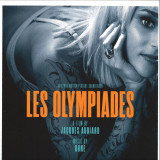
Sixteen musical vignettes of electrifying emotion at the crossroads of ambient, modern synthesizer productions and organic orchestral music experimentation, which tint French director Jacques Audiard's new feature film with the illuminated glow of a whole new generation.
Textextext - (add your write up)
When Jacques Audiard contacted him, Rone was just a few weeks away from receiving the Cesar award for best film score for his very first soundtrack "Night Ride", the highest honor in French film for a composer.
Throughout his career, the French director has been able to surprise his audience by playing on the codes of "genre films", while remaining faithful to the aesthetics of "art film". His cinema is both profound and entertaining, sophisticated and accessible, dark and dreamlike.
"Jacques' cinema is physical, sensual, modern", Rone says about the director, "when he asked me to do the music for Paris, 13th District , I immediately accepted, without seeing any images or reading the script. He is simply one of the greatest contemporary filmmakers."
His new feature film deals with youth in general and their sexuality in particular in a way no one may have done before. The story is based on four young characters and their existential questionings, whose destinies intertwined against the backdrop of the Parisian "Olympiades" high rises in the 13th arrondissement.
But time was already running out, as the film was set to be nominated for *Cannes' Palm D'or* at the rescheduled edition of the festival in July 2021. Between the releases of "Rone & Friends" and his remixes for Agnes Obel, Go Go Penguin and Jehnny Beth (who also plays a role in the film), the producer decided to lock himself away in in his brand-new Isola Studio in Cancale, French Brittany. He also invested in a large screen on which he projected loops of the film and started manipulating his gear. "I had Miles Davis in mind and the way he composed "Ascenseur pour l'échafaud" by improvising with his band while watching excerpts from the film."
After a first conclusive test on three scenes of the film which allowed Rone to showcase the skills he had developed in composition in various musical fields, a relationship of trust developed between the musician and the director, which resulted in over 45 minutes of Rone's music used for the final cut.
"There was a lot of music to be made in a short time, but the talks with Jacques were very stimulating. He had a fairly precise idea of what he wanted, while at the same time, I think, having the desire to be surprised, or even a little shaken up."
If the black and white aesthetic recalls the great hours of the "Nouvelle Vague", Rone´s music gives a new layer to the film which fits resolutely with 2020's zeitgeist.
This second soundtrack by Rone is a sonic urban adventure in itself. As it is used in the film, colouring in the lives of Audiard's protagonists, it will have the same impact on us, the listeners, in our own everyday lives.
The debut album from hotly tipped kiwi band Jamie and The Numbers, finally sees a release via Pete Brady’s Superfly Funk and Soul Records. After years of limited release 7”s being fought over worldwide by collectors and fans, this superb LP is the culmination of years of work for highly gifted Tongan-Kiwi Jamie Mavusa. Based in Wellington she can occasionally be seen singing soul tunes for Tapestry Music Promotions at many of their Music Reviews and also in her gospel choir at Church. It was at one of the Tapestry Music shows in Wellington that Jamie met Simon from Deltaphonic Records/The Numbers and after watching Jamie perform an amazing version of "Wade In The Water”. It was suggested they do some recording together with the view of doing some cool Soul classics and a bunch of originals too, the rest is now history.
The Numbers are an incredibly tight Wellington based band. Prolific writers of their own original material they are a 4 piece that consist of three brothers from Wainuiamata and a newly adopted Kiwi originally from Birmingham England. If you get a chance check these guys out they are brimming with cool retro tunes and some barnstorming original songs played with verve and passion and their shows are always fun, 2019 they supported "From The Jam" on their visit to New Zealand and after teaming up with Jamie have played Pasifika Festivals and open-air concerts to thousands of people. The Numbers collectively have played, sessioned, recorded for other artists on such labels as Gut Records, D-Star, EG Records, Imaginary Records and have in excess of 40+ published songs with Universal, Complete Music, KWS Records NYC and Cherry Red Records.
Outernational Sounds very proudly Presents The Mallory-Hall Band "Song of Soweto" & "The Last Special".
Limited, fully licensed digital and vinyl reissues of two crucial South African sessions led by Charles Mallory and Al Hall, Jnr., featuring Kirk Lightsey, Marshall Royal, Rudolph Johnson, Billy Brooks and more! Essential companion pieces to Kirk Lightsey’s legendary ‘Habiba’.
Featuring tracks:
Song Of Soweto: Side A – ‘Song of Soweto’, ‘Hamba Samba’; Side B – ‘Cape Town Blues’, ‘Moroka Rock’, ‘The African Night’
The Last Special: Side A - ‘The Last Special’, ‘Princess of Joh’Burg’; Side B - ‘Amafu (Clouds)’, ‘Blue Mabone’
Never released outside South Africa, and out of print since 1974, Outernational Sounds presents two long-lost Johannesburg sessions from the Mallory-Hall Band – an all-star review of West Coast jazz stars who toured apartheid South Africa in the mid-1970s.
Sanifu Al Hall, Jnr. is a musician’s musician. During a storied career stretching across six decades, Hall has recorded with the greats of the music including Freddie Hubbard, Doug Carn, and Johnny Hammond, and leads his own Cosmos Dwellerz Arkestra. But until recent years, the only records on which he had appeared as leader were a brace of rich, funky LPs, Song Of Soweto and The Last Special, issued only in South Africa under the moniker of The Mallory-Hall Band (named for Hall and his co-leader, guitarist Charles Mallory – musical director for Martha Reeves and the Vandellas, Mallory was conductor for Dusty Springfield touring bands, and had worked with John Lee Hooker, Stevie Wonder, and many others). Neither LP had any wider release, and both have remained out of print since 1974. How did a young stalwart of the Los Angeles jazz scene end up in a recording studio in apartheid South Africa?
Al Hall, Jnr. and Charles Mallory had arrived in South Africa as part of the touring band for the singer Lovelace Watkins. Sometimes billed as ‘the Black Sinatra’, the Detroit-born Watkins sang standards and ballroom classics on the Las Vegas circuit. He never made it big in the US, but in his 1970s heyday he was a huge star in southern Africa, and 1974 he hired a jazz big band to accompany him on a tour of South Africa – Hall and Mallory were part of the line-up, alongside Mastersounds bassist Monk Montgomery, pianist Kirk Lightsey, tenorist Rudolph Johnson, drummer Billy Brooks, and Marshall Royal, musical director of the Count Basie band. The tour was a huge success, and during downtime from performing, members of the group managed to independently record no fewer than three albums. Lightsey and Johnson’s stunning Habiba was the first (reissued as Outernational Sounds OTR.013), and it was followed by two crucial sessions led by Hall and Mallory – Song of Soweto and The Last Special, issued on the local IRC imprint.
Visiting apartheid South Africa in 1974 was a controversial choice for any artist. Numerous artistic and cultural bodies around the world had already announced that their members would boycott the country in solidarity with the struggle against apartheid, and working in South Africa was severely frowned on by anti-apartheid activists everywhere. For a Black band, touring the country to play to mostly white audiences could have been seen by many both inside and outside South Africa as a questionable decision. ‘It was a batch of mixed reactions when I choose to visit South Africa whilst apartheid policies were in place,’ Hall recalls. ‘To me the choice was a simple one – “I wanna see for myself!” I also wanted to be a part of breaking down racial barriers, having been down some of the same roads in my own country.’
The albums were recorded by a twelve-piece band at Johannesburg’s Video Sounds Studios in December 1974, and feature the legendary pianist Kirk Lightsey, Black Jazz recording artist Rudolph Johnson, and the rest of the touring band. Both records are superbly arranged slabs of peak 1970s funky big band soul jazz, with tasteful Latin inflections and more than a nod to South Africa’s upful township jazz sound. They are the sonic traces left by a seasoned African American band who were touring South Africa in the depths of the apartheid era, and who immediately moved beyond the segregated hotels and ballrooms to build links with local South African players and audiences.
Never previously available outside South Africa, Outernational Sounds’ new editions of Song of Soweto and The Last Special (alongside our edition of Kirk Lightsey’s Habiba) represents the first time these albums have been in print for nearly fifty years. Fully licensed from Gallo Records and pressed at Pallas in Germany from Gallo’s original masters, they feature new sleeve notes from Francis Gooding (The Wire) based on interviews with Al Hall, Jnr., and a reminiscence from pianist Kirk Lightsey.
Deluxe LP features 140g virgin vinyl; heavy-duty board jacket, artwork by Art Rosenbaum + DL. RIYL: Bob Dylan, John Prine, Townes Van Zandt, Ry Cooder, Michael Chapman, Michael Hurley, The Youngbloods & Bonnie “Prince” Billy. Jake Xerxes Fussell’s 4th album finds the acclaimed folksong interpreter, guitarist, and singer navigating fresh sonic and compositional landscapes on the most conceptually focused, breathtakingly rendered, and enigmatically poignant record of his wondrous catalog. Produced by James Elkington and featuring formidable players both familiar (Casey Toll, Libby Rodenbough) and new (Joe Westerlund, Bonnie “Prince” Billy), it includes Jake’s first original compositions; atmospheric arrangements with pedal steel, horns, and strings. One of the most striking and strangely moving moments on Jake Xerxes Fussell’s gorgeous Good and Green Again an album, his fourth and most recent, replete with such dazzling moments arrives at its very end, with the brief words to the final song “Washington.” “General Washington/Noblest of men/His house, his horse, his cherry tree, and him,” Fussell sings, after a hushed introductory passage in which his trademark percussively fingerpicked Telecaster converses lacily with James Elkington’s parlor piano. That’s the entire lyrical content of the song, which proceeds to float away on orchestral clouds of French horn, trumpet, and strings, until it simply stops, suddenly evaporating, vanishing with no fade or trace, no resolution to its sorrowful minor-key chord progression, just silence and stillness and stark presidential absence. It feels like the end of a film, or the cold departure of a ghost, and is unlike anything else Jake has recorded. In all his work Jake humanizes his material with his own profound curatorial and interpretive gifts, unmooring stories and melodies from their specific eras and origins and setting them adrift in our own waterways. The robust burr of his voice, which periodically melts and catches at a particularly tender turn of phrase, and the swung rhythmic undertow of exquisite, seemingly effortless guitar-playing here he plays more acoustic than ever before pull new valences of meaning from ostensibly antique songs and subjects. On Good and Green Again, Jake not only ventures beyond his established mastery of songcatching and songmaking into songwriting, but likewise navigates fresh sonic and compositional landscapes, going green with lusher, more atmospheric and ambitious arrangements. The result is the most conceptually focused, breathtakingly rendered, and enigmatically poignant record of his wondrous catalog. It’s also his most deliberately premeditated album, representing his fruitful return to a producer partnership after two self-produced projects, What in the Natural World (2017) and Out of Sight (2019) (William Tyler produced his friend’s self-titled 2015 debut.) This time James Elkington produced and played a panoply of instruments, bringing to Jake’s arcane song choices his own peerless sense of harmony and orchestration, balance and dramatic tension. The pair enlisted a group of formidable players including regular bandmembers Casey Toll (Mt. Moriah, Nathan Bowles) on upright bass, Libby Rodenbough (Mipso) on strings, and Nathan Golub on pedal steel. They were joined by welcome newcomers Joe Westerlund (Megafaun, Califone) on drums, Joseph Decosimo on fiddle, Anna Jacobson on brass, and veteran collaborator and avowed Fussell fan Bonnie “Prince” Billy, who contributes additional vocals. Album opener “Love Farewell” (featuring some beautiful singing by Bonnie “Prince” Billy), an elliptical tale of the folly of war, set to the world’s most heartbreaking goodbye march for a lover left behind. “Carriebelle” and “Breast of Glass” each similarly concerns, in its own way, romantic love and leavings. All three songs highlight Jacobson’s diaphanous, understated brass parts, tying them together in a true lover’s knot. “Rolling Mills Are Burning Down,” with its distant keening strings and capacious sense of space, observes and mourns the loss of work and community in the wake of elemental disaster. Nine-minute tour de force “The Golden Willow Tree,” the sole explicitly narrative song herein, is a hypnotic, minimalist rendering of a tragic maritime ballad about scuttling an enemy ship in exchange for wealth and glory and a captain’s inevitable betrayal. “Fussell is creating his own legacy within the long lineage of traditional folk musicians and storytellers that have come before him.” The New York Times // “So elegant … It’s relaxing in the way that pondering a Zen koan is relaxing, and sweet in the way that the wounded, honey-voiced blues of Mississippi John Hurt are sweet.” Pitchfork // “Music that resides at the seams of Appalachia and the cosmos.”
St. Paul and the Broken Bones announce their new album ‘The Alien
Coast’, released on ATO Records. Produced by Matt Ross-Spang and
featuring eleven new, original songs, ‘The Alien Coast’ is the first St.
Paul and the Broken Bones album tracked in the band’s hometown of
Birmingham, AL. The arrangement allowed the octet to spend more time
and tap a broader creative community than ever before, resulting in their
most ambitious work to date.
Led by singer and lyricist Paul Janeway - a former bank teller and
preacher-in-training who learned to sing in his church choir - the octet
explore thrilling new territory on ‘The Alien Coast’, a fever dream
convergence of soul and psychedelia, stoner metal and funk, animated
by the very “fire and brimstone” which Janeway invokes in the album’s
opening line. Unlimited studio-time allowed individual members of the
band to experiment with synths and samples on ‘The Alien Coast’, and
even collaborate with Birmingham beatmaker and hip-hop artist Randall
Turner.
Janeway cites a similarly disparate range of influences that wove their
way into the writing for ‘The Alien Coast’, from Greek mythology and
dystopian sci-fi, to works of art like Bartolomé Bermejo’s Saint Michael
Triumphs over the Devil and 17th Century Italian sculpture, to colonialperiod history books. “The title actually came from reading about the
history of the Gulf of Mexico, which is home for us,” he recalls. “When
the settlers - or invaders, really - first came to the Gulf Coast they
couldn’t figure out what it was, and started referring to it as the Alien
Coast. That term really stuck with me, partly because it feels almost
apocalyptic.”
St. Paul and the Broken Bones have reached incredible heights since
breaking out with their first album in 2014. Their previous three albums
each debuted in the Billboard 200, their legendary NPR Tiny Desk has
over 7 million views, they’ve opened for the Rolling Stones, shared the
stage with Elton John, and appeared on several television shows
including Jimmy Kimmel Live, Austin City Limits and more. They were
also the first-ever musical performance on Stephen Colbert’s Late Show.
St. Paul and the Broken Bones announce their new album ‘The Alien
Coast’, released on ATO Records. Produced by Matt Ross-Spang and
featuring eleven new, original songs, ‘The Alien Coast’ is the first St.
Paul and the Broken Bones album tracked in the band’s hometown of
Birmingham, AL. The arrangement allowed the octet to spend more time
and tap a broader creative community than ever before, resulting in their
most ambitious work to date.
Led by singer and lyricist Paul Janeway - a former bank teller and
preacher-in-training who learned to sing in his church choir - the octet
explore thrilling new territory on ‘The Alien Coast’, a fever dream
convergence of soul and psychedelia, stoner metal and funk, animated
by the very “fire and brimstone” which Janeway invokes in the album’s
opening line. Unlimited studio-time allowed individual members of the
band to experiment with synths and samples on ‘The Alien Coast’, and
even collaborate with Birmingham beatmaker and hip-hop artist Randall
Turner.
Janeway cites a similarly disparate range of influences that wove their
way into the writing for ‘The Alien Coast’, from Greek mythology and
dystopian sci-fi, to works of art like Bartolomé Bermejo’s Saint Michael
Triumphs over the Devil and 17th Century Italian sculpture, to colonialperiod history books. “The title actually came from reading about the
history of the Gulf of Mexico, which is home for us,” he recalls. “When
the settlers - or invaders, really - first came to the Gulf Coast they
couldn’t figure out what it was, and started referring to it as the Alien
Coast. That term really stuck with me, partly because it feels almost
apocalyptic.”
St. Paul and the Broken Bones have reached incredible heights since
breaking out with their first album in 2014. Their previous three albums
each debuted in the Billboard 200, their legendary NPR Tiny Desk has
over 7 million views, they’ve opened for the Rolling Stones, shared the
stage with Elton John, and appeared on several television shows
including Jimmy Kimmel Live, Austin City Limits and more. They were
also the first-ever musical performance on Stephen Colbert’s Late Show.
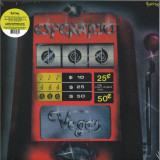
After the recent reissue of their first eponymous album, Favorite Recordings proudly presents Vegas, the second LP from Venezuelan band Esperanto. Rare and sought-after for many collectors, it was recorded in between Las Vegas and Caracas and originally released in 1981. Following bandleader Jorge Aguilar in his musical trip to the infamous American city bathing into flashing lights and vivid colors, we're invited to an excursion in Disco, Boogie and Jazz-Funk territories. Finally reissued, fully remastered, Vegas will be available as Gatefold Tip-On Vinyl LP.
With great care and attention to details, Esperanto managed to create a very convincing sequel to their Jazz-Funk debuts. Vegas keeps indeed a perfect balance between various influences. Through energic disco beats with intense funky solos, catchy AOR-influenced songs, where Jorge delivers convincing vocal performance, or sunny jazz-funk slow jams, the album still reveals something quite authentic. And this feeling echoes surely the one that could have been felt by Jorge Aguilar while discovering USA on a trip - where it all started for the music he loves. Like sometimes a foreigner's enriching view on some local specialty, he surely brought with the band all his authenticity and young but vibrant experience while convincing at the same time major labels for distribution.
With certain notoriety coming with the release of their first album, Jorge Aguilar and his drummer Pablo Matarazzo planned to go to Los Angeles for a few gigs. But once there, they realized their contact had to leave for Tina Turner's tour in Europe. Before that, he invited them to come along to Las Vegas and eventually meet musicians there. Luckily, the plan worked perfectly: Jorge came back to Los Angeles with a lot of contacts then moved to Boston and NYC before finally coming back to Caracas. He told: "I was so impressed with this trip that I told myself that one day I would return to Los Angeles and Las Vegas. The first tracks I did them in Los Angeles with Kenny More, James Gadson and other session musicians from that city. Later, I took the tracks to Caracas where the musicians of the band recorded overdubs. After that, I returned to Los Angeles to master with Bernie Grundman who was still working in his small studio at A & M records studios in Hollywood. As can be seen in the title of some of the songs like "Hollywood", "Vegas", "Kenny's Place", were only the translation of my experiences at the time."
John Lodge, legendary bass player, songwriter and vocalist of The Moody Blues, and Rock and Roll Hall of Fame inductee, is to release a new live album entitled ‘The Royal Affair and After’. It features incredible new live recordings of all his Moody Blues hits, plus special tributes to all his bandmates, Graeme Edge, Justin Hayward, Mike Pinder and Ray Thomas. John is delighted to release this album, an album that encompasses the songs that he describes as being ‘the soundtrack of his life’, and continues in his deeply-felt quest to ‘Keep the Moody Blues music alive’. The album was recorded live in Las Vegas on ‘The Royal Affair Tour’, with additional tracks recorded during his subsequent USA dates. During the summer of 2019, Lodge was delighted to be part of the ‘The Royal Affair Tour’, with YES, Carl Palmer, Arthur Brown, and ASIA, and what followed was an epic summer. For John it was unique opportunity to bring his electrifying show to both long established fans, and to those new to the Moody Blues. The album comprises many of the incredible Moodies hits penned by Lodge, classics such as “I’m Just a Singer (in a Rock and Roll Band),” “Gemini Dream,” “Ride My Seesaw,” “Isn’t Life Strange,” and “Steppin’ in a Slide Zone”, plus the wonderful “Saved by the Music” from the Blue Jays album.
- 1: Shadow (Forte)
- 2: Dagger (Forte)
- 3: Eternal Golden Monk (Forte)
- 4: Benblåst (Forte)
- 5: Östpeppar (Forte)
- 6: Traces (Forte)
- 7: Phobon Nika (Forte)
- 8: Måsstadens Nationalsång (Forte)
- 9: When No One Walks With You (Forte)
- 10: All These Feelings (Forte)
- 11: Nojja (Forte)
- 12: Deceit (Forte)
- 13: The Lone Deranger (Forte)
With a decade between releases, VILDHJARTA remain as inscrutable and as close to anonymity as a band can be. Their down-tuned, staccato riffs and pulverizing grooves are the sound of music stripped to its essence. Formed in 2005 in Hudiksvall, Sweden, VILDHJARTA has become an institution of omission. From their origins, they were unafraid to embrace the untraditional. Since dropping a minute of new live music in 2016, the band's focus has almost entirely been on the new album, “måsstaden under vatten” that was finally released October 15th, 2021, with drummer and now noted producer, Buster Odeholm (also known for his work with Born of Osiris, Shadow of Intent and guitar for Humanity’s Last Breath amongst others) heavily involved in the production, mixing and mastering of the music. While working on “måsstaden under vatten” the band also revamped their two first releases. Buster Odeholm comments: "Before I joined VILDHJARTA they were my favourite band. However, I always felt the production could be a lot better and serve the songs a lot more. After joining I asked for the files from those albums to be able to try my own approach. I’ve re-programmed/produced bass and drums from scratch. For producing the drums on ‘Thousands of Evils (forte)’ I got some help from Chris George from Sworn In. I've also remixed and remastered both albums. This has been going on a long time and a lot of remixing has been done as the years have gone by, but now it’s finally time to release it.". Don’t miss the chance to check out classic VILDHJARTA tunes in all their up to date glory, now entitled ”måsstaden (forte)” and “Thousands of Evils (forte)”. Both are available as Ltd. Gatefold marbled LP, Ltd. CD Edition and Digital Album.
24 Songs. A new project from The Wedding Present. A new 7” single every month throughout 2022. 24 Songs sees David Gedge writing with legendary Sleeper guitarist Jon Stewart for the first time, and a more perfect union could not have been predicted. The first release includes a gorgeous duet featuring David and Louise Wener also from Sleeper on ‘We Should Be Together’, and it’s coupled with a rousing new track called ‘Don’t Give Up Without A Fight’ which combines classic Wedding Present feistiness with a Krautrock finale. The notion of a monthly 7” single is not new to The Wedding Present, but 24 Songs shows us that even classic concepts can be reinvented. The series also continues the band’s association with photographer Jessica McMillan, who has created stunning images and films as a visual accompaniment to the recordings.‘We Should Be Together’ will be available to listen to at The Wedding Present’s official YouTube channel from Tuesday 19 October at 12 noon. Subscription details with an early bird incentive can be found at 24songs.scopitones Individual singles and a collector’s box can be ordered from the same site or via all participating record shops. Explaining 24 Songs, David Gedge said: “In 1991, The Wedding Present were rehearsing in a studio in Yorkshire when we hit upon an idea that immediately thrilled us all. Our bass player Keith Gregory had been a member of the ‘Sub Pop Singles Club’ - a service that allowed subscribers to receive 7”s released by that Seattle label on a monthly basis. Keith wondered if we, as a band, could attempt a similar thing. In that instant, The Wedding Present’s Hit Parade series was born and, during 1992, we managed to release a brand new 7” single each and every month. “The Hit Parade went on to become something of a significant milestone in the history of the band and it’s a project about which I’m often asked. As its thirtieth anniversary approached, I began to wonder if we should celebrate it in some way. A ‘Hit Parade Part 2’ didn’t feel quite right, though. Then, someone said to me: “Other bands have released music in similar ways but there has been nothing like the Hit Parade.” And they were right! A 7” single a month seems, somehow, very ‘Wedding Present’. So, inspired by that little idea from three decades ago, we’ve embarked on this new project, 24 Songs. “Even though The Wedding Present have never been known for taking the easy route, the idea of recording 24 tracks and releasing them in this way could seem daunting to any band. However, I’ve been inspired by the music that has been written since Jon and Melanie joined the group. The thought of celebrating this exciting new line-up with an exciting new series has motivated us all… and I suppose we also didn’t want any of these songs to be hidden away in the middle of an album!”
The latest addition to Chick Corea's remarkable discography is Chick
Corea Akoustic Band 'LIVE', the long-anticipated reunion of his beloved
Akoustic Band with bassist John Patitucci and drummer Dave Weckl,
together as a trio for the frst time in more than two decades
Under any circumstances, these thrilling live recordings would be a welcome
addition to Corea's prodigious discography. With the news of his passing still so
fresh in listeners' minds, its release comes as an opportunity for fans to bid
farewell while cherishing the communal energy and playful vigor that made the
pianist a favourite of jazz lovers around the world for nearly 60 years. 'LIVE', the 2-
CD/3-LP set was recorded January 13, 2018 at SPC Music Hall in St. Petersburg,
Florida. The trio's intricate interplay and highwire jousting refects more than 30
years of collaboration between Corea's Akoustic and Elektric Bands and serves as
a celebratory reminder of Corea's singular genius, with more than two hours of
inspired playing and spirited camaraderie.
Chick Corea attained iconic status in music. The late keyboardist, composer and
bandleader was a DownBeat Hall of Famer and NEA Jazz Master, as well as one
of the most nominated artists in GRAMMY Awards history with 68 nods - and 24
wins, in addition to 4 Latin GRAMMYS. From straight-ahead to avant-garde, bebop
to jazz- rock fusion, children's songs to chamber and symphonic works, Chick
touched an astonishing number of musical bases in his career after playing with
the genre-shattering bands of Miles Davis in the late '60s and early '70s
On August 27th 2021 The Third Sound released their fifth album ‘First Light’ on Fuzz Club Records and it is now being given a second pressing after selling out upon release the first time aorund. Dealing in a hypnotic blend of neo-psychedelia, post-punk and new wave, The Third Sound is a Berlin-based band led by the Icelandic musician Hákon Aðalsteinsson, who is the guitarist in Brian Jonestown Massacre and formerly played in the cult rock’n’roll outfit Singapore Sling. A mainstay of the European psych underground in his own right, not just through his collaborations with the likes of Anton Newcombe and Tess Parks, The Third Sound has been Hakon’s primary solo endeavor since the release of his self-titled debut on Newcombe’s A Recordings a decade ago. Arriving following 2018’s ‘All Tomorrow’s Shadows’ LP, ‘First Light’ marks an evolution into a brighter and at times uplifting sound. Marrying moments of light and dark, the result is The Third Sound’s most dynamic full-length to date. Talking about the album, Hakon said: “This album is definitely less gloomy than the previous one, although some ghosts from the past are lurking in the background. We always try to make something new on each album and never make the same album over again, but this feels like an even bigger change than usual, especially regarding the mood. Something new is beginning although the past is not forgotten. I think the title, First Light, describes the overall feel of the record pretty well.” ‘First Light’ is the fifth full-length from The Third Sound and arrives off the back of 2018’s ‘All Tomorrow’s Shadows’, 2016’s ‘Gospels of Degeneration’, 2013’s ‘The Third Sound of Destruction and Creation’ and their 2011 self-titled debut. With Hakon Aðalsteinsson leading the group on vocals and guitar, the rest of the band is currently comprised of Robin Hughes (Guitar / Organ), Fred Sunesen (Drums) and Andreas Miranda (Bass). With a number of European tours in tow, the band have previously shared the stage with the likes of the Brian Jonestown Massacre, The Warlocks, Singapore Sling, Crocodiles, Clinic, Tess Parks and more.
There’s an ancient Japanese legend in which a horde of demons, ghosts and other terrifying ghouls descend upon the sleeping villages once a year. Known as Hyakki Yagyō, or the Night Parade of One Hundred Demons, one version of the tale states that anyone who witnesses this otherworldly procession will die instantly—or be carried off by the creatures of the night. As a result, the villagers hide in their homes, lest they become victims of these supernatural invaders.
Such is the inspiration for the latest album from EARTHLESS. “My son is really into mythical creatures and old folk stories about monsters and ghosts,” bassist Mike Eginton explains. “We came across the ‘Night Parade of One Hundred Demons’ in a book of traditional Japanese ghost stories. I like the idea of people hiding and being able to hear the madness but not see it. It’s the fear of the unknown.”
Whereas 2018’s Black Heaven featured shorter songs and vocals from guitarist Isaiah Mitchell on much of the album—an unprecedented move for the San Diego power trio—their latest is a return to the epic instrumentals EARTHLESS made their unmistakable name on. Night Parade Of One Hundred Demons is comprised of two monster songs—the 41-minute, two-part title track and the 20-minute “Death To The Red Sun.”
The scenario that allowed for this kind of exploration was a stark contrast to that of Black Heaven. At that point, Mitchell was living in the Bay Area, which made it difficult for the band to get together and work on the type of long instrumental pieces they’re known for. But in March 2020, the guitarist moved back to San Diego. More specifically, he moved back the night the pandemic lockdown kicked in. Bad timing, perhaps—or maybe perfect timing.
Plus, they were all on the same page about not wanting to do another record with vocals. “In a way, I think this album was a reaction to our last record,” Eginton says. “Black Heaven was outside our comfort zone. I think it was a good record, but it was challenging to write songs in a more traditional verse-chorus-verse format. This one was more enjoyable. I’m sure we’ll do more vocal tracks in the future, but for the time being I see that album as a one-off.”
Given the record’s inspiration, it should come as no surprise that Night Parade of One Hundred Demons strikes a more sinister tone than the rest of the band’s catalogue. “It definitely has a darker, almost evil kind of vibe compared to stuff we’ve done in the past,” Rubalcaba says. “There’s more paranoia and noise, and some of Isaiah’s whammy-bar stuff kind of reminds me of these Jeff Hanneman moments in Reign In Blood, where it just seems like everything is going to hell. It’s pretty fun.”
Night Parade of One Hundred Demons was recorded in San Diego with Rubalcaba’s childhood friend Ben Moore, who’s worked with everyone from DIAMANDA GALAS and BURT BACHARACH to CEREMONY and HOT SNAKES. When Eginton wasn’t tracking his bass parts, he worked on the album’s incredible sleeve art. “He really dedicated himself to the project,” Rubalcaba says. “He’d be drawing in the studio with, like, a coal-miner’s lamp on his head while we were doing overdubs. He really knocked it out of the park.”
All told, Night Parade of One Hundred Demons isn’t just a return to the band’s traditional format—it’s a return to their very beginnings. “This album actually has the very first Earthless riff in it,” Eginton reveals. “We just recorded it 20 years after we wrote it. But we’re really happy with how this record came out. We feel it might be our finest to date.”
Many of you will be aware of the band Homegrown Syndrome (we released the single a few years ago). They were also known locally as Homegrown Funk & the band Memphis that put out one extremely rare two sider. A party Side 'Shake and Rock' flipped with a top of the rung ballad 'Inside My Love', it has everything collectors want, Rarity & Quality so sells for 500+ all day long, below Robert Garcia gives us the history....
"Memphis" were members of the Memphis based group "Home Grown Funk." Home Grown Funk was also known as "Homegrown Syndrome," a controversial name bestowed to them. Before heading to LA they gigged all over Memphis. Some of the members were from an earlier 70s group called "Brothers Unlimited" and had earlier ties during the 60s with the "Memphis Invaders" (a peaceful civil rights activist group).
With aspirations of pushing Homegrown further, a few members including Jerry Jones made the move out west. It was LA 1977 when they were introduced to Ike Tuner through a mutual friend "Ricky G". It was a casual meetup. Then one night Ike had his son Ike Jr. go check them out while performing at the Soul Train hangout spot "Maverick Flats". Ike Jr. praised their performance to Ike and he had them come out to his Inglewood studio. The group walked into the studio with a funky track already playing and that's when Jerry Jones improvised this opportunity and started singing. Ike then turned and said… "Who is that singing?" Jerry said, "Thats me." Then Ike replied " YOU BIG MUTHAF***A! You could be my new Tina." From that point the group cut bunch of tracks with Ike over the years up until they're feature on his 1980 album "The Edge."
In 1981 Perry Kibble (Keyboardist for Taste Of Honey) was at "Concerts In The Park" and heard Home Grown Funk performing. He linked up with the group and got them a deal with Arista. During this time they recorded their hit track " Confrontation." Perry suggested that the group change their name because he didn't want another group with the work "Funk" in it and hence "Homegrown Syndrome." They also use the Arista studio to cut an unreleased acetate with tracks "Got the love" and "Party Vibes" soon to be reissued on ATON.
Around the same time they were introduced to a fella named Roger Green. Green asked the group to come over to his home studio to cut the track "Inside My Love." Upon naming the record Roger Green suggested to go by "Memphis" since they were all from there. This record was eventually pressed in 1982 as small run becoming extremely hard to find.
Words by: Robert Garcia
Many of you will be aware of the band Homegrown Syndrome (we released the single a few years ago). They were also known locally as Homegrown Funk & the band Memphis that put out one extremely rare two sider. A party Side 'Shake and Rock' flipped with a top of the rung ballad 'Inside My Love', it has everything collectors want, Rarity & Quality so sells for 500+ all day long, below Robert Garcia gives us the history....
"Memphis" were members of the Memphis based group "Home Grown Funk." Home Grown Funk was also known as "Homegrown Syndrome," a controversial name bestowed to them. Before heading to LA they gigged all over Memphis. Some of the members were from an earlier 70s group called "Brothers Unlimited" and had earlier ties during the 60s with the "Memphis Invaders" (a peaceful civil rights activist group).
With aspirations of pushing Homegrown further, a few members including Jerry Jones made the move out west. It was LA 1977 when they were introduced to Ike Tuner through a mutual friend "Ricky G". It was a casual meetup. Then one night Ike had his son Ike Jr. go check them out while performing at the Soul Train hangout spot "Maverick Flats". Ike Jr. praised their performance to Ike and he had them come out to his Inglewood studio. The group walked into the studio with a funky track already playing and that's when Jerry Jones improvised this opportunity and started singing. Ike then turned and said… "Who is that singing?" Jerry said, "Thats me." Then Ike replied " YOU BIG MUTHAF***A! You could be my new Tina." From that point the group cut bunch of tracks with Ike over the years up until they're feature on his 1980 album "The Edge."
In 1981 Perry Kibble (Keyboardist for Taste Of Honey) was at "Concerts In The Park" and heard Home Grown Funk performing. He linked up with the group and got them a deal with Arista. During this time they recorded their hit track " Confrontation." Perry suggested that the group change their name because he didn't want another group with the work "Funk" in it and hence "Homegrown Syndrome." They also use the Arista studio to cut an unreleased acetate with tracks "Got the love" and "Party Vibes" soon to be reissued on ATON.
Around the same time they were introduced to a fella named Roger Green. Green asked the group to come over to his home studio to cut the track "Inside My Love." Upon naming the record Roger Green suggested to go by "Memphis" since they were all from there. This record was eventually pressed in 1982 as small run becoming extremely hard to find.
Words by: Robert Garcia
On an early morning in November 2015, THE GHOST INSIDE was involved
in an accident that claimed the lives of their driver, the lives of everyone
in the other vehicle, and resulted in multiple injuries for all of the band
members
Jonathan Vigil (vocals) suffered from a fractured back, ligament damage, and
two broken ankles. Zach Johnson (guitar) has since had 13 surgeries for a femur
injury. Andrew Tkaczyk (drums) ultimately lost his leg. The future of the band was
very much up in the air throughout 2016, as everyone struggled to recover.The
road to recovery was both mentally and physically extensive but THE GHOST
INSIDE were determined to get back to doing what they love. Nearly four years
later, the band did just that, returning to the stage July 2019. Originally meant to
take place at the historic Shrine Auditorium, tickets sold out so quick that the gig
had to be moved to the parking lot, selling double the venues capacity. Over 8000
people witness this return to the stage. The accident will always be a defning
moment for THE GHOST INSIDE, but never what defnes them.
- 1: Apocalypse Whenever
- 2: Summer Lightning
- 3: Baby Blue Shades
- 4: Peachy
- 5: When The World Was Mine
- 6: Wishing Fountains
- 7: Electric Circus
- 8: Nightclub (Waiting For You)
- 9: Life Was Easier When I Only Cared About Me
- 10: Heaven Is A Place In My Head
- 11: Silently Screaming
- 12: Grace (I Think I'm In Love Again)
- 13: Symphony Of Lights
Bad Suns sound – dreamy '80s pastiche fanked by Stratocasters through
cranked Vox amps, pulsing synths, and palpable rhythmic energy – that
endeared listeners to the band in the frst place, and their fourth LP,
Apocalypse Whenever, uses that musical foundation as the jumping-off
point for their next evolution
Conceived as "the soundtrack to a movie that doesn't yet exist," the 13- track
album, helmed by longtime producer Eric Palmquist (MUTEMATH, Thrice) at his
Palmquist Studios and the band's North Hollywood rehearsal spot, is more
conceptually rigorous than anything they've ever attempted – but no less
compelling or accessible. "We also knew we wanted the album to have a throughline, a story from beginning to end,"frontman Christo Bowman explains, so the
band did what any good directors would: They assembled a mood board, fltering
their neo-noir version of Los Angeles through the dreamlike haziness of author
Haruki Murakami, the futuristic fair of Terminator 2: Judgment Day and Blade
Runner, and the lifted cinematography of Spike Jonze's HER.
These disparate infuences don't just offer Apocalypse Whenever an expanded
palette of sonic choices to color Bad Suns' airtight hooks – they help give the
songs an emotional complexity that works on a multitude of levels depending on
how listeners choose to receive them.
Mikkel Holm Silkjær, the frontman of Danish indie rock combo Yung, is fnally set
to release his long-awaited debut solo record as Holm - the frst release with this
solo project since 2018""s 'Dappled' EP. Titled 'Why Don't You Dance', it's a product
of three years of writing and nearly six months of recording, it's a gleefully varied
guitar- pop record that veers between styles, from the fzzing energy of
'Descending' and opener 'Intelligent Moves' to the gorgeously melodic 'Like a Dog'
and 'The Rope', via the stately introspection of tracks like 'K's Choice' and 'Back
Home'. Recorded by Yung bandmate Tobias Guldborg Tarp (who co- produced
alongside Neil Robert Young), Why Don't You Dance is the sound of Silkjær
stepping away from his group's predilection for taut rock and roll and instead
embracing a different side of his musical personality, one defned by his sharp ear
for a hook, as well as - crucially - his burgeoning ability as an expressive lyricist.
- A1: Part 1 - Welcome To Coral Island
- A2: Lover Undiscovered
- A3: Change Your Mind
- A4: Mist On The River
- A5: Pavillions Of The Mind
- A6: Vacancy
- B1: My Best Friend
- B2: Arcade Hallucinations
- B3: The Game She Plays
- B4: Autumn Has Come
- B5: End Of The Pier
- C1: The Ghost Of Coral Island
- C2: Golden Age
- C3: Faceless Angel
- C4: The Great Lafayette
- C5: Strange Illusions
- C6: Take Me Back To The Summertime
- D1: Telepathic Waltz
- D2: Old Photographs
- D3: Watch You Disappear
- D4: Late Night At The Borders
- D5: Land Of The Lost
- D6: The Calico Girl
- D7: The Last Entertainer
The wheels rattle into the thrilling unknown on The Coral’s first new music since 2018, finding the unsurpassed, metamorphic gonzo-pop five-piece in the company of crooks, sell-by-date candyfloss and plastic skeletons as they release Faceless Angel. Of misplaced memories from a place and time that might never have been, the track precedes a new and vividly evocative body of work from the legendary Merseyside band in the form of their TENTH and first, ever double-album: Coral Island.
Squinting into the neon-lit penny arcades and draining an after hours glass with the displaced and dispossessed once the power is pulled, The Coral’s latest caper concerns listeners with the light, shade, thrills and profound melancholy of coastal palaces packed with fun and fright. Both now and then, or perhaps never as fiction encroaches on reality, the feverous anticipation of a night amongst the screams, fights and romance of the fair become part of life on the newly-built Coral Island.
Welcoming travellers one trepidous step at a time, Faceless Angel sits amongst a series of promised audio visual portraits of and inspired by the Island’s inhabitants. Conceived and created by artist, Edwin Burdis, the single’s video was filmed ‘on’ Coral Island itself, a sprawling diorama purpose-built inside a deserted Chinese restaurant in Cardiff. It’s the band and fans’ first venture onto the surreal land mass, populated by surreal sculptural forms, charity shop-finds, looming mountains and gathering storm clouds. Filmed in debt to the traditional model-based filmmaking methods of greats like George Lucas or Ray Harryhausen, Burdis navigated Coral Island at waist-height and via camera-friendly pathways to gather 360 degree footage from inside and outside his and The Coral’s fascinating, fabricated world. The expansive and ambitious installation also provides the album artwork for Coral Island as well as designs for Faceless Angel and future singles.
Indebted in part to the classic pre-Beatles rock and roll era of Duane Eddy and Chuck Berry alongside the clattering of a weary ghost train’s rusted wheels on worn steel, Faceless Angel’s title evokes DC Comics ominous occult detective series, Hellblazer and the broken character of the strip’s protagonist, John Constantine.
- A1: Dick Khoza And The Afro Pedlars - Chapita
- A2: Ensemble Of Rhythm And Art - Pelican Fantasy
- A3: Spirits Rejoice - Sugar Pie
- B1: Makhona Zonke Band- The Webb
- B2: Abacothozi - Night In Pelican
- C1: The Black Pages - There Goes
- C2: The Headquarters - Moshate
- C3: The Shyannes - Asso-Kam
- D1: Almon Memela’s Soweto - Pelican City
- D2: The Drive - I Have A Dream
‘The Afro Modern Seventies Sounds of Soweto’s First Nightclub
• Over ten years in the making, this is the first compilation from South African vinyl re-issue specialists Matsuli Music
• Ten track double gatefold album journey through jazz, funk, fusion and disco, detailing the incredible story and sounds behind the Soweto nightclub during the height of apartheid
• Uniquely South African take on the trans-Atlantic sounds of Philadelphia, Detroit and New York City
• Cover artwork by Zulu Bidi (of Batsumi fame) with unseen photographs, and liner notes by Kwanele Sosibo featuring interviews with key musicians, players and a former president of South Africa
• Audio mastered and cut for vinyl by Frank Merritt at The Carvery with heavyweight 180g vinyl pressed at Pallas in Germany
A night-time haunt in the backstreets of Soweto run by a well-known bootlegger should have been a prime zone for nefarious underworld activities. Instead, it nurtured an underground of a different kind. Soon after its opening in 1973, Club Pelican became a spot where musicians steeped in the tradition of South African jazz began to cook up experimental sounds inspired by communion, competition and the movements in funk and soul blowing in from the West. Located in an industrial park on the western edge of Orlando East, Soweto, Club Pelican was off the beaten track, among a matrix of railway and industrial infrastructure. In a different time and place, this would have been a prototypical nightclub location, except there was no local precedent to follow. This was Soweto’s first night club.
In the intervening years, this location has served to heighten the now-defunct spot’s legendary status as a singular venue, one that ruled the night in the Seventies. Initially called Lucky’s and established in 1973, the Pelican’s impact on the Soweto cultural landscape was immediate. Lorded over by a charismatic figure known as Lucky Michaels, the club became the jewel in a nondescript collection of family businesses. It boasted a diverse pool of talent in its succession of house bands and an A-list of ghetto-fabulous singers as
its cabaret stars. Its VIP section was a veritable who’s who of Soweto society and its stage, hosting a mix of the day’s pop culture infused with the creativity and individual histories of the musicians, the Pelican filled a live music vacuum.
One Night in Pelican captures the halcyon seventies period with a single nightclub embodying an indomitable spirit of its troubadour players. While schooled and rooted in “standards” and local forms, the music could take any direction, at a moment’s notice. This compilation features all the key groups and players of the time: Abacothozi, Almon Memela’s Soweto, The Black Pages, Dick Khoza and the Afro Pedlars, The Drive, Ensemble of Rhythm and Art , The Headquarters, Makhona Zonke Band, the Shyannes and Spirits Rejoice.’