‘Changephobia’ is the second full length solo
record from Grammy Award-winning songwriter,
producer and composer Rostam Batmanglij.
An adventurous new direction for Rostam, the
songs collected on ‘Changephobia’ are deeply
personal, yet universal for anyone who has ever
experienced doubt.
In addition to being a founding member of the
seminal New York indie rock band Vampire
Weekend, Rostam has been described as “one of
the great pop and indie-rock producers of his
generation.”
Rostam has produced and co-written critically
heralded recent albums by Clairo and Haim, as
well as singles from Maggie Rogers, Solange,
Charli XCX, Frank Ocean, Santigold and others.
[h] [interlude]
Search:his band
Originally released on CD in 2012, Chapter's landmark compilation of 70s gay musical pioneers gets a vinyl release for the first time ever - and on limited baby pink vinyl to boot! Strong Love explores the first wave of openly gay songwriting, emerging after New York's Stonewall Riots kickstarted the modern gay rights movement in 1969. It took just a few years for the defiant chanting and interlocked arms of early 70s pride marches to reverberate onto record, and Strong Love begins with the earliest known example, 1972's A Gay Song by London hippie collective Everyone Involved. Across 15 tracks, the compilation takes in disarmingly personal folk, uplifting soul, outsider country and dark synth-rock. But tellingly, none of its songs could be considered well-known. New York's Steven Grossman released the first major label album by an openly gay artist in 1974, and Tom Robinson hit the UK Top 20 with the fiery Glad To Be Gay in 1978, but these are the exceptions. The coy ambivalence of Lou Reed and David Bowie was about as sexually adventurous as the 1970s music industry got, and most Strong Love artists released their own self-funded recordings in very limited numbers. Unlike their lesbian counterparts, who joined forces to create long-lasting record labels, strong distribution networks and considerable sales figures, gay male musicians in the 1970s existed largely in solitary bubbles. Which doesn't mean they didn't carve out niches of their own. Chris Robison played with the New York Dolls and Elephant's Memory, while LA glam seducer Smokey saw members of the Stooges and Quiet Riot pass through his backing band. Steven Grossman was covered by Twiggy and Scrumbly & Martin are infamous for their work with San Francisco drag hippies the Cockettes. Strong Love illustrate the vision, talent and raw courage that drove 1970s songwriters to sacrifice popular careers for the sake of honesty and selfexpression. Compiled by Chapter Music's Guy Blackman, with an evocative introduction from drummer RIchard Dworkin (who played with Blackberri and Buena Vista), the album is a powerful tribute to pioneering artists whose music has been neglected for too long.
Leo Ceccanti should be a familiar name to all followers of the Claremont 56 label. Alongside sometime studio partner Gianluca Salvadori, he was responsible for two delightfully distinctive Almunia albums released on the label, 2011’s New Moon and 2013’s Pulsar. Both sets were filled with golden, sun-kissed sounds, psychedelic grooves and immersive, life-affirming soundscapes.
Now he’s decided to go it alone as Leo Almunia, delivering a debut album for Claremont 56 that’s every bit as alluring, wide-eyed and evocative as those he made with Salvadori. In keeping with his previous work, the album blends layered acoustic and electric guitars with toasty bass, dreamy synthesizers and grooves that variously touch on hypnotic house, chugging mid-tempo disco, sunset-ready Balearic beats and, on the glistening, life-affirming album highlight ‘Wishing Star’, loose-limbed jazz breaks.
What’s most significant about Ceccanti’s personal musical style is not the blend of stylistic influences he draws on – think psychedelic rock, progressive rock, jazz-rock, new age ambient and slow-motion disco – but rather the way he uses it to paint vivid aural images that genuinely linger long in the memory.
After opening with the duelling guitars and chunky dub disco grooves of ‘Sinking Fields’, Ceccanti sashays between magical moments of rush-inducing positivity, heart-tugging poignance and heady nostalgia.
Along the way, you’ll find numerous sonic highlights. On the intoxicating 21st century psychedelia of ‘Panerea’, jangling chords and eyes-closed psych-rock guitar solos ride a chugging, thickset electronic bassline, while ‘Il Cormorano’ is a metronomic, flash-fried workout rich in fuzz-tone guitar motifs, bluesy riffs and echoing instrumental touches.
He cannily joins the dots between Mid-West Americana and throbbing, psychedelic disco-chug on ‘Loveblind’, while ‘Minor Circle’ sits somewhere between Santana, the Pat Metheny Band and sunrise-ready Balearic blues. Arguably even better is the saucer-eyed brilliance of ‘Brillo De Luna’, where a dubbed-out electronic beat becomes enveloped in life-affirming acoustic guitar chords, exotic slide guitar motifs and string-bending solos. If John Lennon had ingested MDMA rather than LSD before writing ‘Across The Universe’, it would probably sound like this.
Then there’s the album’s crowning moment, closer ‘Can’t Hold a Lover’. A heart-aching, largely ambient instrumental that channels the loneliness and anguish felt by many of those separated from their nearest and dearest during the pandemic, it sees Ceccanti brilliantly wrap a variety of sun-bright guitar textures and solos around some of the loveliest synthesizer chords you’re every likely to hear. On an album packed with effervescent, mood-enhancing musical highs, it’s a rare moment of bittersweet bliss.
The group Magizter formed in Malmö, Sweden in the early 90s, and mainly consisted of former members of the Hungarian industrial band Das Kapital, of which some managed to flee to Sweden from the communist regime before the fall of the Soviet Union.
Gyula Szilagyi, who was the first to make his escape via train through Berlin in 1987, recalls: “it was a few weeks before mandatory military service would begin, and our passports should have been turned over to the authorities”. Risking deportation and prison, he was granted asylum in Sweden after some months in Stockholm.
Szilagyi and the rest of the band were all part of the underground scene in Budapest, of which some had been under surveillance by the secret police since their teens. It was a tight knit community where anti-communist and illegal literature was distributed, and many bands shared mutual members.
The track “Das Kapital” was produced in Malmö in 1993 by Szilagyi and fellow Magizter member Zoltan Lengyel, in a home studio overlooking the Möllevång Square, were Szilagyi had moved after some years working at the glass factory in Orrefors. He had managed to save a few performances by Das Kapital recorded on cassette, of which one served as sample material for the Magizter track; an homage of sorts to a group involuntarily disbanded.
The cassette sampled here was recorded in 1986 during a live concert at the university-affiliated venue Ráday Klub, where Das Kapital performed alongside the British industrial act Left Hand Right Hand (who had formed from the Sheffield band Zahgurim).
On the eve in question, Szilagyi remarks: “we used a guitar that we had made ourselves to resemble a Kalachnikov rifle. During the concert at Ráday Klub the guitar was destroyed using a drill machine. It made a powerful sound effect”
A remix of the remix is offered by Vienna-based Heap, who with his own productions as well as his work with the Neubau label is building a bridge towards the new era of European industrial music.
It’s a given that timing is everything in music – most obviously in terms of composition and production but often just as much in regard to conception and release – the latter two doubly poignantly so in the case of this massive DOOM vs The Sugarcubes mash-up LP from turntablist and producer Krash Slaughta.
Which is why the tale of this project’s gestation is perhaps what should be told about it before anything else.
Begun last August and finished on 25 October, the album started life as an idea born from a casual listen to final Sugarcubes album Stick Around For Joy that Krash had bought a copy of years before in a charity shop. Contemplating the cover art while listening to the LP and the track Hit in particular, it came to him that here might be the musical basis for a concept LP in the grand tradition of the hip-hop mash-up album. Thus the project was born, becoming something of an obsession as lockdown restrictions recommenced through a sanity-testing autumn. As it developed, the provisional title of Stick Around For DOOM morphed into Sugar Coated DOOM and Brighton artists Leigh Pearce and Rob Crespo were roped in to create the artwork. So pleased was Krash with the results that he decided to self-finance the pressing of the LP to vinyl which in turn would allow him to send a copy to DOOM in the most fitting format. On that basis, along with his dad’s advice that if you want something done properly; do it yourself’, he initiated the process for a limited press run as soon as the project wrapped and telephoned his dad (who’d been shielding and who he hadn’t seen for months) to say he’d done precisely that. In a tragic twist, this turned out to be their last ever conversation, for Krash’s dad died suddenly the next day. Two months later of course, while waiting for the Covid-slowed vinyl pressing process to complete, came a further tragic twist as the world received the delayed news that DOOM himself had also passed away back in October – in the event, only five days after Krash’s father. So it’s no understatement to say that Sugar Coated DOOM carries significant emotional resonance for its maker, forever linked as it will be to the deaths of two of his personal heroes.
Which brings us to the content. The album contains seven vocal tracks, with an alternate version of one and instrumental versions of five of the seven across two sides of an album with the music, track names, LP title and cover art mashing up musical, lyrical/ textual and visual elements of The Sugar Cubes’ Stick Around For Joy with DOOM acapellas, track names and references. Listeners won’t need long to appreciate that Krash Slaughta was right to be proud of his creation, almost certainly correct in thinking DOOM would dig it and no doubt The Sugarcubes too. Also, who would have thought The Sugarcubes had so much potential for beat-mining? But then seeing potential in the unexpected was always a vital skill from the golden era of sampling in hip-hop and those who follow in the tradition. The first track proper, for example, swipes Madlib’s lo-fi beat from underneath the vocals for Figaro and replaces it with the looped and beefed-up opening bars of the Cubes’ I’m Hungry. The result is a natural fit. But then the blending of elements in every track on this release provides evidence of the effort and love put into its creation, reinvigorating DOOM’s classic vocals while re-purposing The Sugarcubes in a manner that will delight. Indeed, if you’d didn’t know the work of Bjork’s former band, you’d be unlikely to pin an early 90s alt-rock LP as the sample source. I imagine listeners will have a hard time picking a favourite too. Perhaps Hit It (based on the track which triggered the project idea in the first) which splices the Bond-theme-ish Hit with My Favourite Ladies might prove the most popular, or the monkey’s favourite, Nurse Chong, which blends Happy Nurse with Raedawn (named for Tommy Chong’s daughter) from Viktor Vaughn LP Vaudeville Villain. Whichever one punters pick though, anyone who hears anything off this will know it’s one to rank alongside your other favourite hip-hop mash-up albums. And who knows – perhaps even Mr Daniel Dumile himself might have considered it a not unfitting epitaph.
If you mention the name of Metamorfosi in front of any fan of Italian progressive rock, you get a unique effect: awe, wonder, united to the memory of the masterpiece that firmly established them as fundamental exponents of the genre. We are obviously talking of "Inferno", published in January 1973 and inspired by the eponymous first poem of the Divine Comedy by Dante Alighieri.
But the musical maturity of "Inferno" had not come immediately, at least not in discographic terms, as it happened for example in the case of Alphataurus, Biglietto per l’Inferno and Campo di Marte, typical meteors of Italian prog that made their debut with a bang and then dissolved into thin air for decades. In fact, Metamorfosi debuted with a work that was indeed less complete, but not negligible.
“...e fu il sesto giorno” is born after two years of gestation, since the singer Jimmy Spitaleri joined the band I Frammenti in 1970. It is the period of maximum splendour for the music which at the time was called ‘avant-garde pop’ and that only later would be labeled as ‘progressive rock’, a music scene in which the Metamorfosi of the beginning just partially fit in as they were partly still anchored to old beat styles, and as they engaged in the exaltation of the Catholic faith at the textual level. The religious content of the album is substantially unequivocal from the cover, in which Jimmy Spitaleri is portrayed in a symbolic laying on of hands to the rest of the band, his disciples and fellow adventurers.
If it is true that the weakness of the Italian prog scene has always been found in the singing, Spitaleri is a notable exception, who does not show any shortcoming throughout the disc. In addition, some elements - the guitar solos, the interventions of flute and keyboards, a solid rhythmic base, a sometimes unpredictable song structure - anticipate what will come from there after a few months. "...e fu il sesto giorno" is, therefore, contrary to what is often said, a major premise, a flower waiting to bloom and show everyone its own beauty.
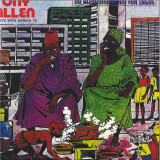
Comet Records presents the Tony Allen & Afrika 70 reissue series with the classic late seventies first four solo albums of Tony Allen remastered and restored: Jealousy, Progress, No Accomodation for Lagos & No Discrimination, all coming in an heavy Deluxe Tip-On Jacket.
1978's No Accommodation for Lagos, Tony Allen's third solo album, is an effortless Afrobeat masterpiece. The Afrika 70 band floats through two of Tony's heaviest and most churning compositions.
With this album, we start to hear Tony Allen's unique style of Afro-Funk that he would explore for decades to come as a solo artist - it is groove-focused, a rolling meditation on rhythm.
The first track, "No Accommodation for Lagos" is one of Tony's most pointed and churning songs, recorded in a chaotic period following the army raid of Fela's compound. There is a seriousness to the funk, a real burning purpose in the performance of every instrument, from the horns to the shekere. Tony's performance is supercharged - he clearly showed up to the studio that day with a fire in his heart. The followup track, "African Message," is an Afrobeat compositional staple. Tony sits back in the cut through most of the supremely funky track until about seven minutes in, when he steps into the spotlight to express himself fully - his emotions, his frustrations, his convictions - in a fiery duet between his drumkit and his voice. The percussionists coalesce around him in support, lifting Tony up as he gives it his all.
Tony Allen was a musical and compositional visionary, and this album finds him beginning to explore that vision outside of Fela's immense gravitational pull. They are the start of a new era in Tony's fruitful career as a solo artist, opening the floodgates for his distinctive Afro-Funk sound and laying the foundation for the next generation of Afrobeat musicians to come.
Yo No Se return after a 5-year hiatus since their last album, Soma. Their
new album Terraform continues on from the dystopian world created in
Soma but this time taking the narrative to the stars. Terraform explores
the ideas of making a fresh start on another planet but the same
problems creep in…. Greed, corruption and hate. Exploring more of a
grunge feel along with some hard psych the band recorded with Dom
Mitchison (as well as Alex doing guitars and vocals at home), mixed with
Ali Chant and mastered again with grunge godfather, Jack Endino.
The band have toured across Europe in support of Soma in the last 5
years and gained a reputation for their loud and energetic shows. The
album has 3 drummers under its belt and countless breakdowns on the
road. With the pandemic kicking in just as the band started touring, they
had plenty of time to finally record (and find another drummer).
Terraform is a record 5 years in the making due to sheer bad luck.
Hopefully, their luck will change as the band are already working on their
follow up record.
The first single Black Door approaches the subject of corruption
amongst 'leaders'. The idea comes from Boris Johnson getting Brexit
'done' to forward his own career without thinking about the impact it will
have on peoples lives. We’ve had enough and we're ready to tear down
the establishment. The idea being that these problems we now face will
follow us wherever we go unless we stamp them out, here, on earth.
The artwork for the cover is by renowned sci-fi artist Bruce Pennington.
Known for the soulful jazz-grooves of their self-titled 2020 debut album, Matti Klein’s Soul Trio actually began as an idea rather than a group.
However, in early 2018 three master musicians met in Berlin’s Lovelite Studio with producer/engineer Jochen Str h (Tony Allen, Ebo Taylor, Pat Thomas, Jimi Tenor) and recorded a set of well-planned and even better executed live sessions, each finding their desired space live and direct, locking into the immediacy of the groove. ‘Soul Trio Live On Tape’ contains these very first sessions of the Matti Klein Soul Trio and comprises new arrangements of songs that had primarily been composed for Klein’s band Mo’ Blow; favourites already back then, timeless classics now thanks to these exciting ‘deep-fried contemporary soul jazz’ versions.
Their leader, known for his work as musical director for the Brazilian superstar Ed Motta as well as Mo ‘Blow, can be heard on Wurlitzer and Rhodes Bass; Lars Zander (The Ruffcats, El Cartel, Lucasonic, STEREOFYSH) not only proves he is the most soulful tenor saxophonist in Berlin, but also why he has earned kudos for a bass clarinet sound that is enhanced with analog tape delays, Wah-Wah and Harmonizer-sweetenings; and drummer Andr Seidel also shows his chops, incorporating elements of rock, hip-hop, odd meter fusion and the sound of New Orleans into his own unique groove jazz style.
As for the music, ‘Rocket Swing’ is a tenor sax feature in which a hip-hop vibe meets a jazzy fifth fall, while ‘Ray’ (dedicated to Mr. Charles) is a Meters-inspired shuffle in 7/8 time. ‘No Particular Way’ showcases the funky side of the band, with singer Pat Appleton in top form over a wonderfully creaky Rhodes bass. ‘Sunsqueezed’ is created in a wide compositional arc, evoking a ray of sunshine peeking through the clouds during a long and grey 10-month Berlin winter, giving hope for the next two months.
‘Eleven Feels Like Heaven’ is a joyful, uproarious gospel blues with a brilliant odd meter drum solo. ‘Grandpa’s Fairytale’ is a hitherto unreleased piece that is dedicated to the bandleader’s grandfather, a former school headmaster who loved to read him stories and is a Wurlitzer-warmth meets bass clarinet groove in an atypical dynamic arc. Summarising their efforts, Klein states somewhat cryptically that “the band rolls in a warm, soft couch whenever there is a risk of having to sit between the chairs.”
Initially available as a limited fan item only at live shows, this document is now being released officially with the addition of ‘Grandpa’s Fairytale’. It is a journey through time, absolutely contemporary and yet wonderfully back to the future.
Helsinki-based US bassist Nathan Francis steps up as a bandleader with his debut project Nathan Francis Quartet. Together with a grade-A cast of Finnish musicians, the four-piece presents some of Nathan's favorite tunes from the standard repertoire (J.Hicks, C. McBee & J. Coltrane) as well as original compositions from members of the group. As Nathan puts it, "in terms of compositions, the group acts somewhat like a collective. We play compositions of each member but with an energy and interpretation that belongs completely to the moment."
Francis' debut album features the Finnish jazz legend Eero Koivistoinen on tenor saxophone. "Eero has given immensely to the jazz scene here in Finland and abroad. He carries a sound that is so deep and intense. I feel he is the perfect fit for this band", the young bassist explains. Koivistoinen has also composed two songs for the album, the soulful opening track Minor Solution and the bluesy track entitled Late Show. Markus Niittynen plays the piano and drummer Aleksi Heinola mans the drum seat. The former has also composed the album's third track Crystal Clear and the latter is well known as the inspired leader of his own quintet.
Now settled in Helsinki, and matriculating at the Sibelius Academy, Nathan is ready to release his debut LP. Nathan's primary wish was to form a "cross generational band as a tribute to his musical ancestors", a testament to the character of this young jazz musician. In his own words, Nathan says "meeting Finnish jazz legend, Eero
Koivistoinen, sealed the deal", and this eloquent musical project came to its fruition at the studios of the Sibelius Academy.
Born in San Francisco, Rickey Kelly moved to Los Angeles in 1982.
I first heard Rickey on the local Jazz station and that haunting sound on vibes was just too much to resist. He was working at Hughes Aircraft and didn't have time for gigging in the evening. He had to take care of his family which numbered about six children. I began booking his band soon after meeting him. An artist this blessed should not be working a day job I thought. Rickey soon quit his job at Hughes aircraft and began performing full time. Rickey stayed in his apartment for long periods of time just practising. He often mentioned to me that he needed to stay in isolation to keep his music pure. During Rickey's stay in L.A. he had worked with all the great jazz and R @ B bands. Musicians like altoist Bobby Watson, the legendary drummer Billy Higgins, The Jazz Crusaders, pianist Ahmad Jamal, and one of the most popular artists of his generation Marvin Gaye, often called on Rickey to perform with their bands. As great as these artists were, the addition of Rickey Kelly on vibes seemed to make their music better.Because of his isolation Rickey's music has developed a uniqueness and purity of sound that transcends styles. One reviewer described it as a "childlike quality, a profound innocence”. Relax and listen closely. This is music with a purpose
Music in Exile announce their forthcoming remix EP, featuring reworkings of Music Yared by Melbourne cult hero, Mikey Young (Total Control, Eddy Current Suppression Ring, The Green Child). SINDAYO - MIKEY YOUNG REMIXES features remixes of an original track from Music Yared’s self titled debut EP, released last year through Music in Exile. In addition to today’s announcement, we’re delighted to also share the first single, Sindayo (Mikey Young’s Masinko Remix - Radio Edit), out March 26 via Music in Exile.
Mikey Young’s legacy is well known throughout the Australian music scene, most notably as part of garage punk band Eddy Current Suppression Ring, and synth-driven outfit, Total Control. However, the talents of Young extend well beyond the performance setting to the world of engineering and mastering with his name appearing in the liner notes of an incredible number of releases, becoming something of a trademark of quality. In this release, Young showcases his skill and nuance, creating a remix where tradition and sonic exploration co-exist.
Anbessa Gebrehiwot and Haftu Reda are masterful players of krar and masinko, traditional string instruments from Eritrea and Ethiopia. Now based in Melbourne, Australia, the pair collaborate with multi-instrumentalist Dale Gorfinkel to create an innovative ensemble sound that celebrates their East African culture. The band's seemingly endless repertoire ranges from modern takes on folk songs to new, original compositions with Anbessa’s strong vocal presence a perfect match to Haftu’s sweet lyrical modesty.
Music Yared’s compositions are inspired by traditional Etheopian and Eritrean folk songs and they sing about love, distance, separation and culture. Their songs also feature virtuosic mastery of traditional instruments - the krar, (a 5 string lyre style instrument), and the masinko (a single string violin-like instrument that is played using a bow.) Although inspired by tradition, Music Yared’s compositions embrace the notion that music is always developing and changing with the times. Taking influence from traditional folk songs, Music Yared finds newness and originality through their personal approach to their lyrics, their treatment of rhythm, and the creation of new beats. This change and openness to new sounds is also apparent in their instrumentation, as they pair their traditional instruments with drums, as well as samples of bass lines and percussion.
Given their openness to new musical approaches and experimentation, it only seems fitting for the songs of Music Yared to be remixed, allowing further exploration of their inherent musical attitudes towards change and development. The first single from the EP, Sindayo (Mikey Young’s Masinko Remix - Radio Edit) traverses new sonic territory, pairing the traditional character of Music Yared with contrasting ideas from different sonic landscapes. Beginning with a musical acknowledgement to the original song, Young’s remix then changes direction into a new sonic world; synth pads and melodies swell and intertwine, samples interject, whilst grooving electronic beats underpin a new approach to texture and song structure.
Recorded by Dale Gorfinkel in Thornbury. Mixed and mastered by John Lee at Phaedra Studios.
Remixed & additional production by Mikey Young in Rye.
Freshly started label blickwinkel (Dauw sister label) announces the release "Balts" by Schreel Van De Velde. It’s the first outing of the duo Lucas Schreel and Casper Van De Velde under this new moniker and can be seen as the follow-up album of Schreel's acclaimed debut album which was released last year.
As the album titles suggest, love in all its glory formed a major inspiration in the making of this album. The duo, however, didn’t restrain themselves to a sole conceptualization of this theme but instead explored it more widely and free. The result is a consistent collection of compositions reflecting on human encounters, relationships, sexuality and more. It’s love and broken love. It’s attraction and repulsion.
With Balts, the duo created a set of animal miniatures evoking feelings of melancholy while also joy and happiness have their place. Given the instrumental nature of the songs, the music remains kind of mythical and never really shows its true meaning. As such, these little miniatures form the duo’s own unique wildlife and is open for the listeners interpretation and own narrative. Dolfijn is the first single from the album and will be released on all digital platforms alongside a video by Jelle Martens.
Lucas Schreel is a classically trained guitarist based in Brussels. His first solo album We're Never Afraid of Getting Up Every Morning was released through Sentimental Records in 2020 and was well-received both in written-press (Humo, Enola & Indiestyle) and radio (Duyster, Radio 1 & Klara). Besides his solo work, Schreel is also a member of the lo-fi indierockband Kloothommel.
Acclaimed Brussels percussionist Casper Van De Velde made quite a name for himself through his bands like SCHNTZL, Bombataz, Donder among others. His work received prices at International Jazz Contest d’Avignon and Storm! Contest (Jazzlab). Casper is currently also a member of the recently formed An Pierlé Quartet.
Blickwinkel is a freshly born label based in Ghent and Brussels. It’s founded by Pieter Dudal (Dauw) and visual artist Jelle Martens (Nicolas Jaar, Vinyl on Demand, W.E.R.F.). After working in the music scene separately for almost a decade, they found common ground in both their admiration for sound, image and especially its dialogue. Unfettered by place or genre.
Spoon Records kündigt, die erste Veröffentlichung in einer Reihe von lang erwarteten Live Alben an: Can Live in Stuttgart 1975 - erscheint auf Vinyl, CD und digital am 28. Mai 2021.
Selbst wenn man glaubt Can zu kennen, inklusive aller Alben und den legendären Lost Tapes, gibt es hier immer noch vieles entdecken das einen überrascht. Diese Musik ist nie zweimal derselbe Fluss.
Das neue Album in fünf Teilen, Can Live in Stuttgart 1975 dokumentiert einen wichtigen und beeindruckenden Teil der Can-Geschichte. Da in den 70gern technische Pannen immer wieder die geplannten Live-Aufnahmen sabotierten, fehlten diese im Spoon Katalog. Nun wurden die besten Bootleg-Aufnahmen genommen und unter der Leitung von Gründungsmitglied Irmin Schmidt und CAN Produzent/Toningenieur René Tinner durch die Mühlen der Technologie des 21. Jahrhunderts geschickt, um diese wichtigen historischen Dokumente in der bestmöglichen Qualität zu präsentieren. Gegründet 1967 und aufgelöst etwas über ein Jahrzehnt später, hat Can's beispiellose und kühne Verbindung von hypnotischen Grooves und avantgardistischen instrumentalen Texturen sie zu einer der wichtigsten und innovativsten Bands aller Zeiten gemacht. Die neue LIVE Serie offenbart eine völlig neue Perspektive auf die Band. Man kann vertraute Themen, Riffs und Motive hören, die auftauchen und durch die Jams surfen, aber es sind oft nur flüchtig wiedererkannte Gesichter in einer wirbelnden Menge. Man kann aber auch viel Musik entdecken, die es nie in den offiziellen Albumkanon geschafft hat. Die Aufnahmen gehen in extremere Bereiche als Can’s Studioarbeit: von sanftem, ambientem Drift-Rock bis hin zu den berühmt berüchtigten "Godzilla"-Momenten. Und selbst wenn sich die Band Mitglieder von Minute zu Minute anpassen und dem Rhythmus hinterherjagen, kann man die außergewöhnliche musikalische Telepathie hören, die sie alle teilten.
- "Can’s Live-Auftritte klingen wie eine epische Geschichte – ein Roman, der uns erzählt wird. Mit unterschiedlichen Kapiteln, wechselnden Stimmungen, Jahreszeiten und exotischen Landschaften." - Alan Warner
Buried amongst the gems on the second Claremont Editions compilation was ‘Oui Non’, a collaborative cut that marked the first label appearance of Jpye (real name Jean-Philippe Altier), a French multi-instrumentalist, DJ and producer best known for his work as part of Twonk alongside Leonidas and percussionist/vocalist/guitarist Renato Tonini.
Here Jpye and Tonini join forces once more for their first single on Claremont 56 – a sensual and seductive slab of slow-motion, sun-soaked synth-pop that features more than a few subtle nods to classic Italian Balearic disco cuts such as Radio Band’s ‘Radio Rap’ and Tullio de Piscopo’s ‘Stop Bajon (Primavera)’.
Built around squelchy synth bass and a shuffling drum machine rhythm, ‘Cosa Ti Va’ is marked out by glistening, jazz-fired guitar solos, vibrant synthesizer squiggles, rich electric piano chords and echoing, dubbed-out electronics. It’s a pin-sharp but effortlessly laidback number that’s as tactile and loved-up as it as lazy and horizontal.
‘Cosa Ti Va’ is presented in two complimentary versions. On the A-side of the vinyl version you’ll find the full vocal, which boasts Tonini rapping in his native tongue in the manner of Italo-disco’s most eccentric and atmospheric vocalists. With his deep, rich tone and fluid flow, it’s hard not to fall in love with Tonini’s previously unheard rapping. Rounding off the single is the pair’s vocal-free instrumental take, in which Jpye’s stunning guitar motifs and tactile, soft-touch production can be savoured in full.
Billy Harper is one of the great tenor saxophonists in the post-Coltrane mold. Originally from Houston, TX and with a degree from the venerable University of North Texas College of Music, Harper emerged on the New York City jazz scene in the late 1960s performing with Art Blakey, Max Roach, Lee Morgan and others. Known for his soulful and propulsive tone, Harper was already a highly regarded and prolific session man before the release of his debut album as a leader on the cult favorite Strata-East label in 1973.
Recorded in 1975, Black Saint was the second album for Billy Harper as bandleader and is the most acclaimed and fully realized of his long career. The inaugural release of the Italian label Black Saint – to which the album lent its name – is comprised entirely of Harper compositions; the peaceful and subdued opener “Dance, Eternal Spirits, Dance!,” the swinging and fiery “Croquet Ballet” and the side-long epic “Call Of The Wild And Peaceful Heart.” Harper’s group features trumpeter Virgil Jones - a graduate of Roland Kirk’s mid-60s groups and session player for McCoy Tyner, Charles Tolliver and others - along with Joe Bonner on piano, David Friesen on bass and Malcom Pinson on drums.
Black Saint is too melodic and swinging to be free jazz but too forward-thinking to be described as modal post-bop; Harper’s advanced compositional sense and galvanic tenor work make this an album of pure fire music. This is a beautiful album back into print on its original format for the first time in over 40 years.
It all starts with a great song and “You Baby” has it all! Penned by husband and wife team Barry Mann and Cynthia Weil with the magic touch of Phil Spector – what an awesome trio – and the bedrock of a future classic.
The song was originally produced by Spector for the Ronettes, signed to his Philles label, and appeared on their 1964 breakthrough album ‘Presenting The Fabulous Ronettes’ featuring, of course, his wife to be Veronica Bennett. The song was also recorded in the U.S. by pop/rock band the Lovin’ Spoonful for their 1965 debut album ‘Do You Believe In Magic’.
However, in January 1966 Pye Records unleashed JACKIE TRENT’s epic Northern Soul version produced by her husband Tony Hatch. Heralded by a pounding drum beat and trumpet blast it is no wonder that Jackie’s definitive cover shook the walls at Wigan Casino a decade later. And its popularity has never gone away, hence its current price tag of £300-400! Check out Jackie’s performance on the Morecambe and Wise Show on YouTube, what an intro!
“You Baby” was also recorded in May ’66 by Cameo Parkway’s Lovenotes in a very similar vein and in November ’66 by the legendary Len Barry. Other notable cover’s include Sonny & Cher, the Bubblegum pop group Salt Water Taffy and, in 1975, John Holt’s reggae version.
“Lost Summer Love” was originally recorded in 1964 by U.S. actress Shelley Fabares known for her long-running role as Mary Stone in the sitcom ‘The Donna Reed Show’ and as Elvis Presley’s leading lady in ‘Girl Happy’, ‘Spinout’ and ‘Clambake’. She also scored a No.1 pop hit in 1962 with the teen anthem “Johnny Angel”. But, as with our ‘A-side’, it was reborn as a Northern Soul classic when Pye Records picked the song up in 1965 and recorded it on their latest signing, teenager LORRIANE SILVER. Once again the stomping drum track, percussion and handclaps propel you to the dancefloor where you’re greated with an unforgettably catchy tune, a bevvy of backing vocals and Lorraine’s effervescent vocal.
Two fabulous reasons to make this one of the top reissue 45s of 2020!
The Deviants were an English rock group originally active in the late
1960s, and later as a project of the singer-songwriter and bandleader Mick Farren. The self-tiled third album was the beginning of the definite split between the band members. This record shows how they were still rocking in a wonderful mix between psychedelic, garage, blues, and rock. The overall vibe is amazing and it is a fascinating glimpse into the underground music of the late ‘60s. The album has aged quite well and is still a master of art.
The Deviants is available on black vinyl. The package includes a replica of the very rare & sought after booklet.
Debut solo album by the Red River Dialect songwriter. Recorded at the Hotel2Tango, Montreal, by Howard Bilerman. Featuring Thor Harris (Swans, Thor & Friends, Shearwater) on drums and Thierry Amar (GYBE!, ASMZ) on bass, with guest appearances from Tom Relleen (RIP) (Tomaga, Melos Kalpa), Catrin Vincent (Another Sky) and Coral Rose (The Silver Field, Red River Dialect).
David has written five critically acclaimed collections of songs under the Red River Dialect name. The last two albums (released by Paradise of Bachelors) achieved a glowing Pitchfork review and a Folk Album of the Month award from the Guardian. Selected press below.
“Folk Album of the Month. Alert, anti-colonialist folk. Songwriter David Morris brings alternate seduction and disquiet on this worldly album steeped in the British landscape... a wide-eyed, curious creature, willingly alert to the world.” – 4/5 The Guardian
“Animated with a new intensity, the Cornwall band’s fifth album may be its most ingenious and immersive mix of folk and rock yet. It’s also Morris’ most compelling set of songs. He invests small sensations with outsize power, finding joy in sensory pleasures as well as in the mystical inquests that music allows. Even as the record is steeped in the long history of British folk music, that balance of the tactile and the spiritual anchors these songs in the present moment.” – Pitchfork
“The most underrated folk-rock band in Britain. The idea of them as a Cornish-born, Buddhist-inclined Waterboys is more potent than ever. Their fifth album of elementally-battered, rueful and rousing folk-rock ... is as stirringly anthemic as they've managed thus far.” – MOJO
“A beguilingly atmospheric record… imagine Steve Gunn transplanted to Kernow.” – Clash
“Gorgeous and moving, anchored by the heft of the physical but reaching for more. The epic spareness, the way it manages to be both still and an enveloping swirl, reminds me most of Talk Talk. There’s a prayerful intensity to the quiet bits, a listening, wondering awe, that makes the rock payoffs more powerful. The album works as a restless, searching, gorgeous whole. Morris and his band have never been better.” – Dusted
“It’s not often that a band comes along and over the course of nine songs both plays to the tradition and stands it on its ear. RRD has taken the challenge of playing with reckless abandon to heart, generating an album that stands on the shoulder of giants showing no fear.” Folk Radio
Monastic Love Songs continues the tradition that David has established over the course of five albums with Red River Dialect: using a song cycle to articulate a relationship with inner and outer landscapes, inspired by the Taoist approach of observing the movement of the heavens in order to understand the cosmos within, and vice versa. The joyful closing track Inner Smile was initially written as a poem of thanks to his Tai Chi teacher Hollis and takes its name from a Taoist practice.
The songs were written during the final weeks of a nine-month retreat at Gampo Abbey, a Buddhist monastery in Nova Scotia where David took ordination as Buddhist monk. The album title is sincere, with a little tongue-in-cheek. The songs mostly explore human relationships within the community, with outliers: Gone Beyond shimmers with cosmic devotion, in Rhododendron a reverie grows from the shadow of a flower. Steadfast concerns the love to be found beyond the urge to like and be liked, when you can’t avoid that difficult person. Leonard Cohen, on his six years living in a monastery:
“You know, there’s a Zen saying: ‘Like pebbles in a bag, the monks polish one another.’
David considers this album to be a follow up to 2015’s Tender Gold and Gentle Blue. The cover of that lp featured an image of him on top of Skellig Michael, in the years before the island was made famous as the home of the Jedi. He considers the visit to that abandoned Celtic monastic site to be one of the influences that stirred up his motivation. Skeleton Key speaks of what was given up to go, and what he was giving up to leave, referencing the Tibetan concept of the ‘bardo of becoming’.
The album came about through a series of fortunate encounters. David’s friend Tom Relleen visited him at the Abbey in May 2019, mentioning a postponed plan to visit the Hotel2Tango. A spark was sown: this studio had long figured in David’s imagination. Many of the releases on Constellation Records, which he had become a die-hard fan of in his teens, were recorded there. Tom contributed some Buchla synthesizer to the opener New Safe, which concerns healing in emptiness and light.
In May David was given permission by the senior monastics to acquire a guitar, which was swiftly baptised as “Malibu Barbie”. Having let the identity of being a songwriter loosen up, not playing an instrument in six months, he was unsure what would happen. In the single hour he was permitted to practice each day, songs began to cascade. The first, Purple Gold, concerns a reacquaintance with first love. David wrote to the Hotel2Tango asking if they had any days available in mid-July?
Engineer and studio co-owner Howard Bilerman replied that they did, and a date was set. Did Howard know any local drummers or bass players who might do a session? He did, too many to choose from, what kind of style? David decided to ask for his ideal: did Thierry from Godspeed ever do sessions? Howard sent him the demos. Thierry was up for it. On the day he went deep into the cover of traditional song Rosemary Lane, his double bass singing on this and on Circus Wagon.
David asked if there were any local drummers he would recommend? Thierry said “many, what style?” David tried his luck again, “two of my favourite drummers are Thor Harris and Jim White.” Thierry said let’s invite them. Thor, having met David a decade earlier, flew from Austin to Montreal for that July day in the studio. Nine months of watching thoughts come and go in meditation helped David recognise this as an opportunity to practice enjoying the day without expectations.
He is, however, grateful that this album came out the way it did, channelling some of what it was like to live those nine months in a monastery overlooking the Gulf of St Lawrence, frozen and flowing.
Mixed by Jimmy Robertson at SNAFU, London, mastered by DenisBlackham.
Every Dunbarrow album has a hauntingly classic sound of, in the band’s own
words, “an eerie rawness.” But their third album feels like you’ve discovered a
mysterious half-century old recording tucked away in a decrepit abandoned
mansion. Perhaps there’s a note attached, begging its courier to beware. Alas,
whoever possessed the tape apparently never survived. ...that is to say, it feels like there’s a solemn
story to this album, not just in the
lyrics, but in the sound itself. Much like
the eponymous debut of Black Sabbath,
the band uses subtle sound effects to
dramatically set the scene for its mostly
clean tones and masterful use of open
space for which the band has become
known. But unlike their first two albums,
this one does see the band branching
out just a bit into heavier, more distorted
guitars. The result is a much more
in-your-face sound, while retaining the
Haugesund, Norway quintet’s masterful
proto-metal sound.
The album opens with the sound of falling
rain as Lønning and Eirik Øvregård’s
guitars seep into the speakers like
funereal bells and haunted drones on
“Death That Never Dies.” Drummer Pål
Gunnar Dale slams down three snare
beats as bassist Sondre Berge Engedal
slinks in harmony over it all. Andersen’s
crisp vocals paint a bleak picture of
dark perdition until the band slips into
a swaggering piano-led coda reminiscent
of “Sabbra Cadabra.” The 7-minute
psychedelic folk masterpiece “Turn In
Your Grave” is the album centerpiece,
replete with mournfully shimmering
Mellotron and bleak folkloric lyrics. Its
hypnotically spinning guitar notes and
old European parlando-rubato singing
hearken to dark early Steeleye Span with
a sinister edge. “In My Heart” perfectly
showcases the band’s penchant for folk
based, yet head-banging riffs that break
with tradition that has stilted modern
heavy music.
“I think with this record, we have managed
to create our own unique sound
with its own Dunbarrow tag,” says the
band. With that sound comes the perfect
artwork: A cover illustration from the
early 1900’s by artist Harry Clarke from
his work for Edgar Allen Poe’s Tales of
Mystery and Imagination.