For Record Store Day 2020, Far Out Recordings presents a special 'poisoned vinyl' edition of Ivan 'Mamão' Conti's critically acclaimed Poison Fruit album. The 180g splattered colour LP is accompanied by an exclusive bonus 7” with a previously unreleased track from the original Poison Fruit sessions ‘Katmandu, and ‘Ninho’, a track never before released on vinyl.
From an artist in their seventies, you probably wouldn’t expect to hear an album like this. But Brazilian drumming legend Ivan ‘Mamão’ Conti has been experimenting and innovating for the last half a century. As one third of cult Rio jazz-funk trio Azymuth, Mamão was at the root of the group’s ‘samba doido’ (crazy samba) philosophy, which warped the traditional samba compass with jazz influences and space age electronics. Even with his lesser known jovem guarda group The Youngsters, Mamão was experimenting with tapes and delays to create unique, ahead-of-its-time sounds, way back in the sixties. More recently Mamão recorded an album with hip-hop royalty Madlib under the shared moniker ‘Jackson Conti’.
With his first album in over twenty years, and the first to be released on vinyl since his 1984 classic The Human Factor, Mamão shares his zany carioca character across eleven tracks of rootsy electronic samba and tripped out jazz, beats and dance music. Featuring Alex Malheiros and Kiko Continentino on a number of tracks, the Azymuth lifeblood runs deep, but venturing into the modern discotheque (as Mamão would call it), Poison Fruit also experiments with sounds more commonly associated with house and techno, with the help of London based producer Daniel Maunick (aka Dokta Venom) and Mamão's son Thiago Maranhão.
Take a bite of Mamão’s psychoactive Papaya and join the maestro on a weird and wonderful stroll through the Brazilian jung
Buscar:his trio
- A1: Day Tripper Jazzystics Feat. Deborah Dixon
- A2: Yesterday Betty Says
- A3: Come Together 48Th St. Collective
- A4: Let It Be Richard Eastwood
- A5: 5 Oh! Darling . The Cooltrane Quartet
- A6: A Hard Day's Night Deborah Dixon & Les Crossaders
- B1: Here Comes The Sun Sarah Menescal
- B2: Honey Pie The Bryan J. White Quartet
- B3: Something Scubba Feat. Sarah Menescal
- B4: Blackbird Eve St. Jones
- B5: All You Need Is Love Jamie Lancaster
- B6: Hey Jude Renauld & The Smooth Jazz Quintet
- C1: Sgt Pepper's Lonely Hearts Club Band . Apollinare Rossi
- C2: Can't Buy Me Love Stella Starlight Trio Feat. Lizette
- C3: Revolution Celso Mendes Feat. Lua
- C4: Paperback Writer Mandy Jones
- C5: Get Back Jazzystics Feat. Deborah Dixon
- C6: In My Life Sarah Menescal
- D1: She Loves You Deborah Dixon & Les Crossaders
- D2: Penny Lane The Brian J. White Quartet
- D3: I Feel Fine 48Th St. Collective
- D4: Ticket To Ride Scubba Feat. Sarah Menescal
- D5: The Long And Winding Road Les Crossaders Feat. Julie Benson
- D6: I Want To Hold Your Hand Francis Trevor & Michelle Simonal
Being one of the most popular albums in the history of the label,
Music Brokers is happy to announce the release of Jazz And Beatles in a limited-edition double LP.
The album features 24 stellar Beatles classics reinvented in jazz form that highlight the catalog of the biggest band of all time.
Gems such as “Yesterday”, “Here Comes The Sun”, “Revolu- tion” and “She Loves You” have new life with reworked versions
by many of the biggest names in the nu-jazz move- ment including Jazzystics,
Les Crossaders, The Cooltrane Quartet, Eve St. Jones and Apollinare Rossi. With stellar artwork and remastered sound,
this is another essential addition to your jazz-lounge music collection in vinyl format.
- A1: Porto Feliz (Mozar Terra)
- A2: Janeiro (Ion Muniz)
- A3: Serena (Steve Sacks
- B1: A Chegada (Dom Salvador)
- B2: Para Ana (Ricardo Dos Santos)
- B3: Pra Nova (Aloisio Aguiar)
- B4: Constelação (Alfredo Cardim)
- C1: Ascensão (Mozar Terra)
- C2: Clodes (Alfredo Nascimento)
- C3: Naquela Base (Guilherme Vergueiro)
- D1: Atlantico (Ricardo Dos Santos)
Gatefold 2LP
Far Out Recordings proudly presents a landmark discovery in Brazilian jazz: the long lost album by drumming pioneer Edison Machado. Recorded in New York City in early 1978 but never released, Edison Machado & Boa Nova captures a pivotal figure in Brazilian music history at the height of his artistic powers.
Combining North and South American jazz traditions with Machado's revolutionary samba innovations, Edison Machado & Boa Nova represents a triumph against the odds. After facing persecution under Brazil's military dictatorship and being forced to sell his drum kit in 1976, Machado found renewed creative purpose in New York with the Boa Nova ensemble. The resulting album captures the essence of his genius - sophisticated yet wild, controlled yet daring, leading an ensemble of some of the best jazz, samba and bossa nova players of the day.
At just fifteen years old, Machado revolutionized Brazilian music through an accident that would change everything - when his snare drum broke during a performance, he began playing samba rhythms on the cymbal. This innovation, known as "samba no prato" (samba on the cymbals), brought new layers of dynamism to samba and proved instrumental in the development of bossa nova alongside contemporaries like Antonio Carlos Jobim and João Gilberto.
A complex and passionate figure, Machado was notorious for his militant perfectionism and "attacking" style of drumming. Having spent some years of his youth in the Brazilian army, musicians often remarked that he played as if he were at war. But his innovative style, while exhibiting complete control and sophistication, somehow so often danced right on the edge of chaos and wild abandon.
After making his name in Rio's legendary Beco das Garrafas (Bottles Alley) in the 1950s and early '60s, Machado went on to form Bossa Três - the world's first instrumental bossa nova group. His influence spread internationally through collaborations with Stan Getz, Sergio Mendes, Antônio Carlos Jobim, Milton Nascimento, and Chet Baker, while his 1964 album Edison Machado É Samba Novo stands as a masterpiece of Brazilian jazz.
At 80 minutes in length, Edison Machado & Boa Nova, the lost 1978 New York sessions, is a singular achievement in Brazilian jazz. The format itself is a rarity in the canon. It’s packed full of exceptional technical precision and creative vitality, with sophisticated arrangements and masterful improvisation from its exceptional sextet of Brazilian and US musicians: Paulinho Trompete (flugelhorn/trumpet), Ion Muniz (tenor saxophone), Steve Sacks (baritone saxophone), Mozar Terra (piano), and Ricardo dos Santos (double bass).
The album features unheard compositions by Brazilian masters Dom Salvador (Salvador Trio, Harry Belafonte, Edu Lobo), Guilherme Vergueiro (Raul De Souza, Leon Ware, Joyce), Aloisio Aguiar (Arthur Verocai, Airto) amidst the plethora of captivating original material by the members of the Boa Nova ensemble.
Discover the captivating musical universe of David ‘Yacouba’ Jacob, Trust's emblematic bassist since 1996. This versatile and passionate musician has explored a variety of horizons, from world music to blues and jazz, collaborating with talents such as Geoffrey Oryema, Ilène Barnes and Ladell McLin.
In 2018, the double bass conquered him, taking him to the frontiers of classical, contemporary and jazz. Today, at the head of his own group, the ‘YACOUBA TRIO’ - with Nicolas Noel on piano and Hakim Molina on drums - he presents some unique compositions. These pieces fuse the jazz of the 60s with the ethnic influences that have always nourished him
- 1: #4
- 2: #7
- 3: #
- 4: #
- 5: #2
- 6: #10
- 7: #11
- 8: #
- 9: #
The work of each of these powerfully creative & exceptionally perceptive individuals - poet and scholar Fred Moten and jazz bassist Brandon Lopez - concerns itself with how one might navigate the ascending reign of longinstitutionalised madness while simultaneously keeping humanity and sanity intact The synergistic mesh of these two voices in Duo is here presented on record for the frst time, following two acclaimed works on the Reading Group label in trio with Gerald Cleaver. Inimitable poet, cultural theorist, author, 2020 MacArthur Fellow, Fred Moten creates new conceptual spaces that accommodate emergent forms of Black cultural production, aesthetics, and social life. Moten is a professor of performance studies and comparative literature at New York University concerned with social movement, aesthetic experiment, and Black study. He is also a United States Artists Rockefeller Fellow and was elected to the American Academy of Arts and Sciences. Puerto Rican- American bassist Brandon Lopez is the son of a gravedigger who himself put time in doing the same, developing muscles that serve him well in his thorough command of the upright bass. On moving to NYC, Lopez made himself indispensable within numerous realms of creative music. As the Cleveland Review of Books noted, "This is virtuosity as vocabulary, a total command of texture, subtlety, and a depth that can be reached into."
On their previous work in trio with Gerald Cleaver:
"Best Jazz Albums of 2022: Moten is after nothing less than a full interrogation of the ways Black systems of knowledge have been strip-mined and cast aside, and yet have regrown." - New York Times
"8.0 - A conceptually rich, politically weighty album that asks timeless questions without over-explaining...breathlessly complex" - Pitchfork
Fred Moten: texts, voice
Brandon Lopez: bass
Spandau20, an imprint named after the Western Berlin district and focused on artists from the area, delivers techno in all diverse forms - from warehouse and electronic peak time beats to breaks and IDM, balancing the old and new school sounds flawlessly. With a focus on vinyl releases, for the collectors, Spandau20 has lately also focused on its label nights, with showcases at Fabric, Bassiani and many others. The label's 10th release features 10 tracks that epitomise the musical diversity of Spandau20 and the progressive musical mindset of its roster, calling on the label favourites and Spandau natives to deliver brand new and exciting music. This special release even features one track that all artists have worked on together: 'Come Closer', a swarming, slithering beginning featured as the VA's opener. Its barely coherent female vocal echoing amidst a cacophony of demon-like effects. The chilling ambience captured at the offset transcends into the first full length track by Elli Acula, 'Floating Eyes', a cur characterised by an authoritative, pounding bass featuring calculated percussive rolls and metallic overtones to make for a face-scrunching opener to this devilish collection of works. FJAAK follow for the first of twin cameo appearances, partnering up with fellow live supremo and hardware aficionado KiNK. On 'Overbridge' the trio deliver a cavernous, rolling number driven by a deep thrumming bass in addition to a razor-edged lead synth, and pulsating technopattern. Dajusch is known for incorporating his years of classical study in with his immersive musical style - and with his VA effort the Berlin native neatly showcases this. Easing the energy slightly, 'Move' escalates from its warm, melodic intro into rumbling goliath of a beat comprising a looping, slew of gassy harmonics. The momentum of the release shifts considerably with the introduction of acutely versatile producer, DJ and sound artist Claus. The artist from Spandau leans his track 'Bloomscroll' towards sparse, dubby sonics in which he intricately ties together to form churning, burgeoning soundscape. FJAAK jolt proceedings back into the techno groove with their signature blend of arresting sub-bass and reverberating rhythms, which come thick, fast and heavy on 'Jackfruit'. The abstract wonder of Anna Z's broken-beat like stylings is fully explored on 'Icy Liq'. It's outlandish and amorphous in its execution, causing a clattering percussive chaos that's choicely pieced together by the modular-extraordinaire. Nikk stealthy moves into breaks territory with his track 'Down In The Shadows', packing a trap-like snare with an acid-flecked melody and dawn-breaking, dream-like textures. The penultimate track on the VA is 'Tufted'. J.Manuel expertly employs a chorus of robot-like sonics that course through a short-circuiting low-end to produce a pacy, inescapable journey via a whirling, merciless beat. He is joined by the legendary producer Tobi Neumann for their menacingly ambient number titled 'Fennec.' In parts a nod to UK dubstep, the duo concocts a fierce admixture of styles bolstering tribal-like components with industrialised overtones and methodically crafted drum-fills.
An exclusive 7" re-release of this psychedelic funk ballad from Tulsa's "Outback" Band. As featured on Now-Again's 'More Loving On The Flipside' compilation, "Strangers (In Our Homeland)" epitomises the expression of social & political change during an era of psychedlia infused music. In partnership with the two surviving members of Outback, both Symphonical & Now-Again are proud to showcase the voice of independent artists.
----------
The origin of "Outback" dates back to the late 50s, a five-piece blues outfit named "Little Lo and the Rest of Us" included music educator & bass guitarist Edward "Cha-Cha" Cherry, saxophonists Eugene "Buggy" Roach & James "Flab" Farley whom, alongside drummer Roscoe J. Dabney III "Roach", Ronnie Wilson on trumpet, guitarists Roy "Rochester" Walker & Michael Collins, would form The Magnificent Seven, the house band for Tulsa's 'Rose Room'.
Alumni of Booker T. Washington High School, The Magnificent Seven influenced & set the standard for the Tulsa sound, as demonstrated through their only single, recorded in 1966, the two part 'Pluck-A-Pluck'. 'The Sevenettes', the groups' female vocal trio, included the rotation of Lena Luckey Wilson, Gwendolyn French, Rose Brewer Lewis, Jeanetta Williams & Maxayn. The Magnificent Seven, led by "Cha-Cha", toured nationally throughout the 60s with their infectious, raw R&B sound, and were the platform for many of Tulsa's talent including Ronnie & Charlie Wilson who would later create the GAP Band.
Roscoe J. Dabney III, the first Black Panther to establish the Tulsa chapter in 1969 known as the NCCF (National Committee to Combat Fascism), proposed the name change to "Outback" in the early 70s. Their sound & formation was changing from R&B to Psychedelic, from the grit to the phase, epitomised by their unique line-up of having two bassists playing simultaneously, both Reggie Cherry & "Chilly" Willie Lewis, the musical foundation to their only recorded single, "Strangers (In Our Homeland)" & "Reggie's Thang".
Song writer & band affiliate, Maurice Pope, produced the lyrics to "Strangers (In Our Homeland)" and handed over the musical attributes to Willie Lewis & Outback to convey his message, as sung by Lena Luckey Wilson. Dabney recalls the song is based on religious scriptures, whilst highlighting the parallel of Black slavery in the U.S.
"Reggie's Thang", written by Dabney's cousin, bassist Reggie Cherry, provides a psychedelic instrumental, a sound which Lena recalls is what set apart Outback from other Tulsa groups. As well as playing clubs, the seated shows provided an environment for the group to showcase their musicianship to those who wanted to be immersed & listen.
Their single, released on Empathy, was recorded in 1972, and are the only known recordings by Outback. Recorded live onto 8-track at a studio located at on East Pine St in the heart of Tulsa's Black community, an independent & unknown studio located on a strip mall.
The Outback members who recorded are:
Lena Luckey Wilson - Vocals
Roscoe J. Dabney III "Roach" - Drums
"Chilly" Willie Lewis - Bass
Reggie Cherry - Bass
Edward "Cha-Cha" Cherry - Keys
Joyce Daws - Trumpet
Roy Walker "Rochester" - Guitar
Robert Luckey "Uncle Bobby"- Percussion
Fredy Berry "Freddy" - Tenor Sax
Band leader & group manager: Edward "Cha-Cha" Cherry
Booking Agent: Ernie Fields Sr.
In 1973 whilst performing in Ft. Worth, TX, Buck Ram approached Willie Lewis backstage and invited him to join The Platters, Lewis accepted. Supposedly, a recording deal was offered to Outback in exchange, which never happened.
The group continued in various formations after Lewis left, however as an integral member, the feeling never equalled their original form and soon after dissolved.
Leon Russell approached Lena Lucky Wilson in 1974 to go on tour with the GAP Band as their backing singer, upon returning Tulsa Lena moved to Los Angeles to pursue her musical career with Leon & Mary Russell amongst various others.
Dabney continued music and became a TV producer & director in 1976.
The only surviving members of Outback today are Lena Luckey Wilson & Roscoe J. Dabney III.
This is a recorded document performed by Mark Holub, Johanna Pärli and Sofía Salvo.
As a trio, they had not met until sound-checking for their gig at Berlin’s Cashmere Radio on September 1, 2023 — a fact that may be concealed by their immediate understanding as a musical entity but is obvious by their artistic freedom and curiosity towards each hoc encounters, flexible and steadfast in its performance, and that culminated in an experience that shook the floor of the radio station’s headquarters.
The day after, Sofía, Johanna and Mark gathered in Adam Asnan’s studio and deepened their quest for a communal language. They ignored any musical fetters or conventions, enjoyed the possibilities of a wider time frame without a live audience — and exceeded all hopes of what three personalities can achieve when they are given the space and time to experiment, detached from any restrictions.
Mark Holub is a drummer of outstanding versatility and responsiveness, full of ideas and quick on his feet. Through his playing as well as his experience as a band-leader and composer he is able to steer this coequal group towards thundering crescendo, but sits equally comfortable in the centre of complex and fine rhythm probing in response to impulses thrown in by his companions.
Johanna Pärli makes use of her double bass’s entire body, extracting an armada of multi- layered sounds with an immensely high sonic spectrum that is also reflected in the diversity of her musical projects. She is both patient and wildly adventurous in her performance, and in this trio her contribution wanders from considerate bow work to brisk fingerpicking, gnarly string strikes and pedal use to startling effects.
Sofía Salvo unleashes the full unbounded potential of her voice by taking advantage of her baritone saxophone’s broad range of possibilities. She is one of Berlin’s most singular musicians and her widely proven capabilities cover gentle additions to support and underline pulsive interplay just as masterfully as rapid licks and roaring bursts of noise, spurring the collective to unpredictable intensity.
If music of this particular kind often gives the impression of a constant search, this international trio certainly managed to find common ground and capture a special moment in time for listeners to (re-)discover. Contrary to what frequent misconception sometimes suggests, it’s also tremendous fun.
NERR — Filling Open Spaces was instantly composed and performed live in studio by Mark Holub on drums, Johanna Pärli on double bass and Sofía Salvo on baritone saxophone, recorded in Berlin on September 2, 2023 and mixed by Adam Asnan. Mastered and cut by Rashad Becker, vinyl pressed at Pallas. Artwork and design by Stefan Lingg, produced by Christoph Berg and Stefan Lingg.
Danish drummer Daniel Sommer completes his internationally acclaimed Nordic Trilogy (featured in Stereogum, Downbeat Magazine, Bandcamp"s Best of Jazz and more...) with the release of Lost Threads on March 21st, 2025, via April Records. Following As Time Passes and Sounds & Sequences, the highly anticipated third chapter features Finnish pianist Artturi Rönkä and Swedish bassist Thommy Andersson. Together, the trio embarks on a deeply introspective exploration of time, space, and their shared Nordic spirit of improvisation. Described by Sommer as "a process-oriented project prioritizing musical risk and flow," the Nordic Trilogy has sought to illuminate Nordic approaches to composition and improvisation across generational and stylistic divides. With Lost Threads, this vision culminates in a collection of music that embraces vulnerability, spontaneity, and togetherness. "Most of the music emerged as Daniel and I improvised in my living room in Helsinki," Rönkä recalls. "Later, when Thommy joined us for a couple of concerts and recording sessions... his highly personal way of playing the bass inspired Daniel and me to try to develop the music in further, unexpected directions." The result is a dynamic and emotionally resonant album, recorded live in a Helsinki studio with all three musicians in the same room, without headphones or edits whatsoever. The title track and Den ensommes dans pulse with energetic groove and rhythm, while pieces like Meditation, Silent Steps, and Forgotten Song float with a haunting, rubato lyricism. With influences ranging from Nordic folk, Western Classical music and the jazz tradition, Lost Threads continues the trilogy"s history of blurring the boundaries between composition and improvisation. The trio"s collective sound-anchored by Rönkä"s nuanced piano, Andersson"s deeply personal bass tones, and Sommer"s textural drumming-creates a sonic landscape both timeless and contemporary. As the trilogy closes, Lost Threads invites listeners into a contemplative space where silence and sound intertwine, offering a balm for the modern world"s relentless pace. True to the spirit of the Nordic Trilogy, it stands as both a conclusion and a testament to the boundless possibilities of collective improvisation.
- Waco Kool Aid
- Hand Me Down Love
- Girl From Plaquemine
- Bayou La Batre
- Almost Forever
- Felt My Heart Breaking
- Shotgun Religion
- Man On The Marquee
- Just In Case
- Another House
- It'll Come Back To Me
- Fog Rolls In
Andrew Duhon has a knack for telling the kind of stories that clearly cost the writer something to tell- the kind of honesty that feels noble and never half hearted. When a song written by a stranger heals you, even in the smallest way, that's a connection beyond entertainment, and that is the journey Andrew Duhon sets out on from his home in Louisiana. His songs are about recognizing our story as much as they are about telling his, and his coast to coast pursuits have given him a clearer view of the American Landscape than most are privy to. Still, after years of voyaging off to every corner of the country, a new sensation arises with each return home to New Orleans. From that familiar return comes The Parish Record, a snapshot of life venturing from and returning to one of America's purest cultural vignettes, and the beauty, conflict, and stories that come with it. The Parish Record was recorded at Dockside Studios in Maurice, LA, where deep in Cajun country sits a wood-panel barn engulfed in oak and cypress trees along the slow butterscotch bayou pace of the Vermillion River. In this isolated hub of Acadiana, Andrew Duhon embarked with his trio of most trusted musicians - Myles Weeks (James Hunter Six, Eric Lindell) on Bass, Jim Kolacek (Feufollet) on Drums, and Daniel Walker (Heart, Ann Wilson, Amy Ray) on Keys - to harness of the sound and feeling of their surroundings. "I wanted this record to feel like home. It wasn't time to get out of town or try out something new on this one. It was about believing in the songs from where the songs came from," Duhon says.
Much sought after “Everyone Has Got To Go”, a militant 1976 roots stepper by Jamaican/Canadian singer Prince Robinson, aka R. Man Prince.
Born in Rockfort, East Kingston, Robinson auditioned, like many other hopefuls at Studio One, in his early teens, but it was not his time and he would not record in Kingston until a decade later.
After migrating to New York and then Canada, Robinson returned to Kingston in 1976 to record two incredible roots anthems at Joe Gibbs studio “Everyone Has Got to Go” and the impossibly rare “Funny Dream”. He was joined by The Soul Foundation, a vocal trio who laid the track's beautiful harmonies plus some of Jamaica’s greatest session musicians, including Sly Dunbar and Robbie Shakespeare, who were not yet superstars.
The track was mixed at Channel One and the explosive “Super Bionic Version!” Dub by Ernest Hookim and Barnabas enters truly apocalyptic territory.
Luckily for all of us, inside a now battered briefcase that he took to Jamaica in 1976, Prince has kept his mastertapes and promo photos in pristine condition, knowing that his music had value and biding his time.
In the midst of recording his 12th album 'Why The Worry', wavering in his resolve to finish what he'd started, Seth Walker came to the realization: "This does not define me; this is not who I am forever; this is just a moment" . "Distance colors compositions over the years and each album is left as merely a reflection of its own period in time." The new album finds Walker reunited with old friends and familiar names. Once again Jano Rix steps behind the boards, co-producing the album with Seth and engineer Brook Sutton. In the producer's fifth outing he's become an invaluable sounding board, the kind that knows what's missing and, just as importantly, what needs to be taken away. Oliver Wood (The Wood Brothers) lends a pen to the title track and Seth's classically trained father Scott adds strings to "I'm Getting Ready," a song penned by Walker's contemporary Michael Kiwanuka. Mostly, though, the record was shepherded into shape by Walker's trio, rounded out by longtime confidants Rhees Williams (Guitar, Piano) and Mark Raudabaugh (Drums). The three let the studio guide them, entering without agenda, set straight by the title's mantra to stop worrying where they'd end up.
Wie Hip-Hop nach Hamburg kam
Die Compilation ist als Zeitreise zu den Anfängen der Hamburger Hip-Hop-Kultur konzipiert und umfasst über 100 weitgehend unveröffentlichte Songs und Skits. Begleitet wird das Triple-Vinyl von einem 96-seitigen Booklet, das von den frühen Jahren von Hip-Hop, Rap und DJing in Hamburg erzählt. Präsentiert wird das Werk von den Herausgebern des Buchs und den Kuratoren der Museumsausstellung EINE STADT WIRD BUNT.
Kennt eigentlich noch jemand Easy Business? Was wie ein Ratgeber Video auf YouTube klingt, ist der Name einer der ersten Hamburger Rap-Gruppen. Die vierköpfige Formation aus Steilshoop gründete sich schon in den späten 1980er Jahren und begann bald erste englischsprachige Texte zu schreiben. 1989 nahmen sie gemeinsam mit Mario von Hacht den Song „Money“ in einem Jenfelder Jugendzentrum auf.
Als House-Produzent verfügte Von Hacht über ein vergleichsweise schon recht ansehnliches Produktions-Equipment. Selbst die legendäre Roland TR-808, analoger Drumcomputer und Allzweckwaffe von Hip-Hop-Produzenten, war bereits 1989 Teil seines Maschinenparks. Nur hatte er sie eben nicht für Rap genutzt – bis Easy Business anklopften. Und so öffnete ein Musik-Nerd und Technik-Freak dem Hip-Hop eine Tür in Hamburg. Von Hachts Offenheit für den neuen Musikstil sollte sich auszahlen: 1995 produzierte er mit „Nordisch by Nature“ den ersten Chartstürmer von Fettes Brot.
Es sind Geschichten wie diese aus der Gründerzeit des Rap in Hamburg, um die sich die 3-Vinyl-Compilation EINE STADT WIRD BUNT dreht. Unter den über 100 Songs und Skits aus den frühen Jahren des Rap in Hamburg finden sich neben dem Song „Money“ von Easy Business auch ein Mitschnitt eines Auftritts der Gruppe in der Fabrik im Mai 1991.
Von frühen Aufnahmen von MC Africa True, der später unter dem Namen Nana einige Hits landen würde, bis zu den Britcore-Veteranen von Readykill, von 2 Ruff, deren Mitglied Simple Simon zu den ersten Hip-Hop-Produzenten der Stadt gehörte, bis zu den Reim Banditen, die als eine der ersten hiesigen Bands mit einem Majorlabel-Vertrag als Hamburger Antwort auf die Fantastischen Vier positioniert werden sollten, vereint das Triple-Vinyl eine einzigartige Sammlung musikhistorischer Zeitdokumente. In Kombination mit dem begleitenden Booklet vermitteln sie ein authentisches – und überaus unterhaltsames – Bild von den Anfängen des Rap in Hamburg.
Nach dem preisgekrönten, 2021 erschienenen Buch „EINE STADT WIRD BUNT. Hamburg Graffiti History 1980-1999“ und der gleichnamigen Ausstellung, die bis Anfang Januar 2024, als eine der erfolgreichsten aller Zeiten, im Museum für Hamburgische Geschichte gezeigt wurde, folgt mit der Compilation nun also eine weitere Dokumentation Hamburger Subkultur Geschichte der 1980er und 1990er Jahre. Im Fokus diesmal: die Pioniere des Rap in der Hansestadt.
Zum Team hinter dem Triple-Vinyl gehören neben den vier Herausgebern von EINE STADT WIRD BUNT. Oliver Nebel, Frank Petering, Mirko Reisser und Andreas Timm drei ausgewiesene Kenner der deutschen Hip-Hop-Szene. Oliver Herbst, einst DJ der Hip-Hop-Band City Nord, betreibt heute ein Musiklabel, auf dem die Platte erscheint, und konnte im Zuge der Recherche an viele alte Kontakte anknüpfen. Ebenfalls mit an Bord: der langjährige Chefredakteur des Hip-Hop-Magazins Backspin Dennis Kraus und der Musikjournalist und Moderator Falk Schacht.
Über einen Zeitraum von über zwei Jahren hinweg hat sich das Team auf Recherche begeben. Sie nahmen Kontakt zu Bands, Rapper*innen, DJs und Produzenten auf, die in den 1980er und 1990er Jahren in und um Hamburg aktiv waren. Sie sichteten und archivierten unzählige Stunden von Radio-Shows, Tapes, Demo-DATs und Live-Mitschnitten und führten Interviews mit Hip-Hop-Pionieren aus der Hansestadt. „Unser Ziel war es, ein kaum beleuchtetes Kapitel Hamburger Subkulturgeschichte zu erzählen“, sagt Mirko Reisser.
Begleitet werden die Platten deshalb von einem rund 80-seitigen, reich bebilderten Booklet im Vinyl-Format, das in aufwändig recherchierten Texten nachzeichnet, wie der neue Musikstil ab Mitte der 1980er Jahre in Hamburg langsam heimisch wurde. Zu den zentralen Themen dieser Erzählung gehört die Abwesenheit von technischem Equipment – und der Umgang der jungen Szene mit diesem Mangel.
Ein Vierspur Kassettenrekorder musste für die ersten Aufnahmen im Kinderzimmer reichen. Und wer DJ werden wollte, übte Scratchen mit dem Plattenspieler der Eltern. Anders als heute, wo man mit einem Smartphone in der Hand theoretisch ein Millionenpublikum erreichen kann, stellte die Aufnahmetechnik damals eine große Hürde dar. Wer jedoch über die technischen Voraussetzungen verfügte, Songs aufzunehmen, wurde schnell zur Anlaufstelle für die junge Rap-Szene.
Parallel zu dieser Ära der Technik-Autodidakten, öffneten die Rapper*innen der frühen 1990er Jahre ebenfalls ein Fenster in eine neue Welt: Indem sie anfingen, auf Deutsch zu rappen, grenzten sie sich bewusst von den amerikanischen Vorbildern ab und schufen ein ganz neues Selbstbewusstsein der jungen Subkultur. Und ganz nebenbei auch ein ganz neues Bewusstsein für die Möglichkeiten der deutschen Sprache. „Hier wurde etwas gänzlich Neues erschaffen“, sagt Oliver Herbst.
Viele Künstler, die auf der Compilation vertreten sind, dürften heute nur noch echten Hip-Hop-Nerds bekannt sein. Doch es finden sich auch bekannte Namen auf der Tracklist. Jan Eißfeldt etwa, der heute solo als Jan Delay oder als Teil der Beginner Konzerthallen füllt. Oder Fettes Brot, die von einem Hip-Hop-Trio aus dem Hamburger Umland zu einer der erfolgreichsten deutschen Popbands der Gegenwart heranwuchsen. Oder Deichkind, die zu einem massentauglichen Universal Kunstprojekt avanciert sind.
Wie schon das gleichnamige Buch und die Museumsausstellung, so blickt auch die Compilation EINE STADT WIRD BUNT. hinter die Kulissen einer jungen Subkultur – und erzählt parallel spannende Kapitel Musik-, Technik- und Stadtgeschichte aus der Hip-Hop-Hochburg an der Elbe.
INTERPRETEN
Fettes Brot, Absolute Beginner, Deichkind, Das Bo, Ferris MC, Mr. Schnabel, Sleepwalker, Kastrierte Philosophen, Mellow Mark, David Fascher, Easy Business, Reim Banditen, Readykill, TobiTob, I.L.L. Will, City Nord, MK Cram (Poets of Peeze), Dialektik, 2 Ruff, Nina, Flashmaster Ray, Dennis Deutschland, 2BIAS, MC Africa True alias Nana, Vers Chaoten, Die Erstausgabe, THC (Ter Hartchor), R.A.F. (Reimende Antifaschisten), Direkt Aktion, Fogmoor, Syren, Mental Disorda (Crime Code Barets), Dennis the Menace, Selma, 08/15, Hamburg Royal, Skunk Funk, B-Low, Gizmo, AJ, SMG, Phantom Black, Leon Le Pro alias EL’OMC, Paolo 77, Monti, Hanseknaller, Schlechta Umgang u.v.a.
ZITATE VON
André Luth, Jan Eißfeldt, Mathias Arfmann, Ale Dumbsky, David Fascher, Fatih Akin, Carsten Bohn, Schiffmeister (Björn Beton), Pasha Kamber (DJ MPK), Boris Ekambi, Sleepwalker, Mr. Schnabel, Nana Abrokwa, Simon Vegas u.a.
PRODUCER
Mario von Hacht (Super Mario), Sleepwalker, B-Base, Bubblez, TobiTob, X-Ray, Simple Simon
An'archives are proud to announce the release of the debut album by Tête de Chou, the trio of Mark Anderson, Kurumi Kido, and Arlo Wynks. Some may know Anderson for his membership of Greymouth, Mysteries Of Love, and Suishou No Fune; Kido and Wynks have more personal musical histories, which informs the intimacy and gently exploratory nature of the eight pieces contained here.
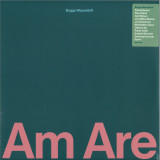
Bugge Wesseltoft has long been a shaper of his own jazz idioms, through his diverse solo albums, his group projects such as New Conception of Jazz, OKWorld! and RYMDEN, and collaborations with artists such as Sidsel Endresen, Henning Kraggerud or Henrik Schwarz.
"Am Are" features special constellations of superb musicians that spans both generations and styles, and is an exploration of sonic textures, dynamic contrasts of mood and style, and ranges from sparse arrangements through to complex layers of dubs and loops and improvisational interplay.
The album begins with Bugge alone on "How?" with layers of undulating atmospheric synth, brought into focus by Bugge's piano at the forefront, creating a minimalist miniature that is both emotive and serene. For "Villrein" Bugge is joined by Elias Tafjord on drums, beginning with a santur-like synth figure, floating over ominous formant sci-fi bass synths bubbling and pulsing, and overlaid by phrenetic piano that only stops to lock into the santur figure before relaunching on its own journeys, all underpinned by Elias Tafjord's expressive drumming. "Is Anyone Listening?" demonstrate's Bugge's songcraft, layering muted percussive piano behind Rohey's distinctive and beautiful vocals punctuated by Martin Myhre Olsen's tenor saxophone, creating a soulful mood tinged with desperation.
"BAG" presents the first classic piano trio of the album - Bugge on piano and synths, Arild Andersen on bass, and Gard Nilssen on drums - announcing itself with an insistent riff, chattering drums, breaking into a progressive rock-style passage of bass and piano in unison. "Reel", the second track from this trio, is a mellow soundscape that evolves to become hazy urban downbeat jazz.
The second piano trio of Bugge (Rhodes and Korg MS20 synth), Sveinung Hovensjø (Electric Bass), and Jon Christensen (Drums and Bells) offers a completely different perspective. The first track "Render" features Bugge's Zawinul-esque Rhodes and monosynth leads, Sveinung's fuzz bass in something of a leading role, all carried with chattering gusto by Jon Christensen's dynamic drumming that brings texture and space as well as rhythm to the piece. "Vender" begins as an atmospheric piece, with reed organ-like synth washes, and octave-processed bass with a somewhat sitar-like tone, meandering until the track breaks down into drums and bass weaving around an insistent drum machine loop, dripping with synth pads and monosynth lead.
"JazzBasill" introduces the third piano trio - featuring Bugge (Piano), Jens Mikkel Madsen (Acoustic Bass) and Øyunn (Drums) - and offers a classic piano trio style with urban sophistication, that is lyrical, and interspersed with staccato cadences, giving a feeling of broken swing, slightly staggered yet driving forwards. The title track "AM ARE" is late night jazz, with baroque whispers, and distinctly melodic.
The final track, "Think Ahead" features the non-standard trio of Bugge (Piano/Organ), Oddrun Lilja (Guitar) and Sanskriti Shrestha (Tablas/Harp). Beginning with a minimalist piano figure, table, and sustained guitar, the track breaks down to a noise surge and ambient windscape, with guitar birds and abstract grinding, before returning to minimalist melodicism.
The shifting personnel across the album, as well as the three different studios in which it was recorded - Village Recording in Copenhagen, Rainbow Studios in Oslo, and his own Buggesroom Studio - creates a feeling of dynamic change and musical variety that is unified by Bugge's piano and keyboards. His playing moves between foreground, where he allows the music to elevate him, and background, where he move gently like a beneficent presence, tending to the demands of the spirit of the musical moments he has captured. It is an album powered by restless exploration and shaped by distinctive musical personalities; it is a journey through different moods, illuminated and brought into focus by Bugge's measured approach and guiding hand.
- A1: Shadow Captain
- A2: See The Changes
- A3: Carried Away
- B1: Fair Game
- B2: Anything At All
- B3: Cathedral
- C1: Dark Star
- C2: Just A Song Before I Go
- C3: Run From Tears
- D1: Cold Rain
- D2: In My Dreams
- D3: I Give You Give Blind
CSN was the trio's last fully realized album, and also the last recording on which the three principals handled all the vocal parts without the sweetening of additional voices. It has held up remarkably well, both as a memento of its time and as a thoroughly enjoyable musical work." — AllMusic
Crosby, Stills & Nash was a folk rock supergroup made up of American singer-songwriters David Crosby, Stephen Stills, and English singer-songwriter Graham Nash. CSN's 1977 self-titled album is a return to the harmony-soaked idealism with which the trio had been catapulted to popularity; it reached No. 2 on the charts, behind Fleetwood Mac's megasuccessful Rumours.
AllMusic says the songs on CSN show a "great deal of lyrical maturity and compositional complexity compared to those earlier albums (from a far more innocent time). "Just a Song Before I Go" was the latest of Graham Nash's radio-friendly acoustic numbers, and a Top Ten single. "See the Changes" and "Dark Star" ranked with the best of Stephen Stills' work, while David Crosby contributed three classics from his distinctive oeuvre: "Shadow Captain," "Anything at All," and the beautiful "In My Dreams."And Nash's multi-part "Cathedral," a recollection of an acid trip taken in Winchester Cathedral on his 32nd birthday, became a staple of the group's live repertoire.
Ground-breaking music perfection deserves definitive sound and top-notch packaging. This reissue was mastered directly from the original master tape by Chris Bellman at Bernie Grundman Mastering and cut at 45 RPM. Pressed on 180-gram vinyl at Quality Record Pressings, and housed in a tip-on old style gatefold double pocket jacket with textured stock by Stoughton Printing.
'It begins with a shoebox of mysterious provenance, full of recordings from the Vendée department on France’s western seaboard: songs of love and war, life and death, played out on land and sea. Songs passed down and sung by ordinary men and women, gracefully delivered with the poetic economy which unites the folk song of all peoples.
Next it takes a group of contemporary musicians to make selections from this treasure trove and sing these old songs anew; to sing them for their beauty, of course, and to reclaim the people’s tradition from those who would seek to exploit it for nefarious political ends. Who better for this task than Tartine de Clous, a singing trio from Vendée’s neighbouring department of Charente-Maritime, who burst into national and international consciousness with their debut album "Sans Folklore" in 2015? The result of their shoebox rummagings, the new album "Compter les dents", recorded in 2019 and finally seeing the light of day, is bound to delight old fans and win them many new ones.
Time makes many’s the alteration, and "Compter les dents" finds 'les garçons' - Geoffroy Dudouit, Thomas Georget and Guillaume Maupin - in a different state of being from their debut release. The trio, friends since youth, have certainly matured between albums, as one would expect; consequently the newer performances are more considered and poised, unfolding with a patient confidence. A relaxed domesticity prevails, something to do with the fact that the album was entirely recorded chez les amis, in contrast to the first album, which was mostly recorded at live performances in bars and night-spots across France.
Lending gravitas to the grain of their voices we mark a deepened richness, doubtless born of the various vicissitudes of daily existence which these gentlemen - and we too as citizens of this turmoiled globe - have weathered in the intervening years. Not too dissimilar, in fact,
from some of the vicissitudes detailed in those old Vendée songs. Plus 'ça change', right?
There’s a greater complexity and subtlety to their unique three-part harmonising, too. Their voices mesh in even stronger - almost telepathic - 'fraternité' than ever before: now commanding and mighty as a full-rigged counter-vessel, now gentle and lulling as a mother’s
cradle-croon, or as the whisper in a lover’s ear.
Three legendary figures of French traditional music, now sadly departed, preside as tutelary spirits over Compter les dents. They are: the late Claude Flagel, musician and ethnomusicologist; and the late Jean-Loup Baly of the well-known 1970s band Mélusine. Most of the album was recorded by Claude in the Brussels home he shared with his late wife Lou Flagel. The album is dedicated to the memory of Jean-Loup, Claude and Lou.
For the first time there are several guest instrumentalists working their magic to expand the Tartine de Clous sound. Jean-Loup plays a characterful accordéon on the song ‘La Veuve'. The other guests are: Maurice Artus (voice), Robert Thébaut (violin), Quentin Manfroy (piccolo, contrabassoon), Marceau Portron (cigar box guitar). Their contributions add even more conviviality to that which the trio of singers already share, a sensation which will doubtless be shared by those who happen to find a place in their lives for "Compter les dents".'
Liner notes by Alasdair Roberts.
- Bagola
- Dadunkan
- Cela Sigui
- Tulunke
- Orpaillage
- Dissa
- Wara
- Nana Triban
- Fakoly
- Latege
- Deme
In their new album Bagola, Trio Da Kali present newly composed songs accompanied on balafon and ngoniba, that provide a rich accompaniment to the spectacular voice of Hawa Kasse Mady Diabaté. She inherits her singing style from her father, the late Kasse Mady Diabaté, who was widely recognized as one of Africa"s all-time greatest singers and won a Grammy nomination in 2004. Hawa"s voice has an exquisite purity and expressiveness, with a wide emotional range. She is equally at home in the lively, 9/8 rhythms of the title track Bagola, a light-hearted critique of men in Malian society, to the soulful Orpaillage, a song that laments the destruction of land from gold-panning. Orpaillage was in fact composed on the spot in the studio, reflecting the creative chemistry between these three musicians. The musical director of the trio is balafon (xylophone) player Lassana Diabaté, born in Guinea into a well-known family of balafon musicians. His remarkable dexterity on the balafon earned him a place in Toumani Diabaté"s Symmetric Orchestra, and later on in the group Afrocubism (featuring Eliades Ochoa). He has collaborated with many musicians, including bluesman Taj Mahal on the album Kulanjan. With two balafons of 22 rosewood keys each, tuned to play chromatic scales, Lassana Diabaté achieves a perfect balance of rhythm, melody, harmony and virtuosic embellishment. David Harrington, leader of Kronos Quartet, compares him to none other than JS Bach. Underpinning the balafon with compulsive groove, is the large ngoniba, played with brilliant musicality by Madou Kouyaté (son of Bassekou Kouyaté and member of his group Ngoniba). Madou, the youngest member of Trio Da Kali, also adds rich harmonies with his deep breathy voice to the songs. Trio Da Kali were founded in 2013 under the initiative of the Aga Khan Music Programme, with the help of three-times Grammy-nominated music producer Lucy Durán. The Trio first rose to international fame with their sublime album Ladilikan (World Circuit Records 2017), featuring an unprecedented and multi-award-winning collaboration with Kronos Quartet, the legendary classical string quartet from San Francisco. Bagola is a showcase of Trio Da Kali"s entrancing and unique sound, only equaled by their magical performances on stage.
- Unspeakable Happiness
- A Region In My Mind
- Arise
- My Unbelief
- Purpose
- Wisdom
- I Believe
- El Roi
Roi is the new album from Sultan Stevenson, one of the most compelling voices emerging on the UK and European jazz scenes.Known for his ability to seamlessly merge narrative and accessibility, Stevenson’s music captures listeners both within and outsidethe jazz community. Drawing deep inspiration from legends like McCoy Tyner, Herbie Hancock, Kenny Kirkland, and Geri Allen,Stevenson’s compositions are an exploration of faith, identity, and the complexities of the human experience. His signature style,rooted in quartal harmony, vamps, pedal points, and modality, is elevated by his natural storytelling ability.Stevenson’s sound is unmistakably inclusive, with a humble approach that prioritises dramatic interplay within his trio over overlycomplex musical ideas. His music is captivating and approachable, reflecting his relationship with the Lord and his culturalheritage. Stevenson’s method of creating compositions, often starting with a central motif and building around contrasting melodicideas, highlights his deep understanding of contrast and narrative in music, resulting in compositions that resonate with a widerange of listeners.As a performer, Stevenson is quickly becoming a thrilling force in jazz, translating heritage and spirituality into an evolving andrelevant sound. With El Roi, he continues the journey he began with his debut album Faithful One, which saw each track serve aunique purpose within a larger conceptual narrative. Stevenson’s keen attention to musician selection, including his regularbandmates Jacob Gryn and Joel Waters, alongside collaborations with figures like Denys Baptiste, speaks to his commitment toboth personal and professional growth. His music is not only a reflection of his influences but also of his vision for what modernjazz can communicate to the world today.
Mr. K with two slices of Philadelphia disco, from smooth and slinky on our A-side to all-out floor pounding disco madness on the B.
Janice McClain, rightly adored for her Garage classic “Smack Dab In The Middle” (feat. on MXMRK-2068) but her second single is a real under-the-radar treat. The comfortably laid back groove somewhere between a stepper and simmering midtempo disco, classy and danceable as the finest Philly soul. Originally on a small LA-based label in 1983 (and sounding like it could have come out a good five years earlier), written and produced by McClain’s uncle Milt Tennant and his writing partner Thom Page, the same team responsible for “Smack Dab” — all Philadelphia rooted, so the sound should come as no surprise. Add McClain’s heartfelt and uplifting vocal and we easily have a lost classic. Mr. K’s edit trims the rare 12-inch version down for maximum sonic fidelity for its first appearance in a 7-inch format.
The flip side vibe goes in a completely different direction, although once again has its roots in Philly. The disco remake of the standard “Brazil” was a massive hit for the Ritchie Family in 1975, topping Billboard’s dance charts and getting deep into the Top 20 on the Hot 100. The group itself was a studio concoction led by veteran producer Richie Rome, with legendary trio Sweethearts of Sigma handling vocals — you’ll recognize their trademark harmonies from other huge classics like “Ain’t No Stoppin’ Us Now” and “Love Is The Message", studious listeners will detect a lot of similarities in the vamp section of “Brazil” and “Love Is…” as the MFSB house band launches into their trademark groove. This vamp section is unfortunately truncated on the original 7-inch single, but the always-attentive ear of Mr. K picks this point to begin his edit, starting where the original single faded out and giving us a full four-plus minutes of galloping disco delight.
Two flavors, both as tasty as it gets, all on one compact piece of wax! Another essential addition to your collection.