Limited edition colored pressing is for Indies Only. Vinyl housed in a tip-on jacket. For Fans Of... John Carol Kirby, Pharoah Sanders, Bill Evans, Durand Jones & The Indications, Misha Panfilov. Debut LP from Okonski. Features current and former members of Durand Jones & the Indications (Steve Okonski, Aaron Frazer, and Michael Montgomery). Follows the debut single 'By The Lake', a collaboration with Germanbased artist and new Karma Chief signee Pale Jay (500k Monthly listeners). The studio at 122 West Loveland Avenue was not an unfamiliar space for Steve Okonski, the leader of his eponymous trio Okonski. Ever since the Colemine label set up shop in Loveland, Ohio it has been a host to a number of groups passing through town, including Durand Jones and the Indications who all of this trio’s members have connections to. After setting aside some time in winter of 2020, Okonski, trained initially as a classical pianist, invited Michael Isvara “Ish” Montgomery and Aaron Frazer to work on an album that was initially planned to be beat driven and fully composed trio instrumentals. After finishing this first session with some improvisations, a second week was booked in the summer of 2021 to try and capture some more of that spontaneous energy. During this session, the tracks were all improvised and recorded live to a Tascam 388 during several late nights at the Colemine HQ. They were structured to allow the group’s collective intuition to fully shape the melodies and arcs of the music. The album opens with Runner Up, where a triumphant yet melancholic melody in the piano leads to a more reserved B-section driven by the drums and bass of Frazer and Montgomery. As you journey through the remainder of the album you are met with a plethora of evoked and explored emotions. The calmness one has walking down a moonlit street after midnight, the connection one has for a person who comes into their world for just a moment or a lifetime, and the nerves and catharsis one feels when starting upon a new, unknown journey. Magnolia closes with Sunday, a track that was recorded late into the night at the close of their first recording session. Without the spontaneity of Sunday, the remainder of Magnolia would likely have never come to fruition. Magnolia was composed from the heart and from the spirit of those in the studio those late nights in Loveland. It is the culmination of an emotional and artistic release that was not afforded or recognized before the band sat at their instruments, and because of that it is introspective, meditative, spiritual, and new.
Cerca:his trio
BASSIST/COMPOSER PETROS KLAMPANIS LOOKS TO PAST AND FUTURE AS HE TRANSFORMS TRADITIONAL GREEK MUSIC WITH TORA COLLECTIVE
Unique instrumentation bridges Greek folkloric and modern jazz worlds, with Klampanis (bass, artistic direction), Areti Ketime (vocals), Thomas Konstantinou (oud, laouto), Giorgos Kotsinis (clarinet), Kristjan Randalu (piano), Ziv Ravitz (drums, electronics, co-production) and more.
Following up his acclaimed recent outings Rooftop Stories and Irrationalities, bassist and composer Petros Klampanis creates one of his most inventive musical settings to date with Tora Collective, his sixth album as a leader. For Klampanis, who grew up in Athens, Greece
surrounded by the confluence of Mediterranean and Balkan folk cultures, making music has always meant navigating cultural crossroads. With Tora Collective (“Tora”=“Now”) he puts traditional Greek music at the centre, even as he presents it from a bold new angle.
In addition to the two new originals “Disoriented” and “South By Southeast,” Klampanis and his compact hybrid jazz/Greek folk ensemble interpret popular Greek songs such as “Xehorismata,” “Sybethera,” “Hariklaki” and “Menexedes ke Zoumboulia.” These songs, Klampanis asserts, are “not just part of Greek cultural heritage or a fragment of the past, but also as part of the future: they live into the present, breathe into the ‘here and now,’ while constantly evolving in a dynamic state and in dialogue with contemporary music.”
“For me it’s a personal thing,” he says. “I want to reflect on what Greek music and culture offer the world. How can music from the Aegean to Epirus and from the Ionian Islands to Crete, meet and speak to the hearts and minds of musicians and audiences from different parts of the world, different traditions and backgrounds?”
To that end, Tora Collective draws on regional characteristics, as Klampanis explains: “Every region has a strong identity. In Epirus the clarinet is more prominent and the music has this slow, groovy, meditative vibe. The islands are lighter sounding, Macedonia is groovier, faster tempos and energetic dances. Music from Asia Minor or Istanbul is more sophisticated. Greeks often refer to Istanbul as ‘Poli,’ from Constantinopoli, so the songs from there are called ‘Politika.’”
There is magic in the clear and consistent voice of Areti Ketime throughout Tora Collective, as can also be said for the supremely voice-like articulation of Giorgos Kotsinis on clarinet. Ziv Ravitz, on drums and electronics, also plays a pivotal role as coproducer: “He added so much in the orchestration,” says Klampanis. “His knowledge of electronics, all these non-acoustic sounds and keyboards, treatments of the acoustic instruments, it’s all because of Ziv. He brought a new perspective on the whole thing.”
The string element in Tora Collective is also strong: in addition to Klampanis’ bass there is Thomas Konstantinou on oud and the traditional Greek laouto, as well as Kristjan Randalu (the pianist in Klampanis’ Irrationalities trio) providing an anchor and bringing Klampanis’ inventive arrangements into harmonic focus. Additional guests appear: Alexandros Arkadopoulos on clarinet for “Disoriented,” Laura Robles on percussion for “South by Southeast” and trumpeters Sebastian Studnitzky and Andreas Polyzogopoulos on “Milo Mou ke Mandarini” and “Hariklaki,” respectively. (“Milo Mou” is slated as a post-release bonus track.)
Using traditional Greek music to discover a common new voice, the project aims to build dialogue, spark creativity, cultivate respect for the past, pave a path forward, discover a new musical storytelling powerful enough to reach and touch audiences in many countries. This is an experiment that bridges worlds: the east and the west, the traditional and the modern, the nostalgic and the forward-looking, using the power of music and improvisation.
Finnish bassist Antti Lötjönen returns in February 2023 with his second Quintet East album on We Jazz Records. With Verneri Pohjola on trumpet, Mikko Innanen and Jussi Kannaste on saxes, and Joonas Riippa on drums, Quintet East is a hard-hitting ensemble of Helsinki scene A-listers. The new release sees the quintet work with Lötjönen's inspired new music with remarkable spirit, spreading out on a quest for new sounds and ideas, and returning to base with a fresh batch of acoustic creative music, wild to the bone even when sounding completely in control.
Circus/Citadel is essentially a coherent album, rather than a series of loosely connected compositions. There's plenty of diversity within Lötjönen's compositions and the band's dynamics, yet it all flows into one effortlessly, creating a suite of sorts, even outside of the title composition which consists of three parts. During the course of the album, the quintet often gets together in smaller formations: in trios and duos of different combinations of the players. The music breathes and maintains its energy at all times, leaving plenty of headroom for the all-out quintet "attacks" when needed. It all comes together in a shape that feels unified and cyclical, leaving the listener hungry for repeated listens in order to get deeper into the many layers found within.
Antti Lötjönen says:
"These compositions vary in terms of form and density, with each player having enough room to re-invent and expand on the music within the pieces. I wrote this music over a relatively brief time span. This, I think, is something you can also hear on the album, as the temporal closeness of the ideas brings with it a certain kind of unity. The world we live in sometimes feels like and absurd circus, from which you need to get away from to get new ideas and energy. Everyone needs their citadel, whatever it may be. This pairing of the two words Circus/Citadel is inspired by a poem by the Romanian-born German-language poet Paul Celan (1920–1970)."
Circus/Citadel is released by We Jazz Records on 24 February, 2023, as white and black vinyl editions, on CD and digitally. The artwork displays a freeform graphic score of the music by We Jazz artistic director and designer Matti Nives. The vinyl versions are housed in heavy duty tip-on sleeve with silver-embossed lettering, and the CD comes in a matte digisleeve with silver-embossed lettering. Antti Lötjönen Quintet East performs live in Finland in January and February.
Finnish bassist Antti Lötjönen returns in February 2023 with his second Quintet East album on We Jazz Records. With Verneri Pohjola on trumpet, Mikko Innanen and Jussi Kannaste on saxes, and Joonas Riippa on drums, Quintet East is a hard-hitting ensemble of Helsinki scene A-listers. The new release sees the quintet work with Lötjönen's inspired new music with remarkable spirit, spreading out on a quest for new sounds and ideas, and returning to base with a fresh batch of acoustic creative music, wild to the bone even when sounding completely in control.
Circus/Citadel is essentially a coherent album, rather than a series of loosely connected compositions. There's plenty of diversity within Lötjönen's compositions and the band's dynamics, yet it all flows into one effortlessly, creating a suite of sorts, even outside of the title composition which consists of three parts. During the course of the album, the quintet often gets together in smaller formations: in trios and duos of different combinations of the players. The music breathes and maintains its energy at all times, leaving plenty of headroom for the all-out quintet "attacks" when needed. It all comes together in a shape that feels unified and cyclical, leaving the listener hungry for repeated listens in order to get deeper into the many layers found within.
Antti Lötjönen says:
"These compositions vary in terms of form and density, with each player having enough room to re-invent and expand on the music within the pieces. I wrote this music over a relatively brief time span. This, I think, is something you can also hear on the album, as the temporal closeness of the ideas brings with it a certain kind of unity. The world we live in sometimes feels like and absurd circus, from which you need to get away from to get new ideas and energy. Everyone needs their citadel, whatever it may be. This pairing of the two words Circus/Citadel is inspired by a poem by the Romanian-born German-language poet Paul Celan (1920–1970)."
Circus/Citadel is released by We Jazz Records on 24 February, 2023, as white and black vinyl editions, on CD and digitally. The artwork displays a freeform graphic score of the music by We Jazz artistic director and designer Matti Nives. The vinyl versions are housed in heavy duty tip-on sleeve with silver-embossed lettering, and the CD comes in a matte digisleeve with silver-embossed lettering. Antti Lötjönen Quintet East performs live in Finland in January and February.
Within any creative expression about love there's a shared experience, a sentiment hard to articulate but understood through emotion. One of the defining examples of a song that holds such sincerity is 'My Heart Is Broken' by 'The Four Dudes'.
Charles 'Pooky' Russell, the lead singer of 'The Four Dudes' shares his story of a broken heart; his ambition to pursue a life immersed in music is what led Charles to leave his hometown of San Antonio for Houston and in doing so, leaving his lady. Charles' music career began whilst studying at Sam Houston High during the mid-60s. During choir is where he met Reginald Whitaker & Lawrence Alexander, and the trio would go on to establish their first vocal harmony group, 'The Three Dudes'. The Dudes, inspired by groups such as The Cadillacs & The Platters, would gain a strong local following that led to their first single 'Sad Little Boy' & 'I'm Beggin' You' produced & released in 1967 on E.J. Henke's 'Satin' label.
By 1969, 'The Three Dudes' had become 'The Four Dudes' with the addition of Kenneth Ball. The Dudes had made the decision to pursue a full time career with their music and the opportunities available Houston propelled the move. Within the first year 'The Four Dudes' had found themselves a manager, James Davis, whom pieced the vocal group with Houston's own 'The Heavy Accents Band'. The group were gaining notoriety around town, performing several times a week, which led Davis to bring the outfit into the studio to release a single on his independent label, 'Sivad-J'. It was when Davis heard 'My Heart Is Broken' for the first time that they decided this would be the single, and within the same year would be recorded at SugarHill Studios & released as a 7" single.
The sincerity of the song is what serenaded Houston across the airwaves in 69', a staple for George 'Boogaloo' Frazier on his show for KYOK 1590 AM amongst many others. The single became a local hit however, due to the lack of distribution and small pressing, the single barely made it out the city limits. 'The Four Dudes' continued to perform in Houston for 3/4 more years before heading to Philadelphia and forming a group called 'Image'.
For the first time since its 1969 release, 'The Four Dudes' single is once again available through Symphonical Records as a limited 7" pressing. Licensed directly through the Davis family with the approval of Charles Russell.
160-gram heavyweight Vinyl LP with gatefold jacket displaying the painting series that inspired the music, and the story of Newtok. Newtok is a remote Alaska Native village situated on the Ningliq River, near the west coast of Alaska. Although a very remote and quiet place, Newtok has come face-to-face with climate change. Due to a combination of thawing permafrost, low levels of sea ice, and strong storms, the coastal land of Newtok is eroding dramatically. In 2016, Chicago visual artist Jennifer Cronin embarked on a trip to Newtok to document this changing environment. Upon returning, she spent the next several years developing a series of paintings and screen prints titled Seen and Unseen that captured this eroding landscape. In 2019, Cronin and musical Artist Patrick Mitchell (a/k/a Dusty Patches) began discussing the project after Cronin asked him to perform at the Gallery opening for the series. As a result, Mitchell created this album, Newtok - inspired by Cronin's Seen and Unseen series and the story of Newtok, Alaska. Mitchell is a multi-instrumentalist songwriter and producer from Chicago who has led numerous past projects in the Chicago DIY community including De Triomphe, New Color, and Whiskey Wise. He dove headfirst into synths in 2017 and adopted the electronic alias Dusty Patches. Dusty Patches released his debut project Filthy Four Track Machine: Volumes I & II (2018, Sooper Records), largely made with the Teenage Engineering Pocket Operators and OP-1. In 2020, he released Nocturnal Emissions from the Dablatory, his first project fully realized with modular synthesis. In approaching Newtok, Mitchell composed all of the constituent musical elements of the work and then recorded and live mixed the album during a single live performance on modular synthesizer. The album draws heavily on sprawling ambient synths, electric and acoustic post-punk guitar motifs, cryptic vocal sampling, vintage drum machines, and modular patches that often sound like birds or the sea. The subject matter of the album, the complexity of its arrangement, and its execution as a single live recorded performance makes Newtok a unique musical experience. About Newtok, Mitchell says: This record was an exploration of themes. When faced with the immense canvases Jen Cronin produced upon her return from the village of Newtok, one can't help but feel awe. With the sheer size of the works towering above you, you are compelled. There is overwhelming beauty, desolation, a sense of urgency, and a sense that it is, in fact, far too late. These visual themes, and the emotions they evoke, were connected to the sounds and compositions of this record. There is a coldness to the digital soundscape, but organic sounds of nature and humans tether and steer the album through a journey of musical storytelling. Newtok is a journey of musical storytelling about the tragedy of the Anthropocene in the age of climate change. FOR FANS OF: Mother Earth's Plantasia, Black Moth Super Rainbow, Boards of Canada, Bibio
Some records just stop you in your tracks. They resonate with you and feel instantly familiar like an old friend, even on the first listen. SOYUZ's third album ‘Force of the Wind’ is one of those records. It holds all the trademarks, beauty, and eccentricities of classic Brazilian recordings, from the 60s and 70s, that we have come to love. Think artists such as Milton Nascimento, Lô Borges, Burnier e Cartier, Arthur Verocai et al. But this record wasn’t made in Brazil and is in fact a brand-new release.
SOYUZ (which translates as 'union') is a creative collective from Minsk, Belarus, led by composer, arranger, and singer, Alex Chumak, multi-instrumentalist, Mikita Arlou, and drummer, Anton Nemahai. SOYUZ's previous albums explored and reimagined the legacy of jazz-oriented, non-English-language pop music of the 20th century. For their third album, there is a stronger focus, and it is influenced by 70s Música popular Brasileira and building bridges from it to present-day Belarus. Alex notes that from the moment he first encountered Brazilian music, he found in it a kind of concentrated emotion that felt as if it were familiar to him from his childhood. This non-verbal emotion and connection between the listener and musician echoes in the music, regardless of understanding of the language the album is recorded in.
‘Force of the Wind’ includes songs sung in Russian and Portuguese as well as instrumental compositions. Its musical palette is both acoustic and electroacoustic: rich warm Rhodes piano, soaring string arrangements, and a controlled drum swagger sounding both relaxed yet super tight. Alongside Alex's sublime vocals, that grace the majority of the tracks, the album features guest performances by multi-talented musician and vocalist Kate NV and rising Brazilian star, Sessa. Alex also recently arranged a number of tracks on Sessa's highly praised 2022 album 'Estrela Acesa'.
On the album, the trio is joined by a cast of friends; NY-based musician of Turkish origin percussionist, Cem Mısırlıoğlu, classically trained composer, Simon Hanes, who aided with string arrangements and conducting the string players, Netherlands-based Brazilian multi-instrumentalist, Gabriel Milliet, on flutes. With the collaboration of these friends SOYUZ have created nine songs/suites that are subtle and plenitude and like the best albums, leave you aching for more.
‘Force of the Wind’ is an enigma, Brazilian yet not Brazilian, vintage yet still contemporary, out of sync with modern culture yet completely relevant and necessary.
- A1: Atomic Plant 1 (3:13)
- A2: Atomic Plant 2 (3:16)
- A3: Atomic Plant 3 (1:02)
- A4: Fusion Point 1 (2:45)
- A5: Fusion Point 2 (1:34)
- A6: Fusion Point 3 (1:00)
- A7: Nuclear Radiation 1 (2:46)
- A8: Nuclear Radiation 2 (2:30)
- A9: Nuclear Radiation 3 (1:06)
- B1: Regulators 1 (3:30)
- B2: Regulators 2 (1:54)
- B3: Data Load (2:11)
- B4: Modem (1:07)
- B5: Robot Masters (4:26)
- B6: Digiheart 1 (3:21)
- B7: Digiheart 2 (2:01)
Heads have been after Otakar Olšaník and Jan Martiš's Advanced Process for a long time. That's because "coincidentally-cosmic disco" packed with spaced-out, smacky-synth dynamite tends to become sought-after. Originally slipping out on the mighty Coloursound in 1986, the label described the sound as "contemporary synthesizer underscores played by computers; depicting future technologies in today's process." If they'd just added "acid-drenched", they'd have been closer to nailing it.
The A-Side is totally beatless. It's also totally perfect. "Atomic Plant 1" is a pulsing synth epic and could've easily soundtracked a stylish 80s thriller such as Thief or To Live And Die In LA. It's a narcotically enhanced meeting between John Carpenter and Steve "Lovelock" Moore. "Atomic Plant 2" adds extra squelch and proper early computer synth squiggles. This stuff is addictive and truly ace. The 3 part "Fusion Point" showcases a dramatic and insistent industrial mood via a gripping sequencer pattern mixed with effects and accents. Menacing and magnificent. The trio of "Nuclear Radiation" tracks veer majestically from a hypnotic sequencer pattern with a heavy dramatic tune to hectic patterns without much of a tune, managing nevertheless to maintain a hold on the listener.
The drums enter proceedings on Side B and they're absolutely outstanding. Coming on like a slicker, heavier Johnny Jewel production, 20 years before Italians Do It Better, "Regulators 1" marries the smoothest head-nod beat you can wish for, with a murky mechanical rhythm and phasing effects. After the stunning beatless version ("Regulators 2") the suuuupppper slo-mo "Data Load" sounds like its wading through the heaviest K-Hole and is all the more thrilling for it. "Modem" is a brief and breezy funky bass and synth squiggle wonder, of the beatless variety. "Robot Masters", would you believe, actually sounds like something those Daft Parisians would've sampled on Discovery, over 15 years later. An uptempo, optimistic track with a real strut; propulsive rhythms with dramatic synths, what can only be described as "very-80s sounds" and digi-handclaps. The breathless "Digiheart" double bill rounds things out, one with a dynamic driving rhythm and more slick-as-hell beats and the other without drums. Mental, brilliant and completely essential.
As David Hollander, in Unusual Sounds: The Hidden History of Library Music, states, Coloursound was "founded in 1979 by composer, music lawyer, and vibraphonist Gunter Greffenius. A Munich-based library with a reputation for releasing innovative and ambitious music, it catered largely to the market for experimental sounds, its first release was 1980’s Biomechanoid, an abstract synthesizer excursion by Joel Vandroogenbroeck, of the pioneering kosmische band Brainticket. The record — complete with imposing, anonymous title and unearthly H.R. Giger cover art — set the tone for the label’s progressive leanings. The label’s catalogue stands as a tribute to the unfettered creative license that libraries were able to provide to forward-thinking musicians who, frustrated by the whims and constraints of the commercial scene, found complete freedom in the world of production music."
As with all our library music re-issues, the audio for Advanced Process comes from the original analogue tapes and has been remastered for vinyl by Be With regular Simon Francis. Richard Robinson has brought the original Coloursound sleeve back to life in all its metallic silver glory.
Das Trio, in Rio de Janeiro gegründet, ist stark vom englischen und italienischen Prog Rock der 70er Jahre inspiriert, aber auch von traditioneller und populärer brasilianischer Musik beeinflusst, was ihnen einen besonderen und ziemlich einzigartigen Sound verleiht. Caravela Escarlates drittes Album ist eine neue Reise in alte Progressive-Rock-Wege. 'III' erinnert an historische Themen in verschiedenen Kontexten - Römisches Reich, Mittelalter, präkolumbianische Zivilisationen und Zeitalter der Entdeckungen. Das Cover-Artwork ist ein Gemälde des britischen Künstlers J.M.W. Turner, das den Ausbruch des Vesuvs darstellt, der Pompeji im Jahr 79 n. Chr. zerstörte. Musikalisch liefert die Band eine tiefe Melange aus Orgel und Synthesizern auf einer soliden Grundlage von Drums und Bass. Sieben Tracks (zwei Instrumentals) befeuern den einzigartigen Ansatz von Caravela Escarlate, der universell Einflüsse inkl. brasilianischem Akzent im Prog Rock mischt.
Pianist John Escreet, hailed by Time Out London as a "transatlantic jazz genius," continues his artistic ascent with the bold, exploratory album Seismic Shift. It is Escreet"s ninth album as a leader but his first at the helm of a trio, and also one of the first to see release since his move to the West Coast in early 2020. The UK native, former Brooklynite and now Los Angeles transplant teams up with fellow Angelenos Eric Revis (bass) and Damion Reid (drums) for a set brimming with fire and invention.
Solaire, Siegfried Kessler, that is the least we can say! Aged 4: learns piano. Aged 6: his first concert. After this: studies classical music like everyone else... until the jazz of Jack Diéval and Stan Kenton turned everything upside down. So it was goodbye to Bach...
...And hello to Dexter Gordon, Joe Henderson, Ted Curson and Archie Shepp (who he would accompany over a long period). In 1969, with Yochk’o Seffer, Didier Levallet and Jean-My Truong, he formed a group which would mark history and create a sensation: Perception. If French free jazz exists, its thanks to Kessler (and company).
The following year, the pianist recorded his first album: Live at the Gill’s Club. On this one-night concert date can also be heard Barre Phillips and Steve McCall. But it was in 1971 that Kessler would record his greatest album; still in a trio setting, but this time with bassist Gus Nemeth and percussionist Stu Martin: Solaire. Five tracks of extraordinary music, moving back and forth between modal jazz and contemporary music.
Let’s begin at the end, with the title track Solaire, on which Kessler plays a melody on flute and piano which resists all onslaughts. It sends out powerful waves, Kessler’s jazz, bubbling like hot oil (Persécution, Drum), shaking modal jazz to its roots (De l’Orient à Orion) or upsetting the memory of a cantata (Bach Hcab). The piano is an instrument which can provide a tendency towards, demonstrative technique; with Kessler, it is something else: a joyful persecution!
Renoir Of The Toys is a deep dive into the world of Youri Kun, the nom de plume of Japanese guitarist, singer and songwriter Hiroshi Nar. It follows a similar compilation, Unheld Ball, released in 2022 on Japanese label Inundow; like that album, Renoir Of The Toys draws from the rich catalogue of outsider psych-garage and rock recorded by Youri Kun over the past two decades. Deeply wired into the history of Japanese underground music, Nar was a founding member of legendary ‘70s outfit Datetenryu, and a member of both Brain Police (Zuno Keisatsu) and Les Ralllizes Dénudés (Hadaka No Rallizes), appearing on the latter’s ’77 Live.
After going to ground during the 1980s, Nar started making music with Niplets in the mid-90s, and releasing music at a prolific pace in 2000 – an excellent run of (sometimes archival) CD-Rs on the Hello Goodbye Studio label, both solo, and with his groups Molls, Niplets and Port Cuss; an album on P.S.F. by Jokers, where he was joined by fellow Rallizes member Yokai Takahashi, and drummer Toshiaki Ishizuka (Brain Police, Vajra, Cinorama, etc.); and sixteen albums (and counting) as Youri Kun, for labels Gyunne Cassette, Inundow, and Hören. He’s also fallen in with the Acid Mothers Temple crowd, guesting on a few of their albums, and recording a live set with Kawabata Makoto’s Nishinihon trio.
All Nar’s music shares a deceptive primitivism; it moves with the simplicity of the best 1960s garage punk, but its edges are blurred and stretched, allowing for all kinds of weird, elliptical, and psychedelic moves to happen in its margins. His guitar playing on songs like “Kakunin” (from 2011’s Yamaimo Boogie) shimmies and slurs magnificently; “Kurokami”, from 2012’s Su, has clanking six strings scrawling over loose, spaced-out synth; there are clunky psychobilly moves (“Oshiro no Ninjya”), spirited rave-ups for rattling organ and sputtering guitar (“Totsugeki”), and some lovely, drowsy, melancholy moments (“Sora”).
The constant throughout is Nar’s blues-blurred, drawling voice, as unique a tool as the non-idiomatic speak-sing styles of solo Syd Barrett, Jad Fair, or Dave E. McManus. There are also three Les Rallizes Dénudés covers here, where Nar locates the pop genius at the heart of songs like “Shiroi Yoru” and amplifies this with his simple garage-reverential take on things. Renoir Of The Toys is yet more evidence that Hiroshi Nar was, and is, one of Japan’s musical visionaries, a lonesome voice dedicated to a singular, streamlined vision, one that’s in eternal pursuit of the joy and kicks at the heart of rock’n’roll, and a reminder of what a great, unpretentious rock’n’roller truly should be.
Both a wonderful vocalist and fine bassist, Leroy Sibbles initially gained fame as the lead singer for the Heptones. The trio began at Caltone, then became stars when they moved to Studio One in 1966. They were accomplished at both rocksteady and reggae, and Sibbles' wondrously soulful leads and excellent compositions were augmented by his smooth, hypnotic bass lines, which were reproduced on numerous Heptones knockoffs and versions. Unfortunately, a once musically profitable relationship soured, and the Heptones left Studio One under bitter circumstances in 1971. Afterward, Sibbles enjoyed a successful solo career, but retained his bitterness toward Dodd and Studio One. He remained with the Heptones a couple more years, and their 1973 LP, Party Time, was an international reggae favourite
- 1: Intro (Live From Alien Research Center) 0 0
- 2: Into Love / Stars (Live From Alien Research Center) 08 14
- 3: Exit Strategy To Myself (Live From Alien Research Center) 04 17
- 4: Where You Find Me (Live From Alien Research Center) 03 0
- 5: Ship (Live From Alien Research Center) 04 8
- 6: Interlude (Live From Alien Research Center) 02 17
- 7: Into The Ice Age (Live From Alien Research Center) 06 16
- 8: Oh Sweet Fire (Live From Alien Research Center) 05 19
- 9: Sans Soleil (Live From Alien Research Center) 03 15
- 10: Loose Ends (Live From Alien Research Center) 06 41
A Notwist concert is a Notwist concert is a Notwist concert. The band around the core trio of Cico Beck and the Acher brothers Markus and Micha usually takes its studio recordings as a mere starting point for their live performances, considering them to be possibilities that need to be explored further. This is especially true for »Vertigo Days - Live from Alien Research Center,« a live record made under unusual circumstances. The band members rearranged songs from their ambitious 2021 album »Vertigo Days« in their studio in Weilheim to record and film a special performance. The songs took on a new life, becoming more psychedelic and intense when rearranged into a spontaneous, Krautrock-esque collage.
»Vertigo Days« was meant to transcend the conventional notion of a band as well as the creative and geographic boundaries inscribed into that concept. And even though life had other plans, this is precisely what the album did when it was released to both commercial success and critical acclaim in early 2021. Contributions by Tenniscoats singer Saya, Angel Bat Dawid, Ben LaMar Gay, Juana Molina, among others, as well as new member Theresa Loibl on bass clarinet, harmonium, and keyboard, expanded the band’s sonic palette, stylistic range, and even lyrical focus through the addition of different instruments, artistic approaches, and languages.
All of that was missing when the band retreated to their studio—dubbed Alien Research Center in response to, and in spite of, a nearby church called Christian Outreach Center—to further explore the possibilities of the source material. The band members considered this a challenge rather than an insurmountable problem and not only accepted, but fully embraced it. Trying to work as little as possible with the computers and samples—Saya’s voice on »Ship« being a notable exception—the band rearranged six tracks from »Vertigo Days« and a piece from the »One of Those Days« film soundtrack in order to allow themselves to improvise more freely, especially thanks to Loibl, who takes on a key role during these 45 minutes.
The intro sets the tone for what’s to come, contrasting loose jazz drumming with curious synthesizer rhythms in an abstract rendition of the first sounds that greeted the listeners on »Vertigo Days«. While the next four tracks—»Into Love / Stars«, »Exit Strategy To Myself«, »Where You Find Me« and »Ship«—follow the chronology of the album, they use the originals as a blank slate for further experimentation. The first track morphs into a feverish long-form jam that draws on the underlying groove to shift the dynamics from and leave behind the song structure of the studio version. It’s an exemplary piece in a recording that sees each individual musician leaving their mark on the overall sound, all while being perfectly attuned to what everyone else is doing around them. This continues up until the record’s triumphant finale, a whirring rendition of »Loose Ends.«
»Vertigo Days - Live from Alien Research Center« is at once a snapshot of a certain moment in the band’s history and the quintessential Notwist live record: a unique performance that both explores the untapped potential of the »Vertigo Days« studio recordings while also serving as an inspiration for upcoming live shows.
As with the studio album, the artwork for »Vertigo Days - Live from Alien Research Center« features photographs by Japanese artist Lieko Shiga, taken in the '00s.
Gotts Street Park are a proud bunch of throwbacks. The Leeds-based trio - Josh Crocker (bass, production), Tom Henry (keys) and Joe Harris (guitar) - met through various music studies and friendship networks. Individually their tastes are diverse: from North Indian classical to experimental jazz, soul to alternative hip hop but their vision is united: “The idea of doing things live in one room has always been important,” remarks Josh. “That’s how they used to do it. Our identity evolved from that.”
The inception of the collective goes back to around 2012. There have been minor line up tweaks - they currently record with a rotating list of drummers - but the philosophy has stayed the same: an ongoing pursuit to capture the raw, unparalleled vibe that comes from recording music together, usually as one take, sometimes to analogue tape.
That approach is a deliberate call back to the methods made famous by legendary studios like Sun and Stax in Memphis, or FAME and Muscle Shoals in Alabama and their in-house bands. That’s why for years, GSP set up their own studio in a shared house in a tough (but, crucially, affordable) corner of west Leeds, Armley. Gotts Park (historically the home of industrialist Benjamin Gott) was close by - the group’s name was a nod to their local geography but also the fact it sounded like an area plucked straight out of some of their favourite East Coast hip hop releases.
Their work was quickly noticed, and it was from that base where they began working with an eye catching list of collaborators: Rejjie Snow, Kali Uchis, Cosima, Yellow Days, Chester Watson, Greentea Peng and Benny Mails. Tom also played keys in Mabel’s band. Early on, while performing as a band for hire for those artists, they were simultaneously honing their own sound; a deliberately retro “heavy, saturated” atmosphere that married the languid vibe of traditional soul with the pin sharp clarity of contemporary hip hop. Old leanings, sure, but upcycled with their own modern twist. “We’re constantly trying to build a catalogue,” says Tom. “Writing new stuff and sending it out to people.” That’s why after the release of their debut EP, ‘Volume One’, in 2017 the invitations kept coming; most notably from Brits Rising Star award winner Celeste, with whom they recorded two tracks on her debut EP ‘Lately’.
‘Volume Two’ once again features an impressive raft of vocalists - all female - from established names to fresh talent. This time, musically, the overall tone is lighter; less gritty, more optimistic. “It’s definitely not as gloomy,” says Josh. “Still though, there is this kind of dark, mysterious thing that we do a lot that works,” he continues. “Like the song we’ve done with Grand Pax, for example - it’s got that kind of witchy darkness to it. I think if you do a really straight male soul voice, it can be a bit cheesy and sound like you’ve heard it a million times before.”
Their collaborations might be some of the freshest of 2020 but make no mistake: Gotts Street Park are out there looking to create something timeless.
ZEHRA is proud to present the debut album ISTEHLAL by the MOHAMAD ZATARI TRIO, consisting of musicians from Syria, Iran & India. The trio merges traditional Middle Eastern sounds with contemporary vibes incl. interpretations of Hossein Alizadeh & Riad Al-Sunbati classics.
In a contemporary globalised world where music has lost its borders and is fighting a constant – yet particular – stream of Western commodification, the Mohamad Zatari Trio stands out as an original cultural artefact, aiming at transcending the boundaries between different music worlds.
Founded in 2019 the ensemble had its first public appearance in 2020 at the Outernational Virtual Festival. Comprising the performers Sara Eslami (Iran) on tar, Avadhut Kasinadhuni (India / Romania) on tabla and Mohamad Zatari (Syria) on oud.
Their debut ISTEHLAL plunges into its own aesthetics, politics and sound intricacies and represents the combined efforts of three musicians hailing from different, yet deeply rooted cultures. Over the course of eleven songs, the album transcends stylistic, ideologic and
geographic boundaries and reflects on the human condition in an interconnected and interrelated technological world. The repertoire includes not only original compositions in different stylistics
but also rearranged traditional pieces by influential composers Riad Al Sunbati (Egypt) and Hossein Alizadeh (Iran).
The Mohamad Zatari Trio introduces itself as a strong new voice within a new generation of young musicians that carry the musical heritage of great masters like Ravi Shankar, Nusrat Fateh Ali Khan or Zakir Hussain with a fresh and contemporary approach.
Mohamad Zatari is a composer and oud player from Aleppo, Syria, currently based in Bucharest, Romania. His artistic effort is devoted to deconstructing stereotypes and blending various musical genres. He has been taught traditional and regional music by Tarek Al-Sayed,
and has a Bachelor in classical composition at the National University of Music Bucharest (2021). His compositions were used for short films as well as educational courses. He performed in various ensembles and groups, in countries such as Syria, Romania, Hungary, Germany, Italy
and Austria.
Sara Eslami is an Iranian composer, tar and setar instrumentalist and improviser. She has a bachelor's in musical Performing at the Tehran University of Arts (2011).
Romanian/Indian Avadhut Kasinadhuni has a Master in Musical Performing / Violin at the National University of Music Bucharest (2022) and started studying tabla intermittently in India with Prof. Kamal Kant (2008) and Prof. Durjay Bhaumik (2017).
Credits:
Recorded by Alexandru Zaharencu at Avanpost media, Bucharest, Romania
on 29th & 30th January 2022
Mixed by Dirk Dresselhaus at ZONE, Berlin, Feb. 2022.
Mastering & lacquer cut by Anne Taegert at D&M.
Celebrating its one hundredth release, Black Truffle is honoured to present a major archival discovery: a stunning document of the only performance by the trio of Tony Conrad, Arnold Dreyblatt and Jim O’Rourke. Across a two-night programme organised by David Weinstein at legendary New York experimental venue Tonic in January 2001, Conrad, Dreyblatt and O’Rourke presented individual projects before performing a collaborative set each night, the first with members of Dreyblatt’s ensemble and the second the trio heard here. As Dreyblatt points out in the wonderfully informative and reflective liner notes written for this release, this was a collaboration across generations, reflecting the profound impact of Conrad’s pioneering minimalism on Dreyblatt and O’Rourke. Both Dreyblatt and O’Rourke came to this collaboration armed with a deep appreciation of Conrad’s music and the just intonation principles at its core, Dreyblatt having first encountered the incredible power of Conrad’s precisely tuned violin chords during his tenure as an archivist for La Monte Young in 1975, while O’Rourke had performed with Conrad in various settings since the mid-1990s (as well as admiring, reissuing, and performing Dreyblatt's music). The flyer for the concert promised ‘massive, ecstatic, pulsating overtones’, and the trio certainly delivered. From the moment this keening stream of bowed strings begins, it is clear, as Dreyblatt writes, that we are in ‘Tony’s sonic universe’, as massively amplified, slowly shifting combinations of precisely chosen pitches fill the room with complex beating patterns and ghostly difference tones. For more than twenty-five minutes, the music operates at a level of intensity comparable to classic recordings such as Conrad’s Four Violins, until the texture thins out slightly in the performance’s final quarter, allowing for the listener’s first recognition of the individual voices that make up this enormous, overwhelming harmonic edifice. The constant stream of bowed tones is broken by a beautifully rich pizzicato from Conrad on monochord, the sliding low tones and metallic shimmer of the other strings taking the set's final moments on an unexpected detour into spacious pastoral psychedelia.
Though produced by three individuals known for their own distinctive bodies of the work, this is egoless music, the perfect expression of Conrad's desire 'to move away from composing to listening', to 'working "on" the sound from "inside" the sound'. Historically important and overwhelming in sonic impact, this release also serves as a moving tribute to Tony Conrad from two musicians profoundly marked by the example set by his art and life.
- A1: Logic System - Unit
- A2: Kraftwerk - Computerwelt (2009 Remastered
- B1: Whodini - Magic's Wand
- B2: Rocker's Revenger - Walking On Sunshine (Feat Donnie Calvin
- C1: Klein & Mbo - Dirty Talk (European Connection
- D1: Liaisons Dangereuses - Los Niños Del Parque
- D2: Yello - Bostich
- E1: The The - Giant
- F1: The Residents - Kaw-Liga
- G1: Clan Of Xymox - Stranger
- G2: A Split - Second - Flesh
- H1: Severed Heads - Dead Eyes Opened
- H2: The Weathermen - Poison!
- I1: New Order - Blue Monday
- J1: Anne Clark - Our Darkness
- J2: 16 Bit - Where Are You?
- K1: Phuture - We Are Phuture
- K2: Model 500 - No Ufo's (Vocal
- L1: Frankie Knuckles Feat Jamie Principle - Your Love
- L2: Quest - Mind Games (Street Mix
- M1: Jasper Van't Hof - Pili Pili
- N1: Guem Et Zaka Percussion - Le Serpent
- N2: Hugh Masekela - Don't Go Lose It Baby
- O1: Sly & Robbie - Make 'Em Move
- Q1: The Ecstasy Club - Jesus Loves The Acid
- R1: Foremost Poets - Reason To Be Dismal?
- S1: Lhasa - The Attic
- S2: A Guy Called Gerald - Voodoo Ray
- T1: M/A/R/R/S - Pump Up The Volume - Usa 12" Mix
- T2: Bobby Konders - Nervous Acid
- U1: Meat Beat Manifesto - Helter Skelter
- V1: Raze - Break 4 Love
- W1: Sueño Latino With Manuel Goettsching Performing E2-E4 - Sueño Latino (Paradise Version
- X1: Off - Electrica Salsa
- O2: Brian Eno - David Byrne - Help Me Somebody
- P1: Primal Scream - Loaded (Andy Weatherall Mix
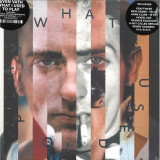
For this uniquely personal retrospective spread over twelve vinyl discs, Sven Väth takes us back to the early days of his DJ career. On What I Used To Play we meet great pioneers of electronic music, gifted percussionists, obscure wave bands, and innovative producers of a bygone 'new electronic' era. Rough beats and irresistible grooves from the identification stage of house, techno, and acid remind us not just how far electronic music has evolved over the past four decades, but how great it was to dance to EBM, techno, and house for the very first time.
If there is one protagonist of the electronic music scene who has remained curious, innovative and at the very cutting edge of music for over four decades, it's Sven Väth. His multi-layered artist albums and Sound of the Season mix compilations have been defining the genre for over two decades, and even today, he is constantly on the lookout for the next top tune to add to the highlights of his next set. At least, that's the case when he's not producing them himself as an artist or remixer. "Actually, it's always been part of my DNA to think ahead," and nothing had been further from his mind than looking back at his past, but when in spring of 2020 the international DJ circuit had to be scaled down to virtually zero, the 'restless traveler' suddenly had time. Time to stop and reflect on "how it actually was back then, at the very beginning of my career..."
"It was a great trip and with every track, beautiful memories came flooding back".
In the London apartment, he had just moved into, Sven has set up a "little music room", where he cocooned himself for several days, "to look way back for the first time and review my musical journey through the eighties, so to speak."
The interim result was six thematically oriented playlists with a grand total of 120 tracks from 'early 80s' to 'Balearic late 80s', together with excursions into afrobeat, European new wave, and EBM sounds and a few epochal techno/house tracks from the USA in between. From these 'Best of Sven Väth's favorites', the project What I Used To Play crystallized. Sven remembers how the Cocoon team reacted to his proposal: "They found the idea of making a compilation out of it MEGA from the beginning and everyone said 'Sven, go for it', but then, of course, the work really started, namely, to clear the rights and to get clean sounding masters of the up to 40-year-old tracks. There was also disappointment, of course. We couldn't clear certain titles because the rights holders in the USA had fallen out with each other or simply disappeared from the scene. In short, it wasn't easy, but now I can safely say we got the most important tracks."
Finally, after two years of research, curation, design, and administrative fine-tuning, the "little retrospective" from 1981 to 1990 is available. The exquisitely packaged, and three-kilo heavy box set is not only physically impressive, WIUTP is also the definitive record of Sven Väth's musical development. On each of the twenty-four sides of vinyl, you can trace track by track, what influenced him during which phase, and how he took off as a DJ from his parents' Queen's Pub straight into the spotlight at Dorian Gray. There and at Vogue (later OMEN), Sven became the style-defining player in the DJ booth that he still is today.
1981 - 1990: Future Sounds of Now
In the early eighties, the crowd in clubs like Vogue and Dorian Gray danced to what nowadays we call 'dance classics' - mainly disco, funk, soul, and chart pop. It was up to a new generation of DJs, including Sven Väth, the youngest protagonist in the Rhine-Main area at the time, to create their own club-ready music mix. Good new tracks and potential floor-fillers were rarities that had to be sought out and found, in order to prove oneself worthy.
Without MP3s, internet streaming, or other digital download possibilities, music didn't just gravitate to the DJ, instead, it had to be tracked down. In well-stocked record stores in Frankfurt and Wiesbaden or even in Amsterdam, London, or New York, Sven and friends sourced the material for countless magical nights. On WIUTP we can follow Sven's very personal journey through this wild, innovative era in which synth-pop, funk, hip-hop, and disco were successively replaced as 'club music' by house, techno, acid, and breakbeat. By the end of the decade, it was clear to see that these once exotic 'fringe' phenomena would soon become 'mass' phenomena.
Early 80s
Dirty Talk by the Italian-American duo Klein & M.B.O. represents the most innovative phase of the Italo-disco genre in the early eighties like no other track. Mario Boncaldo (I) and Tony Carrasco relied entirely on the original synthetic drum and percussion sounds of the Roland TR-808, coupled with the raunchy vocals of Rossana Casale and guitar accents of Davide Piatto. Of course, other tracks from this period were also influential in style, most notably Unit by Logic System, which worked as the perfect soundtrack to the laser lighting system at the legendary Dorian Gray club. With stomping beats and robotic rap interludes, Bostich by Yello also belongs on Sven's eternal playlist - after all, it caught the attention of Afrikaa Bambaataa, who invited the Swiss duo to perform at the Roxy in New York in 1983.
EBM Wave - Mid 80s
From today's point of view, the almost ten-minute-long, downtempo track Giant by Matt Johnson's band project The The, would probably not be considered an obvious club classic. However, a closer (re)listen reveals the rhythmic intricacies of the percussion overdubs by JG Thirlwell (aka Foetus) on Johnson's composition, and it becomes clear why this exceptional piece of music is one of Sven's absolute favorites. Other classics from this phase include Kaw-Liga by the mysterious The Residents, the hypnotic-synthetic Our Darkness by Anne Clark (and David Harrow), and last but not least, the somber, monotonous anthem Where Are You? by 16Bit, one of Sven Väth's projects together with Michael Münzing, Luca Anzilotti from 1986.
US House - Late 80s
You certainly can't talk about Chicago house without mentioning Frankie Knuckles. The resident DJ at the Warehouse not only gave the name to an entire genre, but also produced epochal floor fillers on the Trax label like the timeless Your Love, sung (and moaned) by Jamie Principle. Acid house protagonists Phuture also hail from Chicago, and on We Are Phuture (also released on Trax) we hear the chirping acid sounds of the legendary Roland TB-303 in full effect. Another featured classic is No UFO's by Detroit's Model 500 aka Juan Atkins, who is rightly considered the 'Godfather of Techno' even if the genre-defining track from 1985 still breathes with the spirit of hip-hop and electro from the first breakdance era.
Afrobeat
Le Serpent, by Algerian-born Abdelmadjid Guemguem, is a track that sounds completely different from everything else on WIUTP. Made in 1978, it's a monumental, rousing groove created without bass or synths, just with five congas! Even though Guem sadly passed away in 2021, his immortal, acoustic beats are understood all over the world and will continue to enrich many thousands of DJ sets for years to come. Another classic that not only Sven appreciates beyond measure is Hugh Masekela's Don't Go Lose it, Baby. In addition to being one of the most important jazz pioneers, the trumpeter and freedom fighter from Johannesburg was very experimental, integrating electronic sounds into his music in later years, in a similar vein to Miles Davis and Herbie Hancock. Dutch jazz pianist Jasper van't Hof's afrobeat project Pili Pili has also aged well. The trance-like, almost sixteen-minute-long track of the same name, manages to fill a whole side on the seventh of twelve vinyl discs in the WIUTP box.
UK-US-Euro - Late 80s
Time for a change of scene, in the truest sense of the word, and from a musical perspective, this section is like landing on another planet. First up is Andrew Weatherall's classic remix of Primal Scream's Loaded, featuring the iconic Peter Fonda sample (lifted from the 1966 biker film Wild Angels) that came to personify the mood triggered by the British Second Summer of Love in the late eighties: "We wanna be free to do what we wanna do, and we wanna get loaded...". This period also saw the emergence of M/A/R/R/S whose only single, 1987's Pump Up The Volume, became a club classic with support from DJ legend CJ Mackintosh. In this most eclectic of sections, we also encounter New York house and reggae producer Bobby Konders and his seminal Nervous Acid.
Balearic - Late 80s
Those who know him, know that Sven had already lost his heart to the 'magic island' of Ibiza as a teenager, so with that in mind, the WIUTP project couldn't end without a Balearic chapter. Inspired by Manuel Göttsching's E2-E4, the immortal, eponymously titled Sueño Latino belongs in there without question. Equally popular on the island was, and still is Break 4 Love by Raze, which thinking about it, would also fit perfectly into the house chapter. Last, but not least, there's an overdue reunion with Sven Väth himself, in his role as frontman of the successful Frankfurt trio OFF. Together with Michael Münzing and Luca Anzilotti (later of Snap!) this 'Organization For Fun' created the off-the-wall club hit Electric Salsa in 1986 which incidentally turned into an international chart smash, putting Sven in the enviable position of having to decide between pop stardom and a DJ career. Well, we all know how that decision turned out and the rest, as they say, is history. A not insignificant part of his story is What I Used To Play. Enjoy!
Having spent the past few years supplying low notes as bass player for a who’s who of UK Soul and Jazz talent (including Tom Misch, LoyleCarner, Berwyn, Jordan Rakei, Poppy Ajudha, Jamie Isaac, Puma Blue, Jorja Smith, Alfa Mist & Charlotte Dos Santos) Rudi Creswick steps into the spotlight with his first full length solo offering ‘Different Forms’ on Alfa Mist’s Sekito imprint.
Hailing from Newcastle-Upon-Tyne, Rudi was immersed in club culture from a young age, the low end sonics of which guided his playing, and led him to discovering his own style In the years that followed, Rudi continued to hone his craft, melding the sub rattling sounds of Hip-Hop producers such as J Dilla, MF Doom and Knxwldge with the technical sensibilities of influential Jazz players such as Pino Palladino, Derrick Hodge and Thundercat.
With this record serving as a chance for Rudi to stretch his creative legs, the aim was to showcase the many musical sides of his creative spirit. The first single lifted from the project ‘Sometimes’ enlists the vocal talents of the incredible Emmavie - who dives into self-reflective and cutting, honest lyrics. She explains: “No one ever leads with “often temperamental, quick to anger and generally hot and cold” when describing themselves. Something about Rudi’s laidback production and bouncy singing bass line pulled this reflective and apologetic yet playful subject out of me. “
On the LP, Rudi says: ‘This whole project is thanks to Alfa , Barney Artist and the team at Sekito who’ve helped me realise my dream. They had faith in me for which I’ll always be grateful. The project’s kind of all over the place because there’s so many corners to anyone’s being, inspirations and their musicality, so I wanted Different Forms to reflect that’
Throughout the record, Rudi’s musical prowess and vast influences are laid bare for all to see. From the gliding melodies and twinkling keys and hazy fanfares of second single ‘Peace Of Mind’ (Feat. Manny & The Coloured Sound) through to the sparse and haunting tones of ‘Charlotte’ the LP traverses high peaks and deep valleys, channelling a sense of beauty of textured mystique throughout. Sporting an impressive roster of collaborators including Alfa Mist himself, Trumpeter Sheila Maurice Grey (Kokoroko), Chelsea Carmichael on Tenor Sax, Barrel Jones (Drummer for Nubya Garcia) and Vels Trio’s Jack Stephenson-Oliver (who played synth for the track ‘With Want You’). The lush instrumentation provides an incredible backdrop for esteemed performers such as Barney Artist to drop bars over the crisp drums and laid back strut of ‘Holding The Fence’, meanwhile Berwyn supplies sombre lyrics of the vast expanses of ‘96BPM’. An emotive and engaging listen from start to finish, ‘Different Forms’ is a truly stunning debut.