Cerca:hit la rosa

Generi
Tutto
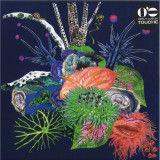
O’o - Touche LP

O’o

Touche LP

12inchIF1074LP
InFiné
17.06.2022

O’o share many of the musical characteristics of their ornithological namesake. The Kaua’i O’O produced the most exquisite birdsong before its extinction in Hawaii in the late 1980s. The beauty and character of its voice was delicate and mysterious, tuneful and surprising. You can experience it with just a cursory websearch, a haunting cri de coeur from the last century. If the poor O’O is consigned to history, then life is just beginning for this French duo, based in Spain, who’ve won plaudits and awards already in their short musical lifespan.

O’o are about to release their sublime debut album Touche. This is not an endling, it’s just the beginning: “I found the name on a website of weird English language words, and I loved the way the letters were arranged like a pair of glasses,” says O’o singer Victoria Suter. “Afterwards, I went onto YouTube and started listening to the last bird of its species, calling for a mate that would never come. I thought: ‘Oh my God, that’s so sad’. Then we talked about the name and we thought it could be a nice thing to honour it and keep it alive in some way.”

Suter met her musical partner Mathieu Daubigné at college in Agen, South West France, when the pair were studying music theory in their teens. Victoria moved to Barcelona in 2010; Mathieu followed six years later. Their debut EP, Spells, appeared in 2018 a beautifully crafted patchwork of vocals and samples that is redolent of the uncanny vocalese of Laurie Anderson. The bird makes an appearance at the beginning of the EP: “Sweet tooth beak. Soft melody peak / Oh O’o, go round and round in circles / Looking for a honeydrop, til you vanish, til you drop”.

That sense of profound longing for something lost is carried over to Touche, as well as the same heightened sensory awareness of the world around them. What has developed in spades is the creative process. O’o have blossomed organically, augmenting their pop sensibilities. Avant-garde techniques have been brought to heel as the pair create off-kilter pop music that warms the heart and nourishes the brain. The catalyst that enabled this bold pop transformation came with the song ‘Touche’ itself, a saucy chanson at the heart of the album. Suter’s wry narrative about a botanical femme fatale is inserted into a lithe and skittish song with reggaeton beats and an inviting, balmy atmosphere.

“The song is about a flower which attracts male insects, producing the very same smell as the female of the species,” explains Victoria. “The poor male is fooled by the sex-appeal of this botanical trap, and gets so excited that he exhausts himself and wastes all his other chances of ulterior mating and having any offspring. The flower entices the insect in in mermaid-like fashion, to come nearer and touch her. It’s the hot track!”

‘Touche’ reaches into hitherto unexplored areas of pop, while the rest of the album is accessible in the way that James Blake, Radiohead or Kate Bush are accessible, and it always challenges, in a way that pop isn’t supposed to. Suter writes playful, poignant, observational songs that tell stories as well as tell us something about ourselves. Songs like ‘Dorica Castra’ are built upon the voice as an instrument, centrifugal and layered from its core.

Complimentary to this method is Daubigné, who brings startling innovation with found sounds, samples and clever vocal manipulations—creating unique, otherworldly sonic flourishes. A guitar whirs like a musical spinning top on ‘Spin’, created in Ableton; an Ondes Martenot appears to make a guest appearance on the title track, though it’s the ingenuity of the Prophet 8 synthesiser. “I’ll often say to Mathieu, ‘what’s that?’” says Suter, He’ll reply, ‘that’s your voice’.”

O’o found their own voice when they won a competition held by the legendary festival organisers Primavera Sound. Victoria entered the band into a competition she saw on Instagram, sending off rough demos on the final day of entry, thinking little more about it other than the fact Mathieu might be annoyed. Soon they would have to build a live set from scratch and figure out how to present their music for the first time. At stake was seventy hours of recording time at Aclam studios, used by Rosalía and Kendrick Lamar, and for the winner a coveted spot at the festival. A pool of 350 acts were whittled down, and then O’o triumphed at a Battle of the Band style face off.

The O’O might be extinct, but O’o the band have learned how to fly. Just watch them go.

non in magazzino

Ordina ora e ordineremo l'articolo per te presso il nostro fornitore.

Last In: 4 years ago
19,75 €
VARIOUS - BACK UP: MEXICAN TECNO POP 1980-1989 LP

A fresh re-press of an Italo Disco club classic: My Mine - Hypnotic Tango. My Mine were the trio of Stefano Micheli (vocals, keyboards), Carlo Malatesta (vocals, keyboards), and Danilo Rosati (drums, keyboards) formed in 1982. Utilizing new electronic instruments like the now legendary Roland TB-303, Danilo improvised a simple but effective synthesizer bass line and passed it through the Roland Echo until something magical came out.

“Hypnotic Tango” was released on Progress Record in 1983 and became an international hit across Europe and US dance clubs in New York, Detroit and Chicago, capturing the imagination of House and Techno producers. In 1987 legendary DJ Frankie Knuckles remixed “Hypnotic Tango” at Seagrape Studios in Chicago, with assistance from studio engineers Tommy White and Brett Wilcotts. Originally released on Danica Records as the “Powerhouse Mix” named after Knuckles' club the Power House, the mix has added vocals by Frankie.

This reissue also includes the “Hypnotic Mix” released in 1990 on Rams Horn Records. All songs are remastered for vinyl by George Horn at Fantasy Studios in Berkeley. The vinyl comes housed in a jacket with original artwork and includes an insert with photos and liner notes by Stefano Micheli.

non in magazzino

Ordina ora e ordineremo l'articolo per te presso il nostro fornitore.

Last In: 6 months ago
19,12 €
Various - Onda De Amor: Synthesized Brazilian Hits That Never Were (1984-94)

Some Crate-digging Compilations Are Often The Result Of Someone Hand-picking Their Choice Favourites From Another Country's Musical History, Perhaps Unaware Or Uninvolved With Its Cultural Lineage In The Process. On Soundway's Latest Release - A Treasure Trove Of Synth Jams, Pop, Samba Boogie, Balearic And Electro From 1980 & '90s Brazil - The Tracks Are Picked By Millos Kaiser, One Half Of The Brazilian Duo Selvagem, Who Are At The Helm Of Throwing Some Of The Country's Best Dance Parties. It's A Rare Compilation That Offers Brazilian Music Actually Picked By A Brazilian.
Whilst Names Such As Ricardo Bomba, Villa Box, Fogo Baiano, Electric Boogies And Batista Junior May Not Be Household Names, They Tell An Untold, Yet Rich And Important Part Of Musical History In Brazil. The Release Also Covers A Decade That Has Been Intentionally Forgotten And Brushed Aside By Many In The Country.
Onda De Amor Is A Release That Is Loaded With Smooth Grooves, Bubbling Bass, Glistening Synthesisers, Funk Strutting Guitar Lines And Sheen Of Production That Undeniably Marks It Of Its Time. For Kaiser This Compilation Is About Reintroducing Music During A Period Of Reappraisal, Catching A New Wave And Hoping Contemporary Listeners Will Ride It With Him. the Idea Is To Do Justice To These Songs. Songs That Combine All The Right Ingredients That Should Have Put Them On
Radio Playlists When I Was Growing Up Or At Least In The Cases Of More Adventurous Djs'.
Millos Kaiser Is A Dj, Digger, Vinyl Junkie/dealer Born In Rio De
Janeiro And Living In São Paulo For The Past 8 Years. He Launched The Dance Party/club Night Selvagem With Partner Trepanado In 2010, Bringing Thousands Of Dancers One Sunday A Month To A Public Square In The Heart Of São Paulo.

non in magazzino

Ordina ora e ordineremo l'articolo per te presso il nostro fornitore.

27,19 €
SOLA ROSA - CHASING THE SUN

First new album in five years from Kiwi musician and producer Andrew Spraggan, aka Sola Rosa, spanning the genres of soul, funk, R&B, nu-jazz, hip-hop, and electronic music. The album features a heavy hitting line-up of vocalists, including regular collaborator and Streets singer, Kevin Mark Trail, Basement Jaxx’ long term collaborator Sharlene Hector and genre-defying, rising UK reggae star Kiko Bun. Other collaborators include London singer/songwriter Josh Barry, London’s eclectic Neo-Soul singer Jerome Thomas, British reggae and dub MC vocalist Eva Lazarus, plus up and coming Australian vocalist Thandi Phoenix. Closer to home, ex-pat Kiwi vocalist Wallace and Aotearoa’s own musical maverick, Troy
Kingi add their talents to the mix. Two single national/specialist radio campaign pre release Full UK/EU print and online PR campaign for singles, DSP tracks, and album release Extensive online/social marketing and advertising campaign to accompany each release
Physical product will consist of digipack CD, gatefold double black LP and ltd edition double Post-coronavirus touring and international promo trips are planned for 2021
Black double vinyl in a gloss gatefold sleeve.

non in magazzino

Ordina ora e ordineremo l'articolo per te presso il nostro fornitore.

Last In: 5 years ago
23,49 €
PURA VIDA - PRAYING FOR THE ANGELS

"Lost Ark Music" proudly present to you another labour of passion "Praying for the Angels" by Pura Vida. 'The heart of the Last Ark' is beating on the riddim of the drums" ... Play it loud!

"Crawling" is about Puraman's personal struggle in life (...) trying to blend a stepping, jazzy reggae groove with some psychedelic stuff, Pieter De Naegel & Mathieu Vilain provide some "Last Ark Fyah Horns". "Song to Bob" is Puraman's tribute to Bob Marley, with a haunting Bassline provide by Aston "Familyman" Barrett, Orginal Wailer (...) His son Aston Barrett Junior hits the drums like Lightening!

"When the right time come" was recorded in an oldschool fashion, Recording the riddim in one take (...) Puraman on Vocals and Guitar, Boris Perck on the bass, Xan Albrecht on the drums, Wouter Rosseel on Lead Guitar. Bos Debusscher provides a wicked synthline!
Are you ready?

"Pretty Stranger I wrote this song for you... You shurely look like danger but that's what I like about you". Pura Vida goes Psychedelic Rock (...) "Les Eaux Sauvages" is a Love-Song with the Wonderfull voice of Nina "Vitalia" Schelfthout!

"O sopro de Inae" features the warm voice of Alessandra De Queiroz...Straight from Brazil she came to the Mare Altar forest under the guidance of Maarten Rosa in search for the "Arka Perdida".
This song has Portugese Lyrics, praying for the Spirits of Iemanja and Inae (...) The Spirits of the Ocean! "Find a way Home" is a Soultune features Alessandra De Queiroz!

The Title Track "Praying for the Angels" is another combination of Puraman & Alessandra's voice. In a Sixties Psychedelic Spirit (...) Singing about the Lost Souls dwelling the streets of the Ancient City! It was recorded on Puraman's Birthday (...)

"And the lights of the city, drive them crazy. And there's nowhere to run (...) And they're praying, hear them praying for the Angels...".

"Blessings from the Last Ark" features the amazing voices of Roydel "Ashanti Roy" Johnson, Derrick "Watty" Burnett & Kenroy "Tallash" Fyffe from 'The Congos'. Ashanti Roy provides the Bassline and Percussion. Watty & Tallash provide extra magic percussion. Puraman on Vocals, Melodica & Guitar. Pieter De Naegel & Mathieu Vilain play humble and bright on this Deep Roots Tune. Blessings from the Ark. Beyond Time & Space (...)

"Ancestor Spirit Dance" is an Afrobeat inspired tune features the voice of Puraman's Great-Grand-Mother Mathilde Spruytte, who
was a local folk singer.

non in magazzino

Ordina ora e ordineremo l'articolo per te presso il nostro fornitore.

Last In: 6 years ago
19,87 €
DWART - Taipei Disco

Dwart

Taipei Disco

12inchZAM002EP
Holuzam
08.08.2018

The music on this EP was conceived in China, between 1989 and 1993. The original tracks were mixed to DAT in real time, in a small neighbour-proof studio inside my apartment in Macau, a 19th floor with a view to the hurricanes. There's a small, unexpected or improbable story behind each track, some little magic fused with the local atmosphere, certainly guaranteeing their lasting authenticity 25 years later.

TAIPEI DISCO
Late 80s Guangzhou was an exotic city where the traditional past coexisted in harmony with the present and even already with the future.
I'd rather spend my weekends in Guangzhou than diving into Hong Kong consumerism - as most ex-pats in Macau did. I took a cab at the border and travelled 150 Km through chaotic roads with family and friends until reaching the hot, humid, mega South China metropolis.
We ate on street joints in the evenings, went on to a karaoke bar and ended up at Taipei Disco, the only proper club in town. All the others were inside hotels and played generic music or they were seedy, sleazy, smoky cabarets.
Taipei Disco used to be a cinema and played cantonese pop music and anglo-saxon pop/rock (that was new). The spacious dance floor was generously lighted, the atmosphere was airy and modern. Boys and girls were in the habit of dancing in pairs, one in front of the other, observing a respectful yet sensual distance. When the girl took a few steps back, the boy went along and vice versa. With legs and feet (more than the upper bodies) synchronized with the music, they never exceeded in extroversion. Cool.
I always carried a MicroComposer and a portable DAT recorder in my travels through China and weekends in Canton. Any spontaneous musical idea was imediately recorded and memorized. The MicroComposer allowed multitrack recording, which was very handy on the road. Based on the emphatic choreography of Taipei Disco's dancers, i started to compose a rhythm track while sitting at a table, with headphones, listening to Cantopop in the background. As if by magic - not a rare occasion in music - everything began fitting together. Odd as it may seem, the track ended up sounding more germanic (Kraftwerkian) than Cantonese pop.

The story ends in a circle: the cantonese DJ at Taipei Disco, whom i used to ask to play certain records, wanted to play my music at the disco when it was basically only just a rhythm track and little else. From a cupboard under his set up he took out a battered keyboard (unrecognizable brand) and invited me to play over the track with the available sounds on the keyboard. The circle was complete, with Cantonese clubbers happily dancing forwards and backwards, as if it were another Cantopop hit.
I didn't get payed but the house offered us free ice cream cups in which little Portuguese flags were sticked.
The track would be finished later, in studio, with vocoder strings ensemble and synth solos.

TAIPEI DISCO (LIVE)
The live version of 'Taipei Disco' was recorded during a live set at the China Pop venue, in Macau, 1993. China Pop was a rock club built in the ample space of an old fishing warehouse, located in the labyrinthic Inner Harbour area. It was decorated with large Mao Zedong and Cultural Revolution posters and memorabilia and had a unique atmosphere, fusing Pop Art with film noir. We began our performance at 1AM, pretty early for Macau's nightlife standards. We were lucky. An audience showed up. And in Macau there were always several friends among the audience, which tranformed a musical performance into a relaxed party.
The atmosphere was particularly surreal on that night. The front row was dominated by French Crazy Horse dancers, a sort of Oriental Moulin Rouge. The girls had finished their last performance of the evening at the Crazy Horse and were still energized from their show. During our performance, right in front of us and perfectly synched, we could hear the famous irreverent screams of can-can dancers. You always had to expect the unexpected in Macau.

RED MAMBO (IMPROMPTU)
I was familiar with the Portuguese-speaking African countries well before having lived in China. I found myself returning several times to one in particular, always attracted by its magic and very distinct, identitary culture and music: Cape Verde.
During the early years of DWART a lot of the inspiration for drum machine rhythms (Roland's TR series) came from African music, especially from new musical trends that gained full autonomy with Cape Verde's independence from Portugal, as was the case with funaná.
I had the privilege of having known and befriended some of the greatest Capeverdian composers, musicians and singers during the 70s and 80s, such as Bana, Luís Morais, Cesária Évora, Paulino Vieira, Chico Serra, Tito Paris, and historical bands such as Bulimundo (ambassadors of funaná) and Os Tubarões (great innovators of morna, coladera and funaná, with the sonic impact of an afro-beat big band).
When Luís Filipe de Barros began playing Os Tubarões for the first time on Portuguese radio, that was the turning point for African music in Portugal. The 'Tabanca' album was so widely heard and talked about that it quickly got a Portuguese release through one of the big labels of the time.
The mystic of this band from the Santiago Island would reach the East. Os Tubarões played to a packed room in Macau in 1992, and after the bombastic gig we arranged a dinner and party at my place.
We ate and drank generously and the moment came for a jam session at the small studio on the 19th floor. Because Os Tubarões didn't all fit in the studio, we recorded an impromptu with only three of the musicians: Tótó Silva (electric guitar), Mário Russo Bettencourt (bass) and Zeca Couto (piano). And there we were improvising without barriers, suddenly detached from cultural roots, labels and constraints, a truly unique moment. The track is now being released exactly as it was recorded, imbued with the real communion between the musicians. And it could only be titled 'Red Mambo'. I wish to dedicate it to the memory of Ildo Lobo and Jaime do Rosário, founders of Os Tubarões, sadly and too soon departed from the land of music.

non in magazzino

Ordina ora e ordineremo l'articolo per te presso il nostro fornitore.

13,99 €
Articoli per pagina:

Language

N/ABPM
Vinyl