Infernal Sounds kick off 2023 with their first record of the year from FLO, ØZ & Q100 and present a top-tier 4 track EP titled 'Cruizer'. These three have been locked in the lab cooking tunes together for some time, but this is their debut release on 12". The title track 'Cruizer' kicks things off, hitting you square in the face with brute force aggression and some of the most gnarly sound design you'll come across. 'Rewind' starts a little more subdued, and hits a lower, moody tone to set the vibe on a different course, whereas 'Screwface' draws for a mid-ground between the two, touching on techy elements and a dancing mid-range pattern. 'Peeker's Advantage' finishes things on a nice and tough exterior, shapeshifting back and forth and formulating a strong finish to the release. 'Listen Carefully' is exclusively available via 12" purchases on Bandcamp and stream-only.
Suche:hits only
- A1: Raymond Guiot - District Machine
- A2: Gabriel Yared - Vocal In Love
- A3: Slim Pezin - Mam's Song
- A4: Pierre-Alain Dahan - Rythmique N°3
- A5: Georges Chatelain - Piège Nocturne
- A6: Bernard Lubat - Rocket 2
- A7: Janko Nilovic - Pop Percussions
- B1: Raymond Guiot - Bass Duettino
- B2: Guy Pedersen - Les Copains De La Basse
- B3: Marc Chantereau & Pierre-Alain Dahan - Synthétiseur & Company
- B4: Bernard Estardy - Phasing Round
- B5: Pierre-Alain Dahan & Mat Camison - Mister Mistery
- B6: Raymond Guiot - Oriental Vibrato
- C1: Pierre-Alain Dahan & Mat Camison - West Coast Drive
- C2: Jean-Jacques Debout - Mitsuko
- C3: Hervé Roy - Percussionissimo
- C4: Luis Conti & François Langel - Midnight Rendez-Vous
- C5: Pierre-Alain Dahan & Mat Camison - Rythmique N°8
- C6: Michel Gonet - Suspense Time
- C7: Sauveur Mallia - Meteor One
- D1: Bernard Estardy - Gang Train
- D2: Pierre-Alain Dahan - Rythmiques N°2
- D3: Bernard Estardy - Vertigo Leitmotiv
- D4: Georges Chatelain & Hervé Roy - Voix D'eau
- D5: Luis Conti & François Langel - Sierra Sunrise
- D6: Jean-Jacques Debout - Bossa A Gogo
Welcome to the third part of the TELE MUSIC saga, the label founded by Roger Tokarz. He deeply marked the era with his audacity and his vision of music on film. This irresistible new selection tells the story from 1968 to 1985 of a prolific label that sometimes produced ten albums a year, and which delighted many French and foreign film directors who, to 'flavour' their films, drew on this sumptuous catalogue.
In this volume 3 TELE MUSIC, we have highlighted legendary artists who have left an indelible mark on the history of the music bookshop and on the history of music in general:
• Janko Nilovic (also known as Yanko Nilovic, Anady Loore, E. Orti or Alan Blackwell),
• Jean-Jacques Debout with his irresistible “Mitsuko” released in 1967 and re-released in 1969 on “Music Bazaar”, • Bernard Lubat, the impressive percussionist, vibraphonist, multi-instrumentalist and very good “scator” (Bernard played in the Doubles Six with Quincy Jones and Eddy Louiss),
• Gabriel Yared, the man with a hundred film scores. Arranger and composer for Johnny Hallyday and Charles Aznavour, among others!
• Hervé Roy conductor and writer for Nancy Holloway,
• George Chatelain, pianist, guitarist, clarinettist, founder of the famous studio “CBE” created in 1966 with his sister Janine Bisson and his high school friend Bernard Estardy.
All these composers were renowned for their acute sense of composition, arrangement, conducting and inter- pretation, and in their own way left their mark on many sound recordings of musical illustration "made in France!
CBE, the Chatelain, Bisson and Estardy studio is located in the 18th arrondissement of Paris. Still in operation and run by Julie Estardy, it has been receiving major artists for over half a century. It is a place of reference. At the time: Johnny Hallyday, Claude François, Sheila, Carlos, Françoise Hardy, Nino Ferrer recorded their hits there.
Now it's the turn of Sebastien Tellier, Bertrand Burgalat, Keziah Jones, Tony Allen, Jeff Miles to name but a few. CBE and its giant Bernard Estardy put TELE MUSIC in the best conditions to produce an atypical and powerful sound.
Bernard Estardy had a custom- built mixing console built by his German friend Gunther Loof, offering the perfect tool for recording 4 and then 32-track Arp 2000, Moog, Korg, Prophet synthesizers and all acoustic instruments. The field of experi- mentation was limitless.
Until now, the titles of this collection were only available in vinyl format, via rare and expensive prints that collectors sell for a high price on dedicated websites. This volume 3 gives you access to the "crème de la crème" of the legendary repertoire made in France!
White Vinyl
The Pretty Reckless haben dem Rock 'n' Roll den nötigen Schwung für eine neue Generation gegeben, und sie haben es auf ihre ganz eigene Weise geschafft. Seit 2008 haben sie sich als die ungewöhnlichste Naturgewalt entpuppt, die in INTERVIEW Magazine, Nylon, ELLE, Good Morning America und Entertainment Tonight erscheinen kann - und sich eine Bühne mit Guns N' Roses und Soundgarden teilt. Zusammen mit dem verstorbenen Produzenten Kato Khandwala entfachten sie diese Flamme auf Light Me Up 2010 und Going To Hell 2014. Letzteres enthielt drei Nummer-1-Hits - das Platin-zertifizierte "Heaven Knows" (der größte Rocksong des Jahres 2014), "Fucked Up World" und "Follow Me Down". Nach "Who You Selling For" von 2016 stieg "Take Me Down" auf Platz 1 der US Mainstream Rock Songs Chart und machte die Band laut Billboard zur "ersten Band, die ihre ersten vier Singles auf Platz 1 der Charts schickte". Im Jahr 2021 wurden sie mit dem Album "Death By Rock and Roll" in den Himmel gehoben. Die vierköpfige Band ging in die Geschichte ein als "die erste von einer Frau angeführte Band, die zwei Mal hintereinander auf Platz 1 der aktiven Rock-Charts stand" und "die erste von einer Frau angeführte Band, die sieben Mal auf Platz 1 der Billboard Rock Radio Charts stand". Das Album wurde nicht nur vom V Magazine, Spin und anderen gelobt, sondern landete auch auf Platz 1 der Billboard Top Album Sales Chart. Bemerkenswert ist auch die Zusammenarbeit mit Legenden wie Matt Cameron und Kim Thayil von Soundgarden bei "Only Love Can Save Me Now" und Tom Morello von Rage Against the Machine bei "And So It Went". Diese Grenzenlosigkeit treibt "Other Worlds" [Fearless Records] an, wo sie ihre ersten richtigen akustischen Aufnahmen, unerwartete Covers und andere Neuinterpretationen abliefern und einmal mehr Neuland betreten.
The Pretty Reckless haben dem Rock 'n' Roll den nötigen Schwung für eine neue Generation gegeben, und sie haben es auf ihre ganz eigene Weise geschafft. Seit 2008 haben sie sich als die ungewöhnlichste Naturgewalt entpuppt, die in INTERVIEW Magazine, Nylon, ELLE, Good Morning America und Entertainment Tonight erscheinen kann - und sich eine Bühne mit Guns N' Roses und Soundgarden teilt. Zusammen mit dem verstorbenen Produzenten Kato Khandwala entfachten sie diese Flamme auf Light Me Up 2010 und Going To Hell 2014. Letzteres enthielt drei Nummer-1-Hits - das Platin-zertifizierte "Heaven Knows" (der größte Rocksong des Jahres 2014), "Fucked Up World" und "Follow Me Down". Nach "Who You Selling For" von 2016 stieg "Take Me Down" auf Platz 1 der US Mainstream Rock Songs Chart und machte die Band laut Billboard zur "ersten Band, die ihre ersten vier Singles auf Platz 1 der Charts schickte". Im Jahr 2021 wurden sie mit dem Album "Death By Rock and Roll" in den Himmel gehoben. Die vierköpfige Band ging in die Geschichte ein als "die erste von einer Frau angeführte Band, die zwei Mal hintereinander auf Platz 1 der aktiven Rock-Charts stand" und "die erste von einer Frau angeführte Band, die sieben Mal auf Platz 1 der Billboard Rock Radio Charts stand". Das Album wurde nicht nur vom V Magazine, Spin und anderen gelobt, sondern landete auch auf Platz 1 der Billboard Top Album Sales Chart. Bemerkenswert ist auch die Zusammenarbeit mit Legenden wie Matt Cameron und Kim Thayil von Soundgarden bei "Only Love Can Save Me Now" und Tom Morello von Rage Against the Machine bei "And So It Went". Diese Grenzenlosigkeit treibt "Other Worlds" Fearless Records an, wo sie ihre ersten richtigen akustischen Aufnahmen, unerwartete Covers und andere Neuinterpretationen abliefern und einmal mehr Neuland betreten.
Is Cory Okay? Opening on pads that sounds like a warm LA sunrise and bubbling with the characteristic dorky, oddball mawkishness that is Tungz 101, ‘Is Cory Okay?’ blossoms into a sugar-glass 80s pop ballad for the masculine mental health crisis. Quincy Jones guitars chip away at the soft underbelly of synth, shaping and modelling until sleek lines are established and the entire track becomes effortlessly aerodynamic. The lyric explores male anxiety disorder from the point of view of friends looking to alleviate the psychological distress of a protagonist who outwardly rejects the value of the support but internally begs for it to continue as he can see the light at the end of the tunnel. It’s yet another example of Tungz multi-dimensional approach to song writing, asserting theirs as an essential voice in 2023. Album: Dripping with licks so richly sophisticated they ought to have their own Beverly Hills postcode, Tungz debut album ‘A Good Dream’ mixes the emotional downer of chillwave with the rhapsody of disco and hits perfection. Across 11 tracks, Tungz access a dancefloor utopia, where a French house aesthetic lives out an opulent psych-pop fantasy; beautifully simple yet sneakily complex. Brimming with confidence, the collection not only fulfils the promise of Tungz early EPs, but asserts their multidimensional approach to song writing, confirming them as an idiosyncratic prospect within alternative music.
- A1: Danny - Maantielta Taloon (Nachts Scheint Die Sonne) (Nachts Scheint Die Sonne)
- A2: Koivistolaiset - On Siita Aikaa (Good Grief Christina) (Good Grief Christina)
- A3: Danny - Muuttokoon Maailma Taa (Cigarettes Women & Wine) (Cigarettes Women & Wine)
- A4: Virve Rosti - Antaudun (Giving Up Giving In) (Giving Up Giving In)
- A5: Mona Carita - Mona Carita Soita Mulle (Call Me - Theme From American Gigolo) (Call Me - Theme From American Gigolo)
- A6: Virve Rosti - Ohari (The Runner) (The Runner)
- B1: Markku Aro - Lady Lady Lady (Lady Lady Lady) (Lady Lady Lady)
- B2: Eini - Pista Valot Pois (Vamos A Bailar) (Vamos A Bailar)
- B3: Mona Carita - Mika Fiilis (Flashdance... What A Feeling) (Flashdance... What A Feeling)
- B4: Tarja Jykyla - Jos Valot Sammuttaisit (Turn Out The Night) (Turn Out The Night)
- B5: Seija Simola - Luotan Rakkauteen (Thief Of Hearts) (Thief Of Hearts)
- B6: Tauski Peltonen & Meiju Suvas - Kay Mun Vierellain (Hand In Hand) (Hand In Hand)
The pioneer of electric pop music, Giorgio Moroder (born April 26, 1940 in Ortisei, Italy) is an internationally acclaimed songwriter and producer who left his trace also in Finnish popular music. Several Moroder’s compositions and productions were released in Finland with Finnish lyrics in the 1970s and 1980s, when Moroder had his most creative peak. This compilation includes twelve Finnish Moroder covers from early bubblegum pop to electronic disco. Giorgio Moroder began his musical career as a singer. He gained success performing bubblegum pop in the late 1960s. He wrote some of his hits himself, but he also sang songs written by others. During his singer years he succeeded with songs Looky Looky (1969) and Son of My Father (1971). The latter became well known also in Finland, where it was covered by one of the most famous Finnish singers in 1960s and early 1970s, Ilkka Lipsanen alias Danny. The song found its way to Finland via Britain, where British band Chicory Tip had covered it first and made it to the charts with the song. Danny was not the only Finnish singer in the early 1970s who looked at Moroder’s repertoire when searching for good songs. Koivistolaiset was a singing and dancing duo of sisters Anja and Anneli Koivisto who were well-known celebrities in 1970s Finland. They released Moroder’s composition Good Grief Christina as On siitä aikaa in 1973. This song was also discovered from Chicory Tip’s repertoire. Cheerful and danceable bubblegum pop was an early 1970s phenomenon and in Finland it was the most popular music played in discos during those years.
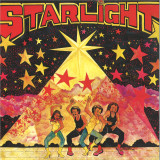
South African production duo of Emil Zoghby and John Galanakis were responsible for a string of high-quality disco singles in the early 80s, typically cover versions of international hits — Klein & MBO’s ‘The Big Apple’, Sly & the Family Stone’s ‘Family Affair’ & David Joseph’s ‘You Can’t Hide (Your Love From Me)’ — backed with their own compositions. When Starlight hit the market with an album in 1983, it featured only one cover, the local hit ‘Picnic’, along with five of the duo’s original compositions, including their similarly styled response, ‘Picnicing’, which replaces the original’s sax with spaced-out synth stabs. Then there’s ‘Jah Jah Love’, an ecstatic disco sermon of dancefloor dynamite weighing in at over eight and a half minutes. Other tracks on this landmark album — ‘Let’s Go Dancing (Boogie Boogie)’, ‘Keep On Moving’ and an eponymous instrumental — offer a similar fusion of classic disco with newer Italo and proto-house influences: machine music with a human touch! Remastered from the original master tapes and reissued for the first time, Starlight will be available on vinyl and digital platforms from early 2023 (40 years after its initial release) via Afrosynth Records.
After Prette (pronounced as ‘pret’ which means fun in Dutch) successfully launched a stage to perform art, it only felt natural to also launch a platform to release art.
Prettemusic is an independent imprint that releases limited vinyl records.
Prettemusic hits the ground running with its first release – a stunning four-track debut EP from head honcho Koperblond. Koperblond (real name Wouter Beek) delivers a mix of Arabic hip-shaking and emotional trance euphoria to evoke intense dance floor ecstasy.
The opening track is ‘Kunti’, an Italo disco destroyer with a bold Bollywood spirit that will lure you in and awaken those hips. Next up is a remake of the brave starter – this new cocktail with hints of the original track has a high-energy zap-crazed feel and a groovy-moving non-stop sound. Two 100% floor fillers, guaranteed to raise the roof of your nearest discotheque!
On the flip side ‘I Want Your Love’ – an emotional love story with a journey through the track that feels like a taste of real love. From happiness and grief to hope and hopelessness, it bursts loudly and with great force. It is a true reminder that love will save the day. Multi-instrumentalist DJ and producer Rose Ringed reinterprets this ode to love using his typical sound palette. The result is a big room banger ready to be served alongside fireworks and CO2 cannons. It is Rose Ringed’s first vinyl outing following releases on his label, Closed Eyes Records, and Solomun’s world-famous Diynamic.
This Prettemusic release comes on exclusive Koperblond-coloured (copper blond in Dutch) vinyl alongside a unique two-front artwork from abstract painter Harry Markusse and fine-art photographer Pieter Bas Bouwman.
2 LPs-set (3 sides)
Recorded in Paris, November 22 and December 17, 1958.
Original issues: LP Fontana 680.202 ML & EP Fontana 460.642 MR.
”I’ve never played for such an audience” declared Art Blakey in tears. lt was November 22nd, 1958, and he’d just come offstage after one of the “Jazz Wednesdays” concerts at the Paris Olympia. For a first appearance by the “Jazz Messengers”, they’d made quite an impression. Not content with pulling a huge crowd off the Boulevard des Capucines (the demand was so great that a second concert had to be staged on December 17th), they’d converted everybody to the “Hard Bop” religion in two sets where, united in a kind of exultant communion, jazzmen, jazzophiles and curious bystanders alike had been crushed together in high spirits, paying no attention to the presence of Brigitte Bardot escorted by Sacha Distel. That night Blues March had almost replaced the Marseillaise anthem (and Moanin’ the Oignons). Yet none of the Messengers had ever been to Paris. They’d get to that later, and then some, but for the moment they were perfect strangers. Not only strangers to the public, but unknown even to a sizeable group of jazz fans : the next issue of “Jazz Hot” magazine (most of it devoted to them) arrived like an invasion by the carabimeri… the blaze lit at the Olympia had gone out, of course, and Blakey had moved into the “Club St. Germain” to light others; there, each of his gigs could have been a remake of the famous cabin scene in the Marx Brothers’ “A Night At The Opera”…
Among the Messengers’ “greatest hits”, only Moanin’ came close to Blues March. Constructed in the manner of a gospel, with the piano in the role of the preacher, and the orchestra that of the congregation, punctuating the sermon with shouts of approval, the theme was by pianist Bobby Timmons, whose fiery spirit can be explained by his educayion: “… the fact I played rhythm ‘n’ blues had a great influence on my style, and for me, it’s the foundation of jazz.” Moanin’ had sent the Olympia fans Into transports of delight, and even excited the curiosity of Hugues Panassié, who chanced to be passing by (“Bop”, in any form, being hardly his cup of tea) : he was prompted to go backstage and ask what it was he’d heard… Decidedly, in 1958, the Jazz Messengers were miracle-workers!
- A1: I Love, Love, Love, Love It 03 22
- A2: Postcard Dimension 03 52
- A3: The Science (Behind Shoes) 04 18
- A4: It's Not Just Country Birds That Are Attracted (To This Blue Glass Bird Bath) 04 02
- A5: Incredibly Comfortable Slippers 04 13
- B6: Not Your Ordinary Blanket 07 44
- B7: Music For A Plank Press 04 38
- B8: Something Is Going To Happen (Bolt, Bonk, Bound, Bowl) 03 02
- B9: Memory Foam 03 57
Faitiche presents Groupshow’s Greatest Hits: The ten tracks on this first vinyl album by Groupshow (Hanno Leichtmann, Andrew Pekler, Jan Jelinek), recorded between 2005 and 2018, document concert recordings and studio improvisations by the trio.
In improvisation there are no mistakes, only missed opportunities. Groupshow found their first opportunity in the routines of live performance and they used this opportunity to break with these routines. The trio consisting of Jan Jelinek, Hanno Leichtmann and Andrew Pekler came together in the context of Kosmischer Pitch, playing live versions of the music from Jelinek’s 2005 studio album of that name. During this project, the musical interaction between the three participants quickly emancipated itself from the original programme, departing from fixed roles and finding a distinct form in constant change.
Groupshow sessions – rehearsal, concert or recording – are always improvised. The interplay of the various sound sources, converging from the directions of “electronics”, “percussion” and “guitar”, does not follow the Krautrock wave logic of crescendo and morendo. Jelinek, Leichtmann and Pekler have established a method of transparent density in which links and breaks are not concealed but remain audible. The music works through attraction and repulsion, with a loosely organized structure that always leaves enough room for the next intervention.
The principle here, repeated even in the smallest units, is that of duration. Groupshow think of their music in terms of an installation: no starting point, no dramaturgy, and ideally no end. Concerts take place not raised up on a podium, but in the middle of the room on a level with the audience, who only enter the space with the musicians and instruments once their interaction is already underway. In 2008, Groupshow used this approach to create a live soundtrack for Andy Warhol’s film Empire, over the full length of eight hours and five minutes.
Recordings in general and the “Greatest Hits” format in particular are another key aspect of this ongoing work on a collectively modulated continuum. The ten tracks on this first vinyl album by Groupshow, recorded between 2005 and 2018, document the ephemeral capturing of opportunities that were not missed. Extracts and essences of an endless movement of searching. The sprawling form of the whole, suspended in succinct, separate units.
To paraphrase Lao Tzu and Roland Barthes, one might say: Once their work is done, they are no longer attached to it. And because they’re not attached to it, it will remain.
Arno Raffeiner, 2022
Celebrating a momentous five decades in the industry, legendary
musician and songwriter Paul Carrack, who's 'Golden Voice' features on
numerous classic world wide hits such as 'How Long' (ACE') ,
'Tempted' (Squeeze), 'The Living Years', 'Over My Shoulder' ( Mike and the
Mechanics) teams up with the GRAMMY Award-winning SWR Big Band &
Strings on epic new album " Don't Wait Too Long"
The covers album celebrates the pioneering golden era in music from the 50s and
beyond spanning blues, gospel, country and jazz. The first single "Cryin' Won't
Help You" out in Jan 2023 is Paul's tribute to the legendary BB King.Paul has a
deep love of R&B songs from the fifties and beyond. For him, 50s music was filled
with intense emotion, it was wildly kinetic and had a profound impact on his
career. In Paul's mind, it's where all modern pop music began, the sounds were
spectacular and revolutionary. Days when the change from jazz to pop was
stretched via pioneers and great singers like Bobby Bland, Ray Charles, Aretha
Franklin, and Lloyd Price..These artists always resonated as fantastic performers
with stylistic records that had such joy and intensity.
The 50s were not only a time for musical revolution but a social and generational
upheaval of vast and unpredictable scope. The power of this music is as vital
today as it ever was with the power to change lives forever.
After working with the SWR band on a number of projects, Paul and his producers
had the idea to find and record a selection of these time-warped classics, some
well- known, others not so much, and the title track , a modern song that harks
back to those times called 'Don't Wait Too Long'. The result is an impassioned,
compelling album. Honest, epic, touching, the album showcases a great vocalist
who is at home with his art and talent.
NATIONAL TV & RADIO.BBC Breakfast - Will take first week Jan / BBC Radio 2 -
Cerys Matthews - First Week Jan / Talk Radio - 2nd week Jan / Sky News - Beth
Rigby Interview - Second Week Jan / Greatest Hits - First Week Jan / GB News -
Live Interview via Zoom First Week Jan / Talk TV - Live Interview via Zoom first
week Jan / Ch 5 News - TBC week 2 Jan / ITV News - 2nd week Jan
One of These Nights occupies an important, unique place in the Eagles' discography given it represents the final album the group made before releasing the bajillion-selling Their Greatest Hits (1971-1975) compilation. The timing is telling. A coming-out party for Glenn Frey and Don Henley's songwriting skills, the studio record – the band's fourth, and its first to hit #1 on the charts – signifies the group's ascent to superstar status. Home to three massive singles (the title track, "Lyin' Eyes," and "Take It to the Limit") and nominated for four Grammy Awards, the quadruple-platinum 1975 effort solidified the Eagles' Southern California-reared sound and made the band a household name.
Mastered from the original analog tapes, pressed on MoFi SuperVinyl, and limited to 10,000 copies, Mobile Fidelity's UltraDisc One-Step 180g 45RPM 2LP vinyl box set takes One of These Nights to the limit. And then some. Playing with reference sonics and a practically indiscernible noise floor thanks to MoFi SuperVinyl's special formula, it provides a rich, dynamic, transparent, and three-dimensional view into a release that moved country-rock ahead by leaps and bounds – and paved the way for the Eagles' ascendancy to global superstardom. The opportunity to zero in on the particulars of the Eagles' golden harmonies, distinct vocal timbres, and cohesive interplay has never been better.
Visually, the premium packaging and presentation of the UD1S One of These Nights pressing befit its esteemed status. Housed in a deluxe box, it features beautiful foil-stamped jackets and faithful-to-the-original graphics that illuminate the splendour of the recording. From every angle, this UD1S reissue exists as a curatorial artefact meant to be preserved, touched, and examined. It is made for discerning listeners that prize sound quality and production, and who desire to fully immerse themselves in the art – and everything involved with the album, from the renowned cover art to the meticulous finishes. As much as any Eagles LP, the connection between the imagery and the music and the band on One of These Nights runs deep. No wonder it led to a Grammy Nomination for Best Album Package.
Devised by West Texas artist Boyd Elder, the striking skull-and-feathers themed piece gracing the front of One of These Nights represents where the Eagles have been and where they were headed. Album art director Gary Burden explained: "The cow skull is pure cowboy, folk, the decorations are American Indian-inspired, and the future is represented by the more polished reflective glass beaded surfaces covering the skull." Moreover, Elder had met the group years earlier when Henley and company performed at one of his gallery openings in California. MoFi's UD1S box set allows Elder's vision (and Burden's debossed treatment of the image) to pop and appear as if it was a stand-alone object.
Of course, what's inside the sleeves, and in the grooves, proves equally compelling. Though One of These Nights marks the final appearance of band co-founder Bernie Leadon on an Eagles LP and contains three of his tunes, the record's tremendous success owes to Frey and Henley's timeless contributions. Taking the next step in their maturation and evolution, the pair crafted several songs while living together as roommates in a rented house in which they converted a music room into a recording studio.
The duo's bond and chemistry pulse throughout the record – particularly in the tight arrangements, tasteful instrumental flourishes, and seamless blending of the folk, country, and rock elements. The musical combinations and partnership not only produced the Eagles' first million-selling single (the slow-dancing "Take It to the Limit," co-written with bassist-vocalist Randy Meisner) and the Frey-led cheating classic "Lyin' Eyes," but the famed title track, which nods to the era's nascent disco scene as well as Kenneth Gamble and Leon Huff's Philly soul platters.
Frey named "One of These Nights" as his favorite Eagles composition of all-time; Meisner's high harmonies alone send the track into a galaxy of its own. Speaking of the latter, Leadon's instrumental "Journey of the Sorcerer" ventures into another universe and was soon used by Douglas Adams as the theme to his "The Hitch-hiker's Guide to the Galaxy" radio series. Inspiration and creative experimentation also dragged the Eagles into the blues. Another Frey-Henley gem, the self-probing "After the Thrill Is Gone" serves as a response song to B.B. King's signature track and more evidence the band was turning the lens inward for lyrical narratives. Like everything on One of These Nights, the song confirms the Eagles were breathing rare musical air.
More About Mobile Fidelity UltraDisc One-Step and Why It Is Superior
Instead of utilizing the industry-standard three-step lacquer process, Mobile Fidelity Sound Lab's new UltraDisc One-Step (UD1S) uses only one step, bypassing two processes of generational loss. While three-step processing is designed for optimum yield and efficiency, UD1S is created for the ultimate in sound quality. Just as Mobile Fidelity pioneered the UHQR (Ultra High-Quality Record) with JVC in the 1980s, UD1S again represents another state-of-the-art advance in the record-manufacturing process. MFSL engineers begin with the original master recordings, painstakingly transfer them to DSD 256, and meticulously cut a set of lacquers. These lacquers are used to create a very fragile, pristine UD1S stamper called a "convert." Delicate "converts" are then formed into the actual record stampers, producing a final product that literally and figuratively brings you closer to the music. By skipping the additional steps of pulling another positive and an additional negative, as done in the three-step process used in standard pressings, UD1S produces a final LP with the lowest noise floor possible today. The removal of the additional two steps of generational loss in the plating process reveals tremendous amounts of extra musical detail and dynamics, which are otherwise lost due to the standard copying process. Every conceivable aspect of vinyl production is optimized to produce the most perfect record album available today.
MoFi SuperVinyl
Developed by NEOTECH and RTI, MoFi SuperVinyl is the most exacting-to-specification vinyl compound ever devised. Analogue lovers have never seen (or heard) anything like it. Extraordinarily expensive and extremely painstaking to produce, the special proprietary compound addresses two specific areas of improvement: noise floor reduction and enhanced groove definition. The vinyl composition features a new carbonless dye (hold the disc up to the light and see) and produces the world's quietest surfaces. This high-definition formula also allows for the creation of cleaner grooves that are indistinguishable from the original lacquer. MoFi SuperVinyl provides the closest approximation of what the label's engineers hear in the mastering lab.
Many music fans will remember Jimmy Salcedo due to his wonderful work as arranger and producer with the duo Elia and Elizabeth in the early 70s. Their delicate songwriting acquired, after his treatment, a special Tropical aroma that even included the funk influences received by Salcedo at that time. He released with his band, La Onda Tres, a few LPs and singles that had a limited distribution, mainly in Colombia only. This anthology comprises a selection of songs that celebrate Salcedo's sound signature: a base of coastal funk with vocals and melodic bubblegum-bomb arrangements and hints of light psychedelia. Many of the compiled songs became popular radio hits in Colombia that Jimmy Salcedo and La Onda Tres recorded and arranged at the Zeida studios in Medellín. These recordings include Latin-jazz tracks ('Mira') with stunning percussion solos, songs recorded under a heavy Caribbean-soul influence ('Qué linda es Colombia!' and 'Lo mismo de siempre') 'Maranguango', an irresistible mix of Afrolatin percussion and catchy Tropical harmonies spiced up with moog keyboard sounds, fuzz and wah wah guitars and even touches of hammond, in a psychedelic funk style, an exhilarating moog driven instrumental with a heavy Afro-funk rhythm ('Moogambo') and revisited Latin classics ('Moliendo Café').
- A1: Descarga Royal - Los Royal´s De Pucallpa 03 30
- A2: La Cervecita - Sonido Verde De Moyobamba 02 09
- A3: Selva Virgen - Los Zheros 02 40
- A4: Moyobambina - Grupo Siglo Xx De Rioja 02 43
- B1: Humo En La Selva - Los Invasores De Progreso 02 58
- B2: La Hamaca - Los Cisnes 02 54
- B3: Cumbion Universal - Fresa Juvenil De Tarapoto 03 35
- B4: La Trochita - Los Rangers De Tingo Maria 02 40
- C1: La Bola Buche - Los Invasores De Progreso 03 21
- C2: Bailando En El Infinito - Ranil Y Su Conjunto Tropical 02 56
- C3: Safari En La Selva - Los Cisnes 02 52
- C4: Baila Bonito - Ranil Y Su Conjunto Tropical 02 55
- C5: Ali Baba - Los Zheros 02 43
- D1: La Palmerita - Fresa Juvenil De Tarapoto 02 57
- D2: Recordando A Aguaytia - Sonido Verde De Moyobamba 02 18
- D3: El Pasito De Miriam - Grupo Siglo Xx De Rioja 02 51
- D4: Rio Mar - Los Cisnes 02 34
- D5: La Uñita - Los Zheros 02 22
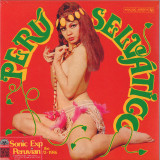
Less than a hundred miles inland from the capital city of Lima lies the great Peruvian jungle, an untamed land of impenetrable forests and endless winding rivers. In its isolated cities, cut off from the fashions of the capital, a unique style of music began to develop, inspired equally by the sounds of the surrounding forests, the roll of the mighty Amazon and Ucayali Rivers, and the rhythms of cumbia picked up from distant stations on transistor radios. With the arrival of electricity, a new generation of young musicians started plugging in their guitars and trading in their accordions for synthesizers: Amazonian cumbia was born.
Powered by fast-paced timbale rhythms, driven by spidery, treble-damaged guitar lines, and drenched in bright splashes of organ, Amazonian cumbia was like a hyperactive distant cousin of surf music crossed with an all-night dance party in the heart of the forest. While many of the genre’s greatest tracks were instrumental, and others were simple celebrations of life in the jungle, the goal of every song was to keep the party going.
Radio stations in Lima remained unaware of the new electric sounds emanating from the jungle, but a handful of pioneering
record producers ventured over the mountain passes to the cities of Tarapoto, Moyobamba, Pucallpa – even Iquitos, a city
reachable only by boat or plane – and lured dozens of bands to the recording studios of the capital to lay down their best
tracks. Although many became local hits, few were ever heard outside the Amazonian region … until now.
With eighteen tracks from some of the greatest names in Amazonian cumbia, Perú Selvatico is both the improbable soundtrack
to a beach party on a banks of the Amazon and a psychedelic safari into the sylvan mysteries of the Peruvian jungle.
Yellow Vinyl
London Records releases remastered and expanded editions of Voice Of The Beehive’s classic debut 1988 album, ‘Let It Bee’ on November 25th.
Formats include a remastered gatefold vinyl edition in transparent honey yellow, and an expanded double CD edition featuring previously unreleased tracks, live versions and demos. All formats feature new liner notes by the band’s very own Tracey Belland.
In the mid 80s, armed with a only a suitcase of songs, Californian sisters Tracey Bryn and Melissa Brooke Belland escaped the American music industry in search of the vibrant British indie scene, finding recently split Madness band member Daniel ‘Woody’ Woodgate, who together with guitarist Mike Jones and bassist Martin Brett would form ‘the Beehive Boys’.
The powerful live chops of the Beehive Boys, combined with the harmonies, energy and stage presence of Tracey and Melissa, made Voice of the Beehive indie darlings and one of the hottest live acts on the London scene.
Signing with London Records, they recorded ‘Let It Bee’, its sunny exterior of sparkling indie guitars, energetic rhythms matched with lyrics and melodies that revealed both hope and an occasionally cutting cynicism.
On its release ‘Let It Bee’ was a UK Top 15 album, its singles ‘I Say Nothing’, ‘I Walk The Earth’ & ‘Don’t Call Me Baby’ all chart hits and radio favourites. Re-issued for the first time since its initial release. The expanded double CD version features ‘Cartoon City’, a band favourite recently uncovered and remastered from the London Records archives.
- A1: The Cell
- A2: Down The Road
- A3: Kings Season
- A4: Because Of You
- B1: Delta
- B2: Who Are You (Feat Olivier Daysoul)
- B3: Happy (Feat Derek Martin)
- B4: Give Up The Ghost (Feat Jay-Jay Johanson)
- C1: The Beat
- C2: Genius (Feat Gush)
- C3: Together (Feat Ledeunff & Blitz The Ambassador)
- D1: Arcades
- D2: Le Banquet (Feat Tigerstyle, Netik, Rafik, Vaira & Kentaro)
- D3: Fuya
September 2012, the 4 turntablist djs from C2C (20syl, Greem, Atom and Pfel) released their first and only album to date : Tetr4.
This album was about to conquer the world: following heavy radio rotations with the hits "Down The Road" and "Happy", the band then toured in the biggest french venues before hitting the most renowned festival stages around the world (Coachella, Roskilde, Fuji Rock…).
For its 10th anniversary, the album comes on a new setting in its double LP vinyl version. Transparent color discs and silver sleeve to celebrate its first decade!
Dublin-based DJ Jubilee 1997 has previously awed listeners with various releases on ‘Beyond Electronix’ turning in commanding, fierce and atmospheric jungle. Now, following on from his blistering ‘Aerial Warmth’ EP on Lobster Theremin last year, Jubilee services up four club-ready, spell-binding cuts on an emotionally captivating trip through the warehouse doors.
Opener ‘Ravers Theme’ hits hard, a dance floor hex sure to turn the most unbelieving of heads; shadow and smoke permeate the warehouse walls, with its peak-time sonics bouncing around the room and into ravers' minds. ‘Titan’ follows suit with it’s deep lows and wounding highs, its hypnotic and intangible sensibility adding to its allure. Jubilee’s ability to bring together ominous and apocalyptic melodies alongside fierce breakbeat structures, result in a barrage of boundary-defying energy.
As the meandering ravers lose themselves in it’s spell ‘Eastern Lines’ breaches its hold if only for a moment before ’Alchemist’ conjures the room to move; the lights flicker and flash moving from one end of the room to another at undetermined speeds; closing a record that’s both captivating and relentless.
Repressed! Illmatic, the 1994 studio debut of Nasir "Nas" Jones, was more than just a critical success for the Queensbridge-based rapper. At a time when East Coast hip-hop was increasingly being taken less seriously than their West Coast counterparts, Illmatic's raw jazz and soul-based production, dire atmosphere and lyrics, coupled with Nas' uncompromising flow was integral in restoring interest in the East Coast as a hotbed of hip-hop artistry. Along with key releases from Wu-Tang Clan and Notorious B.I.G.,it shifted attention away from the funky, dayglo synth-based G-funk coming out of California and back to the grimy streets of New York. After such an unprecedented debut record, expectations were understandably high for Nas' follow-up. What came next threw critics and fans for a loop, but was no less influential than Illmatic, and would become the most commercially successful album in the entirety of Nas' discography. The 1996 sophomore follow-up was titled It Was Written, and in contrast to the urban bleakness of his debut, had Nas dipping his toes into the world of mafioso rap. Amidst production from heavy hitters like Trackmasters, Dr. Dre, L.E.S., Havoc of Mobb Deep, and Illmatic-collaborator DJ Premier, among others, Nas weaves evocative narratives of gang warfare, downtrodden neighborhoods, drug deals gone awry, and gangsta triumph, against a backdrop of samples from Sam Cooke, Etta James, the Isley Brothers, and even Chuck Mangione. It Was Written was not hard up for top-tier guests either, featuring major guest turns from Lauryn Hill and Joel "JoJo" Hailey of K-Ci & JoJo. It also introduced the world to The Firm, the brief Nas-led supergroup featuring rappers AZ, Foxy Brown, and Cormega. It even managed to cause some minor controversy in the hip-hop community for its collaboration with West Coast producer Dr. Dre, at a time when the East Coast/West Coast rap feud was reaching a fever pitch, briefly attracting the ire of one Tupac Shakur. Not only was It Was Written received warmly by critics, but became a major commercial success, reaching the top of the Billboard 200 charts, reaching platinum sales status four times, and alongside albums like Raekwon's Only Built 4 Cuban Linx, helped usher in the era of mafioso rap in the mainstream. It rendered chart hits out of singles like the Eurhythmics-mimicking "Street Dreams", and the Grammy-nominated "If I Ruled The World (Imagine That)", and proved to be a major influence on artists like Kendrick Lamar, Lupe Fiasco, and many more.
More than 50 million records sold, LP productions in Hungarian, German
and English, tours and festival appearances throughout Europe and
Japan, at least 50 cover versions or adaptations of the world hit
"Gyanngyhaj li ny" - Omega are Hungary's number one rock export
In 2022, the band will be celebrating its 60th stage anniversary, making it one of
the longest-serving rock formations in the world. On St. Nicholas Day, December
06, 2021, singer and founding member J nos K bor passed away due to the
coronavirus. Now the Omega albums from the well- known and successful
Bacillus era will be rereleased originally and completely on vinyl. After a few trips
into symphonic and psychedelic rock realms, Omega presented themselves on €
III € , released at the end of 1974, again more down to earth: Nine crisp hard rock
tracks, only one exceeding the four-minute mark. For this album, Peter Hauke, still
producer, and Omega not only used current material, but also included songs that
had already been recorded on the Hungarian original from 1969: "Stormy Fire" and
"Spanish Guitar". In order to attract a broader audience, the songs had been pared
down, instrumental soloing was reduced. Although Omega had always flirted with
progressive stylistic means since their turn to psychedelic rock in 1969, this time
they kept their hands off intricate arrangements. Instead, they turned towards the
zeitgeist by including rather blunt rock tunes like "Stormy Fire", "Go On The Spree"
and "Fancy Jeep" in the list, which could also please a glam rock fan and
passionate consumer of single hits by bands like The Sweet and Slade.
The essential series from the ’80s has been rebuilt, remastered, and carefully portioned onto a five disc set of 7-inch singles, including all the classic vocal bits that became iconic samples, and more than a few new additions to bring things up to date.
Where would dance music be without Acapellas Anonymous? Although many records claim to have changed the game, the arrival of the Acapellas Anonymous series in the mid/late ’80s actually did just that. A hugely popular, multi-volume set of vocal tracks sourced from a wide variety of dance classics, AA was used extensively at the dawn of sampled music to provide hooks for numerous hits. “I’ve Got the Power,” “Ride On Time,” multiple Clivillés and Cole tracks, Pal Joey’s “Party Time,” ’90s Italo house and rave cuts, and untold others all found their choruses among the many acapellas collected on the series. As Ultimate Breaks & Beats was for funk and hip-hop sampling, so was AA for dance music, both for producers and as a must-have for the creative DJ. Sure, before these records came along, DJs had their own choice vocal bits that they used in sets or layered into edits. But suddenly, much like Ultimate Breaks, these carefully guarded secret sources were available easily, and in convenient form, for the first time. And the response, from DJs and a new generation of producers, was immediate.
That part of the story is widely known, and indeed, was widely experienced by anyone paying attention to music of the time. But the questions linger: who was it that found these acapellas, many of them only existing on promo singles, or as tiny fragments buried on obscure B-sides? Who edited and put them together? By now, you may have guessed that once again we owe an enormous debt to the maestro of edits and our hometown hero, Danny Krivit. And it’s to him we must tip our collective caps for this latest release, a carefully revised, fully remastered, and immaculately executed update to the series — this time on 7-inch.
All of the classics are here, rinsed but still powerful: “Let No Man Put Asunder,” “Weekend,” “Don’t Make Me Wait,” “You Don’t Know,” and dozens more. New additions make a few clever appearances as well, with Roland Clark’s “I Get Deep” (used for Fatboy Slim’s “Star 69”), and Rickie Lee Jones’s stoned rambling known as “Little Fluffy Clouds” showing up for the first time. This is no nostalgia trip — Acapellas Anonymous was recently tapped for a Cardi B megahit, and naturally you’ll find that source, Frank-Ski’s “Whores In This House,” included. All in all, an astounding 80 high-quality acapellas and vocal hooks are spread across the five 7-inch, 33RPM singles, which have each been sequenced thematically with attention paid to timings and tempos to provide maximum utility for the working DJ. And if the past is any indicator, we will likely see a new crop of tracks spring up as these find their way into the production toolkits of the world’s track-makers.