"King Yellowman is the 1984 Columbia Records debut album by Yellowman. The artist, whose real name is Winston Foster, is a Jamaican reggae and dancehall artist who first became popular in Jamaica in the 80s. After he rose to prominence in his home country, he released this record under the Columbia label. Yellowman is considered to be one of the pioneers in reggae and hugely contributed to Jamaican musical culture and the internationalization of reggae. King Yellowman is available as a 40th anniversary edition of 1000 numbered copies on yellow coloured vinyl."
Suche:holiday 80
Citing sources from early Dub influenced Clash, Blitz and The Modern Lovers - Spiritual Cramp exist in a strange vacuum somewhere between David Byrne's oversized suit and a bar fight between a bunch of drunk goons on Polk Street in SF. Hate for the police, the government and the status quo are reoccurring themes in Bingham's lyrics. The sounds borrow from the past, echoes of late 70's / early 80's working class rock and punk, which function on the upbeat, showcasing very bright guitars yet generating darker vocal rhythms and darker patterning.
First issued in 1961 on Columbia’s early music venture Colpix, Forbidden Fruit is widely acknowledged as the best of Nina Simone’s early releases. Producer Cal Lampley choose to cast her in varied settings, blending a rendition of Oscar Brown’s ‘Rags And Old Iron’ with a unique take of Bessie Smith’s ‘Gin House Blues,’ contrasting with Billie Holiday’s ‘No Good Man’ and ‘I’ll Look Around,’ which Simone shifts to her own image. Her backing trio aim for the understated, the rhythm section leaving ample room for Simone’s appealing piano lines, nicely complimented by Al Shackman’s guitar. An excellent set from Miss Simone – grab it!
As the BBE Music J Jazz Masterclass Series hits its 19th title, the milestone is suitably matched by a collaboration between two giants of jazz brought together to deliver an exceptional album, working with a band of the very best Japanese jazz musicians. ‘Reminicent Suite’ by American pianist Mal Waldron and Japanese trumpeter Terumasa Hino was originally released in 1973 on the famed Victor label and was one of several Japan-only albums recorded and released by Waldron over a thirty-year period, most of which have never been available outside Japan. ‘Reminicent Suite’ comprises two extended tracks, both taking up a side each. The title track on Side A is composed by Waldron, and is a dark, brooding heavy groove typical of his early 70s sound. ‘Black Forest’ on side B is written by Hino and is a vivid and energetic piece, layered and textured with dense percussion and Hino’s signature trumpet tone. Mal Waldron started out in the early 1950s working extensively on the Prestige label with notable figures such as Gene Ammons, Jackie McLean and Charles Mingus. Most famously, he worked with Billie Holiday before leaving the States in the mid-60s and relocating to Europe where he established himself as a major figure working across many countries including France, Italy, and Germany, where he made his home in Munich. In 1969, Waldron recorded the first releases for two major European jazz labels, ECM and Enja, before visiting Japan on tour for the first time in 1970. Waldron instantly fell in love with Japan and, over the next three decades, extensively toured and recorded there for numerous labels. Terumasa Hino is one of the towering figures of post-war modern jazz in Japan. Coming to prominence via the Hideto Shiraki and Sadao Watanabe bands in the mid-60s, Hino soon emerged as one of the prime movers in new jazz generation that changed the direction of jazz in Japan. He explored a more open, freer, and improvised sound, mixing psychedelic and rock elements with freeform and post-bop jazz. Hino recorded for many of the leading jazz labels of the era including Columbia, Three Blind Mice, and East Wind and would go on to relocate to the US in the mid-70s, immersing himself with the leading fusion players of the New York scene including Larry Corryell, Mtume, Al Foster, Dave Liebman and many more. In the early 80s, Hino’s jazz funk tracks were dancefloor smashes on the UK jazz dance scene. Joining Waldron and Hino on ‘Reminicient Suite’ is a band made up of the very best Japanese jazzman of their day: Takeo Uematsu on sax, Terumasa’s brother, Motohiko Hino, on drums, and the legendary bass master, Isao Suzuki. Together, they deliver one of the very best albums of the era, a richly articulated and dynamic session that exemplifies the very best that the Japanese jazz scene was doing in the early 1970s. ‘Reminicent Suite’ is pressed on 200g vinyl presented in a gatefold sleeve plus obi strip, with new photos by Tadayuki Naito; translated original sleeve notes; and a 7500-word essay including interview with Terumasa Hino from Tony Higgins, co-curator of the J Jazz Masterclass Series. This is the first time this album has been available outside of Japan
Citing sources from early Dub influenced Clash, Blitz and The Modern Lovers - Spiritual Cramp exist in a strange vacuum somewhere between David Byrne's oversized suit and a bar fight between a bunch of drunk goons on Polk Street in SF. Hate for the police, the government and the status quo are reoccurring themes in Bingham's lyrics. The sounds borrow from the past, echoes of late 70's / early 80's working class rock and punk, which function on the upbeat, showcasing very bright guitars yet generating darker vocal rhythms and darker patterning.
- 1: And Then He Wrapped His Wings Around Me (Feat. Meg Baird And Walt Mcclements)
- 1: 2Arrivederci (Feat. Lol Tolhurst)
- 1: 3Blender In A Blender (Feat. Roy Montgomery)
- 1: 4Music For Applying Shimmering Eye Shadow
- 1: 5Horses, Glossy On The Hill
- 1: 6Yesterday's Parties (Feat. Rachel Goswell And Samara Lubelski)
INKWELL VINYL[24,83 €]
Through evocative, emotionally resonant music, Goodbye, Hotel Arkada , the new LP from American harpist and composer Mary Lattimore , speaks not just for its beloved namesake _ a hotel in Croatia facing renovation _ but for a universal loss that is shared. Six sprawling pieces shaped by change; nothing will ever be the same, and here, the artist, evolving in synthesis, celebrates and mourns the tragedy and beauty of the ephem - eral, all that is lived and lost to time. Documented and edited in uncharacteristically measured sessions over the course of two years, the material remains rooted in improvisation while glistening as the most refined and robust in Lattimore's decade-long catalog. It finds her communing with friends, contemporaries, and longtime influences, in full stride yet slow - ing down to nurture songs in new ways. The cast includes Lol Tolhurst (The Cure), Meg Baird, Rachel Goswell (Slowdive), Roy Montgomery, Samara Lubelski, and Walt McClements . "When I think of these songs, I think about fading flowers in vases, melted candles, getting older, being on tour and having things change while you're away, not realizing how ephemeral experiences are until they don't happen anymore, fear for a planet we're losing because of greed, an ode to art and music that's really shaped your life that can transport you back in time, longing to maintain sensitivity and to not sink into hollow despondency." For the title and inspiration, Lattimore's mind returns to the island of Hvar in Croatia, where she first saw those silver ladders at the water's edge. "There's a big old hotel there called the Hotel Arkada, and you could tell it had been hosting holiday-goers for decades in a great way. I walked around the lobby and the empty ballrooms and it looked like a well-worn, well-loved place. My friend Stacey who lives there told me to `say goodbye to Hotel Arkada, it might not be here when you get back' and I heard soon after that it was actually going to be renovated in a very crisp, modern way." Lattimore became fixated on the ingredients that make a place special _ for Hotel Arkada, the patinaed chandeliers, the patterned bedspreads, the echoes of its intangible charm _ and how when those leave this world, as they inevitably always will, it feels import - ant to memorialize them, "to bottle it for a brief second.
- 1: And Then He Wrapped His Wings Around Me (Feat. Meg Baird And Walt Mcclements)
- 1: 2Arrivederci (Feat. Lol Tolhurst)
- 1: 3Blender In A Blender (Feat. Roy Montgomery)
- 1: 4Music For Applying Shimmering Eye Shadow
- 1: 5Horses, Glossy On The Hill
- 1: 6Yesterday's Parties (Feat. Rachel Goswell And Samara Lubelski)
Black Vinyl[24,83 €]
Through evocative, emotionally resonant music, Goodbye, Hotel Arkada , the new LP from American harpist and composer Mary Lattimore , speaks not just for its beloved namesake _ a hotel in Croatia facing renovation _ but for a universal loss that is shared. Six sprawling pieces shaped by change; nothing will ever be the same, and here, the artist, evolving in synthesis, celebrates and mourns the tragedy and beauty of the ephem - eral, all that is lived and lost to time. Documented and edited in uncharacteristically measured sessions over the course of two years, the material remains rooted in improvisation while glistening as the most refined and robust in Lattimore's decade-long catalog. It finds her communing with friends, contemporaries, and longtime influences, in full stride yet slow - ing down to nurture songs in new ways. The cast includes Lol Tolhurst (The Cure), Meg Baird, Rachel Goswell (Slowdive), Roy Montgomery, Samara Lubelski, and Walt McClements . "When I think of these songs, I think about fading flowers in vases, melted candles, getting older, being on tour and having things change while you're away, not realizing how ephemeral experiences are until they don't happen anymore, fear for a planet we're losing because of greed, an ode to art and music that's really shaped your life that can transport you back in time, longing to maintain sensitivity and to not sink into hollow despondency." For the title and inspiration, Lattimore's mind returns to the island of Hvar in Croatia, where she first saw those silver ladders at the water's edge. "There's a big old hotel there called the Hotel Arkada, and you could tell it had been hosting holiday-goers for decades in a great way. I walked around the lobby and the empty ballrooms and it looked like a well-worn, well-loved place. My friend Stacey who lives there told me to `say goodbye to Hotel Arkada, it might not be here when you get back' and I heard soon after that it was actually going to be renovated in a very crisp, modern way." Lattimore became fixated on the ingredients that make a place special _ for Hotel Arkada, the patinaed chandeliers, the patterned bedspreads, the echoes of its intangible charm _ and how when those leave this world, as they inevitably always will, it feels import - ant to memorialize them, "to bottle it for a brief second.
- A1: Mc Miker G & Deejay Sven - Holiday Rap
- A2: Foxy - Get Off
- A3: Boys Town Gang - Can't Take My Eyes Off You
- A4: Ryan Paris - Dolce Vita
- A5: Fox The Fox - Precious Little Diamond
- A6: Joe Smooth - Promised Land
- B1: Viola Wills - If You Could Read My Mind
- B2: Flirts Passion
- B3: Mai Tai - History
- B4: Time Bandits - Live It Up
- B5: Richenel - Dance Around The World
The greatest dance hits from the past decades now again available on coloured vinyl! This series only contains the greatest dance hits from the 80’s, 90’s, 00’s and 10’s, in the original versions. Collected by decade on a seperate vinyl.
A ‘must have’ for any true dance-music lover!
- 1: Mediterranean C
- 2: Against The Odds
- 3: Cat Cruise
- 4: Summer Elegy
- 5: Waves
- 6: Holiday
- 7: Mad Yannis Dance
- 8: Drop In From The Top
- 9: Pink's Song
- 10: Funky Deux
"Wet Dream" , das Debüt-Soloalbum von Richard Wright , nimmt ganz sicher nicht nur wegen seines Namens einen festen Platz in der Musikhistorie ein. Nun, zum 80. Geburtstag des 2008 gestorbenen
Pink-Floyd-Mitbegründers, wird es erstmals seit seiner ursprünglichen Veröffentlichung im Jahr 1978 als Vinyl neu aufgelegt. Und das in einer ganz besonders eindrücklichen, tiefblau marmorierten Pressung. Und das ist nicht alles: Erstmals überhaupt wird "Wet Dream" auch auf den Streaming-Plattformen verfügbar sein, darunter auch als neuer Dolby-Atmos-Mix , außerdem auf CD und a uf Blu-ray, hier ergänzt um einen 5.1-Mix und nie zuvor veröffentlichte persönliche Bilder und Videos aus der damaligen Zeit von Wrights Leben.
Der Reissue wurde von einem Großmeister der Zunft neu abgemischt, Steven Wilson . Freuen kann man sich außerdem auf ein brandneues Artwork, das von Gala und Jamie Wright, Richards Kindern und Nachlassverwaltern, autorisiert und gestaltet wurde. Wie bei der
Originalveröffentlichung lässt sich die zweifach gefaltete Hülle aufklappen, um das Bild zu vergrößern. Was sich lohnt, denn wie damals öffnet sich der Blick auf eine satt leuchtende Farbpalette.
Wenn man "Wet Dream" heute hört und für sich wiederentdeckt, wird deutlich, wie viel von Richards DNA in Pink Floyd steckt. Seine unverkennbaren Rhythmusmuster, die Songstrukturen und sein ganzer Stil des Spielens - all das ist hier in Reinform zu erleben und unterstreicht sein einzigartiges Talent und seinen Einfluss auf die moderne Musik.
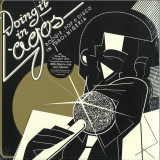
- A1: Hotline - Fellas Doing It In Lagos
- A2: Peter Abdul - Don't You Know
- A3: Steve Monite - Only You
- B1: Oby Onyioha - Enjoy Your Life
- B2: Kio Amachree - Ivory
- B3: Livy Ekemezie - Holiday Action
- C1: Willy Roy - Don't Give Up
- C2: Danny Offia & The Friks - Funk With Me
- C3: Rick Asikpo & Afro Fusion - Too Hot
- D1: Toby Foyeh - Ore Mi
- D2: Gboyega Adelaja - Colourful Environment
- D3: Mike Umoh - Shake Your Body
- E1: Burnis Moleme - Where Is The Answer
- E2: Sony Enang - Don't Stop That Music
- E3: Nkono Teles - Be My Lady (Mix)
- F1: Veno - Groove I Like
- F2: Godfrey Odili - Let's Do More Music
- F3: Terry Mackson - Distant Lover
- G1: Ofege - Burning Jungle
- G2: Lexy Mella - On The Air - Rap Mix(Frankie Francis Edit)
Happy to see the 'Doing It In Lagos' compilation from 2016 on Soundway being repressed. It's one of the few comps out there that put together so many amazing boogie tracks hailing from Nigeria. Nowadays it's really tough to find good condition copies of the original records, and if you do it will cost you a lot of cash too. This 3 LP with 7 inch bonus takes ((arguably) the standout tracks from the LP's and to create this 20 track opus. It's safe to say that it has a great bang for buck ratio if you like that infectious boogie sound infused with catchy synths, bumpin' basslines and often killer drumcomputer programming.
If you are new to these sounds it's a perfect intro into the works by these very talented musicians that had a high output during the end of 70's and 80's, we encourage you to dive deeper into material from the hands of for example Jake Sollo, Dizzy K. Falola, Tony Okoroji, Odion Iruoje, Nkono Teles. You will find many more names along the way..
Compliments for Uchenna Ikonne who co-compiled this and accompanied the release with liner notes.
- A1: Don't Stop
- A2: Message From The Other Side
- A3: 3 A.m. At Moëf Gaga
- A4: When The Rain Is Falling ('85 Interlude)
- A5: Talk Too Much (Instrumental)
- B1: Jump In The Water (24-Track Mix)
- B2: Armer Teufel Am Morgen Nach Dem Maskenball
- B3: Close To You ('86 Interlude)
- B4: September Garden (Instrumental)
- B5: Message From The Other Side (Alternative Instrumental Mix)
"Don't Stop" is the third album retrospectively released by Ghia. As the subtitle "Early Works & Artefacts 1984-1987" implies, it features some of their earliest compositions as well as tracks that were recorded during the same period as their "Curaçao Blue" LP.
The album is a fusion of diverse music styles. Listeners will delight in a range of genres, including electro, funk, soul, jazz-funk, synth pop, and even rap/hip-hop, all woven together as a cohesive work that remains mostly instrumental. As a whole, "Don't Stop" represents Ghia's funkiest and most experimental release to date. Notably, the LP features a rap version of Hermann Hesse's controversial German poem "Armer Teufel am Morgen nach dem Maskenball" ("Poor Devil the Morning After the Costume Ball") from 1926, accompanied by a drum machine rhythm and funky guitar. This poem depicts a person who drank too much the night before, telling the story and describing his hangover. The title track "Don't Stop" and the thrilling minimal electro-funk tune "3 A.M. at Moëf Gaga" both evoke old-school electro influences. The latter references the Spanish discotheque Moëf Gaga, located on the Balearic coast, which the dynamic duo of Lutz Boberg and Frank Simon frequented during their 1980s holidays. While the exact music played at 3 A.M. is unknown, listening to Ghia's track will undoubtedly capture the mood of the place.
One of the key tracks of the album is "Message From The Other Side", which could easily be noted as one of the nicest European synth-funk instrumental pieces ever. The track is based on a sick synth bass line, sparkled with DX7 chord hits, funky guitar, and a delightful "marimba" solo in the last third. The solo was actually played on Boberg's keyboard, using a special sound cartridge. This particular track had to be edited and technically revised by Marian Tone and DJ Scientist as the existing demo version of the song could not be used as is. With its stunning groove, this track will surely be a DJ's favorite.
Listening to the complete album, there is more of Boberg's keyboard wizardry: could you believe that the trumpet solo on "Jump In The Water" as well as the short but stunning slap bass solo on "Talk Too Much" were both played by on the DX7? However, this new release, unlike the jazzy "Curaçao Blue", is not about solos or virtuous playing - it clearly shows the duo's direction towards more electronic composition and clear song structures. The versions of "September Garden", "When The Rain is Falling" as well as "Talk Too Much" are actually instrumental mixdowns of vocal songs. And again, we get a blissful take of "Close To You", here a version from 1986. This soulful jazz-funk ballad could already be heard on "Curaçao Blue" while the final vocal version with singer Lisa Ohm can be found on the recently released "This Is" LP. This shows that the Ghia composers, Boberg and Simon, were perfectionists - tracks were reworked again and again, making them better and better.
The album was mastered and restored with great care, and we are pleased to provide you with a perfect example of mid 1980s home-recording pleasures, tinged with a youthful spirit and providing a sound that cannot be recaptured anymore nowadays. Alongside "This Is" and "Curacao Blue" it should be another perfect addition to any 80s groove collection as well as a great pick for DJs that love and play disco, leftfield electro and funk. The LP is limited to 500 copies.
- A1: Announcement
- A2: Blue Moon
- A3: All Of Me
- A4: My Man
- A5: Them Their Eyes
- A6: I Cried For You
- A7: What A Little Moonlight Can Do
- A8: I Cover The Waterfront
- A9: Detour Ahead
- A10: Trav'lin' Light
- B1: Billie's Blues
- B2: Lover Come Back To Me
- B3: Blue Turning Grey Over You
- B4: Be Fair With Me Baby
- B5: Rocky Mountain Blues
Though she had been performing professionally since the late 1920s, as a teenager in Harlem, during its Renaissance, the immortal Billie Holiday didn't play a single night on the European continent until 1954. It was in that year that the great journalist and musician Leonard Feather, and a Swedish promoter organized the Jazz Club U.S.A. tour, named after Feather's wildly popular radio program. Featuring Red Norvo, Sonny Clark, and more, the centerpiece of Jazz Club U.S.A. was, undoubtedly, Lady Day. Recorded at various dates across the tour, Lady Love shows Holiday still had it, despite the turmoil, and drug and alcohol abuse, her voice remained strong, a stunning document of one of America's greatest treasures on her first ever tour of Europe.
- A1: The Dna Lounge - Lost In Translation
- A2: Height/Dismay – Girl From Ipanema
- A3: Will Kuiper – Diffusion
- A4: Drone – Music For Guitar + Piano
- B1: Tim Gruchy – Jungles
- B2: Tch – Moholy Nagy Takes A Holiday
- B3: Cameron Allan –Tango Bw
- B4: Electric Hand – Daintree
- C1: Buchanan Holbrook – Hunger
- C2: Colin Offord – Absolutely Wired
- C3: Roger Frampton's Intersection – Open, As The Sky
- C4: David Watson – The Key To A Code
- D1: Jane Stevenson – Soloaloha
- D2: Lime – Farmarimba Solo
- D3: Kiri Uu – Mis Sa Kavva Kodun Teid?
- D4: Clout – Two Can Too
- D5: Back To Back Zithers – Cicadas
Antipodean Anomalies 2 is Left Ear Records' most ambitious project to date, a compilation that took over 4 years to license and includes 17 artists across a double LP. AA2 picks up where the first iteration left off, with co-compilers Chris Bonato and& Bridget Small continuing to dig through the music of the geographically isolating and maverick landscapes of Australia and& New Zealand.
As with the first iteration, Left Ear continues its to excavation ofe the music from these vast micro-scenes that evolved out of a number of small community-focused domains, creating their own unique reinterpretation of musical influences from near and far, spanning the years 1980 – 1992.
The compilation scopes an overlooked epoch from Adelaide, presenting acts such as the DNA Lounge, TCH & Will Kuiper. A close-knit community of like-minded mates that made distinctive electronic music together throughout the 80’s, all of which remained unreleased until now. Holbrook Buchanan capture the ambiance of Perth’s heat prodded afternoon’s perfectly with their track Hunger, a breezy 9-minute minimal-jazz jam that includes kalimba, water samples & conga. Furthermore, artists like David Watson & Colin Offord use samplers and handmade instruments to offer a more abrasive and experimental aesthetic.
To round out the compilation, artists such as Jane Stevenson, discovered a 7” at an op-shop and found the needle stuck on the word, ‘Aloha’. Using tape loops, she chose to highlight imperfections rather than hide them and in unison managed to cross boundaries of time; the 60s (album voice) and the 80s (my voice), of location; Hawaii and Australia, and of language; “Aloha and Hi”. This ethos echoes the compilation's vision, to champion artists that implement impromptu creativity, and who have a desire to create regardless of their surroundings and resources. AA2 signs off with the Back to Back Zithers, drawing inspiration from the haiku poems of Basho. To illustrate this, Kari set a Kacapi improvisation to the backdrop of the cicada chorus of summertime in outer Melbourne.
Lady in Satin was released in 1958 on Columbia Records, catalogue CL 1157 in mono and CS 8048 in stereo. It is legendary singer Billie Holiday's penultimate album completed by the singer and released in her lifetime (her final album, Billie Holiday, being recorded in March 1959 and released just after her death).
AllMusic says: "The feeling and tension she manages to put into almost every track set this album as one of her finest achievements. 'You've Changed' and 'I Get Along Without You Very Well' are high art performances from the singer who saw life from the bottom up."
The song material for Lady in Satin derived from the usual sources for Holiday in her three-decade career, that of the Great American Songbook of classic pop. Unlike the bulk of Holiday's recordings, rather than in the setting of a jazz combo Holiday returns to the backdrop of full orchestral arrangements as done during her Decca years, this time in the contemporary vein of Frank Sinatra or Ella Fitzgerald on her Song Books series. The album consists of songs Holiday had never recorded before.
Bandleader Ray Ellis used a 40-piece orchestra, complete with horns, strings, reeds and even a three-piece choir. It would turn out to be Holiday's most expensive music production. Soloists on the album included Mel Davis, Urbie Green, and bebop trombone pioneer J. J. Johnson.
Now with our 45 RPM release, mastered from the original analogue tape by Bernie Grundman, and pressed by our own Quality Record Pressings, the best-sounding version of this historic album gives listeners an even richer sonic experience. The dead-quiet double-LP, with the music spread over four sides of vinyl, reduces distortion and high frequency loss as the wider-spaced grooves let your stereo cartridge track more accurately.
Original album produced by Irving Townsend, and engineered by Fred Plaut.
The story about the lost recordings of Ghia continues: Following the recently released "At The Hilton" single, our label is extremely proud to present "Curaçao Blue", the band's first full-length album. And it is simply mind-blowing, to say the least! The LP features 10 unreleased tracks in a similar Balearic vein as featured on the single.
Incredibly, it was only just a few months ago that these tracks were rediscovered on some old tapes by band members Lutz Boberg and Frank Simon. Could anyone imagine that two physics students from a small German town could create such beautiful, thrilling music in their home studio? Although the technical aspects in the creation of the band's earliest tracks may have been straightforward, the outcome is high-quality, creative, modern jazz-funk, with one step in the electro-funk genre due to the use of a drum machine and synthesizer basslines. The album features mostly 4-track recordings, based mainly on the musicians' weapons of choice: a DX21 keyboard (later updated to the legendary DX7) and a guitar. Many things had to be done live in just one take, though the artists were unafraid of using overdubbing techniques to weave their instrumental journeys. The DIY aesthetics just add more beauty and uniqueness to the songs and compositions, and the result is an extremely harmonic work of undeniable musicality. Ghia delivers Balearic jazz-funk at its finest.
Though the music was recorded in Germany, Ghia had a true relationship with the Balearic region and effortlessly applied the vibes to their compositions. As a side note, one track on their earliest demo tapes was called "3 AM at Moëf Gaga" and we did not know what it meant. The band explained that Moëf Gaga is a nightclub on the Spanish coast that is actually still active today. Boberg and Simon, the two original band members of Ghia, visited the club in the early 80s and spent their holiday close to the sea. With their music, they intended to create a summery vibe, capturing a relaxed and soulful view of the seashore, likely with a drink in hand... Perhaps a Blue Curaçao?
The album starts with a revised version of the title track. The drums in this take are much punchier, and we thought that it would fit just perfectly as an introduction. We continue with the already classic "Down At The Hilton" that was featured on the single, but like us, we are sure you could happily listen to this track on repeat. Next up, "Jump In The Water" opens with a catchy delayed melody, which develops into another perfect jazz-funk piece with an extended guitar solo. Another remarkable song might be "In The Fast Lane". As the name suggests, an uptempo number, now with an electro-funk beat combined with speedy keyboard solos that almost sounds like a marimba. On side B, the album keeps the relaxed seaside vibes flowing. To round out the album, we are treated to two pieces that originated after the return home, with memories of the Spanish coast fading but still lingering, likely recorded between 1986 and 1988. Both are instrumental versions of songs to be used later for studio sessions with their new band member, singer Lisa Ohm (who you will hear on Ghia's next album!). On "Crystal Silence In Dub" we get a perfect downtempo groove, positively reminding us of the sound of the 1980s UK funk scene. The album ends with "Keep Your House In Disorder", here as an earlier, rougher, and funkier take than on the final vocal version, which could be found on the B-side of the "What's Your Voodoo" single.
We hope you love this album as much as we do! Nothing like this has yet been released out of Germany. We hardly can recall any privately produced, home recorded jazz-funk/fusion from the 1980s as free, creative, and uninhibited as Ghia's Curaçao Blue. The playful and creative approach, coupled with those nostalgic tones should make this LP an essential pick for any record collection, whether you are a DJ, a home listener, a music lover, or a modern jazz-funk/synth-funk aficionado.
The album is out now on The Outer Edge, the new label by record collector DJ Scientist, aka John Raincoatman. We also want to thank Frederic Stader for his awesome work mastering and sound restoration of the material on this LP.
Multiple-GRAMMY® Award-winning singer/songwriter Rob Thomas has released his debut holiday album, something about christmas time – available now via Atlantic Records. The 10-track collection, produced by Gregg Wattenberg, features a mix of new originals, classic covers and show-stopping duets with Ingrid Michaelson, BeBe Winans, Brad Paisley & Abby Anderson. The album is led by new single “small town christmas,” arriving alongside a touchingmemory-filled music video companion directed by David “Doc” Abbott.
Thomas also gives his long-beloved “A New York Christmas” a 2021 update for the project, nearly 20 years after the single’s original release. The reimagined version will be featured in the all new Hallmark Channel movie “A Royal Queens Christmas” – airing as part of their Countdown to Christmas programming with all new holiday movies airing every Friday, Saturday & Sunday at 8/7c. something about christmas time marks Thomas’ fifth solo album release, his latest following 2019’s Chip Tooth Smile. He most recently reunited with Santana for collaborative single “Move” (the first since their explosive #1 smash “Smooth”) & will hit the road once again in May 2022 with Matchbox Twenty.
ABOUT ROB THOMAS:
Rob Thomas is one of the most distinctive artists of this or any other era – a gifted vocalist, spellbinding performer, and acclaimed songwriter known worldwide as lead singer and primary composer with Matchbox Twenty as well as for his multi-platinum certified solo work and chart-topping collaborations with other artists. Among his countless hits are solo classics like “Lonely No More,” “Little Wonders,” “This Is How A Heart Breaks,” and “Streetcorner Symphony,” Matchbox Twenty favorites including “Push,” “3AM,” “If You’re Gone,” “Bent” and “How Far We’ve Come,” and of course the Billboard number 2 song of all time “Smooth,” his 3x RIAA platinum certified and 3x GRAMMY Award winning worldwide hit collaboration with Santana. The first artist to be honored with the Songwriters Hall of Fame’s prestigious “Hal David Starlight Award” and recipient of numerous BMI and ASCAP Awards, Thomas has contributed to sales of more than 80 million records.
A charismatic, engaging, and indefatigable live performer, Thomas has spent much of the past two decades on the road, fronting massive world treks with Matchbox Twenty and on his own as well as a series of intimate acoustic shows. Thomas is also a dedicated philanthropist, establishing Sidewalk Angels Foundation with his wife Marisol Thomas in 2003 and having raised millions for no-kill animal shelters and rescues across the US.
- A1: Rock This Mother
- A2: Talk To Me Girl
- A3: You Can Find Me
- A4: Check This Out
- A5: Jesus Going To Clean House
- A6: Hope You Understood
- A7: Is It What You Want
- A8: Love Is Everlasting
- A9: This Is Hip-Hop Art
- A10: Opposite Of Love
- A11: Do You Know What I Mean
- B1: Saving All My Love For You
- B2: Look Out Here I Come
- B3: Girl You Always Talking
- B4: Have A Great Day
- B5: Take My Hand
- B6: I Need Your Love
- B7: Your Town
- B8: Talk Around Town
- B9: Booty Head/Take A Little Walk
- B10: I Love My Mama
- B11: I Never Found Anyone Like You
Vinyl LP[23,49 €]
As the sun sets on a quaint East Nashville house, a young man bares a piece of his soul. Facing the camera, sporting a silky suit jacket/shirt/slacks/fingerless gloves ensemble that announces "singer" before he's even opened his mouth, Lee Tracy Johnson settles onto his stage, the front yard. He sways to the dirge-like drum machine pulse of a synth-soaked slow jam, extends his arms as if gaining his balance, and croons in affecting, fragile earnest, "I need your love… oh baby…"
Dogs in the yard next door begin barking. A mysterious cardboard robot figure, beamed in from galaxies unknown and affixed to a tree, is less vocal. Lee doesn't acknowledge either's presence. He's busy feeling it, arms and hands gesticulating. His voice rises in falsetto over the now-quiet dogs, over the ambient noise from the street that seeps into the handheld camcorder's microphone, over the recording of his own voice played back from a boombox off-camera. After six minutes the single, continuous shot ends. In this intimate creative universe there are no re-takes. There are many more music videos to shoot, and as Lee later puts it, "The first time you do it is actually the best. Because you can never get that again. You expressing yourself from within."
"I Need Your Love" dates from a lost heyday. From some time in the '80s or early '90s, when Lee Tracy (as he was known in performance) and his music partner/producer/manager Isaac Manning committed hours upon hours of their sonic and visual ideas to tape. Embracing drum machines and synthesizers – electronics that made their personal futurism palpable – they recorded exclusively at home, live in a room into a simple cassette deck. Soul, funk, electro and new wave informed their songs, yet Lee and Isaac eschewed the confinement of conventional categories and genres, preferring to let experimentation guide them.
"Anytime somebody put out a new record they had the same instruments or the same sound," explains Isaac. "So I basically wanted to find something that's really gonna stand out away from all of the rest of 'em." Their ethos meant that every idea they came up with was at least worth trying: echoed out half-rapped exhortations over frantic techno-style beats, gospel synth soul, modal electro-funk, oddball pop reinterpretations, emo AOR balladry, nods to Prince and the Fat Boys, or arrangements that might collapse mid-song into a mess of arcade game-ish blips before rallying to reach the finish line. All of it conjoined by consistent tape hiss, and most vitally, Lee's chameleonic voice, which managed to wildly shape shift and still evoke something sincere – whether toggling between falsetto and tenor exalting Jesus's return, or punctuating a melismatic romantic adlib with a succinct, "We all know how it feels to be alone."
"People think we went to a studio," says Isaac derisively. "We never went to no studio. We didn't have the money to go to no studio! We did this stuff at home. I shot videos in my front yard with whatever we could to get things together." Sometimes Isaac would just put on an instrumental record, be it "Planet Rock" or "Don't Cry For Me Argentina" (from Evita), press "record," and let Lee improvise over it, yielding peculiar love songs, would-be patriotic anthems, or Elvis Presley or Marilyn Monroe tributes. Technical limitations and a lack of professional polish never dissuaded them. They believed they were onto something.
"That struggle," Isaac says, "made that sound sound good to me."
In the parlance of modern music criticism Lee and Isaac's dizzying DIY efforts would inevitably be described as "outsider." But "outsider" carries the burden of untold additional layers of meaning if you're Black and from the South, creating on a budget, and trying to get someone, anyone within the country music capital of the world to take your vision seriously. "What category should we put it in?" Isaac asks rhetorically. "I don't know. All I know is feeling. I ain't gonna name it nothing. It's music. If it grabs your soul and touch your heart that's what it basically is supposed to do."
=
Born in 1963, the baby boy of nine siblings, Lee Tracy spent his earliest years living amidst the shotgun houses on Nashville's south side. "We was poor, man!" he says, recalling the outhouse his family used for a bathroom and the blocks of ice they kept in the kitchen to chill perishables. "But I actually don't think I really realized I was in poverty until I got grown and started thinking about it." Lee's mom worked at the Holiday Inn; his dad did whatever he had to do, from selling fruit from a horse drawn cart to bootlegging. "We didn't have much," Lee continues, "but my mother and my father got us the things we needed, the clothes on our back." By the end of the decade with the city's urban renewal programs razing entire neighborhoods to accommodate construction of the Interstate, the family moved to Edgehill Projects. Lee remembers music and art as a constant source of inspiration for he and his brothers and sisters – especially after seeing the Jackson 5 perform on Ed Sullivan. "As a small child I just knew that was what I wanted to do."
His older brother Don began musically mentoring him, introducing Lee to a variety of instruments and sounds. "He would never play one particular type of music, like R&B," says Lee. "I was surrounded by jazz, hard rock and roll, easy listening, gospel, reggae, country music; I mean I was a sponge absorbing all of that." Lee taught himself to play drums by beating on cardboard boxes, gaining a rep around the way for his timekeeping, and his singing voice. Emulating his favorites, Earth Wind & Fire and Cameo, he formed groups with other kids with era-evocative band names like Concept and TNT Connection, and emerged as the leader of disciplined rehearsals. "I made them practice," says Lee. "We practiced and practiced and practiced. Because I wanted that perfection." By high school the most accomplished of these bands would take top prize in a prominent local talent show. It was a big moment for Lee, and he felt ready to take things to the next level. But his band-mates had other ideas.
"I don't know what happened," he says, still miffed at the memory. "It must have blew they mind after we won and people started showing notice, because it's like everybody quit! I was like, where the hell did everybody go?" Lee had always made a point of interrogating prospective musicians about their intentions before joining his groups: were they really serious or just looking for a way to pick up girls? Now he understood even more the importance of finding a collaborator just as committed to the music as he was.
=
Isaac Manning had spent much of his life immersed in music and the arts – singing in the church choir with his family on Nashville's north side, writing, painting, dancing, and working various gigs within the entertainment industry. After serving in the armed forces, in the early '70s he ran The Teenage Place, a music and performance venue that catered to the local youth. But he was forced out of town when word of one of his recreational routines created a stir beyond the safe haven of his bohemian circles.
"I was growing marijuana," Isaac explains. "It wasn't no business, I was smoking it myself… I would put marijuana in scrambled eggs, cornbread and stuff." His weed use originated as a form of self-medication to combat severe tooth pain. But when he began sharing it with some of the other young people he hung out with, some of who just so happened to be the kids of Nashville politicians, the cops came calling. "When I got busted," he remembers, "they were talking about how they were gonna get rid of me because they didn't want me saying nothing about they children because of the politics and stuff. So I got my family, took two raggedy cars, and left Nashville and went to Vegas."
Out in the desert, Isaac happened to meet Chubby Checker of "The Twist" fame while the singer was gigging at The Flamingo. Impressed by Isaac's zeal, Checker invited him to go on the road with him as his tour manager/roadie/valet. The experience gave Isaac a window into a part of the entertainment world he'd never encountered – a glimpse of what a true pop act's audience looked like. "Chubby Checker, none of his shows were played for Black folks," he remembers. "All his gigs were done at high-class white people areas." Returning home after a few years with Chubby, Isaac was properly motivated to make it in Music City. He began writing songs and scouting around Nashville for local talent anywhere he could find it with an expressed goal: "Find someone who can deliver your songs the way you want 'em delivered and make people feel what you want them to feel."
One day while walking through Edgehill Projects Isaac heard someone playing the drums in a way that made him stop and take notice. "The music was so tight, just the drums made me feel like, oh I'm-a find this person," he recalls. "So I circled through the projects until I found who it was.
"That's how I met him – Lee Tracy. When I found him and he started singing and stuff, I said, ohhh, this is somebody different."
=
Theirs was a true complementary partnership: young Lee possessed the raw talent, the older Isaac the belief. "He's really the only one besides my brother and my family that really seen the potential in me," says Lee. "He made me see that I could do it."
Isaac long being a night owl, his house also made for a fertile collaborative environment – a space where there always seemed to be a new piece of his visual art on display: paintings, illustrations, and dolls and figures (including an enigmatic cardboard robot). Lee and Issac would hang out together and talk, listen to music, conjure ideas, and smoke the herb Isaac had resumed growing in his yard. "It got to where I could trust him, he could trust me," Isaac says of their bond. They also worked together for hours on drawings, spreading larges rolls of paper on the walls and sketching faces with abstract patterns and imagery: alien-like beings, tri-horned horse heads, inverted Janus-like characters where one visage blurred into the other.
Soon it became apparent that they didn't need other collaborators; self-sufficiency was the natural way forward. At Isaac's behest Lee, already fed up with dealing with band musicians, began playing around with a poly-sonic Yamaha keyboard at the local music store. "It had everything on it – trumpet, bass, drums, organ," remembers Lee. "And that's when I started recording my own stuff."
The technology afforded Lee the flexibility and independence he craved, setting him on a path other bedroom musicians and producers around the world were simultaneously following through the '80s into the early '90s. Saving up money from day jobs, he eventually supplemented the Yamaha Isaac had gotten him with Roland and Casio drum machines and a Moog. Lee was living in an apartment in Hillside at that point caring for his dad, who'd been partially paralyzed since early in life. In the evenings up in his second floor room, the music put him in a zone where he could tune out everything and lose himself in his ideas.
"Oh I loved it," he recalls. "I would really experiment with the instruments and use a lot of different sound effects. I was looking for something nobody else had. I wanted something totally different. And once I found the sound I was looking for, I would just smoke me a good joint and just let it go, hit the record button." More potent a creative stimulant than even Isaac's weed was the holistic flow and spontaneity of recording. Between sessions at Isaac's place and Lee's apartment, their volume of output quickly ballooned.
"We was always recording," says Lee. "That's why we have so much music. Even when I went to Isaac's and we start creating, I get home, my mind is racing, I gotta start creating, creating, creating. I remember there were times when I took a 90-minute tape from front to back and just filled it up."
"We never practiced," says Isaac. "See, that was just so odd about the whole thing. I could relate to him, and tell him about the songs I had ideas for and everything and stuff. And then he would bring it back or whatever, and we'd get together and put it down." Once the taskmaster hell bent on rehearsing, Lee had flipped a full 180. Perfection was no longer an aspiration, but the enemy of inspiration.
"I seen where practicing and practicing got me," says Lee. "A lot of musicians you get to playing and they gotta stop, they have to analyze the music. But while you analyzing you losing a lot of the greatness of what you creating. Stop analyzing what you play, just play! And it'll all take shape."
=
"I hope you understood the beginning of the record because this was invented from a dream I had today… (You tell me, I'll tell you, we'll figure it out together)" – Lee Tracy and Isaac Manning, "Hope You Understand"
Lee lets loose a maniacal cackle when he acknowledges that the material that he and Isaac recorded was by anyone's estimation pretty out there. It's the same laugh that commences "Hope You Understand" – a chaotic transmission that encapsulates the duality at the heart of their music: a stated desire to reach people and a compulsion to go as leftfield as they saw fit.
"We just did it," says Lee. "We cut the music on and cut loose. I don't sit around and write. I do it by listening, get a feeling, play the music, and the lyrics and stuff just come out of me."
The approach proved adaptable to interpreting other artists' material. While recording a cover of Whitney Houston's pop ballad "Saving All My Love For You," Lee played Whitney's version in his headphones as he laid down his own vocals – partially following the lyrics, partially using them as a departure point. The end result is barely recognizable compared with the original, Lee and Isaac having switched up the time signature and reinvented the melody along the way towards morphing a slick mainstream radio standard into something that sounds solely their own.
"I really used that song to get me started," says Lee. "Then I said, well I need something else, something is missing. Something just came over me. That's when I came up with 'Is It What You Want.'"
The song would become the centerpiece of Lee and Isaac's repertoire. Pushed along by a percolating metronomic Rhythm King style beat somewhere between a military march and a samba, "Is It What You Want" finds Lee pleading the sincerity of his commitment to a potential love interest embellished by vocal tics and hiccups subtlely reminiscent of his childhood hero MJ. Absent chord changes, only synth riffs gliding in and out like apparitions, the song achieves a lingering lo-fi power that leaves you feeling like it's still playing, somewhere, even after the fade out.
"I don't know, it's like a real spiritual song," Lee reflects. "But it's not just spiritual. To me the more I listen to it it's like about everything that you do in your everyday life, period. Is it what you want? Do you want a car or you don't want a car? Do you want Jesus or do you want the Devil? It's basically asking you the question. Can't nobody answer the question but you yourself."
In 1989 Lee won a lawsuit stemming from injuries sustained from a fight he'd gotten into. He took part of the settlement money and with Isaac pressed up "Saving All My Love For You" b/w "Is It What You Want" as a 45 single. Isaac christened the label One Chance Records. "Because that's all we wanted," he says with a laugh, "one chance."
Isaac sent the record out to radio stations and major labels, hoping for it to make enough noise to get picked up nationally. But the response he and Lee were hoping for never materialized. According to Isaac the closest the single got to getting played on the radio is when a disk jock from a local station made a highly unusual announcement on air: "The dude said on the radio, 107.5 – 'We are not gonna play 'Is It What You Want.' We cracked up! Wow, that's deep.
"It was a whole racist thing that was going on," he reflects. "So we just looked over and kept on going. That was it. That was about the way it goes… If you were Black and you were living in Nashville and stuff, that's the way you got treated." Isaac already knew as much from all the times he'd brought he and Lee's tapes (even their cache of country music tunes) over to Music Row to try to drum up interest to no avail.
"Isaac, he really worked his ass off," says Lee. "He probably been to every record place down on Music Row." Nashville's famed recording and music business corridor wasn't but a few blocks from where Lee grew up. Close enough, he remembers, for him to ride his bike along its back alleys and stumble upon the occasional random treasure, like a discarded box of harmonicas. Getting in through the front door, however, still felt a world away.
"I just don't think at the time our music fell into a category for them," he concedes. "It was before its time."
=
Lee stopped making music some time in the latter part of the '90s, around the time his mom passed away and life became increasingly tough to manage. "When my mother died I had a nervous breakdown," he says, "So I shut down for a long time. I was in such a sadness frame of mind. That's why nobody seen me. I had just disappeared off the map." He fell out of touch with Isaac, and in an indication of just how bad things had gotten for him, lost track of all the recordings they'd made together. Music became a distant memory.
Fortunately, Isaac kept the faith. In a self-published collection of his poetry – paeans to some of his favorite entertainment and public figures entitled Friends and Dick Clark – he'd written that he believed "music has a life of its own." But his prescience and presence of mind were truly manifested in the fact that he kept an archive of he and Lee's work. As perfectly imperfect as "Is It What You Want" now sounds in a post-Personal Space world, Lee and Isaac's lone official release was in fact just a taste. The bulk of the Is It What You Want album is culled from the pair's essentially unheard home recordings – complete songs, half-realized experiments, Isaac's blue monologues and pronouncements et al – compiled, mixed and programmed in the loose and impulsive creative spirit of their regular get-togethers from decades ago. The rest of us, it seems, may have finally caught up to them.
On the prospect of at long last reaching a wider audience, Isaac says simply, "I been trying for a long time, it feels good." Ever the survivor, he adds, "The only way I know how to make it to the top is to keep climbing. If one leg break on the ladder, hey, you gotta fix it and keep on going… That's where I be at. I'll kill death to make it out there."
For Lee it all feels akin to a personal resurrection: "It's like I was in a tomb and the tomb was opened and I'm back… Man, it feels so great. I feel like I'm gonna jump out of my skin." Success at this stage of his life, he realizes, probably means something different than what it did back when he was singing and dancing in Isaac's front yard. "What I really mean by 'making it,'" he explains isn't just the music being heard but, "the story being told."
Occasionally Lee will pull up "Is It What You Want" on YouTube on his phone, put on his headphones, and listen. He remembers the first time he heard his recorded voice. How surreal it was, how he thought to himself, "Is that really me?" What would he say to that younger version of himself now?
"I would probably tell myself, hang in there, don't give up. Keep striving for the goal. And everything will work out."
Despite what's printed on the record label, sometimes you do get more than one chance.
- A1: Rock This Mother
- A2: Talk To Me Girl
- A3: You Can Find Me
- A4: Check This Out
- A5: Jesus Going To Clean House
- A6: Hope You Understood
- A7: Is It What You Want
- A8: Love Is Everlasting
- A9: This Is Hip-Hop Art
- A10: Opposite Of Love
- A11: Do You Know What I Mean
- B1: Saving All My Love For You
- B2: Look Out Here I Come
- B3: Girl You Always Talking
- B4: Have A Great Day
- B5: Take My Hand
- B6: I Need Your Love
- B7: Your Town
- B8: Talk Around Town
- B9: Booty Head/Take A Little Walk
- B10: I Love My Mama
- B11: I Never Found Anyone Like You
Cassette[11,72 €]
As the sun sets on a quaint East Nashville house, a young man bares a piece of his soul. Facing the camera, sporting a silky suit jacket/shirt/slacks/fingerless gloves ensemble that announces "singer" before he's even opened his mouth, Lee Tracy Johnson settles onto his stage, the front yard. He sways to the dirge-like drum machine pulse of a synth-soaked slow jam, extends his arms as if gaining his balance, and croons in affecting, fragile earnest, "I need your love… oh baby…"
Dogs in the yard next door begin barking. A mysterious cardboard robot figure, beamed in from galaxies unknown and affixed to a tree, is less vocal. Lee doesn't acknowledge either's presence. He's busy feeling it, arms and hands gesticulating. His voice rises in falsetto over the now-quiet dogs, over the ambient noise from the street that seeps into the handheld camcorder's microphone, over the recording of his own voice played back from a boombox off-camera. After six minutes the single, continuous shot ends. In this intimate creative universe there are no re-takes. There are many more music videos to shoot, and as Lee later puts it, "The first time you do it is actually the best. Because you can never get that again. You expressing yourself from within."
"I Need Your Love" dates from a lost heyday. From some time in the '80s or early '90s, when Lee Tracy (as he was known in performance) and his music partner/producer/manager Isaac Manning committed hours upon hours of their sonic and visual ideas to tape. Embracing drum machines and synthesizers – electronics that made their personal futurism palpable – they recorded exclusively at home, live in a room into a simple cassette deck. Soul, funk, electro and new wave informed their songs, yet Lee and Isaac eschewed the confinement of conventional categories and genres, preferring to let experimentation guide them.
"Anytime somebody put out a new record they had the same instruments or the same sound," explains Isaac. "So I basically wanted to find something that's really gonna stand out away from all of the rest of 'em." Their ethos meant that every idea they came up with was at least worth trying: echoed out half-rapped exhortations over frantic techno-style beats, gospel synth soul, modal electro-funk, oddball pop reinterpretations, emo AOR balladry, nods to Prince and the Fat Boys, or arrangements that might collapse mid-song into a mess of arcade game-ish blips before rallying to reach the finish line. All of it conjoined by consistent tape hiss, and most vitally, Lee's chameleonic voice, which managed to wildly shape shift and still evoke something sincere – whether toggling between falsetto and tenor exalting Jesus's return, or punctuating a melismatic romantic adlib with a succinct, "We all know how it feels to be alone."
"People think we went to a studio," says Isaac derisively. "We never went to no studio. We didn't have the money to go to no studio! We did this stuff at home. I shot videos in my front yard with whatever we could to get things together." Sometimes Isaac would just put on an instrumental record, be it "Planet Rock" or "Don't Cry For Me Argentina" (from Evita), press "record," and let Lee improvise over it, yielding peculiar love songs, would-be patriotic anthems, or Elvis Presley or Marilyn Monroe tributes. Technical limitations and a lack of professional polish never dissuaded them. They believed they were onto something.
"That struggle," Isaac says, "made that sound sound good to me."
In the parlance of modern music criticism Lee and Isaac's dizzying DIY efforts would inevitably be described as "outsider." But "outsider" carries the burden of untold additional layers of meaning if you're Black and from the South, creating on a budget, and trying to get someone, anyone within the country music capital of the world to take your vision seriously. "What category should we put it in?" Isaac asks rhetorically. "I don't know. All I know is feeling. I ain't gonna name it nothing. It's music. If it grabs your soul and touch your heart that's what it basically is supposed to do."
=
Born in 1963, the baby boy of nine siblings, Lee Tracy spent his earliest years living amidst the shotgun houses on Nashville's south side. "We was poor, man!" he says, recalling the outhouse his family used for a bathroom and the blocks of ice they kept in the kitchen to chill perishables. "But I actually don't think I really realized I was in poverty until I got grown and started thinking about it." Lee's mom worked at the Holiday Inn; his dad did whatever he had to do, from selling fruit from a horse drawn cart to bootlegging. "We didn't have much," Lee continues, "but my mother and my father got us the things we needed, the clothes on our back." By the end of the decade with the city's urban renewal programs razing entire neighborhoods to accommodate construction of the Interstate, the family moved to Edgehill Projects. Lee remembers music and art as a constant source of inspiration for he and his brothers and sisters – especially after seeing the Jackson 5 perform on Ed Sullivan. "As a small child I just knew that was what I wanted to do."
His older brother Don began musically mentoring him, introducing Lee to a variety of instruments and sounds. "He would never play one particular type of music, like R&B," says Lee. "I was surrounded by jazz, hard rock and roll, easy listening, gospel, reggae, country music; I mean I was a sponge absorbing all of that." Lee taught himself to play drums by beating on cardboard boxes, gaining a rep around the way for his timekeeping, and his singing voice. Emulating his favorites, Earth Wind & Fire and Cameo, he formed groups with other kids with era-evocative band names like Concept and TNT Connection, and emerged as the leader of disciplined rehearsals. "I made them practice," says Lee. "We practiced and practiced and practiced. Because I wanted that perfection." By high school the most accomplished of these bands would take top prize in a prominent local talent show. It was a big moment for Lee, and he felt ready to take things to the next level. But his band-mates had other ideas.
"I don't know what happened," he says, still miffed at the memory. "It must have blew they mind after we won and people started showing notice, because it's like everybody quit! I was like, where the hell did everybody go?" Lee had always made a point of interrogating prospective musicians about their intentions before joining his groups: were they really serious or just looking for a way to pick up girls? Now he understood even more the importance of finding a collaborator just as committed to the music as he was.
=
Isaac Manning had spent much of his life immersed in music and the arts – singing in the church choir with his family on Nashville's north side, writing, painting, dancing, and working various gigs within the entertainment industry. After serving in the armed forces, in the early '70s he ran The Teenage Place, a music and performance venue that catered to the local youth. But he was forced out of town when word of one of his recreational routines created a stir beyond the safe haven of his bohemian circles.
"I was growing marijuana," Isaac explains. "It wasn't no business, I was smoking it myself… I would put marijuana in scrambled eggs, cornbread and stuff." His weed use originated as a form of self-medication to combat severe tooth pain. But when he began sharing it with some of the other young people he hung out with, some of who just so happened to be the kids of Nashville politicians, the cops came calling. "When I got busted," he remembers, "they were talking about how they were gonna get rid of me because they didn't want me saying nothing about they children because of the politics and stuff. So I got my family, took two raggedy cars, and left Nashville and went to Vegas."
Out in the desert, Isaac happened to meet Chubby Checker of "The Twist" fame while the singer was gigging at The Flamingo. Impressed by Isaac's zeal, Checker invited him to go on the road with him as his tour manager/roadie/valet. The experience gave Isaac a window into a part of the entertainment world he'd never encountered – a glimpse of what a true pop act's audience looked like. "Chubby Checker, none of his shows were played for Black folks," he remembers. "All his gigs were done at high-class white people areas." Returning home after a few years with Chubby, Isaac was properly motivated to make it in Music City. He began writing songs and scouting around Nashville for local talent anywhere he could find it with an expressed goal: "Find someone who can deliver your songs the way you want 'em delivered and make people feel what you want them to feel."
One day while walking through Edgehill Projects Isaac heard someone playing the drums in a way that made him stop and take notice. "The music was so tight, just the drums made me feel like, oh I'm-a find this person," he recalls. "So I circled through the projects until I found who it was.
"That's how I met him – Lee Tracy. When I found him and he started singing and stuff, I said, ohhh, this is somebody different."
=
Theirs was a true complementary partnership: young Lee possessed the raw talent, the older Isaac the belief. "He's really the only one besides my brother and my family that really seen the potential in me," says Lee. "He made me see that I could do it."
Isaac long being a night owl, his house also made for a fertile collaborative environment – a space where there always seemed to be a new piece of his visual art on display: paintings, illustrations, and dolls and figures (including an enigmatic cardboard robot). Lee and Issac would hang out together and talk, listen to music, conjure ideas, and smoke the herb Isaac had resumed growing in his yard. "It got to where I could trust him, he could trust me," Isaac says of their bond. They also worked together for hours on drawings, spreading larges rolls of paper on the walls and sketching faces with abstract patterns and imagery: alien-like beings, tri-horned horse heads, inverted Janus-like characters where one visage blurred into the other.
Soon it became apparent that they didn't need other collaborators; self-sufficiency was the natural way forward. At Isaac's behest Lee, already fed up with dealing with band musicians, began playing around with a poly-sonic Yamaha keyboard at the local music store. "It had everything on it – trumpet, bass, drums, organ," remembers Lee. "And that's when I started recording my own stuff."
The technology afforded Lee the flexibility and independence he craved, setting him on a path other bedroom musicians and producers around the world were simultaneously following through the '80s into the early '90s. Saving up money from day jobs, he eventually supplemented the Yamaha Isaac had gotten him with Roland and Casio drum machines and a Moog. Lee was living in an apartment in Hillside at that point caring for his dad, who'd been partially paralyzed since early in life. In the evenings up in his second floor room, the music put him in a zone where he could tune out everything and lose himself in his ideas.
"Oh I loved it," he recalls. "I would really experiment with the instruments and use a lot of different sound effects. I was looking for something nobody else had. I wanted something totally different. And once I found the sound I was looking for, I would just smoke me a good joint and just let it go, hit the record button." More potent a creative stimulant than even Isaac's weed was the holistic flow and spontaneity of recording. Between sessions at Isaac's place and Lee's apartment, their volume of output quickly ballooned.
"We was always recording," says Lee. "That's why we have so much music. Even when I went to Isaac's and we start creating, I get home, my mind is racing, I gotta start creating, creating, creating. I remember there were times when I took a 90-minute tape from front to back and just filled it up."
"We never practiced," says Isaac. "See, that was just so odd about the whole thing. I could relate to him, and tell him about the songs I had ideas for and everything and stuff. And then he would bring it back or whatever, and we'd get together and put it down." Once the taskmaster hell bent on rehearsing, Lee had flipped a full 180. Perfection was no longer an aspiration, but the enemy of inspiration.
"I seen where practicing and practicing got me," says Lee. "A lot of musicians you get to playing and they gotta stop, they have to analyze the music. But while you analyzing you losing a lot of the greatness of what you creating. Stop analyzing what you play, just play! And it'll all take shape."
=
"I hope you understood the beginning of the record because this was invented from a dream I had today… (You tell me, I'll tell you, we'll figure it out together)" – Lee Tracy and Isaac Manning, "Hope You Understand"
Lee lets loose a maniacal cackle when he acknowledges that the material that he and Isaac recorded was by anyone's estimation pretty out there. It's the same laugh that commences "Hope You Understand" – a chaotic transmission that encapsulates the duality at the heart of their music: a stated desire to reach people and a compulsion to go as leftfield as they saw fit.
"We just did it," says Lee. "We cut the music on and cut loose. I don't sit around and write. I do it by listening, get a feeling, play the music, and the lyrics and stuff just come out of me."
The approach proved adaptable to interpreting other artists' material. While recording a cover of Whitney Houston's pop ballad "Saving All My Love For You," Lee played Whitney's version in his headphones as he laid down his own vocals – partially following the lyrics, partially using them as a departure point. The end result is barely recognizable compared with the original, Lee and Isaac having switched up the time signature and reinvented the melody along the way towards morphing a slick mainstream radio standard into something that sounds solely their own.
"I really used that song to get me started," says Lee. "Then I said, well I need something else, something is missing. Something just came over me. That's when I came up with 'Is It What You Want.'"
The song would become the centerpiece of Lee and Isaac's repertoire. Pushed along by a percolating metronomic Rhythm King style beat somewhere between a military march and a samba, "Is It What You Want" finds Lee pleading the sincerity of his commitment to a potential love interest embellished by vocal tics and hiccups subtlely reminiscent of his childhood hero MJ. Absent chord changes, only synth riffs gliding in and out like apparitions, the song achieves a lingering lo-fi power that leaves you feeling like it's still playing, somewhere, even after the fade out.
"I don't know, it's like a real spiritual song," Lee reflects. "But it's not just spiritual. To me the more I listen to it it's like about everything that you do in your everyday life, period. Is it what you want? Do you want a car or you don't want a car? Do you want Jesus or do you want the Devil? It's basically asking you the question. Can't nobody answer the question but you yourself."
In 1989 Lee won a lawsuit stemming from injuries sustained from a fight he'd gotten into. He took part of the settlement money and with Isaac pressed up "Saving All My Love For You" b/w "Is It What You Want" as a 45 single. Isaac christened the label One Chance Records. "Because that's all we wanted," he says with a laugh, "one chance."
Isaac sent the record out to radio stations and major labels, hoping for it to make enough noise to get picked up nationally. But the response he and Lee were hoping for never materialized. According to Isaac the closest the single got to getting played on the radio is when a disk jock from a local station made a highly unusual announcement on air: "The dude said on the radio, 107.5 – 'We are not gonna play 'Is It What You Want.' We cracked up! Wow, that's deep.
"It was a whole racist thing that was going on," he reflects. "So we just looked over and kept on going. That was it. That was about the way it goes… If you were Black and you were living in Nashville and stuff, that's the way you got treated." Isaac already knew as much from all the times he'd brought he and Lee's tapes (even their cache of country music tunes) over to Music Row to try to drum up interest to no avail.
"Isaac, he really worked his ass off," says Lee. "He probably been to every record place down on Music Row." Nashville's famed recording and music business corridor wasn't but a few blocks from where Lee grew up. Close enough, he remembers, for him to ride his bike along its back alleys and stumble upon the occasional random treasure, like a discarded box of harmonicas. Getting in through the front door, however, still felt a world away.
"I just don't think at the time our music fell into a category for them," he concedes. "It was before its time."
=
Lee stopped making music some time in the latter part of the '90s, around the time his mom passed away and life became increasingly tough to manage. "When my mother died I had a nervous breakdown," he says, "So I shut down for a long time. I was in such a sadness frame of mind. That's why nobody seen me. I had just disappeared off the map." He fell out of touch with Isaac, and in an indication of just how bad things had gotten for him, lost track of all the recordings they'd made together. Music became a distant memory.
Fortunately, Isaac kept the faith. In a self-published collection of his poetry – paeans to some of his favorite entertainment and public figures entitled Friends and Dick Clark – he'd written that he believed "music has a life of its own." But his prescience and presence of mind were truly manifested in the fact that he kept an archive of he and Lee's work. As perfectly imperfect as "Is It What You Want" now sounds in a post-Personal Space world, Lee and Isaac's lone official release was in fact just a taste. The bulk of the Is It What You Want album is culled from the pair's essentially unheard home recordings – complete songs, half-realized experiments, Isaac's blue monologues and pronouncements et al – compiled, mixed and programmed in the loose and impulsive creative spirit of their regular get-togethers from decades ago. The rest of us, it seems, may have finally caught up to them.
On the prospect of at long last reaching a wider audience, Isaac says simply, "I been trying for a long time, it feels good." Ever the survivor, he adds, "The only way I know how to make it to the top is to keep climbing. If one leg break on the ladder, hey, you gotta fix it and keep on going… That's where I be at. I'll kill death to make it out there."
For Lee it all feels akin to a personal resurrection: "It's like I was in a tomb and the tomb was opened and I'm back… Man, it feels so great. I feel like I'm gonna jump out of my skin." Success at this stage of his life, he realizes, probably means something different than what it did back when he was singing and dancing in Isaac's front yard. "What I really mean by 'making it,'" he explains isn't just the music being heard but, "the story being told."
Occasionally Lee will pull up "Is It What You Want" on YouTube on his phone, put on his headphones, and listen. He remembers the first time he heard his recorded voice. How surreal it was, how he thought to himself, "Is that really me?" What would he say to that younger version of himself now?
"I would probably tell myself, hang in there, don't give up. Keep striving for the goal. And everything will work out."
Despite what's printed on the record label, sometimes you do get more than one chance.

"Worthy re-issue of obscure Trouble in Side, which is a one-off studio project entirely written, sung and arranged by Luigi Della Ragione. "Zulu Rap" represented a surprising alternative to the typical Italo-Disco sound perceived in Naples and around in the early 80s. This little-known production has some interesting arrangements, mostly in the short version, where the drum work out raised below, reminiscent of "Love Hangover" by Diana Ross. Actually at that time the Dance Music Report, in its 'Import' column wrote that the "intro" of the 'Alcoholic Version' was reminiscent of Madonna's "Holiday". while the 'Chinese Version' was inspired by a song from the Tears For Fears. Some of this news may pique the curiosity of DJs and collectors and provide enough motivation for the current reissue which faithfully reproduces the three 1984 versions as well as the original noteworthy cover artwork. If that wasn't enough: the B side of the original record had an extra track not listed, with the hand drums on a slower and unrelated "Zulu Rap" drum beat which is around 120 BPM, while the drums of the bonus track is about 113 BPM. A little more inside info... the beautiful Maria Chiara Perugini (aka Clio) is part of the choir vocals. She was part of the Airport label for the recording of her first solo song "Eyes". A historical re-release"