From the first bass note within the driving drum beat you can tell
something is different about the new record from Nikki Lane - Produced
by Joshua Homme (Queens of the Stone Age), Denim & Diamonds has
the Highway Queen embracing a more rock-oriented sound while still
maintaining the heartfelt outlaw country sound she has developed across
her previous three releases
Denim & Diamonds still has the flare of which Nikki has come to be known. Her
stylized, story-telling lyrics are all there as well as her catchy country hooks. The
backbeat feels like a gutsy strut while the lead guitar feels like a revved up engine
shifting gears. Denim & Diamonds comes out firing, spit shining the cowboy
boots and tossing on a jean jacket.Denim & Diamonds still has the fuck-off flare
of which Nikki has come to be known. Her stylized, story-telling lyrics are all there
as well as her catchy country hooks. The outlaw country sound is now balanced
out with a gritty guitar and a machine gun snare that echoes the sound of 70's
rock. Nikki Lane has made a record that sounds new and old. Familiar and
surprising. She embraces where she has come from, ("First High", "Born Tough")
the lessons learned along the way, ("Good Enough", "Try Harder") all while doing
things her way, ("Denim & Diamonds", "Black Widow").
CONFIRMED. The Independent - interview / CelebMix - interview / The Line of
Best Fit - 9 songs feature / The Line of Best Fit - album review / MOJO - album
review / Classic Rock - album review / Off The Beat and Track - Podcast
interview / Maximum Volume Music - news story / The New Cue -
'Recommender' / NME - news story
quête:hook records
In the music business, there are certain sidemen — players who back the stars — who play with such prowess that they gain fame of their own. By all rights, Herman Hitson should be one of those people. Over the years, he played with Jimi Hendrix, James Brown, Joe Tex, Bobby Womack, Wilson Pickett, Garnet Mimms, Major Lance, Jackie Wilson, the Drifters, the Shirelles, Hank Ballard & the Midnighters and many others. “I played behind Jackie Wilson and Sam Cooke on the same doggone show,” he said, recalling one night at the Royal Peacock. Along the way, he picked up every style of music that was popular in the early years of his career. Arguably, the original seeds of psychedelic rock were planted after Hitson and Hendrix became running buddies in the early 1960s. Both were playing the Chitlin’ Circuit, tours that would load somewhere between ten and two dozen African American musicians on a bus and tour the South, playing Black nightclubs. The two spent weeks together, Herman says. As the 1970s rolled in, Herman wound up playing funk guitar, recording some tracks with the Ohio Players and releasing some of his own funk singles, including the powerful “Ain’t No Other Way,” a number firmly in the James Brown vein which he reprised on ‘Let The Gods Sing.’ In the mid-1960s, he moved to New York City, where he once again hooked up with Hendrix. Early in 1966, Herman began work on his own psychedelic rock album under the title “Free Spirit.” Hermon sang and played lead guitar, and Hendrix played bass on a few tracks that went unreleased by ATCO at the time. Those recordings wound up being the source of a controversy in the 1980s that brought Hermon’s name into the limelight in a different way. The title song of the album, “Free Spirit,” was released on two albums of music allegedly recorded by Hendrix and then “lost” to history. “That’s my song,” Herman says today. "He Hendrix didn’t never play no lead on nothing of mine. And he didn’t sing on nothing of mine. In fact, back then he thought he couldn’t sing. We had to keep pushing him". Jimi would say, ‘I can’t sing.’ I’d say, ‘Man, you don’t have to be Wilson Pickett. All you got to do is sing like you sing.” Recorded and co-produced by Bruce Watson at his Delta Sounds Studio in Memphis, Hitson’s backed on the new album by guitarist and co-producer Will Sexton and some of Memphis’ best musicians.
Tape
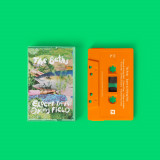
The third LP from the New Zealand quartet houses 12 jewels of tight, guitar-heavy songs that worm their way into your head, an incandescent collision of power-pop and skuzz. With Expert, The Beths wanted to make an album meant to be experienced live, for both the listeners and themselves. They wanted it to be fun -- to hear, to play -- in spite of the prickling anxiety throughout the lyrics, the fear of change and struggle to cope.
Most of Expert was recorded at guitarist Jonathan Pearce’s studio on Karangahape Road in Tāmaki Makaurau, Aotearoa (Auckland, New Zealand) -- and sometimes in the building's cavernous stairwell at 1am -- toward the end of 2021, until they were interrupted by a four-month national lockdown. They traded notes remotely for months, songwriting from afar and fleshing out the arrangements alone, the first time they’d written together in such a way. The following February, The Beths left the country for the first time in more than two years to tour across the US, and simultaneously finish mixing the album on the road. That latter half felt more collaborative, with everyone on-hand to trade notes in real time, until it all culminated in a chaotic three-day studio mad-dash in Los Angeles. There, Expert finally became the record they were hearing in their heads.
Expert is an extension of the same skuzzy palette the band has built across their catalog, pop hooks embedded in incisive indie rock. The album’s title track “Expert In A Dying Field” introduces the thesis for the record: “How does it feel to be an expert in a dying field? How do you know it’s over when you can’t let go?” Stokes asks. “Love is learned over time ‘til you’re an expert in a dying field.”
The rest is a capsule of The Beths’ most electrifying and exciting output, a sonic spectrum: “Your Side” is a forlorn and sincere love song, emotive; while “Silence is Golden,” with its propulsive drum line and stop-start staccato of a guitar line winding up and down, is one of the band’s sharpest and most driving. “When You Know You Know” skews a bit groovier, pure pop and a natural addition to the band’s live set. “Knees Deep” was written last minute, but yields one of the best guitar lines on Expert. There’s a certain chaos across the 12 tracks, the palpable joy of playing music with long-time friends colliding with the raw nerves of pain.
Stokes strings it all together through her singular songwriting lens, earnest and self-effacing, zeroing in on the granules of doubt and how they snowball. Did I do the wrong thing? Or did you? And are we still good people at the end of it? She isn’t interested in villains, but instead interested in just telling the story. That insecurity and thoughtfulness, translated into universality and understanding, has been the guiding light of The Beths’ output since 2016. In the face of pain, there’s no dwelling on internal anguish - instead, through The Beths’ musi
Die Presse war sich bereits 2008 einig, dass Downburst ein echter Banger ist. Auch 14 Jahre nach Release steht Downburst für den Moment, in dem der typische, eigenständige Brainstorm-Sound geformt wurde. Grund genug, das Album endlich wieder auf Vinyl verfügbar zu machen.
Mit der Platte "Downburst" bekamen die BRAINSTORM-Fans, einen wahren Downburst vorgesetzt! Ein Manifest des Powermetals, für das auch die Presse nur lobende Worte fand! Dieses siebte Album klingt erdiger als seine Vorgänger, es verfügt über - Höllisch eingängige, dabei nie aufdringliche Hooklines, komplexes, thrashiges Riffing, orchestrale Klangtupfer - 100 Prozent in Brainstorm-Manier. Mittlerweile liegen 14 Jahre seit dem Release zurück und die einmalige Vinylauflage längst vergriffen. Das schreit doch nach einer Neuauflage dieses großartigen Klassikers! Brainstorm haben ein paar Songs der Platte sicherlich auch auf der "Brainrage"-Tour mit im Gepäck!
"It's the same as it ever was," Disco Doom sing on the opening - and title -
track of their brand new album Mt Surreal – but it's a lyric that never quite
rings true
While there's definitely a path from these eight new songs to the hearts and
minds of those waiting to hear them, it's never linear, never as straightforward as
just putting one foot in front of the other. Disco Doom is, as always, led by the
band's core of Anita Rufer and Gabriele De Mario, and the pair began working on a
new album back in 2018, with the final version we hear today worked on from
2019 until late 2021, the story taking many twists and turns along the way.
Releasing music together for some twenty years, such longevity has earned the
band a legendary status in Switzerland, as well as a reputation for making
incredibly forward- thinking rock music. Since the release of 2014's "Numerals",
the Zurich- based band have toured the EU/ UK with both Built To Spill and The
Breeders, had their music featured in the end credits of HBO's Animals, and have
also released a critically acclaimed album under their J&L Defer alter-ego.
True to its name, Mt. Surreal is truly that – a strange and peculiar journey that'll
wrap you up deep inside its intoxicating world, where lyrics leap out at odd
moments, where a hook grabs just when the whole thing threatens to combust.
"Mt. Surreal is a feeling we can't describe properly and one that's constantly
changing. It is a longing for what we can not yet describe," the band say of the
new album.
As pockets of new jazz scenes emerge around the world, it's apparent that New Zealand's bubbling microcosm in Wellington interprets the genre through a unique lens. Clear Path Ensemble bottles the energy of that burgeoning movement and distils it into moody morsels of differing styles. From electric jazz to ambient, experimental, house and funk - it's a DIY, jam-session attitude towards composition, as the band members freely cherry-pick from a vast orchard of influences. Citing inspiration from 70s ECM catalogue, the ensemble channels the "expansive and astral" elements of electric jazz, with an introspective dynamic. At times it's fused with catchy synth hooks, smooth basslines and shuffling beats, while other tracks morph into moody electronic soundscapes, and even Sun Ra-esque free jazz. Led by percussionist Cory Champion, the band released their debut self-titled album in 2020, followed by a headline performance at the 2021 Wellington Jazz Festival. Champion has played drums alongside some of New Zealand's most revered contemporary musicians (Lord Echo, Lucien Johnson and Mara TK to name a few), and also produces leftfield deep house and techno under the name Borrowed cs, which partly informs the ensemble's electronic production.
Wu-Tang Clan’s own Cappadonna connects with acclaimed producer Stu Bangas for a lyrically potent, sonically raw new album, 3rd Chamber Grail Bars. The album follows strong 2021 releases from both artists, Donna’s Black Tarrzann and Stu’s Deathwish, and it represents the emcee’s first full-length collaboration with a single producer. The result is a tight, cohesive listen full of sharp verses, neck-snapping instrumentals, and some stellar guest features.
The two first worked together on the Wu rapper’s 2013 album, Eyrth, Wynd & Fyre, when Stu produced a pair of notable cuts (“We Hood Rich Now” and “Chains”). “I knew that he was feeling the beats,” Stu said. “And I saw an opportunity to reach out to him and took it.” They reconnected via industry A&R, M-Eighty, who provided Donna with a folder of instrumentals from the producer. And for the emcee, the timing was perfect because of how the beats “fit my mood and energy in the moment.”
The energy is one of a time-tested lyricist with a lot on his mind—and plenty of clever ways to get his point across. You can hear that on the piano-laced, eerie “Continuous Threat” with Planet Asia, as well as the straight-up dope “Tryna Survive” featuring ILL BILL. Both tracks showcase Donna’s gifts with the pen as well as his talents as a collaborator. Other standouts include the raucous “Bring It Out,” which also happens to be Stu’s favorite cut on the LP. “I love everything about it—the beat, the intro, the subject matter of the verses, the raw hook, all of it,” he explained.
As you’ll hear on the album, it’s clear that it was created not only for the love of the culture, but also out of mutual respect for the other artist. Stu referred to 3rd Chamber Grail Bars as “a life goal of mine that I have checked off,” while Donna had glowing praise for his collaborator. “Stu’s catalog may be as great, iIf not greater, than any producer I can name,” he said.
Last year Sacred Bones released the groundbreaking album Sounds of the Unborn which was made by using biosonic MIDI technology to translate Luca Yupanqui’s in utero movements into sound. With the help of her parents, Psychic Ills bassist Elizabeth Hart and Lee Scratch Perry collaborator Iván Diaz Mathé, Luca’s prenatal essence was captured in audio. They designed a ritual, a kind of joint meditation for the three of them, with the MIDI devices hooked to Elizabeth’s stomach, transcribing its vibrations
into Iván’s synthesizers. They let the free-form meditations flow without much interference, just falling deeper into trance and feeling the unity. After five hour-long sessions, the shape of an album began to emerge. Elizabeth and Iván then edited and mixed the results of the sessions, respecting the sounds as they were produced, trying to intervene as little as possible, allowing Luca’s message to exist in its raw form.
As a collective thought, Spice's Self-Titled debut album offers a deliberate isolation of pain as interpreted through different vehicles. Less than 30-minutes in length, the record diverts from a singular mood, tempo, or delivery, instead focusing on orchestrating emotional drain as single impulses_fast, slow, driving, simple, and layered_that coalesce in their machinations. At its core, Spice's SelfTitled album is wired together by brawny and brittle guitars, lock-groove rhythms, and vocals announce each moment and mood. Formed in 2018 and based across California, each members' roots are in the North Bay of San Francisco. Comprised of Ross Farrar (vocals) and Jake Casarotti (drums), both of Ceremony, along with Cody Sullivan (bass), Ian Simpson (guitar), and Victoria Skudlarek (violin), Spice's sound pulls from the sense of melody and drive inherent to Bay Area pedigree, peppered with modernity and awash with an anthemic haze. The hook is in the connection as much as melody, with each song building its inner narrative and exploration of affliction. Traversing guitar-driven indie-pop and call-to-action impulse, Spice balances their urgency by interspersing violin melodies and layers, creating depth without oversaturating the heart of each song. Building complexity with laser focus, Spice shares the authoritative drive of Jawbreaker, J Church, The Horrors, and Fugazi, set in their own world of unrest. The treatment of each song is a statement that informs the whole - anecdotes that can bleed slowly or swirl quickly. In a sense, the Self-Titled album itself is an entire song, with each track becoming the verses, choruses, and interludes that narrate its intent. Ending with the final track they workshopped for the album titled "I Don't Wanna Die in New York," the album ends with a punch before winding back into meditation. Honed over late nights at Panda Studios in Fremont, California with producer Sam Pura (Basement, The Story So Far, Self Defense Family), Spice spent hours tweaking it until it became a little world formed by what they refer to as "the power of groupthink." Sprinkled with field recordings_audio snapshots from the member's every-day-lives_the record offers an intimate twist that builds on its theme of a single thread that connects everything with continuity, making it a single organism with as many depths as questions.
- A1: Nothing's Going To Happen
- A2: Luck Or Loveliness
- A3: All My Hollowness To You
- A4: Maybe
- A5: Pictures On The Floor
- A6: Clover
- A7: Paul's Place
- B1: The Brain That Wouldn't Die
- B2: Walking Home
- B3: Beauty
- B4: Turning Brown & Torn In Two
- B5: Crush
- B6: Shade For Today
- C1: Pretty Poison
- C2: Carpetgrabber
- C3: Sleet
- C4: Burning Blue
- C5: Woman (Live)
- C6: Road & Hedgehog
- C7: Attack Of The Munchies
- D1: The Slide
- D2: Waltz Of The Good Husband
- D3: Can't
- D4: Dog
- D5: The Winner
- D6: Bodies
- E1: Sign The Dotted Line
- E2: Rorschach
- E3: Pirouette
- E4: Wings
- E5: Lowlands
- E6: Oatmeal
- E7: Think Small
- F1: Life Is Strange
- F2: We Bleed Love
- F3: More 54
- F4: Entropy
- F5: Bee To Honey
- F6: Self-Deluded Dreamboy (In A Mess) (In A Mess)
- G1: The Green, Green Grass Of Somone Else's Home
- G2: The Severed Head Of Julio
- G3: Two Minds
- G4: Jesus The Beast
- G5: Albumen
- G6: Cruising With Sochran
- G7: Fatty Fowl In Gravy Stew
- G8: The Ugly Mire Of Deep Held Feelings
- H1: Gluey, Gluey
- H2: Round These Walls
- H3: Room To Breathe
- H4: Time To Wait
- H5: Baby It's Over
- H6: We Are The Chosen Few
- H7: The Fatal Flow Of The New
- H8: Over The Hill
4 LP set is for Indies only until further notice. Unravelled: 1981–2002 shines a loving light on lo-fi pioneers Tall Dwarfs, the prized New Zealand duo of Chris Knox and Alec Bathgate. The collection, available as a 4-LP or 2-CD box set, compiles songs from Tall Dwarfs' two decades of recordings. The vinyl edition includes a 20-page collector's booklet of photos, comics, posters, and other ephemera. The songs on Unravelled: 1981–2002 were curated by Alec Bathgate, who also designed the box set packaging; Chris Knox suffered a debilitating stroke in 2009 just as they had started work on a new album. The collection captures the different sides of the Tall Dwarfs in 55 songs. Though the band was an excuse for two good friends who lived in different cities to get together, drink beer, watch shitty old movies, and do some recording and drawing, Tall Dwarfs created music unlike anyone else. Capturing the initial excitement of creation and taking pride in what they did, Knox and Bathgate showed a whole generation of musicians what could be done at home on a 4-track and what magic could be made if you mixed pop melodies and hooks galore with homemade sounds. After a failed flirtation with success in their previous band Toy Love, Knox and Bathgate formed Tall Dwarfs in 1981, opting to record themselves on a 4-track reel-to-reel. New Zealand’s AudioCulture wrote of the duo’s project: “Early live performances were a ramshackle work in progress. Knox described them in an interview with American magazine Forced Exposure as ‘two minutes of song followed by five minutes of fucking around,’ and they dismayed many Toy Love fans—but the pair had no interest in a career spent in pubs cranking out ‘Pull Down the Shades.’” Tall Dwarfs was meant to be a one-off, but after the founding of their New Zealand label Flying Nun, they continued to record music for the next 21 years, releasing seven EPs and six albums. Their process was spontaneous, with songs being recorded as they were written. Typically, Bathgate would work up something on guitar while Knox provided vocals, lyrics, and tape loops. Then they added any sounds that seemed necessary to finish a song, using whatever was lying around: pans, chairs, baby rattles. Though Tall Dwarfs could be weird, they were never too experimental; Knox and Bathgate both loved melody too much (“Beatlesque” appeared more often than any other adjective in their reviews).
Slyder Smith first swaggered onto the stage as lead guitarist with glam-tinged power popsters, Last Great Dreamers. After releasing four studio albums and one live album on Ray Records & having toured extensively throughout the UK & Europe with LGD, Slyder now takes centre stage leading Slyder Smith & The Oblivion Kids (Tim Emery, Bass and Rik Pratt, Drums) in an honest outpouring of grit, glamour and emotion. Stepping out of the shadows and into the spotlight, the self-confessed ‘frustrated lead singer’ has been forced to delve deep into his own psyche, to carefully craft lyrics and melodies that speak from the heart. Slyder’s emotive vocals are powerful, yet melancholic, the perfect balance of light and shade sitting effortlessly within the sonic landscape of his varied rhythm guitar sounds and highly melodic & anthemic lead lines. “This album has been a real labour of love for me, I’ve really put my heart & soul into it. Over the last year or so I’ve been working very hard developing my guitar playing, music & lyric writing pulling myself in all sorts of directions, really stretching myself. I feel I have accomplished what I set out to do, create songs from the heart in no specific genre & perform them to the best of my ability on the record. I guess for years I have been a frustrated lead singer so I have relished the opportunity to showcase what I can do vocally too.” – Slyder Smith - Stage left, Slyder is joined by Tim Emery, a towering enigma, whose stylish bass lines are the only thing to outshine his impeccable apparel and at the back sits the Oblivion Kids’ powerhouse and beat master, Welshman, Rik Pratt. A man of few words but whose presence is palpable in this rock steady rhythm section. But this is no ordinary guitar-based rock album; together with producer Pete Brown (George Harrison, Siouxsie & the Banshees, Marc Almond, The Smiths and Sam Brown), Slyder has allowed the songs to dictate the direction they have gone in; discovering melodies and hook lines along the way. Making use of Hammond organ and piano with the help of Neil Scully (Richard Davies & the Dissidents), a 1950s Phillicord organ, lap steel guitar & even a bit of banjo. A chocolate box of sonic sensations offering up a little something for everyone - from heavy riffage with walloping drums akin to the brothers Young to the anticipated sleaze rock shades of Hanoi Rocks. However, this band is not afraid to step away from their rock roots, instead, with nods to the likes of The Doors, Velvet Underground, The Stranglers and The Kinks from the past and the alternative rock sound of Manic Street Preachers, The Oblivion Kids have reimagined an 80s synth pop classic and mastered singalong pop, gothic, dark Americana, and dare I say it, funk rock?! There are a few firsts for Slyder on here too in the form of an instrumental track with a western feel and to a duet featuring the ethereal vocals of Nina Courson (Healthy Junkies). The result is an idiosyncratic 14 track album of outstanding versatility. A Charming debut, I’m sure you’ll agree.
Rock Eupora, the moniker for Mississippi-bred, Nashville-based artist Clayton Waller, has always been a heart-on-your-sleeve musical endeavor. From his earliest recordings, Waller has never been afraid to ask the big, searching questions of life. Catchy, hooky pop sensibilities have similarly been a consistent through-line in Rock Eupora's catalogue. Featuring singable, fuzzed-out guitar hooks and stuck-in-your-head-all-afternoon choruses, the discography of Rock Eupora–including three full-length albums, two EPs, and a smattering of singles to date–brings to mind Blue Album-era Weezer or the high-energy, hard-charging, harmony-laden early Beatles singles. These defining features are still present in Pick At The Scab, Rock Eupora's latest full-length album, and yet, something feels different. "I wanted to let the songs breathe a bit," Waller says of his mindset while writing the material that would become the songs for Pick At The Scab. "I gravitate towards writing up-beat, high energy songs, but this time around, I decided to lean back a little and let the songs speak for themselves."
1000 new edition on blue vinyl, the RSD version is long sold out. Packaged in tri-fold sleeve that replicates the original 1971 release and featuring an extra disc of live BBC recordings from the same era. 50-year anniversary vinyl release of the original power trio’s second incarnation, now expanded with BBC In Concert versions of the album’s key tracks. An epic milestone and key prog rock definer, fusing their blues rock roots and their finely honed electric sound of the early ‘70s. This limited release replicated the original 1971 packaging, with a tri-fold sleeve, an absolute essential for fans of this seminal act.
HET’s man in charge, Hagen Richter, is taking care of the labels’ new release, Cat #: HET008. Upcoming 721 Lee EP is a 12” two track release, each side giving space to just one track running on 45rpm. The original mix of 721 Lee is aiming at dancers’ emotions, building up slowly and in the end leading to a classic, uplifting arpeggio pattern. On the B-Side Dystopian’s core artist Alex.Do interpretates 721 Lee. His “Nautilus Version” uses a catchy melodic hookline and backs it up with quotations of trance and goa elements. This fast pace remix is full of energy and yet transports the original’s emotions in his unique Alex.Do-style! ☺
Big Crown Records is proud to present another strong 7" offering from the legendary Sunny & The Sunliners. Pulling two very in demand tunes from Sunny's Keyloc Records catalog and making one unstoppable reissue 45 that will put these tunes back in the mix around the globe. Since we released the first Mr Brown Eyed Soul compilation in 2017 the price of Sunny's records have skyrocketed. We are sure a lot of people will be happy to be able to get their hands on these tunes and it will be great to see them getting spins in a whole world of new circles. The A side, "If I Could See You Now" is a classic dance floor burner from Mr Brown Eyed Soul. From the first note of the organ intro those in the know will be grinning ear to ear, as soon as the beat drops and Sunny starts singing anyone who never heard this tune before will be hooked. "Give Me Time" is a bit of a sleeper in Sunny's catalog. Not one of the flagship tunes that everyone knows but absolutely worthy of reissue and becoming one of the classics alongside "Should I Take You Home", "Smile Now, Cry Later", etc. The band is as sharp as the man himself on this one, running through the beautiful arrangement while Sunny pleads for time to get over his lost love.
Mo Troper is truly one of a kind, and that’s never been more apparent than on his fifth full-length, the winkingly titled MTV. Arriving hot on the heels of his 2021 full-length, Dilettante, the album finds the Portland, OR-based power pop extraordinaire diving further into home-recorded immediacy to make a record that feels like a strikingly direct conduit to the world of Mo–where heartbreak, hilarity, and hooks all go hand-inhand.
MTV hurtles through 15 songs in just 31 minutes, with most of the tracks never even coming close to the three-minute mark. The sequence feels like a combination of a fever dream and a travel diary, intertwining tales of romantic longing with the ups and downs
of cross-country touring. Songs like “Across The USA,” “Royal Jelly,” or “Coke Zero” unravel the headaches and heartbreaks, often alternating between unflinching emotional details and legitimately funny one-liners. “I feel like I’m just in this mode of rebelling against the expectation for artists to be emotionally or aesthetically cohesive,” Troper says. “I think about all my favorite records and songwriters, and they’re often these people who would have really depressing stuff and then insane moments of levity that don’t get talked about as much. I want to make music that’s emotional but also campy or sarcastic or resonates in other ways. I’m like, ‘you know what, it’s all me.’”
After Dinner’s Paradise of Replica is a concise nugget of tomfoolery that occupies a whimsical no man’s land between art pop, Japanese folk music and full-assed Art Zoydian avant proggery. Gentle, arcane and covertly sweeping, it typifies that friendly strain of experimentalism that Eastern music seems so predisposed towards and which curious minds find such great delight in.
Assembled by the enigmatic chanteuse and composer known simply as Haco, After Dinner was less a band and more of a loose art collective that utilized a plurality of different musical disciplines stapled together through free improvisation sessions. And some of this does come through on Paradise of Replica—the record is a scrapbook of bells, strings and koto humming under Haco’s ethereal vocals, and the effect, while perfectly tuneful, does come off more as a musical project than a conventional album.
But Paradise of Replica is far from an impenetrable scholastic endeavor—in fact, there’s something of an Elephant 6-like quality in its ability to warp conventions while still coming off more or less like pop music. Counter to the ramshackle hostility of much improvised music, After Dinner’s choices are melodious and feel deliberately sequenced. Even crescendos don’t tend to rise above a murmur, and there are even apparent hooks on tracks like “A Walnut” and “Ironclad Mermaid.”
Ultimately, there’s not much to be said about Paradise of Replica that can elucidate more than actually hearing it will be able to. Proggy, playful and lush, it’s a brief glimpse into something in the vicinity of genius, and just outside the realm of commercial music. It’s a quietly bold project that shows a softer side of the avant-garde, and makes a perfect companion to Stereolab and Magma at once.
A co-founder of the P-Funk movement, Clarence Eugene ""Fuzzy"" Haskins was born in West Virginia in 1941 and started as a singer in the doo-wop vocal group The Parliaments, led by George Clinton in the late 1950s. He was a founding member of the groundbreaking and influential 1970s funk bands PARLIAMENT-FUNKADELIC. Fuzzy Haskins toured and appeared on P-Funk albums as a singer, and occasionally as a guitarist, throughout the 1970s. He is a member of the Rock and Roll Hall of Fame, inducted in 1997. Despite the success of Mothership Connection, Fuzzy Haskins was growing frustrated that his songs were no longer being featured on albums by Funkadelic and Parliament. He also watched as Bootsy Collins, a relative newcomer to the family, embarked upon a solo career. This added to Haskins' frustration and at the height of P-Funk's popularity, Fuzzy left the ensemble to pursue a solo career. Fuzzy Haskins released two landmark solo albums on Westbound Records: `A Whole Nother Thang' in 1976 and `Radio Active' in 1978. With his brand of earthy & heavyweight funk, Fuzzy Haskins' solo works fits right in with many of the other great P-Funk side projects and was sampled by renowned artists and acts from the likes of Prince, The Prodigy, N.W.A and Fatboy Slim.On the album we are presenting you today (Radio Active from 1978) you'll find eight sublime tracks written (or co-written) by Mr. Haskins himself and recorded by Richard Becker at the legendary PAC 3 Recording Studios in Dearborn, Michigan where classic albums from Norman Feels and Dennis Coffey were born. One of the tracks (Woman) was personally mixed for the album by Tom Moulton (the originator of musical revolutions like `the remix', `the breakdown section' and the `12inch single vinyl format').Fuzzy switched between drums and guitar, while taking charge of the lead vocals and production, he was accompanied in the studio by an all-star musician line-up of P-Funk family members such as Jerome `Bigfoot' Brailey (drums), Cordell `Boogie' Mossom (bass), Gary Shider & Michael Hampton (guitars), Glen Goins (piano, drums & guitar)_and of course the fantastic Mr. Bernie Worrell on keyboards. Besides these Parliament/Funkadelic alumni, also present on the recordings are Bruce Nazarian (The Temptations) on Moog and Jazz pianist Gary Schunk (known for his collaborations with Marcus Belgrave & Wendell Harrison).The result of all this musicianship was a record that oozed quality. Despite the quality of the music (and just like with `A Whole Nother Thang') the album didn't sell the vast quantities that were projected and didn't reach the audience it deserved.`Radio Active' is filled with keyboard-driven spacey funk, sharp hooks, popping bass-lines, JB styled soulful (yet sexy) vocals, a hint of disco, fantastic guitar build-ups and breaks that make you shake_a true gem that deserves a place in your record collection (mint vinyl copies are hard to find and pricey these days). If you are a Funkateer_this one's for you! This unique album comes as a deluxe 180g vinyl edition (strictly limited to 500 copies) with obi strip and features the original artwork created by virtuoso Ronald Edwards (known for his graphic work with Parliament-Funkadelic, Bootsy Collins, Fred Wesley, George Clinton, Maceo Parker, Bernie Worrell, Fishbone_and countless others). To top it all off, this release also includes an insert featuring the original liner notes written in 1994 by renowned author and producer Rob Bowman (Otis Redding, Isaac Hayes, Marvin Gaye) who reflects on Fuzzy Haskins' two solo albums.
Das zweite Album von Master, aufgenommen von Scott Burns in den Morrissound Studios! Klassischer Death Metal der 1990er Jahre!
Eines der Probleme beim Rückblick auf ein Musikgenre aus einer Perspektive, die Jahre oder Jahrzehnte vom Kern der Bewegung entfernt ist, dass spätere Entwicklungen dazu neigen, sowohl die Ursprünge eines Genres als auch die Fäden innerhalb einer Tradition zu verwischen, die ohne Nachkommen ausgestorben ist. Das Ergebnis ist, dass interessante und verdienstvolle Alben oft untergehen, wenn Kritiker über die Alben nachdenken, die den größten Einfluss auf spätere Errungenschaften hatten.
Die Death-Metal-Pioniere Master gehören zu denjenigen, die aufgrund dieses Phänomens zu kurz gekommen sind, und ihr 1990er Meisterwerk "On The Seventh Day, God Created... Master" bleibt eine faszinierende Erkundung sowohl der Wurzeln des Genres als auch der Räume, die es hätte einnehmen können, wenn andere Wege eingeschlagen worden wären.
Es gibt ein paar Dinge, die selbst dem Gelegenheitshörer sofort ins Auge springen. Das erste ist der scheinbare Primitivismus der Musik, mit Songs die aus relativ kurzen, knüppelnden Stücken bestehen, die von unerbittlichen Rhythmen, zyklischen Riffs und einfachen melodischen Hooks angetrieben werden. Das zweite ist die Erkenntnis, dass jemand einige wirklich verrückte, brillant konstruierte Leads spielt. In diesem Fall ist das Paul Masvidal, der damit alles übertrifft, was er jemals mit Cynic erreicht hat.
Hinter der oberflächlichen Einfachheit verbirgt sich ein kreativer Geist, der gleichzeitig an die ursprüngliche Geburt des Death Metal erinnert (bei der Master sowohl anwesend war als auch eine treibende Kraft war) und der den Weg zu dem weist, was aus dem Genre hätte werden können.
Ganz offensichtlich sind die Hardcore-Wurzeln des Genres,
Master meidet hier die von Slayer abgeleitete technische Architektur, die den meisten "modernen" Death Metal dominierte, zugunsten von
Strukturen, die auch auf einem Discharge's Meilenstein "Hear Nothing See Nothing Say Nothing" nicht fehl am Platz gewesen wären (es gibt sogar ein paar Auftritte des berüchtigten D-Beats). In dem unerbittlichen Sturm brutaler Wiederholungen ist die Kernaussage der Musik verschlüsselt, eine schiere Urwut, die aus den donnernden Zyklen der Powerchords tropft und dem offenkehligen Gebrüll (wieder der Hardcore-Einfluss) von Sänger und Hauptsongwriter Paul Speckman. Dazu kommen Momente des Nachdenkens, in denen die Songs in einer Art High-Dezibel-Gedudel kollabieren, und ein angeborenes Gespür dafür, wie man Melodien aus den infernalischen Tiefen der Dissonanz herauskitzelt, und die bereits erwähnten Masvidal-Soli (und es kann nicht genug betont werden, wie sehr diese Leads zerreißen). Was dabei herauskommt, ist etwas, das über
seine eigene scheinbare Rohheit hinwegtäuscht und nicht so sehr eine Aussage über blinde Wut, oder gestörte Entfremdung, sondern eine meisterhafte Erklärung von Gewaltbereitschaft.