Before Southside Johnny and the Asbury Jukes even had an album on the shelves, they were being played on the radio in Cleveland. That’s how far back the New Jersey band’s relationship goes with the city. As the “Jukes” part of their name would suggest, Southside Johnny and his group were spiritually a band from another time. They had a big sound (and a full horn section, courtesy of The Miami Horns) that conjured a vision of a large band, jammed together on the bandstand. Which was hardly far from the truth on a number of nights. Mixing carefully chosen blues and soul covers with their own originals (and some choice songwriting contributions from Bruce Springsteen), they had a live show that was even more potent than w hat had been laid to tape in the studio. This 1977 performance at the Cleveland Agora was the group’s second outing at the legendary venue in less than a year. Live in Cleveland ‘77, the recorded evidence of that night, presented here for the first time by Cleveland International Records, shows exactly why they would become frequent visitors and really, honorary Clevelanders. Songs like “I Don’t Want to Go Home,” Springsteen’s “The Fever,” “Havin’ a Party” and “Without Love” were already well-loved favorites with the local audience, thanks to frequent airplay on WMMS long before they even had an album. Cleveland got a special bonus round that other cities would have killed for. Ronnie Spector had joined the group in the studio as they recorded that debut and came to Cleveland to share the stage with the Jukes, sharing her soon-to-be-legendary take on Billy Joel’s “Say Goodbye to Hollywood” with the Agora crowd. As she did with so many songs, Spector made it her own. Southside Johnny and the Jukes continue to thrill audiences with their live performances worldwide to this day. Now, thanks to the release of Live in Cleveland ‘77, you can be in the audience to hear a bit of the early magic as they were on their way to the top.
Cerca:how hard
This wildly acclaimed Istanbul-based artist, delivers an unforgettable 4th album Anadolu Ejderi (Anatolian Dragon). Building upon her mélange of Turkish psychedelia, empowered commentary and retro-futurist sonics, her vision is more personal and uncompromising than ever before. Courage. Bravery. Daring. Those are the watch words that guided Turkey"s Gaye Su Akyol when she was making Anadolu Ejderi, her first full-length release in four years. Already lauded for her startling, innovative mix of Turkish psychedelia and folk song, surf music and ʼ90s Western rock, a global sweet spot where Anatolian music heroine Selda Bagcan rubbed shoulders with Kurt Cobain, Akyol was ready to expand her vision after a relentless period on the road. "I was tired of touring," she says. "I really needed a break, some fresh air." The Covid pandemic gave her that, even if it was for the wrong reasons. "With everything closed, we all had to sit at home. The isolation gave me time to write. I ended up with over 100 songs. I tried to broaden the palette: to start with Anatolian folk and pop, then see how to add African and Middle Eastern sounds, the soul revolution, disco, and rock from other cultures. The music is still quite psychedelic, but it connects to different areas, all the pop genres I love so much. The hard part was picking the right songs and the correct order." Everything on Anadolu Ejderi - the title translates as "Anatolian Dragon" - breathes fire. It takes chances, the lyrics offer an exploration of politics in today"s Turkey. The personal is very much part of that. "In a political climate where a woman"s commitment to her passion, to falling in love, to her sexual identity is revolutionary enough, she is deeply passionate and able to express her love freely," Akyol notes. "It would have been easy to sit in the comfort zone of the past."
LP is black vinyl + LP3 insert for full album Download. Check out the first 18 or so seconds of “Can I Ride”, the title track on the first release by Polvo, the two-guitar juggernaut that represented the other side of Chapel Hill indie rock (more on that in a moment). That two-note riff, and the guitar twang that follows, recalls the opening notes on another monster song: “The Sprawl”, a key track on Sonic Youth's epochal Daydream Nation, an album released in October 1988, less than two years before Polvo formed. This compilation's nine tunes—the first seven from the Can I Ride double 7” EP (1990), the last two from the “Vibracobra” b/w “The Drill” 7” (1991) are not quite the sound of a torch being passed, but they were a sign that Sonic Youth's weird tunings, the hardcore punk and proto-indie rock on SST Records, and R.E.M.'s hazy rock (three big influences on this era of Polvo) were changing lives. Even back then, the impossibly catchy roar from Merge’s flagship act Superchunk was known to outsiders as the sound of Chapel Hill. But Polvo was something different from the same region. While the band never cottoned to the “math rock” tag (and it’s hard to disagree with them), there is no question that there was a distinct “how can we make guitar rock sound different from all the other guitar rock” vibe going on in the mid-Atlantic, from Richmond (math rock’s true home, don’t @ me) to the North Carolina Triangle over to Louisville and down almost to Atlanta. (If the Mastodon dudes aren’t down with Polvo, I’ll eat your shoe.) No, Polvo were their own brand of squall, not afraid of big hooks (“Leaf ”), odd tempos and textures (“Lull”) and rolling thunder (“Totemic”), and answers to the musical question, “What if the Feelies grew up on Dinosaur Jr.?” (“Tread on Me”). Indie rock? Not the 2022 kind. Math rock? Eh, not really. This was the sound of a new Southern rock, of a pre-internet guitar storm that looked at what came before and said, “What's next?” Track listing: Side A 1. Can I Ride 2. Leaf 3. Lull 4. Totemic 5. Tread on Me. Side B. 6. Teen Dream 7. Snake Fist Fighter 8. Vibracobra 9. The Drill
Helga Myhr is a highly regarded Hardanger fiddle player and singer
She has participated in a number of ensembles and has played in a variety of
genres. In this work, originally composed for the 2020 Osa Festival, she combines
her roots in traditional music from Hallingdal with her distinctive form of musical
exploration. This release unites music and visual art on glorious vinyl, designed
by the award-winning artist Solveig Lønseth.Helga Myhr grew up surrounded by
folk music. Today, fiddle tunes are what lie closest to her heart:
"Fiddle playing encompasses infinite possibilities, and it is these possibilities that
inspire me when I create new music. People who know fiddle music well might be
able to hear which tunes or 'layers' I have used, but sometimes it is more subtle" -
Helga Myhr.
The music on this recording was composed specifically for the outstanding
musicians who appear on the recording. Their exceptional musical and creative
qualities have had a profound impact on how the music sounds: "Malin Alander
has a fabulous voice that she can shape and stretch with amazing suppleness;
Adrian Myhr produces a warm bass sound, with lovely and intricate melodic lines;
Michaela Antalová has a superb groove, and she creates elegant tones on the
willow flute; multi- instrumentalist Rasmus Kjorstad adds compelling sound
variations and tasteful contributions on the Norwegian zither, octave violin and
Jew's harp", Helga Myhr explains.
Poems by Margit Lappegard (1918– 2011), from Leveld, Ål in Hallingdal, are
included in three of the tunes. Lappegard was a beloved poet who attracted
considerable attention with her poetry collection "Noko vil alltid lysa", first
published in 1988.
Helga Myhr's solo album "Natten veller seg ut" was released in the autumn of
2019 on the Motvind Records label, and was nominated for a Norwegian Grammy
Award (Spellemannsprisen). Myhr plays in several groups and ensembles,
including the band Morgonrode, which won a Norwegian Grammy in 2019. She is
also a member of Kvedarkvintetten, Dei kjenslevare and a duo together with Tanja
Orning.
Moundrag members Camille and Colin from Paimpol, Brittany are giving a
new life to the 'hardprog' sub-genre
Camille plays Hammond organ, Colin plays drums, and both of them sing.
Moundrag clearly shows that you don't need a guitar to make rock music. They
have everything to have a massive and powerful sound: the Hammond organ
sound wrecks everything in its path like hurricanes, the drums rumble like a
storm, the vocals are dubbed, harmonized, highlighted, in that vintage rock style
that has been enjoying a revival for the last few years.
From their instruments to their look, everything is vintage, except them. However,
they seem to have come straight from a 1970s psychedelic trip! In any case, they
didn't forget to bring back the wild energy of the bands of that time to compose
their own music. Bold tracks with lacerating riffs, which evoke ELP, Atomic
Rooster and Deep Purple while adding their personal touch.
'Hic Sunt Moundrages' is the result of a journey where music, imagination and
visuals unite as one, transporting you into a transcendent universe.
Whilst most of the North swung to the right in the 2019 General UK Election, the North West held onto their hope and long standing heritage of voting for what imagines itself to still be the ‘Left’. It’s 2022 and there are no political choices left, but to rise up and revolt to Stop the Rot. T.S. Warspite channel their message through a unique musical recipe that answers the question no one asked: What if Bad Religion grew up in Manchester in the 2000s? Made up of some long standing and productive members of the local scene, this sounds like friendship and experience, and some refreshing as fuck hardcore. Singer Marco Abbatiello weaves expertly through scenes of pulp reality where everything is fleeting and only some things stick. What’s left is a farcical montage of things that have rushed past you with no real sense of direction. Personally and politically, it’s all the same wretched soup of societal collapse and the rise of the technocracies. Do yourself a favour, and play this through your Tesla microchip whilst throwing a molotov at No.10. Members of Violent Reaction, Payday, Firearm, Arms Race, Rated X. T.S. Warspite is Paul Morgan, Tom Howard, Marco Abbatiello, Tom Pimlott and Miles Livingstone-Todd. Recorded and Mixed by James ‘Atko’ Atkinson at The Stationhouse. Mastered by Will Killingsworth at Dead Air Studios. Art by Chio. Photos by Meline Gharibyan
Miles Away Records are proud to present our latest release Keep Holding On / You're The Best by Savoir-Flair.
Dallas, Texas in 1982, during the hot summer months Roger Boykin, John Miller and Cassandra Wright were working as session musicians at Precision Audio studios. They were put together to create soundtracks, jingles and idents for US TV commercials and, in what spare studio time the three of them had, would experiment with the studio equipment at their disposal - writing and developing what would become the Savoir-Flair sound.
In these secret, after-hours sessions the three would create a staggeringly good private press 80s modern soul album. A flawless collection of tracks with every one of them hitting hard. It would be released on Roger's own label SoulTex Records with the group touring locally. Alas though, this was to be their only album as Savoir-Flair disbanded a year later. The impact this album had however can still be felt today with the 45 and LP becoming highly sought after amongst modern soul collectors around the world.
Re-mastered from the original master tapes.
180 gr vinyl pressed by Optimal in Germany using the Metal Mothers from Pallas.
Facsimile reissue using the original photo by Jean-Pierre Leloir.
Double insert using an original color photo by JP Leloir.
Each record has been visually checked to prevent defects.
In its October ‘58 issue, the title carried by Jazz Hot magazine was: »Revelation at the Chat Qui Pêche. The spirit of jazz (which some thought was dying) is sparkling with life in the Donald Byrd Quintet.« And indeed, on its first appearance at the Cannes Festival in July (the Jazz Festival, not the other one), the Donald Byrd Quintet brought the house down. Its members were hardly the Who’s Who of jazz, however. People vaguely knew that the leader had replaced Kenny Dorham in the Jazz Messengers, that Doug Watkins had played bass with them, and that pianist Walter Davis Jr. had been with Charlie Parker before he was 19. As for Art Taylor, if he’d already enjoyed a career longer than that of his colleagues, it hadn’t yet brought him recognition beyond a small circle of cognoscenti. Only Bobby Jaspar – who’d shone at the Club St. Germain – was famous with the Parisian audience. At the beginning of 1956, he’d decided to try his luck in the United States; J.J. Johnson had hired him, and then Miles Davis (for a brief spell) before Donald Byrd brought him into his own group. After appearing in Cannes (in the sun) and Knokke-le-Zoute (a much smaller audience) for almost three months, the Donald Byrd Quintet settled down for the autumn in one of the capital’s top jazz spots, the Chat Qui Pêche on the Rue de la Huchette. »In that tiny room,« wrote Frank Ténot, »where the owner used to bump into the soloists by accident when she was serving her customers, the music they played was hot, and always surprising.« To crown a tour that had been extremely satisfying for everyone, a concert at the Olympia theatre was organised (there were gigs there called “Jazz Wednesdays”). Byrd and Co. took things very seriously, even though they preserved the relaxed approach that their (relatively) long association now permitted: "La Marseillaise", and "And The Angels Sing" are both present in the introduction to Parisian Thoroughfare played by the two horns. The latter then went on to imitate other horns, those of the cars on 52nd Street ... However, when it came to "Stardust", it was with all the seriousness in the world, almost in meditation in fact, that Donald Byrd improvised over the backing provided by just Walter Davis Jr. and Doug Watkins. Bobby Jaspar, of course, was marvellous. If he showed a marked obedience to Sonny Rollins, he still preserved, intact, the virtues of sobriety that prevented him falling into the trap of serving up torrents of notes in pieces taken at a rapid tempo ("At This Time", for example). During the exchanges on "Formidable", you’d be forgiven for saying that he gets the better of Donald Byrd. As for the complicity that reigned between the members of the rhythm section, it gave the formation a homogenous character that was very rare in a quintet. One can’t thank François Postif enough for taking the risk to release this concert at the time. Now, almost half a century later, one
Re-mastered from the original master tapes.
180 gr vinyl pressed by Optimal in Germany using the Metal Mothers from Pallas.
Facsimile reissue using the original photo by Jean-Pierre Leloir.
Double insert using an original color photo by JP Leloir.
Each record has been visually checked to prevent defects.
Recorded October 22, 1958, Olympia hall, Paris.
Original LP issue: Brunswick 87 903.
“They’d been living in Europe for months. They’d appeared in Cannes and at Knokke (…) yet the only thing missing was the consecration that a great concert in Paris would bring. They won that last battle with astounding brio, in front of an audience of connoisseurs. There were many there who thought modern jazz had never been so well- served in Paris.” (Jazz Magazine). Hard bop had arrived! Hallelujah! On its first French appearance, in July ‘58 at the Cannes Festival – the first and only Cannes jazz festival – the Donald Byrd Quintet had brought the house down. Yet four of its five members were relatively unknown in France… The French knew that the leader had replaced Kenny Dorham in the Jazz Messengers, that Doug Watkins was the Messengers’ bassist, and that pianist Walter Davis Jr. was still only 18 when he’d played with Charlie Parker. As for Art Taylor, even if his name meant something to fans, it was still difficult for people to have a more precise idea of his musical qualities. Only Bobby Jaspar was well-known to Paris audiences, and the tour marked the return of the prodigal son, the musician who’d decided, after setting the Club St. Germain on fire, to try his luck in the States early in 1956 – J.J. Johnson had hired him, and then Miles Davis (for a short spell) before Donald Byrd brought him into the group he was taking to Europe. This new tour would climax at the Olympia theatre during one of the “Jazz Wednesdays” that were organised there, ever since the Jazz At Carnegie Hall” tour – Zoot Sims, JJ. Johnson, Lee Konitz, Phineas Newborn – had inaugurated the series a little earlier. Byrd and his band took pains not to disappoint a Paris audience they knew to be particularly fickle, and they astutely varied the public’s pleasures throughout the evening. The complicity that united the rhythm section – Walter Davis Jr., Doug Watkins and Art Taylor – was much in evidence on Ray’s Idea; mistrusting the traps of the spectacular at all costs, Donald Byrd, producing brilliant inventions on the trumpet, took the lion’s share of the honours on a theme that was then much in fashion, Dear Old Stockholm, adapted from a Swedish traditional song; on Flute Blues, Bobby Jaspar proved he was still a specialist on that instrument, and Paul’s Pal showed that, on tenor, the playing of Sonny Rollins hadn’t gone unnoticed. It must be said that it didn’t have much effect on the discreet lyricism underlying the choruses he played during his “St. Germain” period. The Olympia spectators weren’t sparing in their applause for the five musicians. How else could they have reacted, faced with the fire the band showed during a tune like The Blues Walk? It wouldn’t take much for us to applaud, too, even if it is fifty-five years later…
Text – Alain Tercinet
With I was born by the sea, Richie Culver brings to a close a period of intense introspection and emotional reckoning with a debut album that serves as both an optimistic statement of intent and a final glance back at the painful places it explores. Following recent work with Blackhaine and Pavel Milyakov, I was born by the sea picks up where Culver’s EP for Italian label Superpang, Post Traumatic Fantasy, leaves off, painting an unabashed portrait of contemporary malaise, detailing a life lived behind closed doors, pinned under the crushing weight of austerity, sapped of the strength to do anything other than gaze out to sea and all the grey possibilities it represents. Where Post Traumatic Fantasy saw Culver returning to his hometown of Hull after a period spent entangled in London’s relentless sprawl, his first full length project reaches further back to his formative years working in a caravan factory and going to raves in and among Hull’s outskirts. Unspooling like a fever dream, I was born by the sea is the anxious clutter of a racing mind spoken clearly, a stark reflection on how it feels to have too many ideas and too much time to act on them.
Though unquestionably a snapshot of a time of significant difficulty, Culver reflects on this period with tender empathy and pitch-black humour, stitching together unflinching observations from England’s neglected corners, ‘there’s more mobility scooter repair shops and bookies than there are bookshops,’ and devastating vignettes of everyday struggle, ‘tears on the tin foil’, with surreal depictions of industrial grit, ‘skimming stones in a small pond by the slaughterhouse’. His DIY approach to production stretches the rough sinew that connects these fragments of memory, a process he describes as using a paired back collection of synths and drum machines to the best of his ability, ‘but to the least of their capabilities,’ wringing out visceral sound with self-taught urgency. During the album’s most impressionistic passages it’s as though Culver has transposed past internal turmoil into powerfully resonant noise, the Sisyphean sonics of ‘Create A Lifestyle Around Your Problems’, which evokes in its concrète clatter and MRI machine barrage the sound of making the same mistake again and again, or the stuttered jumble of ‘Its Hard To Get To Know You,’ its garbled vocal modulation and frayed edges of distortion channeling the paranoia of somebody listening to muffled voices through thin plaster, climbing the walls of their bedroom with the curtains closed, a nervous breakdown in stereo.
In counterpoint to this glides the ever-present spirit of the dance floor, which haunts the record from the moment it is invoked in its first few seconds. Opening onto a sea wall of bright synthesis, the stuttering vocals and bass tone chops of ‘Nervous Energy’ dump us directly into post rave ecstasy, the echoing cry of a voice amplified by loudspeaker carrying the loose energy and surge of crowds moving in darkness. The incessant, dead phone line beep of ‘Pigeon Flesh’ builds to a pulse that suddenly swells into an anxious technoid surge, shapeshifting at lysergic speed into head shrinking audio hallucinations, a descent into the void of the present via machine music hypnosis. Even ‘Its Hard To Get To Know You’ summons the ego death drive of hardcore techno within its scorched textures, flickering indiscernibly between attritional noise and frazzled hardware stomp. Paying homage to both the parties of his youth and a countless succession of Sundays spent offering himself up within Berghain’s hallowed architecture, Culver’s experiments in addressing his formative relationship with rave provide an energetic glimpse at where he might take his sound next.
Between spikes of propulsive energy and grim mood pieces Culver returns to suspended passages of aching, glacial drift, the cold swell of the North Sea, accompanied by some of his heaviest testimonials. The gauzy ebb of ‘Daytime TV,’ its tumbling loops reminiscent of boats bobbing off a distant shore, sees the artist at his most checked out, slumped in front of his television, seven days a week. ‘I used to dream of doing something,’ he admits, ‘anything to get out of this town.’ ‘Love Like An Abscess’ pairs swirling currents of ambient shimmer with violent images of baseball bats lying next to beds and blood-stained mattresses, next to which Culver pleads in a desperate mumble, ‘let our love grow, like a broken abscess.’ Yet it’s with the album’s final word and title track that Culver reveals a glimmer of cautious optimism, a parting gesture of exposition and closure. ‘I knew I had to get away,’ he asserts, ‘so I did and I never looked back.’ What follows builds from a low throb, the flutter of a tiny heartbeat, to a resonant glow, embellished with unfurling synthetic burbles, oil rigs sparkling in the distance, golden light spilling across the sea. In reckoning with the place he had to escape, Richie Culver is now free to look towards the promise of something new, something hopeful.
- A1: Breathe (Feat Lily James)
- A2: Coconut Grove (Feat Homeboy Sandman)
- A3: Don't Even Try It (Feat Liam Bailey)
- A4: Lesson 1956 (Feat Jamie Cullum & Dj Woody)
- A5: My Energy (Feat Eva Lazarus)
- B1: Feel Like Home (Feat The House Gospel Choir)
- B2: Airplane Mode (Feat Lily James & Choosey)
- B3: Harder I Rock (Feat Choosey)
- B4: Way Home (Feat O Love)
- B5: Don't Mean A Thing (Feat Beardyman)
Dressed in a powder blue suit with the frilly shirt to match, DJ Yoda invites you to be his +1 for ‘Prom Nite’, his new album promising retro Americana full of daydreaming reverie, international megastar guests, trip hop acknowledging the likes of Morcheeba and Nightmares on Wax, and the turntable extraordinaire’s bread and butter of cuts, beats and rhymes.
Certainly no stranger to retro sounds having famously peppered his DJ and AV sets with the unexpected the world over, and his ‘How to Cut n Paste’ mix series going all the way back to the 30s, Yoda’s harp-laden puppy love vibe spreads from the sweet and mellow sound of 2019’s ‘Home Cooking’, an album described as ‘boundary-breaking’ by Mojo upon slotting nicely into the UK’s blooming jazz canon. Think deliciously harmonised doo-wop murmuring ‘Goodnight Sweetheart’ with an eye for dreamboats en route to Makeout Point – on ‘My Energy’, Eva Lazarus takes the form of an earth angel, with Yoda on jukebox cut-ups, taking it back to starry-eyed, clean cut days of wonder (or more recently, Little Mix’s ‘Love Me Like You’).
Beginning enigmatically with the assistance of Hollywood A-lister (and former next-door neighbour) Lily James, ‘Breathe’ demonstrate Yoda’s continued evolution as a musician (not to mention shrewd decision maker), with James’ vocal confidence - a little Lana del Rey to her breathiness - returning on the velvet-smooth ‘Airplane Mode’. It’s a smartly executed soundclash accentuated by LA rapper Choosey, the star of the album’s straightest hip-hop shooter ‘Harder I Rock’. Homeboy Sandman adds some kick to the prom punch with typical wordplay sent down ‘Coconut Grove’, and Liam Bailey is perfectly cast for the darkly cinematic sway of ‘Don’t Even Try It’.
On an album of many talking points, the LP’s crowning glory is opening single ‘Feel Like Home’: featuring the vocal comforts of the House Gospel Choir, it’s your go–to pick-me-up when the chips are down, targeting the hairs on the backs of necks like a softer focus version of Jamie xx’s ‘Loud Places’. Extended into an alternative, equally uplifting form by Beardyman’s ‘Don’t Mean Thing’, summer festival season already has its homecoming anthem.
With tongues wagging, the twists and turns step away from Heartbreak Ridge when O Love tucks into the mouthwatering shopping list funk of ‘Way Home’; and ‘Lesson 1956’, featuring Jamie Cullum and DJ Woody, jauntily pays homage to classic Cut Chemist alchemy, Yoda’s celebrated turntable tomfoolery back in full effect and extending the flavours found in ‘Home Cooking’.
Again maximising the experience and enjoyment gained from recording live instruments and prioritising songs over beats, Yoda continues to progress with a mixture of risk-taking, elite musicianship, nostalgia brought bang up to date, and ultimately, good clean fun capable of stirring your soul, making ‘Prom Nite’ a date to remember.
Magpie artwork supplied by London’s ENDLESS, whose signature style has tagged Liberty and Lagerfeld as but two high profile clients, Yoda again maximises the experience and enjoyment gained from recording live instruments and prioritising songs over beats. His continued progress mixes risk-taking, elite musicianship, nostalgia brought bang up to date, and ultimately, good clean fun capable of stirring your soul, making ‘Prom Nite’ a date to remember.
Featured 7” Vinyl singles:
Feel Like Home (feat. The House Gospel Choir)/ Don’t Mean A Thing (feat. Beardyman)
My Energy (feat. Eva Lazarus)/Lesson 1956 (feat. Jamie Cullum & DJ Woody)
INTRODUCING: TRADER Hailing from Aarhus, Denmark, this explosive, close-knit four-piece have created what is best described as a sonic freight train. Equally noisy and catchy, the songs are driven by distortion, relentless drumming and an enchanting sense of directness. Throughout their existence Trader have thrilled audiences and critics alike, gaining a reputation as a riveting live band as well as trusted deliverers of potent rock anthems. This October, Trader will release their sophomore album “Their Best Work So Far”. The album sees Trader taking on a more diverse and dynamic sound while still homaging their beloved grand era of American 90’s alternative rock music. As the album title wittily indicates, the band took the ambition of good, sincere songwriting and craftsmanship as their cornerstones. To fulfill this ambition, the band relocated from the confines of their home studio to the legendary Silence Studio in Sweden - an old, refurbished two-storey school house hidden in the woods of small-town Koppom. This was the perfect remotion for Trader to escape the everyday humdrum and focus their piled-up energy into 9 songs. Being a hard-working band with no big commercial payoffs in sight can make you question if you chose the right path in life. Drummer Kristian Vissing elaborates: “We just had an anniversary at our old high school and met with our class mates from back then, who talked about how great it was to finish university and finally have a career going. These expectations from peers and society on how to lead a good and proper life can get you down sometimes and leave you with doubt. It’s sort of a theme on this album. We want to urge everyone to take a halt and enjoy where you’re at right now and not always have your eyes set on the future.” “Their Best Work So Far” is out on November 11 via Part Time Records.
2022 Repress
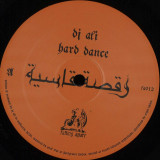
Falling Apart Record comes after a lo-fi chill out record with a brutal answer from DJ ALI. The Melbourne based artist who origins from the beautiful Lebanon comes from the hard techno scene and his thing is to play live, record live and just using some machine and synths for the perfect workflow. Just how we like it! All tracks on this 12 inches are recorded live in 1 clip. "1 shot. 1 opportunity." - Em.
Unholy Black Metal from the Holy Land, drenched in Middle-Eastern tones and mystique! An invocation of thousands of years of Darkness! Hailing from the urban Israeli settlement called Ma’ale Adummim in Israel, Arallu is a five-piece Black/Death Metal act that has been around the metal underground for twenty-five years. The band got the name Arallu from the Mesopotamian mythology, as it is the name of the underworld kingdom ruled by the goddess Ereshkigal and the god Nergal, where the dead are judged. Arallu’s music revolves around the traditional ancient Middle Eastern melodies of fellow countrymen Melechesh, the high speed savagery of bands like Angelcorpse and Absu, and the atmospheric feel of legendary acts like before mentioned Melechesh and Absu. In 2019 the band had released the record called “En Olam”, and that opus has solidified Arralu’s already known talent to the underground extreme metal community. “Death Covenant” is the band’s seventh full-length studio offering and the album offers the listeners a very stunning infusion of occult Black Metal music with the ancient Sumerian and Middle Eastern sound. The riffs found in here will satisfy the listeners with its frenzy of melodic tremolo picked riffs that is intertwined with some eerie folk instrumentation. The elements in the guitar department, thrown in with a few folk instruments such as a saz and a darbuka, reveals how the band had successfully stripped metal down to its core and added a personal touch of their own special flair. them and it provides that extra punch and low-end heaviness to the overall outcome of Arallu’s music. It basically lies steadily beneath the guitars as it backs them up with some thick lines that give a more deep feel to the strings and dispenses an ominous atmosphere to the tracks. The drum section also catches the audience’s attention with a variety of destructive pummeling double bass blasting to some Middle Eastern tribal drumming that helps a lot in terms of keeping the atmosphere intact. The record is filled with high-pitched piercing shrieks and screams which create a dark and raw soundscape. These vicious shrieks are sometimes jacked up with some uncanny backing vocals that tie together the brutality of extreme death and Black Metal music to the ancient Middle Eastern scales of the material. “Death Covenant” also parades the band’s strongest production to date in their twenty-five years of existence. Arallu had created a menacing and atmospheric beast in this style of metal with their release of “Death Covenant”. These Israelis had put out a savage album that is hardly comparable to its predecessors.
After releasing his self-titled debut album in 2017 (On Agitated AGIT044R), Dion Lunadon (The D4, ex-A Place To Bury Strangers) and In The Red Records is proud to release his sophomore album, Beyond Everything. Beyond Everything will be Lunadon’s first release on In The Red (an ideal match for his music), as well as his first full-length since departing A Place To Bury Strangers. Written, performed and recorded by himself, the songs tap into a raw, palpable energy that blur the line between the music and the person. Drums on the record were played by Blaze Bateh (Bambara) and Nick Ferrante (The Black Hollies). Lunadon says; “The record was written and recorded sporadically between 2017 and 2019. I probably wrote about one hundred songs during this period. The first album was pretty relentless which I liked, but I wanted to make something more dynamic for the second record. Something that could be more conducive to repeated listens. I’d get in my studio, come up with a song title, and start working on any ideas that I had. For example, with ‘Elastic Diagnostic,’ the idea was to create a hum that evokes the sound of life coursing through your body. Everything else kind of formed around that idea.” “An arresting, noise-infected dose of psych-garage.” on “It’s The Truth”—Brooklyn Vegan “An amped up garage psych ripper.” on “Living And Dying With You”—Brooklyn Vegan “A ferocious rocker.” on “Living And Dying With You”—Destroy Exist “A gritty and raw glam-like anthem centered around chugging power chords, Lunadon’s howled and desperate delivery, forceful and propulsive drumming paired with an explosive feedbackdriven coda, ‘It’s The Truth’ further cements the Kiwi-born, Brooklyn-based artist’s reputation for crafting anthems meant to be played as loud as humanly possible.” —Joy Of Violent Movement
2022 limited edition of this Japanese no wave gem from 1982. With extended liner notes and interviews with band members about the recordings of the album, as well as unpublished photographs from 1981 by Jibiki Yuichi.
The Japanese punk rock movement known as Tokyo Rockers began in the summer of 1978. It incubated an independent music culture as well as a host of fascinating, individualistic musicians. One of the more striking units was the male-female duo Maria 023. NON played bass for them, and it was here that she first attracted attention. However, Maria 023 was short-lived, and NON would not reappear until the following year, August 1979, on stage at the legendary concert event "Drive to 80s". Her unbilled performance at the event consisted of several songs for solo bass and vocals, and her combination of intensity and a distinctly female emotionality made a striking impression. In the months that followed, NON continued to play solo and she became a pivotal presence among the female rockers on the scene at the time.
Finally she shifted from solo to group performance, and formed NON BAND. After several member changes, the line-up stabilized into a unique trio with Kinosuke Yamagishi on violin and clarinet, and Mitsuru Tamagaki on drums. It was with this line-up that the group reached a musical peak. At the same time, the Japanese punk and new wave rock scene was moving in a new direction, as a second generation of artists appeared and mushrooming independent labels began to play an increasingly important role. I myself started a label called Telegraph Records in 1981 and worked hard on record releases and building a distribution network.
Since starting the label, I had wanted to release a record by NON BAND. There were many vicissitudes before it could happen, but in February 1982 NON BAND's first album was released as a 10-inch LP on Telegraph Records, the label's fifth release. In the early Japanese indies scene, if a release sold 1000 copies it was counted as a significant success. The NON BAND album went through several repressing and sold 2000 copies. The album was a hit and the band's critical reception and popularity suddenly took off.
The shows that followed the release of the album were given a boost by the addition of two female rockers, the guitarist Kummy and keyboard player Mitsuwa. The group was reaching a real musical peak and everyone expected more great developments, but just six months after the release of the album the group would grind to a halt. Members quit the band one after another, and with no possible replacements to be found, NON herself faded away from the scene.
NON BAND's career in the early Japanese indies scene was thus short-lived. But their sole album was reissued twice on CD, and remained popular with listeners. However, the group's history was to have a second chapter.
NON ended up returning to her hometown, snowy Hirosaki in the far northern prefecture Aomori. There she raised two children and took over the running of the family business, an arts supplies store. Her thoughts turned once again towards music, and in 1999 she took up her bass again and began to sing. She invited two fabulous musicians, Keiji Haino and Tatsuya Yoshida, to Hirosaki, and performed together with them as well as solo. This marked the beginning of a new phase for her, and she played live in Tokyo and released a solo album, "ie". She got back in touch with Yamagishi and Tamagaki and reformed NON BAND. They added Emi Sasaki on accordion and began to play a handful of gigs each year, bringing a mature depth to their undiminished power and dazzling a new generation of fans. In 2012 the group released an album of recent live performances entitled " NON BAND Liven' 2009-2012". I released the album on the newly reanimated Telegraph Records.
NON still lives in the north, in Hirosaki. The city is famous for its summer Neputa festival. The first track on this album, "Duncan Dancin'" is almost a theme song for NON BAND, but its rhythm is taken from the ohayashi music that is performed in this festival, as large floats and troupes of dancers wind their way through the streets. The title refers to the legendary dancer, Isadora Duncan. The image perfectly represents NON herself: Isadora Duncan dancing to the earthy rhythms bubbling up out of the north land.
Nov 9, 2016 Jibiky Yuichi (Telegraph Factory)
In order to achieve a meticulous sound quality the reissue version is cut on 12" vinyl instead of the original 10" format. The original cover artwork has been reproduced and there are liner notes by Jibiky Yuichi with unpublished photos of NON BAND.
Wganda Kenya was ahead of its time, anticipating current contemporary Afro-Latin-funk trends in a prescient way that has inspired a legion of fans across the globe. As part of that legacy, "Africa 5.000" (1975) has a legendary reputation as one of Discos Fuentes' best hard-to-find Afro Caribbean funk records and is a highly prized collector's piece. This LP features several classic dance floor gems as well as some lesser-known nuggets and a non-album bonus cut, plus informative notes. "Africa 5.000" (1975) has a legendary reputation as one of Colombia's best hard-to-find Afro-funk records and is a highly prized collector's piece today. The epic 'La torta' ('The Cake') kicks things off with a lively Colombian interpretation of Haitian compas. The tune is still remembered as a big picó (amplified sound system) hit at the verbenas (outdoor dance parties). 'Fiebre de lepra' ('Leprosy Fever') was also released as a 45 single and is certainly one of Wganda Kenya's wilder tracks. Funky wah-wah guitar, makossa style bass, manic organ, and feverishly insane vocals (from Wilson "Saoko" Manyoma and Joe Arroyo) indicate that Fruko and his pals were having a ball goofing around in the studio. If for no other reason, "Africa 5.000" is sought after for being the album containing Fruko and Javier García's outrageously funky and off-kilter 'Tifit hayed', which has become a tropical dance floor favorite in recent years. Again the "kitchen sink" approach is employed, including massive Latin bass lines, tasty Farfisa organ stabs, a bluesy, jazzy piano solo, and plenty of humorous vocal sound effects (including animal noises and lip burbling). However, it's the stomping break beats and cowbell counterpoint that has kept dance floors busy. Side B leaps out of the speakers with the heavy, strutting 'El caterete', which was the flip side to the 'Fiebre de lepra' single and is based on the 1970 song 'Cateretê' by Brazilian singer/songwriter Marku Ribas. Like its sibling Fuentes studio band Afrosound, Wganda Kenya was ahead of its time, anticipating current contemporary Afro-Latin-funk trends in a prescient way that has inspired a legion of fans across the globe, and this reissue of "Africa 5.000" will only serve to further cement the band's growing reputation amongst today's diggers of tropical psychedelia. First time reissue.
Wellington, New Zealand four-piece Hans Pucket writes nervy but effortlessly danceable rock songs about feeling bad. Their second full-length album, No Drama, which is out November 4th via Carpark Records, gleefully captures the all-too-common twenty-something anxieties of talking too much and then being unable to find the right words to say. When frontman Oliver Devlin sings, “I’m surfing a constant wave of alarm” on the title track, it’s a compass for the other nine tracks. This is inviting and relatable music for people who, despite their best efforts, feel uncomfortable about themselves, the state of the world, and their place in it.
Both lyrically and sonically, No Drama is a departure for Hans Pucket from their 2018 debut Eczema. “I realized I didn’t want to write any more real heartbreak songs,” says Oliver Devlin. “We were and still are a live band. We're still trying to make music that’s catchy and people can dance to, but also really interesting to us: songs about growing up and finding how you exist in the world.” Songs like “My Brain Is a Vacant Space” with its blistering guitars and ebullient hooks hone in on the feeling that you have nothing to offer while “Bankrupt,” a fuzzed-out punk track, boasts lines like “I don’t know if I’ll always feel like / I don’t know what I’m doing wrong.”
Recorded with the band’s good friend and former tour mate Jonathan Pearce of The Beths at his Auckland studio, No Drama is full of big leaps, immaculate arrangements, and a ton of immediate grooves. “We were very ambitious when we first started recording this,” says bassist Callum Devlin. “Intentionally we left heaps of space in the track so we could add strings and horns. Because we were very measured and quite deliberate with the parts we had. It was a really fun process filling in the gaps.”
No Drama came together over several years and during its creation, the band added multi-instrumentalist Callum Passels, who provided all the horn arrangements on the LP. With Pearce producing, his other Beths bandmates like Benjamin Sinclair added string arrangements while singer Elizabeth Stokes provided backing vocals.
Overall it’s a remarkably eclectic record where the smooth pop of a track like “Kiss the Moon” can coexist perfectly with the Abbey Road freakout of “Some Good News.” “We didn’t want to be afraid of our 15-year-old self's influences,” says Oliver Devlin.” We really wanted to make an album that teenage us would just be amazed by.”
The result is Hans Pucket’s most sparkling and confident collection yet. While it’s danceable and fun, it’s also a thoughtful exploration of anxiety, a call for empathy in a turbulent time, and a relatable reminder that it’s hard to figure things out.
Tape
Wellington, New Zealand four-piece Hans Pucket writes nervy but effortlessly danceable rock songs about feeling bad. Their second full-length album, No Drama, which is out November 4th via Carpark Records, gleefully captures the all-too-common twenty-something anxieties of talking too much and then being unable to find the right words to say. When frontman Oliver Devlin sings, “I’m surfing a constant wave of alarm” on the title track, it’s a compass for the other nine tracks. This is inviting and relatable music for people who, despite their best efforts, feel uncomfortable about themselves, the state of the world, and their place in it.
Both lyrically and sonically, No Drama is a departure for Hans Pucket from their 2018 debut Eczema. “I realized I didn’t want to write any more real heartbreak songs,” says Oliver Devlin. “We were and still are a live band. We're still trying to make music that’s catchy and people can dance to, but also really interesting to us: songs about growing up and finding how you exist in the world.” Songs like “My Brain Is a Vacant Space” with its blistering guitars and ebullient hooks hone in on the feeling that you have nothing to offer while “Bankrupt,” a fuzzed-out punk track, boasts lines like “I don’t know if I’ll always feel like / I don’t know what I’m doing wrong.”
Recorded with the band’s good friend and former tour mate Jonathan Pearce of The Beths at his Auckland studio, No Drama is full of big leaps, immaculate arrangements, and a ton of immediate grooves. “We were very ambitious when we first started recording this,” says bassist Callum Devlin. “Intentionally we left heaps of space in the track so we could add strings and horns. Because we were very measured and quite deliberate with the parts we had. It was a really fun process filling in the gaps.”
No Drama came together over several years and during its creation, the band added multi-instrumentalist Callum Passels, who provided all the horn arrangements on the LP. With Pearce producing, his other Beths bandmates like Benjamin Sinclair added string arrangements while singer Elizabeth Stokes provided backing vocals.
Overall it’s a remarkably eclectic record where the smooth pop of a track like “Kiss the Moon” can coexist perfectly with the Abbey Road freakout of “Some Good News.” “We didn’t want to be afraid of our 15-year-old self's influences,” says Oliver Devlin.” We really wanted to make an album that teenage us would just be amazed by.”
The result is Hans Pucket’s most sparkling and confident collection yet. While it’s danceable and fun, it’s also a thoughtful exploration of anxiety, a call for empathy in a turbulent time, and a relatable reminder that it’s hard to figure things out.
Learn To Let This Go acts as a diary of sorts, documenting the rare highs but more common lows of the last few years. It feels like trying to let go of pieces of the past while also being too afraid to face the future. Tracks such as ‘Peachy Keen, Avril Lavigne’ and ‘Crawl’ also address ongoing struggles, adding to the weight of trying to begin a new chapter in your life despite not knowing how to, whereas others, such as ‘Delightfully Devilish’ and ‘Calm Before The Storm’, try to shine a light through the pessimism that is rooted in most of The Losing Score’s catalogue. Combining the catchy instrumentation and massive singalong choruses of pop punk with emo's anxious lyricism about daily life and growing up, the album feels like a step up from previous releases, developing the band’s sound and confidently establishing the beginning of a new era for The Losing Score. Produced by Sam Bloor, Learn To Let This Go is the band's debut full length album and first release on Counter Intuitive Records.