The Pheromoans are tenants of an unruly domain. Over the last 18 years the group have evolved from garage rock primitivists to auteurs of their own curious sound; a frothy brew of loose electronics, refractory rock and humdrum musing. Their songs are mutable, capricious, unreliable narrations, often withholding as much as they reveal. Russell Walker’s understated vocal has always been the band’s unifying focus, it is wry, unsparing and wilfully honest. Walker’s lyrics are an observational tour de force, sometimes droll, yet often tipping over into unlikely pathos. With previous releases on Upset The Rhythm, Convulsive and Alter, 2024 will witness The Pheromoans return with lucky album number 13, entitled ‘Wyrd Psearch’ (out March 1st on Upset The Rhythm).
‘Wyrd Psearch’ was recorded in Lewes throughout 2023. This was undertaken by founding member James Tranmer, his keen instinct for how the band should sound shaping many of the creative decisions. Joined by new guitarist Henry Holmes, the five piece doubled down on a decidedly breezy, melodic approach. Scott Reeve’s drumming is ever brisk, whilst Daniel Bolger explores AOR peripheries on keyboard and bass. “Wyrd Psearch finds us on relatively zestful form” affirms Walker “whether it be merrily recalling the Jason Williamson / Tim Lovejoy Covid summit, or mentally bathing in the pleasures of lunch hours spent strapped to a listening post in Borders.” With The Pheromoans there is always a familiarity at play, only broken and reassembled, like a bygone sitcom gone rogue in your memory. This contributes to the group’s peculiarly British outsider perspective, one that shouts from the sidelines, but never goes unnoticed.
Subjects covered lyrically on ‘Wyrd Psearch’ include “mid-life crises, male pattern baldness, and thwarted artistic and personal ambitions” according to Walker himself. “Nothing is off limits for scrutiny, even rural arts communities” he concludes. Lead single ‘Downtown’ swings with chiming guitars and finds Walker mid-breakdown trying to persuade a loved one to accompany him into the town centre to collect controlled medication and wind back the clock to happier times. “I want to keep you in cotton wool until pay day” he confides. ‘Cropped to Death’ and ‘Father Austin’ are ruminative and more relaxed in nature, whilst ‘Twibbon Wife’ is a more energetic effort, all jabbed synth chords, circuitous basslines and rampant drum fills. ‘Faith in the Future’ similarly bounds along with reverie.
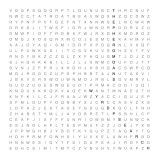
Walker claims that the album’s title is an expression of his frustration at the ubiquity of people claiming things are eerie or weird / wyrd in the present cultural milieu. The artwork for the record is designed as an actual word search too, a knowing nod to how we all grapple for meaning amongst the absurdity of each day. Leaning into ‘weird’ as a coping mechanism is not on The Pheromoans’ agenda however. This album holds little sway with the supernatural, it’s not enough. The overriding impression given by ‘Wyrd Psearch’ is of a band renewed with ideas. There’s no trouble finding the right words, they’re hitting their mark, keeping up with the commentary. ‘Wyrd Psearch’ is a document of The Pheromoans mastering their unquiet moment.
Suche:howe
- A1: Wear Your Love Like Heaven
- A2: Mad John's Escape
- A3: Skip-A-Long Sam
- A4: Sun
- A5: There Was A Time
- B1: Oh Gosh
- B2: Little Boy In Corduroy
- B3: Under The Greenwood Tree" (Words By William Shakespeare, Music By Leitch)
- B4: The Land Of Doesn't Have To Be
- B5: Someone Singing
- C1: The Enchanted Gypsy
- C2: Voyage Into The Golden Screen
- C3: Isle Of Islay
- C4: The Mandolin Man And His Secret
- C5: Lay Of The Last Tinker
- D1: The Tinker And The Crab
- D2: Widow With A Shawl (A Portrait)
- D3: The Lullaby Of Spring
- D4: The Magpie
- D5: Starfish-On-The-Toast
- D6: Epistle To Derrol
Donovan’s Original
A Gift From a Flower to a Garden made for a few firsts: the first double LP of Donovan’s
career, one of the first box sets in pop and, most importantly for Donovan himself; the first
pop album for the children of tomorrow.
He resolved to make A Gift From a Flower to a Garden an album of two halves. The first,
Wear Your Love Like Heaven, was intended for his own generation as they started to think
about the kind of world they wanted to leave behind. The second, For Little Ones, was for
the children they had or would have in the years to come. The result was a kaleidoscopic
folk-jazz suite on the power of love, imbued with all the romance and mystery of an Arthur
Rackham illustration for an ancient English fairy tale. The songs, remarkably adventurous
given Donovan was a globally famous singer at his commercial height, combined the
influences he had amassed so far.
There is something about A Gift From a Flower to a Garden that could never be repeated,
though. It is such an innocent evocation of the childlike imagination, so redolent of its time,
yet set apart from it too. All these years later, the peaceful qualities of this pioneering,
enchanting, deeply unusual album feel more valuable than ever.
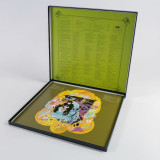
The state51 Box Set
With authenticity core to the project, The state51 Conspiracy engaged one of the UK’s
leading experts in box set design, Daniel Mason at Something Else, to painstakingly recreate
the box, records and accompanying ephemera. The first challenge was to find the deep blue
leatherette paper the original box set was covered in; a problem since it was no longer in
production. “I knew people who had stacks of it, gathering dust on top shelves, so I bought it
up wherever I could find it,” says Mason. Then came the reproduction of 12 loose leaf lyric
sheets on fine art watercolour paper, each of them featuring a watermark and a fairytale-like
illustration by Donovan’s artist friends Sheena McCall and Mick Taylor. Where, though, to
find the same paper stock? “I found out that it was made at a paper mill in North Wales
called Abbey Mills. Unfortunately the mill dissolved in the early 70s and very little of the
paper remained. However enough paper remained to allow us to produce the numbered
certificate also signed by Donovan that sits within the box.”
Then to the iconic cover image. Donovan and Jimi Hendrix’s personal photographer Karl
Ferris, used infra-red film to achieve the psychedelic effect on the cover, but the original
negatives couldn’t be found. Mason then used digital technology to ramp up the colour levels
on a reproduction from an original copy of the album while allowing it to remain a little bit
faded, as it would be after half a century. The same labour of love and care has gone into
producing all elements of the box; from the rebuilding of the famous front cover font to the
hand-numbered and signed certificate; letterpress printed on the original paper stock of the
1968 UK release lyric sheets.
To cap it all off the original mono master tapes were waiting safely in the EMI Donovan
Archive and transferred from tape to digital by Abbey Road Studios where new lacquers
were cut, ensuring Donovan's favoured mono version of the album would be presented both
physically (and digitally for the very first time) in striking audiophile quality. The final touch to
The cinematic opening track Inthenever starts off as a film >> somewhere on a desolate coast, where everything has already ceased. This is going to be an album with a story and depth, a fearless tour of the barren shores of our days // or is it possibly just a mirage conclusion of their razor-sharp sound brutalism? Tittingur's third album, Epiphany, is here, pounding with waves they had not done before.
It seems as though this dyad has disposed of all the genre confines that had locked them in, and have grasped the sound of new subject matters, for which the moniker of experimental techno is finally too narrow. With utter urgency and candid to their emblematic, thunderous sound, Dominik's and Matus's deafening mallets collide in beats which are now, more than ever, drenched in a mass of palpable gloom and anguish. As though we could touch the rising levels of the oceans, and smell the melting of the glaciers themselves.
In one way or another, the music of Tittingur has always been about nature, its fierce essence, and its stark contrast with the post-era that we have found ourselves living in. However, whereas before, it was the sound of old, weather-stained concrete, and the pounding of abandoned, overgrown buildings, now it is, unavoidably, their most direct and honest return to nature landscapes, and to human, age-old traditions, referenced in the Slovak folk motives, recordings and found sounds.
On Epiphany, Tittingur's sound becomes yet more abstract, in a sound world that is ambiguous but also unified, and works on its own. The duality of nature and technology, of inland human folklore and the trenches of deepest oceans, invite us to come closer and observe the volatile obliteration taking place. Can we even attempt to re-assess our position with nature, or is this whole experiment doomed to fail?
Unsurprisingly, in the echoes, all the ingredients of the classic Tittingur sound are still present, distilled into new forms >> the ever-present over-saturation, the exaggerated, maximalist approach and megalomania >> the sound of impending climate change, doom, and near-apocalyptic visions, the scent of borovička mixed with the wild North Sea, the agony of contemporary urban life, and the adventure of wilderness: ferocious synths, monumental beats, aggressive basslines and crumbling noise-scapes built of a found-sound, music concréte-like, collagist approach.
At moments, it seems the means have changed. Just until you realise that the sentences of this story are spoken in a new language. If you dive deep enough, and listen to the essence that the music of Tittingur articulates, it's surprisingly easy to understand >> although the notions and emotions are difficult to put into words. The profound narrative of Epiphany is that of an endless inner struggle of society, anxiety, crises, and ambiguously easy // difficult solutions in the post-modern global chaos. It is the calm before a storm. It is the storm. Is it the calm. It is all of it, in itself. credits
The eagerly awaited debut album from the London-based four-piece * At the forefront of the new generation of Black British guitar music with Big Joanie and Bob Vylan * Supporting Slowdive on their UK tour in February * Singles playlisted by BBC Radio 6 Music, Spotify and others Whitelands are Etienne, Jagun, Vanessa and Michael and they are ostensibly a shoegaze band ever since Etienne stumbled across Slowdive's KEXP session in his recommended videos on YouTube a few years ago. However, they come at the resurgent, Gen Z-soundtracking genre from a refreshingly different angle thanks to their mishmash of musical backgrounds. There's also the fact that their line-up is fully PoC in what is traditionally seen as a predominantly white genre. "There's an underlying narrative that it's OK for white men to be romantic, sensitive, emotional and make dreamy music and, by contrast, young Black men should be making angry music," says Vanessa. "We've all grown up with these stereotypes and therefore I think people are mystified when they see Whitelands." "I consume a lot of media," says Etienne of his wide range of influences. "Videogames, music, news, paintings, manga, animations and film are my go-to, especially anime. There is this drive to want to understand and feel the whole weight of an expression. So, the songs are based on other songs, pictures, aesthetics, 'vibes', an emotion someone else felt. Fundamentally, you are what you eat." As a result of this diet, the lyrics are stunning, dealing with everything from unbalanced relationships and vulnerability to depression, being diagnosed with ADHD and, on the new single 'Tell Me About It' (featuring vocals by Dottie from the band's Sonic Cathedral labelmates deary), trying to navigate love following that diagnosis. The album is bookended by two poetically political songs - 'Setting Sun' and 'Now Here's The Weather' - that deal with imperialism, racism and performative ignorance. "We've experienced tokenism, micro-behaviours, envy and resentment," concludes Vanessa. "So we feel we have to continually prove ourselves. We know we're making a positive impact, but I want Whitelands to really break some barriers."
Tommy was born in 1945 in Homestead, Florida, and after his first foray into music in a church choir, he launched his secular recording career in Jackson, Mississippi, working mostly with Tim Whitsett and his Imperial Showband in the latter half of the 1960s. After a short stint with the Nightingales, he signed with KoKo in 1971 and had six impressive singles released, followed by records on Sundance, Juana and Urgent Records.
“I Can’t Do Enough for You Baby” is a mellow and melodic slow-to-mid-tempo song that sounds almost inspirational, while “Hold On” is a beautiful waltz-time ballad which James Carr released on Atlantic in 1971. Both of these songs were cut as demos probably in 1969 after Tommy and Carson Whitsett had signed a deal to become staff writers with Malaco Records.
Tommy was a magnificent singer and songwriter, who never got the credit he deserved mainly because of poor business choices and unfortunate incidents throughout his career. However, he was a beautiful person, gentle and humble.
Patsy Cline was the first true Queen of Country, putting down markers in a male dominated musical world for the likes of Kitty Wells, Brenda Lee and Loretta Lynn. She is now revered by a new generation of performers. Invited to sing on American television’s Arthur Godfrey Talent Scouts show, the show’s producers insisted she sing Walkin’ After Midnight. The standing ovation it won from the studio audience told its own story, and a Number 12 Pop hit resulted. She came back strongly, recording another crossover hit in Crazy, written by Willie Nelson. It became her biggest seller, reaching Number 9 in the Billboard Pop listing that October. Other 1962-vintage tracks featured here are She’s Got You, When I Get Thru With You (You'll Love Me Too) and So Wrong, show an artist at the top of her game. But while 1962 would bring more acclaim, the story ended for Patsy Cline all too soon. However, her recordings ensure Patsy’s name lives on through her songs Heartaches, You're Stronger Than Me, Lonely Street, Stop, Look And Listen, Why Can't He Be You, You Belong to Me, Strange and the Hank Williams cover Your Cheatin' Heart.
Elvis Presley was not only the first but also the greatest star of the rock’n’roll era. His energetic, genre-blurring recordings have retained their appeal for more than half a century, and will do so forever. Elvis has often been criticised for the movies he made, particularly later in his Hollywood career where they became formulaic, and he was often typecast in romantic musical dramas. However, the quality of his music is not in question, and after his 1956 cinematic debut featuring the title song Love Me Tender, Loving You followed in 1957. The latter film featured some great rock’n’roll songs, but most notably the sentimental love song Have I Told You Lately That I Love You? Almost seven decades later, the music of his early years, some of the greatest rock’n’roll love songs ever produced, still stands as his monument.
Acclaimed Japan “minyo footwork” duo WaqWaq Kingdom - aka Shigeru Ishihara (DJ Scotch Egg / Seefeel) and Kiki Hitomi (ex-King Midas Sound) - return with feverishly joyous new album Hot Pot Totto, a bubbling hot pot of dance music that responds to ecological anxiety.
“Two words are conjoined: hot pot and ottotto,” vocalist Kiki Hitomi tells us. “Ottotto is the Japanese equivalent of “oops”, or said when someone nearly falls over but manages to get their balance back: “it was dangerous but now we are safe!” Combined with the heady brew of their musical styles (“like a psychedelic Nabe hot pot: melting traditional Japanese Minyo with Jamaican dancehall, footwork, dub, techno, tribal polyrhythms and Super Nintendo soundtracks”), producer Shige Ishihara’s time in East Africa working with local musicians, and the dayglo hallucinogen of the duo’s visual aesthetic, WaqWaq Kingdom’s thumping, thrilling, irresistible third release is a unique ride.
Thematically - despite its ostensibly celebratory impact - Hot Pot Totto addresses the world’s grave ecological state. “Now our earth is on the way to catastrophe, as global warming becomes a serious problem through humanity’s fault. We are on the edge,” Hitomi writes. “We need to get back on the right track.” The ottotto of the album title refers to this experience - the need to get back on track. However, this is not lamenting music: it is fiercely defiant, full of colour and rapture, maintaining an optimism that we can.
Opening single “Hakke Yoi” ties treated voice, a floor-shaking beat, and a dizzying, transforming colour palette to a heart-quickening BPM. The track is named after the traditional cry of a sumo wrestling match, shouted by the referee to maintain tempo, commonly translated as “put some spirit into it!” The lyrics refer to humanity’s sacrifice of our planet for our own material gains. Later, key track “Buri Buri” features Ugandan experimental dance producer Catu Diosis and centres around the lyric “Turn disaster to our advantage / good fortune and happiness will come to those who smile,” offering not regret but encouragement and empowerment with its neon alien sonics and relentless vibrancy.
Kiki Hitomi was formerly a member of Ninja Tune / Hyperdub’s King Midas Sound (along with The Bug and Roger Robinson), and co-founded iconic Japanese dubstep-noise duo Dokkebi Q. She is also a celebrated illustrator and designer, having created artwork for countless record sleeves (including this one) and brands. Shigeru Ishihara - aka DJ Scotch Egg - has been orbiting the dance music galaxy for over a decade, releasing radiantly unpredictable solo records through Lightning Bolt’s Load Records, as a member of Warp Records’ legendary Seefeel, and performing with both projects across the world. He recently undertook a residency at the Nyege Nyege Villa in Uganda, working with Phantom Limb alumnus MC Yallah. More recently, Ishihara has been releasing music under the guise of Scotch Rolex, collaborating with the likes of Shackleton, Swordman Kitala, Lord Spikeheart and more.
Hot Pot Totto is WaqWaq Kingdom’s third release for Phantom Limb, following the rapturously received album Essaka Hoisa in 2019 and follow-up EP Dokkoisho in 2020. The band recently performed at the label’s sold out 5th anniversary event in London, setting an ecstatic venue alight with energy.
f B1 Buri Buri feat. Catu Diosis
Towana&The Total Destruction/Ty Karim
WEAR YOUR NATURAL, BABY / IF I CAN'T STOP YOU (I CAN SLOW YOU...
‘Wear Your Natural, Baby’ was a good seller when issued on Kent Harris’ Romark label in the late 60s – judging by the, at least, three pressings of it. Understandably so, as it is a captivating rhythm for a then very current political and fashionable message. Towana was in fact Ty Karim, singing under her young daughter’s name. On this flip, Ty recorded as herself on a cover of the CB Overton’s hit ‘If I Can’t Stop You’. However, Kent Harris decided to not go with this recording at the time and re-cut it with new lyrics as ‘Keep On Doin’ Whatcha’ Doin’’ as a duet with George Griffin issued in 1980 on Sheridan House. That record has become a modern soul classic over time and this alternate solo version, with the different lyrics, by Ty is sure to excite lovers of that genre.
Released in 1960, Giant Steps was a watershed album for John Coltrane, solidifying the saxophone legend's reputation as one of the most influential and innovative musicians in jazz history, as well as delivering jazz to an increasingly mainstream audience, while garnering significant critical acclaim.
Although this was John Coltrane's debut for Atlantic, he was concurrently performing and recording with Miles Davis. Within the space of less than three weeks, Coltrane would complete his work with Davis and company on another genre-defining disc, Kind of Blue, before commencing his efforts on this one.
Coltrane (tenor sax) is flanked here by essentially two different trios. Recording commenced in early May of 1959 with a pair of sessions that featured Tommy Flanagan (piano) and Art Taylor (drums), as well as Paul Chambers — who was the only bandmember other than Coltrane to have performed on every date. When recording resumed in December of that year, Wynton Kelly (piano) and Jimmy Cobb (drums) were instated — replicating the alternate non-Bill Evans lineup featured on "Freddie the Freeloader" on Kind of Blue, sans Miles Davis of course. At the heart of these recordings, however, is the laser-beam focus of Coltrane's tenor solos.
All seven pieces issued on the original Giant Steps are Coltrane compositions. He was, in essence, beginning to rewrite the jazz canon with material that would be centered on solos — enabling the solo to become infinitely more compelling. This would culminate in a frenetic performance style using melodic phrasing that noted jazz journalist Ira Gitler accurately dubbed "sheets of sound."
The Giant Steps chord progression consists of a distinctive set of chords that create key centers a major third apart. Jazz musicians ever since have used it as a practice piece, its difficult chord changes presenting a "kind of ultimate harmonic challenge", and serving as a gateway into modern jazz improvisation. Several pieces on this album went on to become jazz standards, most prominently "Naima" and "Giant Steps."
The Penguin Guide to Jazz selected this album as part of its suggested "Core Collection" calling it "Trane's first genuinely iconic record." In 2003, the album was ranked No. 102 on Rolling Stone magazine's list of The 500 Greatest Albums of All Time, 103 in a 2012 revised list, and 232 in a 2020 revised list.
Undeniable music perfection deserves definitive sound and top-notch packaging. This reissue was mastered directly from the original master tape by Ryan K. Smith at Sterling Sound and cut at 45 RPM. Pressed on 180-gram vinyl at Quality Record Pressings, and housed in tip-on old style gatefold double pocket jackets with film lamination by Stoughton Printing.
Overall, Giant Steps is not only a critical triumph but also a defining moment in John Coltrane's career. Its innovative compositions, masterful performances, and profound influence on jazz make it an essential entry in Coltrane's discography and a timeless masterpiece in the history of the genre.
What can you say about the bass playing (and way more) legend that is Ade Shaw? During a long and mind-altering career, Ade has played with many outfits, most notably psych warlords Hawkwind, for whom he provided his trademark basslines for several years in the mid 70s. He has also played with Atomic Rooster (albeit briefly), Magic Muscle, Rustic Hinge, The Hawklords, Keith Christmas, Mike Moorcock’s Deep Fix and many more. More recently, (well, the last 30 years actually!) he has been the bass player in The Bevis Frond. For the last year or two, however, he has had to stand down from touring and gigging for personal reasons, but happily this has not prevented him from recording a new album. So it is with great pride and delight that we are now able to release ‘A Dark Reflection’ on Blue Matter. Eleven brand Adrian Shaw new songs ranging from out and out psychedelia, through rock to even a splash of lilting balladry. With Ade playing all the instruments bar a couple of guest appearances from Nick Saloman & Bari Watts, this is the Ade Shaw album we’ve all been waiting for. It’s a real stormer, and it’s a great privilege to be able release it on our label. Give it a listen & hopefully you’ll see what we mean
Swirl Vinyl[31,05 €]
Transistor Radio: the fourth M. Ward album. Listening to M. Ward's breezy ode to radio's forgotten heydays is a lot like taking in a huge breath of dust-bowl wind -- however, its charms are rooted in the hazy lemonade-sipping of summer rather than the great depression-obsession of the post-O Brother, Where Art Thou? mainstream
Black Vinyl[30,21 €]
Transistor Radio: the fourth M. Ward album. Listening to M. Ward's breezy ode to radio's forgotten heydays is a lot like taking in a huge breath of dust-bowl wind -- however, its charms are rooted in the hazy lemonade-sipping of summer rather than the great depression-obsession of the post-O Brother, Where Art Thou? mainstream
- A1: Peter Patzer - You Are Not The One For Me
- A2: Ströer - Don't Stay For Breakfast
- A3: Upstairs - You're Just Yourself
- B1: J D. (Puma) Lewis - Dancing Shoes
- B2: Trust - It's Not Over
- B3: Imagination - Strawberry Wine
- C1: Squish - Get Up
- C2: Publicity - Funky Feeling
- C3: Bernie L - Backstreetboy
- D1: Ca$H - Raff Dich Auf
- D2: The Poptown Syndicate - Keep On Lovin' (Single Version)
- D3: Ca$H - Raff Dich Auf (Edit) (Bonus Track)
German Funk, Rare Groove and 1970s Disco music (e.g. the highly regarded Munich scene around Italian producer Giorgio Moroder) have been widely recognized and featured on numerous reissues and compilations. However, the Boogie-ish post-disco side of German music history until now has remained undiscovered. One of the reasons might be that a broader national scene in Germany (unlike the UK for example) never existed. Even though tracks by US bands such as Dazz or Midnight Star were popular in discotheks in Germany around that time, bigger labels showed little interest in promoting German groups playing this new style of Disco Funk, now primarily known as "Boogie", that brought in electronical instruments and often lacked the iconic "four-on-the-floor" beat. Additionally, the number of bands that continued to play funky and soulful music in the 1980s diminished as other styles like Synth Pop, Punk, New Wave and NDW (New German Wave) ascended in popularity. Still, though German Boogie may have never existed as a national movement, great things were happening rather locally and each group featured on our compilation brings with them a particularly unique style and story.
Now, finally, "Boogie on the Mainline" sheds some light on 11 little-known German Disco gems that were released on small or even private labels. The album contains tunes by Imagination, Squish, Upstairs, Bernie L., The Poptown Syndicate, Peter Patzer, Ca$h, Trust, Publicity as well as classic tracks by Ströer and John Davis. It was compiled by John Raincoatman aka DJ Scientist
Transistor Radio: the fourth M. Ward album. Listening to M. Ward's breezy ode to radio's forgotten heydays is a lot like taking in a huge breath of dust-bowl wind -- however, its charms are rooted in the hazy lemonade-sipping of summer rather than the great depression-obsession of the post-O Brother, Where Art Thou? mainstream.
Malka Tuti is proud to present the solo debut EP by mister Andrei Rusu,
one half of Khidja.
After a series of stellar remixes in the past year to Cosmo Vitelli (on Im a Cliché), Dadalus & Bikarus, Santaka & Nic Arizona, Rusu is finally ready to present his own original solo materials to the world.
Ahead of a full LP planned on MT for later this year, Rusu is presenting us with 2 fresh new tracks. The A-side is a 120bpm dirty and distorted super- trippy banger for the biggest floors and the darkest rooms.
On the B-side Rusu collaborates with an artist known to the followers of the label - Decha, who contributes her signature expressive vocals on this half time industrial dub track. This time however, the vocals run through the hands of Rusu who soaks them with distortion and even more punk attitude, almost echoing the energies of the late Genesis P-Orridge.
The release includes 2 remixes by a couple of master remixers who also happen to be part of our extended family.
Remixing the title track, and off the success of his 2 incredible albums
released on 2023 (Music From Memory & Offen), Philipp Otterbach supplies a remix for the books, channeling the original track’s intensity through oceans of reverb, whimsical samples and addictive trippy rhythms.
For the Hedesch Remix we’ve asked one of our favourite remixers out there aka Black Merlin to contribute his cut and boy he didn’t disappoint (does he ever?)
Black Merlin supplied us with a long and addictive psychedelic synthetic and very dubby journey for the b-side.
- A1: Niche News
- A2: 1954: Godzilla Attacks Tokyo - Reconstruction
- A3: 1966: Godzilla Attacks Tokai - Government's Decision
- A4: 1996: Godzilla Attacks Osaka
- A5: Superior Officer Miyagawa's Demise
- A6: Main Title
- A7: Scout
- A8: Special G Task Force
- A9: Unfortunate Disaster
- A10: G Confirmation I
- A11: Test Preparation
- A12: Black Hole Gun Engaged
- A13: The Late Night Abnormality
- A14: Dumping The Egg
- A15: Identification Tag
- A16: Cell Division
- A17: Meganulon
- A18: Kiriko And Jun
- A19: G Confirmation Ii
- A20: The Griffon Mobilizes
- B1: Godzilla Surfaces
- B2: Transmitter Installed
- B3: Dimension Tide
- B4: Submerged Shibuya
- B5: The Underwater Search In Shibuya - Godzilla In The Trench
- B6: Leading
- B7: Fight Of The Meganula
- B8: Starting The Dimension Tide
- B9: Godzilla X Meganula
- B10: The Dimension Tide Fires
- B11: Immortal Godzilla
- B12: Larval Growth
- B13: Megaguirus Is Born
- B14: Ultra-High Frequency
- B15: The Ultimate Combat Form
- B16: Godzilla To Tokyo
- C1: Godzilla Lands In Odaiba
- C2: Godzilla X Megaguirus I
- C3: The Effect Of Ultra-High Frequency
- C4: Godzilla X Megaguirus Ii
- C5: Godzilla X Megaguirus Iii
- C6: Godzilla X Megaguirus Iv
- C7: Program Restored - Conclusion
- C8: The Falling Dimension Tide
- C9: Kiriko's Decision - Lock On
- C10: Dimension Tide X Godzilla
- C11: A Moment Of Victory
- C12: End Credits
Godzilla returns once more to face the combined might of Japan's most extraordinary scientists in the second picture of the Millennium-era: GODZILLA VS. MEGAGUIRUS. Looking for new ways to defeat the Big G, the JSDF invent an incredible new weapon called Dimension Tide, which creates a miniature black hole that will transport Godzilla far away from Earth. However, a byproduct of weapon testing leads to thousands of winged insects invading Tokyo and attacking Godzilla. The Big G fights back, but their new queen appears, now kaiju-sized due to Godzilla's atomic breath. A thrilling battle then occurs as Godzilla goes head-to-head with Megaguirus while the JSDF frantically works to disappear both monsters forever.
GODZILLA VS. MEGAGUIRUS saw the introduction of composer Michiru Oshima into the franchise with a fantastic score that built on previous Toho musical traditions with a view to the future. While using music composed by the great Akira Ifukube for two sequences, Oshima also unveiled her own theme for Godzilla. First heard in a slow and foreboding mode, it's quickly unleashed in gigantic low tones, as terrifying and inevitable as the Big G himself. Soaring heroic material represents the JSDF and their advanced Griffon aircraft, while powerful brass is used for the threat of Megaguirus. Cementing Oshima's reputation as a great composer, GODZILLA VS. MEGAGUIRUS is a classic of kaiju musical mayhem. - Charlie Brigden
Composed by Michiru Oshima
Artwork by Attack Peter
Manufactured in Czech Republic
This Dutch music project was created in the late 1980s by two graphic designers, Edwin Van Der Laag and Huib Shippers, who were in love with electronic music. Their debut album is divided into two parts, the first with Edwin’s music and the second with Huib’s. Obviously Van Der Laag’s songs are inspired by Laserdance, for which Van Der Laag also designed album covers, however Shippers’ part is slightly different, less aggressive, trance-inducing, which makes the whole album truly extraordinary. This is the first vinyl reissue of this album since its first appearance.
Western Approaches, a fitting title for a band who's spent much of the last two years living their American dream, however you'll find its origins are a lot closer to home.
An old World War II Naval base in Liverpool city centre shares the same name and it's no coincidence. The album was conceived on the docks, a new location for the band and again much closer to home for the boys.
It seems the further afar they play the tighter their grip on their roots become, playing their biggest headline show to date in Bootle a small town in North Liverpool where some of the lads grew up.
The Cherry Boppers are back with six fiery artifacts of promiscuous funk recorded in collaboration with the vocalist, also from Bilbao, Patricia Reckless, in this mini-album in 10-inch vinyl format. Pure rhythm from head to toes. As is well known, funk fuses what has historically been labelled soul, rhythm and blues, jazz and rock, and The Cherry Boppers (TCB) have undoubtedly created their own promiscuous formula based on a fine selection of styles that predate hip-hop. Active since 2004 and convinced advocates of jazz-funk and instrumental funk, there are very few examples of vocal tracks in their discography. However, in 2014 they released the EP "TCB meet Dr. Baltz" (Brixton Records-Soul Series) in which they successfully covered three classic rhythm and blues standards with lyrics in Spanish. Now, after five years of publishing drought, they repeat the experience with the stellar collaboration of the vocalist, also from Bilbao, Patricia Reckless, musically formed in the band "Bohemian Soul". The powerful and educated voice of Patricia Reckless blends perfectly, as one more instrument, into the compact rhythmic machinery of TCB, giving the 6 tracks of this mini-album (the 6-track EP thing doesn't quite fit) a structure, perhaps, more familiar to a non-specialized audience. But let's not get carried away, the textures, the silences, the "on the one!" beat, the breaks, the stately Hammond organ, the brilliant brass, the forceful bass lines, the precise percussion, the wah wah... are all 100% Cherry Boppers. "The Cherry Boppers meet Patricia Reckless" remains faithful to that analogue funk sound that makes the band proud of a long and vocational career in the genre. And it is also an album full of details, of paths and instrumental lines to be discovered on multiple listens.