With Pierre-Jean Guidon (Moravagine, Chute Libre) as their saxophone player, Subversion (from France) played lowkey jam-orientated Progressive Rock with prominent folk and jazz flavors. However, despite the brainy exterior, their soft music had more in common with the naivety of the 60’s Yé-yé movement and lounge-pop in general. Thus they seemed to belong to a bygone era, one far removed from the upcoming punk-rock and new-wave one.
Suche:howe
The Cold Stares will release their new album "Heavy Shoes" on August 13, 2021 via Mascot Records.
"Heavy Shoes" will be available on CD Digipack w/ 12 page booklet and 180 Grams Shiny Gold Vinyl w/ printed insert.
The great state of Kentucky is world renowned for many things. Bluegrass music? Of course. The smoothest, best-tasting Bourbon created by the hands of man? It doesn’t get any better. One thing that folks don’t always associate with Kentucky however is visceral, in-your-face rock and roll. The Cold Stares are determined to change that perception.
Chris Tapp and Brian Mullins have known one another for a long, long time. They grew up in Western Kentucky, just a stone’s throw from the border or Indiana, and attended different High School mere minutes down the road from one another. They originally started playing together in their early twenties before going their separate ways only to reunite in another outfit a decade down the line. “We were playing together in 2009 in another band that was doing really well,” Tapp said. “It didn’t work out, so we both kind of exited that band and contemplated retirement.” It didn’t take long before they were thankfully disabused of that notion.
That band is an intense amalgam of Led Zeppelin meets Free, Soundgarden meets Black Crowes; rock and roll wizardry where the riffs are hard, the vocals are searing, and the low end is capital “H,” heavy. Most of the album was recorded in a single day at Sam Phillips fabled recording studio in Memphis. “That’s our second record there, so there was a lot of familiarity going back in,” Mullins said. “The thing about that studio is that it’s old, and vibey. Sometimes you gotta bang on the gear a little bit to make it work. It’s kinda like the Millennium Falcon. It’s badass, but you just gotta get it running right.”
‘Heavy Shoes’ is Cold Stares’ best record yet, and they know it. It took a lot of blood, sweat, tears and doubt before Chris Tapp and Brian Mullins reached this moment, but it’s all the sweeter knowing they did it their way. “We’ve been through some tough times, and I’d say our band is a pretty good representation for blue collar people in general. People that work hard. We’re just a blue-collar American rock and roll band.”
REISSUE - from original press release: For three decades the reclusive Revolutionary Army of The Infant Jesus (RAIJ) have confounded musical classification and studiously declined every invitation to explain their unique form of musical and artistic experimentation. Initially the Liverpool outfit built their reputation on their extraordinary immersive multi-media performances combining multiple layers of visual imagery, elements of ritual, enigmatic samples, field recordings and mesmeric live music. Their cult status was further reinforced with the release of the now much sought-after two studio albums The Gift of Tears (1987) and Mirror (1990) and two EP collections, Liturgie Pour La Fin Du Temps (1992) and Paradis (1995). After an 18-year hiatus the appearance of a new RAIJ album, and the apparent relaxation of their strict vow of silence, are generating predictable excitement and expectancy. Beauty Will Save the World does not disappoint. RAIJ's intoxicating mix of ethereal beauty, dazzling soundscapes and oblique mystery reach new levels of intensity and subtlety. The album title - a quote from Russian novelist Fyodor Dostoevsky - is one of the many literary, cinematic and spiritual references underpinning RAIJ's unexpected comeback. Founder members Paul Boyce, Jon Egan and Les Hampson, joined by a fresh wave of collaborators, have crafted an album of unique beauty and originality. Prolonged silence seems to have deepened rather than dimmed their creative impulse. As ever it is the breadth of musical genres, cultural references, borrowings and retrieved sounds that define the RAIJ aesthetic, but there is also a more consistently meditative and melodic strain that underpins the album's integrity and purpose. In a rare insight into the RAIJ's creative method, Jon Egan explains: "Although our work takes elements and inspiration from many disparate sources we have never viewed it as deconstruction. We are looking for the thread that connects every manifestation of beauty, however fragile, transitory and seemingly accidental. " In addition to the album release on Occultation, RAIJ's second coming also includes a live performance at this year's Greenbelt Festival and the re-release on vinyl of The Gift of Tears by California-based label Feral Sounds. "There is renewed interest and appreciation of our music and that's great", said Leslie Hampson. "We have never tried to cultivate obscurity or anonymity, we simply wanted to avoid having to explain and justify a creative process that isn't necessarily premeditated. Isn't it enough to listen to and experience it?"
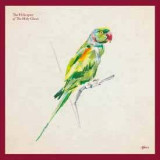
The Debut Album From The Helicopter Of The Holy Ghost - Mark Morriss
( The Bluetones ) Billy Reeves ( theaudience ) Crayola Lectern ( Lost
Horizons / Departure Lounge ) Mark Peters ( Engineers ) Co-produced by
Richard Archer of Hard-Fi Feat. Simon Raymonde ( The Cocteau Twins ) &
Thomas Anderson ( Gazpacho )
In 2001 Billy Reeves, fresh from introducing the world to Sophie Ellis-Bextor
(via their band theaudience) was smashed to bits by joyriders whilst in his Morris Minor - resulting in a two-week coma and a year in and out of hospital. In
2017 his brother gave him two mini-discs that had been saved from the wreckage, including demos of songs he had forgotten - due to crash-related amnesia.
Mark Morriss of chart-topping Hounslow janglers The Bluetones agreed to sing
them, so with the assistance of Richard Archer (Hard-Fi), along with Crayola
Lectern (Zofff / Departure Lounge), and Mark Peters (Engineers), these songs
would form the debut long player from The Helicopter of The Holy Ghost.
The original concept for the material was probably while Billy was signed to
Sony, which pointed toward a more commercial sound, however Crayola Lectern’s involvement on piano help send the recordings into a more ‘Canterbury’
direction, taking influence from Caravan, Robert Wyatt & the like.
Featuring a groovy guest line-up including Simon Raymonde of Cocteau Twins,
Dale Davis from Amy Winehouse’s band, Andy Lewis from Paul Weller’s group,
Smiley from Joe Strummer’s Mescalaros and Thomas Anderson of fellow Kscope
signees Gazpacho, the wide-ranging influence herein is evident throughout a
very sweet, gentle, calming album of originality and versatility.
The Vinyl LP edition of this album will be especially printed in an eco-friendly
manner, with no shrinkwrap being used, the record itself pressed on 100% recycled records and the board made up of FSC certified climate-friendly recycled
material. The whole package itself will be Climate neutral, having all its carbon
offset with ClimatePartner.
Oneknowing is the debut artist album by acclaimed composer and producer Lena Raine, most recently known for her multiple award-winning soundtrack for the video game Celeste. Based in Seattle, Raine has been composing soundtracks for games and media for 12 years, her breakout momentcoming with her work on the classic PC game Guild Wars 2. Her most celebrated work, however, has come in the form of 2018’s Celeste soundtrack. A game based around themes of anxiety, self-examination and more, Celeste is considered by many to be the key indie game of 2018, and has won multiple awards for both game and soundtrack – something which Raine painstakingly developed in tandem with the game’s design since its first steps. A flagship year for Raine was capped off in December, where she performed live with soundtrack legend Hans Zimmer at The Game Awards, the video game industry’s flagship annual award show (Celeste was nominated for fourawards, and won two). Although she’s released several nonsoundtrack releases, both under her real name and her Kuraine alias, Raine considers Oneknowing her debut artist album - a 10 track set that ranges from distorted paranoia to ambient pop, brought together by the shimmering melodies that make her soundtracks so memorable. An album that draws from “personal experiences, important places, dreams and the lack of dreams”, Oneknowing’s tracks are also threaded together by Raine’s own vocals, sung in a language unique to the album and manipulated by the software Vocaloid. In Raine’s words, “I have nostalgia for my voice as it sounded when I was younger. I can't de-age my voice, but I was able to use software and tweak its settings to a point that it has a similar quality to my voice from backthen”. At times (‘Tsukuyomi’, ‘Light Rail’) her vocals lean towards traditional pop structures, while on tracks such as ‘Wake Up’, they’re repeated, chant-like, to create a hypnotic effect. As well as vocals and software, Raine plays rhodes piano, zither and various hardware synthesizers on Oneknowing, while Michaela Nachtigall contributes violin and viola to various tracks. A succinct but expansive record full of detail, Oneknowing represents Raine’s most personal and realised original material yet, while showing a different side to one of the most unique and accomplished composers of the modern era.
Che Noir has been gaining momentum with each new release. Critics have hailed her as one of the best emcees of the new generation. However, her latest drop "After 12" announces her arrival as a producer. She provides the beats for all seven tracks, proving she's just as nice on the boards as she is on the mic. With the help of 38 Spesh, Ransom, RJ Payne, Sa-Roc, The Musalini, Jynx716, and Amber Simone, Che delivers a project that conveys what life is like after midnight on the block.
Since Grazed is either the 14th or 16th record depending on how you count them (but who’s counting?) by Eleventh Dream Day, a Chicago band with Kentucky roots.
After 2015’s blistering guitar blast Works For Tomorrow, Janet Beveridge Bean, Rick Rizzo, and Douglas McCombs return alongside James Elkington and Mark Greenberg.
The hour of music on this 2xLP takes the long road home, spacing out at the wheel and reveling in the journey - celebrating those along for the ride. This is not a record about what is lost, but what is still there, however nicked up and grazed it may be. Built from the bottom up, the 12 songs here start simply with acoustic guitar and a voice and layer a lush symphony of sound over the band’s most melodic tunes to-date.
LP on white vinyl! What if a song was not a culmination but a singe, an imprint, or a crater left in the wake of creative process? On her new record "Jade", Pan Daijing composes at a different scale than that we've come to know. Since the release of her groundbreaking LP "Lack" in 2017, Daijing has expanded her operatic vision into a series of major commissioned exhibition-performances at institutions including the Tate Modern, Martin Gropius Bau, and the Haus der Kulturen der Welt. Developed for full casts of opera singers and dancers, and reaching for an all-encompassing durational experience of intensity for both performer and audience, the development of these works was for Daijing as emotionally disarming as it was thrilling. In order to continue accessing her own limits, Daijing had to develop a place of sanctuary within her own practice. Its nine tracks written and recorded over the last three years, "Jade" is the sound of solitary release and refuge, of creative self-sustenance. Written without the imperatives of direct address to performers or audience, "Jade" speaks inward, while inviting a kind of rhetorical listening. The artist draws on materials familiar from her previous work: namely, ascetic electronic textures that rumble and pierce, and voice bent in irreverent directions. In place of catharsis, however, her arrangements here linger in tension, extending curiosity towards the delicate void that nourishes extremes. They toy with the minor capacities of song: repetition, chant, observations that conclude without resolving. "Jade" comes from a vulnerable place, tender as in an undressed wound caught in the midst of healing over. Vocals, mostly Daijing's own, arrive as wordless sequences of notes soaring alongside a drone, or plain laughter, or in a few places spoken word. What is said or sung provides fragments of experience and reflection. In the process of piecing together these fragments, the listener is confronted with the tender parts of her own. "Solitude is like an immense lake you're swimming through," says Daijing of these songs. "Sometimes you dip your head in and sometimes you lift it above. On album centerpiece "Let," she speaks to us over the sound of rippling water, returning between anxious scenes to a refrain: "I take my bath in the ocean." We are not just consuming Daijing's story; we are being invited to join her in the water. The album is mixed and mastered by Rashad Becker, featuring artwork by Pan Daijing, cinematography by Dzhovani Gospodinov & design by NMR.
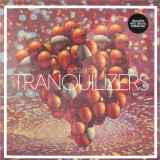
In a release inspired by the smooth rhythms of the region's past, Atlanta-based Dog Bite offers more music medicine in the form of Tranquilizers. The sophomore release transcends the reverie state of Velvet Changes in pursuit of a darker, more full-bodied experience. Tranquilizers migrates into a dreamy sonic realm enveloped in its own soulful influence. Frontman Phil Jones found his extensive listening to iconic R&B musicians such as Otis Redding and Isaac Hayes to be the original muse for the album. In its formation it began as a soul record; however, at its core the release remains grounded in Dog Bite's beloved shoegaze landscapes. With the support of Woody Shortridge on bass and Tak Takemura on drums, Dog Bite purposefully evades sedation through its blend of smoky textures across divergent genres. Being an album submerged between the differences of classic funk and rock music, it is Jones' customary croon that weaves a common mesh in the record's diverse artistry. First making music at the end of his high school days, 23-year-old Phil Jones began Dog Bite after dropping out of the Savannah College of Art and Design. Influenced by the work of J Dilla, Portishead, Caribou, Panda Bear and The Roots, Jones began self-releasing tracks, followed-by a 7-inch and CD on Young Turks. While later touring as the keyboardist to Washed Out he picked up an acoustic guitar and composed his debut-full length, Velvet Changes, released on Carpark in early 2013. In support of Velvet Changes, Dog Bite embarked on an extensive North American winter tour with labelmate Toro Y Moi. The two marked the occasion with a split 7. Jones returns with his newest release on Carpark, the LA EP. In addition to his time with Washed Out, Jones has appeared on a matthewdavid release and produced for Mood Rings and Bosco. As one half of Acid Flashback, he's crafted tunes for the voice of Karen Jacobs (of Toronto's Free Kisses). Dog Bite performs live as a four-piece, featuring Jones' friend Woody Shortridge formerly of defunct Atlanta band Balkans.
**LONG OVERDUE REPRESS - CLEAR VINYL 300 COPIES ONLY** “With Ela’s music I feel emotional, engaged… I can’t help but feel she’s always looking for a sense of belonging and it
seems to inform all the music that she makes. Glasgow must have more of that belonging feeling than most
cities because she’s spent the most time here, an exotic bird in a rainy city she maybe finds a lttle bit of comfort in. It’s
a pleasure to have her here, in this awful time to be living in Britain, her illuminations feel important and hopeful. A
stubborn light; someone making great timeless music out of the humdrum of the everyday.” - Stephen Pastel
Movies For Ears is a retrospective collection of works by Polish-born, Glasgow-based artist Ela Orleans which
navigates almost two decades of songwriting in the heart of the global pop underground. This remastered collection casts
an ear over what Orleans might call the ‘pop sensibility’ within her back catalogue. Released previously on a number of
small DIY labels, Orleans’ music coincided with the explosion of auto-didactic musicians finding their voice in the age of
the blogosphere, artists emboldened by the democratisation of music-making afforded by the internet. From the outset,
Orleans’ childhood studying formal music mixed with cut-up techniques, sampling, sound-art and experimentation to
create a distinctive signature cloaked in an innate melancholy and playfulness. Fully remastered by James Plotkin,
featuring extensive sleeve-notes and rare photos from Orleans’ archive, Movies For Ears presents an appraisal of the
musician’s work, painting a portrait of an artist with an uncanny ability to evoke emotions and ghosts of memories in the
listener.
Each song pulls sunshine from its surroundings, moments of pleasure plucked from eulogies. The Season employs a
hypnotic loop with Orleans’s prophetic voice heralding the season we’re doomed to repeat. In fact the singer is often cast
as the changing protagonist in her songs: on Walkingman, a hazy ballad heavy with ennui, the narrator is laden with the
world’s weight, forever pacing a groundhog day world blank, a pissed-off actor in a Kafka-esque melodrama. On Light At
Dawn we’re in a seedy kitsch bar-room go-go scene, a ghostly rock’roll romance with shimmering percussion, poledancing
in a Lynchian half-dream. Movies For Ears’ moods straddle memory and fantasy: scratchily invoking halfremembered
exotica, the flickering shadows of europhile cinemas screens, a delicately woven world anchored in Orleans
existential meditations on longing, intimacy, solitude and the search for love. These rich textures in every song don’t
overpower some crystalised moments of emotion however: on In Spring Orleans sings simply “I have been happy two
weeks together,” summarizing that feeling of elation when emerging from a depression, a long winter. It’s a moment that
perfectly illustrates the lightness of touch and clarity in the singer’s voice.
The power of the loop and Orleans’ weaving songwriting that breaks its spell is illustrated perfectly by I Know. Over an
aching chord progression, the vocal takes flight into bittersweet loneliness, Pachelbel’s Canon played at a wedding where
only one person shows up. The repeated refrain “I know, I know” ascends to the heavens as the chords descend to the
dumps and the listener is left in the middle, happy but not knowing why, maybe a little changed, two weeks together. On
Movies For Ears, Ela Orleans lets us into a secret: the rare moments of joy to be found in the joins of the loop, the spaces
between things, the spring after the winter are the moments that last after the day has faded.
After enduring a year like 2020, no one could have possibly expected Al Jourgensen to stay silent on the maelstrom of the past 12 months. As the mastermind behind pioneering industrial outfit Ministry, Jourgensen has spent the last four decades using music as a megaphone to rally listeners to the fight for equal rights, restoring American liberties, exposing exploitation and putting crooked politicians in their rightful place—set to a background of aggressive riffs, searing vocals and manipulated sounds to drive it home.
As Jourgensen watched the chaos that befell the world during the height of a global pandemic and the tensions rising from one of the most important elections in American history, he seized on the opportunity to write, spending quarantine holed up in his self-built home studio—Scheisse Dog Studio— along with engineer Michael Rozon and girlfriend Liz Walton to create Ministry’s latest masterpiece, Moral Hygiene (out October 1 on Nuclear Blast Records). Anchored by last year’s leadoff track “Alert Level”—which asks listeners to internalize the question “How concerned are you?”—the 10 songs on this upcoming 15th studio album cover the breadth of the current dilemmas facing humanity, while ruminating on the sizable impact of COVID-19, the inevitable effects of climate change, consequences of misinformed conspiracies and the stakes in the fight for racial equality. And most importantly doing so with the lens of what we as a society are going to do about it all.
Moral Hygiene comes on the heels of Ministry’s acclaimed 2018 album AmeriKKKant (hailed by Loudwire as Jourgensen’s own “state of the union” address) that was written as a reaction to Donald J. Trump being elected president—though Jourgensen says this new album is more informational and reflective in tone. “With AmeriKKKant I was in shock that Trump won. I didn’t know what to do, but I knew I had to do something. Because I believe if you are a musician or an artist you should be expressing what’s going on around you through your art. It’s going to happen whether you do it consciously or unconsciously. Moral Hygiene however has progressed even further into a cautionary tale of what will happen if we don’t act. There’s less rage, but there’s more reflection and I bring in some guests to help cement that narrative.”
In addition to recruiting long-time cohort Jello Biafra (Jourgensen’s partner in the side project Lard) for the quirky earworm “Sabotage Is Sex,” other guest appearances include guitarist Billy Morrison (Billy Idol/Royal Machines) on a rendition of The Stooges hit “Search & Destroy.”
Another standout track is “Believe Me,” featuring a throwback vocal style from Jourgensen that harkens back to his singing on Twitch and cult classic “(Every Day Is) Halloween.” The song came out of a jam session with Morrison, Cesar Soto and sampling from Liz Walton, and reminded Jourgensen of his formative days at Chicago Trax Studios where communal ideas were constantly informing early Ministry records. “’Believe Me’ had such an old school vibe I wanted to bring back old school vocals. …It’s funny how things come back to you,” says Jourgensen, also reflecting on Ministry turning 40 in 2021.
With the release of Moral Hygiene, Jourgensen is more positive than before. “This may sound crazy but I’m more hopeful about 2021 than I have been in two decades at least,” he says. “Because I do see things changing; people are starting to see through all the bullshit and want to get back to actual decorum in society. We could just treat each other nicely and be treated nicely in return. I never thought Ministry would be in the position of preaching traditional values, but this is the rebellion now.”
Music in Exile is excited to announce a new 12” maxi-single release from the “King of Music”, GORDON KOANG. Titled Coronavirus / Disco, this double-A-side release share’s Gordon’s messages of peace, love and positivity, and is his first original offering since his acclaimed Unity album was released in late 2020.
The first single, Coronavirus, was penned by Koang in July 2020 as a response to his personal experiences of the global pandemic. As his hometown of Melbourne went into lockdown, Gordon resided in the outer suburbs of Melbourne with his cousin, Paul, and his four-stringed, guitar-like instrument, the thom. Throughout this single, Gordon offers his condolences to those affected by the pandemic, alongside messages of his faith in frontline workers and the hope that circumstances will improve soon. “People suffer a lot. I ask that God gives the doctors the big wisdom to defeat the coronavirus. When people hear my song, I hope that this music counsels them. The song has a lot of meaning, it is telling them to be hopeful.”
With the cancellation of a national tour and numerous festival appearances, Covid-19 had not only impacted Gordon’s career here in Australia but also his opportunity to visit family he hadn’t seen in five years. After receiving Australian permanent residency, Gordon and Paul were now able to visit family in Uganda, however this was made incredibly difficult due to border closures and the potential health risks. Taking a last minute opportunity, Gordon and Paul travelled to Africa and whilst excited to visit their families, they also experienced the impact of the pandemic on their home communities. “In Africa, it is not like us here, there is no medicine and in Africa there is also no Centrelink if you are in lockdown. It is difficult getting services. Even getting food is difficult.”
After two weeks in hotel quarantine, Gordon and Paul returned to Melbourne, eager to record music once more. With lockdown lifting, Gordon headed to the studio with a new band featuring Zak Olsen (ORB, Traffik Island) Jack Kong (Baked Beans, Traffik Island), David “Daff” Gravolin (ORB), and Jesse Williams (Leah Senior, Girlatones). This new release is the result of these studio sessions, jamming and recording at Button Pusher in Preston, Melbourne.
For the DJ’s out there, both tracks will feature on a limited edition, 12” maxi single vinyl complete with pull-out poster from Gordon, encouraging listeners to stay positive during this difficult time.
“My condolences to you, my audience in lockdown. We are all suffering from coronavirus. Let us stand firm and be strong. Let us look after each other, until the time comes when God brings us together. I give my condolences to people who have died of coronavirus, in aged care and disability. We are heartbroken for everyone. Let us take it easy, and pray in our houses, all around the world. If you believe in God, pray to the God you believe in, and they will help you. God will give us the chance to go back to normal and open all events. Even if it is a bad time now, there will be a change and it will be a good time for us. Thank you to everyone.” - Gordon Koang
Recorded in a rare moment of freedom between lockdowns, Flightcase represents the joy of collaboration and the importance of human connection.
This is an album of many voices. Influences ranging from Herbie Hancock to Sun Ra, but also from other projects Akin is involved in, Amara & GABO, shine through in an album which acknowledges the various music that inspires and influences Akin, whilst trying to create something new and unique.
Akin Subscribes to the philosophy of allowing each musician to create however they feel to, trying to do little more than create the framework and allow the other musicians to express themselves within this. This felt particularly important in a time marred by restrictions.
»Dog Mountain« is the second release by the Zurich-based producer and composer Laurin Huber on Hallow Ground. After last year’s »Juncture« saw the Edipo Re co-founder work mostly with synthesizers and programmed rhythms, the four tracks are much more restrained, drawing on tape loops and feedback, recordings of acoustic guitar and synthesizers such as the Korg MS-10 as well as field recordings that relate to the overarching topic that informed the making of the record. While »Juncture« had previously aimed at deconstructing the binaries and dualities that shape our lives and thinking, »Dog Mountain« is dedicated to geographical divisions that result from political processes and social constructions. »›Here‹ means one nation, ›there‹ another,« writes Huber in a literary piece that accompanies the record. »Being in sound, such a separation seems odd.«
While treating the metaphor of the border as a »membrane, registering and translating the vibrations of its surroundings« and thus as something that is constantly (re-)defined, maintained and defended however, the artist also takes into consideration that »one cannot escape one’s standpoint,« as he puts it. The music on »Dog Mountain« may transcend and overcome certain borders, but it does not deny the realities that they impose on each and every one of us – whether in our political lives or in the realm of sound. This is mirrored in Huber’s engaging in the structural and sonic interplay of repetition and difference. Working with slowly evolving and modulating elements that are exposed to slight shifts, »Dog Mountain« puts a focus on the interaction between small elements that together form a bigger whole which is marked by constant evolution and change.
Opener »Raja« (»border« in Northern Sami and Finnish) starts off with a two-note melody played on an out-of-tune guitar. Different field recordings and synthesizer sounds drop in and out of the mix until the dynamic shifts and Huber starts playing more notes on his instrument, thus increasing the tension. It’s a meditation on minimalism, but also a piece that mediates between notions of what constitutes the difference between noise and music or referentiality and abstraction in sound. After »Nickel« (named after a Russian monotown near the border to Norway) dedicates itself to explore the friction between hissing white noise and melancholic tape loops, »A Town Is Not a Town« (a phrase taken from the documentary »Kiruna – Rymdvägen«) structurally mirrors the experiment of »Raja« with very different sonic means.
Closing the record, »Storskog-Borisoglebsk« (the title refers to the northernmost land border between Schengen-Europe and Russia) is the longest and most challenging piece, working with both long-form drones and musique concrète elements. It proposes a synthesis of the opposites that are explored patiently and with much attention to detail throughout this record.
- 1: Don’t Ever Pray In The Church On My Street (02:46)
- 2: I Hope I Never Fall In Love (0:56)
- 3: The Biggest Fan (02:47)
- 4: Uncommon Weather (01:5)
- 5: A Kick In The Face (That’s Life) (02:01)
- 6: I Wouldn’t Die For Anyone (02:35)
- 7: I’m Sorry About Your Life (02:05)
- 8: The Record Player And The Damage Done (02:22)
- 9: Pictures Of The World (03:11)
- 10: Life At Parties (02:52)
- 11: Sing Red Roses For Me (03:54)
- 12: The Songs You Used To Write (02:49)
- 13: Sympathetic (03:11)
From the many musical lives of artist Glenn Donaldson emerges The Reds, Pinks and Purples, a project that sifts out the purest elements of pop music and in the process chronicles the point of view of an assiduous San Francisco-based songwriter. The Reds, Pinks and Purples’ third album, called Uncommon Weather, is both an elusive portrait of San Francisco––during one of its fluctuations as an untenable place for musicians and artists––and also a self-portrait, however inverted, of a songwriter who has dispatched another treasured collection of timeless sounding DIY-pop songs.
How The Reds, Pinks and Purples arrived here is a story with many roots, the most consequential of which is perhaps the musical aftermath of his earlier band, The Art Museums, whose brief tenure in the late ’00s coincided with an explosive period of the Bay Area rock scene and was followed by a hermetic musical period of Donaldson’s. Disenchanted with the dissolution of his band, Donaldson averted the DIY-pop sound with an instrumental, conceptual project called FWY! but meanwhile started a habitual songwriting practice, sharing nascent songs with friends in an email exchange. In 2013–2014, The Reds, Pinks and Purples took shape as the moniker for Glenn’s most direct expressions in the DIY-pop mode, enabled by this new disciplined output. By then, San Francisco was already a changed place. The tragic loss of his former bandmate in Art Museums was another source of discontinuity and rupture. You can hear in The Reds, Pinks and Purples’ earliest songs this grappling with life, anxiety, and atrophying subcultures. For an artist with an overriding interest in the aesthetic principles of discrete musical genres, this turn toward his immediate world for subject matter was a major shift, setting The Reds, Pinks and Purples apart from Donaldson’s other musical ventures.
Preceding the release of Uncommon Weather was the Reds, Pinks and Purples’ 2nd album, one of the record buying joys of 2020, You Might Be Happy Someday, and, earlier, their first proper full length Anxiety Art, a title that might nod to the classic Television Personalities song “Anxiety Block.” Donaldson’s music continuously reckons with the influence of Dan Treacy, whose own forays into drum-machines, echo, and reverb in the early 1990s is an important reference point for The Reds, Pinks and Purples’ musical template. Paul Weller, Robert Smith, and Sarah Records also come to mind. But, as important, Donaldson sees his projects as visual expressions too, often blurring the lines of records and physical art objects. They could just as well be “art multiples” as well as records. The pattern for Reds, Pinks and Purples’ records is to document San Francisco’s Inner Richmond district in photographs: the muted, pastel colours and unpeopled compositions unfold in a series of images that read like counter-melodies to Donaldson’s distinctive voice, a vocal tone that always complements the colours.
Self-recorded and mostly self-performed, Uncommon Weather features pinnacle versions of songs Donaldson has honed since the beginning of the project. The album arrives with grateful timing, quick on the heels of You Might Be Happy Someday, and alleviating, for a brief window at least, whatever it is that keeps us coming back to this elemental music. Donaldson imagines his listeners are just like himself: fascinated and addicted to the spiritual power of uncomplicated pop classics. Anthony Atlas
Previously known for his progressive trance works, van Wyk has spent a lot of his time as of late composing for the film industry. In 2013, his solo output switched to more pastoral forms of neo-classical leaning ambient with his first full-length Days You Remember, before moving into more piano-based composition for Attachment (2016) and Opacity (2017).
Threads does reflect some of his previous ambient works; however, the album shows van Wyk composing music for (and of) current times. There is a much-welcomed underlying beauty to Threads, but there are also threads of anxious- ness and unwavering intensity throughout its forty-minute run-time. It's an engaging listen full of texture where each piece takes you on an engrossingly escapist journey.
- 1: Tachycardia
- 2: Barbary Coast (Later)
- 3: Gossamer Thin
- 4: Counting Sheep
- 5: Mamah Borthwick (A Sketch)
- 6: The Rain Follows The Plow
- 7: A Little Uncanny
- 8: Next Of Kin
- 9: You All Loved Him Once
- 10: Till St. Dymphna Kicks Us Out
- 11: Overdue *
- 12: Too Late To Fixate *
- 13: Afterthought **
- 14: Empty Hotel By The Sea *
- 15: Napalm *
‘Ruminations feels like a direct line into the spirit of Right Now. Oberst reckons with having the fabric of his life ripped apart by a disease of the flesh he couldn’t control or understand. Perhaps that sounds familiar? He paints a startling picture of how surreal life becomes when backlit by illness… these songs are heartrendingly beautiful, filled with the beauty of day-drunkenness and Proustian flights into memory and waking up in the afternoon and realizing that, however imperfect the day is, it’s a day.’
– GQ (2020)
Conor Oberst’s critically acclaimed 2016 solo album, Ruminations, will be released in a double-LP expanded edition – featuring five bonus tracks, four previously unreleased, as well as an etching on side D – on Record Store Day, June 12; it will be made available widely in all formats on July 23. The five bonus tracks were recorded during the Ruminations sessions; while full band versions of them were released on the 2017 companion album Salutations, these solo acoustic recordings are now included for the first time on Ruminations.
Ruminations was recorded in the winter of 2016, when Oberst found himself hibernating in his hometown of Omaha after living in New York City for more than a decade. He emerged with the unexpectedly raw, unadorned album, which NPR called one of his ‘most personal records… a collection of brave, dark songs… unmistakably moving and contain[ing] some of Oberst's best lyrics and imagery.’ The Sunday Times further said it was his ‘rawest album yet. Political and very, very personal’, calling Oberst ‘one of the best songwriters around’, and including the album in its list of best of the year.
“I wasn't expecting to write a record,” said Oberst in 2016. “I honestly wasn’t expecting to do much of anything. Winter in Omaha can have a paralyzing effect on a person but in this case it worked in my favour. I was just staying up late every night playing piano and watching the snow pile up outside the window. Next thing I knew I had burned through all the firewood in the garage and had more than enough songs for a record. I recorded them quick to get them down but then it just felt right to leave them alone.”
In the Nebraska studio he built with his Bright Eyes bandmate and longtime friend Mike Mogis, Oberst recorded all the songs in the span of forty-eight hours. The results are almost sketch-like in their sparseness, and they ultimately became the songs that comprise Ruminations. These tracks do not have the multi-layered instrumentation of the most recent Bright Eyes and solo albums: This is Oberst alone with his guitar, piano, and harmonica; the songs connect with some of the rough magic and anxious poetry that first brought him to the attention of the world.
- Generation Genocide
- Let It Slide
- Good Enough
- Something So Clear
- Thorn
- Into The Drink
- Broken Hands
- Who You Drivin’ Now?
- Move Out
- Shoot The Moon
- Fuzzgun ‘91
- Pokin’ Around
- Don’t Fade Iv
- Check-Out Time
- March To Fuzz
- Ounce Of Deception
- Paperback Life (Alternate Version)
- Fuzzbuster
- Bushpusher Man
- Flowers For Industry
- Thorn (1St Attempt)
- Overblown
- March From Fuzz
- You’re Gone
- Something So Clear (24-Track Demo)
- Bushpusher Man (24-Track Demo)
- Pokin’ Around (24-Track Demo)
- Check-Out Time (24-Track Demo)
- Generation Genocide (24-Track Demo)
The classic 1991 album remastered and expanded with rare and previously
unreleased tracks. Extensive liner notes by band biographer Keith Cameron.
A landmark of the grunge era.
By going back to basics with ‘Every Good Boy Deserves Fudge’, Mudhoney
flipped conventional wisdom. Not for the first time - or the last - they would be
vindicated. A month after release in July 1991, the album entered the UK
album chart at Number 34 (five weeks later, Nirvana’s ‘Nevermind’ entered
at 36) and went on to sell 75,000 copies worldwide. A more meaningful
measure of success, however, lay in its revitalisation of the band, casting a
touchstone for the future. The record is a major chapter in Mudhoney’s
ongoing story, the moral of which has to be: when in doubt, fudge it.
The album began at Music Source Studio, a large space equipped with a 24-
track mixing board - downright futuristic, compared to the 8-track setup that
birthed the band’s catalytic 1988 debut, ‘Touch Me I’m Sick’. The Music
Source session quickly turned into a false start when the results, in guitarist
Steve Turner’s words, “sounded a little too fancy, too clean.” Lesson learned,
the band went primitive and got to work at Conrad Uno’s 8-track setup at Egg
Studio. Named after the cartons pasted on the walls in an optimistic attempt
at sound-proofing, Egg boasted a 1960s vintage 8-track Spectra Sonics
recording console, originally built for Stax in Memphis.
So it was that, in the spring of 1991, Mudhoney made ‘Every Good Boy
Deserves Fudge’. The resulting album is a whirlwind of the band’s influences
at the time: the fierce ‘60s garage rock of their Pacific Northwest
predecessors The Sonics and The Lollipop Shoppe, the gnashing posthardcore of Drunks With Guns, the heavy guitar moods of Neil Young, the
lysergic workouts of Spacemen 3 and Hawkwind, the gloomy existentialism
of Zounds and the satirical ferocity of ‘80s hardcore punk. The quartet’s
special alchemy meant these fond homages never slid into pastiche.
Ultimately, ‘Every Good Boy Deserves Fudge’ epitomised the best of
Mudhoney: here was a band reconnecting with its purest instincts and, in the
process, reinventing itself.
This 30th Anniversary edition, remastered by Bob Weston at Chicago
Mastering Service, stands as testimony to the creative surge that drove them
in this period. The album sessions yielded a clutch of material that would
subsequently appear on B-sides, compilations, and split-singles. This edition
includes all those tracks and a slew of previously unreleased songs,
including the entire five-track Music Source session.
- Tkay Maidza - Where Is My Mind? (Pixies)
- U.s. Girls - Junkyard (The Birthday Party)
- Aldous Harding - Revival (Deerhunter)
- The Breeders - Dirt Eaters (His Name Is Alive)
- Maria Somerville - Seabird (Air Miami)
- Tune-Yards - Cannonball (The Breeders)
- Spencer. - Genesis (Grimes)
- Helado Negro - Futurism (Deerhunter)
- Efterklang - Postal (Piano Magic)
- Bing And Ruth - Gigantic (Pixies)
- Future Islands - The Moon Is Blue (Colourbox)
- Jenny Hval - Sunbathing (Lush)
- Dry Cleaning - Oblivion (Grimes)
- Bradford Cox - Mountain Battles (Breeders)
- Sohn - Song To The Siren (Tim Buckley)
- Becky And The Birds - The Wolves
- Act I And Ii (Bon Iver)
- Ex:re - Misery Is A Butterfly (Blonde Redhead)
- Big Thief - Off You (The Breeders)
In 2020, 4AD turned 40. Never one to be on time for a party, the label is
commemorating that landmark this year with the release of ‘Bills & Aches & Blues’.
The compilation features 18 of its current artists covering a song of their
choosing from 4AD’s past: a creative experiment rooted in the spirit of
collaboration and a snapshot of 4AD, 41 years after its inception.
‘Bills & Aches & Blues’ will be released on double CD and double LP. The
first 12 months’ profits from ‘Bills & Aches & Blues’ will be donated to The
Harmony Project, a Los Angeles-based after-school programme for children
from communities and schools that lack equitable access to studying the arts
or music.
‘Bills & Aches & Blues’’ 18 recordings contain fascinating connections
between artist and track. The earliest song chosen (by U.S. Girls) is The
Birthday Party’s ‘Junkyard’, from 1981; the most recent are the two Grimes
covers (‘Genesis’ and ‘Oblivion’, respectively by Spencer. and Dry Cleaning)
from 2012. Suitably, for the one band that bridges 4AD past and present, The
Breeders are all over ‘Bills And Aches And Blues. They’re covered three
times - ‘Cannonball’ by Tune-Yards, ‘Mountain Battles’ by Bradford Cox of
Deerhunter and ‘Off You’ by Big Thief, whilst The Breeders cover ‘The Dirt
Eaters’ by their ‘90s contemporaries His Name Is Alive.
Landmark songs such as ‘Cannonball’, ‘Song To The Siren’ and Pixies’
‘Where is My Mind?’ will feel comfortable to casual fans, however by
contrast, much joy can be found in the album’s surprise choices, such as Air
Miami’s ‘Seabird’ and the Lush B-side ‘Sunbathing’, covered respectively by
new signings Maria Somerville and Jenny Hval.
‘Bills & Aches & Blues’ is named, arguably (as Elizabeth Fraser never
published the lyrics), after the opening line of Cocteau Twins ‘CherryColoured Funk’. Perhaps too unique and uncoverable in their own right, their
legendary take on Tim Buckley’s ‘Song To The Siren’, under the name This
Mortal Coil (along with Buckley’s pre-Starsailor acoustic version) informs
SOHN’s cover.
Some tracks unearth hitherto hidden shared DNA, such as Future Islands’
and Colourbox’s ‘The Moon Is Blue’; other tracks are more akin to
reinvention. Aldous Harding distils the melodic essence of Deerhunter’s
‘Revival’ and recasts it in her own uncanny image. U.S. Girls’ future-disco
‘Junkyard’ and Bing & Ruth’s neo-classical instrumental ‘Gigantic’ are even
more radical interpretations. Leading off the album, Tkay Maidza brings both
her Art Rap and R&B game, but also an unexpected ‘80s synth pop template,
to Pixies’ ‘Where Is My Mind?’, a perfect title for these chaotic times.
Rippikoulu's Musta seremonia is both an international cult item and an integral part of the history of Svart Records as well - a reissue of the original 1993 tape was one of the earliest Svart releases back in 2010. Back then, this album was considered as one of the best kept secrets in the Finnish underground metal scene. Four years and one quickly sold out reissue later Rippikoulu's greatness is no longer a secret, and we are happy to bring Musta seremonia back on the market.
Rippikoulu began their musical endeavours back in the late eighties, and like so many of their contemporaries, evolved from primitive punk noise to death metal. However, while many bands played death metal with groovy riffing and overall headbanging attitude, Rippikoulu's choice of style was darker. Their downtuned metal is bleak and nearly unbearably heavy in its execution, dark and soul-searching in its themes, intertwining faster bursts of chaos with slow, doomy passages.
Rippikoulu released the Musta Seremonia demo album on tape in 1993 and then disappeared. They never gained much popularity in their time, but their legacy has steadily grown in time. The album has been carefully remastered from the original DAT master tape, cleaned up and amplified.