Howlin Rain’s grand 3xLP archival statement and untold story, written over nearly two decades in invisible ink between the lines. Features never before heard songs from The Russian Wilds, The Dharma Wheel, The Alligator Bride, Mansion Songs, Live Rain and the lost Ethan Miller Band sessions. With a broad cast of musical characters including Rick Rubin (Producer/American Records), Luther Dickinson (North Mississippi Allstars), Scarlet Rivera (Bob Dylan’s Rolling Thunder Revue), Joel Robinow (Once and Future Band), Isaiah Mitchell (Earthless/ The Black Crowes) and many more. Includes songs by The Rolling Stones, Grateful Dead, Leon Russell and Neil Merryweather. “I wanted to compile the record so it would have impact like our grandest, wildest, most unabashed studio album. I left out home demos, and songs from quiet corners, sketches, etc, in favor of fully formed, fully finished, studio level tracks from front to back. Lost at Sea is intended to be something that you can pour yourself into and get swept away in.” — Ethan Miller (Founder, bandleader)
Поиск:howlin rain
Все
- 1
COLOURED vinyl[45,42 €]
Over nearly 20 years, Howlin Rain may have become the quintessential independent American rock ’n roll band: a steam-spitting Hydra of cranked guitars, kicking asphalt dust through a kaleidoscoping travelogue of desert motels and dives, volleying forth transmissions of sci-fi poetry from the blacktop veins of this cracked and aching country.
Now, in America 2021, capping these strangest and sorest of times, the band returns with The Dharma Wheel, a six-track, 52-minute dive into a joyous fantasy realm of exaggerated present.
“I wanted The Dharma Wheel to be a portal from our everyday world, the one from which you stand on hard ground and hold the album in your hands and peer into the artwork, and into another universe,” says songwriter, guitarist and vocalist, Ethan Miller. “You enter into that universe with your eyes and ears and mind and take a ride through free-form meditation on these ideas — from big, fundamental concepts about our existence right down to the grease that rolls down the arm of a pulp novel killer as he eats a gas station hot dog in an old Dodge in an alleyway.”
Lyrically, Miller has completed his evolution into a mushroom-plucking Whitman of the West, singing outlandish tales in a topographic blend of Humbead’s Revised Map of the World and an inverted U.S. where downtrodden bodhisattvas roam the back streets and moonless country roads.
“Down in Florida swamps, run by nature’s law, standing in the water, Eden gone. Two men loading rifles, beasts making time, they shot a boy from an orange tree and watched the colored birds take flight, watch the colors as they soar and dive.” — ‘Under the Wheels.’
The band, Jeff McElroy (bass, backing vocals), Justin Smith (drums/percussion, backing vocals) and Dan Cervantes (guitar, backing vocals), again sounds hardwired into Miller’s vision, building tracks that swagger and sway in response to his verse. Lending a hand this time around is the legendary Scarlet Rivera (Bob Dylan’s Rolling Thunder Revue) on violin, and the endlessly inventive Adam MacDougall (Chris Robinson Brotherhood, Circles Around the Sun) on keys.
Songs were shaped via the blast furnace of endless gigs, then recorded often mere hours after the band slipped the stage.
“The captured sonic fact about this record is that it’s the sound of a band that rehearsed this material a lot and put a ton of work into its construction and was on the road a lot and recorded on days off in the tour schedule,” Miller says. “In some cases we were on stage on Saturday night playing these songs at quarter-to-2 in the morning and by Noon the next day we were sipping coffee in the studio playing them for the machine.”
Rivera’s violin is the first sound heard as the album dawns on the instrumental “Prelude.” Soon, the band joins, twirling the theme into a psychedelicized awakening. “Don’t Let the Tears” brings the boogie, with MacDougall’s madcap synth work and wah-wah guitars showering 70’s glitter upon a parquet dance floor of the mind. “Under the Wheels” and “Rotoscope” center the album with taut, compositional epics populated by murdering drifters and fuzz pedal explosions. The blue hour comedown of “Annabelle” meditates upon the weariness of lost love, with Rivera again amping the heartache via her violin strings.
“In the evening the trains go by, and shake the dust from dirty walls, sometimes I feel like a spider in an old mason jar, who threatens only convex light from down the hall. I’ve been lost to the world since the photos of the black hole, landed on my desktop screaming, perhaps the all and nothing all-in-one is just too much to take, for particles and matter that never found their way.” — ‘Annabelle’
The record closes with the 16-minute title track, a multi-movement suite which cycles from Crazy Horse-meets-Traffic jams through colossal, mass-moving funk stomp, eventually cresting and washing into a sing-along gospel lament.
The Dharma Wheel is an album of great depth, and one steeped in good vibes: a rich, glistening world of the ultra-vivid. As illustrated in Arik Roper’s cover art, the grand dharmachakra has been set in motion, churning off the California coast.
“We were trying to build a world big enough that the imagination won’t go soft on you after just a few listens and where our love for this music, and music in general — along with a good dose of audacity — create a magic carpet ride through the world of The Dharma Wheel,” Miller continues. “In pursuing that I think we also managed to make a record that has a lot of joy in it: the joy of playing music, the joy of experiencing music, the joy of storytelling and poetry, the kind of singular joy and extended ecstatic moment that only a real ‘band’ can express in just that way.”
And it’s this joy, this exuberance and dedication to the lines of cosmic expression — all centered in the exalted art of the everyday — that constructs the heart of the record. At its core, The Dharma Wheel is the triumph of a working band, a transmission from a never-paused before arriving for our strange, bruised, spectacular now.”
Black vinyl[39,37 €]
Over nearly 20 years, Howlin Rain may have become the quintessential independent American rock ’n roll band: a steam-spitting Hydra of cranked guitars, kicking asphalt dust through a kaleidoscoping travelogue of desert motels and dives, volleying forth transmissions of sci-fi poetry from the blacktop veins of this cracked and aching country.
Now, in America 2021, capping these strangest and sorest of times, the band returns with The Dharma Wheel, a six-track, 52-minute dive into a joyous fantasy realm of exaggerated present.
“I wanted The Dharma Wheel to be a portal from our everyday world, the one from which you stand on hard ground and hold the album in your hands and peer into the artwork, and into another universe,” says songwriter, guitarist and vocalist, Ethan Miller. “You enter into that universe with your eyes and ears and mind and take a ride through free-form meditation on these ideas — from big, fundamental concepts about our existence right down to the grease that rolls down the arm of a pulp novel killer as he eats a gas station hot dog in an old Dodge in an alleyway.”
Lyrically, Miller has completed his evolution into a mushroom-plucking Whitman of the West, singing outlandish tales in a topographic blend of Humbead’s Revised Map of the World and an inverted U.S. where downtrodden bodhisattvas roam the back streets and moonless country roads.
“Down in Florida swamps, run by nature’s law, standing in the water, Eden gone. Two men loading rifles, beasts making time, they shot a boy from an orange tree and watched the colored birds take flight, watch the colors as they soar and dive.” — ‘Under the Wheels.’
The band, Jeff McElroy (bass, backing vocals), Justin Smith (drums/percussion, backing vocals) and Dan Cervantes (guitar, backing vocals), again sounds hardwired into Miller’s vision, building tracks that swagger and sway in response to his verse. Lending a hand this time around is the legendary Scarlet Rivera (Bob Dylan’s Rolling Thunder Revue) on violin, and the endlessly inventive Adam MacDougall (Chris Robinson Brotherhood, Circles Around the Sun) on keys.
Songs were shaped via the blast furnace of endless gigs, then recorded often mere hours after the band slipped the stage.
“The captured sonic fact about this record is that it’s the sound of a band that rehearsed this material a lot and put a ton of work into its construction and was on the road a lot and recorded on days off in the tour schedule,” Miller says. “In some cases we were on stage on Saturday night playing these songs at quarter-to-2 in the morning and by Noon the next day we were sipping coffee in the studio playing them for the machine.”
Rivera’s violin is the first sound heard as the album dawns on the instrumental “Prelude.” Soon, the band joins, twirling the theme into a psychedelicized awakening. “Don’t Let the Tears” brings the boogie, with MacDougall’s madcap synth work and wah-wah guitars showering 70’s glitter upon a parquet dance floor of the mind. “Under the Wheels” and “Rotoscope” center the album with taut, compositional epics populated by murdering drifters and fuzz pedal explosions. The blue hour comedown of “Annabelle” meditates upon the weariness of lost love, with Rivera again amping the heartache via her violin strings.
“In the evening the trains go by, and shake the dust from dirty walls, sometimes I feel like a spider in an old mason jar, who threatens only convex light from down the hall. I’ve been lost to the world since the photos of the black hole, landed on my desktop screaming, perhaps the all and nothing all-in-one is just too much to take, for particles and matter that never found their way.” — ‘Annabelle’
The record closes with the 16-minute title track, a multi-movement suite which cycles from Crazy Horse-meets-Traffic jams through colossal, mass-moving funk stomp, eventually cresting and washing into a sing-along gospel lament.
The Dharma Wheel is an album of great depth, and one steeped in good vibes: a rich, glistening world of the ultra-vivid. As illustrated in Arik Roper’s cover art, the grand dharmachakra has been set in motion, churning off the California coast.
“We were trying to build a world big enough that the imagination won’t go soft on you after just a few listens and where our love for this music, and music in general — along with a good dose of audacity — create a magic carpet ride through the world of The Dharma Wheel,” Miller continues. “In pursuing that I think we also managed to make a record that has a lot of joy in it: the joy of playing music, the joy of experiencing music, the joy of storytelling and poetry, the kind of singular joy and extended ecstatic moment that only a real ‘band’ can express in just that way.”
And it’s this joy, this exuberance and dedication to the lines of cosmic expression — all centered in the exalted art of the everyday — that constructs the heart of the record. At its core, The Dharma Wheel is the triumph of a working band, a transmission from a never-paused before arriving for our strange, bruised, spectacular now.”
- Dean Martin - You're Nobody Till Somebody Loves You
- Tony Bennett - Rags To Riches
- The Ink Spots - Whispering Grass (Don't Tell The Trees)
- The Shirelles - I Met Him On A Sunday (Aka "Da Doo Ron
- Robert & Johnny - You're Mine
- Howlin' Wolf - Smokestack Lightning
- The Cramps - The Creature From The Black Leather Lagoon
- Jimmy Smith - Walk On The Wild Side
- Jimpson & Group - The Murderer's Home
- Santo & Johnny - Sleep Walk
- Lonnie Johnson - Tomorrow Night
- Glenn Miller & His Orchestra - Moonlight Serenade
- Muddy Waters - Hoochie Coochie Man
- The Berlin Radio Symphony Orchestra - Radetzky March
- The Harptones - Life Is But A Dream
- Bing Crosbywithvictor Young's Orchestra - Just One Mo
- Charlie Parker - I'll Remember April
- Johnnie Ray - Cry
- Benny Goodman - Moonglow
- Lavern Baker - Tweedlee Dee
- Frankie Carle - I Want A Girl (Just Like The Girl)
- Ray Charles - Come Rain Or Come Shine
- Bo Diddley - Road Runner
- Brenda Lee - I'm Sorry
- The Marvelettes - Please Mr. Postman
- Jackie Gleason - Melancholy Serenade
- The Hot Club Of France Withdjango Reinhardt&Stéphane
- The Danleers - One Summer Night
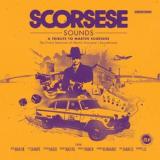
Scorsese Sounds - A Tribute To Martin Scorsese - The Finest Selection of Martin Scorsese"s Soundtracks Martin Scorsese ist nicht nur ein Meister des Films, sondern auch ein Virtuose der Musikauswahl. Mit "Scorsese Sounds" erleben Sie die unverwechselbare Klangwelt seiner größten Werke - von epischen Gangster-Sagas bis hin zu psychologischen Dramen und zeitlosen Klassikern. Diese exklusive Doppel-Vinyl vereint die Essenz der Soundtracks, die Scorseses Filme zu Kult gemacht haben. Jeder Track ist sorgfältig ausgewählt, um die Atmosphäre und Emotionen der legendären Szenen einzufangen - von der rauen Energie des New Yorker Untergrunds bis zur eleganten Nostalgie vergangener Zeiten. Ein Muss für Cineasten, Vinyl-Liebhaber und alle, die die Magie von Bild und Ton schätzen. Tauchen Sie ein in die musikalische DNA eines der größten Regisseure unserer Zeit.
- A1: Dean Martin - You're Nobody Till Somebody Loves You
- A2: Tony Bennett - Rags To Riches
- A3: The Ink Spots - Whispering Grass (Don't Tell The Trees)
- A4: The Shirelles - I Met Him On A Sunday (Aka "Da Doo Ron Ron")
- A5: Robert & Johnny - You're Mine
- A6: Howlin' Wolf - Smokestack Lightning
- A7: The Cramps - The Creature From The Black Leather Lagoon
- B1: Jimmy Smith - Walk On The Wild Side
- B2: Jimpson & Group - The Murderer's Home
- B3: Santo & Johnny - Sleep Walk
- B4: Lonnie Johnson - Tomorrow Night
- B5: Glenn Miller & His Orchestra - Moonlight Serenade
- B6: Muddy Waters - Hoochie Coochie Man
- B7: The Berlin Radio Symphony Orchestra - Radetzky March
- C1: The Harptones - Life Is But A Dream
- C2: Bing Crosby With Victor Young's Orchestra - Just One More Chance
- C3: Charlie Parker - I'll Remember April
- C4: Johnnie Ray - Cry
- C5: Benny Goodman - Moonglow
- C6: Lavern Baker - Tweedlee Dee
- C7: Frankie Carle - I Want A Girl (Just Like The Girl)
- D1: Ray Charles - Come Rain Or Come Shine
- D2: Bo Diddley - Road Runner
- D3: Brenda Lee - I'm Sorry
- D4: The Marvelettes - Please Mr. Postman
- D5: Jackie Gleason - Melancholy Serenade
- D6: The Hot Club Of France With Django Reinhardt & Stéphane Grappelli - What Is This Thing Called Love
- D7: The Danleers - One Summer Night
2lanes is proud to announce the next single, TINCTURE/ MY SIMULACRA, from his recently minted label AUTO SHOP. The two-tracker finds the artist both deepening his expansive sound and honing it to weave seamlessly into any DJ set. “TINCTURE / MY SIMULACRA” solidifies the cinematic textures and rusty low-end percussive drive of 2lanes’ earlier releases this year, “Diamond Rain EP'' & “Sid Ranger Redux EP.” Spending much of this past year on the road, 2lanes dove headfirst into the contemporary electronic music world, meeting an array of new and exciting producers, some of which are featured remixers on this release.
On the A side, take a dose of TINCTURE and see just how far the rabbit hole goes. Inspired by raving all night with friends, 2lanes linked with Detroit-based singer AKILLACO for a wild talking track like none other. We all know those moments at the party when both nothing and everything makes sense. You want to be prophetic but you just make everyone laugh. You think about the past, future, & present all at once. This is the ultimate message of TINCTURE, which AKILLACO emphatically points out. The long-winded musing is underlined by a heavy swung style beat that 2lanes fans have come to know well. Frequent 2lanes collaborator Salar Ansari joins the fun for the steamy, guitar-laden Howling Diablo remix that could as easily be played at a forest rave as a sleazy dive bar a la Coyote Ugly. Purelink’s MILLIA reduces the solution to an even dubbier chill out mix that begs to be played in the early mornings.
On the B side, we have the bass-heavy vision quest MY SIMULACRA. Ancient percussion meets modern sub bass–and together, they transport you to a new plane of being. This track also features performances from a few regular 2lanes sonic cohorts. Detroit keyboard prodigy Ian Fink (Scott Grooves Ensemble, Omar S) evokes celestial moments with a memotron solo, and Jonah Baseball (Overtone Series) provides a stargate-sounding break beat. MY SIMULACRA features two amazing remixes. The First is from Baltimore-based club aficionado JIALING and the second is a prime cut of rough and ready machine phunk from Los Angele’s 1morning.
Initially recorded at 2lanes’ home studio over Halloween in 2021, TINCTURE has since evolved to its final form that we see now. The tune has even shown up in sets from electric selectors like Scott Zacharias and Livwutang. The record label features beautiful artistic renditions by Norway-based Sverre Brand, whose work can be found on releases by Priori and Dust E-1.
LONG AWAITED DEBUT ALBUM PRODUCED BY LIAM WATSON (THE WHITE STRIPES) AT TOE RAG STUDIOS
A RECORD WITH NO DOWNTIME BETWEEN BLUES PULSATIONS, SUNNY MELODIES AND FUZZ GUITARS
- 01: I Think I Just Died A Lil Bit
- 02: Buzz 1
- 03: Cosas Mueren
- 04: Going Back Home On Street View
- 05: Buzz 2
- 06: Twerk Class (Radio Mix)
- 07: Buzz 3
- 08: There`s Still Fun Stuff To Do
- 09: In This Together
- 10: Buzz 4
- 11: 60° Easy Care
- 12: 143
- 13: Buzz 5
- 14: Tuesday Gossip
- 15: Buzz 6
- 16: I`ll Wait For You In The Mcdonalds Car Park
"The album was created in this back and forth of snapshots - we made most of the decisions impulsively without much questioning. That takes a lot of trust." — Violeta García & Hora Lunga
"I'll Wait For You In The Car Park", the first full length collaboration between Argentinian cellist, improviser and composer Violeta García and Swiss musician and composer Hora Lunga, is a work of extremes. Drawing from the realities of life on two continents, and embodying moods ranging from stoic desire to violent bursts, the album enciphers so-called ordinary moments from everyday life into an alluring collection of musical scenes. Seemingly inconspicuous moments are condensed into a tale of synchronicity: colliding time zones and seasons, metropolitan rhythms raining down onto a glacier's ice field, exploring places through street view, the serendipity of loitering at a kiosk. As such, "I'll Wait For You In The Car Park" brings documentary film essays to mind that carefully observe the private and everyday occurrences.
Violeta García and Hora Lunga crossed paths by chance in 2023 and began discussing and sharing music shortly afterwards. What started as a loose exchange of ideas, sending back and forth sketches and demos between South America and Europe, grew into several studio sessions in 2024. Being sucked into a "quite extraordinary flow", the two musicians recorded, arranged and intervened on a level playing field, using the studio as a playground to record musical layers and interweave them with field recordings and audio notes gathered over the course of a year. Speaking a kindred musical language, they quickly realized how their ideas clung to each other like two familiar souls, complementing, intertwining and merging. From gauzy and eerie textures, musical miniatures floating through time, howling and screaming strings, to tumbling and thundering basses – the sound of the ordinary shapes a body that vibrates, writhes and breathes.
Violeta García is a cellist, improviser and composer from Buenos Aires, Argentina. Based in Spain, she tours a lot with her band Blanco Teta. She is a performer in many art forms, including free improvisation, contemporary and trans-media experimental repertoire in violoncello and electronics and collaborations with dancers, film makers and visual artists. After years of studying classical and popular music on violoncello and, later, contemporary composition and improvisation, Violeta has developed her own musical voice needed to emerge beyond outside specific genres.
Throughout Swiss composer and musician Hora Lunga's work, the focus lies is on exploring boundaries, both musically and in terms of performance and content. Above all, genre designations lose all meaning, as the music always takes place within a dramaturgically conceived overall framework. In recent years, his projects have ranged from pop music productions to experimental works and sound performances, as well astheatre and film productions. His ensemble WIRREN consists of up to fifteen performers.
- The Line
- Red Rainbow
- Mercy
- Falsetto
- Aegis
- Redeemer
- Doorstep
- Trick Of The Light
RIYL: Portishead, Thom Yorke, BEAK>, SUUNS, TR/ST, Radiohead. Solo project of Robert Toher who was the creator of ERAAS. Covered by Quietus,Pitchfork, NME, Stereogum, Earmilk, The 405, Clash, BBC Radio, Clash and more.... Public Memory is a mixture of damaged and dubbed-out percussion, unfurling synths and sparse sampling - all strung together by producer Robert Toher's spectral tenor. The project's sophomore LP, Demolition follows 2017's Veil of Counsel EP and 2016's Wuthering Drum LP with cinematic fortitude. While Public Memory's prominent krautrock and trip-hop rhythms are represented here, Demolition explores a greater range of tempos and an expanse of alien emotions with layers of electronic drums, live drums, Korg synths and samples from nature. Themes of rebirth and reflection imbue the album's atmosphere, rich in tape delay, spring reverb, and textures that conjure a sci fi and supernatural narrative. Opener "The Line" sets the album in motion with a driving energy and introspective unease, as if estranged from the world it was created in. A meditation on impending collapse, "Red Rainbow" begins with an arpeggiated melody that hints at a sense of dread. Like the darkness of night descends, the track unfolds with haunting atmospherics and howling synths, finishing with an unexpected climax that ominously builds until at last it falls apart, quickly, softly, without incident. The slowtempoed "Aegis" reflects on the banal reality of love lost, with shuffling rhythms, lingering inflections and a growling synth at its core. Toher's adept use of space and tension articulates the world of Demolition as eerie, emotive, and above all, narcotic. Each track is an existential procession. "Turning out the lights on your illusion," Toher sings to close the album, accepting that change is an inescapable condition of being.
- Just Your Fool
- Blue And Lonesome
- All Your Love (Aka All Of Your Love)
- I Got To Go
- Ride 'Em On Down
- Hate To See You Go
- Hoo Doo Blue
- Little Rain
- Just Like I Treat You
- I Can't Quit You Baby
- I Just Want To Make Love To You
- Come On
- I'm A King Bee
- Susie Q
- Hitch Hike
- Little Red Rooster
- Confessin' The Blues
- Little Queenie
- You Can't Judge A Book By The Cover
- Don't Stay Out All Night
- Boogie Chillen
- Down The Road Apiece
- Crawdad
- Bright Lights, Big City
- Carol
- Bad Boy
- Mannish Boy
- Little Baby
- Mona (I Need You Baby)
- Cry To Me
- Fortune Teller
- I'm Movin' On
- I Can't Be Satisfied
This Limited 2 LP set covers all the original versions of songs that inspired the Rolling Stones on their album, “Blue & Lonesome”, along with 27 remastered originals from England’s Newest Hit Makers in the early sixties. You can hear The Stones' versions of Muddy Waters' "I Just Want To Make Love To You" and Slim Harpo's "I'm A King Bee" appeared on England's Newest Hit Makers, Chuck Berry's "Come On" on their debut single, Dale Hawkins' Susie Q" on 12 X 5, Marvin Gaye's "Hitch Hike" on Out of Our Heads and Howlin' Wolf's "Little Red Rooster" on their second no. 1 single. Howlin’ Wolf’s “Little Baby” (‘Stripped’ 1995). There’s Allen Toussaint’s “Fortune Teller” (‘Got Live If You Want It’ 1966), Muddy Waters’ “Mannish Boy” (‘Love You Live’ 1977), The Coasters’ “Poison Ivy” (‘No Stone Unturned’ 1970) and the closing track on the album is “You Better Move On” from southern soul singer Arthur Alexander (‘December’s Children’). The blues as chosen by five young (blues)-rockers from London.
There are ghosts all across AVANTI, the debut album from Malice K. At points it's howling and unhinged, a grungy layer atop a lush foundation of melodic capital-s Songwriting, but in other moments it dissolves into a gentle, wistful haunting. Malice K's songs are blunt, uncomplicated and unflinching as he probes the interiority of memories, of mistakes - saturated with an innate intensity that sucks you into his gnarled and visceral world, so barbed it could draw blood. Malice K is helmed by visual artist and songwriter Alex Konschuh, New York-based but born and raised in Olympia, Washington. Following a stint living in Los Angeles, where he became a member of the artist collective Death Proof Inc., a trip to New York resulted in him simply never leaving the city. A period of chaos ensued, Malice K exhausted and unmoored and ultimately, unwell. The record is unpredictable across its 11 songs. The album opens with a jarring scream on "Halloween," Malice K's breathless vocals buried beneath a grungy, roving Nineties riff. The track emanates a manic energy, enveloping. It's a fitting entrypoint for the record, and for the vividness of Malice K. The snarling and obsessive "You're My Girl" has a swaggering paranoia: "I got so high I thought my hand touching my hand was your hand." But AVANTI exists in quieter moments too; "Radio," with its fluttering morose cello, moves at an almost glacial pace comparatively. The aching wistfulness of "The Old House" is an album stand-out, anchored in an acoustic guitar, an uneasy lullaby that never quite settles into itself: "I think to myself I got the things that I wanted, but I can't help think there's something else that I forgot to do." A recent press interview called Malice K a shapeshifter, but he's not amorphous in that way. He's decisive and intense, more concerned with carving his own path, and building his own world. Every part of Malice K is distinctly himself: from his sweaty high-octane shows to the high-flash high-contrast photos; from his gnarled and unsettling illustrations to the studio recordings that vacillate between grief and tenderness, there's an exceptional ferocity across everything Malice K touches. AVANTI feels lived in, like peering into an abandoned house through a window smeared with grimy fingerprints, relics of a life well-lived scattered inside - despite being a debut, there's the sense that Malice K arrived fully-realized, imperfections and all.
Kitty Liv hat schon in jungen Jahren Musikliebhaber auf der ganzen Welt begeistert. Als Co-Frontfrau der Familienband "Kitty, Daisy & Lewis"
verkaufte sie über eine Viertelmillion Platten. Die Band tourte mehrmals um die Welt und gewann Fans wie Amy Winehouse, Mark Ronson und
Coldplay.
Jetzt schickt sie sich an, eine noch breitere Fangemeinde mit einem Solo-Albumprojekt zu erobern, das eine völlig neue Richtung für sie markiert. Als
Songwriterin, Produzentin und Multi-Instrumentalistin greift Kitty auf eine Vielzahl von Einflüssen zurück, von Erykah Badu und D'Angelo bis hin zu Al
Green und der Blues-Legende Howlin' Wolf, um eine Reihe persönlicher Songs zu produzieren, die die ursprünglichen Tiefen von Soul, Gospel, Blues
und Rock and Roll heraufbeschwören. Die Songs sind von einer tiefen Stimme durchdrungen, die fast ihre Dämonen kanalisiert. Kitty hat ihre Ideen
über mehrere Jahre hinweg entwickelt und nimmt derzeit einige atemberaubende Performances im Studio auf.
Die in Camden Town geborene und aufgewachsene Kitty lebt und atmet Musik, gründete die Durham Sound Studios und arbeitet mit anderen
Musikern und Künstlern zusammen, um magische Momente auf funkelndem analogem Aufnahmeequipment einzufangen. Wenn jemand seit seinem
siebten Lebensjahr Musik spielt, aufnimmt und schreibt, ist es nur eine Frage der Zeit, bis er einen Quantensprung in ein neues Paradigma macht.
- A1: Sharkey - Someone Like Me
- A2: Lynne Ann Kingan - If You Love Me - Hate Me
- A3: James Thornbury - So Tan
- A4: Jim Huxley - Only A Song
- A5: Charlie Webster - Snodland
- B1: The Bob Hughes Band - You Broke My Heart
- B2: Goldrust - Going Yesterday
- B3: Jim Kennedy - You Are The Reason
- B4: Jon Betmead - Marie Elene
- C1: Charles Murphy - The Foot That's Holding Me Down
- C2: Remnant - I Will Set You Free
- C3: Fred Potts - Following Rainbows
- C4: The Superwomen - Lowlands
- D1: Robison Kaplan Ltd - Don't Say Goodbye
- D2: Gary Ramey - You Are His
- D3: John Agostino - Loss Of Love
- D4: Ritchie Tierney - Please Stop Breaking Me Down
A humanity-reminding suite of miracle moments, Someone Like Me unites a geographically unbound cast of real people in pursuit of a meaningful connection. Taping their lived experience in economic studios in quiet English counties, Pacific Northwest woodland retreats and the big city bustle of Sydney and Los Angeles, these kindred spirits rendered sheer beauty in the process. Custom pressed folk songs of love, loss and the lord saviour.
Illuminating minor works from seasoned players such as former Syndicate Of Sound chart-topper Sharkey and late-era Canned Heat lynchpin James Thornbury, the collection simultaneously honours the fleeting amateurism of hobby musicians. With their one shot at tangible vinyl, freshman Lynne Ann Kingan realised her loose bubblegum rocker on campus time, while U.S. Navy recruit Fred Potts cut his unconditionally serene ballad remotely stationed on a Spanish naval base. Spartan production continues to reign with Jon Betmead’s hair-raising gospel, howling into infinite space, and Goldrust’s stripped back garden hymn.
Throughout the hour-long reflection, faith has an intermittent yet revelatory presence, most overtly with the divine choral soul of Seventh-day Adventist quartet Remnant. More subtly, Gary Ramey and Jim Kennedy both turned to song in their spiritual quests, offering their all to a universal power. An irrefutable compilation cornerstone, the National Office For Black Catholics showcased Charles Murphy’s lionhearted account of the Black experience at a 1971 concert. Five years earlier, high school seniors The Superwomen would use their hauntingly angelic harmonies to address racial inequity with a breathless take on ‘Lowlands’.
Reaching the furthest corners, Someone Like Me secures the inaugural licence of three homespun masterpieces. Discovered by fluke in the digital haystacks of Youtube and Soundcloud, Jim Huxley’s bedroom pop earworm melds peacefully into Charlie Webster’s synthesized reverie. Meanwhile, Hollywood’s John Agostino introduces us to the bizarre world of tax scam records, with the artist only now learning that his tender psych-folk demos were leaked via a 1977 bootleg.
Compiled and lovingly restored by armchair digger Mikey Young (Eddy Current Suppression Ring/The Green Child), Someone Like Me pays due service to seventeen rarefied journals of truth and devotion. Adorned with visual artist Chris Fallon’s figure and flora dream extractions, the uniting songbook is further detailed by expansive track-by-track liner notes and a forward from San Franciscan poet Rod Roland.
- Rain And Snow- J. Obray Ramsey
- Mama Tried- Merle Haggard
- Iko Iko- Dixie Cups
- Samson And Delilah- Rev. Gary Davis
- Big Railroad Blues- Cannon's Jug Stomp
- El Paso- Marty Robbins
- It's All Over Now, Baby Blue- Bob Dylan
- Spoonful- Charlie Patton
- The Red Rooster- Howlin' Wolf
- The Promised Land- Chuck Berry
- Don't Ease Me In- Henry Thomas
- Big Boss Man- Jimmy Reed
- Turn On Your Love Light-Bobby "Blue" Bland
In their long career The Grateful Dead have been inspired by a stunning variety of American musical artists and traditions from blues to country to rock to folk - some of the most exciting and moving music ever recorded. Here are the original versions of The Dead's best loved cover tunes that surprise and delight with their musical depth, originality, and feeling. This collection has been lovingly compiled by a group of Dead insiders including Henry Kaiser, David Gans, and others with the enthusiastic support of The Dead itself. There are extensive notes included that give an overview detailing how the band came to cover each of these tunes and when they first played them in concert. The distinctive Robert Crumb cover artwork is an instant attraction and add to the collectability of this release.
Eric Clapton, one of music’s most influential and successful recording artists, joined Reprise Records in 1983, launching a prolific period that spans 30 years and encompasses some of his most celebrated work. This limited edition, 12-LP boxed set revisits Clapton’s first six albums for Reprise along with an LP exclusive to this collection that features rarities from the era, including a previously unreleased remix of “Pilgrim” by co-writer and long-time Clapton producer Simon Climie.
The Complete Reprise Studio Albums – Volume I contains newly remastered versions of six studio albums pressed on 180-gram vinyl: Money and Cigarettes (1983) as a single LP, and Behind the Sun (1985), August (1986), Journeyman (1989), From the Cradle (1994), and Pilgrim (1998) as double-LPs. Behind The Sun and August were originally released as single LPs; both are now 3-sided double albums to avoid long LP sides and to maximize the audio quality.
The final LP in the collection, Rarities (1983-1998) brings together eight rare recordings from this era, including live versions of “White Room” and “Crossroads” that were both featured on the B-side on the 1987 single “Behind The Mask.” Another B-side, “Theme From A Movie That Never Happened” (Orchestral), appeared in 1998 on the Grammy winning single, “My Father’s Eyes.”, and a cover of Albert King’s “Born Under A Bad Sign” (an outtake from Grammy winning album From The Cradle).
All the music included in this collection was mastered by Bob Ludwig at Gateway Mastering and the lacquers for the LPs were cut by Chris Bellman at Bernie Grundman Mastering.
Volume I spans 15 years and touches on some of Clapton’s biggest studio albums. It begins with Money and Cigarettes, the guitarist’s eighth solo studio album, which he co-produced with Atlantic Records’ legend Tom Dowd. Released in 1983, it reached the Top 20 in the U.S. and the U.K. and introduced the hit single “I’ve Got A Rock ’n’ Roll Heart.”
Clapton worked with Phil Collins to produce his next album, Behind the Sun, which peaked at #8 in the U.K. The album would earn platinum-certification in the U.S. thanks to hits like “Forever Man” and “She’s Waiting.” Collins returned to co-produce the next album, August, as well. Certified gold in the U.S., it featured a trio of Top 10 singles – “Miss You,” “Tearing Us Apart,” (a duet with Tina Turner) and the #1 smash, “It’s In The Way That You Use It.” Clapton co-wrote the latter with Robbie Robertson and co-produced the track with Dowd. The song was also featured in The Color of Money, the 1986 blockbuster film starring Paul Newman and Tom Cruise.
Journeyman, Clapton’s 1989 follow-up, reached #2 in the U.K. where it was certified platinum. An international sensation, the record was certified platinum in Canada and gold in Argentina, Australia, France, Japan, Netherlands, New Zealand, Spain, Sweden, and Switzerland. The album was certified double platinum in the U.S., scoring #1 hits on the Mainstream Rock charts with “Pretending” and the Grammy winning single “Bad Love.” The album had two more Top 10 hits in America with “Before You Accuse Me” (#9) and “No Alibis” (#4).
Following the runaway success of his 1992 live album Unplugged, Clapton returned in 1994 with From The Cradle. A blues covers album, it featured his versions of songs recorded by some of the bluesmen who influenced him, including Robert Johnson, Howlin’ Wolf, Muddy Waters, Freddie King and more. The album was certified triple-platinum in the U.S., where it topped the Billboard 200. It also reached #1 in the U.K., making it his only #1 album in the U.K. to date. In addition, From The Cradle won the Grammy Award for Best Traditional Blues Album.
The final release on VOLUME I is Pilgrim, Clapton’s 1998 Grammy Award winning 13th solo studio album. It reached the Top 10 in more than 20 countries, including the U.S. (#4) and the U.K. (#3). A passion project for Clapton, the album was certified platinum in America thanks to hit singles like, “My Father’s Eyes,” “Circus,” “Born In Time” (penned by Bob Dylan) and the title track.
Money and Cigarettes (1983)
• Everybody Oughta Make A Change
• The Shape You’re In
• Ain’t Going Down
• I’ve Got A Rock ’n’ Roll Heart
• Man Overboard
• Pretty Girl
• Man In Love
• Crosscut Saw
• Slow Down Linda
• Crazy Country Hop
Behind the Sun (1985)
• She’s Waiting
• See What Love Can Do
• Same Old Blues
• Knock On Wood
• Something’s Happening
• Forever Man
• It All Depends
• Tangled In Love
• Never Make You Cry
• Just Like A Prisoner
• Behind The Sun
August (1986)
• It’s In The Way That You Use It
• Run
• Tearing Us Apart
• Bad Influence
• Walk Away
• Hung Up On Your Love
• Take A Chance
• Hold On
• Miss You
• Holy Mother
• Behind the Mask
Journeyman (1989)
• Pretending
• Anything For Your Love
• Bad Love
• Running On Faith
• Hard Times
• Hound Dog
• No Alibis
• Run So Far
• Old Love
• Breaking Point
• Lead Me On
• Before You Accuse Me
From the Cradle (1994)
• Blues Before Sunrise
• Third Degree
• Reconsider Baby
• Hoochie Coochie Man
• Five Long Years
• I’m Tore Down
• How Long Blues
• Goin’ Away Baby
• Blues Leave Me Alone
• Sinner’s Prayer
• Motherless Child
• It Hurts Me Too
• Someday After A While
• Standin’ Round Crying
• Driftin’
• Groaning The Blues
Pilgrim (1998)
• My Father’s Eyes
• River Of Tears
• Pilgrim
• Broken Hearted
• One Chance
• Circus
• Goin’ Down Slow
• Fall Like Rain
• Born In Time
• Sick And Tired
• Needs His Woman
• She’s Gone
• You Were There
• Inside Of Me
Rarities Vol. 1 (2022)
• Stone Free
• Crossroads – Live
• White Room – Live
• Theme From A Movie That Never Happened (Orchestral)
• Pilgrim – Remix *
• 32-20 Blues – Live
• County Jail Blues – Live
• Born Under A Bad Sign*
* previously unreleased
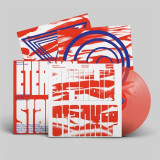
On their first official collaboration, Japanese noise pioneer Masami Akita aka Merzbow and Australian sound sculptor Lawrence English present a harrowing, surrealist portrait of nocturnal industrial activity, spawned by field recordings made in a sprawling factory complex seven hours north of English's home in Brisbane. He characterizes the area as "uneasy and unsettling," awash in the sickly glow of smelters and refinement machinery, somehow not of this world - a liminal quality vividly captured in Andrei Tarkovsky's sprawling purgatorial opus, Stalker, to which the title alludes. Akita, too, described early drafts of Eternal Stalker as feeling "like the soundtrack to a dystopian science fiction opera." A mood of mechanical dread and ruined futures permeates each of the album's seven potent compositions. Opener "The Long Dream" sets the stage with steady rain on sheet metal, punctured by thunder and metallic echoes, reverberating to the rafters in a collapsing warehouse. Quickly the tempest rises. "A Gate Of Light" and "Magnetic Traps" both convulse in churning furies of electric demolition and rattling chains, roaring and relentless. "The Visit" and "Black Thicket" operate more at a distance, surveying the topography of steam, rust, and liquid metal from above, their flickers of violence swallowed by blankets of darkness. This is noise at its most elemental and unknowable: brooding, bristling, and opaque, stalking forbidden peripheries of chaos and creation. Discussing Akita's music, English refers to its "intense substrata that is purely psychedelic; it consumes and confounds." The seasick swells of friction and fracture subsume the listener, forcing an auditory surrender: "this saturation of the senses can be a euphoria." Proof comes halfway through "The Golden Sphere," when the howling mayhem subtly recedes, revealing an eerie siren drone hovering in the void, like the resonance of a dead star galaxies away. Slowly a seething, venomous wall of volume returns, shredding the signal until its frequencies fray, whipping away into the eye of the storm. The combined effect merges obliteration and liberation, rapture and ravagement; it's the sound of dissolution as resolution, uprooted and unmoored, finally freed from form.
Whitesnake celebrates the blues sound that helped inspire its multi-platinum career on a new collection that features remixed and remastered versions of the group’s best blues-rock songs. The Blues Album is the third and final release in the band’s Red, White and Blues Trilogy, a series of compilations organised by musical themes that began earlier in 2020 with Love Songs (red) and The Rock Album (white). The new compilation delivers a potent mix of hits and deep tracks that originally appeared between 1984 and 2011 on six Whitesnake studio albums and Coverdale’s solo album, Into the Light.
Whitesnake’s singer-songwriter David Coverdale says, the music reflects how blues artists like Muddy Waters, Howlin’ Wolf, and the three Kings (Albert, B.B. and Freddie) continue to inspire him. In the album’s liner notes, he writes: “It’s hard to find the words to show how profoundly they connected with my soul. But ‘blues’ to me is a beautiful word that describes emotional expression… feelings, be it feelings of sadness, loneliness, emptiness… but, also those that express great joy, celebration and dance, sexiness and love!!!”
The Blues Album showcases two of the band’s biggest songs: “Slow An’ Easy,” a big hit in 1984 from Whitesnake’s massive album Slide It In, and the smash “Give Me All Your Love” from the band’s 1987 self-titled globally successful album. Other choice tracks from Whitesnake are also featured: “Looking For Love” and “Crying In The Rain,” and “Steal Your Heart Away.” The collection also includes “If You Want Me,” a studio recording released in 2006 as a bonus track on the live album, Live…in the Shadows of the Blues. Coverdale also taps his 2000 solo album, Into the Light, for “The River Song.”
2022 repress
currently the rediscovery of long forgotten japanese electronic, jazz and new age music is at a peak like never before. but although many re-issues already flood the record stores around the world: the large, diverse musical culture of japan still got some gems in store that are really missing.
for example, it is still quiet around the the work of japanese bass player, new-age and ambient musi-cian motohiko hamase. when the today 66-years old artist started to be a professional musician in the 1970's, he quickly gained success as a versed studio instrumentalist and started to be part of the great modern jazz isao suzuki sextett, where he played with legends like pianist tsuyoshi yamamoto or fu-sion guitar one-off-a-kind kazumi watanabe.
he also was around in the studio when legendary japanese jazz records like 'straight ahead' of takao uematsu, 'moritato for osada' of jazz singer minami yasuda or 'moon stone' of synthesizer, piano and organ wizard mikio masuda been recorded.
in the 1980's hamase began to slowly drift away from jazz and drowned himself and his musical vision into new-age, ambient and experimental electronic spheres, in which he incorporated his funky medi-tative way of playing the bass above airy sounds and arrangements.
his first solo album 'intaglio' was not only a milestone of japanese new-age ambient, it was also fresh sonic journey in jazz that does not sound like jazz at all. now studio mule is happy to announce the re-recording of his gem from 1986, that opens new doors of perception while being not quite at all.
first issued by the japanese label shi zen, the record had a decent success in japan and by some overseas fans of music from the far east. with seven haunting, stylistically hard to pigeonhole compo-sitions hamase drifts around new-age worlds with howling wind sounds, gently bass picking and dis-creet drums, that sometimes remind the listener on the power of japanese taiko percussions. also, propulsive fourth-world-grooves call the tune and all composition avoid a foreseeable structure. at large his albums seem to be improvised and yet all is deeply composed.
music that works like shuffling through an imaginary sound library full of spiritual deepness, that even spreads in its shaky moments some profound relaxing moods. a true discovery of old music that oper-ates deeply contemporary due to his exploratory spirit and gently played tones. the release marks another highlight in studio mule's fresh mission to excavate neglected japanese music, that somehow has more to offer in present age, than at the time of his original birth.
- 1