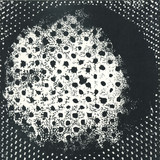
Constructive Music is proud to present some radical reinterpretations of four tracks from Takuma Watanabe's debut album 'Last Afternoon'.
'Clouds Fall x Tactile'. Like taking a widescreen trip through Takuma's perfectly constructed digital worlds. Loops of conversations, sheared sounds and bursts of low-end frequencies fill the air. All underpinned by those unmistakable strings.
'Text x Bruges'. Hyper chemistry of rhythmic urgency and Joan La Barbara's vocals. Cut up and used as percussive ammunition.
Originals by Takuma Watanabe. Deconstructed by Delay. Artwork by Joe Gilmore. Mastered by Joe Talia.
quête:hyper
Nicfit are a four-piece punk band from Nagoya, Japan. Comprising Hiromi on vocals, Charley on guitar, KenKen on bass and Kuwayama on drums the group are by turns melodic and menacing. Nicfit are a nervous itch, incessant and impossible to predict. They flip between head-down tumbles of hardcore bounce and freaked feedback clamber with glee, sounding as casual as a slap in the face.
Formed in 2009 after Charley relocated from San Diego to explore the Japanese punk underbelly, Nicfit bonded through a mutual appreciation of Essential Logic, Magazine, Black Flag and Wire. They quickly recorded a demo and started opening for groups like DMBQ, Thee Oh Sees, Total Control and Wimps. To date the band have released a debut 7” EP, a split cassette with Pinprick Punishment and most recently shared a 7” with their comrades M.A.Z.E. too. Now they’ve gathered a spiky new batch of hyperactive songs together into their enthralling debut LP entitled ‘Fuse’, which Upset The Rhythm will release this December.
‘Fuse’ is a flexing treat of a debut album, packed with browbeaten stomp, taut breakouts, guitars that sound more akin to warning sirens and an astute railing vocal delivery. ‘Fuse’ was recorded, mixed and mastered at the Geru Studio in Toyota City with the help of Shigeru Matsui at the board. These ten original blasts of song, and one cover of the Urinals (‘Ack, ack, ack’) are as pummelsome as they are keen to race against the clock. Total life-affirming trample, with pointed metallic moments and glammy undercurrents that forever soar out of the sprawl.
Lee Gamble completes his ‘Flush Real Pharynx 2019-2021’ album cycle with ‘A Million Pieces Of You’, the third EP of a triptych written in a time when the subjective experience of overload came to a halt, giving way to an overbearing sense of loss, burnout and a desperate need for hope. These seven tracks feel more reflective, more human than the two preceeding EPs; the serpentine dopplers and seductive supercar engines of ‘In A Paraventral Scale’, and imploding motion sculptures of ‘Exhaust’. A deepfake of Lee’s voice appears from the chaotic slow-mo crash of ‘Balloon Lossy’, timidly telling of “garbled… good news”. The uncanny spectre of deep fakes, AI and deep learning models give way to the melancholic loneliness of the solo piano in ‘Empty Middle Seat’. Then glimmering, golden pads on ‘Hyperpassive’ slowly crawl into the hopeful, bright arpeggiations of ‘Balloon Copy’. ‘A Million Pieces Of You’ is a ride through a part-synthetic, part-modelled, part-imitation, part-taught, part-human, part1hopeful, part-reflective and paradoxically affirmative space – an involuntarily fitting finale to an album originally conceived in a world different to the one we now inhabit.
Pressed on 140 Gram Eco Vinyl
Hypersensitive horrors from outer space are back in John Krasinski’s A QUIET PLACE PART II. Returning from the first picture is Emily Blunt (SICARIO), with Cillian Murphy (28 DAYS LATER) and Djimon Hounsou (GLADIATOR) now along for the ride as the Abbott family look for further survivors in their post-apocalyptic nightmare, only to face a further ordeal as they band together with a survivalist desperate to avoid the gruesome fate that befell his family. Returning to score the second film is Marco Beltrami (SCREAM), who creates a similarly terrifying yet beautiful soundscape for the nightmarish experiences of the Abbotts. Beltrami elects
Old Children is the latest multi-headed beast alliance of hip-hop minds HPBLK (HYPERBOLIC), Booda French and King Kashmere who takes the helm handling the production duties of the project.
On Push Start; HPBLK and Booda trade bars carved from out of this world imagery, left field references and forward-thinking quantum streams of thought over King Kashmere’s hypnotic futuristic lo-tech cosmic slop. A slick 6 track affair (also featuring Ramson Badbonez and DJ Jazz-T) this short but sweet project is a glimpse of what the magical trio have to offer.
Recorded in Stockholm in 1962, and originally released on Sonet Records, these sessions stand as Ayler's first step into a new sonic world. This was when Ayler was still dealing with classic Jazz standards such as "I'll remember April", M Davis's "Tune Up" and "Rollins Tune", a declared tribute to the older master Sonny Rollins. His already super-strong tenor sax voice dominates a quiet, almost shy, local rhythm section featuring Torbjorn Hultcrant on bass and Sune Spangberg on drums. This was just before stepping into his unique, hyper energetic and ecstatic form of Free Jazz. This was Ayler sowing the seeds of a revolution to come!
Für Jay-Z ist es »The Blueprint«, für Kanye West »College«. Die Boygroup Brockhampton nennt es »Saturation« und Goldroger tituliert: »Diskman Antishock«. Der Abschluss seiner großen Trilogie erscheint am
10. Dezember 2021. Getragen ist das Release von dem unbedingten Willen, das Projekt gebührend zu Ende
zu bringen. »Ich wollte einen Hafen erschaffen, an dem Hörer:innen ankommen und immer wieder Neues
entdecken können«, sagt der Kölner. So ist »Diskman Antishock« auch eine musikalische und persönliche
Basis für alles, was kommt. Die »Diskman Antishock«-Trilogie erschafft eine märchenhafte Hyperrealität, die gerade durch ihre Vielschichtigkeit so zugänglich wird. Zudem ist »Diskman Antishock III«, zum
Großteil produziert von Dienst&Schulter, sicher das bisher musikalisch facettenreichste Projekt von Goldroger. »Diskman Antishock III« ist nicht nur der Abschluss eines Albums, sondern auch ein Abschluss mit
den Geistern der Vergangenheit.
Das Album erscheint auf einer schwarzen 180g Vinyl im Gatefold mit Wendecover und einer Chibi Figur
zum selber basteln
Bukkha finally lands on LoDubs after over a decade of false starts and missed signals, and it's with a release he seemingly read our minds about wanting: A riddim album featuring some of the best toasting and instrumental performances yet on a release of its kind, rubbing it up with the likes of Dandelion of early Hyperdub renown, Jane Bee (the Ragga Queen of Germany) toasting in unison with fellow Jahtari Alumnus Roger Robinson, and Sarah Tobias, the current keeper of that classic Ska / Rocksteady / Roots Sax tone. Truly a melding pot of Roots-Centric sounds!
DJ Support From: O.B.F, Channel One Soundsystem + more
Since its creation in 2007, Hifiklub has led more than 150 collaborations which have allowed the Toulon trio to open its music to multiple artistic experiences revealing a constant desire for research and novelty. From unprecedented encounters to unique projects, Hifiklub has developed over the years a now substantial discography whose musical proposals range from pop to jazz through the most experimental sounds and even traditional music. One path, however, remained unexplored: contemporary music."Last Party On Earth" is organized around the association of three energies: contemporary composer Jean-Michel Bossini, singer Duke Garwood and the instrumental ensemble Hifiklub.
Surrounded by mysticism and darkness, the creation has cinematographic dimensions. It positions the listener in a depth and disposition of soul where the voice - and the poetry - of Duke Garwood is carried by Hifiklub and Jean-Michel Bossini around cold and tormented atmospheres. The album seduces by the detail of its sounds, its apparent tranquility and its intimate atmospheres thwarted by harsh flashes.
Mixed by Alain Johannes (Queens of the Stone Age, Them Crooked Vultures, Eleven), the album sees the exceptional participation of the string trio Anpapié (Alice Piérot, Fanny Paccoud and Elena Andreyev) who magnificently perform the score by Jean-Michel Bossini.
All songs performed by Hifiklub, Duke Garwood and trio Anpapié (conducted by Jean-Michel Bossini)
Pascal Abbatucci Julien – drums, percussion
Eléna Andreyev – cello
Jean-Loup Faurat – guitar
Duke Garwood - vocals, guitar
Régis Laugier – bass
Nico Morcillo – guitar
Alice Piérot – violin
Fanny Paccoud – alto
Collaboration is an essential ingredient to this open trio’s creative approach, forming a recurring theme in Hifiklub’s extensive discography and filmography. Based in Toulon, the hyperactive experimental rock band offer a diverse ever-evolving catalogue that now boasts over 150 artist collaborations since they started in 2006. Over the years they have formed as many fruitful artistic friendships allowing them to explore the endless possibilities of expression combining sound, image and text.
Some of the artists that feature in Hifiklub’s kaleidoscopic discography: Lee Ranaldo (Sonic Youth), Alain Johannes (Queens of the Stone Age, Them Crooked Vultures, Eleven), Roddy Bottum (Faith no More, Imperial Teen), Matt Cameron (Pearl Jam, Soundgarden), The Legendary Tigerman, Jad Fair (Half Japanese), Iggor Cavalera (Sepultura, MixHell), Jean-Marc Montera, R. Stevie Moore, Mike Watt (Minutemen, The Stooges), Fatso Jetson, Nels Cline (Wilco), Scanner, Mike Cooper, Eugene Chadbourne…
black vinyl repress
Our next release, and now long-awaited, is a collaboration between IMOGEN and Ben Pest. This follows IMOGEN's earlier appearance on Earwiggle which was a highlight of the Eel Behaviour series. We're big fans of Ben Pest and are very pleased to have the pair debuting their first full release together on the label.
From the hyperactive opener "Volts", that effortlessly juggles raw analogue techno with UK hardcore and all manner of rude bass wobbles, they soon delve into further chaos through the squawks and clatters of broken industrial cut "Gramalkin". "Shibooty" is a perky take on Chi-town techno, upping the funk levels through bustling shuffled 909s, humming bass and cartoonish vocal sequences. With the brooding acid electro of "Misjudgement Day", IMOGEN and Ben pile on some extra modular drones for the road, finishing off the EP in killer fashion.
"Therapy? are an alternative metal band from Northern Ireland. The band was formed in 1989 by guitarist-vocalist Andy Cairns from Ballyclare and drummer-vocalist Fyfe Ewing. Their line-up was completed when the band recruited Larne bassist Michael McKeegan. Nurse was the first record by Therapy? for A&M (their first of 4 for the label), it was released in 1992 and moved the band to a more industrial sound. The album reached no 38 in the UK album charts. The album had the breakthrough single Teethgrinder which got to no 30 in the UK charts, its mixes appear on the CD bonus disc
This version comes with a bonus disc of demos, B-Sides and live material curated by drummer Michael McKeegan and mastered by Andy Pearce; the original album uses the master by Harvey Birell that was used on the acclaimed Gemil Box. The booklet contains a new sleeve note by Ex Kerrang editor Paul Brannigan who has interviewed the band about the album and the time period around it."
- A1: Fog (Devil's Island Mix)
- A2: A Day At The Beach
- A3: Meadowlark
- A4: Heteromorph
- A5: Nautilus
- A6: Java Head
- A7: Prelude
- A8: Tuxedo Moonlight
- A9: Moonlight Marimba
- A10: Red Skies At Night
- B1: Dof Downie Woot
- B2: Open Season
- B3: The Rain On Mars
- B4: Music Box
- B5: Brothers Grimm
- B6: Rear Window
- B7: Time & Tide
- B8: Rue Du Poisson Noir
- B9: Interlude
- B10: Wireless
- B11: Bossa Nova
Composer, electronic music innovator, and Pere Ubu's original synthesist Allen Ravenstine returns to Waveshaper Media with the diptych LP (comprised of 1 EP per side) Nautilus / Rue De Poisson Noir, the final two parts in Raventine’s Tyranny of Fiction series. Waveshaper Media first came into contact with Ravenstine when we interviewed him in 2012 for our modular synthesizer documentary I Dream Of Wires.
Nautilus / Rue De Poisson Noir brings together 21 of the prodigious composer’s recent lyrical and abstract compositions collectively comprised of the sounds of analogue and digital synthesizers, alongside traditional acoustic instruments. The first 10 recordings, subtitled Nautilus, are found on Side A of this LP while the second 11, Rue Du Poisson Noir, comprise Side B.
Using a singular blend of acoustic and electronic instrumentation, each track on Nautilus, weaves its own wayward travelogue amidst stray bits of audio verité and wafting musical fragrances—by turns tropical and foreboding. Rue De Poisson Noir takes cues from its fragmentary companion both in palette and approach, slithering between cinematic intrigue, off-brand jazz, avant-garde mischief, and fried electro without ever batting an eye. Together they form a beguiling collection of hyperrealist miniatures that remains strange, restless, inquisitive and — most of all — evocative throughout.
For those in the know, Allen Ravenstine has been one of the most creative synthesizer players of the past forty-plus years. Ravenstine started out in the mid-1970s experimenting in his Cleveland apartment with an analogue EML 200 synthesizer, eventually creating a piece in 1975 that became known as Terminal Drive. While he had no intention of releasing his compositions, word got out about the kind of sounds he was experimenting with, which led to an invitation to join pioneering “avant garage” group Pere Ubu for the recording of the group’s first 45, “Thirty Seconds Over Tokyo.” He soon joined Pere Ubu full-time, bringing to the band’s sound unpredictable textures, effects, bleeps, squalls, pulsating washes of sound—whatever he felt could enhance the soundscape of the band’s performances and recordings.
By the early 1990s, Ravenstine had grown sick of the road, band infighting and the music industry in general. Deciding a change was needed, he opted to forego music altogether, making his living as an airplane pilot. His music career remained in limbo until 2012, when an interview for the I Dream Of Wires documentary, alongside Robert Wheeler who had succeeded him as Pere Ubu’s synthesist, turned into a recording session for the duo, leading to a series of collaborative releases. As well as having his 1975 Terminal Drive recordings released to great acclaim in 2017, Ravenstine has been prolific in recent years, with Nautilus / Rue De Poisson Noir now marking his 4th solo full-length.
Trio of Nils Økland, Sigbjørn Apeland and Øyvind Skarbø - apart from the unusual instrumentation of violin or Hardanger fiddle, harmonium and drums, is the empathy displayed by the group as a whole; the hyper-sensitivity with which each individual member appears to respond to the contributions of the others in the pursuit of a collective goal, however obscure or unknowable that goal might be. Such extreme alertness to subtle changes of mood and nuance, and to the evolving sound-world of each, totally improvised, performance is rare in music of any type. 1982 have made it their signature. And because 1982 have so singularly created their own identity and sound, they can do anything they like. Normal conventions of style and genre, format and duration cease to matter: it is all 1982 music, anchored in the strong personalities of the three players and their respect for the primacy of the group as an entity in itself. Thus they can record as a trio - as on the group’s first two albums, ‘1982’ (from 2009) and ‘Pintura’ (their Hubro debut, from 2011) - or with guests, as in the acclaimed '1982 + BJ Cole' (from 2012), and the collaboration with composer Stian Omenås and a quintet of wind players for ‘1982: A/B’ (from 2014). There was also the unique ‘message in a bottle’ intervention of ‘The Bottlemail Project’, begun in 2011, whereby 15 copies of a new recording were ‘distributed’ via USB sticks enclosed in bottles and released into the open sea from Bergen and various worldwide locations. The new album, ‘1982: Chromola’, as well as marking the group's tenth anniversary, represents a return to the essential identity of the trio playing alone, without guests. Recorded at Sandviken church in Bergen on the day following an evening concert, the album uses material from both occasions, engineered once again by Davide Bertolini, who worked on the band’s four previous recordings. As an album it is remarkable for many things, but perhaps most notably for the role of Sigbjorn Apeland, who plays pipe organ on all but one of the seven tracks rather than harmonium, which features only in the closing, seventh, piece.
"Therapy? are an alternative metal band from Northern Ireland. The band was formed in 1989 by guitarist-vocalist Andy Cairns from Ballyclare and drummer-vocalist Fyfe Ewing. Their line-up was completed when the band recruited Larne bassist Michael McKeegan. Nurse was the first record by Therapy? for A&M (their first of 4 for the label), it was released in 1992 and moved the band to a more industrial sound. The album reached no 38 in the UK album charts. The album had the breakthrough single Teethgrinder which got to no 30 in the UK charts, its mixes appear on the CD bonus disc
This version comes with a bonus disc of demos, B-Sides and live material curated by drummer Michael McKeegan and mastered by Andy Pearce; the original album uses the master by Harvey Birell that was used on the acclaimed Gemil Box. The booklet contains a new sleeve note by Ex Kerrang editor Paul Brannigan who has interviewed the band about the album and the time period around it."
- A1: Temporal Control Of Light Echoes
- A2: Mangrove (Feat Elucid & Antonia Gabriela)
- A3: Race Function Limited (Feat Brother May)
- A4: Shekere (Feat Lojii)
- A5: Vera Hall (Feat Bfly & Orion Sun)
- A6: Obsidian (Feat Pink Siifu)
- A7: Iso Fonk
- B1: Rogue Waves
- B2: Made A Circle (Feat Nappy Nina & Maassai & Antonia Gab
- B3: Tarot (Feat Yatta & Dudu Kouate)
- B4: Nighthawk Of Time (Feat Black Quantum Futurism)
- B5: Zami
- B6: Clock Fight (Feat Elaine Mitchner & Dudu Kouate)
Get yo ass in the house, robot-- you cyber-spectre, you outhouse prime minister, you hard-headed mirror ninja, snapping selfies, living in the pixelated seams between bursts the of flashing images, birthed in a pool of TV static and Tik Tok dust. BLACK ENCYCLOPEDIA OF THE AIR is here, not to save but to drown you. Heads better learn how to swim cause listen, this record is beat soup, hearty yet still minimal, a sonic mirage of prophetic soul that drop kicks your "chill beats to study to" Youtube playlist and hyper-intellectual rap podcasts into a hadron collider; it's only black matter on the other side-- 13 mesmerizing tracks about memory and imprinting and the future, all of them wafting through untouched space like the ghostly cinders of a world on fire, unbound and uncharted, vast and stretching across the universe. Moor Mother is a holographic figment of an Afrotopian dream, all at once goddess and warrior, mystic and cyborg, griot and future time traveller, etching noisy pieces of reverie into our consciousness for decades now. But check it: on BLACK ENCYCLOPEDIA she's joined by a wide-range of friends, collaborators and co-conspirators on a trip through the murky cosmos, navigating the black universe with stardust as currency. In these times, they'll say, as they click and mash their way through the same inter-webs that seek to strangle them, BLACK ENCYCLOPEDIA OF THE AIR is just what we need: a post-everything, 12:01 on the doomsday clock, anti-trip hop type of situation. "We ain't gotta fight no more," they'll say; the rest of us, we'll put this record on and imagine again that it's real.
In pairing words with art, the ESP Institute often does everything journalists hate. We drown the reader in hyperbole, abstractions as opposed to didactic or literal depictions, and paint the press release with superlatives that construct an existential struggle around the art and its conditions. To articulate our reasoning behind collaborating with the artist, or the synergy between their work and our catalogue, is sometimes so challenging that crossing that finish line is achingly delayed. Patrick Conway’s 2xLP 'Cellular Housekeeping', his fourth release with the label, is one of these works so monumentally exciting for us that we’ve strained over how to deliver with honor his art unto the masses. After the initial hurdle of visual representation (in this case handled with gusto by artist Hassan Rahim), how do we directly and intentionally talk about the art we deeply love, when in reality we’re largely guided by instinct? We explore many angles, often failing along the way, until finding a final click in the combination that unlocks the floodgates. With Patrick’s album, that elusive impetus revealed itself in a literary gem that both symbolized his aggressive, melancholic, romantic, and bleak overtones, as well as synchronized his work and our task with a metaphor so grand it justified putting these words to paper. In the deeply British poem of despair and hope, 'Comus: A Mask Presented at Ludlow Castle', John Milton immortalized the classic idiom of the “silver lining”, and we find comfort in this transaction between struggle and what the poet considered divine intervention. Our bout of procrastination that brewed a cloud over the art may too tout a silver lining, the time that’s elapsed clearing a path for the album to exist in its rightful place, as opposed to fighting for a voice at an overcrowded table. In hindsight, this final hurdle might have only existed because without it, there is no glory, no resolution, but as all the pieces click and we collectively cross the finish line, Patrick Conway’s once captive 'Cellular Housekeeping' is now truly released.
"To make this concept a cohesive whole, Hybrids took a couple of years to compile. It reflects a certain shift in my sound, where I've try to maintain a constant balance between experimentation and efficiency - surprise, technique and playability... It's a highly functional object crafted from a subversive standpoint, breaking the rules while following them all. Auto-referential musical artifacts blend into composite shapes, and ultimately manifests into five exercises in style, trespassing traditional boundaries of genre, tempo, and (good) taste. While this record probably expresses an inner conflict at the intersection of hypermodernity and conservatism, I hope it accomplishes, at least, its primitive function-to put the body in motion."
- TENEBRE