Ltd Black & White LP
Today sees Belgian-Caribbean provocateur Charlotte Adigéry and her long-term musical partner, Bolis Pupul announce their debut album Topical Dancer, due for release on March 4 2022 via Soulwax’s iconic label DEEWEE.
Cultural appropriation. Misogyny and racism. Social media vanity. Post-colonialism and political correctness. These are not talking points that you’d ordinarily hear on the dancefloor but Charlotte Adigéry and Bolis Pupul are ripping up the rulebook with their debut album Topical Dancer. The Ghent-based duo, who broke out with their 2019 Zandoli EP, are rare storytellers in electronic music: they take the temperature of the time and funnel them into their playful synth concoctions – never didactic and always with a knowing wink.
Their debut studio record – which cements them as a duo under both their names for the first time and is co-written and co-produced by Soulwax – is both a triumph of kaleidoscopic electro-pop and “a snapshot of how we think about pop culture in the 2020s.” It captures Charlotte and Bolis’s essence as musical collaborators and the conversations they’ve had over the past two years on tour, as well as their perspectives as Belgians with an immigrant background, Charlotte with Guadeloupean and French-Martinique ancestry and Bolis being of Chinese descent.
Beyond the album’s thematic heft, Topical Dancer reflects Charlotte and Bolis’s idiosyncratic sound: it’s thoughtful but it bangs. Their take on familiar genres is always off-kilter; songs sound undone or a little wonky; but these are nocturnal heaters to make the club throb. “We like to fuck things up a bit,” laughs Bolis. “We cringe when we feel like we're making something that already exists, so we're always looking for things to combine to make it sound not like a pop song, not like an R&B song, not a techno song. We’re always putting different worlds together. Charlotte and I get bored when things get too predictable.”
Topical Dancer is fizzing with ideas – there’s certainly no filler among its 13 tracks. But above all, perhaps, it has a restlessness, a desire not to be boxed in and to escape others’ narrow perceptions of who they are. It’s summarised by the refrain of their new single, ‘Blenda’: “Don’t sound like what I look like / Don’t look like what I sound like.” “One thing that always comes up,” says Bolis, “is that people perceive me as the producer, and Charlotte as just a singer. Or that being a Black artist means you should be making ‘urban’ music. Those kinds of boxes don’t feel good to us.”
‘Blenda’ in particular references how “I am a product of colonialism,” says Charlotte, “and I feel guilty for taking up space in a white country.” The song was inspired in part by Reni Eddo-Lodge’s book Why I’m Not Longer Talking To White People About Race. “It talks about the colonial past and post-colonial present in the UK,” Charlotte continues, “but that isn’t merely a British or American problem, Belgium is part of that as well.” She says that her home country is likewise “oblivious to a big part of its history” which “results in general ignorance and a lack of understanding and empathy towards Belgian inhabitants of immigrant descent.”
On Topical Dancer, it’s less about finger pointing or being dogmatic about all the things they speak about. It’s about emancipation through humour. “I don’t want to feel this heaviness on me,” says Charlotte. “These aren’t my crosses to bear. Topical Dancer is my way of freeing myself of these issues. And of having fun.”
quête:icon
Orange Vinyl
WRWTFWW Records is very happy to announce the release of the new album from legendary Deee-Lite member Towa Tei, celebrating the 30th year of his career. It is available on (orange) vinyl for the first time outside of Japan.
The album, simply titled LP features Japanese music icons Haruomi Hosono and Yukihiro Takahashi (Yellow Magic Orchestra), Yasuaki Shimizu (Kakashi), fellow METAFIVE colleagues Tomohiko Gondo and Yoshinori Sunahara, HANA, Wataru Iga, Shunji Mori, Hidefumi Ino and more.
It was mixed by famed engineer Goh Hotoda and the artwork comes from painter Tomoo Gokita.
Poppy, catchy, dancy, and very funky, Towa Tei’s 10th solo album is 100% delirious ride and a testament to the Deee-Lite member’s ever-expanding creativity, combining simplicity and experimentalism in the most feel-good ways. Indoor, outdoor, and every day of the year, this one will make you dance and smile!
This release is a collaboration between legendary Japanese label Nippon Columbia/Better Days and WRWTFWW Records.
To celebrate the 45th anniversary of iconic Dutch jazz label Timeless Records, Music On Vinyl is releasing a series that features albums that are part of the Timeless Records legacy and will be released mainly throughout 2021/2022.
Eastern Rebellion is a special one in this Anniversary Jazz series, since it was the very first release on the Timeless label. This 1976 release is a classic set which features four jazz giants: Billy Higgins on drums, Sam Jones on bass, George Coleman on the tenor saxophone and led by Cedar Walton on the piano. This record features Walton’s most famous composition “Bolivia”, Coleman’s “5/4 Thing” and Jones’ boppish “Bittersweet”.
Munich quintet Fazer are set to release their third album ‘Plex’ on City Slang in 2022. Moving freely between composition and improvisation, the band’s spacious, organic sound pitches lyrical melodies from guitar and trumpet over double-drummer polyrhythmic grooves and dub-like basslines.
Coming from different musical backgrounds ranging from bebop to electronic, Fazer met while studying jazz at the Academy for Music and Theatre in Munich. The German city has a rich history of improvised music; home to labels ECM (Keith Jarrett, Chick Corea, the Art Ensemble of Chicago, Steve Reich) and Enja (Archie Shepp, Eric Dolphy, Freddie Hubbard, Elvin Jones) and Krautrock icons Embryo. Today much of the scene in Munich revolves around Radio 80000, an online community radio station located in the east of
the city. There, dedicated diggers like Karl Hector (Now-Again) or Marvin & Valentino of Public Possession are doing regular shows and it’s this diversity that drives the band’s DNA
Munich quintet Fazer are set to release their third album ‘Plex’ on City Slang in 2022. Moving freely between composition and improvisation, the band’s spacious, organic sound pitches lyrical melodies from guitar and trumpet over double-drummer polyrhythmic grooves and dub-like basslines.
Coming from different musical backgrounds ranging from bebop to electronic, Fazer met while studying jazz at the Academy for Music and Theatre in Munich. The German city has a rich history of improvised music; home to labels ECM (Keith Jarrett, Chick Corea, the Art Ensemble of Chicago, Steve Reich) and Enja (Archie Shepp, Eric Dolphy, Freddie Hubbard, Elvin Jones) and Krautrock icons Embryo. Today much of the scene in Munich revolves around Radio 80000, an online community radio station located in the east of
the city. There, dedicated diggers like Karl Hector (Now-Again) or Marvin & Valentino of Public Possession are doing regular shows and it’s this diversity that drives the band’s DNA
On a balmy Brazilian night in February, 1981, a crowd gathered in Rio de Janeiro's Gávea neighbourhood under the iconic dome of the city's Planetário (Planetarium). Alongside musicians like Helio Delmiro and Milton Nascimento (who were in the audience that night), they were there to see the great "Bruxo" (sorcerer) Hermeto Pascoal live in concert, with his new band formation which would become known simply as "O Grupo" (The Group).
Growing up on a farm in Brazil's northeastern state of Alagoas, Hermeto has always been deeply in tune with, and inspired by nature. In his youth he would make his own flutes to play call and response with the birds and frogs. He would build scrap-metal instruments in his blacksmith grandfather's forge, and sit for hours by the lake listening to the sounds of nature. On the Planetário Da Gávea recordings though, Hermeto is cast as the "sorcerer" or the "cosmic emissary" (as the great Brazilian guitarist Guinga once called him), exhibiting an intuitive sense of harmony and melody beyond that of our own world.
"Tudo e Som" (All is Sound). It's a phrase Hermeto regularly returns to, and it points to the fact that not only can music be made from anything, but also alludes to something much more profound. It's an understanding of the universe as being in a state of constant movement, forever vibrating at the quantum level, like the string of a guitar, or a saxophone's reed. "Tudo e Som" is a declaration of the mystical and spiritual power of sound, as a fundamentally vibrational force.
The series of concerts at the Planetário marked the birth of "O Grupo" which would last with the same line-up (apart from Zé Eduardo Nazário) for the next eleven years. Every member of O Grupo was a phenomenal musician in their own right. It was one of saxophonist/flautist Carlos Malta's first gigs with the group, and the concert unusually featured two drummers, Zé Eduardo Nazário and Marcio Bahia. Nazário, from São Paulo, had played with Hermeto during the mid-70s (as well as with Milton Nascimento, Egberto Gismonti and Toninho Horta, to name a few). Bahia though had just joined the group. Acclaimed keyboard player Jovino Santos Neto was on keyboards, piano and organ, and the great Itiberê Zwarg (who remains in Hermeto's band to this day), played bass. Rounding the group off was the percussionist Pernambuco. During this period (up until the early 90s) the group would rehearse for hours on end, virtually seven days a week, with a total dedication to music and Hermeto's musical vision.
Most of the compositions performed that night at the Planetário had never been recorded before, and many are unique to this album, including the wild 'Homônimo Sintróvio', the exaltant 'Samba Do Belaqua', 'Vou Pra Lá e Pra Cá' and 'Bombardino', which features Hermeto's wonderfully absurd call and response mouthpiece soliloquy. Then there's the stunning 7/4 Samba 'Jegue' which builds with inventive dissonance, before releasing yet another celestially colourful, celebratory refrain. The show also features the first recorded performances of 'Era Pra Ser e Não Foi' and 'Ilza na Feijoada' (inspired by Hermetos' wife Ilza's famed black bean and meat stew), which Hermeto later recorded on his 1984 studio album "Lagoa Da Canoa Município De Arapiraca".
Dubbed by Miles Davis as "one of the most important musicians on the planet", a Hermeto Pascoal live show was (and still is) an experience like no other. Across the recording of the Planetário concert, wild improvisation meets groovy, virtuosic vamping on progressive, extended psychedelic jams. The tracks are generally built around a beautiful, transcendent melody; instantly recognisable as being Hermeto's, and for the most part, the musicians then solo over extended two chord vamps. There's a plethora of powerfully delivered rhythms, wild solos and the performances are punctuated by Hermeto's unpredictable, at times comical sonic antics.
Over forty years since this historic happening, Far Out Recordings is overjoyed to release this magical recording of Hermeto Pascoal e Grupo Live at Planetário Da Gávea, on double vinyl LP, CD and digitally for a February 4th 2022 release.
- A1: 1/4 Dead
- A2: Blissful Myth
- A3: The Psycho Squat
- A4: Rotten To The Core
- A5: Poppycock
- A6: Cosmic Hearse
- A7: The Cloud Song
- A8: Vampire State Building
- A9: Blasphemy Squad
- A10: When You Are A Martian Church
- A11: Pig In A Blanket
- B1: Inside
- B2: Nothing But A Nightmare
- B3: Flesh Crucifix
- B4: Slimy Member
- B5: Love Is Not
- B6: Radio Schizo
- B7: Happy Farm
- B8: Alice Crucifies The Paedophiles
- B9: Army Of Jesus
- B10: Dutchmen
The words legendary, seminal, and classic get thrown around at will these days, but Rudimentary Peni’s debut album is all of them. Recorded over two days at Southern Studios by John Loder and originally released in 1983 by CRASS off-shoot label Corpus Christi, “Death Church” showed a band moving away from the urgency of their two early 7”s and into their own realm. Creating a template that bands have been trying to replicate ever since, while ticking all the boxes to become a genre-defining album. Iconic artwork, a unique sound and their own lyrical universe. All merging seamlessly. Sonically the album is full of Nick Blinko’s extraordinary vocals and equally remarkable guitar, Grant Matthews’ big meandering driving basslines and Jon Greville's tight and relentless drum work which together made something intricate and hard hitting, with a sequence that makes the 21 songs on the album flow perfectly. Visually, the album is every outsider art lover’s wet dream. A six-panel poster sleeve with every inch covered in Nick Blinko’s claustrophobic black and white line drawings, while lyrically the songs deal with madness, religion, death, and questioning humankind from a dark poetic place rarely found in any art form. Remastered from the original master tapes by Arthur Rizk and housed in a replica poster sleeve, including the original insert, “Death Church” is back in print in LP, CD and cassette after nearly a decade of no official reissues.
- A1: Omowale
- A2: Manifestin (Feat Angelo Arce)
- A3: Ptsd (Feat Georgia Ann Muldrow)
- A4: Goat (Feat Miles Brown)
- B1: Fatherhood (Feat Posdnuos, Big Daddy Kane & Stacy Epps)
- B2: Breathe (Feat Guilty Simpson & Soulyghost)
- B3: Night At The Museum
- B4: Manchurian Candidate (Interlude)
- C1: 3 Sistas & A Child (Feat Dynasty & Medusa)
- C2: Reflections
- C3: Livin N Color (Feat Ras Kass & Giocello)
- C4: Peace Of Mind (Feat Murs)
- D1: Grown Folk (Feat Sadat X)
- D2: Edge Of Tomorrow (Feat 2Mex)
- D3: Say Their Name
Omowale is the powerful new album from Wildchild, one third of the legendary Lootpack crew and a formidable solo artist who released many projects on the iconic Stones Throw Records. Across the 15 tracks, the Cali rapper deftly explores what it means to be a Black man in the U.S. today with timely, poignant lyrics. It’s a hard-hitting look at this country and its decades of wrongdoing, all with an air of optimism for the future. This album is Wildchild’s first solo release since 2016’s T.G.I.F., though he’s clearly kept busy in the interim by working on Omowale and making a number of standout guest appearances. Many of his past collaborators are returning the favor, as we’re treated to dope features from Posdnuos (of De La Soul), Big Daddy Kane, Guilty Simpson, Ras Kass, Murs, and more. Plus, there’s head-nodding production from Madlib, Nottz, Georgia Anne Muldrow, and Mr. Brady, among others. They’re all bringing their A-game on Omowale, an impeccably produced album beyond its instrumentation and rhymes. Wildchild builds on the project’s narrative by incorporating audio from newscasts, protests, and other live events. He also brings that real-world feel to his lyrics, from joyful raps with his son (Black-ish actor/emcee Miles Brown) on the funky “G.O.A.T.” to raw rhymes about police brutality on “Breathe.”
When the album culminates with “Say Their Name”—a moving tribute to the rap legends we’ve lost over the years—Wildchild proves on Omowale that you can balance hope with the harsh, unjust realities of the world.
Ichiko Aoba’s albums have only been available as expensive Japanese imports, until now. In November, Ba Da Bing will release Windswept Adan on 2xLP in North America, Europe and the United Kingdom, with deluxe packaging.
After creating her label, hermine, last year to celebrate her tenth
anniversary in music, Aoba released the most complex and rewarding
work of her career, 2020’s Windswept Adan. While audiences in
the west are only just learning she exists, her accomplishments are
unquestionable; she contributed to the soundtrack for The Legend of
Zelda: Link’s Awakening, was cited by Owen Pallett as an inspiration
(“I’ve never been so blindsided by a musician as I was by Ichiko
Aoba”), and has collaborated with the likes of Haruomi Hosono,
Cornelius (who met her only two years after she first picked up a
guitar and was blown away), Ryuichi Sakamoto, and recently Mac
DeMarco.
Ichiko Aoba’s iconic voice and classical guitar playing are
immediately recognizable, timeless sounds. Windswept Adan,
envisioned as a soundtrack for a fictional film, builds its own world with
sweeping co-production and arrangements from Taro Umebayashi,
which “recall the Wes Anderson scores of Mark Mothersbaugh or
the cinematographic swells of American composer Jherek Bischoff”
(Bandcamp). It’s the story of a young girl sent to the island of Adan, a
place where there are no words.
While international listeners of Aoba may not understand the words
she sings, and despite the central importance of lyrics in her writing,
it’s a testament to the power Aoba wields that one can resonate so
deeply with her work. No matter the breadth of her sonic palette, and
on Adan her scope is as wide and encompassing as Joanna Newsom’s
on Have One On Me, Aoba manifests an intimacy that makes one feel
in the room with her.
Ichiko Aoba’s work gained greater exposure in the past year as the
need for comfort grew while the world sequestered in solitude. She
has a rare musical gift that is matched only by her ability to hone it
into meticulous craft. Her music embraces and elevates alone time to a
generous and tranquil place. In it, listeners are invited to feel a sense of
consolation and possibility. The magic she imparts yields articles like
“Ichiko Aoba and the emotion of space during the pandemic;” in other
words, her effect is singular.
Laced Records and Capcom’s scenarios intertwine once more as we present the music of 2019’s Resident Evil 2 on vinyl.
Following a series refresh with Resident Evil 7, the impressive RE Engine was used to power this third-person reworking of a survival horror classic. The thick atmosphere, tight redesign of locations (including the iconic Racoon Police Department), and expanded role of a certain fedora-wearing hunter combined to make Resident Evil 2 an award-winning hit with a 91 Metacritic average.
The soundtrack played a huge part in establishing the taut atmosphere of Resident Evil 2, as the composers shifted gears between dark ambient electronic music, thumping cinematic percussion, and audacious orchestral and choral passages. Capcom veteran Shusaku Uchiyama — who worked on the 1998 original — was given lead composition duties, and also arranged several of Masami
Ueda’s original pieces. They were joined among the soundtrack credits by Zhenlan Kang, Tadayoshi Makino, Sound Director & Sound Team Leader Kentaro Nakashima, Yuichi Tsuchiya, Masahiro Ohki and Mana Ogura. Syotaro Nakayama and Taisuke Fujisawa supplied the power metal with “Tofu On Fire”; while the vinyl opens with the stomping ‘true ending’ credits theme "Saudade" by Cody Matthew Johnson and Shim.
46 tracks have been specially mastered for vinyl by Joe Caithness, and tracks will be pressed onto audiophile-quality, heavyweight 180g discs.
Double Blue Vinyl Edition of the black vinyl which is no longer available
Recorded July 2002 at The Chapel, Lincolnshire, England
Produced By Kit Woolven and Cathedral.
Full promotion across social media platforms
Advertising in Record Collector, Shindig
Jesse B Weaver, since christened Schoolly D, is one of the most iconic
figures in rap music.
Within the hip-hop industry, Schoolly is considered to be the creator of
gangster rap via his globally acclaimed singles 'P.S.K.' and 'Gucci Time'
Schoolly D has transcended the boundaries of genre and created "rap" music that
has been integrated in films, animated series and sampled by some of the most
prolific acts in music including Beastie Boys, Siouxsie & The Banshees, Lil Wayne
and The Chemical Brothers.
Deemed a "pioneer" by Jay-Z (Decoded, 09) and credited by Ice-T as releasing the
first gangsta rap record (Props Magazine), Schoolly D's career has given
inspiration to countless musicians and fans alike. Songs like 'Gucci Time',
'Saturday Night' and 'P.S.K. What Does It Mean?' have become classics and
illustrate the uncompromising narrative that has become synonymous with the
hardcore gangsta rap of the eighties. His true-to-life lyrics give a snapshot of the
streets of his hometown, Philadelphia, and the influences that drugs and gang life
had on him as a young man. Today, Schoolly D has an almost cult-like following,
as his music continues to be referential. Even younger generations have been
turned onto him thanks to his work with Aqua Teen Hunger Force.
This release is Schoolly's 2021 album 'Cuz Schoolly D Is Crazy' and features a
remake of his classic 'P.S.K.' with appearances by B-Real from Cypress Hill and
Too Short. The album also features appearances by Chuck D and Ice- T. The
album was recorded using the same studio and production of his legendary first
three albums. It's reminiscent of his early work and showcases his rhythmic raps,
mastery of beats and sometimes-explicit lyrics, proving the lasting power of one
of rap's legendary b-boys.
Brand new album by the legendary Swamp Dogg.In 1954, 12 year old
Jerry Williams, then performing under the name Little Jerry Williams,
made his first recording for Mechanic Records, a blues stomp with a
shockingly mature vocal performance - Through the 60"s Williams' career
developed with a number of successful singles, including 'I'm the Lover
Man' and 'Baby You're My Everything', as well as writing and producing
hits for Dee Dee Warwick, Doris Duke, and Patti LaBelle and the Blue
Belles. It was in 1970, however, that the full extent of Williams' eccentric
creative genius was unleashed on the world for the first time, with the
birth of his musical alter-ego, Swamp Dogg
Created to 'occupy the body while the search party was out looking for Jerry
Williams, who was mentally missing in action due to certain pressures, maltreatments and failure to get paid royalties on over fifty single records,' the
Swamp Dogg alias, still in use today, allowed Williams to create music that was
bolder, raunchier, and more honest to his creative instincts. The Dogg's cult
classic debut 'Total Destruction to Your Mind' struck a powerful blend of Williams
classic soulful sensibilities and the blooming psychedelia of the time. Infused in
the swirling brew is Swamp's blink- and- you'll- miss- it humor, a number of acid
odes, and a heavy dose of sharp political insight. Though the psychedelic
strangeness alienated R&B fans of the time, and the authentic R&B infrastructure
prevented it from clicking with hippie audiences, it has retroactively received
legendary status in cult music circles.Now, 50 years after Total Destruction
introduced Swamp Dogg to an unprepared world, and nearly 70 since Little Jerry
Williams went into the studio for Mechanic, Williams brings us I Need A Job' So I
Can Buy More Autotune. A spiritual successor to 2018"s hit Love, Loss and
Autotune, this album continues to push Swamp's sonic exploration of the effect
as one of his many creative weapons. In the extended tradition of Total
Destruction, Swamp Dogg's 2021 LP neatly balances sleek modern production
techniques with that classic Dogg sound that has anchored William's music since
the 70s. Subtle yet soulful drumming, skin- tight horn grooves and meandering
funk guitar leads create a sonic landscape fitting Swamp Dogg's iconic croon,
occasionally drenched in the titular autotune. At 78, Swamp Dogg is as sharp of a
singer and songwriter as ever. His raunchy yet charismatic sense of humor takes
a more forward role on I Need a Job' So I Can Buy More Autotune, with earnestly
delivered lyrics about all day sex and an entire song dedicated to the perils of
'Cheating in the Daylight.' Many of the record's most charming moments emerge
from the juxtaposition of Swamp's left field humor with genuine messages of
love, such as 'She Got That Fire', which weaves descriptions of imagined sex acts,
including but not limited to an encounter involving edible underwear, in between
relatively wholesome proclamations like 'she must be an angel on earth,' and
'when she looks at you, it's like sunshine from her eyes'. I Need a Job does more
than prove that Swamp's still got it, it proves he's still getting better.
- A1: Graceful (1:53)
- A2: Drumcrazy (2:58)
- A3: Giants (2:26)
- A4: Sound Inventions (3:04)
- A5: Glide (1:06)
- A6: Greenwich Street (0:50)
- A7: Stretching Out (1:42)
- A8: Air Space (2:11)
- A9: Statements (1:24)
- A10: Don’t Stumble (0:56)
- B1: Beauty (2:12)
- B2: Rhythm Function (1:20)
- B3: On Disco Street (0:56)
- B4: Fidget (0:38)
- B5: Waves (1:44)
- B6: Funky Art (2:06)
- B7: Rainbows (1:28)
- B8: Uncertain (0:56)
- B9: A Few Cuts (1:37)
- B10: Hot Chocolate (1:17)
- B11: Sections (1:20)
- B12: Early Start (1:01)
The second Be With foray into the archives of revered German library institution Selected Sound is one of our favourites, Sound Inventions from Klaus Weiss Rhythm And Sounds, originally released in 1979.
From the notoriously strong mind of Niagara drummer / library-funk overlord Klaus Weiss, Sound Inventions is loaded with tripped out studio funk-freakery, mad samples and swaggering abstract funk grooves. From dramatic deep disco with dark Italo/Moroder leanings to heavy German funk breaks, this is absolutely sensational. Absolute synth-and-string-drenched magic.
Born in 1942 in Gevelsberg, Germany, Klaus Weiss began his career as a jazz drummer at sixteen (with a group called the Jazzopators) before working with the internationally successful 60s groups the Klaus Doldinger Quartet and the Erwin Lehn Big Band. In 1965 he formed his own trio, the first of many groups to bear his name, and as his renown as a bandleader grew over the next decade it naturally lead to working in production music.
About as cult as it gets when it comes to library music legends (German or otherwise), he produced essential records on German library labels Coloursound, Selected Sound and Sonoton, as well as making two essential entries in the Conroy catalogue. Collections of music in the trademark Klaus Weiss sound of electronics unsurprisingly built on top of sometimes funky, sometimes frenetic, but always hard-hitting drums.
Sound Inventions is one of those library records with a hefty track list, 22 in total, but they’re all pretty stunning. That’s not something you can often say and picking out the highlights is almost impossible. If pushed, we’d steer you towards the tough teutonic funk of “Drumcrazy”, the by turns juddering and sweeping majesty of the title track “Sound Inventions”, the aquatic serenity of “Glide”, the elegant strut of “Greenwich Street”, the muted, eerie cosmic-funk of “Air Space”, the squelchy acid-clavs of “Rhythm Function”, the calming, melodic “Waves”, the stuttering proto-Timbaland sensation that is “Rainbows” and the percussive funk-fuelled workout of “A Few Cuts”. Phew. Heavy indeed!
Founded in the late 60s by German composer and musician Klaus Netzle, Selected Sound began as a production music company specialising in jazz, orchestral and electronic recordings. You can’t miss those early LPs in their iconic glossy metallic copper sleeves with minimal German typography. Serious, classy stuff.
This re-issue of Sound Inventions has been mastered for vinyl by Be With regular Simon Francis from audio from the original tapes. Richard Robinson has handled reproducing the glossy metallic (iconic) original Selected Sound sleeve. Essential.
- A1: Speed Unlimited A (2:00)
- A2: Speed Unlimited B (0:45)
- A3: Speed Unlimited C (0:41)
- A4: Hurricane Wheels A (2:15)
- A5: Hurricane Wheels B (0:51)
- A6: Hurricane Wheels C (1:43)
- A7: Hurricane Wheels D (0:45)
- A8: Hurricane Wheels E (1:42)
- A9: Hurricane Wheels F (0:45)
- A10: Hurricane Wheels G (1:42)
- A11: Route Africaine A (1:14)
- A12: Route Africaine B (1:14)
- A13: Route Africaine C (1:14)
- B1: Kabul Trip A (1:58)
- B2: Kabul Trip B (1:58)
- B3: Kabul Trip C (0:47)
- B4: Kabul Trip D (1:16)
- B5: Water Pollution A (1:47)
- B6: Water Pollution B (1:02)
- B7: Water Pollution C (0:29)
- B8: Centurion A (1:47)
- B9: Centurion B (1:33)
- B10: Centurion C (1:09)
- B11: Gladiators (1:54)
- B12: News Background A (2:31)
- B13: News Background B (1:39)
C-L-A-S-S-I-C library breaks and beats set of super-heavyweight espionage-funk.
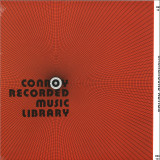
One of two Be With forays into the archives of revered British library institution Conroy, we present one of our favourites on the label - the super in-demand Background Action from Sammy Burdson, originally released in 1975. Rare and sought-after for many years now, this is one of those cult library LPs that rarely turns up on even the deepest dig.
Sammy Burdson was one of the many, many aliases of the mighty Austrian composer, arranger and conductor, Gerhard Narholz. Founder of adored library label Sonoton in 1965, and a classically trained composer, his work runs from easy listening through pop, jazz and electronic, to avant-garde.
Background Action’s first side is all Blaxploitation wah-wah, funky clav and heavy, heavy drums. It’s top-quality takes on the sort of hard-knocking psychedelic sleuth-funk that the library labels gave us in spades. However, we think the real killers are over on side B. Styles upon styles upon styles is what we have. The trio of swish “Water Pollution” variations are pure gold. The two-part mid-tempo b-boy drumathon “News Background” is nothing short of epic whilst the sensational “Kabul Trip A” and “Kabul Trip B” are two different takes on some tough funk, street jazz style with some dope organ, bass and drum sounds. In short, this is a must for both DJs and producers.
The British library label with those instantly recognisable “orangey-red” sleeves, Conroy began releasing production music in 1965. A sub-label of Berry Music Co, its catalogue typified the library industry’s strange mixture of tradition and experimentation from the start. Conroy’s early releases included work by big band stalwarts like Eddie Warner as well as early electronic recordings by the likes of Belgian experimental pioneer Arséne Souffriau. With Berry Music Co working as a distribution partner to the German library label Sonoton, it was through the Conroy that a great deal of German library music found its way into the UK market.
Conroy stopped putting out new music in the 1980s, but its history and its catalogue offer an excellent window into the trends and eccentricities of a highly unique industry at the height of its international appeal.
This re-issue of Background Action has been mastered for vinyl by Be With regular Simon Francis from audio from the original tapes. Richard Robinson has handled reproducing the iconic, hypnotic original Conroy sleeve. Essential.
Sammy Burdson/Klaus Weiss/Larry Robbins Backgr Ound Rhythms
Dramatic Tempi / Larry Robbins Background Rhythms
- A1: Pop Waves (1:49)
- A2: Cyclodrom (1:10)
- A3: Devils Drive (1:28)
- A4: Crime Ways (2:06)
- A5: Is It Hip (2:00)
- A6: The Camp (3:29)
- A7: Tomorrow (1:53)
- A8: Rhythm Trip (4:28)
- B1: Vox Pop (1:22)
- B2: Rock Pop (2:47)
- B3: Pop Phase (2:46)
- B4: Pop Twang (0:55)
- B5: Canned Pop (1:40)
- B6: Percussion Take 1 (1:24)
- B7: Percussion Take 2 (1:08)
- B8: Percussion Take 3 (1:16)
- B9: Percussion Take 4 (1:10)
- B10: Percussion Take 5 (0:52)
- B11: Percussion Take 6 (1:54)
- B12: Percussion Take 7 (1:24)
C-L-A-S-S-I-C library breaks and beats set of heavy drums and louche funk.
One of two Be With forays into the archives of revered British library institution Conroy, we present one of our favourites on the label - the super in-demand Dramatic Tempi / Larry Robbins Background Rhythms, originally released in 1975. Rare and sought-after for many years now, this is one of those cult library LPs that rarely turns up on even the deepest dig.
As a single LP, Dramatic Tempi / Larry Robbins Background Rhythms is two distinctly different collections of music. The first side, Dramatic Tempi, is made up of four tracks each from Sammy Burdson and Klaus Weiss.
Sammy Burdson was one of the many, many aliases of the mighty Austrian composer, arranger and conductor, Gerhard Narholz. Founder of adored library label Sonoton in 1965, and a classically trained composer, his work runs from easy listening through pop, jazz and electronic, to avant-garde.
About as cult as it gets when it comes to library music legends (German or otherwise) Klaus Weiss produced essential records on German library labels Coloursound, Selected Sound and Sonoton, as well as making two essential entries in the Conroy catalogue. Having started his career at the age of 16 as a jazz drummer, the Klaus Weiss trademark electronic sound is unsurprisingly built on top of sometimes funky, sometimes frenetic, but always hard-hitting drums.
The second side is both titled and also credited to Larry Robbins Background Rhythms. We have to admit to being stumped as to who Larry was, but we don’t think it’s too much of a stretch to assume it might well be yet another incarnation of Gerhard Narholz’s.
First up from Dramatic Tempi are the phased, gargantuan hip-hop beats of Sammy Burdson’s impeccable “Pop Waves”. This is otherworldly funk on a whole new level. Hearing is believing. The magnificently titled “Cyclodrom” is up next, a beast of booming bass and wah wah guitars over frenetic funk drums. “Devils Drive” is dramatic, blaxploitation street funk with rolling, pounding drums. “Crime Ways” is an acid-squelch, slow-pace neck-snapper.
Klaus Weiss starts by askings us “Is It Hip” and we can only answer “yes it is!” to the clean, skipping drums, booming bass and proto-hip-hop bells, layered beneath laconic and melodic guitar shredding. This is just horizontal soul perfection. “The Camp”, propelled by jazzy guitar à la Joe Pass over fast drum and conga breaks, gives way to the dark guitars and cymbal crashes of “Tomorrow”. It sounds like an early New Order jam session. Closing out a pretty startling side of library greatness, “Rhythm Trip” presents early stuttering funk before easin' on in to a jazzy, soulful groove; all breezy guitar and warm keys. Lush.
Larry Robbins Background Rhythms is a lighter, poppier affair, but it’s not without its drum-heavy bangers. “Vox Pop” and “Pop Phase” each have clean, open-ish drum breaks, ripe for sampling or more daring DJ sets. “Pop Twang” is a short and sweet beat-heavy number that gives way to the fantastically out-there “Canned Pop”. We‘d love to know if this was ever actually licensed for something! The final seven tracks are a set of 1-to-2 minute “Percussion Takes”. All compelling, and all equally useful for any number of production needs. Get sampling.
The British library label with those instantly recognisable “orangey-red” sleeves, Conroy began releasing production music in 1965. A sub-label of Berry Music Co, its catalogue typified the library industry’s strange mixture of tradition and experimentation from the start. Conroy’s early releases included work by big band stalwarts like Eddie Warner as well as early electronic recordings by the likes of Belgian experimental pioneer Arséne Souffriau. With Berry Music Co working as a distribution partner to the German library label Sonoton, it was through the Conroy that a great deal of German library music found its way into the UK market.
Conroy stopped putting out new music in the 1980s, but its history and its catalogue offer an excellent window into the trends and eccentricities of a highly unique industry at the height of its international appeal.
This re-issue of Dramatic Tempi / Larry Robbins Background Rhythms has been mastered for vinyl by Be With regular Simon Francis from audio from the original tapes. Richard Robinson has handled reproducing the iconic, hypnotic original Conroy sleeve. Essential.
- A1: The Moonlight Duel
- A2: Determination: Father's Message
- A3: The Dragon Ninja
- A4: Mysterious Woman
- A5: Bravery: On The Clutches
- A6: Reminiscence
- A7: A Sudden Development
- A8: Like A Howling Gale
- A9: In Hiding: Pursuing The Nightmare
- A10: Eyecatch
- A11: The Cia
- A12: The Sanctuary Of Shadows
- A13: The Amazing Ryu
- A14: Crisis
- A15: Surprise Attack: The Wicked God's Secret Maneuvers
- B1: Malth The Crimson Terror
- B2: The Truth Concealed
- B3: Melancholy Destiny
- B4: Requiem
- B5: The Truth Concealed (Reprise)
- B6: The Menace Of Jaquio
- B7: Showdown: At The Portal Of Death (Battlefield) (Battlefield)
- B8: The Demon's Incantation
- B9: In A Pinch: The Ordeal Of Battle
- B10: At The End Of The Battle
- B11: Irene: Overture Of Dawn (Prelude)
- B12: Credits
- B13: Game Over
- B14: Cinema Display Sound Attack 1
- B15: Cinema Display Sound Attack 2
- B16: Sound Effects
- C1: Insert Coin
- C10: Las Vegas Stage Boss
- C11: Round Clear 3
- C2: Game Start
- C3: La Stage
- C4: La Stage/Grand Canyon Stage Boss
- C5: Round Clear 1
- C6: Ny Stage
- C7: Ny Stage/Transcontinental Railroad Stage Boss
- C8: Round Clear 2
- C9: Las Vegas Stage
- D1: Grand Canyon Stage (Japan) (Japan)
- D2: Grand Canyon Stage (Usa) (Usa)
- D3: Round Clear 4
- D4: Transcontinental Railroad Stage
- D5: Round Clear 5
- D6: Final Stage
- D7: Final Stage Boss
- D8: Time's Up
- D9: Game Over
- D10: Credits
- D11: High Score Screen
- D12: Round Clear 1 (Usa) (Usa)
- D13: Round Clear 2 (Usa) (Usa)
- D14: Round Clear 3 (Usa) (Usa)
- D15: Round Clear 4 (Usa) (Usa)
- D16: Round Clear 5 (Usa) (Usa)
- D17: Game Over (Usa) (Usa)
Ninja Gaiden, of the most iconic and beloved 2D action game series ever created, was first released in the arcades in 1988, while making its console debut on the Nintendo Entertainment System (NES) later in the same year. At the time of the console release, Ninja Gaiden was renowned not only for its deep storytelling beautifully visualized by TECMO’s unique “cinema scenes,” but also through its legendary chiptune soundtrack, whose unique rock-’n’-roll sound and drum beat instantly became a formative musical experience for players who were only just getting into video games.
Ninja Gaiden: The Definitive Soundtrack is divided into volumes. The first, Ninja Gaiden Vol. 1, features the music of both the NES title and the Arcade game, both titled Ninja Gaiden. These legendary soundtracks have been digitally restored under the supervision of Keiji Yamagishi, one of the original series composers. The booklet includes a comprehensive roundtable discussion among several members of the original development team, including the director, producers, artist and composers; an essay by game historian Ray Barnholt; and original archival artworks.
NEW REPRESS (SAME COLORS) - RELEASE SEPTEMBER 24th
Ninja Gaiden, of the most iconic and beloved 2D action game series ever created, was first released in the arcades in 1988, while making its console debut on the Nintendo Entertainment System (NES) later in the same year. At the time of the console release, Ninja Gaiden was renowned not only for its deep storytelling beautifully visualized by TECMO’s unique “cinema scenes,” but also through its legendary chiptune soundtrack, whose unique rock-’n’-roll sound and drum beat instantly became a formative musical experience for players who were only just getting into video games.
Ninja Gaiden: The Definitive Soundtrack is divided into volumes. The first, Ninja Gaiden Vol. 1, features the music of both the NES title and the Arcade game, both titled Ninja Gaiden. The follow-up, Ninja Gaiden Vol. 2, features the music of both Ninja Gaiden II: The Dark Sword of Chaos and Ninja Gaiden III: The Ancient Ship of Doom. This bundle includes BOTH Vol. 1 and Vol. 2 at a special price. These legendary soundtracks have been digitally restored under the supervision of Keiji Yamagishi, one of the original series composers. The booklet includes a comprehensive roundtable discussion among several members of the original development team, including the director, producers, artist and composers; an essay by game historian Ray Barnholt; and original archival artworks.
Dynamite Cuts are proud to add these two wicked bangers to the Dynamite Cuts 45s series. The Legendary ‘Larry Young’s Fuel’, club classic “Turn of the Lights” mega rare 7” version, which was issued back in the 70’s on the dreaded Styrene (which always snapped so easily). Now for the first time on vinyl with its iconic sleeve. Plus, a quirky, funky vocal track “People do be funny” first time on 45. Another must-have 45.
The meaning of the Blues whether sung, moaned or
shouted is a reflection of the troubled performer's
soul and there is little doubt that John Lee Hooker
was one of the most successful Blues artists that
ever lived. This collection of songs express twelve
chapters of a novel from a Blues icon who's music
continues to inspire with a legacy that lives on.