- A1: The Ecstasy Of Gold
- A2: The Call Of Ktulu
- A3: For Whom The Bell Tolls
- B1: The Day That Never Comes
- B2: The Memory Remains
- B3: Confusion
- C1: Moth Into Flame
- C2: The Outlaw Torn
- D1: No Leaf Clover
- D2: Halo On Fire
- E1: Intro To Scythian Suite
- E2: Scythian Suite, Opus 20 Ii The Enemy God And The Dance Of The Dark Spirits
- E3: Intro To The Iron Foundry
- E4: The Iron Foundry, Opus 19
- E5: The Unforgiven Iii
- F1: All Within My Hands
- F2: (Anesthesia) - Pulling Teeth
- F3: Wherever I May Roam
- G1: One
- G2: Master Of Puppets
- H1: Nothing Else Matters
- H2: Enter Sandman
Поиск:iii
Все
Musique Pour La Danse presents Roomservice, Dutchman Orlando Voorn's forgotten yet unforgettable IDM-leaning, home-listening electronica / techno album from 1994 under his Living Room alias, originally released on the producer's cult Night Vision label.
Praised unequivocally by those lucky enough to have heard it, this criminally underrated record nonetheless deserves pride of place when talking about forward-thinking electronic music from the early 90s.
While it is widely acknowledged that Orlando Voorn's productions are one of the most fascinating prisms through which to experience a European take on the Detroit sound, Roomservice is also a strong reminder that the paradigm shift from sweaty raves to enhanced home listening, championed by Warp's Artificial Intelligence series, early Rephlex releases, along with projects such as The Black Dog, Plaid or Autechre was in fact not only limited to British artists.
As its name indicates, The Living Room is not geared for warehouses but instead interested in a more intimate and domestic setting. As such, it does not contain over the top bangers, but it's hard to find any filler in this album where all the tracks are killer, catchy and memorable. All displaying a sophisticated yet immediate focus on warm melodies and grooves no heavier than a feather, these emotional cuts provide a wonderful and intricate soundscape for introspective listeners to explore, and they will surely find echoes of ideas developped by Manuel Gottsching, Steve Reich and Pat Metheny scattered accross the album.
While some tracks are rhythmic and would fill a dancefloor in a second with their four to the floor or broken beats, the album also gives room for more ambient excursions to occur and develop brilliantly. But once again, it's more likely you'll end up dancing on your couch rather than dozing off.
2020 might be the most difficult year in recent history for dancefloors worldwide, yet that's not going to stop Musique Pour La Danse from reissuing this gem of an album for listeners, dancers, and DJs of today and tomorrow.
Words by Ed Isar.
A stunning 17-minute-drumming-trip from feathery spheres through bold grooves to a dense thundery finish by Simon Popp and Sebastian Wolfgruber, the two drummers known for channeling World Music, Afrobeat and Jazz drumming in solo projects and with Munich-based Jazz quintet Fazer.
The B-side holds a rework by fellow Munich producers Zenker Brothers. The Ilian Tape heads and notorious audiophiles put their drum machines aside and weaved the recordings with layers of mystic synths into a tingling organic IDM tune.
The premise for Quindi Records is simple – to represent music with a universality at its core.
Without adhering to specific genre tropes, the releases are intended to have a meaning and purpose in all kinds of situations – a social soundtrack as much as a stimulating experience,
feeding emotions and the psyche with a sentimental palette of sounds. Lovers’ music, loners’ music, music for friends and family alike.
Woo makes for a perfect choice to meet this loose concept head-on – the music of Clive and Mark Ives straddles disparate worlds and finds its own peculiar balance. On one hand it’s delicate synthesizer music with a minimalist bent, while on the other their joyous, twinkling harmonies have an immediacy that speaks to the soul. You can detect privacy in their craft – the brothers originally recorded their music in relative isolation in London in the 70s, 80s and early 90s. It’s only in recent years their sublime work has enjoyed a wider audience through an extensive run of reissues.
Arcturian Corridor ? presents a rare, previously unreleased piece of music from Woo – the expansive suite of the title track that unfurls across five parts. It’s an enchanting listen that shows a new breadth and depth to the duo – detailed drum programming and a broader palette of synth tones cascading in elegant unison. The name refers to Arcturus, the fourth brighteststar in the night sky. As Woo themselves explain, “The Arcturian Corridor is said to be a channel of light that brings unconditional love and wisdom from Arcturus to Earth.”
In addition to the 20-minute A-side piece, Woo also presents a new version of “Love On Other Planets”, a standout piece from their 1990 album ?Into The Heart of Love? . The fragile subtlety of the original has been embellished here with rich new passages that turn it into a kind of electronica epic, although still marked out with the sensitivity one expects from a Woo record.
Two remixes complete the set, both furthering Quindi’s modus operandi as a genre-agnostic force for cosmically charged music. Dublin’s Wah Wah Wino collective present their Wino Wagon manifestation for a tastefully strange house version of the fifth part of “Arcturian Corridor” that channels the freakiness of Pepe Bradock, the robo-funk of Metro Area and a soupcon of pop nous. British duo Ultramarine maintain the stylistic ambiguity as they channel decades of expressive experimentation between live band dynamics and machine soul on their version of the title track’s second chapter.
With a hybrid jazz based on African grooves, Ethio-oriental melodies and psychedelic dub this Belgian five-piece creates an atmosphere where ancient and modern sounds fuse into a powerful, hypnotic and groovy sensation.
Receiving critical acclaim for their second album 'Artifacts' (2017), the Belgian quintet are pleased to announce the release of their much-anticipated third album entitled 'Future Flora', released 12th April via Sdban Ultra on vinyl / cd / digital.
Piloted by saxophonist/flutist/composer Nathan Daems (Ragini Trio, Dijf Sanders, Echoes of Zoo), the input of notorious musicians, drummer Simon Segers (MDC III, De Beren Gieren, Stadt), cornet player Jon Birdsong (dEUS, Beck, Calexico), keyboardist Wouter Haest (Voodoo Boogie) and bassist Filip Vandebril (Lady Linn, The Valerie Solanas) leads to the specific universe that only Black Flower is able to create.
Where debut album 'Abyssinia Afterlife' (2014) and 'Artifacts' (2017) bathed in an atmosphere of psychedelics, mythical figures, ancient sounds and modern cultures, new album 'Future Flora' refers to the power of plants and their importance for the future.
"'Future Flora' is a metaphor for the importance of feeding and watering powerful and revolutionary ideas and initiatives that can save our world. You can compare it with plants that fight between the paving stones of the city for their future. These "urban warriors" need water to survive and grow. Their future and ours depends entirely on how we look at the plant world", says Daems.
Black Flower's musical cross-pollination of sounds and rhythms remain on 'Future Flora', but there is still room for a more Western touch with Romanian and Maloya (Réunion) influences. Daems developed his own arrangements where Western, Oriental and Ethiopian scales and chords are fused together to create a real mix of traditional instrumentation and modern electrical vibrations.
The strong underlying groove is omnipresent, but the room for psychedelics, folklore and experimentation grows. Songs like new single 'Hora de Aksum' combine modern western rhythms with doses of Balkan eccentricities while 'Future Flora' takes you on a psyche-delicious 21th century Ethio-dub-jazz trip with echoes of Mulatu Astatke and Fela Kuti.
"The general feeling that dominates is that of strength and perseverance. The feeling that we have to fight for our future and that we have to do it now! The whole album is interspersed with this atmosphere and sounds swirling, haunting and ecstatic. For those who once saw Black Flower live at work, this energy will be extremely recognizable", he adds.
"WE ARE NOT BROTHERS" is coming back after the acclaimed and award winner “III” album! THE BEST SPANISH ELECTRONIC ALBUM OF THE YEAR! On their new EP they re-explore again that industrial punk attitude that served them to be compared to truly totems of the industrial spanish scene such as Esplendor Geométrico.
Again they have had the help and support of the Darkwave-Diva
"Ana Curra", remember Parálisis Permanenter. FUCK WORK is a truly gem for people interested in music not oppressed by any commercial corset. All tracks have been specially remastered for LONG CUT vinyl by Daniel Hallhuber at Young & Cold Studios.
Double Goodbyes' is the sound of Ivan Ave making the music that moves him, without necessarily putting his usual rap-hat on.
But as the album title suggests, a lot of times we find ourselves bumping into the exact things, people and habits that we thought we had left behind. His hip-hop roots shine through once again, in a weird blend of RnB, AOR and synth sounds. Sasac is the main co-creator on the record, alongside top shelf RNB and hiphop artists such as Kiefer, Mndsgn, Byron The Aquarius, Devin Morrison and more.
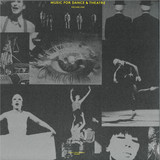
Music From Memory are happy to finally announce MFM045 - VA ‘Music For Theatre And Dance’ (EP).
This will be the first in a small series of EPs which will focus on music which was initially created for or inspired by dance and performance. Created as a dialogue with the avant-garde and highly experimental work in dance, theatre and art evolving at the time, the music was in turn at times greatly innovative.
That it was created for a dance or performance though means that such music was also often highly rhythmic and a number of pieces from this time stand out and seem greatly deserving of a new context.
Whether it’s more ambient or atmospheric works or whether it’s in the more rhythmic or percussive pieces, Music From Memory brings together a selection of tracks which aim to highlight this highly innovative direction in music.
We instantly fell in love with Razen the first time we saw them live in September 2018. It was during a unique Sunday morning mass at the Friedenskirche (which translates literally to mean ‘the church of peace’), as part of the Meakusma Festival. Slightly sleep deprived and still euphorically intoxicated from the night before, their performance in front of a full mass of devotees had a biblical aura to it from the first note they played. They delivered a stunning set which was somehow, paradoxically, both relaxing and formidably tense.
Two years later and the group are now bringing their talent for restraint and slow tension-building to the fore on “Robot Brujo”. Each of the six improvisations on this double LP is made up of the barest of materials, with the three musicians relying on a limited combination of tones. They lay their focus on small variations in timbre, timing, articulation and vibration, which creates a narrowing of consciousness, and feels something a bit like staring meditatively at the minute changes of leaves blowing in the wind.
Recorded over two sessions, in what Razen themselves refer to as their detached playing style, "Robot Brujo" stands as an auditory magnifying glass of concentration, in all its uncanny and minimal glory.
It is yet another new step up from the deep listening ensemble from Brussels, after 10 years exploring music together.
Legendary album of Jacaszek from 2009, first time on vinyl, 180g, gatefold, with downloadcode
PENTRAL (lat: inside, spirit, temple).
Michal Jacaszek's new project is an attempt to describe a gothic church interior by means of sounds. A temple owes its special atmosphere not only to visual elements but also to characteristic acoustics – reverb, enhancing and prolonging a slightest whisper into infinity. Jacaszek spent several days in three Gdansk historic churches (Oliwa Cathedral, St. Nicolas' church, St. Mary's Basilica) recording chanting, organs, and also a broad spectrum of accidental noises. Source sounds were were used only as a stimulus which releases the sound of the whole inside, and as such, they were consequently retouched in the post production process. Studio work and also the atmosphere of melody and arrangements were subordinate to the idea of portraying the church as a place filled with distant mysteries, a huge music instrument.
- A1: Pictures Of Japan (3 41)
- A2: Pictures Of Japan Ii (1 00)
- A3: Pictures Of Japan Iii (1 08)
- A4: Pictures Of Japan Iv (2 28)
- A5: Pictures Of Japan V (1 52)
- A6: Pictures Of Japan Vi (1 52)
- A7: Pictures Of Japan Vii (2 59)
- B1: Pictures Of Japan Viii (1 33)
- B2: Pictures Of Japan Ix (1 57)
- B3: Pictures Of Japan X (3 18)
- B4: Pictures Of Japan Xi (1 50)
- B5: Pictures Of Japan Xii (2 05)
- B6: Pictures Of Japan Xiii (2 46)
- B7: Pictures Of Japan Xiv (2 44)
The first Be With foray into the archives of revered German library institution Selected Sound is one of our favourites on the label - the super in-demand Japan from Victor Cavini, originally released in 1983.
Rare and sought-after for many years now, this is one of those cult library LPs that never turn up. With Daibutsu the giant Buddha of Kamakura’s presence gracing the hefty front cover, this is a record bursting with dope samples for adventurous producers: it’s koto-funk madness!
Victor Cavini was the library music pseudonym of prolific German composer and musician Gerhard Trede. He was known for exploring instruments and styles from around the world (he played over 50 different instruments himself) and Japan is
his collection of 14 musical sketches painted with traditional Japanese wind and string instruments. These are the sounds of traditional Japanese folk music re-interpreted through Western ears, with the occassional contemporary twist. Contemporary for 1983, of course.
These “Pictures of Japan” are hypnotic, sometimes frantic, but always beautiful. The first twelve tracks offer airy explorations of koto and flute, with other strings and percussion being added and then given their own space. Indeed “Pictures of Japan XII” is just drums.
And then “Pictures of Japan XIII” seems to come out of nowhere. But the subtle sleaze of its full band sound still doesn’t quite prepare you for the towering climax of “Pictures of Japan XIV”.
This is Japan’s undoubted standout piece, completely and wonderfully at odds with the rest of the album. It’s the reason this has become such a must-have record. It keeps the traditional Japanese instruments but combines them with shuffling funk breaks, electric bass high in the mix and a Godzilla-sized psychedelic fuzz guitar sound that might actually be a traditional reed flute pushed to its limits. Whatever it is, it sounds awesome.
Recalling both Rino de Filippi’s Oriente Oggi and Giancarlo Barigozzi’s Oriente, the track’s a real head-nod groove for b-boys and b-girls alike that sounds straight out of a late 70s Yakuza film. Indeed, if you were told The RZA or Onra had cooked this up in the lab this century, you’d be convinced. It’s crazy that this dates from 1983.
The audio for Japan has been sensitively remastered for vinyl by Be With regular Simon Francis to keep all the character of the original recordings. Richard Robinson has handled the careful restoration of the original Selected Sound sleeve. Essential.
Emerging this January with a duo of debut EPs, Black (Vegan Tinder Lord) and White (Hexxex) , Ϟᑢrəən ϟHAᗌ/W blends pummelling techno, industrial grit and experimental noise for a mood-spanning sound inspired by everything from Google Street View to visiting the dentist.
The Black EP gleans from the heavier end of the club music spectrum, plunging into a hardcore well of nosebleed kicks and synapse-frying synths that bang with raw dancefloor energy. The White EP pauses for reflection, transforming Screen Shadow's spiky reveries into tightly-woven technicolour dreamscapes.
Track highlights include the humour-spiced, pitch-shifted "Vegan Tinder Lord"—immortalised by its disembodied, Amnesia Scanner-esque voice—and the percussive, hardstyle-tinged assault course of "Scanna Hex".
On it's white counterpart ,"Hexxex" builds on a Drexciyan beat, while "Corridor" explores the sort of glitchy experimentalism that gets under your skin."Vaxuum" and "Time Orphans" mine deep ambient soundscapes, with the former constructed from a grainy loop and the latter built from rich orchestral tones.
Artwork and music go hand in hand, with logo designer Number III (Paul Nicholson, Aphex Twin logo designer ) cooking up the striking black and white imagery.
Emerging this January with a duo of debut EPs, Black (Vegan Tinder Lord) and White (Hexxex) , Ϟᑢrəən ϟHAᗌ/W blends pummelling techno, industrial grit and experimental noise for a mood-spanning sound inspired by everything from Google Street View to visiting the dentist.
The Black EP gleans from the heavier end of the club music spectrum, plunging into a hardcore well of nosebleed kicks and synapse-frying synths that bang with raw dancefloor energy. The White EP pauses for reflection, transforming Screen Shadow's spiky reveries into tightly-woven technicolour dreamscapes.
Track highlights include the humour-spiced, pitch-shifted "Vegan Tinder Lord"— immortalised by its disembodied, Amnesia Scanner-esque voice — and the percussive, hardstyle-tinged assault course of "Scanna Hex". Inspired by the unpleasant act of a dentist drilling a tooth cavity, "Bodies" burrows deep into your brain, while the glitchy experimentalism of "Corridor" gets under your skin.
Across the two EPs, vocals are processed and reshaped into other sounds using the sculpture-primed Nord modulars. These '90s instruments have since been discontinued, but remain a staple in the Screen Shadow studio and the upcoming live setup.
Artwork and music go hand in hand, with logo designer Number III (Paul Nicholson, Aphex Twin logo designer ) cooking up the striking black and white imagery.
Kaitlyn Aurelia Smith is an American composer, performer and producer, originally from Orcas Island and currently based in Los Angeles. After several self-released albums, Smith was signed to independent record label Western Vinyl in 2015, who released her first official album, Euclid, in January 2015. Her latest album, T ides: Music for the Meditation and Yoga , was released in January 2019.
Smith grew up and was home-educated on Orcas Island, Northwestern Washington. She left the island to study composition and sound engineering at Berklee College of Music in Boston, before returning to the island after her graduation.
It was after returning home that Smith discovered synthesizers, when a neighbor introduced her to the Buchla 100 Synthesizer. Having originally intended to use her voice as her primary instrument, and then moving to classical guitar and piano, Smith switched to the use of synthesizer after being leant and experimenting with the Buchla 100 for a year.
Smith formed indie-folk band Ever Isles whilst still at Berklee but left the project after discovering the Buchla 100, explaining, “I got so distracted and enamored with the process of making sounds with the Buchla’s potential that I abandoned the next Ever Isles album”.
When developing her composition skills, Smith used visual aid as inspiration for her music. She has said that she is always composing to a visual in her head, explaining, “Sometimes I let the sound create the image for me and then I build off that. Or vice versa: I come up with imagery that is inspiring to me, or I see something that is inspiring, and then create sounds that I feel match it”.
Recorded in 2013, Tides is a glimpse into the early phase of what has become Kaitlyn Aurelia Smith’s signature approach to electronic music. Composed and played on a Buchla Music Easel––the modular synthesizer that gives Smith’s music its organic feel––this collection of instrumentals is at once uplifting, transportive and meditational.
Multi-instrumentalist and composer David 'Dijf' Sanders combines a broad mix of styles with a boundless approach full of multicultural blends. The Ghent based artist has always been working on various projects, collaborations or productions at the same time - lately he worked with Warhaus, Sylvie Kreusch, Mattias De Craene's MDC III and Wim Vandekeybus (Die Bakchen - Lasst uns tanzen), to name a few - but that did not keep him from releasing successful solo records as well.
Dijf, who was a member of the (synth)pop bands Teddiedrum and The Violent Husbands, already raised excitement with the exotica-oriented 'Moonlit Planetarium' (2016), an album that created an experimental clash between percussive, ethnic sounds and rather Western beats, occasionally topped off with his mysterious vocals.
After the acclaimed eclectic gem Java (2017) for which he recorded in Indonesia, Dijf Sanders sets off on another musical adventure to another part of the world. This time it is a world infused by Nepalese, Tibetan, Chinese and Indian culture. Dijf traveled to Nepal, and used his field recording and impressions to create a new universe together with drummer Simon Segers, Saxophone player Mattias De Craene and sitar player Nicolas Mortelmans.
Expect a sound trance where monk chanting, eclectic beats but also mantra style techno will be fused. Namaste!
The second installment in the Gravitational Waves series, The Belligerents Vol. 2 puts the label's experimental and always forward-thinking sound on display. This time, label head Dj Nephil and his slew of machines take to Side A, alongside the mysterious System Disorder, and Swordsmith who delivers us a slice of raw, industrial action in the form of Autorobo. Hannibal III makes his return to the label, sharing Side B with some exciting names - Diana Berti - the alias of Violet Poison, and Anna Funk Damage. Gravitational Waves is back with a vengeance.
Indeed, while he's best known as a DJ/producer in his own right, Duvante's own A&R skills are impressive, with Residual counting on everyone from Fym to Boo Williams to Garrett David over the years. As with their last V/A (the brilliant Refraction Vol. III), the label owner has done another expert job at rounding up some great troops here, with four emerging producers delivering the goods courtesy of Refraction Vol. IV.
We get underway courtesy of Rukka's 'Stellar Radiation'. Full of zippy, nimble synths and clever cowbell sounds, 'Stellar Radiation' is a brilliantly constructed slice of intergalactic funk that brings the rabbit role in some style. Teakup's 'Believe' is a more stuffy, techno-focused cut, the likes of which has been produced in a unique, urban-influenced vein. Miscellanea I on the Is / Was label, it's another reminder of the Ohio native's undoubted talents.
'Sepehr's 'Exit Your Body' plays out like a vintage cut from The Martian. Loaded with funk and soul motifs and characterised by its 808 sounds, this is techno of a real swagger and panache. Deep but brilliantly catchy, it's indicative of the label at its very best. It's then left to Italian producer Pressure Point to see us out, a task he fulfils in some fashion thanks to 'So Far So Good'. Another track with its roots in classic sounds, it too maintains a sort of contemporary edge. Really fascinating and sumptuous stuff that strays down different paths throughout the course of its almost 6 minutes, it closes the release in truly emphatic fashion.
Space-influenced tracks that bring the listener to the heart of the funk cosmos, Residual's latest serves up a brilliant and dexterous voyage to soundspheres that are well worth getting lost in.
Reissue (originally released 1980 on SKY records)Music for the apocalyptic eighties Deutschland state of mind. When Serge Blenner left his native France for Hamburg, West Germany, neither he nor anyone else could have guessed that he would inadvertently compose a soundtrack for the Cold War. But his dark, monotone synthesizer album La Vogue (1980) turned out to be just that.
- 1: I
- 2: Ii
- 3: Iii
- 4: Iv
- 5: V
- 6: Vi
- 7: Vii
- 8: Viii
- 9: Ix
- 10: X
Oscar- and Grammy-nominated composer, vocalist and multi-instrumentalist Sufjan Stevens will release his acclaimed score for Justin Peck’s ballet TheDecalogue October 18 via his own label, AKR. Performed by the pianist Timo Andres, the recording is the first time the score, premiered during the NewYork City Ballet’s 2017 season, is available to the public.
The Decalogue is the third collaboration between NYCB Resident Choreographer Peck and Stevens, following 2012’s Year of theRabbit and 2014’s Everywhere We Go. The piece was widely praised upon its premiere; The New York Times lauded the “beauty and charm” of Peck’s choreography as well as Stevens’ “romantically modernist études.”
Brooklyn-based composer-pianist Timo Andres is a Nonesuch Records artist, who has written major works for the Boston Symphony, Carnegie Hall, the Barbican, the Takács Quartet, the Concertgebouw, and elsewhere. He performs regularly with Gabriel Kahane, and has frequently appeared with Philip Glass, Becca Stevens, Nadia Sirota, the Kronos Quartet, John Adams, Ted Hearne, and others. As a pianist, Timo has performed at Lincoln Center, for the NewYork Philharmonic, the LA Phil, at Wigmore Hall, for San Francisco Performances, and at (le) Poisson Rouge. Upcoming highlights include a curated program for the Cincinnati Symphony (featuring Dance Heginbotham and a performance of Andres’s cello concerto, Upstate Obscura), and a solo piano recital for Carnegie Hall. Previous work with Sufjan Stevens includes the orchestration of “Principia” for Justin Peck and the New York City Ballet.