2023 Repress Blue Vinyl
- Eagerly anticipated follow up to 2014 debut - number 7 in Mojo's best albums of the year.
- LP jacket is gloss laminate with front & back folds on the outside.The back panel is uncoated/matt varnish - 300 gsm card and 180g vinyl. Digital Download included.
- EU tour coming in April with Summer festivals later in 2017.
Sometimes it can take years to find your calling. Not so, for wanderer Julie Byrne, whose power of lyrical expression and melodic nous seems inborn. But often, what comes naturally demonstrates against speed. Julie's second album Not Even Happiness has taken time to evolve, but as it spans recollections of bustling roadside diners, the stars over the high desert, the aching weariness of change, the wildflowers on the coast of California and the irresolvable mysteries of love. Her new album archives a vivid world that would've otherwise been lost to the road and in doing so, Byrne exhibits her extraordinarily innate musicality.
In fact, some of the album's songs took two years of fine tuning to get where they needed to be. And if you were to ask her why the follow up to 2014's Rooms With Walls And Windows has taken so long, you'd only be greeted with a bemused smile as though it's the strangest question she's ever been asked, Writing comes from a natural process of change and growth. It took me up to this point to have the capacity to express my experience of the time in my life that these songs came from.'
Having counted Buffalo, Pittsburgh, Pennsylvania, Northampton, Massachusetts, Chicago, Illinois, Seattle, New Orleans as her home in recent years. For now, Julie has settled in New York City where she moonlights as a seasonal urban park ranger in Manhattan. Whether witnessing the Pacific Northwest for the first time ('Melting Grid'), the morning sky in Colorado after staying up through the night at a house party in the mountains of Boulder ('Natural Blue'), recording the passage of freight trains on the outskirts of Buffalo, New York ('Interlude'), or a journey fragrant with rose water, reading Frank O'Hara aloud from the passengers seat during a drive through the desert of Utah into the rainforest of Washington State ('All The Land Glimmered Beneath'), Not Even Happiness is Julie's beguilingly ode to the fringes of life.
Self-taught on the guitar after picking it up when her father became ill and could no longer play the instrument himself, Julie readily admits she can't read music and doesn't even listen to it all that much - the first vinyl she owned was indeed, her own. Recorded with producer Eric Littmann (Phantom Posse), Julie laid down the new album in her childhood home in western New York state and offers an altogether bigger picture to its predecessor through a wider, yet subtle, exploration of instruments and atmospherics, Not Even Happiness reveals an artist who has grown in confidence over time.
Byrne's debut album was released back in January 2014 on Chicago based DIY label Orindal after initially being as two separate cassettes releases. Rooms With Walls and Windows went onto become a true modern-day word of mouth success story (it would have to be for an artist who shuns all forms of social media) and ended the year being voted number 7 in Mojo magazine's best albums of the year, with the Huffington Post calling it "2014's Great American Album". A collection of hushed intimate front porch psych-folk songs, that unknowingly recalled the greats, but felt very much for our time. It saw her travel to Europe over two summers playing the Green Man festival and End Of The Road, as well as lesser trodden tour paths around Europe.
Julie Byrne will take the songs from Not Even Happiness (the first release on a new record label Basin Rock, based in the Lancashire / Yorkshire border town of Todmorden) on the road throughout 2017.
Поиск:ill life
Все
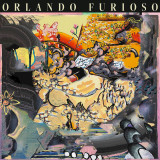
“Orlando Furioso is a haunting, one-of-a-kind statement, from an important new voice in improvised music.” - Steve Lehman
“…imagining instruments that haven’t been invented yet: space harps, cosmic gamelan, Venusian banjo. It’s the purest distillation of Atria’s musical language, simultaneously grounded and unearthly.” - Stewart Smith for The Wire (November 2022)
“Making liberal use of microtonal harmony and hypnotic, ostinato rhythms – as well as the occasional stylistic smash-cut, reminiscent of John Zorn – Orlando Furioso announced itself on Wednesday as a punchy, creative force on the New York scene. (…) Atria’s rhythms had a welcoming, social propulsion, and the microtonality of his writing for keyboard proposed an individual – even insular – language.” - Seth Colter Walls for The New York Times.
Early European composers felt that their work reflected in its structure the divine nature of the material world. Via tuning, form, and contrapuntal alchemy, these musicians sought to illuminate and edify the complex and perfect order of existence. The music recorded here also reflects the contours of an ordered world, but it is no place any of us has ever visited. By assembling far-flung building blocks from the detritus of a 21st-century musical vocabulary, Orlando Furioso brings the listener into a bizarre new cosmos. The result is deeply expressive music that speaks not with the voice of a narrator or memoirist, but with that of a cartographer.
Like a science-fiction Dante, the listener is taken on a tour of many diverse and colorful provinces of an alien world. Though each composition references its own set of real-world musical locales (from the Andes to Indonesia to Italy to New Orleans), they are bound by stylistic consistency into a coherent, continuous geography. Permeating this world is an uncompromising commitment to microtonal harmony, rhythmic intensity, and an ability to deploy the esoteric (Nicola Vicentino's notorious 31-tone temperament) and the head-smackingly obvious (a surprise djent breakdown) with equal conviction. Though Vicente's compositions are steering the ship, serious recognition is due to all the players on the record for their ability to meet these demands.
Our omnivorous musical diets offer real abundance. They enrich our craft by providing access to limitless approaches from which to choose - more masters to study, traditions to absorb, and techniques to hone than is possible in multiple lifetimes. They can also inflict heavy and often contradictory burdens of influence. When every corner of the map has been charted, it becomes difficult to find a new direction in which to travel. One solution I hope to see more often is the one pursued on this record: breaking down distinct musical worlds into component parts and reassembling them into a language. When completed with precision and with no stone left unturned, the seams between the pieces vanish and the listener is deposited somewhere beautiful and strange, left to assign their sensations meanings of their own. - Mat Muntz
Orlando Furioso is led by Vicente and features David Acevedo, David Leon, Andrew Boudreau, Alec Goldfarb, Daniel Hass, Simón Willson, and Niña Tormenta. Orlando Furioso celebrated its release at Roulette Intermedium in Brooklyn, NY, as a part of Wet Ink Ensemble's 24th Season opening concert, a performance which The New York Times heralded as "virtuosic", "punchy, creative" and "even revelatory."
Winner of the Deutscher Jazz Preis: Best International Debut Album 2023
Featuring contributions from Brittany Howard, Daniel Tashian (Kacey Musgraves, Demi Lovato), Julien Baker + more. Since moving to Nashville to start their music career in 2012, Becca Mancari has been lauded for their dextrous songwriting and prodigious guitar playing. Their sophomore album The Greatest Part, released in 2020, was an indie rock opus that garnered acclaim from The New York Times, NPR, and more. After its release, however, Mancari was despairing. An illness in their family, coupled with a realization that their alcohol dependency had become untenable, led Mancari to begin the hard work of taking ownership of their existence by mending broken relationships and investing in their mental health. "I didn't realize it then, but looking back, I was a passenger in my own life," Mancari says. The transformative period of self-reckoning was the catalyst that ultimately steered Mancari to write and produce their triumphant new album, Left Hand. After a disheartening studio session with an outside producer, Becca became convinced that they were capable of rendering their vision independently. Close friend and musical ally Juan Solorzano, who has played on all of Mancari's albums since the debut of Good Woman in 2017, joined them in the studio to co-produce the majority of the record. In addition, Daniel Tashian (Kacey Musgraves, Demi Lovato) co-wrote and co-produced the song "Don't Close Your Eyes," encouraging Mancari to track every instrument on the initial demos. As much as self-producing this album was an act of resilience and growth in one's own craft, Mancari brought trusted friends like Brittany Howard, who they play with in Bermuda Triangle, Julien Baker and Zac Farro into the process. Insecurities that had dogged Mancari since childhood couldn't weather the force of energy in that studio, where they executed decisions with newfound certainty. The title track, "Left Hand," is named for the Mancari family crest. After a lifetime spent feeling like they didn't belong, Mancari unlocked a perfect metaphor in the crest: "In many cultures children born with a dominant left hand were taught not to use that hand, and were told that using the right hand was `normal' and `correct.' Similarly, queer children are often times told that it's not `normal' for them to love who they love and that they need to `change.'" On Left Hand, Mancari offers the listener a collection of songs that should be played in moments when we are in need of reassurance and encouragement. No song exemplifies this better than the ebullient track "Over and Over," which is a reminder to friends that happiness doesn't need to be fleeting. "I wanted to write a queer pop song that has meat on its bones," they say. Inspired by one of many reckless and joyful hangs with dear friends in Nashville, the enlivening pop song makes a promise to them, and to the greater community Mancari embraces on this album. "There is something to the feeling/ Head hanging out of the window/ Being ok that we don't know," sung on the chorus over a beat replete with congas and shakers. What follows is a promise to anyone who ever feels like the greatest moments of their life are disappearing in the rearview: "We can have it like we used to, over and over and over and over again." For Fans of boygenius, Phoebe Bridgers, Julien Baker, Julia Jacklin, Caroline Rose, Miya Folick, Molly Burch, Widowspeak.
Demon Records presents a brand new original story, part of the Doom’s Day story arc presented on
Translucent Purple and Blue Vinyl.
Hired assassin Doom is on a mission to save her own life before Death catches up with her. If she can find
the Doctor they might be able to help her – but where in Space and Time are they?
These four missions - The Steel Cascade, The Martian Dilemma, An Ood Halloween and Dark Space - take
Doom to a Mediterranean cruise ship in 1966, the planet Mars in the distant past, San Francisco in 1999,
and finally a desolate planet in a dying solar system.
Along the way she meets former TARDIS travellers Ian and Barbara, the mighty Ice Warriors, and Brian the
Ood. But when a mysterious stranger with silver hair and sunglasses turns up, will he be Doom’s salvation?
Written by Darren Jones and read by Sooz Kempner, Jaye Griffiths and Silas Carson, these four original
adventures form part of the multi-platform Doom's Day adventure to celebrate Doctor Who’s 60th
anniversary.
2 x 140g Translucent Purple & Blue vinyl LPs, in fully illustrated inner bags, are presented in an attractive
‘Doom-laden’ wide-spine outer sleeve.
- 1: Spectacular
- 2: Best Believe
- 3: Vibe Check (Ft. Cadence Weapon)
- 4: Baby Boy (Ft. Paul Wall)
- 5: Loosen Up (Ft. B.k. Habermehl)
- 6: Alexis (Ft. Harriet Brown)
- 7: We Still Here (Ft. Harriet Brown)
- 8: Opportunist Convention
- 9: Kickin’ In
- 10: Don’t Tap In / Contusion (Feat. B L A C K I E)
- 11: Boss Up
- 12: Make A Baby
- 13: Jasper, Tx
With I Will Make a Baby in this Damn Economy, Fat Tony embodies the kind of quixotic figure he would rap about; a singular entity who’s motivated, confident, and hungry; a perpetual-motion-machine locked in a staring contest with his country. It’s the latest album in his catalog produced entirely by L.A-based producer Taydex since 2020’s Wake Up. Later that same year Fat Tony released Exotica, and ever since he’s demonstrated he is in his own lane as a professional rapper with the mind of a magician, as quick to conjure an image as pull it out from under you, deftly manoeuvring through so many details and references a listener feels as if they have witnessed the work of an illusionist. He paints these canvases inside of songs that rarely spill past three minutes; they’re pocket-sized diaries replete with acute observations, character studies, microdoses of storytelling, and single-minded ruminations on a topic that bud, blossom, and fade before too long. Fat Tony & Taydex’s I Will Make a Baby in this Damn Economy cements Tony’s status as someone whose albums are not so much lyrically-lyrical as they are picaresque.
As with any Fat Tony project, the bars are tight as ever, but are so fluid for the 34-year-old it’s almost easy to take for granted the details, warmth, and humanity inside his free-associative tales of day-one friends who’ve passed, edgelord grifters who want to spit game, and nights on ketamine. Taydex’s production sprints through disparate yet simpatico styles, dipping its toes into Pi’erre Bourne-esque bass (see lead single “Spectacular”), house (“Loosen Up”), and even hyperpop. Meditations on loss and grief are woven throughout, but Tony throws a few curveballs as well: Consider “Alexis,” which sweetly reflects on a long-term platonic friendship. Taydex finds a Teddy Riley-indebted New Jack Swing groove just deep enough for the feeling to land and underlines the song’s sincere candor. This is the appeal of Fat Tony writ-large: his boisterous voice and genial personality invite you to the party, then you stick around to hear what he’s saying, which is frequently more introspective and complex than one assumes.
Written and recorded in Taydex’s new studio in North Hollywood, Tony says, “We had much more freedom and flexibility in making this album and you can hear it. It felt like a family project.” If the album is comfortable and loose, it is also dense and substantial. The album’s final two tracks contextualize the immediacy of what came before it—the mezcal with ices drank, Paul Wall swangin’ through to drop knowledge, the Polaris Prize-winning rapper Cadence Weapon providing a vibe check. “Make a Baby” accounts for Tony who’s seen everything, and knows he’s met the one to be a father with, and yet chooses to take his time to get it done. Taydex’s beat recalls turn-of-the-century R&B and the millennial promise of an endless good time. Sombre closer “Jasper, TX” is Tony coming to grips with the story of James Byrd, Jr., a Black man from East Texas dragged to his death by three white supremacists in 1998. These songs are not only trademarks of Tony’s fastidious rapping—they are deeply personal examples of his approach to artistry and life itself, where every decision is made in the shadow of history.
It’s here the mission statement of I Will Make a Baby in this Damn Economy comes into focus—you get the sense he means it, he’s ready for it, he’ll fight for it. He’s waiting to take the world at its word.
- A1: Joe 90 Main Titles
- A2: A Dream Come True
- A3: A Wolf In The Fox's Den
- A4: Air/Sea Rescue Colonel Mcclaine
- A5: Wagon Train Of Fear
- A6: Running The Gauntlet
- B1: Tragedy Aboard The U85/Porto Guava
- B2: A Song And Dance Of Death
- B3: The Tangled Web
- B4: Race Of Intelligence
- B5: Taking The Win
- C1: Fleming In The Fortress
- C2: Breakout And Pursuit
- C3: Nuclear Winter
- C4: Boy With A Suitcase
- C5: Church Rats
- C6: Divine Intervention
- D1: Agent Sladek
- D2: Sladek's Recital
- D3: Trapped In The Sky
- D4: The Alpine Clinic Waltz
- D5: Balloon Ride
- D6: The Mine Rescue
- D7: Joe 90 End Titles
First appearing on TV screens in September 1968, Joe 90 was a unique nine year old boy with the ability to absorb the brain patterns of top experts
enabling him to become the most special agent of W.I.N. (World Intelligence Network).
Whilst there are arguably better-known scores amongst Barry Gray's sublime catalogue of work with the Andersons, the composer's work for Joe 90 is in many ways
the most consistent and inventive selection he ever wrote. Developing a theme for the new series was always the musician's starting point, and for Joe 90, the pop charts breezed into Gray's studio,
with an opening tune featuring a genuine groove. Mixing Gray's inventive electronics with 60s "surf rock" guitars was an inspired decision.
It is no wonder that this piece has gone on to enjoy a second life as a Northern Soul disco floor-filler.
For episodic incidentals, Gray was freed from the detached unearthly premise of Captain Scarlet and able to bring back a playful sensibility
and a more mature musical palette which are amply illustrated in this 24 track collection.
Paper Route Frank is the first posthumous studio album from legendary Memphis, TN figurehead, rapper and mogul, Young Dolph. Gone from us way too soon, the album serves as a testament to the larger than life person and leader that Dolph was, illustrated in tracks such as “Hall of Fame,” “Get Away,” & “Love For The Streets.”
At 13 tracks, the album features appearances from PRE labelmates Key Glock, Big Moochie Grape & Snupe Bandz, and taps heavyweight guests in 2 Chainz & longtime collaborator Gucci Mane, who in many ways helped provide the blueprint for Dolph’s own illustrious career. A truly independent foundation in the rap game and unquestionably one of one individual, we may never see another artist like Young Dolph. Long Live Dolph Forever.
- A1: Alive And Buried
- B1: Timeless Time
- C1: In Luton Airport No-One Can Hear You Scream
- D1: The Beast In The Cage
Four full-cast radio episodes based on the hit series, adapted by David Renwick from his TV scripts.
Having been made redundant from his job by an electronic box, crabby Victor Meldrew is faced with the
prospect of finding his feet in an increasingly frustrating world. In these four episodes – Alive and Buried,
Timeless Time, In Luton Airport No-one Can Hear You Scream and The Beast in the Cage – things hilariously
go from bad to worse for Victor and his long-suffering wife, Margaret.
Written by David Renwick, and starring Richard Wilson as Victor and Annette Crosbie as Margaret, these
highly entertaining BBC Radio 2 adaptations also feature a supporting cast including Doreen Mantle, Owen
Brenman, Sally Grace, Jeffrey Holland, Jon Glover and Michael Fenton-Stevens.
Presented in full-colour inner bags, depicting the everyday trappings of Victor’s life, two burgundy 140g
vinyl LPs are housed in an illustrated wide-spine outer sleeve -complete with coffee-spilled rear. You simply
won’t believe it!
Julian Cannonball Adderley's only Blue Note album, Somethin' Else, would likely forever be famous in music lore if just for the presence of Miles Davis. The iconic composer/trumpeter steps into the role of sideman on the 1958 set, one of just a handful of times he'd make such a move after the calendar passed the mid-1950s. Yet evaluating Somethin' Else strictly on Davis' involvement misses the big picture. Plain and simple, Adderley's jubilant work remains a jazz landmark due to the chemistry of its Hall of Fame personnel, enthusiasm of its participants, and sophistication of its arrangements – not to mention the reference-grade production and inclusion of the definitive renditions of two all-time jazz standards.
Limited to 6,000 numbered copies, pressed on dead-quiet MoFi SuperVinyl at RTI, and mastered from the original master tapes, Mobile Fidelity's ultra-hi-fi UltraDisc One-Step 180g 45RPM 2LP collector's edition pays tribute to the record's merit and includes the bonus track "Allison's Uncle." Offering reference-calibre sonics, this spectacular collector's version provides a clear, transparent, ultra-dynamic, and up-close view of a cornerstone effort that witnesses Adderley and Davis sharing horn duty alone for the only time in their fabled careers – an arrangement that occurred as a result of Adderley having joined Davis' majestic sextet a year prior.
The premium packaging and beautiful presentation of the UD1S Somethin' Else pressing befit its extremely select status. Housed in a deluxe slipcase, it features special foil-stamped jackets and faithful-to-the-original graphics that illuminate the splendour of the recording. No expense has been spared. Aurally and visually, this UD1S reissue exists as a curatorial artefact meant to be preserved, touched, and examined. It is made for discerning listeners that prize sound quality and production, and who desire to fully immerse themselves in the art – and everything involved with the album, from the iconic photos to the gorgeous finishes.
The vibrant potency reveals itself openly on an analogue set that provides full-range reproduction of an ensemble that also includes pianist Hank Jones, bassist Sam Jones, and drummer Art Blakey. Each and every snare hit, downbeat, and cymbal splash registered by the latter take on realistic proportions, blooming and decaying as they would right in front of you on a stage. Jones' foundational bass lines register with uncommon depth and palpability, the litheness of the strings and fullness of the instrument epitomizing the definition of rhythm. Stellar, too, are the surefooted 88s. Sublime in scale, tonality, and attack, with the delineation such you can practically separate the white and black keys in your mind. As for that liquid interplay between Adderley and Davis? Breathtakingly lifelike in timbre, naturalism, purity, and presence. This collector's version takes you there – there being Rudy Van Gelder's legendary New Jersey studio in March 1958 to witness it all unfold, again and again.
For reasons that extend far beyond the outstanding playing and flawless repertoire, Somethin' Else is without question a record you'll always want to watch and hear come together. As veteran critic Bob Blumenthal observed writing about the album four decades after its release, "The instant rapport achieved by the quintet is thus the product of much shared and common history, though the tensile strength that they create throughout created a totally unique feeling that can be attributed to the sensitive musicianship of all concerned, including the supposedly hard bopping leader and drummer." Such inimitable feeling, or emotion, courses throughout every passage, and no where more obviously than on "Autumn Leaves" and "Love for Sale."
Without question, the discreet interpretations of the Johnny Mercer and Cole Porter songs, respectively, found on Somethin' Else have long been considered part of jazz's alluring mystique. Adderley and Davis bring contrasting approaches to the table yet sound of a singular mind on "Autumn Leaves," with the latter's muted trumpet and the headliner's lush alto saxophone dovetailing into a performance that endures as a blueprint for expression, counterpoint, sophistication, fluidity, and linearity. Blues, melody, and romance pour from their horns. Their bandmates, picking up on the intimate vibe and calm mood here – as well as on the spry, head-over-heels spirit of "Love for Sale" – join in on the conversation with sharp economy and float-on-air roundedness.
Not to undersell the other three numbers, all deserving five-star status. Twelve measures in length, the title track offers a slow burn in swing. Written by Adderley's brother, Nat, the 12-bar "One for Daddy-O" transmits funk flavors. The closing "Dancing in the Dark" pops with lushness and temptation, its stream of bold colours and understated textures calling for a moonlight twirl, or at least fantasies suggestive of a memorable night. Somethin' else, indeed.
MIZMOR, is a one-man heavy music exploration that began in 2012 as a
way of dealing with the mental and spiritual anguish mastermind A L N
feels as a person
More specifically, the content behind the project is that of the existential - primal
and innate musings about cause, purpose, self, and god. It is the search for light
and truth, or the fact that there is none. It comes from an embittered, burned,
confused, and broken heart. It is the fight for survival when reason and
foundation has turned to nothingness. It is the crashing down of towers of
falsehood and the freedom that comes through a certain kind of grief. Ultimately,
MIZMOR is the manifestation of my long-felt depression, and neither have an end
in sight.
In A.L.N.'s own words behind the new MIZMOR album "Prosaic":
"The idea behind "Prosaic" was to make an intentionally less conceptual, more
slice- of- life record. I wanted to make an album that was less precious and
obsessed-over, more honest and real; less grandiose and more human. I found it
an interesting challenge to find the line between 'you can do better' and 'you're
beating a dead horse.' I tried to make my process more efficient and even fun at
times. I simply wanted to share, but if that meant exacting all-out perfectionism, I
wasn't going to make a record. Right now I'm interested in making less selfindulgent music. The themes are the absurdity/futility/purpose/meaning of work,
mindfulness/ consciousness/ living in the present moment/ shedding illusions,
depression/ acceptance/ contentment. This is the first MIZMOR album without
any content relating to god/atheism. You also won't hear any shrieks."
The album follows her two previous collections released by French-Canadian shadow ambient imprint Cyclic Law. Betti's output has been strongly shaped by the juxtapositional nature of the island she calls home. A beautiful Mediterranean island that is also home to a petroleum refinery's and its significantly haunting presence. There is conflict in that ideal, and Betti's music has always displayed a sense of beauty, yet with ominous undertones.
With Before the Last Light is Blown, Betti focused on the transience of life as a means of inspira- tion. It is human nature to move forward, consume, and always reach the next goal and to never give much thought to the briefness of our time here. The impermanence of life may seem like a dark topic, but to the contrary, pausing to think of such brevity could allow us to see the beauty we are missing in our endless need to fulfill and consume.
Betti takes us to a dark place only to show us the beauty within, a vital constant in her output as shedir.
- 1: Still Ill
- 2: Ask
- 3: There Is A Light That Never Goes Out
- 4: How Soon Is Now?
- 5: This Charming Man
- 6: Girl Afraid
- 7: Panic
- 8: Bigmouth Strikes Again
- 9: Girlfriend In A Coma
- 10: The Boy With The Thorn In His Side
- 11: Barbarism Begins At Home
- 12: What Difference Does It Make?
- 13: Please, Please, Please Let Me Get What I Want
- 14: Shoplifters Of The World Unite
- 15: The Queen Is Dead
"The Queen Is Not Dead" ist kein "durchschnittliches" SPIRITUAL FRONT Album, aber welche Veröffentlichung der Suicide Pop Band aus Italien ist das schon? Das achte Studioalbum der Römer ist vielmehr "eine Hommage an die legendären, wundervollen Hymnen von Morrissey und Johnny Marr", wie Simone Salvatori schreibt. Der Bandgründer und Frontmann von SPIRITUAL FRONT bezeichnet THE SMITHS als eine der wichtigsten musikalischen Inspirationen für jedes Mitglied der Band. Die Italiener nahmen das Album mit dem erklärten Ziel auf, eine respektvolle Hommage zu erschaffen, ohne dass dabei ein Klon entstehen sollte. Bei den fünfzehn Coversongs, die für viele Musikfreunde heilig sind, blieben die Römer den Originalaufnahmen zwar treu, sie führen die Songs jedoch näher an die Klangwelt von SPIRITUAL FRONT heran - beispielsweise indem sie klassische Instrumente hinzufügen. Zu Salvatori und seinen Bandkollegen, dem Gitarristen Francesco Conte und Andrea Freda am Schlagzeug, gesellen sich der Bassist Daniele Raggi, ein Streichsextett und ein Bläser sowie eine Fülle von Beiträgen befreundeter Musiker: Darunter befinden sich die Sängerin Durga McBroom (PINK FLOYD, BLUE PEARL), Riccardo Galati, Filippo Marcheggiani (BANCO DEL MUTUO SOCCORSO), Michal Stepien (MGLA), Jairo Zavala (CALEXICO), King Dude, Traci Danielle (MY LIFE WITH THE THRILL KILL KULT), Riccardo Spilli (IL BALLETTO DI BRONZO) und Sasha Boole (ME AND THAT MAN). SPIRITUAL FRONT wurden 1999 als Soloprojekt von Salvatori gegründet und haben seitdem zahlreiche Alben, Singles, EPs und Kollaborationen veröffentlicht. Die Italiener beschreiben ihren Sound als "eingängige Balladen für herzzerreißende nihilistische Jugendliche". Textlich beschäftigen sich SPIRITUAL FRONT mit Themen wie der Suche nach einer eigenen Identität, Sexualität, harte Realitäten und wütende Trennungen, die oft von triefendem Sarkasmus, Nihilismus sowie einem beißenden Sinn für Humor eingefärbt sind. Darüber hinaus haben die Italiener mit namhaften Künstlern wie LYDIA LUNCH, ORDO ROSARIUS EQUILIBRIO und vielen anderen zusammengearbeitet sowie an den Soundtracks der Fernsehserie "Las Vegas", des Kinofilms "Saw 2" und an weiteren Independent-Filmen, Theaterproduktionen und modernem Ballett mitgewirkt. SPIRITUAL FRONT zollen THE SMITHS, die für die Italiener zufällig den Soundtrack ihres Lebens komponiert haben mit "The Queen Is Not Dead" ihren aufrichtigen Tribut.
Mancunian pianist and producer Matt Wilde prepares to release his debut album 'Hello World' via Band on the Wall Recordings. With a slew of hotly tipped projects released over the past two years via Root Records & Inner Ocean Records- Matt has been steadily gaining support from the likes of Jamie Cullum, Gilles Peterson, Jazz FM & many more. With his name firmly cemented as one to watch in the Jazz / Beats landscape, 'Hello World' promises to be his most expansive body of work to date.
'Hello World' is an audio catalogue of personal experiences, thoughts and feelings, shared with honesty and curiosity for the human condition. Matt crafts emotive and uplifting compositions denoting a tender illustration of the human experience, finding and celebrating the simple and beautiful moments of life.
First ever commercial releases of New Orleans’ legend Alvin Batiste’s Spiritual Jazz albums created with the college band he instructed and led in Baton Rouge - Goes To Africa With Love and Live at The 1971 American College Jazz Festival Originally given away as souvenirs at Southern University, these albums contains deep Batiste originals and, on Live, are paired with excellent John Coltrane, Miles Davis and Freddie Hubbard covers. They are some of the most sought after albums of Americas 70s jazz underground. Each album contains extensive booklet detailing Batiste’s life and his time spent honing and recording this remarkable band of young students. That one of the great Spiritual Jazz albums of the era could be found in duplicate New Orleans thrift store in the 1980s goes a long way in illustrating the lack of acclaim this special and overlooked album maintained, even in a city where the Batiste name is musical royalty. The Southern University albums Alvin Batiste offered the world were novelies, not worthy of serious consideration, a moment captured, but not necessarily worthy of being collected or preserved by anyone not immediately involved in its creation. That changes now. With the release of the two Southern University albums, Now-Again continues a conversation begun with the late Kashmere Stage Band director Conrad O. Johnson and the issue of his high school students’ music as Texas Thunder Soul, and the continued belief that beautiful music created by youth - even under the most adverse circumstances - can always inspire us.
On behalf of re:discovery records, it is with great excitement that we announce the reissue of the illusive 1993 EP 'Clouds Over Europe' out of Sweden.
This EP was orginally only 100 promo white labels without a proper full production release due to pre-internet slow communication from pending labels that were interested but never followed through. Music was changing so fast at that time, a year later perhaps those labels changed their mind. We will never know. Aquarian Atmosphere 'White Clouds' is the most highly regarded track from this album for many diggers.
An amazing ambient techno track that sounds like classic Rising High records material to us. Sure to be played at chill out rooms everywhere. In 2021 re:discovery released a cd of unreleased music from Unit21. He is also featured here with an unreleased and we think even better version than the original of Clubbtraxx (Movement 1) along with a trance track from 39626 named 'Elixir of Life'. Surrounding those 3 tracks are 2 more unique 90's gems from Aquarian Atmosphere. Original copies of this white label being exchanged for $100 a copy isn't unusual at record fairs and online. We are really proud to finally help bring this piece of Swedish ambient techno history to a wider audience. Dare to Dream isn't just our credo but a lifestyle of listening to space music among the stars.
Graham Lambkin (of Shadow Ring fame) returns with a long awaited epic double LP, Aphorisms, his first major solo outing since Community (Kye, 2016). Recorded mostly during the early winter months of 2022, in post-pandemic New York and post-Brexit London, Aphorisms assembles the sonic detritus of daily life into hauntingly intimate aural soundscapes. Made between Lambkin's residence in East London and Blank Forms in New York, Aphorisms superimposes the two spaces onto one another creating an imaginary stage where his musical dramas unfold. A transatlantic mediation on the rooms where Lambkin has lived and worked, Aphorisms summons up hallucinatory vistas by way of the composer’s collage technique, layering field recordings, piano, guitar, percussion, vocal fragments, and repurposed elements on top of one another in double, triple, and quadruple exposures. Like the Shadow Ring’s Lindus (Swill Radio, 2001) recorded between Folkestone and Miami Aphorisms ruminates on estrangement and displacement, catching Lambkin as he returns to London after two decades of living in the States, in his words, “leaving home to return home.” Aphorisms continues Lambkin’s synthetic-naturalist approach to sound-making, twisting disparate and unique elements together to create the sensation of a coherent sonic space. At the heart of his practice is the illusion of form, whereby Lambkin combines sonic elements, documenting the moment that they coalesce into music only to disintegrate back into incidental sound. The album is centered around two pianos, one in New York and one in London, sounding together as if through the ether, creating a spectral atmosphere that Lambkin fills with melodic snippets, fragments of songs, spoken-word musings, and guttural barks or “the animal purity of voice,” as he has it. The superimposition of the two spaces is maximized in the album's closing titular track, where, much like on earlier works such as Salmon Run (Kye, 2007) and Softly Softly Copy Copy (Kye, 2009) fragments of familiar melodies float through the mix as though being played from afar. Aphorisms is Lambkin at his best, extending methodologies only hinted at previously and taking his now-idiosyncratic mission statement to a new chapter.
A fresh chapter takes soft, sure shape for Cape Town-based singer songwriter Wren Hinds on his new album. Released through Bella Union, ‘Don’t Die In The Bundu’ follows Bella Union’s vinyl releases of Wren’s first three Bandcamp LPs. A gleaming set of gently dappled and poetic songs about fatherhood and fortitude, the album roots its restrained strength in an innate understanding of what matters most to us.
Wren’s own life began on the southeast coast of Kwazulu-Natal, South Africa. His father was a musician, his mother a landscape painter. While his dad inspired Wren to record whenever and wherever he could, his mother’s artform coloured his approach to songwriting: “painting with sound” is Wren’s description, a methodology illustrated by his use of light, shade and space to communicate powerful impressions and feelings.
From Elvis in Memphis retains the distinction of being the most cohesive, passionate, mature, and emotionally invested record Elvis Presley ever made. Named one of the 500 Greatest Albums of All Time by Rolling Stone, the white-soul landmark features backing by "The "Memphis Boys" and teems with rhythm-heavy country, gospel, R&B, and blues. Lauded for its natural, open sonics, the 1969 set now comes across with remarkable clarity, presence, and warmth courtesy of a premium restoration befitting a king.
Mastered from the original master tapes, pressed on MoFi SuperVinyl at RTI, and strictly limited to 10,000 numbered copies, Mobile Fidelity's UltraDisc One-Step 180g 45RPM 2LP box set of From Elvis in Memphis unearths the ravishing inner detail, sticky rhythms, and brilliant arrangements of Chips Moman's inspired production. In short, this unparalleled reissue unlocks the spirit and gestalt of the recording and takes you inside American Sound Studio. It also brings you up close and personal with Presley's singing – widely considered by many to represent the finest of his career – located dead-centre amidst the instrumental hurricane. Equally impressive are the contributions of the aforementioned Boys, and how their Southern-brewed playing – a balance of leisure with swiftness, grandiosity with concision, freedom with control – dovetails with Presley's vernacular.
The lavish packaging and gorgeous presentation of the UD1S From Elvis in Memphis pressing befit its extremely select status. Housed in a deluxe box, it features special foil-stamped jackets and faithful-to-the-original graphics that illuminate the splendor of the recording. No expense has been spared. Aurally and visually, this UD1S reissue exists as a curatorial artifact meant to be preserved, pored over, touched, and examined. It is made for discerning listeners that prize sound quality and production, and who desire to fully immerse themselves in the art – and everything involved with the album, from the images to the finishes.
Sharing much in common with the full, rich, orchestrated Stax Records sound, From Elvis in Memphis oozes with choice nuances and distinctive flourishes that on this ultra-hi-fi edition not only arise with previously unheard transparency and sharpness, but complement and serve the whole. Take the specific tonalities and blending of violas, cellos, and horns that communicate mood and serve as counterpoints. Or lively performances of the backing quintet, and how the piano and Hammond organ trace the lines of the melodies and Presley's lead. Listen to the uplifting support provided by the cadre of backing vocalists (more than a dozen credited), unrivalled in Presley's canon and a precursor to the approach he'd soon adopt in Las Vegas.
Of course, From Elvis in Memphis precedes the icon's transition into his glitzy jumpsuit phase – and follows his merciful move away from the hoary soundtrack work that consumed nearly a decade of his creative life and prompted a rebirth that began in 1968. As the bridge between eras, the record seizes on Presley's rejuvenated attitude and commitment to quality, facets that drip from the fervency with which he delivers every word. For the same reasons, and for the fact it traces back to Presley's original roots and hip-shaking guise, the album further remains a cornerstone of American music history.
Writing about the work's 40th anniversary for Rolling Stone, James Hunter correctly observed: "From Elvis in Memphis represented the full-on immersion in the Memphis idea of Elvis Presley, the American singer second only to Frank Sinatra for the ability to conjure a particular sonic universe with his merest vocal utterance. And from the album's first song, in which a bluesy Elvis espies a woman 'Wearin' That Loved On Look,' to its last, in which a more straight-up-pop Elvis regrets the injustices of life 'In the Ghetto,' his fully engaged, newly energized voice finds its most logical album setting in years."
Incredibly, Presley and company completed more than two dozen cuts for From Elvis in Memphis. One, "Suspicious Minds," turned into the vocalist's final chart-topping single and lingers as one of his most beloved rock n' roll numbers. Even though it never formally appeared on the record, the non-album song is included here as a bonus track and attains newfound depth, energy, and swagger. Coupled with the other dozen tracks – including the sultry "Power of My Love," balladic take of Dallas Frazier's "True Love Travels on a Gravel Road," and driving cover of Hank Snow's I'm Moving On" – it makes for the finest Elvis listening experience available.
International super group Bokanté, led by Grammy-winning Snarky Puppy founder Michael League, are set to release a brand-new studio album, History, via Real World Records consisting of nine tracks celebrating black history, global unity and the futility of war. The first single “Adjoni” is out today and you can watch the song’s official video below.
Consisting of members from five countries and four continents, different genders, races and generations working in harmony and celebrating individuality, Bokanté are united in the belief that music should be a voice for the voiceless. Recalling rhythms from West Africa as well as those of Guadeloupe’s drum-centric Gwo ka, lead single “Adjoni” is a story of a life on the spectrum and of brilliance in the margins; the lyrics of “Iliminé” speak to the protective properties of love, offer a mantra to keep us joyful regardless.
History finds them exploring further, dressing folkloric instruments including the Arabic oud, West African ngoni and North African guembri, the bass lute favored by Morocco’s Gnawa maalems, in western clothes. Interweaving layers of percussion with all the nuanced skill expected of four percussion maestros: André Ferrari of Swedish folk renegades Väsen. Ex-Berklee music professor Jamey Haddad (Sting, Paul Simon). Nagasaki-raised, New York-based Keita Ogawa (Cecile McLorin Salvant). Ghanaian-New Orleanian drum king Weedie Braimah (Christian Scott), a special guest on What Heat, a vital band member now.
From Alehouse to Playhouse Bjarte Eike and his barnstorming Barokksolistene capture the vital spark of Restoration London’s entertainment scene with a captivating new recording for Rubicon Classics! The Playhouse Sessions will be released on 23 September 2022 to coincide with Barokksolistene’s concert double-bill at London’s Southbank Centre.
‘A smattering of Purcell, dances from Playford’s Dancing Master, shanties, reels and ballads succumb to a nine-piece ensemble drawing on Baroque, jazz and folk styles for a no holds barred hooley of riotous improvisatory give and take,’ (BBC Music Magazine review of The Alehouse Sessions, August 2019)
London’s musicians, pushed in the 1650s, to the margins of society by order of Oliver Cromwell, found room for new forms of entertainment in city-centre taverns and alehouses. They remained there long after the restoration of the monarchy, performing sets of dances, theatre songs and bawdy ballads to audiences glad to be free from Puritan constraints on pleasure.
Norwegian violinist Bjarte Eike and his Barokksolistene have restored the spirit and substance of those long-forgotten performances with their Alehouse Sessions, hailed by The Times as ‘irresistible’ and ‘fabulously unrestrained’ by The Guardian. Five years ago the Norwegian violinist and his band scored a best-selling album with The Alehouse Sessions on Rubicon Classics. They return to the label with another compelling collection of music and words of the kind on offer more than three centuries ago at Henry Purcell’s favourite Westminster watering holes. The Playhouse Sessions, set for release on Rubicon Classics on 23 September 2022, reflects the uplifting energy and engaging emotional contrasts of Barokksolistene’s Alehouse performances.
“The album contains a sort of inner narrative that runs through the recording,” says Bjarte Eike. “It has become like a play in its own right, with each track being a small tale within a larger story.” The recording’s tracklist includes Eike’s beguiling arrangements of music from Purcell’s semi-opera The Fairy Queen and his own original compositions on words from the play on which it is based, Shakespeare’s A Midsummer Night’s Dream; popular songs and ballads such as ‘The Irish Washerwoman’, ‘I often for my Jenny strove’ and ‘The Three Ravens’; tunes from Purcell’s welcome odes and stage shows, Come ye sons of art and Dido and Aeneas among them; the ‘Willow Song’ from Shakespeare’s Othello; Eike’s own voice in Puck’s monologue from Act 5 of A Midsummer Night’s Dream; and John Dowland’s sublime air ‘Can she excuse my wrongs’.
London’s theatres were closed at the start of the English Civil War in 1642 and remained shut until the Restoration. Alehouses offered redundant musicians, actors and dancers a place to scrape a precarious living and soon became their creative refuge. “Although a few surviving theatres reopened in 1660 with the return of Charles II, there was little money around to rebuild those that had been demolished,” observes Bjarte Eike. “And a generation of musicians had already found an audience in places like the Black Horse in Aldersgate Street. So popular were their alehouse sessions that Cromwell tried to abolish them! But they outlived him and became part of Restoration musical life.” The form of a Barokksolistene Alehouse, he adds, is like a creative room. “Within its framework I can frequently refurbish the show with new contents. The Playhouse project is likewise an extension of the ever-evolving Alehouse Sessions. Together they tell the story of music and theatre in London during Cromwell’s time and after the Restoration. Of course there’s an historical context to what we do. But there’s also the practical context – which is even more important to me – of connecting with a contemporary twenty-first century audience. An Alehouse / Playhouse performance is not something for the museum; it's about music made in the present moment, just as it was in the London alehouses of Purcell’s day -- with their playhouses annexed to the rear of the beer-drinking saloons. The encounter of musicians onstage and the audience in the hall is the real magic of it. We have to fuse the audience into the action of our performance!”
The Playhouse Sessions will be launched on Friday 23 September with a late-night concert at the Purcell Room and a post-concert Alehouse Session in the foyer of the Queen Elizabeth Hall. Soprano Mary Bevan is set to join Eike and his Alehouse Boys for the first half of their Southbank Centre double-bill, offering unique interpretations of songs from Purcell shows and other hits from the late seventeenth-century London stage. “The Southbank Centre is a direct descendant of concerts given in the 1650s in the alehouses of London,” notes Eike. “These alehouses after all staged some of the world’s first public concerts. Later, after the Restoration, it became common for promoters to advertise alehouse concerts in the press and offer subscription tickets. Purcell and his fellow musicians were thus just as at home performing there as they were in the chambers of the royal court or in London’s new theatres.”
Bjarte Eike launched his Alehouse Sessions in company with like-minded musicians 15 years ago. The ensemble comprises a core of regular performers, all of whom have committed to memory a huge setlist of up to four hours of music. Typically they meet a day or so before a concert tour to share a meal and make music together; then next day, re-grouping thirty minutes before the show, they discover Eike’s select-menu for the evening. “That ensures that every show is fresh,” he notes. “I make sure we never repeat the same programme twice. It’s therefore essential to work with people who share my outlook and dare to adventure. We’re into a high-risk sport, with lots of traps and places where the unexpected appears - for good or for ill. And so the audience knows we’re vulnerable. But our skill is seen in how we re-act on the hoof to the unpredictable. That’s authenticity and honesty - and above all it’s a performance that’s genuine.”
Armed with a classical training and a background in folk music and improvisation, Bjarte Eike was drawn naturally to Early Music in all its stylistic variety. “I never really felt at home with only one genre,” he recalls. “Early Music allowed me to study profound, complicated compositions, but performing it has also opened up the chance of rebellion and uproar! Early music offers wide, multi-faceted areas of musical exploration for me. You find, for instance, links to different types of music wherever you look in seventeenth-century English repertoire. And I am fascinated by all these connections. They offer a foundation for the Alehouse Sessions and for all Barokksolistene performance more generally. Every member of the group plays, sings, dances and improvises without limitation. We’re all interested in the many different fields of being a stage performer and pushing hard at the ‘normal’ boundaries of what it means to be a classical musician.”



