
out of Stock
Order now and we will order the item for you at our supplier.
Last In: 8 months ago
14,50 €
Order now and we will order the item for you at our supplier.

It is our distinct pleasure to announce the debut solo effort from Thee Sacred Souls' own Jensine Benitez. Anyone who has had the privilege to catch Thee Sacred Souls live is already well familiar with Jensine. On a nightly basis, when she gracefully steps into the spotlight for one of her solos, her mellifluous voice and commanding stage presence sends the crowd into a frenzy of adoration and unadulterated joy. With this single she enriches that charm with honeyed melodies set to floaty rhythms that are sure to have you bobbing your head with the windows rolled down. "Ilusión de Amor" is a lilting lament sung en español about a forlorn lover whose deep, brooding sadness has left them yearning well beyond any hope of reconciliation. On the flip is "The Spar kle in Your Eyes," a vibey, mid-t empo mover that will have couples crowding dance-floors for decades to come. A stunning two-sider that epitomizes the kind of soul music we dig. Snatch this one up quick, or tears may fall..
Order now and we will order the item for you at our supplier.

Colombian-born artist Juan Carlos Torres Alonso, aka OKRAA, presents his third sonic exploration on A Strangely Isolated Place titled, La Gran Corriente. This album marks a profound shift in Juan's creative journey, where themes of portals, the illusion of time, and the paradoxes of self-discovery converge into a powerful auditory experience.
Following a transformative visit to Bogotá in May 2023, Juan underwent an introspective journey that inspired a new direction in his music. This experience, which he describes as an encounter with "an infinite current behind or inside of everything," led to a complete reimagining of his work. Abandoning previous demos, Juan embraced a liberated creative process that was both challenging and exhilarating.
La Gran Corriente is characterized by its innovative production techniques, eschewing fixed grids and BPMs in favor of fluid, organic structures and combining influences from Juan’s other production alias, ‘Laudrup’. This approach not only opened up new creative possibilities but also led to numerous "happy accidents," resulting in a body of work that is as unpredictable as it is cohesive.
At the heart of the album lies a poem written by Juan during production, a text that echoes the themes woven throughout the music. Translated loosely to English, the poem reflects on the nature of reality and time, with lines like "the land of oblivion is not real" and "the great current reminisces; time is an illusion." These words serve as both a guide and a reflection of the album’s deeper meaning.
La Gran Corriente is a record that invites the listener to unlearn and to immerse themselves in a sonic current that is both infinite and transformative. It’s a testament to the power of creative reinvention and the relentless pursuit of deeper truths through music.
Featuring artwork by Peter Skwiot Smith, La Gran Corriente is available on gatefold colored vinyl 2LP, mastered by Taylor Deupree / 12k Mastering.
On Stock and ready to ship
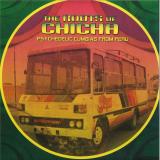
The Roots of Chicha, compiled by Barbès Records, was originally released in 2007 and became the first recording to popularize psychedelic cumbia around the world.
From the late 60's through the 80's, Peruvians invented a new popular musical hybrid inspired by music from the Americas. In 1968, Enrique Delgado released his first record on Odeon with his new group, Los Destellos, single-handedly creating Peruvian cumbia. He codified the genre early on by using the electric guitar as the primary melodic instrument, and mixing cumbia rhythms with folkloric huaynos, criollo voicings, Cuban guarachas and guajiras, rock, boogaloo, surf, psychedelia, oriental music, classical music, and bits and pieces from Brazil, France, Chile... All Peruvian cumbia bands for the next thirty years would end up drawing from the exact same sources (Grupo Celeste, Los Mirlos, Juaneco Y Su Combo, Manzanita Y Su Conjunto...).
This new wave of Peruvian cumbia came to be known as chicha. Chicha is originally the name of an alcoholic drink, made of fermented maize, which the Incas were especially fond of. In the past thirty years, however, the word has taken on a pejorative connotation. Peruvian cumbia started being called chicha in the late 70s, around the same time that the music came to be viewed as the expression of the slums – the pueblos jovenes. Little by little, the word became an adjective, and people now talk of chicha culture, chicha press, chicha architecture, even of a chicha president, and none if it – you guessed right – is meant as a compliment. Chicha suggests corruption, shady deals, and cholos – a derogatory term for a person of Andean heritage that, of late, is being reclaimed and worn as a badge of honor by the very cholos it was supposed to demean in the first place.

Los Belking’s was a groundbreaking instrumental rock band in South America, blending surf, garage, and easy listening styles over six years and five albums. Anchored by the unique vibrato of Raúl Herrera and the complementary guitar of Willy Sandoval, they constantly evolved, incorporating new talents like Andrés Roque Palma, who contributed memorable tracks such as “Bólido de fuego.” Their debut LP mixed original compositions with covers of global hits like “Tema para jóvenes enamorados” and “Autopista,” reimagined with a distinctive Peruvian edge. Known for evocative titles like “Condenado a muerte,” their music left a lasting impact, defining a new era in Latin American rock.
expected to be published on 24.01.2025

Impatiently returning to the golden age of Ecuadorian musica national, this second round of retrievals is more of a selectors’ affair: less reverent, more free-flowing, with more twists and turns. There is no let-up in musical quality, maintaining the same judicious, heart-piercing balance between emotional desolation and dignified endurance, the same bitter-sweet play between affective excess and musical sublimity.
This time around, the woman steal the show. Laura and Mercedes Suasti were child stars, with an exclusive Radio Quito contract. Unlike nearly all the men here, they lived long and prospered: Mercedes died last year, at the age of 93. Gladys Viera and Olga Gutierrez both came to Ecuador from Argentina. To start, Gladys plugged the scandalous new Monokini swimwear; Olga performed for visiting British royalty in 1962. Olga was glamorous but tough. She would make little of the amputation of one of her legs: ‘I don’t sing with my leg.’ She is accompanied on our opener by quintessentially reeling, sultry musica national: haunted-house organ, twinkling xylophone, Guillermo Rodriguez’ heart-plucking guitar-playing, and lilting, dance-to-keep-from-crying double-bass. ‘Sometimes I think that you will leave me with no memories,’ she sings, ‘that you hold only disappointments in store for me… In the future your love will search me out, full of regret. By then it will be too late, there will be no consolation, only disappointment awaiting you.’
Other highlights include the two contributions of Orquesta Nacional: Ponchito Al Hombro, like an off-the-wall forerunner of the Love Unlimited Orchestra, beamed into the tropics from an unknowable time and space; and the tone poem Atahualpa, a mystical yumbo invoking Quito’s most ancient inhabitants, the Kichwa. Also the tremulous, gypsy-flavoured violin-playing of Raul Emiliani, who arrived in Quito from Italy, suffering PTSD from the Second World War; the inscrutable, sardonic experimentalism of organist Lucho Munoz; and the mooing and whistling of Toro Barroso — school of Lee Perry — in which a muddy bull dashes home to his darling chola, fearless, full of desire.
Lavishly presented, with a full-size, full-colour booklet, with transporting art-work and expert notes. Luminous sound, by way of Abbey Road, D&M and Pallas.
expected to be published on 17.02.2023