Going solo while still keeping intact his devotion to RS Produções, Nuno appears as a true heartbreaker. Silky, space soul, why not even risk the patented future r&b? But this music exists and manifests itself apart from the established production centres, the golden arches of hype edifices and synthetic promotion regurgitated by a thousand cloned fingers. "Sai Do Coração" is a very brave, romantic improbability, shying away from DJ bravado and dancefloor top speed. Through these grooves comes a pure distillation of love, an alchemical sublimatio resulting in the much sought-after "higher substance", a bright globe issuing rays of affection all around.
With love we most likely also buy into a degree of suffering, and though this is not at all the ID of the album, Nuno explicitly connects the two sentiments in "N'Dengue", a cathartic cold cut one grows to cherish intensely by the time it is over. It's a key moment, grief pours out, liberation achieved in the dance - "I will love, I will suffer, I will shout, I will dance". Flip to the other side for "Confusão No Ghetto", another gritty expression, a richly percussive, slow tempo observation of things gone wrong. All the rest in the album feels simple, direct and yet sophisticated like photosynthesis. Like the soil, through which geological becomes biological. Nuno whips up a variety of textures and flavours into the invisible form of Music, romantic fiction into action.
quête:imp express 8 1
DJ Support: Gilles Peterson (BBC Radio 6 Music), Tom Ravenscroft/Deb Grant – New Music Fix (BBC Radio 6 Music), Huey Morgan (BBC Radio 6 Music)
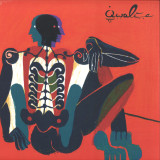
Cut from material recorded in April 2021 at Fish Factory studios in London, the album’s title Abbreviations nods to the editing and post-production processes that trimmed the original recordings into seven succinct and intricate tracks. Making space for collaborators Ernesto Marichales (percussion), Miryam Solomon (vocals) and Valeria Pozzo (Violin, viola), it builds on the critically-acclaimed success of Sound & Reason (supported by Gilles Peterson and Mary Anne Hobbs) to bring out different shades of the group’s shape-shifting sound.
‘Elevator Company’ condenses twenty-minutes of jamming around Tal Janes’ hypnotic guitar line into a low-lit lounge groove that subverts the tropes of elevator music associated with some forms of easy listening jazz. Featuring Solomon’s wordless vocals, the piece blurs the lines between ambient and improvised music, creating a warm and intimate atmosphere reminiscent of classic RnB recordings.
On a different tip, ‘The Spin’ is a trance-like freak-out drawing on the final reserves of energy at the tail end of two days of solid recording. Reflecting guitarist Janes’ idea that "music really starts happening after a while, once you feel like you have nothing left to offer," the hypnotic rhythm section sets the tone for an fraught and frazzled guitar solo that seems to dissolve the very edges of time and space in the process.
An album that speaks to Qwalia’s endless capacity for self-renewal and uninhibited expression, Abbreviations takes its cue from the group’s name to communicate something ineffable about the nature of music, rhythm and sound that must be experienced to be truly understood.
Introducing "Azerbaijani Gitara vol. 2" by Rəhman Məmmədli, the eagerly awaited sequel to Bongo Joe’s acclaimed debut featuring Rüstəm Quliyev. Born from the vibrant streets of Baku, Azerbaijani gitara culture has evolved into a mesmerizing fusion of indigenous traditions and global influences. From the oil boom era to Soviet rule, musicians have embraced the electric guitar as a symbol of cultural expression.
Rəhman Məmmədli, a legend in his own right, revolutionized the sound with his innovative techniques and impassioned performances. Drawing inspiration from mugham music, Məmmədli's compositions resonate with soul-stirring melodies and electrifying solos.
Join us as we honor the pioneers of Azerbaijani gitara culture while celebrating the continued evolution of this rich musical tradition. "Azerbaijani Gitara vol. 2" promise to captivate listeners with its depth, diversity, and unbridled passion, inviting you on a journey through the heart and soul of Azerbaijan's musical heritage.
For the fourth time now Jaqee introduces herself to the World with her impressive voice and her unique attitude. Born in Kampala, the Capital of Uganda, she began her vagabond like life the moment she was born. During her childhood, she travelled the rural areas of her home country with her parents. This is where she collected her first impressions of the life as a nomad. From birth on, wandering the earth became a part of her destiny. In the early nineties she undertook a huge step and immigrated to Sweden. The City of Gothenburg would become her adopted home from where she was able to access all the different destinies and directions, which were on offer to her. Through all the borders Jaqee crossed, music has always been her steady companion whereas it never was a stereotype thing that let her get down with any special genre, than more like a special feeling. “To do what I want in a particular moment is my motivation. I like to express myself in all kind of sounds.” So above all, she became a true nomad in the world of music. After several successful co-operations with numerous artists, in 2005 Jaqee made an impact with her debut album “Blaqalixious”, which was mainly a Soul and R&B album. “That was my direct contact to the music that a rural community in the Diaspora plays” she explains. But it did not end up there because a nomad like Jaqee does not settle anywhere. After further creative and fruitful collaborations, Jaqee released her second long player “Nouvelle d´ amour” in 2007. This time, the sound was more of a rocking, bluesy vibe. It seemed to be the total opposite to her debut album but for Jaqee it was only the next step on her path in the circle of life. “Everything is possible as long as it is real. I never wonder about things like genre as long as the vibe fits.” One step further on, she encountered the songs of Billie Holiday, which lead to the album “A letter to Billie” recorded together with Bohuslänbigband, a lovely homage to the great American Jazz Singer. Both of her first two albums each received a Swedish Grammy nomination and several appearances in the Swedish national television increased her standing as a passionate and soulful Singer. So Teka, producer and creator of many successful riddims for his co-found German label, Rootdown Records considered her to be part of his new project “Koala Desperados“, which link Caribbean vibes like Cumbia to Reggae, and while working on it a totally new idea was born. Jaqee and Teka decided to combine both their talents into one album. The results of which you can now hear on “Kokoo Girl” a refreshing mix of Old School Reggae sounds from the seventies combined with up-to-date Beats, electronic twists and turns and of course the amazing voice of Jaqee. For her, this means that she has achieved some of her ambitions. “I grew up with African Gospel, in sad and turbulent environment, so for me, this means I grasp and totally understand the reggae and its non ending struggle for the common man.” No sooner said than done and “Kokoo Girl” will become Jaqee’s fourth and newest release. All the paths she followed, countries she crossed and influences she absorbed are a part of this album. She sings with the freedom of spirit of the travelling people. The word “Kokoo” is the only memory that remains everlasting. It is just a word but its impact is so huge that Jaqee does not really like to explain it. “It implies irony and seriousness as well as sarcasm and fun.” It is more than a gimmick. “Kokoo” is a very special feeling and a clear view of the world from an artist who has seen more of it than all the people that have settled down.
Jaqee – is rhythm and life ”Places becoming journeys in themselves… Different places where I have lived and learned, places that have made my heart beat, the emotional realms that I have experienced. This is where it all starts, every time. Where I am is where it happens, because I am, there. Here.” She sings. She laughs! And she cries, too. Jaqee cannot tell when music and singing became her life, it has ”just always been there, in my head” she says. Now with the fourth album she has taken a closer look at herself, from every possible angle. No hiding. Different phases, different sides of her personality and musical creativity are all there. All as one. ”I am a diaspora kid, I fell in love with all kinds of music, I let myself embrace it all, because good music, is good music. All the way from Uganda at age 13 to the new home and culture in Sweden, then leaving Sweden as an adult for Berlin – has made me the Jaqee that I am”, says the Ugandan /Swedish artist who also received a Swedish Grammy nomination for her past work. Being on the move is without a doubt an important part of her life. “For me travelling is about being exposed to different perceptions, situations, cultures and extreme emotions, it has always made me grow. How many times have I not thought that: I wouldn’t have experienced this or that, if hadn’t been here. I love that feeling!” Jaqee’s music reflects this constant movement and progress. The album is inspired by places like Berlin, South Africa and Jamaica. The trip to Jamaica resulted in the only collaboration track on “Yes I am” recorded in Kingston with reggae artist Anthony B. Teka, the “Kokoo Girl” and “Yes I am” Producer says: ”This time around, like on the last album, we have worked with our colleagues in different countries. Musicians we love and musicians that are inspiring like Martin Hederos (The Soundtrack of our lives) who arranged the strings on the album. We also had New York drummer Daru Jones of Rusic Records play on some tracks. All these talents enhance the idea and expression that we wanted for “Yes I am”. With the album done, it is again time to hit the road and tour for Jaqee. “Getting out there and meeting the crowd is a high. We laugh, we dance and we get loud together. This is the best part of working with music – having a good time together. Music is a universal language.” On composing music, she admits that this time, more than ever, the words matter. Newly found motherhood has made this album in particular a significant legacy. Every song has a life punctuation of its own she has not limited herself by thinking in genres. Making the tone very straightforward. “The melodies and lyrics are closely intertwined, how I sing a word makes all the difference. Even though I love word play, it has to be very clear. Since I am not educated in reading music, I instead visualize and hear it, it seems to be the way my system works. It is all about rhythm and life, it is “YES I AM“.
“There are lots of outstanding Joe McPhee LPs. Nation Time being chief among them, but there’s also Pieces Of Light, Oleo and Topology. The Poughkeepsie, New York-based multi-instrumentalist, by now an international star of free music, has amassed a daunting discography, no doubt. If you want to peer deeply into the soul of Joe McPhee, however, there’s no way around it, you need to spend some quality time with Tenor. “Tenor is McPhee’s first solo record. He did not set out to make it. It was an afterthought, quite literally, born of a gathering of friends at the Swiss farmhouse of cellist Michael Overhage. A beautiful meal, some drinks, warm conversation, and ... why not, an impromptu recital. Hat Hut producer Werner X. Uehlinger was there and a year later issued it as McPhee’s third LP for the label (Hat Hut C in their famed letter series). “The existential blues ‘Knox’ sets the stage, indicating that this will not just be a toss-off postprandial singalong. ‘Good-Bye Tom B.’ carries on with aching melancholy, through burred notes and hushed harmonics. The relatively jaunty ‘Sweet Dragon’ is also emotionally loaded with Ayler-esque vibrato, slurs, wipes, and blasts of tone. The side-long title track comes without a theme, as a kind of pure investigation of the horn, its potential, its limits, its expressive capacity. There have been few solo sessions as comprehensive and devastating as this spontaneous after-dinner diversion in rural Switzerland in 1976. We’re very lucky someone pressed record.” —John Corbett (excerpt from the liner notes)
Black[27,69 €]
House of Harm are proud to announce the forthcoming release of their new album Playground, out December 1st, 2023. The new record builds and expands upon the three-piece’s enthralling shadow-pop sound, a mix of midnight atmospherics, 90s era jangle pop, and contagious synth drenched hooks that further elevate the transcendent vocals of lead singer Michael Rocheford. Rounded out by Cooper Leardi (guitar / synths) and Tyler Kershaw (guitar / synth), House of Harm have amassed an impressive following as something of a best kept secret among their growing fanbase, leading to sold out shows on both coasts by the power of word of mouth alone. The band members have been drawn to music for as long as any of them can remember, and the drive to be around like-minded artists and make their own noise drew them all to Boston after high school. There they all quickly enmeshed themselves, playing in other bands before meeting each other. Ever since, House of Harm have been quietly making a name for themselves among music fans with darker pop persuasions via a steady stream of releases in single, ep and album form. That attention to detail and workmanlike approach at the expense of chasing instant gratification seems to be paying dividends after years of steady effort. The journey of their new album Playground saw House of Harm stay true to that ethos. The band painstakingly narrowed the record down to an efficient 10 tracks that they felt made the most sense, both standing on their own as well as fitting into an LP that built a cohesive world for the listener to get lost in. The album’s name also reflects the experimentation and happy accidents that came about during the writing and recording process. On “The Face of Grace” they set out to explore different dynamics by writing a song entirely without drums, but couldn't help themselves from putting emphasis on the song’s 6/8 waltz time signature. “Two Kinds” is another first for House Of Harm in that it’s predominantly driven by acoustic guitar. That aforementioned vulnerability shows up in other areas of the songwriting process as well with “Two Kinds”, one of their most revealing songs to date from a lyrical standpoint, written from a place of reflection and weakness and tackling feelings uneasy to be put on display for public consumption. Taken as a whole, the end result is an album representing a collection of the band’s most raw and expressive songs yet.
Introducing Jahnah Camille (pronounced Hannah), a young artist emerging from the DIY scene of Birmingham, Alabama. Camille's songs capture the rollercoaster of teenage angst, heartbreak and introspection over a well-made bed of driving guitars and catchy, compact melodies. A five-track EP infused with anxiety and grit, i tried to freeze light, but only remember a girl, is a shining introductory project smoothed over by Camille's sugar-sweet voice and cutting lyricism. Much of the EP's songs were written and recorded while Camille was still in high school, taking trips back and forth from Atlanta to record. In the time following, Camille dug into the local DIY scene, steadily gaining an impressive resume of opening slots as she cut her teeth supporting acts like Clairo, Soccer Mommy, Cryogeyser and Wednesday as they came through town. Now 19 years old, Camille delivers an excellent snapshot of those uncertain and wildly hopeful late teen years. i tried to freeze light captures Camille approaching heartbreak and self-perception from a variety of angles-each track playing slightly with genre and cadence and infused with influence from her musical heroes, like Liz Phair and Fiona Apple. The EP pulls at a range of alternative rock and pop threads, there's the 90s alternative rock opener "flesh" and the country-gaze-tinged "roadkill." Camille then softens on the swooning synth-layered ode to love lost, "elliot," before relaxing into a folksy, acoustic "paper doll."I wanna talk and not spill out carnival sounds" Camille confides on closer "carnival sounds"--a track that illuminates the singer's art-pop influences and knack for revealing tender and at times searing admissions through her lyricism. While misunderstandings color the emotional sentiment of the EP, Camille's artistry and expression come through clear as day on i tried to freeze light, presenting her as a promising young voice with real talent and a hunger for musical experimentation.
180 Proof Records & BBE Music continue to bring new life to the Strata catalogue, this time with the short-lived label's swan song: Larry Nozero’s 1975 passion project, Time. The final album to be released on Strata Inc., Time is a dream- like mix of mood, an album full of range, tempo, and feeling; from the impulsive and airy rendition of the jazz standard “All The Things You Are” to the brooding melancholia of “Tony,” Nozero’s Time is destined to become known among aficionados as a classic of 1970s jazz. Like time itself, each song is open to individual interpretation - something Nozero himself confessed to on the album’s original liner notes, saying “It got so deep that we decided to call the group and our album after that concept of TIME, because it seemed to mean something to just about everyone.” A native of Detroit, Nozero spent time in Charles Moore’s Detroit Contemporary 5 (part of Strata Inc.) before being drafted into the military. While enlisted, Nozero capitalised on his time by honing his craft in the Army Band. By the time he returned to Detroit, Nozero had little trouble landing high-profile gigs. No stranger to success, Nozero’s previous credits and collaborators include Henry Mancini, Sergio Mendes, and playing Soprano sax on Marvin Gaye’s iconic 1971 album, What’s Going On. Working with his cousin and collaborator Dennis Tini, Time is unlike many albums of the era in that it truly feels like a work fuelled by freewheeling expressionism. The pieces are funky, soulful, strange and soothing all at once. Tini’s stand-out contribution to the album is “Tune for L.N.”, a funk-fuelled piece of rhythm-centric jazz. A distinguishing feature of the album is the use of wordless vocals. The scat work on part two of “Chronicle Of The Murdered House” adds a distinct counterpoint to Nozero’s reed work, while the high pitch bebop of “Baubles, Bangles and Beads” closes out the album with a carefree and buoyant groove. Time has been remastered by the Grammy nominated studio The Carvery, along with the artwork, which has been restored and includes never seen before photos.
Black Truffle is thrilled to present the first vinyl reissue of David Rosenboom’s unique Future Travel, originally released on the short-lived Detroit label Street Records in 1981 and here presented in an expanded edition with an additional LP of wild, previously unheard live and studio material from the same period.
Future Travel emerged from the confluence of two important streams in Rosenboom’s work at this time. First, his exploration of ‘propositional music’, defined as ‘complete cognitive models of music’ that start from the radical question, ‘What is music?’ In this case, the music belongs to the universe of Rosenboom’s In the Beginning (1978-1981), in which proportional relationships determine the material available to the composer in all musical parameters (harmonic relationships, melodic shapes, rhythmic subdivisions, dynamics, and so on). Second, the work documents a key moment in Rosenboom’s long collaboration with synthesizer pioneer Don Buchla. Having played a role in developing concepts for some of the modules of the Buchla 300 Series Electric Music Box (an innovative analogue modular system controlled by micro-processors), Rosenboom went on to write the software for Buchla’s hybrid analogue-digital keyboard synthesiser, the Touché, the instrument heard most prominently here.
In a way that no purely analogue synthesizer could, the 300 Series and Touché allowed Rosenboom to work with the In the Beginning algorithms in real time, the synthesizers becoming ‘intelligent instruments’ that actively collaborate with the performer. Developing the open structures of the electronic pieces from In the Beginning, Future Travel explored the possibilities of simply ‘playing the system’, recording live at Francis Ford Coppola’s Zoetrope studio in San Francisco. Working from loose sketches, Rosenboom added acoustic instruments to the electronic sounds and, on some pieces, the processed voice of Jacqueline Humbert. Like Rosenboom’s collaboration with Humbert on the abstracted synth-chanson of Daytime Viewing, this music set out deliberately to challenge the ‘stratified and illusorily coagulated identities in the musical culture of the time,’ refusing distinctions between ‘serious’ and popular music. But where Daytime Viewing achieves this in part through genre references, Future Travel is bracingly sui generis, existing in a unique universe where radical formalisation à la Xenakis spontaneously gives rise to expressive jazz harmonies and old-timey folk melodies.
The crystalline quality of many of the Touché sounds gives Future Travel a sparkling, immediately enticing surface, its layers of shifting ostinato patterns pulsating outside conventional meter, rippling like waves on the surface of water. On opener ‘Station Oaxaca’, ping-ponging synth arpeggios and hand percussion accompany a sentimental violin melody, abruptly overtaken by layered keyboard runs, before the entry of tinkling marimba-like sounds reframe the scene as sci-fi Martin Denny exotica. ‘Time Arroyo’ begins as an austere study in staccato synth sounds in multiple overlapping tempi, reminiscent of Ligeti’s famous ‘clock’ rhythmic effects. Before long, it opens up into a melodic passage with the gentle heroism of classic Roedelius, which proves to be only a brief interlude before the layers of rhythmically distinct synthesiser patterns begin to build and accelerate into an increasingly dense cacophony. The wildest twists and turns are saved for the epic closer ‘Nova Wind’, where the arrangement focuses on Rosenboom’s virtuoso piano playing, perfectly embodying the project’s radical disregard of stylistic orthodoxies as he moves from hyperactive pointillistic flurries to a kind of space-age gospel.
At several points throughout the record, the distinctive voice of Jacqueline Humbert is heard reading passages from the text component of In the Beginning, a dialogue between The Double (an embodiment of humanity’s timeless desire to replicate itself in spiritual and technological copies) and two Spirit Characters. Fittingly, as all are conceived as embodiments of a future form of techno-human collective consciousness, distinctions between the three characters are not immediately evident in Humbert’s delivery, just as the music blurs the boundaries between intelligent computing and human spontaneity. Adorned with a striking retro-futurist cover (and here accompanied by extensive new liner notes and archival images), Future Travel is a time capsule of radical imaginings at the birth of our digital age, reminding us of utopian possibilities of which our own present seems so often to fall short.
The Guardian wrote “the Canadian songwriter has one of the all-time great singing voices in popular music, an intensely romantic Chet Baker-ish instrument that seems to float with piercing direction, like a paper aeroplane thrown hard through mist.” With Uncut describing his songcraft “as delicate and lovely as a rare orchid” and Record Collector praising the album’s “sublime alien balladry” such are the accolades that have accrued throughout Chenaux’s unique and consummately uncompromising solo music for well over a decade now. Delights Of My Life opens a new chapter for the singer/guitarist and formally introduces the Eric Chenaux Trio, with Toronto-based musicians Ryan Driver on Wurlitzer organ and Phillipe Melanson on electronic percussion. Driver is a longtime collaborator, appearing on several of Chenaux’s solo albums (even embedded into the very title of the 2010 masterpiece Warm Weather With Ryan Driver). Melanson has a long list of involvements that include Bernice, Joseph Shabason, and U.S Girls, and a recent release with his Impossible Burger project on Chenaux’s own experimental label Rat-drifting, but this marks the first fulsome involvement between the two as players on a recording. In many ways Delights Of My Life also picks up right where Chenaux’s previous album left off, in its subversions of a classic, timeless jazz-inflected balladry, while the interplay of the trio formation indeed unfurls many new delights. Recording together at Chenaux’s spartan home studio in rural France, Driver’s harmonically warped organ and Melanson’s electroacoustic sampling and percussion hold time in newfound ways. Where previously Chenaux relied on a freeze/sustain pedal and minimalist rhythmic triggers to generate both pulse and chordal foundations, Melanson now paints timekeeping with expressive and intricate colourations, through live deployments of fluid sampled percussion (including orchestral timbres like timpani, kettle drums, and woodblock) that blur the boundaries between acoustic and electronic. Driver also ramps up his role in the song arrangements (prefigured in his support playing on Say Laura), teasing out chords and melodic filigree on Wurlitzer that percolate more prominently with Chenaux’s signature fried guitar solos and succulent singing. Both trio members add dulcet backing vocals, most notably on the 10-minute tour-de-force of fuzzed and ring-modulated swing “This Ain’t Life” that opens the record. All seven songs on the album groove and sway, simmer and sparkle, like nothing in the inestimable Chenaux discography to date. Chenaux’s tunes have the uncanny ability to sound like jazz standards; songs you feel you’ve heard before, though certainly never quite like this. Yet these are of course all originals, compositionally and interpretively, bent through an inimitable avant/out-music lens. Delights Of My Life conveys warm familiarity, shot through with the exuberantly experimental subversion and playful, even mischievous, iconoclasm that continues to mark Chenaux as defiantly, virtuosically, and genially one-of-kind
- A1: Fé De Sábio - Crepúsculo
- A2: Nuno Rebelo - Vê-Se Das Nuvens
- A3: Vítor Rúa - T
- A4: Tó Neto - Daly
- B1: Luis Cilia - Saxofonía
- B2: Spqr - Flow
- B3: Telectu - Untitled
- B4: Pilar - Voz Do Mar
- C1: Carlos María Trindade - Em Campo Aberto
- C2: Balladium - Andrómeda
- C3: Ban - Irreal Social
- D1: Pop Dell'arte - Querelle
- D2: Santa Maria Gasolina Em Teu Ventre - Optical Sunday Without William Burroughs
- D3: Croix Sainte - We Build Cities
- D4: Linha Geral - Hino À Nossa Luta
Unveiling an unheard scene: Glossy Mistakes presents "Atlantic Mavericks: a Decade of Experimental Music in Portugal 1982-1993"
Glossy Mistakes is proud to announce the upcoming release of "Atlantic Mavericks: a Decade of Experimental Music in Portugal 1982-1993," a groundbreaking double LP compilation that offers a unique glimpse into the vibrant landscape of Portuguese experimental music. Set to launch on June 10th, this monumental release showcases the evolution and innovation of the Portuguese music scene during a transformative decade marked by political upheaval and artistic experimentation.
Compiled by Glossy Mario and featuring liner notes by Rui Miguel Abreu, "Atlantic Mavericks" captures the essence of a generation of artists who dared to challenge conventions and push the boundaries of what was possible in music.
The compilation stands as a testament to the eclecticism of the Portuguese music scene during this period, featuring a diverse range of genres and styles. From ambient and new age to electro, rock, and synth-pop, "Atlantic Mavericks" offers something for every listener, inviting them to explore the rich tapestry of sounds that defined the era.
The 1980s in Portugal were a time of profound transformation, marked by the aftermath of a peaceful revolution and a burgeoning desire for artistic expression. As the country emerged from political turbulence, a new generation of musicians began to explore uncharted territories, paving the way for a wave of experimentation and innovation.
From the emergence of artists like Rui Veloso and bands like UHF, who ushered in a new era of Portuguese rock, to the founding of independent record labels like Fundação Atlântica and Ama Romanta, the 1980s saw a surge in creativity and a desire for independence within the music industry.
"Atlantic Mavericks: a Decade of Experimental Music in Portugal 1982-1993" offers a comprehensive overview of this dynamic period, featuring tracks that span the spectrum of experimental music. Each song tells a story of artistic evolution and creative risk-taking, reflecting the diverse influences and eclectic tastes of the Portuguese music scene during this transformative decade.
Spanning from 1982 to 1993, the compilation includes contributions from a wide range of artists, including SPQR, Croix Sainte, Linha Geral, Balladium, Ban, Santa Maria, Gasolina Em Teu Ventre!, Fé de Sábio, and Telectu, among others. With each track carefully curated to showcase the breadth and depth of Portuguese experimental music, "Atlantic Mavericks" promises to be a must-have for music enthusiasts and adventurous listeners alike.
"Atlantic Mavericks: a Decade of Experimental Music in Portugal 1982-1993" will be available on June 10th as a double LP release, offering listeners a chance to immerse themselves in the sonic landscapes of 1980s Portugal. Whether experienced on vinyl or through digital channels, this monumental compilation is sure to leave a lasting impression on all who encounter it.
Julius Rodriguez returns with his 2nd LP on Verve Records. The album is made up of exciting new original material and a cover of Dijon’s “Many Times”. Guest features from Keyon Harrold, Nate Mercereau, and Georgia Anne Muldrow. “This album for me embodies the meaning of "Evergreen." With the differing worlds that are presented by each track, I still aim to be fully honestly myself in my expression - maintaining my voice in any variation of musical climate. With this, I hope to carry on the importance of prioritizing the music itself, rather than letting a genre or label create a preconceived connotation of the music. The genre is me.”
CLEAR VINYL EDITION[26,26 €]
On Yard, Wisconsin-bred, Chicago-based four-piece Slow Pulp nestles comfortably into pockets of nuance, impressions, contradictions-sonics and lyrics finessed together to bottle the specific tension of a feeling you"ve never quite been able to find the right words for. In that regard, listening to Slow Pulp can feel like being in a room with someone who"s known you so long that they can read your every micro-expression and pinpoint exactly how you"re feeling before you can. Perhaps this spawns from the band"s own shared history and chemistry; in various ways, the four of them grew up-are still growing up-together. The dreamy songs of the Midwest (United States) indie rock outfit draw on moody shoegaze, hooky grunge, and intimate lo-fi fare. The band made their full-length debut with Moveys in 2020. After the downcast 2021 7" Deleted Scenes, they put the focus on hooky grunge pop for singles like 2021"s "In Too Deep" and 2023"s "Cramps". After their label debut single the band toured throughout Europe and the UK earlier this year as main support for Death Cab For Cutie. The new album "Yard" is their second full-length album and first for ANTI-.
A Haunted Tongue is the third album by Colossal Squid, the solo project of producer/virtuoso drummer Adam Betts (Goldie, Squarepusher, Melt Yourself Down, Jarvis Cocker). The first self-titled Colossal Squid album (2016) was intended by Betts as a way of exploring the process of creating music from purposefully limited tools (a drumkit and electronica) and finding a place where technology and live performance could happily meet. In comparison, the second album Swungert (2019) acted as a chance to see if the music written from that same process could be moulded (via collaboration and editing) into something more traditionally recognisable as a ‘song’. A Haunted Tongue moves things on one step further, letting the process and approach fade into the background, freeing Betts to balance a million inspirations (early 90s Warp, rave tapes, Nubian drumming, Indonesian gabba…) and filter them through an anything-goes punk aesthetic that results in a feeling of freedom that is both refreshing and rare. Betts has spoken of “a recurring dream of a stranger trying to get across an important message but not talking in any discernible language” that guided these recordings. This feels appropriate to the listener – the language of A Haunted Tongue isn’t straightforward or easily classified but yet the message is clearly understood and embraced by the listener at a primal level. That message is one of hope - channelling the shared euphoria of communal musical experience and searching for an uncynical and personal expression of positive energy that can move people and resonate with them. “A while back we had a chat with JR Moores, he was doing a Bandcamp piece on the label. We mentioned we wished we did more rave-related releases. Within seconds we had the Johnny Broke album in our inbox. Johnny Broke is actually Wayne Adams. Wayne messaged and told us about Adam Betts (AKA Colossal Squid). And here we are, dealing with someone who drums for Squarepusher and Goldie. Both Chris and I have the biggest love for 90s rave music. For me (Joe) I'm listening to an alternative world that I was old enough for but missed out on. I knew the music but didn't have the knowledge to drive around the M25 looking for the fields. It's a history I don't quite have but feel like I do. It's like the Beatles: known all my life but no idea why. It's cut into our DNA. It was our punk rock but we missed it. This Colossal Squid album, no matter how many times I listen to it, brings something new every time. And it makes me feel like I'm finally there” – Wrong Speed HQ
- A1: She Never Wrote Back
- A2: With You I Still Feel Alone
- A3: Dressed Up Ausländer
- A4: (Bolt) Golden Hour At Sisters
- A5: Crashed
- B1: Just Pretend To Be Someone Else
- B2: I'm Poster Syndrome
- B3: Bubble Life
- B4: 4Real
- B5: Closed Eyes
- C1: Other, Like Me
- C2: Methodology #17
- C3: Boy On A Swing
- C4: I Have A Keen Interest
- D1: In A Place Like This
- D2: Mark Up
- D3: I Am An Artist
Experience the sonic journey that is The Black Dog's latest album, "Other, Like Me," as they delve into the intricacies of the artist's psyche, questioning the very essence of individuality and creative worth. The album invites listeners to confront darker thoughts about self-identity, imposter syndrome, and the relentless pursuit of creative value, all while celebrating the joy found in the act of artistic creation. In this introspective exploration, The Black Dog challenge both themselves and their audience, creating a musical experience that is profoundly personal and open to interpretation. The themes woven throughout the album are a poignant counterpoint between the shadows of self-doubt and the exuberance of creative expression. It's an inward exploration, offering a place of solace for listeners to find comfort amid the chaos of external influences. The album's title, "Other, Like Me", draws inspiration from an interview with Cosey Fanni Tutti in 1999, resonating deeply with The Black Dog's outsider perspective. The phrase encapsulates the essence of the album, reflecting the band's unique identity and shared experiences, while respecting each member's individual passions and interests. Navigating the waters of cognitive dissonance, The Black Dog bring an authenticity to their music that mirrors the internal and external conflicts of the contemporary music scene. With a commitment to stripping back layers and allowing the heart of each song to shine through, "Other, Like Me" offers a raw and unfiltered musical experience that speaks directly to the soul. It's an invitation to introspection, a celebration of independence, and a testament to the power of authentic artistic expression.
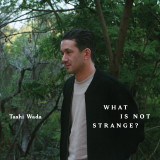
What Is Not Strange? is the first full-length album by Los Angeles-based composer Tashi Wada in over five years, comprising his most far-reaching and impassioned music to date. Written and recorded over a period that encompassed the death of his father and the birth of his daughter, the album sees Wada reflecting inward to explore broad narratives - being alive, mortality, finding one's place in the world - through new modes of ecstatic, song-based expression. While the denser forms, stark contrasts, and overt surreality may carry a different weight than Wada's earlier work, which elicited perceptual effects with minimal means, the heart of What Is Not Strange? is still in experimentation and unforeseen outcomes.
A1 - Blue Sky
Opening with a clean, DJ-friendly Hot Pants break, Blue Sky offers the listener a subtle, warming production with inquisitive synth work creeping around a fine selection of serene effects, panning excitedly across a pristine, polished field. Utilising light orchestral strings, a soft undertone bassline and wistful twilight sounds, Aural Imbalance blends danceable breakbeats with the soothing sounds of yesteryear as fluidly as ever.
A2 - Starburst
Starburst jumps straight into a tight, energetic beat pattern constructed with old school breaks and an off-key bassline, soon joined by eerie, spectral pads to gradually build an ethereal, other-worldly vibe. The composition is elevated by arising symphony of swirling blippy melodies, expressing a nervy and curious tone with detail and harmony before the beat recedes, allowing the melodies to shine alone in the dreamy outro.
AA1 - Frozen Tears
Aural Imbalance conjures a quietly grandiose track with Frozen Tears, driven by muffled keys and thick hi-hats in the intro before a luscious, meditative melody enters the mix. Intricate breakbeats with a suitably understated bassline accompany the fading and echoing synthetic strings, rich pads and subtle bells, producing a beautifully varied spectrum of sound, perfect for the Spatial record box.
AA2 - Moonlit Clouds
A distinctive, impeccably produced Helicopter break takes center stage with Moonlit Clouds, a deftly relaxing ambient aura floating overhead as synths and knowing melodies slowly weave their way into your psyche like shimmering fireflies seizing the moment in the dark. A low sub bassline permeates the depths to complete a collage of euphony to round off another special EP from Aural Imbalance.
Words by Chris Hayes Spatial/Red Mist
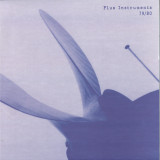
While she was still a member of Nasmak, one of the leading bands of the Dutch ultra-movement, Truus de Groot started Plus Instruments in 1978 with herself as the sole member. When the project evolved, she found a wide range of rotating collaborators like Michel Waisvisz, Lee Ranaldo and James Sclavunos. Plus Instruments was about freedom and the live performances were largely improvised. The sound minimal but captivating. The music always came from within, but De Groot was also triggered by bands like Red Crayola, Suicide, DAF, Wire, Per Ubu, Devo and the No Wave scene in NY. She was always experimenting with primitive multi-track recording and whatever crappy gadgets she could find. Always looking for a gritty, dirty sound and bizarre overtones.
At a young age she travelled to New York and began to immerse herself in the nightlife of the city that never sleeps. Here she found true creativity, passion and expression. The club scene was alive but highly competitive, so this fearless Dutch girl would just knock on promoter’s doors to get gigs booked at places like CBGB’s, Peppermint Lounge, Underground and the Pyramid. De Groot eventually settled in the United States and never stopped experimenting with sound. In recent years she reinvented Plus Instruments and led the group into new territory.
The recordings for this LP were made by De Groot at home and the music is experimental, minimal, industrial but also playful, sounding nothing like most of the later material. 14 tracks in total of which 7 are taken from the elusive and impossible to find self-released debut cassette as ‘Truss Plus Instruments’ which was sparingly distributed by Nigel Jacklin and his legendary Alien Brains fanzine in 1980. The remaining 7 tracks are from the same period (1979-1980) and were carefully selected from the vast archive of De Groot. We are glad to present this anthology that serves as a long overdue testimony to the formative phase of a unique female pioneer of electronic music.
Following the release of Eric Chenaux's last album Say Laura (2022), The Guardian wrote "the Canadian songwriter has one of the all-time great singing voices in popular music, an intensely romantic Chet Baker-ish instrument that seems to float with piercing direction, like a paper aeroplane thrown hard through mist." With Uncut describing his songcraft "as delicate and lovely as a rare orchid" and Record Collector praising the album's "sublime alien balladry" such are the accolades that have accrued throughout Chenaux's unique and consummately uncompromising solo music for well over a decade now. Delights Of My Life opens a new chapter for the singer/guitarist and formally introduces the Eric Chenaux Trio, with Toronto-based musicians Ryan Driver on Wurlitzer organ and Phillipe Melanson on electronic percussion. Driver is a longtime collaborator, appearing on several of Chenaux's solo albums (even embedded into the very title of the 2010 masterpiece Warm Weather With Ryan Driver). Melanson has a long list of involvements that include Bernice, Joseph Shabason, and U.S Girls, and a recent release with his Impossible Burger project on Chenaux's own experimental label Rat-drifting, but this marks the first fulsome involvement between the two as players on a recording. In many ways Delights Of My Life also picks up right where Chenaux's previous album left off, in its subversions of a classic, timeless jazz-inflected balladry, while the interplay of the trio formation indeed unfurls many new delights. Recording together at Chenaux's spartan home studio in rural France, Driver's harmonically warped organ and Melanson's electroacoustic sampling and percussion hold time in newfound ways. Where previously Chenaux relied on a freeze/sustain pedal and minimalist rhythmic triggers to generate both pulse and chordal foundations, Melanson now paints timekeeping with expressive and intricate colourations, through live deployments of fluid sampled percussion (including orchestral timbres like timpani, kettle drums, and woodblock) that blur the boundaries between acoustic and electronic. Driver also ramps up his role in the song arrangements (prefigured in his support playing on Say Laura), teasing out chords and melodic filigree on Wurlitzer that percolate more prominently with Chenaux's signature fried guitar solos and succulent singing. Both trio members add dulcet backing vocals, most notably on the 10-minute tour-de-force of fuzzed and ring-modulated swing "This Ain't Life" that opens the record. All seven songs on the album groove and sway, simmer and sparkle, like nothing in the inestimable Chenaux discography to date. Chenaux's tunes have the uncanny ability to sound like jazz standards; songs you feel you've heard before, though certainly never quite like this. Yet these are of course all originals, compositionally and interpretively, bent through an inimitable avant/out-music lens. Delights Of My Life conveys warm familiarity, shot through with the exuberantly experimental subversion and playful, even mischievous, iconoclasm that continues to mark Chenaux as defiantly, virtuosically, and genially one-of-kind.