Buscar:in camera

Estilos
Todo
Hannah Jadagu - APERTURE

Hannah Jadagu

APERTURE

CassetteSPCS1544
Sub Pop
19.05.2023

Tape

Fresh out of high school, Hannah Jadagu released her debut EP, What Is Going On?, a collection of intimate bedroom pop tracks recorded entirely on an iPhone 7, which was, at the time, Jadagu's most accessible mode of production. An off-the-cuff approach to music making and instinctive ability to write unforgettable hooks belied the intensity of Jadagu's subject matter. What Is Going On? confronted some of the nation's most urgent struggles through Jadagu's compassionate perspective. What Is Going On? built on the small online fanbase Jadagu had developed by releasing music on SoundCloud for years as she realized her growing passion for songwriting. Now, Jadagu is releasing Aperture, her first LP and most ambitious work to date. Written in the years between graduating from high school in Mesquite, TX and her sophomore year of college in New York, Aperture finds Jadagu in a state of transition. "Where I grew up, everyone is Christian; even if you don't go to church, you're still practicing in some form," Jadagu says, laughing. "Moving out of my small hometown has made me reflect on how embedded Christianity is in the culture down there, and though I've been questioning my relationship to the church since high school, it's definitely a theme on this album, but so is family." As a kid, Jadagu followed her older sister - a major source of inspiration - to a local children's chorus, where she received choral training. "I hated it," Jadagu admits. "But it taught me how to harmonize, how to discover my tone, how to recognize and write melody." The aching single "Admit It" is dedicated to Jadagu's sister, whose love and impeccable taste have been a constant since Jadagu was a kid. The siblings were raised on mom's Young Money mixtapes and the Black Eyed Peas (to whom Hannah credits her love of vocoder) but it was in the sanctity of her sister's car that Jadagu discovered the indie artists who inspire her work. With Aperture, Jadagu faced the challenge of finding a co-producer capable of complementing her work without dominating it. Enter Max Robert Baby, a French songwriter and producer who captured Jadagu's attention with his take on Aperture's lead single "Say It Now." The duo worked remotely, sending stems to one another via email, before meeting in-person for the first time at Greasy Studios on the outskirts of Paris. "When I recorded my EP, it was all MIDI, but in the studio Max and I worked with a ton of analog instruments," Jadagu says. "Every track on this album, except for 'Admit It,' was written first on guitar. But the blanket of synths throughout helps me move between sensibilities. There's rock Hannah, there's hip-hop Hannah, and so on. I didn't want any of the songs to sound too alike." An aperture is defined as an opening, a hole, a gap. On a camera, it's the mechanism that light passes through, allowing a photographer to immortalize a moment in time. For Jadagu, the word perfectly encapsulates the mood of her debut album. In the years it took her to complete, she faced moments of darkness, sure, but the process of making it was ultimately a cathartic experience, one she now shares with you. Let the light in.

Reservar19.05.2023

debe ser publicado en 19.05.2023

11,72

Ültimo hace: 2026 Años
Riz Ortolani - Cannibal Holocaust OST

THE SOUNDTRACK OF THE MOST CONTROVERSIAL FILM EVER.

FOR THE FIRST TIME IN FULL IN A SPECIAL DOUBLE VINYL EDITION!!! (NON-RETURNABLE)

This Legacy Edition of “Cannibal Holocaust” includes the film score remastered and released in its entirety for the first time ever on double LP; graphically speaking, it includes a gatefold cover with glossy title letters printed on a special soft touch paper, OBI and an 8-page booklet complete with reproductions of posters, lobby cards and photographs from the set, plus presentation essays written by Fabio Capuzzo (one of today’s best soundtrack experts), Stefan Dimle (Landberk, Anekdoten, Paatos, Morte Macabre) and Mikael Åkerfeldt.

AMS Records is proud to present a special edition of the “Cannibal Holocaust” soundtrack, exclusively released on the occasion of Record Store Day 2023. It is, of course, one of the many 'cannibalistic' movies, but perhaps it’s also the only one of its a genre that even today generates mixed feelings and strong controversy.

The excellent soundtrack, composed by Riz Ortolani, makes extensive use of string instruments, masterfully arranged and directed to match the strong contrast between the more relaxed scenes - the incipit of the film is memorable, with the main theme accompanying the spectator in a flight over the Amazon forest - and those full of rhythm and tension; in the first case, the strings go along with guitar arpeggios, while in the second they vibrate alone or together with glacial electronic beats. There are also funk-rock episodes such as in “Cameramen’s Recreation”, “Relaxing In The Savana” and “Drinking Coco”, while “Cannibal Holocaust (Terror)” is pure noise mixed with haunting percussion.

Reservar12.05.2023

debe ser publicado en 12.05.2023

51,22

Ültimo hace: 2026 Años
WESLEY JOSEPH - GLOW

Wesley Joseph

GLOW

12inchSC1461LPC
Secretly Canadian
28.04.2023

Clear Vinyl

For polymath artist Wesley Joseph, writing a song is like shooting a film. He sees in terms of scenes and colors, lighting the proper mood, drawing the right emotional arc_far beyond just getting a catchy melody down on tape. Music and filmmaking are Joseph's two great loves. Film came first_he started making DIY videos at age 12 to entertain himself and his friends growing up in a small UK community_but when he moved to London to study it, the energy he discovered in the city demanded to be captured in song, resulting in his 2021 debut ULTRAMARINE, a distinctly cinematic collection of avant-R&B and soulful future-pop shot through with moments of surprising aggression and an intriguingly complex postmillennial aura. Since collaborating with the likes of Jorja Smith and Loyle Carner, he returns with GLOW, eight more songs of love, loss, anxiety, and joy about coming of age at a time of unprecedented change. Showcasing his range across songwriting, performing, and production_not to mention his flawless transitions between singing and rapping, between character studies and raw emotional honesty_it's a stunningly beautiful work that makes it clear Joseph's on the path to becoming a worldchanging talent. As on previous projects, Joseph is providing his own visual accompaniments for GLOW, creative directing its artwork and directing its first video. "COLD SUMMER" finds Joseph singing from a supervillain's perspective over woozy film-score strings, and the concept bleeds over into its video accompaniment, a cryptic post-post-Tarantino gangster comedy shot in Kazakhstan. It's usually hyperbole to call an artist as young and new as Joseph "visionary," but it's undeniable that he has a vision, one that transcends old ideas of genre and medium, one that seems to get bigger and richer every time he steps into a studio or behind a camera. GLOW is one of the deepest and most satisfyingly cinematic listening experiences of the year_and Wesley Joseph is just getting started.

No en stock

Haga su pedido ahora y le encargaremos el artículo en nuestro proveedor.

22,31

Ültimo hace: 2 Años
Wesley Joseph - GLOW EP

Wesley Joseph

GLOW EP

12inchSC461LP-C1
Secretly Canadian
21.04.2023

For polymath artist Wesley Joseph, writing a song is like shooting a film - he sees in terms of scenes and colors, lighting the proper mood, drawing the right emotional arc. Music and filmmaking are Joseph’s two great loves. Film came first—he started making DIY videos at age 12 to entertain himself and his friends growing up in a small town in the UK. “There wasn’t really much happening,” he remembers, “and from a young age it created this mindset that doing everything myself was the only way to do it.”

But when he moved to London to study as a filmmaker, he discovered something in the freedom and independence of city life that demanded to be captured in song, and found a crew of collaborators—including A.K. Paul, Dave Okumu, Joy Orbison, Leon Vynehall, Lexxx, Loyle Carner and his childhood friend Jorja Smith—to help him do it. The result was his breakthrough single ‘Ghostin’’ and the 2021 debut ULTRAMARINE - released on his own imprint EEVILTWINN - a deeply textured collection of avant-R&B and soulful future-pop that stretched from psychedelic ballads to hard hip-hop bars (often in the span of a single track) and crystallized the mood of a young cohort trying to find love and live their dreams while the world is falling apart. Whilst his collaboration with Loyle Carner on single ‘Blood On My Nikes’ lead to him featuring on the artist’s critically acclaimed - and #3 charting album - earlier this year.

Now the nascent auteur returns with his Secretly Canadian debut GLOW, eight more songs of love, loss, anxiety, and joy about coming of age at a time of unprecedented change. Showcasing his range across songwriting, performing, and production—not to mention his flawless transitions between singing and rapping, between character studies and raw emotional honesty—it’s a stunningly beautiful work that makes it clear Joseph’s on the path to becoming a world-changing talent.

GLOW opens with the title track’s warm analog synths and cascading vocals that channel the harmonious Northern soul Joseph’s dad raised him on, a shimmering bed of clouds for the project’s opening credits. But like any good director, he quickly deepens the mood, drawing together disparate influences and emotions to build a unique sonic world spilling over with synchronicities and juxtapositions. “MONSOON” conjures nocturnal hedonism at the same time as it contemplates grief.

As on previous projects, Joseph is providing his own visual accompaniments for GLOW, creative directing its artwork and adding to his growing filmography as a director—he’s repped by the renowned production company Stink—with its first video. “COLD SUMMER” finds Joseph singing from a supervillain’s perspective over woozy film-score strings, and the concept bleeds over into its video accompaniment, a cryptic post-post-Tarantino film shot in Kazakhstan.

“I've never really seen them separately,” Joseph says of music and film. “They kind of just constantly drift into each other. And when they come together, it's like it was meant to be in my head the whole time.
It’s usually hyperbole to call an artist as young and new as Joseph “visionary,” but it’s undeniable that he has a vision, one that transcends old ideas of genre and medium, one that seems to get bigger and richer every time he steps into a studio or behind a camera. GLOW is one of the deepest and most satisfyingly cinematic listening experiences of the year—and Wesley Joseph is just getting started.

Reservar21.04.2023

debe ser publicado en 21.04.2023

25,17

Ültimo hace: 2026 Años
The Hidden Cameras - THE SMELL OF OUR OWN LP 2x12"

A deluxe edition as a 2 x LP on yellow vinyl, features bonus demos, b-sides and live session recordings. The Hidden Cameras burst onto the Toronto music scene in the early 2000"s boasting an irresistible combination of pop and queer sensibilities. Playing self-proclaimed "Gay Church Folk Music" a new genre of their own making and songs ranging from haunted, aching ballads to foot-stomping anthems, the band"s outrageous stage shows packed such disparate venues as sweaty dance bars, art museums, a working porn cinema as well as many churches. Fronted by lead singer-songwriter Joel Gibb, the ensemble continues its musical provocations to this day, with Berlin now as its centre of gravity. The Hidden Cameras had yet to release a note of commercially available music when, in early 2002, they became among the most discussed and celebrated unsigned bands in the history of their native Toronto. By the close of the year, they had been the subject of uncommonly sensational features in The Globe and Mail (Canada"s national newspaper) as well as in every daily and weekly in Toronto. The reasons for the reckless enthusiasm of these usually cautious journals was simple: revelatory live performances that attacked and transcended the staid, dispassionate traditions of rock nightclub culture; and the songs of band front-man and mastermind Joel Gibb, a talent of uncommon melodic and poetic gifts. "The Smell of Our Own", The Hidden Cameras debut album was originally released in April 2003 on Rough Trade to tremendous critical acclaim.

Reservar14.04.2023

debe ser publicado en 14.04.2023

33,82

Ültimo hace: 2026 Años
The Cinematic Orchestra - Every Day (Ltd Col. 20th Anniversary 3LP+MP3)

Red Vinyl

The Cinematic Orchestra haben anlässlich des 20-jährigen Jubiläums die erste Reissue ihres Klassikers, „Every Day“, angekündigt. Auf 3 LPs auf transparentem rotem Vinyl finden sich die Bonustracks „Oregon“ und „Horizon“ (feat. Niara Scarlett) sowie die beiden bisher unveröffentlichten Tracks „Semblance“ und „Flite“ (Original Version). Die Veröffentlichung enthält ein neues Artwork vom Designer des ursprünglichen Artworks von „Every Day“, Openmind, und eine Klapphülle mit Gilles Petersons Original-Linernotes. Außerdem wird eine Auswahl von bisher unveröffentlichten Fotos auf einer 12“-Karte präsentiert, darunter die Band im Rivoli Ballroom in London (fotografiert von Carl Fox) und J. Swinscoe mit Fontella Bass in der Nähe des Genfer Sees in der Schweiz (von Peter Williams).
In den zwei Jahrzehnten seit der bahnbrechenden Veröffentlichung des Albums ist der Einfluss der Band unüberhörbar geworden; Jazz ist überall um uns herum, mit gefeierten Künstler:innen, von Kamasi Washington über Tau5 und Koma Saxo bis hin zu Sons of Kemet und unzähligen mehr, London, Berlin und L.A. haben in letzter Zeit eine Szene hervorgebracht, die produktiver ist, als irgendjemand erwartet hätte. BADBADNOTGOOD haben Jazz-Soundtracks zu großen Modeschauen geliefert, und Kendrick Lamar hat - über den Rap-Umweg - das Genre an die Spitze der Charts gebracht. Die Art und Weise, wie sich The Cinematic Orchestra über ihre anfänglichen Jazz-Einflüsse hinaus zu einer Art transzendentaler Orchestrierung entwickelt hat, kombiniert mit der zeitgenössischen eleganten Elektronik, die heute von Künstler:innen wie Ólafur Arnalds und Floating Points verwendet wird - Künstler:innen, denen sie geholfen haben, den Weg zu ebnen - begann mit der Veröffentlichung von „Every Day“ wirklich Früchte zu tragen. Auf den sieben makellosen, schwebenden Tracks nimmt die Gruppe (angeführt von Gründungsmitglied J. Swinscoe und seinem langjährigen musikalischen Mitarbeiter Dominic Smith) die Hörer mit auf eine Reise durch klassischen Soul, Jazz, Chorsätze, versinkenden Horn-Riffs, pochenden Harfen-Linien, Minimalismus und vieles mehr - mit einer Seele, die tiefer als der Ozean ist. Und mit Gästen vom Kaliber eines Fontella Bass (Autor und Interpret des 60er-Jahre-Soul-Meisterwerks, „Rescue Me“ und Mitglied der Free-Jazz-Abtrünnigen, Art Ensemble of Chicago) und der britischen Rap-Legende Roots Manuva (dessen hochfliegender, philosophischer Beitrag zu „All Things To All Men“ ein absoluter Fan-Favorit ist) weiß man, dass man sich auf etwas Besonderes freuen darf. Pitchfork stimmte dem seinerzeit zu und bewertete das Album bei Veröffentlichung mit 8,6 von möglichen 10 Punkten.

Format: Limitierte rot-transparente Vinyl im Gatefold Sleeve mit vier Bonus Tracks von welchen einige bisher nicht auf Vinyl erhältlich waren inklusive 12” Fotokarte und Downloadcode

No en stock

Haga su pedido ahora y le encargaremos el artículo en nuestro proveedor.

41,81

Ültimo hace: 2 Años
The Rolling Stones - Between the Buttons LP (UK Version)

Released in the UK in January 1967 by Decca Records and February by London Records in the US – Between The Buttons was the Stones’ fifth British and seventh US studio album. Released as the follow-up to Aftermath, this album marked a high point in the band’s career, continuing their ventures into psychedelia and baroque pop balladry, it is among the band’s most musically eclectic works. Brian Jones sidelined his guitar on much of the album, instead playing a wide variety of other instruments including organ, marimba, vibraphone, and kazoo. Piano contributions came from two session players: former Rolling Stones member Ian Stewart and frequent contributor and studio legend Jack Nitzsche. It was the last album produced by Andrew Loog Oldham, the band’s manager and producer of all of their albums to this point.

The album has one of the most striking sleeves of the period, featuring a classic Gered Mankowitz image on the cover. The photo shoot took place at 5:30 in the morning following an all-night recording session at Olympic Studios. Using a home-made camera filter constructed of black card, glass and Vaseline, Mankowitz created the effect of the Stones dissolving into their surroundings – according to Mankowitz… ""to capture the ethereal, druggy feel of the time; that feeling at the end of the night when dawn was breaking and they’d been up all night making music, stoned.”

The songs continued Aftermath’s lyrics of acute social observation and savage insight, their earlier raw, rootsy power enhanced by other influences of the period – notably The Beatles, The Kinks, and again Dylan. It is one of their strongest, most varied LPs, with many great songs that remain unknown to all but Stones devotees.
The inventive arrangements and innovative instrumentation on brooding near-classics like All Sold Out, My Obsession and Yesterday’s Papers brought a new dimension to the music. She Smiled Sweetly shows their hidden romantic side at its best, Connection is one of the record’s few pieces of more conventional driving rock and album closer Something Happened To Me Yesterday includes Keith’s first solo vocal.

The US version includes contemporaneous hits – the two songs that gave the group a double-sided number one in early 1967: the shameless and controversial Let’s Spend The Night Together and the beautiful, melancholy Ruby Tuesday.

Reservar07.04.2023

debe ser publicado en 07.04.2023

31,30

Ültimo hace: 2026 Años
The Rolling Stones - Between the Buttons LP (US Version)

Released in the UK in January 1967 by Decca Records and February by London Records in the US – Between The Buttons was the Stones’ fifth British and seventh US studio album. Released as the follow-up to Aftermath, this album marked a high point in the band’s career, continuing their ventures into psychedelia and baroque pop balladry, it is among the band’s most musically eclectic works. Brian Jones sidelined his guitar on much of the album, instead playing a wide variety of other instruments including organ, marimba, vibraphone, and kazoo. Piano contributions came from two session players: former Rolling Stones member Ian Stewart and frequent contributor and studio legend Jack Nitzsche. It was the last album produced by Andrew Loog Oldham, the band’s manager and producer of all of their albums to this point.

The album has one of the most striking sleeves of the period, featuring a classic Gered Mankowitz image on the cover. The photo shoot took place at 5:30 in the morning following an all-night recording session at Olympic Studios. Using a home-made camera filter constructed of black card, glass and Vaseline, Mankowitz created the effect of the Stones dissolving into their surroundings – according to Mankowitz… ""to capture the ethereal, druggy feel of the time; that feeling at the end of the night when dawn was breaking and they’d been up all night making music, stoned.”

The songs continued Aftermath’s lyrics of acute social observation and savage insight, their earlier raw, rootsy power enhanced by other influences of the period – notably The Beatles, The Kinks, and again Dylan. It is one of their strongest, most varied LPs, with many great songs that remain unknown to all but Stones devotees.
The inventive arrangements and innovative instrumentation on brooding near-classics like All Sold Out, My Obsession and Yesterday’s Papers brought a new dimension to the music. She Smiled Sweetly shows their hidden romantic side at its best, Connection is one of the record’s few pieces of more conventional driving rock and album closer Something Happened To Me Yesterday includes Keith’s first solo vocal.

The US version includes contemporaneous hits – the two songs that gave the group a double-sided number one in early 1967: the shameless and controversial Let’s Spend The Night Together and the beautiful, melancholy Ruby Tuesday.

Reservar07.04.2023

debe ser publicado en 07.04.2023

31,30

Ültimo hace: 2026 Años
Braid - Frame & Canvas (25th Anniversary Edition)

Remastered Deluxe-Ausgabe von Braids legendärem Album 'Frame & Canvas' (1998) zum 25-jährigen, ein genredefinierendes Grundnahrungsmittel und laut Rolling Stone US Rang #5 der Top40 Emo-Alben aller Zeiten. Im neuen Mix von Originalproduzent J. Robbins (The Promise Ring, Against Me!). Braids Einfluss auf zahlreiche Bands und DIY-Szenen, die in ihrem Gefolge entstanden sind, ist enorm und unbestritten. Silberfarbenes Vinyl im neuen Packaging mit zusätzlichen Linernotes von jedem einzelnen Bandmitglied.

Reservar07.04.2023

debe ser publicado en 07.04.2023

40,29

Ültimo hace: 2026 Años
Bono / Burattini - Suono In Un Tempo Trasfigurato LP

Inspired by three movies of avantgarde cinematographer Maya Deren (At Land, Ritual in Transfigured Time and A study in Choreography for Camera), Francesca Bono (vocalist, performer, founder of Ofeliadorme and member of the Donnacirco collective) and Vittoria Burattini (percussionist, multi-faceted drummer and member of influential Italian avant-rock band Massimo Volume) created a dense hypnotic transfixing collection of songs based upon the sole use of the Juno 60 synthesizer and the organic linear pulsating sound of a drum kit.

These apparent limitations set the scene for an incredibly rich and rewarding voyage that immediately establishes a strong identity that oscillates between circular dream soundscapes and psychedelic rhythmic architectures. Bono / Burattini excels in threading magical images where objects transform without warning (Your House Is A Ghost) and collapse into kosmische grooves (La Trama Del Desiderio) or when humming electronics mold into temporal dimensions (Sogno Nel Vigneto). Burattini’s astonishing use of the drum kit and her mallet driven timbre produce space and tension (Dinner Illusion) perfectly complementing Bono’s synthesized realm made of nuance and reflection (Dancing Demons). One of the album’s key elements is the sparse use of Bono’s singing, an intricate mix of measured phrasing, breathing, spiral structures and extrasensorial-like choirs that seem to reference the rich Italian tradition of cosmic jazz, library music and the unmatched work of the RAI engineers in the 70s working with Gruppo Di Improvvisazione Nuova Consonanza, Morricone, Daniela Casa. The driving Can-like pulse of Le Ossa shows force and flow while Stella’s haunting piano recreates a futuristic horror-movie OST.

Suono In Un Tempo Trasfigurato is beautifully recorded and mixed by Italian composer Stefano Pilia, a perfect match for Bono / Burattini’s sonic explorations and for a record that intersects experimental wave, alien grooves, contemporary electronics and futuristic sci-fi. Their blend of analog electronics and organic pulses place them in a time out of joint where dancing remains the one constant ritual.

Reservar24.03.2023

debe ser publicado en 24.03.2023

24,16

Ültimo hace: 2026 Años
Dancefloor Classics - Dancefloor Classics Vol. 1
 
4
También disponible

Vol.2[19,20 €]

Vol.3[19,12 €]

Vol.4[17,27 €]

Vol.5[17,44 €]


”Look up, into the light” she said, while the camera shutter clicked. ”Like this? Does it look holy?” His neck felt stiff. Her reply: ”Yes, just like that. What do you mean holy? Like religious? ”No, more like trying to look very far, somewhere beyond what we can see.” ”Okay, stand still, I’m going to come close to you now. The light hits your face great.” *click, click, click.

He noticed her fingernails. They were not polished. Natural. Even somewhat rugged, as if something wore out the fingers slightly. What had these hands held besides the camera? What made the edges of her fingernails drift off?

He thought it’s weird to look straight into the camera. The photographer had closed her left eye, the one not looking into the lens. Then it opened, she looked up, perusing the surroundings, then she closed her eye again, then looked up, closed, looking up, very quickly. It all seemed very professional. Maybe she calculated the light, making sure it’s close to perfect. ”What will these photos look like?” – the thought popped into his head briefly. It was liberating to think it wouldn’t matter.

”What’s that song playing?” he asked. ”Wait a sec, Ol’ Dirty Bastard?” she replied. ”Oh yeah, right. But the sample?” ”Hey, could you look up again, like that. No, lower.”

New directions: ”Look out from the window, turn left.” ”My left or yours?” ”Yours, I always try to think from the direction of my model.” How professional! This is a good shoot, so natural. Should I worry about how the photos look like? No, I don’t want to. His thoughts bounced around. What would the story be like? It’s a big newspaper, everyone will read it. Maybe someone drinks coffee and eats a stroopwafel while they do it. Will they place the waffle on top of the mug for a brief while, so that it gets hot and the syrup melts a little? Then it feels wet, and you can bend the cookie.

She broke his train of thought off midway through: ”Now turn right, but look left, and slightly up, but don’t turn your face right.” ”Umm, like this? Sounds like a set of pilates instructions.” she laughed ”You do pilates?” ”Yeah, it’s hard sometimes. Have you tried?” ”No”, she said. ”I’m not good for sports that are done in groups.” ”Yeah, but in pilates you can just be inside your mind, drowning in your private thoughts.”

”What are you thinking in pilates?” she asked, taking more photos. ”Well, mostly just which way is right. And which left.” *click, click.

Reservar24.02.2023

debe ser publicado en 24.02.2023

17,27

Ültimo hace: 2026 Años
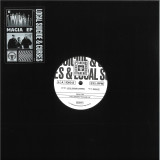
Local Suicide & Curses - Magia EP

Als sich das deutsch-griechische Paar Local Suicide und die aus New York City stammenden Curses in Berlin, dem Epizentrum der elektronischen Musik, trafen, war die künstlerische Chemie sofort offensichtlich. Dieses zufällige Zusammentreffen führte zu mehreren fruchtbaren Kollaborationen, wobei die jüngste "Magia" ist, eine dunkle und mysteriöse Vier-Track-EP. Diese Veröffentlichung ist die perfekte Gelegenheit für die beiden Künstler, ihre genreübergreifende Mischung aus 80er New Wave & Dark Disco, die ihren früheren Kollaborationen bereits viel Lob eingebracht hat, auf ein ganz neues Niveau zu heben.
Die EP kommt nach einem beeindruckend produktiven Jahr für das vielbeschäftigte Powerhouse Local Suicide, nach der Veröffentlichung ihres weltweit gefeierten Debütalbums "Eros Anikate" mit Kollaborationen mit The Hidden Cameras, Lena Platonos, Theus Mago und Curses selbst, sowie vier Remix-EPs mit Remixen von befreundeten Produzenten wie Adana Twins, Silicone Soul, Echonomist, Biesmans, Die Selektion und vielen mehr. Der vielseitige Künstler und Chef des Ombra International Labels Curses hat kürzlich sein düster-romantisches zweites Album “Incarnadine” mit Features von Jennifer Touch und Terr veröffentlicht, nachdem sein erstes Album auf Jennifer Cardinis Label Dischi Autunno hochgelobt wurde. Für diese Zusammenarbeit hat er seinen unverwechselbaren Sound weiterentwickelt, der Punk-, Italo-Disco- und EBM-Einflüsse zu einem düsteren und nostalgischen Gesamtkunstwerk vereint.

No en stock

Haga su pedido ahora y le encargaremos el artículo en nuestro proveedor.

15,59

Ültimo hace: 23 Meses
The Zephyrs - For Sapphire Needle

The Zephyrs

For Sapphire Needle

12inchNOIS1123LP
Acuarela
27.01.2023

The Zephyrs release their brand new album “For Sapphire Needle” on January 27th 2023 alongside Spanish comrades Acuarela, their first since 2010. With only 2018’s double A-side single “The Witches” and “The Crown Prince of Lies” in between, this represents their first collection of new songs in 13 years: from short and tightly constructed country-folk introspections to sprawling, spaced-out psychedelia, including a couple of extremely sharp pop glimmers and a killer Morricone-like instrumental. Originally conceived of as a series of 4 track EPs based on the seasons in which they were created, the recordings spanned into a patchwork of sessions with long-time collaborator and producer Michael Brennan at his Substation studio, neighboring a naval port in Rosyth. The ongoing recording sessions were made possible with the kind support of Robert Dillam, drummer for The Zephyrs and ex-guitarist for Creation band Adorable. With songs ranging from short and tightly constructed country-folk introspections to sprawling, spaced-out psychedelia, what resulted was an album near to double length. The collection presented as “For Sapphire Needle” is a cut-down selection of these songs. The record opens with “Leatherback”, a Crazy Horse inspired wall of distorted guitars drawing on lyrics from The Zephyr’s first album and pre-history, followed by the four songs earmarked for the first of the seasonal EPs – Winter – whose artwork was photographed in the alley behind Traceyann Campbell’s (Camera Obscura) house in Glasgow. Elsewhere on the album, “I tell you what” had much of its writing and recording initiated in a wooden shack near Aviemore and “Bolder” tells the story of overheard bar-side conversations and delayed flights in Denver airport, where lizard people live underground and some say the new world order lays dormant. The domestic depression of “How have you been today” precedes closing opus “Aliens”, inspired in equal measures by the maturation as social control science fiction of The Tripods and the schlock b-movie imagery of Rocky Erickson’s The Evil One. The album is the work of older and more consistent The Zephyrs. Stuart, David and Robert joined by collaborators: guitarist John Brennan and keyboardist Will Bates. The songs and sounds are sculpted out of slabs of time with friends at the Substation, a de facto weekly youth club for musicians who refuse to grow old. The triple bridges of Queensferry, the shipbuilding cranes of Rosyth docks and Babcock's shop - one of the few places in Scotland you can buy a real periscope over the counter - are just some of the backdrops as the Zephyrs rehearse for nobody but themselves. Yet, ever since Jean-Luc Picard himself told us that "this is not a holiday", it has become a unique and unbeatable way of peering up above the waterline, reinventing themselves and returning to the scene. Indeed with 10 songs in 46 minutes which wade across Gram Parsons and Big Star, Slowdive and spaghetti Western: folk, rock and shoegaze… as if they were trying to shorten the path to the California sky passing through Scotland and then Almería in Spain.

Reservar27.01.2023

debe ser publicado en 27.01.2023

25,01

Ültimo hace: 2026 Años
Various - PROFONDO NERO 2x12"

* 2022 Repress ** Profondo Nero compiled by Cinema Royale

Profondo Nero narrates a storyline that goes beyond the borders of Italy’s musical legacy. Cutting across the face of Italo disco’s leftfield musicians between the early and late ‘80s, Profondo Nero champions a multi-faceted sound that nods to the blueprint of Italo disco but tries to dig deeper. The music is unmistakably Italo disco but moves away from the familiar classic sound. Amsterdam based collector Cinema Royale stitches together eleven tracks from 1983 – 1989, celebrating a sound he fittingly describes as ‘leftfield Italo’.

The compilation connects the dots between soulful disco (Louise Freeman – Mirage), synth-pop (Mark – Dreamland), electro-rap (Loukas Thanos – Jazzburger), breaks (Santoro – Lover Message), 80s dub disco (Jet Set – Love Break), Balearic (Isamar & Compañia ‎- No Estas), boogie (Tom Hooker – Talk With Your Body) and proto-house (International Music System - An English ’93).

Profondo Nero’s title salutes the legendary oeuvre of Italian horror director Dario Argento. His Profondo Rosso (1975) is a classic example of exquisite cinematic storytelling, boasting courageous colors, expressionist camera angles and an unforgettable Goblin score forming the ingredients for an intriguing piece of art. Profondo Rosso’s music, created the spark for a new Dekmantel Records endeavor led by Amsterdam based experimental film score connoisseur, record collector and DJ Cinema Royale.

For those in the know of underground Amsterdam music culture, Arne Visser aka Cinema Royale is among the city’s longest standing record collectors. Born to an Italian mother and Dutch father, Arne was brought up on a diet of Italo disco in the 80s. Cinema Royale explains: ‘For Profondo Nero I took a plunge into the lesser known fringes of Italo disco. From there I tried to connect, among others, San Francisco boogie, Balearic, Japanese late era Italo-electro and synth-pop funk. I hope you can hear what I had in mind: an infectious showcase of my take on traditional Italo disco that will hopefully get a lot of listeners itching for a spin. It’s fair to say that lately this particular sound has seen a reappraisal and renewed interest.

As a party-starting collection for entry-level connoisseurs or suave but lazy types, I hope Profondo Nero can be an education. I’m not claiming I’m the first DJ or collector to do so, but I did try do present something special by digging deep.’ It wasn’t my goal to unearth the most obscure tracks, instead I wanted to compose a compilation that takes you on a journey.
‘In my opinion the best DJs create something extraordinary out of illogical selections by combining music against all odds and showing different kind of moods along the way. There’s a certain amount of arrogance involved: you take the music out of its original context. But by doing so in a very conscious way, you might be able to enhance the power of the individual records. Hopefully each song on Profondo Nero provides an intimate and memorable experience.’

No en stock

Haga su pedido ahora y le encargaremos el artículo en nuestro proveedor.

21,64

Ültimo hace: 3 Años
Tonico 70 - Antonico LP

Tonico 70

Antonico LP

12inchFLIES57
Four Flies
22.11.2022

TONICO 70'S SOULFUL SIDE SHINES THROUGH IN NEW ALBUM CO-PRODUCED WITH PEPPE MAIELLANO (BANDA MAJE)

The cover of the new album by musician, rapper, DJ/producer and Banda Maje's co-founder Tonico 70 features an honest, unfiltered photo his mother took of him with a disposable camera – a photo that is as blunt and sassy as hip hop, but at the same time filled with the sweetness of soul music. The style of Antonico is all there, in that shot of a nine-year-old kid that was just beginning to discover and love music – a passion that, as he says now, "has been driving me for over thirty years."

Coming after many years of songwriting, beatmaking, MCing, live performances and collaborations, this new album, his first released on Four Flies Records, connects the dots between past, present and future, presenting Tonico 70 as a fully-rounded artist rather than just a rapper, and one aware of his own many facets.

Co-produced with Peppe Maiellano, Banda Maje's other founder, Antonico offers an intimate portrait of Tonico 70, who has put his 'tough-music-smuggler' persona aside to let his soulful side shine through, giving us a warm, funk-inspired and very original take on the so-called 'Napoli power' sound.


Lyrically too, the album takes us deeper into his world. Here, Tonico 70 evaluates his personal history, speaking about his joys and disappointments, his highs and lows, and the friends and lovers who are or were in his life.

Sometimes his flow is confidential and nocturnal – in "Vic'l", for instance, where the sound is smooth and sweet, rife with contrapuntal notes and harmonies that are clearly reminiscent of 70s soul, but also in the bluesy rap of "Doppia Chance" and the prayer-like song "For For". Other times he gets bolder and brasher, like in the reggae-inspired in "Quaqquara Qua", or in "The Revolution Will Not Be Telefonin", which is obviously a (cheeky) tribute to Gil Scott Heron.

A number of tracks feature long-time friends and collaborators: rapper Morfuco in "Italia 90" (a funky uptempo song with powerful gospel vocals in the chorus), the Funky Pushertz crew in "Sai Com'è" and, perhaps most importantly, the Salifornian soul-funk collective Banda Maje, who give new life to three songs from the artist's previous discography: "Vir Buon", "Gente Antica" and "Fantasie".

This album shows that Tonico 70 has reached a stage of maturity in his career, one where his music extends beyond rap and hip-hop to incorporate rich instrumentals and multiple genres that carry the echoes of his experiences and encounters in the lively alleys of Salerno's historic district, and of the people whose lives unfold there, in the heart of the Mediterranean.

No en stock

Haga su pedido ahora y le encargaremos el artículo en nuestro proveedor.

27,69

Ültimo hace: 22 Meses
ATMOSPHERE - SOUTHSIDERS

Vinyl come packaged in a custom printed plastic casing, gatefold jacket, full color printed sleeves, metallic silver color double vinyl, 8-page LP lyric booklet, and free digital download card. While Southsiders is a celebration of the group's fortitude, it is also a deeply introspective, and sometimes conflicted, work. "It's a natural progression from the last record,The Family Sign, which was about growing my family," says Slug, now a father to three, who finds himself contemplating mortality. "I'm starting to think, 'What is post-family man? What am I supposed to rap about now?' I'm sticking to my roots, rapping about what I'm doing, what I think about. This record is, much like the other ones, a very detailed look at my life."

Reservar18.11.2022

debe ser publicado en 18.11.2022

29,37

Ültimo hace: 2026 Años
The Blue Stones - Pretty Monster LP

Seit ihrem Durchbruch mit dem umjubelten Debütalbum Black Holes haben die Blue Stones mitreißende Live-Shows abgeliefert, die die Gesetze
der Physik außer Kraft setzen und allein durch die beiden Bandmitglieder einen unfassbar massiven Sound erzeugen.
Auf ihrem dritten Album Pretty Monster fängt das Duo das kontrollierte Chaos und die brennende Energie ihres Live-Sets zum ersten Mal vollständig
ein - und baut dabei auf dem starken Songwriting und dem klanglichen Einfallsreichtum auf, den sie auf Black Holes (eine Veröffentlichung aus dem
Jahr 2018, die ihnen eine JUNO-Award-Nominierung als "Breakthrough Group of the Year" einbrachte) und dem 2021 folgenden Hidden Gems (eine
JUNO-Nominierung als "Rock Album of the Year") gezeigt haben. Trotz des kolossalen Wachstums, das sie seit ihren Anfängen in den Spelunken ihrer
kleinen Heimatstadt erfahren haben, versprühen The Blue Stones in jedem Stück gleichermaßen ungebremste Leidenschaft und einen fröhlichen
Abenteuergeist.
Pretty Monster wurde hauptsächlich vom mehrfachen GRAMMY-Preisträger Joe Chiccarelli (The White Stripes, The Strokes, Spoon) produziert und
entstand in 35 aufeinanderfolgenden Aufnahmetagen in einem Studio in Kingston, Ontario. In dieser Zeit arbeiteten Sänger/Gitarrist Tarek Jafar und
Schlagzeuger/Backing-Sänger Justin Tessier unermüdlich daran, die rohe Vitalität der Demos des Albums zu bewahren und gleichzeitig jeden Song
mit so vielen unerwarteten Details zu versehen (düstere Beats, rastlose Grooves, elegant frenetische Texturen). Das Ergebnis ist ein triumphales
Werk, das sich von dem eher atmosphärischen Sound von Hidden Gems abhebt (ein weithin gelobtes Werk, das drei Top-5-Radiohits in Kanada
hervorbrachte) und die harte Dynamik des Rock'n'Roll mit den unauslöschlichen Ohrwürmern des Pop verbindet

Reservar04.11.2022

debe ser publicado en 04.11.2022

21,81

Ültimo hace: 2026 Años
Curd Duca - Waves 3

Curd Duca

Waves 3

12inchMAGAZINEWAVES3
Magazine
28.10.2022

Magazine is glad to announce the album Waves 3 by Curd Duca, 
 the third and last part of the trilogy Waves: Austrian electronic composer Curd Duca is widely known for his 1990es series of critically acclaimed easy listening 1-5 (Normal) and elevator 1-3 (Mille Plateaux).

After a long break from the studio, Duca has issued part 1 of the Waves series in late 2020 on Magazine. This was in fact his first album in 20 years. The Waves recordings pick up the thread of his 90s work and open up a new chapter. Again, everything is shifting constantly and all tracks are quite different (soft, rough, melodic, abstract ... ), but complement each other in a surprisingly coherent way to form an idiosyncratic universe.

While other experimental artists can sound as if they're attempting to lift lead weights over their heads, Duca is content flicking feathers into their faces. After his impressive 1990s/00s run on Normal and Mille Plateaux, Curd Duca had disappeared for 20 years before emerging from the aether last year.

The albums of the new "Waves" Trilogy represent a flawless examination of sound and texture. The Vienna-based producer still straddles high and low culture, but approaches his sonics with a more historically aware ear. So plain and resonant gong recordings are placed next to pop music loops and DSP-fractured cut-ups, and icy electronic jams nudge up against cassette warped instrumental sketches.

Waves 3 is a continuation and culmination of the series. In the final chapter, we’re drawn in with church bells on dome, but quickly transported to another era entirely with the crackly bläser and absurd zither, a tongue-in-cheek plunderphonic experiment assembled from zither samples. Duca follows this evocative run of tracks with a machine-gun blast of experimental sound, from the percussive 500 GRM to the ferric ASMR birdsong of ziegenmelker.

This is Duca at his most uncompromising, grabbing central European culture and dragging it through his array of processes. Playing the album from beginning to end opens up a weightless cut-and-paste mixtape, stitched together with expert foresight and a knowing wink to camera.

Like the best psychedelic experiences, memories are triggered and turned inside-out, and knowledge is allowed to blossom. Curd Duca has been refining his process for three decades now, and few artists have quite the same ability to challenge, provoke, and inspire.

No en stock

Haga su pedido ahora y le encargaremos el artículo en nuestro proveedor.

23,15

Ültimo hace: 3 Años
Autumn Fair - Autumn Fair

Autumn Fair

Autumn Fair

12inchR100LP
Recital
28.10.2022

To celebrate the 10th anniversary of Recital, we present Autumn Fair: A group LP comprised of 44 guest players (full list below), curated and edited together by Sean McCann.

Autumn Fair aptly embodies the feeling of Recital as a record label; the infusion of abstract sound art and sentimental beauty – performed by both younger and older generations of artists.

Oren Ambarchi - guitar, Ed Atkins - paper shredder, Jason Bannon - family, Derek Baron - keyboard, Karla Borecky - upright piano, Andrew Chalk - guitar, crys cole - birds, Loren Connors - guitar, Philip Corner - grand piano, Maxwell August Croy - whistle, Sarah Davachi - electronics, Aaron Dilloway - SFX, Delphine Dora - voice, Giovanni Fontana - voice, Scott Foust - trumpet, Peter Friel - impression, Malcolm Green - camera, Judith Hamann - cello / voice, Mark Harwood - speech, Forest Juziuk - voice, Johnny Kay - tapping, Kajsa Lindgren - hydrophone, Rob Magill - guitar, Lia Mazzari - whip, Molly McCann - flute, Sean McCann - editing / voice, Nour Mobarak - voice sampler, Azikiwe Mohammed - interview, Charlie Morrow - MIDI piano, Kiera Mulhern - SFX, Zachary Paul - violin, claire rousay - SFX, Michel Samson - violin, Troy Schafer - strings, Eric Schmid - tone generator, Ben Schumacher - SFX, Tom James Scott - keyboard / SFX, Asha Sheshadri - reading, Patrick Shiroishi - winds, Sydney Spann - voice, Matthew Sullivan - instruments, Flora Sullivan-Kelly - percussion, Connor Tomaka - SFX / synth, Alex Twomey - upright piano.

I won't go into too much detail on the album itself, but after many twists and turns, the album concludes with “Recital Program,” an intense track that manically collages two-second excerpts from every Recital album to date.

I extend a sincere ‘thank you’ for all the incredible support for Recital over the past decade.

Ltd. LP Edition of 350 copies on 175gram black vinyl, gold foil printing, incl. program notes, comes with printed ticket, mechanically numbered.

Reservar28.10.2022

debe ser publicado en 28.10.2022

32,40

Ültimo hace: 2026 Años
Leah Weller - Freedom

Leah Weller

Freedom

12inchM4900UKLP
Modern Sky UK
21.10.2022

Freedom – the debut album from Leah Weller – a modern soul soundtrack to her head spinning twenties turning into empowered, contented thirties. Completed last year, Weller’s first complete album follows a decade-long career on catwalks, in front of cameras and making dancefloors shake, constantly on the move and with music as a constant companion. Finding the escape route out of anxiety-inducing mix-and-match career moves with the stability of love, the slowdown of repeated lockdowns and, finally, motherhood, Weller’s race is now to be run at her own pace with a collection of songs set perfectly to her flow.


Gathering nine, finely-tailored songs together with a drum beat of support from producer and collaborator, Steve Craddock, the collection speaks, much rather than screams, of finding the sweet spot between the need for hope, however naïve, and the truths that only experience can spell out.

Reservar21.10.2022

debe ser publicado en 21.10.2022

23,49

Ültimo hace: 2026 Años
Leah Weller - Freedom

Leah Weller

Freedom

12inchM4900UKLPX
Modern Sky UK
21.10.2022

Freedom – the debut album from Leah Weller – a modern soul soundtrack to her head spinning twenties turning into empowered, contented thirties. Completed last year, Weller’s first complete album follows a decade-long career on catwalks, in front of cameras and making dancefloors shake, constantly on the move and with music as a constant companion. Finding the escape route out of anxiety-inducing mix-and-match career moves with the stability of love, the slowdown of repeated lockdowns and, finally, motherhood, Weller’s race is now to be run at her own pace with a collection of songs set perfectly to her flow.


Gathering nine, finely-tailored songs together with a drum beat of support from producer and collaborator, Steve Craddock, the collection speaks, much rather than screams, of finding the sweet spot between the need for hope, however naïve, and the truths that only experience can spell out.

Reservar21.10.2022

debe ser publicado en 21.10.2022

25,17

Ültimo hace: 2026 Años
Lee Tracy & Isaac Manning - Is it What You Want

As the sun sets on a quaint East Nashville house, a young man bares a piece of his soul. Facing the camera, sporting a silky suit jacket/shirt/slacks/fingerless gloves ensemble that announces "singer" before he's even opened his mouth, Lee Tracy Johnson settles onto his stage, the front yard. He sways to the dirge-like drum machine pulse of a synth-soaked slow jam, extends his arms as if gaining his balance, and croons in affecting, fragile earnest, "I need your love… oh baby…"

Dogs in the yard next door begin barking. A mysterious cardboard robot figure, beamed in from galaxies unknown and affixed to a tree, is less vocal. Lee doesn't acknowledge either's presence. He's busy feeling it, arms and hands gesticulating. His voice rises in falsetto over the now-quiet dogs, over the ambient noise from the street that seeps into the handheld camcorder's microphone, over the recording of his own voice played back from a boombox off-camera. After six minutes the single, continuous shot ends. In this intimate creative universe there are no re-takes. There are many more music videos to shoot, and as Lee later puts it, "The first time you do it is actually the best. Because you can never get that again. You expressing yourself from within."

"I Need Your Love" dates from a lost heyday. From some time in the '80s or early '90s, when Lee Tracy (as he was known in performance) and his music partner/producer/manager Isaac Manning committed hours upon hours of their sonic and visual ideas to tape. Embracing drum machines and synthesizers – electronics that made their personal futurism palpable – they recorded exclusively at home, live in a room into a simple cassette deck. Soul, funk, electro and new wave informed their songs, yet Lee and Isaac eschewed the confinement of conventional categories and genres, preferring to let experimentation guide them.

"Anytime somebody put out a new record they had the same instruments or the same sound," explains Isaac. "So I basically wanted to find something that's really gonna stand out away from all of the rest of 'em." Their ethos meant that every idea they came up with was at least worth trying: echoed out half-rapped exhortations over frantic techno-style beats, gospel synth soul, modal electro-funk, oddball pop reinterpretations, emo AOR balladry, nods to Prince and the Fat Boys, or arrangements that might collapse mid-song into a mess of arcade game-ish blips before rallying to reach the finish line. All of it conjoined by consistent tape hiss, and most vitally, Lee's chameleonic voice, which managed to wildly shape shift and still evoke something sincere – whether toggling between falsetto and tenor exalting Jesus's return, or punctuating a melismatic romantic adlib with a succinct, "We all know how it feels to be alone."

"People think we went to a studio," says Isaac derisively. "We never went to no studio. We didn't have the money to go to no studio! We did this stuff at home. I shot videos in my front yard with whatever we could to get things together." Sometimes Isaac would just put on an instrumental record, be it "Planet Rock" or "Don't Cry For Me Argentina" (from Evita), press "record," and let Lee improvise over it, yielding peculiar love songs, would-be patriotic anthems, or Elvis Presley or Marilyn Monroe tributes. Technical limitations and a lack of professional polish never dissuaded them. They believed they were onto something.

"That struggle," Isaac says, "made that sound sound good to me."

In the parlance of modern music criticism Lee and Isaac's dizzying DIY efforts would inevitably be described as "outsider." But "outsider" carries the burden of untold additional layers of meaning if you're Black and from the South, creating on a budget, and trying to get someone, anyone within the country music capital of the world to take your vision seriously. "What category should we put it in?" Isaac asks rhetorically. "I don't know. All I know is feeling. I ain't gonna name it nothing. It's music. If it grabs your soul and touch your heart that's what it basically is supposed to do."

=

Born in 1963, the baby boy of nine siblings, Lee Tracy spent his earliest years living amidst the shotgun houses on Nashville's south side. "We was poor, man!" he says, recalling the outhouse his family used for a bathroom and the blocks of ice they kept in the kitchen to chill perishables. "But I actually don't think I really realized I was in poverty until I got grown and started thinking about it." Lee's mom worked at the Holiday Inn; his dad did whatever he had to do, from selling fruit from a horse drawn cart to bootlegging. "We didn't have much," Lee continues, "but my mother and my father got us the things we needed, the clothes on our back." By the end of the decade with the city's urban renewal programs razing entire neighborhoods to accommodate construction of the Interstate, the family moved to Edgehill Projects. Lee remembers music and art as a constant source of inspiration for he and his brothers and sisters – especially after seeing the Jackson 5 perform on Ed Sullivan. "As a small child I just knew that was what I wanted to do."

His older brother Don began musically mentoring him, introducing Lee to a variety of instruments and sounds. "He would never play one particular type of music, like R&B," says Lee. "I was surrounded by jazz, hard rock and roll, easy listening, gospel, reggae, country music; I mean I was a sponge absorbing all of that." Lee taught himself to play drums by beating on cardboard boxes, gaining a rep around the way for his timekeeping, and his singing voice. Emulating his favorites, Earth Wind & Fire and Cameo, he formed groups with other kids with era-evocative band names like Concept and TNT Connection, and emerged as the leader of disciplined rehearsals. "I made them practice," says Lee. "We practiced and practiced and practiced. Because I wanted that perfection." By high school the most accomplished of these bands would take top prize in a prominent local talent show. It was a big moment for Lee, and he felt ready to take things to the next level. But his band-mates had other ideas.

"I don't know what happened," he says, still miffed at the memory. "It must have blew they mind after we won and people started showing notice, because it's like everybody quit! I was like, where the hell did everybody go?" Lee had always made a point of interrogating prospective musicians about their intentions before joining his groups: were they really serious or just looking for a way to pick up girls? Now he understood even more the importance of finding a collaborator just as committed to the music as he was.

=

Isaac Manning had spent much of his life immersed in music and the arts – singing in the church choir with his family on Nashville's north side, writing, painting, dancing, and working various gigs within the entertainment industry. After serving in the armed forces, in the early '70s he ran The Teenage Place, a music and performance venue that catered to the local youth. But he was forced out of town when word of one of his recreational routines created a stir beyond the safe haven of his bohemian circles.

"I was growing marijuana," Isaac explains. "It wasn't no business, I was smoking it myself… I would put marijuana in scrambled eggs, cornbread and stuff." His weed use originated as a form of self-medication to combat severe tooth pain. But when he began sharing it with some of the other young people he hung out with, some of who just so happened to be the kids of Nashville politicians, the cops came calling. "When I got busted," he remembers, "they were talking about how they were gonna get rid of me because they didn't want me saying nothing about they children because of the politics and stuff. So I got my family, took two raggedy cars, and left Nashville and went to Vegas."

Out in the desert, Isaac happened to meet Chubby Checker of "The Twist" fame while the singer was gigging at The Flamingo. Impressed by Isaac's zeal, Checker invited him to go on the road with him as his tour manager/roadie/valet. The experience gave Isaac a window into a part of the entertainment world he'd never encountered – a glimpse of what a true pop act's audience looked like. "Chubby Checker, none of his shows were played for Black folks," he remembers. "All his gigs were done at high-class white people areas." Returning home after a few years with Chubby, Isaac was properly motivated to make it in Music City. He began writing songs and scouting around Nashville for local talent anywhere he could find it with an expressed goal: "Find someone who can deliver your songs the way you want 'em delivered and make people feel what you want them to feel."

One day while walking through Edgehill Projects Isaac heard someone playing the drums in a way that made him stop and take notice. "The music was so tight, just the drums made me feel like, oh I'm-a find this person," he recalls. "So I circled through the projects until I found who it was.

"That's how I met him – Lee Tracy. When I found him and he started singing and stuff, I said, ohhh, this is somebody different."

=

Theirs was a true complementary partnership: young Lee possessed the raw talent, the older Isaac the belief. "He's really the only one besides my brother and my family that really seen the potential in me," says Lee. "He made me see that I could do it."

Isaac long being a night owl, his house also made for a fertile collaborative environment – a space where there always seemed to be a new piece of his visual art on display: paintings, illustrations, and dolls and figures (including an enigmatic cardboard robot). Lee and Issac would hang out together and talk, listen to music, conjure ideas, and smoke the herb Isaac had resumed growing in his yard. "It got to where I could trust him, he could trust me," Isaac says of their bond. They also worked together for hours on drawings, spreading larges rolls of paper on the walls and sketching faces with abstract patterns and imagery: alien-like beings, tri-horned horse heads, inverted Janus-like characters where one visage blurred into the other.

Soon it became apparent that they didn't need other collaborators; self-sufficiency was the natural way forward. At Isaac's behest Lee, already fed up with dealing with band musicians, began playing around with a poly-sonic Yamaha keyboard at the local music store. "It had everything on it – trumpet, bass, drums, organ," remembers Lee. "And that's when I started recording my own stuff."

The technology afforded Lee the flexibility and independence he craved, setting him on a path other bedroom musicians and producers around the world were simultaneously following through the '80s into the early '90s. Saving up money from day jobs, he eventually supplemented the Yamaha Isaac had gotten him with Roland and Casio drum machines and a Moog. Lee was living in an apartment in Hillside at that point caring for his dad, who'd been partially paralyzed since early in life. In the evenings up in his second floor room, the music put him in a zone where he could tune out everything and lose himself in his ideas.

"Oh I loved it," he recalls. "I would really experiment with the instruments and use a lot of different sound effects. I was looking for something nobody else had. I wanted something totally different. And once I found the sound I was looking for, I would just smoke me a good joint and just let it go, hit the record button." More potent a creative stimulant than even Isaac's weed was the holistic flow and spontaneity of recording. Between sessions at Isaac's place and Lee's apartment, their volume of output quickly ballooned.

"We was always recording," says Lee. "That's why we have so much music. Even when I went to Isaac's and we start creating, I get home, my mind is racing, I gotta start creating, creating, creating. I remember there were times when I took a 90-minute tape from front to back and just filled it up."

"We never practiced," says Isaac. "See, that was just so odd about the whole thing. I could relate to him, and tell him about the songs I had ideas for and everything and stuff. And then he would bring it back or whatever, and we'd get together and put it down." Once the taskmaster hell bent on rehearsing, Lee had flipped a full 180. Perfection was no longer an aspiration, but the enemy of inspiration.

"I seen where practicing and practicing got me," says Lee. "A lot of musicians you get to playing and they gotta stop, they have to analyze the music. But while you analyzing you losing a lot of the greatness of what you creating. Stop analyzing what you play, just play! And it'll all take shape."

=

"I hope you understood the beginning of the record because this was invented from a dream I had today… (You tell me, I'll tell you, we'll figure it out together)" – Lee Tracy and Isaac Manning, "Hope You Understand"

Lee lets loose a maniacal cackle when he acknowledges that the material that he and Isaac recorded was by anyone's estimation pretty out there. It's the same laugh that commences "Hope You Understand" – a chaotic transmission that encapsulates the duality at the heart of their music: a stated desire to reach people and a compulsion to go as leftfield as they saw fit.

"We just did it," says Lee. "We cut the music on and cut loose. I don't sit around and write. I do it by listening, get a feeling, play the music, and the lyrics and stuff just come out of me."

The approach proved adaptable to interpreting other artists' material. While recording a cover of Whitney Houston's pop ballad "Saving All My Love For You," Lee played Whitney's version in his headphones as he laid down his own vocals – partially following the lyrics, partially using them as a departure point. The end result is barely recognizable compared with the original, Lee and Isaac having switched up the time signature and reinvented the melody along the way towards morphing a slick mainstream radio standard into something that sounds solely their own.

"I really used that song to get me started," says Lee. "Then I said, well I need something else, something is missing. Something just came over me. That's when I came up with 'Is It What You Want.'"

The song would become the centerpiece of Lee and Isaac's repertoire. Pushed along by a percolating metronomic Rhythm King style beat somewhere between a military march and a samba, "Is It What You Want" finds Lee pleading the sincerity of his commitment to a potential love interest embellished by vocal tics and hiccups subtlely reminiscent of his childhood hero MJ. Absent chord changes, only synth riffs gliding in and out like apparitions, the song achieves a lingering lo-fi power that leaves you feeling like it's still playing, somewhere, even after the fade out.

"I don't know, it's like a real spiritual song," Lee reflects. "But it's not just spiritual. To me the more I listen to it it's like about everything that you do in your everyday life, period. Is it what you want? Do you want a car or you don't want a car? Do you want Jesus or do you want the Devil? It's basically asking you the question. Can't nobody answer the question but you yourself."

In 1989 Lee won a lawsuit stemming from injuries sustained from a fight he'd gotten into. He took part of the settlement money and with Isaac pressed up "Saving All My Love For You" b/w "Is It What You Want" as a 45 single. Isaac christened the label One Chance Records. "Because that's all we wanted," he says with a laugh, "one chance."

Isaac sent the record out to radio stations and major labels, hoping for it to make enough noise to get picked up nationally. But the response he and Lee were hoping for never materialized. According to Isaac the closest the single got to getting played on the radio is when a disk jock from a local station made a highly unusual announcement on air: "The dude said on the radio, 107.5 – 'We are not gonna play 'Is It What You Want.' We cracked up! Wow, that's deep.

"It was a whole racist thing that was going on," he reflects. "So we just looked over and kept on going. That was it. That was about the way it goes… If you were Black and you were living in Nashville and stuff, that's the way you got treated." Isaac already knew as much from all the times he'd brought he and Lee's tapes (even their cache of country music tunes) over to Music Row to try to drum up interest to no avail.

"Isaac, he really worked his ass off," says Lee. "He probably been to every record place down on Music Row." Nashville's famed recording and music business corridor wasn't but a few blocks from where Lee grew up. Close enough, he remembers, for him to ride his bike along its back alleys and stumble upon the occasional random treasure, like a discarded box of harmonicas. Getting in through the front door, however, still felt a world away.

"I just don't think at the time our music fell into a category for them," he concedes. "It was before its time."

=

Lee stopped making music some time in the latter part of the '90s, around the time his mom passed away and life became increasingly tough to manage. "When my mother died I had a nervous breakdown," he says, "So I shut down for a long time. I was in such a sadness frame of mind. That's why nobody seen me. I had just disappeared off the map." He fell out of touch with Isaac, and in an indication of just how bad things had gotten for him, lost track of all the recordings they'd made together. Music became a distant memory.

Fortunately, Isaac kept the faith. In a self-published collection of his poetry – paeans to some of his favorite entertainment and public figures entitled Friends and Dick Clark – he'd written that he believed "music has a life of its own." But his prescience and presence of mind were truly manifested in the fact that he kept an archive of he and Lee's work. As perfectly imperfect as "Is It What You Want" now sounds in a post-Personal Space world, Lee and Isaac's lone official release was in fact just a taste. The bulk of the Is It What You Want album is culled from the pair's essentially unheard home recordings – complete songs, half-realized experiments, Isaac's blue monologues and pronouncements et al – compiled, mixed and programmed in the loose and impulsive creative spirit of their regular get-togethers from decades ago. The rest of us, it seems, may have finally caught up to them.

On the prospect of at long last reaching a wider audience, Isaac says simply, "I been trying for a long time, it feels good." Ever the survivor, he adds, "The only way I know how to make it to the top is to keep climbing. If one leg break on the ladder, hey, you gotta fix it and keep on going… That's where I be at. I'll kill death to make it out there."

For Lee it all feels akin to a personal resurrection: "It's like I was in a tomb and the tomb was opened and I'm back… Man, it feels so great. I feel like I'm gonna jump out of my skin." Success at this stage of his life, he realizes, probably means something different than what it did back when he was singing and dancing in Isaac's front yard. "What I really mean by 'making it,'" he explains isn't just the music being heard but, "the story being told."

Occasionally Lee will pull up "Is It What You Want" on YouTube on his phone, put on his headphones, and listen. He remembers the first time he heard his recorded voice. How surreal it was, how he thought to himself, "Is that really me?" What would he say to that younger version of himself now?

"I would probably tell myself, hang in there, don't give up. Keep striving for the goal. And everything will work out."

Despite what's printed on the record label, sometimes you do get more than one chance.

No en stock

Haga su pedido ahora y le encargaremos el artículo en nuestro proveedor.

11,72

Ültimo hace: 3 Años
Landon Lloyd Miller - Light Shines Through

From documentary film production to winemaking, Landon Lloyd Miller has left his unique mark in multiple areas, juggling a lifelong passion for music — including a long run as frontman of his Shreveport-based western band, The Wall Chargers — with an ever-present desire to create and collaborate. He's a Renaissance man for the modern age, as adept with an acoustic guitar as he is with a movie camera. "Light Shines Through," Landon's debut solo album, finds him turning a new corner, trading The Wall Chargers larger-than-life stomp for something more insular, introspective, and dynamic. The Wall Chargers shared the stage with Of Montreal, Glen Hansard, Dylan LeBlanc, Shawn James, Abram Shook, Seratones, Kyle Craft, Daniel Romano, The Lonesome Heroes, Big Cedar Fever, and The Octopus Project as well as festivals including SXSW, Valley of the Vapors, Mayfest, Secret Stages, Louisiana Music Prize, Red River Revel and Demon Fest. Miller's songs have appeared in films including Mr. Marvelous, Clowns & Robbers, The Fosters, Cut To The Chase, and The Paranormals.

Reservar07.10.2022

debe ser publicado en 07.10.2022

24,75

Ültimo hace: 2026 Años
Herva - Seez LP

Herva

Seez LP

12inchZIQ446
Planet Mu Records
05.10.2022

Herva started to work on 'Seez' right after the release of his last Planet Mu album 'Hyper Flux' back in 2017. He was experimenting with home-made hardware and after the album release wanted to raise the bar, challenging himself to build a point-to-point mixer from scratch. This task took almost a year of intense soldering and forced him to scrap music production. Eventually all this hard work grew into making studio hardware properly and he co-founded a new company making mixers and compressors that work with Eurorack, called Audio Gear Obsession. On 'Seez' Herva moves away completely from the sample-based music he's most known for and into programming and computational production, which he mixes and compresses with his newly-built hardware tools to give them the life and feeling he requires. There's also an element of randomness in 'Seez' as the music is generative, defined with numbers and ratios from his own software, tuned by ear rather than to set scales, with unexpected outcomes.To make the record, he spent more time digging between the different iterations of each track than coding the programs that generated them. He says "How I make music is kind of weird for most producers, but I like it, and I plan to dig further. You can think of 'Seez' as the alpha version of what I and my system are able to do." The new music still retains Herva's laid back airy feel. Each track is like a small ecosystem of chiming tones, wafting drones and skittering rhythms, hinting at formal patterns and melodies but developing on its own abstract terms. It feels as if it's the audio equivalent of watching sped-up recordings of a camera capturing different combinations of plants growing, a pleasant and curious experience to let yourself enjoy.

No en stock

Haga su pedido ahora y le encargaremos el artículo en nuestro proveedor.

18,28

Ültimo hace: 7 Meses
Salvator Dragatto - Mind On Madrid

Limited Clear Grey Vinyl 7". For Fans Of… Piero Umiliani, Amedeo Tommasi, Dorothy Ashby, Sandro Brugnolini, El Michels Affair, Sven Wunder. Breezy and carefree, Dragatto reminisces on a day spent exploring the streets of Madrid with only a camera, a few rolls of film and the shoes on his feet. Heavily inspired by the European adaptation of Bossa nova in the 1960’s, Salvator creates his own unique mood that’s equal parts sunny and joyful using simple melodic themes opposite lush string arrangements. A surefire companion for the next road trip down the coast or excursion through a foreign city. On the B side, as if delivered from the future, the sweet and punchy Return to Normal is a message of hope and optimism letting us know that things will indeed get better. Dreamy harp arpeggios float effortlessly atop a crushing rhythm section tip-toeing the line between calmness and urgency. Turn this one up loud, light one up and let go.

Tracks 1. Mind On Madrid 2. A Return To Normal

Reservar30.09.2022

debe ser publicado en 30.09.2022

11,35

Ültimo hace: 2026 Años
Monica Queen - Stop That Girl

Monica : The tracks on Stop That Girl were recorded live in an old mill and
featured musicians who had played on recordings on the Postcard label
and in groups from that era - Aztec Camera, The Blue Nile, Bourgie
Bourgie, Jazzateers, Love & Money, Paul Quinn & The Independent Group,
among others - The album is a mix of original material and some covers
(Orange Juice, Captain Beefheart, Gene Clark, The Velvet Underground)
Monica Queen came to prominence in Thrum, recording tracks with Edwyn
Collins and releasing an album on the Fire label. She has released albums under
her own name on Creeping Bent and as part of Tenement & Temple as self
releases. Monica is perhaps best known for singing on the Belle & Sebastian
single Lazy Line Painter Jane and has performed live with The Jayhawks, The
Pogues, and James Grant.

Reservar28.09.2022

debe ser publicado en 28.09.2022

27,10

Ültimo hace: 2026 Años
Lee Tracy & Isaac Manning - Is it What You Want LP

As the sun sets on a quaint East Nashville house, a young man bares a piece of his soul. Facing the camera, sporting a silky suit jacket/shirt/slacks/fingerless gloves ensemble that announces "singer" before he's even opened his mouth, Lee Tracy Johnson settles onto his stage, the front yard. He sways to the dirge-like drum machine pulse of a synth-soaked slow jam, extends his arms as if gaining his balance, and croons in affecting, fragile earnest, "I need your love… oh baby…"

Dogs in the yard next door begin barking. A mysterious cardboard robot figure, beamed in from galaxies unknown and affixed to a tree, is less vocal. Lee doesn't acknowledge either's presence. He's busy feeling it, arms and hands gesticulating. His voice rises in falsetto over the now-quiet dogs, over the ambient noise from the street that seeps into the handheld camcorder's microphone, over the recording of his own voice played back from a boombox off-camera. After six minutes the single, continuous shot ends. In this intimate creative universe there are no re-takes. There are many more music videos to shoot, and as Lee later puts it, "The first time you do it is actually the best. Because you can never get that again. You expressing yourself from within."

"I Need Your Love" dates from a lost heyday. From some time in the '80s or early '90s, when Lee Tracy (as he was known in performance) and his music partner/producer/manager Isaac Manning committed hours upon hours of their sonic and visual ideas to tape. Embracing drum machines and synthesizers – electronics that made their personal futurism palpable – they recorded exclusively at home, live in a room into a simple cassette deck. Soul, funk, electro and new wave informed their songs, yet Lee and Isaac eschewed the confinement of conventional categories and genres, preferring to let experimentation guide them.

"Anytime somebody put out a new record they had the same instruments or the same sound," explains Isaac. "So I basically wanted to find something that's really gonna stand out away from all of the rest of 'em." Their ethos meant that every idea they came up with was at least worth trying: echoed out half-rapped exhortations over frantic techno-style beats, gospel synth soul, modal electro-funk, oddball pop reinterpretations, emo AOR balladry, nods to Prince and the Fat Boys, or arrangements that might collapse mid-song into a mess of arcade game-ish blips before rallying to reach the finish line. All of it conjoined by consistent tape hiss, and most vitally, Lee's chameleonic voice, which managed to wildly shape shift and still evoke something sincere – whether toggling between falsetto and tenor exalting Jesus's return, or punctuating a melismatic romantic adlib with a succinct, "We all know how it feels to be alone."

"People think we went to a studio," says Isaac derisively. "We never went to no studio. We didn't have the money to go to no studio! We did this stuff at home. I shot videos in my front yard with whatever we could to get things together." Sometimes Isaac would just put on an instrumental record, be it "Planet Rock" or "Don't Cry For Me Argentina" (from Evita), press "record," and let Lee improvise over it, yielding peculiar love songs, would-be patriotic anthems, or Elvis Presley or Marilyn Monroe tributes. Technical limitations and a lack of professional polish never dissuaded them. They believed they were onto something.

"That struggle," Isaac says, "made that sound sound good to me."

In the parlance of modern music criticism Lee and Isaac's dizzying DIY efforts would inevitably be described as "outsider." But "outsider" carries the burden of untold additional layers of meaning if you're Black and from the South, creating on a budget, and trying to get someone, anyone within the country music capital of the world to take your vision seriously. "What category should we put it in?" Isaac asks rhetorically. "I don't know. All I know is feeling. I ain't gonna name it nothing. It's music. If it grabs your soul and touch your heart that's what it basically is supposed to do."

=

Born in 1963, the baby boy of nine siblings, Lee Tracy spent his earliest years living amidst the shotgun houses on Nashville's south side. "We was poor, man!" he says, recalling the outhouse his family used for a bathroom and the blocks of ice they kept in the kitchen to chill perishables. "But I actually don't think I really realized I was in poverty until I got grown and started thinking about it." Lee's mom worked at the Holiday Inn; his dad did whatever he had to do, from selling fruit from a horse drawn cart to bootlegging. "We didn't have much," Lee continues, "but my mother and my father got us the things we needed, the clothes on our back." By the end of the decade with the city's urban renewal programs razing entire neighborhoods to accommodate construction of the Interstate, the family moved to Edgehill Projects. Lee remembers music and art as a constant source of inspiration for he and his brothers and sisters – especially after seeing the Jackson 5 perform on Ed Sullivan. "As a small child I just knew that was what I wanted to do."

His older brother Don began musically mentoring him, introducing Lee to a variety of instruments and sounds. "He would never play one particular type of music, like R&B," says Lee. "I was surrounded by jazz, hard rock and roll, easy listening, gospel, reggae, country music; I mean I was a sponge absorbing all of that." Lee taught himself to play drums by beating on cardboard boxes, gaining a rep around the way for his timekeeping, and his singing voice. Emulating his favorites, Earth Wind & Fire and Cameo, he formed groups with other kids with era-evocative band names like Concept and TNT Connection, and emerged as the leader of disciplined rehearsals. "I made them practice," says Lee. "We practiced and practiced and practiced. Because I wanted that perfection." By high school the most accomplished of these bands would take top prize in a prominent local talent show. It was a big moment for Lee, and he felt ready to take things to the next level. But his band-mates had other ideas.

"I don't know what happened," he says, still miffed at the memory. "It must have blew they mind after we won and people started showing notice, because it's like everybody quit! I was like, where the hell did everybody go?" Lee had always made a point of interrogating prospective musicians about their intentions before joining his groups: were they really serious or just looking for a way to pick up girls? Now he understood even more the importance of finding a collaborator just as committed to the music as he was.

=

Isaac Manning had spent much of his life immersed in music and the arts – singing in the church choir with his family on Nashville's north side, writing, painting, dancing, and working various gigs within the entertainment industry. After serving in the armed forces, in the early '70s he ran The Teenage Place, a music and performance venue that catered to the local youth. But he was forced out of town when word of one of his recreational routines created a stir beyond the safe haven of his bohemian circles.

"I was growing marijuana," Isaac explains. "It wasn't no business, I was smoking it myself… I would put marijuana in scrambled eggs, cornbread and stuff." His weed use originated as a form of self-medication to combat severe tooth pain. But when he began sharing it with some of the other young people he hung out with, some of who just so happened to be the kids of Nashville politicians, the cops came calling. "When I got busted," he remembers, "they were talking about how they were gonna get rid of me because they didn't want me saying nothing about they children because of the politics and stuff. So I got my family, took two raggedy cars, and left Nashville and went to Vegas."

Out in the desert, Isaac happened to meet Chubby Checker of "The Twist" fame while the singer was gigging at The Flamingo. Impressed by Isaac's zeal, Checker invited him to go on the road with him as his tour manager/roadie/valet. The experience gave Isaac a window into a part of the entertainment world he'd never encountered – a glimpse of what a true pop act's audience looked like. "Chubby Checker, none of his shows were played for Black folks," he remembers. "All his gigs were done at high-class white people areas." Returning home after a few years with Chubby, Isaac was properly motivated to make it in Music City. He began writing songs and scouting around Nashville for local talent anywhere he could find it with an expressed goal: "Find someone who can deliver your songs the way you want 'em delivered and make people feel what you want them to feel."

One day while walking through Edgehill Projects Isaac heard someone playing the drums in a way that made him stop and take notice. "The music was so tight, just the drums made me feel like, oh I'm-a find this person," he recalls. "So I circled through the projects until I found who it was.

"That's how I met him – Lee Tracy. When I found him and he started singing and stuff, I said, ohhh, this is somebody different."

=

Theirs was a true complementary partnership: young Lee possessed the raw talent, the older Isaac the belief. "He's really the only one besides my brother and my family that really seen the potential in me," says Lee. "He made me see that I could do it."

Isaac long being a night owl, his house also made for a fertile collaborative environment – a space where there always seemed to be a new piece of his visual art on display: paintings, illustrations, and dolls and figures (including an enigmatic cardboard robot). Lee and Issac would hang out together and talk, listen to music, conjure ideas, and smoke the herb Isaac had resumed growing in his yard. "It got to where I could trust him, he could trust me," Isaac says of their bond. They also worked together for hours on drawings, spreading larges rolls of paper on the walls and sketching faces with abstract patterns and imagery: alien-like beings, tri-horned horse heads, inverted Janus-like characters where one visage blurred into the other.

Soon it became apparent that they didn't need other collaborators; self-sufficiency was the natural way forward. At Isaac's behest Lee, already fed up with dealing with band musicians, began playing around with a poly-sonic Yamaha keyboard at the local music store. "It had everything on it – trumpet, bass, drums, organ," remembers Lee. "And that's when I started recording my own stuff."

The technology afforded Lee the flexibility and independence he craved, setting him on a path other bedroom musicians and producers around the world were simultaneously following through the '80s into the early '90s. Saving up money from day jobs, he eventually supplemented the Yamaha Isaac had gotten him with Roland and Casio drum machines and a Moog. Lee was living in an apartment in Hillside at that point caring for his dad, who'd been partially paralyzed since early in life. In the evenings up in his second floor room, the music put him in a zone where he could tune out everything and lose himself in his ideas.

"Oh I loved it," he recalls. "I would really experiment with the instruments and use a lot of different sound effects. I was looking for something nobody else had. I wanted something totally different. And once I found the sound I was looking for, I would just smoke me a good joint and just let it go, hit the record button." More potent a creative stimulant than even Isaac's weed was the holistic flow and spontaneity of recording. Between sessions at Isaac's place and Lee's apartment, their volume of output quickly ballooned.

"We was always recording," says Lee. "That's why we have so much music. Even when I went to Isaac's and we start creating, I get home, my mind is racing, I gotta start creating, creating, creating. I remember there were times when I took a 90-minute tape from front to back and just filled it up."

"We never practiced," says Isaac. "See, that was just so odd about the whole thing. I could relate to him, and tell him about the songs I had ideas for and everything and stuff. And then he would bring it back or whatever, and we'd get together and put it down." Once the taskmaster hell bent on rehearsing, Lee had flipped a full 180. Perfection was no longer an aspiration, but the enemy of inspiration.

"I seen where practicing and practicing got me," says Lee. "A lot of musicians you get to playing and they gotta stop, they have to analyze the music. But while you analyzing you losing a lot of the greatness of what you creating. Stop analyzing what you play, just play! And it'll all take shape."

=

"I hope you understood the beginning of the record because this was invented from a dream I had today… (You tell me, I'll tell you, we'll figure it out together)" – Lee Tracy and Isaac Manning, "Hope You Understand"

Lee lets loose a maniacal cackle when he acknowledges that the material that he and Isaac recorded was by anyone's estimation pretty out there. It's the same laugh that commences "Hope You Understand" – a chaotic transmission that encapsulates the duality at the heart of their music: a stated desire to reach people and a compulsion to go as leftfield as they saw fit.

"We just did it," says Lee. "We cut the music on and cut loose. I don't sit around and write. I do it by listening, get a feeling, play the music, and the lyrics and stuff just come out of me."

The approach proved adaptable to interpreting other artists' material. While recording a cover of Whitney Houston's pop ballad "Saving All My Love For You," Lee played Whitney's version in his headphones as he laid down his own vocals – partially following the lyrics, partially using them as a departure point. The end result is barely recognizable compared with the original, Lee and Isaac having switched up the time signature and reinvented the melody along the way towards morphing a slick mainstream radio standard into something that sounds solely their own.

"I really used that song to get me started," says Lee. "Then I said, well I need something else, something is missing. Something just came over me. That's when I came up with 'Is It What You Want.'"

The song would become the centerpiece of Lee and Isaac's repertoire. Pushed along by a percolating metronomic Rhythm King style beat somewhere between a military march and a samba, "Is It What You Want" finds Lee pleading the sincerity of his commitment to a potential love interest embellished by vocal tics and hiccups subtlely reminiscent of his childhood hero MJ. Absent chord changes, only synth riffs gliding in and out like apparitions, the song achieves a lingering lo-fi power that leaves you feeling like it's still playing, somewhere, even after the fade out.

"I don't know, it's like a real spiritual song," Lee reflects. "But it's not just spiritual. To me the more I listen to it it's like about everything that you do in your everyday life, period. Is it what you want? Do you want a car or you don't want a car? Do you want Jesus or do you want the Devil? It's basically asking you the question. Can't nobody answer the question but you yourself."

In 1989 Lee won a lawsuit stemming from injuries sustained from a fight he'd gotten into. He took part of the settlement money and with Isaac pressed up "Saving All My Love For You" b/w "Is It What You Want" as a 45 single. Isaac christened the label One Chance Records. "Because that's all we wanted," he says with a laugh, "one chance."

Isaac sent the record out to radio stations and major labels, hoping for it to make enough noise to get picked up nationally. But the response he and Lee were hoping for never materialized. According to Isaac the closest the single got to getting played on the radio is when a disk jock from a local station made a highly unusual announcement on air: "The dude said on the radio, 107.5 – 'We are not gonna play 'Is It What You Want.' We cracked up! Wow, that's deep.

"It was a whole racist thing that was going on," he reflects. "So we just looked over and kept on going. That was it. That was about the way it goes… If you were Black and you were living in Nashville and stuff, that's the way you got treated." Isaac already knew as much from all the times he'd brought he and Lee's tapes (even their cache of country music tunes) over to Music Row to try to drum up interest to no avail.

"Isaac, he really worked his ass off," says Lee. "He probably been to every record place down on Music Row." Nashville's famed recording and music business corridor wasn't but a few blocks from where Lee grew up. Close enough, he remembers, for him to ride his bike along its back alleys and stumble upon the occasional random treasure, like a discarded box of harmonicas. Getting in through the front door, however, still felt a world away.

"I just don't think at the time our music fell into a category for them," he concedes. "It was before its time."

=

Lee stopped making music some time in the latter part of the '90s, around the time his mom passed away and life became increasingly tough to manage. "When my mother died I had a nervous breakdown," he says, "So I shut down for a long time. I was in such a sadness frame of mind. That's why nobody seen me. I had just disappeared off the map." He fell out of touch with Isaac, and in an indication of just how bad things had gotten for him, lost track of all the recordings they'd made together. Music became a distant memory.

Fortunately, Isaac kept the faith. In a self-published collection of his poetry – paeans to some of his favorite entertainment and public figures entitled Friends and Dick Clark – he'd written that he believed "music has a life of its own." But his prescience and presence of mind were truly manifested in the fact that he kept an archive of he and Lee's work. As perfectly imperfect as "Is It What You Want" now sounds in a post-Personal Space world, Lee and Isaac's lone official release was in fact just a taste. The bulk of the Is It What You Want album is culled from the pair's essentially unheard home recordings – complete songs, half-realized experiments, Isaac's blue monologues and pronouncements et al – compiled, mixed and programmed in the loose and impulsive creative spirit of their regular get-togethers from decades ago. The rest of us, it seems, may have finally caught up to them.

On the prospect of at long last reaching a wider audience, Isaac says simply, "I been trying for a long time, it feels good." Ever the survivor, he adds, "The only way I know how to make it to the top is to keep climbing. If one leg break on the ladder, hey, you gotta fix it and keep on going… That's where I be at. I'll kill death to make it out there."

For Lee it all feels akin to a personal resurrection: "It's like I was in a tomb and the tomb was opened and I'm back… Man, it feels so great. I feel like I'm gonna jump out of my skin." Success at this stage of his life, he realizes, probably means something different than what it did back when he was singing and dancing in Isaac's front yard. "What I really mean by 'making it,'" he explains isn't just the music being heard but, "the story being told."

Occasionally Lee will pull up "Is It What You Want" on YouTube on his phone, put on his headphones, and listen. He remembers the first time he heard his recorded voice. How surreal it was, how he thought to himself, "Is that really me?" What would he say to that younger version of himself now?

"I would probably tell myself, hang in there, don't give up. Keep striving for the goal. And everything will work out."

Despite what's printed on the record label, sometimes you do get more than one chance.

No en stock

Haga su pedido ahora y le encargaremos el artículo en nuestro proveedor.

23,49

Ültimo hace: 3 Años
SALVATOR DRAGATTO - MIND ON MADRID

Salvator Dragatto

MIND ON MADRID

7"-VinylCOSLPC1104
COSA RECORDS
23.09.2022

Breezy and carefree, Dragatto reminisces on a day spent exploring the streets of Madrid with only a camera, a few rolls of film and the shoes on his feet. Heavily inspired by the European adaptation of Bossa nova in the 1960's, Salvator creates his own unique mood that's equal parts sunny and joyful using simple melodic themes opposite lush string arrangements. A surefire companion for the next road trip down the coast or excursion through a foreign city. On the B side, as if delivered from the future, the sweet and punchy Return to Normal is a message of hope and optimism letting us know that things will indeed get better. Dreamy harp arpeggios float effortlessly atop a crushing rhythm section tip-toeing the line between calmness and urgency. Turn this one up loud, light one up and let go.

Reservar23.09.2022

debe ser publicado en 23.09.2022

10,46

Ültimo hace: 2026 Años
Ben Salisbury & Geoff Barrow - Archive 81 (Soundtrack From The Netflix Series) LP
Reservar09.09.2022

debe ser publicado en 09.09.2022

24,58

Ültimo hace: 2026 Años
Savage Ground - Hidden By The Night

Savage Grounds lands on She Lost Kontrol with a 7 track EP, Hidden by the Night. 

For the first time, the voice of Kleio Thomaïdes joins Savage Grounds members Florin Büchel (Synthesizers) and Daniele Cosmo (Drum Machines). The result is an attractive, intense record with some nuances that will surely make the old nostalgics of Krilian Camera and Simona Buja's voice squeak their eyes. 
 The record reminds us the heartbeat of Italian darkwave, the angularity of German basements, the youthful despair of French coldwave. But it’s more than that because it’s a very personal kind of darkness.
 The exasperated atmospheres seem to resonate on both sides of the record, with the due differences between the darker-wave elements of the record and the more proto-ebm ones.
 All these songs are almost ‘goth love protest songs’: they all have the gloominess of the pre-disappointed, of the already-disgusted, of the unrelentlessly bleak against a freezing, sparse, ethereal electronic landscape.
 The voice by Kleio Thomaïdes is so fascinating because... more credits released March 15, 2022 SLK016 Savage Grounds are Kleio Thomaïdes (Voice), Florin Büchel (Synthesizers) and Daniele Cosmo (Drum Machines). Recorded between Zürich and Geneva, 2020/2021 Composed and recorded by Savage Grounds. Lyrics by Kleio Thomaïdes and Daniele Cosmo. Mixed by Florin Büchel. Mastered by Andrea Merlini. Photography by Erika Marthins Artwork by dudegraph - Michelangelo Greco Executive producer: Giovanni Rispoli & Carmine Staiano

No en stock

Haga su pedido ahora y le encargaremos el artículo en nuestro proveedor.

16,68

Ültimo hace: 4 Meses
The Orchids - Dreaming Kind

The Orchids

Dreaming Kind

12inchSKEPWAX007LP
Skep Wax Records
02.09.2022

LP on classic black vinyl. The long-awaited new album from the best pop band in Scotland... The Orchids were making sophisticated pop music right back in the early 1990s when Sarah Records first started. Their songs were as emotionally pure as anything else on that label, but they were always a step ahead of their peers in terms of song arrangements and musical ambition. With a casual, unpretentious air they made writing perfect pop songs seem easy, almost accidental, and several great releases followed. The Orchids gained a passionate following: people knew a good thing when they heard it and they hugged it close. But maybe now it’s time for the rest of the world to be let in on the secret. The songs themselves are a beautiful mix of strength and gentleness. They wrap you in a powerful embrace, making you feel comfortable and secure – and then whisper their insecurities and anxieties into your ear. They say: ‘it’s OK to admit weakness. It’s OK to be fragile. That’s where true strength comes from’. From Glasgow, and proudly Scottish, the band shares a musical lineage with other great groups from that city, from Aztec Camera to Orange Juice, Lloyd Cole to Teenage Fanclub - bands that specialise in song-writing that can tell big stories through small personal fragments, that can make the ordinary extraordinary. Ian Carmichael has helped the band create a perfectly produced masterpiece. He subtly accentuates the drama of the songs, with a sophisticated choreography and gloss that never overwhelms the tenderness of the music. In ‘This Boy Is A Mess’ (the first single from the album), the lyric confesses frailty while the arrangement gets stronger and stronger. It is bittersweet and exhilarating at the same time. ‘I Want You, I Need You’ has harmonies as big as a house – but the yearning message remains intimate and close. ‘I Don’t Mean To Stare’ is an elegant version of the song that first appeared on Skep Wax compilation Under The Bridge. Album opener ‘Didn’t We Love You’ daringly opens up empty spaces where the reverb of the drums is the only thing you can hear... and then floods your ears with a harmonised chorus, sweet guitar melodies and sweeping effects. Even then, the lyrical lament, expressing the desire to live in a better place - a place unspoilt by the greedy phonies who’ve taken over – comes across as clearly as if Hackett were leaning over for a friendly chat in the snug bar of The Orchids’ favourite Glasgow pub. Dreaming Kind will be released as a CD, digital download and vinyl LP.

Reservar02.09.2022

debe ser publicado en 02.09.2022

26,85

Ültimo hace: 2026 Años
Ithaca - They Fear Us

Ithaca

They Fear Us

12inchHOFF388LPB
Hassle Records
29.07.2022

"This is the sound of a band empowered. Nothing - not our traumas and losses, not those who have underestimated or undermined us - can stop us. Those who seek to oppose us; your sins will catch up to you. We know who we are. We are united and you will fear us." Ithaca - They Fear Us ---------------- Formed in 2012 out of a mutual love of metallic hardcore but despair at its lack of ambition, Ithaca exist to challenge everything you thought about what a band that makes heavy music should look and sound like. A glitter-covered nailbomb, Ithaca seamlessly blend the brutality of Relapse Records metalcore with blackgaze, 90s industrial metal, 70s prog and even tinges of 80s power pop. Their influences stretch beyond the musical - this album comes with a clear vision and aesthetic: drawing from members’ different ancestral heritage, queer/non-conforming identities and iconic figures in avant-garde, new wave and post punk culture. Their upcoming second album ‘They Fear Us’ is the sound of a band healing from trauma - standing in their own, unapologetic voice. Furious and wildly inventive while also being more coherent and accessible, this album will introduce Ithaca to a wider audience than they’ve ever had before. To quote the band - ‘those who oppose us; your sins will catch up to you. You will fear us’. Ithaca's 2019 lauded debut ‘The Language of Injury’ was followed by their early 2020 tour with Grammy-nominated indie rock band Big Thief, starting at London’s Hammersmith Apollo. Press support from Pitchfork, BBC R1, Metal Hammer, Kerrang!, Rock Sound, Revolver, Decibel, BrooklynVegan, and performances with Bleeding Through, Jamie Lenman, Anaal Nathrakh, The Number Twelve Looks Like You, at Boomtown Fair and ArcTanGent Festival mark Ithaca as one of the most exciting and vital new voices in UK heavy music currently. Ithaca have also appeared on Ed Gamble’s Spotify podcast ‘Lifers’, Sky News and BBC3.

Reservar29.07.2022

debe ser publicado en 29.07.2022

26,85

Ültimo hace: 2026 Años
Various - Alien Men EP

Various

Alien Men EP

12inchFD010
Full Dose
28.07.2022

Alien Men is a 9 track compilation of abstract Dub & Synth experiments by a range of new artists coming out of Glasgow's Southside.

The idea for the compilation came about during a time of lengthy periods of isolation, where loneliness, insecurity and a willlingness to connect with other like-minded souls was challenging or near impossible. The artwork was subsequently created and the music followed, allowing each producer to tell their own story throughout this period.

The music featured, although hard to pin down to one notion, is Bass/Grime-esq, mutant Dancehall in parts with awkward, Ambient synth moments across this essential Club/Not Club record.

No en stock

Haga su pedido ahora y le encargaremos el artículo en nuestro proveedor.

19,71

Ültimo hace: 3 Años
JAMES RIGHTON - JIM, I’M STILL HERE

‘Jim, I’m Still Here’ is the second album from James Righton under his own name; produced by David & Stephen Dewaele of Soulwax and released on their label DEEWEE, the album follows The Performer released in 2020. James’ musical past is well documented; as the frontman of the genre inventing Klaxons, he helped create a revolution in British music and spawned a youth subculture. ‘Jim, I’m Still Here’ is a captivating meditation on the artists experience of the pandemic as James looks to conceptualize the myriad of emotions and events into a fascinating third person narrative. One of the album tracks features Benny Andersson from Swedish pop legendary band ABBA, with whom James has been working on putting together their new live band.

"I wrote this record during the first few months of the pandemic. At the time I wasn’t intending to make any music. I’d just released ‘The Performer’ on what turned out to be the first week of lockdown. The outside world shut down and I was busy being Dad. Then. I started making notes on my phone. Just words. In moments stolen from family life I’d head downstairs to my garage studio and put the words to music. When I was happy with a song I’d send it to Dave and Stef. Demos and Pro Tools sessions were passed back and forth between my home studio and the Deewee studio in Ghent. I was nervous about their response to the music I was making. It was personal, raw: unlike anything I’d ever written before. A conversation with the outside world during these times of isolation. For the most part my life was centred on the domestic. Getting to spend so much time with my family was a blessing. Making music was my play time. Isolation opened me to memories and allowed me to dream of the future. As the outside world tried to adapt to the pandemic I was asked more and more to promote ‘The Performer’ in live stream concerts on various platforms. As the pandemic went on, demands on production increased (more camera angles, better lighting, higher quality audio recordings). It became a one man show. I’d head downstairs to my garage, put on my Gucci suit, comb my hair and become someone else. Jim. Jim the deluded rock star, living out his fantasies from the confines of his garage. A lonely stardom. And yet, Jim was part me. He made me feel like I still existed. Jim became the centre of the new album. Dave, Stef and I worked into the sessions over the following months. It was always exciting to see where they would take my initial demos. The working method and the restrictions of making music together but in separate spaces, separate countries shaped the sound and feel of the record.
I won’t make another record like this again”.James/Jim

No en stock

Haga su pedido ahora y le encargaremos el artículo en nuestro proveedor.

24,16

Ültimo hace: 3 Años
Goo Goo Dolls - Grounded With The Goo Goo Dolls

In the midst of the pandemic, the Goo Goo Dolls put on a real rock show
of their most popular songs on a visually stunning augmented reality
FanTracks stage
The band played their hit-laden back catalogue for a career-spanning live set from
Thunder Studios in Long Beach, California.
Featuring the band's biggest hit Iris with amazing HQ sound, the Goo Goo Dolls
rock the virtual crowd who get to enjoy the full, slick, multi-camera angled show in
all its glory.
From new tracks like Miracle Pill to their career big hitters like Black Balloon and
Broadway, this was the band giving fans as much of the full Goo Goo Dolls live
concert experience as they could, given the circumstances.

Reservar07.07.2022

debe ser publicado en 07.07.2022

24,16

Ültimo hace: 2026 Años
Brunhild Ferrari & Christoph Heemann - Stürmische Ruhe

After her stunning collaboration with Jim O’Rourke (Le Piano Englouti, BT055), Brunhild Ferrari returns to Black Truffle with Stürmische Ruhe, her first duo with Christoph Heemann. A legendary figure in underground music, Heemann has quietly produced a unique body of work since his beginnings with the absurdist cutups of H.N.A.S. in the mid-1980, including collaborations with Merzbow, Organum and Nurse With Wound, the eerie psychedelia of Mirror (with Andrew Chalk), In Camera (with Timo van Lujik) and Plastic Palace People (with Jim O’Rourke), and the precise cinema pour l’oreille constructions of his solo works. Created together in Ferrari’s Parisian studio (once shared with Luc) between 2011 and 2014, Stürmische Ruhe is a single half-hour piece that folds rain and storm recordings into a intricately woven fabric of haunted electronics, unexpected edits and disorienting processing. Banging with the jarring thump of a slamming door (an element that will reappear periodically throughout the piece as a kind of punctuation mark), it is immediately obvious that concrete sound is used here in a free, poetic way outside of the strict confines of documentary field recording. The wind captured by Ferrari’s microphone roars and whistles, accompanied by thick clusters of wavering tones whose unpredictable rises and falls in volumes are synchronised with the bumping and thudding of windows and doors. At some points the microphone sound melts into a wavering low-bit digital smear before fanning out into broad, atmospheric depths. The cinema for the ear constructed here suggests not linear narrative or documentary, but an organic flow of cross-fades, double-exposures and abrupt cuts, a free-associative dream in which wind and water take on mythical characteristics. Throughout the piece's second half, layers of synthetic floating tones and pinging upward glissandi negotiate a constantly shifting balance with wind-borne whispers and rustles, at times dropping to silence, at others rising up with elemental force. As Ferrari explains in her liner notes, Stürmische Ruhe is a meeting of ‘completely opposite sound worlds’ in which ‘almost-violence’ is joined with a ‘reconciling harmony’. Reaffirming the infinite possibilities of the musique concrète tradition while avoiding its academic tropes, Stürmische Ruhe is accompanied by tri-lingual liner notes from Brunhild Ferrari and arrives in a sleeve graced with the beautiful art informel paintings of her father, Wolfgang Meyer Tomin. Cut at 45rpm for maximum fidelity.

No en stock

Haga su pedido ahora y le encargaremos el artículo en nuestro proveedor.

25,67

Ültimo hace: 3 Años
MORBY, KEVIN - THIS IS A PHOTOGRAPH LP

"This Is A Photograph", MORBYs siebtes Album, ist ein Loblied auf die Americana, das Leben und Tod und Blut auf der Leinwand zum Ausdruck bringt. Der kreativ gestärkte Songwriter hat es geschafft, seine besten Songs, seine besten Gesangsleistungen, seine prägnantesten Texte und seine üppigsten Arrangements auf "This Is A Photograph" zu vereinen. Dies ist zweifellos sein bisheriges Hauptwerk. Die Geschichte beginnt im Januar 2020, als MORBY im Keller seines Elternhauses in Kansas City geistesabwesend in einer Kiste mit alten Familienfotos blättert. Nur Stunden zuvor war sein Vater bei einem Familienessen vor seinen Augen zusammengebrochen und musste ins Krankenhaus gebracht werden. In dieser Nacht spürte MORBY noch immer den Schock und die Angst, die ihm in den Knochen steckten. Also sah er sich die Bilder an, bis ihm eines davon ins Auge sprang: sein Vater als junger Mann, stolz und stark und voller Selbstvertrauen, der mit freiem Oberkörper auf einer Wiese posiert. "In the photo he looks young and full of confidence, puffing his chest out at the camera as if he were looking for a fight," erklärt MORBY. "It was not lost on me that this was the same chest, just hours before, I had seen the ambulance put a stethoscope against as he lay on the kitchen floor of my sisters house." Während sein Vater wieder zu Kräften kam, grübelte er über diese Gedanken nach. Und dann machte er sich auf den Weg nach Memphis. Er zog in das Peabody Hotel und verbrachte seine Tage damit, den Träumern, die er bewunderte, Tribut zu zollen und sich vor ihnen zu verneigen; er ging hinunter zum Ufer des Mississippi, zu der Stelle, an der JEFF BUCKLEY sein Ende fand. Er schlenderte durch das Viertel, in dem JAY REATARD seinen letzten Tag verbrachte, und fuhr dann am Stax-Zelt vorbei, um seine Stimmung kurz aufzuheitern. Dann fuhr er an Graceland vorbei, bevor er den Highway 61 überquerte und die Geister zu sich rufen ließ, um seine eigenen Träume zu gestalten. Abends kehrte er in sein Zimmer zurück und hielt seine Ideen auf einem behelfsmäßigen Aufnahmegerät fest, das nur aus seiner Gitarre und einem Mikrofon bestand. Die schwermütigen Songs, die zu all dem passen, was er gesehen hatte, sprudelten nur so aus ihm heraus. Wiederum leitete Sam Cohen (der "Singing Saw" und "Oh My God" produziert hatte) das Projekt. Sie begannen in Cohens Studio im Bundesstaat New York, das sich noch im Bau befand, zusammen mit dem Schlagzeuger Nick Kinsey, und arbeiteten langsam an den Songs, da die Reise der Aufnahme der Start-Stopp-Qualität von 2021 selbst entsprach, mit magischen Momenten, die in die prekären Navigationen eingestreut waren. Mit der Zeit füllte sich die Besetzung. Der ehemalige Tournee-Pianist Oliver Hill sowie seine Mutter Meg und seine Schwester Charlotte sorgten für die Streicher. Die Tourneeleute Cochemea Gastelum (Saxophon), Jared Samuel (Orgel) und Alecia Chakour (Gesang, Tamburin) stießen zu den Sessions hinzu, ebenso wie Eric Johnson (Banjo). Und neue Mitstreiter*innen wie Schlagzeuger Josh Jaeger (Schlagzeug, Perkussion), Brandee Younger (Harfe), Makaya McCraven (Schlagzeug), Cassandra Jenkins (Gesang) und sogar Tim Heidecker und Alia Shawkat (die schrägen Lacher auf "Rock Bottom") fügten sich in das entstehende Bild ein. Und passenderweise fanden die letzten Sessions live in Memphis in Sam Philips Recording Co. statt, das von seinem Sohn Jerry Philips geleitet wird und das Erbe des ursprünglichen Sun Records Studios fortführt.

Reservar13.05.2022

debe ser publicado en 13.05.2022

19,96

Ültimo hace: 2026 Años
Artículos por página
N/ABPM
Vinyl