We’re still harvesting the fruits of those past days in seclusion, the cabin fever induced creative outbursts, ideas that would probably have never surfaced without these enforced trips to our inner minds. Lockdown transcendence.
“Don’t Cry” by Italo-Brazilian DJ producer Stephan Barnem and Futuristant is another impressive testament of those days. Secluded in Stephan’s studio in Northern Italy, the duo subconsciously conjured the spirits of one of their mutual favorite bands, Depeche Mode and created a fierce, boombappy Neo New Wave smasher contrived to send rays of hope into the darkest corners of this mad world. We had to add a gratuitous beatless version to the EP that amplifies the cinematic depth and healing potency of this song.
If “Don’t Cry” echoes the dark brooding euphoria of Depeche Mode’s “Music For The Masses” era, the flipside cut “Elysium” harks back to the synthwave happy days of their debut “Speak & Spell”. It’s a wonderfully careless track that’s bringing a dearly needed breeze of fresh air to today’s discerning dancefloors.
Boys don’t cry for me Argentina. Save your tears for another day.
Wir ernten immer noch die Früchte jener vergangenen Tage in Abgeschiedenheit, der vom Lagerkoller verursachten kreativen Ausbrüche, Ideen, die ohne diese erzwungenen Reisen in unser Inneres wahrscheinlich nie entstanden wären. Lockdown-Transzendenz.
„Don’t Cry“ des italo-brasilianischen DJ-Produzenten Stephan Barnem und Futuristant ist ein weiteres beeindruckendes Zeugnis jener Tage. In der Abgeschiedenheit von Stephans Studio in Norditalien, beschwor das Duo unbewusst die Geister einer ihrer gemeinsamen Lieblingsbands, Depeche Mode, herauf und schuf einen wilden, boombappigen Neo-New-Wave-Smasher, der Licht in die dunkelsten Ecken dieser verrückten Welt senden wird. Wir mussten der EP eine Beatless-Version von “Don’t Cry” hinzufügen, die die filmische Tiefe und heilende Kraft dieses Songs noch verstärkt.
Wenn „Don’t Cry“ die dunkle, grüblerische Euphorie von Depeche Modes „Music For The Masses“-Ära widerspiegelt, erinnert der Flipside-Cut „Elysium“ an die Happy Synthwave-Tage ihres Debüts „Speak & Spell“. Es ist ein wunderbar sorgloser Track, der den dringend benötigten frischen Wind auf die anspruchsvollen Tanzflächen von heute bringt.
Boys don’t cry for me Argentina. Save your tears for another day.
Buscar:ind fris
Erik Cohen meldet sich 2 Jahre nach "Northern Soul" mit seinem fünften Langspieler zurück. Das 10 Songs umfassende "True Blue" bringt nicht nur wohlbekannte Trademarks des sympathischen Kielers effektiv und lässig auf den Punkt. Die Platte erweitert das musikalische Spektrum des Norddeutschen durchaus um frische klangliche Facetten. Satt und mit Liebe für Details produziert, ergeben die abwechslungsreich rollenden neuen Lieder unter dem Strich ein reifes, individuelle Stärke präsentierendes Rockalbum in deutscher Sprache, das für durchgehenden Hörspaß steht.
- A1: Dream Come True
- A2: Ernie Ball
- A3: He's So Frisky
- A4: The Didn't Song
- A5: Will He Kiss Me Tonight
- A6: Miss Candy Twist
- A7: Shonay Shonay
- B1: How Come You're Such A Hit With The Boys, Jane?
- B2: Side Street Walker
- B3: Treasure Hunt
- B4: Never Let It Go
- B5: Angel Treads
- B6: Welcome To The Perfect Day
- B7: Step Close Now
- C1: Stareaway
- C2: In Your Eyes
- C3: Understanding
- C4: Never Mind Sundays
- C5: Spend Your Wishes
- C6: Day By Day
- C7: Wave Away
- D1: Sorry To Leave You
- D2: Winter Seems Fine
- D3: Grass Is Greener
- D6: Whistling In The Dark
- D4: Round The Corner
- D5: Remember This
The return of the classic Demonstration Tapes double LP on vinyl from the one and only Dolly Mixture. Originally self released in 1984 - this 27 track set collects the band's demos from 1979 to 1983 of perfectly executed pop, indie pop and '60s girl group gems. The sound is raw but the charm and pure-pop songcraft manages to shine through.
Dolly Mixture should have been massive - so just sit back and enjoy these charming songs that have aged like a fine wine. Original copies sell for silly money and even the Germs of Youth reissue sells for over £100. This reissue comes with a brand new sleeve design.
Letztes Jahr traf Gitarrist Julian Lage („einer der schillerndsten Improvisatoren der Welt“ NY TIMES) auf seinem zweiten Blue-Note-Album „View With A Room“ erstmals mit Gitarren-Kollege Bill Frisell zusammen - ein Gipfeltreffen zweier Spitzen-Gitarristen: „Grandioses Album” (SÜDDEUTSCHE ZEITUNG), „großes Gitarrenglück” (FONO FORUM/Jazzalbum des Monats) „souverän tiefenentspannt“ (STEREOPLAY/Audiophile CD des Monats).
Als Nachschlag zu diesem musikalischen Glücksfall erscheint jetzt „The Layers“ mit sechs weiteren LageOriginalen, die während derselben Sessions aufgenommen wurden und wieder eine breite Palette von Gitarrenklängen erkunden, indem Lage und Frisell ihre individuellen 6-Saiten-Sounds nahtlos miteinander verschmelzen.
TRAGEDY veröffentlichen 2023 ihr brandneues Album I Am Woman!
Auf I Am Woman, schreiben TRAGEDY das Drehbuch des Sleaze Rocks neu, und zollen ihr Tribut an die Weiblichkeit in allen Formen: Auf dem Album erwarten den Hörer 14 neue, vor Kraft- strotzende Hymnen und, eine gehörige Portion Spass!
Nachdem sie bereits mehrfach in den USA, Großbritannien, Deutschland, Frankreich, der Schweiz und darüber hinaus tourten, mehrere Alben mit metallischen Disco-, Soft-Rock- und Pop-Covern
veröffentlichten bevor sie überhaupt ihren ersten viralen Hit feierten, haben TRAGEDY schon früh bewiesen, dass sie nie nur die typische, satirische Coverband sein werden. Dieses verrückte Sextett verkörpert die Seele des Originals und erfindet sie von Grund auf neu, indem sie die Songs mit einer unbestreitbar ansteckenden Energie erfüllt, sowohl auf der Bühne als auch auf Platte.
Mit I Am Woman verkörpern TRAGEDY den Geist von Heavy Metal und bieten gleichzeitig eine frische Interpretation einiger der weltweit zeitlosesten Klassiker über Unabhängigkeit und Selbstliebe – wichtige
Botschaften, die heute mehr denn je nachhallen!
2023 Repress
* Tales of the Inexpressible” was released on Twisted Records in 2001.
It was a much anticipated and well loved successor continuing in the pioneering spirit of the debut album and in this exceptional follow up they gave us plenty more multi-dimensional surprises and new sonic realities to explore and immerse ourselves in.
From the opening sounds on “Dorset Perception”, the first track featuring flamenco guitar and Latin percussion, we can tell we are in for some incredible planetary as well as interplanetary trips on this musical voyage as Si & Raj take us for a spin though their musical worlds, full of influences garnered on their travels to the 4 corners of the earth.
As the Star Shpongled Banner unfurls, the immeasurable beauty of the album is illustriously illustrated with blissful cascades of Indian Flute washing over the minds ear and achingly beautiful synths rippling with dimensional dub effects throughout. As the Shaman’s voice resonates through the digital dream, the Shaman’s drum begins to beat leading us to a vedic celtic crescendo.
By the time Room 23 emanates from the loudspeakers, Shpongle have confirmed their position as the true pioneers once again, shining a light on the deeper development of the Psybient and Psychill sound and unmistakably elevating the consciousness of the listener to previously unheard of heights by bringing the eddying currents of Raj’s magical flute lines and Simons mellifluous keyboard riffs and genius production style together in an extraordinary hallucinogenic mix.
The album holds 9 gems glistening in hyperspace, gems of unmistakable brilliance and radiant beauty in which every composition contains worlds within worlds, as explored by Raja and Simon on their epic voyages into the depths of musical exploration and recounted in these tales.
They have been the soundtrack to innumerable visionary voyages for the neuronaut cognoscenti, because of the multi layered sounds, shapeshifting focus and awe inspiring depths of the advanced Shpongle production techniques. Tales of the inexpressible is quite literally, beyond description and has been a part of creating so many beautiful moments that its absence from our lives is unimaginable.
Die norwegischen experimentellen progressiven Thrasher Vorbid sind endlich mit neuer Musik zurück - vier Jahre nach der Veröffentlichung ihres von der Kritik gefeierten Debütalbums. Vorbid ist eine junge, frische und unglaublich energiegeladene Metal-Band aus Arendal, Norwegen. Die früheren Alben erhielten erstaunliche Kritiken und bekamen viel Aufmerksamkeit in den Medien, was ihnen Tourneen mit norwegischen Underground-Schwergewichten wie Aura Noir, Obliteration oder Einherjer einbrachte. 2023 sind Vorbid noch technisch anspruchsvoller und faszinierenderer zurückgekehrt und haben das noch Spiel intensiviert. Nach dem 2022er CD-Release erscheint nun endlich auch die schwarze Doppel-LP in Kastentasche!
Anticipated by the "Soul Drum" 12" EP (SCEP507, 2022), Gerardo Frisina's new double record "Joyful Sound" represents as usual another step forward inside his indefinite travel towards new musical paths. A journey made of wisely distilled notes, bright and sometimes mysterious atmospheres, harmonies that wander through shadows, silences, lights. A chameleonic Gerardo enchants with every release, mixing jazz, Latin, Afro-Cuban sounds, oriental fragrances, electronic beats, tribal percussions, funky variations and, dulcis in fundo, elegant symphonic arrangements with refined mastery.
Since its formation in 2010, the Melt Trio has become one of the world's most innovative guitar trios in contemporary jazz. And way beyond. Stylistically speaking: If you like Tortoise, Khruangbin, but also Philip Catherine, Bad Plus or Marc Ribot, you can already look forward to one of the outstanding albums in November of this crisis-ridden year.
On their countless concerts and tours all over the world, the three Berliners have refined their special style more and more and show an even stronger will to create in details. Their combination of acoustic and electronic sounds seems more subtle and at the same time more powerful than ever, specific influences from jazz and classical modernism to post- and prog rock can at best be made out dimly, because the music simply sounds like Melt Trio. It is and remains a guitar trio that does without any comparison. "Melt is neither Nirvana on jazz, nor Bill Frisell Trio in rock, nor Massacre in ambient. Melt is Melt, unique, individual, gripping and moving," it was once said elsewhere.
Mit dem kommenden Album ”Year Of The Dark Horse” beschloss The White Buffalo (auch bekannt als der
in Oregon geborene Sänger, Songwriter und Gitarrist Jake Smith), dass es nun an der Zeit sei, an vergangene
Erfolge anzuknüpfen - um einen frischen, aufregenden, manchmal auch etwas unkonventionelleren Stil und
Sound zu schaffen, der seine Musik weltweit an Ansehen hat wachsen lassen, unterstützt von wichtigen
Auftritten in der Welt des Fernsehens und des Films (z.B. ”Sons Of Anarchy” und ”Californication”).
”Year Of The Dark Horse” ist ein Album mit einem Dutzend musikalischer Facetten, individuell und doch
konstant im Fluss; ein Album, das lose auf dem Wechsel der Jahreszeiten und der Veränderung einer
Beziehung basiert; ein Album, das das gesamte Spektrum von Jakes Songwriting-Kunstfertigkeit zeigt, von
zurückhaltend bis energiegeladen. ”Year Of The Dark Horse” ist sein achtes Studioalbum und das bisher
unvorhersehbarste, einfallsreichste und rundeste Werk von The White Buffalo - überraschend, spontan und
spektakulär Genre-resistent.
Mit dem kommenden Album ”Year Of The Dark Horse” beschloss The White Buffalo (auch bekannt als der
in Oregon geborene Sänger, Songwriter und Gitarrist Jake Smith), dass es nun an der Zeit sei, an vergangene
Erfolge anzuknüpfen - um einen frischen, aufregenden, manchmal auch etwas unkonventionelleren Stil und
Sound zu schaffen, der seine Musik weltweit an Ansehen hat wachsen lassen, unterstützt von wichtigen
Auftritten in der Welt des Fernsehens und des Films (z.B. ”Sons Of Anarchy” und ”Californication”).
”Year Of The Dark Horse” ist ein Album mit einem Dutzend musikalischer Facetten, individuell und doch
konstant im Fluss; ein Album, das lose auf dem Wechsel der Jahreszeiten und der Veränderung einer
Beziehung basiert; ein Album, das das gesamte Spektrum von Jakes Songwriting-Kunstfertigkeit zeigt, von
zurückhaltend bis energiegeladen. ”Year Of The Dark Horse” ist sein achtes Studioalbum und das bisher
unvorhersehbarste, einfallsreichste und rundeste Werk von The White Buffalo - überraschend, spontan und
spektakulär Genre-resistent.
Mit dem kommenden Album ”Year Of The Dark Horse” beschloss The White Buffalo (auch bekannt als der
in Oregon geborene Sänger, Songwriter und Gitarrist Jake Smith), dass es nun an der Zeit sei, an vergangene
Erfolge anzuknüpfen - um einen frischen, aufregenden, manchmal auch etwas unkonventionelleren Stil und
Sound zu schaffen, der seine Musik weltweit an Ansehen hat wachsen lassen, unterstützt von wichtigen
Auftritten in der Welt des Fernsehens und des Films (z.B. ”Sons Of Anarchy” und ”Californication”).
”Year Of The Dark Horse” ist ein Album mit einem Dutzend musikalischer Facetten, individuell und doch
konstant im Fluss; ein Album, das lose auf dem Wechsel der Jahreszeiten und der Veränderung einer
Beziehung basiert; ein Album, das das gesamte Spektrum von Jakes Songwriting-Kunstfertigkeit zeigt, von
zurückhaltend bis energiegeladen. ”Year Of The Dark Horse” ist sein achtes Studioalbum und das bisher
unvorhersehbarste, einfallsreichste und rundeste Werk von The White Buffalo - überraschend, spontan und
spektakulär Genre-resistent.
Stargeigerin Anne-Sophie Mutter und Cellist Pablo Ferrández, einer der vielversprechendsten Newcomer der Klassik, veröffentlichen ein gemeinsames Album mit dem Doppelkonzert von Brahms und dem selten zu hörenden Klaviertrio von Clara Schumann bei Sony Classical am 4. November 2022. Die Einspielung erscheint als CD, Vinyl und digital.Anne-Sophie Mutter hat für diese Zusammenarbeit mit ihrem Protegé, dem Cellisten und Sony Classical Exklusiv-Künstler Pablo Ferrández, das Konzert für Violine, Violoncello und Orchester a-moll op. 102 von Johannes Brahms mit der Tschechischen Philharmonie und dem Dirigenten Manfred Honeck sowie das rare Klaviertrio g-moll op. 17 von Clara Schumann mit dem Pianisten und langjährigen musikalischen Partner Lambert Orkis aufgenommen. Das Album ist ab dem 4. November 2022 bei Sony Classical erhältlich.Cellist Pablo Ferrández, der für sein hochgelobtes Debütalbum "Reflections" bei Sony Classical den Opus Klassik-Preis 2021 als "Nachwuchskünstler des Jahres" erhielt, war Mitglied von Anne-Sophie Mutters handverlesenem Ensemble Mutter's Virtuosi. Anne-Sophie Mutter zählt seit ihrer frühen Zusammenarbeit mit Herbert von Karajan, mit dem sie 1983 auch ihr erstes Brahm Doppelkonzert aufnahm, zweifellos zu den Größen der Klassik-Welt. Neben ihrem überragenden Können und hohen Ansehen hat sie sich stets dafür eingesetzt, neue Generationen von Streichern zu fördern und zu unterstützen, beispielsweise in der von ihr ins Leben gerufenen Anne-Sophie Mutter Stiftung zur Förderung von musikalisch Hochbegabten, darunter auch Pablo Ferrández.Das Doppelkonzert von Johannes Brahms nahmen beide Künstler live in Prag im Januar 2022 mit der Tschechischen Philharmonie unter Manfred Honeck auf, nachdem sie bereits in Madrid und Oxford mit demselben Werk aufgetreten waren. Das Konzert ist ein Kammermusikwerk mit symphonischer Wirkung, eine anregende Mischung von musikalischem Miteinander, wie auch Konfrontation. In der Zusammenarbeit mit Pablo Ferrández erlebte Anne-Sophie Mutter eine "frische, aufgeschlossene und neue" künstlerische Partnerschaft mit einem Musiker, der ihrer Meinung nach "an der Spitze" der neuen Generation von Cellisten steht. Clara Schumann, künstlerisch untrennbar mit Johannes Brahms verbunden, war eine weibliche Komponistin in einer Männerwelt und wurde oftmals und für lange Zeit übersehen. "Beide bewunderten sich künstlerisch und Johannes Brahms fragte sie oft um Rat", so Anne-Sophie Mutter. Ihre menschliche und künstlerische Beziehung verband und inspirierte sie. Für die Geigerin spielte bei der Auswahl des Repertoires auch die Vielfalt eine wichtige Rolle, um auch eine von der Musikgeschichte vernachlässigte Komponistin ins Rampenlicht zu rücken. Clara Schumanns Klaviertrio g-moll von 1846 ist eines ihrer besten Werke - ein Stück voller Turbulenz, beeindruckender Komplexität und tiefer Sehnsucht, das Anne-Sophie Mutter und insbesondere ihren regelmäßigen Klavierpartner Lambert Orkis zu einer neuen Dimension musikalischer Konversation animierte. Die Studio-Aufnahme entstand in München und ist unvergleichlich in ihrem Fokus auf Clara Schumanns individueller Musikalität."Es inspiriert mich, mit Pablo solch ein musikalisches Gespräch zu führen", sagt Anne-Sophie Mutter über ihre Arbeit mit Pablo Ferrández. "Anne-Sophie Mutter ist die ideale Künstlerin", sagt Pablo Ferrández. "Hinter ihrem Spiel steckt immer eine Idee, alles geschieht aus einem bestimmten Grund. Es ist eine Ehre, nicht nur mit ihr zu spielen und aufzunehmen, sondern sie zu kennen und sie als Mentorin zu haben."
Achtung, ein Sturm bricht los! THE SKINFLICKS legen neues Album vor!
Lange Jahre war es betont ruhig um die Band geworden, denn zuletzt hatten die SKINFLICKS im Herbst 2002 ein zweites und bis dato vorläufig letztes Studioalbum veröffentlicht.
Pünktlich zum 25-jährigen Bandjubiläum meldet sich die Luxemburger Formation in nahezu vollständiger Originalbesetzung mit ihrem neuen, fulminanten Album zurück: "Old Dogs New Tricks" ist ein klassisches Oi!-Meisterwerk geworden, das alle Erwartungen locker übertrifft. Groß ist das Heer an Nörglern und Zweiflern, wenn es um eine "Reunion" geht, doch das umschiffen die vier Jungs ganz einfach, indem sie absolutes Vollgas geben und den eh schon harten SKINFLICKS-Sound um einiges an Rotz und Galle erweitern. Die schmissigen, "old school" Street-Punk Hymnen strotzen nur vor bittersüßer Ironie und trotzigem Sarkasmus. Das ganze eloquent vermischt mit der so schwungvoll erfrischenden und gänzlich unzeitgemäßen Prise Gewalt.
Die SKINFLICKS machen keine Gefangenen und scheuen sich nicht davor, anzuecken. Nach jahrelanger Abstinenz sind die Großmeister erschreckend frisch und nicht im Geringsten eingerostet. Und so erwarten euch zehn neue Klassiker auf diesem Longplayer, wobei es jedem Hörer schwerfallen dürfte, hier einen Favoriten zu benennen: Jeder der zehn Songs ist ein absoluter brick-wall Ohrwurm!
Willkommen zu eurem neuen Lieblings-Punkalbum!
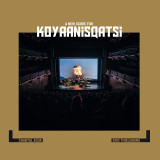
Dark-folk songwriter Chantal Acda and beyond drums-percussion musician extraordinaire Eric Thielemans propose a new score for Koyaanisqatsi, re-actualising the incredibly beautiful, raw, rhythmic and touching images of this 80-ties cinematographic masterpiece. Slow deep electric waves, lonely synths in sonic desert landscapes, rhythmic pulses, transporting drums and bells, and deeply longing sounds and voices make up the audible fundamentals of this imagined, neo shamanic, ritualistic music to accompany the Earth as it keeps on supporting our post human frenetics even today. This release contains a selection of the musical material scored for a live performance together with the screening of the movie. The live performance premiered on Film Festival Gent and Vooruit in the fall of 2022.
Currently based in Belgium, Dutch-born Chantal Acda (b. 1978) has worked under the Sleepingdog moniker since 2006, making three acclaimed albums that closed on the 'With Our Heads in the Clouds and Our Hearts in the Fields' (2010) album for which she collaborated with Adam Wiltzie (Stars of the Lid, A Winged Victory For The Sullen). They toured the UK and Benelux with Low in 2011. After all this, it was time for her first real solo record. Playing in various formations (Isbells, True Bypass, Marble Sounds) had made her conscious of the patterns that we all, as humans, share in. So, she sought out kindred spirits with whom she might record an album filled with freedom and intensity, and who were conscious of the patterns we so often fall back on. Nils Frahm was the first of these to cross her path. The inventive German pianist and producer is an intense and adventurous performer and was a perfect match for it. Acda also experienced a direct bond with Peter Broderick, a multi-instrumentalist known from his solo work (on labels such as Bella Union and Erased Tapes) and from his work with, among others, Efterklang. Cellist extraordinaire Gyda Valtysdottir from Icelandic group Múm had previously worked with Chantal as a member of the Sleepingdog live band. And lastly, Shahzad Ismaily stumbled into this picture by chance, but when Acda and he found themselves in the same room they formed an instant rapport. After this first record, 3 other solorecords followed. Chantal kept on searching for a deeper connection with the outside world and recorded "The Sparkle In Our Flaws" (2015) and "Bounce Back" (2017). She also released some live recordings with her band and also Bill Frisell, a highly respected jazz guitarist.(2018). These records were released on the German label Glitterhouse. Chantal and her band toured with these records in Europe. In 2019 Chantal created her first music/theatre performance P_wawau for Oerol Festival, The Netherlands. She worked with Valgeir Sigurdson (Björk, Bonnie Prince Billy,...) and singers from Het Nederlands Kamerkoor. As a result of this, she released the recorded music: Puwawau (2019). In 2021 Chantal released her most recent album Saturday Moon. (2021) For this album she worked with her band (Eric Thielemans, Alan Gevaert, Gaetan Vandewoude and Niels Van Heertum) but also with Bill Frisell, Shahzad Ismaily and Mimi and Alan Sparhawk (Low). Saturday Moon was very well received, internationally, by the press.
Eric Thielemans is a drummer and percussionist. Travelling across music scenes and disciplines, Thielemans navigates by means of his own compass. Most known for his resonant solo works like a Snare is a Bell, Sprang, Aural Mist and Bata Baba Loka and many collaborations with musicians in the experimental music scene, as well as the Jazz scene, and indie folk/pop/rock scenes Thielemans keeps on pushing the borders and expanding conscious aural spaces and territories. Recently, Thielemans has collaborated with PVT - a trio together with Mika Vainio & Charlemagne Palestine (album released April 2020) , PAT - a new trio together with Oren Ambarchi and Charlemagne Palestine, A new duo together with Oren Ambarchi, Billy Hart ("Talking about the Weather"), Chantal Acda ("The Sparkle in our Flaws", "Bounce Back", "Puwawau", "Saturday Moon"), Marshall Allen (Sun Ra), Tape Cuts Tape, Distance Light & Sky, Jozef Dumoulin, Trevor Dunn, Shahzad Ismaily, Vaast Colson, Nico Dockx, and many more. Currently Thielemans is working on r-e-s-o-n-a-n-c-e , a culminative work that encompasses and brings to the surface the underlying currents within his life in and with music. Withing r-e-s-o-n-a-n-c-e he investigates the everyday magic through conversations, writing and score writing to invite as many souls as possible to experience and co create the magic in the everyday.
Für Lacrimas Profundere, eine der innovativsten und erfolgreichsten deutschen Dark Metal-Bands der Gegenwart, ging es im Falle des neuen Studioalbums ‚How To Shroud Yourself With Night’ (VÖ. 26. August 2022, Steamhammer/SPV) vor allem um die vermeintliche Bürde ihrer 2019er Erfolgsscheibe ‚Bleeding The Stars‘. Denn deren Bilanz hatte indirekt riesige Erwartungen geweckt: „Album des Monats“ im ‚Metal Hammer‘, ‚Orkus‘ und ‚Dead Rhetoric‘, Top-10-Platzierungen in den anderen wichtigen Magazinen, dazu Charts-Einstieg sowie die bis dato erfolgreichste Headlinertour der Gruppe. Wer würde da nicht automatisch mit einer Fortsetzungsgeschichte liebäugeln? „Für mich ging es darum, sich vom Druck des Erfolges zu befreien und zu versuchen, die Messlatte höher zu hängen, dem Spiel voraus zu sein, sich selbst zu fordern und originell zu bleiben, anstatt auf Nummer-Sicher zu gehen und eine Art ‚Bleeding Part II‘ zu schreiben“, erklärt Gitarrist, Bandgründer und Hauptkomponist
Oliver Nikolas Schmid, der mit seinem Bruder und Texter Christopher Schmid erneut eine unverzichtbare Unterstützung fand. „Die neuen Songs klingen frisch, böse, überraschend und leidenschaftlicher als jemals zuvor. Zudem ist es das zweite Kapitel mit unserem Sänger Julian, der uns inspiriert und sich wundervoll eingebracht hat“, so Schmid weiter. „Wir haben verstanden, was ihm gefällt, und haben uns von alten Denk- und Vorgehensweisen gelöst. Noch nie waren wir eine solch eingeschworene Einheit und bereit, unseren eigenen Sound zu erweitern. Gerade deshalb ist ‚How To Shroud Yourself With Night’ unser mit Abstand mutigstes Werk geworden.“
Berlin's Cocktail d'Amore and Tokyo's Ene Records have come together once again to present the music of Solidair. The duo of Cocktail alumni Luigi Di Venere and Jules Etienne present three tracks aimed to induce a dance floor hypnosis. Orgonite (Riding the Waves) does just that, a slow build awash in the ebb and flow of acid tinges, just enough to wet your whistle on a Saturday night. The original mix keeps the skeletal support but throws in a life preserver of 8 bit gaming synthesis. Frisky arps call and respond to each other before making way for sinewy pads to lift off. Tiger's Eye sets itself onto cruising speed incorporating elements of late 90's acid techno with the sleek and smooth clubbing aesthetics of modern day Berlin.
For the twelfth release on the main catalogue and first record of 2022 Haven are proud to present the first full EP on the imprint from label boss Keepsakes for two years. Following on from releases in recent years on South London Analogue Material, Perc Trax, and more, Keepsakes brings the dancefloor heat in this 4-track collection of 4-4 killers.
The A1 kicks things off with "Peak Egotist" - where rolling tribalistic drums, playful vocal samples and 80s industrial-inspired synth stabs interplay in a confronting track of driving techno. This is followed by "Malignant Motion" on the A2, with its swung rhythms and discordant rave synthesiser keeping the club energy high for concrete dancefloors.
"Mr. Shakedown" launches the flip on the B1 with its fast-house-gone-crunchy stylings, where a rolling 16th note synth pattern works with heavy drum patterns and ear-worm vocal shouts to set feet on fire. The B2 closes out the record with "No Acceptance Uptown" - a tried-and-tested frisky club banger with mischievous "yo" vocals and a lively acid-like sequence closing out the latest offering from Haven.
Constructed in the initial chaos of the pandemic, Baby Blue’s dystopian debut LP “End Of Sleep” finds solace in the unearthly home of Planet Euphorique. 7 offerings from the Canadian artiste dive deep into a heightened reflective state; an amalgamation of memories stitched together via looped dissonance and destruction. A contrast of lightness and dark constantly working against each other and at times in harmony; a familiar connection that can be found in complex electronic music and mental states alike. Strap in and be guided through a wormhole of cyber analog journeys, thematic explorations and catastrophic calls to celestial beings.
Ethereal echoes of LSG break in the opening of the record, fleeting cries nodding to ancestry; yet A Rainy Trip To Netherworld Sequence embraces the storm. Knee jerk kick distortions disrupt the angelic hypnosis; reality rolling through the clouds. The sequential energy continues through A2 and A3, driving and rolling viciously with heavy contorted noise infiltrating the low end whilst flickers of melodious song sail unbothered, thriving amongst the destruction. The Spring Is Coming feels like a seasonal change, a melting and defrosting; thawed harmony shining through; textural and flowing with movement, a perfect bridge.
An arguably more delicate chaos emerges on the B side, elongated pads stream endlessly whilst drums cultivate and expand into sudden frisson. Fragile voices begin to gate and sweep in Equal Parts Damaged, lingering and ringing through ear drums whilst glued in rhythmic unison to induce a state of floating, a game of elevated push and pull. Syncopated howls of distortion leads the closing track, Violet summarizing the brilliantly confronting conversations pulsating through the record.
PE016 urges you to join the otherworldly personal journey and sufferings of Baby Blue, a moment to connect with her meditative dreams and struggles; sonic synergy expanding to anyone with the invitation to surrender.
Grey Marbled Vinyl
Mit unerschütterlicher Hartnäckigkeit hat die undurchdringliche Schwermetall-Hartkernfabrik HATEBREED eine weitere eiserne Guss- und Schallwaffe mit dem Gewicht des falschen Selbst hervorgebracht. Es ist keine Überraschung, dass ihr achtes, abendfüllendes Album das Ergebnis des üblichen Schweißes und Blutes ist, das HATEBREEDs einzigartige Nische in der Musikwelt seit über zwei Jahrzehnten zementiert hat. Bekannt für ihre Fähigkeit, ihren Fans eine intensive und kathartische Veröffentlichung zu bieten, haben HATEBREED ihren Schreibstil durch diesen Albumzyklus herausgefordert, um Material zu produzieren, das in einer zeitgenössischen Welt, die von Überreizung, emotionaler Dämpfung und mangelnder sozialer Geduld überflutet ist, außergewöhnlich gut zu vergleichen ist. "Weight Of The False Self' ist eine perfekte Darstellung von HATEBREED im Jahr 2020, ein frischer Ansturm von baldigen Klassikern mit all den Elementen, die Sie vom ersten Tag an hierher geführt haben", erklärt Gitarrist Frank Novinec. Fast jedes Individuum trägt ein metaphorisches Gewicht in Bezug auf sein emotionales Konstrukt. Unsere Erfahrungen prägen, wer wir werden, und im Laufe der Zeit entsteht allmählich eine schwere Last, die wir immer weiter mitschleppen. Für viele von uns wird die Last so groß, dass wir uns schwer tun, von unten herauszukommen, geschweige denn uns zu bewegen.
Es sind diese Kämpfe, die sich durch das Gewicht des falschen Selbst übersetzen lassen. "Ob man es sieht oder nicht, jeder trägt eine Last. Die Musik, die wir lieben, hilft uns, diese Last zu tragen", erklärt Sänger Jamey Jasta. Stücke wie "Cling To Life" liefern ein Wortspiel, das normalerweise bedeutet, sich verzweifelt an die letzten Atemzüge zu klammern, aber hier zeigen diese Worte, dass es nach wahrem Verlust und Trauer aufrichtige Erleichterung bringen kann, sich an die Idee von Glück und Zukunft zu klammern. Am anderen Ende des philosophischen Spektrums präsentiert die erste Single "Instinctive (Slaughterlust)" nicht nur ein neues Vokabular-Wort, sondern schreit auch nach der Kraft, die von unseren Verteidigungsmechanismen ausgeht, wenn wir in eine Ecke gedrängt werden. Wenn jemand von seiner Vergangenheit verfolgt wird, von einer anderen Person, oder wenn er nur sein eigenes Territorium verteidigt, ist es nur eine Frage der Zeit und der Entfernung, bis er zu einer wilden, ursprünglichen Bestie explodieren kann. "Es sollte verboten sein, ein so schweres Lied zu machen", beschreibt Bassist Chris Beattie. Das Lied "Wings Of The Vulture" ist eine Metapher für all die negativen Kräfte der Natur, des Schicksals und der Menschheit, die hoffen, uns in einigen unserer schwächsten Momente zu erbeuten, indem sie auf den Tod von etwas Sinnvollem warten. "A Stroke Of Red" berührt, entgegen dem, was auf den ersten Blick scheint, das Konzept, die Wahl zu haben, sich selbst oder anderen zu schaden. "Auge um Auge, aber das macht jeden blind. Wenn man einmal diesen dunklen, gewalttätigen Weg gegangen ist, gibt es kein Zurück mehr.
Dieses Lied ist eine dunkle Leinwand; ich verlasse meinen Körper, um schreckliche Dinge auf einer anderen Ebene zu tun, und komme zu mir selbst zurück, um daraus zu lernen, so dass man diesem dunklen, fleischlichen Verlangen niemals nachgibt", erklärt Jasta. Das Album-Artwork des renommierten Heavy-Metal-Künstlers Eliran Kantor zeigt einen Mann, der an der massiven Skulptur einer Steinbüste herummeißelt. In Kantors klassischem Malstil, der durch den Lehm von Aufruhr und Traurigkeit bricht, beginnt ein Licht durch den Fels zu scheinen, während der Bildhauer sein Gesicht von den blendenden Strahlen der Heilung abwendet. Das Bild kombiniert visuell die Themen des Albums, nämlich den emotionalen Kampf und die Überwindung des Schmerzes, nachdem Schichten von Depression, Angst, Verrat und Herzschmerz die Seele eines Menschen verhärtet haben. Im Laufe von mehr als 20 Jahren und 8 Alben ist der Schreibprozess für eine Band wie HATEBREED in ihren Wurzeln sicher geblieben, aber dennoch hat sie sich nach knackigen und überzeugenden Stücken mit progressivem Sound umgeschaut, die dem Mix hinzugefügt werden sollen. Es gibt Wellen von frischen Klängen, während das massive Fundament, auf dem HATEBREED stehen, weiterhin stark gehalten wird. "Auf diesem Album habe ich mich wirklich angestrengt und mich dazu gebracht, die Dinge umzuschreiben, bis sie besser waren, bis es klickte. Ich habe mich aus dieser Komfortzone herausgerissen. Im Zeitalter der Altlasten, in dem die Bands so viele Hits aus ihrem Katalog bei Shows spielen müssen, hören wir gerne, dass die Fans neue Songs verlangen, wenn wir live spielen", erklärt Jasta, "wir haben mit diesem Album wirklich unsere Stärken ausgenutzt". "An fleischigen Rippen und adrenalingeladenen Trommeln mangelt es auf dieser Platte nicht. Ich bin stolz darauf, dass wir durchweg einen Soundtrack liefern, zu dem man in seinem Wohnzimmer moshen und seine Wohnung zerstören kann", erklärt Schlagzeuger Matt Byrne. Bei der erneuten Aufnahme des Albums mit Hilfe von ZEUSS erlebte die Band ein Gefühl der Herausforderung und des Durchbruchs, das es ihr ermöglichte, eine neue Ebene des Klangs zu erreichen.
Nachdem er mehrere Jahre lang mit der Band gearbeitet hat und während er normalerweise seine Zeit mit Bands verbringt, die einen ziemlich anderen Sound haben, ist Zeuss in der Lage, HATEBREED zu testen und ihre bereits berüchtigte Schwingung zu erweitern. "Es war wirklich großartig, wieder mit Zeuss an diesem Projekt zu arbeiten. Ich liebe die Art und Weise, wie die Gitarren klingen", kommentiert Gitarrist Wayne Lozinak. Im Laufe der Zeit scheint die Qualität der Produktionstechnologie immer besser zu werden und ein sicheres und produktives Nest zu schaffen, in dem das Album
- A1: Lust In The Movies
- A2: Once And Never Again
- A3: Only Lovers Left Alive
- A4: Giddy Stratospheres
- A5: In The Company Of Woman
- A6: Heaven Help The New Girl
- B1: Separated By Motorways
- B2: You Could Have Both
- B3: Swallow Tattoo
- B4: Weekend With Makeup
- B5: Madame Ray
- B6: A Knife For The Girls
- 1: Five Ways To End It
- 2: Fulwood Babylon
- 3: The Whippet Fancier
- 4: Who Are You To Her?
- 5: Never To Be Repeated
- 6: All Bar One Girls
- 7: I 'M Coping
- 8: Last Night On Northgate St
- 9: Platitudes
- 10: Melville Farr
- 11: The Unbearable Lightness Of
- 12: Building
Rough Trade Records announce the release of the
15th Anniversary edition of The Long Blondes’
debut album, the acclaimed ‘Someone To Drive
You Home’.
The home of a host of indie disco classics with its
noir atmospheres and vivid storytelling - qualities
that saw the record inspire recent, generationcapturing movie ‘Giddy Stratospheres’ which takes
its name from The Long Blondes’ iconic single -
the Sheffield band’s first album managed that rare
trick of capturing the 2000s zeitgeist while leaving
a timeless artistic mark for the ages.
Initially inspired by the frisson of the indie disco -
now, fittingly, a classic of low lit dancefloors
everywhere - ‘Giddy Stratospheres’ is The Long
Blondes’ sophisticated calling card. A swirl of
razor-sharp guitars and vivid storytelling, waltzing
melodies and burning vocals, the Sheffield band’s
2000s single fizzes with dancing, desire and the
most stylish sing-a-long you’ll ever hear.
The Anniversary edition of ‘Someone To Drive You
Home’, which was originally released in November
2006 and was produced by Pulp member Steve
Mackey, comes as a gatefold double LP, pressed
on to red and yellow vinyl to mirror the album’s
artwork - a picture of actress Faye Dunaway
painted by frontwoman Kate Jackson. The edition
features the original record, plus 11 additional
tracks that the band used on B-sides.
Bill Evans catapulted to the top of the jazz world in June 1961 after reeling off three straight masterpiece sessions at New York's Village Vanguard with his trio. Yet the emotional highs came to a screeching halt shortly thereafter when bassist Scott LaFaro died in a car accident. Devastated, Evans refrained from playing for nearly a year. If not for an inspirational collaboration of tremendous creative outpouring, one wonders what fate may have befallen Evans. Undercurrent, the outcome of two studio sessions with guitarist Jim Hall, is that project.
Mastered on Mobile Fidelity's world-renowned mastering system and pressed at RTI, this Silver Label LP edition bursts forth with brilliant textures, you-are-there realism, and extraordinary tonalities. No other version outside of this analogue copy brings you face-to-face with these two jazz giants' sonic communion, a kind of spiritual musical summit on which Evans' deft keyboard touches and Hall's reliably subtle phrasings seamlessly mesh and wonderfully dance, the compositions streaked with natural instrumental decay, full-frequency extensions, and poignant emotionalism that, on this LP, you can feel.
While Evans managed to sit down for a few one-off takes between LaFaro's passing and these April-May 1962 dates, he largely remained on hiatus and abstained from recording. Whether it owes to the intimate pairing, he and Hall's brotherly chemistry, or the exquisite selection of program material, the results consistently come across as the equivalent of a private meditation - such is the level of introspective depth and quietly shaded interplay throughout. For Evans, the duet clearly functions as therapy, a healing episode in which his partner patiently lays back, shadowing moves and suggesting others, neither musician interested in the spotlight but each striving for (and achieving) transcendent beauty.
In tackling standards such as Rodgers and Hart's "My Funny Valentine" and the Broadway classic "Darn That Dream," as well as the Hall original "Romain," the pair traverses complex harmonies with the astute elegance of a figure skater. At times, Evans and Hall go for broke on a hard-swinging romps, yet it's their implied melancholy and drifting, softly struck melodic refrains on waltzes and ballads that bestows Undercurrent with a nuanced romanticism and whispered atmosphere befitting the record's title.
Indeed, even the album's cover - an iconic photograph by Toni Frissell - exhibits the surreal, almost-hallucinogenic properties of the fare contained within.
- A1: A Mark Of Resistance
- A2: There Is Always A Girl With A Secret
- A3: Silence Is Silver
- A4: Bower Of Bliss
- B1: Wooddrifts
- B2: Nkosezane - For My Daddy
- B3: Like Jenga (Only It Reaches All The Way To The Sky And It’s Made Of Knives)
- B4: Doggerland (Between The Acts)
- C1: Fundamental Things
- C2: Fractions Fractured Factions
- C3: I’m In Love With The End
- C4: Surrender
- C5: Gargle (Command V)
- D1: Dishàng Shuãng (Edit)
- D2: Transport Me
- D3: An Infinite Thrum (Archipelago)
- D4: The Abandoned Colony Collapsed My World
absent origin’ reassembles and reimagines recordings and musical
scores composed by Mira Calix, globally, over the past decade. It’s a
collage album about edges and borders, cutting and tearing, and
composing new combinations that point to an audio visual manifesto for the 21st Century.
“Like Duchamp, I had started out wanting to make an album, or box, of approximately all the things I produced. In the end, I realised - as much as a collage is the coupling of two or more realities, it also offers the means to examine the materials and culture of an era, questioning and expanding its borders.” - Mira Calix
Every song on the album was created by applying a different collage
process relating to a different visual artist, spanning the history of collage to contemporaries of the practice. The sonic materials are subjected to a myriad of processes; layered, synthesised, constructed and assembled into electronic melodies, textures and complex, frisky dance rhythms that are constantly shifting in surprising ways. absent origin employs collage to make sense of the current moment of displaced voices, disjunction and political unrest.
Calix’s recording sessions from all over the world are the many
fragments we hear across the album; from India to Tasmania, Jordan to Belgium, China to Uganda, her former home of South Africa, to her
current home in Britain. Slicing into these are further recordings of
vocalists, percussionists, choirs, orchestras, quartets and soloists, never appearing in the form in which they were originally intended. The record is a polyphony of predominantly diverse female voices held together by pulsating baselines, haunting electronic sounds and orchestrated melodies and with them, we travel.
The album fizzes with a political energy and the interconnectedness of
everything. At this moment in time, there is an impossibility of separating one thing from another; the effect is strange and not exactly reassuring.
Collage suggests infinite possibilities and each track here is a singularly unique compositional combine, a dizzying hall of mirrors with its own unlikely harmony, its own distinctive rhythm. On ‘absent origin’, collage becomes the tool to make sense of a present that is often anything but.
2LP in printed inner sleeves with 5mm spine outer, printed insert and
digital download code.
'The Works and Days: The Black Sections' is a sound collage album that emerged out of the production material of the film, The Works and Days (of Tayoko Shiojiri in the Shiotani Basin). The film — winner of the Encounters Golden Bear for Best Film at the 2020 Berlinale — is the second feature of C.W. Winter & Anders Edström. It is an eight-hour fiction shot for a total of twenty-seven weeks, over a period of fourteen months, in a village population forty-seven in the mountains of Kyoto Prefecture, Japan. It is a geographic description of the work and non-work of a farmer. A portrait, over five seasons, of a family, of a terrain, of a sound space, and of a duration. The film was named one of the Ten Best Films of the Year by critics at: Artforum, Cargo, Cinema Scope, Desistfilm, Filo, La Internacional Cinéfila, Mubi, Nobody, Senses of Cinema, and Sight & Sound.
The film is accompanied by this LP, TheWorks and Days: The Black Sections, by C.W. Winter, and the photo book, Shiotani, by Anders Edström. The album features musical excerpts from Tim Berne & Bill Frisell, Tony Conrad, Graham Lambkin, Mary Jane Leach, Alvin Lucier, Phill Niblock, Folke Rabe, Éliane Radigue, and Akio Suzuki. Producing, editing, and recordings by C.W. Winter. Mastered by Stephan Mathieu.
Winter & Edström’s first feature, The Anchorage, won a Golden Leopard at Locarno Film Festival and won the Douglas E. Edwards Independent/Experimental Film/Video Award from the Los Angeles Film Critics Association. It was named one of the Ten Best Films of the Year by critics at Cinema Scope, Film Comment, Senses of Cinema, Variety, and Indie Wire and was named Best First Film of the Year by The New York Times. Their first film, a documentary short called One Plus One 2 was made in collaboration with the late British guitarist, Derek Bailey. Their film/video work has shown at such venues as the Institute of Contemporary Art (Boston), Centre national de la photographie (Paris), Kunstmuseum Wolfsburg, Fotomuseum Winterthur, NRW-Forum (Düsseldorf), the Harvard Film Archive, Anthology Film Archives, the Wexner Center for the Arts (Columbus), Centre de cultura contemporània de Barcelona, the Tokyo Metropolitan Museum of Photography, and the National Museum of Modern Art (Kyoto).
C.W. Winter was born in California. In 2020, he completed his DPhil in Art Practice & Theory at The Ruskin School of Art at the University of Oxford. He received his MFA from California Institute of the Arts where he studied closely under Thom Andersen, James Benning, and Allan Sekula. His writing has appeared in Cinema Scope, Moving Image Source, Purple, and Too Much. He lives in the United Kingdom where he is currently a Visiting Professor at the Royal College of Art and a Lecturer at the University of Oxford.
Side A excerpts:
“Thursday, May 5, 1977 & Friday, May 6, 1977: Part 4” Performed by Tony Conrad. Used by arrangement with The Tony Conrad Estate
“Sethwork” Performed by Phill Niblock. Used by arrangement with Phill Niblock
“What?? (Second Version)” Performed by Folke Rabe. Used by arrangement with the Folke Rabe Estate
“Pipe Dreams” Performed by Mary Jane Leach. Used by arrangement with Mary Jane Leach
“What?? (Second Version)” Performed by Folke Rabe. Used by arrangement with the Folke Rabe Estate
“2011” Performed by Tim Berne & Bill Frisell. Written by Tim Berne. Published by Party Time Music BMI. Recording courtesy of Minor Music Records/Screwgun Records
Side B excerpts:
“Ceremoniolose” Recorded by Graham Lambkin. Used by arrangement with Graham Lambkin
“Kugiuchi” Performed by Akio Suzuki. Recorded live for TheWorks and Days Used by arrangement with Akio Suzuki
“Music on a Long Thin Wire (Side A)” Performed by Alvin Lucier. Used by arrangement with Alvin Lucier
“A Third Trombone” Performed by Phill Niblock. Used by arrangement with Phill Niblock
“Triptych: Part 1” Performed by Éliane Radigue. Used by arrangement with Éliane Radigue
Die weltbekannte Band aus Island ist mit ihrem elften Studioalbum, dem hoch emotionalen "Mobile Home", zurückgekehrt und veröffentlicht damit ihr erstes Album seit 2018. Das Kollektiv beweist einmal mehr die Meisterhaftigkeit, seine künstlerischen Grenzen zu erweitern, indem sie eines ihrer ambitioniertesten und kraftvollsten Alben seit Jahrzehnten veröffentlichen. Für ihr neuestes Album holten sich GusGus die VÖK-Sängerin Margrét Rán zur Hilfe, um ihren Stil zu erweitern und den Sound des Kollektivs so frisch wie immer zu halten. Das 9-Track-Album bietet eine Mischung aus elektronischem Rock, Ambient, Darkwave, Downtempo und Synthpop. GusGus besser denn je!
World-renowned group GusGus have returned with their 11th studio album, the highly emotive Mobile Home, marking their first album release since 2018. The collective once again prove their commitment to pushing their artistic boundaries as they release one of their most ambitious and powerful albums in decades. For their latest record, GusGus call on VÖK’s lead singer Margrét Rán to help expand their style, keeping the collective’s sound as fresh as ever. The 9-track album features a concoction of electronic rock, ambient, darkwave, downtempo, and synthpop.
After announcing a new album in October 2020, GusGus wowed fans with their first single “Higher,” offering a first taste of how VÖK’s impactful vocals mesh seamlessly with GusGus’ intelligent and powerful electronic production. “Higher” was soon followed up with the darker, downtempo “Stay The Ride” and the bright and energetic synth work on “Our World.” The three captivating singles each received equally remarkable music videos courtesy of founding members Arni & Kinski, the directing team known for working with the likes of Sigur Rós, Kiasmos, Ólafur Arnalds, Of Monsters and Men, and more.
Every track on Mobile Home doubles as a window into a futuristic dystopian world that has been overtaken by machines. A nod to the rise of technology and ever-growing uncertainty surrounding automation, the album explores themes of solitude, rebellion, science fiction, hedonism, pleasure, and anger. Swirling within this world is a disconnected, aching soul who is on the verge of slipping into complete dementia. Forgotten purpose and goals but continues to be driven by the hedonistic default program of material consciousness; sensually self-indulgent and engaged in the pursuit of pleasure alone. In Mobile Home, GusGus challenge themselves like never before, resulting in a wonderfully chaotic reflection of the ongoing war between soul and machine.
With Mobile Home, GusGus show the quality and sonic diversity of the singles pervades throughout the full LP, while preserving the melodramatic themes that tie its 9 tracks together. “Simple Tuesday” showcases the group’s aptitude for blending contemporary electronic production with pop sensibilities while keeping an optimistic tonality at the forefront. Meanwhile, “Love Is Alone” and “Original Heartbreak” offer a slower, more pensive take on synthpop, and evoke feelings of solitude and deep melancholia. “Silence” and “The Rink” boast some of GusGus’s more experimental production, each alternating between radio-ready vocal verses with inventive and exciting synth elements. GusGus closes Mobile Home with “Flush,” an instrumental score that leaves the listener riding high as they finish the LP.
- A1: Green (Vincent’s Tune) Featuring Roomful Of Teeth
- A2: O’neill’s Cavalry March Featuring Martin Hayes
- A3: Little Birdie Featuring Sarah Jarosz
- A4: Ichichila Featuring Toumani Diabaté & Balla Kouyaté
- B1: Sadila Jana Featuring Black Sea Hotel
- B2: Shingashi Song Featuring Kaoru Watanabe
- B3: Madhoushi Featuring Shujaat Khan
- C1: Wedding Featuring Dima Orsho
- C2: Going Home Featuring Abigail Washburn
- C3: Cabaliño Featuring Roberto Comesaña, Anxo Pintos & Davide Salvado
- D1: St. James Infirmary Blues (Featuring Rhiannon
- Giddens, Michael Ward-Bergeman & Reylon Yount)
- D2: If You Shall Return... Featuring Bill Frisell
- D3: Heart And Soul Featuring Lisa Fischer & Gregory Porter
Green Vinyl[43,28 €]
American cellist prodigy Yo-Yo Ma recorded Sing Me Home with the Silk Road Ensemble, a musical collective with performers and composers from all over the world. The album features guest appearances by Grammy Award winning artists Toumani Diabaté, Gregory Porter, Lisa Fischer, Bill Frisell and many more.
Released in 2016, Sing Me Home was meant to open hearts, ears and minds during a time of tragedy and political turmoil. “All around the world, people constantly meet the unfamiliar through change,” Yo-Yo Ma said of the album. “Rapid or dramatic change can feel threatening, tempting us to build walls to defend against the unknown. At Silk Road we build bridges. In the face of change and difference, we find ways to integrate and synthesize, to forge relationships, and to create joy and meaning.”
Bringing together the cultural backgrounds of the musicians, Sing Me Home is a culturally conscious album, reflecting on modern globalisation and collaboration. From Macedonian folk to traditional music from Mali, and from Irish fiddle to Indian sitar: it all comes together wonderfully. Critics agreed, and the album went on to win the Grammy Award for Best World Music Album in 2017.
- A1: Every Day I Have The Blues
- A2: When My Heart Beats Like A Hammer
- A3: Bad Luck Soul
- A4: You've Been An Angel
- A5: Get Out Of Here
- A6: My Sometime Baby
- A7: Good Man Gone Bad
- B1: Someday
- B2: You Done Lost Your Good Thing Now
- B3: You Know I Go For You
- B4: Please Accept My Love
- B5: Lonely
- B6: Days Of Old
- B7: Bad Luck
- C1: 3 O'clock Blues
- C2: Fishin' After Me
- C3: Don't Cry Anymore
- C4: The Woman I Love
- C5: Going Down Slow
- C6: Sweet Little Angel
- C7: I Am
- D1: Bad Case Of Love
- D2: I Wonder
- D3: Mean Ole Frisco
- E1: Sugar Mama
- E2: Things Are Not The Same
- E3: My Reward
- E4: Be Careful With A Fool
- E5: Don't Look Now, But I've Got The Blues
- E6: Walking Dr Bill
- E7: Gonna Miss You Around Here
- F1: Hully Gully Twist
- F2: Lonely Lover's Plea
- F3: Peace Of Mind
- F4: Early In The Morning
- F5: Time To Say Goodbye
- F6: Dark Is The Night (Part 1)
- F7: Partin' Time
- D4: Sweet Sixteen (Part 1)
- D5: Sweet Sixteen (Part 2)
- D6: Worry Worry
- D7: Quit My Baby
This 3LP compilation documents B.B.King's breakthrough years, when, initially signed to the Bihari Brothers' RPM label, he unleashed a torrent of superb recordings that would establish him as the world's most famous blues singer-guitarist. He made scores of remarkable recordings during his career - but the ones on this compilation represent that marvelous moment in time when Riley King and Lucille combined to make their indelible mark on the history of the blues.
"Who Sent You?" by Irreversible Entanglements is an entire holistic jam of "infinite possibilities coming back around," a sprawling meditation for afro-cosmonauts, a reminder of the forms and traumas of the past, and the shape and vision of Afrotopian sounds to come. Stay on it! This is the future! This is the spectral dreaming, the reshaped soundwaves of post-Katrina, post-Osage Avenue, post-Obamacare that we borrow from to do this work, so stay on it. Who Sent You? they said from their liquid cryo-chamber, from a low-light induction field cobbled together with lithium rods, with melted down Romare Bearden and Howardena Pindell paintings, stitched with chaos fibers and placed in the center of the carrion husk of a burnt out shanty town. They took time to scrape ashen samples of what was, their souls the residue thick and caked on, that still climbs those new high-rise condominiums like moss - the only evidence that they were once there, that they were baked into the fabric of this planet - they were there fixing elevators and tossing wrenches into quantum fields until they were stopped! frisked! and turned into weird, 100-foot martyr murals on the backside, the north side, of supermarket walls-Who Sent You? is how the matrix modulation works. Dig it: Who Sent You? is the punk-rocking of jazz and the mystification of the avant-garde, a sci-fi sound from that out-soul-fire jazz quintet Irreversible Entanglements.
The Keep ist das Soloprojektdebüt des Göteburger Produzenten Oliver Knowles, der seine indonesischen Wurzeln mit seiner Liebe zu Drone-Musik verbindet. Geschrieben in Barcelona, kombinieren die Tracks Drones, Noise und Rhythmen, inspiriert durch Vitalität und Euphorie spanischer und katalanischer Straßenfestivals, zu einem eigenwilligen, frischen Sound.
The hyper talneted Stellar Om Source (NOT NOT FUN, RVNG, NO 'LABEL) blowing up new styles on this one!
"If there is one thing that leaps out from Stellar OM Source’s music, it is the sense of a highly active mind at work. There is an indivisible feeling that a real person is behind this dynamic flurry of tones, waves, vibrations and modulations. On I See Through You, the first full Stellar OM Source release in over four years, the spark that first LP piqued the interest of so many listeners is glowing stronger than ever.
In the 2010's, Christelle Gualdi carved a name as one of the most essential live electronic musicians around, dazzling dancers and home listeners in kind with her bombastic, acidic hardware jams. Circumstances outside her control forced a stop for the Stellar OM Source project. It was touring, including two shows in the summer of 2019 at Dekmantel Festival and Listen! that Gualdi credits as year highlights, which proved to be the integral jump-start to the engine.
Inspiration came rushing back thanks to the human connection of performing. Seeing a younger generation connect with her put fresh charge into the circuitry of her gear. All this accrued into new material on the road, and thus I See Through You was born.
The spirit of 2013’s cult favourite Joy One Mile is alive and well on I See Through You. There is once again immediacy, urgency and lust. But Stellar OM Source stepping into a comparatively more poppy and playful mode on these four tracks could also throw some. Fundamentally she says, it comes from a similar place, and ends with an enmeshed and positive outcome. Gualdi credits both “1995 rave” and “the clarity, bass and breath” of hi-def hip-hop productions as being twin northern stars for her to follow.
The artwork comes from friend and highly respected photographer & director Pierre Debusschere, whose work similarly flits between arresting close-ups and, well, the widescreen luxe of Beyoncé videos. “I’m definitely not a purist anymore,” Gualdi laughs – and with club-ready impact meeting human warmth, this shows in abundance.
“Night Alone” wastes no time in getting the listener up to speed. Is that an LFO sample running through “Night Alone”? Is this a lost Metro Area classic? Is that Stellar OM Source taking a diversion into searching Ibiza-rousing vocal for a moment, or did we imagine that in a heat haze? Where are the kicks? Oh there they are. How many elements are buried and revived within just over five minutes?
It’s hard to tell. Before we know it, “Lost Codes” is up and away, keeping pulses racing. A pitter-patter of baby kicks feel like a pre-tremor before a welting electro-Italo lead crashes into play. With fizzing energy, rasping synths and a frisson of danger, fans of Unit Moebius and The Hacker will be doing somersaults of joy.
“White Echoes” wastes kicks off the flip side with low gurgles descending briefly like a UFO reverse parking into the spot SOS had vacated. Soon, 303s are twisting like Chinese burns while warm chords offer a salve. The mood maintains on “Wild Palms”, the only song on this record not to feature additional mixing work from Peaking Lights’ dub-wise sensei Aaron Coyes.
True to form, the B2 is all Stellar: elements switching up and out, with all the fun and frenzy of capital-L Live action. Kick drums and bassline darting back and forth like a synchronised swimming routine, all elements in concert. The momentum of a runaway mine cart that you can’t help but strap yourself to. I See Through You is one for the dancers who have given Stellar OM Source the motive to move forward once again."
“Osondi owendi. What is cherished by some is despised by others. One man’s meat is another man’s poison. Different strokes for different folks. To each their own. Osondi owendi.
It’s a conventional aphorism in the Igbo language but if you utter the word “osondi owendi” in Nigeria today, the first thing that comes to anybody’s mind is the cucumber-cool highlife music maestro Chief Stephen Osita Osadebe and his legendary album that takes its name from the adage. Released in 1984, Osondi Owendi was instantly received as Osadebe’s magnum opus, the crowning event of an exalted career stretching back to the early years of highlife’s emergence as Nigeria’s predominant popular music.
Stephen Osadebe first appeared on the music scene in 1958 as a spry, twenty-two year-old vocalist in the Empire Rhythm Skies Orchestra, directed by bandleader Steven Amechi. With his dapper suits, urbane Nat King Cole-influenced vocal stylings and jaunty, uptempo, calypso-scented dance tunes, he personified the frisky spirit and anxious aspirations of a young, educated generation that had come of age in the wake of the Second World War, in a Nigeria that was rapidly shaking off British colonization and marching towards an independent future. 1959 would be the year that he truly made his mark in the business with his debut solo single “Lagos Life Na So So Enjoyment.” A giddy exhortation of the music, sex, fun and freedom availed by life in the big city, the song became a sensation and an anthem, and Stephen Osadebe became the leader of his own popular dance band, the Nigerian Sound Makers.
Osadebe would ride this wave of acclaim through most of the nineteen sixties, but a change in direction would be called for at the dawn of the seventies. As Nigeria emerged from a devastating civil war, so did a new generation of youth inspired by rock and funk, confrontational sounds reflective of a more violent, less idealistic era. All of the sudden, the idioms of the post-WWII dance orchestras that nurtured Osadebe’s cohort seemed quaint, the stuff of nostalgia. Osadebe needed to evolve to respond to the new tumultuous, turned-up times.
His response? He cooled it down.
Abetted by a new crop of fire-blooded young players, Osadebe slowed his music to a mellow, meditative tempo, brought forward the lumbering, Afro Cuban-accented bass and percussion, from the rockers he borrowed searing lead lines on the electric guitar. Over this musical bedrock, doesn’t so much as sing as he dreamily muses, coos, sighs aphorisms, words of wisdom and inspiration. “When one listens to my music, all I say appears meaningful,” Osadebe explained his lyrical approach, “at times they are in the form of proverbs which provoke much thought afterwards.” The result is a blend that is both rollicking and soothingly languid. Osadebe christened the style Oyolima—a tranquil, otherworldly state of total relaxation and pleasure. Osondi Owendi represents oyolima at its finest, and possibly Nigerian highlife in epitome.
Osondi owendi. What is cherished by some is despised by others. In some way, the album’s title constitutes a paradox. Because Osondi Owendi is a record that it’s almost impossible to imagine being despised by anybody."
“The year is 1982. Rita Mitsouko has not yet recorded its eponymous debut album. The pile of ashes that once was Disco is still smoking on the field of Comiskey Park. New Wave is a phrase, Post-Punk Rock a thing. In France, young musicians dream of New York City – some with more devotion than others. Lapassenkoff are to early 1980’s downtown New-York what seminal New Wave act Marie Et Les Garçons (who met John Cale on their way to CBGB) are to the city’s musical scene in the late 1970’s: an unexpected cousin from Lyon.
Indeed, going through Shing ‘n’ Tsé! sometimes feel like an impromptu meeting between John Lurie and Tom Tom Club in the basement of some French record store. If we press pause for a minute, a question comes to mind: how on earth such a unique blend of funk, post-punk, jazz fusion & hip hop (!) – more easily associated with, say, The Mudd Club, than with Les pentes de la Croix-Rousse – made its way to the brains of three French musicians?
The answer probably lies in a Swiss chalet, some 40 kilometers away from Zurich. Sent there by the wise people from Mosquito (the label which also gave Ramuntcho Matta and Carte de Séjour the opportunity to record their first album), the band experiences Alpine ennui and mysterious neighbours (a certain Carlos Peron, for instance). That is probably during this stay in Swiss meadows that they opened a Pandora’s box called experimental music, leading them into recording the mind-blowing sample-based – and accidentally proto-everything – M Le Maudit,, that would later grace Belgian airwaves via the famous Liaisons Dangereuses radio show.
But if we’re looking for a bigger picture, M Le Maudit is just an example of how inventive their approach to music was. This compilation is a testimony of a decade-long feverish flirt between the Lyon trio and dance music. From the infectious electric boogie cuts Shing A Ling and Roadie to the somehow euro-house-fuelled Ma Poubelle Angelina, via many unclassifiable yet iconic songs like Bossi Le Bosseman or Fièvres, Frissons, the compilation demonstrates one thing: Lapassenkoff took the road less traveled by and contributed to a different history of French Pop music.”
Pierre-Arthur Michau.
Numero's "Planisphere", für diejenigen innerhalb der 30-40 Grad Zone, wird Ihnen ein ziemlich erkennbares Diagramm liefern, um sowohl Deep-Sky-Objekte als auch tellurische emotionale Impulse zu entdecken. Statisch gefüllte Signale, die tief aus dem Inneren der Wände des Laurel Canyon kommen und von Clustern der beginnenden Technologie des späten Jahrhunderts abprallen, werden durch die verdrehten Kaninchenohren eines Chevy Astro Van gezogen. Der zweideutige Klang von Hippies frisch aus dem Hinterland schaukelt Trommelmaschinen durch herzzerreißende Aspirationen, als ob die Musikabteilung des Whole Earth Catalog zum Leben erwachte. Diese 9 Nomaden, die aus dem Astronomieunterricht mit einem Arm voller Brain and Sky Label-Releases hervorgehen, kritzeln Plein Air Narrationen über eine Landschaft, die der Sonne den Rücken kehrt. Genießen Sie den Nachhall unseres himmlischen Heims.
> Individuelle gestanzte 2-farbiges Cover im Spanplatten Look
> Klar bedruckte Hülle mit radialem Kalenderzifferblatt
> Picture Disc LP mit Sternenkarte der Sterne, die am Nachthimmel in der 30¢ª-40¢ª Zone sichtbar sind
Professor Rhythm is the production moniker of South African music man Thami Mdluli. Throughout the 1980's, Mdluli was member of chart-topping groups Taboo and CJB, playing bubblegum pop to stadiums. Mdluli became an in-demand producer for influential artists (like Sox and Sensations, among many others) and in-house producer for important record companies like Eric Frisch and Tusk. During the early '80s, Mdluli projects usually featured an instrumental dance track. These hot instrumentals became rather popular. Fans demanded to hear more of these backing tracks without vocals, he says, so Mdluli began to make solo instrumental albums in 1985 as Professor Rhythm. He got the name before the recordings began, from fans, and positive momentum from audiences and other musicians drove him to invest himself in a full-on solo project. It was the era just before the end of apartheid and house music hadn't taken over yet. There wasn't instrumental electronic music yet in South Afric a. As the '80s came to a close, that was about to change. Professor Rhythm productions mirror the evolution of dance music in South Africa. They grew out of the bubblegum mold - which itself stems from band's channeling influences like Kool & the Gang and the Commodores - into something based on music for the club. His early instrumental recordings First Time Around and Professor 3 mostly distilled R&B, mbaqanga and bubblegum grooves into vocal-less pieces for the dance floor. Musically, these were a success and commercially the albums all went gold. There were countless bubblegum albums flooding the marketplace, with nearly disposable vocalists backed by mostly similar-sounding rhythm tracks. Most of the lyrical content was light and apolitical. But the keyboards used formed the musical basis for what would come next. By the time Professor 4 and this recording Bafana Bafana - the name references South Africa's national soccer team - were released in the mid-1990s, k waito had fully emerged. Access to instruments and freedom of expression helped its rise in influence among youth. According to Mdluli, "Once Mandela was released from prison and people felt more free to express themselves and move around town, kwaito was becoming the thing." Lyrically, kwaito championed the local township lingo while adapting "international music," house music, into the local context. "International Music," as house music and early kwaito were interchangeably known, in many ways reflects the sounds coming from America. But South Africans made it their own. Today, the largest part of the music industry is occupied by house music and its relatives.