quête:init

Genres
Tout
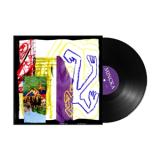
Fela Kuti - The Best Of The Black President (4x12")

4LP vinyl boxset - pressed on opaque red, green, blue and yellow vinyl housed in printed inner sleeves with disco holes within a hardbound book jacket. The back cover is a Ludo board and the package contains Ludo game pieces, dice and instructions on how to play.

The Best of the Black President is the 13 track guide to Fela Kuti’s massive and manifold creative career. Fela was a musician, arranger, producer, political radical, outlaw and the originator of Afrobeat. This is the first time the complete compilation is available on vinyl. It is a 4 LP set, with updated cover art in a hardbound book jacket and printed inner sleeves. The individual LPs are pressed on red (sides A/B), green (sides C/D), blue (sides E/F) and yellow (sides G/H) vinyl. This edition features a Ludo game board as the back cover and comes with a perforated set of game pieces, dice, and instructions on how to play. Limited edition of 3000 for the world.


The release of this special edition coincides with the 12 episode podcast on the life and legacy of Fela, Fela Kuti: Fear No Man, produced by the Obamas and hosted by Jad Abumrad (Radiolab, Dolly Parton’s America). The series features dozens of interviews including Burna Boy, Paul McCartney, Questlove, Ayo Edebiri, David Byrne, Santigold, and President Obama himself. It was initially released on Audible on 9/15/25 and had a wide release across all podcast platforms on 10/15/25

pas en stock

Commandez maintenant et nous commanderons l'article pour vous chez notre fournisseur.

86,13

Derniere entrée: 4 jours
Grup Ses & Gökalp K - Grup Ses & Gökalp K

Istanbul-based producers Grup Ses and Gökalp K present their collaborative album on SOUK Records, showcasing a distinctive fusion of musical styles such as hip hop, grime, dubstep, and jungle. Two years in the making, their self-titled album features contributions from Cologne-based multi- instrumentalist Elektro Hafız, Marseille-based DJ Syr from Scratch Bandits Duo and Ethnique Punch, a Turkish MC & producer now based in Bremen.

Grup Ses project began in 2007, initially focusing on edits and breakcore mash-ups. By 2008, it evolved into a beatmaking project incorporating elements of humor and local materials such as records, tapes, and radio broadcasts, which have become the signature Grup Ses sound. Grup Ses has previously collaborated with sub-labels of Discrepant, releasing two albums on SOUK and three mixtapes on Sucata Tapes.

Gökalp K, the alias of composer and sound designer Gökalp Kanatsız, has been releasing music since 2011. Under this name, he has released two albums and performed as a DJ. Alongside his beat production, he also composes electro-acoustic music and collaborates with creative studios as a sound artist on various interdisciplinary projects.

pré-commande

Cet article n'a pas encore été publié. Vous pouvez pré-commander le produit maintenant.

19,75
Quinie - Forefowk, Mind Me LP

Quinie

Forefowk, Mind Me LP

12inchUTR171LPXB
Upset the Rhythm
01.05.2026out soon

The record is largely sung in Scots language, one of Scotland’s three official languages along with Gaelic and English. “Scots gives me a way of expressing myself which is connected directly with the landscapes I love. It brings the songs alive and it is a fascinating language. The name of the record is in Scots - Forefowk means the people who came before, or ancestors. When we say ‘mind me,’ we can mean a few things- remind, remember, watch over or care for me. The record explores how tradition needs to be constantly reconnected with, built upon, looked after, and shared.”
Quinie sings with a style inspired by Scottish Traveller singers. “I began singing unaccompanied Scots Song in 2015 after hearing Scots Traveller singer Sheila Stewart on the radio. Initially I felt like I shouldn't sing these songs because I'm not a Traveller, and I saw people around me doing that in a way that made me uncomfortable. But on the other hand this music made sense to me and I felt driven to learn. Over the years I have met Traveller friends who taught me that settled people sharing these songs could contribute to raising awareness. Scottish Travellers are marginalised and discriminated against in modern Scotland, despite being custodians of so many of our important traditions. So I started to perform them and tell this story. From there I built on my repertoire and started writing my own songs”.
To develop this record, Quinie travelled across Argyll with her horse. They went on a pilgrimage of sorts through the ancient landscapes of the West of Scotland to explore the interconnected relationships between people, ancestors, animals, and place. The album’s vinyl release is accompanied by a book and film, documenting this unusual research process.
Forefowk, Mind Me was recorded in August 2024 at The Big Shed in Highland Perthshire with support from Creative Scotland. Quinie is accompanied by an ensemble of musicians: Ailbhe Nic Oireachtaigh (viola), Oliver Pitt (duduk, bouzouki, percussion), Harry Górski-Brown (small pipes, violin), and Stevie Jones (double bass, recording, and mixing). Each of these artists brings their own distinctive voice, bridging contemporary experimental practice with worlds of traditional and early music.

pré-commande

Cet article n'a pas encore été publié. Vous pouvez pré-commander le produit maintenant.

41,13
MINCKA - MINCKA

MINCKA

MINCKA

12inchRSRECS20
Rucksack Records
01.05.2026
  • 1: Rainy Day
  • 2: Don't Stop (Ft. Blabbermouf)
  • 3: It Was
  • 4: Neverwhere
  • 5: Bak Again
  • 6: Attention
  • 7: Gimme Love, Gimme Love (Ft. Princess Bangura)
également disponible

ALTERNATE ARTWORK[26,68 €]


Rhythmus ist die erste Sprache. Ein Puls, der irgendwo beginnt - in einer Maschine, in Händen, als Gedanke. MINCKA existiert in dem kreativen Prozess, der sich daraus entwickelt: ein Dialog zwischen Struktur und Chaos. Entstanden als Idee zwischen einem Schlagzeuger und einem Produzenten, lädt MINCKA heute Produzentinnen, Musikerinnen und Kreative gleichermaßen dazu ein, dem Projekt immer neue Formen zu geben - als etwas, das sich stetig weiterentwickelt.Alles beginnt als Skizze: ein Fragment oder eine Kadenz, die scheinbar ins Leere führt - bis das Live-Schlagzeug übernimmt und der Groove die Richtung vorgibt. Mal festgezurrt in unerbittlichen Beats, mal verträumt und schwer greifbar. Wie der Soundtrack zu einem Fiebertraum, mit Echos von Mo' Wax ebenso wie von International Anthem.Von dort aus öffnet sich ein Raum, in dem Musiker frei auf das reagieren, was bereits existiert. Klänge werden zerschnitten und neu zusammengesetzt, wie Filmszenen, die ihre Bedeutung erst im Schnitt erhalten. Eine passende Analogie für den Hintergrund des bosnisch-niederländischen Schlagzeugers Sergej Kreso, der zugleich ein vielfach ausgezeichneter Dokumentarfilmer ist. Gemeinsam mit dem niederländischen Produzenten Subp Yao initiierte er MINCKA. Doch eines wird durch diesen Ansatz schnell klar: MINCKA ist kein Duo.Statt einer einzelnen Vision wurden unterschiedliche Musikerinnen und Kollaborateurinnen (aus Seattle, Peking, Maastricht, Essex, Amsterdam, Heerlen und Uden) eingeladen, mit der Musik in einen Dialog zu treten. Ihre Antworten und klanglichen Abzweigungen prägten den Sound von Beginn an. Kollaboration ist das Wesen von MINCKA. Und ebenso der Kontrast: Mensch und Maschine. Organisch und elektronisch. Freie Improvisation und meticulousche Präzision. Wertschätzung für Low-End-Theorien.Es ist ein Sound im permanenten Wandel, der sich weigert, in eine Schublade gesteckt zu werden. Stattdessen tritt er die Schublade ein, zerreißt die Überreste und baut aus dem, was bleibt, eine vollkommen neue Collage.Selbst jetzt, da die Musik veröffentlicht wird, ist MINCKA nicht abgeschlossen. Der Dialog geht weiter und lädt jeden ein, MINCKA mitzugestalten, indem über Stems der eigenen Musik Produzentinnen und Musiker*innen zur Verfügung gestellt werden. Was du hörst, war es nicht. Was es werden wird, ist noch offen. Diese Veröffentlichung ist erst der Anfang._ MINCKA

pré-commande01.05.2026

il devrait être publié sur 01.05.2026

22,48
MINCKA - MINCKA

MINCKA

MINCKA

12inchRSRECSX20
Rucksack Records
01.05.2026

Auf insgesamt 100 Stück limitiert. Rhythmus ist die erste Sprache. Ein Puls, der irgendwo beginnt - in einer Maschine, in Händen, als Gedanke. MINCKA existiert in dem kreativen Prozess, der sich daraus entwickelt: ein Dialog zwischen Struktur und Chaos. Entstanden als Idee zwischen einem Schlagzeuger und einem Produzenten, lädt MINCKA heute Produzentinnen, Musikerinnen und Kreative gleichermaßen dazu ein, dem Projekt immer neue Formen zu geben - als etwas, das sich stetig weiterentwickelt.Alles beginnt als Skizze: ein Fragment oder eine Kadenz, die scheinbar ins Leere führt - bis das Live-Schlagzeug übernimmt und der Groove die Richtung vorgibt. Mal festgezurrt in unerbittlichen Beats, mal verträumt und schwer greifbar. Wie der Soundtrack zu einem Fiebertraum, mit Echos von Mo' Wax ebenso wie von International Anthem.Von dort aus öffnet sich ein Raum, in dem Musiker frei auf das reagieren, was bereits existiert. Klänge werden zerschnitten und neu zusammengesetzt, wie Filmszenen, die ihre Bedeutung erst im Schnitt erhalten. Eine passende Analogie für den Hintergrund des bosnisch-niederländischen Schlagzeugers Sergej Kreso, der zugleich ein vielfach ausgezeichneter Dokumentarfilmer ist. Gemeinsam mit dem niederländischen Produzenten Subp Yao initiierte er MINCKA. Doch eines wird durch diesen Ansatz schnell klar: MINCKA ist kein Duo.Statt einer einzelnen Vision wurden unterschiedliche Musikerinnen und Kollaborateurinnen (aus Seattle, Peking, Maastricht, Essex, Amsterdam, Heerlen und Uden) eingeladen, mit der Musik in einen Dialog zu treten. Ihre Antworten und klanglichen Abzweigungen prägten den Sound von Beginn an. Kollaboration ist das Wesen von MINCKA. Und ebenso der Kontrast: Mensch und Maschine. Organisch und elektronisch. Freie Improvisation und meticulousche Präzision. Wertschätzung für Low-End-Theorien.Es ist ein Sound im permanenten Wandel, der sich weigert, in eine Schublade gesteckt zu werden. Stattdessen tritt er die Schublade ein, zerreißt die Überreste und baut aus dem, was bleibt, eine vollkommen neue Collage.Selbst jetzt, da die Musik veröffentlicht wird, ist MINCKA nicht abgeschlossen. Der Dialog geht weiter und lädt jeden ein, MINCKA mitzugestalten, indem über der eigenen Musik Produzentinnen und Musiker*innen zur Verfügung gestellt werden. Was du hörst, war es nicht. Was es werden wird, ist noch offen. Diese Veröffentlichung ist erst der Anfang._ MINCKA

pré-commande01.05.2026

il devrait être publié sur 01.05.2026

26,68
DAVID MARTIJN - HOLY ROSITA (10")

DAVID MARTIJN

HOLY ROSITA (10")

10inchSON015
SONHOUSE RECORDS
01.05.2026

Rosita is a cheerful, well-liked woman with a fiery desire to have children. Those around her find it irresponsible because she can barely take care of herself. When Rosita does manage to become pregnant, she chooses to keep her pregnancy a secret.

David Martijn, guitarist and synth player in the electro-rock band GOOSE, wrote the music for the full-length album 'Holy Rosita'. His experience as a composer for projects such as 'De Dag', 'War of the Worlds', 'De Twaalf', and '1985' contributed to Martijn's desire to challenge himself again to come up with a fresh, distinctive sound, as he does with every project.

"My initial feeling was that I would have to step far out of my comfort zone to let the music tell this delicate story. I soon felt that the music needed to be light and open, in contrast to the uncertain and complex reality in which Rosita finds herself. Therefore, it seemed like a good plan to keep the score very close to Rosita and much less focused on her surroundings or reality. The music had to be, as it were, a reflection of the thoughts and feelings playing out in Rosita's mind. That is often hopeful, determined, lively, sometimes a bit naive, and at other times very lonely, sad, and uncertain." - David Martijn

pré-commande01.05.2026

il devrait être publié sur 01.05.2026

22,65
Elijah Minnelli - Clams As A Main Meal

Even in these most turbulent of times, dub musician and fatigued onlooker Elijah Minnelli remains an inexplicable stalwart on the lower rungs of the Breadminster County Council.

His latest record ‘Clams As A Main Meal’ continues his astute siphoning of council funds, this time with help from the Breadminster Board of Abstinence. As a further mark of respect, the original head of the Board, Dr. K'houldoux, graces the cover art in his infamous ‘Looming Moon of Desire’ guise.*

As fine a backdrop as any for Minneli’s off-brand dub experiments, and ‘Clams...’ is the truest representation of his varied wheelhouse yet...

We find vocal appearances from dub goliath Dennis Bovell and Welsh-language singer Carwyn Ellis. A pair of tracks which build on 2024’s acclaimed ‘Perpetual Musket’, a collection of folk songs reworked alongside reggae vocalists, released by FatCat Records. It garnered glowing reviews, with nods from The Guardian and The Quietus concluding with prominent appearances on their respective yearly round-up lists.

Elsewhere, the album finds Minnelli in a more experimental mode, all wheezing contraptions and cockeyed bass, creaking with the weight of creation, a satisfying tactility laid seam-side up.

As well as ‘Perpetual Musket’, the new album follows years of sold out 7" singles, handmade and self-released. Online, the tracks have amassed global streams numbering in the millions. His tracks have found play across an eclectic range of radio mixes and dance floors, most notably the likes of Andrew Weatherall, Batu, Optimo and Zakia Sewell (BBC6Music).

It is perhaps worth mentioning that this everbuilding interest in his work is at great odds with the growing suspicions amongst his fellow townsfolk, who see his Breadminster County Council Music Initiative as nothing more than an empty cash-grab.

Further Reading on the Breadminster Board of Abstinence

In the late 70s, Breadminster was awash with the last vestiges of the hippy era. Though the flared silhouette of the lower leg remained, the utopian ideals that had once flowed merrily around the youth's shaded ankles had begun to wane. LSD and free love had led to a sharp spike in population and a generation of children raised by air-headed psychonauts unprepared for the bleary-eyed strictures of parenthood.

Aware of the crisis, the County Council entrusted Dr. Paulinque K'houldoux to spearhead a pushback, and it was his pro-abstinence movement - a mixture of education initiatives and radical renutrition campaigns - that came to impact Breadminster's census deep into the new millennium.

Being a pseudo-archipelago Breadminster has fundamentally limited resources, however deep-seated ties to distant coastal villages meant that oysters were a regular part of the local diet. K'houldoux pinpointed this as a factor in the town's overpopulation, and believed that simply replacing these with clams (a “lesser mollusk”) would help lower the erotic urges of the people. It was his “anti-aphrodesia” movement that first championed the idea of “Clams As A Main Meal,” and the slogan “Consider Abstinence” carried the message yet further.

The Breadminster Board of Abstinence soon became involved in all cultural happenings in the area, with K'houldoux MCing at prominent festivals and performances, sometimes dressed as the “Looming Moon of Desire” - an idea of his relating to the tide, seafood, menstrual cycles, and his privately held celestial predilections.

It was in 1981 that it was revealed Dr. K'houldoux had never fully qualified as a doctor and was seeking exile in Breadminster due to a series of botched bracelet heists in which he had previously been involved. K'houldoux was subsequently extradited to Basingstoke, where he served 3 of a 12-year sentence, owing to the lunar-oriented prisoner health campaigns he helped implement.

It has been a strange twist of bureaucratic fate that the Breadminster Board of Abstinence has never stopped receiving public funding, despite its lack of clear utility. And while its roots are tied to a rose-tinted past, the Board continues to sponsor cultural events and projects to this day.

An extract from: Eugeniq Schooner's article in Sydney Parishioner: “Clams, Breadminster and Countercultural Abstinence Trends” (2008)

pas en stock

Commandez maintenant et nous commanderons l'article pour vous chez notre fournisseur.

24,16

Last In: 5 months ago
OLA TUNJI - OLA TUNJI

OLA TUNJI

OLA TUNJI

12inchWERF288LP
DE W.E.R.F.
29.04.2026

Ola Tunji is a young French quintet based in Brussels. Together, they explore the boundaries between spiritual jazz and free jazz, following in the footsteps of their great heroes John Coltrane, Pharoah Sanders, and Albert Ayler. At the forefront is the still only 24-year-old Ornella Noulet, whose saxophone playing can both rasp and soothe with the authority of a seasoned jazz veteran.

The band describes their music as collective meditations, in which they express love, compassion, joy, and serenity through improvisation. By making music together, they search for a deeper sense of humanity.

Their self-titled EP was initially released only digitally on Bandcamp, but it was immediately met with enthusiastic international acclaim, including praise from the American platform All About Jazz. Bandcamp itself also highlighted the release as a jazz standout. While awaiting their first full-length album, W.E.R.F. records is releasing this outstanding EP on vinyl for the first time.

pas en stock

Commandez maintenant et nous commanderons l'article pour vous chez notre fournisseur.

22,90

Derniere entrée: 12 jours
DECKA - WHEN TIME STOPPED

DECKA

WHEN TIME STOPPED

12inchSEMANTICA198
Semantica Records
29.04.2026

Decka's first release on Semantica is one of the strongest contributions to date from a new signing. Relentless and refined material which we understand as new techno standard moving in between classic and contemporary approach.

pas en stock

Commandez maintenant et nous commanderons l'article pour vous chez notre fournisseur.

12,40

Derniere entrée: 12 jours
WE STOOD LIKE KINGS - PINOCCHIO
  • 1: Assassins
  • 1: 2The Field Of Wonders
  • 1: 3Fire Eater
  • 1: 4Attila Of The Sea
  • 1: 5Raven
  • 1: 6Poor Idiot
  • 1: 7The Land Of Toys
  • 1: 8Dead Blue Fairy
  • 1: 9Addios, False Friends

Piano-driven post-rock band We Stood Like Kings from Belgium celebrate 15 years of existence with the release of their sixth album, Pinocchio, coming out via Kapitän Platte. The 9-track, 49-minute concept album revisits the world-famous initiatory tale of Pinocchio through a dark and violent lens of betrayal and power struggles."This really feels like We Stood Like Kings 2.0, while remaining unequivocally us. It might very well be the record we've always wanted to make," says pianist Judith Hoorens. With its extended use of distorted synths and heavy post-metal riffs, Pinocchio clearly marks a turning point in the band's history.

pré-commande24.04.2026

il devrait être publié sur 24.04.2026

24,16
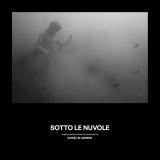
Daniel Blumberg - Sotto le Nuvole (Pompeii: Below The Clouds) (Original Motion Picture Soundtrack) LP
  • 1: Nuvole I
  • 2: Nuvole Ii
  • 3: Nuvole Iii
  • 4: Nuvole Iv
  • 5: Nuvole Ix
  • 6: Nuvole V
  • 7: Nuvole Vi
  • 8: Nuvole Vii
  • 9: Nuvole Viii
  • 10: Nuvole X

In Gianfranco Rosi’s portrait of Naples, Sotto le Nuvole, the ground shakes periodically. Between Mount Vesuvius and the Tyrrhenian Sea, the fumaroles of the Phlegraean Fields hiss volcanic gas and steam. Below the sleeping volcano, modern day Naples emerges in black and white and fills with voices, with lives. From the traces of history and the concerns of the present, Rosi documents a city immersed in its continuous past, with Daniel Blumberg’s minimal soundscape hovering in a sonic space between liquid and air.
Tasked with creating a soundscape that would suspend space within Rosi’s film, Blumberg called upon the extended technique of saxophonists Seymour Wright and John Butcher to create a gossamer fabric of traces and sounds abstracted from their instruments. Having transitioned from theoretical physics to the saxophone, John Butcher has always deeply considered space in the context of his playing. His concerns are with flow, density and how the saxophone is situated in the living world. Zeroing in on the core sonic properties of the mechanical and acoustic components of the saxophone, Seymour Wright has integrated its every breath, reed vibration, keypad clatter and hissed microtone of his alto into his own, unique improvisational language. In his work with these two seminal players, Blumberg makes his most concentrated soundtrack to date - reinforcing the film's sense of overlapping time and space, and pushing at the limits of experimentation.

Initially recorded in Daniel’s flat in London, Butcher and Wright centre themselves around long, consistent tones, so soft that it seems breath is being gently pulled from the saxophone's bell by an invisible hand. Blumberg himself adds haunting bass harmonica, and recordings of Wright’s launeddas - a traditional and ancient triple pipe polyphonic reed instrument from Sardinia, Italy. Blumberg then travelled to the volcanic region of Baia, next to Pompeii. Once a flourishing classical Roman city loved by Nero, Baia slowly sank under hydrothermal pressure, leaving the city in a kind of geological purgatory. Using specialised geophones and hydrophones, Blumberg took those initial recordings and amplified them underwater, sending them calling out across the ruins of Baia’s mosaics, Nymphaeum statues and villas.

“It was important to me that the music was whispered in the same landscape that Gianfranco has worked for the past three years, so that you can hear the volcanic air gulping, the lapping of the waves, the steam and bubbles popping against John and Seymour’s saxophone breaths – an echo from a suspended time.”
What emerges is deeply melancholic, tender, subtle and right at the edges of audio technology. Submerged in an aquarian mausoleum, the mysterious vibrations of the saxophone and its bell become an echo of an echo, wading from the future into the past. ‘Sotto le Nuvole’ is less a soundtrack than a process of aeration - a sonic puncture in the material of the film which allows its central message to breathe, and a remarkable experiment at the limits of the saxophone’s possibility.

pré-commande24.04.2026

il devrait être publié sur 24.04.2026

21,81
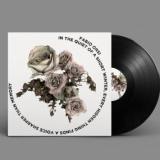
FABIO ORSI - IN A QUIET OF A SHORT WINTER, EVERY HIDDEN THING FINDS A VOICE SHARPER THAN MEMORY (SPS26114)

(DL code included)

Six touching tracks that, starting from quiet ambient atmospheres, initially soft, tenuous, and crepuscular, gradually seem to soar... ascending towards celestial spaces, revealing ever-wider and brighter landscapes below, ever-more distant horizons, ever-more infinite spaces...

Highly evocative progressions, guided by sober and delicate melodies and driving, pulsating bass lines, wonderfully deep (best enjoyed with a good stereo system to truly appreciate them), the kind that make your stomach churn before you even perceive the exact frequency and harmonic progression, often "set" in sober rhythmic patterns that mark the time, making a sonic journey even more dynamic and compelling.
If it doesn't surprise you, it's probably only because you've already had the opportunity to explore and "plumb" Fabio Orsi's most recent discography, and are already accustomed to the best of what this new wave of distinctly electronic but ambient-inspired music has to offer.

pré-commande24.04.2026

il devrait être publié sur 24.04.2026

25,84
Living Death - Vengeance Of Hell LP
  • 1: You And Me
  • 2: Living Death
  • 3: Night Light
  • 4: My Victim
  • 5: Labyrinth
  • 6: Heavy Metal Hurricane
  • 7: Hellpike
  • 8: Riding A Virgin
  • 9: Vengeance Of Hell
  • 10: Watch Out! (Bonus Track)

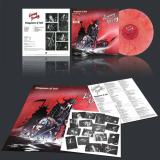
When asked about the founding fathers of German thrash metal, band names such as Kreator, Sodom, and Destruction come to mind. Perhaps even Tankard. The name Living Death is usually not among them. There is a simple reason for this. Similar to the Swiss band Hellhammer, Living Death from Velbert were simply a tad too extreme for most fans and the press. Thorsten “Toto” Bergmann's truly shrill vocals and the poor production of the first two (legendary) albums did not make it easy for the public to adequately assess the band's musical significance. Living Death was founded in 1981 by the two Kelch brothers, Reiner on guitar and Dieter on bass. In the early days, guest drummer Eric sat behind the drums. The line-up was completed by Frank Fricke on second guitar and the aforementioned singer Thorsten “Toto” Bergmann. Living Death recorded their first demo with three tracks in 1981, which earned them a deal with the Belgian label Mausoleum Records. A year later, their debut album “Vengeance of Hell” was released, which actually suffered from its very thin (and treble-heavy) production (in 1985, the record was re-released as a remix – with slightly improved results). However, the below-average production should not obscure the fact that “Vengeance of Hell” offers a few timeless thrash metal classics with “My Victim,” “Heavy Metal Hurricane,” “Hellpike,” and the title track “Vengeance of Hell.” The raw, unpolished sound of Living Death sounds more contemporary than ever today, 30 years after its initial release. This only proves that it took the music world three decades to catch up with Living Death.

pré-commande24.04.2026

il devrait être publié sur 24.04.2026

23,95
The Cure - Boys Don't Cry (86 Mix)
  • A1: Boys Don’t Cry (86 Mix) - 2026 Remaster
  • A2: Boys Don’t Cry (86 12" Mix) - 2026 Remaster
  • B1: Plastic Passion (79 Mix) - 2026 Remaster
  • B2: Pillbox Tales (86 Mix) - 2026 Remaster
  • B3: Do The Hansa (86 Mix) - 2026 Remaster

The Cure are to release the 1986 mix of Boys Don’t Cry, making it available digitally for the first time ever in line with its 40th Anniversary. Initially released as a standalone single in the summer of 1979, Boys Don’t Cry became the title track of the US edition of the band’s debut album, Three Imaginary Boys.


The song went on to become one of the band’s signature tracks and achieved international success in 1986, when Robert Smith re-recorded the vocal and remixed the backing track. Although this new version was created to promote the best of collection Staring At The Sea – The Singles, the LP itself featured the original recording, and the 7-inch version of Boys Don’t Cry (New Voice – New Mix), now retitled Boys Don’t Cry (86 Mix), is being released on vinyl for the first time in 40 years.


Boys Don’t Cry (86 Mix), the 12” mix, and the B-Sides, Plastic Passion, Pillbox Tales, and Do The Hansa have been remastered by Matt Colton.

pas en stock

Commandez maintenant et nous commanderons l'article pour vous chez notre fournisseur.

17,23

Derniere entrée: 19 jours
Oliver Koletzki - The Arc Of Tension (LP 2x12")

2026 repress

On his sixth album, The Arc of Tension, the Berlin based DJ, label owner and producer OLIVER KOLETZKI yet again presents his remarkable vision of contemporary electronic music, while he assumes the role of a storyteller. The Arc of Tension speaks to its listener as a singular, self contained work, which communicates by way of its natural flow and arc of suspense. The latter is mirrored not only in the multifarious narrative of the actual album, but can also be understood as evidence for its creator's long musical history. While Koletzki focussed on a diverse range of vocal collaborations on his previous long players, he now moves on to a different form of storytelling, rooted in the quiet confidence of a veteran musician, as well as the hectic lifestyle of a globally in demand DJ. The Arc of Tension is the psychonautic journey through the various continents of Oliver's consciousness. The quiet chirps and warbles, which initially unfold on the opener 'A Tribe Called Kotori', thus act as a loose associative bridge to 'Der Muckenschwarm', Oliver's big breakthrough hit of 2005. The first minutes of the album leave no room for doubt - we are immediately locked into an autobiographical world of sound that knows how to captivate from the get go. The dreamy, exotic timbres of the downbeat tracks 'By My Side', Tankwa Town' and 'Byron Bay' penetrate our minds in a subtle yet purposeful manner. But soon the tension tightens and organic sounds one by one evolve towards a sterner, electronic cadence.

pas en stock

Commandez maintenant et nous commanderons l'article pour vous chez notre fournisseur.

21,81

Derniere entrée: 19 jours
Various - Tchic Tchic: French Bossa Nova 1963-1974  Colored Edition LP 2x12"
  • A1: Les Masques - Il Faut Tenir (1969)
  • A2: Isabelle Aubret - Casa Forte (1971)
  • A3: Christianne Legrand - Hlm Et Ciné Roman (1972)
  • A4: Jean Constantin - Pas Tant D'chichi Ponpon (1972)
  • A5: Billy Nencioli & Baden Powell - Si Rien Ne Va (1969)
  • B1-: Marpessa Dawn - Le Petit Cuica (1963)
  • B2: Jean-Pierre Sabar - Vai Vai (1974)
  • B3: Sophia Loren - De Jour En Jour (1963)
  • B4: Isabelle - Jusqu’à La Tombée Du Jour (1969)
  • B5: Sylvia Fels - Corto Maltesse (1974)
  • C1: Frank Gérard - Comme Une Samba (1972)
  • C2: Ann Sorel - La Poupée Des Favellas (1971)
  • C3: Charles Level - Un Enfant Café Au Lait (1971)
  • C4: Andrea Parisy - Les Mains Qui Font Du Bien (1970)
  • C5: Audrey Arno - Quand Jean-Paul Rentrera (1969)
  • C6: Aldo Frank - T’as Vu Ce Printemps (1970)
  • D1: Christianne Legrand - Cent Mille Poissons Dans Ton Filet (1972)
  • D2: Clarinha - Lemenja (1970)
  • D3: Hit Parade Des Enfants - Aquarela (1976)
  • D4: Jean-Pierre Lang - Tendresse (1965)
  • D5: Magalie Noël - Une Énorme Samba (1970)
  • D6: Françoise Legrand - La Lune

Ever since the late 1950s bossa-nova revolution, Brazil’s influence on French music has been undeniable. Pierre Barouh, Georges Moustaki and a vast array of lesser known artists, all made the Musica Popular Brasileira (MPB) an axis of promotion at the service of a cool and metaphysical, modern and mixed Brazilian lifestyle. Some were seduced by the poetic languors of the bossa, some were looking for fun, and others just loved the American hybridization of jazz-bossa, jazz-samba.


What is bossa nova? One of its creators, Joao Gilberto said: "Its style, cadence, everything is samba. At the very start, we didn't call it bossa nova, we sang a little samba made up of a single note - Samba de uma nota so .... The discussion around the origins of bossa nova is therefore useless”. It is nevertheless useful to remember that these magnificent Brazilian songs, which the guitarist describes as samba, were shifted and balanced around improbable chords. "I like things that lean, the in-betweens that limp with grace," said Pierre Barrouh, quoting Jean Cocteau.


With emotion, arrangements for violin and supple guitar licks, bossa nova rapidly changed. A transformation that can be heard in the Tchic, tchic, French Bossa Nova 1963-1974 compilation, the result of a cultural reappropriation, which traveled through the United States and supplemented itself in France.

A musical revolution that has remained significant, bossa nova was born in Rio. From 1956 to 1961, Brazil lived through its golden years. In five years, the country had invented its modernist style. Elected president in 1956, Juscelino Kubitschek de Oliveira, an elegant man with a broad forehead, brandished a promising slogan: "Fifty years of progress in five years". He quickly got to work. Not worried about increasing debt, he launched the project for a new federal capital, Brasilia, designed by the communist architect Oscar Niemeyer. Volkswagen opened state-of-the-art factories and created the “fusquinha”, the Beetle. In Rio, the Vespa made its first appearance. The Arpoador Surf Club crew run into the “girl” from Ipanema, Helô Pinheiro - the tanned garota ("chick"), between a flower and mermaid, who at 17 walked by the Veloso bar, where the fiery author and composer, Tom Jobim and Vinicius de Moraes, were getting drunk on whiskey. From then on, bossa symbolized cool.

In 1958, Joao Gilberto recorded Chega de Saudade, which the directors of Philips denied, calling it "music for fagots". The marketing director, who believed in it, secretly pressed 3000 78-inch vinyls and distributed them at schools around Rio, creating a tidal wave.

American jazzmen then took over. In particular, trumpeter Dizzy Gillespie and guitarist Charlie Byrd. In November 1962, the Brazilian Ministry of Foreign Affairs funded a "Bossa-Nova" concert at Carnegie Hall in New York, inviting the genre’s pioneers. Unprepared, the show soon turned to disaster. But the troupe was invited to the White House by Jackie Kennedy. The first lady loved "the new beat" and in particular Maria Ninguem, a song by Carlos Lyra, later covered by Brigitte Bardot.

In Brazil, the 1964 military coup quickly ended this euphoria. The destructive atmosphere that ensued pushed many Brazilian musicians to leave, if not to exile. Thus, Tom Jobim, Sergio Mendes and Joao Gilberto arrived to the United States. In New York, Joao Gilberto met saxophonist Stan Getz. At the time, he was married to the Bahianese Astrud Weinert Gilberto, who had a German father. She had never sung before, but she knew how to speak English. Getz therefore asked her to replace her husband on The Girl From Ipanema. The Getz/Gilberto record with Tom Jobim on piano, was released in March 1964. Phil Ramone, the "pope of pop" was in charge of sound.

Bossa nova arrived in Paris through the classic “guitar-voice” channel (Pierre Barouh, Baden Powell, Moustaki…) But France loved jazz and Paris had already welcomed its American contributors. All these good people were to pass through Saint-Germain-des-Prés. The cabaret l'Escale became the Mecca of Latin American sound where one could find Pierre Barrouh and his friends, such as the Camara Trio, samba-jazz aces, whose only record was published by the Saravah label. With a band strangely called Les Masques (a band that included Nicole Croisille and Pierre Vassiliu, among others), the Camara Trio recorded an interesting Brazilian Sound, including the track Il faut tenir which is present on this tasty compilation of rarities.

Other enlightened musicians can also be found on the compilation, such as Jean-Pierre Sabar (songwriter for Hardy, Auffray, Leforestier ...) and the French pop rock organist Balthazar. In 1975, Sabar recorded Aurinkoinen Musiikkimatka on a Finnish label, which featured the crazy Vai, Vai, included on this record. We are now following the footsteps of Brazilian electronic musicians such as Sergio Mendes, Eumir Deodato or Marcos Valle who created funk and disco sounds on their keyboards and synthesizers. A style that influenced Véronique Sanson when she wrote Jusqu’à la Tombée de la nuit in 1969 for Isabelle de Funès, the niece of Louis and a great friend of Michel Berger - Sanson did end up singing this track on her 1992 Sans Regret record.


The pinnacle of exoticism and travel, Sylvia Fels’ Corto Maltese includes bongos, sea mist and ocean sounds. The title was taken from Jacky Chalard’s concept album written in 1974, Je suis vivant, mais j’ai peur (I am alive, but I am scared), based on Gilbert Deflez’s science fiction novel.


However, bossa nova extended the scope of popularity. "In the 1970s, I was a fan of Sergio Mendes, Getz / Gilberto. I fell in love with this music that I knew because I had been an orchestral singer, " explained Isabelle Aubret, who in 1971 delivered a composite record of covers by the very funky Jorge Ben, Orfeu Negro, Tom Jobim, Vinicius de Morais and Jean Ferrat. "I recorded this album for Meys Records in Paris, far from Brazil, with wonderful musicians, François Raubert, Roland Vincent, Alain Goraguer...". The latter wrote the arrangements for Casa Forte, a very percussive title borrowed from Edu Lobo, one of the initiators of the bossa who spent time in California. "Jazz and bossa came together and produced very rhythmic music. I love singing, it allows me to dream, to have fun, to feel a high on stage, and these songs brought me joy, made me swing, my singing felt like a dance.”


The world tours of French singers and their desire for the tropics, often brought them to Rio with its hills, forests, caipirinhas and tanned bodies. There are surprises though, like this Iemenja (Iemenja is the goddess of the sea in the Afro-Brazilian candomblé religion). Not unlike the composer and musician Jean-Pierre Lang, based in Sao Paulo, Claire Chevalier taught Brazil to Brazil. In 1970, the singer and painter published a 45-inch vinyl, Mon mari et mes amants (My husband and my lovers), under the improbable pseudonym of Clarinha (little Claire). She was then living in Rio, with her husband, Joël Leibovitz, who founded a band called Azimuth, and who owned a record label specialized in "sambas enredos" songs for samba school parades.


For its B side, she asked Pierre Perret to come up with lyrics for a song composed by Carlos Imperial: "Oh goddess of the sea, o goddess Iemenja, I bring a white rose to adorn your long hair ..." . "Perret came to see us, and we had fun, remembers Joël Leibovitz. We wrote Lemenja for fun, we recorded it at the Havaí studio, behind the Central do Brasil the central station. Erlon Chaves, the arranger who worked with Elis Regina, joined us" adding his share of Afro-Brazilian percussions and funky brass to the mix.

There is a common misunderstanding in Franco-Brazilian history: that bossa, admittedly hedonistic, is perceived as funny, even though the poets who wrote the texts are often philosophizing on the human condition. Its French interpreters pull it towards a carnival inspired universe, far removed from its fundamental essence. Thus, Jean Constantin covered the famous Samba da minha terra, an ode to the art of samba written by the classic Bahian composer Dorival Caymmi, renaming it with the enticing title of Pas tant de tchi tchi pompon: "On your pier there is no tchi tchi / when you arch your back, you know everything is alright ”(lyrics by Gérard Calvi). This expedited bossa aims for the absurd, but retains a certain elegance.

Indeed, Jean Constantin was not an idiot, the rather large man had a huge mustache and liked fantasy, (Les pantoufles à papa, Le pacha, inspired by cha-cha-cha-cha, salsa and jazz) but he was also the lyricist of Mon manège à moi interpreted by Edith Piaf, the composer of Mon Truc en plume by Zizi Jeanmaire and the soundtrack of François Truffaut’s 400 Blows. Le Poulpe, published in 1970, from which this bossa is extract, was arranged by Jean-Claude Vannier, an accomplice of Serge Gainsbourg’s Melody Nelson. In short: "There is enough of samba / By looking at the parasol / Because my poor cabeza / Is going to die in the sun".

Even the American actress Marpessa Down, who was at the heart of the bossa nova revolution with her role as Euridyce in Marcel Camus’ film Orfeu Negro, winner of the 1959 Cannes Palme d'or, fed the clichée with Je voudrais parler au petit cuica - "Tell me how you manage to always make people want to dance / It's true, I must admit that I cannot resist your magic" - in consequence, once can hear the cuica, a little drum inherited from the Bantu.


But bossa nova had many angles. Societal, of course, pushing actresses who were symbols of women's liberation like Brigitte Bardot, Jeanne Moreau, or Sophia Loren to engage in the exercise of accelerated bossa. In February of 1963, Sophia Loren made a record in French in Rome, Je ne t'aime plus, featuring the song De jour en jour, a bossa written by two Italians, Armando Trovajoli and Tino Fornai, which was released a little later by Barclay. Bossa accompanied the 1960s, a decade of moral liberation. Ann Sorel, who interpreted La Poupée des favellas, caused a sensation with L’amour à plusieurs, a provocative song written by Frédéric Bottom and Jean-Claude Vannier. As for the actress Andrea Parisy, she displayed her bourgeois cheekiness in Marcel Carné's Les Tricheurs before interpreting Les mains qui font du bien. And Magalie Noël, the friend of Boris Vian, who sung Johnny fais-moi mal, was hired to sing Une énorme Samba, composed by Alain Goraguer (arranger to Gainsbourg, Bobby Lapointe and Jean Ferrat) with lyrics by Frédéric Botton.

But in the end, of what wood is bossa nova made of? The answer is given by Christianne Legrand, daughter of Raymond the conductor, and sister to Michel the composer: "With me, with jà" - jà means "immediately" in Portuguese. In 1972, the singer, an expert in vocal jazz and a member of the Double Six, published Le Brésil de Christianne Legrand. Two songs included on the Tchic Tchic compilation that demonstrate how bossa, jazz, funk, rock, etc. work like a swiss army knife: the music is used to denounce broken systems, or miracles, HLM et ciné roman, Cent mille poissons dans ton filet, two songs from the O Cafona soundtrack, a successful telenovela broadcast, at the time in black and white, on TV Globo. The first was adapted in French by the fighter and friend of the Legrand tribe, Agnès Varda. The second is content with a play on words, jostling them into a summer fun.


Véronique Mortaigne

pré-commande17.04.2026

il devrait être publié sur 17.04.2026

27,31
THE SIXTH GREAT LAKE - UP THE COUNTRY
  • 1: Duck Pond
  • 2: Across The Northern Border
  • 3: Up The Country
  • 4: The Ballad Of A Sometimes Traveller
  • 5: Cannon Beach
  • 6: Descending Star
  • 7: Blue
  • 8: Last In Line
  • 9: You Make The Call
  • 10: Shade Of Love
  • 1127: Forever
  • 12: Spin Your Wheels
  • 1330: 0 Miles
  • 14: Rockin' Chair
  • 15: Lovely Today

Originally released in 2001, Up The Country is the debut album by The Sixth Great Lake and a quietly revered title within the late-'90s / early-2000s indie scene. Rooted in jangly guitars, melodic songwriting, and a distinctly pastoral sensibility, the album sits at the intersection of indie pop, folk-rock, and classic guitar-driven pop. Although initially released with modest exposure, Up The Country steadily developed a loyal following, earning cult status among fans of understated, melody-focused indie. Its charm lies in its simplicity: clean arrangements, memorable hooks, and an unforced warmth that has allowed the record to age exceptionally well over the past 25 years. This 25th anniversary reissue presents an opportunity to reintroduce an overlooked catalogue gem to today's market, appealing both to original fans and to a new audience drawn to timeless, guitar-led indie records. With renewed interest in archival and heritage releases, Up The Country offers strong long-term catalogue potential beyond initial anniversary demand. A timeless, understated record with strong appeal for fans of melodic, guitar-driven indie.

pré-commande17.04.2026

il devrait être publié sur 17.04.2026

29,83
THE TYDE - ONCE

THE TYDE

ONCE

12inchDM3
DUST AND MEMORY
17.04.2026

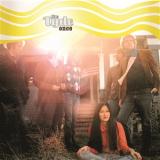
Originally released in 2001, Once is the debut album by The Tyde and a quietly influential title from the late-'90s / early-2000s West Coast indie pop scene. Rooted in warm melodic guitars, subtle psychedelic textures, and introspective songwriting, the album occupies a distinctive space between indie pop, folk-rock, and California psychedelia. While never a mainstream release, Once steadily built a loyal following over the years, earning its reputation as a cult classic among fans and collectors. Its understated production, emotional restraint, and timeless melodies have allowed the album to age exceptionally well, making it as relevant today as it was upon release. This 25th anniversary reissue offers a strong opportunity to reintroduce an overlooked catalogue gem to both established fans and new listeners. With the continued demand for high-quality reissues and historically important indie titles, Once fits perfectly within current collector and indie-focused retail trends. The album's enduring appeal, combined with the anniversary context, gives it solid long-term catalogue value beyond initial release interest.

pré-commande17.04.2026

il devrait être publié sur 17.04.2026

29,83
MARI CRUZ SORIANO Y LOS QUE AFINAN SU PIANO - EL VATICANO VA A ARDER
  • 1: El Vaticano Va A Arder
  • 2: Matar Jipis En Las Cies
  • 3: Las Tetas De Mi Novia

At the genesis of one of the most essential bands in Spanish pop-rock of the 1980s, this rarity presents early versions of what would later become some of the most chanted songs in Siniestro Total's repertoire: 'Matar jipis en las Cíes' and 'Las tetas de mi novia,' along with Germán Coppini's original composition 'El Vaticano va a arder.' With limited resources but plenty of energy and humor, a three-song demo was recorded in August 1981, now available here on vinyl for the first time. The songs came first, and only later did the band take a name-initially Mari Cruz Soriano y los que afinan su piano, and shortly after, Siniestro Total. 'Matar jipis en las Cíes' is an original composition by the band's founding members Alberto Torrado, Julián Hernández, and Miguel Costas, while 'Las tetas de mi novia' is a loose version of the song 'I'm a Rocket' by the Dutch band Gruppo Sportivo. 'El Vaticano va a arder' was contributed by Germán Coppini, the mysterious fourth member of this singular lineup, inspired by 'Religion,' the anti-religious rant included on Public Image Limited's debut album. This single is an essential document for both Siniestro Total fans and Spanish-language punk enthusiasts. First-ever vinyl edition.

pré-commande17.04.2026

il devrait être publié sur 17.04.2026

12,82
BCUC - The road is never easy

BCUC – Bantu Continua Uhuru Consciousness – have been channeling the spirit of Soweto for over twenty years. Indigenous funk, hip-hop consciousness, and punk rock energy fused into something utterly original and deeply rooted. Their mantra: Music for the people, by the people, with the people. From humble beginnings rehearsing in a shipping container, a stone's throw from the church where Desmond Tutu organized the escape of the most wanted anti-Apartheid activists, they kept believing in their dream of self-empowerment. Today they command festival stages worldwide: Glastonbury West Holts, Roskilde, Afropunk Brooklyn, WOMAD, Fusion, Sziget, FMM Sines, Beaches Brew, Boomtown, Colours of Ostrava, Couleur Café – to name just a few. In 2023, BCUC were honoured with the prestigious WOMEX Artist Award, an accolade usually reserved for more established artists, in recognition of their fearless work and transcendent live performances.

THE ROAD IS NEVER EASY

The Road Is Never Easy is BCUC's fifth album and their debut on Outhere Records. On this new offering, BCUC take listeners on another Afro-psychedelic journey into the soul of Soweto. It feels like a gospel sermon colliding with a punk concert, "guaranteed to touch untapped corners of your soul" (OkayAfrica). BCUC's music is deeply rooted in history and echoes the voices of the ones who came before. The road was never easy for the people of Soweto who originally came to work in the mines of Egoli, the City of Gold, Johannesburg. When apartheid finally ended after a long struggle, it was hoped that life would improve. But more than 30 years later, many of those initial hopes and dreams are still waiting to be fulfilled. This album is about that struggle. The album contains 10 brand new songs – a record for BCUC, whose previous albums featured an average of 3 songs. It represents the culmination of more than two decades of performing together and building a reputation as a powerful live act. These ten songs encapsulate that same live energy, each one building gradually and drawing you into BCUC's Afro-psychedelic stream of consciousness. It's a seismic tour de force through life in Soweto today. Songs like Amakhandela (Breaking All the Chains) connect history to daily life: "How is this precious metal inflicting so much pain in us," sing BCUC, "this government has been telling us we are free, but we don't benefit from being free." The album also talks about all the hopes and dreams that remain: "I have too many wishes and dreams in my head," BCUC sing in Um duma khanda, "I think I am losing my mind". The album ends with the soothing Matla a rona ke Bophelo, "our strength is life", praising the spirits and thanking the elders for protection. The Road Is Never Easy is about the harsh reality of life in Soweto, where "people always carry heavy loads". BCUC are street poets trying to deal with that burden: sometimes revolutionary, sometimes soothing, but always hopeful and compassionate. "When you are from Soweto you can't retreat nor surrender." (Sebenzela)

RECORDING

The album was largely recorded in Munich, Germany during tour breaks over two sessions, each three days long. It took place in a small studio located in a German WW II bunker converted into rehearsal spaces. The songs were recorded in one take altogether in one room, with only a few overdubs added, mainly backing vocals, by BCUC at Fourways studio in Johannesburg. BCUC have created their own distinctive way of writing, or rather, finding and creating their songs. The recording process is like an improvised live performance. They bring their ideas into a zone where the music, the rhythm and the spirits take over until the song starts to form. In this Afro-psychedelic zone BCUC create their unique poetry that feeds on the dreams still dreamt, the hopes, the fears and the temptations lingering everywhere. BCUC's songs need to breathe and time to build. The right take was the one when the song took over, and just like their live performances, no one knew beforehand where the song would take them. During the recording, BCUC just let it all flow out: inner turmoil, cries of rebellion, but also resilience and a search for healing, love, unity and compassion. You don't have to be from Soweto to feel the deep meaning and impact of this music. In these times of so much hate and division, BCUC are like a campfire for people to gather around.

PRODUCTION & ARTWORK

"BCUC have a unique magic," says Outhere's Jay Rutledge, who produced the album. "It blew our minds. It's like punk and pure gospel at the same time. Their music can make you dance and it can make you cry, all at the same time. And when the song is over, you feel you're not alone in this world anymore. We felt compelled to do this." The album cover is based on a matchbox design, matches being a common household item in South Africa even today. "These were the matches people used to burn government buildings and cars," explain BCUC. Little messages, addresses, or phone numbers used to be scribbled on the back of these boxes; each one a reminder of the strength, resilience, and resistance that once drove the struggle for freedom in Soweto. BCUC keep this flame burning. The Road Is Never Easy is a heavy spiritual road trip, a deep dive into the subconscious of Soweto and a quest for truth, justice and sanity in this crazy world. BCUC tackle the harsh realities of the voiceless, guided by the spirit world of their ancestors. Rather than reinforcing stereotypes of poverty, BCUC's portrayal of Africa is one rich in tradition, rituals and beliefs. "We bring fun and Afro-psychedelic fire from the hood," says vocalist Kgomotso Mokone.

pas en stock

Commandez maintenant et nous commanderons l'article pour vous chez notre fournisseur.

19,75

Derniere entrée: 12 jours
Articles par page:
N/ABPM
Vinyl