Laila Sakini's new album 'Paloma' arrives via Modern Love and is her most striking and ambiguous to date - a pointed and timely meditation on hope and hierarchies that riffs on Zbigniew Preisner's magical "The Double Life of Veronique" score and enduring outsider music tome "The Langley Schools Music Project". Subtly transcendent, fathoms-deep music.
When Laila Sakini's debut album ‘Vivienne’ arrived in 2020, it felt like the record we were waiting for to map out our tangled reactions to an uninvited reality. Never self-consciously strange, it revealed itself slowly and cautiously, like a shadow in the corner of the eye, or an alchemical symbol in a bowl of alphabet spaghetti. This time around Sakini has worked her unique world-building to an even finer point, forming six tracks around a theme that's so close to our heart it's almost beating in time. Initially inspired by Krzysztof Kieślowski's 1991 arthouse classic "The Double Life of Veronique", the cult Polish director's enduring modern fairytale that serves as a cosmic rumination on identity and choice. Detailing two identical women - both singers, both in love - the film lets one live as the other dies, forcing us to consider the implications of art and endurance in the face of life's myriad challenges.
Sakini takes Polish composer Zbigniew Preisner's influential score for the film and uses it as a jumping-off point for ‘Paloma’, bending the more grandiose moments into baroque awkwardness on opening track 'Fluer D'Oranger' and evoking the mood of scene-setting cues 'Weronika' and 'Véronique' on the recorder-led 'The Light That Flickers In The Mirror'. And while Preisner's score zeroed in on the musical virtuosity of the film's lead characters, Sakini reinterprets that as a metaphor for self-discovery. Playing piano, violin, glockenspiel, timbale, recorder, and occasionally singing, Sakini captures a mood of innocence that immediately transports the listener back to simpler times. Her music isn't self-consciously simplistic, but forcing herself to interface with instruments impulsively rather than studiously, her sounds are all heart, no filigree.
In spirit, it reminds us of cult Canadian album "The Langley Schools Music Project", a collection of 1970s recordings of school kids singing rudimentary renditions of pop songs in a school gymnasium. That album's genius was in the bottling of hope and innocence: the feeling of joy from hearing and wholesomely interacting with music that's known and loved without a sense of hierarchy or desire for cultural clout. Sakini subtly subverts this by evoking the amateur spirit in the most bewitching way; instead of sourcing her ideas from Bowie, Fleetwood Mac and the Beach Boys, her stock is the established art canon, and by reforming those sounds she makes an insightful comment on intellectualism and access. European classical music is all too often trapped behind the frosted glass of respectability and assumed skill - craft replaces spirit, and technique replaces soul. By approaching these gestures from a different angle, Sakini softens the edges sonically and intellectually, finding music that bubbles with emotion, and most strikingly - hope.
Her choice of instruments and the way she interacts with them allows us to feel as if we're not only listening but contributing. It's a bottom-up way of absorbing art that's traditionally been top-down, and a reminder that we're all part of the experience, whether we're humming along to the remnants of a theme as it dribbles out of an ear in the shower, or dreaming of spotlights in a parallel life that may or may not be real. Sakini's music is nostalgic in a sense, but nowhere near the buttered popcorn and high-fructose candy migraine of the Netflix/Spotify algorithm generation of regurgitated churn. She makes sounds that remind us of what time and experience may have stolen from us, and how we might recover it.
Cerca:inno
Written and recorded between 1972 and 1982 in Western Oregon, Back to the Woodlands is a previously unreleased, and nearly lost, album made by Ernest Hood during the same era as his near mythical album Neighborhoods . A visionary combination of field recordings, zithers, and synthesizers, Back to the Woodlands offers an unprecedented depth of access to this singular artistic mind. Born into a musical family, Ernest Hood began a promising career as a jazz guitarist during the 1940s, touring internationally with his brother Bill Hood and the saxophonist Charlie Barnet , before contracting polio in his late twenties. The disease left Ernest unable to play the guitar and confined him to a wheelchair for the rest of his life. It also forced him to adapt and innovate around his musical practices in the face of adversity; Hood's value of sound matured with a remarkably democratic and nonhierarchical approach and application. Taking up the zither, a less physically-demanding stringed instrument to the guitar, embarking upon the unprecedented process of incorporating field recordings into his work as early as 1956, and eventually discovering the synthesizer, Hood's music became imbued with optimism and subtle cultural critique. This ethos and technique - refined over the coming decades - would lay the groundwork for a sprawling body of radio work, mail order recordings for homebound listeners, and Neighborhoods , self- issued as a small vinyl edition in 1975. Where Neighborhoods , a nostalgic opus, drawing from a well of collective memory of the 1950s, is defined by traces of human activity, Back to the Woodlands leaves the modern world behind, delving into Hood's love for nature. Only recently discovered in his archives, the album dramatically expands his concept of "musical cinematography," imagistically triggering states of sensory memory from within its zither and synthesizer melodies, intertwined with field recordings made during Hood's extensive travels throughout Oregon. If Neighborhoods is a retreat into the gauzy joys of a romanticized past, Back to the Woodlands is an immersion in the timeless sanctuary of the natural world. A fascinating counterpoint to its predecessor, Back to the Woodlands brings us even closer to Hood's belief in the transportive qualities of sound; that field recordings could serve as a vehicle for the imagination and liberation, particularly for those with similar mobile disabilities as his own. Across the album's twelve compositions, the rippling instrumental harmonics - shifting between abstraction and playful melody - fold so seamlessly into the birdsong, bubbling brooks, and other environmental ambiences, that they often give the impression of having been recording within the landscapes toward which they whisper. Falling somewhere between the immersive calm of healing music and New Age, the creative field recording practices of sound ecologists world building for Folkways, and the jazz infected ambiences during Obscure / Editions EG's highest heights, Back to the Woodlands sculpts an singular proximity of music for its moment; a form of ambient sonic realism that draws the consciousness toward its surroundings as much as within. Working closely with his estate to maintain his original vision, Freedom to Spend has restored and remastered this never before released, lost masterpiece by Ernest Hood from the original tapes. Ernest Hood's Back to the Woodlands will be issued on vinyl, as well as on CD in combination with its contemporary Where the Woods Begin , with new liner notes by Michael Klausman . On behalf of Ernest Hood and Freedom To Spend, a portion of the proceeds from this release will benefit Oregon Wild, an organization dedicated to protecting and restoring Oregon's wildlands, wildlife, and waters as an enduring legacy for future generations.
Born in the heartland of Melbourne suburb Fitzroy, Steady Weather (comprised of scene stalwarts Ben Grayson and Tamil Rogeon) bring to light organic dance music from Melbourne"s rich neo-soul and jazz community.
Written and recorded between 1972 and 1982 in Western Oregon, Back to the Woodlands is a previously unreleased, and nearly lost, album made by Ernest Hood during the same era as his near mythical album Neighborhoods. A visionary combination of field recordings, zithers, and synthesizers, Back to the Woodlands offers an unprecedented depth of access to this singular artistic mind.
Born into a musical family, Ernest Hood began a promising career as a jazz guitarist during the 1940s, touring internationally with his brother Bill Hood and the saxophonist Charlie Barnet, before contracting polio in his late twenties. The disease left Ernest unable to play the guitar and confined him to a wheelchair for the rest of his life. It also forced him to adapt and innovate around his musical practices in the face of adversity; Hood’s value of sound matured with a remarkably democratic and nonhierarchical approach and application.
Taking up the zither, a less physically-demanding stringed instrument to the guitar, embarking upon the unprecedented process of incorporating field recordings into his work as early as 1956, and eventually discovering the synthesizer, Hood’s music became imbued with optimism and subtle cultural critique. This ethos and technique - refined over the coming decades - would lay the groundwork for a sprawling body of radio work, mail order recordings for homebound listeners, and Neighborhoods, self-issued as a small vinyl edition in 1975.
Where Neighborhoods, a nostalgic opus, drawing from a well of collective memory of the 1950s, is defined by traces of human activity, Back to the Woodlands leaves the modern world behind, delving into Hood’s love for nature. Only recently discovered in his archives, the album dramatically expands his concept of “musical cinematography,” imagistically triggering states of sensory memory from within its zither and synthesizer melodies, intertwined with field recordings made during Hood’s extensive travels throughout Oregon. If Neighborhoods is a retreat into the gauzy joys of a romanticized past, Back to the Woodlands is an immersion in the timeless sanctuary of the natural world.
Since its formation in 2010, the Melt Trio has become one of the world's most innovative guitar trios in contemporary jazz. And way beyond. Stylistically speaking: If you like Tortoise, Khruangbin, but also Philip Catherine, Bad Plus or Marc Ribot, you can already look forward to one of the outstanding albums in November of this crisis-ridden year.
On their countless concerts and tours all over the world, the three Berliners have refined their special style more and more and show an even stronger will to create in details. Their combination of acoustic and electronic sounds seems more subtle and at the same time more powerful than ever, specific influences from jazz and classical modernism to post- and prog rock can at best be made out dimly, because the music simply sounds like Melt Trio. It is and remains a guitar trio that does without any comparison. "Melt is neither Nirvana on jazz, nor Bill Frisell Trio in rock, nor Massacre in ambient. Melt is Melt, unique, individual, gripping and moving," it was once said elsewhere.
Clear + Red + Black Marbled Vinyl[22,48 €]
Always pushing forward, always aiming higher: In the 20 years of their existence, EPICA have never shied away from challenges, twists and turns, weathering every storm and pushing the symphonic metal genre to heights no one even dared to believe in. Since 2002, the band surrounding global metal icon Simone Simons and her long-time musical partner Mark Jansen have released eight highly innovative and cinematic albums, have toured the world over and have left their mark as one of metal’s most prolific, most cherished and most admired success stories forever.
With "The Alchemy Project", EPICA set another highlight in the band's 20th anniversary year! Graced by a vivid and witty artwork by graphic wizard Heilemania, EPICA embark on a journey through seven extraordinary new songs. Co-written and performed with diverse guests ranging from extremists like Fleshgod Apocalypse, Niilo Sevänen (Insomnium) and Björn ‘Speed’ Strid (Soilwork) via melodic masters like Tommy Karevik (Kamelot), keyboard legend Phil Lanzon (Uriah Heep) or Roel van Helden (Powerwolf) to a once- in-a-lifetime song with Simone Simons, Charlotte Wessels and Myrkur, EPICA have really outdone themselves once again. The result is a mind-bending release that even surpasses the usual broad scope of an EPICA record.
Toxic Green Marbled Vinyl[22,48 €]
Always pushing forward, always aiming higher: In the 20 years of their existence, EPICA have never shied away from challenges, twists and turns, weathering every storm and pushing the symphonic metal genre to heights no one even dared to believe in. Since 2002, the band surrounding global metal icon Simone Simons and her long-time musical partner Mark Jansen have released eight highly innovative and cinematic albums, have toured the world over and have left their mark as one of metal’s most prolific, most cherished and most admired success stories forever.
With "The Alchemy Project", EPICA set another highlight in the band's 20th anniversary year! Graced by a vivid and witty artwork by graphic wizard Heilemania, EPICA embark on a journey through seven extraordinary new songs. Co-written and performed with diverse guests ranging from extremists like Fleshgod Apocalypse, Niilo Sevänen (Insomnium) and Björn ‘Speed’ Strid (Soilwork) via melodic masters like Tommy Karevik (Kamelot), keyboard legend Phil Lanzon (Uriah Heep) or Roel van Helden (Powerwolf) to a once- in-a-lifetime song with Simone Simons, Charlotte Wessels and Myrkur, EPICA have really outdone themselves once again. The result is a mind-bending release that even surpasses the usual broad scope of an EPICA record.
2 x black LP, im new Trifold-Cover + 32page Booklet;
OXYMORE' ist das 22. Studioalbum von Jean-Michel Jarre und eines seiner bislang ehrgeizigsten Projekte. Pierre Henry, ein Pionier der konkreten und elektronischen Musik, hatte Jean-Michel Jarre zu seinen Lebzeiten eine Reihe von Klängen vermacht, mit dem gegenseitigen Wunsch, eines Tages ein neues Werk zu schaffen. Oxymore, das einige dieser Klänge beinhaltet, ist in erster Linie eine Hommage an die Denkschule der französischen Musique concrète, ohne die die heutige weltweite elektronische Musik nicht so existieren würde, wie wir sie kennen. Das Album wurde in Mehrkanal und 3D-Raumklang konzipiert und bietet darüber hinaus eine Stereoversion sowie eine binaurale Version, die mit Standardkopfhörern zugänglich ist. Es ist das erste Projekt dieser Größenordnung, das so weit in der Audioinnovation geht. Im Rahmen dieser immersiven Kreation wird Jean-Michel Jarre auch 'OXYVILLE' auf den Markt bringen, eine Welt der virtuellen Realität, die die Veröffentlichung des Albums begleiten wird.'OXYMORE' est le 22ème album studio de Jean-Michel Jarre, l'un de ses projets les plus ambitieux à ce jour. Pionnier de la musique concrète et électronique, Pierre Henry avait légué de son vivant une série de sons à Jean-Michel Jarre, avec le souhait réciproque de créer un jour une oeuvre nouvelle. Oxymore, en intégrant certains de ces sons, est avant tout un hommage à l'école de pensée de la musique concrète française sans laquelle la musique électronique mondiale d'aujourd'hui n'existerait pas telle qu'on la connaît. Conçu en multicanal et son spatialisé 3D, l'album offre par ailleurs une version stéréo, ainsi qu'une version binaurale accessible avec des casques audio standards. Il s'agit du premier projet de cette ampleur à aller aussi loin dans l'innovation audio. Dans le cadre de cette création immersive, Jean-Michel Jarre lancera également 'OXYVILLE', un monde en réalité virtuelle qui accompagnera la sortie de l'album.
Horse Lords return with Comradely Objects, an alloy of erudite influences and approaches given frenetic gravity in pursuit of a united musical and political vision. The band's fifth album doesn't document a new utopia, so much as limn a thrilling portrait of revolution underway. Comradely Objects adheres to the essential instrumental sound documented on the previous four albums and four mixtapes by the quartet of Andrew Bernstein (saxophone, percussion, electronics), Max Eilbacher (bass, electronics), Owen Gardner (guitar, electronics), and Sam Haberman (drums). But the album refocuses that sound, pulling the disparate strands of the band's restless musical purview tightly around propulsive, rhythmic grids. Comradely Objects ripples, drones, chugs, and soars with a new abandon and steely control. This transformation came, in part, due to circumstance. Sidelined from touring their early 2020 album The Common Task in a world turned upside down, Horse Lords promptly returned to their Baltimore practice space and began piecing together the music that became Comradely Objects (Bernstein, Eilbacher, and Gardner have since relocated to Germany). Removed from their tried and true method of refining new music on the road, the quartet invested less energy ensuring live playability and more rehearsing and recording. The deliberate writing and tracking process, a rarity since the band's earliest days, led to a collection of pieces that signal a new peak of creativity and musical heft without devolving into studio sprawl or frippery. Comradely Objects reflects familiar elements of Horse Lords' established palette_the mantra-like repetition of minimalism and global traditional musics, complex counterpoint, the subtleties of microtonality, a breadth of timbres and textures drawn from all across the avant-garde_with some standout stylistic innovations. At different moments, the album veers closer to free jazz than anything else in the band's catalog, channels spectral electroacoustic tones, and throbs with unexpected yet felicitous synth. While these new elements are evidence of additional studio time and care, Comradely Objects retains the dizzying obsessive rhythmic energy that galvanizes the best moments of the band. Music for people who like Mdou Moctar, This Heat!, Battles, Ndagga Rhythm Force, Can, Captain Beefheart, Art Ensemble of Chicago, LaMonte Young.
Bristol has always been a hotbed of innovative producers within the UK's sound system and rave cul-tures. One of these music makers is without a doubt Lamont, whose massive hit Titanic came out on Loefah's influential Swamp 81 imprint in 2016. With a style sitting in between classic 808-driven electro and instrumental grime, his productions are authentic dancefloor slayers: minimal and effective, yet pro-duced with musical sophistication. Just listen to his drum programming and feel the funk. Lamont's latest 4-track EP on Version is his second release on the label. These are certified bangers, rinsed by the likes of Loefah. All tracks are 130 bpm, sub-heavy and fun to mix - translating the darker side of early dubstep into a unique, contemporary club sound. This one from Lamont and Version is not just deadly DJ ammuni-tion. It is also a testament to the label's longtime bonds with the UK's cutting edge. Out on vinyl and digital.
A+ record ... My first reaction was "since when is Tamil making dance music, what can't he bloody do", I'm so here for it. ‘Robert Street’ and ‘Burning So Hot’ are simply future classics IMO.’ - CC:DISCO!
Born in the heartland of Melbourne suburb Fitzroy, Steady Weather (comprised of scene stalwarts Ben Grayson and Tamil Rogeon) bring to light organic dance music from Melbourne’s rich neo-soul and jazz community. With a lineage that leads directly to the founding of groups like Australian funk royalty The Bamboos and orchestral beat music pioneers The Raah Project, Rogeon and Grayson not only bring that heritage to their music, they bring a philosophy of raw emotion and soulfulness to their productions. Tamil also plays strings for Harvey Sutherland’s Bermuda, with the group’s musical DNA echoing in Steady Weather’s productions.
Puckered with ruggedly pointillist swagger and evoking discrete worlds hidden in plain sight, »Traditional Music of South London« is a riveting masterwork by experimental music’s distinctive and cherished modernist, Dale Cornish. It is a concrète grimoire of recent and ancient folklore that binds Dale’s music, lyrics, and background into a strikingly personal synecdoche of South London.
Since emerging as part of London’s shouty electroclash movement in the mid ‘00s, and assuming the role of deconstructed rave pioneer and poet in 2011, Dale Cornish has been (lo)key to new movements in electronic music’s underbelly for the best part of this century. His 12th LP, proper, »Traditional Music of South London« is Dale’s definitive record; a confident testament to artistic maturity that comes with doing your thing against the grain over decades, and a potent expansion on ideas chiselled during his run of releases with the inspirational (now sadly defunct) label, Entr’acte, who helped foster Dale’s explorations of concrète rave and industrial pop tropes during the ‘10s.
On one level the album reads as a deep topography or psychosexual-geography of London’s lost gay club haunts, with the meat-motoring deep house of ‘Great Storm’ recalling DJ Sprinkles taking Loefah to the darkroom in its concrète carved and flesh trembling 8:08 perfection; or more literally in »Foxhole«, with Dale’s deliciously Croydon-toned accent describing urban gay mythologies with pungent lyrics about rotten fox cadavers synced to drily ricocheting hand claps, while the tight swinge of his “requiem for all the dead gay venues” in the gut-level bass of »Hoist Crash Fort«, and the playful evocation of “internecine conflict within the gays - live!” on »Palace Intrigue« just utterly slap like nothing else.
Yet it’s in the LP’s slower, bloozier and folky vocal bits that Dale’s dare- to-differ character comes into its own. The clandestine skulk of ‘My Geography’ portrays him like a modern Jandek traversing London’s brutalist- meets-semi rural meridian, and at its gooier core flashes of folk-classical brilliance such as the groggy ‘Norman Lewis’ give way to the writhing foley orgy of »Crowd Scene«, while the naked, one-take end of szn paean of »SCY BFR HNH« and slurred, Tricky-esque confessional »Shout Outs« consolidate and temper the conflicting aspects of his persona with a deep burning pathos in the LP’s fading phosphorescence.
In an era of overproduction and imitation-not-innovation, Dale’s strikingly original, sensually brutalist industro-folk-dance-pop critically cocks a snook at conventional, careerist music while embracing its heartical truths. An extremely personal record certain to resonate with those who believe art in music still matters.
If you ever wondered what ambient music of the 21st century could sound like, then you should explore the musical spheres of "ifsonever". This colorful debut-album draws a blueprint of an urban ambient club record of a parallel universe. A collage of beautifully improvised pieces, strictly recorded in "one takes". A gripping fusion that brings together the warm analog textures of classic vintage synthesizers and electronic urban ambiences.
Trying to appreciate the recent times of silence and deceleration, Daniel Helmer aka ifsonever has quickly developed a tonal language as a solo artist. With a non-compromising approach he would visit his studio, a cozy garden shed, to record one new track a day in strictly analog fashion as "one takes". His aim for this project was to capture the innocence and instinctive creative energy of the present moment. These 9 timeless pieces invite the listener to explore hypnotic and meditative atmospheres such as on the opener "transpose" or on "jonesy dreams of birds", as well as gloomy and almost mystical sounding tracks such as "total global" or "an unexpected error has occurred". ifsonever is a wonderful amalgamation of organic, laid-back sounds and electronic, club oriented elements.
Recorded at a time when social contact was forbidden and culture was at a standstill, many professional musicians felt challenged not to feel useless when performances and sessions in public were cancelled, while the need for expression, participation and communication persisted. What happens when you've read all your books, when you're tired of looking at screens, and when you're digitally saturated? Then the unbearable lightness of being will begin. Daniel Helmer decided to let his creativity flow into a picture depicting that moment in time. He gave himself the opportunity to reflect this period through the creation of music. Not always an easy thing to do when the only social interactions would be cats passing by or the sound of children playing nearby. However that can be exactly the perfect tranquil surrounding to ground oneself in the here and now and draw inspiration from the inside. This self titled album reflects a peaceful journey from start to finish.
Two old friends have been invited to contribute overdubs in hindsight. MillianX is a film composer and noise artist, a colleague from the viennese filmacademy. Both worked together on the film score for the science fiction movie "Rubikon" while the album was in its final stages. So a collaboration was an obvious choice. The creamy arpeggiated synthline created for "jonesy dreams of birds"' was extended by Millianx with some field recordings and a big cloudy synthwave that dips into a vast sea of noise.
Guido Spannocchi is a london based jazz musician. Both knew each other for several years but never had the chance to work together. When Daniel Helmer wrote "an unknown error has occured" he imagined a saxophone layer to accompany the existing synthline. But when the two musicians finally got together to record in the legendary jazz club "Porgy & Bess", Guido just let his creativity flow and jammed freely to the track with a totally unique jazz vibe.
Between film, music & sound Daniel Helmer is continuously searching for a spot to call his own. Expanding boundaries, pursuing the unheard and breaking genre definitions are byproducts of his curiosity and his drive to avoid repetition. Daniel Helmer resides in Vienna where he studied at the local film academy. He became one of the founding members of the techno-punk band "Gudrun von Laxenburg" with album releases on the legendary Skint label, collaborated with Sam Irl on "International Major Label" as the production duo "Mantra Mantra" and released an album as "Yogtze" on Gerd Janson's imprint "Running Back Incantations", together with Feater. At the moment he is focusing on his work as a film composer and is currently working on two feature films in Austria.
"ifsonever" offers a timeless ambience to help you slow down, reflect and enjoy the beauty of nothingness. It might help us to learn and accept a state of being unutilized without feeling futile and benefit from this rare silence.
The cover artwork is a collaboration between Jazz & Milk graphic designer Tim Schmitt and photographer Frank Hulsbömer. A scan of the artist's head, hand and foot was 3D printed, photographed and transformed into an otherworldly scenery that visualizes the musical atmosphere.
Skinny Puppy exploded onto the electronic industrial music scene with
1984's Remission, fusing elements of new wave, techno dance, film noir,
and innovative sampling
Lead by cEvin Key and Nivek Ogre, the band quickly garnered an international
fanbase and followed up their new success with 1985's Bites, which produced
their first underground hit, "Assimilate." Restored to their original track listing and
design, Remission and Bites are now available on vinyl for the first time in over 25
years.
When Cypress Hill came with their debut self-titled album 30 years ago, they made an immediate spark that captivated the Hip Hop audience, critics, and then the world. Led by B-Real with his nasal, singsong delivery, and Sen Dog to play the perfect hypeman, Cypress’ debut fueled tales of revenge, revolution, recreational drug use, gangbanging, and cultural pride. Like Public Enemy before them, the production was also a key factor in what made this debut so groundbreaking. DJ Muggs was able to craft a blueprint that would change Hip Hop production with his innovative stoned-out beats. Cuts like "How I Could Just Kill a Man", "Pigs", "Stoned is the Way of the Walk" and "Hand on the Pump" made Cypress Hill an instant classic. Since its release, the album has won acclaim as one of Rolling Stone's Essential Recordings of the 90s and Top 100 Best Rap Albums by The Source Magazine.
Well known as the Deep’a half of Deep’a & Biri, and a huge influential source of energy and innovation in Tel Aviv’s house and techno community, Yaron Amor goes solo for the very first time with an incredibly personal project. Introducing Zeena…
“The decision about the solo project was made during a visit to Morocco, in the main city square of Marrakesh I came across an improvised jam of 20 drummers from all over the country, the crazy rhythms they played together spontaneously amazed me and made me realize that the perfect beat I've been looking for, for so many years, was under my nose. In Arabic and Moroccan music that was constantly played in the house where I grew up…”
Home is where the soul is… Zeena translates to beauty in Moroccan and this label exists wholly to celebrate and push cutting edge Arab electronic music. It starts here with Yaron’s first solo EP. The result of an inspired creative series of recordings with drummers and musicians from Israel, Algiers, Morocco, and Berlin, across three tracks we’re taken on a beautiful excursion of emotions, tension and introspective places.
“I tried to merge together influences from the world of techno which I have been active in for almost 20 years along with the rhythms of Arabic music while paying respect to each of the genres.”
From the tension and powerful emotion of ‘The Pain Body’ (a mesmerising kick-less tableaux that would work perfectly for an intro or mid-set game-changer) to the powerful synth-laced Detroitian drive and thump of title track ‘Zeena’ via the wild rolling toms of ‘Omipresence’, this is Yaron Amor as we’ve never heard him before… Raw, honest, direct and totally at home. The middle east has played a huge role in so many inspirations, influences and sample sources since the very start of electronic music. Now its time to bring that to the fore and celebrate it on a whole new level. Zeena is that level. Stay tuned…
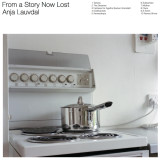
Produced by Laurel Halo and released via Norway's respected Smalltown Supersound label, Anja Lauvdal's first solo release, From a Story Now Lost, is a gorgeous musical essay reflecting on time, its perception, and lost histories rediscovered. Finally exploring her own voice after more than a decade of collaborative improvisational playing - starting at her time in jazz conservatory in Trondheim - the album is a jewel of subtle beauty and innovative detail. A freeform musician on piano, synthesizers, and electronics, Lauvdal's discography stretches back to 2013 and includes her participation in a myriad of ensembles and collaborations exploring the limits of sound and music in many forms, including noise, jazz, and more. Following her move to Oslo after graduation, she became deeply embedded in the music community there, touring with Jenny Hval as well as playing on her records. When pandemic hit and isolation was the norm, Lauvdal began working on her own, recording her improvisations in an attempt to capture something new for herself. Connecting to Laurel Halo via Smalltown's founder Joakim Haugland, the acclaimed American artist agreed to work with Lauvdal in shaping her solo record, becoming integral to its creation through all of its stages. Lauvdal credits Halo as a deep listener and gentle "thought-provoker", who contributed ideas as well as helping to shape the finished versions (Halo also worked alongside Rashad Becker on the final mix of the album). Together, they found a method of recording Lauvdal's improvisations, making small loops from those, feeding them back into the synthesizers, and making synthesizers out of the improvisations, which Lauvdal would then re-improvise with. She describes the end result, "like seeing different pieces of time around in the universe." While the record is based on Lauvdal's improvisations, some tracks were inspired Agathe Backer Grondahl, a Norwegian classical pianist and composer from the latter half of the 19th century. Lauvdal notes that Grondahl is not widely known, although her best friend Edvard Grieg is still considered Norway's most famous composer. Yet now, partly through Lauvdal, her story resurfaces and persists. "From a Story Now Lost means the story is still there," Lauvdal explains. "It hasn't gone anywhere even though nobody heard it, or maybe you're hearing it for the first time. And actually it was told a long time ago - maybe you weren't ready to hear that story at the time." This hints at the limitless nature of her music, as well as its new emotional texture. Direct in its vulnerability, immediate in its tenderness, From a Story Now Lost is a sophisticated evocation over restrained artistry spilling over with meaning.
Longtime underground star Francesca Lombardo steps up to Ovum with a trio of superb new signature sounds. Italian Lombardo has been crisscrossing the globe and headlining all its most tasteful clubs and festivals for many years. Her powerful, heartfelt grooves have come on the most influential labels of the day and her critically acclaimed debut album 'Life of Leaf' showed that she can do all sounds and styles from downtempo to pop with equal skills. Her mix of innovation and compelling grooves continues on this latest EP. The vocals on the opener 'Magic Moment' are a poem Francesca's friend Victoria sent to her. She kept them for four years before ?nding the special inspiration that encouraged her to use them in these writing sessions. They lend the tune an intimate feel and draw you in deep to the elegant house drums and warming synths. It's an uplifting and classy tune with a standout Moog bassline that will lock in the floor. After the dub version is 'Sea,' a much more twisted and peak time techno tune. The synths are spangled over jacked-up drums, with edgy textures and late-night menace all making it a sure-?re winner This is another tasteful take on techno from Francesca Lombardo.